التالي
7 المشاهدات · 24/10/06
9 المشاهدات · 07/01/29
7 المشاهدات · 22/05/25
4 المشاهدات · 24/01/31
6 المشاهدات · 24/02/01
2 المشاهدات · 24/02/27
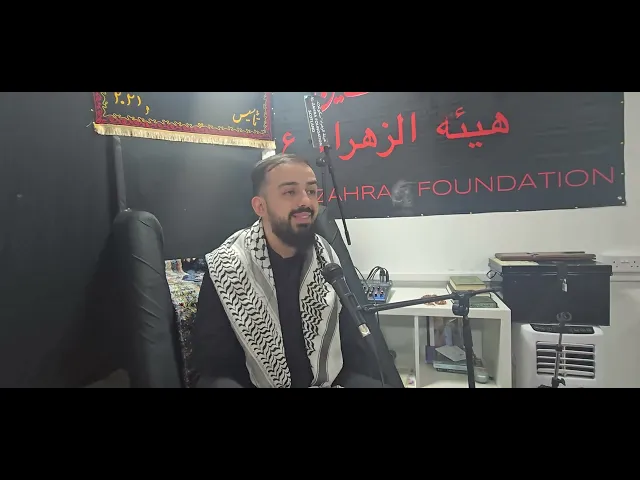
Biography of the Prophet- A few narrations regarding the change of the Qibla- Hamam Nassereddine
0
0
30 المشاهدات·
24/07/29
في
محاضرات
This is a lesson from a series of lessons conducted by Hamam Nassereddine @ Mahad Rasul in Imam Hussain Foundation. The lessons focus on main events that took place throughout the life of the holy Messenger of God, Mohammed. (peace be upon him and his family).
أظهر المزيد
Transcript
[0:31][Music] in our last lesson we shed light on the second verse
[0:58]that speaks about the change of the qibla and we shed light
[1:06]on most of the segments of that verse which mentioned why allah
[1:12]changed the qibla why did allah azzawajal command the muslims first to
[1:20]face baital makhdas in prayer and then he commanded them to face
[1:28]sharifah in prayer and the answer is it was a test a
[1:34]test of what a test of submission ultimately every islamic law is
[1:41]a test allah wants to see although he already knows whether you're
[1:44]going to apply that law or not but with the qibla issue
[1:49]the issue of the qibla and the change of the qibla it
[1:53]was a test of submission who is going to follow what the
[1:59]prophet says and who is going to object and today inshallah as
[2:06]we read some traditions we will realize that certain people were inclined
[2:16]towards facing baital mukhtas in salat others were inclined towards right so
[2:26]both commands in reality were a test a test of submission commanding
[2:33]the people to face baital machidas for an x amount of years
[2:38]was a test of submission and then changing that qabalah from baital
[2:43]makhtis to il kahba in al-majid the sacred mosque that was also
[2:50]what a test of submission so we shed light on the second
[2:57]verse as we said let me read it again for you allah
[3:19]has multiple interpretations until now we've presented one and we promised to
[3:25]present a second interpretation so the one that we presented said that
[3:37]they are witnesses amongst the people meaning they are role models for
[3:42]the people and the prophet is a witness amongst them meaning he
[3:46]is a role model so this is says us this segment is
[4:01]telling us why did allah azzawajal command the muslims to face baital
[4:06]mukhtas at first and then he commanded them to change the qibla
[4:13]to the holy this segment shows us that for some people it
[4:24]was it was not difficult to change the qiblah as in when
[4:31]the prophet commanded them to face they submitted to what the prophet
[4:42]said and they did not find the change of the qibla problematic
[4:44]they did not find that issue to be they did not find
[4:49]that issue a problematic issue they submitted and allah says these people
[4:54]are guided by allah but the verse also indicates that portion of
[5:00]the verse also indicates that there were people who found difficulty in
[5:03]this matter and they found the change of the qibla problematic in
[5:19]this verse based on the traditions of adult uh literally means what
[5:25]it means iman it means faith but in reality allah is talking
[5:28]about salat he's calling salat he's calling prayer faith and that is
[5:36]normal if you think about it because prayer is a result of
[5:42]faith it's a result of believing in islam and it is one
[5:45]of the main obligations in fact it is the poll of the
[5:50]religion so a person manifests his faith in islam through what through
[6:01]salat in fact when you look at the traditions of salawatu he
[6:04]was we see that are very strict when it comes to salah
[6:10]to the point they mention in multiple traditions that if someone does
[6:15]not pray in reality that individual is what is a kafir is
[6:18]a disbeliever meaning in the dictionary of albeit they consider that person
[6:23]a disbeliever so in order to enter the realm of belief one
[6:31]truly needs what one truly needs to perform salah he needs to
[6:38]pray bye so this is where we stopped and allah says in
[6:45]allah manifests or reminds us of his mercy and his gentleness towards
[6:58]the people most surely allah is affectionate merciful to the people why
[7:02]is he saying this well one reason is to tell the muslims
[7:06]that allah azzawajal isn't going to nullify their prayers because samus mean
[7:12]were worried okay now we have to face we have to face
[7:17]alcaba sorry this is the new qibla so what happened to our
[7:23]past prayers they were worried have our past prayers been rejected have
[7:28]been have our past prayers been nullified allah told them it's not
[7:36]a game will not nullify your prayers the o merciful the gentle
[7:45]the kind he would not nullify your prayers for that reason if
[7:52]that's clear today inshallah we're going to shed light on multiple traditions
[7:59]from that are connected to what connected to that verse specifically the
[8:07]second verse regarding the change of the qibla or connected to the
[8:11]the issue of the change of the qabla in general starting off
[8:16]with a tradition from imam jaffar which you can find in el
[8:28]cafe the book so he's asking him about what verse the same
[9:03]verse that we dissected that we shed light on in the last
[9:09]lesson and the one before god is asking the imam about the
[9:19]first part of the verse that's read the translation in english again
[9:23]and thus we have made you a medium nation that you may
[9:29]be the bearers of witness to the people khan he said we
[9:42]are the medium nation realize we are the medium nation so this
[9:48]is one reason why we were saying yes allah is saying ummah
[9:52]nation but he's not talking about every single individual in the nation
[9:56]no he's talking about specific people in the nation these are the
[10:03]most important people amongst the islamic nation thus they represent the islamic
[10:10]nation they represent islam he said we are what the medium nation
[10:27]and we are the witnesses that allah has appointed amongst his creations
[10:35]hopefully when we shut light on the second tafsir which i promise
[10:40]to share with you we're going to see that one of the
[10:47]roles of is to witness the deeds committed by what committed by
[10:54]human beings to witness the deeds committed by the humans and or
[11:03]the creations hence the imam says we are the witnesses that allah
[11:10]has appointed amongst his creations and we are the proofs of allah
[11:19]in his earth meaning in the earth that allah created bye so
[11:43]this is the first tradition the second one we want to share
[11:48]today is a tradition by imam alaska also found in the book
[11:58]by rahmatullahi so in that tradition which is possibly part of uh
[12:30]the dialogue we narrated previously if you remember we were talking about
[12:36]how imam al-assad was mentioning what took place when the ka'ba when
[12:42]when the qibla was changed and what the jews said about the
[12:45]prophet and how the prophet sallallahu alaihi responded what the jews said
[12:51]to the prophet and what the prophet told them so and so
[12:54]forth so this part this narration here might actually be part of
[12:56]that dialogue part of the dialogue between imam al-asikari and why did
[13:19]allah subhanahu wa'ta'ala command the people to face bait and make this
[13:24]i said why wouldn't he just you know tell them to face
[13:27]al-qa'aba from the first place fakaalah lima khal allah he said the
[13:36]reason has been mentioned by allah allah mentioned why he did so
[13:41]in the quran when he said now we've explained the verse and
[14:00]we've mentioned the translation so i won't repeat myself today let's look
[14:05]at what the imam has to say about the verse imam explains
[14:11]it he says already knew who would submit to the prophet and
[14:31]follow his commands and who wouldn't submit to the prophet and follow
[14:35]his commands but even then allah wanted what he knew to what
[14:45]to take place he wanted uh to test the people through the
[14:55]change of the qibla so that their submission or lack of submission
[15:03]may show so that their submission or lack of submission may show
[15:09]allah already knew who will submit and who will not submit but
[15:13]he wished to test them and to see the results of that
[15:20]test in the outer world although he already knew the results then
[15:49]so he says here this by the way is a very important
[15:52]passage he says that the people of mecca were inclined towards which
[16:01]qibla towards because they have a really strong relationship with ilkaba and
[16:11]their forefathers have a strong relationship with what with elkaba so they
[16:17]they were inclined towards allah wished to test them and to test
[16:27]other people by commanding them to face which qabala to face vital
[16:33]bactus so here you have people who wanted to face al-qa'ba allah
[16:42]told the prophet faith baital makthis and tell the muslims to do
[16:49]the same so this was a task for everyone but especially for
[16:53]who for those who were inclined towards the ka'ba will they go
[16:57]against their desire and follow the prophet's command or will they disobey
[17:03]the prophet because of their desire then the imam says that the
[17:36]people of medina were different than the people of mecca the people
[17:42]of medina were inclined towards beitel not towards the kaaba and so
[17:51]allah azzawajal commanded them to do what to go against their inclination
[17:57]or say against their desire and to face so that allah may
[18:05]show who will follow muhammad even if he is commanded to do
[18:15]something he dislikes allah wanted to show the people who will follow
[18:21]muhammad even if he's commanded to do something he dislikes and who
[18:26]will not follow muhammad said which we also explained right we explained
[18:50]this part of the verse now let's hear what imam has to
[18:55]say about it was difficult on the people and certain people found
[19:33]that problematic although there's no problem in it but they found it
[19:37]problematic because of what because of the lack of submission that they
[19:42]had so the imam says it was difficult on some people that
[19:46]command was difficult on some people they found it problematic but it
[19:53]was not difficult on those who were guided by allah those who
[20:03]were guided by allah submitted to what allah wanted they did not
[20:08]find that command to be problematic rather they followed what the prophet
[20:13]said then the imam says a golden statement which we need to
[20:23]keep in mind a statement that that applies to any segment of
[20:31]islam especially the segments that we might find difficult to absorb or
[20:35]difficult to digest we understand and we know that allah might at
[21:07]times test us by commanding us to do something we dislike in
[21:16]order to see whether we will actually go against our desire or
[21:23]not and this is a really important point regarding what regarding islamic
[21:33]laws because when you look at the islamic laws you realize some
[21:37]of them are quite easy not that difficult they're not difficult to
[21:42]apply and some islamic laws are a bit harder to apply a
[21:47]bit harder to implement you also find that you accept some islamic
[21:54]laws with ease you don't have difficulty accepting them for example the
[21:58]fact that marriage is recommended in islam and in certain times it's
[22:05]wajib it's mandatory for example when someone fears of falling into haram
[22:08]if he does not get married at that point it's wajah i
[22:10]want him to get married this is what this is a a
[22:14]simple law allah that a lot of us like right because it
[22:21]coincides perfectly with what with what we desire or for example you
[22:29]know uh putting perfume on yourself before prayer it's recommended that's an
[22:35]easy law it's a very easy law to apply because in general
[22:38]people like perfume right we like good sense we like nice sense
[22:47]and so it's a it's an easy law to apply all right
[22:52]but then again you have certain laws that are harder certain laws
[22:59]that some people find difficulty accepting right like certain islamic punishments and
[23:06]so that's a test from allah subhanahu wa or say for example
[23:14]like you know performing hash performing hajj is more difficult we're not
[23:22]saying it's extremely difficult but it's more difficult than you know putting
[23:26]perfume on yourself before you pray so allah tests us with what
[23:35]with with commands that go against what we desire they don't go
[23:45]against human nature there is no islamic law that goes against human
[23:48]nature but sometimes allah commands you to do something that goes against
[23:53]your desire for example allah azzawajal tells us to do what to
[23:58]lower our gaze and not to look at forbidden images or videos
[24:05]etc although the human being might have that urge you might have
[24:10]that you know desire to do so that's a test it's a
[24:14]true test allah azza tells us not to listen to music or
[24:17]songs but a lot of people like music and music and songs
[24:22]they like it they enjoy it allah says no these sounds are
[24:27]bad for you they will harm you i don't want you to
[24:29]listen to them so he tells you to do what to go
[24:34]against your desire one thing is for sure we need to keep
[24:39]it in mind there must be allah or multiple laws that do
[24:52]not flow with our desires when we look at the religion of
[24:56]truth the religion of truth the true religion which is islam of
[25:02]course must contain certain laws that go against what go against your
[25:07]desire again they don't go against human nature but they go against
[25:10]what you might desire at certain times there must be laws like
[25:17]that why because only through such laws will the true believers be
[25:31]known only through such laws will the true believers the devoted believers
[25:37]only through such laws will the devoted and true believers be known
[25:42]it's very easy to apply something that you desire to follow something
[25:49]you like the real task lies in what following something that you
[25:56]dislike will you do it for allah or not that's the question
[26:00]that is the question so that is the real test that is
[26:04]the real test so this is the narration of imam alaska salah
[26:29]the last narration we want to shut like excuse me shed light
[26:35]on tonight is a word that mentioned in the book which tells
[26:43]us exactly what happened when the qibla was changed so what happened
[26:49]at the exact moment at the exact moment the qibla was changed
[26:55]this one this uh narration is found in man and in reality
[27:07]it seems to be the words of sheikh sadhuk but he says
[27:11]what he says based on what based on a narration that he
[27:16]narrated in the book he has a book called the nubuwa so
[27:21]here sheikh asadu basically gives you the summary the summary of that
[27:32]narration for 13 years after what after nubula what what is meant
[28:18]by nubuwa here is the moment he was given the green light
[28:22]to propagate the message the reason i'm saying so is that the
[28:30]prophet's nubuwa his prophethood does not actually begin when he's 40 years
[28:35]old it's wrong to say that rasulallah's prophethood began when he was
[28:43]40 years old based on the traditions of albeit he was a
[28:47]prophet from birth in fact he was a prophet before adam was
[28:52]even created he was a prophet before adam was created we have
[28:58]a tradition which says that the prophet muhammad was a prophet and
[29:02]adam's body was still not complete ladala was still making and shaping
[29:11]and fabricating the body of adam so keep that point in mind
[29:20]the prophet of muhammad begins way before way before he comes to
[29:27]earth it doesn't begin when he's 40 years old what begins when
[29:33]he's 40 is the message as in he's given the green light
[29:35]when he's 40 years old to start propagating and delivering the final
[29:41]message of god subhanallah so for 13 years he prays towards baital
[29:47]makhdes when he is in mecca and then for 19 months sheikh
[29:52]sadok says he prays towards baital magnus they said you are following
[30:09]our qibla right it's as if they were saying that you know
[30:12]you are a mere follower of our religion you're a mere follower
[30:21]of us so we you know we guide you you need our
[30:23]guidance this is what they were implying at that point the prophet
[30:36]salallahu alaihi was afflicted with severe sadness and distress and we mentioned
[30:41]why he was you know bothered by that claim he was during
[30:55]a particular night the prophet came out of his house or his
[31:03]room and he began looking at the sky he looked at the
[31:08]sky several times when it was morning the next morning he performed
[31:24]when the prophet performed on that day and he had performed two
[31:31]records of the so the imam recited one of the verses that
[31:56]we have not explained yet but we will explain insha allah subhanahu
[32:01]the prophet that we are seeing how you are looking at the
[32:06]sky we are seeing how you look at this kaya rasulallah and
[32:12]you await us to change [Music] do not worry we're going to
[32:22]tell you to face aqua that you will be pleased with from
[32:28]now on face what the sacred mosque meaning face which lies in
[32:35]the sacred mosque the imam reads possibly the whole verse which is
[32:40]a bit long or more parts of the verse than he says
[32:49]excuse me i said the imam here of course sheikh is talking
[32:55]but again is giving us what the summary of a particular narration
[32:58]from the imams so he says he says at that point grabbed
[33:13]the prophet's hand or his arm and what did he do the
[33:18]prophet is in prayer he performed made the prophet face what faith
[33:31]he made him face the holy kaaba wa man and they uh
[33:47]moved their bodies in a way where they would be facing el
[34:00]to the point that when they changed the direction they were facing
[34:08]the men ended up standing where the women were standing and the
[34:13]women ended up standing where the men were standing this doesn't mean
[34:19]of course that the women were in front of the men no
[34:21]no no the prophet was in front of the men were behind
[34:26]him and the women were behind the men but the men stood
[34:31]where the women previously were standing and the women stood where the
[34:36]men previously were standing because of what because of that shift because
[34:41]of the change of the qibla so it seems that the change
[34:46]of the qibla happened in salat so he says that the beginning
[35:02]of that prayer was performed as he was facing baital maktas but
[35:08]the last part of the prayer was performed as he was facing
[35:21]he says the news this news the news of the change of
[35:26]the qibla reached a mosque that was in medina the people of
[35:31]that mosque had prayed to rekha's from salah and so what did
[35:41]they do they faced when the news reached them and they were
[35:45]in salat they faced so from his words you understand that they
[35:52]also changed their qibla as they were praying they moved towards the
[35:59]kaaba and completed the two other regards and so whatever happened with
[36:12]the prophet happened with them the the first part of their prayer
[36:18]was done as they were facing and the second part meaning the
[36:22]last part of their prayer was done as they were facing that
[36:30]mosque specifically the mosque where those people were praying was called later
[36:35]on the masjid of the two kabbalahs which is a masjid that
[36:41]you can find today when you go to medina usually when we
[36:44]go to medina for ziyarah and obviously we we go to umrah
[36:52]to perform in mecca or to perform perform hajj in mecca and
[36:54]then we go to medina for ziyarah usually one of the sites
[37:00]that we visit is we also visit masjid kiba which is a
[37:08]very important mosque that the quran mentioned what did the muslims say
[37:20]they told the prophet the prayers that we performed as we were
[37:25]facing this will those prayers be lost will they be nullified for
[37:33]allah or would never nullify your deeds allah would not nullify your
[37:57]deeds yes sometimes the human being commits a deed a grave sin
[38:01]a grave crime that causes the nullification or the nullifying of what
[38:09]of his deeds but that's due to his transgression allah on the
[38:13]other hand allah subhanahu wa doesn't nullify the deeds of the believers
[38:21]especially if he presents what presents a new law a permanent law
[38:29]and tells them that from now on abandon the temporary law and
[38:34]follow what follow the permanent law just as is the case with
[38:42]the change of the praying towards baital maktas was a temporary law
[38:49]praying towards was a permanent law so he says [Music] so it
[39:00]says that i've mentioned the narration about this issue where in my
[39:04]book called so we realize that the change of the qibla happened
[39:14]when the prophet sallallahu alaihi was in salat was in alhamdulillah muhammad
[39:28][Music]
0 تعليقات
sort ترتيب حسب
- أعلى تعليقات
- أحدث تعليقات
التالي
7 المشاهدات · 24/10/06
9 المشاهدات · 07/01/29
7 المشاهدات · 22/05/25
4 المشاهدات · 24/01/31
6 المشاهدات · 24/02/01
2 المشاهدات · 24/02/27