التالي
13 المشاهدات · 26/03/09
10 المشاهدات · 24/10/06
11 المشاهدات · 07/01/29
6 المشاهدات · 24/01/31
9 المشاهدات · 24/02/01
2 المشاهدات · 24/02/27
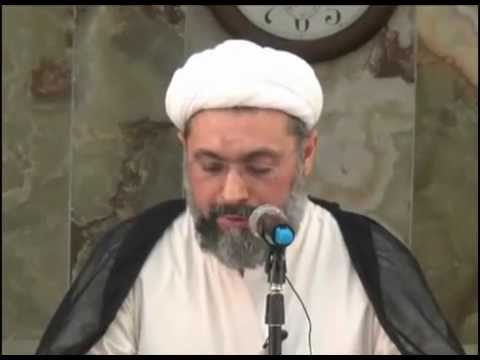
Biography of the Prophet- Change of the Qiblah-2- Hamam Nassereddine
0
0
10 المشاهدات·
22/05/25
في
محاضرات
This is a lesson from a series of lessons conducted by Hamam Nassereddine @ Mahad Rasul in Imam Hussain Foundation. The lessons focus on main events that took place throughout the life of the holy Messenger of God, Mohammed. (peace be upon him and his family).
أظهر المزيد
Transcript
[0:28]is [Music] in our last lesson we spoke about two main points
[0:40]number one we mentioned the prescription of the adhama and we mentioned
[0:47]the third shahada the third testimony which is i testified that ali
[0:56]is the guardian appointed by allah and the successor of rasulallah we
[1:06]said that this testimony is recommended it is recommended to say it
[1:12]in adhan and after saying however there is a mandatory segment in
[1:27]adhan and ikama that presents the same meaning there is a mandatory
[1:35]segment in adan and akama when we say a mandatory segment we're
[1:39]talking about what we're talking about a segment that has to be
[1:45]said in adan and akama such that if you do not say
[1:49]it then the adhan or the comma will be invalid and that
[1:53]segment is rush towards the best deed we presented a narration if
[2:05]you remember by imam abu hassan towards believing in the guardianship and
[2:23]authority of it that was the first main point that we focused
[2:32]on last week secondly the second main point was the change of
[2:38]the qiblah we said that when rasulullah migrated to medina during the
[2:47]second year after migration one of the main events that happened was
[2:52]the change of qabalah rasulallah sallallahu alaihi and the muslims would pray
[2:58]as they would be facing beitel makdis as they would be facing
[3:07]jerusalem however after migration on the second year after migration the prophet
[3:14]was commanded by allah to change the qibla and to face from
[3:20]now on to face the kaaba the holy kaaba which is the
[3:27]chosen house of god subhanallah and the house that lies where in
[3:32]the sacred mosque in mecca we mentioned that the issue of the
[3:39]change of the qibla is a known issue it's quite known anyone
[3:46]with basic information basic knowledge regarding uh islamic history knows about this
[3:50]event and the holy quran mentioned it in four verses there are
[3:56]four verses in surah al-baqarah that come right after each other that
[4:00]speak about what about this event last week we shed light on
[4:06]the first verse which is the one i sent you in the
[4:12]chat section verse 142 of surat al-baqarah the verse says the fools
[4:36]among the people will say what has turned them from their qibla
[4:39]which they had say say in response to them the east and
[4:46]the west belong only to allah he guides whom he likes to
[4:52]the right path last week we shed light on the first uh
[4:58]few segments of this verse and we stopped at the response when
[5:03]allah tells the prophet how to respond these people and he says
[5:18]what the east and the west this short yet deep answer presents
[5:31]us multiple points this short answer contains multiple important points that we
[5:40]need to mention the first one is when allah says what does
[5:47]he say he is basically telling the prophet tell those people who
[5:55]will object against the change of the qibla that ultimately all directions
[6:01]belong to allah the east belongs to allah the north the south
[6:12]all directions belong to the almighty all spaces in this universe whether
[6:21]we're talking about the space on earth or the space in outer
[6:29]space the space on pluto on mercury on jupiter the space in
[6:32]the closest galaxy to our galaxy the space in el hajj for
[6:40]example in the seventh sky the sixth sky all space belongs to
[6:44]who allah for he is the creator of all beings he is
[6:48]the creator of time and space and the creations that exist within
[6:56]time and space within the limits of time and space so everything
[7:02]in reality belongs to him what does that mean it means he
[7:08]has the authority to tell us to face the east when we
[7:15]are praying and to face the west when we are praying he
[7:19]has the authority to tell us to face any direction because ultimately
[7:25]all directions belong to him when he tells us to face a
[7:30]particular direction that direction does not belong to another god because there
[7:34]is no other god it does not truly belong to anyone other
[7:38]than allah because allah is what is the primary owner of this
[7:46]universe in fact he is the primary owner of everything that exists
[7:52]meaning all beings all uh creations he is their primary owner now
[7:58]you might tell me what do you mean by primary owner i
[8:03]think we've mentioned this before but we'll mention it again see if
[8:10]we come to this world the world of human beings we call
[8:15]ourselves the owners of what we possess correct for example you are
[8:21]the owner of your house i'm the owner of my house i'm
[8:25]the owner of my car you're the owner of your car etc
[8:29]correct we are owners but in what sense we are secondary owners
[8:34]we're not the primary owners of what we possess the primary owner
[8:41]is who it is the one who created our possessions who created
[8:47]my house as in who created the material from which my house
[8:52]was built who created the people who actually came and built my
[9:02]house who gave them the power to build it so in reality
[9:06]he is the owner of my house and the owner of my
[9:11]land and the owner of my car the owner of my body
[9:15]my soul so on so forth but allah out of his generosity
[9:18]out of his kindness told us what he told us when you
[9:23]live in this finite limited world i will consider you to be
[9:30]the owners of what you possess and there are multiple ways through
[9:36]which you can own a particular item or a particular thing for
[9:41]example if you go to the woods right and you put your
[9:45]hand on a specific piece of wood and you say khalas this
[9:49]piece of wood is mine right then you can then you become
[9:55]the owner of that piece of wood of course supposing that it
[10:00]does not have another owner correct if you for example buy a
[10:05]specific item and you pay the cost of the item then the
[10:12]owner then the owner of that item becomes who yourself you become
[10:16]the owner allah tells you i allow you i will consider you
[10:21]to be the owner of your possessions provided that you use lawful
[10:32]ways to possess those possessions and to become the owner so in
[10:39]reality the primary owner is who allah because he is the creator
[10:44]he is the creator and the sustainer in existence we're considered to
[10:55]be owners by allah hence we are what secondary owners not primary
[11:02]ones so everything in existence belongs to allah all directions all places
[11:13]all kinds of space uh belong to allah azzawajal hence he has
[11:20]the right to tell us what he has the right to say
[11:23]when you pray o muslim i want you to face the east
[11:27]no i want you to face the west no i want you
[11:30]to face the south it's up to him he decides this is
[11:34]the first point that we derive from the word of god secondly
[11:47]the second point we derive from that specific portion of the verse
[11:53]is that all lands are the lands of allah when i say
[12:01]the lands of allah i mean they are lands created by god
[12:07]whether we're talking about the lands of asia africa europe australia north
[12:16]america central america south america you name it all of these lands
[12:20]were created by god and so it is extremely important to remain
[12:30]faithful and to remain pious wherever we dwell whether we dwell in
[12:38]the east or the west when he says that part of the
[12:45]verse reminds us of this important issue that the east and the
[12:51]west belong to god the eastern part or the eastern parts of
[12:56]the earth belong to allah the western part or parts of the
[13:02]world belong to allah so whether a person dwells in the east
[13:08]or say the middle east in mecca or medina or najaf or
[13:16]karbala or meshad or samara or whether he dwells in other lands
[13:21]he dwells in the west in north carolina california miami houston ontario
[13:31]british columbia you name it he has to be faithful and pious
[13:36]he has to obey allah one because allah is his god and
[13:45]creator hence he has the right to be obeyed wherever that person
[13:49]is and two because allah created those lands so you are on
[13:56]the territories of who allah hence you have to obey him the
[14:02]reason i'm mentioning this point is we realize when we look at
[14:07]the behavior of uh human beings that we we realize that uh
[14:16]certain individuals will be pious in the east or the middle east
[14:21]but when they arrive to the west their behavior changes in the
[14:30]east they're pious they're righteous they go to hajj they they're very
[14:36]you know good people they behave well when they come to the
[14:42]west their behavior changes their behavior changes they become empious not pious
[14:51]in pious they lose faith or they lose piety why when you
[14:54]ask them why i'm not saying everyone does this no no not
[14:58]everyone does it some people become even more pious when they go
[15:01]to the west but that's a different issue right now i'm talking
[15:04]about the people who lose their faith or who lose their party
[15:06]when they come to the west you tell them why they say
[15:10]well we're in the west right now you're in the west allah
[15:15]still sees you allah is still your god and your lord you
[15:20]cannot escape allah azzawajal he has created the east and the west
[15:27]you're still stepping on the land created by allah you're still consuming
[15:33]the sustenance of allah you are still the creation of allah so
[15:40]even if you live in the west that doesn't mean you're allowed
[15:45]to disobey the almighty that portion reminds us of this reality it
[15:55]reminds us of the importance of being pious whether we are in
[16:00]the east or the west then he says he guides whom he
[16:13]wills to a straight path remember we mentioned guidance many times in
[16:21]our classes in our quranic classes or seera classes etc and we
[16:27]said there are two types of guidance remember general guidance that allah
[16:34]bestows upon everyone that type of guidance is bestowed upon people to
[16:43]show them the right way to show them the right path so
[16:49]they may follow it and to tell them what is the wrong
[16:53]path so they may avoid it that type of guidance is bestowed
[16:58]upon who everyone the friends the foes the good slaves of god
[17:00]the bad slaves by that slaves i mean the disobedient slaves of
[17:05]god subhana wa ta'ala the menin like salman al-muhammadi and the unjust
[17:12]disbelievers like abu sufyan and it's a general type of guidance then
[17:20]again there is a specific type of guidance which is basically a
[17:26]form of mercy that allah bestows upon certain slaves not all slaves
[17:30]to help them to help them do what to help them walk
[17:34]on the street path to help them as they're implementing his message
[17:43]to help them walk on the street path or even to help
[17:48]them what to help them attain the straight path and believe in
[17:51]it after he shows them what is the straight path that type
[17:59]of mercy that type of special mercy is not bestowed upon everyone
[18:04]it's bestowed upon who it's bestowed upon selected people why we'll hear
[18:14]why in a in a minute so when allah says excuse me
[18:19]when allah says he guides whom he wills if he is referring
[18:24]subhana wa ta'ala too the general type of guidance then maniesha whom
[18:29]he wills refers to who everyone it refers to everyone but if
[18:37]yahdi the word yahdi refers to the special type of guidance then
[18:42]the word manisha whom he wills refers to only those who receive
[18:50]that guidance who are those people the people allah chooses so the
[18:55]verse is telling us that allah chooses to guide certain people allah
[19:05]azzawajal chooses to bestow special type a special type of mercy or
[19:12]special types of mercy upon certain people not everyone why does allah
[19:20]choose randomly no it's not an issue of random choosing no no
[19:28]no allah chooses based on wisdom he knows our intentions and our
[19:35]deeds and who truly wants to be guided and who truly does
[19:37]not want to be guided subhana so when he chooses to bestow
[19:44]the specific the special type of mercy on certain people only it's
[19:47]because they deserve it those people deserve it or the least you
[19:52]can say they're worthy of it they've done something to be granted
[19:59]that mercy whereas those who are deprived of that mercy they're not
[20:04]deprived of it because of allah they're deprived of it because of
[20:08]themselves they've deprived themselves of that mercy for allah is all generous
[20:15]and he's willing to bestow that mercy upon everyone but the question
[20:20]is are we willing to accept it or are we willing to
[20:26]receive that mercy do we actually want it or not now the
[20:31]likes of you might say can there be a person who actually
[20:35]doesn't want such mercy the sad reality is yes the sad reality
[20:42]that the quran shows us through multiple verses the sad reality that
[20:50]is manifested to us when we look at our day and age
[20:54]and we look at the history of mankind is that yes there
[20:59]are people who don't want guidance they don't want guidance they want
[21:03]to be misguided so they refuse that mercy i'll give you an
[21:10]example different than the examples we've given before take the example of
[21:18]ahad the people of who read what allah says about them in
[21:30]surah mentions their story in multiple parts of the quran and in
[21:40]surat he mentions the following word that the people of ahad said
[21:47]to realize hud was not in a minor prophet as in he
[21:51]was one of the great prophets all prophets are great but at
[21:55]the end of the day prophets are distributed into ranks some prophets
[22:01]are greater than others hood was one of the greatest prophets salam
[22:06]allah to him he was a prophet that nu spoke about to
[22:12]his progeny he told them of his advent and so after nu
[22:18]sam alayhis the son of noah the person who was the successor
[22:27]of noah sam and the believers were waiting for the advent of
[22:31]who of hud so he was a big prophet the people of
[22:40]ad hood was sent to them and who'd was speaking words of
[22:43]wisdom to them so he may guide them what else do you
[22:48]want you have a prophet right in front of you right in
[22:50]front of you he's willing to show you a miracle if you
[22:54]want a miracle he is speaking words of wisdom what else do
[22:57]you want you'd imagine that when people receive such a person they're
[23:02]going to believe on the spot but listen to what ahad the
[23:08]people of they say [Music] they tell him whether you admonish us
[23:25]or not it will not make a difference whether you exhort us
[23:31]or not it will not make a difference meaning you can keep
[23:36]talking yahood talk day and night or don't talk at all it
[23:40]will not make a difference we've made our decision and we're not
[23:46]going to follow your path yes there are people who don't want
[23:53]guidance they don't want it hence when allah says in this verse
[24:00]and in other verses in the quran allah guides whom he wills
[24:06]we should remember allah is not stingy he's willing to bestow his
[24:10]guidance upon everyone the special guidance remember the general type of guidance
[24:14]is bestowed on everyone allah shows everyone the right way but he's
[24:18]willing to bestow that special guidance we need to be guided to
[24:23]actually fold a straight path upon everyone but not everyone wants it
[24:29]not everyone deserves it not everyone is worthy of it hence he
[24:35]bestows it upon who those who actually deserve it or are worthy
[24:42]of it any questions before we move on late it seems there
[25:11]are no questions can you hear me well so did you miss
[25:35]any part of what i was saying no no no it just
[25:44]cut off at the end okay fine if this is clear then
[25:53]now we'll move on to a tradition by imam which you can
[26:00]find in the book in the book which explains to us what
[26:11]happened between rasulallah and the jews when the change of the qibla
[26:18]took place when allah commanded rasulallah and the muslims to face the
[26:22]holy gaba he says i sent you the first part of the
[26:28]narration it's a long narration i sent you the first part on
[26:35]the chat section imam abu muhammad allah when he is in salat
[27:15]when he is praying so when he was praying when he would
[27:20]be praying he was commanded to do what to face jerusalem from
[27:25]mecca but there was a second command and he was commanded to
[27:31]face the ka'ba as well as he faces jerusalem if that was
[27:37]possible so for example if the prophet sallallahu alaihi wala was standing
[27:42]in a specific place where he could face the holy kaaba and
[27:48]jerusalem at the same time then he would have to do so
[27:51]whereas if he was in a different place where he wouldn't be
[27:57]able to face the kaaba and jerusalem at the same time then
[28:00]he would only be obligated to face jerusalem for example if he
[28:08]was in the sacred mosque then it would be possible for rasulallah
[28:15]to face the kaaba and to face jerusalem because the kaaba has
[28:19]what four sites it has a an eastern side a western side
[28:22]a northern side and a southern side so he can stand in
[28:28]a specific land where he would be facing the kaaba and jerusalem
[28:33]as well then he says but if he was not able to
[28:45]face beitel macdes then he would be require sorry if he was
[28:52]not able to face the kaaba then he would only be required
[28:55]only be obligated to face he says the prophet salallahu alaihi would
[29:14]face this in prayer during his stay in mecca for the whole
[29:26]period during the thirteen years he stayed in mecca he would pray
[29:31]towards what baitlmak does bear in mind he remained in mecca for
[29:36]53 years but here we're talking about what the 13 years that
[29:40]came after the start of the message after the message began the
[29:47]message began when he was 40 years old and he lived for
[29:50]63 years so he lived 13 years in mecca after the story
[29:55]of the message and 10 years in medina so during his stay
[30:01]in mecca he would face by telemachus is he says when the
[30:28]prophet went to madina he was still commanded by allah to face
[30:32]what baital maktas to face jerusalem and so he would face jerusalem
[30:43]in prayer and would not face the kaaba why because you cannot
[30:48]be in medina and face jerusalem and the kaaba at the same
[30:53]time they they are in different directions medina is north of mecca
[30:57]whereas jerusalem is north uh north west of medina so the prophet
[31:06]couldn't face the ka'ba anymore he had to face only what jerusalem
[31:10]when he was in medina so he says in harafa sabah he
[31:20]kept on doing so for 17 months or 16 months which confirms
[31:29]that the change of the qibla happened when in the second year
[31:32]after hijra here a question might come to mind so we'll answer
[31:38]it before we continue the tradition and that is why does the
[31:43]imam salawatu say 17 months or 16 months doesn't he know the
[31:50]exact period of course he knows the imam knows but it's possible
[31:57]that he's not the one who said 16 or 17.
[32:02]it's possible the narrator said 16 or 17 because ultimately we did
[32:12]not receive this narration from imam al-askari directly there's a narrator who
[32:18]narrated what the imam said and the narrators they're not maso mean
[32:22]they're not infallible unless the narrator is what is also an imam
[32:27]sometimes one imam narrates what the other imam says here the narrator
[32:33]is what infallible imam sadik says my grandfather rasulullah said one two
[32:36]three imam sadiq is infallible rasulallah is infallible so i know if
[32:40]i'm hearing the tradition from imam assad that this tradition is flawless
[32:48]but in many cases the narrator is not infallible he's a fallible
[32:54]human being and he's telling you what the imam is saying or
[32:58]what the imam said or what the prophet said here there's always
[33:04]room for what room for error because he's fallible so it's possible
[33:10]that the narrator who heard the hadith of imam al-assad forgot what
[33:14]imam al-askari said was it 17 months or 16 months hence to
[33:22]be precautious he said sabah this is a good answer to the
[33:33]question we post let's continue the tradition it says here at this
[33:56]point a group of jews but not ordinary jews rather merida what
[34:03]are merida marada are people who are rebellious people who do not
[34:10]give in to the commands of allah or the commands of his
[34:13]messengers are people who rebel and they're not submissive towards the commands
[34:22]of allah or the prophet or the prophets so the prophet sallallahu
[34:30]alaihi was tested with such people these merida these rebellious jews came
[34:34]forward and they began saying we swear by allah muhammad does not
[34:41]know how to pray why they say muhammad does not know how
[34:50]to pray and because he doesn't know how to pray he ended
[34:54]up doing what facing our kabbalah they say hathaway and he started
[35:08]he started facing our kabbalah and he started implementing the laws that
[35:17]we implement so it's as if they're saying that muhammad fabricated his
[35:25]religion and he was out of ideas he did not know what
[35:28]to face in salat so he saw that the jews were facing
[35:33]bhaital makhtis that baital mahdis was their qibla and so he copied
[35:39]them he copied them because he's in need of that that was
[35:44]their claim when in reality that is not the case the city
[35:52]of knowledge and ali is the gate of that city rasulullah was
[35:59]not copying them rasulullah was following allah's command now allah in certain
[36:05]cases presents one command to a group of people and he presents
[36:13]the same command to another group sometimes the commands allah presents to
[36:17]two different groups are the same and sometimes they're different it all
[36:23]goes back to allah's wisdom and it goes back to our need
[36:26]what commands what laws does this group need and what laws does
[36:35]this group need see when allah brings down a set of laws
[36:44]on musa not all the laws brought down on musa have to
[36:47]be different than the laws brought down on muhammad sallallahu alaihi and
[36:52]vice versa similarly not all the laws brought down on musa have
[36:59]to be the same as the laws brought down on muhammad they
[37:03]can be different so sometimes the laws will be similar sometimes the
[37:08]same law will be directed to the people of muhammad and the
[37:13]people of musa and sometimes no the law will differ it all
[37:17]depends on what and allah's wisdom and it depends on what we
[37:22]need and what they need as in what the people of muhammad
[37:26]needs and what the people of musa needed when we look today
[37:36]for example at the laws of the jews we realize some laws
[37:38]are like the laws of the muslim and some laws are different
[37:43]when we look into the quran we realize some laws are the
[37:49]same methalam i've said this once we'll say it again allah tells
[37:52]musa at the start of his message uphold prayer establish prayer so
[38:00]you may remember me or so you may mention me so there's
[38:05]a command to pray allah directs the same command to rasulallah he
[38:11]says quran so there's what there's a command to pray musa is
[38:28]commanded to pray is commanded to pray muhammad now how do they
[38:42]pray what are the details of their prayer that's different yes maybe
[38:45]musa prayed in a way that differed with the way of isa
[38:50]and may be a separate in a way that deferred with the
[38:53]way of muhammad and maybe muhammad prayed in a way that differed
[38:56]with the way of musa and asa because ultimately every prophet follows
[39:03]the guidance that allah gives him so when they saw rasulallah praying
[39:10]towards baital maktas they began rasulullah in our terms making fun of
[39:19]rasulullah fashion [Music] was very disturbed from what the jews were saying
[39:44]because the news reached him that the jews were saying one two
[39:49]three about you he was very disturbed from what's what was being
[39:53]said about and at that him he disliked their qiblah the narration
[40:02]says he disliked it here you might ask how could he dislike
[40:05]a qibla that allah told him to follow and what is the
[40:11]sin of that qibla if the jews those rebellious jews are doing
[40:14]something wrong the qibla has not done anything wrong correct what is
[40:19]meant by disliking the qibla is not actually disliking the qibla itself
[40:24]rasulullah knows that qibla is fine it's a qibla that allah has
[40:31]chosen for the prophet during that time but what is meant here
[40:37]is that he disliked facing or continuing in facing it why because
[40:45]of what was being said about him was what was being said
[40:57]about rasulullah was a grave matter was blasphemy it was a a
[41:05]form of kufr a form of disbelief hence rasulallah was disturbed from
[41:13]it it's not you know a personal game a personal conflict between
[41:17]the prophet and the jews no no it's much bigger than that
[41:20]it's an issue that um harms the prophethood of rasulallah there was
[41:29]an attack on his prophethood and believing in the prophet of rasulallah
[41:34]is necessary to be guided and to be saved in the hereafter
[41:43]the tradition says and he liked or he loved the ka'ba meaning
[41:47]he wanted allah to tell him what ya rasulullah face descended on
[42:00]the prophet s i would like if allah azzawajal changes the qibla
[42:20]and tells me to face the kaaba when i'm in salat when
[42:25]i'm in prayer instead of facing this for i have been hurt
[42:37]by what the jews are saying in regards to their qibla here
[42:44]we learn a big lesson from rasulullah and that is when there's
[42:49]a command from allah subhanahu wa we are not allowed to disobey
[42:54]that command even if implementing the command somewhat puts us in an
[43:04]awkward position somewhat puts us through an amount of difficulty we're not
[43:09]allowed to do that at that point rasulullah was going through what
[43:12]through a difficult time but he would not disobey god he would
[43:18]continue to pray towards baital makthis he was waiting for the green
[43:22]light from allah subhanahu wa he was waiting for the moment from
[43:29]now you can face us then ask allah ask your lord to
[43:52]do what ask your lord to change the qibla for you for
[44:00]allah will not reject your request and he will allow you to
[44:11]achieve your goal as in if that is what you wish ya
[44:14]rasulullah allah will fulfill your wish the prophet at that point prayed
[44:27]he supplicated the imam says as soon as the prophet salallahu alaihi
[44:33]finished his prayer when he finished his prayer foreign it says so
[45:07]basically several verses um came down and one of them was the
[45:14]verse we just recited let me send you the uh the second
[45:18]part of the tradition a second because i wanted to say one
[45:46]thing yes go ahead i'm about uh muhammad um and look whenever
[45:53]i'm in the car with my mom i listen to this uh
[45:57]their nasheeds and it's about prophet muhammed and then she explained to
[46:01]me when it says okay yeah and they say about muhammad and
[46:11]like his story in it yeah i just wanted to say what
[46:20]is the translation of that verse inshallah we we will uh dissect
[46:25]its meaning later on be in allah but for now we'll just
[46:30]read the translation indeed we see the turning of your face to
[46:34]heaven meaning to the sky allah is telling him i see rasulullah
[46:39]yeah that you're looking towards the sky meaning you're waiting for allah
[46:45]to do what to bring down the new law and to tell
[46:50]you change the qubla so we shall surely turn you to a
[46:54]qibla which you shall like turn then your face towards the sacred
[46:57]mosque and wherever you are turn your face towards it wherever you
[47:04]are wherever you may be oh muslim face what when the qibla
[47:17]was changed what happened the jews said him what made them change
[47:26]their qibla see if he faces they say rasulullah is copying us
[47:34]he doesn't know how to pray if he changes the object so
[47:40]what do they want the object what made them change their qbla
[47:46]what made them face after facing baital makhdas to allah belong the
[48:07]east and the west here the imam explains this part of the
[48:13]verse he's saying allah is saying i am the owner of the
[48:22]east and the west [Music] side just as i changed your qiblah
[48:44]and at a certain time i told you to face one direction
[48:47]then i told you to face a different direction the same was
[48:53]done to my prophet i told him to face a specific direction
[49:00]and then i changed that direction he guides whom he wells to
[49:12]a straight path we already mentioned several points about that segment the
[49:17]imam says he says and he is meaning allah is more knowledgeable
[49:33]he knows best what leads them to their well-being he knows best
[49:43]what leads them to benefit what leads them to their well-being as
[49:47]in he knows best what are the laws that they need hence
[49:53]when there is a need to change the law he changes it
[50:00]and their obedience towards allah if they truly obey allah that obedience
[50:05]will take them where it will take them to the gordons of
[50:09]heaven the gordons of bliss let me see how much time we
[50:18]have left i think our time is over for today continues and
[50:25]he mentions of an important debate that happens after the change of
[50:30]the qibla so now we've heard what happened before the change of
[50:34]the qibla what they were saying about rasulullah and how rasulullah was
[50:39]hurt answered his request now the imam will mention to us what
[50:49]happens after what happens after the change of the qibla if we're
[50:54]still alive next week inshaallah we will mention this important part of
[51:00]the tradition and we'll continue with the topic of the change of
[51:07]the qibla we ask allah foreign
0 تعليقات
sort ترتيب حسب
- أعلى تعليقات
- أحدث تعليقات
التالي
13 المشاهدات · 26/03/09
10 المشاهدات · 24/10/06
11 المشاهدات · 07/01/29
6 المشاهدات · 24/01/31
9 المشاهدات · 24/02/01
2 المشاهدات · 24/02/27