التالي
10 المشاهدات · 22/05/25
6 المشاهدات · 24/01/31
2 المشاهدات · 24/02/27
7 المشاهدات · 24/04/24
10 المشاهدات · 24/08/13
12 المشاهدات · 24/10/10
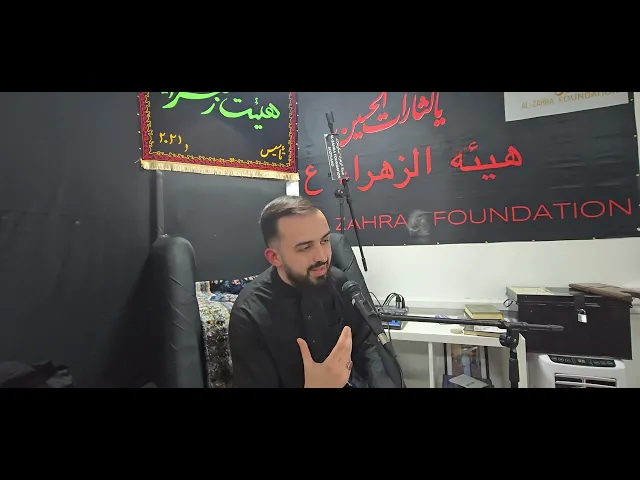
Islamic laws- A few essential points regarding jurisprudence- Hamam Nassereddine
0
0
9 المشاهدات·
24/02/01
في
محاضرات
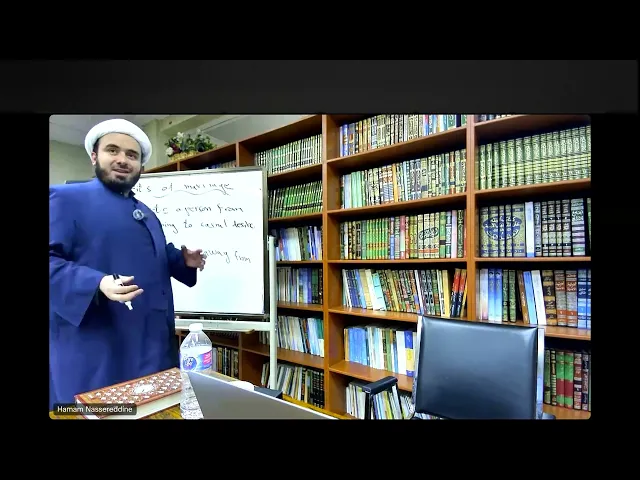
These are short clips in which Hamam Nassereddine explains some important Islamic verdicts/laws. The main purpose behind these videos is explaining Islamic laws/verdicts in a simplified manner.
أظهر المزيد
Transcript
[0:28]ald all right so um last year we began studying the chapter
[0:54]of kalal uh regarding Salat meaning the chapter that speaks about mistakes
[0:59]or errors that a person might might perform in prayer and I
[1:03]believe not I believe the scholars believe that this is a very
[1:10]important chapter because uh a fallible human being might one day make
[1:15]a mistake in his prayer and when that mistake happens we have
[1:20]to find out is the prayer valid or invalid right if it's
[1:22]invalid then we have to repeat it and if it's valid then
[1:27]there wouldn't be need of repeating the prayer so this is one
[1:30]of those uh let me call them practical or say very practical
[1:35]chapters uh all of is practical yes when we're talking we're talking
[1:45]about laws have one when we're talking F we're talking Islamic laws
[1:53]we're talking about laws that obviously are uh implemented that a person
[1:57]will have to follow Mak sense but then again there are certain
[2:04]chapters that might not apply to certain individuals like what like uh
[2:09]the chapter of business if I don't perform business transactions with people
[2:15]I stay away from that J then that chapter of does not
[2:21]apply to me and if it applies to me it applies to
[2:25]me to a minimal degree because I don't have a business and
[2:28]I try to avoid business transactions as much as I can yes
[2:31]sometimes I'm going to buy food drinks and the likes that's why
[2:38]I said some laws will apply to me but the majority of
[2:41]the laws regarding business transactions will not apply to me makes sense
[2:45]whereas when you have a businessman he owns a company J he
[2:51]has Goods he has Commodities that he's buying he's going through business
[2:54]transactions so on so forth he needs to study the chapter of
[3:01]business called the the chapter of tar to ensure that his transactions
[3:04]are valid that he's not doing anything unlawful anything Haram so this
[3:13]chapter particular the chapter of Errors is a very practical chapter because
[3:19]at any point someone might perform a mistake in his or her
[3:22]prayer so when we study this chapter properly and obviously we take
[3:30]our time to dissect the laws will be able to understand what
[3:34]mistakes invalidate the prayer and what mistakes do not invalidate the prayer
[3:41]this is why I specifically chose to to study uh the chapter
[3:47]of of errors and mistakes in in Salat we began last year
[3:53]with with these laws so we do have a few lectures on
[3:55]YouTube regarding these laws uh we're going to continue where we left
[4:01]off similar to the other classes if you want to review the
[4:04]lectures you can find them on my page however before mentioning um
[4:13]before mentioning uh or going into one of the verdicts for today
[4:17]I want to mention a few points regarding these are General points
[4:23]regarding Islamic laws that someone should keep in mind okay first of
[4:37]all I'm pretty sure you know that there's something called right and
[4:47]those are the roots of religion which are the our main beliefs
[4:58]so the main Islamic beliefs are the roots of religion believing in
[5:04]Allah's existence and unity believing in Allah's Justice believing in the prophets
[5:18]believing in IM uh in the the IM what we call and
[5:24]finally believing in the day of judgment the day of resurrection and
[5:29]the hereafter those are what the roots of religion but we've also
[5:35]heard of which are the branches of religion can you name me
[5:59]some for not all just some yes Salat performing prayer yes H
[6:09]pilgrimage fast in the month of Ramadan bra yes paying Zak okay
[6:20]enjoying good forbidding evil battling in the path of Allah subhana tala
[6:27]obviously when there's a need to B um and okay so believing
[6:37]in the in the guardian Guardianship and authority of and disassociating ourselves
[6:47]from their enemies those are all what if I want to be
[6:52]more precise in my words I'll say these are part of because
[6:56]are what they are all Islamic laws okay so when we say
[7:04]we're talking about all Islamic laws the minor Islamic laws and the
[7:16]major Islamic laws usually when you say what are people mention the
[7:23]10 obligations that we just mentioned right now in the class these
[7:27]are essential essential laws but they're not the only laws out there
[7:34]make sense so the obligation of prayer that's an essential law the
[7:37]obligation of of fasting it's an essential law but you have others
[7:41]as well like the forbiddance of wine the forbiddance of pork the
[7:45]forbiddance of of uh adultery J the forbiddance of killing innocent human
[7:50]beings so on so forth so to be more precise doesn't only
[7:58]refer to the 10 obligations we mentioned it refers to all laws
[8:04]whether we're talking about minor laws or major laws yes exactly all
[8:30]the laws the minor ones and the major ones so for example
[8:38]the forbiddance of wine is what is a major law it's a
[8:42]major law the obligation of prayer is a major law but then
[8:46]you have minor laws like let's say uh the obligation of replying
[8:51]to the Salam of the believer when a Believer tells youum right
[8:57]it's must for him to initiate theam but when he sayum it's
[9:06]on you to reply Witham it's j so you can consider that
[9:09]a minor law but it's a law it's a law of godhana
[9:13]waala so refers to all the laws the minor ones and the
[9:19]major ones this was the first point I wanted to mention the
[9:32]second point is point number two Islamic jurist Prudence is extremely detailed
[10:04]extremely detailed okay such that our Scholars tell us every action has
[10:16]a law every action you do even if it's a wink you
[10:19]know you you wink at someone or you lift a finger or
[10:24]you lift your arm that's an action every action you do has
[10:30]a law in the book of God subhana wa tala and every
[10:44]action falls under one of five categories the does someone have an
[11:01]idea what are those five categories Abdullah MH yes what's so is
[11:17]unlawful something that's unlawful waj is what something that's mandatory must is
[11:25]something that's recommended so Allah T tells you to do it but
[11:28]he doesn't obligate you to do it if you do it you
[11:32]get rewarded if you don't do it you you don't get punished
[11:34]s uh for w whatever is W Allah commands you to do
[11:40]it and he tells you you cannot not do it so you
[11:45]can't refrain from it if you refrain from it there's a there's
[11:50]a punishment okay Haram he tells you not to do it whatever
[11:54]is Haram he tells you not to do it and he tells
[11:57]you you don't have the option of not doing it you have
[11:59]to refrain from it such that if you do it you will
[12:05]deserve punishment make sense is something that's disliked so Allah tells you
[12:10]not to do it but he doesn't obligate you to refrain from
[12:15]it so if you refrain from it you'll get theab you'll get
[12:19]rewards because you're listening to Allah subhah wa ta'ala but if you
[12:23]do it you will not be punished but you will receive some
[12:29]sort of harm that's why Allah saiding you don't do it right
[12:31]it is harmful but it's not as harmful as the whatever is
[12:36]unlawful make sense hence Allah tells you okay if you want to
[12:41]do the Mak you may do it but if you want my
[12:48]advice Allah's advice advice stay away from it not to forget certain
[12:52]Deeds are not only Mak they're very makees sense they're really Mak
[12:57]really Mak so a person should try his best to avoid those
[13:03]you know we have a list of Deeds that are disliked and
[13:07]you can find them scattered throughout the narrations of and the books
[13:13]of Juris Prudence um I'll be honest it's not the easiest task
[13:17]to avoid all makat it's it's difficult not the easiest task but
[13:21]if we want to start somewhere let's at least start with refraining
[13:26]from the things that are really M that are very disliked makees
[13:29]sense and then you have you have what's is something that's lawful
[13:39]okay so means lawful or if you want say allow something that's
[13:50]allowed Allah tells you you can do it and you can leave
[13:55]it up to you I want to drink water can I Ya
[14:01]Allah he says yes I don't want to drink water right now
[14:04]at this very moment can I refrain from that Ya Allah he
[14:08]says yes up to you ask for refraining from drinking water water
[14:16]at all times that's what that's Haram because it'll kill you right
[14:21]and you can't commit suicide so if someone says I'm not GNA
[14:25]drink water until I die out of thirst that's Haram you can't
[14:27]do that you have to do what it takes to preserve your
[14:31]life to protect your life so that's is that clear okay okay
[14:53]I think some students online can't see me can everyone see me
[15:01]the students were online yes we can see yeah um I can
[15:18]see you there's no issues can anyone not see me is anyone
[15:30]not seeing me that's my question by any questions on these points
[15:48]brothers sisters abdah something that's really Mak uh I'll I'll think of
[16:01]an example for you no problem yeah yes what if you unintentionally
[16:22]okay oh so you do something unlawful by by mistake yeah you're
[16:29]you're not held accountable for whatever is done accidentally it depends on
[16:52]your ignorance uh if the person was then he would be held
[16:58]accountable for for his ignorance we can just close the door please
[17:01]someone's vacuuming outside okay so it depends on the type of ignorance
[17:13]Hussein let me write that down and it's an important Point as
[17:18]well before I continue with these points so when we're talking about
[17:26]ignorance what we call Jah okay we have two types of ignorance
[17:32]we [Music] have and we have so the one who's ignorant is
[17:48]either or what does that mean it means someone is okay he's
[17:57]Afflicted with the ignorance he's ignorant out of his own hands he
[18:04]can learn but he chooses not to so he does have access
[18:13]to knowledge he can acquire the knowledge of the Islamic laws but
[18:17]he chooses not to why because he's lazy because he's too busy
[18:21]with work too busy with life too busy with family so on
[18:25]so forth someone can give you know a thousand a thousand excuses
[18:28]long story short he can learn but he doesn't want to so
[18:33]this person if he does something unlawful and he tells Allah I
[18:39]didn't know that was unlawful hence I did it Allah T can
[18:42]hold him accountable telling him all right you didn't know but why
[18:46]didn't you learn and we do have at least one tradition actually
[18:54]we have a few texts which indicate that Allah subh T does
[18:58]hold the accountable okay the one who's Afflicted with ignorance this person
[19:09]is ignorant but he doesn't have access to knowledge he doesn't makes
[19:15]sense so he doesn't know because he can't know why can't he
[19:23]know again you can have you can think of uh different reasons
[19:28]different circumstances someone wants to learn but unfortunately he's living in the
[19:38]era of a tyrant and the Tyrant isn't allowing his community you
[19:43]know the people who the people that he's ruling over he doesn't
[19:48]allow them to find out about the truth they want to know
[19:53]but they can't know because of that Tyrant yeah so here they
[19:59]don't have access to knowledge hence there not yes now that yeah
[20:28]okay so we were saying every action falls under one of five
[20:38]categories it's either W mandatory Haram unlawful Mak disliked uh uh must
[20:45]recommended or meaning it's allowed or it's lawful every action the third
[20:56]point we want to mention is sometimes the law concerning one specific
[21:17]deed will change depending on what depending on or let me say
[21:32]due to not depending on due to the change of circumstances so
[21:55]when you're talking about Islam when you're talking about the the the
[22:00]Islamic set of laws you're talking about a rich set of laws
[22:07]that uh presents you know different laws regarding one specific action and
[22:13]each law will pertain to a specific situation to a specific scenario
[22:20]so you might have let's say an essential law pertaining to a
[22:27]particular deed but that law will change in certain circumstances like what
[22:37]yes what do you mean M okay you're getting close to what
[22:58]I want your example is good but I was referring to something
[23:01]a bit different yes okay yeah I think that's that's a better
[23:10]example uh when you're not traveling you pray Tam if you prayed
[23:17]when you're not traveling your would be what invalid because you're You're
[23:24]missing two from you're deliberately missing two so your is invalid J
[23:29]but when you travel and the conditions of traveling are fulfilled J
[23:35]if you purposely pray knowing you have to pray KAS what happens
[23:39]to your Sal becomes Bon comes invalid Allah at that point wants
[23:43]you to pray KAS so he wants you to omit the two
[23:46]last you tell Allah Ya Allah no I want to seek nearness
[23:51]to you and I want to do fouras Allah tells you no
[23:55]if you're a true worshipper you're a true Muslim you listen to
[23:58]my my commands I'm the one who decides when you're traveling I
[24:03]want two you want to pray more than two you can pray
[24:07]Sal you can pray two whenever you want keep this in mind
[24:11]whenever you want to do two you can you can pray you
[24:16]can do before his sh by a few minutes or seconds few
[24:22]minutes right he told the enemies I want to do what Salat
[24:29]I wanted to pray two two final before he leaves this finite
[24:39]world can you please read the board it's hard for me to
[24:44]see it can you read it for me please yeah so we
[24:50]wrote sometimes the law concerning one specific deed will change due to
[24:54]the change of circumstances can you hear me can you hear me
[25:06]yes s uh so uh for example uh uh we can have
[25:11]the example of for example if somebody is dying uh and he
[25:14]don't have anything to eat uh but only he has for example
[25:19]some Haram uh things to eat for example a pig uh so
[25:25]he can eat in this de circumstances just to save his life
[25:28]this is this comes from this uh ruling yes s exactly exactly
[25:34]that's a perfect example other than the and Tam example other than
[25:46]the and example uh the one you gave is perfect did you
[25:53]guys hear the example no other than and so basically one of
[26:01]a person is about to die out of starvation and he only
[26:06]has let's say pork you can eat the pork sah but essentially
[26:09]you can't eat it it's not lawful for you to eat pork
[26:15]so the essential law regarding pork is what is it's it's forbidden
[26:19]but in a case of necessity when you're for example about to
[26:23]die out of starvation and the only option is either dying or
[26:29]uh the only options you have is is either dying out of
[26:32]starvation or eating for then here you can eat it yes there
[26:47]is yes there are there is uh uh there is a verse
[26:51]about this in the Quran uh another example I like to give
[26:56]is one pertaining to sugar sugar is what sugar is that's the
[27:08]essential law regarding sugar but someone has you know diabetes and he
[27:13]knows if let's say he eats a whole bag of sugar he'll
[27:19]pass away eating that whole bag of sugar would be what Haram
[27:22]because he's committing suicide by eating it so the Law changes the
[27:29]Law changes another example is touching a non is what har it's
[27:36]unlawful right to have skin to- skin contact with a non Maham
[27:41]but if that nonaham is let's say about to die there's a
[27:47]lady who's let's say drowning and uh I need to save her
[27:52]if I don't save her she's going to die right in this
[27:54]case I can touch the lady because it's the case of of
[27:58]necessity in normal cases I can't touch her but because she's drowning
[28:04]and I'm the only one who can save her I can dive
[28:05]into the water and save her make sense have one yeah you're
[28:13]saving a life right what if you that's different we I'm supposing
[28:24]in the example that you can you can do something to save
[28:28]that person yeah if you can't that's uh that's a different scenario
[28:34]again each scenario has its own law and the reason I'm mentioning
[28:37]this that each scenario has its own law Islamic set of laws
[28:43]is very detailed the reason I'm mentioning this is in many cases
[28:47]we're gonna we might ask questions about certain issues about certain Deeds
[28:56]but we won't be able able to give a precise answer to
[29:01]the question unless we refer to who to the unless we refer
[29:10]to the uh yes so sometimes what happens is we're going to
[29:13]have questions about certain issues certain Deeds but because the Islamic set
[29:20]of laws is very detailed one will not be allowed to Simply
[29:23]you know give his opinion which will be based on assumption regarding
[29:28]that law in order to pass a fatwa you need you need
[29:34]to have knowledge you need to know that what you're conveying is
[29:39]actually true so if we don't know a particular law regarding a
[29:42]specific deed we must refer to the to find out now when
[29:49]we look at the the book of jurist prudence the mentioned a
[29:54]lot of laws in you have over 3,000 laws does that mean
[30:01]contains every single law in the book no there are other laws
[30:06]that are not mentioned in so if you want to know a
[30:14]particular fatwa and you can't find it in the book of jurist
[30:19]prudence you cannot come up with your own fatwa with your own
[30:24]verdict based on what you know from the Islamic set of laws
[30:31]rather you have to refer to the and make sure if you
[30:34]know and make sure what is the the the correct fatwa regarding
[30:40]this issue make sense make sense let me see how much time
[30:53]we have left okay wanted to begin with the the verdicts of
[31:16]say Sani today but let me mention one last point and we'll
[31:20]begin with his verdicts next week the last point is also really
[31:23]important because sometimes people fall into it and we've mentioned this before
[31:29]but again many of you were not present so I'd like to
[31:32]mention it again there is something called it was a method used
[31:43]to derive Islamic laws and it was used by certain individuals who
[31:47]opposed one main individual who used it was Abu the the Imam
[31:54]the the leader of the hanafi Muslim okay our Sunni brothers and
[32:01]sisters when it comes to Juris Prudence they have different sects and
[32:05]even in beliefs they have different sects in beliefs they have the
[32:09]SE and they have the okay they're different they have different beliefs
[32:15]in Juris Prudence they have the hanafi sect meaning Abu hanif's sect
[32:21]the Maliki the H and the shaf Abu was a man who
[32:29]lived during the era of IM and unfortunately he he would use
[32:39]to derive laws whil IM was present that was a Calamity you
[32:43]know if the Imam is present then you have to refer to
[32:51]the Imam to know your laws right or wrong you're not allowed
[32:53]to make up your own s you're not allowed to make up
[32:58]your own sect and to call people to follow that sect everyone
[33:01]should follow the sect of which is the sect of God subh
[33:05]meaning it is the sect it is the religion of God subhana
[33:13]wa tala nonetheless Abu hanifah would use the method ofas uh the
[33:22]Imam had a discussion with him and proved to him thatas could
[33:27]not be used that was that it was incorrect improper unlawful to
[33:34]useas to derive Islamic laws but now the question is what isas
[33:40]right what isas we need to understand this issue because as we
[33:44]said sometimes people fall into it we might even fall into it
[33:49]we might do and we might say well you know what because
[33:50]so and so is lawful then X Y and Z should be
[33:55]let's say Haram or should be Halal okay okay so what is
[33:59]let's understand this issue and we'll conclude the lesson for today subh
[34:05]wa so now we want to talk about the method ofas you
[34:12]can call it the method of comparison so how does kasas work
[34:45]basically we will know that a particular thing a particular thing or
[34:55]deed is is lawful or unlawful okay so in better terms we
[35:03]will know what is the law pertaining to a particular deed that
[35:06]law could be that it's lawful or it could be that it's
[35:09]unlawful Etc but at the same time we will not know we'll
[35:19]be ignorant of another law pertaining to a similar thing or a
[35:27]similar deed okay for example what did we say until now the
[35:35]method ofas when we're doing we're comparing between two things so number
[35:46]one we know the law pertains meaning to a specific thing or
[36:11]deep example apples are what they're lawful apples are lawful okay so
[36:27]I know the law the Islamic law pertaining to what eating apples
[36:32]eating apples is Hal right okay number two we don't know or
[36:47]we won't know the law pertaining to another specific thing or specific
[37:05]deed like what an example of this is let's say the lawfulness
[37:18]of eating oranges I'm just using this as an example we all
[37:26]know that oranges and apple are Hal but I'm giving an example
[37:29]okay so don't hold me accountable for the example suppose we did
[37:35]not know whether oranges were Halal or not we didn't know we
[37:38]looked in the Quran did Allah mention oranges we didn't find any
[37:43]verse about oranges nor any verse speaking about fruits in general again
[37:47]it's just an example Allah does mention fruits in the Quran but
[37:50]let's let's say he didn't then we went to the narrations of
[37:54]the Prophet the narrations of to see that they speak about oranges
[37:59]they speak about fruits and we didn't find any narration stating that
[38:05]oranges are Halal or that fruits in general are Halal okay so
[38:09]we remained in a state of confusion are oranges Halal or not
[38:15]but we remembered that there is a quranic verse or there is
[38:21]an irration stating that apples are Halal this is where someone will
[38:27]will or might use the method ofas and we'll say what because
[38:34]oranges resemble apples and apples resemble oranges because they share similarities for
[38:42]example both of them are fruits and both are acidic that means
[38:49]since Islam said apples are Halal oranges should be halal when you
[38:58]think about this you might say yeah you know what it makes
[39:04]sense IM says no wrong this is refuted because who tells you
[39:10]that Allah subhana T made apples Halal because they're fruits maybe there's
[39:15]something within the Apple which makes it Halal but that thing is
[39:19]not found in oranges thus oranges should be har can we give
[39:28]an example of fish for example the fish is uh Halal with
[39:31]the fence but it's not Halal without fence so you understand nor
[39:37]scales both swims we cannot do the Pas at that time for
[39:47]the fish or the seafood that that don't have any skin exactly
[39:52]yes yes fish would be a better example again don't misunderstand me
[39:56]oranges are Halal don't have a you know don't freak out uh
[40:02]oranges are Halal apples are Halal fruits are Halal but I was
[40:05]supposing if we did not know whether oranges were Halal or not
[40:11]and we did not have quranic verses or narration stating that fruits
[40:15]in general are Halal okay then then we would need to know
[40:22]are oranges Halal or not knowing that apples are Halal can we
[40:25]say oranges should be Halal no we can't but the method of
[40:28]tells you yes because oranges and apples share similarities okay for example
[40:35]both are fruits both are acidic then they should share the same
[40:39]law the imams say otherwise they say no that's wrong with the
[40:45]example that say gave say Hassan it's a better example uh fish
[40:51]right we know that fish with scales are Hal correct fish with
[40:56]without scales are Haram the known opinion amongst the Shia is that
[41:03]fish without without scales are Haram so if we suppose that we
[41:10]don't have any quranic verse or any narration stating whether fish without
[41:15]scales are Haram or not or Halal or not but we knew
[41:18]that fish with scales are Halal can we come and say can
[41:26]we say that fish without scales must be because they resemble the
[41:30]fish with scales we can't but those who believe in they tell
[41:33]you yes because those two types of fish are fish so they
[41:40]have similarities then they must share the same law yes only SAR
[42:05]that's what the the method ofas would be saying but we don't
[42:13]we don't believe in that okay so as we said the the
[42:15]the way the method ofas works is number one we know the
[42:19]law pertaining to a specific thing or deed and then we don't
[42:23]know the law pertaining to another specific thing or deed okay and
[42:28]these two things that we're talking about or these two Deeds are
[42:32]somewhat similar so let's write that point down we didn't write it
[42:46]down the two things or de or deeds will share certain similarities
[43:20]hence one will say the two two things or deeds must share
[43:37]the same law again this is what the method of tells you
[43:53]but refuted that method they told us be aware this method demolishes
[43:59]Islam someone applies he'll be destroying Allah's religion subh that's not how
[44:07]Allah's Allah's religion works sometimes you have two Deeds that are very
[44:09]similar but one is Hal and the other is Haram when you
[44:14]go to Haj when you go to Haj and you learn theam
[44:18]of theam of the laws of ha you get that message the
[44:23]laws of ha teach you that there's no room foras in Islam
[44:27]for example in ha when you're in the state of if you
[44:38]go by a bad smell something that smells bad you're not allowed
[44:46]to close your nose so that you don't smell the bad scent
[44:51]but you're allowed to hold your breath one will say same thing
[44:58]no one is halal one Isam the two Deeds are similar because
[45:04]they have the same effect if you close your nose or hold
[45:08]your breath at the end of the day you're not smelling the
[45:14]bad scent but one is Haram for a certain reason that Allah
[45:17]knows and the other is halal hey you can't hold your nose
[45:23]and you can't close your nose so that you don't smell the
[45:27]bad scent there is a reason but we might not know the
[45:29]reason we don't have to know the reason drinking wine or consuming
[45:39]vinegar wine and vinegar are different liquids they're different but they do
[45:45]have similarities so because they have similarities is it fair to say
[45:57]vinegar is Haram no no vinegar is halal vinegar is halal Allah
[46:03]makes it Halal but he made he might he made wine Haram
[46:06]um she yes do you know for the first example uh why
[46:13]you cannot uh hold your nose but you can uh you can
[46:22]hold your breath yes I don't know no I don't know the
[46:27]exact reason or the exact philosophy do they tell you while you're
[46:31]you know taking the class for Haj or they don't well they
[46:37]tell us the verdict but we don't know why that verdict was
[46:40]passed you know by by the infall of course on behalf of
[46:49]God subhana wa tala but can we can we find out or
[46:51]it's hard well you can but the the only way to find
[46:58]find out would be to refer to what Allah said or said
[47:04]in many narrations did explain why Allah prescribed certain for example review
[47:13]the book it's filled with narrations stating why Allah subhana wa tala
[47:19]presented this ruling or why Allah did this or that okay but
[47:22]unless give us the reason why Allah presented this specific law or
[47:31]this specific ruling then we can't say that this is the exact
[47:35]reason we can come up with you know uh hik we can
[47:41]come up with wisdoms by using our intellects but we can't say
[47:45]that this is the main reason why Allah prescri prescribed that law
[47:56]make sense yes thank you no problem about it's so very good
[48:21]question let me leave it till next week then it's going to
[48:27]take time to explain and I'm out of time okay yeah after
[48:31]class I have to go I have uh a meeting I'm sorry
[48:36]but inah next week I'll tackle that question okay insh I'll remember
[48:40]it no problem
0 تعليقات
sort ترتيب حسب
- أعلى تعليقات
- أحدث تعليقات
التالي
10 المشاهدات · 22/05/25
6 المشاهدات · 24/01/31
2 المشاهدات · 24/02/27
7 المشاهدات · 24/04/24
10 المشاهدات · 24/08/13
12 المشاهدات · 24/10/10