التالي
7 المشاهدات · 22/05/25
4 المشاهدات · 24/01/31
6 المشاهدات · 24/02/01
2 المشاهدات · 24/02/27
6 المشاهدات · 24/04/24
7 المشاهدات · 24/10/10
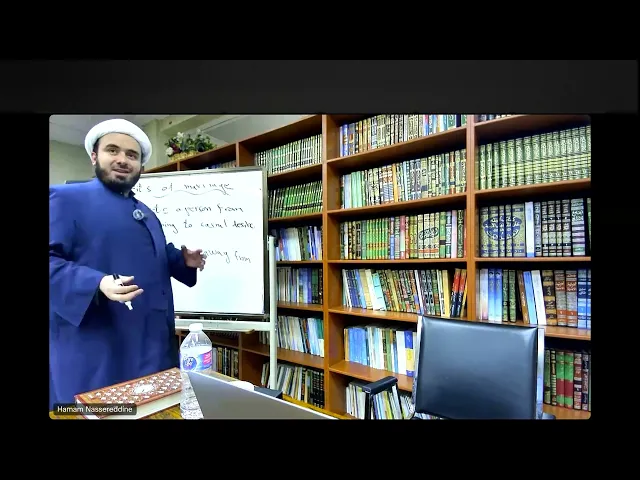
Islamic laws- The two definitions of Rukn- Hamam Nassereddine
0
0
28 المشاهدات·
24/07/29
في
محاضرات
These are lessons in which we shed light on Shia Islamic laws and explain those laws in a simplified manner.
أظهر المزيد
Transcript
[0:24][Music] ald Hussein Ali Hussein Akbar in our last lesson we were
[1:21]speaking about the conditions of prayer the parts of prayer and specifically
[1:25]the Aran so the pillars of prayer and we mentioned that the
[1:34]reason we're mentioning these points is as we read the M the
[1:38]verdicts in the chapter of the chapter regarding errors or mistakes done
[1:44]in prayer uh understanding these verdicts will depend on understanding the Aran
[1:50]and also understanding what do we mean when we say parts of
[1:58]prayer for example or the conditions of prayer so we said that
[2:04]in Salat in prayer you have conditions of the validity of the
[2:10]prayer when these conditions are not fulfilled what happens the prayer becomes
[2:14]invalid an example of these conditions is the presence of w you
[2:21]need to have W to pray without wo your prayer is what
[2:23]invalid thus our Scholars keep on telling the Believers to ensure that
[2:32]their Woo is correct because if the Woo is incorrect meaning it
[2:36]is done in a way where it's invalid what happens the prayer
[2:41]becomes invalid so if someone doesn't learn woo properly what happens possibly
[2:47]after 20 40 60 years he listens to a lecture by some
[2:51]scholar finds out that his wo is wrong and then finds out
[2:58]that he has 20 or 40 or 60 years of to perform
[3:02]he could have avoided that mistake by simply learning W learning how
[3:07]to perform wo properly when he was a child or you know
[3:14]when he was close to BU close to BU um this is
[3:18]why you'll realize when people go to Haj um the the instructors
[3:29]who are present the guides in Haj they they usually check the
[3:35]the wo of the pilgrims so they ask the they come to
[3:43]them and they examine them one by one they tell them perform
[3:46]W in front of me perform in front of me or at
[3:53]least tell me how you do how do you do W of
[3:53]course if if the guide is a male and he's speaking to
[3:57]a sister he won't tell her to do wo in front of
[4:00]him but he'll he'll tell her explain W like how do you
[4:02]do W to ensure that their W is correct why because certain
[4:11]rituals of Haj certain worships in Haj depend on depend on W
[4:15]your has to be valid for those um uh worships to be
[4:22]valid so instead of waiting till we go to let's do it
[4:28]when we're children or when we're close to if someone's already and
[4:30]he he has not done that yet let him you know ensure
[4:35]that his wo is correct by speaking to a scholar or someone
[4:39]who uh knows how to properly do like hous students for example
[4:48]if you don't have water the general rule is when when when
[4:54]you don't have water you do but but there are details regarding
[4:59]when can you you do T um yeah that's tum so so
[5:10]tum is done with with what with Earth like me sand um
[5:15]uh as you said the dirt like the soil of the earth
[5:21]um Pebbles you could use also Pebbles provided that something sticks on
[5:26]your hand completely smooth such that when you do take with it
[5:32]there's no uh um there's no dust left on your hand from
[5:41]the pebble yeah so going back to the main topic we said
[5:44]wo is one of the conditions of what of the validity of
[5:49]prayer another condition is the purity of the body a third condition
[5:51]is the purity of the clothing then we went into the parts
[5:57]and we said there are several several mandatory parts of prayer but
[6:02]among those parts we have we have things that are called pillars
[6:09]J can someone remind me of the pillars what are the pillars
[6:16]in [Music] prayer so ni number one the intention number two the
[6:27]opening number three standing up and we said there are four uh
[6:37]types of two are and two are not which two uh two
[6:46]types of are at can yes the that you perform when you're
[6:54]doing okay and that's W but not that's also W so we're
[7:09]left with which one right before that's also so we said we
[7:19]have four types of you have when we say we're talking about
[7:22]standing up you're standing on both feet you're facing the that's called
[7:32]so when you stand up standing up during is mandatory and it's
[7:36]not only mandatory it's a it's a pillar standing up when you
[7:43]are reciting the two chapters or reciting the in the third or
[7:46]fourth that's also W but it's not it's not a not a
[7:51]pillar so that those are two types of what third things that
[8:00]if they are not done invalidate prayer completely correct H we're going
[8:05]to get to to the definition in yes okay no problem we're
[8:09]going to get to to the definition and we're going to see
[8:15]that has a definition Sani has a slightly different definition we'll look
[8:21]at both in so the second type ofam is standing up whilst
[8:32]you are reciting the two chapters or whilst you're reciting during the
[8:40]third or fourth that's but it's not a not a pillar the
[8:46]third type ofam is what standing up before that's a pillar it's
[8:51]a and the last type of is standing up after that's but
[8:58]it's not a then we have bowing down and finally we have
[9:06]the two SAS of one those two the two sjas together the
[9:13]two sjas of one they're also a also a pillar so those
[9:16]are the pillars in Salat I'm not writing them down right now
[9:21]because we wrote them down last week we're just trying to refresh
[9:24]our memories so we can continue where we left off uh abdah
[9:43]that's a good question so for the students who are online Abdullah
[9:49]is asking what what is the difference between the that we uh
[9:55]perform when we're reciting the two suras and and the that takes
[10:03]place before aren't alls connected and the answer Abdullah is naturally those
[10:11]KS will be connected yes meaning when I'm paying attention to what
[10:16]I'm doing I'm not in a state of unawareness I will remain
[10:23]standing J I will stand up when I'm reciting the two suras
[10:27]if I've done I'm already standing up I'll remain standing when I
[10:35]perform the two suras when I recite them and before I'll be
[10:39]also standing up I'll say allahar and then I'll go into R
[10:43]that's if I'm what if I'm paying attention to what I'm doing
[10:48]but sometimes what happens a person goes through a state of sah
[10:52]a state of unawareness and he might do something that he pays
[10:58]attention to later on so so hypothetically speaking suppose someone stood in
[11:07]his Sal he did and then for some reason he went through
[11:12]a state of sah a state of unawareness and he sat down
[11:17]then he recited and now he's sitting down he finished now he
[11:26]wants to go into is he allowed to s simply go into
[11:31]how's he sitting down that that state of unawareness finishes where it
[11:36]finishes it goes away when he's done so he's finished he finishes
[11:45]he says all of a sudden he thinks wait what am I
[11:49]doing I'm sitting down I should be standing up he doesn't say
[11:55]these words he just thinks about them right so now he wants
[12:00]to go into so can he go into as he's sitting down
[12:03]he can't he'll tell himself you know what I'm gonna stand up
[12:11]but I won't stand up and then go into r no no
[12:16]I'll I'll stand up in a way where I go automatically into
[12:20]without you know properly standing up so he's he's on the ground
[12:29]right he's sitting down and he stands up like this and he
[12:35]doesn't stand up doesn't properly stand up and then go into R
[12:39]would that be allowed it wouldn't because we said before R Allah
[12:45]wants you to be standing up you were praying and you went
[12:54]through a state of a state of unawareness hence you recited as
[12:59]you were sitting down Allah forgives you he says okay sure we
[13:07]let that one pass why because the that you should do when
[13:10]you're reciting the two suras is but it's not a and the
[13:15]person omitted that out of unawareness so Allah tells him all right
[13:18]I'll let that go that's fine your Sal is still valid but
[13:20]now what are you supposed to do you're supposed to get up
[13:26]yeah so he's sitting down he gets up he stands properly and
[13:31]now he goes into so that's that's the issue yes so he
[13:58]when he he remembers that he's sitting down that whilst he's reading
[14:03]should he repeat the faat if he remembers after uh if he
[14:08]remembers before he completes the second Surah that's your question I'd have
[14:13]to check right now I'm not sure yes say Al that would
[14:39]be safer for sure yeah so if you're studying the faat and
[14:43]you want to itch your nose it would be safer to just
[14:45]stop talking and then itch your nose because if you do that
[14:51]your Sal is valid for sure but but are you able to
[14:53]actually make that movement as you're reciting fat you itch your nose
[15:00]that I'd have to check again uh I'm unsure at the moment
[15:02]I forgot the okay yes closing your eyes in is it's disliked
[15:27]no problem uh in to remain focused in Salat look at the
[15:36]places Allah wants you to look at when you're in Salat so
[15:41]the positions of prayer depending on the position you're in or the
[15:46]the the W that you're performing Allah T wants you to look
[15:53]at a different spot so when you're standing it's must not it's
[15:57]recommended to look at the place where you put your forehead uh
[16:01]when you prostrate when you're in it's recommended to look between your
[16:08]leg between your legs between your feet when yes yeah so it's
[16:20]must it's recommended to look between your feet when you are uh
[16:24]to look at the the spot between your feet J when you
[16:29]are in when you're sitting down it's recommended to look at your
[16:34]lap when you're in it's recommended to look towards your nose that's
[16:46]basically the what Allah T wants you to look at in those
[16:50]parts of uh Salat it's not W but it's must it's recommended
[16:57]when you do that it helps you focus but if you're you
[17:00]know looking right and left you're and you're looking at the the
[17:05]surroundings you're going to get preoccupied with what you're seeing you won't
[17:13]focus than you can point pointing is is fine um but again
[17:29]in general keep the following point in mind because it will ensure
[17:32]that your Salat is valid if you want to make a movement
[17:36]and you're unsure whether that movement can be done as you're talking
[17:41]just remain silent do the movement which obviously will not invalidate the
[17:49]Salat because uh it will not break the form of Salat okay
[17:52]if it breaks the form of Salat no that that's a problem
[17:57]okay um and then you continue reciting whatever you were reciting so
[18:06]I'm so suppose I'm reciting and uh there's a spider beside my
[18:19]son okay I point to the spider so he watches out I'll
[18:26]remain silent I'm me I point he sees the spider then I
[18:31]continue my that's fine it's okay it doesn't invalidate the prayer same
[18:41]goes for mean tapping mean my kids are fighting as I'm doing
[18:48]Salat I stop the recitation and I tap my my lap know
[18:55]stop that's also okay but again the action I'm doing does not
[19:00]break the form of Sal if it breaks the form of Salat
[19:04]that's a problem yes mhm uh let me check let me check
[19:29]yeah yes just close your eyes and you can close your eyes
[19:45]but uh it's not Haram to to close your eyes in Salat
[19:47]it won't invalidate the Salat but it's Mak it's disliked so in
[19:56]general it's disliked to close your eyes and salot yeah when your
[20:11]eyes are open it's not Haram so technically you can do it
[20:17]yeah technically you can do it it's not Haram and uh it
[20:21]doesn't invalidate the Salat yeah just make sure you don't sleep closing
[20:26]your eyes and is uh sometimes tricky yeah okay so we spoke
[20:36]about the Aran let me see how much time we have left
[20:42]we spoke about the Aran right now what is a r what's
[20:50]the definition of a r last week actually the week before we
[20:57]mentioned the definition quickly today I want to shed more light on
[21:01]this issue so we find that sayi one of our previous Mar
[21:24]who wrote a very important book called he presents a definition then
[21:32]presents a definition that's slightly different uh let me write this man's
[21:38]name down then I want you to keep in mind I want
[21:42]you to keep his book in mind one day hopefully you can
[21:48]read it and benefit from it so his name is a say
[22:44]say and he is the author he wrote a book of Juris
[22:56]Prudence called and because this book is so important a bunch of
[23:04]maraja a good amount of Maraj they came and they wrote footnotes
[23:10]as they explained or they presented the verdicts where they differred with
[23:20]say CI one of the special uh uh uh traits of of
[23:28]this book or one of the special you know uh things about
[23:31]it is that it's very detailed super detailed so usually say will
[23:39]mention um any verdict that might come to your that's what he
[23:48]tried to do with so in the chapter of let's say right
[23:53]people have questions tried to think of every question he tried to
[24:03]think of every question that comes to your mind and he wrote
[24:06]the verdicts that would answer those questions the same pertains to any
[24:10]other chapter of that he mentioned in that book so it's extremely
[24:19]detailed whereas you'll find when you come to other books of jurist
[24:22]prudence with all du respect to all of our all of our
[24:24]Scholars you'll find when you come to other books of jurist prudence
[24:30]that sometimes some details are omitted which is normal because at the
[24:33]end of the day there are just too many verdicts too many
[24:39]uh circumstances or situations um that the mar um can mention so
[24:48]he chooses the verdicts that he believes are uh very needed or
[24:52]really need him he went to a different level as I told
[25:03]you his his book is extremely detailed and it's very enjoyable if
[25:07]you like when you read you enjoy it because of the the
[25:11]Precision and the details in that book so what did he say
[25:23]about what arean he said the Aran are basically the parts that
[25:43]lead to the Nullification of the prayer they make the prayer B
[25:49]if omitted or added purposely or out of unawareness J let's write
[26:00]that down and then we'll we'll try to understand what say is
[26:14]saying so according to say may Allah bless his soul the Aran
[26:43]the pillars are the parts of Prayer that lead to the Nullification
[27:12]of the prayer if added or omitted purposely or due to unawareness
[28:01]so there are they are obviously essential parts of the prayer and
[28:09]adding these parts in the prayer or omitting them will make the
[28:17]prayer B that's what we mean when we say nullification okay whether
[28:24]someone is doing that purposely or he's doing doing it out of
[28:29]unawareness those are thean now when we say you add them to
[28:34]the prayer we we mean that you perform an extra we have
[28:41]every has a bunch of Aran right that have to be done
[28:47]can I add more Aran no if you purposely add the Aran
[28:54]what's going to happen you're going to if you purposely add a
[28:58]your your prayer will be invalid what if I do it out
[29:05]of unawareness or say it will also be invalid yes go ahead
[29:12]added or omitted omitted yes yeah so now let me give a
[29:30]few examples uh with examples the the verdicts or the definitions we
[29:35]present in uh will be uh clarified so we said one of
[29:40]the Aran one of the pillars is what all right one of
[29:46]the pillars is R so let's say we have a brother called
[29:49]jaff jaff he comes forward to pray now as he's praying he
[30:03]does r and then jaar decides to get up from ru and
[30:07]to do another in the same why are you doing this after
[30:14]theat we ask him why did you do two two R in
[30:15]one he said I felt like I like it you know I
[30:20]wanted to get closer to Allah subhana tala so I purposely did
[30:24]two we tell him you not f prayer your prayer is B
[30:31]because you purposely added a every has one in the first you
[30:39]perform two R purposely so now your Salat is invalid okay that's
[30:43]what scenario one scenario two prays and in the first he does
[30:51]his he gets up from the uh the ru and then he
[30:58]he forgets he he goes through a state of unawareness he starts
[31:02]thinking about you know his math test so he goes into R
[31:04]once again the math test is preoccupying Ja so he goes into
[31:12]once again and now he realizes what am I doing I did
[31:16]two but the second one was done out of unawareness it was
[31:19]not done purposely it's not that he was playing with his Salat
[31:21]it was done out of sah in this case what happens in
[31:26]this case the Salat is also invalid okay that's scenario two scenario
[31:37]three scenario three here we go to omitting R now when we're
[31:41]talking about adding or adding a we have two scenarios you add
[31:45]the r purposely or you add it why out of unawareness because
[31:51]of you because of because you went through a state of unawareness
[31:55]in both cases it say tells you your Salat will be B
[32:02]the same applies to omitting the by omitting I mean what you
[32:07]do you don't do one of the in the prayer you don't
[32:15]do it at all so one of your if not all theas
[32:20]will be missing somean some pillars when you omit the r you
[32:28]also have two scenarios you're omitting the r purposely or you're omitting
[32:32]the r uh by mistake meaning out of unawareness because you went
[32:37]through a state of unawareness so here we go to scenario three
[32:43]ja starts but again he's preoccupied with what with his math exam
[32:51]after reciting the two suras he dives into suud he goes into
[32:59]and then he realizes you know after the Salat is done he
[33:06]realizes what what have I done in my first I didn't even
[33:11]do I was so preoccupied with you know the math exam I
[33:16]went straight into suud and I continued the prayer so in this
[33:20]case what happens his Salat is invalid one might tell me but
[33:26]you know he didn't do it purposely sure but it's a he
[33:28]missed a so even if he didn't do it purposely because he
[33:33]missed a and is saying is saying whether it's done purposely or
[33:39]not whether it's done purposely or because of unawareness in both cases
[33:46]his Salat will be nullified then his Salat will be nullified it
[33:49]will be boted it will be invalid scenario four is Ja omits
[34:00]purposely so he's basically playing with his he begins the Sal and
[34:06]then he says you know what today I want to do something
[34:08]else instead of doing I'm gonna go I'm G to dive into
[34:14]thinking you know this brings him closer to Allah subhana wa tala
[34:20]no religion does not work that way it's not about what I
[34:23]want it's about what my God wants subhana wa tala I worship
[34:28]God the way he wants me to worship him not the way
[34:30]I want to worship him so in the first after the two
[34:39]suras after he recites the two chapters he dives into purposely here
[34:45]his Salat is invalid it's invalid without doubt because he omitted the
[34:52]r he did not perform the uh purposely make sense this was
[35:05]the definition of as I told you slightly differed with what did
[35:20]sayani say let's write his definition again it's very similar to say
[35:26]has his definition but it's a bit different and I believe in
[35:42]the last class we had two weeks ago when I was talking
[35:45]about Aran I presented the definition of sayi not say San's definition
[36:26]does someone have a question yes she what are you writing on
[36:31]the board so I'm writing say sani's definition of the pillars I
[36:39]can't see you can you say it please yes inshallah so he
[36:45]said okay he said uh the pillars are the parts of the
[36:50]prayer that lead to the Nullification of the prayer if omitted purposely
[36:58]or due to unawareness the definition again is slightly different what's the
[37:13]difference where does the difference lie say saying the pillars are the
[37:20]parts of the prayer that lead to the Nullification of the prayer
[37:26]if omitted purposely or due to unawareness so what's the difference yes
[37:51]s so the difference lies in what in the addition in the
[38:00]the addition obviously if someone purposely adds a r purposely adds a
[38:05]rook to his prayer his prayer will be invalid according to say
[38:08]and but he differs with regarding adding a r in the prayer
[38:21]out of unawareness in some cases it makes the Salat void but
[38:25]in some cases it doesn't so what makes the Salat void in
[38:38]in in general is omitting omitting the r omitting the pillar purposely
[38:45]or due to unawareness if you miss the purposely or due to
[38:53]unawareness then yes in that case the Salat the prayer is invalid
[39:02]so she the only difference is the other guy is also if
[39:08]you add to it so it's aain he doesn't add he doesn't
[39:13]talk about that yes he says in certain cases if you add
[39:18]a out of unawareness the Salat will remain valid in certain cases
[39:26]if you add a out of awareness the Salat will become will
[39:29]uh will will not be invalid so in some cases it will
[39:36]be invalid in some cases it won't again I repeat in some
[39:41]cases if you add a out of out of unawareness theat will
[39:48]be will still be valid and in some cases it will become
[39:52]invalid which cases are those in the next class will we'll we'll
[40:01]speak about the cases where um the Salat remains valid and also
[40:06]the cases where the Salat becomes invalid and then we'll continue with
[40:12]the the verdicts all right I just wanted to uh shed light
[40:19]on this point that say this is slightly differs with sayi and
[40:22]now we've understood where they differ right so next class inshallah the
[40:30]first point we address after we summarize the previous lesson first point
[40:35]we'll address is what are these cases where the Salat remains valid
[40:41]and what are the cases where the Salat becomes invalid in regards
[40:47]to what in regards to adding a out ofah out of unawareness
0 تعليقات
sort ترتيب حسب
- أعلى تعليقات
- أحدث تعليقات
التالي
7 المشاهدات · 22/05/25
4 المشاهدات · 24/01/31
6 المشاهدات · 24/02/01
2 المشاهدات · 24/02/27
6 المشاهدات · 24/04/24
7 المشاهدات · 24/10/10