Up next
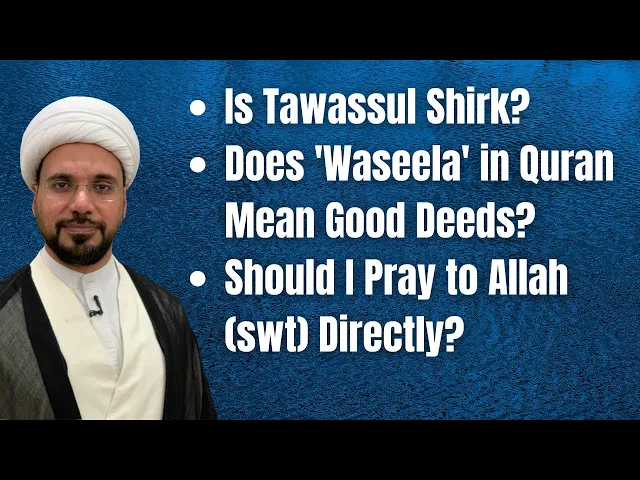
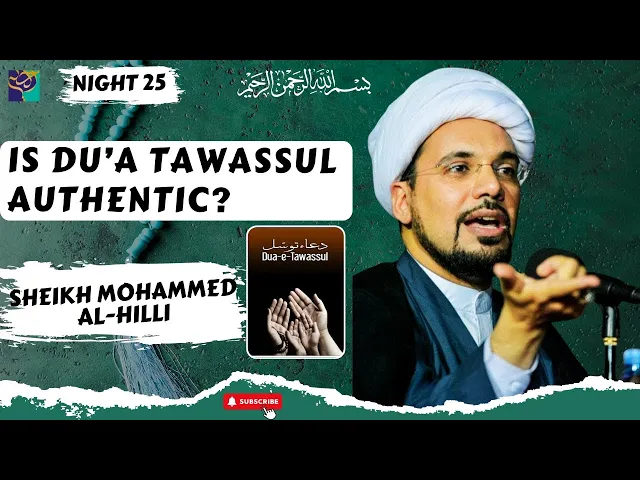
Interactive & Lively Debate - Discussing the Belief of Tawassul
0
0
42 Views·
24/06/21
In
Other
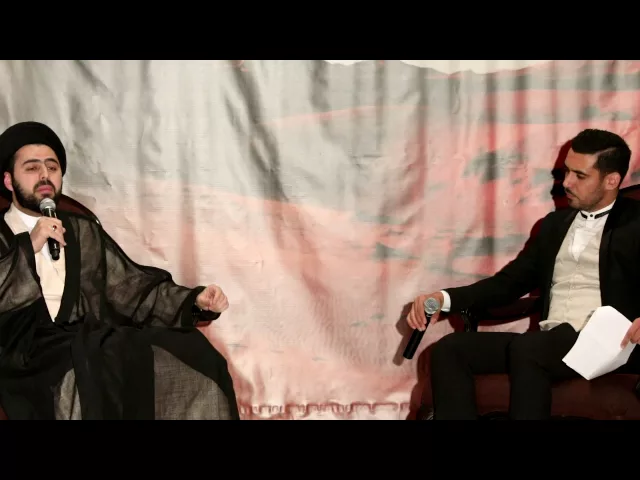
Interactive and lively debate with Shaykh Muhammad Hilli
Discussing the belief of TAWASSUL
Its origin, basis, questions and method
- Is Tawassul tantamount to Shirk?
- What is the evidence in Quran and Sunnah for Tawassul?
- Should we not pray to Allah (swt) directly?
- How is Tawassul linked to other aspects of belief?
- What is the Ontological connection with Tawassul
- How should we practice tawassul?
- Is seeking help from an Imam haram?
Show more
Transcript
[0:14]oh [Music] foreign foreign um foreign [Music] um yes foreign um [Music]
[6:55]foreign um foreign [Music] [Music] thank you all for uh joining us
[10:12]for attending this workshop seminar where we'll be discussing the very important
[10:19]issue of where we are we are living at a time where
[10:22]many of our beliefs are being questioned and is it important that
[10:29]we have an opportunity to discuss these so that we can ensure
[10:32]inshaallah build and solidify our foundation i'd like to extend our deep
[10:37]appreciation to muhammad al-hilli for kindly graciously accepting this invitation to discuss
[10:43]with us this very important issue and to thank all of you
[10:46]for attending this evening insha'allah before we begin inshallah the event will
[10:52]be an interactive style um and there will be some engagement from
[10:58]the audience as well therefore i'd like to kindly request what menin
[11:03]if you don't mind so that we can create a an environment
[11:08]which will allow a more interactive discussion if you could kindly come
[11:13]towards more towards this part of the hall inshallah and on the
[11:16]sister side as well if you come in so that inshallah we
[11:19]can have a bit more engagement and a bit more interaction as
[11:25]you do so please can i request one loud son without further
[11:36]ado i'd like to introduce mohammed al-hilli can i ask that we
[11:40]welcome him with three loud swallowers first of all thank you for
[12:12]joining us this evening and um also thanks to the committee for
[12:18]organizing this particular discussion as was mentioned by brother muhammad abbas the
[12:23]idea behind this is not of course to have a lecture and
[12:27]you see me slightly differently kind of trying to move a bit
[12:31]but also to have engagement to have a lot of discussion and
[12:37]i really wanted um this evening to be open and frank i
[12:43]want and encourage you to ask i really would love to hear
[12:47]maybe maybe just maybe you're going to come up with a question
[12:49]onto a sun that we've never ever heard before and maybe that
[12:55]will make us think and perhaps dig a little bit deeper into
[12:59]this particular topic and of course the the the nature of the
[13:10]discussion will be that i will talk about various aspects it's slightly
[13:13]technical we're gonna go through some verses of the quran i'm going
[13:17]to bring about some uh objections from the quran that people have
[13:23]brought forward so we need your patience in somehow looking at some
[13:26]of the quranic verses uh do ask if you think that i'm
[13:31]going too fast this is your chance because you can't do the
[13:35]senementalis can't tell me slow down and imagine this although i don't
[13:37]mind um but this is your opportunity to say okay hold on
[13:40]that verse can you kind of slightly go over it again we
[13:44]can certainly do that as well but the first thing i want
[13:49]to say regarding this subject is some of you may think okay
[13:54]alhamdulillah this is you know one of the great things about our
[13:58]school is this member where is it it's here um this member
[14:02]is is uh so important because we get a lot of our
[14:06]knowledge from the member and usually often people ask you know the
[14:15]main sources of knowledge in many of our centers is m m's
[14:20]do you agree no i don't know about maulana's remember they maybe
[14:31]we need triple m but usually so that kind of makes them
[14:37]kind of the same so they say that's the main source for
[14:40]our knowledge um and i guess sometimes we've heard so much about
[14:47]this concept because perhaps there hasn't been a scholar that you know
[14:52]who hasn't spoken about tawas or or the need for it or
[14:57]perhaps eluded to it um and and i guess you might think
[15:00]okay why now the e the reason is this is not because
[15:04]of recent for example necessarily questions that have arisen uh in some
[15:09]circles but this is a debate that's been ongoing for about 700
[15:16]years and this is important for you to know this figure because
[15:22]this 700 years indicates to you when this discussion actually started in
[15:31]the muslim world within the muslim ummah okay we'll come to that
[15:35]in a moment but it's not something necessarily that's confined to the
[15:39]school of albeit only there are many who practice this in different
[15:42]parts of the world there are people who practice it in places
[15:48]like for example morocco and tunisia and turkey and syria other places
[15:54]two weeks ago i was uh in spain and i would love
[15:59]to say that i was in some uh you know uh amazing
[16:04]place where it was actually quite nice it was in the southern
[16:08]parts which was known to be the islamic many many years ago
[16:14]perhaps about 600 years ago or so was known as islamic spain
[16:19]and lucia so the areas such as granada and for example um
[16:24]you have kodaba and so on and then i had a very
[16:28]interesting experience with a with a sheikh i went to a mosque
[16:32]in a an area close to uh malaga it was a beautiful
[16:40]mosque and it was called the um malik abdel aziz al-soud mosque
[16:47]it was stunning i looked at it from outside it was five
[16:52]star it looked amazing new everything so i went to pray with
[16:58]a few of my family members we got there salad time obviously
[17:01]and it was the prayers was being held outside you know there
[17:07]the weather's nice in southern spain so they have these kind of
[17:10]canopies inside the mosque it was too hot maybe or there's air
[17:13]conditioning without the shadow without and so your prayer was outside then
[17:19]we were checking the mosque on google and we realized it was
[17:21]opened in 1981 i'm thinking wow 1981 it looks absolutely stunning it's
[17:25]like new then they said it has a huge library where there's
[17:29]thousands of books and i'm thinking wow there's no one here this
[17:33]is outside new york this is an area where some celebrities come
[17:37]apparently uh marbella so i went to the library and there was
[17:43]a shaykh so i said salaam to him i wasn't dressed like
[17:44]this yes that's just you know i said salad to me like
[17:48]i said look i want to ask you questions i ended up
[17:49]speaking to him for about 45 minutes anyway irrespective he was a
[17:55]maliki scholar and a maliki scholar was very open to the school
[17:58]of beit and a maliki scholar who had invited three scholars of
[18:03]the shia to lead salah in that mosque and it was a
[18:06]mosque that was funded by saudi and it was considered our habi
[18:12]mosque but because he was moroccan there were so many for morocco
[18:15]there he had just basically sidestepped them and one of the things
[18:20]that we ended up talking about was this tawasol and how it's
[18:25]important and sometimes you forget when you talk about this topic you
[18:28]think it's a sunnishi a debate in many cases it's not many
[18:33]cases it's an area that has been somehow practiced for hundreds of
[18:41]years by muslims in different denominations but it is unfortunately only a
[18:46]group have who have recently brought up this this topic recently i
[18:52]mean the last few hundred years and it's been developed since the
[18:55]kind of wahhabi school of thought enforced their ideology uh upon many
[19:01]people in the middle east and beyond okay so just briefly what
[19:07]we're going to cover today is just quickly go through this concept
[19:11]and then um uh perhaps go through a few verses and ayat
[19:16]and also shed light on dua tawasu because the idea that exists
[19:21]today some have raised and that is um you know the item
[19:24]is not authentic so therefore that's a basis for tawasul not being
[19:29]reliable or authentic and that's what we're going to uh also maybe
[19:35]touch upon but stop me anytime if you have a question we
[19:37]can have it at the end or if you feel that you
[19:41]want to ask it during the presentation itself no problems at all
[19:45]as well okay so english is usually intercession do you agree the
[20:06]first realization that emerges is it's not only referring to one concept
[20:16]because intercession is one word normally used for at least three concepts
[20:21]in islamic theology and by the way before 700 years ago tawasul
[20:29]was discussed in jurisprudential works it was only moved to theology by
[20:37]ibn taymiyyah the founder of the wahhabi school of thought so it
[20:41]was considered usually in the books of usually discussed in jurisprudential works
[20:46]because it's to do with something that you follow and it's to
[20:51]do with rulings right but then it be somehow became part of
[20:53]akida so today there's a discussion is it is it part of
[20:57]doctrines is it or is it irrespective there are three terms i
[21:01]don't know if you can see it ah there's another screen there
[21:07]it's slightly unfortunately if you can't see it you may need to
[21:11]go to specsavers yeah all right so it's any ideas what they
[21:21]mean and i'm gonna ask to keep you awake what's the difference
[21:28]between shafa tawas here's a chance for ladies also to engage any
[21:36]idea sisters anybody has heard of obviously you must have heard of
[21:43]shafara what's the difference the rafa anyone come across istiratha before sorry
[21:56]the masks taking a car aha so shafa is understood by some
[22:23]to mean asking intercession in the other rail in the hereafter as
[22:26]it's understood by some is everyone happy with that it's a limited
[22:33]understanding of shafa because it is true to some extent but in
[22:38]many ways the quran uses it as a general concept as a
[22:44]general concept of you know usually it is when um allah is
[22:55]helping or solve something for an individual based on their deeds their
[23:02]actions and so on and usually that is applied to the day
[23:04]of qiyama because allah says mandala is there is only allah who
[23:11]has permission or gives permission for what is is brother said it
[23:16]is asking directly okay in arabic comes from which means seeking help
[23:27]it's usually termed when somebody asks someone for help because they need
[23:35]help they need assistance right means get me out of my trouble
[23:43]get me out of my difficulty help me okay in english we
[23:47]always use is sorry intercession that to to kind of cover all
[23:53]three now every form of istight is but not every tawesa you
[24:04]might be thinking friday night this is too much okay this is
[24:09]too much it needs a like uh you know a holiday before
[24:14]understanding this let me explain why i'll i'll i'll give you example
[24:18]is when we say yes for example is as we will go
[24:26]to the next slide it means the seeking of nearness yes so
[24:33]seeking nearness is uh the idea is to seek nearness so that
[24:38]we have something achieved for us that is tawasul and what is
[24:46]understood by tawasu so i'll read this again it's not very clear
[24:51]it is coming from the word which means to do something in
[24:58]order to become close to someone or something now in the technical
[25:01]sense of the term it means to benefit from the good and
[25:04]righteous people close to god in order for supplications to be fulfilled
[25:10]that is our understanding of one application of tawasu but all muslims
[25:15]agree that tawasul as a concept is to seek nearness using anything
[25:21]so you could seek nearness using for example good deeds you could
[25:26]seek nearness for example using the asma of the almighty you say
[25:36]yes i ask you by the fact that you have these great
[25:39]names that for example you are al-malik does not necessarily only mean
[25:49]when i say ya ali help me or allah ask you in
[25:54]the name of ali it means when i ask ya allah help
[25:59]me for the sake of my salah because it's a good deed
[26:04]i can get closer to allah by my good deed yes so
[26:07]the problem that we have or the challenge that we have in
[26:11]the school of albate is not necessarily proving tawesul whether it's valid
[26:17]or not it's proving what whether it's valid or not why because
[26:27]the the the few the the the the opinion of eben tamiya
[26:32]who if we go to the next slide you'll see he was
[26:35]the first to declare prohibition of tawasol in as far as calling
[26:42]the dead remember he died in 1328 okay and a number of
[26:49]sunni scholars his father shafi who died about thirty years after him
[26:56]and even almighty died 1566 200 years after him confirmed that before
[26:59]ibn mia not a single muslim scholar in history has ever recorded
[27:07]objections to tawasu in any form including estherafa so how long are
[27:13]we talking about 700 years 700 years before ebenetemia everything was fine
[27:20]ibna tamir was the first to object to this practice that is
[27:27]calling the dead that is calling the dead those who have passed
[27:31]away for help he was the first no one before him has
[27:36]objected to this actually taking place and so what we recognize in
[27:46]this particular uh instance is the the following that is the only
[27:53]form of tawasol usually that some muslims disagree with the others they
[28:00]are happy to practice because simply this world works within the system
[28:06]of means he muhammad said allah allah's decree is such that everything
[28:22]works by means today if you want to plant a tree that
[28:24]is means you plant what you plant some seeds and you wait
[28:28]for it there needs to be time for example in order for
[28:32]a female to have a child there needs to be a relationship
[28:36]with a male for example there are processes there are means right
[28:39]so just a little bit of a i thought i'll throw in
[28:45]some philosophical uh discussion here in this regard philosophically we're saying for
[28:50]anything to exist it requires a cause which is okay and at
[28:56]the same time this this course has three components something that makes
[29:02]it happen the conditions for it and you remove the obstacles so
[29:04]for example i'll give you an example if you want a piece
[29:08]of paper to burn on a piece of paper and you want
[29:10]it to burn right what it needs to have is it needs
[29:15]to have the cause koza which is the fire need to have
[29:19]the conditions which is what to get the paper close to the
[29:23]fire if you have fire here and the paper here the paper
[29:27]won't burn so the condition is that proximity and finally the third
[29:32]thing you need to have is what there is no obstacles so
[29:35]for example the paper is not wet for example there's no barrier
[29:41]so you remove obstacles for something to happen something to exist in
[29:45]this case a paper burning there needs to exist three things right
[29:48]the causa which is the fire the conditions and the removal of
[29:53]the obstacle in the practice of tawasu in the subject of tawasul
[29:55]one of the conditions for something to take place is considered this
[30:03]for example yes now you might ask but surely as we will
[30:08]come right he doesn't need these conditions and of course he can
[30:17]remove the obstacles right now you might say i have a hajja
[30:21]i need something fulfilled i need something fulfilled for example yes and
[30:26]i need to ask you from allah there are conditions for it
[30:32]so what are the conditions why can't he just give it to
[30:35]me without necessarily any conditions of course he can but can he
[30:37]give you can he give a female a child without a male
[30:41]can he or not he can but does it happen only in
[30:50]miracles there is a difference between it can and between and it
[30:57]will allah says this existence requires means requires conditions certain things work
[31:01]in certain way so you can see now i'm just planting the
[31:04]idea about people who are constantly saying you know what just ask
[31:10]allah directly ask allah directly okay similarly i could have come here
[31:13]from london flying i could have sat there i said yeah allah
[31:18]please take me to portsmouth by you know magic earth falls and
[31:27]i'm here could it happen it could but it would happen won't
[31:33]there are some conditions i need to get on some vehicle that
[31:38]gets me here and it's a means to get here right to
[31:40]achieve that that particular thing and i think some this is just
[31:45]a bit of a kind of background remember this story just break
[31:48]down this philosophical discussion i came across the story today so it's
[31:53]like a premiere declaration of the story um there was a bedouin
[31:56]in saudi recently maybe about 20 years ago he he mentioned this
[32:01]and it was on the news in saudi right he and his
[32:05]family were driving in the desert you know they do and their
[32:08]car broke down and their car broke down they didn't have they
[32:12]don't have services like aaa and all that so what happened was
[32:15]they struggled they didn't know what to do they didn't know who
[32:19]to call there was no phones that time so he said we
[32:25]were in the desert we were desperate he said we had this
[32:30]tape player and the the tape was playing this famous swahabi scholar
[32:35]his name is eben othey me so he was talking about all
[32:40]praying to allah and to hate and everything and all that and
[32:43]then he said this said you know what i was so you
[32:48]know taken by what he was saying about the need to trust
[32:52]allah and whatever but he has been told that you can't ask
[32:54]allah for the sake of people because this man on the tape
[33:00]has already died he's already passed away but he loved him so
[33:04]much he wanted to say ya allah he has inspired me for
[33:08]his sake please help us he said i couldn't so i said
[33:12]ya allah for the sake of this tape help us this tape
[33:16]this tape i love it so much and apparently the car started
[33:21]working or they managed to sort themselves out they were interviewed everyone
[33:24]was like wow you asked allah in the right way they said
[33:27]why he said you asked the lord something which is alive the
[33:30]tape is here in front of you you can ask allah for
[33:34]something that's died do you see the problem that's the level of
[33:38]thinking that you know what you can't ask by that person who's
[33:40]passed away because he's passed away but the tape is with you
[33:44]isn't it yeah this famous story where uh next to the holy
[33:49]prophet this man stands and said this stick of mine is better
[33:54]than the prophet because the stick is alive and the prophet is
[33:59]dead so the stick is with me yeah and so it is
[34:04]something that benefits me but the prophet doesn't so that kind of
[34:07]idea exists in terms of uh understanding where tawasol lies so if
[34:13]we can go to the next one um that's great yes all
[34:22]right so i'm going to quickly go through the quranic basis this
[34:26]quranic basis is not only for the tawassum which is generally understood
[34:28]but also for the for the concept that we'll discuss a little
[34:32]bit more in detail because that's the area of contention can we
[34:36]call upon the dead should we be asking allah directly or should
[34:39]we refer to those who for example are close to him the
[34:45]three main or the main two ayat are these two but i
[34:47]would say this one chapter 4 verse 64.
[34:49]it's probably the most important ayah for you to memorize and to
[34:52]understand if you really want to understand it's this ayah here okay
[34:58]now a lot of the people are called this ayah chapter 5
[35:02]verse number 85 oh you who believe a means of nearness to
[35:16]him so the main area of contention is anybody's come across any
[35:24]reason why this is a means of contention saying to allah saying
[35:28]and si quesilla to him so based on what we just said
[35:35]earlier what could be said about this seeking a means of nearness
[35:42]to him yes it could be good deeds or could be what
[35:51]else could be the quran could be anything good yes ah here's
[35:58]the thing please mark this understanding it's very very important quran has
[36:04]verses which are which means but open not restricted not yet so
[36:09]they are what the general this is one of them so when
[36:13]allah says seek a means of nearness to him means anything that
[36:18]gets you closer to him anything yes this is one of the
[36:27]ayat said if allah says seek anything that gets you close to
[36:31]him there's nothing that's excluded do we have a hadith or an
[36:36]ayah in the quran that says you cannot call someone who is
[36:39]dead anyone do you have any hadith in islamic literature that says
[36:51]do not call someone who is dead we don't so the simple
[36:58]evidence for is for saying or for calling those who have passed
[37:02]away is that we don't have any evidence that's haram and anything
[37:06]that we don't have evidence that's haram is simply because the ayah
[37:10]says any means of nearness to him there is not a single
[37:16]hadith in sunni literature or literature that says calling someone who is
[37:20]dead is he says because we don't have any evidence that says
[37:29]you can are you with me yet so do we have any
[37:37]evidence in the quran that we can for example go to the
[37:45]moon is there any verse no is there any verse in the
[37:52]quran that says we can use bikes no is there any verse
[37:57]in the quran that says we can eat biryani you probably want
[38:01]drink and hoping for it to be there but there isn't isn't
[38:06]it so ultimately what we are finding is that in quran of
[38:08]course in islamic literature we have general concepts the everything is halal
[38:13]unless and until there is specification to make it harm it's one
[38:19]of the very important principles in islamic law yes it's called everything
[38:25]is someone comes and says so what's the evidence we have evidence
[38:32]that it's muslim i can talk about that but at the primary
[38:38]level there isn't anything that tells you that it's haram you might
[38:41]say oh it hurts that's something else where's the evidence anything that
[38:44]hurts is haram so for example someone might say eating seven cakes
[38:49]a day hurts subjective it's bad for your body but where do
[38:55]you draw the line what i might say excessive harm that causes
[38:59]grave danger to the body that's where they draw the line so
[39:06]in principle if there is a general concept and here allah says
[39:08]seek a means of nearness to him anything that gets you nearer
[39:13]to him and that one of them is calling those who are
[39:15]close to him but it's this ayah that is absolutely key this
[39:20]ayah is perhaps the most significant allah says when they wrong themselves
[39:33]they come to you o prophet and they ask forgiveness of allah
[39:40]and what the holy prophet is then they will see they will
[39:51]find allah to be accepting of repentance and is indeed merciful now
[39:54]the key here is what there is nothing in this ayah that
[39:58]says only at the time of the prophet when he was alive
[40:00]nothing yeah doesn't say oh dead or alive it says all the
[40:07]time when they come to you yes they come to you o
[40:12]prophet now some scholars have said jauka means what come to his
[40:16]grave no problem that's will take means what that means they come
[40:24]to your beliefs no there's no evidence to that they come to
[40:27]you o prophet right so here when they says come to you
[40:31]o prophet and ask allah's forgiveness and the messenger it means it's
[40:35]general incidentally going back to this nearness to him one one one
[40:48]distinction that is often made and if i've sorry it's not connected
[40:57]huh oh just oh no no back back uh i thought i'd
[41:03]had it in there okay basically no no no no just go
[41:07]back to the normal one no no yeah that's one so that's
[41:12]the quran yeah so the idea here is this seeking a means
[41:20]of nearness to him even if it's good deeds the school of
[41:26]alibaba believes that to ask allah through the holy prophet and albeit
[41:31]in itself is the best deed why because because there is a
[41:37]concept within the school of alibaba and that is the condition for
[41:40]the acceptance of the deeds is the willa please understand this so
[41:46]we believe that on the 18th of delhi the prophet of islam
[41:48]raised the hands of amir muhammadin religion was complete yes no doubt
[41:59]perfection of the faith of allah yes that means in order for
[42:03]the uh to are to be accepted in order for the religion
[42:04]to be complete no no for the deeds to be accepted there
[42:10]needs to be william yes so even if you take that means
[42:13]do good deeds that do good deeds need to have the william
[42:17]i need to have the following of the hence that was here
[42:22]becomes something acceptable okay here just an example of the father of
[42:27]prophet yusuf alayhi salam when he was approached by the sons and
[42:34]he was told please ask forgiveness on our behalf the the brothers
[42:41]of yusuf asked and he said so fast why didn't they ask
[42:48]allah direct why now you might and you should be thinking now
[42:52]what's the counter argument for this verse what's the counter argument here
[42:58]i'm trying to raise the level so we're not only giving one
[43:00]side what's the counter argument for this verse he was alive that's
[43:04]the normal counter argument isn't it yes but as we will see
[43:08]in a few slides we often respond back by saying that what
[43:12]they are alive and the quran says oh generally they these people
[43:19]have a higher degree than others therefore they are alive and they
[43:23]uh seek sustenance with their lord okay so we just wanted to
[43:25]hadith just to give a flavor of uh so the next slide
[43:30]just on the concept in itself this is very famous the first
[43:36]individual to practice he says that um the holy prophet in connection
[43:48]with the above matter and the prophet said adam said this the
[43:52]following he said allah through muhammad ali hussain please accept my repentance
[43:57]and allah that accepted his repentance this hadith is quite widely reported
[44:02]it's found in also a number of other sunni books then we
[44:07]have another one quite famous hadith in the next slide which talks
[44:12]about and again i think it's difficult to read here but i
[44:14]will just quickly read it for you this is a famous one
[44:19]this is found in very much a number of texts such as
[44:22]tirmidhi such as for example you have uh and so on this
[44:31]hadith is with regards to this individual who is a blind man
[44:37]came to the holy prophet and asked him you know that i
[44:39]in need for you to pray for me so the prophet uh
[44:43]taught him to say the following o allah i ask you and
[44:48]turn to you through my prophet muhammad o prophet of mercy of
[44:53]muhammad i seek your intercession with my lord a similar line to
[44:56]what we recite okay so that's often uh recite but again this
[45:02]is given as evidence that or kind of counteracted by saying that
[45:08]this was when he was particularly alive how do you respond to
[45:12]that the next slide shake yes can you go to the two
[45:22]slides previously please two slides previously yes if we can go back
[45:29]two slides yeah this one yeah so we were just discussing um
[45:32]like like we say right we're asking allah that we only seek
[45:37]help from you and you alone yes so what about that like
[45:42]we repeat that on you know in namaz every time 10 times
[45:49]a day we ask allah we say to him and this i
[45:52]think if we grasp this concept this question my sister i think
[45:55]we kind of see the main crux of the problem or the
[45:59]debate that's happening out there it's the debate that whether tawassul is
[46:03]part of tohit or its sharing and the idea that emerges from
[46:08]understanding the literature of the ulama of the school of albate as
[46:14]well as many others within the sunni theological schools is that it
[46:20]certainly is part of toheit how is it part of tohit as
[46:22]we will see a bit later some ayat seemingly are used to
[46:27]question whether is permissible because quran says do not call anyone other
[46:33]than allah so do not ask for anyone other than allah and
[46:38]these ayaat generally are understood in many many different of a serene
[46:45]and many different uh hadith explain them in reference to people who
[46:49]are worshipping idols and calling them as deities to be worshipped rather
[46:55]than the concept of tawasu now in tarasun we do not believe
[46:59]these individuals and is we will see are independent entities we don't
[47:03]believe that they have powers separate from the almighty they are asking
[47:08]allah they are supplicating to allah it's a concept based on because
[47:14]ultimately means you are only the one who can help us you
[47:22]are the only one who we worship absolutely is not contradictory to
[47:28]that meaning that when i am asking someone who is close to
[47:32]allah to supplicate on my behalf and to ask allah from my
[47:35]behalf the source of that helping is allah because he's the one
[47:40]who's helping nobody else's sorry directly when i'm asking someone yeah so
[47:51]like it's like let me give you an example if you have
[47:58]somebody who is i don't know the judge and he passes the
[48:04]judgment on a court case you're sitting with your lawyer and you
[48:06]say you've got to help me you've got to help me i
[48:12]need to get what clear from this you you can help me
[48:15]you can do it please help me so who is it who's
[48:20]making the decision the judge but the solicitor or the lawyer is
[48:27]going to go and up and try and help you yes but
[48:28]ultimately whatever he does or she if the judge has made the
[48:34]decision that's it so we say and uh just just to kind
[48:40]of add to this if we can go to the whole uh
[48:44]uh uh screen on istighatha what is and why do we actually
[48:50]do it so next slide we are awake the one after and
[48:57]the one after okay so this one again i might have to
[49:01]slightly read it for you um so is calling someone directly out
[49:08]for help so saying as we said so the whole idea is
[49:13]are people alive right um the the the the response of course
[49:23]is these two ayat that we often recite here uh 2154 and
[49:30]at the same time we have three 179 and do not think
[49:36]of those who have been killed in the course of allah as
[49:40]dead okay so these are the two ayaat that highlight that there
[49:43]are individuals who are alive okay now what the other evidence is
[49:50]as well is for example when we say salaam in salah why
[49:55]do we say salaam to the prophet we have a thought about
[50:00]that why in salah we say if he was not alive and
[50:07]listens to it it's a vain process we are saying peace be
[50:10]upon you other prophet yes so we are told that the prophet
[50:15]responds that means he is alive yes and then we have a
[50:19]hadith which is found in kamuru ziyarat as well imam sadiq salaam
[50:21]says if one of you are afar from us and there's a
[50:25]great distance between us you should ascend to the highest place of
[50:28]your house perform two-minute prayer point to our graves and recite salutation
[50:31]for indeed that will reach us [Music] in other words there is
[50:39]the recognition that when i am calling these individuals they are being
[50:43]given the permission by the almighty subhanallah to uh respond to listen
[50:49]because they are alive in the admission of the quran the question
[50:54]here is is there anything to say that they don't and we
[51:00]don't have anything so anybody today who objects to istight and says
[51:04]his shirk and says you should be calling allah and allah alone
[51:08]has not understood how generally you know in this current existence we
[51:14]seek means we ask people for help we go to people yes
[51:19]and they might not necessarily be the source the main cause for
[51:23]something to happen but intermediaries they are what they are there to
[51:29]make something actually take place is there any questions so far anything
[51:38]unclear yes or is she um just because it ties in to
[51:43]what you've been talking about um it was a point that was
[51:47]been brought about brought about recently and it's it's a phrase from
[51:50]somali where it says that um and whom i secretly converse whenever
[51:59]i want without need for an intercessor so and thus he grants
[52:03]my need so when when that point is brought about how do
[52:05]we answer to that so that when our imams themselves have not
[52:10]asked for intercession what makes us seek the liar through them or
[52:17]intercede through them okay um sometimes the judge you know has the
[52:26]closest individual to them and they don't need someone in between so
[52:30]when it comes to the bait who says that they need intercession
[52:35]they are at the level that they are able to uh communicate
[52:40]and to get their requests answered by allah number one number two
[52:44]that part of the abrahams is interesting why what is it saying
[52:49]it's saying ya allah i am somebody who i want to be
[52:52]in the state where i can speak to you without the need
[52:54]for intercessor right nobody is saying that the only way for supplications
[53:00]to be answered and the only way for hajjad to be fulfilled
[53:02]and the only way for things to work is through tawasul and
[53:09]istiratha nobody is saying that but they are quicker ways there are
[53:14]ways there are people who reach certain levels of purity of heart
[53:20]the removal of the obstacles such as the sin where maybe there's
[53:23]applications yes they would be able to quickly ask allah and there
[53:26]isn't that because the idea is we will come to discuss the
[53:32]objections where allah says that i am close to you so people
[53:36]say he's so close to us why do we need to ask
[53:39]someone who is dead if he's so close to me the realization
[53:48]of course is that he is close to us but we are
[53:52]not close to him because we are not talking about a physical
[53:54]entity he is close to us because he's created us he lies
[53:58]between us and our hearts but when it comes to our deeds
[54:00]and our supplications we place things in between due to our sins
[54:06]to each other's transgressions so we need something that presents our deeds
[54:12]glosses over it uh you know makes it more likely to be
[54:17]accepted by somebody who's close to the almighty like i said the
[54:21]problem is not asking someone to intercede the major discussion in islamic
[54:29]discussions today is whether we ask someone who is dead because imagine
[54:32]people today you see each other and you say please pray for
[54:38]me that's intercession do you agree is that question yes sometimes we
[54:47]speak as we feel towards a lot when somebody calls us and
[54:52]say oh this jamaat really wants to invite you but doesn't want
[54:54]to directly call you because you say no i know you very
[54:58]well can you please go means seeking of means right when i
[55:04]am asking somebody who is today just anybody i say to him
[55:06]uh you know please pray for me he's praying to allah on
[55:11]my behalf true the major issue is the major issue is that
[55:19]whether an individual goes to allah directly or goes through these means
[55:23]is a choice the choice that we believe is actually better because
[55:28]allah says means of nearness to him so there is nothing that
[55:34]involves now if we can go to the next slide it's yes
[55:48]a matter of question whether it's allowed or not allowed um the
[55:52]question which i'm trying to answer is whether it's preferred way or
[55:55]not and i suppose you you hinted on that that uh when
[55:59]allah says so so allah is is his muthalak he's almighty sukadramoth
[56:06]knowing all knowing all all sort of hearing samial basee so so
[56:12]when he says so it's not like worldly as chief executive of
[56:17]an organization where you need networking or her reference when he is
[56:21]offering such an open thing in so many ways in quran that
[56:25]he is closest to us closer closer than our carotids so the
[56:29]question is that whether we should go direct but when when there
[56:34]is open offer there that's one argument and i suppose second argument
[56:37]is that when he says that he sees the means the same
[56:43]ayah there's so many other verses so it's one or two verses
[56:45]about vasila but there's so many other verses where he says that
[56:48]ask us who can be your wali and nasir i'm paraphrasing there's
[56:52]so many ayaat where it says and i suppose that's that's where
[56:57]where something needs to be emphasized it's repetitive so vasila comes two
[57:01]or three times but there's so many other ayah where it says
[57:04]that seek from me so for all your prayers and who can
[57:06]answer your prayers and all that so these are the two arguments
[57:09]which sort of make you think so yes in response to that
[57:15]in the quran there are two types of verses metaphorical or unclear
[57:27]you agree why has allah made some verses unclear has anyone thought
[57:36]about that why are there unclear verses in the quran why should
[57:39]all the quran be so clear flexibility of what if okay there
[57:56]is a verse that says the all compassionate sits on a throng
[58:07]and people are saying there is a throne that allah sits on
[58:12]why would he do that why isn't the ayah a bit more
[58:18]clearer any idea sisters it's related to tawasu the reason yes the
[58:27]quran was revealed 1400 years ago yes some of the verses if
[58:33]there were too direct to the bedouin at the time he'll cause
[58:35]some confusion it's beautiful nobody would have two interpretation remember that the
[58:43]one that is means it can have several interpretations several possible meanings
[58:49]for example there's a verse that says the hands of allah is
[58:55]over their hands but why why say hands of allah this can't
[59:02]be maradona yes so what does that mean why is that there
[59:08]there is a link allah subhanahu wa in this existence could have
[59:14]made everything so clear and obvious and easy and straightforward but there
[59:20]are things made in the way to enable other things to work
[59:25]out so allah has made one of the reasons verses that are
[59:28]metaphorical so that you can seek those who have knowledge of the
[59:34]quran to interpret it and explain it so that you can go
[59:38]to the experts of the quran who are none other according to
[59:41]all muslims you have to go back to the elevator and say
[59:48]okay tell me what does that mean allah sits on a throne
[59:52]tell me what does it mean his hands is over their hands
[59:56]does he have hands so the key thing here is similarly allah
[60:00]subhanahu wa with allah wants the system of tawas so we said
[60:03]from the beginning it's means everything works through means of course yes
[60:08]asking him directly no doubt and by the way we don't often
[60:10]we don't necessarily judge something by the number of times it's been
[60:15]mentioned in the quran sometimes certain contexts whatever the idea as long
[60:20]as it's there and it's found and it's supported and at the
[60:23]same time also by hadith because we are not the people who
[60:27]read this god hadith too yes we can't say oh to give
[60:32]me only evidence from the quran no we take both yes there
[60:35]isn't a quranic verse that's against it yes so the concept of
[60:40]the vessel is there the other verses that says it allah why
[60:44]because the whole religion is about hate it's about worshipping allah monotheism
[60:49]right but at the same time the concept of tawasul and esther
[60:53]what it does it cements correct leadership cements williams amends the ontological
[60:59]as we will describe and i think kind of running out of
[61:01]time but just quickly to mention that ontological connection we are told
[61:07]that the first creation allah created is the light of meaning that
[61:25]it's a slightly you know lengthier topic to discuss on a friday
[61:30]night but just keep keep in mind this that we're told that
[61:34]the the existence would not have achieved its purpose without these individuals
[61:41]yes you've heard of this wasn't for you i wouldn't have created
[61:49]things and if now this refers to the idea that this creation
[61:58]would not serve its purpose without the correct teachers and leaders these
[62:03]are there to take us to gender without them we can't get
[62:07]to jannah so the concept of tawassar is very clearly linked to
[62:13]our other beliefs because this illustrates how allah subhanahu wa at allah
[62:17]wants a group of people to be recognized as the leaders i
[62:21]ask you a question those who question tawasul and the need of
[62:26]it 24th of delhi please think about this yourself these christians in
[62:35]najran say to the prophet let's do a male addiction let's pray
[62:40]to allah to send the punishment on the wrongdoers could the prophet
[62:45]has gone by himself yes or no would it have been enough
[62:54]for the prophet to go by himself do you agree yes so
[62:59]why did he take his family with why the prophet is enough
[63:10]is there any does it make sense i'll tell you why he
[63:16]took the prophet with him because allah told him then we will
[63:28]ask for it's much clearer now uh then we will ask for
[63:32]what we will ask for this male addiction okay so it's a
[63:37]message allah saying i need you to follow these people i need
[63:40]you to remember those people i need you to connect with these
[63:44]people yes just a quick note also to ask this question to
[63:47]answer this question there are two types of relationship with leaders in
[63:50]the islamic world there is ta'allumi and there is tawa do you
[63:57]know what that means there is learning from them and then they're
[63:59]seeking them because seeking them means that they are the main figures
[64:06]of this creation and goodness goes through them because the hadith says
[64:09]that from the light of the prophet merges that's why we're told
[64:16]in dua start it with a sin right here's the thing when
[64:25]we are talking about this what we are saying we're saying when
[64:30]i'm approaching this subject i'm thinking these individuals allah wants me to
[64:36]to to remember them if i don't remember them i'm the one
[64:42]who's losing out so it's the will of allah for them to
[64:46]be the intermediaries he has given them permission he has allowed this
[64:50]to be the case for them to be uh asked and supplicated
[64:56]to allah via them okay so the question here is that method
[65:02]of tawasol is it correct for someone to come and say ya
[65:07]ali help me because many people come to mosques to shrines and
[65:13]say about abdullah you know i'm desperate i need help please help
[65:21]me is that the correct method of tawasun or not because we're
[65:29]now talking about methods what is right and what is wrong by
[65:33]and large there is an agreement amongst muslim scholars there's an agreement
[65:38]that if you come and ask ya allah i ask you for
[65:42]the sake of this individual there's no problem there is an agreement
[65:48]yes and people say i ask in the name of this individual
[65:53]but there are some who have said okay if you come and
[65:57]say ya ali help me oh yah hussain help me is that
[66:01]the simple answer is not we have shown that number one that
[66:07]nobody believes when they say ya ali help me they are independent
[66:09]entities that they have powers other than allah basically every person you
[66:15]stop and say you when you say ya say help me would
[66:16]you be if you stop them they'll say to you i'm asking
[66:20]them because they're close to allah i don't think anybody who comes
[66:23]to these shrines thinks that they are entities beside god and they
[66:28]have powers that they can do something if allah doesn't allow them
[66:32]or allah hasn't given them this do you agree so in many
[66:36]ways anybody who comes and says ya ali help me in essence
[66:41]they are believing that it's what imam ali amir muhammadin has the
[66:46]ability to intercede with allah therefore he will carry this particular request
[66:53]just like that lawyer with the yes um i know this is
[67:02]sister in the ladies quoted somali she only quoted one verse um
[67:07]i agree that the imams um are high at a higher level
[67:14]but they are there for us to emulate and for us to
[67:18]um i won't say copy but try and achieve in the best
[67:25]manner what they did in their action um and if you if
[67:30]you look at somali um it is it matches what the um
[67:37]quranic verses say um the verses that are really straightforward so like
[67:42]for the for example the verses that you quoted they are they
[67:47]need interpretation right they need some uh someone to like an imam
[67:51]to show us the right interpretation of it right which one uh
[67:55]464 the three verses yeah they need they need someone they're quite
[67:59]clear the ambiguous ones are the weather words could mean a number
[68:05]of things these ones are quite clear okay so how come the
[68:12]imam tends to recite stuff like like verses like um i have
[68:16]sought the help of you alone my acquaintance is with you oh
[68:21]my lord is the path taking me to you and my love
[68:24]for you is the intermediary and uses the worshipfa between you and
[68:28]me he recites salwat as well and then he carries on to
[68:34]say all praise be to allah alone whom i call whenever i
[68:37]need something and whom i secretly converse whenever i want without need
[68:43]for an intercessor yeah yeah all praises to uh yeah lord praises
[68:49]to allah alone alone who other than whom i never pray all
[68:54]praise be to allah alone for other than whom i do not
[69:00]hope and it keeps going on it goes on to say that
[69:03]we if i ask for anyone else they will not be able
[69:08]to help me absolutely so these are amazing should we not be
[69:13]copying the same method of prayer that the imams uh did okay
[69:17]we have to understand when we look at hadith when we could
[69:21]look at supplications imams have an important role and that's to teach
[69:25]us without shadow without this but we can't look at any part
[69:31]of these duas and come to immediate conclusions into a kumail dua
[69:47]from reaching and so a lot of people will say there is
[69:52]in sahih there are many including hamza many parts of the dua
[69:58]i said you allah forgive me i've done this there's so much
[70:03]expression of guilt i am somebody who has sinned i have somebody
[70:06]who transgressed and allah i am the one who sinned so do
[70:13]we take these duas literally there's an interesting discussion about this because
[70:19]the literature is quite a lot in that sense without going into
[70:22]the subject of iceman because that's a totally different area but it's
[70:26]a belief within the school of admit and there is no doubt
[70:29]both intellectually and through the quran and hadith there is strong evidence
[70:34]that's undisputable in that regard these are leaders chosen by allah free
[70:40]sinless etc okay how do we interpret them then there are some
[70:44]scholars have said this is the imam teaching others how to do
[70:48]it so he is saying that i have sins but it's not
[70:52]him it's you and i when we speak to allah there are
[70:54]those who have said well he is saying these are not the
[70:57]sins that you and i commit there allah you know my not
[71:00]minor but things which i'm not supposed to do but i did
[71:04]but they're not really sins but we reject that because they are
[71:06]albeit they didn't do turkey right but the most probably the best
[71:10]explanation that i've seen is that the imam speaks on behalf of
[71:15]his community so he's saying my community have sinned because he's the
[71:18]leader of that community so he's saying ya allah forgive the sins
[71:22]of my community because i am from them so that's that's one
[71:30]thing when we come to these and a number of ayat might
[71:33]as well look at the ayah in the next verse and i'll
[71:37]come back in the next slide please uh i'll come back to
[71:38]this these look at this ayah it's going back to being unclear
[71:43]again um it says say invoke those whom you claim besides him
[71:55]because they have no power to remove your distress nor to bring
[71:59]about your chain bring any changes invoke others here it's put on
[72:05]in brackets to be gods but that's not clear from the arabic
[72:11]ask those besides allah i have seen those who are opponents to
[72:18]tawas so use this ayah and say why don't you why are
[72:21]you calling people besides allah it says in chapter 17 verse 17
[72:30]verse 56 and 57 that you are calling those who are not
[72:34]allah they will not be able to help you so don't call
[72:40]them right so how do we interpret this many ayaat like this
[72:46]exist as well as the parts of hamsa it is all emphasizing
[72:54]worship it's all saying people who consider deities of worship when the
[72:58]imam says i am not placing anyone between you and me it's
[73:04]because at that time the major concept was of belief was idols
[73:08]are intermediaries between a human being and allah they worship them to
[73:12]get them close to allah angels and prophets were also considered discusses
[73:17]in here he says angels and prophets like were worshipped as what
[73:26]intermediaries before allah worshipped that's the key word that's where the western
[73:32]is different nobody is worshiping nobody is saying there so when the
[73:36]imam says there's no need for something between me and you or
[73:39]allah that means i don't need these idols i don't need to
[73:41]worship them to get you to get me close to you yes
[73:47]number one number two who says you need to have in the
[73:52]conversation with allah in every sentence tawasu you could be speaking to
[73:57]allah privately say allah help me i need your help and then
[74:01]at the end say muhammad so here imam ali said i'm saying
[74:06]in those whispered conversations between you and i sometimes you know i
[74:10]need to speak to you and absolutely perfect right doesn't necessarily mean
[74:14]in every line and every sentence in every and any to our
[74:16]without our soul would not be answered there is no such suggestion
[74:24]we're saying that the almighty has placed a means and that means
[74:27]is available for people to utilize okay just go back to the
[74:33]slide before so one objection is we mentioned wasilla could be good
[74:40]deeds i'll just wrap up quickly here and this is a reliable
[74:58]tradition he says this is from you and from your prophet is
[75:06]enraged he says and i thank the prophet so object imam says
[75:30]have you not the verse in the holy quran which says that
[75:36]that they contemplated what they could not achieve and they were vindictive
[75:41]only because allah and his apostle has enriched them out of his
[75:47]grace so the prophet also enriched him from his grace so immediately
[75:54]he says it's as if i've never heard this ayah before it
[75:58]struck me yes so there's a difference in arabic between wasilla and
[76:05]wasilla something that takes you somewhere but you don't have connection with
[76:18]it it's just a means like a car that takes you somewhere
[76:19]means something that you love and you connect with something you feel
[76:23]attachment to right in arabic that takes you somewhere it's used right
[76:30]so the quran is saying here that you have some connection with
[76:33]this means you have something affinity with this particular means that gets
[76:39]you closer to allah subhanahu wa okay similarly this ayah once again
[76:45]it's certainly a fine it does not contradict rasul why because allah
[76:52]says means of nearness to him yes he is the major word
[77:04]here you're seeking a means of nearness to him so similarly the
[77:08]ayah here is saying what saying i am close he is close
[77:13]to us ask him yes but the quran certain verses explain other
[77:16]verses so here allah is giving us a general concept he's saying
[77:19]ask me because i am close to you and another ayah is
[77:25]saying usually because that will be quicker for you that would be
[77:30]better for you yes so in many ways when we look at
[77:33]the quran we shouldn't look at it in isolation one should be
[77:37]supporting of the other okay if we can go to the next
[77:39]slide and i've taken a bit more than uh i should next
[77:45]one okay and i think we'll just end it and then if
[77:49]there's any questions do i though has been the subject of some
[77:53]discussion rate lately some people have said it's not authentic because it
[77:56]is something that is weak in terms of his chain of narrators
[78:00]is strong in terms of chain of narrators well i've kind of
[78:07]said it there haven't i if you can read it [Music] big
[78:15]revelation bombshell that's gonna come up now it's not it's not but
[78:22]you know i wonder why it was i wonder why it's under
[78:32]so much scrutiny if we have a problem with the chain of
[78:34]narrative narrations and the narrators pick the other dwaras as well you
[78:40]will come to many of the hadith and literature of the school
[78:44]of albate and you'll find gaps in the chain of narrators unfortunately
[78:50]so how do our scholars deal with this very easy two things
[78:55]number one content yes content there is a principle in in in
[79:01]islamic law okay this principle is called the principle the principle of
[79:09]leniency in the acceptance of evidence okay this is only used by
[79:14]our scholars on something that is non-warjimp not obligatory acts of worship
[79:19]okay they say if the chain of narrations are weak some ulama
[79:24]accept this principle say we accept it yes because what because it
[79:31]increases tawab and closeness to allah even though the evidence the evidence
[79:35]for in terms of the chain is not as strong okay however
[79:39]other other like i do don't accept this principle however what do
[79:42]they say they say if a dua is weak in terms of
[79:47]chain of narrators what do we then do be recited in the
[79:53]hope you started in the hope and also we check the content
[79:58]and also another reason is because many of our ulama in the
[80:03]past have recited yes there is nothing into either so that goes
[80:16]against what we have discussed is it's very much in line there's
[80:23]nothing in there sometimes you think oh but you know what about
[80:25]this no problem can be discussed okay but the key thing is
[80:27]there is selective targeting of it simply just to suit some people's
[80:34]own agenda right but if we really i've got a problem with
[80:38]it let's look at the whole literature unless you want to dismiss
[80:41]for example the whole literature of the script and invade then you
[80:45]could say you know it's not just so do i come in
[80:48]as well yes all these they all have gaps in the chain
[80:57]from fulan from then there is a yeah exactly any questions no
[81:09]okay so just to summarize just to kind of give an overall
[81:15]uh idea of what we discussed what we need to appreciate my
[81:21]dear sisters and brothers is tawasul as a concept is agreed by
[81:24]all muslims including the salafis and large but what is the um
[81:31]subject of contention is is calling the dead we don't have any
[81:38]evidence in islamic literature that's saying calling someone who's died is haram
[81:41]or a bitter was not allowed no evidence exists all right we
[81:47]extrapolate from quran and hadith and using the akal as well that
[81:50]these individuals have reached certain levels with the almighty subhanallah they can
[81:56]assist because the quran says they're alive they can respond and hear
[81:59]us chapter 4 64 is the most important ayah to quote here
[82:06]because the quran says they come to you and you do istighfar
[82:10]for them okay and the final thing to remember is that there
[82:15]is no shirk in tawasul because we believe that everything is in
[82:19]the hands of allah in fact it's a pure toheid concept everything
[82:23]is in the hands of allah everything in the direction of allah
[82:27]but it's under the commands of allah because it's in the quran
[82:32]so we're following what allah wants us to do which is the
[82:38]hate or hate is being subservient and obedient to the instructions of
[82:44]the almighty subhanallah it's obedience to allah yes prostrating to adam is
[82:52]to hate it is but they did sajdah it's too hate because
[82:56]allah told them to so now everything you think ah but i
[82:59]could go direct it's not their hate if allah if we can
[83:03]show as we have shown that this is a concept deeply rooted
[83:06]in the quran in hadith and there's nothing against it then it
[83:10]is certainly part of monotheism and it emphasizes it any final questions
[83:16]yes this is not problematic because we are not seeing you know
[83:34]imam ali as independent of allah um does this you know what
[83:39]would you comment on for example the methodology of saying things like
[83:42]for example you know uh oh ali grant me xyz or you
[83:48]know for example during the nights of ashrae muharram um people might
[83:53]say uh you know yeah i will follow abbas please grant me
[83:57]x you know cure from this sickness grant me a child xyz
[84:00]whatever it may be um is this problematic um and the follow-up
[84:05]question is is there a point at which uh what we are
[84:11]saying might transgress any boundaries is there anything we need to be
[84:14]careful of in our methodology in this sense um in terms of
[84:18]saying something that is inappropriate yeah i don't see any problems with
[84:21]saying that the reason being is as we said the individual who's
[84:27]asking this is in belief that this is not in the hands
[84:29]of abu fateh or in the hands of imam hussain it's sometimes
[84:36]more powerful for nizan baha and you're speaking to them and not
[84:41]everyone is aware of this discussion theologically and this element you know
[84:44]for people to be saying oh belfall please intercede with for me
[84:50]with allah and ask allah to give this for me not everyone
[84:54]we're talking about masses and masses who come to the shrines millions
[84:57]and they have their understanding which is like we said in line
[85:03]because they do not in any shape or form uh associate these
[85:07]individuals on par with the almighty subhanallah so they are asking for
[85:12]them to ask allah in essence but they're not necessarily saying it
[85:16]the problem i can see what you're saying is that people say
[85:20]i hear this and others are interpreting so non-shias they're like oh
[85:29]look you're practicing shirk you're asking other so it's about how others
[85:33]are interpreting it and what this requires like many other things like
[85:38]using a turba like for example ziara you know they say you
[85:41]are grave worshipers does that mean we stop going to the variety
[85:45]and kissing the area because they're telling us your grave worshipers it's
[85:50]education it's highlighting to people we have conversations with people who are
[85:56]from the other schools of thought or even within the school of
[85:59]alibaba who have concerns about this no problem you know if somebody
[86:03]has you know doubts about tawasul or estiratha or these things we
[86:06]have conversations no problems at all you know this is healthy conversations
[86:09]it increases our understanding enables us to research it's it's it's uh
[86:15]good now we have these conversations to say okay these people asking
[86:18]they're not in the belief that these individuals are gods beside god
[86:23]not at all right just like how he gave that example right
[86:27]or you know this this is more applicable for kids but when
[86:31]they know somebody's closer to their parents they go and say please
[86:35]can you help me can you please buy this for me or
[86:37]whatever they don't necessarily say go and tell mom go and tell
[86:42]dad whatever they just pass the onus on to that individual will
[86:44]then take on this message to execute this message to necessarily get
[86:50]it done the other reason why this something like this is not
[86:54]a problem and that is there is the element of the emotional
[86:59]connection with these holy individuals that has been established as a result
[87:05]of this and this is the subject of envy by other muslims
[87:09]and other groups because the story of the school of ah albeit
[87:13]is a story of love ish association and emotional connection with these
[87:18]holy individuals and you could see that their remembrance far exceeds any
[87:22]other group of people we hold kushali's we have wafaads we remember
[87:26]them we read about their lives right and so this is also
[87:31]made possible by the fact that people go to their shrines and
[87:33]speak to them and communicate with them and have a heart-to-heart conversation
[87:39]with them because they're alive according to the quran right so that
[87:44]in itself has its experience which is a personal human experience cannot
[87:52]be taken away and that don't see a reason for it to
[87:57]be taken away because in any shape or form it does not
[87:59]affect or heat it is purely a concept based on these individuals
[88:03]asking these human beings because they know they are only human but
[88:09]ultimately closer to allah any final questions it's not directly linked to
[88:21]what you've covered i think you've mentioned it briefly on the objectives
[88:26]of tawasol my question really is that sometimes when we are practicing
[88:31]tawassu there are certain individuals who almost take the agency to tell
[88:36]you that there are short vassaruti and apart from william of the
[88:43]imams are there any conditions or impediments for you to seek ourselves
[88:48]given that we now have the explanation that the hustle could be
[88:54]just seeking nearness and means by getting close to allah and that
[88:58]could be any other ways of saying meditation or even law of
[89:02]attraction or whatever you employ if we choose to employ this connection
[89:08]which is through hub and humbert of tahal are there any um
[89:11]impediments there or are there any restrictions that have been mentioned in
[89:18]the the books that we should be aware because some people say
[89:21]oh if you're not moses i just wanted a little bit more
[89:26]clarification yes thank you for that question there are conditions like any
[89:30]other deeds that we do um there are things that potentiate it
[89:36]there are things that make it happen quicker better and there are
[89:40]conditions for tawasul amongst them is the maharifa of these individuals so
[89:43]the more you have understanding and cognizance of these people that you
[89:47]are asking allah through them the more likelihood that they will intercede
[89:52]for you and the other condition that we are told as well
[89:57]is sincerity so in many ways we have to understand that just
[90:07]by being a follower of these people it doesn't mean that you
[90:12]are automatically granted their intercession because imam ali salam six holy imam
[90:15]before he left this world what did he say the final sentence
[90:19]before he left this world any ideas the last thing he said
[90:25]related to this subject yes asan my shafa awa shafa on the
[90:34]day of qiyama will not be attained by those who take their
[90:37]prayers lightly so this indicates that in order for this to be
[90:42]accelerated or to be accepted or for it to work there needs
[90:47]to be some of these uh kept in consideration but doesn't mean
[90:51]you know they have examples of people who sometimes have performed who
[90:57]are not doing their righteous deeds but have come with full sincerity
[91:01]knowing that the these people are closer to allah and making pledges
[91:04]that if this works then they will start praying for example i've
[91:08]had so many of these stories or they'll start wearing hijab or
[91:13]whatever and this could be an inspiration right but it's right really
[91:16]deep in in one of the conditions is the belief that they
[91:18]can so i say to people if you don't believe in torso
[91:24]and don't do it don't do it because if you don't believe
[91:29]that they can help you why are you asking them oh but
[91:34]everyone does it so i might as well do i thought so
[91:38]tuesday nights it needs you to believe right just quickly a final
[91:41]thing a story uh one of the one of the believers said
[91:45]that i was going for difficulty in iraq because of financial hardship
[91:48]and i needed to move to another country to get some work
[91:54]so he said he moved to a nearby country and he was
[91:57]working with somebody so that person said to him uh why are
[92:01]you here for he said i want to work with you construction
[92:04]whatever he said i'll accept you if you and this person lived
[92:11]in karbala i lived in najaf he said if you give me
[92:13]one of your ziyaras one of your zealous you gift it to
[92:20]me and i'll accept you to work with me so the man
[92:23]said all my life i lived in ledger if i did a
[92:24]lot of ziara's i can give you he said specify one zero
[92:27]i did recently so he said um yeah uh this year i
[92:34]did on that day you can have it that's for you all
[92:38]right so he started working later on he says i saw amir
[92:43]mohammed in my dream i saw him here in what mini and
[92:47]a mirror said it's disappointing he said why not he said that
[92:50]was the only ziara that was accepted from you he said why
[92:54]he said you remember you were walking once past my shrine you
[92:57]went in and you stood there and you said you know i
[93:03]can't enter and i don't have any hajjad i just want to
[93:06]say assalamu so that was the only ziados except because every other
[93:12]time you came you questioned you had hajjad only or you didn't
[93:16]come with a full it wasn't there you've just given it away
[93:20]to that person right so one of the conditions is certainly to
[93:26]be in the state of heart and mind but there are various
[93:29]degrees and we are not dismissing this idea that people can just
[93:32]say oh i'm not getting an intercession because i'm not there in
[93:37]my heart no you will let's try let's build on it it's
[93:39]a concept that we have to teach our children it's a concept
[93:43]that we have to educate ourselves it's a concept that we should
[93:45]be able to discuss with others who may not necessarily agree with
[93:48]it not a problem let's have these uh discussions okay all right
[93:53]i think i've taken a lot of your time may allah allah
[93:57]bless you and grant you tawfir and the opportunity to perform the
[94:01]ziyarah of the shrines of the akhil bait and the tawassee all
[94:18]awards i'd just like to take this opportune opportunity to express once
[94:54]again our sincere and deep gratitude to for gracing us by coming
[95:00]and attending this evening and sharing with us a very uh you
[95:04]know wonderful enlightening interactive engaging discussion uh on this very important topic
[95:10]i've certainly benefited and i'm sure that all of the minions as
[95:14]well can i ask as per our wessex tradition that we please
[95:19]uh appreciate sheikh hilli by gifting him with the recitation of three
[95:24]loud muhammad foreign foreign [Music] [Music]
0 Comments
sort Sort By
- Top Comments
- Latest comments