التالي
11 المشاهدات · 20/04/30
12 المشاهدات · 26/03/09
11 المشاهدات · 26/03/11
8 المشاهدات · 26/03/11
10 المشاهدات · 24/10/06
11 المشاهدات · 07/01/29
10 المشاهدات · 22/05/25
Biography of the Prophet- The 3rd verse regarding the change of the Qibla- Hamam Nassereddine
0
0
32 المشاهدات·
24/07/29
في
محاضرات
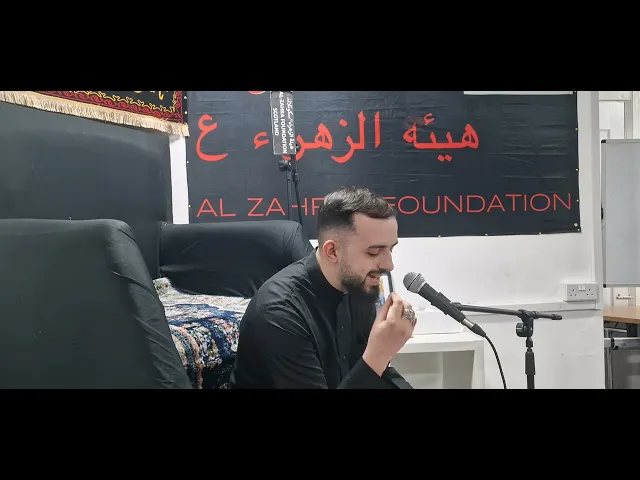
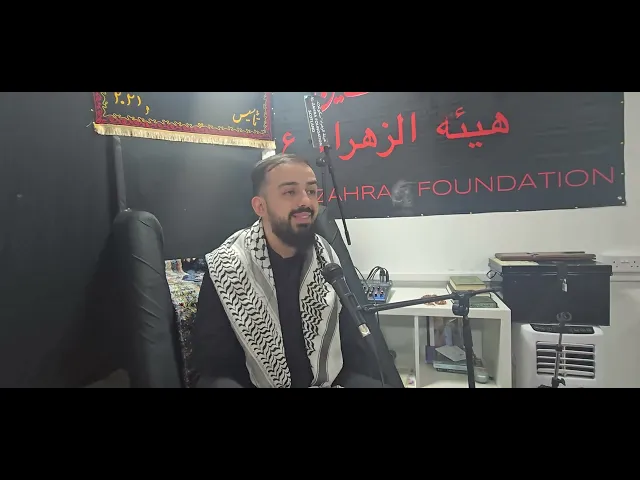
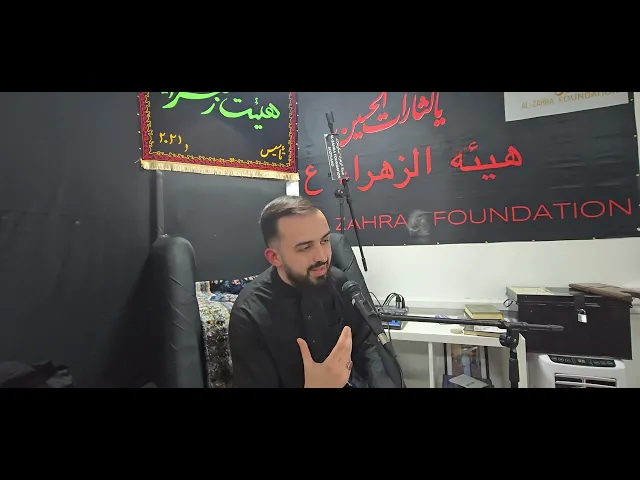
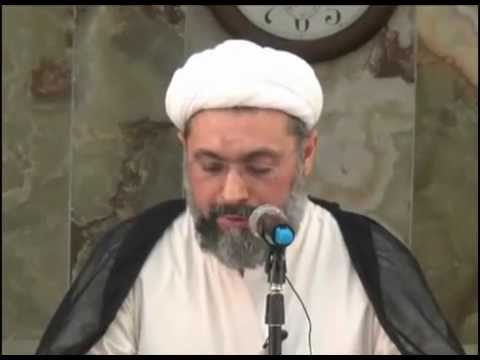
This is a lesson from a series of lessons conducted by Hamam Nassereddine @ Mahad Rasul in Imam Hussain Foundation. The lessons focus on main events that took place throughout the life of the holy Messenger of God, Mohammed. (peace be upon him and his family).
أظهر المزيد
Transcript
[0:00]foreign foreign last year in our uh biography of the prophet classes
[0:59]we mentioned uh certain events that happened after the prophet salallahu alaihi
[1:09]migrated to Medina we mentioned the prescription of Adan and we had
[1:16]a bunch of points to mention in regards to that important event
[1:20]and the last event that we were analyzing before we stopped the
[1:29]classes was the change of the Qibla the change of blah long
[1:32]story short rasulullah start when he you know began propagating the message
[1:40]would pray towards he would pray towards baital maktus we have a
[1:48]tradition by one of our imams that Allah had told him to
[1:54]pray towards but if he's able to face the Kaaba then he
[2:01]should pray towards the Kaaba and baital maktas at the same time
[2:05]whereas if he's in a specific area where he's unable to face
[2:11]the Kaaba and bites at once then he should just face and
[2:15]this continued for a good amount of time until he migrated to
[2:24]Medina and stayed there for uh several months then the Jews began
[2:30]commenting on this issue they began uh through their words and they
[2:42]they basically said different words to the prophet salallahu which we mentioned
[2:48]in our previous lessons last year they also had discussions or say
[2:54]debates regarding the change of the Qibla so they would hurt the
[3:02]prophet through their words and they would basically imply that the prophet
[3:09]salallahu alaihi is copying them is emulating them as if he doesn't
[3:14]know what to teach the Muslim and due to his ignorance he's
[3:21]in need of what of copying others so he may have you
[3:27]know certain substances to present to the Muslim which is not the
[3:31]case whatsoever rasulullah is Allah's greatest creation and is the most knowledgeable
[3:39]Creation in existence with Allah's permission he and his foreign resurrected all
[3:54]prophets at once suppose we had an era where all prophets were
[3:58]living at the same time you would see all of them submitting
[4:04]to Muhammad all of them would be followers and supporters of Muhammad
[4:14]because he is the chief the master of the prophets with all
[4:19]due respect of course to all prophets of God whether we're talking
[4:26]about Adam Noah Abraham Moses Jesus or any other prophetam so Allah
[4:35]basically told the prophet to change and that from that point onwards
[4:45]he and the Muslims should face al-kaba should face the holy Kaaba
[4:51]when they are praying when I say they should face it I
[4:53]mean that they should direct themselves towards el-caba when they are performing
[5:04]Salat that being said we shed light on certain verses in Surat
[5:10]al-baqarah which mentioned this issue there are at least four verses that
[5:15]speak about the change of and last year alhamdulillah we were able
[5:20]to cover two of those verses along with narrations related to those
[5:31]verses or to that event this year inshallah in our first class
[5:35]we're going to continue where we left off we're going to continue
[5:41]as we shed light on the third verse which speaks about the
[5:45]incident of the change of Kabbalah and that is the verse I
[5:50]sent you on the chat section before we started the lesson foreign
[6:06]eight thousand what indeed we see the Turning of your face to
[6:12]heaven heaven here means uh sky it doesn't mean Jannah I've said
[6:19]this once and I'll say it again in English when we say
[6:23]heaven sometimes we're referring to what to Jannah and sometimes we refer
[6:29]to the skies hence personally I don't like to translate SEMA into
[6:33]heaven so that no confusion happens uh I prefer saying sky or
[6:42]Skies about the Sama or a samawat foreign we see that you
[6:51]are looking again and again Towards the Sky here Allah is revealing
[6:57]that the prophet salallahu alaihi when he was being verbally abused by
[7:02]the Jews in regards to the issue of the Qibla he was
[7:08]looking at the sky awaiting divine intervention awaiting that Allah does something
[7:16]there are um who say that the prophet sallallahu alaihi knew that
[7:24]Allah is going to bring down Allah in which he changes he
[7:33]knew that Allah will tell him now your Qibla will be you
[7:40]know a different you know it but he was awaiting what he
[7:44]he was awaiting Allah's command and here we see we see two
[7:50]beautiful traits of rasulallah and all these traits are beautiful the first
[7:54]one is that he turns to God for assistance he turns to
[8:01]God for help and such are the prophets of God when we
[8:06]read their stories on the Quran you realize that whenever the prophet
[8:12]and here I'm talking about any Prophet that the Quran mentions whenever
[8:17]the prophet falls into a predicament whenever the prophet goes in a
[8:21]predicament faces a predicament what does he do he calls upon Allah
[8:26]he seeks aid from the Almighty so that's the first trait the
[8:33]second one is that he had full submission to Allah was fully
[8:40]loyal to Allah you see rasulullah was the chief of the Muslim
[8:47]and if he wanted he could have Allah forgive me for my
[8:54]words misused his position right he could have said you know what
[8:56]we're going to change the Qibla he could have said that based
[9:01]on his own desire but the prophet does not do that the
[9:05]prophet does not work in that way Prophet sallallahu alaihi follows the
[9:10]commands of God subhanallah hence he was waiting for Allah to tell
[9:16]him all right now the Qibla has been changed and from now
[9:23]you and the Muslim will face the holy cup so he submitted
[9:29]fully to Allah's well and Allah's decree subhana as the Quran says
[9:43]he does not speak out of Desire or whims rather he speaks
[9:50]what is revealed to him he speaks Allah's revelation so we shall
[10:08]surely turn you to which you shall like the better translation would
[10:16]be which you shall be pleased with so Allah promises him that
[10:22]he will command him to turn towards what a Qibla that the
[10:26]prophet sallallahu alaihi loves that the prophet salallahu alaihi is eager to
[10:34]face or to direct himself towards when he is in Salat that
[10:40]is the holy Kaaba knowing that rasulullah loved the holy Kaaba and
[10:54]loved to direct himself towards zakaba in Salat indicates that this action
[11:01]in itself holds several benefits or say important benefits and it also
[11:12]holds several wisdoms several wisdoms one benefit of facing the Kaaba when
[11:22]we are in Salah is remembering the two Prophets who upheld the
[11:32]the Kaaba or say raised the Kaaba they built it when there
[11:40]were bases right they were kawad they were there were bases for
[11:43]the Kaaba and two prophets they did what they completed the building
[11:50]of the Kaaba on top of those bases El Caba is connected
[11:58]to multiple prophets all right I face the Kaaba I turn myself
[12:06]towards the Kaaba and I remember Ibrahim in Ismael then what then
[12:12]what well Ibrahimovic or the embodiments of submission when Allah commanded Ibrahim
[12:21]to slaughter Ismail through his dream both of these prophets submitted to
[12:27]God's Will and they were about to perform the sacrifice Ibrahim was
[12:35]this close to slaughtering his son and Ismail was this close to
[12:39]being slaughtered by his father they were on the brink of doing
[12:44]it but Allah stopped them which means had Allah not stopped them
[12:48]they would have done it and that is an impeccable form of
[12:53]submission to Allah submission is the core of our faith the core
[13:01]of our religion Islam islamu it says the sermon he delivers after
[13:15]the prophet says Islam is submission that is the soul the spirit
[13:20]of our religion so remembering Ibrahim and Ismail um it's very important
[13:29]and helps us gain higher levels or say higher forms of submission
[13:39]this is one benefit that we acquire if we Face the Kaaba
[13:48]and Salat is there another benefit yes there is another benefit there
[13:53]is another benefit one pertaining to the person who was born in
[14:09]the Kaaba um as you all know Allah chose his own house
[14:22]to be the birthplace of Imam Ali Salah it's that same birthplace
[14:33]that Allah wants all Muslims to face when they're what when they
[14:41]are in Salah once all Muslims to face the Kaaba when they're
[14:46]in Salam here there's a clear message pertaining to Imam Ali alaihissalam
[14:53]if we don't face the Kaaba when we are praying our Salat
[14:59]is void that's one of the conditions of the validity of the
[15:06]prayer so I need to face tecaba which is the birthplace of
[15:09]for my prayers to be accepted what does that mean it means
[15:15]several points number one minion is my wasila my means to get
[15:23]closer to Allah number two Allah will not accept my worships or
[15:34]my faith if I don't pledge allegiance and believe in the authority
[15:41]and guardianship foreign especially that this idea this idea or say this
[15:56]belief that our actions and worships will not be accepted by Allah
[16:00]without believing in William this has been confirmed by by many narrations
[16:15]and so Allah reminds us of this reality reminds us of this
[16:25]belief by simply making the holy Kaaba the birthplace of Imam Ali
[16:33]hi what's nice is that we're living the month of rajab right
[16:41]now and and about 10 days give or take we will be
[16:46]going through the birth anniversary of the lion of God here I'd
[16:56]like to share with you a tradition before we continue with the
[17:05]verse a tradition this is a good note to keep with you
[17:15]because uh you know famous and important Sunni scholar says a really
[17:22]important Point regarding Imam Ali's birth and Hakim I told you once
[17:28]and I'll say it again wrote a book called el mustadra um
[17:35]is basically a book where uh and haki mentions the narrations that
[17:43]Muslim and buhari did not mention in their sahias and then he
[17:49]tells you uh whether this specific narration the narration he narrates is
[17:53]sahih based on the guidelines that bukhari and Muslim use or not
[18:01]so sometimes they'll tell you this narration is sahih based on the
[18:08]guidelines of bukhari and Muslim sometimes they'll tell you it's sahih based
[18:13]on the guidelines of Muslim Muslim only so on so forth so
[18:19]what does it Hakim say look at this word let me send
[18:26]you the text so we can read it together so in the
[18:56]book mentions a chain of narrators he says up until he says
[19:05]uh uh Sana IBN Abdullah so a man called near it's the
[19:15]following he says the words that you shall hear Isam so he
[19:25]mentioned this this man called musab mentioned a man called Hakim IBN
[19:30]he mentioned his lineage and then he added the following words about
[19:35]his mother he says this is his mom he says that she
[19:52]gave birth to Hakeem inside the Kaaba all right now is this
[19:55]authentic or not that's a different story but this is what El
[20:01]Hakim is presenting wherein he says she gave birth to Hakeem when
[20:07]she was pregnant with Hakeem okay then he explains what happened all
[20:12]right I'm not going to read the whole narration but let's go
[20:15]to the port where he says he says foreign no one other
[20:33]than Hakeem was born in the Kaaba not before him nor after
[20:40]him so no one before him or after Hakeem was born inside
[20:44]the Kaaba right and hack him wasn't able to stay silent this
[20:52]word Disturbed him because he knows there's someone else who was born
[20:58]inside the Kaaba so he says he says here he says made
[21:13]a mistake he made a mistake in the last statement that he
[21:16]mentioned when he said that no one other than Hakeem was born
[21:22]inside the Kaaba fuckard he says for we have not one narration
[21:39]or two narrations we have attorney narrations stating that Fatima bent Assad
[21:45]she gave birth to the commander of the faithful may Allah honor
[21:53]his face that's what they say we say now why do they
[21:58]say may Allah honor his face because he's the only one only
[22:02]one who's never seen a stone have fun as for me to
[22:07]enter up with because he's never seen a statue right he's he
[22:13]never worshiped an idol asanto he never worshiped an idol so they
[22:16]say they won't say the same about Abu Bakr for example or
[22:22]Omar or Osman so this is the the point I wanted to
[22:36]mention from Al Hakim he's confirming that we have mutawatar narrations saying
[22:45]that was born inside the Kaaba now uh regarding the issue of
[23:00]Hakim Hakeem let's suppose it was true let's suppose you know for
[23:08]argument's sake that Hakeem was actually born inside the Kaaba right would
[23:12]that be a virtue no why because you know a lady technically
[23:21]has the power to go inside the Kaaba and give birth to
[23:26]her son I'm not saying it's lawful I'm saying she's able to
[23:29]do that right but there's a big difference in regards to what
[23:32]happened with Phantom and Assad Assad as you all know was invited
[23:42]by God into the Kaaba and one sign indicating that she was
[23:51]invited was that the Kaaba split it's split open for Fatima and
[23:58]then when she went in it closed the tradition says came and
[24:04]the people came and tried to open the door of the Kaaba
[24:06]right but it wouldn't open so they knew that there was something
[24:11]uh uh something bizarre meaning something uh great or marvelous was happening
[24:18]something pertaining to you know the the world of the Unseen what
[24:31]was happening but sometimes the close slave of God acts as if
[24:41]he does not know in order to prove a point like let's
[24:46]go back to the verse where did we stop foreign he says
[25:10]turn then your face towards the sacred mosque remember the word in
[25:19]Arabic could mean face this actual face over here and could also
[25:24]mean that that essence so in some tafasir the the the Mufasa
[25:33]said that face here means foreign towards the direction of the Sacred
[25:59]mosque when you're in Salat and wherever you are turn your face
[26:12]towards it here Allah is speaking to the Muslim at start he
[26:18]spoke to rasulullah why does he begin with rasulullah because rasulullah is
[26:26]the chief he glorifies rasulullah he manifests once again his importance by
[26:33]directing the law specifically towards Muhammad and then he directs it towards
[26:43]the Muslim in one benefit behind this is that had he only
[26:47]said subhanallah possibly the Muslim would have said this is Allah pertaining
[26:56]to rasulullah only he is only responsible of facing the Kaaba but
[27:03]we might still have to face so Allah you know removes any
[27:08]confusion or any misunderstanding that could happen and he says wherever you
[27:16]may be wherever you may be on the planet Etc foreign and
[27:29]wherever you are turn your face or turn your souls towards it
[27:35]towards the Kaaba here there's an interesting point Allah says he says
[27:46]to face the direction of the Sacred mosque but we know that
[27:51]we're supposed to be facing El Kaaba so why say the direction
[27:55]of the Sacred mosque some of them mentioned the following well number
[28:01]one what's obvious to everyone or should be obvious at least is
[28:08]that the Kaaba is where inside the sacred mosque it's inside the
[28:12]message secondly When you pray When you pray in many cases you're
[28:25]unable to specifically face the Kaaba why because you're not beside it
[28:31]see when you're inside the message and you see the Kaaba in
[28:35]front of you um you're able to face it and Salat it's
[28:39]easy but when you're outside in Haram and you're somewhat distant from
[28:46]the Masjid right for example you are a kilometer away from the
[28:52]Masjid then you're unable to you know specifically pinpoint where the Kaaba
[28:56]is so you may face it so what do you face you
[29:00]turn towards the direction of the same applies to it it applies
[29:10]to uh most parts of the world it applies to most parts
[29:15]of the world those who are distant from ilka Like Us in
[29:19]Canada we're unable to pinpoint the exact location of al-kaba such that
[29:26]we stand in a way where we're facing al-kaba that's very difficult
[29:30]to do because of the distance so what are we required to
[29:33]do Allah tells us I know you're distant from the Kaaba so
[29:37]I want you to face the direction which would lead you where
[29:42]to Al foreign statement and those who have been given the book
[30:08]most surely know that it is the truth from their lord so
[30:14]here Allah is revealing another secret which is that the people of
[30:18]the book knew the law presented by rasulullah when he told the
[30:30]Muslim we're gonna stop facing by the muktas and we're gonna start
[30:35]facing they knew this was a Divine Law this new they knew
[30:39]it came from Allah they knew it but then you'd ask well
[30:45]if they know then why give the prophet a hard time the
[30:48]Jews gave him a hard time and as I told you in
[30:52]the introduction they had discussions and debates with the prophet about this
[30:58]issue because the sad reality is sometimes the human being knows the
[31:01]truth he knows it but he goes against it and you have
[31:07]plenty of examples to prove that one simple yet important example is
[31:14]Iblis foreign but he did not prostrate hence what Allah told him
[31:26]why didn't you prostrate he didn't say Ya Allah I did not
[31:30]know he didn't say on up I didn't know that the the
[31:33]command was directed at me on the contrary he went on justifying
[31:36]his deed I am better than him you've created me from fire
[31:45]and you've created him from clay so that's a sad reality sometimes
[31:57]the human being knows the truth but he still goes against it
[32:03]as some of our you know Scholars say not specifically in regards
[32:09]to the Jews but in general uh sometimes there's a deficiency not
[32:20]in the mass not in the script rather the deficiencies in the
[32:25]nephs is in the soul of the human being that's why he's
[32:28]not accepting the truth the last the script is clear the truth
[32:33]is clear but it's a matter of submission is he willing to
[32:36]accept it or not the question that remains is how did they
[32:47]know how did the people of the book know um that uh
[32:52]that the law presented by rasulullah was actually a Divine Law it
[32:58]was given to him by God mentioned some of them mentioned that
[33:03]uh the people of the book had scripts mentioning rasulullah and that's
[33:11]quite obvious look what answers it Quran says that the prophet was
[33:19]mentioned in the Torah in the Bible and amongst the traits that
[33:26]were mentioned was that Prophet Muhammad will pray towards the two foreign
[33:42]foreign those who you know did not accept the change of the
[34:15]Qibla and those who did accept it so that word contains a
[34:24]threat to who to those who oppose the prophet sounds of Allah
[34:27]is telling them I know what you're doing and I'm fully aware
[34:32]of what you do if you don't repent then you will be
[34:34]punished in the hereafter on the other hand the word itself contains
[34:40]what contains a promise of reward promise of reward to those who
[34:49]accepted rasulullah's message and accepted the change so as if he's saying
[34:56]I also know what you're doing I'm aware of what you're doing
[35:03]so prepare to be rewarded for your good deeds that is a
[35:25]short concise explanation of this verse now we're left off with one
[35:28]verse inshallah next week if we're still alive we will uh explain
[35:35]it we'll we'll mention it's tafsir however we still have two short
[35:43]points to mention before we finish our class today and we go
[35:49]into the jurispronounce about Islamic walls the first point is that this
[35:59]verse over here the third verse that we're talking about just bring
[36:05]the Quran if you read it and read the verse before it
[36:18]what do you realize sorry foreign verse 144 if you read the
[36:47]verse before it 143 which we explained last year you'll come to
[36:55]the conclusion that verse 144 came down before 143.
[37:01]because in 144 Allah mentions what happens before the change of the
[37:09]rasulullah you know is looking was looking towards the sky waiting for
[37:15]divine intervention in verse 143 Allah mentions why he changed and that
[37:26]was a test for the people so from the content of 143
[37:32]and 144 you'll know that verse 144 came down before 143.
[37:36]all right what does that mean it's another reminder that the verses
[37:45]of the Quran are in all placed in chronological order chapters and
[37:48]the verses of the Quran are not placed inside the Quran in
[37:52]chronological order hence you have certain verses that descended near the end
[38:00]of rasulullah's life at the beginning of the Quran for example the
[38:06]verses of hadir therein foreign which is one of the first chapters
[38:11]of the book which was the first chapter that descended upon the
[38:18]prophet is found near the end of the Quran okay so the
[38:24]question is who placed these verses where they are today who placed
[38:31]you know these uh each verse who placed each verse where it's
[38:41]found today in the chapter it's found today and who you know
[38:44]made this order in the Holy Quran as we said yesterday it
[38:50]was rasool Allah he's the one who compiled the Quran of course
[38:59]when you say rasulullah did it were implying that he's doing it
[39:03]based on what Allah's guidance because the prophet is masum is infallible
[39:09]whatever he does approves whatever he does Allah is pleased with and
[39:17]Allah proves it this is the first point we wanted to mention
[39:22]second point is a tradition by Imam which speaks about the change
[39:33]of the Qibla and in the tradition Imam saldik reminds us that
[39:41]the word Iman the word Iman sometimes is used to refer to
[39:48]a person's belief in the truth and sometimes it's used to refer
[39:56]to a person's action so the good deeds you perform The Good
[40:04]Deeds were performed uh you perform like Salat zakat or what manifestations
[40:12]of Iman but you can call them practical manifestations of Iman let
[40:18]me share the tradition with you and then we'll mention why are
[40:25]we sharing this tradition it's a lengthy tradition found in alcafi I
[40:31]just want to mention part of it so he says I sent
[40:35]it to you on the chat section so he says that Allah
[40:49]obligated us to uh acquire spiritual Purity through our body parts for
[41:01]example he commanded you to do when you do what do you
[41:05]do you wash your face you wash your arms you wipe your
[41:07]head and you wipe your feet so you're using what you're using
[41:12]your body parts you're using your arms you're you're not washing the
[41:15]face wiping the Hat wiping the feet you're using these body parts
[41:18]to do what to obey Allah by doing and the same applies
[41:25]to Salat Allah commanded us to perform Salat through what through our
[41:30]body parts stand you sit down and Salat you go into Ruku
[41:33]are you going to sajjud you move your tongue as you utter
[41:39]the quranic verses and invocations of Salah so you're using body parts
[41:45]to obey Allah so he says that these actions are what are
[41:52]Iman these actions are Iman it's a form of Iman or manifestation
[41:58]of Iman that Allah obligated you to do through those specific body
[42:03]parts he says when Allah told the prophet to stop facing Salat
[42:31]and rather to face al-kaba when he prays Allah brought down the
[42:40]following word Allah Allah said to the Muslims that Allah would never
[42:54]do something to nullify your faith to nullify your faith and Allah
[43:00]how extremely merciful he is says what he says he called salatwat
[43:10]Imani called it Faith it's a manifestation of faith so he's saying
[43:18]when Allah says come the meaning of the Iman here is why
[43:24]is Allah saying that Allah would not do would never do anything
[43:29]to nullify your Salat because Allah is comforting the Muslim telling them
[43:36]do not worry about your past foreign they're accepted they won't be
[43:45]nullified you will not lose them so now you might say okay
[43:51]what's the point behind this narration the point is if our Good
[43:55]Deeds are called Iman Salat is a form of Iman zakat is
[44:01]a form of Iman Hajj is a form of Iman is a
[44:07]form of Iman it means that one might be a believer a
[44:10]movement from a belief perspective but if he sins and persists at
[44:19]committing certain sins he is what he is not a complete believer
[44:28]not a full Believer from a belief perspective he's a believer but
[44:33]since there are deficiencies in his actions and he's not translating his
[44:42]beliefs into actions whenever he's demanded to do so it means he's
[44:52]what what we call in a moment but there is a deficiency
[45:00]in what in his faith as a whole there's a deficiency in
[45:05]his faith he has to work on what removing that deficiency in
[45:08]order to complete his faith but again just in case I misunderstood
[45:13]on a belief level he's a movement Allah considers him a more
[45:20]men so these narrations and similar this narration and other similar narrations
[45:25]remind us that when we believe in the truth it's not enough
[45:31]to just believe in our hearts we also need to translate that
[45:34]belief into what into action by praying performing zakat in hom's performing
[45:41]pilgrimage and doing the Deeds that Allah loves may Allah grant us
[45:49]all the tall fifth to do so alhamdulillah
0 تعليقات
sort ترتيب حسب
- أعلى تعليقات
- أحدث تعليقات
التالي
11 المشاهدات · 20/04/30
12 المشاهدات · 26/03/09
11 المشاهدات · 26/03/11
8 المشاهدات · 26/03/11
10 المشاهدات · 24/10/06
11 المشاهدات · 07/01/29
10 المشاهدات · 22/05/25