التالي
7 المشاهدات · 23/07/23
8 المشاهدات · 24/10/20
10 المشاهدات · 24/10/20
8 المشاهدات · 24/10/20
8 المشاهدات · 12/05/27
5 المشاهدات · 24/01/31
10 المشاهدات · 24/10/10
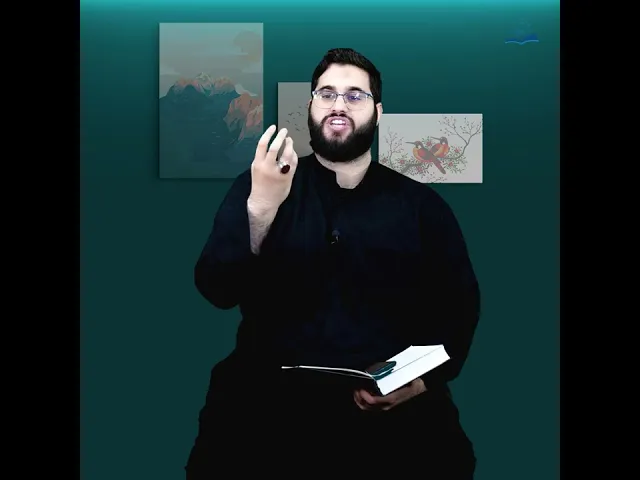
ʿILMTalk: The Qurʾān, Dīn, and Ideology Part 1 | Sayyid Sulayman Hasan
0
0
19 المشاهدات·
24/07/31
في
آخر
أظهر المزيد
Transcript
[0:00]our libel min ash-shaytaan-i'r rajeem rahmani r-rahim al-hamdu lillahi rabbil alameen wa
[0:09]sallahu wa salam ala sayidina wanna be you know a biblical semi
[0:13]Muhammad debating of Levinas aspirin and cuidado de la hora de him
[0:29]Adami Almondine rubbish ah he said the you acidity ahmadiyya doctor time
[0:34]in this any of kabul totally respected or my dear brothers and
[0:41]sisters assalamu alaikum wa rahmatullahi wa barakaatuh in today's session in sha
[0:45]allah we will be talking a little bit about the role of
[0:47]religion and ideology in our islamic conception of that role in our
[0:56]spiritual development and in our lives and there are a few challenges
[1:01]that we have in being able to appreciate what it is that
[1:04]Islam wants us to think about the role of our religion and
[1:13]the role of our ideology in terms of and I want briefly
[1:17]in a few minutes that I have to just kind of go
[1:24]through a very success and a very brief introduction to some of
[1:27]those themes that are important and we can follow up in more
[1:34]detail during the question answer session and the repercussions of those themes
[1:42]so I want to begin with a question about whether we should
[1:50]think of religion and ideology primarily in individual terms or in collective
[1:58]and communal terms for many of us our belief our doctrine our
[2:07]practice our religious 'ti is primarily an individual concern and that is
[2:18]one of the problems of calling Islam a religion because religion is
[2:28]generally perceived as being a factor of one's individual beliefs and one's
[2:34]individual doctrine and that is why we have probably one of the
[2:38]most pernicious terms in the English language organized religion where then religion
[2:44]goes beyond just your individual doctrine and your individual belief and horror
[2:50]of wars it becomes something that is collective and communal and organized
[2:55]or as some people say disorganized that is generally how many of
[3:01]us think of what religion is and some people will interpret Lokhande
[3:07]Nicole Maria Dean on that basis that you can have your religion
[3:12]I have my religion we can all have our own individual religion
[3:16]so the danger is that the word religion is often associated with
[3:25]you as an individual how does Islam want us to think of
[3:31]religion is it an individual or is it a collective enterprise clearly
[3:44]the Quran is not speaking purely in collective terms because Lacombe Dino
[3:52]cumali Adi la agraja fed Dean they do at the very least
[3:56]tell us although there are differences among Celine about the exact details
[4:00]of what those verses mean but they do it the very least
[4:09]clearly tell us that every individual has a moral imperative to choose
[4:16]a path a belief system a set of principles by which they
[4:22]are going to live ethics and law and so there is an
[4:27]individual element that the Quran affirms and that is present that's not
[4:34]something that we should really have to spend a lot of time
[4:39]debating but what is important is the Quran also speaks of a
[4:42]collective element and it speaks of a collective element in a particular
[4:53]way in other words our belief system is not just something that
[4:57]each of us as individuals chooses but it is something that has
[5:04]a presence and it has a collective existence and because it is
[5:16]a living being as a collective it has an effect on us
[5:20]as well and that is why the Quran sometimes speaks in very
[5:28]blunt and very stark terms about religious differences or beliefs that it
[5:36]critiques some of us may have a little bit of a sense
[5:38]of surprise or awkwardness when we look at the very harsh critique
[5:46]that the Quran will give to the mushrikeen the polytheists or al-kitab
[5:52]and in particular the Jews that they cling to life that they
[5:59]scheme against the believers and wish to turn them back into unbelievers
[6:05]and that might seem to be kind of a very harsh judgment
[6:13]if we're looking individually then that kind of Quranic language might not
[6:19]seem to make much sense but if we understand that the religion
[6:24]and religious belief system also has a collective aspect then what the
[6:30]Quran is attacking harshly is the tendency of certain belief systems to
[6:39]have very real effects within society and I want to just give
[6:46]a modern example to illustrate that point generally the modern Western world
[6:52]considers itself to be civilized in fact you will sometimes see members
[6:58]of various Armed Forces and to keep my speech apolitical I won't
[7:03]mention you have to go and look at the news and find
[7:04]the instances that I'm referring to on your own they will say
[7:09]that we're not like them uncivilized Arabs or Muslims we don't send
[7:15]our young to get killed we don't celebrate when they are martyred
[7:24]or killed we're civilized we care about every one of our soldiers
[7:31]of every one of our youth those armies will often have no
[7:37]compunction about carpet bombing about eliminating the very infrastructure that keeps a
[7:45]city a country a society alive harming combatants harming civilians harming many
[7:52]other people is that a valuing of life yes everyone soldiers bodybag
[8:02]can create a protest that why did our soldier die at the
[8:07]same time the destruction of an entire city of hundreds of thousands
[8:11]of people is collateral damage what can you do war is war
[8:14]where does that come from is that just a coincidence is that
[8:22]just because of the media hiding certain facts or is there an
[8:27]ideology behind it a belief that I owe my loyalty to my
[8:30]nation and that the human rights or the success of citizens or
[8:39]members of my society is more important their life their liberty their
[8:46]comfort is more important to me and I have a greater obligation
[8:50]to them then I have to somebody who is born on the
[8:54]other side of the border who was not a member of my
[9:00]society that valuing of one life is almost equivalent to the dehumanization
[9:06]and the devaluing of another life and if we think that the
[9:10]problem is just that the media doesn't bring the cameras in and
[9:16]people don't see how bad war is that's what the problem is
[9:19]then we're fooling ourselves that is a part of the problem that
[9:23]propaganda and all of those issues with another part of the problem
[9:30]is the ideology that values and defines identity and human life in
[9:39]terms of affiliation in terms of citizenship in terms of nationality and
[9:46]so in many ways that culture that says that we celebrate martyrdom
[9:50]and we can come to terms with our soldiers going to their
[9:57]death because they're going to fight with chivalry and they're going to
[10:00]fight with honor that might be a far more civilized culture and
[10:05]society and in fact in the aggregate it might result in fewer
[10:11]deaths particularly of non-combatants and of civilians now I'm not trying to
[10:17]make a political argument or quantify a particular case because there's always
[10:24]many other variables that come in a particular instance or a particular
[10:30]case my point is simply to say that that collective aspect of
[10:34]ideology is very real and its present and it affects our decision-making
[10:39]and the Quran for grounds that collective aspect as well it says
[10:47]that there are certain parts of the ideology and of the value
[10:54]system proclaimed by the Jews that are pernicious to a human society
[11:02]and developed developing goodwill among various nations if I say that I
[11:06]only owe my loyalty to my tribe and my tribe is a
[11:12]chosen tribe and other people are not to be dealt with on
[11:17]the basis of justice I don't owe them anything and I don't
[11:19]owe them even the fulfillment of a contract or a pledge or
[11:25]a covenant that I make with them then that is furnishes and
[11:29]that is evil now the people the quran was addressing self-identified and
[11:36]were identified by others as yahood as jews that doesn't mean that
[11:42]the Quran is anti-semitic or anti-jewish it means that any group that
[11:47]has that kind of an ideology is condemned by the Quran the
[11:57]application of that verse might apply to a group that self identifies
[12:01]as Muslims if they follow that system or that kind of a
[12:05]logic that the Jews at that time followed we might be very
[12:11]well justified in saying that yes the Quran says yehud but it
[12:14]means Zionists not Jews because today the language has changed the association's
[12:19]have changed and there might be many Jewish people who don't follow
[12:23]that Creed and that value system that the Quran so severely condemns
[12:29]that's not fudging it and trying to take the edge off of
[12:37]the Quran that is to be accurate to the Quran and to
[12:43]prevent it from being viewed only as a historical document there is
[12:47]a reason why the Quran used a particular strong language of condemnation
[12:51]and the Quran tells us what that logic is and it can
[12:57]be applied today the terms might change and so we might not
[13:01]say that Allah Allah yahood not because we want to depart from
[13:07]the Quranic language or from the Quranic principle but because we want
[13:13]to apply it accurately and that comes from a verse of Surat
[13:17]Annisa verse 123 this is one of those hard verses of the
[13:24]Quran this is a verse that the Muslims found hard in the
[13:27]the time of the Prophet and the time of the Imams and
[13:32]this is not a fire in brimstone verse this is not a
[13:37]killed them all that guard sought them out verse we don't actually
[13:41]have that verse in the Quran but this is a verse that
[13:43]superficially might not seem to be that big a deal but for
[13:50]many Muslims it was quite a shock and quite a difficult verse
[13:55]to digest but Quran says leisa Damania come voilá Amani al-kitab miami
[14:03]su and you disobey that addressing the believers it doesn't follow what
[14:11]you would want and it doesn't follow what al-khattab would want whoever
[14:17]does evil is going to be compensated for the evil that they
[14:21]do don't say that well I'm a Muslim so I can run
[14:25]willy-nilly in society do whatever I want I don't have to be
[14:29]fair to the Jews I don't have to be fair to the
[14:32]Christians they're not even following the right religion I am Shia I
[14:34]don't know anything to this one me or I'm Sydney and I
[14:38]don't know anything to the Shia and so on and so forth
[14:40]you might want that the Quran says to the believers the kitab
[14:45]might want that that's not how it works Miami zoo and you
[14:51]disobey whoever does evil will be punished and will be compensated according
[14:56]to what they do so what the Quran is saying is that
[15:02]this is the principle that Allah wants the believers to follow if
[15:06]the Quran condemns the Jews for saying that we are chosen people
[15:09]then it also condemns the Muslims who might want to say that
[15:15]well we're the chosen religion we're the right religion the rules that
[15:19]apply to everyone else do not apply to us and time and
[15:22]time again the Quran speaks of Justice and dealing with others with
[15:25]justice and justice only has meaning if is a concept that has
[15:35]mutuality and reciprocality so this verse was seen by many Muslims as
[15:41]being a very difficult and a very harsh verse 1 because Abu
[15:44]Huraira according to one hadith said that well then what good is
[15:50]our faith if we're going to be punished and we're going to
[15:54]be held to a high standard we're basically in the same boat
[16:02]and there is also a hadith that the son of Imam Jafar
[16:04]al-sadiq alayhi salatu wassalam his son s mary came to the amount
[16:15]and he said what do you say about the unbelievers or the
[16:20]the sinners of your followers your shia and the sinners of other
[16:25]groups of muslims somebody is a Shia are they off the hook
[16:31]when they sinned and the Imam recited this verse he said Lisa
[16:35]demoniac umana Imani al khattab just like a Muslim cannot say to
[16:39]a non-muslim were off the hook if you are a follower of
[16:43]the Imam if you are a shiri then you cannot say to
[16:49]another person that I'm off the hook now what is the the
[16:52]outcome of that you might feel like you're basically without any protection
[16:59]in the hereafter and that is where we have a hadith from
[17:05]the Prophet and from the Imams that say that Allah provides an
[17:09]opportunity for believers to compensate and to atone for their sins so
[17:14]if you are a believer then Allah will put various forms of
[17:22]suffering within your life in some hadith it is said that those
[17:25]sufferings will be commensurate with your sins and with your mistakes not
[17:30]that people who suffer more are more sinful because some forms of
[17:39]suffering are a test and a trial and means to raise a
[17:41]person's spiritual rank but one of the things that does increase our
[17:50]hardships and our sufferings in life is our sins to atone for
[17:53]those sins it doesn't work in Reverse I can't say because somebody
[17:56]suffered a loss because they went bankrupt they must have been a
[18:00]bad person because they suffered ill health or they had a difficult
[18:03]death they must have been a bad person but one of the
[18:04]things that does cause those is in order to atone for our
[18:10]sins so the a hadith tell us that for the believer this
[18:13]Avenue is given they still have to make up for their sins
[18:19]it's not that they'll be off the hook but either during their
[18:21]life and then in one hadith from the 6th Imam it says
[18:26]that if it doesn't work in life that you have been able
[18:31]to atone for all of your mistakes then Allah will make the
[18:34]process of dying either physically or spiritually difficult for that person until
[18:40]they have atoned for their sins so they enter into the hair
[18:43]after in a purified State and then that process of purification for
[18:49]the soul it may even need to continue after death so that
[18:52]opportunity is there in other words Allah provides grace for the believer
[18:57]and means for us to better ourselves I might make the intention
[19:05]to commit a sin and Allah will send a reminder for me
[19:11]to prevent me from committing that sin I may be tempted and
[19:15]Allah will provide that strength to prevent me from succumbing to temptation
[19:20]I may actually succumb to the temptation and Allah Subhanahu WA Ta'ala
[19:25]will then provide me through hardships through suffering a means for atonement
[19:31]there is something special that comes to a believer that is not
[19:35]available or that is not available in the same way and in
[19:41]the same intimacy to a non-believer but what is it that is
[19:43]available it's not that invincibility potion it's not that get-out-of-jail-free card we
[19:50]will atone just as every other human being will atone or the
[19:56]evil that we do it is that Allah will provide the guidance
[20:02]and the strength and the means for us to atone so that
[20:07]is a message that allows a person to be able to interact
[20:14]in respect and injustice with members of other religions and other ideologies
[20:20]in the Quran therefore very strongly condemns any ideology that separates one
[20:26]group and says that we are better than or we are superior
[20:29]to other human beings in view of this verse we can actually
[20:35]see that harsh language of the Quran as being a very inspiring
[20:41]and a very beautiful moral principle it is giving us a difficult
[20:47]standard as believers just as it is also calling to account members
[20:51]of other religions or other schools of thought or other ideologies for
[20:56]the implicit and the inherent prejudices and in Justices that they might
[21:03]follow so now there is a collective component to our belief system
[21:11]and to our religion that's what we've established so far and the
[21:17]Quran foregrounds that and speaks in very stark terms about that in
[21:21]order to give a consistent religious message once we understand that then
[21:27]we can also understand why the Perron sometimes applies a collective responsibility
[21:39]for certain actions normally the principle of the Quran is a lot
[21:46]as it allows a little wizard over no bearer of a burden
[21:49]will carry the burden of another person so that is a general
[21:58]principle that the Quran gives but at the same time we say
[22:01]that the Quran or we see that the Quran says to the
[22:09]Jews dramatic to Luna and be a la him in hablo in
[22:12]consumer meaning if you are believers why do you kill the prophets
[22:16]of God before when did the Jews kill the prophets of God
[22:22]certainly not in the time of the Prophet they never were able
[22:25]to kill the Prophet they weren't able to kill prophet ISA ISA
[22:32]so it was centuries generations ago in a different time in a
[22:36]different place that the Jews did that and yet the Quran criticizes
[22:42]and the Quran condemns the Jews who were contemporary to the Prophet
[22:49]Muhammad took to Luna and ayah Allah in the present tense I
[22:53]mean a couple you did this before you did this before why
[22:59]why that collective responsibility does that go against the principle of lot
[23:05]as it was a little wizard Oprah or not well on an
[23:09]individual level they didn't do it but on a collective level they
[23:16]still were the heirs of that religion and that belief system and
[23:20]they honored those people who had committed those crimes which means that
[23:25]in moral terms they were responsible and in practical terms they would
[23:31]be susceptible to repeat those very crimes because they had never spiritually
[23:37]and religiously condemned or come to terms with that injustice and so
[23:43]because of that collective responsibility or because of that collective reality and
[23:49]identity of a religion there is a collective responsibility that also comes
[23:58]for every member of that ideology or of that religion to be
[24:03]on the safe side we might say that alright I'm going to
[24:07]flee from any kind of affiliation I'm just myself but by the
[24:10]very act of fleeing from an affiliation we're also shirking our responsibility
[24:14]I can say that well I'm not responsible for what my family
[24:20]does but by the very act of dissociating my from my family
[24:22]when I might have been able to have a positive influence and
[24:25]prevent them from committing certain harm or certain crimes that I'm not
[24:30]really able to save myself from the moral responsibility for what they
[24:37]are doing so what the Quran tells us is that because there
[24:41]is a collective reality there is also a collective responsibility that I
[24:48]as an individual have towards that collective what does that mean in
[24:53]practical terms for you and me well one thing that it means
[24:57]is that we have a stake and we have a responsibility in
[25:03]ensuring that that collective identity of our faith always stands up for
[25:12]what is right and what is moral the actions that you and
[25:18]I do in particular the actions that you and I do in
[25:21]the name of our religion the positions that we take the values
[25:29]that we practice and that we speak about they are going to
[25:34]form the religious identity they are going to strengthen that collective identity
[25:40]or they are going to weaken it and so we have a
[25:45]very strong responsibility now to ensuring that Islam and the school of
[25:53]Ahlul Bayt uphold and are known to uphold the highest of ideals
[25:59]and values we should be critical and we should be introspective but
[26:04]we should do so not standing outside in judgment of them but
[26:10]with a healthy process of trying to improve and trying to better
[26:20]our own religious environment and our atmosphere now a few more verses
[26:24]that I will talk about and then Charlotte will continue the discussion
[26:28]in the question period or the question and answer period there is
[26:33]a collective identity there is an individual identity and those are often
[26:37]in tension and one of the things that I hope you will
[26:42]be able to explore is how the word Deen in Arabic which
[26:44]sometimes you translate as religion connects to both of those aspects the
[26:51]final point though that I will make before I relinquish this wonderful
[26:58]microphone is that the Quran speaks about the nature of religion or
[27:13]the nature of our devotion to God in material terms and also
[27:26]in spiritual terms many of us we tend to think of religion
[27:30]primarily in terms of what it means for us in life we
[27:38]think of it in terms of what we need to believe and
[27:44]we think of it in terms of what we need to do
[27:47]the Quran however although it speaks about our material life it also
[27:59]reminds us that the true measure of your Deen and your religion
[28:02]and your devotion and your worship and your law and all of
[28:04]those meanings are part of the the semantic range of the word
[28:14]Deen it is first and foremost a matter of the Hereafter it
[28:19]is first and foremost a matter of judgment it is first and
[28:26]foremost a matter of the deeper purpose of our life and so
[28:30]when Allah introduces himself as the Lord and the owner of the
[28:41]Hereafter we say Maliki yo MIDI the owner of the day of
[28:44]D now Dean as has been mentioned by Mufasa Dean has different
[28:53]meanings one of those meanings is the reward or punishment that a
[28:56]person gets for their good or bad deeds and so some have
[29:00]said that well hear the word Dean is used in that specific
[29:02]sense in other places in the Quran it is used in other
[29:09]senses of worship or of law or of devotion but if we
[29:12]look at it this is perhaps not just one of the usages
[29:17]of the word Dean but it is a reminder of what the
[29:23]essence of being is that all of those different smaller aspects of
[29:27]what do I believe and what do I practice and what are
[29:34]the rituals and the laws that I follow they all fit together
[29:38]and they are integrated in that they affect where I stand on
[29:44]the day of judgment and remembering that that is the essence of
[29:50]what Dean is will help us develop an integrative aspect a holistic
[29:56]aspect of our various processes and roles within life there is room
[30:07]for uncertainty there is room for doubt and for self-doubt there is
[30:12]always room for growth and development but sometimes those processes of doubt
[30:19]and of growth and of development can be destabilizing but if you
[30:25]remember that well my study of Islamic belief my study of Islamic
[30:30]practice all of that is trying to feed into a specific stance
[30:40]on the day of judgment then that will make it much easier
[30:43]for me to move through that process even have certain doubts and
[30:48]uncertainties but come to a an understanding of what my responsibilities are
[30:56]gives me strength and helps me move through that uncertainty and so
[31:02]I will conclude with a verse of surah tune or verse number
[31:05]25 I believe it is Yama even you are fee him Allah
[31:11]hoody novena whole heart it is on that day that God will
[31:13]give back to all human beings the Nahum will hack their true
[31:21]religion so the robada the belief everything that you had within your
[31:25]religion that is going to be presented to all of us on
[31:27]the day of judgment that is the essence of our D and
[31:31]that makes it much easier for us to move things from a
[31:37]theoretical and from a hypothetical realm to say that what is it
[31:40]that I want to be given on the day of judgment it
[31:45]gives us a different perspective that helps us make better decisions and
[31:50]helps us even have uncertainties but still have anchor points within our
[31:55]life in sha allah we will explore that more during the discussion
[31:58]period assalamualaikum warahmatullahi wabarakatuh
0 تعليقات
sort ترتيب حسب
- أعلى تعليقات
- أحدث تعليقات
التالي
7 المشاهدات · 23/07/23
8 المشاهدات · 24/10/20
10 المشاهدات · 24/10/20
8 المشاهدات · 24/10/20
8 المشاهدات · 12/05/27
5 المشاهدات · 24/01/31
10 المشاهدات · 24/10/10