Volgende
10 Bekeken · 12/05/27
12 Bekeken · 24/10/10
10 Bekeken · 24/10/18
11 Bekeken · 24/10/21
10 Bekeken · 24/10/21
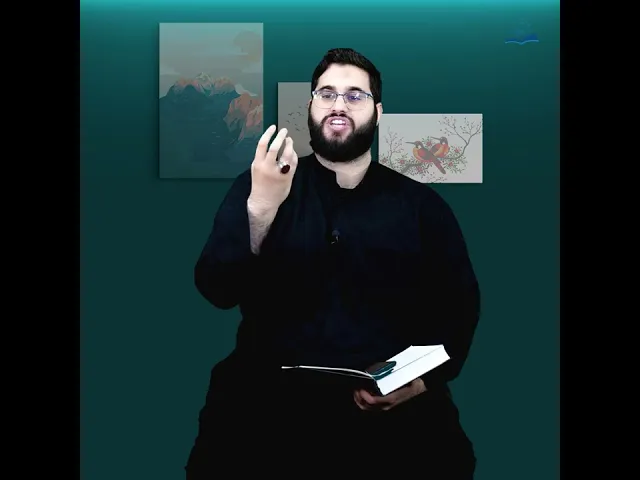
Exegesis of Surat Shu3araa'- Part 14- Remembering death
0
0
20 Bekeken·
24/07/29
This is a series of lectures given by Hamam Nassereddine throughout the month of Ramadan; the lectures shed light on verses of Surat Shu3araa’, which is one of the first chapters that descended upon the Prophet Mohammed (peace be upon him and his family). The chapter speaks about several Prophets and what took place between them and their people; amongst those Prophets are the Prophet Mohammed (peace be upon him and his family), Prophets Noah, Abraham, Moses, Hud, Saleh and others (peace be upon them all).
Laat meer zien
Transcript
[0:39]in our previous lecture we mentioned multiple lessons that we can derive
[0:48]from the story of noah one of which was just as there
[0:57]were there was one group of people who were saved from the
[1:02]flood of noah when the rest of humanity drowned in that flood
[1:09]just as one specific group of people was saved from the flood
[1:16]as they embarked the ship of noah the ark of noah ali
[1:21]today there is also an ark of salvation that we must embark
[1:28]in order to be saved from the dreadful and humongous waves of
[1:35]misguidance that surround us in that arc that arc of salvation is
[1:43]none other than after mentioning multiple lessons that we derived from the
[1:53]story of noah we started with the story of hud surat mentions
[1:58]the story of hud right after noah's story and by the way
[2:02]this is the fourth story mentioned in surat shwara it's quite nice
[2:08]to see that the quran mentions after the story of noah because
[2:15]when we go back to the traditions of we understand that was
[2:22]the uh savior of the believers after noah this is an important
[2:31]point that we need to keep in mind as you may know
[2:33]there were multiple saviors that came to humanity throughout history one of
[2:41]them was musa another was asa a third was muhammad so there
[2:50]were multiple saviors that came to humanity traditions say when i say
[2:54]traditions we're talking about the traditions of the words traditions say that
[3:03]noah addressed his shias meaning his followers and he told them that
[3:12]after him there will be tyrants who will gain dominion over the
[3:16]shias meaning over the believers during that time and he told them
[3:22]that their savior will be he will be in fact there's a
[3:30]detailed tradition [Music] it mentions how one prophet would mention the advent
[3:50]of another prophet or how one proof of god would speak about
[3:54]the following proof of god if you remember we mentioned part of
[3:59]this tradition it's a lengthy tradition it's pages long but we mentioned
[4:05]part of it when we spoke about who about adam shaith and
[4:12]noah when we spoke about adam and shaita what happened before adam
[4:16]died what happened during his death and after his death and how
[4:21]adam foretold the advent of noah today inshallah we want to shed
[4:26]light on the part of this tradition that deals with the imam
[4:35]says when the prophethood of came to an end and when his
[4:46]days came to an end allah revealed a message to him meaning
[4:50]this happened before no left this world allah revealed the message to
[4:57]nur and he said your the days of your prophethood have come
[5:01]to an end and the days of your life have also come
[5:04]to an end so transfer the knowledge you have to a person
[5:14]amongst your progeny specifically sam transfer it to your son sam the
[5:21]tradition mentions that allah azza told him the greatest name of allah
[5:31]azzawajal noah knew it and he was told to transfer to sam
[5:35]salam he was also told to transfer al-iman to transfer faith and
[5:43]iman if i want to give you a literal translation means what
[5:47]it means faith or religion so he was told to transfer that
[5:52]to sam what does that mean it doesn't mean sam wasn't faithful
[5:58]before he was faithful but what i understand from this word is
[6:01]that sam was becoming the preserver or the caretaker of the religion
[6:09]of god after noah allah had decreed that sam will be the
[6:14]caretaker of god's religion after noah so he was told to pass
[6:21]down his knowledge to sam salam and allah told nu he told
[6:29]him that in every era there will be someone who will possess
[6:34]that knowledge who will possess ismail akbar the greatest name of god
[6:40]iman faith who will possess the knowledge of noah and that someone
[6:45]will be from the progeny of the prophets who came between the
[6:51]times of adam and now which means that the proofs of allah
[6:57]after noah are all descendants of adam and noah and of course
[7:05]the prophets who came in between the times of adam and noah
[7:07]salaam allah he also told no that there will always be a
[7:17]scholar on earth through which the religion of god will be known
[7:21]he tells him that there will always be a scholar on earth
[7:25]through which my religion will be known meaning allah's religion and through
[7:30]which my obedience will be known so that scholar is unlike other
[7:35]scholars he is what he is an infallible scholar what we call
[7:41]the proof of allah this scholar guides people to allah's religion and
[7:46]also tells them how they're supposed to obey god then allah tells
[7:53]him that through these scholars meaning these proofs of god he saves
[7:59]the people who come into this world after the death of a
[8:03]prophet and before the advent of another prophet what does this imply
[8:10]it implies that sometimes the earth is devoid of a prophet there
[8:14]are times in which there are no prophets like our eras right
[8:19]there is no prophet after muhammad similarly between isa and muhammad there
[8:26]were a lot of years in which there were no prophets on
[8:31]earth so there could be eras in which no prophets exist on
[8:39]earth but there is always a proof of allah on earth if
[8:42]there isn't the prophet there's what there's a successor of a prophet
[8:46]there's someone who represents allah subhanahu wa and the prophets of god
[8:52]salam allah that someone is infallible and he guides people to the
[8:57]path of allah so if we were asked for example who um
[9:02]was in charge of guiding people after isa alaihissalam our answer would
[9:08]be safa simon peter who wasn't the prophet but he was a
[9:11]successor if we were asked who are you know the proofs of
[9:16]allah right now who is the proof of allah right now the
[9:19]answer would be velocity was a man may allah hasten his reappearance
[9:23]for we shias believe that after rasulallah there are 12 imams each
[9:31]one of them is the proof of god subhanahu wa let us
[9:36]go back to the tradition of imam al-bakr he says he says
[9:41]after sam [Music] came what does he mean by this word it
[9:49]seems that he means who'd was the greatest prophet or say the
[9:59]biggest prophet after some he doesn't mean to say that there are
[10:03]absolutely no prophets in between their times why because the imam continues
[10:09]and says the prophets who came uh in between the eras in
[10:13]between the times of sam and hud some were in hiding and
[10:20]some weren't in hiding which confirms a point we mentioned in the
[10:26]first lectures if you remember were not the first people to be
[10:30]tested through an occultation we're not the first people to be tested
[10:36]through the occultation of god's proof here is imam al-baqarah telling you
[10:42]that certain prophets who came after sam and before who were what
[10:48]were in hiding so they were on earth but they were in
[10:55]a state of occultation then the imam says he says noah said
[11:00]a word to his people to his people what did he say
[11:06]he said allah subhanahu wa is going to send a prophet called
[11:13]hud this prophet will call his people to god but they will
[11:21]disbelieve in him and as a result allah will destroy them through
[11:26]wind being through violent wind as we shall hear through a violent
[11:32]wind when he comes to you believe in him and follow him
[11:37]if you do so allah will save you from that violent he
[11:59]told him to look into this well to read this will how
[12:07]many times once per year he told them that every year at
[12:10]the start of the year he wants him to read that will
[12:15]not only to himself rather he wants him and the believers with
[12:20]sam alaihissalam to remember this will why so they may remember the
[12:26]advent of hood and may be ready to welcome hud and to
[12:30]believe in him once he comes this is similar to how it
[12:37]try to prepare us for the advent of sahaba zamman by mentioning
[12:44]what will happen when sahib is a man arises the signs of
[12:52]the reappearance etc so the imam says when hood finally came when
[12:59]hood finally came the believers at that time looked at the knowledge
[13:05]they had they looked into the knowledge they had and they realized
[13:09]subhanallah this is hood this is the hood that spoke of so
[13:15]they believed in him and followed him as a result when allah
[13:20]destroyed the people of hood those believers were what those believers were
[13:25]saved bear in mind these believers must have believed in who'd before
[13:31]his advent because they already knew that new spoke about a man
[13:37]called hood but the thing is they were trying to see who
[13:39]is this who finally when he came they realized this is the
[13:43]person we've been waiting for and that will happen as well this
[13:49]is exactly insha allah this is exactly what will happen once sahib
[13:52]is a man reappears the believers will realize this is the promised
[13:58]mehdi this is the mahdi we've all been waiting for abdullah wasallam
[14:05]we mentioned yesterday if you remember that hood reminded his people of
[14:12]fearing allah subhanahu wa which is a general piece of advice which
[14:20]helps people cleanse themselves from any sin whenever someone commits a sin
[14:26]the piece of advice regarding piety reminding him of piety is an
[14:32]excellent piece of advice because it will help with any sin but
[14:39]even then who would tackle certain sins that his people committed and
[14:44]the first sin we mentioned yesterday was what was wasting they would
[14:52]waste time money and effort as they would build huge monuments on
[14:58]uh heights hills and or mountains for no reason they would build
[15:09]those monuments for no reason so they were wasting their time effort
[15:12]and their money this brought us to what to the topic of
[15:16]wasting and we said allah subhanahu wa ta'ala as muslims he wants
[15:22]us to follow a middle path which lies between two extremes stinginess
[15:29]and extravagance he doesn't want you to be extravagant and he doesn't
[15:35]want you to be stingy this is where we stopped and we
[15:39]presented a tradition by imam which explained through body language the imam
[15:48]explained through body language what is extravagance what is stinginess and what
[15:56]is this middle path which lies between stinginess and extravagance we've understood
[16:01]that as muslims were not demanded to refrain from spending money rather
[16:11]we're demanded to spend money in the right way in the right
[16:17]manner so there are times in which you must spend money and
[16:23]there are times in which you should refrain from spending money here
[16:27]i want to share with you a tradition in al qaeda by
[16:35]imam assad which sheds more light on this topic as i told
[16:38]you there are plenty of traditions that speak about the limits of
[16:43]spending money when are you extravagant when you're not so it's wise
[16:48]to read these traditions for today we want to share with you
[16:54]the following tradition where the narrative he tells him he tells him
[17:01]what is stinginess so the imam says he answers by giving an
[17:04]example and i believe you know that giving examples is one of
[17:10]the best ways through which you can make people understand a particular
[17:15]concept if you want people to understand concepts present what presents examples
[17:31]is to basically eat bread and salt when you're able meaning you're
[17:37]financially able to buy other types of food remember the imam is
[17:43]giving what an example he's saying someone has money and he's able
[17:49]to buy meat chickpeas fava beans he's able to buy you know
[17:55]fruits vegetables chicken etc and he only buys you know bread and
[18:04]salt he says this is what this is stinginess then he's asked
[18:11]ali he said um he's told family then what is this middle
[18:20]path which lies between extravagance and um stinginess the imam he says
[18:40]if you want to follow that middle path then buy bread meat
[18:48]milk and or yogurt vinegar margarine you should sometimes eat this type
[18:59]of food and sometimes that type of food what do we understand
[19:04]from this tradition we understand from the imam alaihi that it's not
[19:11]wrong to buy different types of food if you want to refrain
[19:16]from being extravagant you don't have to you know have a very
[19:22]simple diet where you're only eating for example bread and salt no
[19:27]you can you can buy various types of food because these types
[19:31]of food are needed for the body and allah is a generous
[19:39]lord allah wouldn't create a human being in a way in which
[19:44]the human needs certain types of food and then forbid that type
[19:48]of food on the human it's a stinginess for example allah subhanahu
[19:54]wa ta'ala won't create us in a way in which we need
[19:57]for example milk then tell us you know what you can't drink
[20:00]milk why would he do that if he wants to forbid something
[20:05]upon us it means or in better terms if he forbids something
[20:10]upon us it means we don't need it allah is a generous
[20:15]lord i repeat if he forbids something upon us it means it's
[20:19]not needed if it was needed he would have made it lawful
[20:24]and if someone were to say but there are certain things that
[20:31]the human body needs that are unlawful our reply to that is
[20:36]you're wrong the the body doesn't need such things and if we
[20:41]suppose that the body needs them allah has already allowed us to
[20:47]do what allowed us to consume or to acquire other things that
[20:53]are lawful and that present the same benefits to the human body
[20:59]so we understand from imam sadiq's tradition that it's not wrong to
[21:08]spend money on various types of food and that it's not wrong
[21:11]to spend money on things that uh give you comfort whilst you're
[21:19]on earth things things that make your life a comfortable life that's
[21:24]not wrong and it's not part of extravagance this is a second
[21:38]tradition a second tradition concerning wasting in a third tradition who follows
[21:57]a middle path between extravagance and stinginess allah will do what will
[22:03]sustain him so the the prophet here teaches us that when we're
[22:09]not extravagant what does allah do allah increases our sustenance if you
[22:14]want your substance to be increased show allah subhanahu wa that you
[22:20]know how to spend your money and you know how to control
[22:26]yourself when it comes to spending money then the imam says the
[22:29]prophet says as for he who wastes allah will deprive him of
[22:39]sustenance so when allah sees us misbehaving when it comes to money
[22:42]spending money uh right and left without any limits what does he
[22:49]do he deprives us of more sustenance subhanahu so the first problem
[22:59]that that hood mentions regarding his community is what wasting what's the
[23:06]second problem says [Music] and you make strong fortresses that perhaps you
[23:28]may live the books of staff tell us based on this verse
[23:32]of course that the people of whod used to build mansions huge
[23:40]humongous places of residence mansions and or castles soho came forth and
[23:49]objected to this issue he told them as if he was saying
[23:54]what is wrong with you you're building these mansions and or castles
[24:00]in hope of what in hope of staying alive in hope of
[24:05]staying in this world here one might say what's the problem with
[24:11]having a big house or having a big place of residence so
[24:16]what you know having a big house having a spacious house is
[24:23]good it comforts the human being so why is hood objecting to
[24:27]what they're doing first we say correct you're right there's nothing wrong
[24:35]in having a spacious house we can have a spacious house we
[24:38]can have a big house the traditions of salaam are clear on
[24:45]this regard the tradition of consider that having a spacious house is
[24:51]a cause of happiness i repeat having a spacious house is a
[24:57]cause of happiness let me share a tradition with you on this
[25:04]reward you can find the tradition in the book the prophet is
[25:07]there yet to have said the prophet says that there are four
[25:20]things that cause happiness that instill happiness in the heart of a
[25:28]muslim what are these four things the first one is to have
[25:35]a child who resembles him meaning having a son or a daughter
[25:39]that resembles you which is true when you see when you have
[25:42]children you become happy and if the children resemble you you become
[25:47]even more happy you like to see you know um you like
[25:52]to see um a smaller you walking on the face of the
[25:56]earth the second cause of happiness is what he says the second
[26:07]cause of happiness is a wife who is beautiful on the inside
[26:11]and the outside meaning a wife the prophet says a wife who
[26:17]is faithful and beautiful so she's beautiful on the inside because she's
[26:23]faithful she's a righteous human being and she's beautiful on the outside
[26:28]due to her physical appearance this also does what instills happiness in
[26:33]the heart of the muslim the third cause of happiness he says
[26:40]it is to have a comfortable means of transportation for example a
[26:47]comfortable car a comfortable van a comfortable pickup truck etc having a
[26:55]comfortable means of transportation is also a cause of happiness last but
[27:01]not least he says the fourth cause of happiness is a place
[27:08]of residence that is wes ah that's spacious which is which makes
[27:15]sense right when you enter a spacious house you feel comfortable whereas
[27:19]when you enter a house that's very tight you feel or might
[27:23]feel an amount of discomfort so there is nothing wrong with having
[27:27]you know a spacious house but this is not what who alaihissalam
[27:35]so what is he objecting to well look at the verse carefully
[27:42]he says firstly their houses were humongous it's one thing to have
[27:52]a spacious and it's one thing to have you know a house
[27:55]that could fill a whole nation that could that could fit a
[28:03]whole nation are two different things even then hood's main concern is
[28:09]what is the latter part of the verse as he says he
[28:14]tells them i know why you're doing this while you're building these
[28:18]huge fancy mansions and or castles it's because you have hope that
[28:26]you remain in this world you know what that means it means
[28:31]the people of islam forgot about death you know death is is
[28:40]an incident that one cannot avoid correct every human being whether he
[28:50]is faithful or not knows that sooner or later he will die
[28:53]this is one thing that human beings agree on we might disagree
[28:58]you know when it comes to uh beliefs about allah about the
[29:04]prophets about the hereafter etc but there's one belief we all agree
[29:08]on everyone absolutely everyone and that is everyone will die the people
[29:15]of hood forgot about that they had hope that they will remain
[29:20]alive in this world so they forgot about death which means they
[29:27]definitely forgot about the hereafter put the hereafter behind your back you
[29:32]know they forgot about it without doubt when a person forgets about
[29:37]the hereafter and forgets about death this person will be closer to
[29:46]disobeying allah and more distant from obeying him as for if someone
[29:56]disbelieves in the hereafter that person not only will be closer to
[30:01]sin and farther away from obedience that person will be afflicted with
[30:05]a scary state a state through a state that might lead him
[30:11]to committing major indecencies and or crimes you might ask why why
[30:22]would the human being commit major crimes commit for example murder commit
[30:28]major indecencies if he disbelieves in the hereafter simply because he realizes
[30:37]no one is going to punish him or at least that's what
[30:43]he believes he believes that no one will punish him if there's
[30:46]no hereafter that means there's no hell no heaven so there's no
[30:50]punishment for my sins on top of that no one will question
[30:53]me this is what the human being will start to think no
[30:56]one will question me no one will reckon me so why should
[31:00]i refrain from you know killing this person and committing this sort
[31:06]of injustice and that sort of indecency this is what happens when
[31:13]what when a person disbelieves in the hereafter hence believing in the
[31:19]hereafter and remembering it constantly is essential this is why i realized
[31:27]used to remind people about the hereafter in their sermons in their
[31:34]supplications in their words take the example of which we read during
[31:38]the month of ramadan which also we read in the month of
[31:44]ramadan or other supplications like you realize there are passages there especially
[31:55]in hamza that mention the stages of the hereafter imam sajad is
[32:03]doing this purposely are doing this purposely we human beings need to
[32:07]remember the stages of the hereafter we need to remember on a
[32:13]daily basis or a weekly basis the stage of sakaratil when the
[32:19]angel of death is pulling our souls out of our bodies we
[32:23]need to remember purgatory what will happen in that dark and lonely
[32:28]grave we need to remember the stages of the day of judgment
[32:31]what will happen when i'm resurrected and when i need help but
[32:37]everyone beside me is preoccupied with themselves with himself or herself these
[32:45]stages remembering them brings the person closer to obedience farther away from
[32:51]disobedience why simply because it instills fear in our hearts that's positive
[33:02]fear which pushes us to obey allah subhanahu wa and to refrain
[33:06]from disobedience so the people of hood were in a state of
[33:13]spiritual paralysis spiritual paralysis they forgot death they wanted to remain in
[33:21]this world and they were building these huge monuments huge houses mansions
[33:25]or castles because they had hoped they will remain on earth remembering
[33:33]that as i told you is essential hence you find imam ali
[33:40]constantly would remind the muslims about that read his his sermons especially
[33:47]the sermons of najib you'll find amir mentioning death abundantly tonight with
[33:55]the rest of the time we have i want to share with
[34:00]you one of those sermons it's a short sermon but very eloquent
[34:04]and how could it not be eloquent when it's coming out from
[34:10]the heart of eloquence the tradition the sermon can be found in
[34:20]it said it's narrated that imam ali was walking in a funeral
[34:29]he was in a burial procession and he heard someone laughing as
[34:36]he he's in the funeral as he's in the viral procession what
[34:39]we call tashia he heard someone laughing the imam was disturbed why
[34:46]would someone be laughing at a time like this firstly it's disrespectful
[34:52]for the family members of the deceased secondly it's not a time
[34:59]to laugh it's a time to remember what will happen to us
[35:07]one day because the people that die in our life the people
[35:13]that die the messages that we receive for example on our phones
[35:19]or on facebook or instagram etc about people dying all of these
[35:26]are messages from telling us listen i'm coming sooner or later i
[35:33]will come and i will take your soul and take you to
[35:37]the hereafter the tradition says that when malachi salam pulls the soul
[35:42]of a human being out of its body and the family members
[35:46]of that human begin crying he tells them don't cry for i
[35:52]will come back to you and i will come back until none
[35:56]of you are left meaning i'm going to come back and take
[36:00]each one of your souls to the hereafter bear in mind mana
[36:04]kill mouth is not an evil angel he's not evil he's a
[36:10]kind angel but his duty is to do what his duty is
[36:11]to collect the souls of the humans and to take them to
[36:18]the here after so these are messages that person was laughing in
[36:24]the burial procession instead of thinking what will happen to me you
[36:29]know how will my state be when i am carried towards my
[36:37]grief so the imam said the following word he said he said
[36:51]it's as if allah decreed that people will die but we won't
[37:01]die the imam here is describing the state of the human being
[37:03]the human being at times fools himself into believing that you know
[37:11]his mom will die his brother will die his friends will die
[37:16]but he won't die the imam salam allah is trying to wake
[37:22]us up telling us no no no no wake up everyone including
[37:26]yourself will die one day then he says has directed his commands
[37:52]at fellow human beings but he hasn't directed those commands at us
[37:57]here the imam is pointing to another problem that sometimes we might
[38:02]go through if we see someone you know doing something uh incorrect
[38:09]something unlawful we get bothered from him but if we do the
[38:19]same deed will be okay with it so it's as if he
[38:21]has been commanded to obey allah but we haven't imam ali here
[38:26]is also giving us a reality check telling us no this is
[38:31]not the case all of us are required of following allah's commands
[38:53]it's as if it's as if they're going on a trip and
[39:03]soon they're going to come back to us meaning that we behave
[39:09]with these people with the deceased as if they went on a
[39:16]small trip right and inshallah they'll be back soon which isn't the
[39:20]case these people are dead which means they went to the hereafter
[39:22]and they won't come back until one until the day of judgment
[39:26]in which will all be resurrected or the day of raja the
[39:32]day when certain people not all will be resurrected on earth during
[39:35]the days of sahib zaman sharif the bottom line is it's not
[39:40]a trip you know when for example your family member says goodbye
[39:47]and he goes for ziara you have hope that he'll return right
[39:51]you tell yourself inshallah in a week or two or in a
[39:56]few months he'll be back so you don't consider his absence to
[40:00]be a big deal the imam is saying when he heard that
[40:03]person laughing in a burial procession he's saying that certain people deal
[40:09]with this disease as if they went on a small trip and
[40:13]they'll be back soon meaning they're not taking their death seriously and
[40:19]actually thinking about preparing themselves for the same fate we simply come
[40:38]forth and bury the deceased in their graves then what do we
[40:46]do then we take their inheritance the money they've left behind and
[40:50]we use that money we distribute that money amongst ourselves we make
[40:57]use of it and we behave in a way as if we
[41:04]will remain on earth after them as if that will never touch
[41:07]us he says we have forgotten every exhorter meaning every reminder we've
[41:29]forgotten the reminders that allah subhanahu wa has shown us instilled multiple
[41:38]reminders around us that tell us the day of death is coming
[41:42]the afterlife is coming prepare yourself such as what such as the
[41:47]quranic verses that speak about death and the hereafter such as the
[41:51]graves we see when we're driving for example from point a to
[41:56]po point b such as as i told you the people who
[41:57]pass away during our lives the messages we see on facebook on
[42:01]instagram etc all of these are what reminders from allah the imam
[42:10]says we've forgotten about all of these reminders and we haven't allowed
[42:15]those reminders to actually penetrate through our hearts and affect us on
[42:20]top of that he says and we've been afflicted with every ja'iha
[42:29]what's ah is a grave calamity a grave calamity it's also a
[42:40]word used to refer to a phenomenon that destroys someone's wealth and
[42:46]vegetation a phenomenon such as a natural phenomenon that basically wipes out
[42:53]wealth and vegetation it's called so here the imam is talking about
[42:58]what he's talking about a spiritual spiritual calamity he says we've been
[43:02]afflicted with the spiritual calamity and that is the the calamity of
[43:09]what the calamity of uh forgetfulness we're forgetting the hereafter and the
[43:13]calamity of spiritual sleep we're in a state of spiritual sleep just
[43:18]as your body sleeps every day and wakes up your soul also
[43:24]might sleep or might wake up the believers like you inshallah remain
[43:28]awake until the day of their death spiritually speaking but most people
[43:34]unfortunately the imam says in another tradition most people are asleep when
[43:40]do they wake up they wake up once they die when it's
[43:47]too late bear in mind imam ali salaam here speaking in a
[43:53]way where you might assume he's talking about everyone but that's not
[43:59]the case number one isn't talking about himself god forbid nor about
[44:05]the believers like malik and their likes those people those people don't
[44:15]forget the hereafter those people are aware of what's happening now and
[44:19]what will happen then rather about certain people amongst our communities certain
[44:28]people on the face of the earth who don't take that seriously
[44:33]and who forget about death and they hear after but he's doing
[44:38]what he's using a very nice style in exhorting or say reminding
[44:44]those people and that is to speak in a way it's as
[44:50]if he's speaking about himself this is a very nice style to
[44:53]use when you want to exhort someone or remind them of the
[44:58]truth for example someone backbites you know that someone backbites others in
[45:04]your community and you want to admonish him you have two ways
[45:09]of doing so you can tell him backbiting is haram stop this
[45:14]is what the direct method you know you're shooting him with your
[45:19]words of course not with a not with a pistol you're shooting
[45:23]him with your words this is haram don't do it this is
[45:27]the direct method then again there's an indirect method which is to
[45:33]say in his presence why do we backbite see you're saying we
[45:39]so you're accusing yourself of backbiting before accusing him why do we
[45:43]human beings backbite each other why do we do this isn't it
[45:48]wrong here it doesn't seem like you're attacking him you want him
[45:53]to listen and you want to guide him you might be a
[45:54]person who never backbites anyone but you accuse yourself of backbiting so
[46:00]that he can be closer to accepting your admonishment this is the
[46:07]style amir al mu'min was using in this beautiful sermon tomorrow inshallah
[46:13]still alive we'll continue with the sermon of the imam and with
[46:19]more verses foreign
0 Comments
sort Sorteer op
- Top Reacties
- Laatste Reacties
Volgende
10 Bekeken · 12/05/27
12 Bekeken · 24/10/10
10 Bekeken · 24/10/18
11 Bekeken · 24/10/21
10 Bekeken · 24/10/21