التالي
6 المشاهدات · 25/03/22
2 المشاهدات · 25/03/23
6 المشاهدات · 25/03/26
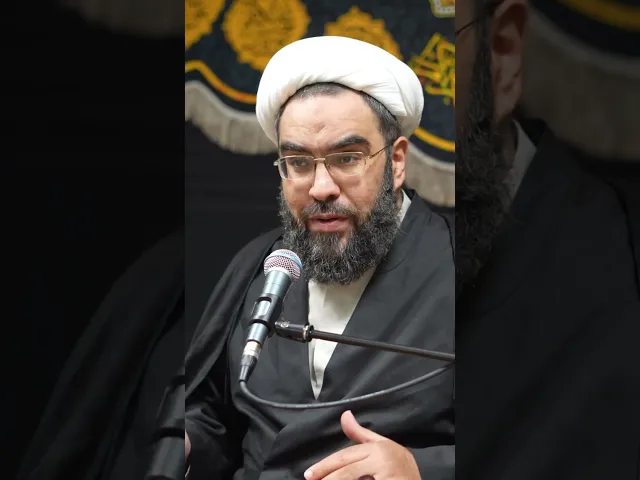
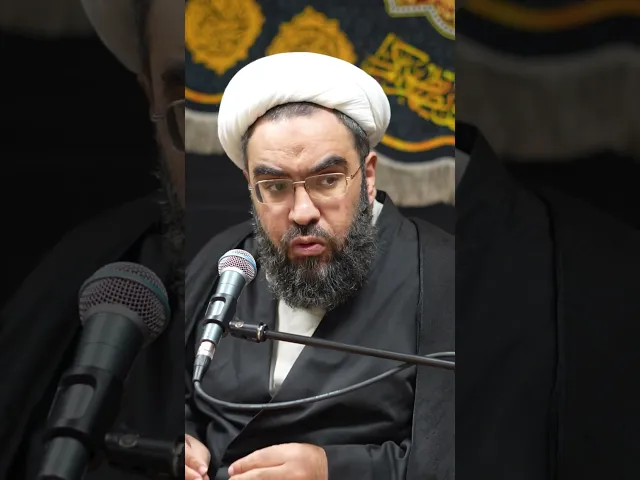
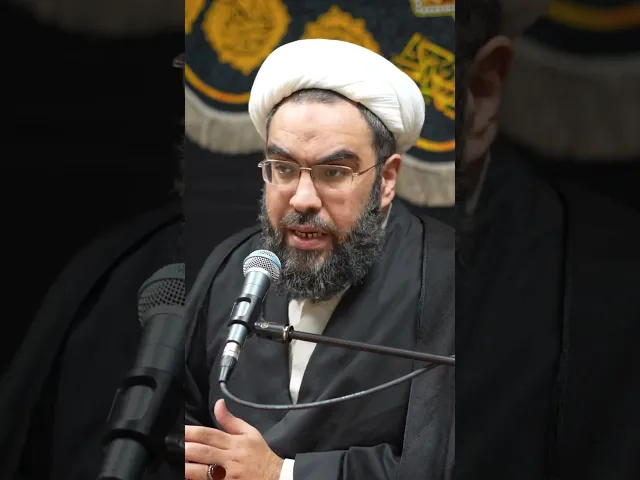
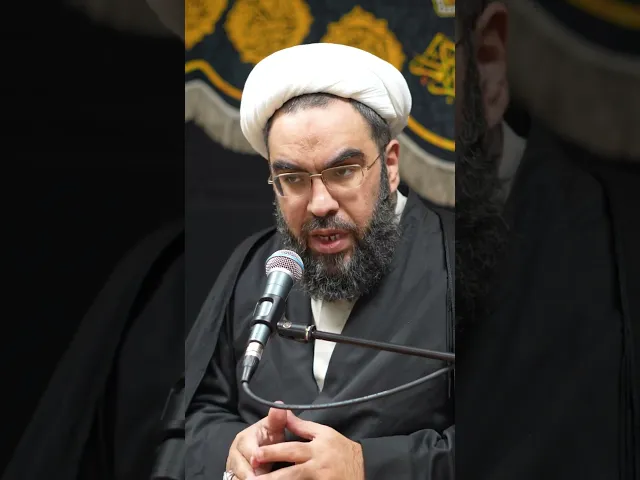
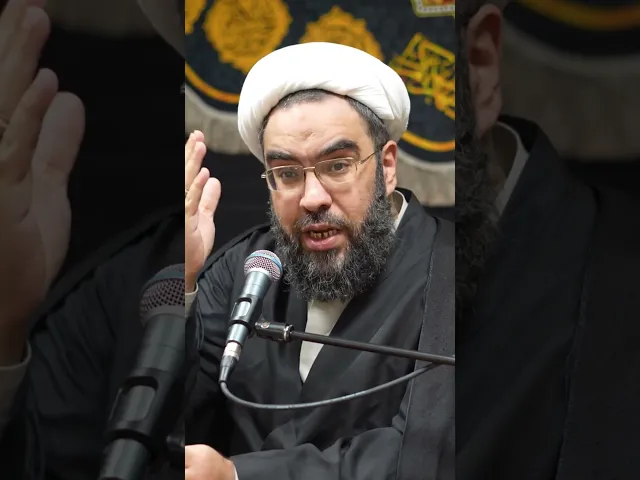
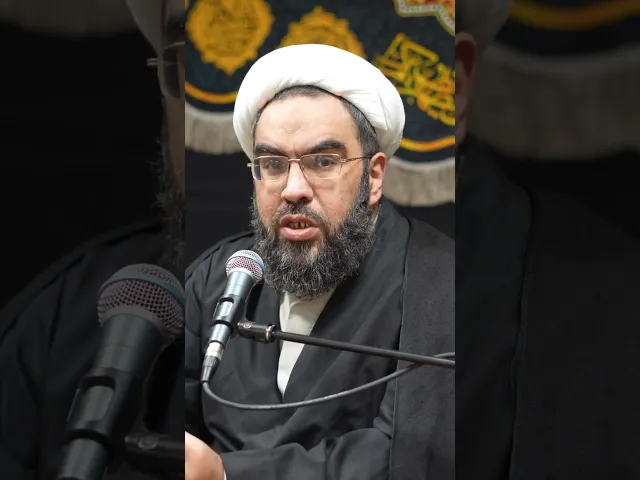
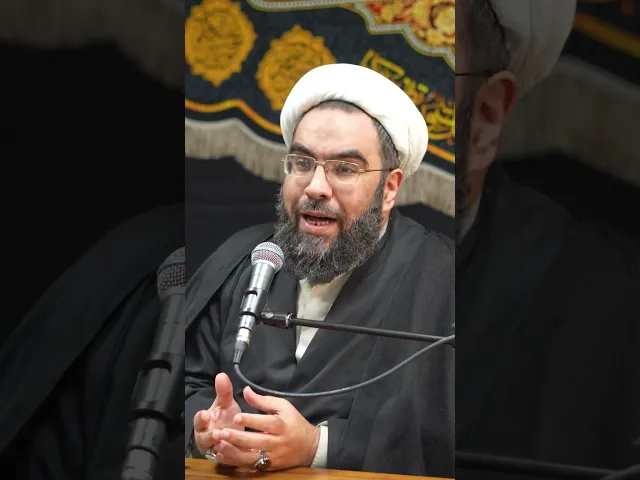
Who Was Abu Hamza Al-Thumali? - Sayed Ahmed Qazwini | Night 4 - 2026 MYC Ramadan Program
0
0
5 المشاهدات·
26/02/22
في
محاضرات
Topic: Who Was Abu Hamza Al-Thumali? Speaker: Sayed Ahmed Qazwini Program: Night 4 of the 2026 MYC Ramadan Program Location: Islamic Insitiute of America - Dearborn Heights, MI, USA #islam #shia #muslim #sunni #ramadan #ramadankareem #ramadanmubarak #hijab #lecture #shahrramadan #eid #qazwini #prophetmuhammad #devil #sins #deeds #quarantine #myc #mycmedia #levels #shiavssunni #islamicfigure #hijab #porphetmuhammad #muhammad #fast #fasting #ethics #venting #complaining #mentalhealth #abuhamza #dua #duaabuhamza
أظهر المزيد
Transcript
[0:03]Alhamdulillah.
[0:25]for Respected brothers and sisters, the holy month of Ramadan is a
[1:13]month where we turn to Allah subhanahu wa ta'ala.
[1:16]For 11 months, we get distracted by this dunya, by our jobs,
[1:25]families, social events.
[1:27]And when the month of Ramadan approaches, this is when we try
[1:33]to recalibrate spiritually, turn to allahel, and we revive our souls.
[1:38]We revive our relationships with our Lord, our creator, Allah subhanahu wa
[1:47]ta'ala.
[1:47]And one of the most beautiful and effective ways to establish that
[1:56]relationship with Allah, to build your relationship with Allah is through dua.
[2:02]Because dua in essence is you, the created speaking with your creator.
[2:10]There is no relationship.
[2:13]I think you would all agree there's no relationship between two if
[2:17]they don't speak with each other.
[2:18]If someone tells you say it I've been someone tells me say
[2:25]it I've been engaged for 3 months but I haven't talked to
[2:29]my fiance in two months.
[2:32]What type of engagement is this?
[2:33]I haven't heard anything and I haven't spoke not even a message.
[2:37]So there has to be communication for there to be any type
[2:41]of relationship.
[2:43]Sometimes the newlyweds they overcommunicate.
[2:51]They expect each other or one side expects the other side to
[2:58]call every single day.
[2:59]And this is one of the complaints that that I get especially
[3:02]from some sisters is that say he doesn't call me every single
[3:07]day.
[3:07]And if he doesn't call me every single day, then that means
[3:10]he may not love me.
[3:14]They start doubting the love of their partner because the communication isn't
[3:19]as they expect.
[3:19]When we claim to love Allah subhanahu wa ta'ala, think about when
[3:24]the last time you spoke to Allahel, especially before the month of
[3:32]Ramadan begin.
[3:31]Sometimes you'll find it's a couple of days.
[3:35]Other times you may notice that it's a couple of weeks and
[3:37]other times you may notice that it's months.
[3:40]What type of relationship is this when I don't speak to allahel?
[3:46]Allah subhanahu wa ta'ala communicates both ways.
[3:51]He speaks to us how he speaks to us through the Quran.
[3:56]When you open the Quran and you listen to the Quran, this
[4:03]is Allah speaking to you.
[4:02]How many verses in the Quran state, oh you who believe, oh
[4:12]human beings, Allahel is speaking to us through the Quran.
[4:18]That's why the month of Ramadan is the month of the Quran
[4:20]because Allah subhanahu wa ta'ala wants you to hear him out.
[4:26]There's all these beautiful verses where he's communicating with us.
[4:30]Allah says, "Come and listen to what I have to say." And
[4:32]we in return we speak to Allah.
[4:36]He speaks through the Quran.
[4:38]How do we speak to Allah?
[4:40]Through dua.
[4:42]Through supplication.
[4:41]And we speak to Allah subhanahu wa ta'ala through different ways.
[4:45]One way is what we discussed last night.
[4:49]When you complain to Allahawel.
[4:51]Remember complain to Allah not about Allah.
[4:54]When you complain to Allah and you express your need for Allah,
[5:00]your vulnerability and weakness, you're speaking to Allah.
[5:03]This is a conversation.
[5:04]You're communicating with Allah subhanahu wa ta'ala.
[5:09]Another type of way that we speak to Allah is when we
[5:10]ask him.
[5:12]When you ask him for your wishes, for your hajat.
[5:16]Ya Allah, grant me this.
[5:16]Ya Allah, give me that.
[5:20]Another type of communication that we speak to Allah is when we
[5:24]come to repent to Allah.
[5:24]When we confess our sins to Allah.
[5:27]This is me speaking to my Lord.
[5:30]And finally when we thank Allah for his benefactions for his for
[5:37]his favors upon us.
[5:40]This is also a way in which we speak to Allah subhanahu
[5:43]wa'ta'ala.
[5:46]says in one hadith, he says the act that Allah loves most
[5:55]more than anything is dua.
[6:00]Allah loves it when he sees someone turn to him and you
[6:03]call out, "Ya Allah, oh my lord." Not because Allah needs me.
[6:10]Not because Allah subhanahu wa ta'ala is lonely and he needs someone
[6:13]to comfort him.
[6:16]It's because Allah is merciful and he knows that the only way
[6:20]that you will become successful in your life, this life and the
[6:23]afterlife is if you connect to him because he is the only
[6:31]self-sufficient.
[6:29]He's the only rich and everything and everyone besides Allah is in
[6:35]need of him.
[6:34]So he wants you to connect to him so he can give
[6:38]you from what he has to offer.
[6:39]So if you just turn to Allah and say yeah Allah Allah
[6:44]subhanahu wa ta'ala right away he answers yesd it's as if Allah
[6:47]subhanahu wa ta'ala gets excited now Allah doesn't get doesn't have emotions
[6:52]but this is how the of paint how eager Allah is to
[6:59]reply to me when I speak to him so says there's nothing
[7:05]that Allah loves more than dua and the month of Ramadan we
[7:09]said is the month to build that relationship with Allah and thus
[7:15]the month of Ramadan becomes essentially the month of dua because that's
[7:20]the best way that you build that relationship with Allah.
[7:22]Quran this is when you hear him and dua this is when
[7:28]he hears you.
[7:30]It has to be a two-way street.
[7:31]And that's why the imams of they have left us a trove
[7:38]of beautiful duas that are to be recited during the month of
[7:44]Ramadan.
[7:45]You know this is one of the blessings of being a follower
[7:47]of the duas that the imams of have taught us you do
[7:53]not find them in any other only in the school of thought
[8:02]of you have beautiful duas like dua like dua like and the
[8:09]beautiful duas of the month of Ramadan for example Every night in
[8:15]the month of Ramadan, we recite dua.
[8:17]Every night we recite it here before I recited recited it.
[8:23]How beautiful is this dua?
[8:23]This is a dua narrated from the 12th im.
[8:29]During the month of Ramadan, there are duas that are recommended to
[8:36]read at night, late at night.
[8:37]Dua is dua.
[8:38]There are duas that are recommended to read after every salah.
[8:44]When you finish your salah, raise your hands.
[8:49]Another dua.
[8:57]Any time of the day, there's a beautiful dua.
[9:00]The 13th, 14th, 15th day of the month of Ramadan, it's recommended
[9:08]to recite dua.
[9:08]Beautiful dua.
[9:09]When the nights of power come, there's a beautiful dua that we
[9:15]gather and recite together.
[9:15]What dua is that?
[9:20]Dua.
[9:18]Beautiful dua.
[9:20]And last but not least, one of the greatest duas that the
[9:28]imams of B taught us to be recited during the month of
[9:31]Ramadan is dua Abu Hamza Tamali.
[9:33]Dua Abu Hamza Tamali is a masterpiece, brothers and sisters.
[9:41]It's one of the most beautiful duas in Islam.
[9:42]It's a dua that has the potential to completely change your life.
[9:50]One of the most transformative duas of B is dua Abu Tamali.
[9:54]Some of our scholars have said that if you were to read
[10:03]dua Abuhamali just once and you have no relationship with Allah, you're
[10:08]the farthest person from Allah subhanahu wa ta'ala.
[10:12]Your life has been a life of sin and you just take
[10:16]one day of your life and you recite dua once but you
[10:22]recite it with las with with sincerity with humility with focus and
[10:28]you understand with understanding you know what the dua is saying slowly
[10:33]when you recite it and ponder upon its meaning our have said
[10:38]that this dua is so powerful that just reading it once can
[10:44]change you from a sinner to one of the closest servants of
[10:49]Allahel.
[10:48]That's how powerful it is.
[10:53]But unfortunately, dua Abu Hamali is a little intimidating to many of
[10:58]us.
[10:57]Why?
[10:58]Because it's huge.
[11:01]It's long.
[11:02]It begins and sometimes you just notice it doesn't end.
[11:05]But it's one of the most beautiful duas of Bai and I
[11:10]think it's one of the duas that has been underappreciated by the
[11:14]followers of B because how long it is and because of the
[11:19]time that we're supposed to recite it late at night and I'll
[11:22]speak more about that tomorrow because of how powerful brothers and sisters
[11:27]because of how effective this dua is in changing us I'd like
[11:34]to speak about this dua the origins of this dua Where does
[11:36]this dua come from?
[11:39]Why was it named in this way?
[11:40]And I want to go over some of the beautiful content of
[11:44]dua.
[11:46]So that in the month of Ramadan, we can hopefully we can
[11:52]recite some parts of these beautiful duas of and we can ask
[11:55]Allah to change us through these duas.
[11:59]So tonight I'd like to speak about the origins of dua.
[12:05]Abu Hamza Tamali.
[12:05]Dua Abu Hamza Tamali was originally a dua that Almad recited the
[12:13]fourth im of B.
[12:18]Now why is it called dua Abu Hamali?
[12:21]It should be called dua imb.
[12:24]The reason the dua is called dua Abu Hamza was because Abu
[12:31]Hamza Tamali was a companion of Alm Zim.
[12:35]He says, "I heard my master Ali Hussein in the middle of
[12:42]the night during the month of Ramadan recite this beautiful dua." He
[12:46]didn't say, "I heard him recite dua Abu Hamza." He is Abu
[12:52]Hamza.
[12:53]But because he is the narrator of the dua, he is the
[12:56]one that recorded the dua for us.
[12:57]Then the dua is named after him.
[13:02]And we have a very clear example similar dua.
[13:08]Another dua that's similar to that is dua.
[13:11]Who recited dua?
[13:13]Im Ali Kuf.
[13:16]He recited dua.
[13:19]Why is it called dua?
[13:19]It's dua im Ali.
[13:23]It's called dua because Ib zad who was a companion of Im
[13:27]Ali was the one who heard it was the one who recorded
[13:32]it.
[13:33]Now remember many companions would hear these duas but not all of
[13:37]them would record it.
[13:39]The ones that would record it they would have their names reserved
[13:44]forever.
[13:44]every year.
[13:45]How many people mention this guy's name and don't even know who
[13:51]he is?
[13:49]Simply because he recorded this dua on paper.
[13:54]He recorded it and it was passed down generation to generation such
[13:59]that you and I who live 1300 years after Almad, we can
[14:06]sit at night and we can recite the beautiful words of imulin.
[14:12]Now this dua is one of the most credible duas that have
[14:18]been narrated from B because it's found in two very important books.
[14:22]The first and earliest book that records dua is the book of
[14:33]is a collection of the duas of and it was compiled by
[14:41]ai is one of the greatest of hadith in the shia school
[14:48]of thought.
[14:49]You know how in the Sunni school of thought there is Bkari
[14:51]and Muslim.
[14:53]This is how a he is in the Shia school of thought.
[14:59]He's an im inith of the highest rank.
[15:01]So in his book he narrates this dua from imbin and another
[15:10]scholar by the name of who came a few generations.
[15:15]We're talking about a thousand years ago.
[15:18]This is right at the beginning of the major of Imi.
[15:22]A few generations after him, another scholar by the name of and
[15:28]he was say his lineage went back to B.
[15:30]He also compiled a book called these books are available now and
[15:40]he also narrated this exact dua from imul through Abu Hamza Tamali.
[15:44]So this dua is deemed as one of the most credible duas
[15:47]that we are sure did in fact recite this dua and when
[15:58]we compare between the two variations of ai and they match 100%.
[16:03]You've seen how long the dua is.
[16:08]How did both of them record it so perfectly?
[16:09]This shows how accurate brothers and sisters our narrators, the companions of
[16:16]Alam were.
[16:17]They would not change a single letter, a single dot because they
[16:22]knew generations, millions of people would be reading these beautiful duas of.
[16:31]Now, who was this man?
[16:35]Abu Hamza Tamali?
[16:35]Abu Hamza Tamali was a companion of four imams.
[16:41]Immad, the fourth Imam, his son Al Bakr, his son Almadik and
[16:50]his son Alm.
[16:51]He had the honor of being a companion of four imams.
[16:54]So he lived a very long life.
[16:58]And he was not an ordinary companion of Ahl B.
[17:03]He was an exceptional companion of B.
[17:06]One of the greatest companions of Bai.
[17:11]How often is it that you have one person being a companion
[17:17]of four imams?
[17:19]Let alone one person being a close companion of four imams such
[17:24]that every single imam that he was a companion of would praise
[17:28]him highly.
[17:29]And one of the greatest of those testimonies came from Aladdak said
[17:37]about Abu Hamza Tamali.
[17:40]He said Abu Hamza in his time.
[17:44]It's a very short hadith but it tells you everything you need
[17:49]to know about Abu Hamza.
[17:48]He said Abu Hamza in his time is like Salman Pharisees of
[17:58]his time.
[17:58]Salman al- Farese is probably the greatest companion of Allah after Im
[18:07]Ali probably Salman Fari is the greatest companion of Allah such that
[18:12]not only the prophet I've seen this hadith from the prophet and
[18:18]from Im Ali both and I im Ali they used to tell
[18:21]Salman Salman you are from us Salman Pharisee Now there was a
[18:32]day there was an incident that happened in the city of Al
[18:34]Medina where the enemies of Quraysh the polyeths of Quraysh they wanted
[18:42]to attack the Muslims.
[18:42]So they had to think how can they defend themselves.
[18:48]Salman Pharisees came with an idea to build a big trench to
[18:52]prevent them from crossing it.
[18:53]It turned out to be one of the boldest and smartest strategic
[18:59]moves of the Muslims.
[19:01]Now, Salman was a Pharisees meaning he was from Persia.
[19:05]So, he was not an Arab.
[19:07]So, all the companions felt so proud that he was so smart.
[19:13]Each of the companions, each tribe started saying Salman is from us.
[19:22]The Muajarin said he's from us.
[19:23]The Ansar said he's from us.
[19:25]This tribe said no he's from they were fighting over Salman.
[19:30]You know what Allah did?
[19:30]He told them no no no no Salman is from usbar.
[19:36]Can you imagine if the prophet tells someone you are from us
[19:41]you're like one of us.
[19:43]That's why some scholars have suggested that from this we can understand
[19:49]that possibly Salman had a lower level of which is infallibility or
[19:57]else how can you be a member of if you sinool is
[20:01]saying salman is not an ordinary person.
[20:04]So this is Salman Almad says that in every age there is
[20:13]a Salman and the Salman of our time Almadak's time was Abu
[20:21]Hamali.
[20:19]Now you understand who this man is a man that was very
[20:25]close to B.
[20:27]One of the disciples of Alulam.
[20:29]Abu Hamza Tamali began his companionship with Alim Zul Abin.
[20:36]He was young.
[20:38]He lived in the city of Al Kufa.
[20:42]His name by the way was Ibinar Abu Hamza.
[20:45]So he was the father of Hamza.
[20:48]And Hamza his son he was killed with Z.
[20:51]Zed was the son of imbed.
[20:53]You know he led a revolution against Bani similar to the revolution
[20:57]of Im Hussein.
[20:59]and he was killed in the most horrific way.
[21:02]Him and his companions.
[21:03]Three of Abu Hamali's sons, they were with Zb Ali and they
[21:11]were massacred with Z.
[21:11]So this was a man that gave everything to B.
[21:15]He gave them his sons.
[21:16]He gave them his loyalty, his submission, his time, his efforts.
[21:22]Truly a remarkable man.
[21:25]Now Abu Hamza Tamali as I said he was a follower of
[21:31]Bates living in Alfa but he had never seen Imam Zad he's
[21:36]still young he narrates the story he says one day I was
[21:42]in Masjid al Kufa he says all of the sudden I notice
[21:45]a man comes in but this man is radiating his face is
[21:50]filled with n you've seen sometimes when you see some scholars some
[21:59]pious believers their face is filled with n it's a spiritual type
[22:04]of n he says I saw someone enter kufa his face is
[22:10]glowing he came and he prayed a salah I had never seen
[22:13]a salah more beautiful than it the humility of that man was
[22:16]exceptional like a slave in front of his master he caught my
[22:23]attention I could not remove my eyes from him.
[22:27]He says, "And then he started to read a beautiful dua." Abu
[22:31]Hamza says, "Theat the dua that I heard this man read was
[22:38]so powerful." He says, "All the hairs of my body, they start
[22:40]started to stand up.
[22:43]I got goosebumps from the awe of the dua of this man."
[22:49]He says, "I listen to the dua." Imm recited some beautiful words
[23:00]of he said look at how the imam speaks to Allah.
[23:12]This is not dua Abu Hamza by the way.
[23:15]This is in the beginning of the companionship.
[23:19]This is you know the Imam is just reading some appetizers.
[23:24]Abu Hamza is on a completely different level that dua and Abu
[23:28]Hamza Tamali the companion he was fascinated.
[23:31]He says I heard Almad or he had he didn't know who
[23:36]this person was yet.
[23:39]I heard him say ya Allah maybe I have disobeyed you.
[23:41]Maybe I have sinned but at least the thing that you love
[23:48]most I did obey you in it.
[23:50]And that is iman.
[23:53]At least in iman, in faith, I did obey you.
[23:55]I do believe in you, ya Allah, from the bottom of my
[23:59]heart.
[23:59]Maybe my actions are not so good.
[24:01]But if you [snorts] see inside my heart, you know how much
[24:06]I love you.
[24:06]How beautiful does the imam speak to Allah subhana wa ta'ala?
[24:11]And there's a discussion.
[24:11]It's a it's a very long discussion.
[24:13]Why do the imams speak to Allah in this way?
[24:17]Aren't the imams infallible?
[24:22]They don't sin.
[24:21]So why do we see this theme reoccurring?
[24:24]Dua dua maybe dua of ya Allah forgive me.
[24:29]Ya Allah I committed this sin.
[24:31]Forgive that sin.
[24:34]Scholars have said one of two answers.
[24:35]Number one because when the imam was in the public and he
[24:38]would do dua he knew people will see him and they will
[24:42]record the dua.
[24:42]That's how we have all these duas.
[24:45]It's not like the imam told someone, "Hey, come sit down.
[24:47]I'm gonna dictate the dua and you write it.
[24:50]No, they casually recited it and someone overheard they wrote it.
[24:53]So the imams because they wanted to teach other people how to
[24:56]speak to Allah.
[24:58]That's why they spoke as a sinner.
[25:01]Or else if they speak as an infallible, we won't relate to
[25:07]them.
[25:06]If I want to speak to Allah, I will come from the
[25:09]position of a sinner.
[25:12]How does a sinner speak to Allah?
[25:13]That's what I want the imam to teach me.
[25:17]The imam says do dua in this way.
[25:19]Some other scholars they say no.
[25:21]When the imam says ya Allah forgive me of my sins he
[25:25]means it.
[25:27]But it doesn't mean the imam commits haram.
[25:27]Listen carefully.
[25:29]The imam feels like he is sinning even though he's not technically
[25:37]sinning.
[25:38]He feels like he is sinning because he sees that he is
[25:42]not doing enough for Allah.
[25:44]Let me give you an example.
[25:46]When the war in Gaza started, the genocide in Gaza started, one
[25:53]of the most common questions or concerns that I would get from
[25:57]people was say, "I feel so guilty.
[26:01]I feel so guilty watching these poor people of Gaza being killed,
[26:08]these children starving, and I have all this plentiful food.
[26:10]Alhamdulillah, I'm in such great even though I go to protest, even
[26:17]though I'm not happy with this, even though I'm trying to do
[26:20]everything, if there's money being collected for I will give, I'll do
[26:23]everything that I can.
[26:26]But I still feel guilty.
[26:29]Why?
[26:28]Because you feel like more can be done.
[26:31]Even though I can't do it, but more can be done.
[26:34]You feel like you let the people of Gaza down.
[26:38]I had those days when I used to wake up and see
[26:42]those children, those small children crying without limbs, blood all over their
[26:48]body, crying there's no father, there's no mother, they have nothing.
[26:53]Their entire family wiped out from the face of this earth.
[26:56]And then especially if you yourself, if you're a father, if you're
[27:01]a mother, and then you look at your kids, what does that
[27:03]do to your heart, brothers and sisters?
[27:05]It tears your heart into pieces.
[27:07]I would feel guilty.
[27:09]What am I doing for the people of But what can I
[27:11]do for the people of besides dua and attend a couple of
[27:17]protests?
[27:18]So I feel like I have committed a sin.
[27:21]This is how the imams of feel every day.
[27:26]The imams feel Allahawel deserves much more than what we give him.
[27:33]He deserves much more than the worship we do.
[27:36]But the Imam can't do more than this.
[27:38]But he still feels guilty.
[27:39]So what does he say?
[27:39]Ya Allah, forgive me of my sins.
[27:44]So is it really a sin?
[27:45]No.
[27:46]It's just his way of expressing that he feels guilty.
[27:49]Then the imam continues back to the story of Abu Hamza.
[27:53]He says, "I saw a man.
[27:54]His face was was filled with n.
[27:57]He prayed the most beautiful salah and then he recited a beautiful
[28:01]maj." He said, "Ya Allah, maybe I have disobeyed you, but at
[28:05]least in iman, I have fully obeyed you.
[28:07]You know that my heart is filled with y and certainty and
[28:13]love towards you.
[28:12]So if you punish me, ya Allah, then I deserve it.
[28:17]And if you decide to forgive me, ya Allah, then there is
[28:21]no one more generous than you." The dua continues.
[28:24]Abu Hamza says, "This was the most beautiful I had heard." And
[28:28]then he says he went into sujud and he said my master
[28:34]my master 70 times.
[28:37]He says when he finished I knew that this cannot be but
[28:40]Ali Hussein.
[28:42]No one can read such a beautiful dua.
[28:45]So I quickly went to him and I asked him are you
[28:50]my ma my im?
[28:50]Imagine you finding im Mai praying all alone.
[28:53]What would happen to you?
[28:55]So he says I went to him.
[28:57]I told him are you my ma?
[28:59]Hussein.
[29:00]He said, "Yes, I'm Ali Hussein." Look at the of Abu Hamali.
[29:05]He says, "I threw myself on the earth and I began to
[29:09]kiss the feet of the Imam." That was the first time he
[29:17]sees Ali.
[29:16]He says, "I started to kiss the hands of imi such that
[29:20]the imam had to tell me, stop." Yeah.
[29:24]What a pure heart.
[29:27]what submission this man had for.
[29:30]And then the report says that he asked immed and it seems
[29:38]like this story happened a couple of years after a he asked
[29:42]him what brings you to Kufa.
[29:44]This is the land where your grandfather Imam Ali was killed.
[29:48]This is the land where your father Hussein was killed.
[29:50]Meaning it was the people of Kufa that came and killed him.
[29:54]So why have you come here?
[29:55]basically you have no friends here.
[29:57]Oh, I imm told him I left Medina.
[30:04]I came all the way to Kufa.
[30:05]But before I went and I visited the grave of my father
[30:11]Abdah Hussein, I immedately, quietly, privately visit the grave of his father.
[30:18]And then he told him, "Now I have come to Mazjid Kufa
[30:22]to pray and I will soon go back to Medina.
[30:24]So I'm not here to stay." And then immedi are you free
[30:38]for the next couple of hours?
[30:39]Yes, of course.
[30:41]Of course, my imam.
[30:42]What do you need from me?
[30:45]He said, how would you like to visit the grave of my
[30:49]grandfather Ali?
[30:50]Now up until that day the grave of Imam Ali was concealed.
[30:57]No one knew where the grave of Imam Ali was.
[30:58]Imam Hassan and Hussein they hid it from Bani Omaya.
[31:02]So they wouldn't go and excavate his body.
[31:04]No one had visited Im Ali.
[31:08]It was a dream for Abu Hamza to visit the grave of
[31:13]Im Ali.
[31:14]But I don't know where it is.
[31:15]Imam Zul Abin Ali, he saw that Abu Hamza was worthy of
[31:22]being the first companion ever to visit the grave of Imam Ali
[31:28]Alisam.
[31:26]He says I told him yes.
[31:29]He says I went followed him on his camel.
[31:32]We left Mazjid Kufa.
[31:35]Mazjid Kufa is not too far from the shrine of Imam Ali.
[31:37]He says we arrived.
[31:40]It's a desert.
[31:39]There's nothing there.
[31:41]There's no grave.
[31:41]He says there was a small hill.
[31:45]It was shiny as if N is coming out of it.
[31:49]He says the imam came down from his camel.
[31:50]He went on that small area that he the Abu Hamza called
[31:58]alain.
[31:56]He says he placed his cheek on that dust and he told
[32:01]me this is the grave of my grandfather.
[32:07]He says, "And then he recited the Zara." And the very first
[32:12]Zara that was ever recorded towards Im Ali Ali was Im Zul
[32:20]Abin and Abu Hamali.
[32:22]Now, you would have to be someone that's very worthy in the
[32:27]eyes of B.
[32:29]If the Imam himself, he chooses you, he tells you, I want
[32:32]to I want you to come with me on this mission.
[32:37]Isn't this something that we dream of?
[32:39]The 313.
[32:40]The 313.
[32:39]Imagine if the Imam tells you, "I want you to be one
[32:43]of the 313.
[32:44]I want you to come with me and visit the graves and
[32:46]the shrines of my forefathers and to be my companion." What honor
[32:52]is this?
[32:54]But obviously, you have to be you have to be of a
[32:59]high high caliber.
[32:59]Your iman has to be in a league of its own.
[33:02]and Abu Hamza Tamali he had that im there were two important
[33:10]traits brothers and sisters so we can inshallah learn from Abu Hamali
[33:16]because Abu Hamza was not a now the we say they're infallible
[33:20]we can't be like them but Abu Hamza was an average person
[33:26]that built himself that was able to achieve those high levels of
[33:31]iman so we can be inspire ired by them.
[33:34]What did Abu Hamza have that I don't have?
[33:39]Brothers and sisters, there were two very important traits that Abu Hamza
[33:44]Tamali had.
[33:46]And this is what made him so worthy in the eyes of
[33:48]B.
[33:48]So great.
[33:50]Number one, his profound im in Allah.
[33:54]His iman in Allah was unbelievable.
[33:57]And this is one of the companions of the this is one
[34:02]of the characteristics of the companions of Imam Mahi.
[34:05]We read in the traditions that tell us about the 313 is
[34:08]that they have unparalleled iman in Allah.
[34:12]Let me share this story.
[34:16]Abu Hamza himself he narrates this.
[34:18]He says one day I had a young daughter.
[34:21]She was playing she fell down and she broke her arm.
[34:24]So I took her to a doctor, a specific type of doctor.
[34:30]They used to call them the bone setter.
[34:33]You know, their jobs was just to fix and treat people's injuries
[34:38]if they had a broken bone.
[34:42]So I took her, my young daughter, to this bone setter and
[34:47]I told him, "It seems like my daughter's arm has been broken."
[34:50]He told me, "Let me see her arm." He just felt her
[34:56]arm and he's like, "Oh no, it's really bad.
[34:59]It's severely mislocated.
[35:00]The the it's broken and it's really bad." So he told me,
[35:06]"Don't worry.
[35:07]I'll go inside.
[35:06]I'll get her the cast and inshallah she'll be okay." Abu Hamza
[35:11]says that when he went to get the cast, I looked at
[35:17]my daughter, she was in pain and the injury was very serious.
[35:23]How long is this going to take?
[35:24]He says, I was overwhelmed with compassion towards my daughter.
[35:28]And he says, my tears started to come down.
[35:32]I cried and I turned to Allah and I told him, "Ya
[35:35]Allah, you can cure my daughter in one second.
[35:40]I don't even need this person, this bone setter.
[35:43]I don't need this gas.
[35:45]You have the power to cure her." He says, "Wallah, this is
[35:49]all I did." He says that bone setter came.
[35:52]He took her hand once again.
[35:53]He told me which hand was it?
[35:55]I told him this one.
[35:57]I like no no it's not this one.
[35:58]Told him why.
[35:59]He said because there's nothing wrong with this hand.
[36:01]I told him this was the hand.
[36:06]He said yeah Hamza what did you do for the hand the
[36:10]arm of your daughter has been healed.
[36:12]He says I was even surprised that Allah subhanahu wa ta'ala that
[36:16]quickly he accepted my dua.
[36:20]I couldn't even believe it.
[36:21]Has that ever happened to you?
[36:22]That you can't even believe Allah subhanahu wa ta'ala answered your dua
[36:27]that quickly.
[36:28]I'm sure every single one of us may have a story about
[36:30]this.
[36:31]So he was so excited he quickly left and went to visit
[36:37]im.
[36:38]This was during the time of the sixth.
[36:42]He says I went to im.
[36:42]I was so excited.
[36:42]The story is this one two three.
[36:47]How did this happen?
[36:47]im gave him a beautiful answer and it's a lesson for us.
[36:53]He told them your dua coincided with the pleasure of Allah.
[37:15]And that's why Allahawel accepted your dua so quickly.
[37:24]Meaning that you prayed to Allah in the way that he loves
[37:27]perfectly.
[37:28]And when you turn to Allah and you pray to him like
[37:33]how he wants you to pray, Allah will grant you your dua
[37:36]right away.
[37:38]You see my dear brothers and sisters, there's etiquets of dua.
[37:42]When you turn to Allah tell us turn to Allah in a
[37:47]specific way.
[37:48]If you turn to Allah in this specific way, Allah will be
[37:52]pleased.
[37:53]Allahawel will accept your dua.
[37:55]How do you turn to Allah?
[37:56]You turn to Allah with full humility, with full and with full
[38:08]focus, with a sense of desperation, need, with a sense of submission.
[38:12]If you turn to Allah subhanahu wa ta'ala in that way, Allah
[38:15]promises that he will give you your dua.
[38:18]Most of the times, brothers and sisters, the dua doesn't really come
[38:23]from the heart.
[38:25]I don't ask Allah in a state of desperation.
[38:28]And this is a hadith that our imams narrate from Isa Jesus.
[38:35]It's narrated that Allah subhanahu wa ta'ala taught Isa one day.
[38:40]He told them, Isa, if you want me to quickly answer your
[38:45]dua, if you want tips on how to have your duas answered,
[38:53]quickly do this.
[38:54]Isa said, "How do I pray to you, ya Allah?" Allah told
[38:59]him.
[39:08]He said, "Yeah, when you pray, when you do dua, when you
[39:15]supplicate, supplicate like someone who is desperate, like someone who is distressed,
[39:21]like someone who is sad and has no one to help them
[39:30]but Allah.
[39:27]When you turn to me in that way with desperation and believing
[39:36]that no one can help me but Allah.
[39:40]Allah says this is when I will answer your dua.
[39:43]The problem with many of us brothers and sisters, we still have
[39:48]hope in other means but Allah.
[39:49]When I ask Allah in when I ask Allah for wealth and
[39:57]there's still a part of me that believes maybe it's this person
[40:00]in the community that can get me a good job.
[40:05]Maybe it's my cousin.
[40:05]Maybe it's my uncle.
[40:08]Only if I write a better paper.
[40:10]Only if I try harder.
[40:11]Maybe this person or that person.
[40:13]I still have hope in some created beings of Allah.
[40:19]So when I turn to Allah subhanahu wa ta'ala, Allah subhanahu wa
[40:23]ta'ala sees a heart that is mixed with him and some other
[40:26]individuals.
[40:28]Allah says, "Don't ascribe any partners with me.
[40:33]Come to me and ask me only." When you ask me and
[40:38]you believe that only I can help you, you're desperate, no one
[40:42]but Allah can help you.
[40:43]This is when I will help you.
[40:44]This is not easy, brothers and sisters.
[40:47]I know we mentioned this.
[40:50]Yes, ask Allah with a sense of desperate, but this isn't easy
[40:53]because it's very hard for us to cut our ties with the
[40:58]dunya.
[40:56]To cut your hope in the dunya, you always think, "Oh, I
[41:02]still have backups.
[41:01]I have plan to I have family members.
[41:07]I have friends.
[41:05]I have 401k.
[41:07]I have I have I have." When you start believing that I
[41:13]have nothing but Allah, this is when Allah answers your dua right
[41:17]away.
[41:18]Abu Hamza had that submission.
[41:20]He had that beautiful im and Allah subhanahu wa ta'ala such that
[41:25]Allah worked miracles for him.
[41:28]And this is not a im shows us in this hadith that
[41:35]if you are able to also empty your heart out of the
[41:37]dunya and put your hope in only Allah you can also be
[41:42]like Abu Hamza.
[41:42]And tomorrow night inshallah when I speak about dua tamali when we
[41:48]get into the content of the dua you'll see so many examples
[41:51]of how the Imam teaches us how to lose hope in the
[41:57]dunya and have all our hope in Allah.
[41:59]This is one of the most beautiful duas parts of Abu Hamza.
[42:09]Says, "Read this every night in the month of Ramadan.
[42:13]Ya Allah, I want you to take out the love of dunya
[42:18]from my heart because the biggest obstacle between us and Allah is
[42:27]the our attachment to the Ya Allah, allow me to only seek
[42:35]you and have hope in you such that beyond you there is
[42:39]no one else.
[42:39]This is a major theme in dua Abu Hamza Tamali.
[42:43]So this was the first quality of Abu Hamza.
[42:46]The second quality of Abu Hamza Tamali was his knowledge.
[42:54]Abu Hamza Tamali was not an ignorant person.
[42:57]He was a scholar and he learned very well from his masters
[43:00]the imams of such that in al kufa he eventually became a
[43:07]scholar a himself people would come and they would ask him questions
[43:11]when they couldn't reach the imam and he would issue fatwas there's
[43:14]a man by the name of Muhammad orni one of the of
[43:21]from the city of nishabuhammed >> [clears throat] >> Nisur was a
[43:33]city close to Mad where im buried.
[43:36]There were many Shia there.
[43:39]They wanted to send their hums to Almad one year.
[43:45]So they chose this man to collect the hums and take it
[43:51]to Almadak.
[43:53]He had 30,000 dinars with him.
[43:55]That's a lot of money.
[43:57]It's like you're carrying a million dollars.
[43:59]He says, "I left I'm sorry." [sighs] >> He says, "I went
[44:13]as I left Nisabur with all this money.
[44:15]I'm going to Medina.
[44:18]I stopped in Alufa.
[44:18]I went to Mazjid Kufa.
[44:22]I see an old man, very old, he says.
[44:25]So old that his that his eyebrows, they had fallen over his
[44:29]eyes, very old.
[44:31]He was sitting in the center and there were so many people
[44:33]around him.
[44:34]They were all asking him questions.
[44:37]Questions of halal and haram.
[44:40]Is this halal?
[44:40]Is this haram?
[44:42]How do you pray?
[44:41]How all matters of Jewish prudence?
[44:45]And he would answer them based on the opinion of Imam Ali.
[44:50]He would say the opinion of Im Ali is this.
[44:53]I knew that this man was a Shia aul.
[44:57]So I asked them who is this?
[45:01]They said this is Abu Hamza Tamali.
[45:03]Abu Hamza Tamali had become the local merger in his city.
[45:06]So it's not just his im his iman and his knowledge that
[45:10]made him so great.
[45:11]He says I sat down with Abu Hamza.
[45:15]I explained to him who I am, why I'm here.
[45:16]I told him I'm very burdened.
[45:19]I'm carrying all this money and I have a long way journey
[45:21]to Almad Medina.
[45:24]Pray for me.
[45:23]He says Abu Hamza told me don't worry.
[45:26]Allahawel will make sure that you arrive safely to Medina and the
[45:32]H of B will go to them.
[45:35]Don't worry about it.
[45:35]Allah will find a way for you.
[45:39]Even if the whole earth was barren, Allah would still find a
[45:43]way to send the to them.
[45:45]Don't worry about it.
[45:48]you will go and you will take the to them.
[45:52]Abu Hamali says, "I left when I arrived to Al Medina.
[45:54]Almak had passed away and now it was imam who was hisif.
[46:00]I went to the seventh immed of the 30,000 dinars to him."
[46:07]He says, "Am I imam told me I had never told him
[46:13]anything but he initiated.
[46:13]He told me, "Oh Muhammad, remember what Ali Abi, remember what Abu
[46:19]Hamza told you in Kufa that you will arrive safely.
[46:24]Indeed, indeed what he said was correct and you arrived and you
[46:27]brought our h and then imam praised him.
[46:31][clears throat] He said when you have a heart like Abu Hamza,
[46:35]Allahel grants you knowledge.
[46:39]He grants you intuition.
[46:40]Allah subhanahu wa ta'ala grants you and he told him this is
[46:49]the heart of a believer.
[46:51]So it's not just learning.
[46:55]Knowledge is learning and having a pure heart so that Allah subhanahu
[47:04]wa ta'ala finds a place that can that knowledge can be contained
[47:08]in.
[47:09]And this was Abu Hamza.
[47:13]Tomorrow night my dear brothers and sisters I will discuss inshallah the
[47:17]contents of this dua.
[47:20]It's one of the most beautiful duas of without any exaggeration.
[47:24]Inshallah tonight is Abu Dar here.
[47:29]Tonight as I come down Abu D will recite only some parts
[47:35]15 to 20 minutes of dua tonight tomorrow night and the night
[47:40]after.
[47:41]So inshallah we can learn about the dua and then we turn
[47:46]to Allah and we can recite this dua but only 15 to
[47:51]20 minutes passages of dua.
[47:51]Inshallah he will begin now.
[47:55]Muhammad.
0 تعليقات
sort ترتيب حسب
- أعلى تعليقات
- أحدث تعليقات
التالي
6 المشاهدات · 25/03/22
2 المشاهدات · 25/03/23
6 المشاهدات · 25/03/26