





Up next
7 Views · 21/12/07
10 Views · 24/11/14

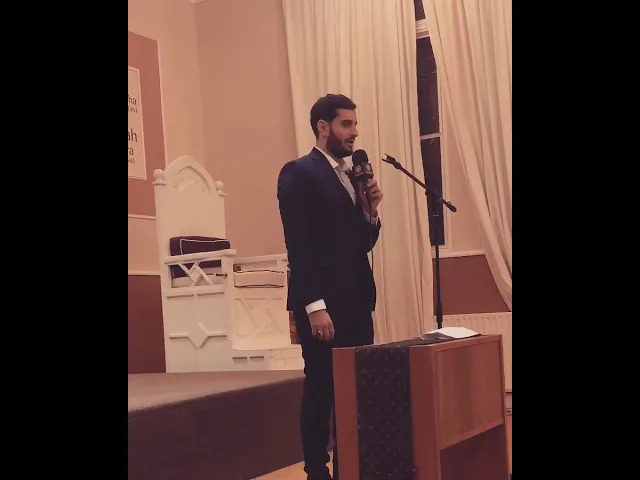
Spiritual Mastery | Sayed Hussain Makke - Night 4
0
0
29 Views·
24/06/21
In
Lectures
What is mastery, and how can I convert it into spiritual practice?
Show more
Transcript
[0:14]muhammad foreign [Music] me [Music] foreign foreign say [Music] is [Music] [Music]
[2:20]foreign [Music] [Music] the theme of this year's discussions has been the
[2:51]theme of this year's discussions has been surrounding the spiritual journey towards
[3:00]allah remember said that is to travel to go from point a
[3:13]to point b suffer there has to be a movement there cannot
[3:21]be static movement when nothing changes for you to reach god you
[3:26]have to move from where you are now to another place allah
[3:37]that you are moving towards your lord and it is inevitable that
[3:40]you are going to meet him and so because we want to
[3:45]be ready for that meeting the inevitable meeting a science was formed
[3:50]the science of wayfaring in which our ulama gave us specific techniques
[3:55]based on the wisdom and traditions of the bait on how we
[4:01]can come closer to proximity to allah and know more of our
[4:06]purpose so we can finally achieve the aim and goal of our
[4:09]life which is to know oneself because if you know oneself if
[4:14]someone knows their self then they know their lord and this whole
[4:16]entire journey is about knowing our lord and so we've been speaking
[4:21]about this based on three pillars the three pillars were iman is
[4:25]the first step towards anything knowledge is the first step towards anything
[4:32]takes kumail into his self and he tells him there is no
[4:44]movement that you can do except that you are in need of
[4:46]knowledge beforehand we spoke about that in depth and that is the
[4:52]absolute first step knowledge and so knowledge was a dire need for
[4:54]each and every one of us how's a student not house a
[4:59]student university student not university student whoever it is whatever whatever age
[5:03]we are at right now knowledge is the first step and if
[5:05]one is stopping seeking knowledge then they have stopped their journey towards
[5:10]god they have stopped at one point the pursuit of knowledge has
[5:15]to be continuing until the day one dies so knowledge is the
[5:18]first step but knowledge has a weakness knowledge is not enough the
[5:21]weakness of knowledge is that one does not have to act upon
[5:25]the knowledge that they know hypocrisy is born because we need something
[5:31]above knowledge the second pillar is iman iman is faith when the
[5:35]knowledge has entered into the heart and has settled into the heart
[5:40]to get to the second pillar we need to go on the
[5:44]first bridge which is which means good action so knowledge good action
[5:50]based on that knowledge i apply it and i reach through repetitive
[5:56]action the level of iman we wanted a level even above iman
[5:59]because iman is also has a weakness sometimes we reach stages of
[6:04]proximity with god we feel the spirituality and the closeness to him
[6:09]and suddenly we commit a transgression and we move backwards from where
[6:14]we came one step forward two steps back because of the inconsistency
[6:17]we need to aim for a level even higher where we don't
[6:20]make any of those mistakes anymore and that's what we meant by
[6:25]arfan gnosis or mysticism it's when you believe so like iman believes
[6:29]but iman is blind and fan when you believe and you see
[6:33]you see it for what it is so no one can prove
[6:36]you wrong anymore because inside your heart you know that it's there
[6:38]that your belief has reached its maximum brothers if we can come
[6:42]closer please so the brothers coming from the back it's easier for
[6:47]them thank you very much [Music] we have been discussing the first
[7:07]step for the past few nights we discussed the attributes of knowledge
[7:11]that the two main attributes that we need to know of knowledge
[7:15]are that knowledge has a beginning and knowledge is immaterial true knowledge
[7:18]and we wanted to know this why because ultimately yes we receive
[7:22]knowledge from reading books i'm listening to lectures from discussions but knowledge
[7:26]is also a light the truth of knowledge is a light which
[7:30]is sent into the hearts of whom allah subhanahu wa allah wills
[7:33]according to that so to gain that knowledge and we know that
[7:43]it's immaterial and it has a beginning then that means we know
[7:45]because it has a beginning there must be someone that begins it
[7:48]who is allah subhana ta'ala so allah is the one who is
[7:52]directly giving us knowledge at all times the fact that's immaterial means
[7:56]it's not coming from this realm which is the material realm the
[7:58]physical realm it's coming from a realm that's immaterial so it's the
[8:01]knowledge that we have is coming from another realm what you're doing
[8:06]right now the fact that you have knowledge that i am in
[8:08]front of you for example you're using your material eyes your eyes
[8:12]are the portal in this realm which are only creating the capacity
[8:17]for you to receive the immaterial knowledge traveling from the other realm
[8:20]which is given to you by god and so when it comes
[8:24]to knowledge that is for purpose of life not just what you
[8:25]see in front of you allah is the one who bestows that
[8:29]knowledge upon us and when one lives by the sharia and the
[8:34]code and the taqwa of allah subhanahu wa ta'ala within their life
[8:39]slowly god begins to give someone this fragrance this wisdom that they
[8:43]have in which they receive this direct knowledge we also spoke about
[8:48]the knowledge that we have from contemplation meditation yesterday we spoke about
[8:53]and tadabur that someone if they were just to think even if
[8:57]you are not to read any books but you between you and
[9:00]yourself were to sit down in silence and take your time and
[9:04]think in quiet that this contemplation and this meditation and this reflection
[9:08]is going to give someone give someone knowledge within themselves not coming
[9:14]from outside not coming from outside of anyone or anywhere there is
[9:19]no third party source it's coming from within and so that knowledge
[9:24]is something which again creates more belief in one's heart because it's
[9:30]one's own it's one's own knowledge that they have come to with
[9:32]a base of knowledge that they've received from a third-party source but
[9:35]they have enhanced it because they've reflected upon it there's a big
[9:40]difference right now if someone was to come and listen to this
[9:41]lecture and then leave it as it is then someone writing down
[9:46]some notes perhaps or memorizing some things or goes home and reflects
[9:50]over it or perhaps two people will discuss it there's a big
[9:54]difference between the ones who actually think about it and then the
[9:58]ones who don't there's a big difference those who know and those
[10:02]who don't know are not equal in the eyes of allah so
[10:04]if you put more effort into the receiving of that knowledge the
[10:08]more you will reap the rewards and we mentioned that knowledge is
[10:13]vast if you give knowledge of all of you everything you have
[10:15]it will only give you a part of it and if you
[10:19]give knowledge a part of you it will give you nothing so
[10:22]you really have to put in as much effort as you can
[10:31]salah muhammad now we want to speak about the stage going up
[10:36]to iman so we're going now to tackle actions no longer things
[10:41]just looking and focusing about the knowledge but how that knowledge is
[10:47]to be applied and so we want to break down our actions
[10:50]how do we usually engage in our actions they're based on something
[10:55]and as imagi told us everything begins with knowledge everything begins with
[11:01]a thought with so our actions are beginning with thoughts if we
[11:06]want to infiltrate our actions and control our actions if we want
[11:11]to control ourselves so we stop doing what we don't want to
[11:14]do or what is not good for us and we want to
[11:17]engage in that which is beneficial for us so we want to
[11:21]master our own actions then we need to know what are the
[11:24]roots of these actions where do they start it starts with a
[11:27]thought and there is a process a thought process that we're going
[11:32]to be talking about we want to break it down into a
[11:36]few stages of thought that we're going to speak about y'all if
[11:49]brothers can come forward thank you very much foreign so we want
[12:17]to break down our actions into the roots of the thoughts from
[12:22]which they come from because we commit actions we don't know exactly
[12:26]how and why we're going to speak about the process of thought
[12:30]now which it happens in each and every one of us in
[12:34]fractions of milliseconds and we have this process of thought before any
[12:39]action we commit and it begins with knowledge of something so i
[12:44]know that i'm thirsty i have knowledge of my thirst when someone's
[12:47]thirsty they know they're thirsty so then you have knowledge of your
[12:52]thirst then you enter into a stage of tifakur where you start
[12:56]thinking about it should i get up and get a drink of
[13:01]water should i go towards the fridge and open the fridge and
[13:03]take a bottle you don't consciously know that you're thinking about this
[13:06]but in fractions of milliseconds you're thinking about this if you reach
[13:11]a conclusion where you say to yourself yes i will go to
[13:15]the fridge and take a bottle of water and drink you enter
[13:19]into the third state where now you develop shelk or you develop
[13:23]a want for the water now you want the water the final
[13:28]part is irrada as in now you will it you make it
[13:35]happen so then to make it happen you get up and you
[13:36]walk towards the fridge you open the fridge you take the bottle
[13:40]and you drink the water brothers if you can go to the
[13:46]back please please thank you i'm very sorry we have some naughty
[14:03]ones it's all good i tried so then the process of thought
[14:19]is broken down into these stages the example of water i know
[14:24]i'm thirsty it began with a thought of my thirst a helium
[14:26]of my thirst i'm thirsty i thought about it i concluded that
[14:30]yes i want to quench my thirst so i developed a want
[14:35]for the water and because i want it i will it and
[14:38]i go towards it and i drink water now this is a
[14:41]very simple example a lot of what we do is based on
[14:45]this thought process sometimes it's more important than this and more detrimental
[14:50]like let's say a brother wants to marry your sister if he
[14:53]has knowledge that he wants to get married or that he has
[14:57]knowledge of a certain sister that he knows that he wants to
[15:01]marry so then he enters into the state of the should i
[15:03]or shouldn't i am i ready or not is she the one
[15:07]or not do i have the material means or not can i
[15:09]bear this responsibility or not he weighs the pros and the cons
[15:13]depending on what conclusion he makes a lot is going to change
[15:17]in his life if he decides in his thinking process which may
[15:22]take longer than milliseconds this time he will say no and it
[15:26]ends right there if he concludes yes he enters into the state
[15:29]of shulk and so he wants to go towards whoever he is
[15:33]interested in he wants her now and then he has to will
[15:35]it which means he has to go and make it happen and
[15:37]having a car and a house counts in our culture so you
[15:42]have to buy a house and get a car in any case
[15:45]so you get up and you go and you will it and
[15:50]you try to do what's upon you to get married now the
[15:54]really important thing about this thought process is that through repetitive conclusion
[16:01]this will be settled into someone's heart and slowly over a period
[16:06]of time if someone keeps repeating a certain action in a certain
[16:09]way then the thought process the amelia the kriya is replaced with
[16:14]something else it becomes a habit you don't have to think about
[16:21]it anymore in arabic they call it malacca in english it would
[16:25]be called a habit or in some cases mastery if it is
[16:30]conscious you'd be mastering something if it's conscious where you don't have
[16:33]to think about it anymore so then the thought process of several
[16:37]different stages is replaced by something because of repetitive action so when
[16:44]you walk on the street you mastered walking you have a malacca
[16:49]of walking you don't have to think about right step first then
[16:53]left step second then third step with my right foot you don't
[16:57]have to think about that when you were a kid and you're
[17:00]just starting to learn you were very careful and you would drop
[17:03]now you mastered it you can walk and talk and juggle and
[17:06]do whatever else you want to do when you're walking when you
[17:09]first learn how to drive when you first go in the car
[17:13]and you check all the mirrors and you check the rear view
[17:14]and you put your seatbelt on unless you're in lebanon and then
[17:20]and you would be so careful with driving the car but now
[17:24]after perhaps four or five months you get in the car you
[17:29]don't think about anything you just turn the key you press whatever
[17:31]you want to press and you go forward with it you don't
[17:34]think about it you just get in the car and you go
[17:36]to your towards your destination because now driving for you has become
[17:42]a melaka after hours and hours of repetitive action and practice it
[17:48]is a malika so you've mastered it it's a habit for you
[17:52]when you write with your handwriting you don't think about how you
[17:56]write you just write you've mastered it you no longer have to
[17:58]think about it so with random things in our life there is
[18:02]a thought process but with repetitive actions this thought process is replaced
[18:09]and you develop mastery why is this important this is important because
[18:15]mastery leads to iman when you consciously master something that's when you're
[18:19]going towards iman it's scary because if you develop a malacca or
[18:24]something which god forbid is bad for your soul then you're in
[18:29]deep trouble because if you develop a malacca of anger let's say
[18:33]and you become an angry person and anger is a habit for
[18:38]you and you just react with a very loud voice or violence
[18:41]or anything else of the symptoms of anger then as we see
[18:44]people when they get angry and they calm down they say i'm
[18:47]so sorry i don't know what i was thinking i just went
[18:51]blind i just saw red i didn't mean to say that i
[18:53]didn't want to say that because anger is a malacca for them
[18:59]now they have the habit of anger or god forbid the habit
[19:02]of desires that can lead someone into haram actions that habit becomes
[19:08]an addiction or any other addiction even a non-haram addiction the haram
[19:13]addictions are the worst but even a non-haram addiction shows that one
[19:19]has not mastered themselves yet like our phones like youtube like tv
[19:24]like all these addictions that people have if you watch tv every
[19:27]day then you have to start asking yourself if you're addicted to
[19:32]it and if you're addicted to it then you have to know
[19:33]that you're not a master of yourself and if you are not
[19:36]a master of yourself you have to really think to see am
[19:38]i okay with not being someone who has mastered themself because one
[19:45]of the points and prerequisites of knowing oneself is to master oneself
[19:50]to know oneself means to know god if you cannot master yourself
[19:53]you cannot know yourself you have to master yourself even if it's
[19:56]a halal addiction you don't want to be enslaved or obedient to
[20:01]any of your desires or addictions you have to master all your
[20:06]actions so we want to go towards a conscious type of mastery
[20:10]and where in which the real mastery we master those actions which
[20:13]we want in our lives so we see skill sets out there
[20:17]that we want and we want to master those things and make
[20:19]them a part of us to the point that we don't even
[20:22]think about it whereas all those bad habits and addictions that we
[20:26]don't want remove them from our life that's the mastery that would
[20:30]lead to iman a book by the same name of mastery by
[20:34]a man named george leonard he splits the people into three different
[20:37]categories he says you're either a master or a dabbler or a
[20:45]hacker master a dabbler or a hacker so he starts to explain
[20:48]each and every different stage and he says that this applies to
[20:51]everything by the way this applies to your religion your spirituality this
[20:55]applies to your occupation your work this replies to your studies at
[20:59]university this reply this applies to your relationships with your spouse or
[21:05]your parents or your friends or anyone else the master is the
[21:11]one who they engage they start something new and they make significant
[21:15]progress he uses the example of tennis because this applies to sports
[21:20]as well so he says someone has taken up tennis and they're
[21:23]making significant progress with tennis they're learning the small intricacies and subtleties
[21:29]from the flick of the wrist to everything else and they're making
[21:32]significant progress for weeks on end but after the five six week
[21:38]period they reach a stage where they reach a plateau they can't
[21:43]progress anymore they've been progressing rapidly for about five weeks and now
[21:49]they have plateaued they can't progress anymore what does the master do
[21:53]the master is the one who through the plateau they persist and
[21:58]they keep trying and they may change the technique but they have
[22:02]their goal set in mind to keep progressing in this case with
[22:07]the tennis and eventually because of repetitive persistent action and the smart
[22:12]way of changing the technique because they persist they end up reaching
[22:16]the goal and they break through the plateau and then they continue
[22:20]to progress until they reach the next plateau and because they're a
[22:22]master they will break through that plateau anyone who has mastered anything
[22:27]knows what this is the difference with the dabbler is that the
[22:30]dabbler's the one they start something great they're very enthusiastic when they
[22:37]start mom dad i've got this new job and this is going
[22:39]to be great and i'm going to climb the ladder and i
[22:42]put a five-year plan six months down the line the person doesn't
[22:45]like their boss they don't like their shifts they don't like their
[22:48]schedule they don't like how far the place is from their home
[22:52]and they change their mind and they leave that's the plateau they
[22:55]plateau that work and they leave then they come back mom dad
[22:59]i found a new job and it's going to be great they
[23:04]start enthusiastic and they make progress so the dabbler also starts tennis
[23:07]and also becomes good at tennis for the first five weeks but
[23:11]then they plateau but what do they do they give up the
[23:13]dabbler is the honeymoon person when everything is lovey-dovey in the beginning
[23:18]and i love her so much and then after the honeymoon the
[23:20]arguments start and then he doesn't love her anymore and he goes
[23:24]to the next one and then he loves her and then now
[23:28]there's an argument and then that's a plateau he moves again it's
[23:31]the person without any consistency and that's a dabbler the hakka is
[23:36]the one who call us they stay the same for their entire
[23:40]lives whether they are bad at something or good at something or
[23:43]their life isn't going so well alhamdulillah doesn't do anything about the
[23:48]situation and they stay in their place by my estimation my brothers
[23:54]and sisters most of us here are dabblers we are spiritual dabblers
[23:59]with allah subhanahu wa'ta'ala whether the dabbling goes into other parts of
[24:05]our lives that's for you to to see and reflect on but
[24:08]at least in spirituality and in religion we dabble a heck of
[24:14]a lot so we want to get close to allah now it's
[24:16]muharram now it's ashora we'll come to the mosque okay i'm going
[24:19]to change my life i'm going to do something different i'm going
[24:24]to start praying salatullah okay i start praying started one day the
[24:28]next day i don't wake up for fajr the third day i
[24:30]wake up but i don't feel like praying i pray only the
[24:33]worst day the fourth day you know what today i'm gonna pray
[24:36]quran i'm gonna do quran only that's okay quran is good i
[24:39]read the quran the fifth day i don't make up for fajr
[24:41]again the sixth day khalas and i forget this it's out of
[24:43]layla i can't do it the seventh day you start something new
[24:46]the person means well and they're enthusiastic and i'm gonna do this
[24:50]and i'm gonna change but you don't master anything and all you
[24:53]do is you touch some vikkir here and you touch some vikya
[24:57]here and you touch some quran here and then you stop again
[24:58]you start memorizing something then you stop again you start listening to
[25:03]a lecture a day for example and then you stop again there's
[25:04]no consistency as soon as you reach your plateau and as soon
[25:09]as you get bored you stop and this is a big issue
[25:14]because some people have been doing this until they're 60 years old
[25:18]okay and alhamdulillah they're trying to do good and they feel like
[25:21]they have done a lot of ahmad in their life but they
[25:23]will not reap the rewards within their soul the way that they
[25:28]could have if that if it was organized if it was organized
[25:32]so it's much better for us to take something very small very
[25:37]small bit of ammar if you really want to get close to
[25:41]god and you want to ascend in this spiritual progress to take
[25:44]one action that you feel is good for you that you can
[25:50]do and apply that every single day in your life rather than
[25:53]taking a huge task and doing that once a year or once
[26:01]a month that actually might hurt you sometimes it can break you
[26:04]because you no longer want to go forward with it i would
[26:09]recommend the smallest thing that i can think of alhamdulillah that simple
[26:18]after your prayers just do this as in after fajr by the
[26:24]way you have to be waking up for fajr that's like that's
[26:27]not uh that's not even a question here that's a way that's
[26:30]the that's haram if you don't make up for fajr okay so
[26:33]we're not talking about the haram and you should be waking up
[26:35]for vegeta fajr is not the time you wake up and you
[26:38]do tafakkur because then you're going to go asleep before you reach
[26:42]the next stages fajr has to be america where that's you've mastered
[26:46]waking up at that time you know all those people that say
[26:49]even if my mom doesn't go off i just wake up at
[26:50]that time because they've mastered it it's mastery for them it's a
[26:54]habit for them you have to no longer dabble take this be
[26:56]hazara and make sure you do that at the end of every
[27:01]prayer for example that small piece of amma you do the subhanallah
[27:12]you think you're over and you think over the universe and you
[27:15]think over everything that you're grateful for and you thank allah and
[27:19]you feel the gratitude and you move on that's really you're meditating
[27:22]now you're giving yourself time you're not doing the quick movement of
[27:25]the limbs and movement of the tongue if you take a small
[27:31]bit of ammo and you consistently do that over a long period
[27:34]of time it's much better for you it's like taking a vase
[27:37]and cleaning it with a cloth every day rather than just giving
[27:41]it a wash once a year because after a week it's going
[27:45]to get dusty again but if you everyday just wipe it with
[27:47]a cloth you're not washing it but you're wiping it at least
[27:51]it consistently stays tidy and maybe week after week you can put
[27:55]something extra on it a little bit a little bit if you
[27:58]want to praise a lot to lane fantastic start with once a
[28:03]week don't kill yourself when you feel inspired and motivated inspiration and
[28:07]motivation are not reliable what is reliable is your discipline discipline is
[28:14]above inspiration and motivation inspiration and motivation are about the way you
[28:21]feel and sometimes you feel good and sometimes you feel bad and
[28:24]it can't be about the way that you feel the way that
[28:28]you feel is not enough and a lot of us when we
[28:30]come to pray we want to feel that spiritual feeling that sometimes
[28:34]we get and it's an amazing feeling but then what happens when
[28:38]you don't get the feeling anymore does that mean you stop praying
[28:44]or you pray late or you pray other it's not about the
[28:47]feeling because then you really have to ask yourself is that very
[28:50]minor shirk am i praying to god or am i praying to
[28:53]feel a pleasurable feeling you have to really ask yourself that is
[28:58]it for allah or just i can feel good if it's for
[29:01]allah then it's not about how i feel i can feel bad
[29:06]or good but i consistently as a slave and servant to god
[29:10]uphold my duties to him and my obligations and keep praying if
[29:14]it's about the way you feel it's inconsistent so one has to
[29:19]check are they do they keep spiritually dabbling or whatever other dabbling
[29:22]they're doing in their life and when are we gonna be masters
[29:26]now not everything should be a melaka though not everything like the
[29:29]time of salat should be america we should all at the time
[29:34]of salaat it should be mastered that we pray on time rasulallah
[29:36]if there was going off he would get up and he would
[29:43]pray on time but the salat itself should not be a malacca
[29:46]the salat itself should not be a habit because it has to
[29:49]have a fragrance and a taste you don't want to go there
[29:51]and just move your limbs and move your tongue and not give
[29:54]it anything you don't want to master the prayer you see master
[29:58]the time of the prayer but give each prayer each prayer its
[30:00]taste give each prayer your heart that you have to put effort
[30:05]into each prayer to be conscious sometimes we forget sometimes some days
[30:09]we don't feel as spiritual you still have to try just try
[30:15]that's all you need to do you do what you can and
[30:19]god will take care of what you can't what you don't know
[30:21]so imam sadiq islam even says don't look at someone and judge
[30:26]someone based on the way they're praying and fasting from the outside
[30:28]they might be doing that all the time because maybe they pray
[30:31]very fast when they're alone and then suddenly when someone comes in
[30:35]they become like nam khomeini and they get their hands out and
[30:39]they hunch back and they begin with their prayer and their voice
[30:42]cracks but we want to avoid that area we want something which
[30:47]is consistent and so imam assad islam says if you really want
[30:52]to know someone you should look at them by sidcal hadith that
[30:56]their honest speech if they speak truth and how they return the
[31:00]amount of someone when they have borrowed something from them in which
[31:03]state it is because it tells a lot about a person how
[31:06]much they take care of something that's not theirs that is not
[31:11]benefit beneficial or a benefit to them that they're doing it for
[31:14]someone else it tells a lot about someone a lot more than
[31:16]what you can see on the outside if they're bending up and
[31:21]down moving their tongues a lot of it is happening inside so
[31:25]we want to be people of mastery we don't want to be
[31:29]people of the habits and addictions that we cannot control and it
[31:31]comes down to this really golden piece of advice really a golden
[31:35]piece of advice and it says that successful people they do what
[31:42]they have to do whether they feel like it or not that's
[31:48]the golden piece of advice really write that down and stick it
[31:52]on your bedroom wall or something because that line will help you
[31:55]for the rest of your life in anything that you do any
[31:57]goal that you have that you set for yourself successful people if
[32:01]you want to achieve your goal successful people do what they have
[32:07]to do whether they feel like it or not so this is
[32:09]my goal this is what i have to do if i feel
[32:12]good or i don't feel good i'm going to do this if
[32:14]you only go to the gym when you feel good a lot
[32:17]of us are going to be overweight you if you said monday
[32:22]wednesday friday i go to the gym it doesn't matter if i
[32:23]don't feel good on wednesday i still go because it's part of
[32:29]the plan that's success successful people so in spirituality is the same
[32:33]if you don't feel good and you don't want to wake up
[32:38]for fajr isn't quite you have to you have to if you
[32:41]don't your station will fall more than you can imagine because of
[32:44]a simple thing like that you think uh the more that you
[32:48]if you want this regard the action the worst i is you're
[32:52]like oh it's nothing it's even worse when you say it's nothing
[32:55]because at the end it's a transgression against god and against your
[32:59]own soul so we have to take that seriously successful people do
[33:02]what they have to do whether they feel like it or not
[33:06]so we have to look at our goals look at those things
[33:09]which are stopping our goals and begin to eliminate them one by
[33:16]one three steps three steps and we'll end it there three steps
[33:18]that you can use when you want to eliminate these bad habits
[33:21]once you identify these bad habits the first step honestly you have
[33:27]to flee you have to run away run away simba and never
[33:34]return don't come back you run away from that place you go
[33:38]far far away from the place which triggers that bad action that
[33:44]you do that sin that you do that addiction that trigger whatever
[33:47]it is that you're doing that you're not happy with that you
[33:49]want to change think about where it's happening and who it's happening
[33:54]with and leave that place and distance yourself from those people you
[33:57]don't have to be rude you can smile at people don't be
[34:02]self-righteous but leave run go far away don't put yourself in a
[34:06]place which is going to make you keep committing the addictions or
[34:09]the bad habits that you don't want stop doing the things that
[34:13]are triggering those actions so if you're fleeing second thing is suspect
[34:17]yourself okay don't trust yourself never trust yourself the self will trick
[34:26]you the self is a trickster it will make you think that
[34:28]you've done it you completed the mission ya allah you're fine now
[34:32]let's go back to that place let's guide everyone and then suddenly
[34:37]you go back and instead you're misguided don't go back don't listen
[34:41]to the whispers don't trust yourself always suspect yourself and think what's
[34:47]gonna happen if i listen to the self right now don't ever
[34:52]think you're too strong don't ever overestimate your power if you think
[34:57]no no this won't happen because it's okay yeah we have a
[35:00]study date it's a study day it's just me and her but
[35:02]it's a study day it's okay we've got a book right just
[35:06]me and her and there's a book and we're studying and i'm
[35:10]okay and i'm strong but shaytan and shaytan is the third in
[35:15]that party okay don't trust the self don't overestimate your power don't
[35:22]think you can do more than you can so flee from that
[35:28]place suspect the self and you have to occupy the self okay
[35:31]some addictions that we do honestly one of the some of the
[35:35]worst addictions come from literally from boredom it's a lack of something
[35:41]in someone's life a lack of activity take up a sport take
[35:43]up walla going to the gym or training or doing something with
[35:49]your body helps your soul it helps your soul it helps your
[35:53]mind if your body is at rest your mind's at rest your
[35:55]soul's at rest you pray better the food that you take into
[35:59]your body it affects you everything affects you take care of all
[36:03]these things occupy yourself with something take up another activity to fill
[36:08]in the place and give yourself an alternative to this addiction or
[36:12]this bad habit that you want to get rid of so we
[36:15]have to often be in a state of this murakaba and we're
[36:19]talking about where we keep looking and engaging at where we are
[36:25]on our journey towards god and what is missing and what we're
[36:29]going to do because we only have a limited amount of time
[36:30]my brothers and sisters we don't have enough time so we need
[36:33]to do as much as we can every day and don't think
[36:38]that it's okay tomorrow the worst thing that you can do and
[36:41]the worst thing that i think the mass media has done to
[36:45]us is made us believe that today is inconsequential that today is
[36:49]just another day and tomorrow will be another day and it's okay
[36:54]do a bit every day guys you have to be doing a
[36:57]lot every single day to get to where you want you might
[37:01]think yeah i'll do this much now it's okay it's a process
[37:04]it takes 10 20 years it takes 10 20 years if you're
[37:07]putting your whole effort into it okay i said take a small
[37:13]bit of action but put a whole lot of effort into that
[37:14]action a whole lot of effort it matters the quality not the
[37:21]quantity you put your heart into it and so inshallah these nights
[37:23]at the end when we finish this theme it can be a
[37:28]time of change for us of real change in our lives we
[37:30]apply these techniques and in the remembrance of remember so that we
[37:36]are those who answered his call because on that night as he
[37:42]was walking around the camp the day the night before the morning
[37:47]of he walks around the camps and in each of the tents
[37:52]he begins to hear the prayers coming coming goes by the tent
[37:57]before the verse and he goes by the tenth of zayn the
[38:11]young teenage boys not even teenagers merely at the age of 11
[38:17]or 12 if even younger and she's telling them my son's tomorrow
[38:21]your uncle hussein will be on the battlefield alone and i'm going
[38:27]to need you both to be strong and to be standing by
[38:32]him and if tomorrow we will make you proud and show you
[38:47]what true soldiers what the grandsons of ali ibn abi talib can
[38:52]truly do and so the mourning of karbala came and the companions
[38:56]went out one by one and each of them was slaughtered and
[39:00]each of them was murdered and their heads were decapitated in front
[39:04]of the eyes of hussein once all the companions had gone out
[39:10]the time came for the families and it started from the ages
[39:17]the oldest went first the son of hussein went first into the
[39:20]battlefield and his body came back mutilated one by one the family
[39:27]members would go until the final one al-qasam the young son of
[39:31]imam al-hasan al-islam went toward the battlefield and al-qasim was struck down
[39:39]imam al-hussein went to get the body of kasim and as he
[39:41]brought it [Applause] and he said my nephews help me bring the
[39:52]body of course and back to the tent is on the ground
[40:02]and the only youngsters left are owned and muhammad and every time
[40:06]they try to come towards imam hussain he would turn around every
[40:11]time they would come to ask the permission to go into the
[40:14]battlefield the imam would turn his face [Music] [Music] [Music] [Music] she
[41:06]told them come with me she began to prepare them herself she
[41:14]took them into the dirt the armor of the soldiers was placed
[41:25]on their soul [Music] she put their swords by their waist and
[41:33]they were dragging on the floor as they walked she's preparing them
[41:43]for the death of a mother preparing her two sons [Music] she
[41:58]came out of the tent that she began to walk towards above
[42:25]he already knows what she's going to say how much it pains
[42:36]his heart as he looks upon his young nephews as his only
[42:42]protector [Music] the sons of zena zainab says my brothers it has
[43:02]come to this it is time for my son to go on
[43:11]to the battlefield they are so young you're going to need them
[43:31]after me let them stay after to protect the tent saying obsess
[43:41]as long as my sons are alive i will not see any
[43:48]harm come to [Music] your [Music] a [Music] when you go out
[44:24]into the battlefield hold your sword in this world [Music] they are
[44:40]inexperienced [Music] without anything you can do to protect them tell them
[44:56]if they come from the right strike your sword down in this
[45:05]way [Music] [Music] make sure that you look out for each other
[45:21]all the ways protect your brother [Music] oh as the soldiers come
[45:58]towards them and try to [Music] they listened to the advice of
[46:21]the uncle boss every time a man would strike muhammad would come
[46:25]to his aid and they would fight him off together as one
[46:33]came to strike on muhammad strikes his soul [Music] oh his brother
[47:35]falls to the ground [Music] [Music] oh [Music] pick up the children
[48:16][Music] they bring them all the women surround the children [Music] was
[48:59]the first one to receive [Music] [Music] [Music] the mother [Music] [Music]
[50:10]and the woman brought their heads back to the body they were
[50:18]two young boys without hands don't these bodies yes they do but
[50:35]she was holding on [Music] oh [Music] [Music] she [Music] what
0 Comments
sort Sort By
- Top Comments
- Latest comments
Up next
7 Views · 21/12/07
10 Views · 24/11/14