Up next
Self Representation in Modern Western Society | Sayyid Sulayman Hasan
0
0
43 Views·
24/07/31
In
Other
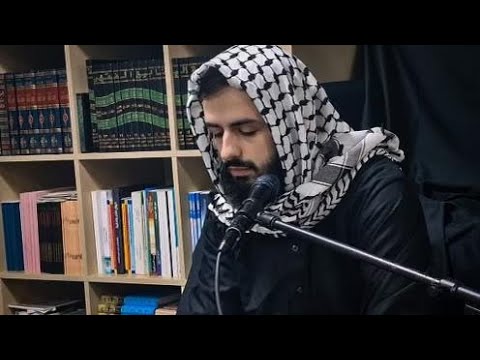
Lecture by Respected Sayyid Sulayman Hasan on Self Representation in Modern Western Society on 12/27/2012 during the 29th Annual Conference in Chicago, IL, USA hosted by the Muslim Group of USA and Canada.
Visit us at: www.TheMuslimGroup.org
Show more
Transcript
[0:07]I'd like to begin by apologizing to all of you for being
[0:12]slightly late uh at the beginning of this Workshop inshallah we'll make
[0:15]up for it by talking faster and hopefully we'll get through all
[0:20]the material that we need to uh I'd like to also uh
[0:21]say Salam especially to our Scholars who are present and I'd also
[0:24]like to request you please to to come forward inshallah we'll be
[0:29]able to benefit from uh uh our other Scholars as well during
[0:34]the course of our discussion so anything that uh that I say
[0:37]that you would like to add to comment on please consider yourself
[0:41]to be also uh sharing the responsibility of conducting the workshop uh
[0:47]with me please please come forward then please from that place uh
[0:52]do participate and and add your guidance and also Chef if you
[0:56]would like to do that as well uh now just to be
[1:01]able to see all of you better I'm going to apologize to
[1:03]those of you who are sitting in front I know that I'm
[1:06]a little taller than normal and some of you are next May
[1:10]uh get strained having to look up at me but I want
[1:11]to be able to see everybody so I'm going to stand up
[1:14]for at least a portion of the workshop and I'd like to
[1:21]actually begin with a few questions and then inshallah we will end
[1:25]the workshop with a question answer session where you will be able
[1:28]to ask any questions that you may have the question that I
[1:34]would like to begin with is what does it mean in a
[1:40]practical sense or a theoretical sense for us to say that Islam
[1:45]is a religion of balance when it comes to our spirituality when
[1:53]it comes to our worship and our devotion our when it comes
[2:00]to our interaction ctions with non-muslims in general many Muslims have had
[2:03]it beaten into our hearts and our minds and our souls that
[2:10]Islam is a religion of balance we understand that we believe in
[2:15]it intellectually and in some cases we may even have examples from
[2:21]our religious teachings we have examples from uh the lives of the
[2:26]prophet and the imams that show us that balance but we don't
[2:32]always have a good idea of the dynamic nature of that balance
[2:37]and so it becomes somewhat trit it becomes somewhat superficial for us
[2:42]to say that Islam is a religion of balance what I mean
[2:44]by that is that we Define for ourselves an extreme that these
[2:51]groups of non-muslims for example some of them go too far in
[2:54]One Direction and some of them go too far in the other
[2:58]direction and we are in the middle and it's always possible for
[3:02]any individual or for any group of people to say that wherever
[3:08]we are this is the happy medium and extremes are defined by
[3:14]distance from where we are so therefore that Medium state or that
[3:21]balance is not something that moves us dynamically in a certain direction
[3:26]but it's simply a way for us to relate to other people
[3:30]sometimes constructively and sometimes not so constructively so I want to hear
[3:36]from the members of our audience that what practical examples do you
[3:44]have that well for example when it comes to celebrating holidays when
[3:47]it comes to uh wayfaring on a spiritual path when it comes
[3:51]to worship when it comes to uh finances any area of life
[3:57]that's relevant to you that Islam is a religion of balance and
[4:00]here is how that balance is defined or on a theoretical level
[4:04]how are we to understand what it means for us to discover
[4:09]that balance those of you who who are courageous enough to share
[4:17]your insights or perhaps questions that you may have in that regard
[4:21]uh please uh raise your hand and join in the conversation you
[4:30]will regret not ra raising your hands and having me talk monotonously
[4:33]through the entire course of the workshop don't subject yourselves to that
[4:38]fate does anybody have any examples sure do we have an extra
[4:49]microphone for the audience members or I can ask the brothers to
[4:51]see can get one at the moment sure or well those of
[4:59]you who are close I can give you the microphone actually so
[5:03]islamically I think if something is balanced it's not just a benefit
[5:07]to the individual but also to the community so when we think
[5:13]about balance in Islam it's not just about um going to Extremes
[5:15]in terms of like only serving the community but also serving yourself
[5:18]or it's not just about serving only yourself it's also about doing
[5:21]things that are of benefit to others okay was a very very
[5:32]good comment to begin with uh that one of the dimensions that
[5:38]we can use in Islam to discover what is balance is that
[5:42]it should be comprehensive uh in its uh standards uh we live
[5:47]in a society that is very individualistic when people think of Enlightenment
[5:51]when people think of advancement when people think of right and wrong
[5:57]the first standard that comes to mind is is often the individual
[6:05]and the effects of an action on Society at large are often
[6:08]not taken into consideration or not appreciated even on a very material
[6:13]Level let alone the effects of our actions on a spiritual level
[6:18]the effects of our actions on history on uh the impression that
[6:26]people will have of Muslims if I do something then you are
[6:29]not going to say that h who has that biography did this
[6:32]many of you will say that a scholar who was trained in
[6:35]K who studied with these teachers who works in this Islamic Center
[6:41]did this and so that will reflect on where I teach that
[6:43]will reflect on where I study it might reflect for many people
[6:49]on shiaism as a whole it might reflect on Islam for many
[6:51]non-muslims or even for many Muslims and each and every one of
[6:54]us also has those groups that we are a part of and
[6:58]we are responsible for the reputation that we give to ourselves that
[7:03]we bring for our families that we bring for our societies and
[7:10]for our religion and for our imams there are many Hadith in
[7:14]that regard the uh with respect to parents for example there is
[7:19]a Hadith that you should not be a person when you behave
[7:24]in society people will say did that mother never teach her son
[7:28]or her daughter manners and that is in fact one of the
[7:35]aspects of to parents that we are taught in the teachings of
[7:37]that is one of the forms of goodness or B to parents
[7:41]that we are to do whether our parents are alive or whether
[7:44]they are deceased to bring a good name to them that when
[7:48]people see us they say that well this person was raised right
[7:50]even if we weren't raised right even if we were raised by
[7:55]wolves but because people might not always know that we were raised
[7:57]in a jungle and they might give the credit to our parents
[7:59]it's an act of kindness to our parents there is also AI
[8:04]of that when you act in society recognize that people are going
[8:13]to say these are the companions or in our case not companion
[8:18]but the followers of the the IM the followers of we attribute
[8:23]ourselves to them and so if I say something if I do
[8:28]something it is going to reflect in people Minds on those to
[8:31]whom I am Affiliated and that is a responsibility that we have
[8:38]so one aspect of balance that we have in Islam is to
[8:41]understand the repercussions and the effects of our society on ourselves as
[8:45]individuals and on all of the other circles that we are influential
[8:49]in and those other circles should not be defined purely materially that
[8:55]is a point that comes from our religious ideology and our beliefs
[9:05]that we reflect not just on those recognizable groups that we are
[9:13]a part of but even on the air and the land that
[9:19]we reside on or in we reflect on those to whom we
[9:27]are connected with our beliefs so for example if there is a
[9:34]scholar a Pious person their company is something that will have a
[9:40]good effect on our soul even if we're not directly learning anything
[9:44]from them even if we are not actually doing anything being in
[9:51]a Masid not just by virtue of its psychological effect but by
[9:57]virtue of the collected sincerity and and the dedication that has been
[10:02]made of that land for the sake of worship of Allah and
[10:07]service of Allah being in that place has an effect on us
[10:09]that being in another place cannot have it doesn't really matter if
[10:16]we are spending that time actually doing Salat or reading Quran or
[10:21]doing something else entirely so this type of effect or this type
[10:25]of comprehensiveness which follows from what you were talking about it might
[10:27]actually have been exactly what you were referring to that is something
[10:32]that we as Muslims believe in even though we cannot always perceive
[10:36]it we don't always see how that reflects on us or how
[10:43]our performing our fuder prayer in a mid so that the mid
[10:46]flourishes even if nobody notices it even if it's not visible but
[10:54]it's something that makes a Masid flourish that is something that is
[10:58]uh an important thing and I want to uh just make a
[11:05]comment about the state of Islam in America some of the things
[11:07]that I say uh during the course of this Workshop I want
[11:12]them to be a challenge to habits that we have as individuals
[11:14]and as a Muslim Community I don't ask you to agree with
[11:23]everything that I say but I do ask that you take it
[11:24]and decide whether it's something that deserves further thought whether if you
[11:29]feel that needs an immediate rebuttal I would welcome that and please
[11:33]tell me that you think I am wrong for these reasons uh
[11:35]but think about some of these issues and see if maybe some
[11:40]of the things that are taking place within uh the Muslim Community
[11:43]in America are not issues that we can deal with more effectively
[11:48]in our own planning and in our own lives the example that
[11:54]I want to give is something that I've noticed most clearly in
[11:57]Islamic communities on the East Coast but it's something that probably exists
[12:02]uh in different parts of uh the the Islamic community in America
[12:10]and this is that people are often cynical with regard to Islamic
[12:17]centers they might have mass that are not run effectively or that
[12:25]have internal politics or people think they have internal politics or whatever
[12:29]the issues may be and so you have groups of Muslims who
[12:31]come together and they say that we're going to have a weekly
[12:34]program they might do a traditional program with the speech lecture ceremony
[12:41]of morning for IM Hussein they might do something a little bit
[12:45]less traditional another kind of activity maybe a book club whatever it
[12:48]is but they will do it outside of a Masid and when
[12:54]these types of activities begin they sometimes draw people who until now
[12:59]would go to Aid because in many ways this program is being
[13:05]done without the baggage that comes and if you have a mid
[13:08]there is baggage that must come even if you start it with
[13:12]the best of intentions a lot of money has to go in
[13:14]just to turn on the electricity there is often a certain formality
[13:20]of uh bylaws and the Constitution that are required in order to
[13:24]be recognized as a legal entity in the United States and that
[13:26]brings politics in even if it may not not be intended or
[13:31]it may not be intended to be a negative thing when these
[13:34]groups form they sometimes take people who until now were going to
[13:40]the mass because they find that this is something that is a
[13:45]lot more efficient it's kind of like what Amazon did to our
[13:48]poor deceased borders and perhaps soon to be deceased Barnes and Nobles
[13:56]right you don't have the the same fixed costs so you're able
[13:58]to offer a product sometimes more effectively and more cheaply and so
[14:02]more people will say that we'll browse the books at Barn and&
[14:07]noes but we'll buy them from Amazon that type of a dynamic
[14:12]has set in in certain cities in the United States in certain
[14:15]communities uh within our own Muslim experience in America and that is
[14:23]one of the issues of balance that we want to achieve as
[14:29]a Muslim Community and we don't have a great deal of models
[14:32]that we can look to from other religious communities and in some
[14:38]cases perhaps even from the Sunni Community within uh America because it's
[14:44]a different goal that we have but in trying to determine whether
[14:47]this is a problem and some people might say it's not a
[14:50]problem it's a good thing those Muslims deserve to Fall by the
[14:54]wayside and what's important is to have events and programs that can
[14:58]actually fulfill the needs of those people who are coming but then
[15:01]there are other effects that come on the side when we want
[15:06]to determine how big of a problem particular issue is like this
[15:10]problem that we just mentioned and what are potential Solutions the way
[15:13]that we are going to do that is by attuning ourselves more
[15:17]and more to what are the different areas that our actions can
[15:23]affect and do affect and what is the best way that we
[15:28]can affect all of those different areas conceivably again hypothetically it might
[15:33]be possible that I go to a Masid that is somewhat dysfunctional
[15:36]but with a view that over the next Generation over the next
[15:41]several Generations I want to have institutions that are flourishing that are
[15:47]bringing benefits not just to those who are interested in that particular
[15:50]activity that particular camp that particular uh activity but towards broader Society
[15:57]so that's one area that we will be looking at inshallah what
[16:03]other examples do we have of what it means to be balanced
[16:08]from an Islamic perspective it can be something very simple very TR
[16:12]what does Islam say about finances what does Islam say about uh
[16:17]about uh how to dress does anybody ever make a conscious decision
[16:24]when they go to purchase a new wardrobe that what would my
[16:30]Islamic values say about whether to choose this outfit or that outfit
[16:34]or when we are making our financial decisions you know do we
[16:39]ever have that question in our minds that while Islam wants us
[16:45]to not be materialistic and it wants us not to be uh
[16:47]you take a vow of poverty so how do we decide where
[16:53]to spend our money that's the kind of thing that whether we
[16:55]do it consciously or unconsciously all of us are faced with those
[17:02]types of decisions what to eat where to eat how to make
[17:04]decisions with regard to what kind of car to drive what kind
[17:08]of house to buy what kind of subjects to study in college
[17:10]what kinds of clothes to wear or to buy or to gift
[17:16]to other people so what for you has that balance M it
[17:19]doesn't have to be limited to these examples but any other examples
[17:23]that you might have go well for me when I'm shopping for
[17:26]clothes it has to be long has to be has to so
[17:35]modesty is an important aspect of dress and just as a reminder
[17:40]that is not just for sisters modest dress is a requirement in
[17:44]islamically for those who wish to be part of the Believers the
[17:52]Quran inah it says to the prophet that tell the believing men
[17:59]that they should lower low their gazes and that lowering of the
[18:02]Gaze is an indirect expression for modesty and for the believing women
[18:06]that they should also lower their gaze it starts with men that
[18:09]verse of the Quran or those two verses of Quran Surah n
[18:14]verse 30 and 31 they do mention a slight difference uh for
[18:21]men and women but the underwriting principle which is or lowering the
[18:26]Gaze or modesty that is shared for both men and women the
[18:29]difference is that for women there is the added expression that they
[18:36]should also take care that their finery or their adment are not
[18:40]exposed except that which is uh naturally exposed and commentaries of Quran
[18:46]explain what that is so man also should be considering modesty in
[18:52]choosing their clothes and that's something that unfortunately if you go to
[18:57]the average Muslim uh Gathering or mid you will find that our
[19:04]sisters of course they often bear the brunt and there is much
[19:08]improvement that is needed as a whole within the Muslim Community but
[19:10]also for our brothers when people are praying when they are interacting
[19:14]that type of uh modesty is often not found in our closure
[19:20]that's an aspect of uh the values that we should have and
[19:23]uh we can talk about how to achieve that balance in dressing
[19:27]modestly but also uh not being seen as the person who is
[19:36]simply wearing a formless shapeless and non a non-identifiable amount of clothing
[19:42]whether for a man or for a woman so that was a
[19:46]good comment and sister I think I saw somebody else with her
[19:51]hand pleas um the mors we have stru NE I'm going to
[20:01]try to hold this to prevent the interference the morals that we
[20:06]have they have more than just thoughts they have reasoning and structure
[20:09]behind them they have reasoning and structure behind them that's an important
[20:14]point the more we can understand the reasoning and the structure behind
[20:17]the teachings that we have from the imams the better we will
[20:21]be able to approach making decisions with regard to how to present
[20:29]ourselves within Society uh whether it be in a non-muslim society in
[20:31]America or in a Muslim Society if we ever are visiting before
[20:35]we living temporarily or for a long term Society is that from
[20:40]me or is that something else going chairman uh you were talking
[20:47]about balance right yes yeah an example of balance I think would
[20:50]be uh also an example of things that differentiate us as Muslims
[20:55]from other religions and SE which that we give individuals the right
[21:01]to examine our book the Quran and tell them this is our
[21:08]text we believe in but un you are welcome for I'm going
[21:20]to just mute this and see if maybe that sound stops can
[21:26]everybody still hear me yes if you can't hear me raise your
[21:28]hand okay I see a thumb up that means you can hear
[21:31]me that uh so uh can you please repeat that brother sorry
[21:34]no I was saying our uh example we can ex yes we
[21:39]we invite people to examine our books and tex but at the
[21:44]same time they have the right to investigate their own it whatever
[21:48]they abute and that's actually exactly the next point that I wanted
[21:55]us to move toward so thank you for that well time transition
[21:57]the next point that is needed actually is for us to understand
[22:02]once we have to have insight into what it means to be
[22:04]balanced balance should not simply be a means for me to say
[22:09]that well I'm mourn in muharam for two months and 8 days
[22:11]so it's a uh it's a very um uh extremely unworthy sh
[22:20]who only Mourns for the 10 days first 10 days of muharam
[22:24]they wear their shiism lightly and then it's extreme when people mourn
[22:29]the entire year and they never have any happy occasions if you
[22:34]tell them they will say well was also a day of sadness
[22:36]for our imams at many different times during their lives that extreme
[22:42]is defined by my preference and there might be somebody else who
[22:47]says that well uh to mourn for 10 days in muharam is
[22:53]balance to mourn for 2 months and 8 Days uh that does
[22:56]not have any Hadith to back it up that's extreme and to
[22:59]just mourn on a that is the lower extreme and so it's
[23:05]balanced to mourn for say 40 days until or to mourn for
[23:07]the first 10 days of muharam until as or whatever the case
[23:11]may be so the first point was that balance is for us
[23:14]to understand the comprehensive nature of the goals that Islam has for
[23:20]us to connect with those goals to understand that our values are
[23:22]not meant to be just rituals but they have a purpose behind
[23:27]them and the next point is for us to understand that as
[23:29]Muslims not only do we invite non-muslims to question and to argue
[23:39]and to debate but also we as Muslims have a right and
[23:43]more than a right an obligation to question and to uh try
[23:51]to work through certain Solutions and there is a problem with the
[23:54]religiosity that many of us are used to we might come from
[24:01]cultures that are topheavy or that are hierarchical and in some cases
[24:05]that topheavy or that hierarchical culture has influenced our understanding of Islam
[24:11]as well this is a point that again I want you to
[24:17]hear from me not asking you to agree with it but certainly
[24:19]it's something that I think is worthy of thought there's a story
[24:24]that I I tell frequently because I find it very enlightening Shah
[24:27]s was once asked by somebody about his view regarding smoking right
[24:33]now this is an area where uh many people have very strong
[24:40]opinions there was a time when many of our F had not
[24:42]issued clear fwa against smoking there was a time when many of
[24:48]our faha used to smoke themselves because at that time they weren't
[24:52]really aware of the the harmful health effects of it so for
[24:55]whatever reasons there were people who would often criticize very strongly why
[25:00]don't our F take a stronger stand against smoking and this evil
[25:07]will be removed from our society and not many of our F
[25:11]have issued uh different wordings fwa that explain the Islamic position on
[25:16]smoking and other things that are detrimental to a person's health or
[25:20]wasteful of resources and so on but the answer that Shahid s
[25:26]gave was something that actually returned the agency to the questioner rather
[25:33]than stripping the questioner of agency he said that does a person
[25:38]who knows what we now know as a society who has access
[25:43]to uh information about the harmful effects of smoking does that person
[25:48]really need to go and get a rubber stamp from a religious
[25:51]Authority in order to know that smoking is Haram or that they
[25:58]should not do so now the questioner may have asked as an
[26:01]individual most likely though the questioner was not somebody who actually wanted
[26:05]to smoke most likely the questioner was somebody who was saying that
[26:09]well in Naf or in Iraq we have so many people who
[26:13]smoke and if Shah s takes a stand against it then a
[26:17]lot of those people will be motivated to quit smoking and the
[26:21]answer was that what kind of a society is it that cannot
[26:28]make clear decisions or that requires crutch to make decisions that should
[26:33]be obvious to the individual there's several different harms that come from
[26:39]in the first place we will not be a society that is
[26:42]able to be a strength and a source of uh support for
[26:49]our religious leaders for our Mar if we are not able to
[26:52]think for ourselves if we don't have the agency and we don't
[26:57]know how to exercise that agency effectively number two it will also
[27:02]be a society that will often have a great deal of ups
[27:09]and downs right what that means is that medical research with regard
[27:15]to many different uh areas is constantly developing sometimes there are minor
[27:22]ups and downs sometimes there are radical reversals what's important for us
[27:27]is to ask from our scholar to receive from our Scholars guidance
[27:31]about what principles are operative and then to apply those principles according
[27:38]to our knowledge and according to our experience and that is the
[27:45]type of answers that we often get from our but it's not
[27:48]often the way that the question is worded or understood so that
[27:54]weakness comes not from the scholarly Authority but it comes from us
[27:57]as a society we will ask for example whether smoking is halal
[28:06]or Haram and we will critize an answer that isn't yes no
[28:10]black white that says well if this and if that and then
[28:15]this is something that you will hear very frequently that well what
[28:18]kind of an answer is this they should just give me the
[28:20]answer because I might want to get a clear answer for myself
[28:24]or I may have asked the question because I wanted to show
[28:27]it to somebody else and say told you so and that if
[28:30]this then that answer is not really good to Lord it over
[28:32]somebody else about how wrong they were the problem with black and
[28:38]white answers when they are given and when they are demanded is
[28:42]that circumstances change the black and white answer gives you no Insight
[28:46]when circumstances change and the states of knowledge change and the black
[28:52]and white answer gives you no insight about what to do when
[28:54]circumstances change right so for example the we find out that smoking
[29:03]is not harmful to people who have a certain genetic makeup right
[29:06]they're not as susceptible to the EMP or the other harms of
[29:14]smoking right now if the answer that we gave that we were
[29:17]given is an if then answer that if it reaches this level
[29:22]of harm to the body if it is wasteful in these ways
[29:24]then it becomes Haram we can still apply that answer to our
[29:32]particular circumstance but if all we have asked or all we were
[29:35]given is a yes no answer that when I find out that
[29:41]for a person with a certain uh Constitution or a certain body
[29:44]type a particular food or drug or whatever it is may not
[29:48]have the same effect that it has for the majority of people
[29:50]is there anything that I can do with that answer it becomes
[29:56]a static process so with the brother's side is very important that
[30:01]in Islam we have a certain place for questioning for asking and
[30:09]generally our effort should be to try to understand the philosophy that
[30:17]we are to apply with our own agency within our lives and
[30:21]that is what allows our decisions to be dynamic to move us
[30:27]in a certain direction I'll give you an example I know that
[30:30]the Electoral season has passed but that's a perfect example of this
[30:34]type of a situation many people they ask whether Muslims or we
[30:41]as Shia uh community in America should Vote or participate in the
[30:46]electoral system at all and many of you probably asked that question
[30:50]or have heard that question asked an answer what are the answers
[30:52]that you have heard you should vote you should vote vote as
[30:58]a block sorry vote as a block block okay vote as a
[31:03]block that's one answer that is sometimes given and the philosophy that
[31:06]is expressed has anybody heard a different answer you shouldn't vote you
[31:11]shouldn't vote okay any any any more specifics different parties vote for
[31:16]different parties meaning like a third party for example Ron Paul or
[31:19]the green party something like that that's another answer that is sometimes
[31:21]given the that's an answer that is often given by different Scholars
[31:28]with in the sh Community especially vote at a local level don't
[31:31]vote at a national level uh because of the relative harm or
[31:36]benefit so some of you may have heard that answer uh any
[31:38]other outstanding answers that you have heard vote blank vote blank so
[31:47]you're you're voting uh a vote of protest that's an answer that
[31:50]is often given by scholars in Muslim countries where there are uh
[31:53]different uh considerations at Place some of you may have heard that
[31:56]answer given for America as well now what I want to say
[32:01]though is that what's important for us as Muslims is to ask
[32:06]not whether we should Vote or whether we shouldn't vote but for
[32:10]us to ask what are the principles that we should be thinking
[32:15]about once we ask what are the principles that we should be
[32:18]thinking about what does it mean to vote for the Lesser evil
[32:23]or not to vote but to support the Lesser evil at what
[32:26]point does support for the Lesser evil evil because there is that
[32:33]danger that I say that well seems a littleit less bad Romney
[32:36]but at what point does that actually become strengthening the Lesser evil
[32:41]and making it a stain that is going to be harder to
[32:44]remove in its own time right these are the things that we
[32:48]need to be thinking about those operative principles and then we need
[32:52]to say that while we will make the decision and if we
[32:54]find out that for example we abstain from from voting and the
[33:01]greater evil came then 4 years later 2 years later 20 years
[33:06]later we may discover that maybe we did something a little bit
[33:09]wrong and we can Rectify our wrong answer from before and make
[33:20]it better Dynamic change that growth that can come in our own
[33:25]lives it's only going to be possible if as a community as
[33:28]and as individuals we give ourselves the space we plan our lives
[33:35]in such a way that there is room for that growth room
[33:38]to make a wrong answer to choose the wrong answer to make
[33:45]a wrong decision but within certain limits right there are some wrong
[33:49]decisions that we can make some wrong terms that we can take
[33:52]that will preclude our ability or make it much more difficult for
[33:58]us to get back on the right path again in the future
[34:00]but then there are many types of wrong decisions that we need
[34:06]to make not because making the wrong decision is what is important
[34:12]but because exercising the agency is important and if we could have
[34:16]made the right decision from the beginning great but what's important is
[34:19]to make that decision ourselves not to take it on somebody else's
[34:22]Authority so that if we make the right decision we continue to
[34:24]grow if we make the wrong decision we learn from it and
[34:29]we become become a stronger person that was the perspective that our
[34:33]IMS engaged in there are many different examples in but I'll just
[34:38]mention I'll reference one a debate that IM our fifth IM had
[34:45]with one of his companions at that time was a very was
[34:50]a relatively young companion of IM Bak the debate was about uh
[34:54]the reality of Iman and K and uh our people who do
[35:00]not believe in the IMs are they even Muslim can they go
[35:02]to heaven can they not go to heaven what is that state
[35:08]and the IM number one did not give a clear answer to
[35:13]and the IM allowed Oman to engage with him and to argue
[35:24]back to him in fact the Hadith says that both parties raised
[35:29]their voices people standing outside of the house heard their raised voices
[35:34]so to all appearances it would have been an argument back and
[35:37]forth now IM Bak yes he was dealing with a young and
[35:41]maybe a little bit of a hot-headed companion but IM Bak throughout
[35:45]his life had enough respect and he had enough Prestige to be
[35:50]able to silence somebody who was in his presence it's not as
[35:55]if the IM was engaging with somebody who was young and hot-headed
[35:58]and the Imam had no choice but to submit to that person's
[36:02]argumentation the Imam chose not to exercise that Prestige and in one
[36:11]of these debates it's actually this wording is reported from Imam he
[36:16]said thatan right now you are young when you are older you
[36:19]will appreciate that what I am saying is right in other words
[36:25]what the IM said is that I'm not too concerned about you
[36:28]being wrong it's not really that important to me it's natural at
[36:31]this state for you to have principles but not understand how those
[36:40]principles are to translate into practice the mistake that many of us
[36:44]make in our own decisions is that we don't give ourselves the
[36:52]space to grow and so we are Marching 100 miles an hour
[36:55]at One Direction when we're 20 and then when we change we
[37:02]lose the steam we lose the momentum or we start marching with
[37:05]equal velocity in a different direction if we give ourselves that space
[37:11]to grow if we understand in what capacity we are to refer
[37:19]to our scholarly output by our living Scholars by our past Scholars
[37:24]then we will have a much easier time of setting the red
[37:31]line Lines within which we can exercise our own judgment the important
[37:34]point is to set the red lines effectively if you have good
[37:37]red lines then you can kind of let yourself be at peace
[37:41]because you know that even if you make a mistake it will
[37:46]be a mistake that you can Rectify it's not going to be
[37:50]a mistake that's going to turn you uh away from the path
[37:52]of guidance is that point clear that's a point that I think
[37:56]is often missed in our discussions about what Muslims should do somebody
[38:00]will say that Muslims should learn from the Jews they're very successful
[38:03]somebody would say the last thing we should do is learn from
[38:06]the Jews because they're successful but they're evil and I'm not saying
[38:10]that I'm saying that these are the responses that you often hear
[38:15]from people very one-sided very black and white very decisive and so
[38:21]whether right or wrong whether very wrong or slightly wrong they are
[38:27]static Physicians they are not a process that is going to lead
[38:31]that individual or a society that is Guided by those principles towards
[38:35]greater insight and greater um meaning in their actions in the future
[38:44]it's not so important whether you vote in the local elections and
[38:49]refuse to vote in the national elections or vote in the national
[38:52]elections as well or don't vote at all or vote with a
[38:54]blank vote whatever you decide to do as long as you understand
[39:00]what are we trying to accomplish as a Muslim Community in America
[39:04]is the the trajectory that the Catholics have followed in the last
[39:13]50 years in America is that somewhat the trajectory that Muslims are
[39:17]likely to follow or should follow should we give the same importance
[39:21]to establishing uh those types of charitable institutions those types of intellectual
[39:25]institutions is the trajectory that the Jews have followed generally favorable in
[39:32]certain cases favorable what is the trajectory that we want to follow
[39:35]and then once we have those goals then you might decide to
[39:40]do it one way I might decide to do it another way
[39:42]but we will be able to interact constructively we will be able
[39:48]to learn from one another we will be able to grow and
[39:51]gain insight as time passes but if somebody gives you a perfect
[39:57]model for 2013 right and in 5 days when the year starts
[40:02]you start to implement that perfect model right you find out is
[40:09]it recommended to wear white and what color shoes should you wear
[40:12]how should you dress how should you talk how should you interact
[40:14]in society but you don't have the dynamic approach to gaining Insight
[40:22]that model might work very well for you for the year 2013
[40:25]but then you're not going to be any stronger in 2014 so
[40:31]up until this point those points that we have talked about any
[40:38]questions concerns anything that you think uh needs to be fleshed out
[40:43]where do we look to for these goals I mean how do
[40:48]we and there's no one large leadership a body of leadership that
[40:51]can set these goals for us and I think that's a struggle
[40:56]a lot of us have had yeah where can we look for
[41:00]that guidance that is why I think and this is something that
[41:01]I will be talking about inshah during uh the the next Workshop
[41:07]that we will have about the Facebook profile of the 12th imom
[41:10]uh not being an expert on the 12th imom and certainly not
[41:14]being an expert on on Facebook I don't really know what I
[41:16]can contribute except a few thoughts that are tangentially related to that
[41:20]topic but that's an important point and I'll just mention one dimension
[41:24]of it to answer the sister's question right now as followers of
[41:30]when we don't have access to our IM basically we don't have
[41:39]access to our diet it's kind of like we know what we
[41:42]need to survive and we don't have access to it that it's
[41:49]as if the Quran were taken from you are together with the
[41:56]Quran so just as if you didn't have the Quran what would
[41:59]be left of Islam if you just had the memory of the
[42:03]Quran but you couldn't actually approach it you would be in a
[42:05]very compromised State the fact that we don't have ready access to
[42:12]means that one part of that scale is something that we don't
[42:15]have ready access to so the very first thing that it should
[42:20]give us is a great deal of humility a great deal of
[42:25]concern that now it's not that we don't have access to it's
[42:28]not that that's disappeared we do have the lives the life story
[42:33]and we do have the presence of the time amongst us but
[42:36]we don't have ready access right so that's the comparison I was
[42:41]making it's not as if the IM or have disappeared from our
[42:45]lives but because we don't have ready access what that means is
[42:51]that we have large questions small questions important questions superficial questions we
[42:57]can't get answers it's like we're hungry and we know we don't
[43:04]have the food that we are intended to eat by God available
[43:05]so now we're going to go scavenge and we're going to try
[43:11]to scavenge for the best possible foods that we can but they're
[43:14]going to be various types of grasses we'll pick up our children's
[43:17]books and we'll make that stone soup that we read about some
[43:20]of you might remember that story or not we're going to do
[43:23]things like that so when we go to our Mar when we
[43:26]go to our Scholars the the perspective that many people have is
[43:30]all right that's that's about it that's what we need right that
[43:33]fills a psychological space that should not be filled cannot be fulfilled
[43:41]by anybody but the 12th Mon and what that does is psychologically
[43:44]it takes away the humility that we need to be able to
[43:46]grow if we maintain that humility and that recognition of the space
[43:53]that the 12th IM or that guidance of connection to in knowledge
[43:58]is to have in our lives then we will still see guidance
[44:03]from our Scholars because we're not going to get any better scholar
[44:06]any better scholarship than from our Mar but we're not going to
[44:11]use the answers that we get to feel self-satisfied we will also
[44:18]be looking at the totality of Islamic history it will still be
[44:22]important to us to study not because we're doing to that but
[44:28]because given that we can't get perfect answers even if I have
[44:33]a legal obligation to do to a particular Mar I know that
[44:36]that is not a and the collective of the mar also cannot
[44:41]take the place of AUM the collective of all of humanity and
[44:43]all of creation cannot take the place of so that humility will
[44:50]give me a constant need of being put in touch with whatever
[44:53]scholarship whatever Insight I can access at the very least we will
[44:55]start with our Mar we will start with the totality of scholarship
[45:00]that has been produced within the Islamic world uh within the Shia
[45:05]school of thought uh since the time of the IMs and that
[45:07]is where we will look but we're going to get provisional answers
[45:11]and there's no way around that we're not going to get definitive
[45:14]answers and so I'll expand on that theme more inshallah in in
[45:18]the next Workshop but to the point that it's relevant to our
[45:21]topic today we're going to need to have that humility and then
[45:26]we're going to need to have a connection each and every one
[45:28]of us to trying to connect with the scholarship that has been
[45:31]produced that is being produced in order to gain further Insight so
[45:37]any other questions or should we can we move on so in
[45:43]a situation where you have to decide between the Bad and the
[45:47]worst would you not choose at all or what would you be
[45:49]well if you have to choose between bad and worse and that
[45:52]is basically the type of decision that we're going to have uh
[45:55]in our lives in America right there is a Hadith many of
[46:01]you are probably familiar this relates to our topic uh uh specifically
[46:05]today but also in a more General sense about our attire and
[46:10]our presentation that uh it is better for a Muslim woman a
[46:14]believing woman not to see a nonaham man and not to be
[46:20]seen by a nonaham man that is ath of I'm sure all
[46:26]of you are familiar with it now that is a uh valid
[46:32]statement it's also important though for every Muslim to be able to
[46:38]protect themselves and those they need to protect within society and in
[46:43]today's society if a person starts her life from the time she
[46:46]becomes B by not seeing or not being seen by a nonah
[46:52]except in cases of necessity then in terms of the life experiences
[46:57]in terms of the confidence in terms of the education to be
[47:03]able to be a strong Muslim and pass on that strength to
[47:07]uh not just children but Society it may be very difficult so
[47:12]there is also another equally important Islamic value that doesn't contradict the
[47:22]Hadith of but it is also part of that comprehensive picture that
[47:25]we have we are to be strong we are to be confident
[47:31]and we are to be knowledgeable about our religion now Z she
[47:36]acquired that strength and she acquired that Knowledge from her own home
[47:41]but for many Muslims their parents might not know how to read
[47:47]Quran so how is that Muslim young woman to acquire the confidence
[47:51]and the knowledge of Islam obviously it might not be possible by
[47:55]never being seen and never seeing a nonm so we have different
[48:01]decisions our ideal would be to be able to have a society
[48:03]where it would be possible to acquire that strength to acquire that
[48:07]cultural resource and fulfill the ideal expressed by they but we're living
[48:12]in America even if you were living in Iran or somewhere else
[48:15]it might not be possible to do so so you have to
[48:19]choose between different options which are not ideal and that is where
[48:23]I think you know although we took a long time with it
[48:27]the perspective that we outlined is so useful basically what you will
[48:30]say is what are the red lines what is not allowed in
[48:33]Islam what type of interaction is not permitted so for example some
[48:38]uh much will say that for a nonah man and women not
[48:43]just for the woman but for the man or for the woman
[48:44]to be together in a place where nobody else can enter is
[48:50]not permitted it's known as I think it's the dominant fwa among
[48:53]it's not the dominant fwa among the Shia but it is one
[48:59]of the opinions right so if I am with a nonaham woman
[49:03]in a car and the doors are locked and nobody can come
[49:06]in even if she's in hijab even if uh there is nothing
[49:10]improper about that interaction it's Haram simply by virtue of being alone
[49:16]together in a place where nobody can enter right now if I
[49:20]do to somebody who says that's a red line that's a red
[49:24]line I won't cross that red line right so I might go
[49:25]to school I might get a job but I'm not going to
[49:29]cross that red line the more common opinion among the Shia though
[49:33]is that in that sense is not Haram in itself it's Haram
[49:38]if there is a fear that it will lead to a sin
[49:43]so if a person can protect themselves a man or a woman
[49:46]then simply to be alone in a place where nobody can enter
[49:51]itself is not Haram unless there is a fear that it might
[49:54]lead to something islamically improper and which case it will become Haram
[49:58]similarly when it comes to shaking hands now there are different fwa
[50:03]that are given is it forbidden absolutely under no circumstances are allowed
[50:07]to shake hands with a or is there an exception for cases
[50:11]where it might cause a harm to the image of Islam or
[50:17]offense to the individual right so that will set the red lines
[50:19]but let's say for example that I do to somebody who says
[50:25]that it's okay to shake hands with a nonah if for example
[50:29]that person will get a bad image of Islam by my not
[50:36]shaking hands that legal answer is not enough because it will also
[50:41]have an effect first of all on my soul there might be
[50:44]a case where I will practice that fat religiously un Justified but
[50:49]I will become desensitized to certain things that might not be good
[50:54]for me number two it might have an effect with regard to
[50:57]the Islamic Society have you ever been in an experience where say
[51:00]that you're at a graduation ceremony and you're ready to say that
[51:04]I can't sh can for religious reasons but by circumstance the person
[51:07]in front of you is an also visibly practicing Muslim and they
[51:10]go and they shake hands and they also give a hug and
[51:14]then you're like what can I say now I'm I'm a different
[51:15]kind of Muslim I don't do it for religious reasons and so
[51:18]you kind of lose the ability to even express your religiosity that's
[51:23]also a consideration right that's what I was saying we can't just
[51:28]take a static approach we can't just take the fwa and say
[51:30]well that's what's important if it's allowed in Islam we have to
[51:38]have other considerations that are uh in our mind the approach is
[51:43]that we get the red lines from our from from the that
[51:50]I do to within those red lines now I exercise my agency
[51:54]it's Haram for me to do this but how do I refuse
[52:00]or extricate myself from that situation requires creativity it requires thought on
[52:05]my part I can do so offensively I can do so delicately
[52:08]and elegantly or it's Hal for me to do this but is
[52:13]it a good idea or is it a bad idea how is
[52:18]it going to affect future Muslim interns at the same firm or
[52:22]how is it going to affect uh future students who are applying
[52:26]for the same scholarship or whatever it might be that is also
[52:29]a concern that we are to make sure that we have in
[52:32]mind there's aith from our fourth IM that I think is relevant
[52:35]to uh the question and this is um it's an interesting Hadith
[52:41]uh it's in a book called by think it's pronounced different a
[52:52]Shia scholar of the sixth hij century theith is like this IM
[52:57]puts on a good pair of clothes says he went out in
[53:08]a nice outfit and he walked out the door and then he
[53:12]rushed back in the door and he had a maid servant he
[53:16]said to the maid servant that can you bring me my old
[53:18]clothes and he changed into his old clothes and he said that
[53:21]when I was wearing the good clothes it's as if I was
[53:24]no longer alusin I wasn't myself I didn't feel like I myself
[53:29]and so it's better for you to wear my old clothes that's
[53:33]the incident what do you get from that incident when it comes
[53:37]to how to dress in America when it comes to how to
[53:39]present yourself uh in in this Society what's the lesson that you
[53:44]learn any thoughts yourself be yourself okay good you should trust your
[53:56]internal instance because if you're going to do something or wear something
[53:59]or behave in a certain way that is going to make you
[54:05]feel unfamiliar with yourself that should be a warning sign to you
[54:09]as to what your values and yes I think both of you
[54:12]are coming to the same point and that's important some people will
[54:15]take from that that it's better to dress simply than it is
[54:19]to dress uh in a fancy way that is not the right
[54:25]answer or the right approach to this that it's better to dress
[54:29]simply than it is to dress in fancy cloes was not making
[54:34]a statement against wearing a fancy clothes if it were something that
[54:37]is not appropriate IM Z wouldn't have bought those clothes and he
[54:41]wouldn't have walked out with them in the first place is not
[54:46]like you and me you know we go and we spend a
[54:49]lot on an outfit and we walk out we're like no this
[54:53]color doesn't suit me and so go and return it and then
[54:55]start the process again if it were a statement about fancy clothes
[54:58]being a problem IM would not have worn them at all but
[55:02]what was important as you said be yourself or as be said
[55:07]to look at the effect it has on you uh to make
[55:08]sure that when we dress the thing that we are looking at
[55:16]is how our soul is being influenced by the way we grel
[55:19]ourselves by the clothing that we wear by the type of environment
[55:25]that we create for ourselves and be aware of the effect now
[55:31]it might very well be the case that in certain cases went
[55:34]out in fancy clothes even though he would have preferred to wear
[55:36]his old clothes in that case there was no other consideration that
[55:41]made him wear the expensive clothes he came back he said to
[55:44]his servant can you bring me my old clothes and he went
[55:47]back out in other cases l m might not have been able
[55:48]to do that he would have had to suffer the harmful effects
[55:56]of the fancy cloes for example and what would the IM do
[56:01]in a case like that he would be aware of the effect
[56:03]on his soul and he would retune his worship His charitable giving
[56:10]other decisions that he makes in order to make sure that he
[56:15]does not harm his own soul because of a certain superficial decision
[56:22]that needs to be made at certain times that is found in
[56:27]a of IM generally IM ja was very well dressed in fact
[56:33]many of you may have heard theith where according to some reports
[56:37]sufyan according to other reports sufyan came to the IM and said
[56:43]that why are you dressed you know in good clothes it's not
[56:46]how Islamic scholar should dress and imams repli that that's not the
[56:50]case now once when the IM was sitting in his home the
[56:55]uh was asked about his clothes he had apparently a patch somewhere
[57:00]on his shirt so people were staring at it saying that you
[57:05]know you are prominent member of Medina you shouldn't be wearing clothes
[57:10]with patches and the IM said to the person that there's a
[57:13]book there and the book The Hadith doesn't mention uh what the
[57:16]book was but presumably it would be something that was collection of
[57:23]the wisdom of IM with the earlier IMS that was in the
[57:26]house of the IMs and he said the man read that book
[57:32]and the that wisdom that was in that writing is that that
[57:37]a person who does not have modesty cannot have faith faith and
[57:41]modesty must come together there is no wealth for a person who
[57:47]is not able to manage wealth if you can't manage it then
[57:51]you can be very wealthy but your wealth will not remain it
[57:54]doesn't have any value religiously and there is no new or good
[58:02]for a person who does not have something old that's a very
[58:09]important point when it comes to how we dress when it comes
[58:11]to what kind of house we want to acquire this is the
[58:15]last point that I will make and then we'll have time for
[58:17]questions and answers when it comes to what type of car we
[58:19]drive right some of us may remember that you know as students
[58:25]we have that old beat up used car and then when things
[58:26]get better we get used to living in a little bit of
[58:30]luxury you push a button and the car adjust the seat adjust
[58:32]itself you can have a camera and you can parallel park easily
[58:36]and it sometimes comes to a point that over time people forget
[58:39]that you can still get around in a beat up old car
[58:44]where you actually have to turn your back to parallel park it's
[58:46]easy to forget many people who have immigrated and have seen real
[58:49]poverty in different countries but have lived in this country for 20
[58:53]years they might not really be able to even survive in that
[58:55]old environment in Islam there's nothing wrong with being able to afford
[58:58]those good clothing that good house and all of those things but
[59:04]what this of reminds us and many other if we had time
[59:05]we could look at some of them is that if you don't
[59:09]have some old things if you don't keep it real if you
[59:10]don't remember where you were or how else it's possible to live
[59:16]then you will not be able to properly appreciate the good things
[59:18]that Allah has given you so that's an important point for Muslims
[59:21]living in the west it's not about how you dress but it's
[59:27]about how affects your soul that get that ,000 suit if you
[59:30]need it to give a professional appearance the same thing with other
[59:34]accessories that you might have or whatever I just threw a number
[59:37]out of my hat $ thousand I'm not saying that that's the
[59:40]Baseline but my point is that maintaining that connection to the effect
[59:46]on our soul and then making sure that we are not desensitizing
[59:52]ourselves to things that are important islamically is what is going to
[59:58]preserve our proper dynamic in our lives increase our Z and our
[60:01]aestheticism even if we are living in the lap of luxury increase
[60:08]our sincerity and our devotion even if we are living among a
[60:13]materialist Society we won't become materialistic ourselves so I will stop there
[60:17]we did have a few other to look at but I hope
[60:20]it was been a productive discussion inshallah and I'll open it up
[60:23]to questions if any of you would like to to ask any
[60:34]questions
0 Comments
sort Sort By
- Top Comments
- Latest comments