التالي
4 المشاهدات · 23/07/23
7 المشاهدات · 24/10/13
5 المشاهدات · 25/10/01
6 المشاهدات · 25/11/08
5 المشاهدات · 17/02/15
1 المشاهدات · 19/03/30
9 المشاهدات · 22/11/19
6 المشاهدات · 23/07/01
Sayyid Sulayman Hasan Abidi -
0
0
42 المشاهدات·
24/07/31
في
آخر
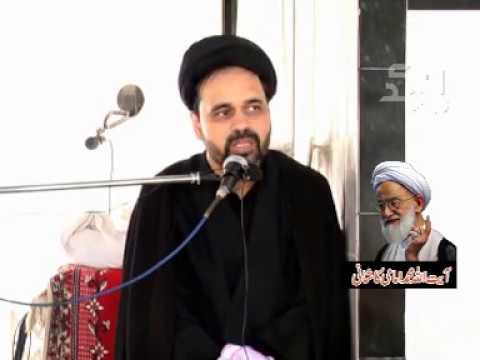
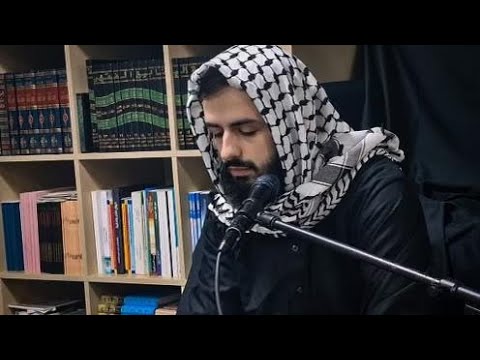
Presented during the 2014 Muslim Group Conference
أظهر المزيد
Transcript
[0:25]alhamd muham dear brothers and sisters I hope that it's not too
[1:04]early on Friday morning for a discussion of we have a uh
[1:10]task before us which is to gain some insight into the obligation
[1:15]in Islam that all of us are familiar with which is a
[1:22]financial obligation a monetary obligation to wordss Allah towards our Prophet towards
[1:30]our religion now within the space of about 20 to 25 minutes
[1:33]it's obviously not going to be possible for us to have a
[1:42]comprehensive understanding of how to calculate and how to pay ours nor
[1:47]would it have been possible for us to answer all of the
[1:53]objections that people have in their mind about either the legislation and
[1:58]the history ofs or the practical application and implementation of in our
[2:07]time that's not going to be possible but what I want to
[2:12]do in the time that we have allotted is to combine both
[2:15]elements of that discussion to give a little bit of a religious
[2:24]and a historical perspective about what is and where it comes from
[2:28]and then to give a little bit of a general overview and
[2:35]a few relevant cases about the calculation of please bear in mind
[2:45]that I am not going to be Crossing all tees and dotting
[2:49]All Eyes this is not meant to be a session where if
[2:55]we're discussing a case you can say that well this case applies
[2:57]to me and therefore my is exact L this amount that simply
[3:03]is not possible in this limited time but what it is meant
[3:06]to do it is is it is meant to tell you that
[3:10]if you have a case like this these are the general rules
[3:17]that will govern the amount or the nature of your liability if
[3:20]any and part of that calculation will also be made easier for
[3:26]you but there might be other considerations that you will also need
[3:30]to look at the uh Cliff Notes do not substitute for reading
[3:37]the actual literature and that applies uh to our case as wellam
[3:46]so I want to begin with a little bit of the question
[3:53]of the importance of as an institution is mentioned Direct once in
[4:03]the Quran in verse 41 and so on that verse gives us
[4:23]the requirement to pay on that which you have Acquired and the
[4:31]context of the Surah in that section pertains to the Battle of
[4:37]bad it pertains to The Spoils of War now many Muslims have
[4:48]said that therefore this verse of it applies to The Spoils of
[4:53]War there is a question that comes into the minds of many
[4:59]people that why why would Quran mention once in this verse and
[5:09]mention zakat so frequently and pair zakat with Salat if in our
[5:16]legal framework as followers of probably as I look across this room
[5:22]none of you has zat aside from Zak that applies to your
[5:32]earnings maybe some of you but most all of you will have
[5:35]a liability that will devolve on your shoulders and so it might
[5:42]seem to be a little bit of a disconnect now to begin
[5:47]to answer that question and again keeping our time constraint in mind
[5:53]first of all all Muslims agree even those who do not believe
[6:00]in as it is practiced and taught within the school of all
[6:07]Muslims agree that is not limited to Spoils of War that it
[6:15]does apply to other forms of income whether it be a treasure
[6:20]that you might discover if you're lucky whether it be uh mining
[6:24]whether it be other forms of income that is not directly mentioned
[6:34]in the context of this quranic verse but it's relevant to a
[6:38]principle that we have within the Quran which is that sometimes verses
[6:42]of the Quran were revealed not in order for them to be
[6:47]limited by the historical context in which they were revealed but in
[6:55]order to open up a door to open up a chapter that
[7:01]will be developed and that will be contextualized in one of two
[7:08]methods by further verses and by theth and the sayings and the
[7:15]teachings and the practice of the prophet and the imams that is
[7:21]not outside of the Quran but it is part of the quranic
[7:26]logic what is the level of extension that is but it would
[8:31]be used by the prophet to fulfill certain needs of the religious
[8:35]community and so what the Quran is telling us is that this
[8:42]is now a source for the Fulfillment of certain religious needs that
[8:48]the Muslim Community has and Allah in his wisdom would know that
[8:54]the Muslim world is not intended to always be in a state
[9:02]of warfare Allah did not intend to send his Prophet to engage
[9:05]in battles and acquire Spoils of War and then use The Spoils
[9:11]of War to meet those vital Islamic requirements there is a misconception
[9:17]that many non-muslims have and unfortunately that some Muslims have that Islam
[9:24]was a warlike religion but you can see from this verse ofs
[9:27]as it was explained and as it was interpreted by is that
[9:34]that Warfare those Spoils of battle that was in a sense just
[9:40]the excuse that Allah used to introduce a certain Financial framework for
[9:46]the Muslim World which was to operate with equal Effectiveness in peace
[9:52]time as it was in times of War this verse of if
[9:59]it is understood to be referring to Spoils of War then it
[10:02]really doesn't have much Universal import it doesn't really have any message
[10:10]to meet those needs that are met by the when Muslims are
[10:16]not in a state of battle and the understanding of this verse
[10:20]that we have from that is a universalization of that temporal and
[10:29]historical circumstance according to our belief that universalization was foreseen and was
[10:36]intended by Allah subhanahu wa ta'ala from that early moment when he
[10:43]was referring to Spoils of War so now that brings me to
[10:47]the next point that I want to make sure that we have
[10:54]some thought towards is intended to meet certain needs of the Muslim
[11:01]Community as a community and not as a collection of individuals there
[11:11]are that distinguish from zakat as we know of the two in
[11:23]even though in a general sense being part of our religious obligations
[11:28]is a form of purification and a form of s in a
[11:34]literal or in a linguistic sense but the legal institution of zakat
[11:41]is intended to meet certain needs the legal institution of is meant
[11:48]to meet other needs one of the points that has been emphasized
[11:56]in many is that is the the property of the IM to
[12:04]be utilized in such a way that it can preserve the cohesive
[12:13]existence of the Muslim Community and umah through time to preserve that
[12:21]Dynamic and not just to meet certain material needs sometimes people will
[12:32]make that objection that should I give in order to support an
[12:38]academic institution or to support scholarship or the other uses thats is
[12:44]put to when there are people who are starving when there are
[12:51]people who have been struck by various forms of disasters and they
[12:55]have very immediate needs it's not a perfect example but just to
[13:01]give a little bit of a common example that people are familiar
[13:04]with in their their own daily life when people are in that
[13:12]immediate material need there is an obligation that we as individuals and
[13:16]that we as a society have to meet that need for food
[13:22]to meet that need for shelter those immediate and very basic fundamental
[13:27]needs at the same time time does that mean that as a
[13:35]society we should empty our museums of artistic and historical artifacts in
[13:42]order to get the cash and then to spend it to meet
[13:49]those needs in some cases perhaps we shouldn't be extravagant in collecting
[13:53]that art and those artifacts at that kind of a time but
[13:55]on some level we all will appreciate the fact that to preserve
[14:03]that Heritage to preserve that identity to preserve that institution is what
[14:09]is going to allow that nation that group that religious people to
[14:14]have a continued existence and to continue to derive inspiration and insight
[14:21]and motivation to engage in individual acts of Charity there does come
[14:28]a point where we need to spend on the collective identity the
[14:33]preservation of scholarship the preservation of identity in a way that will
[14:42]allow those individual acts of Charity to continue to exist and to
[14:47]continue to be derived from a sense of religious and moral and
[14:51]spiritual obligation and that is found in a similar way in a
[14:59]Hadith from when the second Calif came to Makkah During the period
[15:12]of his caliphate and he saw in the Kaa certain artifacts which
[15:18]were valuable the artifacts which may have been preserved from the time
[15:24]of IIM and is if those narrations are accurate in any case
[15:28]they were in some cases uh composed of precious metals and they
[15:32]had an intrinsic value and the Cal said that I'll sell this
[15:37]and I'll use it for the good of the Muslim um and
[15:42]Amir said don't do that because these existed when the prophet was
[15:46]there and the prophet said that to preserve this is more important
[15:49]than just to take the cash value so now does that mean
[15:55]that is being utilized perfectly does that mean that there is absolutely
[15:59]nothing nothing that could be improved that's not my point my point
[16:02]is that we should be thinking even when we are critiquing or
[16:05]questioning or trying to uh imagine how to optimize we should be
[16:13]thinking in these terms that this is something that is meant to
[16:18]preserve our Collective identity our existence as a religious community and therefore
[16:27]the utilization of the and the importance of the is not something
[16:30]that is purely charity so for example if there is a worthy
[16:37]cause this is a widespread mality within the sh community and I
[16:40]hope that all of you will carry this message to others who
[16:42]are not present when there is a worthy cause that is going
[16:48]to be introduced in the sh Community the first question that many
[16:52]people will ask when they are approached is do you have Ana
[16:55]for if it's a worthy cause then give to that worthy cause
[17:01]to the extent that you are able regardless of whether it has
[17:05]Ana for or not is not meant to be how you decide
[17:12]where to give your charitable giving is meant to be spent to
[17:19]meet certain needs of the religion my point here is not who
[17:22]makes that decision now and how they are making it and whether
[17:24]they're making it effectively or not my point is to say that
[17:29]if I want to contri contribute to a school if I want
[17:34]to contribute to a charitable or a humanitarian cause then I shouldn't
[17:39]say that well if they have Ana for then it's worthy if
[17:41]they don't have Ana for and the must have seen something unworthy
[17:44]and therefore I shouldn't give or I'm not going to be able
[17:49]to meet my uh obligation and therefore I lose my motivation that
[17:53]is one logic that is one obligation that we have that should
[18:01]not bear any any kind of relationship to our charitable giving and
[18:05]in fact whatever we give regardless of our regardless of who we
[18:11]give it to and how we give it that should not even
[18:15]enter into my mind as something that I have given that was
[18:19]a debt that I owed to Allah I have paid my debt
[18:25]if somebody accepts mys from me then I should kiss their hand
[18:28]and say that thank you for assisting me in paying off my
[18:33]debt the same way that I will thank a person who helps
[18:39]me to perform Hajj I will thank a person who helps me
[18:41]to perform Salat I won't say that the teacher that taught me
[18:47]how to pay zakat I'm doing them a favor choose a teacher
[18:50]for Salat choose a caravan leader for Haj choose a person that
[18:57]you are going to give your to who is worthy of that
[18:59]honor but once you have selected then consider it the payment of
[19:06]a debt and the imams emphasize this as an institution that we
[19:09]accept your so that you are purified don't think that you are
[19:13]doing us a favor when we pay our we're not paying ours
[19:18]to a we're not paying a certainly to a we are paying
[19:22]ours trying to fulfill Our obligation towards our religion we are paying
[19:29]it to the IM and we are responsible to the IM and
[19:31]we're not doing a favor to Islam or to Allah or to
[19:36]our IM now I don't want to spend much more time on
[19:39]that uh how much time do I have now for some practical
[19:42]applications and case studies about 15 minutes 10 minutes is that correct
[19:54]so again we're not going to go comprehensively but we're going to
[20:01]be speak speaking in terms of uh some important case studies that
[20:04]will help us understand how to calculate ours one of the areas
[20:11]that is subject TOS is our earnings after we deduct our expenses
[20:20]so just to take a very simple example if I earned $50,000
[20:24]this year and I had $30,000 of expenses then my savings are
[20:32]$20,000 and I will pay 1 of that which is $4,000 in
[20:39]so that is the basis or the fundamental understanding of what is
[20:48]now questions come in as to what counts as an expense and
[20:51]how do we deal with some more complicated situations let me first
[20:59]address which types of things are considered to be earnings let's say
[21:04]that I have $50,000 that I earned from a consultancy or a
[21:07]business or employment that I have but then I had $10,000 that
[21:15]I inherited a woman may have $10,000 that she received in do
[21:20]most Muslim countries I think $10,000 is a lot less than the
[21:25]DI it's usually specified much higher and then perhaps not paid but
[21:29]let's say this $10,000 of the do there is $10,000 from an
[21:33]inheritance $10,000 that came from a gift from say a parent so
[21:42]which types of income are subject to the payment that a woman
[21:52]receives as her or if there is a which is the type
[21:54]of divorce the uh payment that is received in exchange of uh
[22:04]that will not be subject to it's usually a woman receiving hopefully
[22:11]is something that is rare and if there is ever a case
[22:16]I hope the husband will not demand a payment for it so
[22:18]the relevant situation is M it is a good thing in Islam
[22:23]to specify a Mah that is doable and for the husband to
[22:26]actually intend and to pay the Mah when he is able that
[22:33]Mah if it is Cash even if it's saved for years it
[22:38]is not liable for it's not subject to inheritance is not subject
[22:45]to in most circumstances so if you inherit money from a parent
[22:51]if you inherit money God forbid from a child uh if you
[22:55]and God forbid in the sense that hopefully your child will not
[22:58]prede you not that they will not leave anything uh if you
[23:00]inherit money from another close relative that money is not subject to
[23:05]with certain exceptions however according to many fuk and this is a
[23:13]matter of dispute a gift is subject to so if I am
[23:18]a student and my parents or other relatives they support me if
[23:22]they're supporting me by putting their property and giving me access to
[23:28]it but it's their property and they make the decisions about it
[23:31]then that's up to them to calculate the but if they give
[23:34]me for example my living expenses if they they're giving me $1,000
[23:40]a month or if they give me a gift of $5,000 and
[23:42]it's mine then that counts as income for me if I spend
[23:49]it within the year there's no it's income for that year but
[23:53]if I don't spend it and there's savings then whatever portion is
[23:57]saved will be subject to so it's income even though I didn't
[24:02]work for it some do say that that gift is not liable
[24:10]for another thing that is liable for is if I make a
[24:13]will or a was in favor of a certain person now this
[24:19]is an important case study and it's relevant to any of you
[24:22]who are going to be making a will and so I want
[24:25]to spend a little bit of of of time on it just
[24:28]to clarify a point I'm going to need your attention because it
[24:31]might be easy to lose where I am and what I'm talking
[24:35]about if you uh look at your watch for a moment or
[24:37]get distracted by a text inheritance is not subject to if I
[24:46]make a it is subject to as income for that year now
[24:54]what happens in Islam is that in some cases the default system
[24:58]of of inheritance does not meet our needs as an individual or
[25:09]the way that our uh lives operate in our time for example
[25:13]in Islam the majority of the inheritance will not go to a
[25:21]spouse a husband or a wife it will go to a child
[25:23]in some cases especially if we have minor children or if we
[25:28]have a spouse could be a wife or it could be a
[25:32]husband who is dependent on us it might be necessary or it
[25:35]might be advisable to give a larger portion of that inheritance of
[25:40]that of that estate to the spouse Islam does say that if
[25:47]I have sons and daughters the son will have twice the share
[25:51]of a daughter I'm not discussing now why that is and how
[25:58]that is but in some cases it might be I have a
[25:59]blended family I have children and stepchildren it may be because my
[26:03]daughter has a greater uh share of debt or a greater need
[26:08]I may need to or I may wish to give more to
[26:12]one person so it could be a spous it could be uh
[26:15]a son or daughter situation is clear right many of us have
[26:19]experienced it the solution that many of us use is that we
[26:23]make a was and Islam allows that and encourages a was and
[26:26]the Quran says that you give a was give it to your
[26:32]parents and give it to your near ones those are individual circumstances
[26:35]so fix that situation but be aware that if my daughter is
[26:42]going to get half of what my son gets what my son
[26:43]is going to get is inheritance and he won't pay on any
[26:49]of it what my daughter gets through inheritance she will not pay
[26:55]inheritance any but if I make up for that difference or I
[26:59]give her extra because of my determination through a that I'm thinking
[27:06]of it as equalizing The Inheritance that's what's in my mind right
[27:09]my spouse I'm trying to equalize the inheritance but islamically this is
[27:14]not inheritance it is a and so be aware that that will
[27:22]be subject to if it's not utilized or spent by the end
[27:26]of the person's year so is subject to even if we're using
[27:33]that as is commonly done and as it's good to do in
[27:36]order to equalize uh or to to uh to uh make our
[27:43]will meaningful and relevant and beneficial for our families uh I won't
[27:49]spend more time on that another thing that is often a matter
[27:52]of confusion is that the is liable on the basis of the
[28:00]expenses for a year it's not on the cash so what many
[28:08]people do for is they say that let's say my year runs
[28:13]from January 1st to December 31st I had $10,000 in my account
[28:17]on January 1st I had a good year I have $20,000 in
[28:23]my account uh on January 1st of next year for some of
[28:25]us that's a good year for some of us that might be
[28:29]pocket change right and so I will pay on 2ou on that
[28:30]10,000 I will pay a of 2,000 that is not necessarily the
[28:36]case if I have expenses from this year even if it was
[28:44]on for example uh credit and I will be paying it later
[28:48]I can deduct that expense from my savings because the expense was
[28:54]incurred during this year so if I in December in this example
[29:00]if I have an expense because I had to purchase for example
[29:04]food I had to do uh um an emergency medical procedure I'm
[29:12]not going to be paying for it until January or until February
[29:15]the payment is next year but when is the expense occurred does
[29:22]that belong to this year does that belong to next year belongs
[29:25]to this year and therefore if I have have an equal amount
[29:29]to the that expense I don't pay on it if that procedure
[29:34]is going to cost me $2,000 and I have $2,000 in savings
[29:38]I have zero that $2,000 belongs to this year theoretically it is
[29:44]possible for you to have income today that belongs to Future years
[29:47]so let's say for example that uh you are um a worker
[29:54]and you are going to be uh hiring yourself out for the
[30:00]next 2 years and the person pays you today the portion that
[30:03]they're paying you for this year is income for this year the
[30:07]portion they're paying you for your work next year even if they've
[30:09]paid you this year is not income for this year and there's
[30:10]no on it this year because it's not income from this year
[30:16]so both on the expense side and on the income side it's
[30:18]a matter of the year what that also tells us is or
[30:24]actually let me make one more point I know that we're running
[30:28]short on time but just a few other important issues that are
[30:31]relevant and I will end inshallah on time when do you start
[30:36]your that's a perennial question that people have this is something that
[30:40]different do have different fwa on I'm giving you the fani and
[30:43]uh I would uh also say the majority of our F there
[30:51]are some exceptions your if you do not have earning is when
[30:55]you have your first income so if I am a student student
[31:01]and I'm still living on my parents laress I'm not earning anything
[31:05]then the moment I have earning then that is the beginning of
[31:09]my year if anything remains at the end of that year then
[31:15]I will be liable for if I am working or I am
[31:17]earning though my year begins from when I am starting to earn
[31:25]even if I have not been paid so if you get a
[31:30]job your first job out of college you Chang jobs after having
[31:32]had no income whatever the case may be your hes year doesn't
[31:36]start two weeks from now or three weeks from now from when
[31:38]you get your first paycheck or when you make your first commission
[31:41]you've started to earn now your H year begins now and you
[31:47]can deduct expenses even before you actually get your paycheck from your
[31:51]hes year but the is your liability not at the end of
[32:00]the year from when you begin the job your is your liability
[32:03]from when you earn it meaning that I am liable for that
[32:09]right from now even though I haven't yet taken my first paycheck
[32:12]I don't have to pay it for a year what that means
[32:17]is that I can always choose to pay it early I can
[32:22]always say that well this is March 31st I have cash I'm
[32:28]going to pay my liability from January 1st to March 31st which
[32:32]means that you can always change your by bringing it Forward by
[32:37]equaling out your accounts so you can do that again this is
[32:42]a matter of dispute among some but you can do that because
[32:45]your is a liability at any moment once you have paid that
[32:50]liability you can then start AR fresh for the next year so
[32:53]I can't say that well I'd rather have a year starting in
[32:56]June so I'm going to give it 18 months but what you
[32:59]can do is you can say I'll pay it after 6 months
[33:02]and then from there on out I'll start paying it every year
[33:05]that is something which is um an important uh issue uh let
[33:11]me just make one more um one more uh case that I
[33:19]will mention and then we'll conclude this is if you have a
[33:24]situation where you have something that you bought that was part of
[33:28]your expenses for the year and then you don't need it anymore
[33:33]this frequently happens when people for example they have a house they've
[33:38]lived in that house and now they want to sell that house
[33:40]and for example buy another house the way that works is that
[33:46]if you sell a car a house something that was part of
[33:49]your Mauna part of your needs then if it's after your year
[33:56]is ended meaning you've lived in there past the day date of
[33:59]your year or use that object past the date of your year
[34:05]then you will only be liable for the additional uh income that
[34:09]you receive the profit that you receive as income for the new
[34:13]year so if I live for example in my house for 3
[34:20]years and I sell it I will only be liable for on
[34:26]the additional uh income if I don't use it on the capital
[34:28]gains if I don't use it by the end of the year
[34:32]in which it is sold its income in that year I'm not
[34:34]liable for on the whole thing and I'm not automatically liable for
[34:39]the on the profit if I use it either to buy a
[34:43]new house or in rent or to pay off debt or for
[34:44]whatever other reason uh I might be using it for and it
[34:49]is permissible if you're going to be selling your house and you
[34:52]might not be able to buy another house because your year is
[34:57]coming up in say three weeks it is acceptable to uh again
[34:59]equal out your hes liability just before that and that'll give you
[35:05]then 12 months from the date of the sale of the house
[35:06]to utilize that income so these are workarounds which are not islamically
[35:11]frowned upon or islamically problematic we will have to conclude there because
[35:15]we are out of time I hope that that has been beneficial
[35:19]for you and of course you will also have to look at
[35:21]detailed uh rulings for any specific calculation of homes that you may
[35:26]wish to do Barat
0 تعليقات
sort ترتيب حسب
- أعلى تعليقات
- أحدث تعليقات
التالي
4 المشاهدات · 23/07/23
7 المشاهدات · 24/10/13
5 المشاهدات · 25/10/01
6 المشاهدات · 25/11/08
5 المشاهدات · 17/02/15
1 المشاهدات · 19/03/30
9 المشاهدات · 22/11/19
6 المشاهدات · 23/07/01