Please note that if you are under 18, you won't be able to access this site.
Are you 18 years old or above?
Create
Upload
Import
Shorts
My Account
Mode
Login
Register
Your browser does not support HTML5 video.
jurisprudence
dogmas
Ethics
Poems and notice
supplications & soliloquy
The Holy Quran
Lectures
Movies and series
history
News & Politics
People & Blogs
Other
Up next
Autoplay
00:49
معرض لمؤسسة العين في مسجد وحسينية ال الرسول يوم الجمعة سنة ٢٠١٦
مسجد وحسينية ال الرسول بغداد القاهرة
1 Views
·
23/07/02
Other
01:11
امرأة اعتنقت الاسلام الشيعي من اتجلترا🏴 | #ايزدشناس #explore #english #england #islam
ايزدشناس
3 Views
·
26/01/10
Lectures
00:43
🌙Don't say Ramadan!! | Mohamad ali al araki
شباب و قيم - Youth & Values
7 Views
·
22/04/09
Other
00:30
اهمية الاسرة #الشيخ_احمد_عمار #ramadan
الشيخ احمد عمار
5 Views
·
24/03/20
Lectures
31:49
شرح دعاء العهد - اللهم اجعلني من أنصره #ramadan #رمضان
الشيخ احمد عمار
6 Views
·
25/03/22
Lectures
00:16
كل امورنا لا بد ان ترتبط بتعجيل الفرح #ramadan #mahdi
الشيخ احمد عمار
2 Views
·
25/03/23
Lectures
00:16
اهمية الوقت #الشيخ_احمد_عمار #ramadan
الشيخ احمد عمار
5 Views
·
25/03/23
Lectures
00:15
الوفاء بالعهد! #ramadan
الشيخ احمد عمار
5 Views
·
25/03/25
Lectures
00:16
حمل هم الفقراء #ramadan #الإمام_الخميني
الشيخ احمد عمار
5 Views
·
25/03/26
Lectures
00:16
حمل هم الفقراء مسؤولية عظيمة جداً #ramadan
الشيخ احمد عمار
4 Views
·
25/03/26
Lectures
00:31
المشروع الالهي في الدنيا #ramadan
الشيخ احمد عمار
5 Views
·
25/03/26
Lectures
00:10
تخطيط المؤمن #ramadan
الشيخ احمد عمار
7 Views
·
25/03/26
Lectures
00:15
المقامات العالية بحاجة الى جهد #ramadan
الشيخ احمد عمار
5 Views
·
25/03/26
Lectures
00:42
معرفة امام زمانك ليست بهذه البساطة #ramadan #دعاء_العهد
الشيخ احمد عمار
6 Views
·
25/03/26
Lectures
00:16
مخالفة اراء الامام! #ramadan #دعاء_العهد
الشيخ احمد عمار
4 Views
·
25/03/27
Lectures
00:16
الامام يظهر من اجل العدل! #ramadan
الشيخ احمد عمار
5 Views
·
25/03/27
Lectures
00:16
المؤمن سيحكم الدنيا! #ramadan #دعاء_العهد
الشيخ احمد عمار
5 Views
·
25/03/27
Lectures
00:37
كيف اتبع النبي واهل البيت (ع)؟ #ramadan
الشيخ احمد عمار
7 Views
·
25/03/27
Lectures
00:16
فعل الامام حجة! #ramadan
الشيخ احمد عمار
5 Views
·
25/03/27
Lectures
00:08
لماذا تجاهل اسلوب اهل البيت؟ #ramadan
الشيخ احمد عمار
7 Views
·
25/03/27
Lectures
Load more
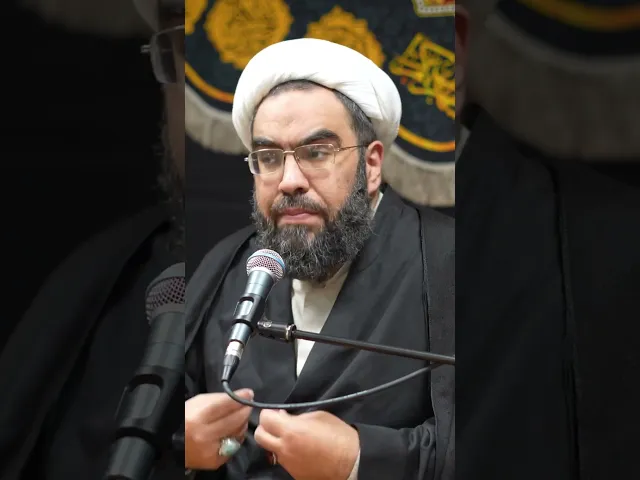
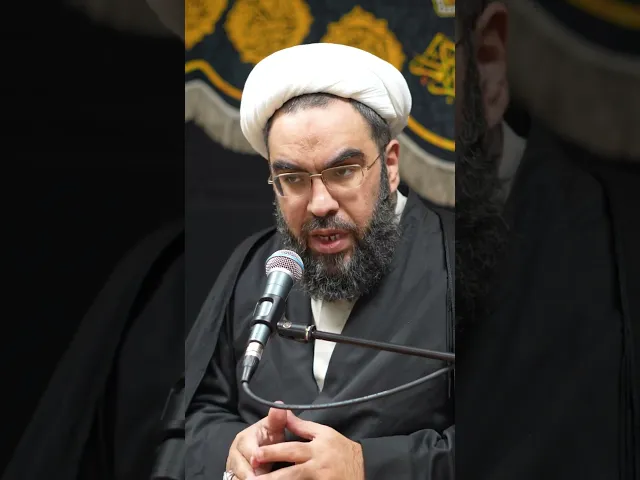
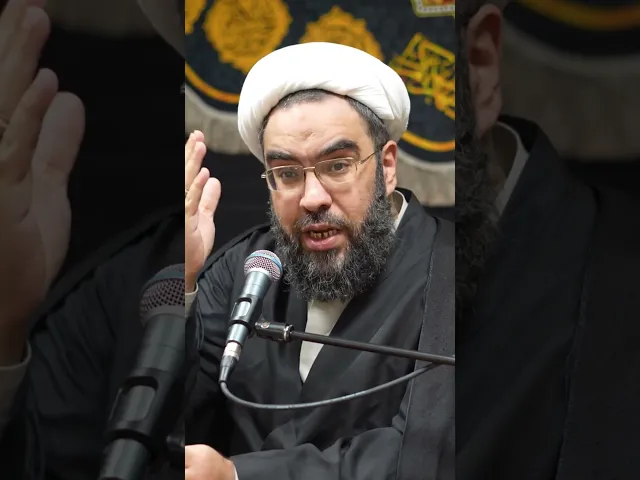
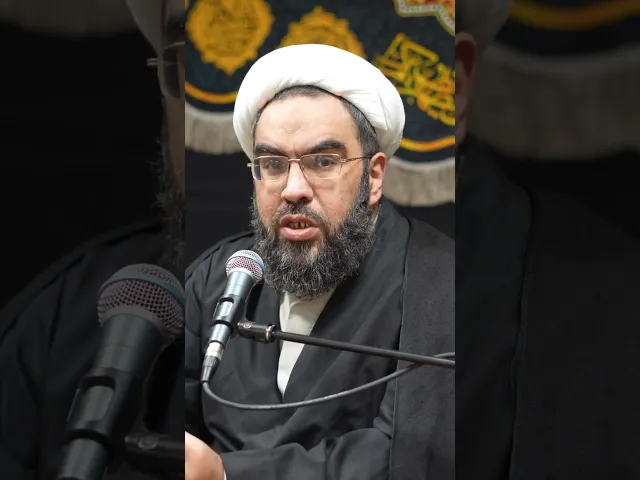
Sayed Ahmed AlQazwini - Ramadan 2016 Night 29 (English)
0
0
6
Views
·
16/07/06
Share
Embed
Ahlul Bayt Center of Toledo
Subscribers
Subscribe
0
In
Lectures
Show more
Show Transcript
Transcript
[0:00]
[Applause] [Music] Alhamdulillah.
[0:23]
Respected brothers and sisters, One of the most important topics concerning Islamic
[0:34]
law is the topic of the Islamic lunar month and when the
[0:41]
Islamic lunar month begins because you see this has a great effect
[0:45]
on our timed worships.
[0:49]
For example, Ramadan.
[0:49]
We fast in Ramadan.
[0:51]
We stop fasting in Shawat.
[0:55]
So we have to know when the lunar month of Ramadan begins
[0:57]
for us to know when we stop we start fasting and we
[1:04]
have to know when the month of Shaw begins so that we
[1:07]
stop fasting.
[1:07]
Likewise, if we want to perform a correct Hajj, we have to
[1:12]
know when begins because we have to go to on the 9th
[1:15]
of So, our fasting, our Hajj, it it's all dependent on the
[1:22]
determining the the lunar month in the Islamic calendar.
[1:25]
And you find there is lots of controversy always surrounding this topic.
[1:31]
There's lots of confusion, misunderstanding and there's lots of criticism that's always
[1:37]
being directed towards Islam in general or in specific the scholars.
[1:41]
Many people will tell you our scholars are so backwards that in
[1:44]
this day and age of technology and science all the advances in
[1:51]
science.
[1:51]
Our scholars are still using an old archaic methods to determine the
[1:55]
new month.
[1:56]
They have to wait until the moon is cited.
[1:57]
They need witnesses to see it.
[2:00]
when now you can use science to predict all of that.
[2:02]
And you find people especially make this claim when the Eid comes.
[2:08]
Every community I go they two days before the Eid you find
[2:15]
people they begin to criticize the our so backwards our scholars are
[2:18]
this they can't agree on something as simple as the Eid.
[2:23]
So they have the idea that the Eid is a very simple
[2:27]
task to determine and there's lots of confusion and people become they
[2:33]
get impatient after fasting 28 29 days they get so impatient that
[2:37]
they begin to accuse the scholars and that's why tonight I want
[2:40]
to look over this topic and I want to examine it through
[2:44]
three steps in order for us to understand how the Islamic lunar
[2:47]
calendar works.
[2:49]
Number one, when does the Islamic lunar month technically begin?
[2:53]
Number two, can we use science to predict the new month?
[2:58]
And number three, why do the scholars disagree on the day of
[3:01]
Eid?
[3:02]
And what are the solutions to this disagreement?
[3:04]
So, we begin with the first point.
[3:07]
When does the Islamic lunar month technically begin?
[3:11]
You see, in some non-Islamic lunar calendars, the new month begins with
[3:17]
the new moon.
[3:20]
Whenever the new moon happens, whenever the new moon is born, this
[3:23]
is when the new lunar month begins.
[3:24]
And just to quickly explain what the new moon is, as we
[3:27]
know, the moon orbits around the earth every month.
[3:32]
And the farther away it goes from the direction of the sun,
[3:37]
the more complete we see it until it turns into a full
[3:39]
moon.
[3:40]
And then the closer it goes towards the direction of the sun,
[3:42]
the smaller we see it as a crescent until we no longer
[3:47]
able to see it.
[3:50]
So the the moon when it goes closer and closer towards the
[3:53]
direction of the sun, it reaches a stage in which it is
[3:55]
perfectly between earth and the sun, a perfect line.
[3:59]
The astronomers call this point the conjunction.
[4:02]
The earth, the moon, and then right behind the moon is the
[4:08]
sun.
[4:06]
There are one perfect line.
[4:10]
When this happens, the new moon is born.
[4:12]
Now, at this point, when the moon is exactly between the earth
[4:16]
and the sun, you're not able to see the moon.
[4:20]
It is impossible to see the moon.
[4:22]
Why?
[4:23]
Because there's no light for you to see it.
[4:25]
The moon has no lights of it.
[4:26]
No light of its own.
[4:26]
It uses the light what of the sun.
[4:28]
The sun is behind it.
[4:30]
So, all the light is being reflected back towards the sun.
[4:33]
There is no light being reflected towards us in the earth.
[4:38]
So even if you have the strongest telescope, you're not able to
[4:42]
see anything because there's no light.
[4:45]
It's dark.
[4:43]
This is the new moon.
[4:47]
Now in some non-Islamic lunar calendars, when this happens, the conjunction when
[4:51]
the earth, the sun, and the moon are in one line, this
[4:53]
is when the new lunar month begins.
[4:55]
This is in non-Islamic lunar calendars.
[4:58]
Now in Islam, the new moon does not signalize the new month.
[5:04]
The new moon does not mean anything.
[5:06]
Even if you are able to predict predict the new moon that
[5:08]
does not mean the new month began.
[5:09]
When does the new month begin?
[5:13]
The new month begins a few hours after that.
[5:14]
Now after the moon is perfectly between the earth and the sun,
[5:20]
it starts to drift away once again.
[5:20]
Once it starts to drift away, the first second that the light
[5:27]
of the moon reaches earth, this is when the new moon begins.
[5:30]
When the new moon is visible for us people on the earth,
[5:36]
this is when the new month begins.
[5:37]
And this requires I'll speak about this in a few minutes at
[5:40]
least 10 or 20 hours after the new moon before the moon
[5:45]
is what is visible for us on earth.
[5:48]
Now you may ask why what's the proof?
[5:51]
Why can't we consider the new moon as being the beginning of
[5:56]
the new month?
[5:56]
Why is it the visibility of the moon?
[5:58]
Why not the new moon itself?
[6:01]
The they mention many proofs.
[6:03]
I'll just mention two simple quick proofs.
[6:05]
Number one, they refer to a verse in the holy Quran.
[6:07]
Allah subhana wa ta says in the holy Quran they ask you
[6:15]
about the moon, the crescent.
[6:16]
What's the point of the moon?
[6:17]
Can we benefit from the moon?
[6:22]
Tell them Allah.
[6:24]
Tell them that the moon is a sign of fixed periods or
[6:28]
in other words the moon serves as a calendar for you.
[6:33]
You can tell what day out of the month it is just
[6:35]
by looking at the moon.
[6:37]
Now what does Allah subhana t mean by this?
[6:40]
First we have to understand the an the answer to a question
[6:46]
that's always asked.
[6:46]
Some people they ask why did Islam base its calendar on the
[6:53]
moon?
[6:51]
Why not on the sun?
[6:54]
The solar calendar is much more accurate.
[6:56]
It doesn't change like the one we use from January all the
[6:58]
way to December.
[7:00]
It's based on the sun.
[7:00]
It's a solar calendar.
[7:03]
So why didn't Islam base its calendar on the sun?
[7:07]
It's much more predictable.
[7:08]
It's much more accurate.
[7:08]
You can plan 10 years ahead.
[7:10]
July 4th, you want to travel, you know, July 4th is not
[7:14]
going to change.
[7:14]
Christmas, you want to try, it's not going to change.
[7:16]
But what but the but the lunar calendar keeps changing.
[7:20]
It's either 29 days, 30 days.
[7:21]
We don't know what day Eid is.
[7:23]
It's either Monday or Tuesday.
[7:23]
We can't plan ahead.
[7:26]
We can't book our tickets because we don't know.
[7:27]
So, it's always what?
[7:29]
It's always changing.
[7:29]
So, what wouldn't it be better if Islam based its calendar on
[7:36]
the sun?
[7:35]
Because the solar calendar existed since the time of the Greeks.
[7:39]
It's not something new.
[7:43]
So, when Allah's time, he could have Islam could have based its
[7:46]
calendar on the sun.
[7:48]
It was available.
[7:47]
science has reached that stage where they they had the solar calendar
[7:51]
even back in then.
[7:55]
So why why the lunar calendar?
[7:56]
The they state that from this verse it appears that Allah subhana
[8:00]
wa ta'ala based the Islamic calendar on the on the moon lunar
[8:04]
instead of the solar for this reason because the lunar calendar is
[8:10]
accessible to everyone.
[8:11]
Even if you're a nomad illiterate living in the desert you can
[8:15]
tell what day out of the month it is so easily.
[8:18]
How?
[8:18]
Just go and look at the moon.
[8:20]
Based on the size of the moon, you can tell what day
[8:23]
it is.
[8:24]
If it's a full moon, it's in it's what?
[8:26]
It's the middle of the month.
[8:27]
If it's a half moon, it's toward 2022 or 10.
[8:30]
If you don't see the moon, then you know it's towards the
[8:35]
end of the month or the beginning of the next month.
[8:36]
So, based on the size of the moon, you can tell what
[8:40]
day out of the month it is.
[8:41]
It's accessible to everyone.
[8:41]
You don't need an astronomer to tell you what day out of
[8:45]
the month it is.
[8:44]
and the Arabs, they they could all determine what day out of
[8:49]
the month it is just by looking at the moon.
[8:51]
But the solar calendar, it's not accessible to everyone.
[8:53]
Can you tell me right now what day out of July it
[8:57]
is without looking at your iPhones and planners?
[9:00]
No.
[9:01]
You had no clue.
[9:01]
Only an astronomer is able to what?
[9:03]
To calculate what day in July it is.
[9:05]
He has to look at the sun, the angle of the sun,
[9:08]
the season, make some calculations and then he could tell you what
[9:11]
day it is.
[9:12]
Or else an average person it's not easy to calculate what day
[9:15]
out of the solar calendar it is.
[9:18]
But the lunar calendar it's so easy.
[9:19]
Just look for the moon and that's it.
[9:21]
Just based on the size you can tell what day it is.
[9:23]
So because Allah wanted an easy system that's accessible to everyone.
[9:28]
He based his calendar on the moon not the sun.
[9:30]
Now when we take this analogy we come to the beginning of
[9:39]
the moon.
[9:36]
Allah subhanahu wa ta'ala he says Allah says that the moon is
[9:47]
a calendar for everyone.
[9:48]
Everyone can tell what day out of the month it is.
[9:51]
You don't have to be an astronomer.
[9:53]
Now if Allah would have came and said that the new month
[9:55]
begins with the new moon, who can tell the new moon?
[9:59]
Can you can anyone here tell me without going back to astronomers
[10:02]
when the new moon will be born?
[10:03]
No one.
[10:04]
You would have to be an astronomer.
[10:06]
You'd have to make precise calculations to know when the new moon
[10:09]
is born.
[10:11]
Correct?
[10:12]
So once again, we'd need astronomers.
[10:13]
The reason why Allah he chose the lunar calendar rather than the
[10:18]
solar even though the solar calendar is more accurate is because he
[10:22]
wants it to be accessible to everyone easy.
[10:25]
If once again he would have came and said then the new
[10:27]
moon the new month begins with the new moon.
[10:29]
Once again we'd have to go back to the astronomer.
[10:32]
So he's defeating the purpose of choosing the lunar month to begin
[10:34]
with.
[10:35]
you should have just chose the solar month.
[10:37]
So Allah chose the lunar month because it's easy.
[10:38]
Since he chose the lunar month because it's easy.
[10:42]
The new month has to begin with something easy that everyone can
[10:46]
tell.
[10:47]
The new moon is only what is only for the astronomers.
[10:52]
The Quran says everyone can tell when the when the new month
[10:55]
begins.
[10:55]
The new moon can only be told by whom?
[10:58]
By the astronomers.
[11:00]
So that's why the they say the new month can only begin
[11:02]
by a phenomenon that everyone can tell and that's none other than
[11:06]
the visibility of the moon.
[11:07]
Whenever you see the crescent this is the new month.
[11:11]
The new moon by itself is not enough because this is for
[11:16]
the astronomers.
[11:15]
Allah says for everyone it has to be an easy sign.
[11:19]
So even if I know when the new moon is the new
[11:23]
month has not be.
[11:22]
We have to wait a few hours until the new moon is
[11:26]
able to be seen.
[11:26]
It's visible for us people on this earth.
[11:29]
So this is number one.
[11:32]
This verse in the Quran they use to prove that the new
[11:35]
moon does not do anything.
[11:36]
Number two, the second proof that they used to show that the
[11:41]
new month begins with the visibility of the moon, not the new
[11:44]
moon itself being born is the hadith of there are tens of
[11:50]
hadiths that the companions of the imams, they used to come and
[11:53]
ask the imam, what do we do?
[11:55]
Is tomorrow Ramadan or is tomorrow the end of Shaan?
[11:57]
And likewise they come in the end of Ramadan.
[12:01]
Is tomorrow the last day of Ramadan or is it Eid?
[12:05]
We don't know.
[12:05]
The imams would always give the same answer.
[12:07]
What would they say?
[12:09]
Two words.
[12:11]
If you see the moon then you start you start fasting Ramadan.
[12:18]
If you see the moon then you stop fasting.
[12:21]
You consider E.
[12:20]
If you did not see the moon then you cannot consider tomorrow
[12:24]
as Eid you cannot consider tomorrow as the beginning of Ramadan and
[12:28]
that's why the they say even towards the end of Shaan if
[12:30]
you did not see the moon of Ramadan you cannot start fasting
[12:36]
with the intention of Ramadan your fasting will be unaccepted you have
[12:39]
to fast with the intention of you have to fast with the
[12:42]
intention of but if I intend on fasting Ramadan while the moon
[12:49]
was not spotted then I cannot in fast with the intention of
[12:53]
Ramadan.
[12:54]
So the imams would always give this answer.
[12:58]
They would say you have to see the moon.
[13:02]
It has to be visible.
[13:02]
Now does that mean that someone has to actually go and see
[13:09]
it?
[13:05]
No.
[13:06]
The say what the imams mean by is that the moon has
[13:15]
to be visible.
[13:14]
So if someone wants to see it, it's visible.
[13:19]
If it's not visible by the eye then or by the telescope
[13:24]
based on the differences in opinion in theat's views then you cannot
[13:29]
consider tomorrow as Eid.
[13:28]
So for example if I know 100% the moon is visible the
[13:34]
crescent is visible but there's a cloud in front of it.
[13:35]
It's a cloudy day.
[13:37]
So should I say tomorrow is not eight because I didn't see
[13:39]
the moon.
[13:41]
Tomorrow is still eight because the moon is visible.
[13:43]
So what the imam means is the moon has to reach a
[13:45]
stage in which if someone was to see it on a cl
[13:49]
on a clear day it would be visible.
[13:50]
If the moon has reached that stage then tomorrow is aid then
[13:56]
the new month has begun.
[13:56]
Now if there's clouds or certain there's a storm you did not
[13:59]
see it that does not mean tomorrow is not eight.
[14:01]
That does not mean the new month did not begin.
[14:04]
Now here you may come and you may object to this argument.
[14:09]
You may say, "Wait a minute.
[14:11]
The only reason why the im said because back then 1400 years
[14:18]
ago, the only way for people to know the new moon is
[14:20]
born is to see it.
[14:23]
If you don't see it, how would you know it's born?" So,
[14:25]
because science was not advanced, because they could not predict the new
[14:28]
moon, the only way to know the new moon was to see
[14:31]
it.
[14:31]
Now, we don't need to see it.
[14:33]
We don't need to wait until we see it.
[14:35]
Science can tell us it's already born.
[14:37]
So why can't we rely on science and telling this new moon?
[14:42]
Say no.
[14:43]
This is not a valid argument.
[14:45]
Why?
[14:46]
Because don't think that astronomy is is something new.
[14:48]
Astronomy existed since the time of the Greeks.
[14:52]
The Greeks could predict the new moon.
[14:54]
Just read about it.
[14:54]
So 1400 years ago, astronomers could predict the new moon.
[14:58]
The only thing that happened now with all the advancement in science,
[15:02]
they became a little more precise.
[15:03]
So, 1400 years ago, astronomers could predict the new moon, but they
[15:08]
would be 3 4 minutes off.
[15:11]
Now, they could tell you to the second when the new moon
[15:13]
will be born.
[15:14]
But at the end of the day, 1400 years ago, even the
[15:16]
new moon, the imams had a way to tell the new moon.
[15:20]
So, the imams could have told their companions, go and ask the
[15:22]
astronomers, when the new moon is born, when whatever they tell you,
[15:27]
then follow them, couldn't they?
[15:27]
But they didn't.
[15:28]
They said, you have to see it.
[15:33]
Meaning it has to be visible.
[15:33]
Just the the new the new moon being born is not enough.
[15:38]
The new moon has to what?
[15:39]
The new moon has to reach that stage in which it is
[15:45]
visible to us people on this earth.
[15:46]
So now that we understand that the new month in Islam begins
[15:50]
with the visibility of the moon, not the new moon.
[15:54]
We go to the second question.
[15:55]
Can we use science to predict the new moon or not?
[15:59]
Now here I think the answer is clear already because the question
[16:03]
will be what do you want to use in science?
[16:06]
There's one of two possibilities.
[16:08]
You either want to use science to predict the new moon or
[16:14]
you want to use science to predict the visibility of the moon.
[16:17]
You choose one of two.
[16:18]
If you say I want to ch I want to use science
[16:22]
to predict the new moon then the answer is already clear.
[16:25]
Science is 100% accurate in predicting the new moon.
[16:29]
But the new moon does me no good.
[16:30]
The new moon means nothing.
[16:32]
Even if comes and tells me the new moon is born, so
[16:35]
what?
[16:35]
That does not mean the new month began.
[16:37]
Because we said what?
[16:37]
The new moon does not begin the new month.
[16:39]
The new month begins with the visibility of the moon.
[16:44]
And that requires a few hours after that.
[16:46]
The new moon begins with the visibility of the moon.
[16:47]
So you can't use science to predict the new moon because the
[16:53]
new moon doesn't uh benefit you in any way.
[16:54]
So then you'll say that let's choose option B.
[16:58]
Then we'll use science to predict the visibility of the moon.
[17:03]
Yes.
[17:01]
Now this is a good this is the good criteria.
[17:04]
The criteria for the new month is the visibility of the moon.
[17:09]
So why can't we use science to predict the visibility of the
[17:11]
moon?
[17:12]
Do you know what the problem is?
[17:13]
Science itself is not 100% accurate in predicting the visibility of the
[17:18]
moon.
[17:19]
And we can only accept science if it's accurate 100%.
[17:24]
If science itself is not accurate, we can't accept it.
[17:26]
With the new moon, it's accurate, but we the new moon does
[17:29]
me no good.
[17:29]
There's no benefit in the new moon.
[17:31]
Pred visibility of the moon is good, but science is not accurate.
[17:37]
And I spoke to at least three astronomers about predicting the visibility
[17:40]
of the moon.
[17:41]
They themselves told me when we say the moon will be spotted
[17:45]
in your area by the naked eye, we're making a guess.
[17:47]
We're making an assumption, a calculation.
[17:50]
We could be wrong.
[17:54]
60% right, 70% right, 80.
[17:56]
There's always what 20 30 40% chance we could be wrong.
[17:58]
And that's why you see many times that the moon sighting websites
[18:02]
and the scientists they say the moon will be spotted in your
[18:06]
area.
[18:07]
It's clear.
[18:09]
Tens of people go nobody sees it.
[18:11]
So they themselves admit that we are not advanced that much in
[18:15]
order for us to what to say 100% that the moon will
[18:20]
be visible in your area.
[18:21]
Now sometimes yes sometimes it's very clear they will tell you in
[18:24]
your area 95% it'll be shown it'll be seen but sometimes they
[18:31]
will tell you it's not clear 50% chance 40% chance how can
[18:33]
I rely on 40% chance we can only rely on science if
[18:38]
it gives us certainty so that's the problem with predicting relying on
[18:43]
science to predict the moon science itself has not reached that stage
[18:46]
in which is it is 100% accurate it.
[18:52]
And that's why you see my dear brothers and sisters, the astronomers,
[18:58]
especially the Muslim astronomers I've seen, they say there are at least
[19:02]
four things, four criterias that must happen before the moon is visible
[19:06]
for the naked eye.
[19:09]
They say the the number one is the age of the moon.
[19:10]
When the new moon is born, you can't see the moon.
[19:15]
You have to wait at least 20 hours.
[19:16]
If the moon is less than 20 hours old, you cannot see
[19:21]
it with the naked eye.
[19:22]
That's number one.
[19:25]
Number two.
[19:24]
Number two is the elongation of the moon.
[19:26]
Elongation means how far away it's from the sun, east or west.
[19:32]
How much has it drifted away?
[19:33]
It has to be at least 10° away from the sun.
[19:37]
If it's 30 30 hours old, but it's five degrees, you know,
[19:41]
away from the sun, you won't be able to see it because
[19:44]
the sun, the light of the sun will prevent you from seeing
[19:45]
the moon.
[19:46]
So, it has to be at least 10 degrees away.
[19:49]
If it's less, you won't be able to see it.
[19:53]
Number three, the elevation, the altitude of the moon.
[19:54]
It has to be at least 8 degrees above the horizon.
[19:57]
If it's less, you won't be able to see it.
[20:01]
Even if it's 30, 35 hours old, if it's too low, you
[20:04]
won't be able to see it.
[20:05]
And number four, the lagging time.
[20:07]
Lagging time means the time between moon sunset and moonset.
[20:12]
It has to be at least 40 minutes.
[20:14]
If it's less than 40 minutes, you won't see it.
[20:14]
So only if all these criterias are met only then you could
[20:20]
see the moon with your eyes.
[20:22]
Now the problem is the astronomers themselves they differ in these four
[20:27]
criterias.
[20:28]
One astronomer will say at least 20 hours another will say 25
[20:31]
another will say 19.
[20:33]
The elongation some will say 10 some will say eight some will
[20:36]
say 12.
[20:37]
So the lagging time some will say 35 minutes some 40.
[20:40]
So when the astronomers themselves have disagreed so much on the criteras
[20:44]
of predicting the moon, how can we rely on them?
[20:47]
They themselves have differed so much.
[20:50]
So when some scholars have reservations, when they don't want to rely
[20:55]
on the predictions of the new moon, it's not because they're backwards.
[21:01]
It's not because they don't accept science.
[21:06]
This is this is you know trying to blame the for some
[21:08]
of the problems that we have when they have no no fault.
[21:12]
It's not because they don't rely on science.
[21:15]
It's because science itself has so much dis disagreements between the scientists
[21:18]
themselves on what criteras you need to predict the moon.
[21:22]
So that's why they themselves are not always accurate.
[21:25]
But however the do state this and sistani does mention this.
[21:32]
He says if there is a certain scientist or a certain website
[21:35]
of moon sighting in which you on a personal level in which
[21:39]
you per personally believe in it always gives you certainty on a
[21:45]
personal level then you can rely on it that's okay let's say
[21:48]
moonsighting.com over the past years I have noticed personally that it's always
[21:52]
accurate for example if I have noticed that it's always accurate then
[21:56]
I can rely on moonsighting.com but however I cannot not impose moonsighting.com
[22:01]
on others.
[22:03]
I can't come and tell you why isn't tomorrowsighting.com brother moonsoonsighting.com is
[22:09]
what it's a scientist that's his view you want to accept his
[22:12]
view you can accept his view but you can't impose it on
[22:16]
other people me maybe I'm not convinced of moonsighting.com you're convinced so
[22:18]
it's a personal issue that's why you see some people they bring
[22:23]
you the paper from a website they tell you oh why don't
[22:25]
accept this brother this is just a guess this is a calculation
[22:29]
you want to accept it you can accept it if you believe
[22:31]
this person's accurate but You can't impose and for force other people
[22:34]
to follow it because this is not 100%.
[22:36]
This is a guess.
[22:39]
If you think it's a correct guess, this is your opinion.
[22:42]
You can't impose it on other people.
[22:45]
And that's why some years the they do rely on some websites
[22:48]
because they personally think this website, this scientist is correct, is always
[22:52]
correct or most of the times is correct and they have certainty.
[22:54]
So if you have certainty from a website or scientist, you can
[22:59]
rely on them.
[22:58]
But we cannot impose it on other people because it's a personal
[23:02]
thing.
[23:03]
I think Crest is better than Colgate.
[23:04]
Can I come and force you to buy Crest?
[23:06]
No, it's a personal issue.
[23:07]
You think Colgate is better?
[23:08]
The same thing.
[23:09]
I think moonsighting.com is accurate.
[23:10]
Tell us this is my personal opinion.
[23:14]
I can't come and impose it on other people.
[23:18]
Now, after understanding the second answer to the second question, can we
[23:21]
use science or not?
[23:21]
We saw the problem with science.
[23:22]
We go to the third.
[23:25]
We go to the third question.
[23:30]
Why do the disagree?
[23:30]
You see unfortunately some of us we always like to make things
[23:34]
so simple to us the determination of the Eid we think it's
[23:41]
so easy and that's why we attack the scholars we say something
[23:44]
as simple as the Eid the cannot decide and you know agree
[23:50]
they have to disagree brother who told you deciding the Eid is
[23:52]
easy did you go and read the hadith did you read the
[23:56]
Quran did you look at the the the you know the academic
[23:59]
discussions between the and why they differ.
[24:02]
Sometimes before we know anything, we make judgments.
[24:07]
We're so ignorant, but we make judgments.
[24:10]
Who told you it's a simple process?
[24:12]
Brothers and sisters, the process of determining the Eid is one of
[24:16]
the most difficult processes.
[24:16]
It's not easy.
[24:18]
It's because we're so ignorant.
[24:20]
We think it's so easy.
[24:21]
Why?
[24:22]
You see sometimes the differ because their understanding of the hadith and
[24:27]
the Quran differs.
[24:29]
It's an academic dispute.
[24:30]
It's not personal.
[24:30]
Some they think that when the disagree they have a personal problem.
[24:36]
If for example of say X he says tomorrow's Eid.
[24:38]
Why doesn't Y accept that tomorrow's Eid?
[24:41]
They think it's a personal problem because Y doesn't accept X.
[24:46]
No because S Y's views are different than SE X.
[24:51]
Let me give you an example.
[24:51]
Let's say one says tomorrow's Eid because this the moon was spotted
[24:56]
in Brazil.
[24:57]
The other says, "Okay, I accept the moon is is is spotted
[24:59]
in Brazil." But Brazil does me no good because according to my
[25:02]
understanding of Islam, the moon has to be spotted in your area.
[25:07]
So let 50 million people see the moon in Brazil.
[25:08]
So what?
[25:10]
So this is an academic difference.
[25:12]
They they differ because their understanding of how the new moon begins
[25:17]
the new month begins is different.
[25:22]
One says if it's spotted in your area then you can consider
[25:24]
tomorrow.
[25:25]
If it's spotted in another country that's no good.
[25:26]
Others they say no anywhere in the world it's spotted and you
[25:32]
share a portion of the night with then that's okay.
[25:34]
Then to you can consider Eid.
[25:37]
So if I for example I'm a sistani and I believe that
[25:41]
if the moon was cited in Brazil tomorrow is not how can
[25:47]
I say tomorrow's but you follow says no if it was cited
[25:52]
in Brazil then it's it's enough for you there's no way to
[25:54]
unite these two people because the difference is academic it's not because
[25:59]
they don't accept each other says tomorrow is not even if the
[26:03]
entire country of Brazil sees it says no I believe according to
[26:05]
the hadith that tomorrow is because Brazil is enough for you.
[26:10]
So we have to always what make sure that we understand why
[26:12]
the scholars are disagreeing because their understanding of how the new month
[26:16]
begins is different.
[26:19]
Another country suffices to one another country does not suffice to another.
[26:23]
There's no way they could what they can reconcile.
[26:26]
What there's no you know way they can unite.
[26:27]
That's one thing.
[26:30]
Another thing is you find that sometimes they disagree is because You
[26:36]
know when the hadith of the im said you can only start
[26:42]
fasting, stop fasting if you saw the moon.
[26:45]
What did the im mean by saw the moon?
[26:47]
Some they say that it has to be seen by the naked
[26:48]
eye.
[26:49]
Telescope is not enough.
[26:52]
Other say telescope.
[26:51]
So if you accept telescope of course you could see the moon
[26:56]
much earlier than if you wanted to see it with the naked
[26:58]
eye.
[26:59]
Likewise once again there's no way to reconcile.
[27:01]
So if you come and tell say the sistani that tonight we
[27:03]
could see the moon with a telescope.
[27:04]
says so what telescope does me no good we have to see
[27:08]
it by the naked eye so there's no way that we can
[27:08]
reconcile but you go to another like say he used to believe
[27:13]
that if you see it with the telescope that's enough this is
[27:15]
not because he doesn't accept the science or anything it's because the
[27:18]
hadith says means by the naked eye telescope does me no good
[27:24]
the the moon has to reach a stage in which it's at
[27:25]
least 20 25 hours old if you see it with the telescope
[27:29]
you could see as early as 10 hours this does not mean
[27:33]
the new month be so there's no way to reconcile between the
[27:36]
different views.
[27:37]
So we shouldn't simple everything you know see everything as being so
[27:41]
simple and these they have personal vendetta they have personal problems that's
[27:45]
why they don't agree no because their views are different then of
[27:50]
course the Eid will be different and finally what's the solution fine
[27:55]
the have the right to each one has his own understanding each
[28:02]
one is going to have a different day of Eid but in
[28:04]
one community we have people following different malaj What's the solution for
[28:12]
having one?
[28:11]
Sometimes we have two Eids.
[28:15]
I remember one year we had three Eids.
[28:18]
Uh Friday, Saturday, Sunday, some Friday, some excuse me, some Saturday and
[28:24]
some Monday.
[28:23]
So, how can we resolve this problem?
[28:26]
Some people see this as a huge problem having more than one.
[28:29]
Now, first of all, my dear brothers and sisters, it's not a
[28:32]
problem to begin with.
[28:34]
So, what?
[28:33]
Let's have two eight.
[28:36]
Let's have three eight.
[28:36]
Let's have five.
[28:37]
So what what's what's the big deal?
[28:39]
Is it the end of the world if we have two?
[28:42]
Is it the end of the world that we have three?
[28:42]
Look at what's happening in other countries.
[28:44]
My dear brothers and sisters, people are getting slaughtered every day.
[28:48]
Look at what happened in Baghdad two nights ago.
[28:50]
215 people.
[28:51]
I read the news right now.
[28:54]
The death toll climbed to 215 people died in a few seconds.
[28:57]
People are afraid to go shopping in Iraq.
[29:00]
People are afraid to go to the masjid.
[29:01]
And we sit here and complain why there's two Eids.
[29:05]
We have no real problems.
[29:08]
So what?
[29:08]
Because we have no real problems, we sit and we make problems
[29:12]
out of nothing.
[29:13]
We create problems.
[29:13]
Let there be five E.
[29:14]
Alhamdulillah.
[29:15]
At least there's safety.
[29:16]
At least, alhamdulillah, I sleep every night with a full stomach.
[29:21]
At least I don't go hungry.
[29:23]
There's children in in in Iraq and in Afghanistan and other countries
[29:26]
that sleep while they're hungry.
[29:28]
They have no food.
[29:30]
And I have to make so much chaos.
[29:32]
Every year there's chaos about the Eid.
[29:34]
Why is there two Eids?
[29:34]
Why can't So what?
[29:36]
Let there be three Eids.
[29:37]
Is it the end of the world?
[29:38]
Life is a test.
[29:40]
Have some patience.
[29:40]
Immedi is not here.
[29:43]
What can we do?
[29:42]
What's your solution?
[29:45]
You tell us what's the solution.
[29:46]
Mahi, if he was here, we'd all follow him.
[29:49]
There would be 18.
[29:49]
Immedi is not here.
[29:52]
We have more than one.
[29:52]
What can we do?
[29:55]
We kill the other.
[29:55]
We make it a dictatorship.
[29:59]
Just one.
[30:00]
We have the the door of is open.
[30:02]
Whoever goes to the house of studies becomes a mush can be
[30:04]
a merger.
[30:05]
He can give his view based on the Quran and the so
[30:09]
we can't force the to agree.
[30:10]
They can't.
[30:11]
If a sist believes tomorrow is Eid, how can he give fatwa?
[30:14]
If he believes tomorrow is not, how can he give fatwa tomorrow's
[30:16]
eid?
[30:17]
You want Allah to take him to the fires of hell just
[30:20]
so you eat one day sooner.
[30:23]
If he believes tomorrow is not eight, he truly believes.
[30:26]
How can he say tomorrow's eight?
[30:27]
It is haram to eat if tomorrow is not.
[30:30]
How can he say tomorrow is Eid?
[30:31]
Allah will hold him responsible.
[30:32]
And if the believes tomorrow is Eid, how can he say tomorrow
[30:36]
is not?
[30:37]
Each has to follow what he thinks is right.
[30:39]
And that's why I always say my dear brothers and sisters, unity
[30:45]
by itself is not a goal.
[30:46]
Unity by itself is worthless.
[30:48]
Unity is only valuable if it's with h.
[30:54]
unity and h or else if I just want to unite and
[30:55]
compromise the h let's all become Christians let's unite with Christians wouldn't
[31:00]
life be easier yes or no with all the Islamophobia in the
[31:04]
US wouldn't life be easier if we just all go and become
[31:06]
Christians let's unite with Christians if unity is all you care about
[31:12]
let's go become a Christian go become an atheist unity is only
[31:15]
valuable if it's with the h with the truth I I do
[31:20]
not compromise the truth just to be united If I believe my
[31:24]
is the most knowledgeable and my says the day after tomorrow is
[31:28]
so what let us be disunited for the for the sake of
[31:33]
there's no other option the other option is to compromise your principles
[31:36]
is to compromise what you believe is to be the truth so
[31:40]
we shouldn't make a big deal out of it my dear brothers
[31:42]
and sisters unity is good if it was with the h but
[31:48]
if it means I compromise the h then you let unity go
[31:51]
Imam I mentioned this many times im Ali he says he says
[31:57]
because I always want to follow the I'm always alone I'm always
[32:01]
by myself and everyone else is somewhere else because everyone else want
[32:06]
to chase after their desires im Ali is always after the h
[32:08]
people don't want the h people want unity fine go be united
[32:13]
on the bul what's the point let's all become sunnis then let's
[32:16]
just unite with let's all all of a sudden just become sunnis
[32:19]
let's become Christians No, that's not how that's not how how things
[32:23]
work.
[32:24]
Unity is only valuable if it's with the if it means that
[32:30]
I compromise the it has absolutely no value.
[32:34]
And that's why the hadith of Sai wasallam he tells he tells
[32:45]
him he says if you see the whole world going one way
[32:50]
just by himself going another way leave the world go after unity
[32:54]
by itself tell me which verse in the Quran tells us that
[32:59]
unity is the most important thing even if it's at the No,
[33:02]
Allah always condemns the majority.
[33:08]
Most people, they're always doing wrong.
[33:12]
So unity, if it was possible, that's great.
[33:16]
We love unity.
[33:18]
But sometimes it's not possible.
[33:19]
So we compromise our beliefs, we compromise our principles just for the
[33:23]
sake of unity.
[33:23]
This is wrong, my dear brothers and sisters.
[33:25]
We have to be patient a little.
[33:26]
This is a test.
[33:28]
considered a test of Allah subhana wa tala that in the of
[33:30]
the of the im the im is the occultation the shia are
[33:34]
going to disagree what can we do we don't have one leader
[33:36]
that unites us there's going to be different leaders when there's different
[33:39]
leaders each leader has his own view just like different doctors have
[33:43]
different views different have different views so this is perfectly normal we
[33:49]
shouldn't you know take it out of proportion and make a big
[33:51]
deal out of two or three and finally if if this is
[33:56]
a very big deal for Then the have mentioned and you all
[33:58]
know this that the solution if you want to all come one
[34:03]
day and have the Eid those individuals that have the later Eid
[34:06]
like let's say this year Wednesday they can travel today traveled at
[34:12]
least uh 15 kilometers or 15 miles outside the city limits break
[34:17]
your fastal nothing wrong with that absolutely not no sin you come
[34:24]
back you're not fasting come pray salat nothing wrong with have breakfast
[34:28]
and enjoy that day and then after Ramadan make up one day.
[34:34]
If you really want to have just one day of celebration then
[34:36]
those that have the later Eid they can travel or if you
[34:39]
don't want to you don't have to just come Wednesday we have
[34:42]
two you can come twice so look at it in the you
[34:45]
know in a good way instead of one day of celebration now
[34:47]
we have two days of celebration now of course now the your
[34:52]
your Eid will be the Eid that your tells you but still
[34:57]
you could still travel and come and that's why you know and
[34:59]
I mentioned this a few nights ago and I always mention this
[35:03]
I had never in my life witnessed the individuals that have the
[35:07]
first Eid, I never see them coming again the next day.
[35:10]
Meaning, it's always the ones that have the later Eid coming earlier.
[35:16]
The ones that have the earlier Eid, they will not tell you,
[35:19]
you know what, today is Eid, we'll just have a quiet celebration
[35:21]
in our house and then tomorrow the second Eid, we'll go and
[35:26]
do it with everyone else.
[35:27]
No, it's all about what?
[35:28]
It's all about breaking my fast earlier.
[35:30]
It's all about earlier.
[35:31]
It's not about having unity in Eid.
[35:35]
Most people, it's about having the earlier Eid.
[35:36]
That's why those people that have the first Eid never complain.
[35:40]
You never hear them speaking about unity because who cares about unity?
[35:44]
As long as I can eat tomorrow to hell with unity.
[35:48]
It's always the poor guys.
[35:49]
Oh, they have to wait.
[35:49]
They have to fast one more day.
[35:50]
Why isn't there unity?
[35:53]
They use unity as an excuse for their desires.
[35:56]
It's all about 29 days we fast.
[35:59]
We ruin everything in one night.
[36:00]
No tawa.
[36:02]
What's the point?
[36:01]
You fast at 29 days.
[36:03]
So you be patient.
[36:03]
Correct.
[36:04]
Why do we fast for 29 days?
[36:05]
To have tawa, fear of Allah to be patient and then all
[36:09]
of a sudden night of Eid, we lose all that patience.
[36:10]
Sometimes in some communities I see fights, fights, physical fights over the
[36:14]
Eid.
[36:15]
This guy follows this guy another they start fighting just because of
[36:20]
one day just fast one more day.
[36:22]
What's what's the big deal?
[36:22]
And you don't want to fast.
[36:24]
It's the end of the world for you.
[36:25]
Go travel.
[36:26]
But don't make a big fuss out of it and commotion and
[36:30]
start attacking the because Allah will hold you responsible on the day
[36:34]
of judgment for what I have done.
[36:35]
Some people it's because of their ignorance.
[36:37]
Other it's because of their desires.
[36:39]
So we have to make sure that our goal is to please
[36:43]
Allah not to to you know please my naps and my desires.
[36:47]
So this is the solution.
[36:49]
Travel.
[36:49]
If you don't want to fast tomorrow, travel and make it up
[36:53]
later and come and have one to eat.
[36:55]
But however, and I always mention this, my dear brothers and sisters,
[36:59]
this is never a solution to change your because you want to
[37:04]
have one day earlier.
[37:05]
This is not a solution.
[37:09]
Some people they change their because his saying the is the day
[37:14]
after tomorrow.
[37:15]
I change my to the says is tomorrow.
[37:18]
This is wrong.
[37:17]
I'm playing games with Allah.
[37:19]
Do you choose your because he's easier or because he's faster?
[37:24]
And that's not the criteria.
[37:25]
You choose the one that's the most knowledgeable, not the one that's
[37:29]
easier.
[37:30]
So changing my is not an option.
[37:33]
If you truly believe your is the most knowledgeable, who cares when
[37:38]
is you follow him?
[37:38]
Even if it's the day after tomorrow, changing my Eid just because
[37:42]
I want to have tomorrow.
[37:44]
This is playing game.
[37:43]
So we have to make sure that we don't do that.
[37:47]
My dear brothers and sisters, I ask Allah subhana wa ta'ala to
[37:49]
bless us all to accept our in this blessed month of Ramadan.
[37:55]
I ask Allah subhana t to give us the patience that we
[37:58]
can endure the remaining minutes or the remaining day of Ramadan.
[38:03]
I ask him to accept our and I would like to congratulate
[38:05]
everyone that has the Eid tomorrow for this uh day of celebration
[38:10]
and whoever has the Eid the day after tomorrow I would like
[38:15]
to also congratulate them on this beautiful day of uh Eid I
[38:20]
ask Allah subhana t to bless you all.
[38:28]
[Music]
0 Comments
sort
Sort By
Top Comments
Latest comments
Publish
Up next
Autoplay
00:49
معرض لمؤسسة العين في مسجد وحسينية ال الرسول يوم الجمعة سنة ٢٠١٦
مسجد وحسينية ال الرسول بغداد القاهرة
1 Views
·
23/07/02
Other
01:11
امرأة اعتنقت الاسلام الشيعي من اتجلترا🏴 | #ايزدشناس #explore #english #england #islam
ايزدشناس
3 Views
·
26/01/10
Lectures
00:43
🌙Don't say Ramadan!! | Mohamad ali al araki
شباب و قيم - Youth & Values
7 Views
·
22/04/09
Other
00:30
اهمية الاسرة #الشيخ_احمد_عمار #ramadan
الشيخ احمد عمار
5 Views
·
24/03/20
Lectures
31:49
شرح دعاء العهد - اللهم اجعلني من أنصره #ramadan #رمضان
الشيخ احمد عمار
6 Views
·
25/03/22
Lectures
00:16
كل امورنا لا بد ان ترتبط بتعجيل الفرح #ramadan #mahdi
الشيخ احمد عمار
2 Views
·
25/03/23
Lectures
00:16
اهمية الوقت #الشيخ_احمد_عمار #ramadan
الشيخ احمد عمار
5 Views
·
25/03/23
Lectures
00:15
الوفاء بالعهد! #ramadan
الشيخ احمد عمار
5 Views
·
25/03/25
Lectures
00:16
حمل هم الفقراء #ramadan #الإمام_الخميني
الشيخ احمد عمار
5 Views
·
25/03/26
Lectures
00:16
حمل هم الفقراء مسؤولية عظيمة جداً #ramadan
الشيخ احمد عمار
4 Views
·
25/03/26
Lectures
00:31
المشروع الالهي في الدنيا #ramadan
الشيخ احمد عمار
5 Views
·
25/03/26
Lectures
00:10
تخطيط المؤمن #ramadan
الشيخ احمد عمار
7 Views
·
25/03/26
Lectures
00:15
المقامات العالية بحاجة الى جهد #ramadan
الشيخ احمد عمار
5 Views
·
25/03/26
Lectures
00:42
معرفة امام زمانك ليست بهذه البساطة #ramadan #دعاء_العهد
الشيخ احمد عمار
6 Views
·
25/03/26
Lectures
00:16
مخالفة اراء الامام! #ramadan #دعاء_العهد
الشيخ احمد عمار
4 Views
·
25/03/27
Lectures
00:16
الامام يظهر من اجل العدل! #ramadan
الشيخ احمد عمار
5 Views
·
25/03/27
Lectures
00:16
المؤمن سيحكم الدنيا! #ramadan #دعاء_العهد
الشيخ احمد عمار
5 Views
·
25/03/27
Lectures
00:37
كيف اتبع النبي واهل البيت (ع)؟ #ramadan
الشيخ احمد عمار
7 Views
·
25/03/27
Lectures
00:16
فعل الامام حجة! #ramadan
الشيخ احمد عمار
5 Views
·
25/03/27
Lectures
00:08
لماذا تجاهل اسلوب اهل البيت؟ #ramadan
الشيخ احمد عمار
7 Views
·
25/03/27
Lectures
Share
Embed
Home
Latest videos
Trending
Top videos
Popular Channels
Shorts
Explore more
Help
Choose a payment method
Language
English
Arabic
Dutch
Pay By Wallet
Log In
Username
Password
Forgot your password?
Login with
New here?
Register
Sign Up!
Username
E-mail address
Password
Confirm Password
Male
Female
By creating your account, you agree to our
Terms of use
&
Privacy Policy
Already have an account?
Log In