التالي
4 المشاهدات · 25/03/23
8 المشاهدات · 25/12/01
10 المشاهدات · 13/12/26
10 المشاهدات · 14/09/23
7 المشاهدات · 21/12/07
7 المشاهدات · 22/11/28
10 المشاهدات · 24/11/14
8 المشاهدات · 25/06/22
8 المشاهدات · 25/11/02
10 المشاهدات · 25/03/18
8 المشاهدات · 20/06/26
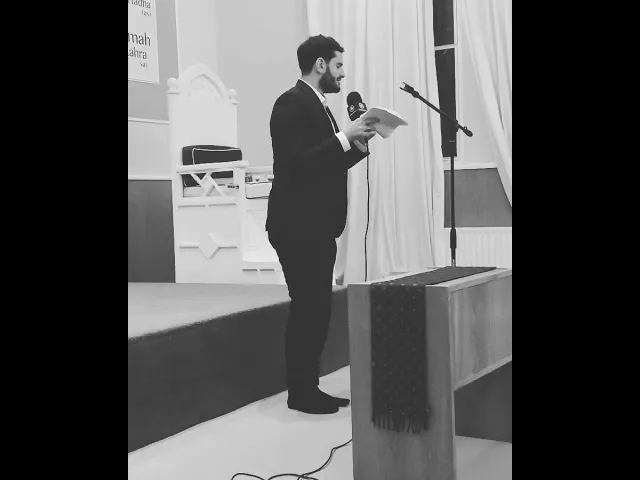
Our Unopened Birth Gifts - Sayed Mahdi Qazwini
0
0
33 المشاهدات·
24/03/23
في
محاضرات
Our Unopened Birth Gifts - Sayed Mahdi Qazwini
at the Ahlul Bayt Center of Toledo
أظهر المزيد
Transcript
[0:00]SMIL r-rahmani r-rahim al-hamdu lillahi rabbil alameen salat wa salam o Allah
[0:06]Ashraf al anbiya evil marceline Habib Allah al al-amin below cozumel Mustafa
[0:13]Muhammad Allah Allah BtoB note Aharon alma so mean al muntaha beam
[0:29]CoreLogic eatable hakeem olajuwon mana Boheme waha leve Angela Como some al-abbas
[0:37]rol f editor kalila macaron sadaqa allahu allahu allah muscle ala muhammadin
[0:47]wa ala muhammad brothers and sisters assalamu alaikum wa rahmatullahi wa barakatuh
[0:52]first of all I'd like to begin by expressing my joy in
[1:00]being here and joining you once again and by expressing congratulations to
[1:05]the entire Muslim Ummah on the celebration of the birth of the
[1:09]prophet muhammad sallallahoalyhiwasallam and al imam ja'far bin muhammad as-sadiq allahumma sallam
[1:16]and i'd like to begin with a story that I heard relayed
[1:25]by a Christian pastor and this Christian pastor was the pastor of
[1:32]a mega church if you're familiar with mega churches where upwards of
[1:40]10,000 people congregate and so you can imagine that as a pastor
[1:45]of a mega church you would see hundreds of people thousands of
[1:49]people in one day and so he says that one day as
[1:54]he was greeting the people as he was walking amongst the people
[2:01]he said a man handed him a gift it was a box
[2:03]the gift was in a wooden box and because he didn't know
[2:09]the man because he didn't recognize the man he assumed that this
[2:15]was like any other gift and so when he opened it he
[2:20]didn't really take a good look but he assumed he assumed that
[2:23]it was a watch and so he took the gift and he
[2:28]went back to his office he opened up the drawer and like
[2:30]sometimes when people gift us with something he tossed the gift in
[2:35]the drawer and closed the drawer and he forgot about the gift
[2:40]he said many months later I said he went back and he
[2:42]opened that drawer and he found that gift box there and so
[2:49]he opened it up and he found a beautiful watch so he
[2:56]was curious as to how much this watch costs what was the
[2:59]value of this watch and because someone had given it to him
[3:01]again that he didn't recognize he assumed that the watch probably didn't
[3:05]have any value when he looked it up online when he googled
[3:10]it he realized that the watch cost thousands of dollars it was
[3:14]a very expensive watch it was a gift that was given to
[3:21]him but he had not discovered its value because he had never
[3:25]opened up that gift he had never opened up that box and
[3:32]had it remained that box in the drawer of his desk unopened
[3:35]he would have never realized its value there would be nothing that
[3:41]would push him to discover the value of that gift and I
[3:47]say that because tonight I want to shed a little bit of
[3:54]light on the topic of the unopened gifts that we all have
[3:58]allah subhana wa ta'ala when he created us endowed each and every
[4:07]single one of us with gifts with certain capacities with certain intelligences
[4:12]with certain types of intelligence with potential and for the vast majority
[4:23]of human beings much of those capacities many of those gifts much
[4:30]of that potential remains undiscovered there was a quote that I read
[4:36]and it said that out of every 10,000 gifted children that are
[4:45]born and and that's every child about 9999 of them never really
[4:51]understand what their true gifts are for whatever reason sometimes our gifts
[4:58]are never truly discovered because someone said something to us implanted a
[5:08]false idea in our mind that we are not gifted that we
[5:11]don't have the capacity to achieve that we cannot truly achieve our
[5:18]goals and among the gifts that allah subhanho wa taala has endowed
[5:23]us with upon our birth or the following he says huahin let
[5:27]en shaa allah como some our observable data polina matter oon that
[5:32]he has initiated and sure he has initiated the following sama which
[5:42]is the ability to hear observe which is vision the ability to
[5:47]see and F EDA which refers to the power of your heart
[5:50]and every one of these gifts is unique and what tells us
[5:57]that we're not using these gifts to our full capacity is the
[6:01]fact that at the end of the verse God says valine and
[6:07]mattis karoon rarely are you thankful rarely are you grateful because if
[6:13]you're truly thankful and you're truly grateful you would use that gift
[6:18]to its fullest capacity it's like if someone gives you a gift
[6:28]now sometimes we receive gifts and someone buys us a clothing item
[6:32]and it just it doesn't fit us it's not the right fit
[6:35]I'm not talking about things that that don't fit I'm talking about
[6:41]something that fits someone gives you something and it fits you perfectly
[6:47]but you just don't make use of it sometimes you buy a
[6:50]gift for someone and you you believe as that as the giver
[6:55]of the gift you believe that it has value and you see
[6:58]the value and you understand the value but the person receiving the
[7:03]gift doesn't necessarily know what the value is and they may be
[7:06]thankful and they're grateful but in your mind you're thinking well if
[7:09]you're truly grateful and you're truly thankful you would use the gift
[7:13]you would wear that clothing item that I gifted you and so
[7:20]God says that very rarely are you grateful very rarely are you
[7:23]thankful and if you are truly grateful if you were truly thankful
[7:26]you would take those gifts that I have endowed you with and
[7:31]you would use them to your fullest capacity and these are only
[7:34]some of the gifts now I want to share with you something
[7:40]that I read recently and of course this this talk is in
[7:44]no way meant to be completely encompassing or inclusive of all of
[7:50]the gifts because if we were to think about all of the
[7:53]gifts that God has endowed us with that he has granted us
[7:58]you'd never be able to count them most of the gifts that
[8:00]God has given us again we we don't even know about as
[8:04]a human race we don't know we don't even understand what our
[8:08]true potential is it's so interesting you look at just the human
[8:16]being how the human being is born as a baby as babies
[8:18]were completely dependent think about it babies are completely dependent they can't
[8:25]do anything on their own they can't feed themselves they can't clothe
[8:31]themselves they certainly can't put themselves to sleep they can amuse themselves
[8:38]and maybe make themselves laugh but a baby is completely dependent what
[8:43]happens in that process of a few years where a baby that's
[8:51]completely dependent completely reliable on other people completely powerless completely helpless becomes
[8:57]such a powerful person such an unstoppable person sometimes you see people
[9:04]and you know they've they've they've done they've made so much trouble
[9:09]and so much mischief and then you think to yourself well one
[9:17]day this person was was also an innocent baby and your mind
[9:19]is confused you can't reconcile the thought and the imagination between this
[9:26]person one day being having been an innocent baby to now being
[9:31]a powerful and mischievous adult someone who has the capacity to ruin
[9:37]people's lives someone who has the capacity to ruin and destroy their
[9:44]own life so what is it that happens in between well what
[9:48]happens in between is that that person takes the gift some of
[9:52]the gifts that God has endowed him or her with and misuses
[9:56]them so I want to talk about a number of gifts and
[10:02]this comes not from myself this comes from an author who who
[10:06]he says he says there are three very powerful gifts that we
[10:14]need in order to become effective and become great at what we
[10:17]do he says number one the most powerful gift something that resonates
[10:21]with each and every one of us and he talks about the
[10:26]three unopened gifts these are gifts that for most people they're unopened
[10:30]it's that gift that remains in the closet it's that gift that
[10:33]we look at and because you don't like the wrapper because you
[10:38]don't like the covering you're not even gonna bother to open and
[10:41]see what's inside it's the gift that was given to you by
[10:43]the person that you don't really know so you don't really cherish
[10:48]it it's the gift that was given to you and you just
[10:50]have too many other gifts or too many other things you perceive
[10:56]in your life as gifts that you're kept yourself mentally and emotionally
[11:00]tied to that you don't have time to open this gift it's
[11:07]the gift that sometimes you're waiting to read gift to other people
[11:11]we all have that place in our closet or that place in
[11:15]our house where people have given us gifts and you don't open
[11:18]it you're waiting to give that gift back to someone else so
[11:24]he says one of those most powerful gifts is the idea of
[11:29]freedom he says freedom it's something that resonates within our soul it's
[11:34]something that resonates within our Neffs what is freedom now freedom I
[11:37]spoke about this I believe when I was here in Muharram if
[11:42]you remember there's a difference with attaining freedom and being carefree freedom
[11:46]does not be does not mean being carefree freedom refers to the
[11:55]following so freedom refers to the space between stimulus and response what
[12:01]does that mean stimulus is anything which pushes you or triggers you
[12:08]towards action or a reaction so if someone was to poke me
[12:12]with a sharp object that's a way of them stimulating me to
[12:17]react what happens if someone pokes you with a sharp object well
[12:20]automatically I mean in terms of your body and your mind you're
[12:29]told danger there there's alarms that go off in your mind that
[12:32]say this is dangerous I need to I need to pull back
[12:36]I need to react or if someone curses you someone verbally abuses
[12:40]you if someone physically abuses you that's a stimulus that's something that
[12:48]stimulates you after the stimulus comes the response but the response doesn't
[12:54]come immediately after the stimulus even though it may look and feel
[12:59]that it is immediate there's a small space in between within that
[13:04]space lies our ability to choose what our response and our reaction
[13:10]will look like now for some people people that were born in
[13:16]homes where there's unconditional love where they're provided for that space may
[13:24]be a pretty big space so maybe they won't be bothered as
[13:27]much as a person who maybe grew up in a household where
[13:32]there was not unconditional love maybe it was an abusive household maybe
[13:36]people said hurtful things in those cases you find that people will
[13:42]react negatively to things more quickly but the freedom that we have
[13:47]is the freedom to choose how to react the freedom to choose
[13:53]how we will respond to our situations either positive or negative but
[14:00]mostly when it comes to that which is negative and the reason
[14:03]why it's so important to think about and to talk about that
[14:09]freedom that space right there is because we live in a world
[14:13]if you've noticed we've live in a world where a lot of
[14:17]oppression exists it's not to say that oppression does not exists but
[14:24]there is also a victim mentality there are also campaigns that are
[14:31]out there which tell you that no matter where you're from you're
[14:35]a victim if you're a black man you're a victim if you're
[14:38]a white man you're a victim if you're a Muslim man you're
[14:41]a victim if you're a Jewish man you're a victim if you're
[14:42]a Christian man you're a victim if you're a woman you're a
[14:47]victim if you're this a person of if you're an immigrant you're
[14:49]a victim if you're a non-immigrant and your parents grandparents have been
[14:52]here for 300 years you're a victim there are campaigns out there
[14:58]that are designed to make you feel like a victim and what
[15:02]happens is and again this isn't to say that oppression does not
[15:10]exist but having an oppression mindset versus a victim mindset is something
[15:16]very different Salaam Hamid wali Mohammed so that mati Temari so the
[16:01]victim mindset tells us once it gets in our head and once
[16:09]it gets into our conscious that you can't choose your reactions what
[16:13]happens to you it's not your fault the way that you react
[16:20]then is not your fault but understanding that first gift the gift
[16:24]of freedom that you are not created as a robot God tells
[16:30]us in the Quran that there were creations or creatures that lived
[16:34]before us those creatures could not choose what they wanted to do
[16:39]and what they did not want to do those creatures were the
[16:45]Angels the angels they responded to God's commands they executed God's commands
[16:50]whether they liked it or they didn't like it but as a
[16:55]human being you're not an angel and you're certainly not a robot
[16:59]which means that at every time at every space in any situation
[17:06]you have the ability and you have the freedom and you have
[17:11]the choices to change your reaction this is number one and this
[17:19]is a very important gift you know what what he talks about
[17:22]this author he says that once you begin to realize that you
[17:30]have freedom of choice once you have yet once you begin to
[17:32]realize that you have freedom of response he says for some people
[17:37]it's a very terrifying idea because once you understand that you are
[17:44]free to react and that you have choices and that what happens
[17:48]in the past does not determine your future and what people do
[17:54]to you does not determine your behavior yes what people do to
[17:57]us it in flu thus it influences our behavior but it doesn't
[18:01]determine our behavior there's a very big difference if you hang out
[18:06]with the wrong crowd obviously they're gonna influence your choices but they
[18:11]don't determine your choices it's you that determines your choices and that's
[18:15]a very very important point for all of us to understand once
[18:18]you realize that you have freedom you realize that you are also
[18:22]responsible and for some people responsibility is the most terrifying thing that
[18:29]could ever happen to them most people who are going down the
[18:34]wrong path don't want responsibility it's easier to blame somebody else what
[18:43]he also describes is people that he describes as transition people what
[18:49]are transition people transition people are people who no matter what has
[18:54]happened to them in their past no matter what has happened to
[18:56]them in terms of lineage they have decided that they are going
[19:01]to change their own destiny and the destiny of the people that
[19:04]are to come in their family and he gives many examples he
[19:12]says sometimes men come from a lineage of alcoholic fathers one father
[19:18]who is an alcoholic who passed the habit on to his son
[19:21]who passed the habit on to his son and he passed it
[19:26]on to his son and four five six seven generations deep of
[19:29]alcoholism and then one person seven generations below eight generations below nine
[19:38]generations below decides to change the destiny of everyone else that is
[19:43]to come after that that's called the transition person that's a person
[19:49]who comes to the realization that no matter what has happened in
[19:52]my lineage no matter what has happened with my father my grandfather
[19:57]my great-great grandfather my past does not take my future hostage so
[20:04]freedom freedom to choose freedom to respond to stimulus freedom to react
[20:12]in the way that we need to react freedom to behave that's
[20:16]one unopened gift many people they keep in the back of the
[20:23]closet why because it's easier to blame someone else for our choices
[20:27]so this is one gift that remains unopened is our ability to
[20:31]choose what we want to choose to be free another unopened gift
[20:38]is the fact that we have principles that guide our behavior now
[20:44]when we talk about that space between stimulus and response what is
[20:49]the wisdom what are the guidelines that guide that behavior in that
[20:56]small space this comes in the form of another gift refer to
[21:00]as principles what are principles principles are foundational truths principles are rules
[21:10]that serve as a basis for the behavior that gets us what
[21:14]we want out of life now sometimes when we talk about principles
[21:19]we also talk about values but there's a difference between values and
[21:25]principles values see even an evildoer can have values a band of
[21:30]thieves they share the same values when you say the word value
[21:33]value is the word value is merit free values are neither good
[21:42]nor bad values however are images of the principles so this is
[21:48]this is how it goes our behavior is guided by our values
[21:54]and our values are rooted in certain principles when people don't have
[21:59]principles then their values are not rooted anything and if your values
[22:02]are not rooted anything then there's no direction and guidance for your
[22:06]behavior why it's important to understand what principles you stand by is
[22:11]so that your principles can provide a map for your values and
[22:16]your values can be it can provide guidance for your behavior it's
[22:20]like it's like a GPS system the GPS system if you remember
[22:26]when when when GPS systems first came out and they first had
[22:30]them in cars you had to you have to put a CD
[22:34]there was a CD that you put in and any time the
[22:40]new maps came out you were sent a new CD the way
[22:44]that it was able to provide you guidance is because that map
[22:47]that displayed on the screen it was rooted in something else it
[22:51]was rooted in something which was established which was that GPS program
[22:57]now the map is not gonna find itself by coin it's not
[23:04]gonna find by coincidence it needs a software that is going to
[23:06]back it up in that same way your behaviors that are guided
[23:11]by values those values need to be rooted in principles I say
[23:15]that because what the author talks about who describes this he he
[23:20]describes it as vertigo has anyone ever experienced vertigo vertigo is when
[23:25]you're in the plane you're at a high altitude or you're standing
[23:29]on a high platform and you look down what happens what happens
[23:33]when you're standing on a high platform and you look down you
[23:35]begin you become dizzy that state of dizziness it's called vertigo he
[23:41]says most people they walk around this world in a state of
[23:44]vertigo they're dizzy and the reason they walk around and they're so
[23:47]dizzy is because they have never rooted themselves in principle and when
[23:52]you don't root yourself in principle and you don't have any values
[23:57]when you don't stand for anything then you will fall for everything
[24:00]and that's why some people they may get older they may have
[24:04]some white hairs in their in their beard and on their head
[24:09]but you see them 20 years later they're behaving in the exact
[24:12]same way that they were behaving twenty years earlier even though externally
[24:18]things can change some people externally they can change they can leave
[24:24]one family and create another family they can sell one car and
[24:28]purchase another car they can leave one career and go to another
[24:34]career they can leave one city and go and relocate to another
[24:37]city they can change these things externally about themselves but because internally
[24:42]they have not gone through the process of routing themselves in principle
[24:49]then nothing really changes there's a story about a plastic surgeon who
[24:54]lived in the 1940s and he wrote a book on his experiences
[24:57]and the book that he wrote had nothing to do with plastic
[25:03]surgery it was a book on psychology which makes it very interesting
[25:05]I mean why would a plastic surgeon write a book on psychology
[25:10]well the reason he wrote a book on psychology is because he
[25:13]realized that a lot of the people that he was treating and
[25:17]he was doing different procedures for whether it was a facelift or
[25:21]on the nose or the ears or whatever he said that some
[25:26]of the people when he would perform those surgeries they would come
[25:30]out feeling better about themselves because something was changed physically about them
[25:35]so they felt better about themselves he said but for some people
[25:40]nothing changed they didn't feel better about themselves at all so he
[25:45]began to inquire about those people he began to ask okay well
[25:48]well what is it that didn't didn't change and he realized that
[25:51]for those people that didn't change it had nothing to do with
[25:56]their exterior and everything to do with their interior and he said
[25:59]and he would it's funny because instead of you know they say
[26:02]that it's notorious and and if there are any Plastic Surgeons here
[26:08]I I don't mean to offend you in any way but they
[26:12]say that it's it's a field where they're they're willing to perform
[26:15]any surgery because there's a lot of money involved and it's in
[26:18]their benefit to perform that surgery so if I go in there
[26:21]saying hey doctor there's something wrong with my ears can you pin
[26:24]them back and there's nothing wrong with them well I mean he
[26:27]can he can do it and take the money but this doctor
[26:30]said no and what he began to do is he began to
[26:35]tell people look people would come in and and and they would
[26:37]say doctor you know my nose is messed up or my ears
[26:40]are messed up and he would look at them and you would
[26:42]say no there's absolutely nothing wrong with your nose there's nothing wrong
[26:46]with your ears and so one of the chapters that he writes
[26:50]in his book is about a spiritual facelift he said some people
[26:55]they needed a spiritual facelift they needed they needed to do a
[26:59]lot of interior work internal work and it had nothing to do
[27:01]with external work I could fix his nose but it's not gonna
[27:06]change anything because he believes certain false assumptions about himself so so
[27:12]going back to that that second unopened gift principles being rooted in
[27:18]principles sometimes people they never they never root themselves in anything they
[27:22]never they never build their foundation on any principles and that's why
[27:26]you see you see in terms of their behavior they're all over
[27:31]the place they're all over the place so the first gift is
[27:35]freedom to choose and to behave the second gift which remains unopened
[27:39]our principles and rooting ourselves in principles the third are what he
[27:47]calls the four intelligences what is that so normally when we talk
[27:51]about intelligence Alcala what do we know about the output the word
[27:56]that is used to define Occulus intelligence and normally when we talk
[28:02]about intelligence we think of IQ which is mental intelligence there's an
[28:07]IQ test that you can take and it'll determine how intelligent you
[28:12]are but studies show that people who have a high IQ and
[28:19]only a high IQ that doesn't necessarily mean that they're going to
[28:23]be successful in life in the 1980s there was a gentleman by
[28:26]the name of Howard Gardner and he worked at the Harvard School
[28:31]of Education and he came up with the theory of multiple intelligences
[28:35]that it's not just mental intelligence but there's social intelligence there's emotional
[28:40]intelligence there is interpersonal intelligence and so we should not just measure
[28:48]intelligence by an IQ number and then a gentleman by the name
[28:55]of Daniel Goleman came and he wrote a book and the book
[28:57]is called emotional intelligence and there's another book called emotional intelligence 2.0
[29:01]and that's become the hot topic nowadays in the professional world and
[29:05]they talk about how companies and corporations they hire not just based
[29:09]on a person's IQ but also based on a person's EQ which
[29:14]is their emotional intelligence which refers to their social competency how do
[29:19]they get along with people can they connect with people can they
[29:22]lead people can they make people feel good about themselves do they
[29:26]have empathy what is empathy empathy is when you can sense other
[29:29]people's emotions do they have self-awareness meaning that are they aware of
[29:35]their own emotions most people they have no sense of self-awareness they
[29:38]live for 40 years 50 years and it's the same things that
[29:44]that trigger them over and over again it's the same things that
[29:47]make them upset and angry over and over again but they haven't
[29:49]identified what those things actually are so part of emotional intelligence is
[29:54]to be aware of your own emotions what is it that makes
[29:58]me happy what makes me sad what makes me feel fulfilled what
[30:01]makes me feel that I'm living a life of purpose and meaning
[30:07]so those are two types of intelligence and this falls under that
[30:11]third gift so one is one is mental intelligence which is IQ
[30:15]one is emotional intelligence which is EQ one is physical intelligence our
[30:20]bodies the physical space that we occupy are very intelligent we have
[30:27]roughly the average human being roughly about 7 trillion cells in our
[30:31]body all of them working in unison with one another you know
[30:34]you don't have to remind yourself to breathe your body automatically breathes
[30:40]your breathing mechanism does not shut down when you sleep your body
[30:45]is intelligent enough to know that it continues it needs to continue
[30:51]to breathe you don't need to remind your body to secrete certain
[30:56]chemicals after you have consumed food so that your stomach begins to
[31:01]digest the food it does that on its own you don't need
[31:06]to tell your body to detect certain illnesses that are there your
[31:10]body has a built-in mechanism that does all of that so we
[31:13]also have physical intelligence so knowing how to take care of our
[31:19]bodies and respect that intelligence is very important and then the last
[31:23]type of intelligence that he talks about and he calls physical intelligence
[31:29]P Q so you have IQ EQ you have P Q and
[31:34]then he talks about s Q which is spiritual intelligence and that's
[31:39]our longing for the divine that's the part of our soul that
[31:43]wants to be a part of something bigger that wants to connect
[31:50]to something greater than itself that knows that it's not only about
[31:54]our own Neffs our own soul our own ego that there's something
[31:57]bigger in this universe there's a there's a great book written about
[32:01]this subject and I may have brought it up before and the
[32:05]book is called man's search for meaning by Viktor Frankl Viktor Frankl
[32:11]was a psychotherapist and he was a survivor of the Holocaust during
[32:15]World War two and when he came out he he wrote this
[32:21]book and he wrote it with within within about 10 days he
[32:23]wrote this book man's search for meaning one of the most powerful
[32:27]pieces of literature out there has sold more than 15 million copies
[32:33]around the world and he talks about how what kept people going
[32:36]based on his observances is the search for meaning is the search
[32:42]for purpose is that some of the people that he observed had
[32:45]given up on their search of meaning and their search of purpose
[32:49]those are the ones that eventually because spiritually they had given up
[32:55]emotionally and mentally and physically they were forced to give up but
[33:03]it began with spiritually giving up so all of those different intelligences
[33:07]and capacities they're also related to one another our physical intelligence our
[33:11]emotional intelligence our mental intelligence and our spiritual intelligence they're all related
[33:18]to one another they're not dependent of they're not completely dependent on
[33:23]one another and so those are four capabilities that all so represent
[33:27]one unopened gift and the whole philosophy behind that is that if
[33:31]we don't understand that these are some of the gifts that God
[33:36]has endowed us with number one I'll repeat again is the first
[33:38]unopened gift is our freedom our freedom to choose our responses and
[33:43]the way that we react to certain situations number two is principles
[33:47]and the fact that we can route our behavior in principles and
[33:52]number three are those four intelligences if you don't use those gifts
[33:56]it becomes like that gift that someone gives you that you hide
[34:03]in the back of the closet it's there but it's never opened
[34:07]it's there but you never realize the value of that gift and
[34:11]sometimes when it comes to these gifts we tend to regifter how
[34:16]many of us are guilty of rege if thing there's a place
[34:20]in your closet there's a place in your home that's specific for
[34:24]re-gifts it's the gift that someone gives you that you don't really
[34:29]need it's usually the same thing that's either a toaster oven or
[34:34]it's something in the home that you don't have immediate use for
[34:37]and you think well instead of opening this I know that I'm
[34:39]gonna have to give a gift to someone so why don't I
[34:43]just put it somewhere where I can later on give it to
[34:46]someone else really the most embarrassing thing is when you re gift
[34:50]to the person that actually gave you the gift you never want
[34:53]to be in that awkward situation but sometimes people use our gifts
[34:59]more than we use them what does that mean they control and
[35:03]it's an oxymoron but it's as if they control our freedom we
[35:07]have given our freedom to other people so that they use it
[35:12]as their own gift we have rooted our behaviors not in our
[35:18]own principles but in somebody else's values that maybe are not our
[35:23]own values we have not expressed our emotional intelligence so that we've
[35:29]become victim to other people's wants and other people's emotions we have
[35:36]not expressed and found the gift of spiritual intelligence and so spiritually
[35:43]were always bothering physically sometimes we don't respect ourselves we engage in
[35:51]certain behaviors that are physically destructive and so people don't respect our
[35:57]bodies either physically they don't respect us either sometimes intellectually we don't
[36:02]respect ourselves so people don't give our intellect the value that they
[36:12]should give so when you protect your gifts when you cherish your
[36:16]gifts when you honor your gifts nobody can take them away from
[36:22]you but if your gifts are out there and you don't realize
[36:27]the value of them then how do we expect anybody else to
[36:33]realize the value of our gifts see when we read when we
[36:35]read about the Prophet when we read about any man Masada honey
[36:39]said ah when we study their words there's a lot of there's
[36:41]a lot of technical stuff in there how to do this how
[36:46]not to do that what to refrain from but if you look
[36:49]at the overarching message of what they had to say it really
[36:53]boiled down to one thing and that's knowing your value knowing who
[36:58]you are knowing what God has endowed you with knowing the intelligences
[37:03]and the capacities and the gifts that God has endowed you with
[37:09]and that you're unique nobody can take away the presence nobody can
[37:12]take away the gifts that God has given you those are your
[37:15]gifts it's what makes you unique it's what makes you special the
[37:22]freedom that you have to choose if that's what makes you special
[37:25]that that's what makes you outstanding the fact that you're rooted in
[37:28]character and principle that makes you outstanding it makes you special that's
[37:32]what makes other one of people be a part of your life
[37:38]and contribute the fact that you respect your own time and you
[37:42]respect yourself that's what makes you stand out that that's what makes
[37:45]you a leader that's what makes people want to follow you and
[37:47]be part of your life so we ask Allah subhana WA Ta'ala
[37:52]to allow us to understand the capacity of our gifts we ask
[37:55]Allah subhana WA Ta'ala to to keep granting us the gifts we
[38:04]ask Allah subhana WA Ta'ala to allow us to use our gifts
[38:06]to their fullest capacity and servitude to him we ask Allah subhana
[38:13]WA Ta'ala to allow us to use our gifts in the capacity
[38:16]of serving humanity bismillah ar-rahman rahim allah homophily mommy nina one moment
0 تعليقات
sort ترتيب حسب
- أعلى تعليقات
- أحدث تعليقات
التالي
4 المشاهدات · 25/03/23
8 المشاهدات · 25/12/01
10 المشاهدات · 13/12/26
10 المشاهدات · 14/09/23
7 المشاهدات · 21/12/07
7 المشاهدات · 22/11/28

10 المشاهدات · 24/11/14

8 المشاهدات · 25/06/22
8 المشاهدات · 25/11/02
10 المشاهدات · 25/03/18
8 المشاهدات · 20/06/26