التالي
0 المشاهدات · 22/02/05
1 المشاهدات · 22/02/06

0 المشاهدات · 22/09/17
1 المشاهدات · 22/10/22
0 المشاهدات · 22/12/10
1 المشاهدات · 23/01/14
0 المشاهدات · 23/01/21
1 المشاهدات · 23/05/13
0 المشاهدات · 23/07/01
0 المشاهدات · 23/08/05
0 المشاهدات · 23/09/08
1 المشاهدات · 24/01/06
1 المشاهدات · 24/03/02
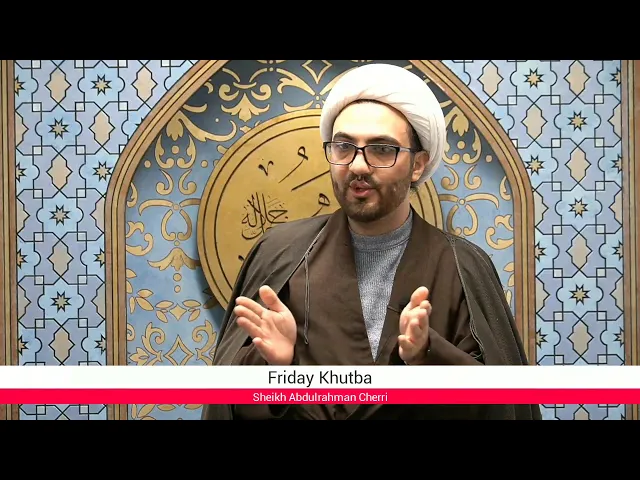
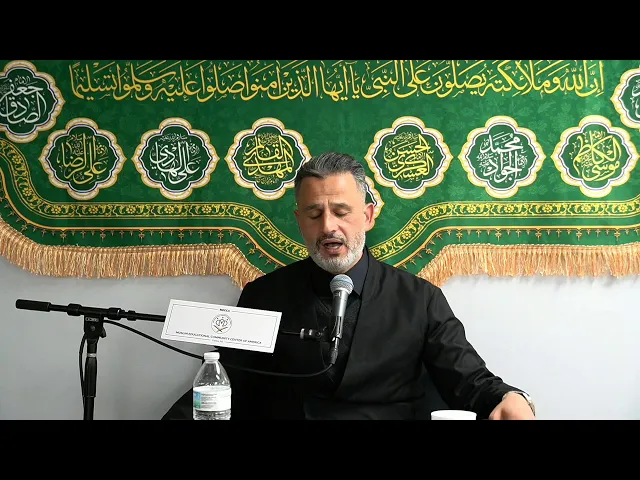
FRIDAY PRAYER - SHEIKH ABDULRAHMAN CHERRI
0
0
2 المشاهدات·
23/12/02
في
محاضرات
أظهر المزيد
Transcript
[0:28]ald for muham one of the issues that our society is currently
[1:39]plagued with and something that we have to pay attention to is
[1:48]the issue of hypercriticism and what I mean by that is what
[1:55]we usually refer to a person being hypercritical is a person who
[2:00]criticizes people too much without really having the justification to criticize that
[2:06]person so basically trying to find fults in other people but in
[2:15]an extreme way and ever since people have become more active on
[2:20]social media platforms and there's many nowadays we realized that it's become
[2:25]much easier to become critical people and I don't mean to say
[2:34]that criticism is not a good thing to be critical naturally in
[2:36]a balanced manner is a good thing you have to be self-critical
[2:39]that's how you improve yourself you look at your faults and you
[2:44]try you try to fix those faults if you're not critical of
[2:46]yourself then you overlook your faults you overlook your mistakes you end
[2:51]up justifying everything you do and you end up developing a very
[2:57]bad character because these bad habits that you have and end up
[3:02]becoming ingrained in you because you keep performing them and there's nothing
[3:06]that's stopping you when you realize that they're bad so being critical
[3:10]about yourself is very important being critical about other people as a
[3:15]society if we're looking at let's say public issues criticizing um let's
[3:21]say the politicians because you want to improve the society not just
[3:26]criticizing them for the sake of criticizing that means that these politicians
[3:30]see that there are people who are objecting to certain types of
[3:33]behavior it puts pressure on them and it pushes for change so
[3:40]criticism naturally is a necessary component for a healthy community and a
[3:46]healthy individual but just like everything anything that goes beyond its healthy
[3:50]and natural degree turns from something positive into something negative and having
[3:59]access to to the social media world and these platforms and being
[4:04]behind the screen makes it much easier for an individual to critize
[4:08]other people without really thinking about what they're doing or what they're
[4:14]saying so we see that a lot of times somebody posts something
[4:19]somebody says something the amount of negative comments that a person receives
[4:25]for something very basic is really surprising and shocking most people if
[4:28]they were facing that person in real life not behind the screen
[4:34]they might not express that criticism to them but because it's behind
[4:37]the screen it's much easier to type anything and the problem is
[4:40]the more you do it the more addicted you become to it
[4:45]it becomes a disease and an ailment once you start criticizing somebody
[4:49]and you see that there's no repercussion and you don't get a
[4:52]reaction from that individual then you find it oh you know this
[4:57]is something that I can do and I'm not going to be
[5:00]affected by it in a bad way and unfortunately one of the
[5:05]spiritual ailments and spiritual diseases that religion and specifically Islam has talked
[5:09]about is being careful when it comes to the faults of other
[5:14]people because Islam as a religion that believes in the soul and
[5:21]as a religion who that is very well aware of the diseases
[5:26]of the Soul teaches us that the soul loves to criticize other
[5:31]people because this feeds the ego when you put someone else down
[5:34]it elevates you above them that's what it basically means right when
[5:39]I put someone else down it means I'm telling myself and telling
[5:42]that person that hey this is something that's wrong with you and
[5:46]because I'm a better person I'm able to realize it and I'm
[5:51]pointing it out to you and the problem is because it feeds
[5:54]the ego if you allow it to happen without placing bound boundaries
[6:01]on it then the more you feed the ego with it the
[6:04]more satisfaction it gains so you start doing it more and more
[6:11]and more and eventually you start overlooking your own faults because we
[6:16]have two things that are happening here when we boost our ego
[6:19]that's the first thing that's happening the effect of boosting our ego
[6:25]is that we begin to diminish seeing our own faults because when
[6:28]the ego starts growing it starts seeing itself more perfect more better
[6:34]and therefore it starts not seeing its faults anymore so there are
[6:39]two problems that occur over here if we look at the Hadith
[6:44]that the prophets and the imams have told us or made us
[6:49]wary of we realize that they were very well aware of the
[6:52]situation and they didn't want the Believers to fall into it now
[6:57]there's a book that's uh been trans trans at into English it's
[7:02]a section or a chapter of is a big Encyclopedia of written
[7:10]by or compiled by uh one of the scholars named uh he
[7:13]passed away hundreds of years ago but he compiled an encyclopedia and
[7:18]in one of the chapters or one of the books that he
[7:23]had uh it was which is the combat with the self or
[7:24]of the self and this book uh which has been translated into
[7:29]English and I recommend everybody to get a copy of this and
[7:33]to read it may Allah have mercy on his soul used to
[7:36]recommend that everybody look at this book and have it with them
[7:41]at least on a on a daily basis to read one Hadith
[7:45]from this book it's a book that teaches how to overcome yourself
[7:48]and how to perfect yourself from theth of the prophet and the
[7:55]IMs of one of the Hadi is narrated by imak and this
[8:00]is under the chapter title The Divine recommendation to occupy oneself with
[8:05]one's own faults rather than finding faults with others IM peace be
[8:10]upon Him narrated that the prophet sallallah alai wasallam said there are
[8:15]three qualities that should a human possess them or even if one
[8:22]of them can be found in him or her on the day
[8:27]of judgment they will be allowed to stand in the shade of
[8:30]Allah's throne apart from which there will be no other shade they
[8:33]are that he should do onto others only that which he would
[8:38]have he would have them do unto him so that's the Golden
[8:41]Rule right you do unto other people what you wish them to
[8:46]do onto you this is a universal principle that we have to
[8:50]follow that he does not so much as walk in front of
[8:55]a person or behind him except with the knowledge that it is
[8:59]for the pleasure of God this is the second Ru that whenever
[9:03]you perform something even if it's a very simple act they always
[9:07]try to find the pleasure of God in that act that you're
[9:13]performing and the third rule he says or the third quality is
[9:16]that he does not find a fault with his brother until he
[9:23]has removed the fault from himself first and no sooner does he
[9:27]remove that particular fault from himself than he becomes aware of another
[9:30]fault such that he contents himself with finding fault in himself rather
[9:35]than with other people so if we want to find a balance
[9:40]we have to see the amount of criticism we have of other
[9:45]people how many times do I criticize others per day whether it's
[9:49]on social media or whether it's my my daily life if I
[9:55]criticize my parent or I criticize my child or my spouse or
[9:57]my sibling or a friend how many times compared to criticizing others
[10:03]do I criticize myself during the day and if you just look
[10:08]at that you might get an idea of where you stand in
[10:10]this situation am I overcritical am I overlooking my own faults and
[10:18]mistakes sometimes it's very right the fault that you see in the
[10:21]other person is correct that person does have that fault see the
[10:23]prophet in this Hadith is not saying don't look for don't make
[10:28]upholds in other people he's saying these are actual faults so when
[10:33]you see another person making a mistake where they have a fault
[10:35]in thems the prophet is talking about that real fault in them
[10:40]he's not denying that they have faults in themselves they do have
[10:43]mistakes but before looking at their mistake look into yourself do you
[10:48]have that same mistake and that same fault inside of you if
[10:52]you do then you don't have the right to criticize the other
[10:54]person because you yourself have not rid yourself of that problem and
[10:59]once you do that the prophet says then you start becoming more
[11:04]aware of your other fults that are inside of you and this
[11:07]is something that makes you aware of yourself and suddenly you realize
[11:11]that I have so many faults and I'm so imperfect that by
[11:17]the time I fix myself my life would end before me being
[11:21]allowed to criticize or find other people's faults and if we live
[11:26]in this kind of way we would have a much healthier Society
[11:30]and honestly this the culture that we have in in on on
[11:34]social media platforms that allows for this hyper criticism creates a very
[11:40]negative Ambience and it starts classifying people into certain groups and categories
[11:43]and it becomes hard for us to become more friendly with others
[11:48]you start finding people criticizing uh someone as soon as they say
[11:51]something that they don't like that creates a group and then you
[11:55]have a subgroup and then you have a sub subgroup and you
[11:59]start realizing that humans in this sense start feeling that they're unable
[12:05]to cooperate with other people and you know um the culture that
[12:09]we've developed which is termed as like the cancel culture now with
[12:15]its benefits because as we said at the beginning criticism is a
[12:18]good thing if somebody says something wrong especially something that affects the
[12:24]masses someone on the level of a politician someone as U as
[12:27]an actor someone who has influenced other people on other people it's
[12:30]good to criticize them when they say something wrong because their mistake
[12:35]goes beyond what a regular person's mistake uh goes to right if
[12:40]it's a celebrity what they do it will influence millions of people
[12:46]if they have that big of a following so it's good to
[12:48]put these people in place so that wrongness doesn't spread in society
[12:52]but at the same time we have to have that balance if
[12:55]we're hypercritical about everything then we won't really settle with the truth
[13:02]anywhere a lot of the times we become so centered on our
[13:05]opinion we become self-righteous it's good to see wrong in other people
[13:11]but it's also important to be aware of the wrong in yourself
[13:15]and in your opinions and we change opinions all the time one
[13:18]day I might believe something and the next week or the next
[13:21]day I might change my opinion so you have to have that
[13:25]humility as well before always trying to find the wrongness and the
[13:29]opinions of other understand that you yourself might have that opinion or
[13:32]a different opinion than what you have right now so when you
[13:36]want to say something you have to be very careful you have
[13:39]to be balanced with your approach you have to be wary of
[13:43]how to word your criticism don't just put that other person down
[13:46]and consider their opinion to be absolutely false and absolutely wrong you
[13:50]may present your arguments you might say that I differ in my
[13:53]opinion and that type of language that you use affects your mentality
[13:59]and affects that General well-being in the society as well so we
[14:03]try to be positive in our approach instead of always trying to
[14:06]be negative and being self-righteous that will make you aware of your
[14:12]own self creates humility in you so that whenever you are approached
[14:16]with truth you can accept it you don't deny it just because
[14:18]it differs from what you think I ask Allah subhana T to
[14:25]allow us to realize this and to help us find our own
[14:27]faults before looking uh for the faults of other people alhamd I
[15:42]will begin the second part of the sermon with a concept that
[15:47]we must be aware of nowadays especially in the events that are
[15:53]occurring in the world um and uh specifically what's happening in Palestine
[16:00]time it's very unfortunate that Humanity still is at a time where
[16:08]such massacres could occur before their eyes and it continues to occur
[16:14]after a little break that there was people were able to breathe
[16:20]again people were able to um enjoy life with his hardship of
[16:25]course and difficulty but they were able to be relieved to a
[16:32]certain degree yet now it begins to resume and to continue it
[16:36]is our responsibility as human beings and especially as Believers to stand
[16:43]against Injustice wherever we can no matter who it's performed upon no
[16:49]matter who is suffering from this Injustice as a Believer we have
[16:53]to stand with those who are oppressed now when God in the
[17:01]Quran States and tells the prophet that this religion that I'm giving
[17:06]you is going to outshine all other religions is going to outshine
[17:12]all other faiths what's meant by that in one meaning in one
[17:19]sense is that a Muslim should outshine everyone else in his and
[17:24]her behavior behavior and approach to things in this world that means
[17:28]that a Muslim should be someone who goes beyond their own identity
[17:33]a Muslim should be someone who goes beyond their own culture beyond
[17:39]their own group beyond their own limitation this is part of what
[17:43]outshining means and the prophet came with this message specifically telling people
[17:50]that there is no difference between a white person and a black
[17:54]person except through piety there is no difference between a um person
[18:03]of a certain culture and another culture except through piety no difference
[18:10]between and the prophet specifically used Arabs and and non-arabs at that
[18:15]time and this is supposed to elevate people Beyond racial identities Beyond
[18:22]cultural identities because human beings tend to fall into this problem we
[18:26]tend to belong to a culture belong to a race belong to
[18:32]a group and we see that group or that race or that
[18:34]culture as Superior and better than others and what Islam came to
[18:40]do is it came to eliminate that so when we see that
[18:42]there's Injustice happening we shouldn't only stand against the oppressors let's say
[18:49]or with the people who are being oppressed only when they're part
[18:53]of our own group this is something that we have to reflect
[18:58]upon nowadays there is a specific group that's being oppressed they're not
[19:01]just Muslims they're not just Arabs there's a lot of people being
[19:03]oppressed a lot of different groups that are being oppressed at that
[19:07]time at that place Christians are being oppressed Muslims are being oppressed
[19:12]even some Jews are being oppressed so we as Muslims have to
[19:15]stay strong and we have to be able to stand with those
[19:21]who are oppressed no matter what Creed they belong to what religion
[19:24]they belong to where they are and what they're doing and I
[19:33]think that when it comes to seeing the situations the pain that
[19:41]we're feeling should act as a mover inside of us to make
[19:45]us reflect upon ourselves are we ourselves committing any type of Injustice
[19:52]as well most of the time when we see other people performing
[19:55]a type of Injustice we are very quick to call it out
[20:00]but when we're performing the Injustice we tend to overlook that and
[20:04]when our emotions are with the situation with what people are going
[20:08]through I think it's a very good time for us in order
[20:13]to eliminate Injustice is to play a small part in trying to
[20:16]eliminate the Injustice that we perform onto others in our own own
[20:20]lives and this is something that religion has EMP emphasized as well
[20:26]in one of the verses is Allah subhana says oh you who
[20:49]believe be steadfast for God bearing witness to Justice and let not
[20:54]hatred for a people lead you to be unjust be just that
[21:00]is nearer to reverence don't let the hatred of some people towards
[21:05]you make it as an unjust individual even if the person who
[21:13]is harming you is someone who hates you someone who's done wrong
[21:16]onto you it does not justify you oppressing that individual as a
[21:23]Believer you have to be just even with your own enemies this
[21:28]is how the imams were and we have many stories like this
[21:31]one story that is quite famous a Hadith that is in both
[21:35]in the Sunni and Shia texts um related to IM Ali when
[21:40]he was a kff he was a governor of the Muslim Nation
[21:42]at that time so he had all the power in his hands
[21:48]and there was a Jewish man who the Imam saw walking wearing
[21:52]his armor the IM had lost a piece of armor one day
[21:57]now the Hadith they differ in the in details just where he
[21:59]lost it or you know but it's not important the point of
[22:03]the story is that the Imam had lost a piece of his
[22:07]armor and this man had taken it he was a Jewish man
[22:09]and the IM was a kff at that time so the IM
[22:13]tells this man that this is my armor and it belongs to
[22:17]me and I have lost it and you've taken it the Jewish
[22:20]man he denied it he said no this is mine I I
[22:23]acquire this so the IM said okay let's go to a judge
[22:28]and the judge will res this matter so imagine the IM is
[22:31]the K at the time the judge is appointed by the IM
[22:36]himself so he's under the im's authority yet the Imam knowing that
[22:40]this is his obviously IM knows it's his armor and he knows
[22:46]that this person is lying but he didn't use his power as
[22:48]a kff as a governor to take this this rightfully owned piece
[22:55]of armor to himself he said we have to do this in
[22:56]the just Manner and how is that we have to go to
[23:00]court we go to the judge and the judge they stood before
[23:03]him the Imam stood the Jewish man stood and he told the
[23:08]IM do you have any evidence that this is yours do you
[23:12]have any witnesses that could testify that this is yours the Imam
[23:18]brought his son and he brought another person now again the Hadi
[23:22]differ in the details of who was brought but the judge didn't
[23:25]accept the testimony of IM Hassan because he said that this is
[23:30]your son and he cannot be used as a witness so the
[23:32]judge ruled in the favor of the Jewish man he told him
[23:35]that the arm is yours because the Imam couldn't produce two witnesses
[23:38]so as soon as the IM left the court the Jewish man
[23:44]was surprised he said that this is the governor who appointed this
[23:47]judge he has the power to take this armor from me by
[23:55]making one order and one command yet he decided to go on
[23:58]this route and he lost the case knowing that I'm the liar
[24:04]and he's the truthful one but he accepted it because this was
[24:08]the just manner this is how the prophet said that the courts
[24:12]have to function and the Imam obeyed the prophet's command and he
[24:16]performed what is just so even if someone is oppressing you even
[24:19]if someone is doing wrong to you you have to be just
[24:23]with them no matter what the situation is and this happens a
[24:26]lot in our communities especially when we have disputes one of the
[24:30]disputes that is common is a divorce when two people get into
[24:34]arguments they no longer can live with one another they apply for
[24:39]divorce they somehow see that just because I hate that other individual
[24:45]I have problems with the other individual I have the right to
[24:50]treat them unjustly when it comes to child custody for example one
[24:54]parent decides to keep the child away from the other parent one
[24:59]one parent decides to kidnap the children and go with them and
[25:03]deprive the other parent from them and they justify because they have
[25:07]hatred to towards that individual and they have problems sometimes they use
[25:12]the child as a pawn to take revenge from their other spouse
[25:16]and this is wrong we have to understand that no matter how
[25:20]much you ha hate that other person and no matter how much
[25:24]that person hates you no matter what wrong they did to you
[25:29]it doesn't justify that you behave unjustly towards them it's very difficult
[25:34]to maintain this level of justice but this is what we're ordered
[25:36]to do and if we look at the Hadith we really warned
[25:43]by the prophet and the imams about people who call for justice
[25:47]yet they themselves don't apply this Justice in their own lives I'll
[25:52]quote one and two or two hadiths for you um that talk
[26:01]about this IM says indeed the most unfortunate of people on the
[26:08]day of judgment will be the one who admired and praised Justice
[26:12]yet behaved contrarily to it in another Hadith the Imam says the
[26:17]person suffering the most grief on the day of judgment will be
[26:22]the one who admired and praised Justice yet behaved contrary to it
[26:27]so if you admire Justice if you call for justice if you
[26:32]see that someone is doing something wrong towards their children or towards
[26:36]children in general and you condemn it you have to see yourself
[26:39]how are you treating your children are you taking the children away
[26:44]if you're in a divorce from their parent or their spouse are
[26:49]you performing that Injustice on your ex and on the child as
[26:52]well and this is something that we have to be wary of
[26:55]when we talk to our children do we put them down do
[26:59]we criticize them are we disrespectful this is being unjust towards the
[27:04]child because the child has the right to grow in a healthy
[27:09]manner that child has the right to grow as a strong individual
[27:11]and that child needs the support of the parent so when you
[27:14]have authority over a child it's even more incumbent upon you to
[27:20]be just towards them to show kindness to show love to allow
[27:23]them to enjoy a life of goodness in this world why should
[27:27]they grow up thinking that they have self-esteem issues why should they
[27:32]grow up thinking that they're not good people why should they grow
[27:35]up thinking that they're failures in this world just because you have
[27:38]some miserable personality or some problems in your life you've been treated
[27:42]in a non-proper way it doesn't give you the right to pass
[27:47]that on to your child and the same thing goes to your
[27:49]spouse as well you have to be very just with your spouse
[27:54]some people justify you know if it's a man oh you know
[27:56]this is how you have to treat a woman this way if
[27:59]you don't make the woman submit to you then you know you're
[28:01]not going to live happily this is something that Islam doesn't agree
[28:08]with and the same thing the other way just because it's a
[28:14]different gender doesn't allow us to have whatever um conviction that we
[28:19]have about them uh and and you know exide that conviction on
[28:24]them I must treat them miserably in order to uh and women
[28:26]love to be treated in a bad way this is what they're
[28:30]looking for so we create these ideas in order to justify the
[28:33]wrongness that we have and the same thing goes the other way
[28:38]as well Islam of course taught us to have healthy relationships it
[28:41]taught us that human beings are able to have and maintain healthy
[28:45]relationships yes you could raise a child by beating them and they
[28:49]would become obedient and at the same time you can raise a
[28:53]child by showing them love and support and they could become obedient
[28:56]you could have the outcome in both ways but the psyche of
[28:59]the child differs in each case and the same thing with the
[29:04]spouse you could have a spouse that's obedient whether it's a man
[29:07]that pleases the woman or the woman that pleases The Man by
[29:11]showing love and respect towards that other spouse you could also have
[29:15]obedience by being a dictator in the house but there's different outcomes
[29:20]um not The Obedience but the psyche of the individual differs one
[29:25]is a healthy relationship you have an OB loving individual who you
[29:30]grow with and the other one is that you have a subject
[29:32]that just listens to you but you make them devoid of their
[29:37]Humanity we ask Allah subhana wa tala to open our hearts and
[29:42]Minds to realize any Injustice that we perform towards other people and
[29:46]help us change that to the better on
0 تعليقات
sort ترتيب حسب
- أعلى تعليقات
- أحدث تعليقات
التالي
0 المشاهدات · 22/02/05
1 المشاهدات · 22/02/06
0 المشاهدات · 22/09/17
1 المشاهدات · 22/10/22
0 المشاهدات · 22/12/10
1 المشاهدات · 23/01/14
0 المشاهدات · 23/01/21
1 المشاهدات · 23/05/13
0 المشاهدات · 23/07/01
0 المشاهدات · 23/08/05
0 المشاهدات · 23/09/08
1 المشاهدات · 24/01/06
1 المشاهدات · 24/03/02