Up next
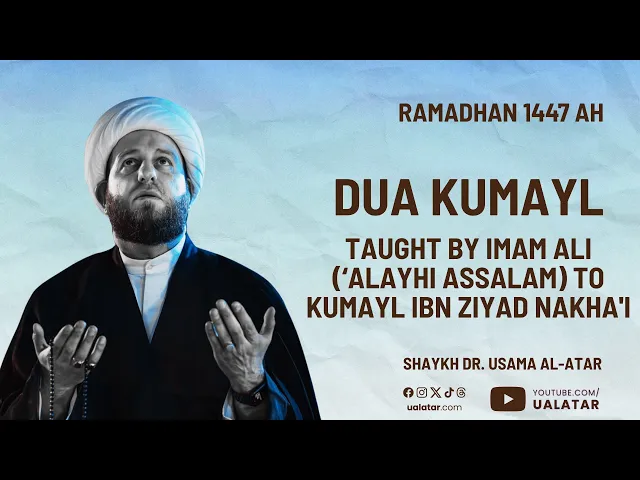
Dua Kumayl + Lecture Sheikh Afzal Mirali 02/05/2024
0
0
16 Views·
24/07/12

In
Lectures
Dua Kumayl + Lecture Sheikh Afzal Mirali 02/05/2024
Please donate: https://pay.sumup.com/b2c/Q4BLI3CT
📱Follow @Lebaneseyouthfoundation (Instagram/Facebook) and Join https://chat.whatsapp.com/D98gi493pZdBsBVi8rXP2L
Show more
Transcript
[0:02][Music] [Music] [Music] for for [Music] [Music] [Music] [Music] Allah [Music] [Music]
[1:56][Music] for for [Music] [Music] Allah [Music] [Music] [Music] Allah [Music] [Music]
[3:56]for Allah [Music] [Music] Subhan [Music] to [Music] [Music] [Music] well for
[5:31][Music] [Music] [Music] s [Music] [Music] for for [Music] [Music] [Laughter] [Music]
[7:38][Music] Fe [Music] [Music] for [Music] for for [Music] [Music] [Music] Allah
[10:00]for [Music] [Music] [Music] hey [Music] [Music] for for [Music] [Music] [Music]
[12:17]still [Music] [Music] [Music] [Music] Kem for [Music] [Music] [Music] [Music] say
[14:30][Music] [Music] [Music] for [Music] for [Music] for for [Music] [Music] [Applause]
[16:19][Music] must y [Music] [Music] [Music] for for [Music] [Music] [Music] [Music]
[18:27]say [Music] [Music] [Music] for [Laughter] [Music] for [Music] [Music] for [Music]
[20:27]for [Music] [Music] [Music] for [Music] [Music] for [Music] [Music] [Music] for
[22:00]for [Music] [Music] [Music] son of the LA and sh [Music] y
[23:02]y y y y y for [Music] [Music] [Music] y [Music] [Music]
[25:27]for [Music] [Music] for [Music] [Music] [Music] [Music] for [Music] for for
[27:05][Music] [Music] [Music] [Music] is for [Music] [Music] [Music] [Music] m [Music]
[28:59]Allah [Music] [Music] Sal for [Music] [Music] [Music] [Music] inshallah uh we'll
[30:43]continue with the program um she AAL murali for those who don't
[30:49]know is an Islamic scholar specializing in Islamic sciences and law with
[30:55]a keen interest in Islamic and religious history and the methodology of
[31:00]t missionary she Abal started his hous of studies in the UK
[31:03]after which he migrated to libnan and he studied for over 10
[31:06]years there in the houses so he is fluent in in Lebanese
[31:10]Arabic as well if you want to have a conversation in Arabic
[31:13]uh and then he moved to K and he continued his studies
[31:16]there for uh for many more years so inshallah over the coming
[31:22]weeks uh AAL morali um will cover a series of topics with
[31:26]us um so just to name a few uh the reciprocal relationship
[31:31]between Pious and actions and sins in the Holy Quran which is
[31:35]today's lecture uh next week life objectives in the words of IM
[31:39]aliam um and then following weeks modern challenges faced by Muslim youth
[31:44]in the West for key situations as an example uh and finally
[31:48]in the um in the fourth week from now IM and I
[31:54]navigating a mutual relationship so uh sheh are you ready uh can
[32:03]we welcome the sheh with a loud Muhammad Muhammad I to hasten
[33:15]the appearance of our 12th IM muh muhamad hour alhamdulilla for [Music]
[34:42]to bless our MJ With the blessings and the light of Muhammad
[34:51]Ali Muhammad please recite another ofat in the Holy Quran Allah subhanahu
[35:04]wa ta'ala has called us to ponder and to deliberate upon the
[35:12]verses and the content of what he has blessed us with what
[35:18]he has revealed with this respect throughout history our have continuously from
[35:25]the time of the holy prophet Muhammad himself they have strived to
[35:32]come with new and more diverse and deeper methods that they used
[35:40]and they applied in order to try to understand the meaning of
[35:43]the verses of the Hool Quran with that there are five types
[35:48]of tap that we can find up until today the first type
[35:52]that used to exist from that very beginning was called that is
[35:58]to say the of understanding certain difficult words in the Arabic language
[36:03]at that time not everybody would understand or in general first of
[36:08]all in the early time of Islam people understood the majority of
[36:13]the words of the Holy Quran because they were the people of
[36:17]the language however you used to have some words here and there
[36:20]either the metaphorical meaning is intended or sometimes the meaning of the
[36:24]the word itself is not extremely used so people people would ask
[36:29]what is the meaning of this Allah subhana for example in that
[36:37]verse that I just recited what is according to the Holy Quran
[36:59]somebody who is especially you know well versed in he explains that
[37:06]is a certain reality it is a need that a person feels
[37:13]to do something that is Haram you have a need now instead
[37:16]of fulfilling that need in a Halal way what you go and
[37:20]do is you're looking for Haram manners Haram ways you want to
[37:23]go M make money in that way instead of going to University
[37:28]becoming whatever no you we say oh listen man I God forbid
[37:29]it's just easier to sell some you know just to pass some
[37:33]Goods you understand what I mean I'll just make quick money with
[37:36]that so this is called this in the translation it is said
[37:44]I'll just read the translation Allah subh T inaha he says and
[37:52]give to the orphans their properties and do not substitute the defect
[37:58]of your goods and your property do not replace your messed up
[38:06]stuff and take their good stuff in instead for instance let's say
[38:11]there is an inheritance correct especially for example in our countries so
[38:16]there's a big inheritance the grandfather has passed away this was a
[38:23]situation that I knew of whereby the grandfather passed away but his
[38:28]son one of his sons had passed away before him now that
[38:33]which would that which was going to be going to the son
[38:40]or rather something that should not have gone to the children of
[38:45]that son the grandfather is there now there is another level which
[38:48]is to say the direct Children of the grandfather okay the direct
[38:52]Children of the grandfather now amongst these direct children what would happen
[38:56]is that some of the men unfortunately that you find in our
[38:59]countries over there especially some of the men they say listen we'll
[39:05]take the good stuff we'll leave some of the bad stuff to
[39:07]some of our brothers who don't say anything they don't object or
[39:14]or more applicable or a more suitable example would be when this
[39:21]is done when they are actually younger when they are actually before
[39:25]the age of bul and this also happens in all cases if
[39:30]a person goes to replace his defective Goods his defective property with
[39:35]the yim's good property Allah subhana says and do not consume their
[39:40]properties into your own indeed that is ever a great sin now
[39:42]it's extremely you know disappointing but the Arabic language has millions of
[39:47]words the English language does not have that many words it has
[39:50]just a few a few hundred thousand words as a result the
[39:53]majority of the words that I'll be quoting today in the translations
[39:55]whichever one you go just find the word sin sin sin sin
[40:01]I'm actually going to try to be creative and find some other
[40:03]words for it but over here the translation was sin but it's
[40:06]actually referring to that that lust that need so this mu this
[40:12]type of I'm not looking to the entire verse I'm just referring
[40:16]to this particular word this is called the second type of is
[40:22]called the majority May of you may have heard this meaning that
[40:26]is to say sequential meaning what the MU comes and interprets one
[40:32]Ayah and then the other Ayah and then the other Ayah inshallah
[40:36]if Allah does Grant him long enough life he is able to
[40:39]compile an entire T of the Holy Quran now throughout our history
[40:45]very few of our Scholars had that because it takes a lot
[40:49]of efforts it took him 20 years to be able to author
[40:52]that was in 20 volumes 80 volumes it has taken him a
[41:00]few decades up until now and and and and so not everybody
[41:06]has that but what this does is that it interprets and it
[41:09]gives the exegeses the commentary of each verse but not in a
[41:13]connected way throughout the Quran it just tells you what this verse
[41:19]means but not how it connects to maybe the other following verses
[41:23]some of our developed they went and said listen okay we should
[41:29]at least try to explain maybe not in all of the Holy
[41:33]Quran what this verse relates to the others but at least how
[41:36]it relates to the general theme of the Surah or at least
[41:40]how it relates to the few verses before and after it correct
[41:44]the the context this is and you can have of either Hadith
[41:52]so you look for each verse and you look for the rat
[41:56]what does this r I say about this verse that re about
[42:02]that verse or you could go to or you could go to
[42:07]what you could go to philosophy and try to solve it from
[42:13]a or explain it from a philosophical angle and and there many
[42:18]different uh orientations to this the third type of T is called
[42:21]and I'm building up to something don't don't worry just bear with
[42:25]me as well I think this is something you may have heard
[42:30]of as well it's called thematic meaning what that the muas comes
[42:35]he looks at a certain word mentioned in the Holy Quran or
[42:40]a certain concept implied in the Quran even if the word is
[42:43]not mentioned and then he tries to see okay if I were
[42:48]to look at the entire Holy Quran what can I come up
[42:51]with as an overarching theme about what the Quran says regarding this
[42:59]issue so what does the Holy Quran say about okay I shouldn't
[43:02]eat their money okay the Subhan Allah interesting that verse that I
[43:06]mentioned before after it the verse that comes is actually talking about
[43:10]marriage okay so I would look at the entire Holy Quran about
[43:19]a certain topic he said listen instead of me taking the passive
[43:23]role and going to the Quran seeing what he talking about let
[43:26]me bring my life problems to the Quran let me bring my
[43:31]life problems to the Holy Quran to keep the Holy Quran relevant
[43:33]to the 21st century what does the Holy Quran say about AI
[43:38]for example let me try to understand what does it tell me
[43:40]about cryptocurrency is there a way I can decipher something right okay
[43:49]this is a fourth type is called now instead of looking at
[43:58]just one concept I may look at two or more and I
[44:00]will go to the Holy Quran to see how are these related
[44:04]together that we may recite the Holy Quran in a parent fashion
[44:07]but if you go to the Holy Quran in 106 verses you
[44:13]will find Allah subh says 106 verses I need to understand how
[44:25]does relate to IM our topic today is sins and and Good
[44:33]Deeds but this verse over here an example is actually IM and
[44:38]and good deeds in 106 verses there must be a point to
[44:43]that it can't just be that Allah is just mentioning it you
[44:45]know just repeating it no there is a reason so if you
[44:49]were to find and go through these verses you will find that
[44:52]in some of them Allah asks them to do certain things in
[44:57]some of of these verses Allah mentions their DWI rewards in other
[45:02]verses Allah is talking about their rewards in other verses Allah is
[45:05]talking about their traits their attributes their characteristics their personality for example
[45:19]or in other verses do I need to repe the translation I
[45:24]think everybody understands right can save time in other verses l there
[45:34]is no problem there is not upon those who believe and do
[45:40]righteousness any blame regarding what regarding what they ate in the past
[45:46]before Islam Allah has forgiven them the says that Islam it cuts
[45:51]off it erases whatever sins a person may have done during their
[45:54]period of non- Islam you grow you become like a newborn child
[46:03]if those people are and those people who believe and do good
[46:09]there is no blame on them what regarding what they ate before
[46:12]they became Muslims what they did before if they are Pious and
[46:21]they continue to believe and do good as well and then they
[46:26]become even more Pious as well okay and then they also again
[46:34]again at a higher level as well okay what is Allah talking
[46:36]about that we already believe the first time why do we have
[46:40]to believe a second time and then a third time this is
[46:42]referring to that is to say to different things that Allah is
[46:46]referring to that you go and find in the and what so
[46:52]this is again and in another verse Allah subh says what uhuh
[47:02]so those who believe and do good Allah subhana T will not
[47:07]oblige them to do except what they are able to do correct
[47:10]I'm able to for example you know I don't have the wealth
[47:17]to give in instead of 20% to give like 80% I won't
[47:21]leave anything for me in my needs as a result Allah does
[47:26]not antas me and oblige me to give them that much away
[47:28]this is the Rah of Allah subhanahu waala the fifth type of
[47:34]now that fourth type is what we are going to be talking
[47:36]about today but just as a quick ishara the fifth type of
[47:42]tap is something that has not been done today the fourth type
[47:45]there are discussions and there are books that talk about it's now
[47:52]recently just in the past few decades it started before the 20th
[47:55]century nothing existed of this literature nothing at all maybe it was
[48:01]mentioned here and there certain discussion certain concept books Etc nothing and
[48:06]of course you cannot even come to say that I will you
[48:08]know have the entire Holy Quran as a form of because every
[48:14]human being will have different understandings they will not different things it
[48:19]is very very extensive so it's impossible for you to say I
[48:24]will have one book complete comprehensive the fifth type is called that
[48:29]is to say the ideological the quranic ideological view of existence what
[48:35]does the Holy Quran say about dark matter what does it say
[48:42]about the expansion of the universe is it that the observable universe
[48:46]is just a certain Edge after which it continues or is it
[48:50]that there are multiverses with different laws of physics do other according
[48:54]to the Holy Quran for example Maybe and this of course would
[49:00]require the Imam himself and rat but if it's say possible for
[49:02]us to discern do other galaxies for example abide by the same
[49:04]lws of physics as ours are there different planes of existence whereby
[49:12]we live in a fourth four-dimensional world is there a higher dimensional
[49:17]world is there is the dimensional World well this is a to
[49:21]deep of a discussion okay so according to science basically they come
[49:27]to explain that the higher you go in Dimensions the more Dimensions
[49:33]you have the more control of existence you can have although according
[49:37]to the Holy Quran according to our understanding and our philosophy it's
[49:42]actually the Lesser Dimensions you have the more control over existence you
[49:47]actually have up until you reach to Allah subhana tala where Dimensions
[49:51]do not exist but from the very first s from Allah the
[49:58]very first creation from Suba the the lights of the holy prophet
[50:01]M at that level they have control over existence they have let's
[50:09]just go back to some simple stuff then okay our discussion today
[50:13]what is the link between good deeds and sins in the Holy
[50:18]Quran now initially I wanted to try to finish this topic actually
[50:20]today but if I am not then insh I will just take
[50:25]a few minutes from next week and inshallah complete this topic as
[50:28]well in the Holy Quran what is the link between good deeds
[50:36]and sins let us try to do a type of related to
[50:38]these are two concepts in the Holy Quran if we want to
[50:43]try to and the relevance of this is the fact that if
[50:47]we want to fulfill the purpose of our creation correct except Allah
[50:51]is what created the gin and Mankind except for us to worship
[50:55]Him and according to other narrations this worship it says uh except
[50:59]for us to know him now knowing is worshiping because when you
[51:04]know him then you'll come to worship it leads to that that
[51:06]if I want to know Allah if I if I want to
[51:10]worship Allah subhana wa tala on a practical level should I not
[51:12]know how to worship him correct one way of worshiping him is
[51:18]through the and through staying away from those things he told me
[51:23]to stay away from so we need to know these two things
[51:25]but are they very simple or is the Holy Quran more comprehensive
[51:31]is it just Allah subhana T refers to the word and that's
[51:38]it in the Holy Quran or do we have do we have
[51:44]do we have do we have do we have do we have
[51:48]whoa that's quite a lot I think we need to open the
[51:53]Holy Quran again and read a little bit more maybe go to
[51:56]some correct so in this part of the lecture or today let
[52:01]us try to focus let us start from the the heavy stuff
[52:04]which is actually the sins and inshallah on the more positive note
[52:07]we will end inshallah if today not in the next week the
[52:12]Holy Quran uses now according to he uses a certain methodology in
[52:20]his he uses what is called that is to say he goes
[52:26]and reads the Holy Quran and he tries tries to you know
[52:28]basically categorize every single thing to read all the different examples and
[52:32]just categorize them in one place so according to his work he
[52:37]was able to find 17 different namings for sins in the Holy
[52:41]Quran enough I was also able to find one more as well
[52:45]so this is my own research so he says that the first
[52:53]thing let us try to understand translated as Sin it means to
[52:58]oppose then it means to oppose it means to go against something
[53:06]and every single action that goes against the orders of Allah subhanahu
[53:10]wa ta'ala in Islam is considered to be what a then is
[53:13]considered to be a sin whether it is a small sin a
[53:22]slight sin or a grandon the fact that we have done even
[53:27]if the action may be small seemingly but the fact that we
[53:33]have objected and gone against the commands of Allah this in itself
[53:37]is Grand this in itself is something really big that it's as
[53:43]if we have practically denied the M of Allah subhah wa tala
[53:46]that I don't need to obey you I can do what I
[53:50]want you know that individualistic trait that you hear at school especially
[53:54]in public schools right in in our country over here especially when
[53:58]you have um any kind of um object personalities that are really
[54:03]abrasive and and and some of our children Etc especially people from
[54:06]different orientations so you see this no I can do what I
[54:11]want I don't have to listen to your teacher whatever okay the
[54:16]holy prophet he says do not look at the smallness of the
[54:25]sin however look at who you have transgressed against who you have
[54:34]disobeyed don't look at the action is small when I was going
[54:44]to in one of the places um in Canada so there was
[54:49]a group of from the Lebanese community and um there's one of
[54:56]the youth on the one hand mallah you know looks recites and
[55:00]everything but so it says of course the Gathering it was an
[55:07]informal Gathering said and it means that because he deals his go
[55:13]business dealings so he says you know he gives his hand he
[55:17]shakes you know uh the opposite sex over there other people are
[55:22]sitting so in my heart I wanted to tell him [Music] but
[55:34]don't look at the smallness of this you think I'm just saying
[55:37]like that and know just for the business deal because you know
[55:39]the other people they won't understand no that's not the case look
[55:42]at who you are disobeying by the way over here they actually
[55:49]talk immediately they said no more no you have to try to
[56:05]look at different options and try to you know basically explain to
[56:08]the other side that no this is a part of my faith
[56:11]these are my principles whether it is with you whether it is
[56:14]with my business dealings I will follow my principles inshah I will
[56:17]talk about this in the final lecture in of the series with
[56:23]that there are approximately with my addition there are 18 words we
[56:29]have the [Music] words and so now this actually opens an entire
[56:56]different perspective when we open the Holy Quran we have to look
[57:00]for these words what are they talking about correct and what are
[57:04]the actions that are actually described with this what are the actions
[57:13]it means for something to follow and everything or something that has
[57:24]an effect something that comes as a result of an act ction
[57:29]or of something like an effect every thing that goes against Shar
[57:34]if a person were to do it it brings a type of
[57:38]a type of let's say not not reward but a type of
[57:42]result this result can be dun related it can have adverse duniawi
[57:49]effects on us it can have adverse effects on us the word
[57:53]zen is mentioned in the Holy Quran 35 times it's mentioned in
[57:59]the Holy Quran 35 times amongst the aat Allah subhana T when
[58:03]talking about the story of of the people of mam in Egypt
[58:10]he talks about three personalities he talks about he talks about he
[58:17]talks about ham all right if you want to really actually research
[58:22]what you would do is that of course these are arabized name
[58:25]the method ology that the Holy Quran uses is not to talk
[58:31]about these people by using their original names in Coptic Egypt Egyptian
[58:36]in ancient Egyptian rather in any with respect to any name whether
[58:40]it is a Hebrew name whether it is you know Babylonian whatever
[58:45]Allah subhana tala actually uses an arabized name so that the local
[58:48]people can understand amongst the reasons is because the alphabet Etc this
[58:52]the people didn't know you're talking about electric people need to give
[58:56]them something you know easy if you were to give a really
[58:59]really long name you know if you were to in Iceland their
[59:05]names the names of their or in even in Mai language in
[59:11]New Zealand the names of some of their cities or their places
[59:14]are so long that it's considered to be a feat if a
[59:19]person is able to pronounce them so if you're a weather person
[59:21]and you pronounce them they actually make a clip out of out
[59:26]of it so with that respect in order in order to simplify
[59:29]he uses these names you know you can go home you can
[59:32]try to find out who are these personalities from amongst is and
[59:39]ham and first so you need to understand we need to of
[59:42]course specify Which F this is there are different opinions between Ramy
[59:46]second or was it Marta or is it somebody else in all
[59:51]cases Allah says then what the word that I want to refer
[60:26]over here so we seized each of them for his sin for
[60:29]his sin simplest of translations so amongst them of course now you
[60:34]may want to know what is a amongst them those were there
[60:39]were Those whom Unleashed on them a rain of stones that is
[60:41]or those we seized by the cry from the skies or those
[60:47]who who we cause the Earth to swallow them like a sinkhole
[60:50]comes opens up it swallows everybody and amongst them are those who
[60:54]we drowned that is to say pharaoh and his army number two
[60:58]we have another word in the Holy Quran which talks or which
[61:04]um is Al now the word Masia itself you can only find
[61:10]it in the Holy Quran two times and interestingly enough it actually
[61:13]uses the sorry and this is a type of script in the
[61:19]Holy Quran the script that when it is ascribed like they put
[61:28]otherwise the word the end in all cases the the derived words
[61:41]the words taken from this are mentioned in the Holy Quran 33
[61:48]times so words derived from the root word of are mentioned in
[61:53]the Holy Quran 33 times amongst them Allah subhana tala [Music] says
[62:15]all you who have faith when you Converse secretly you know do
[62:25]not hold private private conversations imbued with sin with sin aggression and
[62:36]Disobedience to the holy prophet interesting I myself with respect toan I
[62:40]take it myself from this verse actually so when I said didn't
[62:45]mention it so sin aggression being Disobedience of the holy prophet it's
[62:52]mentioned over here and of course the meaning of disobedience it means
[62:57]for a person to become mutinous to go against the command of
[63:02]somebody out of the authority of somebody you go out of the
[63:10]bounds that have been set for you by higher authority then you
[63:15]have the word right I think everybody all of us have heard
[63:20]the word originally in the Arabic language it means inactivity kind of
[63:30]like laziness or slowness right sometimes you may have a friend and
[63:36]you you want something from them but they have a really really
[63:41]slow personality they talk slowly they do everything slowly they wake up
[63:45]slowly it's really really difficult especially if you have ADHD to have
[63:49]such a friend when you want something fast from them and they're
[63:54]really slow basically is originally Arabic language it talks about slowness laziness
[64:02]slowness inability and also what and being deprived of a and not
[64:09]being fast enough to do something that will attain Tha that you
[64:13]will attain Tha with and what it actually means is that this
[64:22]person is he's inable and deprived from doing those actions that will
[64:27]give him or that will result in him attaining reward he should
[64:31]not think that if he were to do some take like these
[64:37]kind of shortcuts he's actually being smart no because actually he is
[64:43]deprived when taking these Haram shortcuts from the of Allah subhana now
[64:47]this has been mentioned in the Holy Quran 48 times Allah says
[64:51]in verse number 182 when he talks about the but should someone
[65:14]fearing Divi deviance or sin on the testators behalf okay somebody who
[65:23]is giving a okay and you also will have people who are
[65:28]bearing testimony who will be Witnesses correct so if there is a
[65:34]fear that maybe one of the people giving testimony or bearing witness
[65:37]they're going to mess up the details Allah subhana tala says what
[65:45]so if you the person to whom that was is written for
[65:47]for example now if you are afraid that that guy is going
[65:52]to you know mess up things and cause some mistakes Allah subhana
[65:55]tala says and what and also if you are afraid he may
[65:57]commit a sin what he actually may not bear witness correctly accurately
[66:06]to deprive you from your right set things right between them there
[66:12]is no sin upon them and if you are able to come
[66:17]to a to a settlement with them then there is no worries
[66:20]if you are able to come to aah to an agreement with
[66:25]them should I go on with the other words or do we
[66:29]want something like kind of a sandwich and fast and that's it
[66:32]or do we want to more words a couple of more words
[66:47]okay M so I haven't come to the definition of it but
[66:56]in general it actually means for a person to be aggressive and
[66:59]also to it's another way of saying a person transgresses against boundaries
[67:05]okay it refers on the one hand you are crossing the boundaries
[67:11]but not just crossing the boundaries by not just putting your you
[67:14]know some of the countries in Europe for example you've got Border
[67:17]Lines but there is no physical border it's just a line so
[67:20]you put your foot over here another foot over here it's not
[67:23]like that you're going over there with the intention of being aggressive
[67:26]and you breaking the boundaries you're going against the boundaries with the
[67:29]intention of being hty arrogant against Allah this isan okay and it
[67:39]it it's actually falls within I mean it's to a certain extent
[67:44]synonymous with many other of them words that we refer to with
[67:50]respect to sins we have the word you see in each of
[67:55]these words Allah subhana refers to to a certain effect that comes
[67:58]from the sin itself or sometimes these sins have different names because
[68:04]of the type of action it is so either the type of
[68:09]action it is and secondly the effect that this sin has so
[68:13]it will have different names sometimes the same action because it is
[68:16]Allah is talking about different effects it may be called over here
[68:21]it may be called in another verse but he's talking about the
[68:24]same action but why is the difference because he's looking at the
[68:26]different effects so you want to understand the psychology of Allah how
[68:30]he's talking you have to go to the depths of all of
[68:38]these over here it actually refers to excuse me it's a misdeed
[68:47]in English I'll give you the translation or a wrongdoing or an
[68:51]offense this is a literally it actually means an action that is
[68:59]ugly in its reality and it brings for you worries H oh
[69:09]why did I do that oh now I have to think about
[69:12]so and so now I have to try to to to to
[69:15]make up for it by doing so and so and at the
[69:18]same time it may also bring humiliation not just the fact that
[69:24]you did it and now you're worried no if other people come
[69:26]to find out about it it's going to cause shame to you
[69:29]disgrace to you this word is maybe one of the most comprehensive
[69:35]that refers to all types of sins and on the other hand
[69:43]what is M what is the antonym of what is it can
[69:49]somebody tell me so just like we've got different names for sins
[69:54]we also have different names for the good actions of the Holy
[69:56]Quran like like correct amongst many then we have the word Al
[70:08]I'll just mention these quickly now it initially refers to when a
[70:15]fruit falls off a tree jar but it also means the fruits
[70:27]falling down it ref refers to the the the the the event
[70:30]that when a fruit falls down in is taken from this as
[70:36]well now when that fruit falls down what happens to it is
[70:40]it going to remain clean polished and everything becomes dirty so it's
[70:44]fallen down it's gone away from the tree itself the tree of
[70:52]divine Perfection the tree of the true blessed traits of what a
[70:57]human soul should be okay what has happened it's fallen down to
[71:00]a lesser level and it's become dirty can you connect the dots
[71:04]now in reference to this from the Arabic language Allah subhana tala
[71:11]refers to what the fact that a human being when they commit
[71:14]one of these Jim this word that has been mentioned the Holy
[71:21]Quran 61 times it's referring to these actions that bring a person
[71:23]low away from the tree metaphorically of divine Perfection and mercy of
[71:30]Allah and the Soul has become dirty and tainted this is what
[71:37]a Jara is a crime or in addition to that as well
[72:02]we also have the word that says Haram now let me mention
[72:04]some of these words and then you tell me which one you
[72:09]want me to explain more we have the word haram okay we
[72:12]have the word we have the word so Haram of course something
[72:17]that's impermissible it means something that is a mistake we also have
[72:23]the word I think this is something that I need to mention
[72:26]okay it actually originally means for you see when you have uh
[72:33]the seed of a date when it starts it starts to sprout
[72:39]what happens to the seed it splits open correct so when this
[72:45]happens this is called for example basically what has happened it has
[72:58]split open it has sprouted this is a metaphor for a person
[73:04]who has sinned having come out of the folds of The Obedience
[73:09]of Allah subhana tala and being a servant of Allah he has
[73:12]come out of that something new has sprouted in him a tree
[73:17]you could say like a tree of sin he has transgressed against
[73:23]the of Allah subhanahu wa ta'ala and as a result he does
[73:32]not have the shell of the seed to protect him anymore it's
[73:34]as if he's bare he's by himself now Allah Allah subhana tala
[73:45]has left him to himself you have to basically fear by yourself
[73:49]so this it refers to indecency and immorality we have the word
[73:56]faad which talks which refers to corruption mentioned in the Holy Quran
[74:01]50 times we also have the word Fu this is an even
[74:06]more difficult a worse word mentioned in the Holy Quran six times
[74:09]severe immorality a lot of the rubbish that we see outside today
[74:15]it's called f Al something that is reprehensible something that person should
[74:23]not do it's blameworthy a disgraceful shameful immoral act something that is
[74:32]disgraceful even in its nature fad could be that a person goes
[74:36]to kill other people but this is something that is immoral totally
[74:42]and you may understand what I'm what types of actions I'm referring
[74:46]to we have the word we have the word a something that
[74:55]is evil we have the word L Lam it's something that when
[75:08]you have small things you gather them together when you gather them
[75:16]together you combine them it will make something that is bigger that
[75:18]is formidable according to the explanation in the rat what actually happened
[75:23]is that once the Prophet was traveling and he had some of
[75:28]the asab with him and they wanted to get a fire going
[75:30]so he told everybody listen everybody go and find some sticks and
[75:34]whatever let us make a fire so everybody went and gathered some
[75:38]and they brought and they pil it on top the prophet told
[75:40]them this is how sins build up this is called a another
[75:53]type another type another type they build up these are small sins
[76:00]Allah subhana tala actually if a person stays away from indenes and
[76:03]big sins Allah subhana will forgive these small sins as well it's
[76:09]mean means the burden the burden of the sins that burden on
[76:15]the soul the burden of the effect the worries the shame and
[76:18]in addition to that as well we also have Al the breaking
[76:21]of uh covenants over with Allah subh and with regards to you
[76:29]can go and read and you find that what indeed they had
[76:38]been affluent before this and they were persistent in the great sin
[76:41]in Breaking what the promise that they gave to Allah subhanahu waala
[76:46]and we also have the that I talked about that what did
[76:53]I want to get from this just in a few lines we
[76:54]need to open the Holy Quran and to read what are the
[76:59]different actions that have been referred to with these different types of
[77:02]words on the other hand inshallah next week I'll talk about just
[77:06]four this time you know because time went fast four different words
[77:12]that have been used for good deeds and then we will try
[77:14]to see what is the overarching summary of what Allah says how
[77:17]are these Good Deeds related to bad deeds and what type of
[77:22]relationship they have with each other what do good deeds do to
[77:27]bad Deeds s and how can I use something that I'm myself
[77:32]term is the factor of enhanced progress in Perfection or enhanced Deeds
[77:40]enhanced progress and enhance Deeds how do I progress and do I
[77:44]seek Perfection to Allah subhana tala at a faster Pace instead of
[77:49]going just like 60 m per hour I want to do it
[77:51]faster and also we will focus on what the small concept or
[77:58]really big concept actually which is with respect to the how is
[78:01]it that in just a small period of Life they were able
[78:05]to reach where the holy prophet Muhammad he has at a higher
[78:08]stage and level than J that if I were to have Ste
[78:19]just taken one step further in in that higher level I would
[78:21]have burnt and I would have ceased to exist I can't exist
[78:25]when he says burnt it does not philosophically mean that he will
[78:29]cease um that he will burn out of existence no it's that
[78:34]he can't exist at that level he doesn't exist the very first
[78:38]thing that exists at that high at that highest level from Allah
[78:42]subhana is the holy prophet and the the of Muhammad muham muham
[78:51]Muhammad inshallah we'll continue with that next week and inshah we'll talk
[78:55]about the second topic as well any [Laughter] questions with respect to
[79:19]Allah subhana tala refers to in the Holy Quran so it refers
[79:29]to the balance between two things has been compromised things are not
[79:37]balanced anymore it's as if the person who does sins their actions
[79:47]are not balanced anymore as a result this leads to their Decay
[79:52]it leads to them falling from the favor of Allah subhana tala
[80:00]Allah subhana says in the Holy Quran this is mentioned in the
[80:12]Holy Quran if I'm not mistaken this mentioned just once those who
[80:16]EXA who exact user who take user some people in history were
[80:19]the ones who started user go find that out we have the
[80:23]war in Palestine today so in user will not stand but like
[80:30]the one who is deranged fallen out of balance disillusioned by the
[80:41]devil's touch why because of what the effect that he is disillusioned
[80:46]why because of the fact that he did an action that led
[80:48]him not to become balanced anymore as a result he's not balanced
[80:52]it's as if he's falling down but spiritually he's falling down okay
[80:58]this is what it refers to no I didn't say just four
[81:11]type these are four types yeah these are four yeah these are
[81:14]four no these are four that I have been able to find
[81:18]out there are others insh prefer this is the issue but if
[81:37]I would unfortunately I it's not saying that there aren't but because
[81:42]I myself I would normally look for in the Arabic and farsy
[81:45]content amongst the scholars that you could actually find who have discussed
[81:50]these kind of things you'd have himself Arabic and fary he has
[81:59]both and it's really ironic 2004 we had him here he was
[82:07]here for a few months with us right so he's one of
[82:11]the scholars who has discussed these um you should also be able
[82:15]to find some well some written cont content if you were to
[82:25]go to for example that's simple as well and of he also
[82:33]has I mean basically talked about this however in the categorized way
[82:37]that I'm actually trying to I I'm not 100% sure that this
[82:42]discussion is mentioned in that categorized way so this is you know
[82:45]I'm researching these different places in terms of the lectures themselves you
[82:48]will be able to find it in here and there if you
[82:53]listen to the lects of husin qurani right you should be able
[83:01]to find because he was focused on sciences and so you should
[83:04]be able to find a lot of this these discussions his discussions
[83:08]were like this but again not a lot in English in the
[83:13]hope is in you guys your generation insh no breaking an oath
[83:36]breaking a covenant no so basic no no no this H is
[83:44]actually referring to the oath with Allah subhana tala Al correct and
[83:52]this entails other things as well not only the r but it
[83:58]also entails for the people to believe in the different types of
[84:01]R of Allah subhana tala not only as well that is to
[84:07]say that we believe in the creatorship of Allah we believe in
[84:09]the fact that he has authority over us but at the same
[84:13]time he's also our Lord and that he is the one who
[84:14]has given us theam to follow and we must follow them so
[84:19]when you break that Covenant we said yes but if you were
[84:23]to break that go against that right this is referred to as
[84:26]and one of the greatest examples of this is actually what not
[84:37]just a small break go kill do this do that bring up
[84:41]new standards of morality how can how try try squeeze your basically
[85:00]ban is for a person to slander Somebody by something that is
[85:05]not in them you say do you know so and so person
[85:10]does this but he doesn't actually do that you've just slandered him
[85:15]by making and fabricating something he doesn't do and then you said
[85:21]he does it and then you spread it this is bhan as
[85:24]opposed to is for you to announce publicly something that the person
[85:30]is trying to keep you know from others so you spread something
[85:34]that he's shame ashamed of yeah yeah same thing huh that was
[85:46]not that would not be called ban right that would be called
[85:50]something else you could call it mother her compliment huh no on
[86:00]the contr no or a white lie you want to say no
[86:02]we wouldn't call that a lie but that would um any something
[86:07]that is not in him that would be a lie right and
[86:11]you have to be careful it shouldn't be something that would entail
[86:14]him to be given a responsibility that he's not able to fulfill
[86:17]and then you put him in a difficult position all right yeah
[86:21]so that that makes you know that makes things really bad for
[86:24]the person inshallah oh it doesn't Rel
0 Comments
sort Sort By
- Top Comments
- Latest comments