Up next
4 Views · 18/10/28
5 Views · 18/10/28
5 Views · 18/10/31
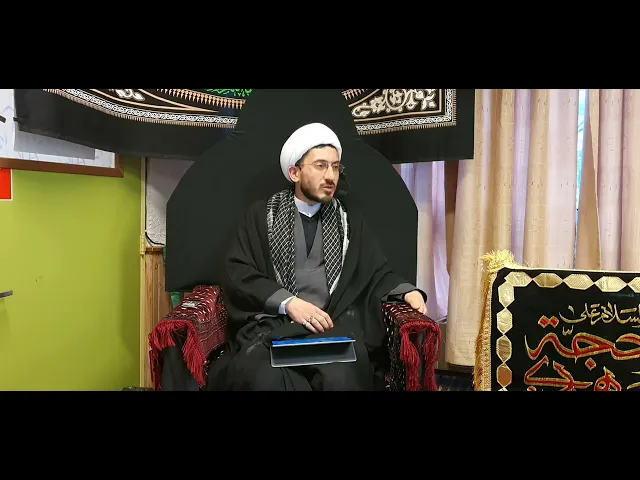
Birth of The Stars - Sheikh Wael El-Zein
0
0
6 Views·
26/01/24
In
Lectures
Show more
Transcript
[0:10]Shime.
[0:14]Miss [singing] >> [singing] >> Foreign [singing] Um, we also have u
[1:59]Ali from the Saturday school who inshallah is going to present an
[2:04]for us.
[2:06]Amen.
[2:45]Hallelujah.
[3:07]The crew of the moon.
[3:21][singing] A man [singing] >> [singing] >> who [singing] [singing] speech You're
[4:27]my life.
[5:11]Say Abdu Mansust.
[5:32]Brothers and sisters, thank you for show for showing up in this
[5:39]very cold night to celebrate the birth of Al Hussein Abu Abbas
[5:48]and Alim.
[5:51]It's no surprising that you show up in a night like this
[5:58]because this is what the SH of did for centuries expressing their
[6:04]love for B through celebrating the of all the imams and the
[6:12]shahada of all the imams.
[6:13]And uh this has become something um part of our identity and
[6:18]who we are.
[6:20]and we ask Allah to continue uh on this path inshallah.
[6:23]Tonight we are um lucky to have a special guest to celebrate
[6:32]this event with us um Sheh Wen who came all the way
[6:38]from Canada and um luckily we don't have to worry uh about
[6:41]him getting bothered from cold because the last I checked Ottawa was
[6:48]much colder than uh Canton.
[6:49]So um but inshallah he would add warmth to this beautiful gathering
[6:54]with his with his nice lecture.
[6:56]Shehen is is a prominent speaker and lectureric studies.
[7:16]So we look forward inshallah for the lecture.
[7:19]Uh but before that I want to remind you all we are
[7:22]celebrating the uh imi shar on the 15th of shaan.
[7:31]Um on the February 7th we are celebrating we're doing the annual
[7:36]family ice skating event at the architect edge on uh Michigan Avenue.
[7:40]uh we ask you all to sign up and uh make sure
[7:44]you buy the tickets because those will uh likely sell out quickly
[7:48]like uh they do every year.
[7:49]So we look forward to seeing you all and um without further
[7:56]ado, I would like to welcome She with the loudest of the
[8:01]salawat.
[8:33]I request please recite fat please.
[9:00]My is enough.
[9:02]I'm just kidding.
[9:08]Yeah.
[9:08]I don't know what warmth I'm going to bring with me.
[9:10]It just seems that every time I show up here, something happens.
[9:12]It gets really cold.
[9:14]The last time I was here, you guys had Sever snowtorm, right?
[9:17]Yeah.
[9:17]What was it about 2 centimeters?
[9:20]That's severe to you guys?
[9:21]Yeah.
[9:22]That's summer time for us.
[9:23]We barbecue at 2 centimeters of snowman.
[9:34]Alhamdulillah.
[9:51]See me.
[10:23]to hasten the reappearance of our awaited im.
[10:28]I request we recite three salawat to the loudest of our voices.
[10:35]Respected brothers and sisters, scholars in Islam, when the name Imam Hussein
[11:01]is mentioned, the mind right away thinks about and starts beginning or
[11:05]begins to imagine the tragedies and the events that occurred in Kbalah.
[11:11]Yet the question that is really worthy to ask is that how
[11:13]much do we really know about Im Hussein prior to the tragedy
[11:21]of Kbalah?
[11:22]No doubt one cannot argue that Kbalah was none but the pinnacle
[11:26]of everything that I im Hussein saw Ali stood for from his
[11:31]childhood up until his momentous uprising in the land of Kbalah.
[11:38]Yet if you were to ask many of us to answer a
[11:40]question about the teenage years about of Imam Hussein Ali, where was
[11:47]I im Hussein Ali during the reign of the first and the
[11:53]second and the third caiff for example?
[11:55]Or what do we know about the childhood of Imam Hussein?
[11:57]Or what do we know about the upbringing of Imam Hussein Ali?
[12:03]As there are numerous numerous renarrations that indicate how sayy zaham would
[12:10]focus a lot on the upbringing of Imam Hassan and Im Hussein
[12:15]Ali.
[12:15]You take for example a famous hadith by Imam Hassan Alisam.
[12:18]He would say that every time we would return back from the
[12:21]masjid, my mother Fatima would sit us down and she would begin
[12:27]asking us about what our grandfather sallallahu alaihi wasallam said in his
[12:32]she would even ask us our opinion is that what do you
[12:37]think about this point that you just told me?
[12:39]Why don't you show me howasool led his salat?
[12:43]And that's a clear message to many of us that how many
[12:45]of us sometimes we do the same with our children on our
[12:49]way back from the center is that we have a discussion about
[12:51]what the child just heard in the majus for example or how
[12:55]many of us we even ask our children to demonstrate to us
[12:59]what they have learned from the molana for instance.
[13:02]So you find that even the question is worthy to ask that
[13:05]what do we know about the childhood of Imam Hussein or for
[13:09]example what do we know about Imam Hussein's knowledge rather than what
[13:14]we have heard from the words of Imam Hussein in Kbala as
[13:19]many of us have repeatedly heard on the manab during Muharam about
[13:23]the sermons of Imam Hussein Ali in Kbala but what do we
[13:29]know about the sermons of Imam Hussein Ali those seven years arguably
[13:35]before Kbalah.
[13:34]How many of us know that Imam Hussein Ali would have interfaith
[13:39]dialogues during the season of Hajj even before Kbalah or what do
[13:47]we know about Imam Hussein's debates with the Kawar for example is
[13:51]that if you were to look back into history there are many
[13:56]sources that mention the debates of Imam Hussein with the Kawar or
[14:00]how many of us even know about Imam Hussein's how Many of
[14:07]us know that Imam himself who was referred to as would speak
[14:13]about the of im Hussein that it has been narrated that one
[14:20]time a man asked Imam that how come your father Hussein did
[14:23]not have many children.
[14:26]He said because my father Hussein was dedicated to IA during nighttime.
[14:30]Could you imagine that even the I of Hussein Ali being praised
[14:34]by none but Imam or even the words of Im Hussein Ali
[14:42]or even when it comes to Kbalah itself you find that the
[14:48]focus that we always want to focus on is always about the
[14:50]events of the battlefield that occurred but what do we know about
[14:56]those nine days before the 10th of Muharam what happened in Kbalah
[15:01]the dialogue that occurred in Kbalah that indeed it's a school of
[15:04]thought no doubt you find that there are many lessons to be
[15:07]derived even from what occurred in those minor or we refer to
[15:14]them as minor events in Kbala or even the stance that Imam
[15:17]Hussein Ali took during the reign of the second and the third
[15:23]Khalifa or the position even of Imam Hussein Ali during his the
[15:27]life of his father Ali Abi Ali am as when we reflect
[15:33]back on the life of Imam Hussein, we find that there are
[15:39]fascinating events indeed that occurred beginning from the birth of Imam Hussein
[15:47]Ali.
[15:44]Every hadith that Sam uttered about Im Hussein was an indication to
[15:53]the divine status of Imam Hussein Ali.
[15:57]These narrations were not only to indicate the relationship of Sallallahu Alaihi
[16:05]Wasallam with his grandson but rather to indicate the responsibility upon the
[16:11]Muslim ummah toward Imam Hussein.
[16:13]When I hear the prophet sallallahu alaihi wasallam says in saying in
[16:21]a narration that I im hass and I im Hussein are two
[16:25]imams whether they rise or they sit.
[16:28]The first thing that I need to think about isam was not
[16:35]complimenting his grandsons but rather indicating a theological perspective.
[16:40]And when Rasool Allah said that narration, how old were they?
[16:44]Arguably speaking, Imam Hassan was about f four years of age and
[16:51]Imam Hussein was about three years of age.
[16:54]Imagine that from that time appointed them as imams, isn't it?
[17:00]So you find that that's a theological reality that we need to
[17:05]reflect upon.
[17:04]Not only this but the fact that he is appointing them as
[17:09]imams from this very young age being children rather than being youth
[17:15]even being children that shows the responsibility that Allah has put upon
[17:20]the Islamic um towards them meaning whether they rise or whether they
[17:25]sit all the actions of Al Hassan and Al Hussein are considered
[17:32]guided by a divine revelation no doubt So whether they rise as
[17:38]imams or whether they sit as imams, they are still what?
[17:40]No doubt.
[17:42]Or for example, how many of us even reflect back on the
[17:49]duas mentioned by Imam Hussein Ali?
[17:51]I'm sure many of you have went to Hajj.
[17:55]May Allah subhanahu wa ta'ala grant us this honor.
[17:56]And you've recited the dua of Imam Hussein referred to as what?
[18:04]dua, isn't it?
[18:03]Yes.
[18:04]But how many of us have sat down and even dissected this
[18:11]dua and understood the perspective in this dua?
[18:13]As many of us, as soon as we think about Imam Hussein,
[18:17]we think about this man who's in his late 50s, that strong,
[18:20]courageous warrior who stood on the land of Kbala.
[18:25]But what do we know about Imam Hussein, the Abed, the Zahed?
[18:29]What do you know about the what do we know about the
[18:31]eloquence of Imam Hussein Ali his hadiths and his words of wisdom
[18:38]and like I mentioned earlier is that Allah began giving attention to
[18:43]Imam Hussein Ali much less Imam al Hassan Ali from their childhood.
[18:47]No doubt we all know that Imam Hussein was born in the
[18:54]fourth year after the hijra from Mecca to Medina and Allah died
[18:57]in the 11th year of Hijra, isn't it?
[19:00]So arguably speaking I im Hussein lived with Allah Sallam almost six
[19:07]years and in those six years could you imagine only six years
[19:13]and in those six years Rasool Allah was able to deliver a
[19:18]culture of literature a culture of what?
[19:23]of ba a vast literature of narrations concerning Imam Hussein that we
[19:30]hear those narrations narrations all being mentioned while Imam Hussein Ali was
[19:34]still a child and what I would like to do tonight inshallah
[19:40]is to focus and further dissect this topic from those from the
[19:45]following angles in relation to our knowledge about Imam Hussein Ali shedding
[19:51]the light even though briefly on the biography of Imam Hussein and
[19:56]I would like to do so from the following points.
[19:59]The first one is that I would like to shed the light
[20:06]on the early upbringing of Imam Hussein.
[20:10]And the second point is that I would like to shed the
[20:15]light on the role of Imam Hussein Ali mainly during the reign
[20:18]of the second and the third Khalifa which reflect his early stand
[20:27]for truth against injustice.
[20:27]And three is that his role I would like to shed the
[20:34]light on his role alongside his father immat.
[20:36]Before I would like to reflect back on the verse that I
[20:42]began with verse number 82 from Taha and its relation to Imam
[20:45]Hussein.
[20:47]And before I proceed, I would like you to provide me with
[20:51]a loud salawats.
[20:59]As I said earlier covering the life of Imam Hussein, it is
[21:04]worthy that we have even ashraus not only in Kbala but even
[21:07]on the milad of Imam Hussein as his birth is as important
[21:12]and vital as indeed his martyrdom no doubt and thereupon to be
[21:16]able to cover all the aspects is indeed heart.
[21:19]What I would like to do tonight is at least shed the
[21:21]light on the moralities that we can learn from some incidents that
[21:27]occurred during the life of Imam Hussein.
[21:29]I said the first point I would like to shed the light
[21:31]on the childhood of Imam Hussein Ali.
[21:33]We all know that when Im Hussein Ali was born, the miraculous
[21:41]stages began even from his birth where I immust.
[21:59]And therefore the miracle of with Imam Hussein Alisam began with his
[22:05]name.
[22:06]Why?
[22:04]Because the name Hussein did not exist prior to Imam Hussein.
[22:10]And so was the same with Imam Hassan Alisam.
[22:15]Those two names did not exist before in history mainly in the
[22:19]Arabian Peninsula in the days of Jahyah.
[22:22]No one was ever named Hassan or Hussein before.
[22:26]Hence you will find that even from the beginning of his birth
[22:29]or from the early stages from his birth beginning therefore you find
[22:36]that Imam Hussein began that journey towards being so distinguished with so
[22:40]distinguished with virtues with unique characteristics that Allah subhanahu wa ta'ala provided
[22:47]him with and so did the upbringing of Hussein aid in this
[22:53]no doubt and therefore you find that his name like we said
[22:56]was named by Allah subhanahu wa'ta'ala.
[22:58]Second, you find by the way that Imam Hussein did not speak
[23:02]before six months old.
[23:06]Before turning six months old before turning six months old, it has
[23:09]been narrated that Imam Hussein Alisam did not speak.
[23:12]And that's for a reason.
[23:13]And the famous narration that I would like to shed the light
[23:18]on is the narration whereas Sall Alam would constantly take Im Hassan
[23:22]and Im Hussein Ali with him to the masjid.
[23:25]Imagine even at this very young age which tells me what by
[23:27]the way on a side note is that it is so important
[23:30]to always bring your children to the masjid and to the center.
[23:33]And by the way on a side note yes sometimes speakers do
[23:39]get frustrated from children.
[23:40]I'm not going to deny it.
[23:40]No I'm not going to deny it.
[23:44]No it's something that we have to admit.
[23:46]Yes, it is frustrating.
[23:46]Is that if sometimes you're sitting down on the m you're lecturing
[23:50]and children begin running around crying, right?
[23:53]Or for example being loud.
[23:55]Yes, it is frustrating.
[23:57]No doubt because when you sit here and you're prepped, I'm sure
[24:00]the say knows here is that you're so focused on your points
[24:02]that you want to go through them that is so easy to
[24:05]get distracted.
[24:06]But that doesn't mean that the parents should take it personal.
[24:08]Not at all.
[24:10]Even if the speaker sometimes makes a remark that you find nowadays
[24:12]sometimes a short clip of a speaker goes around on social media
[24:16]complaining about children.
[24:18]But that's fine.
[24:18]Maybe that very child is someone related to him.
[24:21]Who knows, right?
[24:23]But in reality, that doesn't mean that the parents should not bring
[24:26]their children to the masid or they should just get mad and
[24:28]right away leave, right?
[24:29]You find that sometimes, unfortunately, people take things personal that right away
[24:34]the simplest issue that occurs in the center in this regard, they
[24:37]just get up and leave.
[24:38]Oh no, I'm not coming back anymore.
[24:39]Not at all.
[24:42]Yes, Allah subhana t loves to see children in the masjid and
[24:44]I'm sure even say can be a witness to this.
[24:48]One of the most beautiful experiences us as speakers have is indeed
[24:52]within the indo park and the community you find in the culture
[24:58]the wonderful thing is that the children are not playing outside in
[25:01]the center.
[25:02]The children are not sitting in the back and the children are
[25:04]not sitting in a private room.
[25:05]In fact, the children are the ones who are sitting in the
[25:10]front right under the m and they sit down and they listen
[25:12]and they focus.
[25:15]Why?
[25:16]Because of the upbringing, isn't it?
[25:18]Why?
[25:17]Because you find in their culture that the child is being brought
[25:22]to the to the masjid to the center from the very young
[25:25]age.
[25:26]Hence, they get used to it.
[25:29]They get accustomed to it.
[25:30]Isn't it?
[25:31]So that's why you find that it is important on I know
[25:34]that Allah taught us with his sunnah that to bring children to
[25:39]the masid all the time.
[25:40]At this very young age Allah would bring Im Hassan and Im
[25:43]Hussein Aliam to the masjid.
[25:46]And that's why you hear the famous narration that when I im
[25:49]Hussein Alisam would mount on the back of Saham brothers and sisters
[25:55]that was when during Allah would be leading Jama.
[25:58]Do you understand that we're talking about hundreds of companions in Medina
[26:04]being standing in salat behind su alaihi wasallam and Imam Hussein comes
[26:12]and he climbs on the back of Allahool Allah stays in sjud
[26:18]that's something really to reflect upon because that's during jama everybody is
[26:22]being led by Allah everyone else in sjud one might argue that
[26:29]Why do I have to stay in sud this long yet saham
[26:33]is the im of this jama the messenger of this ummah and
[26:36]the message clearly to indicate is to what is that form I
[26:43]im hussein you stay in soot and therefore you find that focused
[26:49]on that upbringing of IM Husseinat from that very young age and
[26:53]one of the beautiful narrations is that one time brought IM Hussein
[26:56]Alisam with him to the masjid and he was 6 months old
[27:00]and like I said earlier I im Hussein did not speak before
[27:03]those six months and then Allah stood to lead salah.
[27:08]As soon as Allah stood to lead Salah he raised his hand
[27:10]with and he said Allah abar and the first word that Imam
[27:17]Hussein pronounced at that time was he repeated Allah abar after all.
[27:22]The first word that Imam Hussein spoke Allah because he was destined
[27:31]that the first words he would utter from his blessed lips is
[27:38]none but Allah Muhammad because no one reflected the of Allah after
[27:49]Allah and his father and his Im Hassan better than he did
[27:56]indeed.
[27:57]Hence the first word that Im Hussein uttered is what?
[27:59]Allah abar.
[28:00]Rasool Allah.
[28:02]Now I I really want you to focus on this.
[28:06]When Rasool Allah heard that his grandson, beloved grandson Hussein spoke after
[28:12]six months.
[28:11]Then Rasool Allah repeated again Allah Akbar.
[28:15]Imam Hussein repeated after Rasool Allah.
[28:20]Allah Akbar.
[28:22]Then Allah repeated it again up until seven times.
[28:25]That's the inat seven times.
[28:35]And therefore in the perspective and the say knows better than I
[28:42]do.
[28:43]It is they derive the that the are seven.
[28:47]Why?
[28:46]Because the childhood of Imam Hussein became a sunnah.
[28:52]The childhood of Imam Husse a child a child repeating Allah Akbar.
[28:59]Do you imagine that?
[29:01]That very childhood of Imam Hussein repeating after his grandfather Allah became
[29:10]a sunnah became a faka perspective to study to follow and that
[29:17]is the second miraculous stage in the life of Im Hussein.
[29:22]Then as soon as finished, you know what he did?
[29:29]He sat down with Imam Hussein.
[29:32]The first surah that taught Imam Hussein was surahed.
[29:35]The first surah and who resembled better than Im Hussein and isn't
[29:46]this fascinating that after Imam Hussein spoke and he said Allah abaras
[29:50]sat down after salat and he began teaching him no doubt.
[29:57]So you find that very Imm Hussein Ali that began that that
[30:04]the upbringing instilling those values in Imam Hussein Ali began from his
[30:11]early stages of childhood and therefore you find the famous narration by
[30:18]Salman Pharisee.
[30:18]Salman in a beautiful narration he says what he says I entered
[30:25]upon the prophet sallallahu alaihi wasallam while Imam Hussein was sitting on
[30:31]his lap he was kissing his eyes and then he was kissing
[30:35]his face and then he was sayingasool Allah you are a the
[30:42]son of a and thenool Allah continued saying you are an imam
[30:48]the son of an imam, the father of imams.
[30:53]And then Allah continued, you are a ha, a proof.
[30:58]Imm Hussein was still a child.
[30:59]You are a huda, a a proof, the son of a of
[31:04]the proof and the father of nine hajj, nine proofs from your
[31:13]bloodline.
[31:11]And the ninth of them is Ali Muhammad.
[31:20]That was a hadith narrated by Salman Pharisee when I im Hussein
[31:27]and Islam teaching Im Hussein that everything would say Im Hussein would
[31:33]repeat.
[31:34]Yeah.
[31:35]You don't want to know when I was a child what my
[31:37]Lebanese grandfather was teaching me and I have to repeat.
[31:41]But I'm sure many of you can relate.
[31:43]Yeah.
[31:44]It's rooted in our culture.
[31:45]Alhamdulillah.
[31:46]Yeah.
[31:48]Nevertheless, you find what is that that was the something that I
[31:53]wanted to shed the light upon.
[31:54]Moving on to the second point that I wanted to discuss tonight
[31:57]is that what was I would like to shed the light briefly
[32:01]on the role of Imam Hussein during the reign of the second
[32:04]and the third Khalifa.
[32:06]As many of us know that the Muslim Ummah went through many
[32:09]political conflicts.
[32:11]Some of them were apparent and of some of them weren't.
[32:14]And what I would like to do here is I would I
[32:17]would like to I would like to choose two incidents that occurred.
[32:21]One of them during the reign of the second Khalifa and the
[32:25]second one during the reign of the third Khalifa H.
[32:29]The first one is that during the reign of the second Khalifa
[32:33]you find that Im Hussein was about 10 years of age.
[32:40]It has been narrated that one time I im Hussein he entered
[32:44]the masid he found sitting on the m on the pulpit and
[32:49]by the way this hadith is narrated from non sources what's that's
[32:53]what's interesting nevertheless you find that Im Hussein Ali entered and he
[32:59]saw Katab sitting on the pulpit IM Hussein Ali walked towards the
[33:03]pulpit he climbed the steps of the pulpit and stood in front
[33:10]of Katab And then he told him, "Come down from the pulpit
[33:13]of my father and go sit on the pulpit of your father."
[33:19]Omar Katab replied back saying, "What?" He said, "You're right.
[33:24]This is not the pulpit of my father, but rather the pulpit
[33:27]of your father.
[33:30]But tell me, who taught you this?" 10 years of age.
[33:33]10 years of age.
[33:36]You see focus when in the court of Yazid he says what
[33:47]that we were given six given six characteristics and then we were
[33:55]favored with seven and among those characteristics is what is courage bravery
[34:01]that is something rooted in bani hashim he stood in front of
[34:06]him and he told him come down from the pulpit of my
[34:09]father.
[34:08]Then finally asked him who taught you this subhan allah who taught
[34:14]you this.
[34:14]It's as if Imam Hussein was being sent to deliver a message.
[34:20]Imam Hussein replied saying what?
[34:22]He said no one taught me s no one taught me this.
[34:28]I said it on my own.
[34:29]And you find that Imm Hussein Alisam reflected that awareness about the
[34:34]political conflicts from that very young age and he was able to
[34:41]voice it and stand up to it.
[34:43]The second incident it happened during the reign of the third Khalifa.
[34:48]We all know the story of Abu Dafi Ali where Abu Dafari
[34:55]was exiled to a place called Alaba a really rough place to
[34:59]live in and he died there.
[35:03]When Abu Dafari was exiled, it has been narrated that there were
[35:06]three people that walked him to the outskirts of Medina.
[35:08]Even though there was an issue [snorts] from the government, a ban
[35:16]on anybody even accompanying Abu Alari, I imbu Hassan Ali and Im
[35:25]Hussein Ali.
[35:28]They walked Abu Dafi to the outskirts of Medina.
[35:33]No doubt here reflect on the words of Imam Hussein.
[35:35]He was about 28 years of age.
[35:38]And he spoke to Abu Dafi at that time.
[35:41]What did he say?
[35:43]Beautiful words of Im Hussein.
[35:46]Indeed, a lesson for everybody to learn.
[35:49]Note that when you are being fought, note that when you are
[35:57]being confronted for standing for h or for speaking h, reflect on
[36:00]those words of Imam Hussein.
[36:01]He told him what said, "Oh, uncle." And that by itself is
[36:05]a virtue being referred to.
[36:07]referred to very few companions as uncle by the way such as
[36:13]Salman Abu and on the land of honored Habib by calling him
[36:24]what uncle isn't it said oh uncle they feared you for their
[36:27]worldly life to Abu Dar they feared you for their worldly life
[36:33]for their dunya Right?
[36:37]For the benefits of this dunya, they feared you for the for
[36:42]their worldly life and you feared them for your religion.
[36:46]See, brothers and sisters, fear is a natural feeling.
[36:54]There's nothing wrong in being afraid.
[36:56]Fear is a very natural emotion.
[37:01]What's unnatural if the fear becomes cowardice that's wrong but fear in
[37:11]general as a natural feeling among those natural feelings is fearing what
[37:17]fearing for that dean that one does not want to lose his
[37:25]dean that's a logical type of fear that's a good type of
[37:31]fear Here when one does not want to lose their dean hence
[37:34]they need to react.
[37:37]Imm Hussein is telling what is that they feared you for their
[37:41]worldly life and you feared them for your religion for your dean.
[37:46]So leave to them what they fe what they fear for.
[37:51]Leave that dunya for them.
[37:53]Do not fight over dunya.
[37:57]Do not fight over the materialistic aspects of this life.
[38:03]Do not struggle for anything worldly in this life.
[38:07]It's all going to vanish.
[38:09]What is it?
[38:10]What's going to remain from it?
[38:11]And you'll find that Imam Hussein Alam said this to Abu Dar
[38:16]said leave it for them.
[38:17]Just leave that dy for them.
[38:18]So leave to them what they fear for and carry with you
[38:23]what you fear for.
[38:25]You feared for your dean.
[38:29]So carry that dean with you where to by yourself.
[38:32]That loneliness that they have thought that they might have exiled you
[38:39]to then understand that a person like Abu is not alone because
[38:43]Allah subhanahu wa ta'ala would be with him and he took his
[38:45]dean with him and that is something and this is what I
[38:49]wanted to focus on.
[38:51]And the third point, Imm Hussein during the ruling of his father
[38:57]Ali Abisam.
[38:58]At that point, Imm Hussein saw Ali had reached the height of
[39:05]his bravery and his courage.
[39:08]And at that time, Imam Hussein was a ferocious warrior indeed.
[39:16]And therefore, Imm gave him and his brother Imam al Hassan and
[39:21]their brother Muhammad Hanafi many responsibilities.
[39:25]Among them is that Imam Hussein Ali took a part in Jamal,
[39:28]the battle of Jamal leading battalions.
[39:32]They were generals in the army of their father in in to
[39:42]the point and they were so courageous on the battlefield to the
[39:48]point that it has been narrated that Imam would tell to the
[39:52]pe would say to the people hold [snorts] them back.
[39:56]Do you imagine is that it was narrated that Im Hass and
[39:58]Im Hussein Alam as soon as the battlefield would begin they would
[40:03]attack the front lines of the enemy.
[40:05]Imam would always say hold them back for I fear that the
[40:13]bloodline of Allah might get cut off.
[40:15]Do you imagine that?
[40:18]Yes.
[40:17]In fact, during one of the battles has been narrated during the
[40:21]battle of Safi, there was an incident that took place that I
[40:24]would like to shed the light on.
[40:25]A man came to Muhammad Hanfi, the son of Imam.
[40:31]And he said to him, "What?" He said to him, "Your father
[40:38]Ali Ab is unjust to you." And he said, "Why?" He said,
[40:42]"You see him on the battlefield protecting his two sons, Hassan and
[40:46]Hussein, but then he throws you and he puts you on the
[40:47]front line." Oh, subhan Allah.
[40:52]So there are people in this life or in this dunya that
[40:57]feed off fitna.
[41:00]They love it, right?
[41:00]There are people in this life that the only way they're able
[41:06]to survive and go on by their day is only through gossip
[41:09]through planting nam doing for planting doubt in other people's people's minds
[41:17]isn't it so you find that man came to Muhammad and he
[41:22]said that your father Ali Abi is unjust to you and therefore
[41:25]why because he puts you in the front lines and he protects
[41:30]Imass Hussein Don't you hear him saying hold them back?
[41:32]Muhammad Khan gave him a beautiful reply and learned that sometimes a
[41:36]proper reply is sufficient.
[41:38]Brothers and sisters, right?
[41:41]Especially when someone is coming to cause discord in the community.
[41:47]Muhammad replied back saying what he said.
[41:50]Al Hassan and Al Hussein are his eyes and I am his
[41:57]hands.
[41:58]And a logical man protects his eyes with his hands.
[42:01]See, sometimes a proper reply is sufficient.
[42:03]And this is the best way to cut off any type of
[42:09]fitna in this regard.
[42:10]And that's why a beautiful hadith comes to mind in this regard
[42:15]from Imam Hussein Ali himself.
[42:16]It is said that one time I Hussein Ali was asked what
[42:20]is virtue?
[42:21]What is virtue?
[42:25]The imam replied, "Mastery of the tongue." Subhan Allah.
[42:30]Mastery of the tongue.
[42:32]Being able to control your tongue.
[42:37]Wah.
[42:38]Being able to control that tongue because it is your tongue that
[42:45]ends up reflecting your actions.
[42:47]I remember the first year of Hza.
[42:50]I can never forget this.
[42:52]I received one of the best piece of advice I've ever heard
[42:55]in my life.
[42:56]It's by a man, may Allah lengthen his life.
[42:59]He's a poet known in Windsor, Ontario.
[43:01]Nevertheless, he grabbed me one time and he said, "Well, do you
[43:06]know what's the hardest, most difficult stage a man can reach?" And
[43:10]I said, "What?" He said, "Maturity and intellectual awareness." Maturity.
[43:19]is that to be mature, to become a mature man, to be
[43:28]referred to as a mature man.
[43:29]Yeah.
[43:29]I see many women now turning back their heads and trying to
[43:35]stare with their husbands at the moment.
[43:36]Lebanese men never mature.
[43:39]Just live with it.
[43:39]That's just the way it is.
[43:44]They just never do.
[43:43]Live with it.
[43:45]Just halos.
[43:44]Anyways, I'm just kidding.
[43:48]Nevertheless, so he found what he said to He said, "Maturity, maturity."
[43:51]And then I said, "That's interesting." He said, "Now, do you know
[43:54]what's more difficult than that?" And I said, "What?" He said, "Acting
[44:02]always upon maturity." Meaning making your actions subservient to that intellectual maturity
[44:10]that you have attained.
[44:10]Because one can be mature, one can attain maturity, one can become
[44:18]alpha if that's you, if you would were to refer to it.
[44:23]Yet the problem is is that sometimes when you are being put
[44:27]under the test, you might lose that maturity and act immaturely.
[44:34]Unfortunately, let me give you an example.
[44:36]T Freud one time wanted to teach a lesson to his students.
[44:38]He told them, "I have the ability to transform a man into
[44:44]an animal." They said, "What do you mean?" He said, "Why don't
[44:46]you come down with me to the street?" He took them down
[44:49]to the street.
[44:49]And then he pointed at a man.
[44:51]He was dressed well.
[44:54]He was carrying a business bag.
[44:55]And then he asked them, he said, "What about that man?
[44:57]How does he look?" They told him, "I look," they told him,
[45:00]his students, they said, "He looks like a man of nobility, a
[45:02]man of class, of elegance." He said, "Internesting.
[45:06]As soon as that man went by him, he poked him with
[45:11]his stick.
[45:09]The man dropped down the bag and began hitting Freud.
[45:14]And then he looked at their students at his students and he
[45:16]told them, "See, I told you I have the ability to transform
[45:20]a man into an animal." So that's true because many of us
[45:27]might attain that mature level, but then when we are be being
[45:31]put under the test, we lose our sanity.
[45:34]Isn't it?
[45:36]Imm Hussein.
[45:38]He says what?
[45:38]Says master of mastery.
[45:40]The mastery of the tongue.
[45:42]It's a virtue.
[45:44]That's the definition of virtue.
[45:45]Literally master your tongue.
[45:47]Understand that what you say is something that you will be accountable
[45:51]for.
[45:52]Especially if you want to build your personality as a as a
[45:57]man.
[45:58]He says what?
[46:00]Mastery of the tongue and the offering of kindness.
[46:05]And then he was asked and what's deficiency the opposite of a
[46:12]virtue.
[46:12]What's deficiency?
[46:12]Imm Hussein Alisam replied saying what?
[46:15]To burden oneself with what does not concern you?
[46:21]Subhan Allah.
[46:23]Two very simple yet deep advice.
[46:25]Something that does not concern you, do not interfere in it.
[46:30]It is absolutely an ugly habit.
[46:33]See brothers and sisters take it from me and I stand humbly
[46:38]here before you and before the say when I say this but
[46:40]take it from me you are not obligated to answer any personal
[46:44]questions if you don't want to.
[46:46]You see unfortunately we are told and we are set or we
[46:52]are t told and taught from a very young age that it's
[46:56]inappropriate if you don't answer back.
[46:58]Absolutely not.
[46:58]It's inappropriate when you answer back when you don't want to answer
[47:05]back.
[47:04]But you can just shut down the question with a very proper
[47:09]way.
[47:10]Simple as that.
[47:10]You are not obligated to speak about your personal life.
[47:16]You are not obligated to answer back nosy people.
[47:19]Some people are absolutely curious.
[47:24]I salute them for their courage.
[47:26]Where do they bring the self-confidence from to sit down and ask
[47:30]you the most personal questions ever to interfere in your life and
[47:34]take it from me?
[47:37]Subhan Allah.
[47:38]There are some people that all what they want is a material
[47:43]to discuss.
[47:43]Their life unfortunately is so empty and their minds are so empty
[47:49]rather than filling it with something useful, something intellectual, they want to
[47:54]fill it with gossip, a material to discuss.
[47:57]People truly just want a material to discuss a content something that
[48:01]they don't know about.
[48:03]So they're going to ask you personal questions.
[48:04]You are not obligated to answer.
[48:08]In fact, we have many narrations in this regard.
[48:12]many narrations in this regard.
[48:15]The sage knows in it's even to answer back how old are
[48:19]you?
[48:20]It's not recommended.
[48:21]Someone asks you the question say I don't want to answer.
[48:26]It's very simple.
[48:26]Learn how to reply back with a proper reply.
[48:29]Just say I don't want to answer.
[48:30]I don't feel comfortable discussing this issue.
[48:32]I don't feel comfortable discussing.
[48:35]It's interesting because many people sometimes come and tell you what are
[48:38]you hiding or what you know it just the center what everything
[48:43]what you mean what am I everything what are you a customs
[48:45]agent you know [laughter] for the love of God so sometimes I
[48:52]im Hussein Alisam is saying in a beautiful narration the mastery of
[48:57]the tongue and deficiency is what is that to burden yourself in
[49:00]something that does not concern you something that is out of your
[49:05]concern Subhan Allah.
[49:06]If anybody's more interested in this, I spoke about this in complete
[49:14]depth.
[49:15]Um when I was at the service of the HIC community in
[49:17]Orlando, um I gave 15 nights of the taps of anybody would
[49:21]refer back to them, it's on YouTube.
[49:25]Um and I spoke, you know, the deep perspective about it.
[49:28]You know, that's and how it can lead to many other things
[49:30]in this regard.
[49:32]Final point that I want to discuss, I would like to refer
[49:36]back to the blessed verse that I started with tonight.
[49:37]Surah ta verse number 82.
[49:43]And the relation between this verse and Im Hussein Allah subhana wa
[49:49]ta'ala says in this verse Allah subhana wa ta says beautifully in
[50:00]this vers I am truly most forgiving to whoever repents believes and
[50:10]does good then persists on true guidance.
[50:13]One of the things that I would like to discuss tonight in
[50:16]this regard briefly inshallah is that the first thing that Allah subhanahu
[50:20]wa ta'ala attributed to himself saying meaning what is different than is
[50:29]an intensive form of can uh a form conveying that Allah subhanahu
[50:37]wa ta'ala not only accepts pardons and forgives yet he constantly does
[50:43]So time and time again.
[50:44]So no one should ever give up from the mercy of Allah
[50:50]subhanahu wa ta'ala.
[50:49]One of the most beautiful things I find on the pulpit mainly
[50:55]in the school of thought is that you find that the pulpit
[50:57]always encourages you to turn back to Allah subhanahu wa ta'ala.
[51:01]It is something wonderful you find in the school of thought.
[51:06]So Allah subhana wa ta here is saying what I am indeed
[51:11]most forgiving.
[51:12]But then he puts conditions and he provides me with four conditions.
[51:19]The first one is the one who repents.
[51:23]Repentance is abandoning sins.
[51:26]So the one who abandons sins.
[51:28]And then the second condition believes.
[51:31]So after tba comes what?
[51:36]belief is that when this heart is purified and this heart is
[51:42]enveloped with the light of faith.
[51:45]So after repentance comes what comes belief and does good translated this
[51:56]belief reflected this belief after in what an action and this is
[52:02]what the sometimes refer to as to what The practical form of
[52:09]we can sit down sometimes at night and do a thousand or
[52:14]you can come and volunteer at an event as a form of
[52:18]you can help out a person your Muslim brother or sister as
[52:26]a form of you can aid someone as a form of and
[52:30]that is considered the practical form of that Allahh is referring to.
[52:37]So the first one is repentance.
[52:40]Second one is belief and the third is what is doing good.
[52:42]And then what distinguishes this verse about Allah's and from every other
[52:54]verse in the holy Quran that talks about that talks about repentance
[53:00]doing good belief.
[53:00]There is one last condition which is the fourth condition not mentioned
[53:05]in any verse that speaks about the perspective of which is what
[53:12]then what persists on true guidance after repentance after belief after then
[53:20]finding the righteous leadership to always be guided by because that human
[53:27]soul sometimes might deviate from the path.
[53:31]path even though after repentance and even though after belief in might
[53:35]totally deviate from the path unless it finds its true guidance and
[53:42]guided with the righteous leadership and that's what I imbak refers to
[53:49]as every im from and therefore you find the beautiful hadith from
[53:56]that says what hussein Allah here is putting the fourth condition tells
[54:09]me in a narration indeed al Hussein is the lantern of guidance.
[54:14]So not only the path of guidance but the lantern of the
[54:19]path of guidance.
[54:21]One can find the path of guidance but no one to lead
[54:24]them through it.
[54:25]Allah is telling me Hussein the most fascinating hadith in my humble
[54:31]opinion about Im Hussein indeed al Hussein as the lantern of guidance
[54:38]one guidance come to the door of Imam Hussein many people sometimes
[54:46]sit and complain I have a family member who is not willing
[54:50]to listen they're not guided they're losing the path they're losing the
[54:56]way and bring them to the path of Im Hussein Ali.
[54:59]I have many people sometimes they complain about their marital relationship.
[55:04]Reflect on the path of Imam Hussein.
[55:08]Many people sometimes complain that my son is not guided, my daughter
[55:16]is not guided.
[55:15]Speak to them about Im Hussein.
[55:18]Let them hold on to the path of Hussein.
[55:22]Let them connect with Imam Hussein and indeed they will find the
[55:31]guidance.
[55:29]Why?
[55:30]Because Allah confirmed it.
[55:34]Imam Hussein is the lantern of guidance.
[55:37]And then he continues and the ark of salvation.
[55:39]No doubt.
[55:41]May we all inshallah be encompassed.
[55:45]May we all inshallah be in that ship and the ark of
[55:49]guidance.
[55:49]No doubt.
[55:50]I could end with the dua, but I'm gonna leave it to
[55:53]the s.
[55:52]He's more better than me than this.
[55:55]I would love to hear it from his wonderful voice.
[55:56]But I just want to say a final message.
[55:58]This is the second time I come here after I had a
[56:03]wonderful um series of lectures amongst you during shah Ramadan.
[56:05]It was what couple of years ago, three years ago if I'm
[56:12]not mistaken.
[56:09]What was it?
[56:12]2024.
[56:13]2024.
[56:14]Are you sure?
[56:14]If I'm okay.
[56:16]Subhan Allah.
[56:15]Okay.
[56:16]It just felt like it was a long time, but it was
[56:19]wonderful.
[56:19]And we were in this blessed place and honestly it's a wonderful
[56:23]place.
[56:24]I see the sincerity and I see the purity in the but
[56:28]I would love it that the next time I'm invited here inshallah
[56:31]it'll be in the new center.
[56:32]You know you guys are distinguished with many things.
[56:39]The first one is that as immi you have a godly scholar
[56:45]a divinely guided scholar is a pure soul.
[56:48]Subhan Allah.
[56:49]His pleasant smile.
[56:50]This is something that we all speakers agree on.
[56:53]I'm telling you, everybody says that.
[56:55]Subhan Allah.
[56:55]So you have that.
[56:58]You're distinguished with that.
[56:58]So take advantage of it.
[57:01]And the second one is a wonderful community.
[57:01]You guys are generous.
[57:04]You guys are pure.
[57:04]You guys are kind.
[57:08]Um excellent hospitality.
[57:07]So let's make this happen and let's do it as soon as
[57:14]possible.
[57:11]even if it's going to cost us because trust me the obstacles
[57:18]are not finances the obstacles are not finances you go to any
[57:22]center you go to any molana any he'll tell you I don't
[57:26]want money what I'd rather is people's dedication when you have dedicated
[57:30]souls then the finance will come then will come that's on Allah
[57:34]subhanahu wa ta'ala is that he's the one who takes care of
[57:39]the and I'm very happy that you guys inshallah have progressed just
[57:42]a little but inshallah let's even see it further and I would
[57:45]love to come back inshallah by next year or whatever it is
[57:51]and we'd be in that blessed place I ended I say Please
[58:31]everyone, we take this opportunity to Thank our dear brotherh for blessing
[58:41]this gathering and joining us and accepting the invitation.
[58:45]He came from a colder place.
[58:47]He came from Ottawa.
[58:47]So this is like coming to Florida for him, right?
[58:51]So not really.
[58:55]No, [laughter] we we're wishful thinking.
[58:57]Alhamdulillah.
[58:57]We we thank him for joining us.
[59:01]His words are very inspiring, very beautiful.
[59:04]Mashallah a lot of knowledge we have to catch up mashallah some
[59:07]maybe we have to rec uh go back and relisten to it
[59:13]because every word mashallah every minute is something very beautiful and we
[59:18]pray that we see you more often here now inshallah um you
[59:22]said the next time is in the next is in the center
[59:25]I mean I'm afraid that might be a long time we want
[59:30]you to come before that so inshallah maybe if we are able
[59:32]to get it done.
[59:34]But if not, then definitely here until we get it done.
[59:37]May Allah subhana wa tala bless you.
[59:42]Let us raise our hands in dua.
[59:47]All We have We have a very beautiful looking cake that's waiting
[60:36]to be cut by uh sister.
[60:39]She made always every celebration that we have she mashallah does something
[60:44]very beautiful and it tastes even better.
[60:47]But we need the knife and we need the plates and we
[60:53]need all of that.
[60:51]So, inshallah will will cut the cake
0 Comments
sort Sort By
- Top Comments
- Latest comments
Up next
4 Views · 18/10/28
5 Views · 18/10/28
5 Views · 18/10/31