Up next
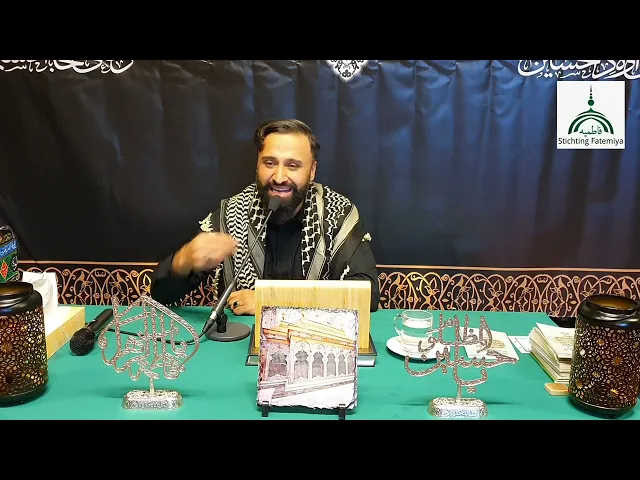
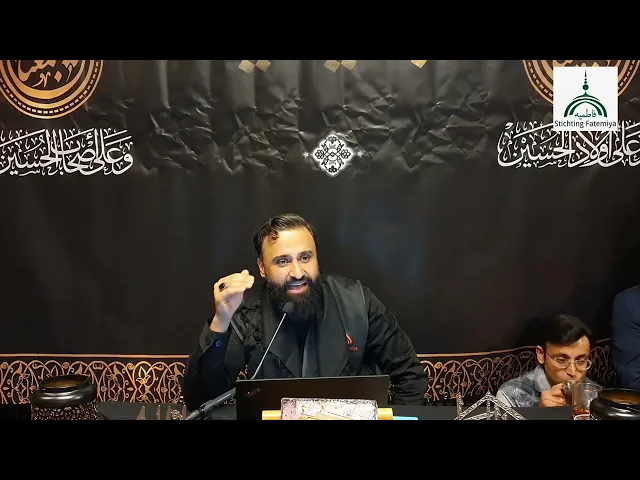
Why Do We Fast? - Sayed Ali Al-Qazwini
0
0
0 Views·
26/02/24
In
Lectures
Al-Rasoul Islamic Society || Halifax - Canada
Show more
Transcript
[0:01][music] [music] Once our beloved 11th Immass peace be upon him, he
[0:22]was asked why is it that Allah subhana t has mandated upon
[0:25]us fasting every single year.
[0:29]He responded part of the reason why Allahel has obligated upon us
[0:43]this yearly ritual of fasting 30 nights, 29 nights, the month of
[0:48]Ramadan is so that those who are more privileged amongst us may
[0:54]feel for those who are less privileged amongst us.
[0:56]This is part of the philosophy and part of the wisdom behind
[1:00]why Allah mandates fasting for us every single year.
[1:06]According to one study done by the University of Alabama, they brought
[1:12]in over 33 participants and they hooked them up to an EEG,
[1:15]which is some type of uh they put some sensors so that
[1:20]they can scan their brain activity.
[1:21]They placed these individuals in various rooms and they showed them various
[1:25]videos.
[1:27]They showed them videos of casual everyday interactions.
[1:32]And they showed another segment of them videos of people being hurt,
[1:37]people being injured, people going through painful moments whether physical or emotional.
[1:42]And they have these sensors so that they can analyze their brain
[1:47]activity.
[1:48]Prior to putting them in these rooms, they asked these individuals, "Do
[1:51]you have any history of the following?" You know, any history of
[1:54]being bullied, car accident, various types of, you know, stressful mental or
[2:03]emotional or physical past events.
[2:06]What they notice after analyzing the findings of the sensors is that
[2:13]people that have had similar past events, let's say you as a
[2:18]young child, you were bullied, you know, you were very softspoken, you
[2:22]were kind-hearted and some people didn't like that and so they would
[2:25]pray on you.
[2:27]When you saw that video of someone being bullied, your empathy was
[2:31]activated.
[2:31]that region in the brain in the prefrontal cortex where which is
[2:35]associated with empathy was more activated than others that did not have
[2:39]that past previous experience.
[2:43]And in fact they noticed there's two types of empathy.
[2:47]One is called cognitive empathy.
[2:49]Cognitive empathy is understanding rationally that someone else is going through pain
[2:56]and being able to logically understand what they must be going through.
[2:59]Then there's what's called emotional empathy.
[3:02]It's not just simply logically knowing what they're going through.
[3:06]You can literally feel what they're going through.
[3:12]And the study found that the areas associated with seeing people who
[3:20]have gone through events similar to you, this was mainly active in
[3:25]regions associated with cognitive empathy.
[3:27]you can intellectually understand what they're going through but not so much
[3:30]really feel it.
[3:33]In another experiment conducted by Stanford University, they brought students into a
[3:39]room and they gave them a V VR virtual reality headset and
[3:43]the the name of the game or the video that they were
[3:45]shown was becoming homeless.
[3:46]And it's basically an immersive experience of how just a regular, you
[3:50]know, everyday Joe has a 9 to5, has a family, you know,
[3:54]initially mental health declines and then just bad luck.
[3:56]One thing leads to another.
[3:59]This guy becomes homeless.
[3:59]And how you have to find places to live, you know, people,
[4:02]the police, the authorities, they come and they scoot you off the
[4:05]sidewalk.
[4:06]You have to find somewhere else.
[4:07]You have to, you know, find ways to secure your few belongings.
[4:10]And it's very immersive.
[4:12]They found that because of how immersive the VR experience is, it
[4:16]feels like you're literally going through this, these people showed more empathy
[4:21]towards the homeless and they found more willingness, you know, in support
[4:25]of homeless causes than people that were just shown a regular video,
[4:29]a regular movie or documentary about the homeless.
[4:30]You could almost feel like you're going through it.
[4:33]So, the more the experience hits home, the more you have that
[4:38]feeling of empathy.
[4:40]But the greatest way to develop that emotional empathy is to go
[4:45]through that experience yourself.
[4:49]One way that Allahhana ta wants to set equity and equality within
[4:54]our societies is we have to help each other out.
[4:56]That's the system of zakat.
[5:00]That's the system of the Islamic duties and the redistribution of wealth.
[5:04]But one way we really are motivated towards social justice emotionally is
[5:09]if we understand what those who are less privileged than us are
[5:13]going through.
[5:15]And that is one reason why Allah subhana t has mandated fasting
[5:18]upon us.
[5:20]So that when you yourself you taste that hunger, you know what
[5:25]it's like to go hungry.
[5:26]You're more emotionally motivated as well as intellectually motivated to go and
[5:31]help those that are in need.
[5:35]My dear brothers and sisters, hunger is not just something of the
[5:40]old.
[5:41]According to the World Health Organization, over 720 million people face hunger
[5:48]now in 2026.
[5:49]That's a huge number.
[5:53]720 million.
[5:55]This is with all our technological advances, all the food surplus that
[6:00]we have.
[6:00]Back in ancient times, a thousand years ago, 2,000 years ago, the
[6:06]food surplus was 1:2 or 1:3.
[6:07]Meaning for every person involved in the cultivation of food, meaning a
[6:11]farmer, they could produce enough food to feed two other people or
[6:14]maybe in very developed societies at the time, three other people.
[6:20]Therefore, if there was a good year, you know, spring was early,
[6:22]you don't have any crazy snowstorms, you could feed three other people.
[6:26]So if even 30% of the population is farmers, they can support
[6:32]everyone else.
[6:31]But some years, you know, you have the the not so good
[6:36]years.
[6:36]Not every year is in the green.
[6:39]Some years are in the red.
[6:40]And that gets a bit tricky.
[6:41]Therefore, you find masses of people starving.
[6:45]Now in the United States, and I think maybe in the Western
[6:51]world, that ratio is closer to one to 300.
[6:54]If just one person engages in the cultivation of food and produce,
[6:58]they can feed 300 other people.
[6:59]So only a minority of people have to be employed in this
[7:03]profession just because of how advanced our tools have gone.
[7:07]And yet you find with all this advancement, with all this crazy
[7:10]surplus of food, 720 million people go hungry every single year.
[7:16]2.3 billion people have moderate to severe food insecurity.
[7:22]What is food insecurity?
[7:23]You don't know if you're going to have anything on your plate
[7:25]tonight.
[7:28]See, one thing that eases us with Ramadan, even though you woke
[7:33]up very early, even though you might have forgotten to have last
[7:38]night, you're starving, but you know when you get back home, an
[7:41]hour later, there's going to be food on the table.
[7:46]My dear brothers and sisters, some of our brothers right now in
[7:51]Sudan, in other areas, they go to sleep not having hadar and
[7:53]they don't know if there will be aar tomorrow as well.
[7:58]That's difficult.
[8:01]That's not easy.
[8:04]According to the World Health Organization, 150 million children.
[8:09]Now, see, maybe if you're an adult, you can handle it.
[8:11]It's not easy when you feel your intestine squeezing against themselves.
[8:15]150 million children have stunted growth.
[8:18]They're not just going hungry.
[8:20]This is affecting them developmentally.
[8:22]This is affecting their brain growth, their body growth.
[8:26]Some of these young girls, they don't have natural processes that happen
[8:30]in you know what a normal girl that grows up.
[8:33]Why?
[8:34]Lack of food.
[8:36]And can we tell Allah, ya Allah, you know, on the day
[8:39]of judgment, you know, there's a lack of food on earth.
[8:42]We don't have the resources.
[8:42]We do not have the ability to feed.
[8:46]That's not true.
[8:49]According to the World Health Organization, it would take under $50 billion
[8:53]USD in order to solve world hunger.
[8:58]And in the United States, every single year, over $70 billion worth
[9:04]of food, fresh food is thrown in the garbage bin every single
[9:07]year.
[9:07]And this is just one country.
[9:10]So we cannot claim to say that we do not have the
[9:13]resources that oh you know we tried but we couldn't but at
[9:18]least Allahel says in order for you to be motivated to help
[9:22]those that are less privileged you need to yourself go through that
[9:27]experience.
[9:30]around a century and a half ago.
[9:33]One of our scholars who has written many books ali he lived
[9:38]in Iran and he lived at a time when there was a
[9:40]drought.
[9:41]There wasn't enough food.
[9:43]Every single day if you wanted to eat, not starve, you would
[9:48]have to go and stand in line at the baker a very
[9:53]long line just to receive one or two loaves of bread.
[9:55]That was the rationing for every single citizen.
[9:59]You know, forget meat, forget chicken, forget sweets, forget sugar, forget all
[10:03]that stuff.
[10:05]You know, not too long ago, in my grandfather's era, when he
[10:08]was young, sugar was still considered a luxury.
[10:10]If you wanted to gift your neighbor something really fancy, you would
[10:15]gift them a bag of sugar.
[10:18]Back in those days, the average American family in the early 20th
[10:25]century would consume a pound of sugar every year.
[10:27]Now, on average, we consume a pound of sugar every single week.
[10:33]So, back then, sugar was a luxury.
[10:37]So, he would wait in line, this long line, and sometimes, you
[10:39]know, you're at the end of the line, it's your turn, there's
[10:40]no more food.
[10:42]There's literally no more flour.
[10:42]So, one day he was waiting in line, he got his two
[10:46]loaves of bread.
[10:46]He's on his way home, and by the way, he's a recently
[10:49]married individual, so two loaves of bread, one for him, one for
[10:51]his wife.
[10:52]I mean, it's nothing fancy, but at least, you know, fills the
[10:54]stomach.
[10:55]He sees an old lady pass by him.
[10:58]She tells him, "Look, my son, I'm very old.
[11:02]I was late, you know, for the the line, for the rationing
[11:06]of the bread, and you know, you're young, but I'm old.
[11:09]Our bodies are different and our tolerances are different.
[11:13]Would you be so kind as to give me, you know, these
[11:15]two loaves of bread for me and my kids?" He said, you
[11:22]know, on the one hand, I'm recently married and obviously I have
[11:26]an obligation towards my my family, my wife, and if I don't
[11:28]have this, you know, it's going to go till tomorrow.
[11:32]We're going to spend the night starving.
[11:34]But he says, I just I couldn't say no.
[11:36]You know, this old lady clearly maybe her husband has passed away.
[11:40]He's not around and she has kids.
[11:41]So I decided for the sake of Allah, you know, to give
[11:46]her these two loaves of bread.
[11:48]My dear brothers and sisters, it's only in the past three or
[11:52]maybe four or depending on the country that you've lived maximum six
[11:56]generations that we're living the type of lifestyle that we have now.
[12:00]For most of human history, most of my ancestors and your ancestors,
[12:04]this was their daily struggle.
[12:06]food was not easy to procure, to buy.
[12:12]You know, I saw a documentary not too long ago about mud
[12:17]pancakes in Haiti.
[12:18]Haiti, the island nearby, you know, Central America.
[12:21]And so, what are mud pancakes?
[12:23]We've all heard of pancakes.
[12:25]There's Nutella pancakes and cinnamon pancakes and all that stuff, strawberries pancakes.
[12:30]So, for a while, they had undergone severe drought and they had
[12:35]their own political circumstances.
[12:36]So kids in impoverished areas, they would go and buy a bag
[12:42]of flour.
[12:42]Then they'd go in the middle of the playground of their school.
[12:46]And what is their playground?
[12:48]It's basically just, you know, grass and dirt.
[12:52]It's no swings or uh, you know, anything fancy slides.
[12:54]They pour the flour in a big bottle of water.
[13:04]They mix it.
[13:02]Then they pour that batch on the ground.
[13:06]straight onto dirt.
[13:08]Then they'll mix that.
[13:09]They'll take that concoction, which is basically dirt and water and flour.
[13:14]They'll bake that.
[13:17]Then they'll eat that.
[13:17]That's just their food.
[13:18]This is not centuries ago.
[13:20]I'm not talking generations ago.
[13:21]This is like 10 years ago.
[13:23]So the kids are so happy, you know, they're eating their mud
[13:26]pancakes.
[13:27]You know, they call the pancakes, but I mean, what is this?
[13:29]This is food fit for children that are growing that need all
[13:34]the vitamins and minerals that any normal person would need to grow.
[13:37]But this is just how people used to live.
[13:41]So this say alas he goes home and you know his wife
[13:45]is understanding.
[13:47]She he explains the scenario.
[13:47]He says before I went to sleep someone came and knocked on
[13:50]my door.
[13:51]I opened it.
[13:53]He says, "It's my neighbor who's also a baker." And he says,
[13:56]"I saw you going back home today without food and I figured
[14:01]something must have happened.
[14:02]Either you didn't get your share of food or you must have
[14:03]given away." And knowing who the type of person that you are,
[14:07]you know, he's known to have goodl, it must have been the
[14:09]second.
[14:10]So he says, you know, because I'm a baker, I hid two
[14:14]loaves of bread after everyone else that needed the rationing got them
[14:17]and I brought them here for you.
[14:19]And until the end of that drought, however long it lasted, a
[14:21]couple weeks maybe, this baker would come every single day and offer
[14:26]that bread to this family.
[14:27]So, subhan Allah, that same night and every night afterwards, Allah had
[14:31]rewarded them.
[14:32]But think of it like this, he must have the say considered
[14:34]himself so privileged and so blessed to receive two loaves of bread.
[14:39]That was considered a blessing.
[14:43]You would thank allahel for this.
[14:44]Now imagine my dear brothers and sisters, you're invited by a neighbor,
[14:47]a fellow brother or sister in the community overar and they bring
[14:50]two loaves of bread.
[14:50]What would your reaction be?
[14:54]Some of us we'd be insulted two loaves of bread.
[14:56]This is myar know that there would be people back then that
[15:01]would kill to have thisar.
[15:03]Forget back then there are people today here in February that would
[15:08]kill to have anar like this.
[15:09]We have to be more grateful my dear brothers and sisters.
[15:11]We have to look at ourselves and be so immensely grateful because
[15:16]all our souls are created by allahel.
[15:19]Yes, maybe our skin has different colors, different shades, we speak different
[15:23]tongues, but our souls are all the same.
[15:26]My soul could have been born somewhere else.
[15:26]Who's to say that I was destined to be born in Michigan?
[15:31]I was destined to be born in this area in Canada.
[15:35]I could have been born in an area where having two loaves
[15:37]of bread would have been an absolute privilege.
[15:42]If you look at history, the Irish famine from 1845 to 1849,
[15:48]because of the system of colonialism that the UK, that England had
[15:54]set in place, where they had to grow all their produce and
[15:56]export it for profit, all that they had left was potatoes.
[16:00]As soon as a simple fungus came and infected all those potatoes,
[16:03]the largest famine in Irish history happened, 1 million people died.
[16:09]Oh, I 1 million.
[16:13]Imagine past couple weeks all you've had are potatoes.
[16:19][laughter] This is your breakfast, your lunch, your dinner.
[16:22]But they were grateful.
[16:24]You know, that's their life.
[16:25]They work hard and they're grateful for what they had.
[16:29]But then because of that evil system of colonialism, they even lost
[16:34]that 1 million lives perished.
[16:36]Do we understand the privilege that we're in?
[16:39]Sometimes in order to understand how lucky we are, Allah has to,
[16:42]you know, twist our ears a little bit.
[16:44]That way, we can really come to understand the blessings and privilege
[16:48]that we have.
[16:53]You know, if you search up colonial India, a really, you know,
[17:00]painful image will come up.
[17:00]It's an old man who should be at his old age, you
[17:06]know, sitting comfortably on his bed, on his couch with his family,
[17:08]with his kids and grandkids serving him, him and his wife, you
[17:11]know, the grandma.
[17:14]That's how we imagine a happy family to be, right?
[17:16]It's an old man sitting on the street because he's homeless, because
[17:22]of this incredible system of inequality forced upon them by the British.
[17:27]And of course they had their own local customs too, but because
[17:31]of colonialism.
[17:32]And he's sitting on a chair with a stick in his hand,
[17:37]a knife in the other, and there's a body in front of
[17:41]him.
[17:42]If you look at the picture, he looks as thin as a
[17:43]match.
[17:44]Like he's I don't know how much he weighs, maybe 70 lbs.
[17:48]He's an old man.
[17:47]He's so thin you can see his ribs.
[17:50]And there by his feet lays a woman who is his wife
[17:55]was even thinner than him.
[17:56]She looks like she's on the cusp of death.
[17:58]Why is he carrying a knife in his hand?
[18:00]This was at a time when there was so much starvation that
[18:07]people were resorting to cannibalism.
[18:11]You know, Allahel must have so much patience to see this and
[18:17]to be patient and to wait so that these people who are
[18:20]in charge of these heinous deeds reap their punishment.
[18:24]Starvation was so rampant people were eating each other.
[18:27]So this guy, poor guy was standing with a knife protecting his
[18:30]wife.
[18:32]I mean what kind of monstrosity is this?
[18:37]But Islam says, I have another system.
[18:40]Not a system where we exploit one another.
[18:43]Not a system where for my benefit I make everyone else suffer.
[18:48]I have a system where we all live in equity, where each
[18:52]person gets their fair share and their fair dues.
[18:55]In order to instill this value and make it an innate virtue
[19:01]of every single believer, part of the reason why we fast is
[19:04]so that we can understand what it's like to have less.
[19:10]The second reason, my dear brothers and sisters, why allahel has mandated
[19:17]fasting upon us, it's mentioned in the in the verse that I
[19:22]mentioned early on in the lecture.
[19:23]Allahh states, "Oh you who believe, fasting has been mandated upon you
[19:36]the same way it's been mandated upon those before you." There is
[19:39]fasting within the Jewish faith.
[19:41]There is fasting within the Christian faith.
[19:43]It might look different, but at its heart, it's similar.
[19:48]And all those who believed who came before Muslims.
[19:50]Lest that you may have tawa God consciousness.
[19:56]My dear brothers and sisters, all of our and all of our
[20:00]whether that's prayer, our five daily prayers, whether that's whether that's whether
[20:09]that's whether that's giving our zakat, each of these has its own
[20:14]goals.
[20:14]But the goal of all these worship as a whole is to
[20:17]increase our piety is for us to nurture tawa within our souls
[20:23]to nurture God consciousness as that prime virtue.
[20:29]Taqua should be the goal of every believer, every believing man and
[20:35]every believing woman.
[20:36]having that love and that fear of Allah instilled in our hearts.
[20:42]You know in one of our dua the Imam peace be upon
[20:48]him he describes it.
[20:51]He says to have tawa is you look at Allah you look
[20:53]at Allah with the aura of a grand emperor for there is
[20:59]no emperor like the creator of the universe.
[21:01]But at the same time knowing that this person, this entity loves
[21:04]you more than a loving father or unloving mother would.
[21:08]It's having that balance, right?
[21:13]That balance between love and fear.
[21:17]Fear of offending him, but love of his worship.
[21:19]Tawa is the goal of our fasting.
[21:25]Why do we read the Quran?
[21:29]To connect with Allahel?
[21:30]So that we instill this value of piety.
[21:34]There was a family their system was that they had a creed
[21:39]upon themselves the two parents, the children, the grandchildren that there is
[21:44]not one hour inside the house that the Quran is not being
[21:49]recited.
[21:48]So what they did is they would take shifts, you know, from
[21:52]12:00 a.m.
[21:54]to 2:00 a.m.
[21:53]One person would be awake reciting the Quran.
[21:56]Everyone else would sleep.
[21:57]At 2 am this person would go to sleep.
[21:59]Someone else would wake up.
[22:01]Two at to 6 am that person would recite Quran.
[22:02]And then so on so forth.
[22:05]Two or four hour shifts.
[22:07]Throughout the entire day this family was reciting Quran.
[22:11]Imagine the blessings that are accompanied to that household.
[22:15]According to one narration attributed he says that the house in which
[22:24]Quran is constantly recited Abundant blessings will be imbued within this house.
[22:32]You want blessings in your life.
[22:34]You want to enjoy your life.
[22:36]You want your to increase.
[22:37]You want to have a long life.
[22:39]You want to have beautiful family connections.
[22:42]You want a righteous lineage.
[22:43]Constantly recite the Quran.
[22:47]And part of the blessings of Ramadan is to give us this
[22:52]platform by which we further increase our interaction with the Holy Quran.
[22:56]We open the holy Quran, we read, we ponder the words of
[23:00]allahel.
[23:02]It's narrated that and if you haven't heard of his name, you've
[23:07]definitely heard of the book that he's authored.
[23:11]Every family in addition to Quran and perhaps usually has a copy
[23:18]of what a blessed book and what an honor that Allah has
[23:20]bestowed upon him that almost every single Muslim family has this book
[23:26]of his Abbasi authored a book he gleaned from the hadith from
[23:32]the narrations all the various dua and all the various actions throughout
[23:36]the year you know Ramadan day one these are the mustab actions
[23:40]mustab prayers day one, end of beginning of Shaam.
[23:46]He gleaned all this into one book.
[23:48]He went to the publisher to have this published and the publisher
[23:51]said, "Yes, a few days and inshallah the book will be ready
[23:55]for publication." He comes the next day and he says, "Wait a
[23:57]second.
[23:58]Give me back my book.
[23:57]I just need to tweak it a little bit." Says, "Sure." He
[24:02]gives him the book.
[24:02]He waits the next day.
[24:06]The sheh doesn't come.
[24:06]Two days later, she is still not here.
[24:09]it's been a week, you know, he's wondering, you know, what are
[24:11]the final tweaks that he's doing?
[24:15]So, it's, you know, it's taken a a full week.
[24:16]He waits a month, two months, a whole year passes by when
[24:21]the sheh visits him again.
[24:22]He says, "She, where have you been?
[24:24]I've been waiting a year." The Sheh said, "I thought to myself,
[24:29]you know, the Quran commands us, don't preach what you don't practice."
[24:35]He said, "I thought to myself, every one of these that I
[24:40]mentioned in my book, did I do them?" He's like, "And I
[24:44]wasn't sure.
[24:43]I couldn't for sure say that I did every single one of
[24:47]the that I wrote in my own book." And I said, you
[24:51]know, that can't be the case.
[24:52]If I tell people and I enjoined people to do these good,
[24:55]it's only hypocritical if I don't do them myself.
[24:58]So he says, "I took the book from you and I made
[25:01]sure the following year every single thing written in this book I
[25:04]would do it myself.
[25:04]Every dua I would recite it at its time.
[25:07]Every prayer I would pray it every I would do it.
[25:12]Every on a given day I would offer it." And this perhaps
[25:14]might be why this is such a blessed book.
[25:17]Why this book has filled every corner of the globe.
[25:21]It really is a blessed book.
[25:22]And the Sheh himself has the honor of being buried by the
[25:27]shrine of peace be upon him.
[25:29]What a beautiful resting place.
[25:38]But my dear brothers and sisters, in order for us to engage
[25:43]in great to increase our God consciousness, do we have to be
[25:48]scholars and go to and dedicate our time to studying?
[25:53]No.
[25:52]If you look at Islam, the early companions of and the companions
[25:57]of the imams, many of the greatest companions that had the highest
[26:02]ranks, you know, they had an average basic, you know, basically what
[26:08]we would now call average 9 to5.
[26:11]The man who was known for his honest tongue, for his trustworthy
[26:18]character, one of the close close close companions of He was a
[26:24]Tamar.
[26:24]He would basically go climb palm trees, collect them, come to the
[26:28]market and sell them.
[26:29]But he had what an honorable rank.
[26:32]Muhammad ibn Muslim, he was a flower seller.
[26:35]You know, flour for bread.
[26:38]He would collect that, come to the market and sell flowers.
[26:43]one of our great great great companions also known as who's man
[26:55]is the first of the he's the first direct representative of Im
[27:05]this man had [clears throat] such character such such that the im
[27:13]directly appointed him.
[27:13]Now in modern days when we say the the scholars they're the
[27:18]representatives of the im when you ask them what that means they'll
[27:20]say this is generable in the this is generable representation.
[27:26]Of course the imam has not directed anyone to be their specific
[27:31]envoy.
[27:30]But this was the first of four direct representatives of the imam.
[27:36]The imam is in the minor occultation.
[27:39]He is the man the man the imam relies on to deliver
[27:42]his messages.
[27:43]What an honorable man.
[27:47]Was he a scholar?
[27:45]No.
[27:46]He was he was an oil seller.
[27:48]He would go sell cooking oil.
[27:50]You know, that was his job and that was his trade.
[27:52]And his son who was the second direct representative continued that trade.
[27:56]He wasn't a scholar either.
[27:57]Now, of course, that doesn't mean they won't learn and continue their
[28:03]journey in knowledge.
[28:03]But that was their trade, just selling cooking oil.
[28:06]And in fact, you know, if you read history, uh it's funny
[28:09]how he utilized his trade and profession to help further his causes.
[28:13]Sometimes if he had to deliver letters to followers of the Imam
[28:17]or to the Imam or deliver sums of money to the Imam,
[28:20]he would hide it in the barrels of oil that he would
[28:22]normally use to cook or to sell cooking oil.
[28:25]So he had a very basic, you know, profession, but he made
[28:30]the most out of it.
[28:32]The reason we do this, the reason we worship Allahel, my dear
[28:39]brothers and sisters, is to increase this piety and God consciousness.
[28:43]But behind every great action, if you want to start the Ramadan
[28:48]with great worship, real sincerity in your worship, every action needs behind
[28:57]it inner change.
[28:58]In order for our outer reality to reflect these immense values that
[29:04]Islam has given us, there needs to be first a change from
[29:10]within.
[29:08]If we can make that change from within that will reflect into
[29:13]our actions and we will see the results that we want inshallah
[29:16]which is to be amongst the may Allahel make us all amongst.
[29:22]Therefore we have to strive for inner change.
[29:25]Allah subhana t states in the holy Quran Allahel will not change
[29:42]a community until they decide to make a change amongst themselves until
[29:48]they change their innermost self.
[29:50]Yes, the divine guidance is always available.
[29:56]You ask and inshallah Allah will offer it to you.
[29:57]But for you to be able to be a receptacle of divine
[30:02]mercy, we have to first work on ourselves.
[30:05]To qualify for the spiritual Olympics, to qualify for the spiritual marathon,
[30:11]we have to start training.
[30:14]Yes, we train our muscles for the marathon.
[30:16]We train our muscles for the Olympics.
[30:18]We have to train our spiritual muscles for the spiritual Olympics.
[30:23]That change comes from within.
[30:25]Inner energy is needed in order for that to manifest into positive
[30:35]action.
[30:32]Part of the ofat of worship of recitation of the holy Quran
[30:40]of waking up alone at night and reciting is that these give
[30:43]you that inner energy.
[30:45]Sometimes people come up to our scholars and they say you know
[30:50]I just I don't have the energy to do worship.
[30:52]I just I don't feel it.
[30:53]I don't feel that connection with allahel.
[30:56]Once my dear brothers and sisters, we make that desire.
[31:00]It all starts with desire.
[31:03]We have to have a burning desire that I want this year
[31:05]during this shah Ramadan, not the next, not 2028, not 2030, this
[31:10]shah Ramadan, this month, starting tonight.
[31:12]I want to increase my relationship with Allah.
[31:14]Didn't he create me before I was dust?
[31:17]What does he have in store for me?
[31:19]What does he want from me?
[31:22]Where am I headed?
[31:23]Doesn't he have a message for me in the form of the
[31:27]Holy Quran?
[31:28]Let me read it.
[31:27]Let me see what Allah wants of me.
[31:32]If you have that burning desire and you start engaging in then
[31:36]you will start to feel that inner energy and that will reflect
[31:42]into positive action and inshallah the end goal is to have that
[31:46]feeling of God consciousness.
[31:48]There's a beautiful story of a man by the name of of
[31:56]this man he didn't have the most proper upbringing.
[32:01]So his profession was not a very noble one.
[32:04]He was a highway robber.
[32:08]Busy routes where people would do trade.
[32:10]People would go in caravans, they'd carry silk, they'd carry spices, other,
[32:15]you know, valuable stuff, gold to do trade.
[32:17]He'd stand in the way and he'd basically steal when these people
[32:22]were sleeping.
[32:22]He'd raid the caravan and steal whatever he could.
[32:25]This was his job, his day job or I guess his night
[32:26]job.
[32:29]Al f one day in his city and it said that he
[32:37]used to live in Kufa his eyes lands on a lady and
[32:39]he's infatuated with this lady but knowing what his you know and
[32:45]his personality and you know the kind of person that he is
[32:48]he researched about her found that she's very noble lady and him
[32:51]coming from not such a noble background he knew that you know
[32:54]if he were to come and to propose this would never happen
[32:56]so he had no hope so one day, you know, being a
[33:03]highway robber, he transgresses upon people's rights, people's people's property all the
[33:06]time.
[33:07]So this, you know, it's salad for him.
[33:10]Transgressing people's rights is nothing foreign to him.
[33:14]So one night he's climbing the wall of her house in order
[33:16]to go and violate her rights.
[33:19]Kind of a criminal this is.
[33:23]He's climbing the walls.
[33:23]He's about to descend.
[33:24]He and he can see her from the roof.
[33:27]When he hears a neighbor of that lady, he's up late at
[33:34]night reciting Quran in his salah.
[33:37]Just look at the dichotomy.
[33:40]This man is up late at night.
[33:41]He's about to commit a crime, a heinous crime.
[33:45]And that neighbor is up at night reciting Quran.
[33:50]And he hears the following verses.
[33:55]He hears him say, Is it not time for those who have
[34:01]believed that their hearts are humbled before the of God, the remembrance
[34:12]of Allahel?
[34:12]He says it felt like a lightning bolt.
[34:14]Something came and shocked me.
[34:17]He says I stood there for a minute.
[34:20]I was really just re-evaluating my life like what am I doing?
[34:23]What got me here?
[34:25]How can I change?
[34:26]Sometimes, my dear brothers and sisters, we feel so stuck.
[34:29]We feel like we can't move.
[34:31]We feel literally paralyzed.
[34:33]What do we do?
[34:35]What do we do when we're so paralyzed we can barely breathe?
[34:39]The Quran says, "If you have tawa of God, faith in God,
[34:46]Allah will eventually aid you." So he says, "Yes, yes, my God,
[34:56]it is time.
[34:57]I'm not going to wait another Ramadan.
[34:59]I'm not going to say, you know what, maybe after maybe Ramadan
[35:03]finishes comes and then I'll be a good person.
[35:07]I'll quit my old ways.
[35:07]I'll quit my old habits." He says, "No, right now, this second,
[35:15]today," he climbs down that wall outside.
[35:19]He goes home and he says, "I am no longer the old
[35:21]f.
[35:22]I have made a commitment, a commitment stronger than iron that I
[35:27]will be a new f 2.0, the new update." F left his
[35:34]old ways.
[35:35]He stopped robbing.
[35:34]He stopped committing haram.
[35:38]He stopped engaging in all this transgression of rights.
[35:40]He found a new proper career.
[35:42]And it said he became a scholar.
[35:45]He dedicated the rest of his nights of his life to and
[35:49]to worship.
[35:49]My dear brothers and sisters, if we live, let's say I take
[35:53]myself as a case study.
[35:54]If I want to live a natural life, how much longer do
[35:57]I have?
[35:59]I mean, maybe at most if nothing happens, we survive the snowstorm
[36:03]tomorrow, 50 years, maybe, you know, with all the technological advancement.
[36:08]60 years, inshallah, we can all live thorough and satisfying lives.
[36:13]But at the end of the day, 60 years, am I willing
[36:18]to give up the love of Allahel for 60 years?
[36:21]Am I willing to give up that which is noble and that
[36:23]which is good for 60 years?
[36:27]Am I willing to give up that which never ends?
[36:32]That which before I even am able to vocalize the kinds of
[36:36]food and the kinds of pleasures that I want, Allah gives it
[36:39]to me.
[36:40]And for how many years?
[36:40]10, 20, 50 million, billion, gazillion.
[36:42]No matter what number you can bring, Google, you know, apparently Google's
[36:45]a number.
[36:46]What number you bring me?
[36:47]Allah will make you enjoy that heaven more.
[36:50]I give all that up for 50 years, 60 years.
[36:54]Is it worth it?
[36:55]Thus, my dear brothers and sisters, we start tonight.
[37:00]Don't say tomorrow.
[37:02]Tomorrow's not guaranteed.
[37:02]Don't say when Ramadan ends, next Ramadan, I'll quit this habit next
[37:06]year.
[37:07]know tonight my dear brothers and sisters Ramadan is such a blessing
[37:11]Ramadan has so much infused within it so many opportunities open every
[37:18]single night and day of Ramadan there's a specific prayer there's a
[37:21]specific dua a specific this is a month that inshallah will be
[37:25]the catalyst for our spiritual growth the same way you see that
[37:33]cocoon it breaks and a nice little caterpillar emerges and then it
[37:37]you know transforms mores into that beautiful um what do you call
[37:42]it butterfly I was going to say spider but that didn't seem
[37:45]right in the same manner we're all still in our cocoons we
[37:49]ask Allah subhana t that this Ramadan starting tonight will be that
[37:54]catalyst whereby we break free from our cocoons we are headed inshallah
[37:58]towards a brighter future a future where we have that powerful tawa
[38:02]of Allah such that we can feel it in our hearts God
[38:05]consciousness is so instilled in our hearts, in our days, infused in
[38:10]our lives that inshallah we will live and we will die upon
[38:13]the tawa of Allah.
[38:15]May Allah subh allow us to invest the most into this Ramadan.
[38:18]May Allah subhana ta allow us to reconnect with him and to
[38:21]reconnect with the Quran on deeper levels.
[38:24]May Allah subhana ta always continue guiding us with his may Allah
[38:28]subhana ta imbue our blessed Ramadan with blessings withar with all the
[38:35]blessings that inshallah we hope to repay to our fellow Muslim brothers
[38:42]and sisters across the world.
[38:42]Alhamdulillah.
[38:54]For the sake of our those who have departed, for the sake
[38:59]of those who have instituted this for their for their families and
[39:03]for all the and families of our community members, let us all
[39:06]recite.
[39:08]After that >> [music]
0 Comments
sort Sort By
- Top Comments
- Latest comments