Up next
6 Views · 25/03/26
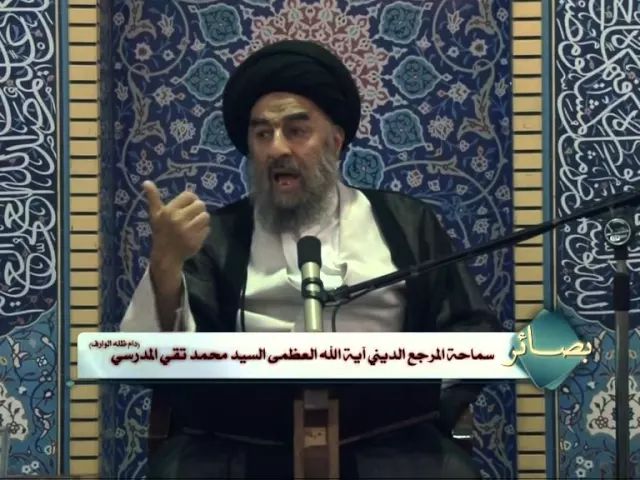
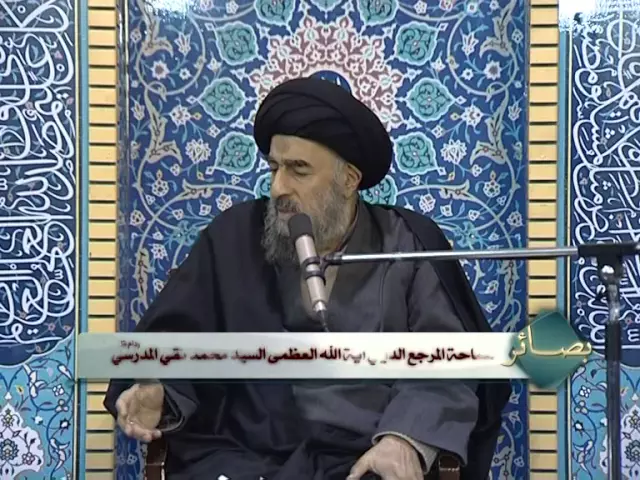
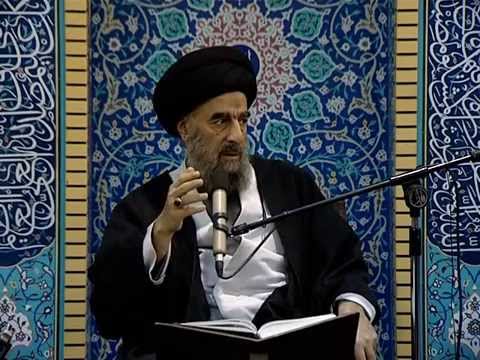
The Hijab Series [#1]- Definition and Quranic Proof - Sayed Ahmed Al-Qazwini - Day 8, Ramadan 2015
0
0
1 Views·
15/07/05
In
Lectures
One of the most controversial and highly discussed subjects in Islam is the topic of Hijab (veil). In this series, Sayed Ahmed Al-Qazwini provides a detailed overview of the different aspects and misconceptions surrounding the Hijab. Within this lecture, Sayed Ahmed Al-Qazwini defines the Hijab before sharing some of the common and widespread arguments on why the Hijab isn't wajib (an obligation), then highlighting a couple of Quranic verses that prove it as being a mandatory act of worship on all muslim women. Al-Rasoul Islamic Society, Halifax - Canada | The Holy Month of Ramadan 2015
Show more
Transcript
[0:00][Music] Alhamdulillah.
[0:30][Music] Amen.
[0:35]Amen.
[0:40][Music] [Music] Brothers and sisters, one of the most controversial topics in
[1:16]Islam is the topic of hijab, the veil that Muslim women wear.
[1:23]And you find there's lots of confusion surrounding this topic.
[1:27]There's lots of misunderstanding about it and there's lots of questions that
[1:31]are raised with the hijab and that you find when you come
[1:37]to the mus non-Muslim world in the west you find that many
[1:40]non-Muslims in the west are ignorant of the philosophy of the hijab
[1:45]and the wisdom and they ask many Muslim women why do you
[1:50]wear the hijab why do you cover your head why do you
[1:51]cover your hair and you find other people they take at other
[1:58]non-Muslims, they take it a step further and they begin to object
[2:01]and they begin to attack and criticize Islam and they accuse it
[2:05]of of being a misogynistic religion meaning anti-woman and they will say
[2:13]that the greatest proof that Islam is anti-woman is that the hijab
[2:18]that the hijab according to them they see it as a symbol
[2:21]of oppression a symbol of the subjection of women to men and
[2:27]they will say that the only reason why Muslim women wear hijab
[2:32]is because their men force them to do so because they're jealous
[2:36]about them and they force them to do so and thus it's
[2:41]a sign of oppression in Islam.
[2:42]So in the west you find mostly hijab has evil and negative
[2:47]connotations between non-Muslims and when you come to the muslim world you
[2:52]find things aren't too much better.
[2:54]You find there's also lots of confusion and misconceptions with the topic
[2:58]of hijab and that you find for example many people ask is
[3:04]the hijab a part of religion or is it a part of
[3:05]culture?
[3:06]Did Allah subhanahu wa ta'ala order women to wear hijab or or
[3:12]is this a part of culture?
[3:13]And if it is a part of religion and it was ordained
[3:17]in the Quran, does it still apply today 1400 years after in
[3:21]this modern permissive world?
[3:22]Do we still have to wear hijab or not?
[3:24]And if we do have to wear hijab, what are the requirements
[3:28]of hijab?
[3:29]What are the guidelines and the limits of hijab?
[3:30]So you find all these questions are posed.
[3:33]And because of all this confusion, inshallah, we shall speak about this
[3:38]topic and we shall examine it and analyze it from an Islamic
[3:41]perspective over the next few nights and we will go over five
[3:48]important points.
[3:47]Point number one, what is the definition of hijab according to Islam?
[3:55]That's number one.
[3:54]Number two, is the hijab ordained by Allah subhanahu wa ta'ala and
[4:00]compulsory any obligation by Allah subhana wa ta'ala or no?
[4:04]It's a part of culture.
[4:08]That's number two.
[4:07]Number three, did Islam introduce hijab or did it exist in Christianity
[4:13]and Judaism as well?
[4:17]That's number three.
[4:17]And number four, is the hijab a symbol of women's oppression?
[4:20]Does it oppress does Islam oppress women through hijab?
[4:24]And is the hijab degrading to women or not?
[4:28]And number five, what is the philosophy and the wisdom behind wearing
[4:32]hijab?
[4:33]And how do Muslim women benefit from wearing the hijab?
[4:36]So we'll inshallah speak about these five points over the next few
[4:40]nights.
[4:41]So we begin with the first point Islamically.
[4:45]What's the definition of hijab?
[4:46]What do we mean by hijab?
[4:50]Now in the Arabic language, the word hijab means barrier.
[4:52]If there is a barrier between two things, we would say that
[4:56]there is a hijab between these two things.
[4:59]And Islamically, the definition of the hijab is that the hijab is
[5:07]a system comprised of a set of laws so that they are
[5:11]meant to establish modesty in the society.
[5:13]a system comprised of a set of laws meant to establish honesty
[5:17]in the society and to discipline the human beings with their desires
[5:24]and that Allah subhanahu wa ta'ala he created two genders the males
[5:27]and the females men and women and Allah subhanahu wa ta'ala he
[5:32]placed desires within the human beings and amongst the desires is the
[5:36]love and lust of each gender to the other men are attracted
[5:41]to women and women are attracted to men.
[5:43]This is the work of Allah subhanahu wa ta'ala.
[5:47]And this desire, this attraction that Allah subhanahu wa ta'ala placed between
[5:52]the two genders is very strong such that if it is not
[5:55]controlled, if it is not tamed, it will become very dangerous.
[6:00]It will go out of control.
[6:01]And thus Allah subhanahu wa ta'ala because of how powerful this desire
[6:06]is.
[6:07]Allah subhanahu wa ta'ala he created men and women males and females
[6:09]in this world and they're mixed together in the same world.
[6:14]Thus in order to prevent human beings of abusing this desire and
[6:18]turning into wild animals and beasts chasing after their desire, Allah devised
[6:24]a concept and a system called hijab.
[6:27]And this system is meant to what?
[6:30]This system is meant to limit these desires to channel them through
[6:34]specific ways.
[6:36]Allah subhanahu wa ta'ala plays guidelines with this desire.
[6:39]There are guidelines, there are rules, there are limits or else I
[6:44]will turn into an animal.
[6:45]And Allah subhanahu wa ta'ala placed a barrier between these two genders
[6:51]that this desire attraction is too strong.
[6:55]There must be a barrier.
[6:58]And this barrier is called the hijah.
[7:01]So the rules of how males and females should conduct with each
[7:05]with each other and how they should direct their desires towards each
[7:10]other is called hijab.
[7:14]And hijab in Islam is divided into two parts.
[7:15]Hijab consists of two types.
[7:20]It's composed of two components.
[7:22]The first hijab is the physical hijab.
[7:25]That's the veil, the headscarf, the that the woman wear.
[7:28]And then you have the symbolic hijab or that is the social
[7:35]hijab.
[7:36]And that is the behaviors of each gender towards the other.
[7:40]How should each person behave in front of the other.
[7:44]The demeanor, the code of conduct of each in front of the
[7:46]other is called also the hijab.
[7:47]This is the second hijab.
[7:51]This is the social hijab.
[7:52]This is the symbolic hijah subhanahu wa ta'ala in one verse apparently
[7:56]he speaks about this he says in the [Applause] verse Allah says
[8:09]that I have brought to you two types of clothes.
[8:13]The first is a physical type of clothes that we wear to
[8:15]what?
[8:16]to protect our bodies, to guard our private parts and to beautify
[8:22]us.
[8:21]This is the first one.
[8:24]This is the physical.
[8:24]And then Allah says, and there is another clothe.
[8:28]There's another type of clo that Allah calls it tawa piety.
[8:33]So it's as if if I have piety, I have I have
[8:38]clothed myself with this piety.
[8:39]So it's a type of clo.
[8:39]So Allah subhana t divides clothes into two parts.
[8:43]the physical and the social, the so he's telling us that hijab
[8:49]in order for it to be effective in any society and establish
[8:52]modesty there has to be both.
[8:54]There has to be the physical hijab the veil and there has
[8:58]to be the there has to be the modesty and the and
[9:00]the manners and the demeanors and the conduct and the behaviors of
[9:06]each towards one another.
[9:07]And that's why you find many of the objections that are directed
[9:11]towards hijab.
[9:12]And many of the misconceptions and the ignorance towards this topic hijab
[9:18]is because many people they failed in understanding that there are two
[9:22]parts to hijab.
[9:25]There's physical hijab and it's necessary and there's the social hijab.
[9:27]The hijab that is a part of our that is a part
[9:31]of our behavior.
[9:31]And many times because some people failed in understanding the necessity of
[9:36]both they raise these questions and misconceptions and they attack Islam.
[9:41]And many times you find that people are ignorant of the philosophy
[9:47]and the wisdom of both.
[9:48]And that's why through the course of these lectures about hijab I
[9:51]will inshallah go over the philosophy of both types of hijab.
[9:56]So now that we understand that the hijab is a set of
[9:58]laws, physical laws and behaviors, how to control ourselves, how to behave
[10:05]in front of the other gender to establish modesty.
[10:06]Now that we understand what hijab is, we go to the second
[10:13]point.
[10:14]Is the hijab ordained by Allah subhanahu wa ta'ala in the Quran,
[10:17]by the prophets, by the imams or no, it's a part of
[10:21]culture.
[10:19]It's not part of religion.
[10:22]And what you will find about this topic you will find on
[10:24]the internet for example you'll find many articles about this you'll find
[10:27]many articles many bloggers many people on social media many people who
[10:35]are for example consider themselves as Muslim feminists or they are affected
[10:41]and influenced by western feminists or they are influenced by the spirits
[10:45]of adaptation to the modern permissive world.
[10:47]You will find many of them will come out and tell you
[10:52]hijab is not waj it's not compulsory and their argument you'll find
[10:55]it in four types there's four types of kinds of arguments they
[10:58]all lead to one conclusion hijab is not waj it's not compulsory
[11:04]some people you will find they will claim that hijab has nothing
[11:07]to do with religion at all hijab is a part of culture
[11:12]hijab is a part of the culture of Arabs and Muslims because
[11:15]men in the Arab Arabic countries in the Muslim countries they have
[11:20]something a feeling called they're jealous about their daughters and their wives
[11:26]and their women and because of this they tell their women to
[11:29]wear hijab and it has nothing to do with Islam.
[11:31]So this is the first argument that you'll hear.
[11:33]Another type of argument that you'll hear from many people is that
[11:38]they will tell you no hijab is part of religion but however
[11:41]Allah subhanahu wa ta'ala didn't define what the hijab is in the
[11:45]Quran.
[11:45]He just told men and women be modest.
[11:48]How do I be modest?
[11:51]How do I dress?
[11:51]Allah didn't define it.
[11:54]So who defines what modesty is?
[11:55]Each person has the right based on his own understanding to be
[11:59]modest.
[12:00]So some women for example they define modesty as wearing the and
[12:05]the they cover their entire body and their faces because according to
[12:11]their understanding this is how I be modest.
[12:12]Other women you find they will interpret and define modesty as no
[12:18]just wearing the other women they will say we don't need the
[12:21]just the headscarf and others will say to be modest I don't
[12:25]even need the headscarf I can show all my body and I'm
[12:27]still modest so you will find the second type of argument and
[12:31]then you'll find a third type of argument some people that will
[12:35]say the hijab is a part of religion but it's extra credit
[12:39]it's not waj it's good to wear it but it's not waj
[12:44]It's an option.
[12:44]And amongst the advocates of this is the queen of Jordan, Queen
[12:52]Rana.
[12:50]If you remember about 10 10 years ago, she was on a
[12:56]show with Oprah.
[12:58]Remember Oprah?
[12:56]She used to have a show.
[13:00]And she was chatting with this queen, Queen of Jordan.
[13:02]And amongst the questions that she asked the queen of Jordan is,
[13:08]you're a Muslim, so why don't you wear hijab?
[13:08]So look at the answer of the queen of Jordan.
[13:11]The truthful answer, the sincere answer was that she should have said
[13:18]because I'm not a practicing Muslim because my iman is weak and
[13:21]for whatever reason I do not wear the hijab.
[13:24]And you find subhan Allah, I already spoke about this many times
[13:27]human beings instead of being truthful and being honest instead we blame
[13:32]everything on other people.
[13:35]We blame other people.
[13:36]We blame Allah subhanahu wa ta'ala just like he's an oppressor.
[13:39]He's an oppressor.
[13:41]He's a dictator.
[13:41]Why do you kill people?
[13:44]He doesn't say because I am a evil person.
[13:44]He says because Allah forced me and predestined me.
[13:47]Likewise, instead of being honest and truthful and saying my iman is
[13:51]weak, what does she tell Oprah?
[13:52]She tells her because it's not waj.
[13:57]It's a choice.
[13:56]A Muslim woman has the choice.
[13:58]She could wear the hijab.
[14:01]Allah subhana wa ta'ala left that up to her.
[14:04]So you will find this third type of argument that it's a
[14:06]choice.
[14:06]It's better to wear it, but it's not maj.
[14:09]And finally the fourth type of argument that you will see all
[14:11]over the internet and people Muslims this is all Muslims many Muslims
[14:14]will say that the hijab is a part of religion and but
[14:20]it is only waj upon the wives of the prophet the wives
[14:25]of Allah they have to wear hijab but all the other women
[14:28]they don't have to wear hijab and amongst the advocates of this
[14:32]belief is a Muslim Canadian woman by the name of Shad Menji
[14:37]if any of you have heard of her.
[14:39]She claims to be an Islamic so-called reformer that she wants to
[14:44]reform Islam and amongst the things that she says is that the
[14:50]the hijab is only waj upon the wives of so you see
[14:52]all these four arguments they lead to one conclusion that it is
[14:56]not waj to wear the hijab the physical hijab that the the
[14:59]scarf the veil the is not waj for the four reasons that
[15:09]we mentioned so that's why we have to come and look at
[15:12]the Quran and the verses of the Quran and see is this
[15:17]true or not true.
[15:16]Does the Quran does the Quran say that it is waj upon
[15:22]us upon women to wear the hijab or no it's not waj
[15:25]for one of the four reasons that we mentioned.
[15:26]So now we will come to the Quran and let's open the
[15:31]Quran and let's search for the verses that speak about hijab.
[15:34]But before I mention before I mention the verses that speak about
[15:41]the hijab, I have to bring two points to your attention about
[15:45]doing Quran.
[15:47]The first point is that anytime we want to do Quran, brothers
[15:52]and sisters, this right of Quran is strictly reserved for the for
[15:57]the scholars.
[15:58]It is none of my business to go and open the Quran
[16:03]and do of the Quran.
[16:03]If I am not a learned scholar, if I haven't studied in
[16:08]a seminary, an Islamic college, an Islamic university, an Islamic for 10,
[16:13]20, 30 years, I am not entitled to give my view of
[16:15]the Quran.
[16:16]You might ask why?
[16:17]Why can I give my view of the Quran?
[16:21]It's obvious, common sense.
[16:21]In every field, in every knowledge and in every study, there are
[16:25]experts.
[16:26]And it is only those experts that are entitled to give their
[16:29]view in that field.
[16:32]For example, if let's say there is a debate between doctors in
[16:36]a matter of medicine.
[16:39]If they debate that if a person has diabetes, should we give
[16:42]him this medicine or this medicine?
[16:43]and you find that there is controversy.
[16:45]Do I, a normal person, let's say I work at Walmart, I
[16:51]work at McDonald's, I'm an engineer, I'm a businessman, I'm an architect,
[16:54]do I have the right to come and barge and interfere and
[16:57]tell them I think this medicine is better than the other medicine?
[17:00]And give them my proofs.
[17:02]Do I or no?
[17:03]Obviously, they're going to say, "Wait a minute.
[17:04]Who are you?
[17:06]Are you are you a licensed doctor or not?
[17:08]If you are, let's hear it.
[17:09]If you're not, I don't I don't even want to hear it."
[17:11]They don't even care if you have 5,000 proofs that this medicine
[17:15]is better than this.
[17:15]If you're not a licensed doctor, they don't even want to hear
[17:20]it.
[17:21]Why?
[17:19]Why?
[17:19]Because this is not your area of expertise.
[17:22]I've studied 10 years in the university to become a doctor.
[17:26]You want to come just give your opinion.
[17:29]Who are you?
[17:28]This is arrogance, right?
[17:31]So that's why if I me if I was to prescribe to
[17:33]anyone of you a medicine, what will happen?
[17:36]If the authorities find out, I could be arrested.
[17:39]I could be fined.
[17:39]This is malpractice because you are not entitled to prescribe people medicine
[17:44]because you're not a doctor.
[17:48]Likewise, let's say in engineering or an architect in architecture.
[17:50]Can I go and give my opinion in engineering and how to
[17:54]build a house?
[17:53]I come across a house.
[17:56]I see there are construction workers and they're building and there's an
[17:58]architect and an engineer.
[17:59]Can I go and tell them, wait a minute, I think that
[18:01]this piece of this piece of steel is too thick or I
[18:05]think it's it should be bigger or smaller or I tell them
[18:08]that you should use this type of wood or these types of
[18:10]nails.
[18:10]Can I say that?
[18:11]They'll tell me, "Wait a minute.
[18:13]Are you an architect?" No.
[18:14]So why are you interfering interfering in my business?
[18:17]What what's your profession?
[18:19]You're an artist, stay in your art.
[18:21]You're a businessman, stay in business.
[18:23]You're a doctor, stay in medicine.
[18:25]So don't interfere in my business because you're not specialized in my
[18:30]in my area.
[18:32]So this is common sense in every field.
[18:33]Only the experts of that field are able to give their opinion
[18:38]in that field.
[18:40]Why is it that when it comes to Islam, when it comes
[18:42]to religion, when it comes to faith, when it comes to the
[18:46]Quran, everyone is an expert?
[18:47]Why?
[18:47]How come in your field I cannot interfere?
[18:51]Because I'm not an expert.
[18:52]But in my field, you're allowed to interfere.
[18:54]You've never studied in the house.
[18:56]You've never studied the hadith of you've never studied all the prerequisites
[18:59]of the Quran.
[19:01]But yet, you're a mush now.
[19:02]You have the right to give your view on Quran.
[19:04]So this is a very delicate point that we have to pay
[19:06]close attention to.
[19:08]Only the the learned have the right to give their view of
[19:12]Quran.
[19:13]And that's why I remember once I saw an article read by
[19:16]someone on the internet.
[19:17]That person was trying to prove hijab is not.
[19:19]So I emailed him.
[19:21]I told him, "Excuse me, sir.
[19:22]I don't want to look at your proof.
[19:24]Where is your credentials?
[19:24]In which houses did you study?" So he says, "Who cares where
[19:29]I studied?
[19:29]Look at my proofs." I told him, "No, I don't care how
[19:33]strong your proofs are.
[19:33]If you're not a learned scholar, I don't even want to look
[19:37]at your proofs.
[19:36]This is not arrogance.
[19:38]This is how life works." In the same way that a doctor
[19:40]will never come and look at you and look at what your
[19:44]proof that this medicine is better or that medicine is better.
[19:47]The same thing with the engineers, same thing with the with any
[19:51]other professional.
[19:50]In the same way that they will not allow you to interfere
[19:54]in their business, you're not allowed to interfere in the business of
[19:58]Allah subhanahu wa ta'ala unless you're an expert.
[19:59]So this is a very important point that not just anyone can
[20:05]open the Quran and say I think this is haram.
[20:07]I think this is I think Allah is saying this.
[20:09]I cannot use I think.
[20:14]The hadith ofam that all Muslims narrate and it is according to
[20:18]all Muslims says this is aith that all Muslims accept and it's
[20:28]a authentic whoever gives his own opinion of the Quran he's not
[20:32]a learned scholar he gives his own opinion of the Quran and
[20:36]does based on his own opinion while he is not qualified he's
[20:39]not an he's not a scholar then the the prophet says then
[20:45]that person has reserved for himself a seat in the fires of
[20:47]this is the of he's telling us that this is a dangerous
[20:50]topic if you're not then do not come close to the Quran
[20:55]trying to do of the of the Quran because this is the
[20:58]business of the so this is point number one and that's why
[21:04]you see most of these people that claim hijab is not watched
[21:07]none of them not even Most of them none of them are
[21:11]they're just people that are interfering in the business of Allah subhana
[21:15]t that's number one.
[21:18]Number two the Quran brothers and sisters is not an easy book
[21:20]to understand.
[21:21]It's a very very difficult book to understand.
[21:24]And if you remember I think last year or the year before
[21:25]I gave a series of lectures on how to understand the Quran
[21:30]and I showed why the Quran is a very difficult book.
[21:31]You see Allah subhana t he himself says it in the Quran
[21:35]that the Quran is not an easy book.
[21:39]Where does he say that?
[21:38]He says in the holy Quran he [Music] says he says that
[21:49]Allah revealed the book and amongst the verses of the Quran are
[21:51]the easy verses the decisive clear verses everyone understands and then there
[21:59]are the what is the Quran says the second type of verses
[22:04]are those that are not clear they're vague they're ambiguous They're allegorical.
[22:08]You read it, you understand one thing.
[22:11]I read it, I understand another thing.
[22:13]They can be subjected to more than one interpretation.
[22:16]So they're not clear.
[22:26]Some people these they look at them and they come and they
[22:31]choose they pick they pick and choose the that they like.
[22:36]Why?
[22:37]because they have corruption in their hearts or because they have an
[22:40]interest a personal interest the lady doesn't want to wear hijab so
[22:42]she says Allah says in the Quran the hijab is not watching
[22:47]where did you get this from the Quran is what it's unclear
[22:49]so this is a very important point that we have to be
[22:52]careful the Quran is a very difficult book and thus in order
[22:57]to fully understand the Quran in the correct authentic way there are
[23:03]prerequisites that we need and there are three main prerequis prerequisites.
[23:06]Number one, in order to understand the Quran, I have to understand
[23:09]the Arabic language.
[23:12]I have to be an expert.
[23:14]Not just understand, I have to be an expert in the Arabic
[23:16]language.
[23:17]High level of Arabic.
[23:20]I have to know perfect grammar.
[23:21]I have to know vocabulary.
[23:23]I have to know Arabic poetry.
[23:24]Only if I've mastered the Arabic language, I will understand the Quran
[23:28]because the Quran was revealed in the highest standards and lovers levels
[23:34]of Arabic language.
[23:34]So that's number one.
[23:35]Number two, I need to look at the of and there's hundreds
[23:39]upon hundreds upon hundreds of because have the knowledge of the Quran.
[23:45]They are the ones that understand the correct of the Quran.
[23:50]And that Allah says in that verse Allah says that the they
[24:09]have more than one they have more than one.
[24:13]Which one is right?
[24:13]Allah says only two know that the correct Allah and those that
[24:22]are deeply rooted in knowledge and that is none other than so
[24:26]if I want to know the correct of the of the Quran
[24:29]I have to go back to if I have not read the
[24:34]of I have no right to do of the Quran that's number
[24:38]two and number three I have to understand pre-Islamic pre-Islamic Arabian culture
[24:42]because many verses they come down with a certain context and the
[24:47]only way I will understand what Allah is speaking about if I
[24:51]understand the culture of the Arabs pre-Islam.
[24:53]So these are three important prerequisites that anyone needs any scholar needs
[24:59]in order to do of the Quran.
[25:00]So it's not simple.
[25:02]I can't just open the Quran.
[25:03]Oh I think this verse says this hijab is not because of
[25:07]that.
[25:06]No this is following my desires.
[25:09]This is following the ways of thean that he fools me just
[25:12]like I used to pick and choose.
[25:14]He he wants to believe he wants people to believe that he's
[25:18]forced that he's predestined.
[25:19]So now let's twist a few ays in the Quran to prove
[25:23]my point.
[25:23]So the these are two important points general points about the Quran.
[25:28]So now we come to the holy book of Allah subhanahu wa
[25:30]ta'ala to the Quran and let's see where Allah speaks about the
[25:34]hijab and is the hijab a part of religion or culture.
[25:38]Is it waj or is it must Allah define modesty or does
[25:43]he not define modesty?
[25:43]So when we come to the Quran brothers and sisters we see
[25:48]that there are at least at least three verses that can prove
[25:53]hijab the physical hijab the veil that the woman wear.
[25:57]And I'll mention one I'll mention two of the verses today and
[26:00]I'll mention the third verse we'll continue inshallah tomorrow.
[26:05]The first verse that the of the have said that Allah speaks
[26:09]about hijab and says hijab is waj Allah subhanahu wa ta'ala in
[26:18]one verse he speaks about the laws of how to he speaks
[26:21]about how to interact with's private home.
[26:24]So Allah subhana he says in the holy [Applause] Quran [Music] for
[26:49]what does Allah saying in this verse?
[26:51]Allahh tells all the Sahabah of Allah and all the Muslims, he
[26:57]tells them, "Oh Muslims, do not enter the house of Allah unless
[27:00]he permits you.
[27:01]Unless he gives you permission.
[27:03]And if he gives you permission and he invites you for a
[27:06]lunch, for a dinner, do not go too early and you wait
[27:09]for the food to be cooked.
[27:10]No, go on time.
[27:12]And after the food is served and finished, do not waste Allah's
[27:14]time.
[27:15]Do not sit for too long.
[27:16]Get up and leave.
[27:18]After you eat, get up and leave and go back to your
[27:19]houses." Why Allah says because what you're doing what happened is the
[27:24]Sahabah first of all they would barge into Allah's house without permission
[27:28]number one.
[27:29]Number two, if rasool Allah would invite them for a meal, they
[27:33]would come 2, three hours before that time.
[27:34]And after they finish the meal, they would sit for 3 4
[27:41]hours chatting, wasting Allah's time.
[27:41]Allah is in the highest has the highest levels of morals.
[27:45]So obviously, he's not going to kick them out, his guests out
[27:49]of his house even though he was being bothered by them.
[27:51]So the verse is revealed, Allah tells the people, do not bother
[27:55]Masool Allah.
[27:54]Don't march into his house without permission.
[27:57]If he invites you, don't take too long.
[27:59]Allah maybe he won't kick you out because he's shy because Allah
[28:03]has morals and honors are very high.
[28:06]So Allah is telling us that what?
[28:08]Do not bother.
[28:10]So these are three that Allah mentions.
[28:13]First of all, don't enter the house of Allah unless you're permitted.
[28:16]Don't go too early and don't stay too long.
[28:19]So what does this have to do with hijab?
[28:22]And then Allah mentions a fourth law.
[28:24]And then Allah subhanahu wa ta'ala says and then Allah subhana wa
[28:37]ta says and if you ask them the females ask them from
[28:39]behind a hijab from behind a barrier.
[28:42]What does this verse mean?
[28:46]What does this part mean?
[28:48]There are two between the there are two opinions about this part.
[28:54]The first group of they say that Allah subhana wa ta'ala he's
[28:58]giving laws of how to interact with Allah.
[29:00]Don't enter his house but with permission.
[29:02]Don't go too early.
[29:05]Don't stay too long.
[29:05]And then the fourth thing Allah says that anytime when you're in
[29:08]the house of Allah anytime you want to speak with one of
[29:14]the wives of Allah there must be a hijab.
[29:18]There must be a barrier.
[29:18]And thus many they have said that this was a special law
[29:23]of the wives of Allah that anytime someone wanted to speak with
[29:26]one of the wives of Allah there had to be for example
[29:31]a partition there had to be a curtain and you can only
[29:32]speak to the wife of Allah from behind this curtain from behind
[29:37]this hijab remember we said hijab is a barrier so this is
[29:41]the first view and this will say that this has nothing to
[29:44]do with the hijab that we're speaking about right now that all
[29:48]women have to cover themselves in front of men.
[29:50]This is something that is special to only the wives of Allah.
[29:53]If you want to speak to the wives of Allah, there has
[29:56]to be a partition.
[29:56]There has to be a barrier.
[29:58]There has to be for example a curtain.
[30:00]Now why say because this resembles the highest levels of modesty Allah
[30:10]subhana t because these women are the wives of Allah the responsibility
[30:14]is obviously much greater.
[30:15]So that's why the wives of Allah they cannot be around any
[30:20]men.
[30:19]They cannot be even if they're wearing the hijab men cannot see
[30:24]them.
[30:24]If they want something, if they have a problem, if they have
[30:27]a question from the wives of Allah, there has to be a
[30:31]partition.
[30:29]There has to be curtains.
[30:32]Why?
[30:33]Like I said, this is the highest levels of modesty.
[30:34]And this is to protect the wives of Allah because they're in
[30:39]the spotlight.
[30:39]There are enemies.
[30:41]This is to protect the wives of Allah.
[30:44]So according to this first view, this verse has nothing to do
[30:46]with the hijab that we're speaking about.
[30:48]this is only the wives of but then there's a second group
[30:54]of that will tell you that no this verse is addressed this
[30:58]verse applies to all women all women of Islam and this is
[31:02]speaking about the hijab that we're speaking about how these say that
[31:09]Allah subhanahu wa ta'ala yes in this verse he says three don't
[31:13]go in the house of Allah until you're permitted don't stay for
[31:18]too long and don't go too early.
[31:21]And they these say that these three laws do not apply to
[31:24]Allah only.
[31:26]Yes, Allah addressed Allah only, but the laws are general.
[31:29]They apply to every human being.
[31:33]Because they will tell you that why did Allah say these three
[31:36]things?
[31:37]Number one, because Allah says Allah does not permit you to enter
[31:41]his house unless you ask for permission.
[31:43]And number two, if you do these things, if you take too
[31:48]long and go too early, you're bothering Allah.
[31:49]These are saying that we understand that this isn't a special law
[31:53]for Allah.
[31:54]This is for everyone.
[31:56]It is haram to bother any human being.
[31:59]It is haram to enter the house of any human being without
[32:01]his permission.
[32:02]Can I enter your houses without your permission?
[32:03]How long?
[32:05]If I come to a meal, if you invite me for dinner,
[32:10]for for tomorrow night and I come to your house and I
[32:13]stayat, won't you get bothered?
[32:17]When's this guy going to leave?
[32:18]Y go home.
[32:19]We want to sleep.
[32:20]We want to go to our lives, back to our lives.
[32:24]Right.
[32:24]Right.
[32:22]Wrong.
[32:23]Right.
[32:24]It is haram to bother any person.
[32:26]So this law doesn't only apply to Allah.
[32:29]This is a general This is a general law.
[32:33]Yes.
[32:35]Allah addressed the verse to Allah subhana t said in the verse
[32:42]Allah was speaking to Allah and about but the law is general
[32:49]the law applies to everyone so since these say the first three
[32:53]laws were general the fourth law is also general what's the fourth
[32:56]law the fourth law is We understand based on the three first
[33:04]laws that the context of the of the verse is general.
[33:09]This is speaking about all human beings not just Allah all Muslims.
[33:13]So when the fourth part of the verse comes and says and
[33:18]if you ask them doesn't say the wives of Allah it says
[33:20]them there has to be a partition there has to be a
[33:25]barrier.
[33:26]This is for all women not just the wives of Allah.
[33:28]Why?
[33:28]Because first of all Allah doesn't say the wives of Allah.
[33:31]It says if you ask them the females which females all females
[33:33]in the same way that if you want to enter any house
[33:38]you need permission if you want to speak to any woman then
[33:40]there has to be a barrier there has to be a hijab
[33:43]and even if you say let's say that you say no obviously
[33:48]Allah is speaking about the wives ofah we understand Allah yes he's
[33:52]speaking about them but the law is general why because what proves
[33:57]that this law is general is that after this after these four
[34:00]laws.
[34:01]What does Allah say?
[34:03]If someone were to ask why, what's the wisdom behind this?
[34:05]Why?
[34:06]If I want to speak to a woman or to the wives
[34:09]of Allah, there has to be a barrier.
[34:13]Allah himself he says he says and then he says the [Applause]
[34:20]reason the reason is because this placing a barrier between you and
[34:29]the wise of is purer for your heart and their hearts.
[34:31]So these they say if Allah wants the hijab the barrier to
[34:37]pre to preserve purity Allah doesn't want any mixing because some haram
[34:42]may happen between the wives of Allah and between the sahab if
[34:45]Allah is worried about haram happening between the wives of Allah he's
[34:49]not worried about all the other women so obviously other women are
[34:53]more entitled to wear hijab because if Allah is afraid that the
[34:57]wives of Allah make them and that's why there should be a
[34:59]hijab then obviously the other woman should also wear hijab because this
[35:05]is also pure for their hearts.
[35:06]Allah is speaking about modesty.
[35:07]The barrier is for modesty.
[35:08]So even if he's addressing the wives of Allah, this is not
[35:13]only applying to the wives ofah because Allah tells us the wisdom
[35:16]of the the law.
[35:18]It's so what to preserve the purity of the heart and to
[35:21]be modest.
[35:23]And that's why these say that Allah wants a hijab a barrier
[35:27]between all men and women that are not.
[35:29]Why?
[35:30]To preserve modesty.
[35:33]Why?
[35:32]So that the hearts are pure.
[35:35]So that nothing haram happens, immodest happens.
[35:36]So wait a minute.
[35:38]So that these are saying that if any man and woman are
[35:40]together in one place, there has to be a partition like this.
[35:44]There has to be a curtain.
[35:45]No.
[35:46]The Quran says there has to be a hijab.
[35:49]There has to be a barrier.
[35:50]Now there are two types of barrier.
[35:52]There are detached barriers like this and there are attached barriers.
[35:57]The abaya is a barrier but it's attached on the woman's body.
[35:59]The point is there has to be a barrier between the woman
[36:04]and the man either attached or detached.
[36:05]This is the hijab that we're speaking about.
[36:07]So these are they say that the hijab according to this verse
[36:13]is waj upon all women not just the wives of now the
[36:16]question is here why did Allah if it applies to everyone then
[36:22]why did Allah address only and his wives?
[36:25]Why did he say why did he say why did he say
[36:31]don't enter the houses of people don't bother people and anytime you're
[36:34]around other people's women then there should be a barrier why did
[36:37]he address these they say the reason why Allah address is because
[36:44]Allah in this verse he's trying to teach the Muslims some manners
[36:47]and ethics and how to respect others and obviously anytime you want
[36:53]to teach respect you begin with the most important people.
[36:55]You begin with the most respectful people.
[36:57]So Allah is telling them that when you want to respect other
[37:00]people and how to enter their houses and what to do and
[37:04]what not to do there, you begin with your prophet because he
[37:06]is the most respected person.
[37:06]So that's why Allah only address.
[37:11]And the second reason why Allah only address is because you and
[37:15]I, most of us, if someone comes into our house without permission,
[37:19]we're going to kick them out, right?
[37:20]We're not shy.
[37:22]We're not shy.
[37:22]I'm just going to tell him leave.
[37:23]If someone takes too long, maybe we're going to send them signals
[37:27]to get out of my house.
[37:27]But Allah, his were so high, you would be shy.
[37:30]If you stay for 10 days in his house, he'll never say
[37:32]anything.
[37:32]But obviously, this is this is oppressing Allah.
[37:36]This is taking advantage of his good.
[37:38]So Allah comes in this verse and he says, "Don't take advantage
[37:40]of Allah's." So why does Allah address?
[37:43]Because Allah is so shy.
[37:48]So thus Allah this general he's addressing it toasoolah becauseoolah is not
[37:52]going to kick people out of their houses.
[37:56]So that's why the is addressed to not only because it's only
[37:59]aboutoolah and his wives but becauseooloolah is what is shy and he's
[38:02]not going to tell you don't do don't follow these rules.
[38:05]So that's why Allah is saying be careful with Allah.
[38:07]It's waj upon everyone but it's especially more waj withasoolah becauseooloolah is
[38:12]shy and he'll never kick you out of his house.
[38:16]So all these four laws apply to everyone.
[38:18]So this is the first verse according to this Allah subhana wa
[38:24]ta'ala he speaks about the hijab in this verse.
[38:26]And there are two other verses.
[38:28]I'll mention the second verse tonight and we will leave the third
[38:32]verse for tomorrow inshallah.
[38:33]Now this verse like I said there's a dispute between the some
[38:39]say it's only about the wives of some say no it's general.
[38:42]The second verse, brothers and sisters, is much more clear.
[38:49]The second verse is undebatable.
[38:50]The second verse cuts all, excuse me, cuts all arguments.
[38:54]And why?
[38:55]Because this second verse that I will mention, Allah subhana wa ta'ala,
[38:59]a few verses after this verse where he says in a few
[39:05]verses after that, Allah subhanahu wa ta'ala he says he brings down
[39:09]a very powerful verse.
[39:12]What does he say?
[39:10]Allah subhana t says in the holy Quran Allah makes he commands
[39:19]his prophet oh prophet verse 59 Allah tells the prophet Allah tell
[39:35]your wives and tell your daughters and tell the woman of the
[39:39]believers So all Muslims, all Muslim females tell the to what that
[39:49]they have to wear the jalbab and they have to wear it
[39:53]in a good way.
[39:53]They have to wear it strictly and tightly.
[39:56]So what is Allah subhana wa ta telling us here?
[40:00]So number one, Allah doesn't just say that the wives of Allah
[40:04]have to wear.
[40:05]Remember we said people like Menji, they say that only the wives
[40:08]of Allah.
[40:09]This verse is a clear reputation.
[40:12]Allah says, tell all the women, not just your wife, tell them
[40:19]what?
[40:19]Tell them to wear the jalbab.
[40:20]What is the jbab?
[40:23]The jbab in the Arabic language, if you open any Arabic dictionary,
[40:27]you will find that the jbab is defined as a loose outer
[40:34]garment that woman used to wear.
[40:36]It's from the head to the toe.
[40:38]In our terms today, the JB is the that's placed on the
[40:44]head.
[40:44]The Quran is telling the prophet, tell your wives, tell your daughters
[40:48]and tell all the Muslim believing women to wear the to wear
[40:52]the jbat.
[40:53]Open any dictionary and you will find what julbad means.
[40:56]And that's why I said in order to do Quran, we have
[40:58]to understand the Arabic language in the correct way.
[41:01]Some people will come to me, no, I think Jbad means this.
[41:03]If you're not a learned scholar, you have no right to do.
[41:08]Go back to any Arabic dictionary.
[41:11]It's an outer garment that's worn over the clothes that what that
[41:16]hides the body of the woman.
[41:19]So based on this verse, we understand that the woman have to
[41:22]wear the Now does this verse make it clear exactly how they
[41:28]have to wear the abaya?
[41:29]What can they show?
[41:31]Can they show their face?
[41:31]Do they put the over their head, over their face?
[41:35]Can they show their neck?
[41:35]Can they show their chest?
[41:38]This verse is not clear.
[41:39]But what it makes it clear is that there is a hijab
[41:43]and that hijab is the they have to wear the what?
[41:44]The loose over garments that is called the so Allah subhanahu wa
[41:50]ta makes it clear in this verse that all women have to
[41:53]wear the jba.
[41:54]All women have to wear this moose over garments that we call
[41:57]the habaya.
[41:59]Now like I said what is the extent?
[42:01]What exactly does the have to cover?
[42:04]This is mentioned in the third verse.
[42:06]In the third verse that I'll mention tomorrow because we have no
[42:11]no more time.
[42:11]In the third verse that I'll mention tomorrow Allah subhanahu wa ta'ala
[42:15]he tells us even in more detail exactly what parts of the
[42:21]body a woman has to cover.
[42:22]And this is mentioned in surah.
[42:24]So up until here brothers and sisters this verse itself it proves
[42:31]that women have to cover up with the and the is the
[42:34]now I'll speak about exactly what are the requirements.
[42:38]Is it w for all women to wear the can't they wear
[42:42]what they call is the the for example the mantto or can't
[42:44]they wear just the headscarf?
[42:45]I'll speak about this in one of the other lectures inshallah here.
[42:50]I just want to prove that in the Quran Allah clearly says
[42:53]that the hijab is waj that there is the there is the
[42:58]and it is not just for the wives of Allah it's not
[43:02]extra credit Allah has given an order this is a command where
[43:12]did these women get the idea that it's to wear the hijab
[43:14]where did they get the idea the concept that it's extra credit
[43:19]that's It's a choice and it's an option from their desires, not
[43:22]from the Quran.
[43:25]The Quran makes it clear that it's divinely ordered by Allah that
[43:28]they wear the hijab, they wear the jijab.
[43:30]If I have a problem with it, I have a problem with
[43:31]Allah.
[43:32]So I cannot accuse, oh, it's the oh it's the culture, oh
[43:37]it's the Arabs.
[43:36]No, it's Allah subhana wa tala that's speaking about the here like
[43:42]I said the third verse because there's lots to explain about it.
[43:46]I will leave that till tomorrow inshallah.
[43:48]I ask Allah subhanahu wa ta'ala to accept our and our fasting
[43:52]and ask Allah subhanahu wa ta'ala to answer all our duas and
[43:56]to help us during this month of Ramadan as we continue carrying
[43:59]out his wills of fasting.
[44:07][Music] Alhamdulillah.
[44:11]Heat.
[44:12]Heat.
[44:19][Music]
0 Comments
sort Sort By
- Top Comments
- Latest comments
Up next
6 Views · 25/03/26