التالي
5 المشاهدات · 25/01/26
8 المشاهدات · 25/08/09
4 المشاهدات · 26/02/11
7 المشاهدات · 21/12/14
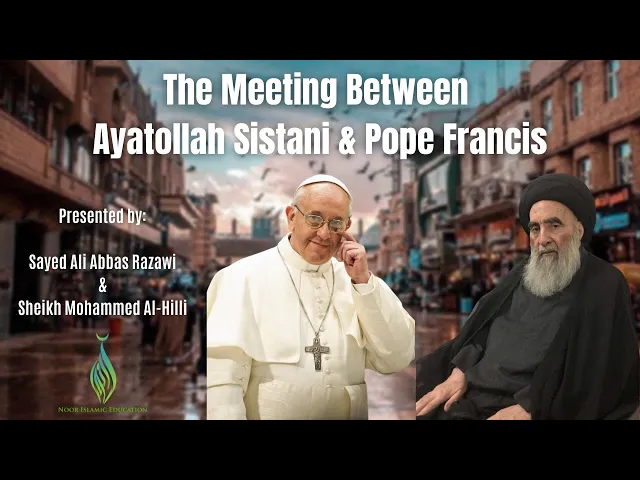
SISTANI - Full Documentary (Arabic SUBS)
0
0
52 المشاهدات·
24/03/24
في
محاضرات
Sayed Ammar Nakshawani discusses and analyses the life of Ayatollah Sayed Ali al Sistani
سيد عمار النقشواني يناقش ويحلل حياة آية الله السيد علي السيستاني
لقطات ومقابلات حصرية تناقش حياة زعيم الطائفة الشيعية الاثني عشرية اليوم
أظهر المزيد
Transcript
[0:10]revealed by many as one of the most important scholars in the
[0:15]muslim world imitated by millions in the twelve shia community today his
[0:19]most recent meeting with the pope highlights his importance both internationally as
[0:24]well as nationally a man who's seen a world war revolutions terrorism
[0:29]and transitions from one government to another who exactly is this man
[0:34]what influences his worldview for the first time ever join me in
[0:40]this documentary as i will go on a journey both literal and
[0:44]metaphorical to explore the social political and theological worldview one of the
[0:50]most important figures in the 21st century ayatollah sistani was born on
[1:00]the 4th of august 1930 in the city of meshed second most
[1:03]populous city in iran the capital of the horizon province the city
[1:09]of meshad occupies a prominent position in the lives of many muslims
[1:12]in the world today especially those in the twelve shia community the
[1:16]city itself in the opinion of some derives its name because it
[1:20]is the resting place of the great grandson of the prophet muhammad
[1:25]peace be upon him and his family known as ali the son
[1:28]of musa ar ali the son of musa is seen as the
[1:30]eighth of the twelve imams of the twelver theology and he passed
[1:36]away in the city of meshad therefore the city becomes the center
[1:40]of pilgrimage there are many in showing their love and their reverence
[1:43]for the prophet muhammad peace be upon him who undertake the journey
[1:48]to go and visit the great grandchildren of the prophet there are
[1:51]some who reside there and indeed the city itself has been the
[1:54]home to some of the greater scholars mystics and poets of those
[1:57]scholars is a scholar who is an ancestor of ayatollah sistani the
[2:03]revered scholar muhammad al-husseini known as regarded by many as one of
[2:08]the greatest scholars in the history of the religion of islam and
[2:11]one of its greatest philosophers and where better to begin the journey
[2:17]in gaining knowledge wisdom spirituality then in the vicinity of one of
[2:23]the most revered personalities in the history of the religion of islam
[2:31]is revered by all schools in the religion of islam indeed there
[2:35]are many who have taken their traditions and his contemporary scholars and
[2:40]peers would always narrate the importance of understanding his knowledge his wisdom
[2:47]as well as his spirituality many of them would reveal him and
[2:51]many of them would recognize his influence the young said ali sistani
[2:57]begins a journey of knowledge the same journey that his great-grandfather the
[3:00]prophet muhammad peace be upon him in his family had wanted to
[3:04]be undertaken by the muslim community when he would say lines such
[3:08]as seek knowledge from the cradle to the grave and mesh head
[3:11]in those early years of the life of ayatollah sistani had some
[3:15]of the greatest scholars that the islamic seminary has ever produced the
[3:21]likes of shaykh mahdi ashtyani all have a profound effect on said
[3:28]ali sistani's life he enters the islamic seminary the quran is of
[3:31]the utmost importance to him in his life the traditions of the
[3:34]prophet muhammad peace be upon him and the traditions of his family
[3:37]play a pivotal role in those early years at the same time
[3:43]alongside seeking to gain knowledge the young ali sistani witnesses the governance
[3:48]of the pahlavi monarchy indeed in his childhood ayatollah sistani sees the
[3:52]implementation of the banning of the wearing of the veil in iran
[3:57]and sees over a thousand people die for standing up against such
[4:00]a law therefore one may argue that his period living in meshed
[4:03]is a period not only in which he studies the quran and
[4:08]studies islamic theology but he also sees the dangers of tensions within
[4:11]the muslim community he also sees that sometimes difference of opinion can
[4:15]lead to major clashes clashes that lead to death and hence one
[4:19]may argue that his time in measured has a profound effect on
[4:22]him in his later years when he sees clashes between people of
[4:26]the same religion who have differences of opinion with one another and
[4:28]so from a young age at the age of five you find
[4:32]that isolationi begins what proves to be one of the most illustrious
[4:38]careers of all jurists in the 21st century if mesh head was
[4:43]known as the first religious city of iran then um is a
[4:47]close second hum is the seventh largest city in iran and has
[4:51]a history very much related to the twelve ashiya community the shia
[4:54]of the aishary tribe who had come to kom had a profound
[4:57]influence on the shi'i community but you find at the same time
[5:02]the sister of ali son of musa riva known as fatam al-masuma
[5:06]is an inspiration for many to come to visit on but also
[5:12]to reside but also to study and many of the greats of
[5:14]shiite history were those who were either scholars in com or teachers
[5:19]in the seminary the likes of sheikha sadok one of the most
[5:24]renowned figures in shiite history was the scholar of gom the holy
[5:28]city of kum if the shrine of imam al-raga peace be upon
[5:31]him has an effect on ayatollah then the shrine of his sister
[5:36]directly behind me summer has an effect on the life of it
[5:42]when he moves from mesha to home from until today is seen
[5:47]as the center of learning for many shia and the world and
[5:49]i told her sistani in his teenage years comes to come for
[5:53]a few years to continue his studies it's in this period in
[5:59]home that director of the seminary is known as ayatollah hussain al-buraj
[6:03]one of the greatest scholars in shiite history and a man of
[6:08]great influence and who has a profound effect on the life of
[6:10]ayatollah at the same time a few of the lessons taken by
[6:19]ayatollah are under the guidance of ayatollah professor rizvi can you give
[6:23]us an overview of the development of religious authority in tulvashia theology
[6:27]in the period of the imams authority was very clear it lay
[6:33]with the imams and lay with those who they had appointed directly
[6:37]as their representatives of course once the 12th imam the mahdi goes
[6:43]into occultation the situation becomes a bit more obscured and that period
[6:51]in the history of the the faith is known as the period
[6:55]of of confusion or haida now what seems to then have developed
[7:00]in that period is that you also have the growth of a
[7:04]class of individuals who emerges who are well-versed and learned in the
[7:12]hadith of the imams and increasingly are well-versed in theological argumentation so
[7:16]a class of ulama as we would have it emerged this didn't
[7:20]actually happen out of nothing there were already people that the imams
[7:24]had trained themselves and who had acted as defenders of the faith
[7:29]even in the time of the imams whether that was in medina
[7:31]whether it was in iraq or other places they don't claim to
[7:36]have authority but they claim that as a general body they have
[7:40]a role in the absence of the imam to continue to defend
[7:43]the faith and to represent the community and to act in the
[7:47]interest of the community and so in that sense they developed this
[7:50]idea that they had a delegated sort of authority there are different
[7:56]terms which are closely associated with the term alemo scholar or scholars
[8:02]you sometimes hear the term allama or islam and most famously ayatollah
[8:09]ayatollah sistani can you give us an overview of the history and
[8:14]development of these terms so ayadola is certainly like many of these
[8:22]modern titles is something which seems to have emerged in the 19th
[8:25]and arguably the 20th century there were different ways of honoring people
[8:30]in the past of course calling someone al-arma meant they were the
[8:35]most learned and those sorts of honorific titles were given to people
[8:41]who were widely recognized for their piety but also widely recognized for
[8:45]their scholarship and their recognition of scholarship came through the works they
[8:49]wrote and also of course significantly from their teaching the word ayatollah
[8:53]i think in the modern period in the 20th century in particular
[8:55]becomes associated with someone who is learned in the law in jewish
[9:02]prudence who produces for example a recyler that someone follows whose fatah
[9:07]where they follow so basically in today's language we would describe that
[9:11]person as a merger right someone who is a source of emulation
[9:16]source of um authoritative rulings on how you you live your life
[9:21]many normally would associate ayatollah sistani with meshed or najef but under
[9:28]the auspicious guidance of ayatollah al-barra you found that kum continued to
[9:35]flourish and found that bomb remained of the utmost importance in his
[9:41]heart there is no doubt that the pinnacle of studies and the
[9:46]life of any shia theologian is the city of najef having studied
[9:51]in mashhad migrated to la sistani then migrates to najef and najef
[9:56]becomes a home nejaf is his life najef is where he will
[10:01]witness some of his greatest moments but also some of his most
[10:06]difficult many people do not realize that allah sistani had to see
[10:10]government after government he sees abdul-qarim qasim abdullah the baath regime the
[10:15]rise of communism the fall of communism and therefore intellectual conversations prove
[10:20]to be of the utmost importance in his worldview while in njf
[10:26]many may study three stages in order that they reach the pinnacle
[10:30]of being a scholar in the fields of jurisprudence and theology itola
[10:35]sistani seeks to incorporate an understanding of the world that surrounds him
[10:39]he witnesses that there are tensions sectarian tensions in parts of north
[10:42]africa and in parts of the middle east revolutions are taking place
[10:47]he witnesses religious figures who are speaking out against one another hate
[10:50]that is spreading therefore his life in njef is not just a
[10:55]life where he is in the seminary rather at the same time
[10:59]he keeps up to date with the affairs that surround him the
[11:02]scholars that surround him of course have a profound effect on his
[11:07]life the likes of sheikh hussein each and every one of these
[11:13]scholars has a profound effect on the world view of idola sistani
[11:16]trials and tribulations are many he witnesses scholars around him who are
[11:19]executed who are banished who are assassinated he witnesses scholars around him
[11:26]who are constantly under surveillance some who return home some who don't
[11:30]but this has an effect on making him stronger and also in
[11:34]his vision that one day scholars of different sects and of different
[11:37]religions can come together in dialogue be it intra faith or interfe
[11:44]just how important is najif the seminary of najef in relation to
[11:51]knowledge in the shiite world najef and more generally iraq has actually
[11:56]since the time of the imams being the sort of the center
[12:05]of gravity of the shia community um the fact that you know
[12:07]a number of the imams are buried in iraq is very significant
[12:11]and so we we've had because of that center of gravity because
[12:17]of the shrines in particular you had circles of learning developing around
[12:22]that and those circles of learning have then become established as institutions
[12:28]uh seminaries hausat al-miya as as they're known hausa and that's really
[12:36]where authority is expressed and articulated and from which authority is disseminated
[12:42]the city of najef one of the holiest sites in the religion
[12:47]of islam a city that predates the religion of islam but a
[12:51]city which everyone flocks to for one reason the final resting place
[12:58]and the shrine of the man buried behind me the son-in-law of
[13:01]the prophet muhammad peace be upon him in his family imam ali
[13:06]peace be upon him imam ali as we all know was the
[13:09]man who gave his whole life to the religion of islam muslims
[13:12]of all different schools and denominations revere the man the man recognized
[13:17]as being the one who was the backbone to the holy prophet
[13:19]peace be upon him at all times and a man who lived
[13:26]in mecca lived in medina but also lived six miles away from
[13:29]here in the holy city of kufa but his final resting place
[13:35]became a center for the hearts of many muslims around the world
[13:38]and especially of the shia community you look around me and you
[13:43]see the reason why the likes of it allah sistani not only
[13:45]wanted to come here but to study here because they felt that
[13:50]they were next to the man who embodied knowledge embodied wisdom and
[13:54]the man who the prophet referred to when he said i am
[13:57]the city of knowledge and ali is its gate migration is part
[14:01]and parcel of the life of many of the great scholars and
[14:04]one may argue was part and parcel of the life of the
[14:06]prophet peace be upon him and his family and migration plays a
[14:11]major role in the life of italians born in mesh head studies
[14:15]in mesh head moves to om studies and home and then migrates
[14:19]to najaf why the migration from these different centers of learning we
[14:25]know that people have been traveling to najaf to seek knowledge to
[14:29]be trained to sit with the leading scholars of their time for
[14:33]centuries this has been going on for a very long time and
[14:37]at the very least one would say since the 15th century 16th
[14:39]century najaf has been a very major center of learning before that
[14:45]hello which is not very far was quite important but people used
[14:49]to go back and forth so even when people talk about hella
[14:51]being the important place they would probably spend half the week in
[14:55]najaf anyway so we know that allah mahalia etc used to often
[15:01]go and write some other works in najaf and that's why from
[15:04]an early period even the texts that these figures wrote were then
[15:11]kept in the library of the shrine in najaf in more recent
[15:16]times certainly from the safeway period onwards and especially after the fall
[15:22]of the safravids in the 18th century there wasn't an obvious center
[15:26]of learning outside of iraq and so najaf becomes even more significant
[15:33]so when you have figures who are say in south asia in
[15:37]central asia in iran in the arab lands etc they tended to
[15:43]go to najaf because it was somewhere which was safe it was
[15:47]a safe and secure and authoritative shia space imam ali is known
[15:52]around the muslim world revered in many circles and the shiite school
[15:56]revered as the first of the leaders in succession to the prophet
[16:00]muhammad peace be upon him family known as the imams and in
[16:04]the non-shia schools within the religion of islam he is seen as
[16:08]the fourth rightly guided caliph and hence you find that many people
[16:12]from around the world many pilgrims who come towards the city of
[16:15]najef with one intention and that is to get close to knowledge
[16:20]and to get close to those who bore knowledge he is known
[16:22]as the gate to the city of knowledge and hence you found
[16:26]that for the past thousand years there have been many scholars who
[16:30]have come from far and wide to be the neighbors as well
[16:35]as the recipients of knowledge in what is known as the hausa
[16:39]al miya al hausel is known as literally the enclosed circle of
[16:45]knowledge an enclosed space of knowledge where knowledge is guarded where people
[16:49]are able to study different subjects subjects such as arabic grammar but
[16:56]also subjects related to the quran as well as subjects related to
[16:59]the study of hadith history as well as jurisprudence different sciences such
[17:04]as philosophy and ethics have been studied for the past thousand years
[17:07]one may argue that all credit for njf being the center of
[17:13]knowledge is to be given towards a particular personality known as sheikh
[17:20]tosi sheikh because of strife of a sectarian nature in baghdad had
[17:26]to leave and migrate to najaf his migration and ayatollah sistani's migration
[17:31]is similar in the sense that moves from mesh head towards home
[17:37]towards niger and he came to najef and while one may argue
[17:44]that najef was not the locus of shiite learning for the past
[17:50]thousand years but certainly in the past few hundred years some of
[17:53]the most renowned scholars are those who graduated from najef and that's
[17:57]why when i told her he came here and others came here
[18:03]to gain their knowledge within the vicinity of this wonderful shrine where
[18:07]you see many around us seeking both knowledge as well as spirituality
[18:12]like others you found that ayatollah sistani found his home in najef
[18:18]and indeed najef would provide you with a structure in which you
[18:22]were able to gain your knowledge preliminary intermediate and then advanced his
[18:29]advanced studies were in njf his advanced learning was in najif a
[18:35]socratic method inviting students to share their opinions you found that the
[18:41]teachers would be able to move from one topic to another one
[18:45]minute talking about law the next minute arabic grammar the next minute
[18:48]the narrations of the prophet muhammad and his family and then from
[18:51]then on the philosophy behind the jurisprudential verdicts he at the tender
[18:57]age of 31 was recognized as one of the highest of the
[19:00]jurors in his circles but out of respect courtesy etiquette in najef
[19:09]one recognizes that if their teachers are still alive they don't necessarily
[19:14]put forward all their opinions to the public he had seen a
[19:16]number of his teachers pass away he had seen sheikh hussein al-hilli
[19:21]pass away but he continued to revere at the same time you
[19:30]found that allah sistani recognized that it was not just enough for
[19:33]a person to be a top jurist how was his private life
[19:37]was he someone who looked after his family was he someone who
[19:42]sought to live a luxurious life or someone who sought to be
[19:45]altruistic and look out for others there are stories attributed to him
[19:51]and his family that they only had one rug in the house
[19:54]and when his friend was getting married he gave that rug as
[19:59]a gift but it wasn't like his wife herself the granddaughter of
[20:03]an illustrious scholar the famous scholar known as the shirazi of samara
[20:08]who was involved in the famous tobacco uprising she herself was the
[20:14]backbone to either allah and while many mention it allah is greatness
[20:18]there is very little attention that is paid to the lady who
[20:22]in all this period remained alongside him there are times when a
[20:27]person loves being in najef because they can be next to the
[20:29]shrine of the son-in-law of the prophet muhammad peace be upon his
[20:31]family there are others when a person sees political upheavals and assassinations
[20:37]and executions and it means you have to remain firm steadfast patient
[20:42]and many do not realize that in 1991 with the gulf war
[20:47]was tortured in a hotel on the outskirts of najaf known as
[20:51]assalam hotel and then he was taken to detention camp after detention
[20:58]camp many of us see ayatollah and we see his meeting with
[21:02]the likes of the pope and we see different people come and
[21:04]visit him but many of us don't realize that there are wounds
[21:09]both physical and emotional in his life emotional wounds of having lost
[21:13]his contemporaries his peers those who he used to sit with and
[21:16]smile and discuss and analyze and examine different texts with on the
[21:20]physical level as well in 1991 it took its toll he was
[21:25]tortured one may argue in the way that his great-grandfather imam al-hussein
[21:31]said peace be upon him was tortured on the plains and after
[21:37]the plains of karbala on the journey towards shah in this exclusive
[21:41]interview i discussed with someone who was in prison with ayatollah in
[21:46]1991 can you please tell us more about that period in prison
[21:54]with ayatollah sistani and other scholars in 1991 at the time of
[21:58]the uprising [Music] my foreign [Music] [Music] foreign [Music] foreign [Music] [Music]
[28:50][Music] sistani in the prison so say you were going through the
[30:14]night how was his character development in terms of his knowledge and
[30:57]his leadership is jam al-khadrah behind me this place played a particularly
[31:02]important role in the life of his teacher wanted this place to
[31:13]be a center of learning in the vicinity of the resting place
[31:18]of imam ali peace be upon him asked in the mid 60s
[31:22]that this place was to be reconstructed it's known as there are
[31:28]different reasons as to why it may be called khadra one opinion
[31:33]is in reference to the location this is the hadra and therefore
[31:37]some said that originally it was known as and later became known
[31:45]as others say no those who used to sell vegetables in the
[31:48]markets around here but what it became most famous for was the
[31:54]production and the graduation of some of the most renowned scholars in
[31:58]the history of the religion of islam many would do preliminary studies
[32:05]in najaf intermediary and if you wanted to see the advanced lessons
[32:08]you would come here but you wouldn't just come here to learn
[32:12]would not only teach here but he would also lead prayers after
[32:18]him after him he had always insisted that there needs to be
[32:27]someone here who teaches but at the same time that spiritual lesson
[32:31]that one always learns from congregation in every walk of life but
[32:35]especially in prayer has to continue and the regime realized that this
[32:40]particular location was producing some of the greatest scholars and scholars who
[32:45]may speak out scholars who had the knowledge scholars who had wisdom
[32:51]and that's why jam al-qaeda behind me was closed for a certain
[32:54]period of time if you were to ask the question which man
[32:57]made sure that it was reconstructed but also opened again it was
[33:02]ayatollah sistani it was part of his learning part of his leadership
[33:07]and then he wanted to make it an integral part of islamic
[33:11]history the baptist regime saddam hussein orders the execution of many prominent
[33:16]scholars in najaf contemporaries of ayatollah those who were closely associated with
[33:21]him those who he would have studied with alongside and benefited from
[33:27]how does this impact ayatollah sistani psychologically i think it affects him
[33:32]and it affects a number of others as well i mean of
[33:33]course it affects hoy you know even the regime recognized that he
[33:41]was preeminent and so they had to think about how they engaged
[33:44]with him and with his with his circle of which of course
[33:50]seistani was a very important member of that circle now i think
[33:55]what then happens is that one has to make calculations about what
[33:59]is in the best interest of the community and what is in
[34:04]the best of interests of keeping alive the vibrancy of the center
[34:09]of gravity which is a najif and if that in what involves
[34:17]basically saying a bit less on public issues and keeping the call
[34:23]going keeping your teaching going keeping your wide advice to the global
[34:27]community going then so be it and some people will take a
[34:33]more active approach and some people will take an approach which says
[34:37]that the activity has to be geared towards the community itself right
[34:40]now of course those who then did go forward and were persecuted
[34:44]and were executed it's not to say that what they did was
[34:47]wrong they had a different opinion about what was the best thing
[34:53]for the community and ultimately their sacrifices have been very significant because
[34:58]their sacrifices have meant that the community has persisted i think the
[35:02]wider duty and obligation to the community does mean that sometimes you
[35:05]step back and sometimes you step forward and even after 2003 we've
[35:11]seen that with sistani there are times he's been much more vocal
[35:13]and at times he's been a bit less vocal and and it's
[35:18]about the sorts of calculations you have to make i will not
[35:23]allow for people to say that sheikha torsi built najef and i
[35:26]destroyed it famous words where he sought to emphasize the importance of
[35:34]maintaining the prestige and the status of najef as was built and
[35:39]established by sheikh trial and tribulation and it allah sistani would have
[35:47]witnessed this under his great teacher i to allah had great reference
[35:52]for italian he had reverence for his asceticism but he also had
[35:57]reverence for the fact that ayatollah tried his hardest to remain wise
[36:01]in the most difficult of political situations let's not forget that some
[36:06]of those who had studied undying were forced to leave the likes
[36:12]of ayatollah rouhani being a prime example who had to leave whereas
[36:15]he had to leave then you had others who were coerced into
[36:22]certain difficult moments moments which led ultimately to their deaths in 1991
[36:29]one may argue that some of the greatest scholars that the religion
[36:34]of islam had ever seen especially in shia thought were executed for
[36:39]a crime they did not commit were innocent indeed the likes of
[36:45]it being amongst a number of scholars who were executed not just
[36:52]in the 80s but also in the nineties this no doubt would
[36:56]have had a profound effect on it and had a profound effect
[37:02]on his health he died in 1992 and it was italian who
[37:07]had the huge honor of leading his funeral prayer one may argue
[37:13]symbolic of the status of ayatollah at that time and forever [Music]
[37:32][Music] let's not forget the grenade attacks that is to endure in
[38:14]his own lifetime and seeing many of his students executed this has
[38:19]a profound effect on ayatollah you find that what he had seen
[38:24]of sectarian strife in the previous 30 years would have an effect
[38:28]on his outlook on the world could we live in iraq where
[38:30]for example you had shia non-shia i like people of different religions
[38:36]christians people of the jewish faith all living together as iraqi citizens
[38:39]rather than fighting each other rather than killing each other by everybody
[38:43]living as the man himself said who's buried in this holy shrine
[38:48]you either live as brothers in faith or as equals in humanity
[38:54]wants to make sure that he'll remain in iraq even if everybody
[38:58]else is banished or forced to leave or left because of dangers
[39:01]and trials and tribulations the 1991 gulf war he witnessed his executions
[39:07]assassinations and then he witnesses the passing away of his mentor his
[39:12]leader his great teacher who leads the funeral prayer this is of
[39:17]the utmost importance for two reasons on the one level the piety
[39:21]is attested to at this moment there are other great scholars who
[39:24]are around but when you lead the funeral prayer of a grand
[39:26]scholar like italia then this is the symbol of your piety at
[39:30]the same time it's symbolic because of its relationship to knowledge the
[39:36]most knowledgeable one would normally be the one who leads the funeral
[39:39]prayer of a grand ayatollah from that moment onwards while there were
[39:42]other great scholars such as said abdullah zawari and said mohammed ravalgul
[39:46]paigani aitola sistani assumes the helm as director of the seminary of
[39:53]najef the renowned ayatollah passes away in 1992 can you tell us
[39:57]more about the transition phase and how ayatollah sistani goes on to
[40:03]lead the muslim community the 12th shiite community at large you know
[40:07]at times in history there's been one figure who has been extremely
[40:10]prominent and above everyone else but it's never been the case that
[40:16]that at one time in the world there's only been one figure
[40:18]who who we sometimes you know think is the representative of the
[40:24]imam that's just not the way it works so even when soi
[40:26]khoi was there yes he was extremely significant and very prominent in
[40:29]najif but there were other people in the jeff some of whom
[40:32]were killed before him some of whom were killed after him or
[40:35]who died before him after there were a number of other figures
[40:39]in in iran and other places as well i think the the
[40:41]issue was for someone like says islami to emerge the issue was
[40:48]how is the authority of najef going to survive in a meaningful
[40:54]manner right if because the other figures who were in najaf were
[40:58]relatively minor in comparison and all the other major figures who were
[41:02]followed were mainly in iran and other places so if if najaf's
[41:10]preeminence was going to survive how would it happen and of course
[41:15]then politics of course plays a role in this as well there
[41:18]are those who would rather keep things independent of the iranian state
[41:23]and the political theology of iran so they wanted to find a
[41:28]figure who could keep that who would be outside everyone who would
[41:31]be independent of iran but who could potentially build up a very
[41:38]significant global following who had the right credentials who had the right
[41:41]support he came from um circle he famously led the funeral prayers
[41:46]of said hoy one of the very few people who had an
[41:49]ejazza which they heard from said roy and so there was a
[41:53]period of about three or four years for his manual of fatwas
[42:00]to be published and then significantly translated as well because what starts
[42:07]to emerge in the 90s especially after and 90s also because of
[42:11]the growth of communities outside of the traditional heartlands and for example
[42:20]of those who went as refugees either from iraq or from afghanistan
[42:24]and other places coming to places like england going to america canada
[42:30]and so forth so there's a growth of those communities and then
[42:34]the requirement for materials in english and so in many ways i
[42:39]think the the translation of sistani's manual in english is a very
[42:43]important event in many ways that really marks the beginning of his
[42:49]majaya as a global phenomenon and a key of course event in
[42:57]that was 2003 was the fall of saddam the change of government
[43:01]the innocence a a sense of liberation and possibility for the shia
[43:07]in iraq and an opening up of freedoms within somewhere like najif
[43:11]and since then i think that the rise of assassin's prestige has
[43:19]been even greater this is someone who thinks religion should be guiding
[43:22]and advising but is not insisting on ruling and i think for
[43:28]all of those reasons the development of his authority since 2003 has
[43:32]been very significant when he assumes the helm the first 10 years
[43:36]are not exactly the easiest there was even a major assassination attempt
[43:39]on his life in 1998 which many do not mention his employee
[43:44]was killed some said leave iraq go and settle elsewhere you will
[43:48]live in peace he wanted to remain firm najef had to be
[43:53]protected the downfall of saddam so ayotte allah sees stanley now in
[43:55]the spotlight more than he had ever been before now people could
[43:57]come and visit him people could come and sit with him people
[44:01]could come and see his worldview the turmoil of iraq post 2003
[44:04]allowed us to see it sistani in a new light there is
[44:09]no doubt that what ayatollah achieved post 2003 is monumental in the
[44:12]eyes of many muslims and non-muslims alike on the 4th of march
[44:18]2014 the daily telegraph commentator colin freeman published an article naming ayatollah
[44:21]sistani as the most appropriate nobel peace prize candidate he also reported
[44:26]that he had been nominated earlier in 2006 by a group of
[44:32]iraqi christians friedman continued to say istani has been an outstanding voice
[44:38]of moderation peace and tolerance without whom the country would probably be
[44:42]a far bloodier place than it already is he states to get
[44:45]an idea of this you have to go back to just after
[44:49]the invasion when the ex-baptist of iraq formed an unholy alliance with
[44:53]certain non-shia extreme groups while killing americans was one of their priorities
[44:57]their other real passion was killing shia whom they viewed as he
[45:00]states not just as u.s collaborators but as apostates too in the
[45:04]decades since friedman states that the shia community has suffered the most
[45:07]appalling provocation most of the car bombs that have gone off in
[45:11]baghdad over the years have been targeted at shira neighborhoods killing thousands
[45:16]death squads regularly ambush shia pilgrims as they head to sistani's city
[45:20]of najef turning the annual holy festivals into a ritual slaughter in
[45:24]2006 friedman states that al-qaeda also bombed the shia holy shrine of
[45:28]samara and act roughly the equivalent to destroying saint peter's basilica yet
[45:33]throughout all this bloodshed italia has beseeched ordinary shia as not to
[45:37]retaliate friedman's astounded by this no he has not been entirely successful
[45:44]according to him but in the year that followed the shrine attack
[45:46]a low-level sunni shia civil war seemingly breaks out with tens of
[45:51]thousands dying in it tit-for-tat violence but as with so many things
[45:56]in era friedman concludes the horrors that actually took place were nothing
[45:58]compared to how bad it could have been were it not for
[46:02]ayatollah sistani ayatollah sistani friedman states has helped avert an all-out disaster
[46:07]and is credited as such not just by those who imitate him
[46:10]but by many western diplomats lady luck has shined on us by
[46:17]keeping alive this ayatollah who resides in a small house in a
[46:20]narrow alley in nejaf and almost never goes out the door how
[46:22]someone with his instincts and wisdom could have emerged from the train
[46:27]wreck that was saddam hussein's he says i will never know all
[46:33]i have to say is may he live to be 120 and
[46:36]give that man a nobel prize the terms ayatollah and fatwa were
[46:41]most closely associated at a certain period with the salman rushdie affair
[46:44]and 2014 they were most closely associated with the fatwa issued by
[46:53]ayatollah for the people of iraq to rise and defend themselves against
[46:57]isis and the threat of isis and the violence of isis and
[47:00]the discrimination of isis can you tell us more about that particular
[47:05]fatwa and the ramifications of the statements that were made it was
[47:09]addressed to all iraqis and it came from a position of recognition
[47:14]that he had the authority to speak to all iraqis now he
[47:19]hadn't it's not as if he hadn't done that before you know
[47:23]he'd he'd spoken openly on the constitution he'd spoken openly on the
[47:26]need for there to be accountable government and you know with all
[47:31]the different levels of corruption etc that were going on in iraq
[47:34]at many times he intervened and said look the government needs to
[47:39]be accountable to the people and if people are demonstrating against this
[47:41]all well and good right let them do that let their their
[47:45]voices be heard let their their demands be met in 2014 there
[47:52]was in many ways it's sometimes quite difficult for people outside iraq
[47:57]just to recognize what a great existential threat there was you know
[48:02]we've we've seen what had been happening in syria and there was
[48:07]a point at which you know isis potentially could have been controlling
[48:10]the whole of that region you know from the syrian desert all
[48:16]the way down to the south of iraq and that would have
[48:19]been basically would have meant the end of iraq but it would
[48:23]have caused a huge problem for the whole region and that's why
[48:29]it required intervention and that's precisely the sort of existential threat which
[48:35]requires the scholarly leadership to step up and to say something and
[48:39]so um it was in many ways the greatest way of mobilizing
[48:44]people and everyone who who's who's written and spoken about the the
[48:48]the fatwa of the bayan or the um the call to arms
[48:53]even if you could call it that in 2014 has said that
[48:55]it was a a real pivotal moment on this very street march
[49:04]2020 the pope met the ayatollah while many may know of the
[49:07]pope very few know of the ayatollah ayatollah is one of the
[49:12]most influential personalities in the muslim world today but what is the
[49:16]basis of this influence and why is he seen as one of
[49:20]the most important voices not only in the middle east but throughout
[49:23]the world um i had foreign [Music] foreign [Music] father march 2021
[52:44]the pope comes to nigeria to visit tell us more well the
[52:50]pope's trip to iraq has a number of facets to it firstly
[52:55]primarily in a sense he's going to visit the iraqi people as
[52:57]a whole both christian and muslim but with a special emphasis obviously
[53:01]on the christian communities of whom he is the shepherd but to
[53:06]the country as a whole which has come through so much trauma
[53:12]so much violence he is going as he himself said as a
[53:14]pilgrim not as a head of state to be with people and
[53:18]to share something of their sufferings and their sorrows that's the first
[53:21]level of facet added to that he is going to go to
[53:24]cities like mosul which have a special significance he's going to attempt
[53:28]to trace some of the footsteps of abraham and he's going to
[53:31]go to najaf and there in najaf you have these three distinct
[53:36]but interweaving institutions you have the hausa and resting on the house
[53:44]of the spirit of atuci you have the presence of ayutellas grand
[53:49]ayote and you have the tomb of ali and those three for
[53:52]want of a better word institutions are the things that make najaf
[53:57]najaf so that when the pope goes to najaf he is going
[53:59]to those three things even if he doesn't physically go to the
[54:03]tomb of of ali even if he doesn't necessarily go to visit
[54:05]the hausa itself he is coming to the city which is inseparable
[54:11]from those three things so it's a multi-level visit not as a
[54:16]politician or a head of state but as a religious pilgrim and
[54:20]a man of faith going to visit people of faith and in
[54:24]particular a very important man of faith who who is known in
[54:28]the world and has a popular following would you argue that the
[54:35]pope was surprised at the humble surroundings of ayatollah sistani maybe in
[54:40]contrast to the vatican um and what we've always seen of the
[54:44]vatican from the outside and then he visits istani what do you
[54:51]think his reaction was when he saw this we know that the
[54:54]pope coming back on the plane spoke at length to journalists and
[54:59]said a number of things now this is quite an important issue
[55:02]because there was a moment in social media when the pope and
[55:05]sistani would be compared as the one lives in a palace and
[55:09]the one lives in a humble situation that's not really an accurate
[55:12]reflection because the difference between them is the pope is also a
[55:15]head of state and he lives in the situation that any head
[55:18]of state lives in in fact the pope lives in a smaller
[55:22]space in rome than i do i've got a larger set of
[55:25]rooms than he has he shares a hotel with a large group
[55:28]of people notwithstanding that there is no doubt that the humility the
[55:32]surroundings in which the iota lives considering who he is his status
[55:40]his wisdom his life of prayer and faith are extraordinary for for
[55:43]most of us to see a man of such status living in
[55:47]such a condition of humility and simplicity cannot but impress the pope
[55:52]himself remarked on this and said you know i have met a
[55:56]man of faith a man of humility and a man of god
[55:57]why now why the meeting in 2021 from the perspective of the
[56:03]pope in particular why do you think he felt it was high
[56:06]time that he met the grand jurists in the shiite world and
[56:11]could this possibly be the springboard for future shia a catholic dialogue
[56:17]i would say that there are probably two reasons why the pope
[56:21]went to iraq right now firstly he was attempting to enclose in
[56:26]his embrace the whole islamic world two years ago he met with
[56:30]the sheche of al-azhar they signed a document together about human fraternity
[56:33]and in a sense he was meeting in that one person with
[56:38]the whole sunni world this was his chance to show that he
[56:40]understands that islam is a bigger world than that and that he
[56:45]needed to embrace the whole islamic family so that was the first
[56:48]thing this was the closing of the embrace uh by by the
[56:51]pope who is embracing the islamic world as a brother in faith
[56:54]and you know we we know about that concept that we hear
[56:58]from from from ali for example about a brother in faith but
[57:00]there's a second element and that is that the iraqis have been
[57:06]treated like dirt by so many nations the pope is saying to
[57:08]them you are an important part of the world community and you're
[57:13]no less important than any other country and i'm coming to you
[57:16]because i need you to know that that i am with you
[57:19]in this i may not be able to lift your sufferings or
[57:20]stop them or intervene politically but i need you to know that
[57:25]my presence here is to tell you how important you are compared
[57:27]to what other narratives may be saying so it's a double it's
[57:32]a double reason for that he meets of course with with al-sistani
[57:35]because he understands and he's been prepped quite clearly that who he
[57:41]is and how many people follow him millions of people throughout the
[57:44]world listen to him or talk by him take faith from him
[57:46]so he he understands quite clearly that that this is the man
[57:52]to meet even if he may not be able to have as
[57:53]great an influence as the pope might hope that's not the issue
[57:58]the issue is two men of faith meeting is in itself a
[58:00]symbolic gesture for the world of two men with different world views
[58:05]but who are reading from the same page when it comes to
[58:07]peace when it comes to justice when it comes to religious freedom
[58:11]and i think that's very important do you think many people knew
[58:14]that when isis had executed some members of the christian community in
[58:21]mosul had destroyed some churches in mosul do you think many people
[58:27]knew that ayatollah was one of the first to say you protect
[58:30]any iraqi irrespective of their religious background absolutely not because the narratives
[58:36]around isis were the narratives that western media decided to pursue and
[58:41]they were almost all of them wrong and one-sided and biased and
[58:45]they would not we were not willing at any stage to recognize
[58:48]who exactly was combating isis who was it who was going in
[58:54]who were giving their lives against the isis forces it was not
[58:57]a pub popular narrative with the western media and therefore they ignored
[59:01]it the the real issue for me the problem with with al-sistani
[59:05]is that that he is seen by some in the west as
[59:09]the good muslim he's the one we can talk to and that
[59:14]diminishes his holiness his learning his wisdom he's not just the good
[59:19]muslim and he's not a pawn in anybody's game and and i
[59:24]hope that the one thing this visit may have done was to
[59:26]open the eyes of people there's a great deal more than al
[59:31]to al-sastani than just you know the americans hoping that he'll be
[59:34]their friend that he is genuinely a peacemaker that he genuinely has
[59:37]stepped in and built bridges between people in very short spaces of
[59:43]time in moments of great emergency that he's genuinely spoken for the
[59:48]christian and other minorities not just as a as a as a
[59:50]sound bite but because he truly authentically believes that this is the
[59:53]right thing to do and it would be good to see the
[59:58]media printing that narrative not just the popular narrative which is that
[60:01]islam is a problem [Music] [Music] [Music] [Music] this is one of
[60:45]the most remarkable achievements in terms of philanthropy in the life of
[60:49]ayatollah said behind me is the nor hospital arguably what is to
[60:57]be the largest hospital in home part of the social philanthropic vision
[61:02]of ayatollah sistani is that people are helped in all walks of
[61:07]life not only in islamic education but are also helped relating to
[61:13]their medical concerns and under the guidance of his representative islam and
[61:21]muslims as well as under the supervision of said allah you see
[61:26]this outstanding endeavor an endeavor that will look after the lives of
[61:30]so many behind me we've seen what is going to be the
[61:34]building of award a ward whose speciality is going to be the
[61:39]care for those who are suffering from cancer for those who have
[61:42]heart issues for those who have kidney issues for those who may
[61:45]have difficulties and trials with the health of their children everybody within
[61:52]the vicinity of this area will be helped you find in this
[61:55]holy city of pum which was so much associated with learning is
[61:58]also associated with his vision of philanthropy of help for the orphans
[62:05]for the needy for the poor and for the widows at allah
[62:08]moves here from mesh head and you find that not only does
[62:12]he study here but he ends up leaving a legacy behind and
[62:16]a legacy that will continue to serve generation after generation [Music] behind
[62:49]me over here you'll witness the foundation of what's going to be
[62:54]one of the most important research centers in the shiite world with
[62:58]the upheavals that italian had seen in his life with the sectarian
[63:01]stripe that he witnessed he wanted a specialized place where people of
[63:05]all different walks of life different denominations different sects were able to
[63:10]come and were able to study and explore the teachings of the
[63:15]prophet muhammad peace be upon him and his family and therefore you
[63:18]found that this was one of the main areas which he wanted
[63:24]fulfilled his representative sought to ensure that this vision was complete therefore
[63:29]you found that the representatives of ayatollah sistani one of their main
[63:34]roles was to identify the needs of their local area the needs
[63:38]of their local community and this place here will be a research
[63:44]hub for many in the world where they're able to come even
[63:47]take a sabbatical and be able to come out with groundbreaking analysis
[63:53]of different areas and segments of the religion of islam legacy will
[64:01]live forever a man who saw so many trials and tribulations political
[64:05]upheavals and revolutions and never did it once affect his character indeed
[64:11]there is hope for humanity when a person examines the biography of
[64:15]ayatollah when the flames of sectarianism were lit by isis he remained
[64:23]calm remained wise and remain the absolute embodiment of the prophetic role
[64:29]model that we all expected to see in him at the same
[64:34]time he sought a world where people could live either as brothers
[64:39]in faith or equals in humanity look around me today muslims of
[64:43]different denominations and sects walk around the very man he sought to
[64:46]embody imam ali peace be upon him by the same time the
[64:52]meeting with the pope highlights it's even what some espoused as being
[64:58]the clash of civilizations between islam and the west may not be
[65:03]true we can live together in peace we can live together in
[65:07]harmony we can live together in dialogue with a figure like i
[65:10]told you we can always have an example of how to ensure
[65:13]that human beings can look for each other's compassion empathy and unity
[65:20]of love god bless allah [Music] he is an extraordinary human one
[65:34]of iraq's most powerful figures who is the grand ayatollah who prefers
[65:38]to stay out of the public eye why is pope francis meeting
[65:40]him he's a reclusive leader who was rarely seen his position was
[65:43]key in the islamic states downfall [Music] you
0 تعليقات
sort ترتيب حسب
- أعلى تعليقات
- أحدث تعليقات
التالي
5 المشاهدات · 25/01/26
8 المشاهدات · 25/08/09
4 المشاهدات · 26/02/11
7 المشاهدات · 21/12/14