يرجى ملاحظة أنه إذا كان عمرك أقل من 18 عامًا ، فلن تتمكن من الوصول إلى هذا الموقع.
هل عمرك 18 سنة فما فوق؟
خلق
تحميل
استيراد
مقاطع قصيرة
حسابي
الوضع
تسجيل الدخول
تسجيل
Your browser does not support HTML5 video.
فقه
عقائد
أخلاق
قصائد
الادعية والمناجاة
القرآن الكريم
محاضرات
أفلام ومسلسلات
التاريخ والسيرة
الأخبار
الناس والمدونات
آخر
التالي
تشغيل تلقائي
37:03
Lezing door geleerde Sheikh aabuzer Deidei
Fatemiya Nijmegen
0 المشاهدات
·
22/04/03
آخر
37:03
Lezing door geleerde Sheikh aabuzer Deidei
Fatemiya Nijmegen
0 المشاهدات
·
22/04/03
آخر
03:31
نماهنگ جدید خانه های نورانی | گروه سرود نغمه سپیدار | Ramadan Music
خیمة میدیا
4 المشاهدات
·
25/03/03
قصائد
01:33
إثنين ما تغفر ذنوبهم في شهر رمضان ⁉️ #ramadan
صادق المروج
4 المشاهدات
·
26/02/14
محاضرات
00:43
🌙Don't say Ramadan!! | Mohamad ali al araki
شباب و قيم - Youth & Values
8 المشاهدات
·
22/04/09
آخر
00:30
اهمية الاسرة #الشيخ_احمد_عمار #ramadan
الشيخ احمد عمار
5 المشاهدات
·
24/03/20
محاضرات
31:49
شرح دعاء العهد - اللهم اجعلني من أنصره #ramadan #رمضان
الشيخ احمد عمار
7 المشاهدات
·
25/03/22
محاضرات
00:16
كل امورنا لا بد ان ترتبط بتعجيل الفرح #ramadan #mahdi
الشيخ احمد عمار
5 المشاهدات
·
25/03/23
محاضرات
00:16
اهمية الوقت #الشيخ_احمد_عمار #ramadan
الشيخ احمد عمار
6 المشاهدات
·
25/03/23
محاضرات
00:15
الوفاء بالعهد! #ramadan
الشيخ احمد عمار
6 المشاهدات
·
25/03/25
محاضرات
00:16
حمل هم الفقراء #ramadan #الإمام_الخميني
الشيخ احمد عمار
6 المشاهدات
·
25/03/26
محاضرات
00:16
حمل هم الفقراء مسؤولية عظيمة جداً #ramadan
الشيخ احمد عمار
5 المشاهدات
·
25/03/26
محاضرات
00:31
المشروع الالهي في الدنيا #ramadan
الشيخ احمد عمار
5 المشاهدات
·
25/03/26
محاضرات
00:10
تخطيط المؤمن #ramadan
الشيخ احمد عمار
8 المشاهدات
·
25/03/26
محاضرات
00:15
المقامات العالية بحاجة الى جهد #ramadan
الشيخ احمد عمار
6 المشاهدات
·
25/03/26
محاضرات
00:42
معرفة امام زمانك ليست بهذه البساطة #ramadan #دعاء_العهد
الشيخ احمد عمار
7 المشاهدات
·
25/03/26
محاضرات
00:16
مخالفة اراء الامام! #ramadan #دعاء_العهد
الشيخ احمد عمار
5 المشاهدات
·
25/03/27
محاضرات
00:16
الامام يظهر من اجل العدل! #ramadan
الشيخ احمد عمار
5 المشاهدات
·
25/03/27
محاضرات
00:16
المؤمن سيحكم الدنيا! #ramadan #دعاء_العهد
الشيخ احمد عمار
6 المشاهدات
·
25/03/27
محاضرات
00:37
كيف اتبع النبي واهل البيت (ع)؟ #ramadan
الشيخ احمد عمار
7 المشاهدات
·
25/03/27
محاضرات
تحميل المزيد
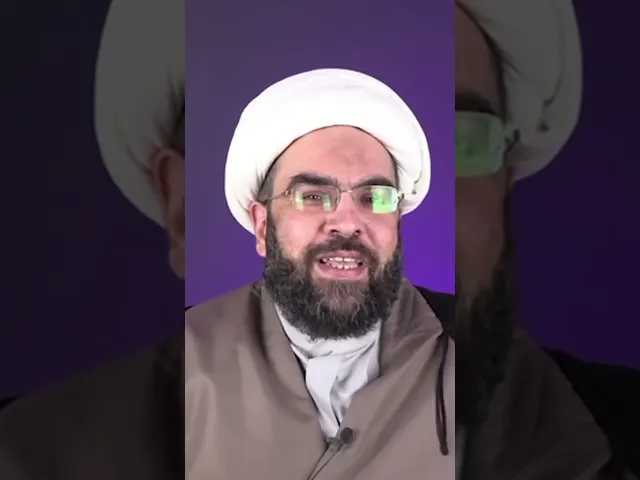
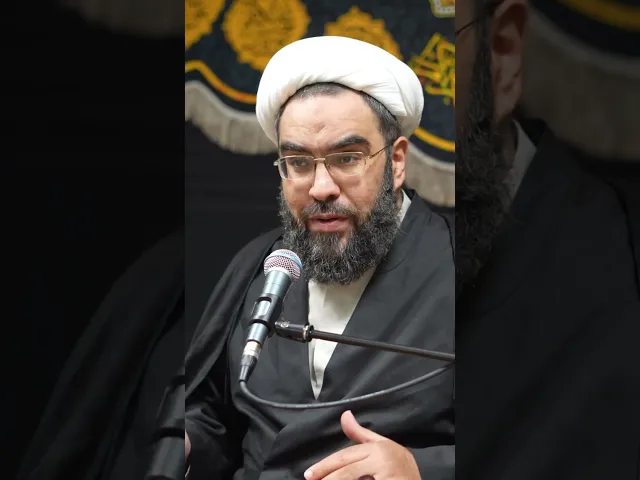
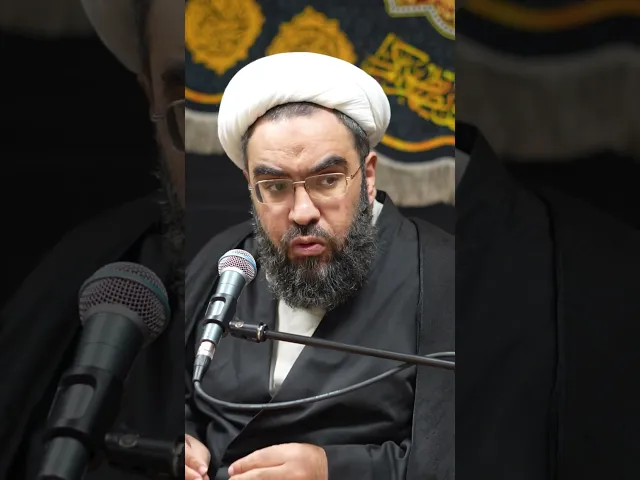
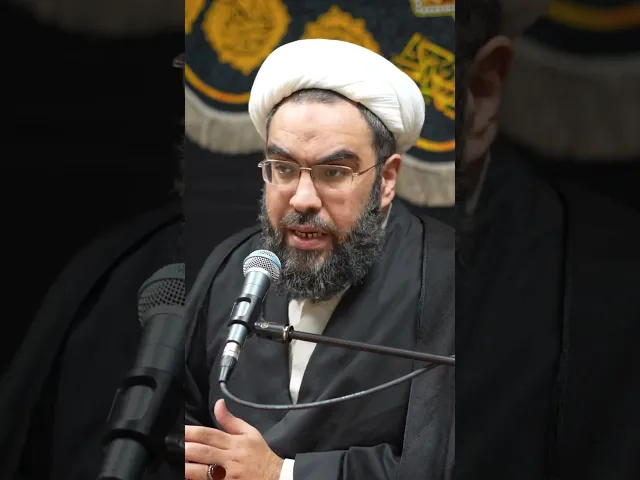
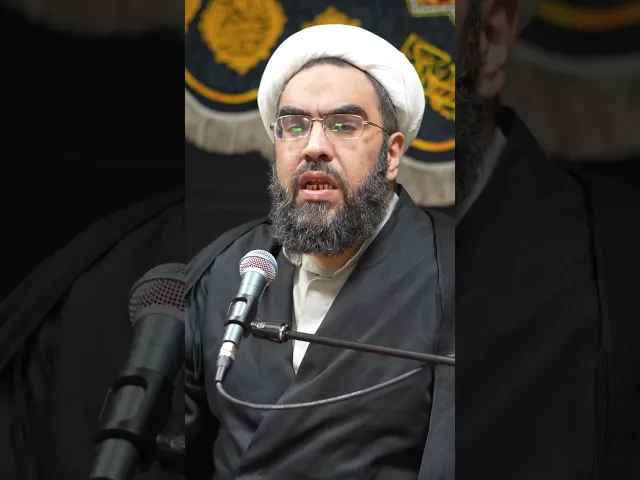
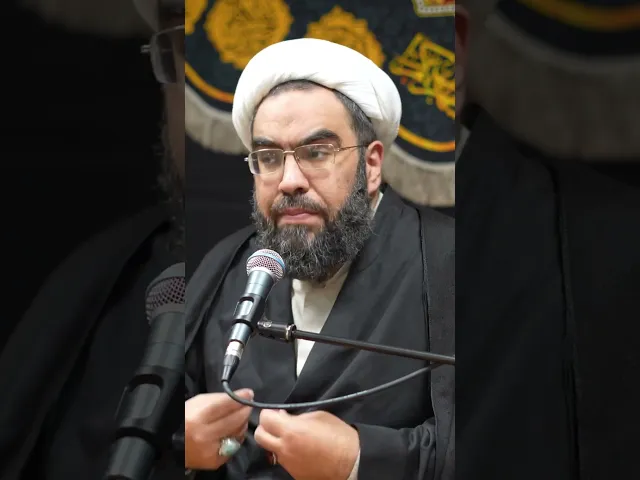
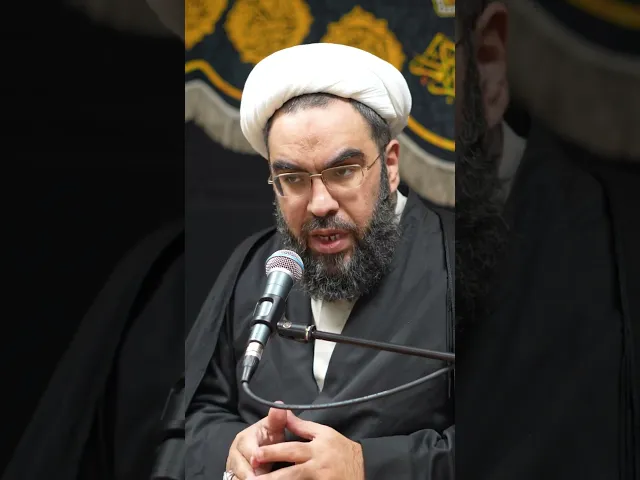
Ramadan Night 3 - Sheikh Abdulrahman Cherri
0
0
27
المشاهدات
·
24/03/22
شارك
تضمين
MYC Media
مشتركين
الاشتراك
0
في
محاضرات
أظهر المزيد
Show Transcript
Transcript
[0:18]
alhamd Allah subhana wa tala says in the noble Quran [Music] this
[0:41]
Quran is a book that guides to that which is the straightest
[0:49]
this is one of the meanings or interpretations of this verse when
[0:55]
Allah subhana wa T describes the Noble book that he had revealed
[0:59]
onto the heart of the Prophet Sall through the angel Gabriel he
[1:08]
describes this book as a book of guidance but we ask ourselves
[1:17]
guidance to what what are you guiding towards what is it that
[1:20]
you're trying to present to us in this book and we have
[1:26]
a number of different descriptions one of them was included in this
[1:31]
verse that is it is a book that guides to that which
[1:36]
is straightest which tells us that there are many different paths and
[1:41]
many different directions which a person can take in his or her
[1:45]
life what the Quran tries to do is it tries to put
[1:50]
us on a straight path a straight path that doesn't involve going
[1:55]
through a lot of confusion or going to the wrong direction in
[2:02]
order for us to get to the destination that is best for
[2:04]
us so when we understand that the Quran is described in this
[2:10]
manner then we have to read it with this mentality we have
[2:13]
to put this in Our Minds when we approach this book when
[2:18]
we read this book that this book has this specific objective in
[2:22]
mind when it gives me stories about the prophets and about previous
[2:27]
Nations what it's doing is it's giving me examples that I can
[2:34]
emulate and follow whenever I'm challenged with something in life in order
[2:40]
to know how to decide which direction to go one of the
[2:43]
scholars that we have named she he says that the stories in
[2:51]
the Quran about the prophets are in reality the stories of humankind
[2:55]
the challenges that we go through are exemplified by the stories of
[3:01]
the prophets in the Quran when Allah subhana mentions the story of
[3:07]
prophet Moses the challenges that Prophet Jacob went through when he lost
[3:14]
his son Prophet Joseph peace be upon him he was taken away
[3:17]
he was separated from him there was an evil scheme that was
[3:22]
done by the brothers of Joseph and Prophet Jacob had to suffer
[3:25]
from that he had this difficulty and this pain that he had
[3:31]
to go through and a lot of us suffer from this type
[3:34]
of pain as well the type the pain of separation from those
[3:37]
who we love now we might suffer in different ways but the
[3:40]
pain is the same in one sense when Prophet Joseph Alam is
[3:47]
taken into captivity or sold as a slave and then raised by
[3:54]
pharaoh and his wife the wife was uh raising him pharaoh was
[4:02]
raising him and then he was thrown into jail he was accused
[4:04]
falsely of something that he had never done and we all go
[4:10]
through this in life we get accused by people for things that
[4:14]
we've never done we're thought of in a bad way so these
[4:19]
stories exemplify and resemble the challenges that human beings go through in
[4:24]
their spiritual journey so when we read them what Allah subhana wants
[4:28]
us to understand is that if you are are embarking on a
[4:32]
spiritual journey then these are the type of obstacles you're going to
[4:35]
become aware of and if you do fall into them then I'm
[4:40]
giving you one way to resolve these issues and this brings us
[4:43]
back to the topic that we began talking about last night and
[4:49]
that is the emotions in the Quran we ended by speaking about
[4:54]
emotional intelligence the acronym for that is EI sometimes referred to as
[4:58]
EQ as well just like you have an IQ you also have
[5:03]
an EQ which describes the level of emotional maturity or intelligence that
[5:13]
you have now if we come to define the meaning of emotional
[5:17]
intelligence we can Define it in this way this is not a
[5:24]
scientific definition but just something to bring the idea closer to our
[5:27]
minds it's the ability to recognize under understand and manage one's emotions
[5:33]
as well as to empathize with others and handle interpersonal relationships effectively
[5:43]
so recognizing and understanding are both related to the intellectual aspect we
[5:47]
talked about that yesterday we have the power of reason the faculty
[5:52]
of reason to think so one of those aspects is to be
[5:54]
able to understand our emotions to understand situations that we go through
[6:00]
and understand ourselves as human beings the second aspect is managing one's
[6:06]
emotions so it's not just enough to become a philosopher or an
[6:12]
expert or a life coach knowing what every emotion is and knowing
[6:15]
what's good and what's bad that's not sufficient it's important to know
[6:19]
these things but on top of that what we have to be
[6:24]
able to do is to manage our own emotions just knowing something
[6:28]
is not enough and this is something that's been emphasized upon in
[6:31]
Islam the IM says that knowledge and action are like the two
[6:39]
wings of a bird a bird can't fly with only one Wing
[6:43]
if you only have the knowledge but not the action you can't
[6:45]
fly if you only have action without knowledge you can't fly either
[6:49]
because you might be doing the wrong thing you might not be
[6:54]
knowing how to decide what the best course of action is so
[6:59]
understanding your emotions and knowing how to manage them on a personal
[7:04]
level as well as on a social level as well so there's
[7:10]
a personal aspect when I'm dealing with my own emotions dealing with
[7:13]
my own self if I'm someone who's going through anxiety in my
[7:18]
life that's related to me if I have a lot of fear
[7:22]
in my life if I have some form of depression in my
[7:26]
life this is my own emotion and I have to learn how
[7:30]
to deal with this type of emotion this is one aspect the
[7:33]
other aspect is dealing with other people emotions that involve my relationships
[7:39]
with the other not just with myself how do I deal with
[7:45]
my family members how do I deal with my siblings my friends
[7:48]
my co-workers the other members of society some people that I don't
[7:52]
know I go to a shopping center I go outside I go
[7:55]
to the park I get into a situation with someone I don't
[7:59]
know how do I deal with that situ situation this is also
[8:02]
very important to focus on now there are components of emotional intelligence
[8:09]
as well these include what they're not limited to self-awareness self-regulation empathy
[8:18]
social skills and motivation now the first one is self-awareness if you're
[8:26]
not aware of yourself you're not aware of who you are you
[8:29]
not aware of what's going on inside of you then you're not
[8:34]
going to be able to develop emotionally or even intellectually if we
[8:39]
look at the Hadith that the prophet and the imams have given
[8:42]
us and really it's amazing when you start thinking about these topics
[8:46]
and you look at theith that we have you begin to understand
[8:51]
them in a very different way than what you might have understood
[8:55]
at the beginning so the more you learn about things the more
[8:59]
you start discovering that this religion has spoken about things and I
[9:03]
wasn't aware that it was referring to these realities that I'm aware
[9:06]
of right now so if we look at the Hadith where the
[9:10]
Prophet or the Imam say that whoever knows himself or herself knows
[9:15]
his or her Lord or the Hadith that says that contemplating or
[9:21]
meditating for a moment is greater than praying for a year or
[9:25]
praying for a thousand years contemplation in for one moment meditating for
[9:35]
one moment is better than the worship of a year praying for
[9:42]
a whole year worshiping for a whole year is equated to a
[9:46]
moment of contemplation why because the most important thing for us to
[9:50]
do in life is to understand ourselves it's been equated with understanding
[9:56]
God himself the reality of existence the reality of life it cannot
[10:02]
occur without contemplation so self-awareness is very important to understand yourself to
[10:07]
understand your feelings to understand your emotions to understand your thinking this
[10:12]
is something that's very important but this is not something that occurs
[10:17]
by itself you can't wake up in the morning one day and
[10:21]
suddenly become a very self-aware person you can make the intention just
[10:25]
like someone who you know decides to take a go on a
[10:30]
career in their life to study something you don't expect yourself to
[10:33]
sleep at night and wake up with a degree do you you
[10:37]
can make the intention but you have to work towards that so
[10:41]
developing emotional intelligence and emotional maturity is something that requires action you
[10:48]
have to perform and practice something in order to develop that maturity
[10:53]
and to develop that intelligence you make the intention then you wake
[10:59]
up the next day and you say that I want to become
[11:03]
a more emotionally intelligent individual in my life I want to become
[11:07]
more aware of the nuances of feelings and emotions in my life
[11:10]
how do I do that well islamically speaking our Scholars who wrote
[11:17]
about this emphasized the fact that we have to strengthen our willpower
[11:22]
this is one of the most important things that they tell us
[11:27]
we have to do if you strengthen your willpower you gain control
[11:33]
over yourself you don't get dragged by your emotions and your feelings
[11:38]
and your thoughts if I'm someone who reacts to things without controlling
[11:44]
my emotions it means I'm someone who has a weak willpower I
[11:49]
don't have strong willpower Al is what they call it in Arabic
[11:55]
if I'm weak if I don't have control over my own thoughts
[11:57]
and over my own self then I am the weakest of all
[12:03]
human beings I cannot even control my own self how can I
[12:06]
expect myself to influence other people and to control situations around me
[12:12]
so the first thing they say that we have to do is
[12:15]
we have to work on strengthening our willpower how do we do
[12:20]
that well there's many different ways many different methods one method that
[12:25]
is mentioned by some of the scholars is that you have to
[12:28]
begin by controlling your imagination and controlling your thoughts and they compare
[12:37]
the thoughts to a bird a Wandering bird that flies from Branch
[12:40]
to branch and never settles down you think about something your mind
[12:46]
jumps to another thought to another thought to another thought to another
[12:50]
thought and this constant thinking throughout the whole day that never ends
[12:56]
you never have the time to be able to think about what
[13:02]
you want to think you're always moving based on what the external
[13:05]
influences are doing to you you look at an image it creates
[13:10]
an emotion in you you react to it emotionally what you might
[13:13]
not be aware that this is happening to you but you walk
[13:18]
on the street you look at a billboard you see an advertisement
[13:21]
immediately that creates something in your mind and it creates a certain
[13:24]
emotion inside of you you scroll through your phone through Tik Tok
[13:29]
through any real Instagram you see images you see Memes you see
[13:33]
stories and it plays around with your emotion whether you're aware of
[13:40]
it or you're not aware of it this control of your emotions
[13:43]
means that you're someone who is very weak and someone who doesn't
[13:47]
have control over their own emotions is going to suffer a lot
[13:53]
in their lives so we have to change that how do we
[13:56]
change it we begin practicing and training to control our thoughts how
[14:00]
do we do that some of the advice that's given to us
[14:04]
by these Scholars is that you have to dedicate a portion of
[14:06]
your day to exercising the control of thoughts for example you sit
[14:15]
down for a minute to 5 minutes I've mentioned this before but
[14:19]
I'll repeat it again because reminders are very important Muhammad Muhammad to
[14:30]
sit down every single day and dedicate a certain portion of time
[14:37]
they don't give a specific time because every person is different some
[14:41]
people cannot sit down for 5 seconds with not without thinking anything
[14:45]
it's a very difficult challenge try it yourself when you go home
[14:51]
sit down in a room and they recommend that it's a room
[14:53]
that has no distractions so if you have a room that doesn't
[14:57]
really have a lot of pictures on the walls not a lot
[15:01]
of furniture and um a choir area somewhere where it's not close
[15:06]
to the kitchen let's say you go and you sit there and
[15:12]
you can close your eyes and try to see if you're able
[15:14]
to block all the imaginations that you have are you able to
[15:20]
sit down and not think of anything I think 99% of us
[15:26]
would say that this is impossible we can't do it the moment
[15:29]
you close your eyes your thoughts and imaginations are just spinning so
[15:32]
fast you can't even catch up with and understand what's going on
[15:39]
in your mind now some people think you know when I stand
[15:41]
up for prayers the Shan comes and starts whispering in my ears
[15:45]
and starts putting thoughts and stories in my mind right but that's
[15:51]
not really what's happening what prayers does is it wakes you up
[15:55]
to this reality that you're not aware of throughout the day because
[15:57]
you're distracted with other things when you stand up for Salat you
[16:04]
freeze you can't move anymore so what happens is you begin to
[16:08]
start realizing what's going on inside of your mind the thoughts that
[16:11]
come to you during prayer are the same thoughts that are running
[16:15]
through your mind throughout the day but you're not aware of it
[16:20]
why because you're driving a car you're talking to someone you're at
[16:24]
work you're doing something your mind is constantly occupied with other stuff
[16:30]
and still running in the background so you're not aware of it
[16:33]
what prayer does is it stops you from the external actions so
[16:39]
you become aware of what's happening in your mind so what you
[16:42]
have to do is you sit down in the room you close
[16:45]
your eyes and you begin to repel any thought that comes to
[16:53]
your mind every time a certain image comes an idea comes you
[16:56]
repel it you push it away you you cancel it out you
[17:01]
don't think about it at first it's going to seem to be
[17:03]
impossible but it just indicates to you how little control you have
[17:11]
over over your mind and most of us go through this and
[17:13]
you know nowadays with all this technology that we have and all
[17:17]
the screen time that we have the colors and the images it
[17:19]
just makes it much worse and worse and much more difficult so
[17:23]
every individual has to have some portion of time in his or
[17:29]
her day where they sit down and they practice this they do
[17:33]
this exercise any thought that comes to your mind you repel it
[17:37]
at first try it for 5 seconds maybe for a week every
[17:42]
day for 5 seconds 10 seconds 15 seconds the more you practice
[17:46]
it the better you get at it don't worry about failure you
[17:51]
might not succeed for a month you might not succeed in repelling
[17:55]
one image or imagination for a whole month but after that month
[18:00]
you might succeed in repelling one image and if you do that
[18:04]
means that you're starting to gain control over what enters your mind
[18:11]
and what goes around around in your mind once you do one
[18:15]
then you repel the other image then the third and the fourth
[18:18]
and slowly you strengthen yourself and you gain control over their the
[18:24]
thoughts that you have some of our Scholars do this for hours
[18:28]
a day where they sit down and they have no thoughts in
[18:33]
their mind this is how much strength they have now how does
[18:35]
this help you in your daily life it helps you in many
[18:40]
different ways but when it comes to emotions whenever something happens in
[18:44]
my life I don't react immediately to it I'm not someone who's
[18:51]
driven by my emotions I'm not someone who has no control over
[18:56]
what they do in their life I decide when I get angry
[19:01]
I decide if I want that thing to enter into my mind
[19:06]
or not I decide whether I want it to influence me or
[19:09]
not I gain control over these things so this is something that's
[19:14]
very important for us to work on in order to gain that
[19:20]
self-awareness and to gain that self- strength to overcome these challenges that
[19:25]
we have in our life Muhammad muhamad today may God bless the
[19:36]
brothers for uh giving me some coffee thought that would resolve the
[19:43]
uh the uh jet lag issue it could we'll see so if
[19:47]
it does then tomorrow night I'll Market the my Cafe over here
[19:53]
on the member and give him credit for it muhamad Muhammad okay
[20:03]
so the Quran has a lot of verses that talks about emotional
[20:09]
intelligence now it doesn't mention that word specifically but it either gives
[20:14]
us examples of the nature of the human being or it gives
[20:17]
us stories to think about so when you're reading the Quran during
[20:21]
this holy month try to look for these nuances try to look
[20:26]
for these details if you read a verse see if there's any
[20:29]
anything related to emotional intelligence in this verse or not I'm going
[20:33]
to give a few examples for us to take and maybe apply
[20:37]
and and help us understand one of the verses that is mentioned
[20:44]
is in chapter 49:2 Allah subhana T says oh you who believe
[20:52]
avoid much negative assumption indeed some assumption is sin and do not
[20:58]
not spy or backbite each other don't spy on each other or
[21:04]
backbite on each other now when we read about this we see
[21:10]
that what the Quran is trying to tell us is that these
[21:12]
things cause conflicts in life they show that our emotional maturity is
[21:18]
low what it wants us to do is it wants us to
[21:24]
develop emotional maturity and emotional maturity is something that develops and different
[21:28]
stages and different levels I'll give you an example if you're someone
[21:34]
who has anger issues and you want to change that you want
[21:37]
to become someone who is not as angry and someone who's more
[21:41]
emotionally mature if you talk with somebody who has a different opinion
[21:45]
you immediately get into an argument someone who belongs to a different
[21:49]
or supports a different basketball team or football team than what you
[21:53]
support you get into an argument with each other and you start
[21:57]
fighting with one another and yelling at each other and sometimes even
[22:01]
cussing at each other it just shows that you don't have this
[22:04]
high level of emotional maturity so what you want to do is
[22:08]
you want to change that the first thing that you do is
[22:12]
you begin suppressing that emotion that's the first level you want to
[22:17]
gain control over the emotion I don't want to be angry this
[22:19]
way you make the intention but before making the intention intellectually you're
[22:23]
aware that this is a bad thing right then you make the
[22:26]
intention then you begin pressing the emotion that you have okay next
[22:33]
time something that bothers me I am not going to allow myself
[22:35]
to get angry no matter how bad it is so something happens
[22:40]
to you you're on the road somebody cuts you off and you
[22:43]
want to release the anger but you decide you know what I
[22:47]
want to become someone who's more in control of himself or herself
[22:50]
I'm just going to let it go it's just a car it
[22:53]
just passed by it has no effect on my life I'm not
[22:58]
going to get angry over this but your boy from inside you're
[23:00]
telling yourself this but in reality what you want to do is
[23:03]
you want to grab your car and you want to ram the
[23:04]
other car right you want to throw them off the road and
[23:08]
if you can maybe beat them up and eliminate their existence that's
[23:11]
your real feeling but now we're trying to change we're telling ourselves
[23:15]
no I want to not do this I want to be a
[23:20]
good human being and I want to just continue driving as if
[23:26]
nothing happened this is called suppressing the emotion and it's a very
[23:30]
difficult thing to do if you're someone who doesn't have control over
[23:33]
his or her emotions it's very difficult it's very challenging especially if
[23:37]
you are with that one friend who knows how to push your
[23:41]
buttons and they don't stop there's that one person that you know
[23:48]
they're annoying they do that one thing and they see the reaction
[23:51]
from you and they get pleasure they derive their pleasure in life
[23:54]
from this type of behavior just the irritation of other people that's
[24:00]
how they survive some people live on oxygen and others live on
[24:03]
irritating other people so if you have that one person in your
[24:05]
life that is one of the biggest tests for you it's a
[24:09]
bad thing at the same time it's a very good thing because
[24:14]
it could act as a catalyst it could make you change yourself
[24:16]
even faster than not having that person in your life so this
[24:19]
person comes and irritates you you suppress that feeling they irritate you
[24:23]
more you suppress it until they eventually hopefully give up but what's
[24:27]
Happening Here is you're trapping that feeling inside of you and eventually
[24:34]
is going to have to either decip itate or go out in
[24:38]
some other Outlet the next level that you want to reach Which
[24:42]
is higher than this level which is more advanced than this level
[24:45]
is that you want to take that emotion and turn it into
[24:52]
a good emotion this is a more mature level of emotional intelligence
[24:57]
somebody whoat treats me in a bad way what I do is
[25:03]
I decide I'm going to treat them in a good way so
[25:08]
you do bad to me I'm going to do good to you
[25:09]
this is also self-training and it also develops your emotional intelligence and
[25:17]
emotional maturity now you're not suppressing the emotion you're not working only
[25:22]
on controlling yourself from that rage and from exploding and becoming the
[25:27]
Hulk no you're able to turn around and you have some room
[25:33]
and space to treat that other person in a good way someone
[25:36]
cuts you off you come and you reciprocate in a good way
[25:41]
you say okay maybe that person has a busy day you give
[25:44]
them an excuse someone who decides not to call you anymore you
[25:50]
take the initiative and you call that individual someone in your family
[25:54]
mistreats you instead of reacting by mistreating them and cutting them off
[25:57]
you say you know what I'm going to be the better person
[26:01]
I'm going to be the more mature individual you start developing this
[26:06]
reaction in a better way and slowly what happens is that internally
[26:13]
you stop reacting in a negative way when something bad happens in
[26:19]
your life So eventually what you want to reach is if someone
[26:24]
harms you you don't even have a negative reaction inside of you
[26:28]
towards that indiv idual you have empathy you feel bad for that
[26:32]
individual what has happened to them that allows them to behave in
[26:39]
this manner and if we look at the lives of our imams
[26:41]
and the prophet sallallah alai wasallam we see this very clearly exemplified
[26:45]
IM husse inala I'm sure all of you have heard the story
[26:52]
when the IM felt so bad for the enemies he was crying
[26:55]
over them and when he was asked why are you crying over
[27:01]
people who have come to kill you and he said that they're
[27:03]
going to enter Hellfire because of killing me and this breaks my
[27:09]
heart to see someone who's going to suffer from their own wrongdoing
[27:13]
even though they're doing the wrong thing and they deserve it because
[27:16]
they're doing the wrong thing the Imam still has that compassion and
[27:20]
mercy in his heart that makes him feel pain for the suffering
[27:26]
of other people this is a very very high level of emotional
[27:31]
maturity and emotional intelligence that we hope to emulate and to follow
[27:35]
in the path ofam in one of the um or multiple verses
[27:51]
actually in the Quran Allah subhana tala tells the prophet that you
[28:01]
have this extensive amount of empathy for other people to the point
[28:08]
that you're going to kill yourself over them people who the prophet
[28:11]
was calling to believe and they were rejecting the message the God
[28:16]
tells the the prophet sallallahu alaihi wasallam don't kill yourself over these
[28:22]
individuals the prophet was feeling so much pain and so much hurt
[28:25]
that it was going to end his life because these individuals are
[28:31]
not making the right decisions in their life to the point that
[28:33]
even Allah subhah wa ta'ala told the prophet that even this is
[28:38]
too much so there's an excessive amount of empathy at times that
[28:44]
we have to control and there's an excessive amount of selfishness that
[28:49]
we also have to control we have to look for a balance
[28:55]
in our life and throughout the stories in the Quran that the
[28:59]
proph Propet went through we understand that what God was trying to
[29:02]
do with the prophets is he was trying to reach them or
[29:06]
teach them how to reach that Middle Point to reach that balance
[29:10]
in their life not to go to the extremes if we look
[29:16]
at Prophet m a lot of his stories are mentioned in the
[29:19]
Quran and we'll go into more detail about that tomorrow but one
[29:23]
of the main features that the stories of Moses in the Quran
[29:30]
is that about is fear the emotion of fear now if we
[29:35]
look at emotions we can categorize them into three categories they can
[29:40]
be positive they can be negative and they can be neutral every
[29:45]
emotion can either be good bad or just natural neutral or natural
[29:50]
mam went through a lot of things in his life he was
[29:58]
with the pharaoh and then he broke off and he escaped from
[30:04]
the pharaoh's Palace when he did he ended up seeing a person
[30:09]
on the path that was one of his followers one of his
[30:12]
friends he was in an argument with someone who was from the
[30:16]
Pharaoh side Moses Alam came and helped his supporter ended up killing
[30:23]
the guy that belonged to the Pharaoh that caused him a very
[30:30]
big problem the Pharaoh found out and they sent like the police
[30:34]
of that time to go and Chase Mam and to track him
[30:40]
down and to take him in the Quran describes M Alam the
[30:43]
next morning after killing that person that he left the city fearfully
[30:48]
he had fear in his heart in another place in the Quran
[30:53]
Allah subhana T says that the saints of God Allah those who
[31:00]
are the companions of God do not have fear nor do they
[31:06]
grief so here Allah subhana on the one hand says that if
[31:11]
you reach this high level of spirituality you don't have fear but
[31:15]
on the other hand he describes mam going through some form of
[31:24]
emotions of fear in his life even when mam was spoken to
[31:26]
by God he was walking with his family members and then he
[31:31]
saw a tree and he saw fire so he said I'm going
[31:34]
to see what's going on over there maybe they can guide us
[31:37]
onto the path because we've lost track of the path and he
[31:43]
goes there and God saids that he spoke to him and when
[31:48]
he did mam had also experienced an emotion of fear as well
[31:52]
and God told them do not fear because the messengers don't fear
[31:57]
in my presence God was teaching him that you have this emotion
[32:01]
but you have to understand that you have to overcome it you
[32:07]
have to be able to remove it from your heart when it's
[32:11]
not the right place for it when you're running away from the
[32:16]
Pharaoh that fear is a natural fear you have to protect yourself
[32:22]
and most of I mean a lot of us or all of
[32:25]
us are here right now we're surviving because of the emotion of
[32:28]
fear right but the fear of hurting yourself the fear of dying
[32:33]
the fear of this the fear of that is what's making you
[32:37]
survive so fear in one sense is a very good emotion to
[32:40]
have on the other hand if you have excessive fear then you
[32:46]
develop a form of anxiety you have too much fear unjustified fear
[32:50]
and that's something that we have to overcome in our lives so
[32:54]
that's a negative aspect of fear we have a positive aspect which
[32:58]
is the one that allows us to protect ourselves allows us to
[33:01]
survive allows us to protect our loved ones and not do crazy
[33:08]
things and then we have a negative aspect which leads to anxiety
[33:11]
leads to OCD leads to a lot of different spiritual and mental
[33:19]
diseases in our lives so we have to find that balance when
[33:22]
it comes to this emotion and other emotions as well and inshallah
[33:26]
beginning with tomorrow or ending with tomorrow we'll choose a number of
[33:31]
different emotions and we'll go through them and then we can open
[33:37]
the floor uh for anybody who wants to contribute uh and share
[33:41]
their thoughts and their ideas um so that we can all benefit
[33:44]
inshallah and maybe have a reciprocal discussion
0 تعليقات
sort
ترتيب حسب
أعلى تعليقات
أحدث تعليقات
ينشر
التالي
تشغيل تلقائي
37:03
Lezing door geleerde Sheikh aabuzer Deidei
Fatemiya Nijmegen
0 المشاهدات
·
22/04/03
آخر
37:03
Lezing door geleerde Sheikh aabuzer Deidei
Fatemiya Nijmegen
0 المشاهدات
·
22/04/03
آخر
03:31
نماهنگ جدید خانه های نورانی | گروه سرود نغمه سپیدار | Ramadan Music
خیمة میدیا
4 المشاهدات
·
25/03/03
قصائد
01:33
إثنين ما تغفر ذنوبهم في شهر رمضان ⁉️ #ramadan
صادق المروج
4 المشاهدات
·
26/02/14
محاضرات
00:43
🌙Don't say Ramadan!! | Mohamad ali al araki
شباب و قيم - Youth & Values
8 المشاهدات
·
22/04/09
آخر
00:30
اهمية الاسرة #الشيخ_احمد_عمار #ramadan
الشيخ احمد عمار
5 المشاهدات
·
24/03/20
محاضرات
31:49
شرح دعاء العهد - اللهم اجعلني من أنصره #ramadan #رمضان
الشيخ احمد عمار
7 المشاهدات
·
25/03/22
محاضرات
00:16
كل امورنا لا بد ان ترتبط بتعجيل الفرح #ramadan #mahdi
الشيخ احمد عمار
5 المشاهدات
·
25/03/23
محاضرات
00:16
اهمية الوقت #الشيخ_احمد_عمار #ramadan
الشيخ احمد عمار
6 المشاهدات
·
25/03/23
محاضرات
00:15
الوفاء بالعهد! #ramadan
الشيخ احمد عمار
6 المشاهدات
·
25/03/25
محاضرات
00:16
حمل هم الفقراء #ramadan #الإمام_الخميني
الشيخ احمد عمار
6 المشاهدات
·
25/03/26
محاضرات
00:16
حمل هم الفقراء مسؤولية عظيمة جداً #ramadan
الشيخ احمد عمار
5 المشاهدات
·
25/03/26
محاضرات
00:31
المشروع الالهي في الدنيا #ramadan
الشيخ احمد عمار
5 المشاهدات
·
25/03/26
محاضرات
00:10
تخطيط المؤمن #ramadan
الشيخ احمد عمار
8 المشاهدات
·
25/03/26
محاضرات
00:15
المقامات العالية بحاجة الى جهد #ramadan
الشيخ احمد عمار
6 المشاهدات
·
25/03/26
محاضرات
00:42
معرفة امام زمانك ليست بهذه البساطة #ramadan #دعاء_العهد
الشيخ احمد عمار
7 المشاهدات
·
25/03/26
محاضرات
00:16
مخالفة اراء الامام! #ramadan #دعاء_العهد
الشيخ احمد عمار
5 المشاهدات
·
25/03/27
محاضرات
00:16
الامام يظهر من اجل العدل! #ramadan
الشيخ احمد عمار
5 المشاهدات
·
25/03/27
محاضرات
00:16
المؤمن سيحكم الدنيا! #ramadan #دعاء_العهد
الشيخ احمد عمار
6 المشاهدات
·
25/03/27
محاضرات
00:37
كيف اتبع النبي واهل البيت (ع)؟ #ramadan
الشيخ احمد عمار
7 المشاهدات
·
25/03/27
محاضرات
شارك
تضمين
الصفحة الرئيسية
أحدث مقاطع الفيديو
الشائع
أهم مقاطع الفيديو
القنوات الشعبية
مقاطع قصيرة
استكشاف المزيد
يساعد
اختيار طريقة الدفع
لغة
English
Arabic
Dutch
الدفع بالمحفظة
تسجيل الدخول
اسم المستخدم
كلمه السر
نسيت رقمك السري؟
تسجيل الدخول مع
جديد هنا؟
تسجيل
سجل!
اسم المستخدم
عنوان البريد الإلكتروني
كلمه السر
تأكيد كلمة المرور
ذكر
إناثا
عن طريق إنشاء حسابك ، فإنك توافق على
تعليمات الاستخدام
&
سياسة الخصوصية
هل لديك حساب بالفعل؟
تسجيل الدخول