


التالي
6 المشاهدات · 23/03/05
8 المشاهدات · 25/12/01
10 المشاهدات · 13/12/26

10 المشاهدات · 14/09/23
7 المشاهدات · 21/12/07
7 المشاهدات · 22/11/28
10 المشاهدات · 24/11/14
8 المشاهدات · 25/06/22
8 المشاهدات · 25/11/02
6 المشاهدات · 23/07/31
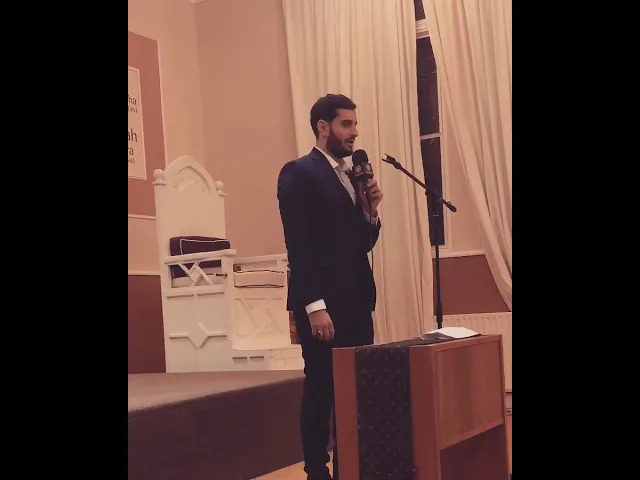
Pro-Life vs Pro-Choice: The Islamic Solution | Sayed Mohammed Baqer Qazwini
0
0
14 المشاهدات·
24/03/23
في
محاضرات
Pro-Life vs Pro-Choice: The Islamic Solution | Sayed Mohammed Baqer Qazwini
at The Ahlul Bayt Center of Toledo (05/21/2022)
أظهر المزيد
Transcript
[0:06]I begin in the name of the almighty God, the compassionate, the
[0:13]merciful, the one who has created everything in utmost perfection.
[0:16]And may the peace and blessings of the Almighty God be upon
[0:21]his pure and beloved messenger, the peak of his creation, the symbol
[0:28]of humanity, the holy prophet Muhammad Samuhammed and his immaculate progeny of
[0:39]the B peace be upon them, especially the leader of our time,
[0:43]the awaited savior immedi May Allah hast in his reappearance and make
[0:50]us all amongst his sincere and dedicated servants.
[0:55]Respected brothers and sisters, it is my great honor to be here
[1:04]with you again after the blessed month of Ramadan.
[1:06]I know we had a very good time spiritually, intellectually, educationally and
[1:14]truly the nights of the month of Ramadan are nights that you
[1:19]miss.
[1:20]And we ask Allah subhanahu wa ta'ala to give us many, many
[1:23]more opportunities in the future to experience the spirituality of the month
[1:29]of Ramadan.
[1:30]So, I'd like to welcome you to our program this evening as
[1:34]we discuss an important yet sensitive topic and that is abortion from
[1:41]an Islamic perspective as Muslims who are committed to our faith.
[1:45]Should we be pro-life or there is not that much emphasis on
[1:52]this topic from a religious perspective?
[1:54]Now, as we have this discussion with you, it's important to note
[2:01]that this is not a political discussion.
[2:04]I know today our country is polarized.
[2:07]You find that Republicans are known to be pro-life.
[2:12]For them, abortion is a very important item on their agenda.
[2:19]I know fellow Americans who will cast their vote based on this
[2:24]point.
[2:25]Is this candidate against abortion or not?
[2:29]If this candidate is against abortion, then I'll vote for him or
[2:33]for her.
[2:35]If not, then I won't.
[2:35]And then you'll find a lot of liberals and Democrats, they are
[2:42]pro-choice.
[2:41]You could do with your body whatever you want.
[2:44]No one can impose on you what to do with the fetus
[2:49]in your body.
[2:51]You want to have an abortion, you should legally get an abortion.
[2:54]There should not be any obstacles.
[2:55]So, I know it's a political and you know it's um it's
[3:03]a discussion that has polarized the country.
[3:07]So our discussion tonight is not to advocate for one party over
[3:14]another party.
[3:16]We want to have an academic religious discussion.
[3:20]What is our religious perspective on an abortion to better understand our
[3:28]obligation before Allah subhanana wa ta'ala the almighty God and I would
[3:35]like to share with you some insight about why people have abortions
[3:39]are there exceptions are there times when a pregnant woman can have
[3:48]an abortion what are those exceptions that our religious scholars have authorized
[3:51]in the religion of Islam.
[3:54]So it's an educational discussion that I would like to have with
[3:58]you and after this discussion inshallah we could raise more awareness in
[4:02]the community amongst our friends so they can better understand what their
[4:08]obligation is before God.
[4:11]Abortions are very common in this country.
[4:14]Every year nearly 1 million abortions occur in the United States.
[4:21]Some years 850,000, some years 950,000, but on average about a million
[4:30]abortions are administered in the United States every year, which is significant.
[4:37]So this is something that is happening in our society every day.
[4:45]People have different positions, different beliefs, different ideas about having an abortion.
[4:50]Is it okay to have an abortion or not?
[4:53]So let's look at our religious perspective here.
[4:58]When we examine the narrations of the B, we find that Almafam,
[5:07]the sixth Im of B, he was asked about a pregnant woman
[5:15]who would take medication so she could abort the fetus.
[5:22]Even back then, 14 centuries ago, there were ways to have an
[5:29]abortion.
[5:28]women could take a medication and that would basically cause an abortion.
[5:33]It would kill the fetus and c cause an abortion.
[5:35]The Imam Ali was asked, "Is this permissible?
[5:39]Can a pregnant lady have an abortion?" The Imam Ali responded by
[5:48]saying, "No.
[5:46]According to religious law, it is not permissible to have an abortion."
[5:53]Now, one common argument that's made is that this is my body.
[6:00]I can do whatever I want to my body.
[6:04]You can't impose on me what to do with my body.
[6:08]It's my choice.
[6:11]Respect me.
[6:13]I'm a human.
[6:12]I have my choice.
[6:15]Respect my choice.
[6:15]That's one common argument that's made when you inform people that according
[6:20]to Islamic law by default there are some exceptions but by default
[6:25]it is not permissible to have an abortion.
[6:28]So the counterargument is but this is my body I can decide
[6:34]what happens with it.
[6:34]How would you respond to that?
[6:36]If someone tells you it's my body it's my choice.
[6:40]What would be an appropriate response to that?
[6:43]Any thoughts?
[6:44]Yes, brother.
[6:47]Okay.
[6:48]So, the brother here says, "You don't own your body.
[6:52]Why don't you own your body?" You're not the one who created
[7:01]it.
[6:59]We think we own our bodies, but do we?
[7:02]You own something when you create it.
[7:06]You did not create your body.
[7:10]A creator gave you your body.
[7:13]So you don't really own your body when you think of it
[7:20]that way.
[7:21]God owns our bodies.
[7:20]And we can only use our bodies in a manner that he's
[7:28]authorized, in a manner that he's legalized.
[7:29]And in fact, I'd like to share with you something over here.
[7:34]It might spook some of you, but it's interesting to know.
[7:37]When you think of what your body is composed of, then you'll
[7:43]really know that you don't own your body.
[7:45]Do you know what's in your body?
[7:48]If you analyze what's in your body, you'd be amazed at the
[7:55]creation of God.
[7:54]In this body, you have stardust.
[7:57]After the universe expanded, stars exploded, planets formed.
[8:05]This planet has stardust from the universe from billions of years ago.
[8:10]And you, the human being, you're made from this earth.
[8:15]The origin of life is clay.
[8:18]It's earth.
[8:18]And so part of your body is stardust.
[8:22]Part of your body is millions of other living beings on Earth.
[8:28]When you eat food, what what are you actually eating?
[8:34]Do you know what you're eating?
[8:38]Food grows from the earth.
[8:39]Now, what's in the earth?
[8:43]Yeah, but but if you think about it, millions of animals and
[8:51]humans decomposed into the earth and then you have that vegetation growing,
[8:55]the plants, the fruits growing from it and you eat that.
[8:59]You've got the parts of millions of humans and animals in your
[9:02]body.
[9:05]Think about that.
[9:08]That's what we're formed of.
[9:10]When you think of your body at this scale, do you really
[9:16]now own it?
[9:16]You've got chunks of other beings in your body.
[9:20]What makes you think you own everything in your body?
[9:27]You're borrowing parts from humans and animals.
[9:29]That's the reality scientifically.
[9:33]Look at it that way.
[9:34]So I don't really own my body.
[9:35]My body physically is a collection of millions of parts from other
[9:43]beings because the earth gets recycled.
[9:44]The food that you eat for instance comes from all these different
[9:50]parts.
[9:50]So you don't really own your body.
[9:52]Scientifically you don't from this perspective.
[9:55]And religiously God created you.
[9:58]He owns everything.
[10:01]You're just borrowing this body.
[10:01]Life is a trial.
[10:03]It's an area.
[10:04]It's an arena for training.
[10:05]You're borrowing this body.
[10:07]And the day we depart this earth, we die.
[10:10]We give our bodies back to God, back to the earth.
[10:15]As the Quran states, we've created you from it.
[10:19]And you shall go back into this earth.
[10:22]We created you from this earth.
[10:26]you will go back to this earth and you will rise again
[10:30]from this earth.
[10:32]So that's a very good answer.
[10:34]You don't really own your body.
[10:35]That's one good response.
[10:38]A second response, if someone says it's my body, okay, it's your
[10:43]body, fine, we accept.
[10:45]But the fetus, who told you the fetus is yours?
[10:48]The fetus is a living being.
[10:52]It's an organism.
[10:52]What gives you the right to abort this organism?
[10:58]You own your body, but how did you gain ownership over the
[11:03]fetus in your body?
[11:07]That fetus is a living organism.
[11:11]It has the potential to grow into a full human being.
[11:14]How did you own that?
[11:17]So this argument that I own my body, I can do whatever
[11:22]I want with it is not really an argument that Islam approves
[11:26]of.
[11:26]You don't really own your body.
[11:29]And even if you did, you don't own that organism in your
[11:36]body.
[11:34]Yes, it was your choice to be pregnant or not.
[11:39]But now that you're pregnant, you have to protect this being in
[11:46]the law of God.
[11:45]This being is a sacred being that you have to protect.
[11:49]So this is the counterargument to those who would say it's my
[11:53]choice.
[11:54]It's my body.
[11:56]I can do whatever I want.
[11:58]So by default, Islam is very clear and scholars are very clear.
[12:04]It is not permissible to have an abortion.
[12:07]Are there exceptions?
[12:08]Yes, there are exceptions.
[12:12]And for us to better understand the exceptions, we have to know
[12:19]when does a fetus acquire a soul.
[12:21]Because early on in the first few weeks of pregnancy, what we
[12:27]understand from our religious literature is that the fetus doesn't have a
[12:32]soul yet.
[12:34]Still developing.
[12:32]But at one point, the fetus acquires a human soul and it
[12:38]is to be treated like a full human being.
[12:40]Does anyone know roughly when a fetus acquires a soul?
[12:47]And if you don't know, you can take a shot at it
[12:49]and guess.
[12:51]Does anyone know?
[12:53]Yes, brother in the back.
[12:54]40.
[12:56]40 days.
[12:58]Okay.
[12:58]40 days is still too soon.
[13:03]Four months.
[13:07]Yes.
[13:06]Three months.
[13:08]Okay.
[13:10]You're close.
[13:09]So we we have hadiths both Shia and Sunni have narrated hadith
[13:16]from the prophet sallallahu alaihi wasallam that states at 120 days of
[13:27]pregnancy that is when God gives the fetus a soul.
[13:29]So 120 days is about four months.
[13:32]About 16 weeks, scholars have said around 16 weeks, that's when a
[13:41]fetus acquires a soul.
[13:42]So 16 weeks and onwards, you treat the fetus like a full
[13:46]full human being and it has the rights of a full human
[13:50]being.
[13:53]But before the 16 weeks, let's say two weeks, 3 weeks, four
[13:59]weeks, five weeks, under 16 weeks, it has not acquired a soul
[14:05]yet.
[14:04]So we have clear hadiths that state this 120 days have been
[14:11]mentioned in our narrations.
[14:11]Now, other scholars have different ways of determining when a fetus acquires
[14:20]the soul.
[14:22]Or they say we can cite some verses in the Quran to
[14:25]kind of substantiate the idea or the claim that a fetus acquires
[14:30]a soul at 120 days.
[14:33]One of the verses that scholars have mentioned is this verse.
[14:43]God's talking about the creation of Adam and the creation of the
[14:48]human being.
[14:52]Allah subhana t says when I fully formed Adam the human being
[15:02]then I breathed into him from my spirit which symbolically means I
[15:08]gave him life.
[15:08]Some scholars have understood that when does God breathe from his spirit
[15:16]into you?
[15:15]Meaning he gives you the gift of life after what?
[15:22]What does in Arabic mean?
[15:25]Complete.
[15:26]When I'm when I've completed your creation, I give you a soul.
[15:32]When is the creation of a fetus pretty much completed?
[15:38]such that they have developed all the organs.
[15:42]So at which week does that happen?
[15:46]Does anyone know?
[15:47]Those of you who go to do an ultrasound to know if
[15:51]it's a boy or a girl, you should have an idea.
[15:53]If you go the first month and you do an ultrasound, will
[15:56]your doctor tell you the the gender, the sex of your fetus?
[16:02]No.
[16:03]What about the second month?
[16:04]No.
[16:05]Third month, they still can't tell from which one from which month
[16:10]and onwards can they tell you the sex of the fetus.
[16:16]Fourth and afterwards.
[16:16]Why?
[16:17]Because those parts have not formed yet.
[16:22]It's usually around 16 weeks that a fetus has those distinct parts
[16:28]such that they can be seen in an ultrasound and they can
[16:30]tell you you know we can see clearly the the sex of
[16:37]the fetus.
[16:36]So a fetus fully h has a fully formed body with all
[16:41]the vital organs around 16 weeks.
[16:44]So therefore scholars have said this makes perfect sense because the Quran
[16:48]says to when I have fully formed the the human being then
[16:54]I give him the soul.
[16:55]So this confirms what we have in our hadiths that state 120
[17:02]days.
[17:00]Another interesting theory by scholars, they say if you want to know
[17:08]if a fetus has a soul or no, figure out when a
[17:14]fetus has the capacity to sleep.
[17:19]Any idea why these scholars have made this associ association?
[17:25]What's the link between sleeping and having a soul?
[17:35]Yes, you know the baby in the womb can sleep.
[17:38]But when does that start and why is that important?
[17:42]So let's say you figure out that a fetus is sleeping.
[17:47]How does that indicate it has a soul?
[17:48]How have they made that link?
[17:51]Any idea?
[17:55]Separation of the soul.
[17:57]So, so they have cited the Quran.
[18:03]The Quran tells us that one of the features of having ganaps,
[18:08]having a soul is the ability to sleep.
[18:14]Because Allah states in the Holy Quran, God takes the souls when
[18:24]they die.
[18:29]You know, sleeping is considered minor death in Islam.
[18:35]Why is it considered minor death?
[18:37]Because when you're sleeping, that human soul, not the animalistic soul that
[18:44]keeps you alive.
[18:47]The human soul separates from your body.
[18:50]That's how we see dreams according to the Islamic religious perspective.
[18:55]That is the reason why you actually see dreams.
[18:58]Yes, there is activity in your brain.
[19:01]Scientifically, you can detect that.
[19:03]But really, what's happening in the unseen world is that your soul
[19:09]is seeing images.
[19:10]If your soul sees the images created by angels, it's a true
[19:18]dream.
[19:17]And that has happened to you.
[19:20]I'm sure sometimes you see a dream and it happens or it
[19:22]indicates you know an aspect of reality but if the devils the
[19:31]they give you an image it's a false dream but really your
[19:35]soul is seeing that dream.
[19:39]So if you're able to sleep, this indicates you have a soul
[19:47]because Allah states that he takes the souls of people when they
[19:50]die.
[19:50]And those who are not dead yet, they're still alive.
[19:55]When they sleep, God takes their soul.
[19:57]So when does a fetus start to pretty much yawn and voluntarily
[20:04]sleep?
[20:05]Some scientists they have said they've noticed that as early as 11
[20:12]weeks.
[20:13]As early as 11 weeks, sometimes a fetus is seen yawning, which
[20:16]is a sign that it's sleeping, voluntarily sleeping.
[20:21]But many scientists, they're confident around 16 weeks is when the fetus
[20:26]is able to sleep.
[20:26]And that coincides with the number 120 days.
[20:31]So now we know from our religious literature and many scholars you
[20:37]know this is their opinion that around 120 days is when a
[20:42]fetus acquires a soul.
[20:42]How does this help us?
[20:46]Knowing this will determine whether you can make an exception for abortion
[20:53]or not.
[20:52]And here's the legal discussion behind it.
[20:56]After 120 days, when the fetus has acquired a soul, in Islamic
[21:05]law, it's strictly forbidden to have an abortion.
[21:07]An abortion is murder at this point because you're killing a human
[21:14]soul.
[21:13]And in Islamic law, you are treated as if you killed a
[21:17]human soul.
[21:18]It's serious.
[21:19]So scholars don't make any exceptions.
[21:21]It's difficult for me to carry with the pregnancy.
[21:24]My fetus is deformed.
[21:26]my doctor told me my fetus has Down syndrome or or even
[21:30]God forbid if a woman is raped, which is a tragic incident.
[21:36]But scholars state after 4 months, she cannot abort the fetus.
[21:40]Even if it's difficult for you to carry on with this pregnancy,
[21:45]you're not justified in killing a human soul.
[21:48]You just have to keep the pregnancy.
[21:49]Ask God to help you.
[21:50]God will find a way out for you.
[21:51]You can't take of take care of the child, give it for
[21:55]adoption, but you can't kill the child.
[21:57]This is the unanimous fatwa of scholars.
[22:01]So after 120 days, definitely it's pro-life.
[22:07]There is no exception in Islamic law that would allow you to
[22:12]kill the fetus.
[22:13]There is one exception.
[22:17]Some scholars have said if the mother's life is in jeopardy her
[22:22]doctor tells her look either you live or the fetus lives you
[22:30]choose.
[22:29]If you continue with this pregnancy chances are you'll end up dying
[22:37]but we can save the fetus.
[22:38]The other scenario is abort the fetus and you'll survive.
[22:43]Is this an an exception to kill the fetus?
[22:48]Not all scholars agree.
[22:50]They say in an instance like that, you have to determine whose
[22:56]soul is more important.
[22:58]Making that moral uh judgment is not easy.
[23:02]On the one hand, you could say, well, the life of the
[23:06]mother is more important.
[23:06]You have a mother here.
[23:08]She might have other children.
[23:10]She's running a house.
[23:10]That's one argument.
[23:13]Another argument, well maybe if this child grows up in the future,
[23:16]this child will be a very productive member of society and maybe
[23:20]will contribute a lot.
[23:22]How do you know?
[23:21]It's a tough call.
[23:24]But there are scholars who have said that if the doctors tell
[23:27]the mother, chances are you will die if you continue with this
[23:30]pregnancy after four months.
[23:33]Right?
[23:32]Remember we're talking a after four months.
[23:34]There are scholars who say yes.
[23:36]In that case we can say that the life of the mother
[23:40]is more important and you know she can have that abortion but
[23:43]there's no unanimous fatwa here.
[23:46]Yes.
[23:52]No.
[23:52]That is her choice over here.
[23:56]She has to see what her what her mer says in that
[23:58]situation and whether you know she trusts the doctor is you know
[24:03]being accurate in their diagnosis.
[24:05]They're not just exaggerating.
[24:06]Right.
[24:07]Because some there are some doctors.
[24:08]I've seen them by the way.
[24:10]The smallest thing.
[24:12]Yeah.
[24:12]Go have an abortion.
[24:13]Right.
[24:13]And you can get different opinions from different doctors.
[24:17]At the end of the day, it's your choice.
[24:20]You make that decision.
[24:20]Don't say, you know what, I'll let my husband make that decision.
[24:22]At the end of the day, you're responsible.
[24:25]Allah has given given you that am.
[24:27]So yes, be in be informed when you make that decision.
[24:32]Make sure you're doing the right thing.
[24:34]So that's the discussion after 120 days.
[24:38]Let's go to before 120 days.
[24:43]In the first few weeks of pregnancy, most abortions occur within the
[24:48]first month or the second month of pregnancy.
[24:51]It's very rare to have an abortion after the fourth month.
[24:53]Even today when I said we have a million abortions a year,
[24:59]most of them occur before 16 weeks.
[25:01]Are there exceptions in Islamic law that allow a woman to have
[25:07]an abortion during this time?
[25:08]So, we said by default it's haram.
[25:09]It's not permissible.
[25:12]But yes, there are exceptions.
[25:14]What are some exceptions?
[25:16]One exception scholars have mentioned is what is called the law of
[25:23]the law of difficulty.
[25:24]If carrying and continuing this pregnancy imposes severe hardship on the woman,
[25:35]excessive hardship on the woman.
[25:39]In that case, scholars have said she can have a she she
[25:42]can have an abortion.
[25:44]This is an exception because the fetus has not acquired a soul
[25:48]yet.
[25:49]But you have to have a legitimate reason like I can't take
[25:53]this responsibility.
[25:53]One one example that always people tell you is that like an
[25:59]a tragic incident of rape.
[25:59]Let's say a woman is raped and she says, "I can't continue
[26:04]with this pregnancy.
[26:05]How am I going to take care of this child?" Like the
[26:08]social stigma.
[26:09]I I can't deal with that.
[26:11]Psychologically, I'm going to break down.
[26:13]I can't deal with this.
[26:13]Okay?
[26:14]If it's unbearable to that point, it would be permissible to have
[26:17]an abortion.
[26:19]Now, let me share with you the main reasons why people have
[26:24]an abortion and let's see if they're legitimate or not.
[26:28]Some are and some probably are not legitim legitimate.
[26:32]So, here are the main reasons why people have an abortion.
[26:38]It's very important to know this because it sheds light on why
[26:42]people here in this country are having abortions.
[26:47]So one reason that you'll find in scientific studies victim of rape
[26:53]as we mentioned how common do you think that is?
[26:58]What percentage of abortions are because of rape?
[27:04]5 to 10%.
[27:06]No, that's way too high.
[27:09]Less than one.
[27:09]Less than half a percent.
[27:10]less than half a percent of abortions in the United States are
[27:17]because of rape.
[27:16]So, it's really an insignificant number.
[27:20]So sometimes when you're having this this this discussion and they tell
[27:25]you, well, no, we should have abortions and make it easy and
[27:29]legalized because, you know, there's all these women who are being harassed
[27:32]and raped and that's how, you know, they they became pregnant and
[27:36]you should really give them that that that opportunity.
[27:39]It's not that significant.
[27:41]It's less than half a percent.
[27:44]These are official studies in the United States, official numbers.
[27:48]So, that's one reason why some people might seek an abortion, but
[27:52]it's really um the the the the smallest reason.
[27:57]The second one, fetal health problems.
[28:02]There are some health problems with the fetus.
[28:05]What percent what percentage of abortions do you think occur because of
[28:13]this reason?
[28:13]Not too many.
[28:15]It's more than the first reason 3%.
[28:20]Which is not significant.
[28:23]So a very minority of abortion cases are due to fetal health
[28:31]problems.
[28:30]So we know that this is not the main reason why Americans
[28:34]are getting an abortion.
[28:36]Physical health problems 4%.
[28:42]also not significant.
[28:44]It would interfere with education or career.
[28:50]It's still not that significant, 4%.
[28:54]So, there are some people who might have an abortion because they
[28:57]think it will interfere with their education, with their career, but honestly,
[29:01]according to these studies, official studies, it's not that big.
[29:05]It's 4%.
[29:06]Now, the list goes higher here.
[29:09]not mature enough to raise a child.
[29:14]It's a reason that people have stated.
[29:16]What percentage do you think of abortions occur because of that?
[29:23]Ted, 7%.
[29:22]You're close.
[29:23]7% of abortions are because, you know, they felt that they weren't
[29:28]mature enough to raise a child.
[29:31]Here's the next one.
[29:35]Because I don't want to be a single mother.
[29:38]That's why she had the abortion.
[29:42]What percentage of abortions do you think account for that?
[29:44]8%.
[29:45]8% of abortions is because the mother had to live single either
[29:50]separation or whatever it was.
[29:53]And she says, you know, I can't really take care of the
[29:58]child.
[29:57]19%.
[29:58]This one's significant.
[30:01]That's like one out of five abortions.
[30:06]19% is because I'm done having children.
[30:07]I didn't want to have any more children.
[30:09]I'm done having children.
[30:11]I have three.
[30:10]I have four.
[30:12]I have five.
[30:14]Whatever.
[30:14]I don't want another child.
[30:15]That's a common reason that some parents have cited.
[30:20]Do you think this is a justified reason?
[30:24]You're having an abortion not because of any medical problems, medical complications,
[30:29]any particular difficulties, but you want to have three kids and three
[30:33]kids.
[30:34]That's it.
[30:34]You don't want to have four.
[30:36]you're done with having children.
[30:37]Do you think that's justified?
[30:41]Any argument maybe you can make for those who believe it is
[30:47]justified?
[30:48]So it's not like a serious reason, right?
[30:51]The next one, 23%.
[30:55]This is more significant.
[30:55]I can't afford a baby.
[30:58]Financial factor.
[31:01]This is a very common reason why people have abortions.
[31:05]the financial factor.
[31:06]What does Allah say in the Quran about this particular factor?
[31:11]What does God say?
[31:12]Yes.
[31:22]God answered this objection 14 centuries ago in the Quran.
[31:28]God says, "Don't kill your children out of fear of poverty." Don't.
[31:33]We will deliver your sustenance and your kids sustenance.
[31:39]God is the one who gives you the sustenance.
[31:42]Don't have an abortion because of the financial factor.
[31:47]Allah subhana wa ta'ala is the one who will help you.
[31:50]Allah will put baraka in your life.
[31:52]He'll make it work.
[31:56]Don't worry.
[31:57]Be responsible.
[31:56]Yes, have some sort of financial plan.
[32:01]But this should not be a reason to kill a fetus.
[32:05]God will take care of you.
[32:10]Trust God.
[32:08]And one of the evil tactics of Shan is that he always
[32:15]promises you what?
[32:14]Poverty.
[32:16]Asan.
[32:19]One of the evil tactics of Satan to make you sin and
[32:24]lose hope is that Satan whispers to you, you'll be poor.
[32:28]You'll be poor.
[32:29]You're about to do a business that's haram.
[32:31]A friend comes and he's like, "Look, there's a great opportunity to
[32:36]sell recreational marijuana and then you're like, "Wow, you know, this is
[32:41]going to generate a lot of money for me or drugs or
[32:46]alcohol or something questionable, right?
[32:51]What does Shaitan whisper to you?
[32:54]Take this opportunity.
[32:55]If you don't, you're going to be poor.
[32:58]And people because of the fear of poverty, sometimes they go into
[33:05]immoral businesses or questionable businesses.
[33:07]This is a tactic of the shaitan.
[33:13]So don't follow the steps of shaitan.
[33:16]Trust Allah subhana wa ta'ala.
[33:19]But this is a very common factor.
[33:21]25% which is the highest one out of four abortions not ready
[33:31]for a child.
[33:31]We're not ready for a child.
[33:35]So imagine if you have a million abortions in the US and
[33:41]25% are because they're not ready.
[33:43]How many fetuses are being killed because the parents are just not
[33:49]ready yet?
[33:52]250,000 250,000 fetuses are being aborted, killed every year just because parents
[33:56]were irresponsible.
[33:58]Is that justified?
[34:00]Just because you were not responsible enough, you weren't ready and the
[34:05]pregnancy happened, that gives you now the right to end the life
[34:11]of 25,000 fetuses.
[34:14]Is that really justified?
[34:16]So in Islamic law, you have to have a justified reason before
[34:20]the 16 weeks.
[34:21]A medical issue that you're struggling with, you know, a a a
[34:27]difficulty you just cannot handle.
[34:28]It's beyond your capacity.
[34:30]But just because I'm not ready.
[34:33]I was planning on having a child two years from now, not
[34:36]now.
[34:37]That's not justified.
[34:37]You're killing a fetus just because you didn't plan it well.
[34:42]That that is not justified in Islamic law.
[34:44]Yes.
[34:48]Yes.
[34:50]Exactly.
[34:53]So let me ask you out of all these abortions how many
[34:59]of them are having between married couples 4%.
[35:04]So 4% of married couple couples are having an abortion.
[35:10]That means 96% of abortions are happening between who?
[35:14]Unmarried couples like you said you know boyfriend girlfriend that's what's happening.
[35:21]So when you look at the cause of abortion, you really find
[35:25]that is it justified or not?
[35:27]Because you're having a relationship, you're not even married and you're not
[35:32]responsible.
[35:32]You've been very irresponsible in this relationship and now the pregnancy happened.
[35:37]Now you want to kill the fetus.
[35:38]Don't don't put yourself in that situation.
[35:41]Unfortunately, in this country, we have a messed up understanding of what
[35:47]a relationship is.
[35:48]Every single year that goes by, people have less respect for relationships.
[35:55]Islam says respect the relationship.
[35:57]When you have a relationship with the opposite gender, respect that.
[36:01]It comes with laws.
[36:02]It comes with rights.
[36:04]It comes with expectations.
[36:05]No.
[36:05]Here in this country, go do whatever you want.
[36:08]Your high school days, your college days, do whatever you want.
[36:10]After that, do whatever you want.
[36:14]Who's going to hold you liable?
[36:14]That's why we're having all these abortions because there's no sanctity to
[36:18]the relationship.
[36:21]Otherwise, married people, 4% of abortions, four very insignificant.
[36:25]And maybe a lot of them have a a valid reason.
[36:29]Those who have these reasons that are not justified, they're not married.
[36:33]There's no commitment.
[36:35]Why should I keep the baby?
[36:37]There's no commitment here.
[36:38]So honestly you find that the cause of a lot of abortions
[36:44]in the country is lack of responsibility on both on on on
[36:48]on the part of both partners.
[36:53]They don't have a solid relationship.
[36:55]There is no marriage.
[36:55]It's out of wedlock and they put themselves in that situation.
[37:02]So Islam teaches us be responsible with your relationships.
[37:05]educate your society to be responsible with relationships.
[37:08]That's a very key important point here that we must raise awareness
[37:16]about.
[37:16]A lot of this can be avoided if you just respect the
[37:19]relationship and make sure it's lawful, it's legal, and it's through a
[37:25]marriage.
[37:24]Marriage gives you a sense of responsibility, gives you positive energy.
[37:29]It allows you to look forward to the child.
[37:32]A lot of this can be avoided if people simply get married
[37:38]properly and they avoid all these unnecessary irresponsible relationships.
[37:42]So that is a very good point to know that a lot
[37:46]of these abortions that are happening it's with unmarried people, unmarried couples,
[37:50]not married people.
[37:51]It's very rare for married couples to have an abortion and usually
[37:55]they have a justified reason.
[37:57]So these are the main reasons that people have an abortion.
[38:02]And as we saw, we're not here to judge them, right?
[38:07]God is the ultimate judge.
[38:08]But academically speaking, intellectually speaking, you know, are these really justified reasons?
[38:15]Some may have justified reasons, but a lot of them seem to
[38:21]indicate lack of responsibility.
[38:24]If they are more responsible with their relationships, a lot of this
[38:28]can be avoided.
[38:29]So this is the Islamic perspective on abortion.
[38:33]Before 120 days, there are some exceptions that we have mentioned.
[38:39]After 120 days, it's strictly haram.
[38:45]The the the fetus has acquired a soul and killing the fetus
[38:48]is tantamount to killing a human being.
[38:50]Now there's the issue of the dya.
[38:55]Dia is blood money.
[38:55]When a fetus is aborted, there's an amount of money that has
[39:02]to be paid.
[39:01]It's called the dya.
[39:04]And the amount is determined by the stage of the pregnancy.
[39:08]So the more a woman progresses in her pregnancy, the the greater
[39:15]the dia is.
[39:14]And when the fetus acquires a soul, the dia is just like
[39:19]killing a human being.
[39:19]It's the same dia.
[39:22]Who has to pay the dia in Islamic law?
[39:26]A lot of people ask us about this.
[39:28]So it's important for us to know who has to pay the
[39:31]dia.
[39:33]The man.
[39:35]Which man?
[39:36]The husband.
[39:38]The father.
[39:40]Why?
[39:41]Why the husband?
[39:41]Why does he have to pay the da the physician?
[39:49]As the doctor said, the the the doctor see in Islamic law,
[39:55]the one who causes the abortion physically is the one who killed
[40:01]the fetus.
[39:59]No.
[40:00]So by Islamic law, it's haram for a doctor to administer an
[40:07]abortion if it's not a justified reason.
[40:12]So let's say it's after 16 weeks or the the reason is
[40:15]not justified.
[40:16]So I know maybe in this country you can't really ask like
[40:20]what the reason is.
[40:21]Maybe you can in some abortion clinics.
[40:22]But if a Muslim doctor is in that position morally they have
[40:28]to ask why are you having an abortion?
[40:30]If it's one of these justified reasons that we mentioned okay if
[40:33]it's not he has to excuse himself.
[40:35]I can't administer it because the sin is on me.
[40:38]See if I bring a child here and I tell you kill
[40:42]the child.
[40:41]Kill the child and you do who has to pay the the
[40:45]de?
[40:46]the one who shot the baby.
[40:47]The person who causes the death in Islamic law has to pay
[40:52]the dia and is seen in the eyes of God as the
[40:57]one who who caused it.
[40:56]If it's after 16 weeks, the doctor is a murderer in the
[41:02]eyes of God.
[41:00]I know this is tough and harsh that I'm saying, but we
[41:06]have to understand the legal system behind this.
[41:08]Yes, the mother is sinful in the eyes of God for asking
[41:14]for an unjustified abortion, but she doesn't have to pay the dia.
[41:20]It's the doctor who has to pay the dy.
[41:22]So, the father doesn't have to pay it.
[41:24]The mother doesn't have to pay it.
[41:25]It's the doctor who would have to pay it.
[41:27]Now, obviously, the doctor's not going to pay it, but just for
[41:30]you to know legally, Islamically, who has to pay it?
[41:34]Yeah.
[41:33]So, the mother doesn't have to pay it in that case.
[41:37]Yes.
[41:39]Even before the 16 weeks, the doctor has to pay it.
[41:43]If if it's an unjustified abortion, if it's justified, he can tell
[41:50]them, you know, um I will do the abortion on the condition
[41:52]that I don't have to pay any dia.
[41:54]That's fine.
[41:56]That would be okay.
[41:57]But after 16 weeks, no, he would have to pay the dy.
[42:02]Now, yes, they are considered an accomplice, right?
[42:06]the parents for asking the doctor to do that.
[42:08]So if it's an unjustified abortion, they'll be held accountable by Allah
[42:13]subhana wa ta'ala.
[42:16]But technically, they didn't cause the death of the of the fetus.
[42:20]Yes.
[42:25]Was it before 16 weeks or after?
[42:36]If it was after, it was not justified.
[42:39]If it was before and they came to the rational judgment that
[42:43]if she continues this pregnancy, we don't have someone who's going to
[42:47]take care of the child.
[42:50]And this imposes a hardship that's unbearable for her, for the family,
[42:55]for whoever is involved.
[42:55]Yes, scholars have said that this would be a valid exception.
[43:01]The law of haraj, the law of no difficulty.
[43:07]Yes, the law of haraj.
[43:09]But if that really was the case, like it has to be
[43:11]unbearable, right?
[43:13]But let's say you can find someone in the community who says,
[43:18]"I'll adopt a child.
[43:18]It's okay.
[43:20]let her continue with the pregnancy.
[43:22]We can find a family who's decent, trustworthy, and they'll take care
[43:25]of the child.
[43:26]In that case, she can't have the abortion because there is an
[43:29]alternative.
[43:30]But assuming there wasn't, they really couldn't find someone who could commit
[43:33]to raising the child and it was just an unbearable hardship before
[43:38]16 weeks.
[43:38]Yes, a lot of scholars have said that would be a valid
[43:43]exception.
[43:42]In no circumstance, it would be allowed.
[43:44]It's it's killing a child.
[43:48]It's like seeing a baby and killing the baby.
[43:52]It's the same as that.
[43:53]Even if the family, they they just have to be patient and
[43:57]ask Allah to find a way for them.
[43:59]Or whenever the child is born, they they need to just go
[44:04]around and get ask for help.
[44:04]If I see a child right now in my house, let's say
[44:08]it's my own child and due to poverty, whatever, I just can't
[44:11]take care of the child anymore.
[44:12]What do I do?
[44:14]Kill the child?
[44:16]Of course not.
[44:17]Just do your best to save the child.
[44:20]You can't save the child, go out there and knock at every
[44:22]door and ask them to help, you know, save this child.
[44:26]It's the same concept.
[44:26]After 16 weeks, there is no exception.
[44:29]It has acquired a human soul.
[44:30]It's to be treated as a human.
[44:35]Any any final thoughts, you know, about about this discussion?
[44:40]Yes, brother.
[44:55]It depends on the level of harm.
[44:59]So it's let's say the woman is in her fourth fifth month
[45:02]of pregnancy and the doctors tell her keeping this pregnancy is harmful
[45:07]to you.
[45:09]The first question she has to ask how harmful like how serious
[45:12]is this?
[45:13]Is this going to claim my life?
[45:14]If they say no, we don't expect that it's going to kill
[45:18]you, but it's going to cause some harm.
[45:20]She's not allowed to abort the fetus according to Islamic law.
[45:22]If they tell her yes, you could die.
[45:25]The second follow-up question, how likely is my death?
[45:30]If it's 10%, 20%, 30%, 40%, she still cannot abort the fetus.
[45:34]If they tell her there's a 90% chance that you're going to
[45:38]die, yes.
[45:39]At that point, scholars have said, you know, um based on their
[45:46]understanding, her life is more important.
[45:46]Yes.
[46:01]Disorder or not?
[46:04]Yes.
[46:31]has a genetic disorder.
[46:34]Yes.
[46:35]So let's say your doctor diagnoses your fetus as having a genetic
[46:39]disorder deformity and let's say it's before 16 weeks because after 16
[46:43]weeks obviously it would be haram.
[46:45]By default it's still haram to abort a fetus just for this
[46:52]reason.
[46:53]Now someone will say but you are allowing a fetus to be
[46:57]born with a lifelong disability genetic disorder.
[47:01]How could you let a child suffer like that?
[47:04]Right?
[47:05]That's how sometimes the argument is framed.
[47:09]Islamically, we don't accept that argument because number one, that child, God
[47:14]will compensate the child for the difficulty that they go through.
[47:20]You're not the creator.
[47:19]God is the creator.
[47:20]God will compensate the child.
[47:24]Don't worry.
[47:23]Number two, it's your trial.
[47:27]God wants to see you how you'll take care of a helpless
[47:29]child who needs your help.
[47:30]It's a it's your trial, too.
[47:34]Think of it that way.
[47:37]One of the reasons why there are disabilities is that it's a
[47:39]means of trial.
[47:41]Not only for the disabled person, but for those around them.
[47:43]Are they going to take care of them?
[47:45]Are they going to appreciate the gift of health that they have.
[47:50]Sometimes seeing a disabled person reminds you, don't take your health for
[47:53]granted.
[47:54]You could have been disabled, too.
[47:56]Thank God.
[47:55]And do good with your body.
[47:59]That's a lesson.
[47:59]Why deny your society from seeing this lesson?
[48:02]And uh and we shared this in the month of Ramadan.
[48:06]A father in Michigan, he once told me his he has a
[48:08]child who has a severe disability.
[48:10]Severe disability.
[48:11]I think right now the child's like 16 years old, but he's
[48:16]like this big.
[48:15]You could carry him.
[48:17]He told me say initially me and my wife were devastated when
[48:20]we came to know.
[48:24]But over time, I have come to appreciate the trial God has
[48:27]given me.
[48:28]And he started to cry when he said this.
[48:31]He told me, "My disabled son taught me what love means." Before
[48:34]that, I didn't really know what love is.
[48:37]My disabled son made me a better person.
[48:40]And I thank God for giving me this trial.
[48:46]See, there are some things you learn by caring for those who
[48:51]need help.
[48:50]Especially when you care for someone and you know that person can't
[48:56]pay you back in this dunya.
[48:57]That is true love.
[49:00]That is true sacrifice.
[49:00]That makes you a good human being.
[49:04]So why should we deny ourselves all this opportunity?
[49:08]Even if your doctors tell you you that the fetus has a
[49:14]genetic disorder, leave it up to Allah subhanana wa ta'ala.
[49:16]God is the creator.
[49:19]He's the judge.
[49:19]That's still not a justified reason to have an abortion unless you're
[49:24]unable to care for that child due to your circumstances and there's
[49:27]no one who's going to be able to care for the child
[49:31]and the law of hardship.
[49:32]Yes, that could be an exception.
[49:33]But by default, it's not an exception.
[49:35]And by the way, let me tell you this, my dear brothers
[49:40]and sisters.
[49:39]Sometimes the diagnosis of doctors is wrong.
[49:43]Believe me, I've had personal experience with this.
[49:47]It has happened that the doctor tells you know the family that
[49:51]the fetus has Down syndrome for instance and sometimes the family is
[50:01]crying.
[49:58]They're you know panicking.
[50:02]Some families really really start desparing and subhan Allah few months go
[50:07]by the delivery happens and you see a healthy beautiful baby being
[50:13]born not having any down syndrome it was a misdiagnosis or maybe
[50:18]Allah subhana wa ta'ala healed the child I don't know but these
[50:23]cases are common don't go rush and have an abortion just because
[50:27]the doctor told you there's a genetic problem with the fetus don't
[50:32]rush into Trust Allah subhana wa ta'ala.
[50:36]Even if that's the case, ask Allah to help you.
[50:37]And by the way, children with disabilities.
[50:42]On the day of judgment, they're forgiven.
[50:44]They go straight to heaven.
[50:46]Number two, they do shaf for who?
[50:52]For their parents.
[50:53]They won't enter heaven.
[50:56]God tells them, "Why don't you enter heaven?
[50:58]You You I forgiven you.
[51:01]you went through all you know those difficulties go the child will
[51:06]say no God I will not enter without my parents and let's
[51:11]say the parents had sins maybe they don't really quite make it
[51:17]God says because of you I forgiven your parents God tells the
[51:20]parents to come and they enter heaven together that's rahma that's blessings
[51:24]why would you deny yourself that opportunity so even then it's not
[51:30]really a justified reason to have an abortion.
[51:34]Any any final thoughts, questions?
[51:35]Yes.
[51:41]Like the natural miscarriage?
[51:44]Yes.
[51:43]Usually it happens before 4 months.
[51:45]That's correct.
[51:57]Yes.
[51:58]When the fetus acquires a soul, it has to be buried according
[52:03]to Islamic law.
[52:03]It's it's like a human being.
[52:06]So yes, it requires a burial.
[52:08]Even the fetus before 16 weeks, it's recommended to have a burial
[52:12]for them.
[52:15]Yeah, they have to be buried.
[52:19]You have to be you have to bury them properly.
[52:20]Correct.
[52:22]It's mustab it's recommended.
[52:25]After 16 weeks, they must be buried properly according to Islamic law
[52:29]because they have acquired a soul.
[52:31]They're like a full human being.
[52:35]Before that, it's recommended.
[52:36]Yes.
[52:50]It's It's not known.
[52:53]It's It's not clear.
[52:54]Different scholars have different perspectives but I would say many scholars would
[52:59]say that probably the life of the mother has higher priority.
[53:02]So if they both have the same chance of survival giving pre
[53:08]preference to the mother is probably what's approved by my by many
[53:14]scholars.
[53:13]Yes, there are some factors that can change this.
[53:17]I'll give you a scenario.
[53:19]This is just a theoretical scenario.
[53:21]Let's say the mother has stage four cancer.
[53:29]Of course, we believe in the power of healing of Allah subhana
[53:33]wa ta'ala.
[53:34]But naturally, naturally, how long will she live after that?
[53:37]It's a terminal illness.
[53:38]The doctors have told her, "Look, you've got a few months to
[53:43]live." Naturally, of course, God can do miracles, but naturally, the the
[53:48]chances of her long-term survival are low.
[53:51]And now let's say we have that scenario with the pregnancy and
[53:54]the fetus and the doctors say both of you have the same
[53:56]chances of survival.
[53:58]So choose do you want the mother to survive or the fetus?
[54:00]In that case a lot of scholars will say give the preference
[54:05]to the fetus.
[54:07]Why?
[54:06]Because they believe in that case because the mother has stage four
[54:09]cancer.
[54:10]It's a terminal ill illness.
[54:12]Naturally she doesn't have much chances at survival anyway regardless of the
[54:19]pregnancy.
[54:20]So in that case give the preference to the fetus who basically
[54:23]you know has a chance at survival and to develop into a
[54:29]full human being.
[54:28]So that's like a scenario.
[54:30]So sometimes different factors come in play over come at play over
[54:36]here but generally speaking they have given the preference to the mother
[54:39]generally speaking and in a lot of cases.
[54:43]Any final thoughts?
[54:45]Yes, we'll conclude with this thought or question or comment.
[55:25]And she was pregnant.
[55:48]So they would not last throughout the pregnancy.
[55:55]Uh okay.
[56:10]that they can save the fetus through a C-section.
[56:13]That's that's that's a very interesting scenario here.
[56:18]It is complicated and making that judgment honestly is not easy.
[56:24]at you know in in cases like that consult experts you know
[56:29]rational people what are the chances of survival and also you know
[56:32]consult scholars too in in situations like that but that is a
[56:38]very good example you know if she takes the chemo she can
[56:41]survive survive longer but it will kill the fetus if she doesn't
[56:44]take the chemotherapy you know she probably won't last more than 6
[56:51]months but that might give her enough time for the baby to
[56:53]be saved.
[56:54]So what do you do in a situation like that?
[56:57]It it's tough.
[56:57]So you have to ask the medical experts and and ask them
[57:02]what are the chances of survival?
[57:02]Like at the end of the day, if she takes the chemo,
[57:09]what are the chances of survival for her?
[57:11]If she doesn't, what are the chances of survival for the fetus?
[57:15]If one is clearly greater than the other one, then that would
[57:19]give it preference and priority.
[57:20]If it's equal, completely equal at that point they cannot at that
[57:25]point the mother can choose and I hope they don't call me
[57:32]for an at that point because doing one at that point is
[57:35]uh is very tough.
[57:38]There's a lot of pressure on you.
[57:40]There's a life being you know there's a life at stake here.
[57:43]But at that point if if all factors seem just equal it's
[57:47]her call.
[57:49]she can she can do whatever you know she feels is the
[57:51]best choice between her and Allah subhanahu wa ta'ala.
[57:55]So yeah, thank you for sharing that.
[57:57]My dear brothers and sisters, I'd like to thank you for your
[58:00]participation in our discussion tonight.
[58:03]We've raised some awareness about this issue.
[58:06]Again, I remind you this is not a political discussion.
[58:10]In no way are we advocating for one party over another party.
[58:14]This is an Islamic legal discussion.
[58:17]And it's important for us to know um the factors that are
[58:22]involved in making a decision like
0 تعليقات
sort ترتيب حسب
- أعلى تعليقات
- أحدث تعليقات
التالي
6 المشاهدات · 23/03/05
8 المشاهدات · 25/12/01
10 المشاهدات · 13/12/26
10 المشاهدات · 14/09/23
7 المشاهدات · 21/12/07
7 المشاهدات · 22/11/28
10 المشاهدات · 24/11/14
8 المشاهدات · 25/06/22
8 المشاهدات · 25/11/02
6 المشاهدات · 23/07/31