


Up next
3 Views · 24/08/31
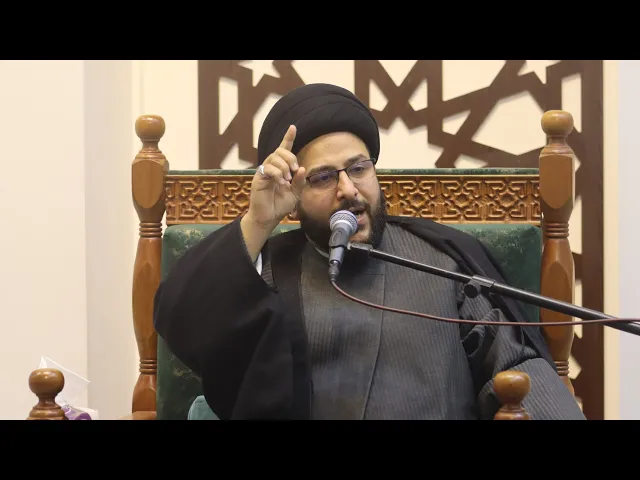
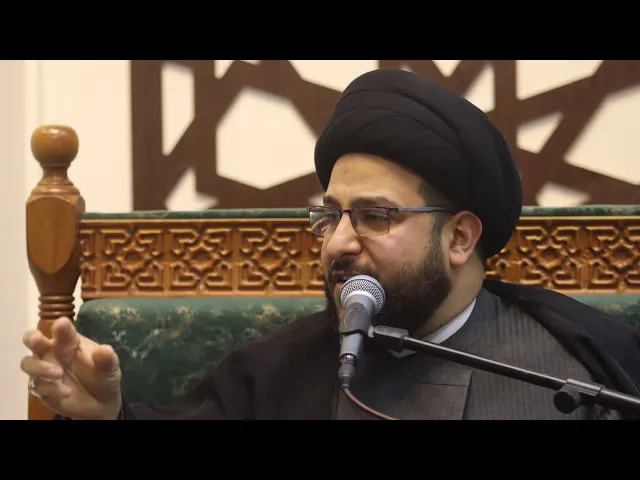
MUHARRAM 1446 / 2024 DAY 1: Seeing Nothing But Beauty: An Introduction to the Series
0
0
14 Views·
24/07/12

In
Lectures
📌 Follow LYF on
🔘 Linktr: https://linktr.ee/Lebaneseyouthfoundation
🟠 Instagram: https://www.instagram.com/lebaneseyouthfoundation
🔵 Facebook: https://www.facebook.com/LebaneseYouthFoundation
🔴 YouTube: https://www.youtube.com/@UCVz_yBeGo9KddC0flYu-B4A
© Lebanese Youth Foundation
Show more
Transcript
[0:00]alhamdulillah We Begin by thanking Allah subhah wa ta'ala for Gathering us
[0:07]here today for having the success to be here to commemorate the
[0:12]events that happened 1,400 years ago on the day of and the
[0:21]Calamity that befell the as it pertains to IM Hussein and as
[0:29]we live in the bond world world so separated in terms of
[0:37]time from that time is upon us every every time these months
[0:40]come around to try and rekindle a connection to find that emotional
[0:47]spiritual connection with the events of the past and that is why
[0:55]it is recommended so highly to try and connect through tears sadness
[1:00]and emotion but of course connecting through tears sad and and our
[1:06]emotion sadness and our emotions is just one aspect of connection if
[1:11]our tears are something that are for the center and then outside
[1:15]of the center we continue our day-to-day lives in the same way
[1:19]we have been before the month of Ramadan after the month of
[1:23]Ramadan then while our tears of course are of great benefit to
[1:29]us y and of course in the Gathering that we are here
[1:32]now we are missing out on a key aspect of self-improvement if
[1:39]a person comes to the month of month of muharam with the
[1:43]intention to make a meaningful change in their life and they do
[1:51]that consistently for all of the years that they live then cumulatively
[1:53]with that and the other opportunities that we have in the month
[1:57]of Ramadan we will find that we will be on a journey
[2:02]of continually improving and making important changes so the one thing to
[2:08]think about right at the beginning of these 10 nights is what
[2:11]is it what is it that I can really look at when
[2:17]I look at myself and think about changing what can I improve
[2:20]maybe there are things I'm doing well and I can improve maybe
[2:26]there are things I'm doing not so well and I can improve
[2:28]there are so many aspects of of Our Lives that we may
[2:33]have the success in this 10 days to improve about ourselves in
[2:37]each and every person's situation is different each and every person has
[2:41]something to think about and it doesn't matter how young you are
[2:46]it doesn't matter how old you are there is always we are
[2:49]always on a journey continual journey of self-improvement so the title of
[2:56]our series as many of you have seen already is seeing Beauty
[2:59]in the modern world and of course you are all aware of
[3:05]the uh saying from which this comes from I took the saying
[3:09]of course from the words of or the attributed words towards her
[3:13]where she says that I did not see anything except for beauty
[3:20]now the circumstance in which this is recorded is a gathering with
[3:28]uh IB zad where zad brings together the first of all the
[3:34]head of IM Hussein Alam is brought to him and the aan
[3:39]is announced so that everybody will gather and the family of the
[3:42]Prophet is also the survivors of carala are also brought into that
[3:46]Gathering and when they're brought into that Gathering completely ignores Z and
[3:55]of course this is something that bothered him so he tried to
[4:00]uh instigate and to bother lady Zab Alam as well so the
[4:07]way he did this was to say something to her so he
[4:12]said to her praise be to Allah who exposed you and falsified
[4:16]your claims he exposed the B for claiming to be the uh
[4:23]the rightful successes to the prophet and through Allah's action if you
[4:27]like what he was claiming was Allah's action these claims were falsified
[4:33]and she replied Allah exposes the transgressor and falsifies the immoral and
[4:40]they are other than us okay so Allah subhana wa ta'ala doesn't
[4:44]act like this towards people who are not transgressors yeah he doesn't
[4:51]expose somebody who is not a transgressor someone who's not a transgressor
[4:56]they uh have nothing to be exposed so zad then continues to
[5:05]say again emphasizing on his take or his idea that he was
[5:09]pushing forward was he said how do you see the treatment how
[5:14]do you see Allah's treatment of your brother and your family so
[5:18]he attributes the actions of the army of of of his army
[5:25]of of IB zad's Army and all of them he attributes all
[5:28]of that to Allah and he says look at what Allah has
[5:34]done to your to your household and this is key because when
[5:39]it comes to the actions of Allah subhah wa ta'ala the actions
[5:43]of Allah subhana wa ta'ala are all beautiful so she says I
[5:49]saw nothing but Beauty they were a group that God had decreed
[5:53]would be killed so they strove towards their resting places so she
[5:59]even explains the beauty here that from their perspective they were striving
[6:03]towards where they were supposed to go to and they ended up
[6:06]where they were supposed to end up she continues and says Allah
[6:09]will bring you and them together and you will argue and disagree
[6:14]so see who will win on that day may your mother be
[6:17]believed of you oh IB Marana now of course this account is
[6:25]an account that is not found in all of the early historical
[6:28]sources I gave a series of lectures a couple of years ago
[6:33]between history and memory talking about ashur between history and memory and
[6:36]there's a lot of concerns as it pertains to um being certain
[6:41]about the things that happened and the things that were said but
[6:45]one thing is very clear and that is that the memory of
[6:52]say Zam revolves around this statement and many of the so the
[6:58]the account that I just mentioned is in al malh of IB
[7:01]ta now many of the people that have accepted the historical accounts
[7:08]of IB ta have accepted it on the basis that some of
[7:10]the reports that he has that are not in other sources Express
[7:19]the philosophy and the ideals of uh the events of Ashura and
[7:24]what happened before and after and this is one of those examples
[7:28]this statement gives us a very beautiful window into what kind of
[7:34]States we would expect those that are in the absolute Pinnacle of
[7:42]spiritual achievement to have and that is that when it comes to
[7:46]Allah subhana wa taala they only see Beauty from him they don't
[7:49]see anything else from him because Allah subhana wa taala is beautiful
[7:55]and their subjective understanding and the way they look at him the
[8:00]way they mind is framed towards him is such that whatever comes
[8:04]from Allah subhana wa ta'ala is beautiful whereas as you see IB
[8:13]zad he tries to say that the bad that occurs within someone's
[8:17]life and the bad that is done by people out of their
[8:22]Free Will is also attributable to Allah so while everything that happens
[8:27]in this world whether it happens through a uh Act of free
[8:33]will or whether it's something that is natural is beautiful from Allah's
[8:38]behalf that Allah is behind it and Allah is the one with
[8:44]perfection that does not mean that actions that are done with free
[8:46]will are always beautiful but that lack of beauty that ugliness that
[8:54]comes not from Allah that comes from the action of the individual
[8:58]so when we look at the system of the world we have
[9:03]to have these two eyes open we have to see the beauty
[9:07]that comes from Allah subhana wa ta'ala but also take the accountability
[9:10]of our own actions into uh in into account and this is
[9:18]what I meant by our cognitive way or the way we are
[9:21]structured or how we structure the way we see the world in
[9:27]fact cognitive restructuring is a a major part of the Islamic message
[9:32]you see when as we grow we start to build beliefs about
[9:40]the way the world is okay so we see for example when
[9:46]we press a button a certain thing happens and when we don't
[9:48]press a button that thing doesn't happen so we start to think
[9:54]maybe we are the source of consequences right or we look at
[10:02]the word world and we want help from Allah in something but
[10:05]perhaps that result that we were looking for doesn't come about so
[10:10]we think that maybe Allah subhana wa ta'ala can't help us we
[10:16]think about earning our livelihood and our interpretation of that is that
[10:22]okay let's see if Allah will help with this and maybe sometimes
[10:25]we find that we find ourselves in a difficult financial position so
[10:30]we say we can't rely on Allah subhana wa tala for our
[10:35]Affairs and so on and so forth there are so many different
[10:42]ways in which the world challenges us and starts to make us
[10:47]feel alone make us feel like Allah is maybe someone to believe
[10:54]in but he's not really that much involved in my own personal
[10:57]life yes I pray to him yes I believe in him but
[11:03]I don't see him I don't see him in my life religion
[11:10]hasn't impacted me if I ask myself really what is the benefit
[11:13]of Islam to me and if I had been born in another
[11:17]another religion maybe I would have been better off maybe I would
[11:20]have had more fun yeah and so on and so forth these
[11:25]are the kind of ideas that might come into someone's mind as
[11:27]they deal with the world but the quranic message is there for
[11:35]us to restructure our mind it is there to tell us that
[11:39]if you rely on Allah Allah will help you it is there
[11:44]to tell us that sometimes we don't understand all of the wisdom
[11:48]behind Allah subhana wa tala's actions it is there to tell us
[11:55]the nature of this world to tell us that the world is
[11:57]a transient place when you look and you immediately want something you
[12:01]immediately want to do something sometimes that can be beneficial but sometimes
[12:06]that can be damaging and that the human being has to put
[12:09]this within the framework of how the world is the world is
[12:14]a place which is here for us to build but is also
[12:20]a place of trial and test of difficulty it is a place
[12:24]that will show us one color and will at the same time
[12:30]slit our throat it's it's like that that choir assassin that will
[12:34]draw Us in and as it draws Us in we will get
[12:39]involved with it and then before we know it uh it will
[12:41]have already uh taken what it needs from us so what I
[12:46]want to do in this series is take that Journey with you
[12:51]I want to take a journey of cognitive restructuring I want to
[12:55]take a journey from which we can look look from different perspectives
[13:00]and we can change the way we think about the world and
[13:03]as I was thinking about this I was thinking about the types
[13:08]of mystical schools that we have so one mystical school that we
[13:14]have is the school mystical School of Naf the mystical School of
[13:17]Naf is a very recent school okay the figures of that school
[13:20]are people that you may have heard of of course people like
[13:25]the writer of Misan he's considered to be a part of the
[13:31]school of Naf his teacher say alii many people have heard of
[13:35]there's also Ahmed carbal say ali uh and so on and so
[13:40]forth now the importance of this school of mysticism is that the
[13:46]figures of the school of mysticism were also jurists what you find
[13:52]in general is that there is a tension especially within the uh
[13:58]traditional setting between the acceptance of mysticism within if you like Shi
[14:05]thought and its rejection some thinkers think that if uh if something
[14:13]doesn't come directly in the of then to seek knowledge from any
[14:23]other place is tantamount to ignoring them okay this is the view
[14:27]that they come with especially if it is to do with religion
[14:28]on the one hand something like math or another uh you know
[14:35]secular subject you know uh medicine or something like that perhaps they
[14:37]wouldn't consider that has to come from but when it comes to
[14:43]something that's important for our religion something in fact that might be
[14:46]said to be the essence of religion mysticism mysticism is to do
[14:49]with the connection to Allah subhana wa tala it's to do with
[14:51]self-improvement it's to do with seeing the malakut or going behind the
[14:57]veil of the seen towards the Unseen these these kind of things
[15:01]they must come directly from According to this view the opposing view
[15:09]says that yes this is true but we are sometimes unable to
[15:14]unlock all of those ideas sometimes we need other help other kind
[15:21]of cognitive structures and Frameworks to be able to extract this information
[15:25]it is not to say that the mystical schools especially the sh
[15:29]mystical schools are schools that ignore and just take from let's say
[15:37]you know any other place that they find that wisdom that that
[15:40]is not true yes that wisdom perhaps may come from places that
[15:44]are other than just like all other Sciences but the point of
[15:51]that is to be able to draw out the ideas of the
[15:55]B and the thing is that this is what we do with
[15:57]all subjects the honest truth so for example even the schools that
[16:04]are against mysticism they're not against logic logic is considered to be
[16:08]one of the foundational subjects they're not against Arabic language Arabic language
[16:12]didn't come from yes they spoke it but it didn't come from
[16:18]them right logic again we we concentrate on Aristotelian logic Aristotelian logic
[16:23]again is not from directly even in terms of our or the
[16:29]principles of of f the principles of f are very much influenced
[16:34]by our brothers from theah because they started to develop that science
[16:37]a lot quicker than the Shia did so the point that I'm
[16:43]making here is that while that tension existed and especially between fukah
[16:49]and Mystics when you have the school of Naf what you find
[16:54]is a kind of effort to have a acceptable type of mysticism
[17:01]a type of mysticism that is uh palatable to the mainstream fukah
[17:09]now with that what they have done is that they have given
[17:15]us in the mainstream some strategies some strategies to help us in
[17:21]the modern world move towards spiritual and mental attainment that's a spiritual
[17:28]and mental Health the key teaching of this school is reflection that
[17:36]is the key underlying uh underlying teaching reflection stands right at the
[17:42]core of self-development and of course reflection is something that we can
[17:50]do no matter where we are reflection is something that is a
[17:54]habit that we need to try and inculcate within us and what
[17:57]we're going to do is through those different topics we're going to
[18:00]go on a reflective Journey the next important thing that they talk
[18:08]about isaba means to be self-aware okay they put this in a
[18:13]system where they is some uh action of putting a condition on
[18:19]yourself so you see there's something you want to improve so you
[18:23]put a condition on yourself to improve that and then the next
[18:26]stage isaba muraba is to watch over yourself and then m is
[18:30]to account for it afterwards now Alani Muhammad Hussein Tani who is
[18:36]also considered part of the school who was a student of he
[18:43]says that or self-awareness is the whole path towards self-improvement so this
[18:50]is the importance and the emphasis that is placed on selfawareness on
[18:55]being aware of ourselves and being aware of the things that we
[18:58]want to improve we we're going to talk about all of these
[19:01]things in a lot more detail obviously when we get to them
[19:06]the next important uh practice that they had was their concentration in
[19:11]prayer okay and you will you will see books written on the
[19:17]secrets of prayer and we're going to go into a whole lecture
[19:19]talking about the secrets of prayer because sometimes when we hear these
[19:23]words like Secrets they can be quite cryptic we feel like we're
[19:32]quite distant from it but the whole literature on Secrets is a
[19:36]literature that is just talking about what happens in prayer when you
[19:40]pay attention that's it the reason why prayer has Secrets is because
[19:45]nobody's paying attention to it yeah it's like for example under here
[19:51]I've got my iPad okay that is a treasure but because nobody's
[19:56]looking here no one notices it nobody knows it's here I know
[20:01]it's here because I'm looking at it in the same way the
[20:03]human being when they connect to prayer a whole world of the
[20:09]inner opens up to them the inner again why is it the
[20:11]inner because usually we are outward facing we're looking at the things
[20:17]that are happening in our lives we're trying to constantly uh you
[20:21]know uh have a solution for anything that comes up in front
[20:24]of us okay but when we stop doing that and we turn
[20:30]the focus towards the towards ourselves that's what's meant by the inner
[20:34]yeah it's not that you have to somehow take your eyes and
[20:39]look inside it's simply you just have to pay attention to yourself
[20:43]and this is also when it comes to the the idea of
[20:49]M or Ascension in prayer Ascension in prayer is not moving anywhere
[20:54]it's not going anywhere you don't physically Ascend Ascension means to move
[21:00]your mind away from that which is mundane towards that which is
[21:07]holy that's what it means so as we go through and we
[21:09]we we kind of strip away the layers of uh you know
[21:14]what this means finding out the secrets of prayer we'll see again
[21:17]that the prayers start to become meaningful the prayers start to truly
[21:22]become that Catalyst through which we can improve ourselves so they focused
[21:27]on prayer they also focused on meditation on the Holy Quran so
[21:33]you can see look at these beautiful strategies that they placed this
[21:38]school uh elucidated and uh explained for us that are applicable to
[21:46]our modern modern life these are all things that we can apply
[21:48]in our Modern Life and we want to use them all to
[21:54]help us to find the mindset where everything we see is beautiful
[22:00]so amongst the other topics that I'll be talking about as well
[22:06]is existential poverty existential poverty is the poverty that we all have
[22:12]whether we like it or not it is our poverty in existence
[22:15]and as a person is more aware of their existential poverty what
[22:19]they will find is that they will immediately find a connection to
[22:23]Allah subhana wa ta'ala because when you're poor you're in need when
[22:27]you're in need you need a benef Factor when you need a
[22:33]benefactor for each and every aspect of your existence you can never
[22:37]be separate from that benefactor you will always see that benefactor and
[22:41]you'll always see the benefits that the benefactor gives you so existential
[22:46]poverty and then the most deep and complex issue that we're going
[22:50]to go into is the Oneness of Allah subhana wa ta'ala because
[22:55]sits at the center of our religion anded is something that completely
[23:03]revolutionizes our mind and that is the real cognitive restructuring because like
[23:09]I said to you we are used to seeing the world separate
[23:12]from God but when we understand that the world is not separate
[23:19]from God that Allah subhana wa ta'ala is everywhere and nowhere when
[23:24]we understand this we cannot help but look everywhere and only see
[23:29]God and when that is the case of course we will not
[23:33]see anything except for beauty so we pray to Allah subhana wa
[23:36]ta'ala that he accepts our efforts in this month inshallah we pray
[23:43]that he alleviates all of the suffering for all of the Muslims
[23:47]around the world especially in Gaza and we pray to him inshallah
[23:50]that he grants us Zara of Imam Hussein and that these majales
[23:57]are accepted and that he looks favorably to on us for all
[24:00]of the things that we need in our lives we pray that
[24:03]he helps everybody who's in distress and everybody who's in difficulty everybody
[24:06]who's in sickness
0 Comments
sort Sort By
- Top Comments
- Latest comments
Up next
3 Views · 24/08/31