التالي
10 المشاهدات · 13/12/26

10 المشاهدات · 13/01/07
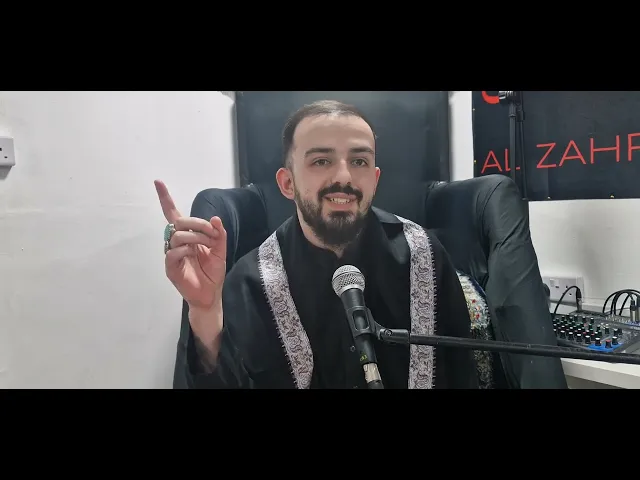
Islam: A Burden or Benefit? - Muharram Night 6
0
0
9 المشاهدات·
25/09/11
في
آخر
Islam: A Burden or Benefit? - Muharram Night 6
أظهر المزيد
Transcript
[0:00]And through this path of perfection they want to reach illah.
[0:05]Who is the most perfect?
[0:09]Who is the most perfect?
[0:10]Allah.
[0:11]Allah is the most perfect.
[0:12]So I who I want to connect to that perfection and align
[0:18]myself spiritually.
[0:18]We talked about our spirituality.
[0:20]We have to connect it to Allah subhana wa ta'ala.
[0:24]So as a result we need to understand that first of all
[0:27]and we've discussed it already but I want to delve a bit
[0:34]deeper into religion as a fact when we talk about Islam why
[0:37]does Allah subhana wa ta'ala says we haven't sent it as a
[0:44]burden we discussed for example the the things I have to do
[0:50]all of this these are things that I must do Allah subhana
[0:54]wa tala of course he says it's not a burden it's to
[0:59]allow yourself to spiritually reach to a point where you're connected to
[1:04]him and we know that insan as inan we have what [Music]
[1:11]this is the natural disposition that Allah subhanahu wa ta'ala uses for
[1:18]you to connect to him to call upon him and we said
[1:21]that insan understands the exist existence of God through two manners.
[1:26]We said there's an internal manner which is the fra and we
[1:29]have an external manner which is the beauty of the design within
[1:31]our world.
[1:33]So our fra itself is calling towards a religion from the beginning
[1:39]of time.
[1:37]We've always needed a religion to exist.
[1:41]So then we have to use our our intelligence to connect to
[1:49]Allah subhana wa ta'ala.
[1:49]And once we get to a certain point will get us so
[1:55]far where we need to get a bit higher right on a
[1:57]very fundamental level your can tell you without the need of religion
[2:03]what's good and what's bad right today we can see for example
[2:06]if you take someone's h it's bad you don't need Islam for
[2:11]example to tell you that to kill someone is a bad thing
[2:13]unjustly right our can tell that so this is what we Through
[2:21]our intelligence, we understand on a first fundamental level that certain things
[2:26]are good and certain things are bad.
[2:29]But on a higher level, Insan is in need of a religion
[2:34]to tell him what to do to get him to a spiritual
[2:36]connection.
[2:36]He'll know what's good and what's bad to a certain level.
[2:42]But after that, you need to get a map to guide you
[2:43]to Allah.
[2:45]Let's say you're going from one city to another, London to Manchester,
[2:49]and you're driving.
[2:51]You want to reach Manchester.
[2:53]Of course, there's going to be road signs.
[2:55]No, road signs are going to are there to protect you.
[3:00]If someone decides that he wants to drive recklessly and he doesn't
[3:02]want to follow the road signs, he's not going to just hurt
[3:07]himself.
[3:05]He's going to hurt others.
[3:09]He's going to cause others to hurt themselves as well.
[3:11]The city will tell you drive 30 miles per hour.
[3:16]Drive don't drive too fast.
[3:19]Drive on this side of the road.
[3:22]Don't drive on the right side.
[3:24]The city themselves will tell you what to do.
[3:28]So because of that they know what we can do to drive
[3:30]safely and we get to that destination.
[3:33]Now someone is going to say what some jahal is going to
[3:38]approach the city and he's going to say you know what you're
[3:40]taking my personal freedoms why you not allowing me to drive how
[3:45]I want I want to drive fast I enjoy it I get
[3:49]a thrill out of driving fast I want to drive into the
[3:53]river you are going to hurt yourself as a result so when
[3:57]we say that religion is telling you to do this or to
[4:02]do that it's not telling you because it wants to chain you
[4:05]down.
[4:05]It's not doing this because Allah subhana wa ta'ala wants to see
[4:10]his servants do things for example that hurt them.
[4:16]Allahhana says what verse 16 [Music] we have certainly created insan and
[4:27]we are aware what their souls whispers to them.
[4:29]And then we said what does Allahh says And we are closer
[4:39]to them than what's is this your jugular vein.
[4:44]The vein that brings the most blood to your heart and to
[4:47]your head.
[4:49]Allah subhana wa ta'ala says we know about what desires you have.
[4:53]We know you better than yourself.
[4:56]Who better to create those laws to get me to perfection than
[5:02]the person who created me, right?
[5:04]The one who created you is the one who knows you the
[5:09]best.
[5:07]Sometimes in uh school in one of our Islamic classes, we say
[5:13]what?
[5:14]You create a robot or so, right?
[5:16]You create a robot and you tell it what to do.
[5:19]You tell that robot, we we we like to say in our
[5:20]Islamic classes, don't go in that puddle.
[5:23]You're not, your wires are not okay for you to get in
[5:26]that puddle.
[5:27]If you go in there, you're going to short circuit.
[5:28]You're going to not exist.
[5:30]You're going to die.
[5:33]The robot says, for example, to his creator, I know it's okay.
[5:36]Some kids like to say, I'm built different, right?
[5:39]Of course not.
[5:41]So, you go ahead and then you go into the water and
[5:43]then it dies.
[5:45]Allah subhanahu wa ta'ala is aware about us.
[5:49]Allah subhana wa ta'ala conform knows what our fra is and he
[5:58]knows what we need.
[5:57]So as a result religion exists for us to be able to
[6:03]reach our full potential and when we talk about the fact the
[6:09]not needing of a religion or to separate religion and that which
[6:13]governs our lives our those laws that's existed in a certain period.
[6:17]We can see that before this this movement wasn't a large one.
[6:21]This movement known as or for example secularism has began in the
[6:29]Renaissance.
[6:31]During the Renaissance the Catholic Church would restrict people from doing certain
[6:38]things because they believed it was anti-religion.
[6:40]Galileo he believed in what?
[6:45]He found scientific knowledge.
[6:47]He's observed that we have what?
[6:51]A heliocentric system.
[6:50]Right?
[6:51]He says that it's not the the planets that are moving around
[6:57]the earth.
[6:56]It's the earth that's moving around the sun.
[7:00]The Catholic Church themselves, they said, "What is this?
[7:04]This is blasphemy.
[7:04]You're bringing people against religion." God did not say this.
[7:10]It's that manner.
[7:09]And what they do?
[7:12]Galileo, he was forced to say, "Okay, I take back what I
[7:14]said.
[7:14]No, no, it's this the earth that's the center." So sometimes during
[7:17]that time, we had the Catholic Church as an institution that stopped
[7:23]people from religiously continuing.
[7:31][Music] >> On the contrary, we see in Islam, we had our
[7:38]golden age.
[7:40]We had a time where due to Islam, due to the Abbas,
[7:46]it's creating an environment where people can learn in the house of
[7:50]wisdom in Baghdad that we had scientific advancements.
[7:53]We had people like, we had people like Javan, we had people
[8:01]like they say that certain things like today like algebra, what's the
[8:05]first two words?
[8:08]Algebra.
[8:06]So al comes from the Arabic word.
[8:11]These certain advancements that we've had the Europe at that time was
[8:17]in a medieval age.
[8:16]Islam was able to get these scientific advancements.
[8:21]Some people will say that no it wasn't Islam.
[8:23]It was those people themselves.
[8:25]It was as a result of Islam widening their scope of Islam
[8:32]allowed that society to flourish.
[8:35]It was because of that until the the we had the Mongol
[8:40]invasion that removed it.
[8:40]But before that, Islam was able to free the people to be
[8:46]able to unleash their potential.
[8:47]Like we said, you as insan, you have a potential.
[8:51]You can go to the highest of highs and Islam allows it.
[8:54]What do we have in Surah 7 verse 157?
[9:00]Allah subhana wa ta'ala says what?
[9:13]He gives he makes that which is pure halal.
[9:16]He makes that which is dirty haram and he frees you from
[9:23]the shackles that are you have held on to you inside himself.
[9:26]He puts shackles on himself.
[9:31]He makes himself a slave and Allah as a result of making
[9:34]certain things halal and certain things haram, he frees you from those
[9:37]shackles by making certain things that are haram, certain things that affect
[9:43]us negatively.
[9:45]He allows us not to be a slave to that thing.
[9:49]Right?
[9:48]People during that time in Arabia, they would drink alcohol.
[9:53]Islam when it arrived at first it didn't stop it but by
[9:58]the end they had a ruling that alcohol was haram people they
[10:03]were a slave to that alcohol they needed that alcohol right and
[10:08]because of that they removed their why do we say alcohol is
[10:14]haram and Allah subhanahu wa ta'ala has given you a level of
[10:18]to be able to reach him when you drink that you don't
[10:23]have that apple anymore.
[10:23]As we say, you become worse than the nuts.
[10:26]So, we need to make sure that we can bring ourselves towards
[10:30]Allah with that I hear some chatter.
[10:43]So, if I could please request that we quiet down just because
[10:46]I'm it's hard for me to be able to explain it.
[10:49]And if I could just ask everyone to just come forward.
[10:52]We have we'll have other people joining us.
[10:55]So, inshallah they can have some space when they come in.
[10:58]So, if I can just request to lower that level of chatter.
[11:03]Allah subhanahu wa ta'ala he wants us to be successful.
[11:07]Why would Allah not want us to be?
[11:10]We're the best of his creation.
[11:10]We're the most honorable of his creation.
[11:13]So Allah subhana wa ta'ala as a result, he tells you, I
[11:19]want to free you from that that chains you down.
[11:20]He tells you this is the path and this is the way
[11:24]that you can free yourself.
[11:25]Who better to be a slave of than Allah subhanahu wa ta'ala.
[11:30]So it's through that like we discussed it's that guideline of religion
[11:35]that helps us build our spirituality.
[11:37]We talked a lot about us here at spirituality yesterday.
[11:40]It's only through the guidelines of religion that spirituality flourishes.
[11:45]So there are other people like we said that today they believe
[11:49]in spirituality without the needs of guidelines of religion.
[11:51]Then what kind of spirituality is it?
[11:54]You're just trying to create a a path for yourself when Allah
[11:59]has given you that already.
[12:00]We have a very famous story in regards to freedom in Islam.
[12:06]There was a man by the name of Vishal Khafi.
[12:09]He was a very rich man.
[12:12]He had a house and he would love to put music in
[12:13]that house.
[12:15]So he'd always play music very loudly in his house.
[12:19]And it was during that time I kim he walks past his
[12:27]house.
[12:25]When he walks past his house, he hears the sound.
[12:30]So outside and he asks a woman who's working there, a servant.
[12:36]He asks this woman, "Is the owner of this house a free
[12:38]man or is it a slave?" She answers, "Of course it's a
[12:43]free man.
[12:42]Look at him.
[12:43]He has a huge house.
[12:45]He's able to enjoy this.
[12:46]He's enjoying life himself.
[12:46]Why would he be a slave?
[12:49]He's a free man." Imam, he says, "You're right.
[12:54]Listen to this.
[12:54]If he was a slave, he would fear his master.
[13:01]If he was a slave, he would fear his master.
[13:04]Then she went back in and the imam left.
[13:07]The Imam left and that lady she came back into it into
[13:13]the house and uh Vishar asks asks about it.
[13:17]Says who is that person outside and then she tells him what
[13:21]they were talking about.
[13:25]Vish hears about this and in that moment he take he he
[13:28]runs towards the imam.
[13:30]He gets out of that house and he's not even wearing any
[13:32]shoes.
[13:33]He runs towards the imam and he's barefooted and he has a
[13:35]conversation and in that moment he repents.
[13:40]When you realize that you have a Lord and that Lord is
[13:48]the one who's giving you everything.
[13:49]He's giving you all that you have as a result of gratefulness
[13:55]as a result of realizing that you realize your potential as you
[13:59]said.
[14:00]And he who's at that point, he never wants to demean himself.
[14:03]He he doesn't want to go down and ruin his image when
[14:08]looking at that relationship with him and Allah subhana wa ta'ala.
[14:20]He says to Hassan uh before he passes away he writes a
[14:25]very famous letter which is at the end of that letter he
[14:32]says what?
[14:38]Do not make yourself a slave when Allah has made you free.
[14:43]But wait, doesn't religion make us a slave?
[14:47]Doesn't that cause us to, you know, have to worship someone?
[14:53][Music] Don't turn yourself into a slave.
[15:02]Don't become a slave to your haram.
[15:06]Don't become a slave to what you drink.
[15:08]Don't make yourself a slave to that to what you do.
[15:10]Don't make yourself a slave to the point where you need it.
[15:17]Sometimes we get to a point where we do do so much
[15:17]haram that we can't leave that haram anymore.
[15:21]Is that not being a slave to it?
[15:25]We see unfortunately people they get addicted to do some doing certain
[15:30]haram things.
[15:30]Textbook version of what a slave is.
[15:35]You need it.
[15:34]You can't live without it.
[15:37]So as a result, we need to understand that Allah subhana wa
[15:40]ta'ala wants you to be free.
[15:41]And freedom doesn't mean what we hear today to for example not
[15:47]need religion.
[15:47]Religion is what makes you free.
[15:58]>> There's a very famous saying we hear it often.
[16:05]They say that as many people as there are on this earth,
[16:10]there are that many ways to connect to Allah.
[16:14]Right?
[16:14]However many people there are on the earth, it's that many ways
[16:17]to connect to Allah.
[16:20]Some people believe that that saying it talks about religious pluralism that
[16:24]there are more than there's more than one religion that can connect
[16:27]you to Allah subhana wa ta'ala.
[16:28]But our scholars have responded to that point.
[16:32]This famous saying isn't telling you there's different ways that we can
[16:36]get to Allah through different religions or different versions of there's only
[16:43]one in Islam.
[16:45]Surely the religion near Allah subhanahu wa ta'ala is Islam.
[16:51]Uh what's your name brother?
[16:55]>> You're such a great uh attendance.
[16:59]I'd love you to just be on this side of me.
[17:00]If you can just get up and get to this side of
[17:03]me.
[17:05][Music] >> I have so many of you on this side.
[17:11]I want to have some to stare at on this side as
[17:12]well.
[17:12]So I I get to see everyone.
[17:15]Allah subhanahu wa ta'ala.
[17:18]What do they mean when they talk about this?
[17:20]There are as many people on this earth as there are ways
[17:25]to connect to Allah.
[17:26]What they're trying to say our scholars have made an understanding is
[17:35]that there's only one way to Allah the religion with Allah subhana
[17:39]wa ta'ala is Islam but for everyone there is a personal path
[17:44]to Allah your path is not the same as his path and
[17:48]his path is not the same as your path everyone has their
[17:54]own struggles with their faith everyone has points when they have some
[17:58]people they might be farther away from Allah subhana wa tala like
[18:01]they said some people they're driving towards London to Manchester and they're
[18:05]going faster they're able to go at a faster speed some people
[18:10]they're going very slowly some people for example have a flat tire
[18:13]so they have to be stuck on that road to getting to
[18:14]Manchester so when there's a path to Allah everyone has their own
[18:22]path everyone has their own struggle right everyone has a different way
[18:26]of connecting to Allah subhana wa tala but Allah says that the
[18:29]only way you can connect is through this Islam so we're all
[18:33]we should never judge other people's paths to Islam right we should
[18:36]always try to help them now there's a very famous uh verse
[18:46]in the Quran we call this the of the second verse of
[18:51]says But there is no compulsion in religion.
[19:03]So Allah subhana wa ta'ala says what?
[19:08]There is no need to be for example in a need for
[19:15]to to hold on to one religion.
[19:18]Right?
[19:18]You can't make someone a Muslim.
[19:20]You hear this many times.
[19:22]Oh, sorry.
[19:24]The verse itself was is for example, Allah doesn't burden the soul
[19:29]more than they can bear.
[19:32]But the verse we're looking at is there is no compulsion in
[19:38]religion.
[19:37]When Allah subhana wa ta'ala says there's no compulsion, it means what?
[19:41]There's no forcing others to be a Muslim.
[19:45]When people come to Islam, they have to come to Islam as
[19:51]a result of the beauty of it.
[19:53]When we say there is no compulsion, we mean that Islam is
[19:58]in a manner that it's already revealed.
[20:05]Surely there's a distinct distinction between brightness and darkness.
[20:12]So when we say that it's that we don't want to spread
[20:20]Islam by force that if anyone who doesn't want to be a
[20:22]Muslim we say you have to be a Muslim.
[20:24]We know that many people they will say against Muslims they'll say
[20:29]that the Muslims they believe that they have to force people to
[20:33]religion or the Islam was spread by the sword.
[20:36]We say no we say there is no compulsion in religion.
[20:42]The prophet never forced anyone to become a Muslim.
[20:44]The Imams never forced anyone to become a Muslim.
[20:47]Now, we had other governments that happened after the prophet that may
[20:51]have done so, but they have to respond to their Lord in
[20:56]that manner if they've killed us so unjustly.
[20:57]But the message of the holy prophet is that we can never
[21:02]force anyone or sanction our beliefs on anyone else.
[21:05]But some people we have a specific story about this because of
[21:11]course with every verse there is a narration that happens.
[21:14]When did come down the commentators though those who write they say
[21:22]that they were the people of the within Medina from the people
[21:26]of Ansar they previously were they were kafa.
[21:29]So they were idol worshippers.
[21:31]They were mushik.
[21:30]And there was a man he had two sons and they converted
[21:36]to Christianity.
[21:36]So they were fascinated by Christianity.
[21:38]They saw the beauty of Christianity and they became Christians.
[21:42]When their father from the ansad became a Muslim, he was upset
[21:47]because he wanted his two sons to also be a Muslim.
[21:51]They were still Christian.
[21:52]So because of that he went to And he said to him,
[22:05]"Yeah, I have these two sons and these two sons, they've become
[22:08]Christian.
[22:08]I tried my best and I tried to make them Muslims.
[22:11]Can I force them to enter our religion?" The holy prophet said,
[22:19]he said, "There's no compulsion and religion." We know this is obvious
[22:25]in human nature.
[22:25]When someone tries to force you to do something, you won't like
[22:28]it.
[22:29]No one wants to be forced.
[22:32]Our internal nature says that we have to rebel against it.
[22:35]Right?
[22:35]When someone forces on you onto something when you don't want to
[22:39]do it, we rebel.
[22:41]So because of that, the holy prophet said that when it comes
[22:45]to the Muslims, Islam, you can't force anyone to become a Muslim.
[22:49]You can force someone by the threat of for example if you
[22:54]if you don't pray if you don't do this if you don't
[22:58]fast then you know I will disown you parents will say they
[23:01]can't force someone to become a Muslim at the end of the
[23:08]day you can force them to do is there any value of
[23:12]the no sometimes for example they won't even do they won't even
[23:15]fast they'll fast when you're around and then once you're you're out
[23:18]they leave the house they eat with their friends.
[23:21]So when we talk about this compulsion in religion we cannot force
[23:26]someone to do something.
[23:27]You can try to help them to come towards the hap you
[23:30]can tell them to come to the religion of Islam but when
[23:35]you force someone like we said their soul rebels against it and
[23:38]there's in this ayah we have another commentary about this.
[23:44]So within the khaz there another version of this story is that
[23:47]when the prophet came during that time there was the khaz within
[23:51]medina and these tribes they were the richest tribes when we saw
[23:57]that the Jews within Medina they were at a very high position
[24:00]they were very rich so because of that they were the ones
[24:05]that were writing they were the ones who had books and paper
[24:08]but the Arabs themselves the mushri they were illiterate they couldn't uh
[24:12]write or anything.
[24:14]So the high position was for those who were Jews.
[24:16]They had a lot of influence in that society.
[24:18]So they were the ones who sent them to schools and they
[24:22]trained them and they learned.
[24:23]So a lot of those people they adopted Jewish ideologies and they
[24:27]left mush the she to convert to Judaism.
[24:29]When the holy prophet he entered Medina a group of those boys
[24:34]who were living in that city, they were trained by these Jews.
[24:37]They didn't renounce the religion.
[24:39]They held on to that Judaism.
[24:40]So the parents when they became Muslim they wanted to force their
[24:43]children.
[24:43]They said you have to leave this religion and become a Muslim.
[24:48]When their fathers came to the holy prophet they asked for permission
[24:51]to force them to become Muslims.
[24:52]And the prophet said what?
[24:53]He didn't grant them permission.
[24:55]He said so when we understand that there is no compulsion in
[25:04]religion.
[25:05]We don't have to force anyone to become a Muslim.
[25:06]Now here's where a lot of people they misrepresent.
[25:12]You can't make someone a Muslim but once someone enters into Islam
[25:17]they have to follow a set of rules.
[25:20]Once you accept theul you have to accept the when you become
[25:28]a Muslim then you have to realize that I have to fast
[25:30]I have to pray I have to give mys I have to
[25:34]give this I have to give that.
[25:35]It's not taking certain parts of Islam and then leaving the others.
[25:40]That's not when we say there's no compulsion in religion.
[25:44]We're saying you you can choose whatever religion you want.
[25:52]You can accept which belief that you like.
[25:53]But once you accept Islam, these are the rules that are with
[25:58]Islam.
[25:59]Just like any other religion, you can't pick or choose what religion
[26:02]you follow, right?
[26:04]That's why we need to always follow certain things within Islam.
[26:08]So some people for example they believe in certain parts of our
[26:14]but they don't believe ins they'll do everything but when it comes
[26:21]to homes when it comes to actually giving my money to my
[26:23]immedat they might be like inshallah I'll do it.
[26:30]One important point to notice for those who for example are giving
[26:35]hums or have to give hums our scholars say that that money
[26:42]that you have that you have not given is haram money.
[26:45]It's as if you stolen that 1/5 from the sah im.
[26:50]It's the imam's right to receive that 1/5 and by beholding it
[26:55]all that money within itself becomes haram.
[26:58]When we for example say we want to keep our money halal,
[27:02]we have to give any kind of earnings.
[27:05]Even if you're connected and you need to for example you live
[27:09]with your parents, whatever earnings you have, you have to give on
[27:12]that.
[27:13]So I really wanted to put a lot of stress on this
[27:18]important point.
[27:17]We can't keep certain parts of our and leave others.
[27:22]You can't just pray salah and do but decide not to do
[27:27]zakat.
[27:28]And when you accept a religion, you need to accept all elements
[27:31]of that religion.
[27:41]Now when we discuss when we discuss our branches of our religion,
[27:52]A lot of people when they see it they will feel that
[27:56]they can understand it themselves.
[27:57]I want to touch upon this point finally before we finish off
[28:03]on this lecture here.
[28:03]A lot of people they believe that I can by myself decide
[28:09]what's halal and what's haram.
[28:11]How to do this and how to do that.
[28:13]I don't need a to decide that.
[28:18]It's important for us to realize that our mar after our imams
[28:25]when the imam went into it was our mar that have to
[28:28]hold that position and he gives two important points to understand.
[28:36]He says what he says one of the verses of the Quran
[28:50]We did not send messengers except for men to be inspired by
[28:56]us.
[28:57]If you do not know, ask the he says if you don't
[29:02]know about something, ask those who are of knowledge.
[29:04]They are the of remembrance.
[29:07]So we don't know certain things about fasting.
[29:10]We don't know about when I travel, can I fast or not?
[29:14]Do I have to pray my salah or not?
[29:16]What does traveling mean?
[29:18]And what is it considered?
[29:18]We don't know it.
[29:22]Says that you have to ask those who are of remembrance are
[29:30]scholars.
[29:27]In a second verse of the Quran, [Music] he says it's not
[29:43]necessary for those to march all at once.
[29:45]In the battle of Tabuk, there were many people who marched towards
[29:49]battle.
[29:50]Because of their march towards that battle, Allah subhana wa ta'ala brought
[29:55]down this verse.
[29:57]Only a party from each group that march forth leaving the rest
[30:00]to gain religious knowledge.
[30:02]He says there are those who they stay back and they teach
[30:07]they teach others the they enlighten others with religious knowledge.
[30:10]So because of that we can understand there's a certain group that
[30:14]doesn't fight that they stay behind and they teach the knowledge and
[30:21][Music] he says as for the events that occur refer to the
[30:34]narrators of our traditions for they are the proof for you and
[30:40]I am the proof of Allah over them the narrators of our
[30:44]tradition.
[30:44]He doesn't say am he says those who narrate our traditions I
[30:47]am the proof over them and they are the proof over you.
[30:52]So it's that connection Allah subhana wa tala to the Imam is
[30:55]that proof over those those scholars those of narration they are the
[31:00]proof for you when you need something when you are trying to
[31:05]understand something you have to become you have to come to the
[31:09]to understand and people like they were so they were those who
[31:13]for example were leading they were the ones who researched it do
[31:19]you have time to go ahead and and research our books to
[31:21]find what a traveler is and to what to do this.
[31:24]Do you do you have time to go ahead and learn to
[31:27]learn the grammars to then go ahead into the deeper books to
[31:30]understand it?
[31:32]No.
[31:33]So he says those those relators of our narrations they are the
[31:39]upon you.
[31:41]So he says what he says that he gives a rational proof
[31:49]for us to understand.
[31:51]He says if you want to follow something, you follow that who
[31:55]knows more.
[31:56]Someone who for example comes to the first day of university they
[31:59]come to law school and they say that I don't even need
[32:02]this.
[32:02]I can I already read all the books by myself.
[32:05]I know what's going on here.
[32:07]But people will look like at him like he's crazy, right?
[32:10]Say what does he know?
[32:11]This person he just joined us.
[32:15]He he read for a few days and he feels that he
[32:16]knows better than the dean of the school.
[32:17]He has to follow that dean.
[32:20]Just like that person who if he goes to med school on
[32:22]the first day he can't say okay I'm a doctor I don't
[32:26]need everyone else here to tell me whatever I've become a doctor
[32:30]I know everything you don't know that you have to follow those
[32:34]who know more we ask those for example that will make a
[32:40]statement like this that I don't need any uh scholars or so
[32:42]to tell me what is haram my intellect can tell me that
[32:46]okay your intellect can tell you that you you know the books
[32:52]of narration you can return to it which books are they don't
[32:54]even know our own books they'll know the the Sunni books they'll
[32:59]know for example Muslim but they won't even know our four books
[33:05]ourselves for us we have four important books of hadith and these
[33:18]Four books are huja on us.
[33:21]Now they when you go to a library sometimes you'll see them.
[33:24]They span from that wall to that wall.
[33:27]Which lay man is going to decide to read all those in
[33:31]in complete Arabic to understand what they mean?
[33:33]It's for al who has spent years studying that they spent years
[33:39]understanding our books.
[33:39]They spent years understanding who is who in that chain of narrations
[33:43]that understand what they have to follow what they have what's the
[33:48]imam telling me in regards to this mah.
[33:51]So when you reach an age where you're have to follow the
[33:58]person who is alim within the circles and what way can you
[34:01]do that I'll end off here.
[34:04]What way can we do that?
[34:05]How can we find the person who is the most learned within
[34:09]our community?
[34:09]The way that we can understand it is in a group of
[34:15]people.
[34:14]What's the consensus between most of these people?
[34:17]When upon a group of people there are there's they are know
[34:20]that this person this certain scholar is the mo the well most
[34:28]well-known scholar.
[34:27]He is the most studied scholar.
[34:31]He studied himself.
[34:31]And it can't be because for example like political parties his face
[34:35]is always on the wall or something or he's paid money to
[34:39]to do that to propagate for him.
[34:41]No, the people within that city, the people within that community, they
[34:46]believe that that person is the most wellknown.
[34:50]When we can understand that and it becomes enough for us, it
[34:53]becomes enough for us not to have any sha, we can follow
[34:58]that scholar.
[34:57]Another way we can follow a scholar is if we for example
[35:03]study and we realize who it is ourselves.
[35:04]Not many people can do that.
[35:08]And the third way sometimes that first way is not you don't
[35:11]come to a consensus.
[35:13]You realize that as a result of ask asking around within that
[35:15]community people give different answers or it's because someone's uh buying ads
[35:20]or so to show their face that people follow him.
[35:24]If you don't know you go to the third consensus to pick
[35:28]of your time.
[35:30]You have to ask two different scholars, two people that for example
[35:35]studied in the who is the most learned.
[35:38]If these two scholars give you the same answer, you can decide
[35:41]that that's on you enough.
[35:42]You don't need to ask further that maraji is your scholar.
[35:47]So it's important that as long as someone is the most learned
[35:50]we follow them and only then do we understand the rules of
[35:55]our religion and only then can we see perfection.
[36:09]We move on to our ma for tonight.
[36:12]And tonight is one of the most important nights for us to
[36:19]understand.
[36:19]As we talked about yesterday, we discussed the ma of and Muhammad,
[36:23]the two sons of Zamaha.
[36:26][Music] And tonight we want to go ahead and move on and
[36:31]go to the ma of the youngest warrior on that day of
[36:38]kabala ali aka.
[36:38]So the narrations say that those three days that were spent from
[36:45]the seventh of Muharam to the 10th of Maharan, they cut off
[36:48]water from the army of Hussein.
[36:52]And those tents the children they were screaming alash.
[37:01]But there was one child who could not say this and he
[37:05]was the smallest of the children.
[37:08]Ali, he would lick his lips and he would try to cry
[37:12]for water and it got to a point where he couldn't cry
[37:16]anymore.
[37:16]His voice was very muted because he didn't have any milk to
[37:21]drink.
[37:22]And because of that, he would wait for milk that would never
[37:25]arrive.
[37:26]And Ashur came on that day on that land of Kabella.
[37:31]And one by one, Hussein's friends and his companions, they go to
[37:38]get martyed.
[37:37]They bring the body.
[37:40]Ali Hussein, they go together.
[37:42]Every single person who goes out to battle, they bring their bodies
[37:45]back.
[37:46]Ali Akbar takes one side and Hussein takes the other.
[37:50]And they bring them back to the tents.
[37:52]And one by one, then it's the turns of the family members.
[37:58]him.
[38:01]They go to the battlefield and they become martyed and by time
[38:08]Hussein is left alone on those field on that field of Kbella.
[38:12]The time comes for Hussein to go to the battlefield.
[38:16]Hussein says to everyone and Hussein with his in his waist he
[38:25]melts the and he rides his horse to the small mountain.
[38:29]Then he calls loudly.
[38:32][Applause] Is there anyone there to help me?
[38:43]one to help the family of the holy prophet.
[38:48]Is there anyone that can help the grandson of the holy prophet?
[38:51]And in that field, Yazid's army, no one answers.
[38:56]These people, they call themselves Muslims as followers of the prophet.
[38:59]None of them.
[39:01]These are hypocrites.
[39:00]They are the mens of Yazid.
[39:02]So, no one answers it.
[39:05]And it's during that time when he calls Naser where he hears
[39:08]the crying of a baby within the tents.
[39:13]He hears the crying and he turns around.
[39:15]He turns to the tent and he says, "Zan, your brother's still
[39:19]alive.
[39:19]Why are you crying?" And then he says, "My brother Hussein, when
[39:24]you called out, he fell from his cradle." Hussein knew what Aliasar
[39:34]was trying to say and Hussein went to Omarab.
[39:37]Ali Easar was on her lap and he was crying and Omarab
[39:40]was trying to comfort Ali al and im Hussein he picks up
[39:46]the baby Al and he whispers onto his ear and Ali Asar
[39:49]stops crying.
[39:50]He looks up at his father and he smiles, I am taking
[39:56]Al to the battlefield with me.
[39:57]Maybe I can get some water for him.
[40:00]What did Al Hussein whisper to Ali Al's ear?
[40:04]What made him stop crying?
[40:09]Im al Hussein, he's whispered, "My son Ali, do you want to
[40:12]come with me to the battlefield?" Do you want to show your
[40:18]strength on that battlefield?
[40:19]Come, let's go, my little soldier.
[40:24]Omar realizes that there's no other way.
[40:27]and she changes Aliasar's clothes and he takes him to that battlefield.
[40:33]It's very hot and Ali Asar is thirsty and Hussein at first
[40:35]he covers him with his when he's covering Alias to protect him
[40:41]from the sunlight.
[40:41]They say what?
[40:43]Look, Hussein, he's coming with a Quran.
[40:45]He has no one left to help.
[40:47]So, he's bringing a Quran hoping to win.
[40:49]And Hussein, he walks to these Yazid soldiers and he moves his
[40:54]and he uncovers Alaskar.
[40:54]He holds alias with both his hands and he says, "Oh soldiers
[40:59]of Yan, you feel I have offended you.
[41:06]But what has this little child done to you?
[41:10]His mother's milk has dried up.
[41:11]He has not had a drop of water for the past three
[41:13]days.
[41:14]He is dying from thirst.
[41:18]I beg you to give water to this innocent child." But none
[41:21]of y soldiers they give him any water.
[41:23]And once more Imm Hussein begs maybe you think that I'm going
[41:29]to take what you when you bring the water I'm going to
[41:31]take that water from this child so I will put this child
[41:35]down on this ground and you can come and give him water
[41:38]yourself put on the ground on the burning sands of Kbalah.
[41:44]He waits and Ali Asar lays quietly and he turns his head
[41:50]and stares at Yazid's army and no water comes to Alar.
[41:52]So then imus he picks up Ali Alar and he says, "My
[41:57]son Ali, my darling, you are too young to fight with a
[42:04]sword or spear.
[42:02]My little you are the grandson of Aliar, fight your jiad with
[42:11]your tongue." And little he sucks his try dry tongue and he
[42:14]moves it over his dry lips and he's looking at Yazid's air.
[42:19]He looks at Yazid's army and he fights jihad with simply just
[42:23]showing his face and his thirst to them and this little soldier
[42:27]she he shoots the most strange arrow his dry tongue into them.
[42:32]It hits the hearts of Yazid's army.
[42:34]They start to become restless.
[42:35]What has this child done to us?
[42:37]Why are we not giving him water?
[42:39]They spoke among themselves.
[42:42]They said, "Hussein is saying the truth.
[42:45]What has this child done to us?
[42:47]Why has why is he punished like this?
[42:50]Let's give him some water." And Omar, he gets worried that his
[42:57]soldiers will turn onto him because of So in that way he
[43:04]responds.
[43:05]He looks towards his best archer.
[43:08]He says, [Music] He says, "Yeah, what are you waiting for?
[43:13]Silence this child.
[43:15]Do you not know he's the grandson of Ali?
[43:18]Hurry, shoot your arrow before it's too late." He takes his arrow
[43:22]and he aims it at a small arrow for a little child.
[43:28]No, it's an arrow that has three heads.
[43:30]And with this arrow with three heads, he uses it.
[43:33]My fellow Husseini, you'll not able to stop crying when you hear
[43:38]what happens after this.
[43:39]You're not already aware about what happens.
[43:41]An arrow with three star sharp heads.
[43:44]They fly across that desert of Kabella and they head for Ali
[43:49]Asar and Hussein he sees this arrow coming.
[43:52]So he tries to stop it with his arm and it gets
[43:56]lodged between his arm and the neck of Ali.
[44:00][Music] And it's in that moment that he dies instantly.
[44:10]Allah poor Hussein his father he who came to bring his child
[44:14]some water and instead of water he received an arrow onto his
[44:17]neck.
[44:20]What shall Hussein do now?
[44:24]What shall he do now?
[44:24]Hussein pulls out this arrow from Ali Asar's tiny neck and put
[44:31]your imagine this scene a father removing an arrow from his child's
[44:35]neck and blood gushes out from Ali alar's neck and Imm Hussein
[44:39]he has no way to stop that blood so he starts to
[44:43]hold the blood and it's in his arms in his hands he
[44:47]has the blood of al and when he wants to put it
[44:49]down he wants to throw this water to the ground the ground
[44:54]says says Hussein do not let Ali's blood fall to this ground
[44:58]otherwise no crops will grow here.
[45:02]So Hussein he looks to the sky and the sky responds to
[45:04]Hussein he says what no Hussein don't let this blood gush to
[45:10]the sky if it does not a drop of rain will fall
[45:11]on the sky from the sky.
[45:14]So what does Hussein do?
[45:15]He takes the blood neither the sky is accepting it neither the
[45:18]ground.
[45:19]So he takes the blood and he puts it on top of
[45:23]his face and he starts walking towards the tents and he sees
[45:28]Omarab in the tent standing there and the mother's anxiously waiting for
[45:32]her child to come back and Hussein thinks how can I face
[45:38]what shall I tell her what how can I tell her baby
[45:43]I was martyed without water and seven times he walks between the
[45:49]tents And he says [Music] when he's walking between the two tents
[45:54]and he doesn't know how he's going to respond to he finally
[46:00]reaches the tent whereab is standing.
[46:02]He saysab come take your aliasab your child has died for the
[46:08]sake of Allah subhanahu wa ta'ala.
[46:10]Andab she takes her child and she hugs it and she cries
[46:13]her hearts out.
[46:14]Come with me robab.
[46:18]Enough rob.
[46:20]Let's bury our child al and Hussein he uses his to grip
[46:23]to dig a small grave and this is the smallest grave in
[46:27]what can Hussein do sometimes when we have graves we need to
[46:33]use water to water that grave Hussein he did not have any
[46:39]water to water that grave so with those tears he was able
[46:45]to water the grave of Ali the smallest grave [Music] Let's ask
[47:07]ya Allah.
[47:08]Let's call upon him.
[47:08]Ya Allah.
[47:11]Ya Allah.
[47:13]Ya Allah.
[47:15]Ya Allah.
[47:17]Ya.
[47:15]Ya Allah, ya Allah, ya Allah, ya Allah, ya Allah, ya Allah,
[47:21]we ask you to use these nights to bring us closer to
[47:27]Ya Allah.
[47:25]Ya Allah, we ask you to bring us near to our imam
[47:30]and make us one of his loyal companions.
[47:32]Ya Allah, we ask you to accept these malis for Ya Allah.
[47:37]Ya Allah, we've sinned.
[47:38]Forgive our sins and our shortcomings.
[47:40]Ya Allah, Ya Allah, make this ash an internal revolution upon our
[47:45]souls.
[47:46]Ya Allah, we have many who are sick within our community.
[47:49]Let's recite for them.
[48:04]for a may.
[48:26]Oh you who hears the dua of one who is distressed and
[48:30]removes his distress.
[48:33]Ya Allah, we ask those who have asked us to dua from
[48:35]us, those who are sick, ya Allah, we ask you to help
[48:40]them.
[48:41]Ya Allah, those who are the mumin, wherever they may be, as
[48:44]we said, there are those in Iran, in Afghanistan, in Pakistan, in
[48:47]Yemen, in Fel, those who do not have access to say grave,
[48:54]in in Sura, in Damascus.
[48:59]Ya Allah, we ask you to whoever is to help those.
[49:00]Ya Allah, we ask you take us away from the shadow and
[49:05]bring us towards the Ya Allah, we ask you to make our
[49:09]lives the Husseini and the deaths of a Husseini.
[49:10]Ya Allah, we ask you to give us a sh of Hussein
[49:15]on the day of judgment.
[49:15]Ya Allah, we ask you to hasten the reappearance of the Imam
[49:22]of our time with this recital of Far Allah [Music] for the
[49:57]formah.
[49:56][Music] [Music] [Music] No, no, no.
[50:46]>> Mama said, "Yeah, I can sit here." >> Yeah.
[50:49]She said right now.
[50:52]Just right now.
[50:56]>> If there's anyone here, I'm happy.
[50:58]>> Uh if those brothers want to stay, inshallah, I'm happy to
[51:02]have a Q&A for any kind of questions that you might have.
[51:07][Music] Sorry.
[51:19]>> Yeah.
[51:20]Go ahead.
0 تعليقات
sort ترتيب حسب
- أعلى تعليقات
- أحدث تعليقات
التالي
10 المشاهدات · 13/12/26
10 المشاهدات · 13/01/07