يرجى ملاحظة أنه إذا كان عمرك أقل من 18 عامًا ، فلن تتمكن من الوصول إلى هذا الموقع.
هل عمرك 18 سنة فما فوق؟
خلق
تحميل
استيراد
مقاطع قصيرة
حسابي
الوضع
تسجيل الدخول
تسجيل
Your browser does not support HTML5 video.
فقه
عقائد
أخلاق
قصائد
الادعية والمناجاة
القرآن الكريم
محاضرات
أفلام ومسلسلات
التاريخ والسيرة
الأخبار
الناس والمدونات
آخر
التالي
تشغيل تلقائي
22:30
Imam's Narration on the last Friday of Sha'ban - Sheikh Fazle Abbas Datoo - 3rd June 2016
Wessex Jamaat
4 المشاهدات
·
18/10/25
محاضرات
01:41:15
Shaitan: A Look At Our Greatest Enemy | Sayed Ali Moussawi | English Program | Night 3
The Ashura Project
1 المشاهدات
·
24/07/09
محاضرات
38:01
Shaitan: A Look At Our Greatest Enemy | Sayed Ali Moussawi | English Program | Night 3
The Ashura Project
4 المشاهدات
·
24/07/11
محاضرات
58:37
Night 2 | FAJR : THE NEGLECTED PRAYER | Sheikh Mohammed Al-Hilli | Muharram 2020
Sheikh Mohammed Al-Hilli
2 المشاهدات
·
24/04/17
محاضرات
01:11:54
Night 6 | SHAITAN : THE DEVIL ONLINE | Sheikh Mohammed Al-Hilli | Muharram 2017
Sheikh Mohammed Al-Hilli
2 المشاهدات
·
24/05/28
محاضرات
07:54
How to Perform Salat Al‑Mayyit (Prayer over the Deceased) | Sheikh Mohammed Al-Hilli
Sheikh Mohammed Al-Hilli
1 المشاهدات
·
24/11/05
محاضرات
01:03:44
The Importance of Prayer & The Islamic Principal of Surpassing & Completion - Sayed Jawad Qazwini
Al-Rasoul Islamic Society
1 المشاهدات
·
15/10/17
محاضرات
48:00
Prayer Series (4): Which Prayers are not Accepted? - Sayed Mohammed Baqer Al-Qazwini
Al-Rasoul Islamic Society
0 المشاهدات
·
17/06/22
محاضرات
02:03
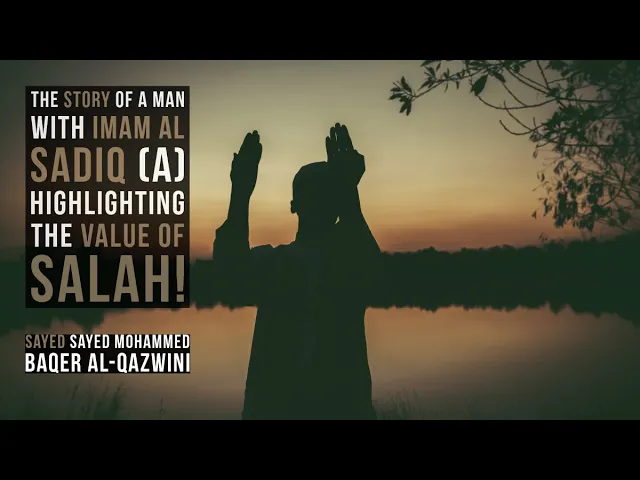
The Story of a man with Imam al-Sadiq (a) highlighting the Value of Salah/Prayer!
Al-Rasoul Islamic Society
0 المشاهدات
·
24/06/11
محاضرات
43:43
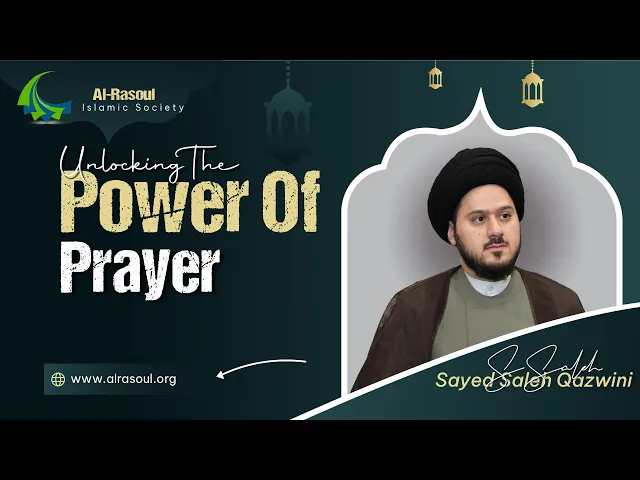
Unlocking the Power of Prayer - Sayed Saleh Al-Qazwini
Al-Rasoul Islamic Society
0 المشاهدات
·
25/03/13
محاضرات
01:06:00
Night 4 | Prayer & Spirituality in the Eyes of Fatima (as) Dr Sayed Ammar Nakshawani, Fatemiyah 2022
Sayed Ammar Nakshawani Official
0 المشاهدات
·
22/12/12
محاضرات
57:08
29. Why don’t the Shia fold their arms in prayer? | Sayed Ammar Nakshawani
Sayed Ammar Nakshawani Official
4 المشاهدات
·
24/05/16
محاضرات
32:58
Sayed Saleh Alqazwini Perfecting Prayer: A Guide to Imoroving Our Worship
Ahlul Bayt Center of Toledo
0 المشاهدات
·
16/04/16
محاضرات
36:27
Sayed Saleh AlQazwini - A Guide to Perfecting Prayer Know the Value of Prayer Part II
Ahlul Bayt Center of Toledo
0 المشاهدات
·
16/04/29
محاضرات
53:04
Sayed Fadi Kassem - Friday Night Program
Ahlul Bayt Center of Toledo
0 المشاهدات
·
16/08/05
محاضرات
04:02
Call to Prayer (Athan) - Brother Mohammed Al-Zein
MYC Media
0 المشاهدات
·
15/10/03
محاضرات
01:07:29
Friday Night Program - Oct 14th, 2016
MYC Media
1 المشاهدات
·
16/10/22
محاضرات
47:42
Friday Night Program - Oct 28th, 2016
MYC Media
0 المشاهدات
·
16/10/29
محاضرات
41:54
MYC LIVE Every Friday at 8 pm
MYC Media
0 المشاهدات
·
16/11/12
محاضرات
01:04:19
Friday Night Program
MYC Media
0 المشاهدات
·
16/12/03
محاضرات
تحميل المزيد
How Shaitan Hacks the Brain - Friday Prayer
0
0
0
المشاهدات
·
25/10/31
شارك
تضمين
MECCA Media
مشتركين
الاشتراك
0
في
محاضرات
أظهر المزيد
Show Transcript
Transcript
[0:04]
A shadow one.
[0:28]
A shadow.
[0:52]
Hey [singing] No Honor.
[1:14]
[singing] >> [singing] >> Amen.
[1:39]
Allah about [singing] what Alhamdulillah.
[2:30]
Alhamdulillah.
[3:09]
Aliuhammed Ali Muhammad Aliuhammed.
[3:54]
My dear brothers and sisters, the human being is meant to live
[4:05]
free and there should be nothing that limits the potential and the
[4:11]
strength and the intellectual power of the human being.
[4:16]
However, in life we face many obstacles.
[4:21]
We face many barriers and challenges that take away our freedom, that
[4:32]
take away our ability to reach our highest potential.
[4:35]
Sometimes these barriers are enslavement.
[4:40]
Another human enslaving another person which is something of the past.
[4:46]
Sometimes these barriers are economic barriers stopping people from reaching their highest
[4:55]
potential.
[4:55]
And there is another type of enslavement.
[4:58]
There's another barrier, another obstacle to human beings reaching their highest potential
[5:07]
and that is bad life habits.
[5:11]
Sometimes one bad habit could stop me from becoming a better person.
[5:19]
And these bad habits, if we don't stop them, if we don't
[5:27]
control them, if we don't watch over them, they could turn into
[5:34]
addictions.
[5:33]
And once a person becomes an addict, once a person has addictions,
[5:41]
then they are totally confined.
[5:43]
Now they could not reach their highest potential in life.
[5:45]
Now this is just as someone else is enslaving you but this
[5:51]
time there's no other person that is enslaving you but you are
[5:55]
enslaving yourself as a result of your addictions as a result of
[6:01]
the choices in life and the habits in life that you have
[6:05]
been bound to and you could never let go of.
[6:07]
And the topic of addiction, my dear brothers and sisters, is a
[6:12]
very relevant topic.
[6:14]
And it is one that probably touches almost every single one of
[6:19]
us.
[6:20]
Either people are dealing themselves with types of addictions or they know
[6:26]
people who are dealing with addictions and dealing with addictions.
[6:30]
When you see people that are dealing with addictions, you see that
[6:33]
they suffer and the people around them all suffer.
[6:37]
And as a result, full communities could be destroyed and damaged as
[6:43]
a result of addiction.
[6:48]
In America, studies show that 21% of or 21 million Americans have
[6:53]
some sort of addiction and only 10% seek treatment.
[6:57]
Now when we talk about addiction, we think of for example drug
[7:02]
addiction.
[7:03]
We think of alcohol addiction which is a serious issue.
[7:06]
It's a very serious issue in the US.
[7:10]
The economy, it cost the US economy $600 billion every year.
[7:17]
The alcohol addictions and the drug addictions, they cause they cost the
[7:20]
economy over $600 billion.
[7:25]
And this is not talking about the death and the diseases and
[7:30]
all of the issues that it brings up.
[7:33]
And even the Muslim community, unfortunately, this was something that you used
[7:39]
to imagine.
[7:40]
This is this happens outside the Muslim community.
[7:41]
This is not a problem that we Muslims have to deal with
[7:47]
because somehow we're immune.
[7:47]
Somehow we are we're immune from any of these problems.
[7:50]
But no, the reality is that these addictions, alcohol addiction, drug addiction,
[7:57]
opioids, they have made it into the Muslim community as well.
[8:04]
And we have seen many Muslim families that are dealing with this
[8:07]
and many of them have paid a very difficult price.
[8:11]
Many of them have lost loved ones.
[8:13]
They've lost their own children.
[8:14]
They've lost their own youth.
[8:15]
You see many mar marriages are on the brink of divorce as
[8:18]
a result of some type of addiction.
[8:23]
And I want to address this topic because this is a very
[8:27]
relevant topic.
[8:28]
And within the Muslim community, within the Middle Eastern Arab community, there
[8:35]
is a sort of um there's a stigma around discussing these topics.
[8:38]
A lot of people they come and they say, "No, no, no.
[8:42]
I would not I would never talk about this.
[8:42]
If I have a problem, if I have a health issue, I'll
[8:45]
go to the doctor.
[8:47]
But if I have a mental health issue, if I have a
[8:49]
an addiction, some people don't want to talk about it.
[8:53]
They want to, you know, brush it under the rug and ignore
[8:57]
this reality.
[8:56]
But it's a very dangerous reality.
[8:59]
It's one that truly needs to be addressed.
[9:02]
So, what is addiction?
[9:08]
First of all, addiction is the inability to let go of bad
[9:12]
habits.
[9:13]
When someone has no control over themselves and they have that yearning
[9:18]
desire that pushes them to do something that controls their mind, they're
[9:23]
always thinking about it.
[9:24]
They're always feeling it.
[9:28]
And worst of all, it's something that they could not let go
[9:31]
of.
[9:32]
And they know that it harms them.
[9:33]
They know that it hurts them in one way or another.
[9:37]
They know that it is not good for them.
[9:39]
But you see they are attached to it.
[9:42]
And when it comes to addiction, my dear brothers and sisters, there
[9:45]
are two types of addictions.
[9:50]
One addiction is the substance addiction.
[9:51]
This is whether it's alcohol, whether it's drugs, opioids.
[9:57]
These are seen as substance addiction.
[10:00]
Meaning they have to take something.
[10:02]
And this is something that is very harmful, very lethal.
[10:07]
It's haram.
[10:06]
It's a type of musker.
[10:09]
It's it's something that intoxicates and any musk any intoxicant is forbidden
[10:14]
from an Islamic perspective.
[10:16]
And there's a second type of addiction which often times we ignore.
[10:22]
Often times we don't even see it as a form of addiction
[10:25]
and that is behavioral addiction.
[10:28]
For example, someone is addicted to their phone screen time.
[10:32]
Another person is addicted to shopping.
[10:36]
another person is addicted to eating.
[10:38]
There are different types of behavioral addiction that are just as bad.
[10:46]
They are just as harmful and destructive to families, to individuals, to
[10:51]
a person's iman, to communities.
[10:52]
There are people right now they talk about addiction to plastic surgery.
[10:55]
This is a form of extremism.
[10:57]
But then there's another type of addiction which is shopping addiction.
[11:02]
You know during a few a few um years ago just after
[11:08]
CO I was dealing with marriage counseling issue between a husband and
[11:14]
wife and the husband said say during co my wife spent $150,000
[11:19]
on Amazon on that's a type of addiction that's a type of
[11:26]
addiction when people have nothing to do they have problems they don't
[11:29]
know how to deal with their problems they think the solution is
[11:32]
going and shopping.
[11:34]
This is one type of addiction.
[11:35]
Some pe people deal with addiction in different ways.
[11:39]
Some people they resort to drugs, some people resort to smoking, some
[11:43]
people resort to eating.
[11:44]
Some people in different ways and what makes it now maybe I
[11:51]
like something.
[11:50]
Does that does that make me an addict?
[11:53]
What makes you the difference between someone who's addicted and someone who
[11:57]
just likes something is when it's always on your mind.
[12:01]
you could never get rid of it when it's always you're always
[12:04]
feeling it, you're always craving it, you always want it.
[12:09]
And number three, which is the worst, is that even though you
[12:12]
know it's harmful for you, you keep going for it.
[12:15]
Even though other people tell you this is something that's not good,
[12:19]
yet you still go for it.
[12:20]
So what are the reasons that people fall in addictions?
[12:24]
And here this is where we resort to Islam.
[12:28]
Islam is not just religion that teaches you come pray five times
[12:34]
a day or gather at the masjid once a week.
[12:39]
No, Islam it builds life habits.
[12:40]
Islam tells me who to befriend, who to deal with, how to
[12:42]
eat, how to drink, how to spend my time.
[12:45]
This is why Islam is more is very important because when we
[12:51]
don't abide by the laws of Islam, we fall into social problem.
[12:53]
We fall into behavioral bad habits.
[12:56]
One of the reasons why people become addicted is number one bad
[13:01]
friends.
[13:01]
When you have a bad friend, a lot of people they say
[13:07]
the first cigarette that I smoked was what?
[13:10]
With who?
[13:08]
With a bad friend.
[13:11]
They're sitting in a group of they're sitting in a group of
[13:13]
friends and then someone comes and tells them here you go.
[13:17]
What?
[13:18]
You're not you can't do it.
[13:19]
And peer pressure.
[13:21]
And this is something that that people fall into addiction.
[13:26]
They fall into bad habits as a result of surrounding themselves with
[13:30]
bad friends because every person has the desire or the need to
[13:34]
fit in to feel a sense of belonging.
[13:36]
But when all my friends are bad friends, when all my friends
[13:42]
are pushing me to do something that is bad for me, what
[13:44]
am I going to do?
[13:47]
I'm going to want to fit in.
[13:48]
So therefore, I'm going to try something.
[13:50]
But then once I try it and if it's an addictive substance
[13:53]
and there are certain things that they themselves are addictive and we'll
[13:57]
talk about that then you fall in the cycle of addiction and
[14:02]
this is number one having bad friends and this is why it's
[14:06]
very very important for us my dear brothers and sisters to be
[14:12]
be very attentive to who we socialize with who we spend time
[14:16]
with who are my friends I could I could work with someone
[14:18]
I could spend end time with someone.
[14:20]
But to truly consider someone a friend, that person has to be
[14:27]
special.
[14:25]
That person has to be unique.
[14:28]
I can't just spend time with any person out there.
[14:30]
This is something that is extremely harmful.
[14:33]
Number one.
[14:36]
Number two, a lot of people they become addicted as a result
[14:41]
of dealing with trauma or dealing with pain.
[14:45]
So when they are rebounding, when they're trying to deal with the
[14:49]
pain or the trauma of something that happened bad in their life,
[14:52]
they begin to do things that get them addicted.
[14:57]
Either it's an opioid.
[14:58]
Right now, studies show that a lot of people that are addicted
[15:04]
to opioids, it's because of what?
[15:05]
It goes back to one injury.
[15:07]
For example, they were playing a sport or a lot of the
[15:13]
war veterans when they they get injured, they the doctors might subscribe
[15:18]
to them, might give them a medicine that's an opioid, a painkiller.
[15:22]
And because it removes the pain, they feel good.
[15:26]
They feel good when it removes the pain.
[15:28]
So they they get addicted to that medicine and they keep getting
[15:32]
addicted and more and more and more until they keep taking more
[15:34]
and more and it ends up hurting themselves.
[15:36]
So this is one type of one reason why people get addicted.
[15:42]
Another reason is sometimes people they have anxiety, they have stress, they
[15:48]
have many problems in their life and how do they resort to
[15:51]
the stress and the anxiety?
[15:52]
they go and they fall into the behavioral um addiction either dealing
[15:58]
with it by eating.
[15:58]
Some people they like to eat when they're under stress.
[16:03]
Some people they maybe don't eat that is also not healthy.
[16:06]
Some people maybe they'll go shopping.
[16:08]
Some people they'll do things that are harmful for them.
[16:13]
So this is number two.
[16:14]
And number three, and this goes back to a chemical in the
[16:23]
brain, the dopamine.
[16:22]
When when you do something that your brain enjoys, that your body
[16:27]
and you you you like, the brain releases a substance called dopamine.
[16:32]
And that it's that feelgood that that that feeling that you really
[16:40]
enjoy.
[16:40]
So when you enjoy that, you keep going and and it's your
[16:42]
body's way and your brain's way of telling you to do something
[16:45]
that you enjoy.
[16:47]
But the problem is when people keep falling in that they keep
[16:50]
going to that.
[16:52]
They keep resorting to that when it's something that is not healthy
[16:55]
for them.
[16:56]
When it's something that is not good for them and this is
[16:58]
why in Islam we have a lot of wajabat.
[17:01]
One of the most important wajabat that we have in the month
[17:08]
of Ramadan is what?
[17:09]
Fasting.
[17:11]
Fasting.
[17:09]
Fasting is one of the ways that we control all that we
[17:16]
consume.
[17:17]
So that I am in control of my body.
[17:20]
I'm in control of my brain.
[17:21]
Not my my my dopamine is in control of me.
[17:24]
Not my body and my desires are in control of me.
[17:27]
And this is why it's something very important.
[17:28]
Right now today I was reading from a Harvard doctor Peter Grinspoon.
[17:35]
He talks about the idea of a dopamine fast.
[17:40]
What does that mean?
[17:40]
That means don't give your desires what they want.
[17:44]
Because if I can continue to give my desires what they want,
[17:49]
every time they ask, every time my naps, my soul says I
[17:51]
I crave this, I go and I give it.
[17:55]
My body says I want this, I go and give it right
[17:56]
away.
[17:57]
What does that mean?
[18:00]
That means I'm training myself to be addicted and training my brain
[18:04]
and my mind and everything to go immediately follow the desires.
[18:08]
And this is something that's not healthy.
[18:10]
This is why we have one full month in the Islamic calendar.
[18:16]
It's a month of self-control.
[18:16]
This is so I train myself.
[18:18]
So I teach myself that I don't give my desires everything that
[18:23]
it wants at all times.
[18:24]
And Allah says this in the Quran.
[18:34]
Having having that fear of the of Allah, fearing God is one.
[18:41]
But then there's something else that's very important and that is that
[18:46]
means I cannot give my naps, my desire, everything that it yearns,
[18:49]
everything that it craves at all times.
[18:53]
And this is how great people become great.
[18:57]
You think couldn't live a very wealthy life.
[19:02]
You think couldn't live have lived like a king.
[19:03]
He had the option to live like a king.
[19:06]
But he decided to live a life where he controls his ns.
[19:12]
You think he didn't have the intellect to outfool everyone and become
[19:17]
the leader?
[19:17]
Of course he could have.
[19:20]
He had the strength and he had the history and he had
[19:23]
the the the intellect to do so.
[19:24]
But he did not do that.
[19:28]
He saw other people taking power.
[19:30]
He could have he definitely could have went and with force taken
[19:34]
power or through using tricks that like that they did.
[19:39]
But did not do that.
[19:41]
Why?
[19:42]
Because understands that the naps should be disciplined.
[19:45]
The nuffs should be under control.
[19:48]
If it gets out of control then it becomes disastrous and it
[19:53]
becomes something that is bad.
[19:54]
This is why in one of the most beautiful letters from and
[20:01]
this should be analyzed and studied in our lives.
[20:03]
Every single one of us should analyze this and study this.
[20:08]
And this is the letter that wrote to his governor in Basra.
[20:12]
He heard that his governor in Basra went and he was invited
[20:18]
and he went and he joined a a gathering where the rich
[20:21]
people are sitting and eating and he writes him a letter.
[20:26]
Imagine this the khalif the khalifa of the Muslims.
[20:27]
He writes a letter to his governor admonishing him and he tells
[20:33]
him in a part of that letter in the middle he says
[20:44]
He says, "I control my naps so that on the day of
[20:50]
judgment my naps could be safe, my soul could be safe." And
[20:57]
then he says, "Today, Hawaii.
[21:10]
He says, "If I wanted to have the best food, the best
[21:14]
clothes, everything, I could do it.
[21:16]
If I wanted to, I could do it." Don't think that can't
[21:20]
do that.
[21:22]
But I choose to live that aesthetic lifestyle.
[21:23]
And this is why it's very important, my dear brothers and sisters,
[21:27]
to control our naps, to control our desires.
[21:30]
Even if the habit is good, even if it's you say this
[21:35]
is harmless, I'm I'm doing something, it's harmless.
[21:37]
What's the harm that could come out of it?
[21:39]
If it goes overboard, then it becomes harmful.
[21:42]
Then it becomes an addiction.
[21:43]
So this is why we have to control our naps.
[21:54]
[groaning] Amen.
[22:10]
Alhamdulillah.
[22:13]
Alhamdulillah.
[22:40]
Ali Muhammad Aliham Ali Muhammad come Hussein Hussein Muhammad Ali Muhammad, >>
[23:44]
my dear brothers and sisters, we are talking about dangers of addiction
[23:48]
and How addiction begins as one habit but then if it's not
[23:58]
under control, if it's not monitored, if it's not limited, then it
[24:02]
could get out of control and then it becomes an addiction and
[24:06]
it becomes something that is very destructive.
[24:08]
Destructive to families, destructive to you as an individual, destructive to communities.
[24:14]
And you see the way addiction works, it's exactly the way Shayan
[24:24]
works in our nuffs and in our desires.
[24:27]
And Shayan, he also and his army of jin, they have a
[24:37]
duty and an objective to bring us out of the path to
[24:43]
enslave us to limit the human potential.
[24:46]
And you see the same way addiction works on the brain, Shan
[24:50]
works in that very same way.
[24:56]
He hacks the brain and he fools you.
[24:56]
doesn't make you do that which is haram.
[24:59]
But Shayan does things.
[25:03]
He whispers.
[25:02]
This is why we sayan doesn't force you to do the wrong.
[25:17]
Puts thoughts and puts ideas in your head that gets you to
[25:20]
see the wrong as if it's something right.
[25:23]
Gets you to see the wrong.
[25:24]
something that you say I would never do but it makes it
[25:29]
be something that is acceptable and that is how the brain of
[25:31]
an addict works as well.
[25:32]
Right now, if someone who's not addicted, you come and you give
[25:36]
them something that's harmful to them, a substance, a drug, they'll say,
[25:40]
"No way.
[25:39]
I will never do that." But then the addict, they'll come and
[25:43]
they'll try to use these loopholes and they'll try to justify, they'll
[25:47]
try to make it sound like it's something that's okay.
[25:50]
And you see, this is exactly the tactic of Shaitan.
[25:52]
I'm going to mention some of the tactics of Shayan and you
[25:57]
see how they are very relating and they're very close to the
[26:01]
way a addiction works on the human brain.
[26:04]
Number one, there are five similarities.
[26:07]
Number one, an addict or a substance either substance or behavior addiction
[26:13]
is afraid to let go.
[26:14]
There are two.
[26:17]
The life of an addict revolves around revolves around that which is
[26:22]
wrong.
[26:22]
And you see this is exactly the way Shaitan works.
[26:28]
When I'm doing something wrong, Shan he comes and he sparks fear
[26:32]
in the mind and in the hearts of people so that they
[26:38]
are afraid to let go of that bad lifestyle.
[26:42]
They're afraid to let go of the haram.
[26:45]
For example, you tell them give they say no no no.
[26:46]
I'm afraid I'm going to get poor.
[26:47]
The the economy is not doing well.
[26:51]
I have to save up money.
[26:52]
You come and you tell them, for example, in public, don't be
[26:55]
embarrassed that you're a Muslim.
[26:56]
They say, "No, no, no.
[26:58]
I'm I'm I'm going to hide that.
[27:00]
I'm afraid." This is exactly what Shaitan does.
[27:04]
And Allah says in the Quran, he comes and he brings fear
[27:17]
to people.
[27:15]
fear of poverty, fear of loss of income, fear of loss of
[27:21]
comfort.
[27:22]
And this is how an addict's brain work that a person who's
[27:25]
addicted, they say, "No, I'm afraid to let go because if I
[27:30]
let go of that thing that I'm addicted to, then my life
[27:32]
is going to become miserable." So this is one.
[27:37]
Number two, the bad habit c uh he shan what he does
[27:44]
is he places bad habits in our lives and these bad habits
[27:47]
they come and they cause division within family within friends within communities
[27:51]
and this is exactly how an addiction works right now you find
[27:56]
within one family if one person is suffering from an addiction you
[28:02]
see this brings divorce this brings pain this brings so much suffering
[28:05]
I have done many a lot of counseling of people that whether
[28:08]
the husband is addicted to something or the wife is addicted or
[28:13]
one of the children is addicted to something it ends up destroying
[28:16]
the whole family.
[28:16]
There's no more happy moments in the family because one person is
[28:21]
suffering.
[28:19]
How could everyone else be happy?
[28:25]
And Allah says in the Quran He says Shan causes he causes
[28:45]
animosity and hatred between loved ones through what?
[28:47]
Through gambling.
[28:49]
One one thing that a lot of people are addicted to.
[28:51]
And another thing is alcohol.
[28:56]
And by the way, today gambling has become something that is very
[29:00]
easy.
[29:01]
Right now, you see all these ads, they pop up.
[29:03]
Bet.
[29:04]
You you could bet right now.
[29:05]
Betting on your phone.
[29:05]
You don't have to go to Las Vegas to gamble anymore.
[29:08]
Now you could you're sitting on your couch and you could gamble
[29:11]
from your home.
[29:13]
And there are so many apps and games that are made to
[29:18]
be an addiction and it's for gambling.
[29:19]
So this is something that's haram and it ends up causing problems.
[29:23]
ends up where you see one person ends up spending the life
[29:25]
savings of a whole family and then this causes divorce, this causes
[29:30]
pain, this causes suffering.
[29:31]
And Allah says this in the Quran with alcohol, with intoxicant and
[29:40]
through gambling and he pushes you away from the salah.
[29:44]
And this is what an addict does.
[29:46]
They go, they fall in addiction and then you see that time
[29:50]
has passed and they have not prayed.
[29:55]
They have not done their waj.
[29:56]
Number three, an addict when they're addicted to something, do they see
[30:00]
it as something bad?
[30:00]
No.
[30:00]
They try to beautify it.
[30:04]
They try to justify it.
[30:05]
And this is exactly what Shaitan does.
[30:07]
Shaitan, he doesn't tell you go and commit that horrible sin.
[30:10]
He goes and he tells you that's not even something horrible.
[30:14]
That's something that's beautiful.
[30:16]
That's something that's nice.
[30:17]
And Allah says in the Quran, Shan beautifies that ugly thing.
[30:27]
And this is how the brain of an addict works as well.
[30:30]
They beautify that which is very bad.
[30:32]
And number four, addicts are controlled and they forget their duties.
[30:36]
They end up forgetting their responsibilities.
[30:38]
Why is addiction bad?
[30:39]
Because I end up focusing on one thing and I ignore everything
[30:45]
else.
[30:44]
And this is exactly what Shaitan does to a person.
[30:47]
You see a person who's doing the haram and they have that
[30:52]
haram lifestyle, they end up forgetting that which they have to do.
[30:58]
Shayan makes you forget.
[31:01]
Just like an addict, they end up forgetting their responsibilities and their
[31:06]
duties.
[31:07]
And number five, addicts give themselves false promises.
[31:09]
They keep saying, "Oh, tomorrow I'm going to be a better person.
[31:12]
I'm going to stop.
[31:14]
Tomorrow I'm not going to do this.
[31:15]
Yes, just one more time and then I'm going to stop." And
[31:17]
this is exactly howan operates.
[31:30]
Shaitan gives false promises.
[31:33]
This is why we should not obey and we should not obey
[31:35]
anything that brings us away from Allah subhanahu wa ta'ala.
[31:41]
So what is the solution?
[31:42]
Number one, if someone is suffering from a bad habit, acknowledge it
[31:48]
and deal with it before it becomes an addiction.
[31:50]
Acknowledge the bad because once it becomes an addiction, then it gets
[31:55]
out of out of hand.
[31:59]
Number two, seeking professional help.
[32:00]
It's not it's not something that's wrong to seek professional help when
[32:05]
you're in need.
[32:05]
Whether it's a mental health issue or it's a physical health issue,
[32:10]
we have to seek mental health when we are in need and
[32:13]
resorting to places that help help u you grow in your faith
[32:20]
and deal with your challenges.
[32:20]
For example, coming to the masjid, socializing with good friends.
[32:24]
These are all good habits to build because to stop a bad
[32:29]
habit, to clear my heart of something that is bad, I need
[32:32]
to put something that's good in my heart.
[32:34]
I need to replace it.
[32:36]
I can't just empty and then there's going to be a void
[32:39]
in your life.
[32:40]
You have to replace the bad with something that's good.
[32:45]
And that is how building good habits and spending time with good
[32:49]
people.
[32:50]
And another very good one is to um establish a healthy lifestyle,
[32:55]
eating healthy, dealing with people, um spending time with people that are
[33:00]
healthy, people that are good, people that have a good impact on
[33:03]
you.
[33:04]
This is all something that is good.
[33:06]
We ask Allah subhanahu wa ta'ala to give us the strength and
[33:12]
the iman to deal with the vices in our lives to deal
[33:14]
with the challenges to deal with anything that brings us away from
[33:19]
Allah subhanahu wa ta'ala and limits us from reaching our highest potential.
[33:23]
My dear brothers and sisters, I want to remind everyone we've been
[33:28]
doing and prayer every night, Monday through Friday.
[33:32]
And I encourage everyone to join.
[33:34]
I know the time is getting a little bit sooner, but if
[33:36]
you're able to, I know most most people either work from home
[33:42]
or most people are able to.
[33:43]
The of is worth it, my dear brothers and sisters.
[33:48]
In between the salah we do either on Mondays we do on
[33:50]
Tuesdays on Wednesdays we do and this is something that is very
[33:57]
beneficial for you as an individual for your family to try to
[34:00]
come and attend.
[34:03]
Tonight we have a family event program.
[34:04]
I know tonight a lot of the young people want to go
[34:07]
trick-or-treating.
[34:07]
So if it's about the candy, we're going to have candy here
[34:10]
inshallah.
[34:11]
And we're going to spend time in a healthy atmosphere, in a
[34:19]
healthy environment.
[34:16]
And this is how we get rid of bad habits and we
[34:23]
don't allow bad habits to control us.
[34:25]
And we spend time in good places, inshallah.
[34:28]
And tomorrow night, inshallah, the weekend school is also doing a movie
[34:33]
night and this is open for everyone to come as well.
[34:38]
Uh also inshallah after salah we will begin.
[34:40]
We ask Allah subhanahu wa ta'ala to bless you all and we
[34:45]
ask Allah subhanahu wa ta'ala to accept from us.
[34:47]
Alhamdulillah for Amen.
[35:31]
Allah ya Allahbarbuhammed Samuhammed.
0 تعليقات
sort
ترتيب حسب
أعلى تعليقات
أحدث تعليقات
ينشر
التالي
تشغيل تلقائي
22:30
Imam's Narration on the last Friday of Sha'ban - Sheikh Fazle Abbas Datoo - 3rd June 2016
Wessex Jamaat
4 المشاهدات
·
18/10/25
محاضرات
01:41:15
Shaitan: A Look At Our Greatest Enemy | Sayed Ali Moussawi | English Program | Night 3
The Ashura Project
1 المشاهدات
·
24/07/09
محاضرات
38:01
Shaitan: A Look At Our Greatest Enemy | Sayed Ali Moussawi | English Program | Night 3
The Ashura Project
4 المشاهدات
·
24/07/11
محاضرات
58:37
Night 2 | FAJR : THE NEGLECTED PRAYER | Sheikh Mohammed Al-Hilli | Muharram 2020
Sheikh Mohammed Al-Hilli
2 المشاهدات
·
24/04/17
محاضرات
01:11:54
Night 6 | SHAITAN : THE DEVIL ONLINE | Sheikh Mohammed Al-Hilli | Muharram 2017
Sheikh Mohammed Al-Hilli
2 المشاهدات
·
24/05/28
محاضرات
07:54
How to Perform Salat Al‑Mayyit (Prayer over the Deceased) | Sheikh Mohammed Al-Hilli
Sheikh Mohammed Al-Hilli
1 المشاهدات
·
24/11/05
محاضرات
01:03:44
The Importance of Prayer & The Islamic Principal of Surpassing & Completion - Sayed Jawad Qazwini
Al-Rasoul Islamic Society
1 المشاهدات
·
15/10/17
محاضرات
48:00
Prayer Series (4): Which Prayers are not Accepted? - Sayed Mohammed Baqer Al-Qazwini
Al-Rasoul Islamic Society
0 المشاهدات
·
17/06/22
محاضرات
02:03
The Story of a man with Imam al-Sadiq (a) highlighting the Value of Salah/Prayer!
Al-Rasoul Islamic Society
0 المشاهدات
·
24/06/11
محاضرات
43:43
Unlocking the Power of Prayer - Sayed Saleh Al-Qazwini
Al-Rasoul Islamic Society
0 المشاهدات
·
25/03/13
محاضرات
01:06:00
Night 4 | Prayer & Spirituality in the Eyes of Fatima (as) Dr Sayed Ammar Nakshawani, Fatemiyah 2022
Sayed Ammar Nakshawani Official
0 المشاهدات
·
22/12/12
محاضرات
57:08
29. Why don’t the Shia fold their arms in prayer? | Sayed Ammar Nakshawani
Sayed Ammar Nakshawani Official
4 المشاهدات
·
24/05/16
محاضرات
32:58
Sayed Saleh Alqazwini Perfecting Prayer: A Guide to Imoroving Our Worship
Ahlul Bayt Center of Toledo
0 المشاهدات
·
16/04/16
محاضرات
36:27
Sayed Saleh AlQazwini - A Guide to Perfecting Prayer Know the Value of Prayer Part II
Ahlul Bayt Center of Toledo
0 المشاهدات
·
16/04/29
محاضرات
53:04
Sayed Fadi Kassem - Friday Night Program
Ahlul Bayt Center of Toledo
0 المشاهدات
·
16/08/05
محاضرات
04:02
Call to Prayer (Athan) - Brother Mohammed Al-Zein
MYC Media
0 المشاهدات
·
15/10/03
محاضرات
01:07:29
Friday Night Program - Oct 14th, 2016
MYC Media
1 المشاهدات
·
16/10/22
محاضرات
47:42
Friday Night Program - Oct 28th, 2016
MYC Media
0 المشاهدات
·
16/10/29
محاضرات
41:54
MYC LIVE Every Friday at 8 pm
MYC Media
0 المشاهدات
·
16/11/12
محاضرات
01:04:19
Friday Night Program
MYC Media
0 المشاهدات
·
16/12/03
محاضرات
شارك
تضمين
الصفحة الرئيسية
أحدث مقاطع الفيديو
الشائع
أهم مقاطع الفيديو
القنوات الشعبية
مقاطع قصيرة
استكشاف المزيد
يساعد
اختيار طريقة الدفع
لغة
English
Arabic
Dutch
الدفع بالمحفظة
تسجيل الدخول
اسم المستخدم
كلمه السر
نسيت رقمك السري؟
تسجيل الدخول مع
جديد هنا؟
تسجيل
سجل!
اسم المستخدم
عنوان البريد الإلكتروني
كلمه السر
تأكيد كلمة المرور
ذكر
إناثا
عن طريق إنشاء حسابك ، فإنك توافق على
تعليمات الاستخدام
&
سياسة الخصوصية
هل لديك حساب بالفعل؟
تسجيل الدخول