
Up next
6 Views · 25/03/24
6 Views · 12/05/27
2 Views · 24/02/27
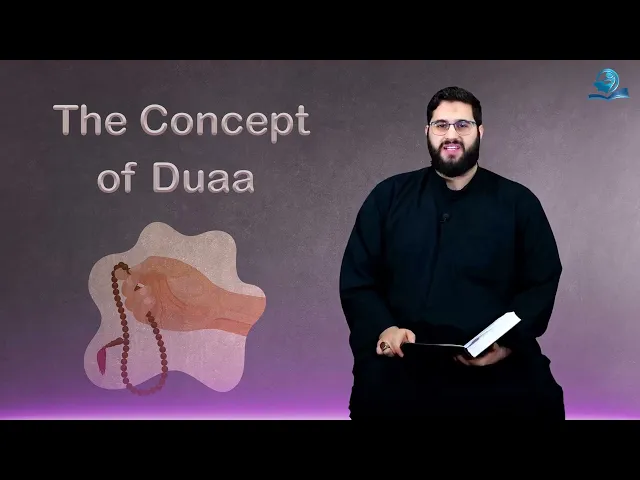
ُExplaining selected excerpts from duaa Abi Hamza AlThumali- Part 9 Hamam Nassereddine
0
0
3 Views·
26/03/12
In
Lectures
These are English Ramadani lectures that shed light on selected passages from Duaa Abi Hamzi alThumali and the lessons that we learn from those passages.
Show more
Transcript
[0:01]regime.
[0:06]Alhamdulillah.
[0:33]Brothers and sisters, May Allah tala accept the deeds that you have
[0:43]performed or shall perform in the holy month of Ramadan.
[0:56]The supplications of are marvelous supplications that teach the human being how
[1:08]to properly address Allah subhanahu wa'ta'ala.
[1:11]For Allah is the king of all kings, the ruler of the
[1:20]universe, the creator and the lord of the world subhanahu wa ta'ala.
[1:25]Which means that there are adab there are specific morals and or
[1:31]ethics that the human being should abide by or uphold when addressing
[1:38]Allah subhanahu wa'ta'ala.
[1:39]Thus you find the imams presenting a collection of supplications that teach
[1:48]us how to address Allah subhanahu wa ta'ala.
[1:54]One of which being dua Hamza the masterpiece of Aladam.
[1:59]when looking into dua and we've shed light throughout the days of
[2:05]shah Ramadan and the nights of shah Ramadan on certain segments of
[2:10]this dua when looking into dua we find that the im speaks
[2:16]to Allah subhanahu wa ta'ala in a fascinating manner as he touches
[2:23]upon various topics at times the imam will shed light on Allah's
[2:27]oneness at times the imam will shed light on the prophethood of
[2:32]his grandfather.
[2:34]Sometimes he'll shed light on the stages of the hereafter and sometimes
[2:40]he will take us to other topics.
[2:42]You find the imam speaking to Allah in a fascinating manner and
[2:48]at the same time you find him giving us lessons pertaining to
[2:53]beliefs or practices or morals or other topics.
[2:58]At the same time, the im teaches us what to ask from
[3:07]Allah.
[3:05]You see, as a fallible human being, I understand that I have
[3:12]needs.
[3:13]But do I know all of my needs?
[3:16]If I think between me and myself, I'll understand that there are
[3:20]some needs that we are oblivious of.
[3:23]Yes, we do pay attention to certain needs, especially physical or worldly
[3:29]needs.
[3:30]Hence, we'll ask Allah subhana wa ta'ala to fulfill such needs.
[3:34]But those aren't the only needs that the human being should ask
[3:41]from Allah subhanahu wa ta'ala.
[3:43]In better terms, they're not the only needs that we should ask
[3:48]Allah to fulfill.
[3:51]There's a whole list of needs, spiritual needs, physical needs, worldly needs,
[3:57]religious needs, and last but not least, needs pertaining to the hereafter.
[4:02]Thus you find our imams teaching us what to ask from Allah
[4:08]in dua after speaking to Allahawel and shedding light on the hereafter
[4:17]and oned God's oneness and other topics you find near the end
[4:21]of the supplication you find the imam making many requests asking Allah
[4:27]subhana wa ta'ala for the fulfillment of many needs.
[4:32]needs.
[4:33]Here ma is teaching us all to make such requests.
[4:36]We need to ask Allahel to fulfill those needs.
[4:42]And so he says for example Allah that is a very important
[4:50]need.
[4:51]He says ya Allah make me a person who has what?
[4:52]Spiritual insight pertaining to his religion.
[4:56]meaning a person who understands why he's following the religion of allahel
[5:04]why he's following the religion of truth he understands proofs and evidence
[5:13]that confirm the religion of allahel at the same time he understands
[5:18]proofs and evidence that that prove that the path of falsehood is
[5:26]a path of falsehood is a path that should not be followed.
[5:32]Spiritual insight having spiritual insight pertaining to religion is a very important
[5:44]matter.
[5:40]Thus the imam makes this request.
[5:47][clears throat] He says ya Allah make me a person who understands
[5:53]your laws.
[5:55]He understands the laws of Allah subhana wa ta'ala.
[6:01]He understands what is required of him.
[6:04]And on top of that, he also understands certain philosophies pertaining to
[6:09]the laws of God.
[6:10]The imam continues making his requests until he says, "Oh Allah, grant
[6:21]me two portions or say two forms of mercy." Now when we
[6:27]read [clears throat] we understand that the Imam is teaching us to
[6:32]ask Allah for two forms of mercy but we don't know what
[6:35]these forms of mercy are.
[6:39]He simply said what could these [music] two forms or portions of
[6:46]mercy be?
[6:48]There are many possibilities.
[6:49]However, if we want to gain understanding regarding the Imam's word, then
[6:57]we must make a connection between his word and a Quranic verse
[7:04]which said the exact same word.
[7:07]Allahel mentioned the word.
[7:10]He mentioned that word in Quran and here I'll tell you if
[7:16]we want to enhance our understanding of the words of it is
[7:23]essential to make connections between the words of the imams and the
[7:27]words of Allah subhanahu wa ta'ala.
[7:31]The more connections you make between and the narrations of the greater
[7:36]your understanding of the words of the imams will be.
[7:40]says in, "Oh Allah, grant me two portions or two forms of
[7:47]your mercy." But then we find the Quran mentioning where in when
[7:57]Allah says near the end of the surah, Let us take a
[8:13]few minutes to understand the words of Allah subhanahaala.
[8:15]At first, allahel says, "Oh you who believe, fear Allah," meaning obey
[8:26]Allah, avoid his disobedience and believe in his messenger.
[8:33]Here a question comes to mind.
[8:36]Allah tala is addressing the believers.
[8:37]So why is he telling them to believe in his messenger?
[8:41]Don't they already believe in his messenger?
[8:44]And if they do, then why does he command them to believe
[8:51]in him once again?
[8:51]Here we have multiple answers.
[8:53]One answer says Allah is addressing the people of the book.
[9:00]When he says he's addressing the people of the book, the Jews
[9:04]and the Christians because they believed in Allah and they believed in
[9:08]who?
[9:09]In the previous prophets.
[9:12]Now they were commanded by Allah to believe in the seal of
[9:18]the prophets peace be upon him and his family and to complete
[9:21]their faith through that belief.
[9:23]This is one answer.
[9:28]But this answer is somewhat problematic and in fact refuted by certain
[9:35]by certain scholars who explain Quran.
[9:37]And if we look at the narrations of we find that the
[9:43]the narrations tell us the verse is addressing the Muslim.
[9:47]When Allah says he's addressing the Muslims and so we go to
[9:55]the second answer.
[9:57]The second answer says Allahal commands the Muslims the Muslims to believe
[10:06]in although they already believe in him apparently because allahel wants to
[10:15]take the faith of the Muslim to a new level to a
[10:18]higher level.
[10:19]A person sometimes my friends will believe in the prophet.
[10:23]He will announce his belief in the prophet through his tongue and
[10:28]perhaps he will believe in him in his heart.
[10:32]But is that enough?
[10:32]Is it enough to announce our faith and to believe in the
[10:41]prophet and through our hearts?
[10:43]I believe the answer is very clear.
[10:46]It is not enough.
[10:49]faith.
[10:47]True faith consists of three main components.
[10:50]And we mentioned this last week.
[10:53]I believe true faith consists of three main components.
[10:58]Number one, words.
[10:59]Number two, beliefs.
[11:02]And number three, actions.
[11:03]A true believer will believe in the truth through his heart.
[11:07]He will announce his belief through his tongue and he will confirm
[11:13]his beliefs through his actions.
[11:16]meaning through the good deeds that he performs.
[11:20]And so some Muslim in fact many Muslim believed or believe in
[11:25]Allah through their tongue.
[11:26]They announce their faith in the prophet when they say [clears throat]
[11:46]Others will believe in the prophet through their tongues and also through
[11:50]their hearts, but they might not confirm their belief through actions.
[11:58]And so the Quran says meaning, "Oh Muslims, obey the prophet sallallah.aii
[12:06]and confirm your belief in the prophet through what?" through various forms
[12:16]of good deeds through submission to which means when I come forward
[12:26]and obey Allah and Allah I am doing what I am I
[12:28]am presenting a form of im I'm presenting a form of belief
[12:35]how could my actions be a form of belief how could for
[12:39]example prayer fasting paying alms, treating my parents well, etc.
[12:46]be a form of belief because you are translating your iman, the
[12:51]iman that lies in your heart into what?
[12:54]Into actions.
[12:55]So when Allah says he's commanding the Muslims to believe in Allah
[13:03]in the sense that they have to submit to the commands of
[13:08]the holy prophet.
[13:09]If they do that they will receive three gifts from Allah.
[13:14]Allah mentions that you will receive three gifts.
[13:19]Number one, the word in Arabic literally means Allah is saying firstly
[13:33]if you do what I'm telling you in the verse I will
[13:38]give you two portions or say two forms of mercy.
[13:44]The question is what are these two forms of mercy?
[13:48]As usual, we have multiple interpretations and perhaps allahel means to convey
[13:53]all of the meanings that you shall hear.
[13:57]One interpretation says these two forms of mercy are two types of
[14:03]rewards.
[14:03]The Muslim who implements the commands of Allah subhanahu wa ta'ala will
[14:08]receive a reward for announcing his belief in Allah sallallahu alaihi wasallam
[14:16]and he will receive a reward for what?
[14:21]For confirming his belief through actions.
[14:24]So he'll receive one reward pertaining to announcing his belief or believing
[14:30]in Allah through his heart and he'll receive a reward for confirming
[14:34]his belief through his actions.
[14:36]That's one interpretation.
[14:39]A second interpretation tells us Allah tala will give these people two
[14:45]rewards.
[14:44]One reward pertains to their belief in all of the previous prophets.
[14:51]You know, as Muslims, we have to believe in what?
[14:56]All of the NB.
[14:55]Those that we know and those that we do not know.
[15:00]There's no such thing as a Muslim who disbelieves in the prophethood
[15:04]of any prophet.
[15:06]You won't find a Muslim who tells you, for example, I believe
[15:10]in MS, but I disbelieve in Dud.
[15:12]I believe in Dood, but I disbelieve in in Isa.
[15:17]I believe in Isa, but I disbelieve in Loot.
[15:20]A Muslim will believe in all of the prophets of God subhana
[15:23]wa ta'ala.
[15:24]So these people will receive a reward pertaining to their belief in
[15:29]all of the previous prophets and a reward pertaining to their belief
[15:35]in >> this is a second interpretation.
[15:48]A third one says the two the two portions or forms of
[15:56]mercy mentioned in the verse are actually two two good things or
[16:00]two good states.
[16:03]One hass is given to the human being in this world and
[16:05]one is given to him in the hereafter which reminds us of
[16:11]the verse which says Allah tala teaches us to say our lord
[16:18]grant us what?
[16:19]Grant us a good thing or a good state in this world
[16:24]and a good thing or a good state in the hereafter.
[16:26]So these two good things or good states are the they are
[16:32]the two forms of mercy mentioned in the verse.
[16:36]There's a fourth interpretation which I will leave for the end of
[16:42]the lecture inshalla.
[16:45]Up until now we understand that the word has what has multiple
[16:51]interpretations.
[16:50]There are different forms of mercy that Allah subhana wa ta'ala might
[16:56]be referring to and perhaps Allah meant to convey all of the
[17:02]meanings that you heard.
[17:01]Hence when we are taught by Imad to say in dua, "Oh
[17:10]Allah, grant us two portions or two forms of your mercy." We
[17:16]can intend to ask Allah for all of the forms of mercy
[17:18]that you just heard.
[17:25]Then the verse says if you abide by the commands of Allah,
[17:32]if you're pious and you believe in the prophet sallallahu alaihi wasallam,
[17:37]what will happen?
[17:36]Allah tala will give you a he will give you a kind
[17:42]of light and he will be walking with this light which means
[17:45]this individual the person who's obeying Allah will be given guidance he'll
[17:52]be given guidance in ad and will be given light in the
[17:58]hereafter on the day of judgment the day of judgment my friends
[18:00]based on narrations will be a dark day people will be afflicted
[18:06]with darknesses is and they'll be in need of what?
[18:08]In need of light.
[18:11]The believers who are righteous the likes of you inshallah will have
[18:16]light which will guide them to heaven inshallah subhanahu wa ta'ala.
[18:21]And so these people mentioned in the verse will be given light
[18:26]in this world meaning guidance.
[18:28]still be guided when other people are what confused and they will
[18:33]be given light in the hereafter on the day of judgment.
[18:38]Allah says and Allah will forgive you and Allah is the all
[18:52]forgiving the all merciful.
[18:50]So we understand that when when teaches us to ask Allah for
[19:04]for two portions or two forms of mercy.
[19:09]Two portions or forms of mercy.
[19:13]Perhaps the imatam is referring to all of the meanings that you
[19:20]heard as we were explaining the holy ayah.
[19:24]Not to forget there is another interpretation a fourth interpretation pertaining to
[19:31]and that interpretation is based on a hadith by imat actually multiple
[19:41]hadith multiple narrations by imaff which say the two portions or the
[19:50]two forms of mercy mentioned in the ayah are alan Hussein Hussein
[20:01]are two forms of mercy.
[20:06]They were embodiment of mercy.
[20:08]Hence, you realize in dua when the Imam wants to teach us
[20:14]how to ask Allah to send his blessings upon he says Send
[20:23]your blessings upon the two imams of guidance.
[20:27]And the two the mercy subtain in this context means what?
[20:34]Subtain has multiple meanings.
[20:38]One of which is grandson.
[20:40]So perhaps the imam is saying send your blessings upon the grandsons
[20:44]of Allah because Allah was the embodiment of Allah's mercy sallallam.
[20:50]Then again another meaning of is a nation.
[20:54]One of the meanings of the word is a nation and Hass
[21:00]and Hussein were truly nations.
[21:00]One might tell me weren't they two men, two individuals?
[21:07]They were.
[21:06]They were two individuals but each man's presence equated the presence of
[21:14]a whole nation.
[21:14]So they were what?
[21:18]Two nations of mercy.
[21:20]When we say Allah grant us two portions or two forms of
[21:31]mercy, we're taught to ask Allahawel to make us followers of Alass
[21:38]Hussein.
[21:40]This point becomes clear when we understand that Al Hassan Hussein are
[21:45]two embodiment of mercy sent to mankind.
[21:49]But when someone disbelieves in Al Hassan Hussein, when someone refrains from
[21:58]following the guidance of Al Hassan Hussein, although he might benefit, in
[22:07]fact he will benefit from their presence in this world, his benefit,
[22:12]the benefit he draws will be quite minimal and he will not
[22:17]benefit from them in the hereafter.
[22:22]Why?
[22:20]Because he went against them.
[22:24]He went against the imams.
[22:24]He went he went against their guidance.
[22:28]Hence, he will not be saved by the imams.
[22:31]Whereas the person who follows and believes the person who believes in
[22:37]alassim and follows their guidance this person will greatly benefit from alass
[22:46]from the two embodiment of mercy in this world and the next.
[22:54]Yes, both were embodiment of mercy and both presented vital lessons that
[23:00]we are in deep need of.
[23:02]Since we're living the birth anniversary of Al Hassan Alam, allow me
[23:06]for a few minutes before we go to the Arabic lecture to
[23:11]shed a little bit of light on a particular lesson that I
[23:16]iman taught us and that is the lesson pertaining to generosity.
[23:23]I believe all of you know that the imam is known as
[23:26]the generous man amongst.
[23:29]Now all of them were all of them were what?
[23:34]Were generous and beyond generous.
[23:36]But the generosity of imat was very apparent.
[23:42]The generosity of Im Hassan Alisatam was manifested by Al Hassan in
[23:50]a great manner especially during the days of Muawa ibn Abi Sufyan
[23:57]when Muawia became the political leader the political ruler of the Muslims.
[24:03]During that time, Imam al- Hassan would continue to fulfill the needs
[24:11]of the needy, to fulfill the needs of the believers and to
[24:16]grant them large amounts of money when they would come to the
[24:21]imam and seek help from the Imam.
[24:25]In fact, Imm Hassan at times would give people he would give
[24:34]them grants.
[24:36]He would give them large amounts of wealth and or money although
[24:40]he would not be asked by the people for help.
[24:45]So he was jawad and he was Kharim.
[24:47]Jawad in the sense that he gives without being asked and Kharim
[24:51]in the sense that he gives after he is asked.
[24:56]This is a vital lesson that Hassan teaches us.
[24:59]My friends in this day and age, we find that the Shia
[25:06]of living difficult states, especially our brothers and sisters in the Middle
[25:17]East or in certain parts of the Middle East.
[25:18]Hence if we want to if we want to draw more benefit
[25:24]from Im Hassan the birth anniversary of Massatam let us take this
[25:32]lesson with us tonight the lesson of generosity.
[25:35]Many and as we speak right now have been displaced.
[25:39]Many are in deep need of financial assistance.
[25:47]Hence, let us follow the lead of Al Hassan and give whatever
[25:53]we're able to give.
[25:56]If one is not able to give any wealth because he himself
[26:00]is going through financial difficulty, the least he can do is lend
[26:04]a hand if possible or at least perform a dua and ask
[26:06]Allah tala to relieve them from their distress.
[26:10]As for those who are able to give, let them give whatever
[26:13]they're able to.
[26:15]If one is able to give a dollar, let let him give
[26:18]a dollar.
[26:19]If one is able to give more, he'll give more.
[26:20]Allah says at the end of the day, meaning Allah will not
[26:28]command a soul to perform a deed that exceeds its spiritual capacity.
[26:33]Its capacity alam was known for giving.
[26:38]One day, I'll conclude the lecture with the story.
[26:43]A man came to the imatam with a complaint.
[26:46]Im Hass was approached by a man.
[26:54]The man told the Imam, "I ask you for the sake of
[27:02]the one who bestowed these immense blessings on you to judge between
[27:08]me and my opponent.
[27:11]I have an opponent Ya Muhammad and I want you to judge
[27:16]between us.
[27:15]I want you to retrieve my right from this individual for he
[27:24]is he is an opponent that is extremely oppressive.
[27:29]And this individual, this opponent, the so-called opponent does not revere the
[27:35]elderly man, nor does he have mercy for the young one.
[27:42]When the imam heard these words, the tradition says Imam Al Hassan
[27:49]was leaning on perhaps a cushion or a wall and so the
[27:52]Imam sat upright.
[27:53]Now the gesture of the Imam indicates that the Imam is telling
[27:58]that individual you have my full attention.
[28:02]He's telling him this through his own gesture.
[28:05]The imatam sat upright and he told him who is this opponent
[28:09]that you talk about.
[28:13]What did he say?
[28:13]He said alak my opponent this opponent who's extremely oppressive does not
[28:25]revere the elder nor does he have mercy for the youngster is
[28:31]poverty and so the imam put his put his his head down
[28:35]then he lifted his head and looked at his servant telling him
[28:41]bring whatever money you have meaning bring whatever money, whatever wealth you
[28:46]have with you at the moment.
[28:48]He brought 5,000 dirhams, 5,000 silver coins.
[28:51]These were for the Immatam.
[28:53]5,000.
[28:54]And the Imam told him, give it to this man.
[28:59]Is that it?
[29:02]The story's finished.
[29:01]No.
[29:02]The imam tells him.
[29:06]He tells him, "I ask you for the sake of the aan
[29:09]that you mentioned." You know when he came to the IM he
[29:11]said I ask you for the sake of the one who blessed
[29:15]you with these immense blessings meaning the sake of Allah tala the
[29:17]im tells him for the sake of the that you mentioned when
[29:22]you came to me whenever your opponent comes back to you whenever
[29:25]your opponent comes back to you and oppresses you come back to
[29:32]me so I can judge fairly between the both of you meaning
[29:35]whenever you go through financial difficulty come back to Al Hassan B
[29:39]Ali and that Hassan will help you and fulfill your need.
[29:44]Alhamdulillah.
0 Comments
sort Sort By
- Top Comments
- Latest comments
Up next
6 Views · 25/03/24
6 Views · 12/05/27
2 Views · 24/02/27