




Up next
7 Views · 21/12/07
10 Views · 24/11/14

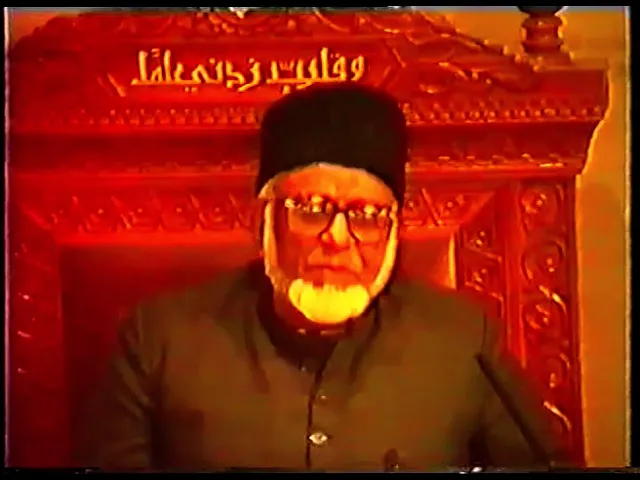
2- Science of Hadith - Text/Chain of Hadith and Motawater Reports - Sayed Mohammad Baqer Qazwini
0
0
29 Views·
24/07/19
In
Lectures
Science of Hadith, offered in 2017-2018, is now available to take online at Al-Hujjah Islamic Seminary. The first five classes are available to view as a demo to get an idea of how the course is instructed. To register for this class, see all class videos, and take the exams, visit hujjahseminary.com. For any questions, email us at [email protected]
Show more
Transcript
[0:04]audhu billahi min ash-shaytani r-rajim smell r-rahmani r-rahim al-hamdu lillahi rabbil alameen
[0:14]wa sallahu allah sayidina muhammadin wa ala nabina bahian lama salli ala
[0:22]muhammad wa ala muhammad my respected brothers and sisters assalamu alaikum warahmatullahi
[0:32]wabarakatuh if you open the text to page 19 so we examine
[0:41]the introduction that a shahida thani writes when it comes to the
[0:47]science of hadith you will find that this text book which is
[0:57]called introduction to hadith is a book that has two parts in
[1:02]the first part we read the ayah tell hadith the riot al-hadith
[1:07]is a very short introduction authored by a Shaheed asani the second
[1:15]martyr he was one of the great scholars of the past about
[1:25]three centuries ago and he was from jebel Amman a Lebanese scholar
[1:30]who was killed in the way of allah subhana wa ta'ala he
[1:33]was martyred and hence we call him a Shaheed itani so he's
[1:41]authored a short introduction on the science of hadith we will be
[1:46]discussing the ayatul hadith by a shahida Thani and then we will
[1:53]discuss the bigger part of the book the important part of the
[1:56]book which is authored by Abdul Hadi and follow me therefore you
[2:05]see that this book comprises two parts so if you start with
[2:09]page 19 the introduction we will examine the book of a Shaheed
[2:16]a Thani which is called riot al-hadith does everyone have a textbook
[2:22]if you don't have a textbook we have some here you may
[2:31]please pick them up in the introduction a Shaheed asani begins by
[2:38]explaining to us what is the meaning of hadith and what is
[2:48]the meaning of cover the meaning of hadith and the meaning of
[2:56]Kaabah the word hadith in Arabic what does it mean it's translated
[3:03]as narration as tradition speech news and what's had the word hadith
[3:12]what does it linguistically mean originally in the Arabic language what does
[3:17]it mean if you say this house is hadith what does that
[3:25]mean you knew right why is it called nu because speech is
[3:28]always new you get new speech and that's why news is called
[3:32]news right because they're giving you something new so hadith linguistically means
[3:39]something that is new now when we speak of hadith in terms
[3:46]of this science in terms of Islamic law in terms of islamic
[3:50]sciences the term hadith refers to three things number one it refers
[4:02]to the words spoken by one of the infallible ''s the prophet
[4:09]sallallahu alayhi wa l bathed peace be upon them any word that
[4:12]is spoken by one of the infallible it's called hadith number two
[4:20]their actions may be the narrator did not narrate something that they
[4:24]said but he told us that the Prophet did so-and-so action this
[4:28]is also considered part of hadith even though he's not narrating to
[4:34]us anything verbal that the Prophet said he's just saying the Prophet
[4:39]prayed this way the Prophet did Hajj in this manner this is
[4:43]also hadith in the science of hadith so the actions of the
[4:51]Prophet and the Imams are also proofs for us if a narrator
[4:53]says I saw the prophet sallallahu alayhi wa da he's praying in
[4:58]this manner this is proof for us this is evidence for us
[5:02]that we can also pray in that manner so that's the second
[5:05]dimension that the hadith refers to the actions of the infallible number
[5:16]three there taqueria clear means tacit approval let's say the imam was
[5:23]in a gathering and something happened in that gathering something was said
[5:29]one of the companions didn't act and the narrator tells us that
[5:34]the imam approved of that action either by a facial gesture let's
[5:39]say or it's something that the imam dead did that shows us
[5:45]approval or the imam said nothing because when you're in the presence
[5:48]of an imam the imam is supposed to guide us so if
[5:53]that act is wrong if that speech is wrong the imam I
[5:57]think it said I'm should correct it so if the imam did
[6:00]not correct it you just went with it that means the amount
[6:06]approves of it right some of the Islamic laws and rulings that
[6:09]we get are from the approval of the imam alayhis-salam therefore we
[6:16]see that the word hadith refers to these three dimensions the verbal
[6:21]spoken words of the infallible their actions and their tacit approval now
[6:27]their spoken word is called bone and Arabic iguana and muscle their
[6:36]action is called Amman and muscle and the tacit approval is called
[6:42]what taqueria you will hear this in Islam clong a scholar will
[6:47]issue you a fatwa and you will ask what is the basis
[6:51]for this ruling he'll tell you that a career of the masoom
[6:54]and so-and-so incident we are able to understand the tacit approval of
[7:00]the Imam or the prophet and that's proof for us so this
[7:07]is the meaning of the word hadith now we have another word
[7:11]that is called cupboard someone and Arabic means news in the science
[7:18]of hadith hadith and kebab are used interchangeably they pretty much have
[7:23]the same meaning so if we begin on page 19 number one
[7:29]the author says the hadith often referred to as tradition and the
[7:35]Kaaba often referred to as report Saba is a report Akbar means
[7:43]reports he says the words hadith and Jabbar have the same meaning
[7:51]within the contextual study of hadith now what's the technical meaning of
[7:56]these two terms whose technical meaning is a statement carrying the speech
[8:01]number one action number two or a tacit approval of a muscle
[8:06]an infallible person both hadith um how about referred to the same
[8:10]meaning in the science of hadith if you hear hadith Alabama's sada
[8:17]alehissalaam robbery Masada Alesana they pretty much mean the same thing now
[8:23]there is a slight difference between them the word hadith strictly refers
[8:30]to the statements of a masoom of an infallible whereas the word
[8:34]cover can be used a little bit more loosely so in the
[8:41]following paragraph the author says the word hadith may be used specifically
[8:46]to denote the statement issued by a masoom whereas the word Kaabah
[8:51]may also be used for statements by other people such as the
[8:54]companions of the amount let's say zaraba one of the Companions of
[9:01]the Imam he issued a statement he said something from his own
[9:05]he gave his opinion I would not say hadith zarada if he's
[9:11]giving his own personal opinion I would say what Shabazz Arara chief
[9:17]sovereign Colorado and a cabal any report zarada said this or he
[9:22]said that Soha bar is a little bit broader than hadith hadith
[9:27]has more precipitant er changeably they pretty much have the same meaning
[9:34]so this is under the first heading the meaning of hadith and
[9:41]the meaning of Honda up come on let's get to the second
[9:44]heading in which the author talks about the medicine and the Senate
[9:48]every hadith that we can rely on has met and has Senate
[9:58]now what does the word meta mean does anyone know what the
[10:14]word met means the wording of the hadith so in other words
[10:19]the text or the content of the hadith so the word mat
[10:26]is pretty much just the text text or content the idea being
[10:32]communicated that is something that we call the meant we have something
[10:38]else called Senate what does Senate mean the chain of narrators what
[10:50]is the linguistic meaning of Senate not the science of hadith just
[10:53]in general Arabic what does Senate mean no not authority but you're
[10:59]getting close yes exactly something you can depend on a support right
[11:07]you could say for example that my brother is my senate symbolically
[11:11]what does that mean that means he's my support or you can
[11:15]refer to something physical like a pillar a pillar is a senate
[11:21]for the roof right so linguistically the word senate means support but
[11:27]in the science of hadith we're talking about the support the supported
[11:35]link for the hadith which we call the what the chain of
[11:42]the hadith the chain of narrators what is my senate to the
[11:45]imam how do I support this hadith who did I get it
[11:50]from from so-and-so from so-and-so until you end up with the Imam
[11:53]Ali Sunnah so the Senate means the supported chain chain of transmitters
[12:00]chain of narrators so that supported chain means the Senate every hadith
[12:10]will have a met a text the content and it will also
[12:12]have any one a senate for it to be a valid hadith
[12:16]so you can look at the chain of narrators to see who
[12:19]narrated it so you see that in the book the author says
[12:25]the text the Metin is the main wording of the tradition indicating
[12:31]its content what's being communicated the chain which is the senate as
[12:38]the path of the tradition what's your path to the imam what's
[12:45]your link the chain of reporters who transmit the tradition now there
[12:50]is something additional that you will find and here in the science
[12:54]of hadith it's called it's not Senate and Assad are pretty much
[13:05]this they have the same meaning there's just a slight difference in
[13:10]their meaning when you are looking at the path itself just the
[13:14]chain Sarada has narrated this and then after him his student narrated
[13:19]it then so on so then so and so until for example
[13:24]i Collini when you look at the path itself it's called senate
[13:29]however when you look at the senate in relation to the person
[13:36]which the senate is attributed to who's the imam ali is said
[13:42]on you would simply just call it it's not so it's the
[13:48]same meaning really but it's not just adds another dimension or factor
[13:53]and that is the person whom you're supporting the chain to whom
[13:59]you're linking the hadeeth to so if you consider the source of
[14:04]the hadith who let's say is the holy prophet sallallahu alayhi wa
[14:07]or let's say it's an imam as-sadiq alayhi salam then you would
[14:10]say it's not I would ask you what is your is not
[14:15]meaning which Imam are you narrating this from for instance the word
[14:19]Senate just looks at the chain without examining where does it end
[14:26]but really and the science of hadith these also are used interchangeably
[14:32]so whenever you look at the word Senate the word it's not
[14:35]they mean pretty much the same thing it's just a very subtle
[14:39]difference on how you look at look at it to give you
[14:44]another example scholars use this example when we say for example a
[14:48]verb in Arabic like a telephone sometimes you look at the word
[14:59]a telephone or Lulu and you only examine the act itself without
[15:04]considering an actor a subject the act the act of willow itself
[15:09]I don't have any actor in my mind any subject in my
[15:12]mind I am just focusing on this act of woohoo sometimes you
[15:19]will consider also the subject such as if you visualize someone who's
[15:24]doing although it's pretty much the same thing but you're just looking
[15:28]at it from a different angle so when you say it's not
[15:34]you are actually considering the link to a person to a Matsu
[15:39]you're also considering that dimension whereas when you just say Senate just
[15:46]the link itself without taking into consideration where does it end who
[15:51]are you supporting the chain to it's a very subtle difference but
[15:55]it really does not make that much of a difference so for
[15:58]now Senate and it's not mean the same thing we're just talking
[16:01]about a chain of narrators so the author that's what he explains
[16:07]in the following paragraph you know that there is a very subtle
[16:14]difference between the chain in terms of the Senate and they snap
[16:16]that's why if you look at the wording this is how it's
[16:21]been translated the change Senate is the path of the tradition whereas
[16:27]the supported chain this knot is a chain of transmission that can
[16:32]be traced all the way back to the prophet or the Imam
[16:38]or anyone else so now we're considering where does the chain end
[16:42]down what is the source of this chain so that's just a
[16:44]subtle difference really but in reality they mean the same thing Senate
[16:48]and it's not are pretty much the same thing let's go to
[16:55]the next heading which is the categories of the report whenever you
[17:01]examine a hadith a report it falls under two categories one way
[17:11]of classifying a hadith or categorizing a hadith as by saying that
[17:18]this hadith is Matata or this had if escobar warred will explain
[17:26]what this means the report this is on page 20 now the
[17:29]report as an entity itself may be either true or false any
[17:35]report could be true or false right regardless of the honesty or
[17:43]dishonesty of the person who utters it someone who is honest a
[17:47]narrator who is honest can give you a false report right let's
[17:55]say they made a mistake or sometimes in that specific instance they
[18:00]chose to fabricate a hadith so any report that's given to you
[18:04]regardless of who said it it could be either true or false
[18:07]any report the truth or false nosov a report can be identified
[18:15]by means of external factors how do you come to know that
[18:19]a hadith is true it's not false that's where we get this
[18:27]classification Matata or not motto answer so the author tells us there
[18:30]are several ways for us to come to know whether I hadith
[18:34]is true or not number one the truth in the report is
[18:39]decisively and automatically known whenever you see a hadith that falls under
[18:48]this category you automatically and decisively know this is a correct hadith
[18:52]can you give us an example of such hadith where you don't
[18:58]really need to do a lot of logic and you go and
[18:59]research to confirm you automatically can tell that the hadith is true
[19:07]how so such as the motoi to report hadith if that is
[19:11]mota later we will examine what the meaning of Matata is a
[19:19]successive report something that is so well known that everyone just knows
[19:24]it for example just to give you a small example Antartica exists
[19:30]right have you been to Antarctica anybody of you know how do
[19:36]you know it exists maybe you're being lied to maybe the satellite
[19:40]images are false it's possible right I mean you personally didn't go
[19:47]and see Antarctica so how do you know it exists this is
[19:51]called a muta water report it's so established documented narrated by so
[19:58]many groups of people by scientists by travelers to the point where
[20:04]you don't need to do research to really know that Antarctica exists
[20:07]or not it's just a given it's just like one plus one
[20:12]is two it's that simple that aren't Antarctica does exist that's called
[20:16]a Muto ato report it's so widely known that you know for
[20:23]sure automatically decisively it's true that we have a continent called Antarctica
[20:26]this is just an example a minor example so that's one type
[20:32]of report that we know automatically it's true what else or it
[20:36]is known by virtue of the actual existence of whatever it is
[20:42]narrating such as the existence of mekin you've got to make it
[20:46]you know Mecca exists for instance and therefore you can say that
[20:50]this hadith is true or let's say you are told that so-and-so
[20:53]person is alive and you know that person is alive you saw
[21:01]him five seconds ago or you could still hear his voice so
[21:07]when someone tells you something about Mecca the existence of Mecca or
[21:12]something that you already know by external factors you know that this
[21:16]exists this is called a true hadith that you can decisively and
[21:19]to automatically confirm that it's true now let's look at another type
[21:29]of hadith that is also true the second type the truth of
[21:36]the report is decisively known you know for sure that this hadith
[21:40]is true though not automatically automatically you do not know if this
[21:45]hadith is true or not you I kind of have to do
[21:52]research for you to know if this hadith is true or not
[21:55]but through investigation and acquisition of information such as the word of
[22:01]Allah and the Quran you go to the Holy Quran you do
[22:06]research to see if for example this hadith is correct or not
[22:09]if this hadith is compatible with the Holy Quran then you know
[22:15]okay now this hadith could be a true hadith or it is
[22:17]decisively true you need to do some research for you to know
[22:22]that this hadith is correct or not or other statements of the
[22:25]Prophet and the Imams you take one hadith you compare it to
[22:28]other hadith to see if this hadith is correct or not so
[22:34]require requires an extra step you need to make an effort for
[22:37]you to determine whether the hadith is correct or not such as
[22:43]the tradition that is mota watter in meaning we have two types
[22:51]of motivator let's write this so this becomes clear for us we
[23:02]have a motivator hadith when you hear the word motivator it usually
[23:11]refers to this type of hadith motivator in terms of the words
[23:19]being transmitted to us in Arabic we call that motivator lovely it's
[23:26]a successive hadith when it comes to the verbal words being communicated
[23:32]for example amongst Muslims it's been known that the Prophet sallallahu alayhi
[23:40]wa ali said that after me whoever comes and deliberately makes a
[23:50]lie and it tributes it to me let him reserve his seat
[23:56]in hell Feli a table wa makara human anot this hadith is
[24:02]a motivator hadith it's excessive in the Arabic language these same words
[24:06]failure table among other human and not as narrated by many companions
[24:10]by many scholars with the same exact wording so whenever you have
[24:15]a hadith with the same exact wording narrated in different sources in
[24:22]a number of sources we call that a motivator lovely it's verbally
[24:26]Matata the wording of the hadith is Matata it's agreed upon that
[24:30]everyone who heard that statement or that hadith they narrated it in
[24:38]the same exact wording let's say you go and you attend a
[24:41]speech and the speaker says something he says for example Salah is
[24:46]watchable you as the narrators you come and say the speaker said
[24:52]Salah is rajab everyone agrees on the exact wording that the speaker
[24:55]says this is called motiroti lovely in terms of its wording now
[25:05]you have something that is called muta watch or mono II something
[25:10]that is motto actor in its meaning so we have muta wat
[25:21]or lovely and then we have mono II what is the difference
[25:25]between motiroti are lovely and Mata Nui what title not knowing is
[25:30]that when you examine all these hadiths that speak about a case
[25:36]or an issue they don't agree on the exact details or wording
[25:40]but they all agree on one general idea that is being communicated
[25:46]let me give you a couple of examples for example when you
[25:52]look at the hadith about the battles in Islam and the role
[25:55]of Imam Ali Ali Sena the Hadees can be different they could
[26:00]have different details better Imam Ali bin Abi Talib how many pagans
[26:03]did he kill one hadith could tell you forty one could say
[26:07]fifty one could say forty five there's some discrepancy there right how
[26:12]did the Imam kill them was he riding on a horse was
[26:17]he standing on his feet was he carrying the sword of dhul
[26:23]fiqar was he carrying another type of sword you get hadeeth with
[26:28]slight variations right now if you want to look at each exact
[26:36]detail there are variations there are differences but all of this hadith
[26:43]agree on two issues first of all that amount idea was there
[26:45]in the battle they all agree on that point even though they
[26:47]disagree on some details but they all agree that he was there
[26:51]number two you could deduct from all these hadeeth you can conclude
[26:58]from all these Hadees that Imam Ali Salim was brave we call
[27:03]this a motivator mano e a motivator in meaning now this requires
[27:12]a an extra effort you have to go analyze all these hadith
[27:15]that are speaking about that case see the differences and see the
[27:18]area that they all agree upon you see that this requires an
[27:23]extra step whereas the first type of hadith Antartica exists you don't
[27:28]need to do any research this is just well-known for everyone or
[27:32]you see all the hadith they say the prophet salallahu alayhi wa
[27:36]lillah wa sallam says failure Tabo idaho min and not hundreds of
[27:43]hadith saying this exact wording that's it you really need to do
[27:47]any more research than that it's a given that the Prophet said
[27:51]it whereas when it comes to the motivator mano e the motivator
[27:56]and meaning what does it mean it means that all these hadith
[28:00]they agree on one idea but the details could be different another
[28:07]example that scholars have mentioned is the punishment in the grave and
[28:13]the berserk and the purgatory we've got many hadith you know they
[28:17]may differ in detail one of them is attributed to the Prophet
[28:19]let's say he was passing by a grave and he said this
[28:23]person in the grave because of their sins is being punished an
[28:26]imam sadiq ali salam says you know another thing that if you
[28:29]commit this particular sin you'll get punished in the grave an imam
[28:37]in column on is Salam he talks about another sin and he
[28:40]says if you commit that sin you get this punishment in the
[28:46]grief now each hadith is talking about one angle one issue one
[28:50]type of punishment one type of sin but they all agree that
[28:53]one there is punishment and the grave there is a novel table
[29:00]so it's the metallics are matin are we clear or do you
[29:04]have any questions about it see when it comes to this hadith
[29:10]mine imam sadiq let's say he says the one who disrespects his
[29:13]parents will be punished in the grave this hadith by itself is
[29:17]just one hadith that we have in the books can you automatically
[29:22]say okay ba Masada said it a hundred percent no you can't
[29:27]maybe the narrator fabricated it we have to do research about the
[29:30]hadith to see whether the imam said it or not there is
[29:34]really no one hadith you can point your finger to and say
[29:36]I can swear by Allah that the amount said it we don't
[29:41]know maybe the Imam said it you know if someone who is
[29:43]reliable he comes and he tells you something even though you want
[29:49]to trust this person and you believe in them but can you
[29:51]say a hundred percent that this is true or maybe they made
[29:55]a mistake there is always the possibility of narrators making mistakes right
[29:59]so if you look at that hadith by an imam as-sadiq re
[30:03]salam in which he supposedly says that if you disrespect your parents
[30:08]God will punish you in the grave then another hadith by another
[30:14]Imam says okay if you don't pray then you will be punished
[30:17]in the green each hadith by itself you don't have certainty that
[30:25]the imam said it but from all these 5060 hadith that speak
[30:28]about the punishment of the grave you have you been you have
[30:31]certainty that one there is punishment in the grave that I could
[30:38]confirm there is no doubt about that because I have tens of
[30:41]narrations that speak about this topic of punishment in the grave even
[30:46]though I can't verify that each one of them is correct but
[30:53]it's impossible that all of them are fabrications I'm sure that some
[30:57]of them must be correct I don't know which ones but I
[31:01]can confirm to you that there is punishment in the grave so
[31:04]is this what a lots are manually the Matata motoi tonin meaning
[31:07]is this clear any questions about it any observations about it so
[31:17]this requires an extra step you have to give more effort to
[31:21]verify whether a hadith is authentic or not so he says that
[31:28]such as the tradition that is Mata Watson in meaning and the
[31:32]report that is linked to associated evidence proving its sound origin and
[31:41]Arabic we call this Quran clues external factors the hadith is only
[31:50]one hadith but when you go and do research you come to
[31:56]the conclusion that this is a correct hadith when you look at
[32:00]these circumstances in which the hadith was narrated you compare it to
[32:04]other hadith you compare to the Quran how did the early companions
[32:10]or scholars treat this hadith you look at a number of factors
[32:13]and upon examining these various factors you come to the conclusion that
[32:18]this hadith must be correct this is called a lion jemelle Quran
[32:25]in Arabic so whenever we're looking at a hadith that's how we
[32:33]know that a hadith is true 100% either it's Matata its successively
[32:38]narrated or you take it a step further you compare it with
[32:44]the Quran with the hadith it could be motility and meaning and
[32:46]then you could say this hadith is correct this is just a
[32:53]general idea being presented here now let's examine what a metallic tone
[32:58]hadith is we are using this term motility what does it mean
[33:01]how does a hadith become Matata that's under the heading number for
[33:05]another classification for us to know whether a hadith is true or
[33:12]not one way to determine that is to know if a hadith
[33:14]is mutilator or not a successive hadith mota wat or in english
[33:22]is translated as a successive report what is a successive report a
[33:30]successive report as any hadith which such a high number of people
[33:35]narrated it such that it was impossible for them to conspire and
[33:41]agree to forge the hadith and this gives you your team certainty
[33:50]that the hadith is authentic let's give an example when you look
[33:57]at the event of the deal until today you know after 14
[34:01]centuries and the idea is so sensitive so throughout history there has
[34:08]there have been many efforts to erase the idea from our books
[34:12]and the significance of an ideal yet after 14th centuries today we
[34:16]have 110 paths to the event of the video so we have
[34:25]110 companions who have witnessed that they were present in Mecca deal
[34:33]and the Prophet sallallahu alayhi wa he said men consume Allah Fajada
[34:37]a lien mullah whomever I am his mala I have authority over
[34:44]and he is his Mona a hundred ten now when you examine
[34:48]these 110 they were not related to each other they did not
[34:52]come from the same city they did not even know each other
[34:55]now you're analyzing this event you ask yourself is it possible that
[35:04]these 110 decided to make up this event you ask yourself it's
[35:08]not possible because all these narrators who related who came from different
[35:16]cities different villages their circumstances were different it's not possible for them
[35:20]to just have decided you know what let's make up this hadith
[35:24]you know for sure that hadith is ideal is a correct hadith
[35:27]because of such a high number of people who narrated it now
[35:33]is there a limit to that number when you go to other
[35:37]schools of thought some Sunni schools of thought they will tell you
[35:40]yes any hadith that has five narrators or more that's Matata some
[35:48]say seven or more some say ten or more some say twenty
[35:51]or more what do shia scholars say she our scholars say we're
[35:56]not going to specify a number any number that gives you that
[36:00]you mean that it was impossible for them just to make this
[36:06]up that is what we call Matata you know let's give another
[36:10]example let's say there was an eclipse a natural disaster a Vulcan
[36:21]Vulcan akhir up ssin so many different people you have a hundred
[36:25]people from different villages from different areas they did not meet each
[36:29]other and you know these days it's very easy to conspire because
[36:32]you have you know your cell phone and you could easily spread
[36:36]something but imagine you lived at any time where there was no
[36:39]cell phone these people couldn't really be communicating with each other you
[36:44]had a hundred people from different areas and villages they don't even
[36:47]know each other they did not meet prior to this you know
[36:52]testimony to make this up they come and they witness to you
[36:55]you know what a volcanic eruption happened and there are a hundred
[37:02]people there fifty people now you don't necessarily have to know them
[37:06]whether they're truthful or not but when that big number comes to
[37:08]you what do you do would you believe and what they say
[37:15]or no you would stop what would you do they're not related
[37:18]they didn't really gather with each other to decide to make this
[37:22]up they just randomly came from different villages there was no prior
[37:29]communication and they witnessed this for this event would you accept their
[37:33]testimony you would accept their testimony now is there a particular number
[37:37]we can't put any number I can't say oh if 19 I
[37:42]won't accept but if 20 I'll accept this is just based on
[37:45]you know how you get yapping on the nature of the issue
[37:50]some issues maybe 10 people if they tell you you get the
[37:55]opinion some issues maybe you need 20 people 30 people so this
[38:01]is the meaning of mutata any hadith report that you have such
[38:11]a high number of people narrating it such that you have yaqeen
[38:16]and certainty that it was said that it was that it happened
[38:18]an example that we have is a deal now interestingly see even
[38:28]if they're not reliable how did 50 people decide to make up
[38:36]an event if they did not conspire they didn't meet with each
[38:39]other before yeah I know but let's say see if they have
[38:46]it see if they're all from one tribe that's not Motel item
[38:49]because now you could tell obviously they could sit together and conspire
[38:52]that's why I said from different areas so that you know that
[38:58]they didn't sit and conspire there is no interest just random people
[39:02]exactly random people who don't know one another you don't even know
[39:06]if they're reliable or not but you're like look it's impossible for
[39:09]them just to have decided hey let's make up this hadith than
[39:13]that that's such a small coincidence that doesn't really happen it's impossible
[39:16]yeah if they come from one village from one tribe it's very
[39:21]normal that they could make up something obviously they have an interest
[39:26]we're talking about just random people that's what a hadith that is
[39:30]mutata so you know for sure that it's authentic now interestingly with
[39:35]respect by the way to the hadith of Hadiya and factional Razi
[39:41]the Sooni scholar and exegetes of the quran he has a tough
[39:46]sear you know al kabir when he talks about hadith Eliza dear
[39:50]you know what he says he says I examined the source of
[39:55]the hadith of the deer I found four hundred paths to it
[39:59]four hundred today we have 110 but at his time he had
[40:04]four hundred yet do you know what he says he says but
[40:09]there's still something in my heart I still can't accept it Subhan
[40:12]Allah what does that tell you when you have four hundred paths
[40:18]and you admit it he still says what I can finesse ishe
[40:23]Allah Subhan Allah four hundred paths believe me if you look at
[40:28]the Islamic laws and rulings for many many of our Hadees you
[40:33]cannot find four hundred paths for fasting for example that some of
[40:38]the you know acts that invalidate fasting you cannot find 400 now
[40:43]400 hadith by the way 400 paths because some hadith they can
[40:49]have the same path the same source he's talking about 400 different
[40:54]paths yet he's like I'm just not comfortable with it I'll arrazi
[41:00]it's very interesting you know sometimes how this hatred towards a little
[41:08]bit said I'm lying I lay him trumps all reason and you
[41:24]know all logical discussions about Sophia yeah he still doesn't believe with
[41:32]all the signs and the miracles that he saw he still doesn't
[41:34]believe now is is this clear about the hadith that is Matata
[41:39]okay now it gets a little bit trickier but we'll write it
[41:45]on the board so we know that it's correct and we know
[41:52]what the Moto Artemis now let's say that the hadith that were
[41:58]discussing the event that we're discussing is gadya we want to know
[42:05]if this hadith is motile actor or not this is the event
[42:10]in question let's say those who saw the event of Kadir these
[42:19]are let's call them the first narrators the first group Group one
[42:27]let's call them and then you have group two and then you
[42:32]have Group three so we weren't present at video but we want
[42:39]to know if this event really took place or not with the
[42:40]obtained with full certainty now let's say when you look at Group
[42:50]three whose group 3 group 3 is the books that we have
[42:53]the Muslims that are talking about the deer let's say you have
[43:03]10,000 people here who are narrating the event of the idea 10,000
[43:08]scholars are saying the deer did take place does that automatically give
[43:14]you European that this hadith is muta watcher or no you said
[43:21]yes you said no why but but where did they get their
[43:33]habit from because see these are group three they didn't see the
[43:36]event of that the only group one saw the event see Group
[43:39]one are those who were living at the time of the profit
[43:50]group two are their students let's say they came a century after
[43:56]the profit after the event and then group three are the people
[44:04]whom were seeing let's say at the time of Kalani who was
[44:07]giving us these hadees or if you remember we mentioned the four
[44:10]hundred osoon the four hundred main books of hadith let's say these
[44:17]four hundred main books of hadith you've got ten thousand companions telling
[44:21]you that deer happened does that automatically give you your teen and
[44:24]searching that it happened no because they didn't see it so I
[44:30]would ask excuse me what is your source maybe all these ten
[44:33]thousand are narrating from a single person that breaks the hadith from
[44:37]being a motivator let's say all these ten thousand they're nearing narrating
[44:43]it from three companions these three companions narrated the event ten thousand
[44:51]people heard them now what you can say for sure is that
[44:58]these ten thousand people they heard these three companions that I can
[45:02]say you know it's impossible that they conspired ten thousand random people
[45:07]aren't just going to make up you know that they heard these
[45:11]three companions saying a hadith that part you can say that I'm
[45:17]sure these ten they heard it from the companions but then you
[45:20]only have three companions maybe these three people lied maybe these three
[45:25]made a mistake that breaks the toate so in that second group
[45:30]the middle of the chain you also need to have a high
[45:36]number of companions who've narrated it for you to keep your torrid
[45:41]or let's say you have 50 these 10,000 narrate from 50 different
[45:49]companions now that satisfies as being Tortoni notes it's not possible for
[45:55]these 50 to have conspired 50 random people and these 10,000 narrated
[46:04]it from those 50 those 3 yeah but but but three people
[46:07]it's possible for them to make mistakes it's possible for them maybe
[46:13]to somehow have conspired we don't know them we don't know where
[46:17]they came from maybe 10 years ago they had a plan but
[46:18]when it comes to 50 no it's not really possible especially if
[46:22]you have young and old some of them were born earlier than
[46:24]others some of them did not meet each other with 50 you
[46:28]can say but 4 3 no 4 3 they can make mistakes
[46:31]maybe somebody fooled these 3 people how do we know it's just
[46:37]3 3 people can make a mistake three people can't conspire anyway
[46:41]that's not visible to you but 50 people it's kind of impossible
[46:48]from different backgrounds different villages just random people like ok 3 people
[46:53]I know I mean I can come up with ways maybe they
[46:59]which conspired why not 50 not a hundred we don't specify a
[47:12]number we just say it should be a number that gives you
[47:16]your teen that they didn't conspire that number could be 15 it
[47:19]could be 20 depending on the case and cases by the way
[47:24]are different you know sometimes you want more number and more a
[47:27]greater number of people for you to have your opinion sometimes if
[47:33]it's a specific case maybe 15 or 20 people will give you
[47:36]that yep in it depends on the nature of the event that
[47:41]you're dealing with now some other schools of thought no they said
[47:44]if you have 5 it's just automatically motiroti we don't accept that
[47:47]we don't specify any number and we usually say we requires more
[47:53]than 5 5 people can still conspire very reliable likes yeah does
[48:02]that give you does that give you your teen that their mom
[48:06]said it can you put your hand on the Quran and say
[48:09]well I'll I'll email him a massage that said this household there's
[48:12]not a 1% chance they made a mistake they lied so you
[48:28]means a lotta masoom in that case okay but did you hear
[48:33]an imam sadiq say that maybe that hadith in which an imam
[48:38]aside that supposedly said that about muhammad even Muslim you're not sure
[48:42]a hundred percent that in homicide I've said it someone narrated to
[48:45]you but he is reliable see see when we're talking about muta
[48:49]Watson we're not talking about whether this is proof or not see
[48:52]for you to issue an Islamic law you don't need mortality even
[48:58]if there's one hadith one reliable person said it that's enough proof
[49:01]in Islamic law that's okay we're talking about yet Dean which means
[49:05]absolute certainty which is black and white like the existence of the
[49:10]Sun there's no doubt in it exactly exactly when you have a
[49:20]Muto lights or hadith you don't care about the chain I want
[49:25]to go and study this companions like it doesn't matter because it's
[49:29]impossible for a hundred people to come up with something like that
[49:33]randomly so with a motel Archer hadith it's just like the Quran
[49:36]you know you do you have any doubts that the Quran is
[49:40]the word of God you don't have any doubt with them with
[49:42]a lights or hadith you don't have any doubt let me ask
[49:47]you this question Salah he'll give this example in the book Salah
[49:50]is obligatory and so that's in Muslim it's three like ours how
[49:55]do you know so that's a motive do I need to go
[49:56]and investigate the chain of narrators you know what did Collini mentioned
[50:01]this or somebody else canaan he takes us from zarada you don't
[50:04]need to do that because selected mother of three like that's muta
[50:08]wat or among Muslims it's black and white you don't need to
[50:13]go and do research to verify that because every single Muslim from
[50:17]generation after generation whether they're Sunni Shia Zadie Maliki whether they're Arab
[50:24]non Arab regardless of where they are there is unanimous consensus that
[50:27]salat and Muslim is three like us that's Matata so you don't
[50:33]even need to go and investigate the chain of hadith and the
[50:36]book of scoffing that says Allah made so lots of mother of
[50:40]three Allah cos you don't even need to do that because you
[50:42]have yaqeen that Muslims three like us that's what a lotta that's
[50:54]a successive chain you will find some books that scholars will tell
[51:00]you this hadith in my opinion is Matata you will find such
[51:03]books but there could be some disagreements as to what your criteria
[51:08]is for a motivator do you you know specify a certain number
[51:15]or no so there are some disagreements as to what constitutes a
[51:22]motivator hadith today the matter just pretty much agree um but yes
[51:28]you could have a merger who comes they say based on my
[51:33]research and logical reasoning you know I have a slightly different criteria
[51:37]for what constitutes able to light or hadith that's possible but you
[51:41]as a scholar at the end of the day you have to
[51:46]have European certainty for you to call it a motivator now remember
[51:49]that you don't need it with a light or hadith for you
[51:53]to understand your religion to examine the tafseer to examine the sign
[51:57]you don't need that you just need a reliable chain a correct
[52:00]change we're talking now about the types of hadith one type is
[52:05]Matata now obviously you know that we don't have many mutata hadith
[52:07]just the general principles such as Salah fasting some events like the
[52:14]deer like the Battle of bed or that it happened okay that's
[52:17]Matata so if you have 50 people here let's go to the
[52:23]next step those people who directly saw the event of the deal
[52:27]if you have two people who saw the deal and they narrated
[52:33]it to 50 and those 50 narrated to 10,000 is this somewhat
[52:38]owatta hadith they're not infallible they could be anyone you mentioned that
[52:51]it's still not a sufficient number maybe these two lied maybe they
[52:56]lied they narrated those fifty are not liars but they tell you
[53:00]that you know I heard this hadith from this person and those
[53:04]fifty take it to see the myths that we have in history
[53:07]the legends that we have today you could go to a city
[53:12]of five million people and they all believe in a legend but
[53:16]when you examine you like okay what's the source of this legend
[53:20]oftentimes you won't find the source sometimes you find okay there was
[53:23]a storyteller 300 years ago he made it up and then people
[53:27]just started believing in him that's not mortality in every stage you
[53:33]need that sufficient number for you to say I have Athene this
[53:36]hadith is correct so if it's just to know that's not a
[53:42]rhetorical hadith the title is broken in this stage yes if you
[53:47]have 20 people in this stage and you do quick research about
[53:55]them okay they were not part of the same village they were
[53:58]not like family friends who had an interest in coming up with
[54:03]this one of them's from Iraq one of them from Yemen you
[54:06]know different just different companions one of them came at the beginning
[54:12]of the prophet's life and he said I heard this hadith from
[54:16]the Prophet in which he said this another one came 10 years
[54:18]later and he met the Prophet and he says I heard the
[54:24]Prophet say this so random people once you have 20 now you
[54:26]have what's called a tow a tow because in every stage you
[54:32]know there was no room for conspiracy no room for fabrications no
[54:37]room for lying even the 20 let's say you could yeah but
[54:44]when I look at the prophets life I see someone meeting the
[54:49]prophets in Mecca and he's from Yemen someone else came from Syria
[54:54]he became Muslim in Medina they're not related they have nothing to
[54:58]do with each other they never even met each other and I
[55:03]have not 220 of them I'm like it's impossible that they just
[55:06]made this up it's impossible yeah if they have the common belief
[55:16]that's fine but I'm talking about random people see people throughout 20
[55:20]years if they come from different areas and I don't suspect that
[55:25]they have a common belief it's obvious that they didn't you can
[55:31]tell look it's impossible that they did because let's say at the
[55:34]prophet's time there was no no awesome later they formed so I
[55:37]can't say oh they're all no awesome just as an example so
[55:40]when you examine that number and the circumstances you could say this
[55:46]is definitely a hadith that is motivated a hadith that is motivators
[55:51]like the Quran it's proof its certainty that the Prophet said it
[55:55]he did it had jitsu Buddha the final pilgrimage that the Prophet
[55:59]made two months before he passed away that's yucky but talked to
[56:05]hundreds of people narrated it in Group one and then they transmitted
[56:08]it to hundreds of here and then thousands in here until it
[56:11]reached us so is it clear how we get a hadith that's
[56:18]Matata now most of the hadith we have in al-kafi and these
[56:21]other books they're not Matata it's really difficult to find the hadith
[56:28]that satisfies all this criteria in every stage it's Matata it's very
[56:33]difficult to get such a hadith but do we necessarily need such
[56:39]a hadith no we don't need such a heavy yes for example
[56:44]the prophet sallallaahu Allahu Allah his hadith Manmatha well M yeah if
[56:49]Imam Zaman Malaysia alayhi imam Madhumita 10 jahiliyya this is a mutata
[56:55]hadith our scholars have said this is a successively narrated hadith because
[57:02]so many companions from different backgrounds transmitted this hadith to so many
[57:07]other people from different backgrounds in every group we have a sufficient
[57:12]number of people who narrate it to us this hadith to the
[57:18]point where we can say a hundred percent the Prophet said this
[57:21]hadith so there are some Hadees that our motivator Manmatha well am
[57:26]yeah if Imam is a man is the one who dies without
[57:28]knowing the Imam of his time madam its Angelina will die the
[57:34]death of Julie meaning he'll die just like the pagans this is
[57:38]a hadith that's Matata so Chawla will continue into the hadith of
[57:47]the motivator then we'll look at the solitary honey if anything that
[57:51]is not Matata and then we'll take it from there oh Allah
[57:54]Allah muhammadun why they have BA hurry
0 Comments
sort Sort By
- Top Comments
- Latest comments
Up next
7 Views · 21/12/07
10 Views · 24/11/14