









Up next
4 Views · 24/09/03
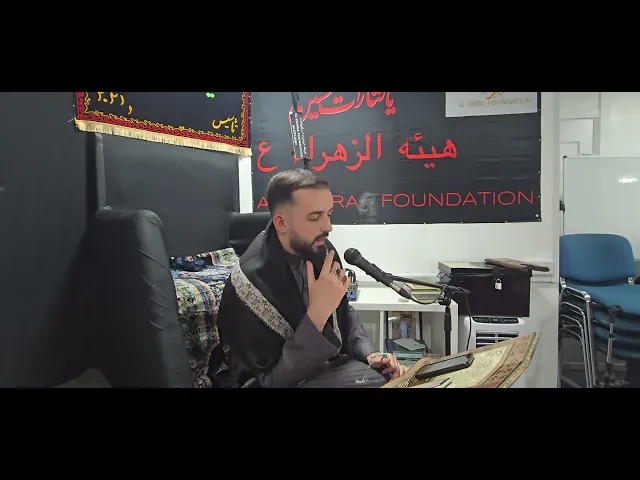
101- (5) Islamic Law (Fiqh) - Recipients of Khums - Sayed Mohammad Baqer Qazwini
0
0
25 Views·
24/07/19

In
Lectures
Islamic Law (Fiqh) 03, offered in 2019-2020, is now available to take online at Al-Hujjah Islamic Seminary. The first five classes are available to view as a demo to get an idea of how the course is instructed. To register for this class, see all class videos, and take the exams, visit hujjahseminary.com. For any questions, email us at [email protected]
Show more
Transcript
[0:00]audhu billahi min ash-shaytaan-i'r rajeem smell r-rahmani r-rahim al-hamdu lillahi rabbil aalameen
[0:08]o soul allahu allah sayidina muhammadin wa ala nabina Tahiry Salam alaikum
[0:14]salam wa salli ala muhammad were respected brothers and sisters assalamu alaikum
[0:20]wa rahmatullahi wa barakatuh I would like to just remind our online
[0:25]members that they can ask a question by unmuting their mic and
[0:32]any time they have questions they are free to ask in sha
[0:35]allah and be part of the class discussion one of the important
[0:40]discussions in determining the recipients of homes we know that fifty percent
[0:49]is called the share of the seeds and they are those who
[0:56]trace their lineage paternally to the family of the prophet sallallahu alayhi
[1:04]wa hao according to islamic law do we prove that someone is
[1:08]a Sayyad on page 123 of our book if you are following
[1:14]with the Arabic texts the author discusses this very important point in
[1:19]Islamic law total through Boonton nessip in order to establish lineage what
[1:23]are the Islamic ways that we can establish that sometimes we may
[1:29]not have certainty if you have certainty that determines your lineage certainty
[1:36]is always evidence today if someone's father is not known or disputed
[1:44]and you do DNA testing that determines beyond any doubt with full
[1:51]certainty that this person is your father your direct biological father that's
[1:55]a proof even if this is not mentioned in any hadith because
[2:02]back then this method was not available but since it generates certainty
[2:06]Salaam alaikum yep Deen confidence ultimate non then scholars will accept that
[2:14]but historic in most societies they did not really have that type
[2:19]of method to establish ancestry so what are the common ways the
[2:23]author says when I asked to nestle in lab in Bayonetta shyaa'n
[2:28]the first method is religious evidence what do we what do we
[2:36]mean by religious evidence whenever you hear Bailey in a shuttle a
[2:40]year in Islamic law what is meant by that any ideas what
[2:48]what is Islamic proof historically in most societies and villages what would
[2:57]be proof in court the testimony of two just witnesses in court
[3:02]any time - I did witnesses who are known to be trustworthy
[3:08]reliable not sinful they're not infallible but they don't have a life
[3:13]of sin where you can you know not trust them or distrust
[3:19]them you can trust them they're trustworthy they're reliable they're just any
[3:24]time they come to court and they witness that so-and-so person is
[3:28]a saint we know that he comes from a Sayyad family and
[3:34]we don't have reason to reject their testimony we don't have any
[3:40]reason to reject them right we don't have any conflicting evidence that
[3:44]in itself is called bayyina sharia and in an islamic court system
[3:49]or legal system it's accepted historically this was the most reliable way
[3:54]to determine subjects and rulings because in the absence of forensic science
[4:00]a lot of things had to be determined by trustworthy people so
[4:04]these people were known in their community to be reliable to be
[4:08]trustworthy they had they have a history of being just and pious
[4:15]their testimony in court would be accepted even grave crimes like acts
[4:19]of murder if two people come and they testify in court that
[4:25]ex person is the killer we saw that person with our own
[4:28]eyes and of course we don't have conflicting evidence right that flies
[4:32]in an Islamic court and it was the most practical system yes
[4:36]Aslam did put conditions for certain types of offenses for example with
[4:41]adultery too is not enough you need for just witnesses who saw
[4:48]the actual act so Bennion a shadow yeah whenever you hear that
[4:51]it means to just what this is unless it's now specified that
[4:55]two is not enough you need more so that's one way if
[4:57]we have to just pious people they come and say X percent
[5:03]comes from the bene Hashem comes from the sayeth family his father
[5:06]as I say it paternally he can trace his lineage back to
[5:11]the Prophet this person becomes eligible to receive homes that's one method
[5:21]any questions about this method yes in most Islamic countries yes it's
[5:27]still applicable if you go to court or let's say you go
[5:33]to a marriages office and to just witnesses come and say this
[5:36]person is say you do we testify and we don't have conflicting
[5:39]evidence right sometimes you have clues that could disqualify that testimony but
[5:49]if there if it's a neutral case then yes even until now
[5:53]the office of the manraja they will accept that in an Islamic
[5:56]country in the court they will also accept that yes so in
[6:08]Iran in your ID your national ID they call it oh they
[6:15]call it over there the there is kind of a law that
[6:20]you would put the word say it before your name to identify
[6:23]who's a say it and if it's a female either say you
[6:28]de fátima or fatima Sadat as they call it over there but
[6:31]not for every single family that was the case because when they
[6:34]started this whole new system some families maybe did not go and
[6:39]submit evidence so if someone does have this a it it gives
[6:43]certainty to the office of the Moraga that this person is a
[6:49]savior but if someone doesn't have it that's not evidence that they're
[6:52]not maybe they were not part of the records when they were
[6:56]making them but yes that is one way that could generate certainty
[7:01]and proof still some strict manraja may not accept that like okay
[7:05]that's a clue but that doesn't give me certainty I don't know
[7:07]who in court put that maybe you bribed somebody and they put
[7:11]that title for you I don't know just as an example so
[7:13]they'll still demand other evidence such as two witnesses the second way
[7:22]to establish that to establish any ancestry not just someone who's assayed
[7:26]any ancestry this person is this person's father hawkmail hack him whenever
[7:32]the ruler what do we mean by ruler in Islamic law jurist
[7:36]Hakim is surely the religious jurist whether it's a manager or a
[7:41]much to had a qualified juris if they issue a ruling that
[7:46]based on the evidence that I've seen this person is a Saiyan
[7:48]he comes from a sage family this person becomes eligible for homes
[7:54]so in Islamic law Hawkman Hakim is also applicable and it's it's
[8:02]acceptable number three our Shia al Mujib little ultimate none you will
[8:07]find this in a number of areas in Islamic law where this
[8:11]actually will generate a ruling for us what's at Shia alma friedlin
[8:16]ultimately not something that is so widespread so commonly known that it
[8:22]generates confidence this is the case there are some families in the
[8:28]Middle East whether in Iran or Iraq or Syria or Lebanon they
[8:33]may not have an actual family tree that you can go and
[8:38]historically verify with evidence they may not have that but this family
[8:47]is known in their society to be a sayit family such that
[8:51]it generates confidence that you can assume them to be safe in
[8:55]Islamic law this is acceptable so we do have in the seminaries
[9:02]in najaf and karbala and Forman measured families that have been historically
[9:05]known to be sayings now if you demand them evidence they probably
[9:08]cannot produce evidence like what kind of evidence do you want me
[9:11]to give you now for instance with my you know family I
[9:15]do have a family tree but a lot of seeds may not
[9:20]have a family tree that is certified and verified and you can
[9:23]go 40 generations back to the Prophet with evidence a lot of
[9:27]seeds most say it's probably cannot produce that for you but how
[9:31]do we treat them as aliens because from one generation to the
[9:34]other generation they were known and accepted to be Sayid's this was
[9:40]so well known that it generates confidence they are sayings if it
[9:46]generates such confidence then ancestry is established and they are eligible for
[9:50]the homes so this is the third method that we can establish
[9:54]ancestry any questions on that or any objections to that no the
[10:06]second one is the hakama surely the jurist for whatever evidence he
[10:09]sees he says I issue a statement or a ruling that this
[10:12]family is saying an Islamic law that's acceptable the third one we
[10:17]don't have a jurist issuing such a statement it's just well-known for
[10:23]example you go to an era and you ask the Hakim family
[10:25]who says their say it well everybody says they're saying it well
[10:30]what's the evidence we may not have evidence they'll tell you look
[10:33]my grandfather's generation and his grandfather's generation generation they knew this family
[10:37]to be saying it so we can safely assume it generates confidence
[10:43]that they were saying it because remember in the past people did
[10:46]not keep records and a lot of times with Sayid's they went
[10:49]through eras of persecution where they try to keep that low profile
[10:56]- and so maybe some families initially knew and then later on
[11:00]it you know as the situation the security situation would improve more
[11:04]and more people would know about that but as long as in
[11:09]that society it's so well known that this family is a sayit
[11:14]family in Islamic law that's good if it generates confidence yes if
[11:19]it doesn't generate confidence there is reason for you to doubt this
[11:24]widespread understanding that this family is a saying for whatever reason then
[11:28]that's fine I know you know for example in Jordan and Hejaz
[11:33]historically there were some families who were not even followers of any
[11:36]debate sometimes in order to gain prestige that from there there from
[11:43]the Hashemi family if they had political power they could make up
[11:47]the idea that their sayings and jut and order the judges to
[11:49]accept that and then over time this becomes well-known okay not their
[11:52]same family but you have reason to doubt that it doesn't give
[11:58]you confidence because there's something behind it in that case it's not
[12:01]applicable in Islamic law so it's see the author doesn't say any
[12:05]type of widespread understanding will make a person say it according to
[12:10]Islamic law it should also generate confidence you don't have reason to
[12:15]doubt it there is no counter evidence so these are basically the
[12:24]three types of ways that we through which we can establish ancestry
[12:32]yes they're not required to have documents the just witnesses can go
[12:42]and they will witness testify in court yes the judge can ask
[12:45]them on what basis are you making this testimony they could say
[12:54]we heard this from our fathers and grandfathers and we always had
[12:59]certainty about that and we are testifying that they are based on
[13:02]the confidence that we have that's fine you don't need to produce
[13:07]any physical document absolutely there are scholars of genealogy they're also usually
[13:18]consulted as well and you know if there are two witnesses who
[13:20]testify something then a scholar of genealogy comes and says you know
[13:23]I don't want to accuse them of lying but they're mistaken because
[13:29]I have evidence or confidence that that is not the case and
[13:31]they could produce the evidence see now you have conflicting reports now
[13:34]we have a way you know on how to deal with that
[13:39]but these two witnesses if there's nothing that is conflicting with their
[13:43]testimony it's accepted in an Islamic court by the way today one
[13:46]of the challenges that we have in the Middle East is sometimes
[13:50]you see an entire tribe or family suddenly becoming Sayid's and they
[13:54]tell you that you know we've investigated documents and we discovered that
[13:59]our ex grandfather was a say it was not well known back
[14:02]then but now it's well known Manoj are split on that a
[14:06]number of them have their reservations and they don't accept that for
[14:10]them that's not calm and does not generate confidence some of them
[14:14]do so it's it's it's a controversial issue in the Middle East
[14:16]it happens once in a while once in eastern Hejaz Saudi Arabia
[14:24]an entire family basically there was also a split in that family
[14:28]but many members of that family declared themselves aliens and scholars from
[14:32]Tom and Ned Jeff had to weigh in some of them were
[14:37]scholars of genealogy they doubted it it was a big big controversy
[14:40]so that sometimes does happen and you'll have different jurisprudential opinions about
[14:48]it the author says there is also one method some people have
[14:55]claimed but it's not applicable those peoples some people say well whoever
[15:00]claims to be a say it treat them as I say it
[15:06]unless you have evidence that they're not whoever says I must say
[15:08]it colors why do they say that because we have a law
[15:14]a principle assigned to say right assign it to sahaan Islamic law
[15:19]says any Muslim who's doing something any act you assume that act
[15:24]to be correct let me give you some examples let's say you
[15:29]go to someone's house the carpet was neji's either kids made it
[15:35]adjust or whatever something made it an edge 'as the owner of
[15:40]the house tells you I purified it fahara do you accept their
[15:45]claim or you have to investigate and tell them show me proof
[15:50]that you purified it correctly you accept why do you accept do
[15:53]you have and you don't have knowledge you're not sure if the
[15:56]person really purified it the Islamic way Assad let's hat I'm a
[16:03]little Muslim we have a lot that says any Muslim who says
[16:05]I did something I slaughtered the animal according to Islamic law i
[16:09]purified this I did my prayer I did my Hajj whatever it
[16:14]is any Muslim who makes that claim and we don't have evidence
[16:16]counter evidence we accept this claim this is an Islamic law some
[16:22]people try to apply it here this person saying I'm saying assume
[16:25]he is correct the author says no this doesn't fly here why
[16:33]he says this law which assumes your actions to be correct the
[16:39]benefit of it is that we cannot accuse this person of lying
[16:46]so we cannot punish him in court or penalize them for lying
[16:50]we cannot say okay maybe you have proof that you are saying
[16:55]that's fine we're not going to accuse you of lying because we
[16:58]assume you as a Muslim not to lie unless we have evidence
[17:02]of course and we won't punish you for that however the Holmes
[17:06]is an obligation that we must give to us say it you
[17:09]claiming that just does not give us such certainty and when we
[17:12]give course we need to give it to someone whom were certain
[17:14]or confident he as I say it so because we have an
[17:20]obligation here a financial obligation to relieve ourselves from this financial obligation
[17:25]we need to know that you received so your claim is not
[17:31]enough bring witnesses bring evidence yes with your own act your honor
[17:35]bada for instance what you purify and don't you don't purify we
[17:39]accept but now I have a financial obligation Islam tells me give
[17:47]this homes to its recipients I need to know that you're a
[17:50]recipient it's not enough for you just to claim it because now
[17:56]I have an obligation so you see the difference here right so
[18:00]scholars have not accepted that if you know a person comes and
[18:02]makes a claim without evidence it's not accepted yeah we don't accuse
[18:06]him of lying I will not tell him you're a liar and
[18:11]I'm going to you know have put consequences for that know you
[18:17]could be truthful but that's not evidence for me we'll talk about
[18:24]it right now so on the next page after establishing this issue
[18:30]of ancestry the author on page 124 talks about Cemil Imam and
[18:36]Sam is sad when the Imam was present in the presence of
[18:44]the Imams of elevate we see the history of the Imams the
[18:47]practice of the Imams and the hadith indicating the Imam himself would
[18:51]spend the homes as he would see fit the three shares the
[18:57]Samuel Imam got share the profit share the Iman share and the
[19:01]other three signatures for theya team the orphan the miss scheme the
[19:06]poor and emissary of the wayfarer the Imam Ali Salaam it was
[19:10]his responsibility to dispense the homes he would do as you wish
[19:13]as he saw fit or he would appoint what Kiehl's representatives to
[19:19]do that on his behalf so when the Imams present we don't
[19:22]question well on what basis are you giving the homes how much
[19:28]are you giving which share half of its Amman amount have a
[19:30]sermon the imam decides he can give it all of it to
[19:33]the side that he can do whatever he wants with it because
[19:34]he has that authority from allah subhanahu wa'ta'ala to spend the homes
[19:39]as he wishes and as he sees fit in fact the Imam
[19:45]Ali said I'm in certain periods when the persecution intensified on the
[19:49]Shia there was a year or two where the imam relinquished ah
[19:52]from pink hopes they man says this year nobody has to pick
[19:57]homes because the ambassadors are monitoring us and they're monitoring this financial
[19:59]activity if you pay home so you can get in trouble so
[20:02]the amount just lifted the homes altogether he has the right my
[20:06]mom could do whatever he wants with homes he's authorized by God
[20:09]so no discussion about his presence the discussion is Zemin in labor
[20:15]during the absence of the Imam then what happens with the homes
[20:21]this is a somewhat controversial issue because scholars have different opinions here
[20:28]and the evidence that they cite may not be so convincing to
[20:36]some even to some scholars right so now let's break it down
[20:40]sound aside the Sammy Lima the saying its share which is the
[20:44]50% of the homes that goes to their team the orphan or
[20:47]the poor or the wayfarer the majority of scholars historically have said
[20:56]you can directly give it to the say it without needing permission
[21:00]from your manager because they are the recipients of homes so if
[21:04]you know a say it family that deserves the homes you can
[21:10]directly give them the homes question 50% of the folks exactly the
[21:13]three shares which are 50% so if your homes is a thousand
[21:15]dollars five hundred dollars you don't need to go to any manager's
[21:21]office any permission you directly give it to the say it's more
[21:24]scholars have said that question why is it that in the resada
[21:27]Amalia the book of rulings of the many Mirage attorney they will
[21:35]tell you know as an obligatory precaution even Sam Masada either bring
[21:40]it to our office or get permission from us to give it
[21:48]question why what's their evidence that you have to take sin Masada
[21:52]and be authorized by the magic to give it to the family
[21:56]why can I give it to any sane family directly why do
[21:58]I need my mother's permission yes so that's the argument see we
[22:12]don't have any evidence in hadith that you have to give Sam
[22:15]Masada to the to the religious hacking we don't have such evidence
[22:19]there is no such evidence in Islamic law any hadith that says
[22:25]you have to get the permission of the Hakim so where are
[22:28]these mirage getting this ruling from the argument is as follows the
[22:32]manager is the one who best knows which families are probably saying
[22:38]it or not number two whether they deserve the homes or not
[22:43]because there are conditions for homes we'll examine them one of them
[22:47]the recipient of course must be a believer if someone's I say
[22:53]it right but they're not a follower of a debate or they're
[22:56]a calf or an atheist or whatever it is like I'm gonna
[23:02]have they don't deserve the homes the homes does not go to
[23:05]them even even there are scholarly opinions tariq assad are the one
[23:09]who does not pray is that personal recipient of course or not
[23:15]so many scholars say no now who better knows these circumstances since
[23:19]the manager says you know based on my experience I know this
[23:23]better than others get permission from me before you directly give it
[23:27]to say it family that's the argument now is that a convincing
[23:31]argument argument or not scholars have different opinions but there is no
[23:35]evidence in hadith that you have to give it to your mother
[23:40]or you get permission ijazah from your manager the original law states
[23:43]you give it to the say it as long as you believe
[23:47]they're qualified you give it to them you don't need any permission
[23:49]from anyone but the reason why some of these Menagerie are saying
[23:53]as an obligatory precaution bring it to us they just want to
[23:58]make sure that it goes to its rightful place so just just
[24:01]know the background behind that you know people did used to give
[24:11]you directly to say it or it's not really clearly known to
[24:15]us because the Holmes issue was a sensitive issue with respect to
[24:19]the Abbasid governments not many details about it are disclosed how the
[24:23]Imams dispensed it or what exactly they did but remember when the
[24:29]Imam is present when he is present the Imam Ali Salaam is
[24:33]from the Erin Bates right so he represents all sayings when he
[24:35]is present you give it to him it's clear why you need
[24:40]his permission the question is in the absence of the Imam why
[24:43]do you need the permission of the scarlet the scholar he is
[24:49]not representing all Sayid's according to hadith so why do you need
[24:52]his permission that's the arguments but when the Imams present yes he
[24:55]can demand that bring all the hoods to me I decide what
[24:58]happens to it the Imam has that right but what about the
[25:00]scholar and then of course we have the issue of what item
[25:04]50 and how much authority of the scholar has that's a different
[25:07]discussion he's one of the Said's exactly he if he is a
[25:13]savior you can follow a manager who's a chef was not necessarily
[25:15]I say it so he doesn't represent all Sayed so why do
[25:19]you have to give it to him that's the argument yes it
[25:30]has greater impact [Music] but see the argument of some people is
[25:54]that if this share is to the poor ciouds why can't I
[25:58]just give it directly I know a poor say it here or
[26:02]in Pakistan or somewhere else why can't I just give it to
[26:03]them directly why do I need to go through the layers and
[26:08]channels of representatives and managers for me just to do that that's
[26:11]kind of the argument here right yes we understand the institution of
[26:15]the maggia and the impact that it has but we're just trying
[26:18]to see technically legally what's the basis for it so there is
[26:23]no evidence from hadith that binds you to give that to the
[26:26]merger or even seek the permission of the merger but the reason
[26:28]why a number of Mirada have stipulated that condition is because they're
[26:36]they know better who deserves the homes which families really say it
[26:39]and whether they're qualified or not that's the argument first of all
[26:53]that there are exaggerations in these reports definitely but you remember sometimes
[27:06]the manager also recognizes that after him there's another merger so there
[27:15]may be some amount of money to guarantee the immediate future the
[27:18]next year the next 2-3 years for the Hausa now sometimes mismanagement
[27:24]could happen the manager dies someone comes and may somehow mishandle some
[27:29]of the funds but usually it's expected that it's transferred to the
[27:33]next manager or at least the next manager authorizes what happens to
[27:37]it so if an institution owns that money it needs permission from
[27:41]the next manager to to spend it appropriately so there's there are
[27:44]definitely exaggerations yes there is some mishandling remember it's not people are
[27:50]not infallible those who surround the merger or family members they're not
[27:54]infallible sometimes mishandling does happen it happened during the times of the
[28:00]Imams by the way though Aquila's their representatives the Imams would appoint
[28:02]sometimes it would be the case if they found the opportunity they
[28:09]would mishandle the funds in fact the whole waka fee a school
[28:13]of thought started because of this ally Abraham's elbaba and he was
[28:17]one of the top representatives of an imam al Karim Ali Sara
[28:20]when the Imam was imprisoned for years and years and he'd been
[28:26]happy Homs Alberta and he was saving the homes money and the
[28:29]religious dues in his house or somewhere so that when the Imam
[28:32]comes out he'll give it to him well Ali Mahmoud Kanaan Ali
[28:38]Salaam is martyred in the prison and even Abu Hamza vitani and
[28:40]some others realized they have massive wealth in their house in their
[28:47]homes so they had two options recognize that Imam Madhava is the
[28:50]next Imam which meant that they had to submit the funds to
[28:52]Alomar Mirada or spend it as he directs them well their Neffs
[28:59]their satanic nerves did not accept that option the next option was
[29:04]reject that there's another EEMA reject the imam of alabama rava and
[29:08]say an imam al Karim Ali sanam was the last amount and
[29:14]in fact he's that I am he disappeared and we're saving the
[29:17]money in shallow and he reappears we'll give it to him and
[29:21]they took that money for themselves they started an entire sect called
[29:25]the water fear they rejected the Imam of an imam ahmad al-hassan
[29:28]it started because of money not because they had an issue with
[29:31]the belief system no they knew everything this happened during the times
[29:36]of the Imams anemometer flashes and I'm cursed them cursed them for
[29:40]that in fact when I leave Nabi Hamza died and father a
[29:44]bit Chava narrates this he's one of the close companions of an
[29:47]imam anova and in my model I said right now when an
[29:52]even have your Hamza died right now when the Angels put him
[29:54]in his grave they asked him about the Imams he stopped at
[30:00]my father he couldn't admit I'm the Aman because the Angels would
[30:02]tell them okay you rejected al Ahmar Madhava and you must handle
[30:05]the funds and amount of a says because of that they they
[30:11]struck him the Angels right now struck him with with this lash
[30:15]made from flames his double his grave on fire in the bursa
[30:21]until the day of judgement is burning hide it from el fondo
[30:27]de manana so see even some of these were kills they betrayed
[30:31]the amounts of animal bait when it came to these funds but
[30:35]still the imam zein in salaam did you see them canceling this
[30:38]whole system of Vacarro no alabama rava Hardwicke's al imam and ask
[30:42]Ellie had Joaquin's remember life is a test sometimes things can happen
[30:47]if someone does something wrong it doesn't mean the system is invalid
[30:50]yes they should do the scholars should go out of their way
[30:55]to make sure they're dealing with trustworthy people but sometimes there are
[31:01]slips here and there weak we can never rule out so far
[31:05]but the one he displayed enmity towards a new mama Rafa see
[31:10]the hadith from the prophet who yes you mean I live nearby
[31:16]Homs Alberta any see because he displayed enmity towards the Imam we
[31:20]have hadiths that the one who has enmity towards the annual bait
[31:22]is disqualified from Shiva so it's tough but again Allah reserves the
[31:27]right to forgive whomever he wishes but it's tough that's all I
[31:33]can say he is disqualified he doesn't deserve chiffon now if Allah
[31:36]wants to out of his favor that's fine but he doesn't deserve
[31:44]chiffon so half of the homes is given directly to the say
[31:51]it's most scholars historically have said you don't need permission you can
[31:54]just give it to them now what are those Said's who are
[32:00]recipients of the homes basically the author says a lil Hodja and
[32:05]Levy I am like ma Aneta senator who's the fatir the Sayyed
[32:11]who's poor if you remember in the book of zakat we talked
[32:15]about who's poor according to Islamic law anyone who does not own
[32:19]my own at esenin what's my own at the center not salary
[32:27]exactly the expenses that you need to go by for you and
[32:30]your family if the person struggles too me too what did what
[32:36]did they say and to make ends meet if they struggle with
[32:40]that during the year then they are qualified to receive clubs so
[32:43]it doesn't have to be somebody who's homeless somebody who doesn't have
[32:46]the house somebody who's starving no these are extreme cases of poverty
[32:50]but poverty in Islamic law is anyone who struggles to make ends
[32:56]meet they deserves a cat they do good they deserve clubs you
[33:00]cannot give them from Sammy Sado we can give them you know
[33:04]zakat Sadaqat salmon Imam we can give them by the permission of
[33:11]the budget we'll talk about that yeah it needs permission from the
[33:15]manager so that's the MIS scheme what about their team the orphan
[33:19]an orphan who comes from the family of the prophet sallallaahu Ali
[33:26]is a recipient of the Holmes - Sabine today with with credit
[33:29]cards and cash and banks it's no longer really applicable but back
[33:33]then you could travel and and trips would take months sometimes you
[33:38]run out of money or there are looters on the way they
[33:42]would loot you and your Caravan so you go to a village
[33:46]you're rich in your country maybe you're fine but now you're a
[33:48]poor person you don't have any money homes is given to them
[33:52]as well if there say it's crumbs is given to them just
[33:54]like zakat would be given to the naan say it so now
[34:01]we've discussed sam asada and we mentioned that there is no evidence
[34:05]that it must be given to the merger and we mentioned why
[34:07]some Mirage I have stipulated that condition question if you have a
[34:11]relative that you must spend money on can you give them from
[34:17]your homes an example is your wife as I say you do
[34:20]let's see can you give her from homes exactly if you have
[34:31]a financial obligation to take care of the expenses of someone whether
[34:36]its son or daughter wife or parent you cannot give them from
[34:40]crimson zakat you have to give them from your own money so
[34:47]let's say your wife the shelter that she needs the clothing that
[34:50]she needs that hurt her basic expenses that she needs that cannot
[34:56]be given to her from crumbs money because you the husband you're
[35:00]obligated to provide for that so on what basis are you giving
[35:04]from homes regardless of course you have to guarantee that for her
[35:08]so it's not possible to give her the homes aunts and uncles
[35:17]because you're not required by Islamic law to spend on them they're
[35:22]not ygb enough that you can cousins but we have the parents
[35:28]and the children and their spouse it's why chip to spend on
[35:31]them so you cannot give them from your homes yes there's a
[35:38]discussion the very basic necessities for your wife you give her right
[35:43]but she still could use maybe some more money for some expenses
[35:50]that it's not watch it for you to guarantee but she still
[35:52]deserves it according to society then you can give her from that
[35:55]homes because that additional amount is not watch it for you to
[36:02]guarantee well [Laughter] see if if one day society considers having a
[36:09]smartphone as a necessity right if if it does consider it as
[36:15]a necessity then yes one would have to guarantee that yes not
[36:18]a fancy phone but but but the very minimum would would count
[36:23]yeah now let's talk about the other half which we call Sam
[36:31]le mom said Milly mom during the time of the Imam he
[36:39]does with it whatever he sees fit in the ins Amman of
[36:44]Labor what should scholars do with Samuel Imam there is no clear
[36:53]scholarly opinion about this in fact we have some scholars like Sahib
[36:57]and Haddad Sahib ahadith was one of the great scholars of the
[37:04]past he kind of did have an ax bar a school of
[37:06]thought he says I examined the scholarly opinions about salmon Imam during
[37:13]the Weber I found scholars have 14 opinions what you do with
[37:20]salmon Imam now why do we have so many opinions because from
[37:23]the hadith it's not very clear what should be done with salmon
[37:26]Imam when the Imam was present you know he would spend it
[37:31]accordingly but when he is absent what exactly is supposed to be
[37:33]done with Sammy Lima it's not that clear in fact in fact
[37:37]there were some scholars they were the very minority by the way
[37:40]they would bury the hopes they would take the money in the
[37:45]clubs they would bury it and they would say this belongs to
[37:46]the imam to the Mandi whenever he reappears and in sha soon
[37:50]let him deal with it this is a rare opinion but I'm
[37:54]just showing you the diverse range of opinions that we have some
[37:57]scholars centuries ago did believe in that especially so much bodies the
[38:01]like that's not my money now you could tell them but how
[38:05]would the amount spend is like I don't know how the Imam
[38:08]would spend it I'm not sitting in the position of the amount
[38:10]I don't know how to spend the homes and let him take
[38:12]care of it whenever here appears yes some of them would actually
[38:15]do that it's very rare like I said and you could argue
[38:19]this is a waste of resources there are poor people and you're
[38:22]burying this money yes there are problems with this view but I
[38:26]just want you to understand that there's a range of opinions and
[38:29]by the way those scholars they had a point for themselves the
[38:32]like that money is not mine it belongs to the Imam to
[38:38]the Mandi yes I represent the Imam in religious rulings by giving
[38:42]your religious rulings but how the Imam himself he'd spend it how
[38:44]do I know that I'm not going to take that responsibility so
[38:48]bury it the other scholar said look by burying it you did
[38:51]use it you're withholding it from potential projects that is a type
[38:59]of using it and in fact it's the worst type because you're
[39:02]absolutely wasting it so that opinion did not really sort of survive
[39:08]in history yes we'll talk about that we'll discuss that where it's
[39:19]bent so there are 14 opinions what exactly happens with salmon Imam
[39:22]who do you give it to some scholarly opinion was give it
[39:25]to the Said's if there are poor saying it's give it to
[39:28]the Sayid's there is a hadith that says if they say its
[39:32]share of homes is not enough to cover the Sayyed poor families
[39:34]give from Samuel Imam that's an opinion the most popular opinion is
[39:43]that the Fatih the jurist uses the homes money in order to
[39:53]satisfy an imam and Mandi in projects that he is confident Johannes
[39:56]Bahia of an imam al-mahdi such that he knows the Imam would
[40:00]authorize that the Imam a nice Arab would accept that so now
[40:05]scholars have the following priorities they say the most important priority as
[40:11]we know from the life of a debates is what Dean religion
[40:19]anything that protects religion takes religious values and teachings to the next
[40:22]generation seminaries religious schools we know that's a priority that the Imams
[40:28]of Anna Bates would definitely authorize because in their lifetime they would
[40:32]spend on these types of projects in their lifetime the amounts of
[40:38]animates gave high priority to Al and Phil spreading the knowledge of
[40:42]a little bit peace be upon them so any project an institution
[40:45]that spreads the knowledge of a debate the manager will tell you
[40:51]I have confidence this is approved by the Imam of our time
[40:53]and that's why a lot of the funds are spent where and
[40:57]seminaries on how the institution's the tens of thousands of students are
[41:01]studying the schools that they built the research projects that they find
[41:06]the books that they publish these are large-scale opera lay up large-scale
[41:11]operations and they fund it you know through homes because their argument
[41:15]is we are confident that this satisfies the Imam Mahdi's Center that's
[41:20]one priority another priority that we see from the lives of animates
[41:23]our poor families from the mean from the believers from the followers
[41:30]of a debate we know that the Imams would give them money
[41:33]and hence a part of Simon Imam is given to any poor
[41:38]family that's qualified that smart men and when we say one minute
[41:41]doesn't mean they press on at tulane and they're the highest levels
[41:45]of Iman know how Mormon as someone who's decent and a follower
[41:48]of an inmate a follower of an inmate they are recipients of
[41:52]Samuel Imam and the Imam Ali Salim Khan Arthur the the demerger
[41:56]can authorize them another example is what you mentioned see we examined
[42:01]anything that strengthens religion a message it a community center where people
[42:08]come learn supplicate pray that is an area where most manager will
[42:16]say yes that's eligible for homes and that's why most centers around
[42:18]the world Husseini as institutions they have ijazah from the merger to
[42:22]collect part of the homes hospitals humanitarian projects orphanages many of them
[42:28]are authorized by the manager because the manager tells you I have
[42:31]confidence that these humanitarian projects they satisfy the amount of my time
[42:36]and he does authorize such project they have confidence now here's the
[42:42]fundamental point and this is an area of scholarly debate can you
[42:50]you Samuel Imam directly and give it to an area where you
[42:55]are confident will satisfy the Imam of your time or you need
[42:59]to give it to your manager or get permission from your manager
[43:02]to spend it or give it to a project that he's already
[43:08]authorized he's already given his permission for do we have evidence in
[43:11]Islamic law that you have to give the hopes to the manager
[43:13]Sam aside that we talked about it what about Samuel Imam as
[43:21]their evidence clear evidence from hadith there is no clear evidence from
[43:25]hadith so why is it that the melodia tell you well you
[43:28]need to bring it to our office or at least give it
[43:30]to an authorized project you can't just give it to whatever you
[43:35]want directly that will not release you from the burden of Homs
[43:39]there are a few arguments one argument is there is a hadith
[43:42]which is a hadith by idea bin Murcia one of the companions
[43:50]of Ali Mohammed Jawad and later Imams in this hadith I'll share
[43:54]with you the text of this hadith so an imam and jawad
[44:02]alayhi salam he gives a command to the shia he says famine
[44:05]can and Oshea on means Alec whoever has these financial dues that
[44:10]they must pay such as homes sadly you silh who Allah Waikele
[44:15]let him give this homes to my Mikheil my representative let's examine
[44:27]the statement here scholars have two opinions about this statement one group
[44:31]of scholars they say when the imam is giving us an instruction
[44:34]here give the homes to my representative this applies in all eras
[44:39]during that labor who represents the imam according to the hadith that
[44:47]speak about the role of the jurist in representing the imams and
[44:51]the authority that I had him that if a key has well
[44:53]and that in the time of labor yamaraja they represent the Imams
[44:58]and the Imam says give this money to my were killed they
[45:01]are they were killed of the manager so give it to them
[45:04]or at least if you spend it make sure you're authorized by
[45:06]them that's the first argument that scholars have made have all scholars
[45:12]accepted this know why what would be a counter-argument the hadith of
[45:18]Saia who accepted Imam enjoyed says give it to my were killed
[45:22]no doubt about that but what are some counter arguments be a
[45:29]little bit more specific ok it was made at his time you
[45:37]have you have the idea directly appointed in them and monitored them
[45:51]yes so here's the idea see in this hadith of al-imam enjoy
[45:54]Italian Salaam an imam enjoyed had specifically appointed our king and he
[46:00]said give it to my walkie lou Allium named ser for example
[46:04]or someone else Salaam alaikum whereas the Mirage they are not specific
[46:09]workings of the Imams were the Imams directly upon in them they
[46:15]are general representatives and there's a difference between a specific Akhil representative
[46:19]and a general representative the hadith is about a specific Akhil that
[46:26]the imam directly appointed by name right so there's a difference here
[46:30]yes we accept Nadja do have some level of proper representation from
[46:34]the amount but not like these specific were kids so that's the
[46:37]there's a difference number two who said the manager are representatives of
[46:44]the Imams in financial matters we know that they are representatives and
[46:48]religious rulings yes we have evidence for that in tuck lead we
[46:53]talked about that in detail but what about financial obligations who says
[46:57]scholars are split on this issue have you heard of what item
[47:01]50 the authority of the jurist how much authority does a jurist
[47:05]have historically most scholars have said what we understand from hadith is
[47:09]that the scholars have this much authority they issue rulings and in
[47:14]certain cases where there is no Welli guardian they are guardians you
[47:18]have an orphan who's lost in the stream we don't even know
[47:21]who the guardians are no grandfather no father nobody who is the
[47:25]guardian of that orphan the merger and Hakim is surely he is
[47:31]their guardian as an example there is a message it that is
[47:33]a walk of it's a religious endowment you know that walks have
[47:40]Guardians they oversee them let's say there's a message it nobody is
[47:43]the guardian of it the guardian died nobody after him was designated
[47:47]to be the Guardian who becomes the guardian of that mosque for
[47:50]instance the manager the Hakim is surely the jurist as for collecting
[47:57]crumbs where do we have in the hadith that the merger is
[48:00]authorized to specifically collect the homes this is the argument of a
[48:05]number of scholars they're like so yes the manager does represent the
[48:08]Imam in certain limits but not in everything the other group of
[48:12]scholars they say no no we have our evidence that the manager
[48:17]has this general authority and he represents the Imam in a more
[48:21]general term so this issue is discussed in will I tell 50
[48:26]how much will a authority does the Fatih have does the jurist
[48:29]have depending on what the scholar believes about will I tell 50
[48:32]they'll tell you whether you have to give the home's to the
[48:38]manager the authorized or not that's that's the second argument the last
[48:43]argument before we break for Salah okay fine the current manager they're
[48:46]saying we don't have any specific evidence from hadith that we are
[48:50]to collect the homes however who knows better what satisfies the Imam
[48:56]of your time someone who studied for 50 years he knows the
[49:02]system of Imams the history of the Imams he knows what religion
[49:06]needs today right what our religious Sciences what they need who is
[49:13]able to make a judgement that's more in line with a debate
[49:20]the lay person or a manager who's closer to the teachings of
[49:24]an inmate not because he's a better person but he's more of
[49:30]an expert in that field so the manager says I am better
[49:34]equipped to make that designation and to make that judgment yes I'll
[49:38]research theoretically you should have people helping you also determine which projects
[49:44]are more important than others but the manager says the average layperson
[49:47]may not be qualified to make that judgment so when you as
[49:53]a layperson directly give your home's are you sure you relieved yourself
[49:56]from the obligation of comes and you gave it to its rightful
[49:59]recipients maybe maybe not you don't have certainty that you released yourself
[50:03]from the homes but the manager was an expert and he is
[50:10]closer to the system of any debate he may have that confidence
[50:12]or he is closer to developing that confidence so that's why you
[50:15]should give it to your manager or at least something that's authorized
[50:19]by the manager because the manager sees angles you may not see
[50:23]he's more familiar with with the Imams and their paths and their
[50:26]ways and the decisions that Imam made so that's the argument there
[50:33]what do you say very briefly before we go for Salam what
[50:36]what's your take on this which do you lean towards of course
[50:43]I'm not asking you to issue fatwas viraja are qualified but based
[50:47]on the academic discussion what would you say rationally like if you
[50:52]want to rationally and without any biases give your opinion here what
[50:57]would you say it makes sense to what to prioritize and see
[51:06]from their perspective they're better able to prioritize and see from their
[51:09]perspective any other any other thoughts give it to the experts well
[51:20]we'll discuss that in Chaves allah allah allah sayidina muhammadin wa ala
[51:24]Eponine la manana Salaam Baalak
0 Comments
sort Sort By
- Top Comments
- Latest comments
Up next
4 Views · 24/09/03