التالي
6 المشاهدات · 15/12/27
6 المشاهدات · 16/01/01
0 المشاهدات · 16/01/08
6 المشاهدات · 16/01/08
5 المشاهدات · 16/01/08
5 المشاهدات · 17/11/27
6 المشاهدات · 17/11/27
4 المشاهدات · 17/11/27
5 المشاهدات · 17/11/27
3 المشاهدات · 25/09/17
6 المشاهدات · 25/10/08
5 المشاهدات · 20/06/26
6 المشاهدات · 23/01/11
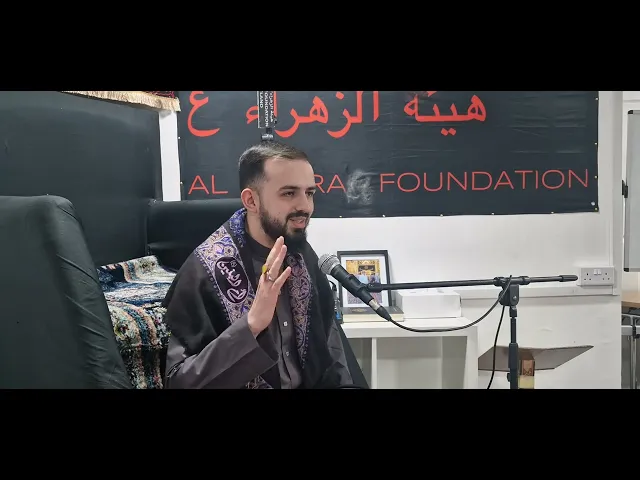
Why Do Shia Muslims Pray on the Turbah? Sayed Mohammad Hassan Alsheraa | Muslim Youth Connection
0
0
37 المشاهدات·
24/03/22
في
محاضرات
Program held by the Muslim Youth Connection at the Islamic Institute of America in Dearborn Heights, MI
Follow the Muslim Youth Connection on social media:
Instagram: https://www.instagram.com/mycmedia
Facebook: https://www.facebook.com/muslimyouthconnection
Twitter: https://twitter.com/_mycmedia
YouTube: https://www.youtube.com/mycmedia
أظهر المزيد
Transcript
[0:33]my respective brothers and sisters in sha allah everybody is doing well
[0:44]and in the best of health and circumstances tonight's discussion revolves around
[0:48]a very pertinent topic that has laced the minds of lovers of
[0:57]ahadu bait the adversaries to the followers of the bait it is
[1:02]riddled with misconception misunderstanding even conspiracy theories and that is the discussion
[1:12]which distinctively identifies the few things and attributes that distinctively identify shia
[1:19]one can guess the love of bait the tem and eulogizing morning
[1:26]you see someone that is muslim and they emphasize loving the holy
[1:29]prophet and his family in addition to mourning in their days of
[1:34]tragedy your guesses are that these are is probably very likely for
[1:41]we highly emphasize mourning the prophet of islam's passing oppression in addition
[1:46]to the atheist as well one more aspect however that distinctively identifies
[1:54]asia is the methodology of their prayer when asked how do she
[2:01]operate the quick responses is well perhaps their hands to the side
[2:04]however that's not distinct nor exclusive there are many or some groups
[2:10]from the sunni narrative like the maliki school of thought who also
[2:14]pray with their hands to their side but the one edition includes
[2:19]the turba the as it's referred to as for those who come
[2:25]from the urdu or farsi background the healing soil or dirt or
[2:31]the more or the clay tablet and a demonstration or an exhibition
[2:37]right here we see the turba this is synonymous with the lovers
[2:40]of the bait with regards to their act of worship anyone who
[2:44]prays on eturba one hundred percent is asia 100 there are no
[2:50]denominations from the non-shia school that pray on the torba there are
[2:56]no shii sects for example one may look at the isma'ili group
[3:01]or circle only the ithne in their vision and world view muslim
[3:06]praise only hence why our topic today is why do the shia
[3:12]pray on the turba it's best to address this discussion with the
[3:18]following questions in mind do we act exclusively and nothing more nor
[3:26]short of the sunnah of the holy prophet of islam that is
[3:29]to say did the holy prophet himself pray on a torba otherwise
[3:36]if he did not pray on eturba why are we doing it
[3:39]because as understood from the prophetic traditions you cannot innovate in this
[3:44]religion you cannot add or make something the holy prophet did not
[3:49]sanction did not allow did not give the green light to so
[3:54]that being said how many of us here go through our entire
[4:00]lives praying or not praying except that it's done on the torah
[4:02]saying the question is did the holy prophet do it because i
[4:08]want to justify and substantiate every one of my acts in the
[4:12]way and parallel with the holy prophet of islam this is question
[4:16]number one question number two is why is there so many allegations
[4:23]accusations misunderstandings with regards to those who use a turba for prayer
[4:28]who originated the turba of imam al-hussein and is it only the
[4:36]turba of imam hussain that we are incumbent to pray upon or
[4:40]do we have other options insha'allah let's address all this after allah
[4:44]salawat muhammadin i remember personally having visited or going to iraq to
[4:57]visit family and dusiara we had a transit in qatar and this
[5:04]is not to get political whatsoever but you know in that transit
[5:07]we stayed a couple of hours and it happened to be exactly
[5:10]salah time if i'm not mistaking i believe salazar and so they
[5:16]have prayer rooms allocated and many facilities have those to cater to
[5:20]their muslim members hospitals will have spiritual reflection rooms universities have them
[5:25]airports have them as well and so being there this is a
[5:31]predominantly not a concentrated country but this is not to get political
[5:36]the predominant demographic and qatar is not a demographic but there was
[5:41]no concern or fear we live for goodness sake in the 21st
[5:45]century these extremist thinking these very violent thoughts they shouldn't come out
[5:52]today they come out in sub splinter extremist groups but not with
[5:55]your average joe that's just trying to move on and travel so
[5:58]going to pray i remember i pulled out a turban i was
[6:01]among everyone else and of course the majority don't have a turba
[6:04]i mean i don't expect that these are non-shias so we are
[6:09]all brothers under the eyes of allah insha'allah but then i put
[6:13]the turba down and i just want to pray my salah is
[6:17]question for goodness sake it's shortened allahu akbar as soon as i
[6:20]began the prayer so when you begin to pray you're a little
[6:22]bit vulnerable you can't turn you can't change your spot we all
[6:27]know this someone came and literally kicked my torba and it went
[6:31]flying and hit the wall and broke into like a thousand pieces
[6:35]and i was stunned i could i've heard some of us may
[6:41]have heard of these stories oh you go to those locations where
[6:43]she are oppressed for example that isn't to say for example in
[6:48]that particular country this is the case but we've heard stories marginalized
[6:52]groups here and there don't get the right and i'm like yeah
[6:55]those are unfortunate stories in the back of my mind but they're
[6:57]not going to be applicable to me nope it happened right then
[7:02]and there turbo goes number one i felt so secluded i felt
[7:05]like an outsider felt like i wasn't wanted in addition to that
[7:09]i felt like okay if this weirdo who looks like a caveman
[7:13]for all for lack of better words wants to kick my turbo
[7:15]what's you going to do next that prayer of course i had
[7:18]nothing to pray i was also at that time younger and i
[7:22]stopped the salah and moved on and i thought about this why
[7:26]is there so much hate what did we do so i did
[7:31]some research i looked into it the main allegation is this brothers
[7:33]and sisters that you are doing you are worshiping besides allah when
[7:38]you pray on the torba and i thought to myself that can't
[7:43]be the default belief unfortunately it is it is the default belief
[7:47]for predominantly a majority of those muslims who come from non-shia circles
[7:53]the reason why they don't do sujood or sajdah is because they
[8:00]associate it clearly with the act of shirk you are committing polytheism
[8:03]basically allah is to be worshiped not through that you cannot bow
[8:09]down to a stone is that not tantamount to worshiping an idol
[8:13]and how much did rasool allah himself for goodness sake stress on
[8:18]removing idols don't put images to allah or using mediums you built
[8:22]with your own hand to worship allah through you can't do that
[8:27]and some of us may notice that the turba itself might have
[8:30]iconography right you might see a variety inscribed on it you could
[8:34]see a face even some will have the iconography a depiction of
[8:41]let's see one of the imams of ahu bait for example so
[8:43]from the non-shiite world that's like that is 100 shirk and that's
[8:49]why you need this to be kicked the quran stresses how bad
[8:52]sure can be in one of the sins god does not forgive
[9:01]if you perform it's a sin and allah says allah forgives every
[9:04]single sin but right here allah is not going to forgive so
[9:07]what you are doing is extremely ridiculous therefore thank you therefore deserving
[9:13]of a good kick how do we address this from a theological
[9:19]standard understanding that this is distinctively synonymous with you as a shiite
[9:25]when you think shia today lover of the turba with respect to
[9:30]their prayer is the one image the one symbol that comes to
[9:32]mind so it's worth the effort to know hey good question did
[9:37]the prophet pray on the turban if not why am i doing
[9:38]it who started it and if that's the case why isn't the
[9:44]rest of the muslim world addressing the torah the way we do
[9:49]it's not just a matter of simply let me do sujud we
[9:53]shall reverence haven't you seen we kiss the turba we honor the
[10:00]torba we hold the turba and contact it with care sometimes when
[10:04]those are ill there are those who are ill a little piece
[10:08]of that turba is taken and consumed with water like there is
[10:13]shifa and health with it does all this have a basis a
[10:17]bearing and let's not simply point at traditions from the shia world
[10:20]view i could end this discussion tonight by saying we pray on
[10:26]the turba because the bay told us so in our books the
[10:29]end of the story we're done no there has to be a
[10:33]bearing in islamic history if it's something this established we should also
[10:37]be able to find its remnants and traditions from the non-shia as
[10:44]well i'd like to do this by examining a number of books
[10:47]this is a rather theological discussion that at its core is a
[10:55]discussion of ahadith traditions narrations the prophet said something and let's look
[11:02]at books that are considered widely authentic reliable scholarly and scholastically accepted
[11:07]by all non-shia circles do we examine and see the remnants or
[11:14]the place of an existence or the existence of a turba or
[11:17]no i'd like to examine one book that has been authored by
[11:25]an individual who is considered a cornerstone islam meaning a pillar of
[11:29]a scholar from non-shii theology and non-shia circles this man goes by
[11:37]the name of ebin is a star monolith scholar from the celephistic
[11:45]worldview in the sense that what he has produced what he has
[11:50]contributed to the sunni world is something highly praised he is what
[11:56][Music] where do we begin with his introduction a man that has
[12:03]contributed so much in the shiite heritage so even jose why is
[12:06]he so predominantly well respected and admired and listened to is because
[12:11]he is the student of the very universe that has placed forth
[12:19]the wahhabi mindset a man by the name of ibn taymiyah this
[12:21]individual is very well known very well respected and honored by those
[12:26]from the non-shia ibn tamiya is a very firm figure against the
[12:33]shia and he coined a particular term although this term existed before
[12:38]him he called us those who rejected and rejected the legitimacy of
[12:43]the caliphate of the first three so he was vehemently against the
[12:50]lovers of the albeit is his student this individual has a book
[12:57]called irathetullahfan in this book he tells us did the holy prophet
[13:02]of islam pray the way we see him pray in the shia
[13:09]world view or in the sunni world view just a disclaimer this
[13:12]is in no means to become polemical polamix i am here to
[13:15]denounce or refute the opinions of our brothers and sisters from other
[13:22]schools of thought but i am showing and insha allah attempt to
[13:25]see where we find a consensus that what we are doing it
[13:30]cannot be further away from and the mother of all iranians is
[13:38]in the very texts that are considered sacred canonized texts you will
[13:43]find the remnants and the foundations of the abdullah hussein with respect
[13:54]to his prayer you will find many muslims attempting to claim that
[14:00]i pray just like the prophet prayed and so then he adds
[14:07]you will find those out there who do not pray except it's
[14:12]upon a sid what's a sajada if you want to distinguish a
[14:19]muslim and a muslim sunni tell them hey let me see you
[14:21]pray and the prayer i'm not speaking about hand placement because even
[14:26]within sunni denominations hands are different the worldview has their hands placed
[14:31]on their chests and they have their jurisprudential reasons why sheikh muhammad
[14:35]bin sal the founder says that the noor of the chest should
[14:39]not escape so hold on to it when you pray abu hanifa
[14:46]have the hands on the navel so like that belly button region
[14:49]and imam malik bin anis has the hands on the sides just
[14:52]like the shia world view so i'm not speaking about that i'm
[14:57]speaking about where the head placement is what do you do to
[15:01]judah and so ibm jose as revered as he is says you
[15:07]find those out there who do sujood on a sidjade what they
[15:11]say sajada we've seen them in their thousands of colors some of
[15:16]them have pictures of the kaaba others have pictures of better make
[15:20]this sidjar you will see those who pray on a sidjad you
[15:25]sally rasulullah and the prophet of islam never ever prayed on a
[15:34]siddha a prayer mat whatever once in his life but period there's
[15:39]no if ands or buts with considering that there were sid around
[15:46]that time carpets existed they existed way before the life of the
[15:51]holy prophet of islam or the generation of the prophet and the
[15:55]sahaba a prayer mat existed mats carpets made from cotton wool and
[15:59]silk these were around but rasool allah never ever prayed on a
[16:02]sidjar specifically rasulullah and whenever the prophet would go to pray never
[16:16]once was a sidjade opened in front of him sometimes today many
[16:21]when they stand to pray from the unanswered world i said jada
[16:26]is unraveled in front of them to go and begin their salah
[16:29]if you go to haram today if you go to masjid and
[16:32]nebu the holy prophet's mosque many non-muslims wonder i want to see
[16:40]how did their prophet muhammad pray what is their prayer obviously the
[16:43]first reflex just go look at the city where he grew up
[16:48]and how are people praying so the assumption is constantly well since
[16:51]they all pray on prayer mats that must have been how the
[16:53]prophet prayed naturally you go to the origin of things geographically because
[16:58]that probably means they are continuing the practice of what happened with
[17:05]the holy prophet and his prayer but that couldn't be further from
[17:08]the truth the prophet never once prayed on a said nor was
[17:13]a siddha prayer mat ever opened up in front of him rather
[17:24]he would pray on the ground and there were times he would
[17:32]do sujood on the mud wakana you sally and he would do
[17:39]sujud on a reed mat there's a difference between sajada and hasairah
[17:46]100 of the time is made from cotton this is what sijada
[17:52]means jurisprudentially when reading books of traditions is a reed mat made
[17:58]from stalks of plants or reeds the common principle is what we
[18:07]are observing it is something that is never wearable sejada is made
[18:12]from cotton sometimes silk sometimes let's say today polyester these things i
[18:16]can wear we have clothes that are made of the same material
[18:19]rasulullah we notice never prayed on something that can be worn nor
[18:27]did the holy prophet pray on anything that can be consumed this
[18:33]principle hits a prophetic maxim what is this maxim the prophet said
[18:38][Music] pray just like how you saw me pray ya rasulullah i've
[18:45]never seen you pray on a sidjar according to the words of
[18:51]the most prominent non-chie scholar with respect to the celethic mind view
[18:55]nor did you ever use anything that was consumable in our traditions
[19:01]from the school of athletes our imams contribute so much in helping
[19:05]us understand what we can do do sujud on imam says you
[19:13]can't do sujud on a number of things you do everything but
[19:16]not a few things number one that which can be consumed you
[19:20]can't do sujud on leaves that you can eat edible leaves whatever
[19:24]sometimes there were farmers back then who would graze their land and
[19:29]they would grow edible leaves let's say a plant where its leaves
[19:35]were edible come the time of prayer they would do so judah
[19:36]on this because it was an easy mat to do sujud on
[19:39]base say you can't do sujud on that which you can eat
[19:42]nor that which you can wear so no cotton nor silk imam
[19:48]asada adds two more things in addition to he says specific elements
[19:54]of the earth such as what he specifies particularly gold and silver
[20:02]you can't do sujud on gold and silver so that gold torba
[20:06]you have stopped doing sajuda on it i don't imagine there is
[20:08]such a thing but you can't do sujud on gold or silver
[20:12]they asked him why why not these things doesn't make it's pretty
[20:16]interesting but why something you can't eat something you can't wear and
[20:19]gold and silver seems rather bizarre or random he says because these
[20:26]things are ali these are the gods of the slaves of the
[20:33]dunya of this world what do you mean an exposition number one
[20:39]how many people worship that which they eat and that which they
[20:45]wear look at the two biggest industries in the planet the food
[20:49]industry and the clothing industry people are willing to spend 500 on
[20:54]a steak that has laced with gold my goodness sake the gold
[20:59]doesn't have any flavor just because it has gold right it looks
[21:01]pretty cool four hundred dollars go and in a matter of like
[21:05]three five minutes a steak that's five hundred dollars like for goodness
[21:11]sake there were no other options i swear your mother's cooking is
[21:13]the best you could have just gone and had that a steak
[21:17]for five hundred dollars that's rather bizarre ali had to abide and
[21:20]of course where do i need to begin with the fashion industry
[21:24]i i think there was a a sandal pardon my examples here
[21:28]there was a sandal made by kanye west it's just white i
[21:34]saw it it's just white and the toes stick out so there's
[21:37]nothing special with it does someone know what i'm talking about like
[21:41]you guys are shaking your heads how much is it i couldn't
[21:43]believe it when they told me the price so literally picture this
[21:47]it's like any other sandal you will find randomly on the street
[21:51]in arak 500 i literally can find that here here when we
[21:56]go to bastard inshallah i'll find it on the street right on
[22:00]the floor it's plan does it walk itself no it's because the
[22:03]brand names are slapped on it these things are the gods of
[22:11]the slaves of this dunya and of course silver and gold how
[22:14]many people worship the silver and worship the gold in the words
[22:19]of the wise amir al-mu'min alaihissalam there are people dino whom the
[22:23]their deen is their dinar how they worship these things as a
[22:28]result imam sadaq said these things are haram to do sujud josiah
[22:34]proceeds with a description emphasizing how much rasool despised the act and
[22:42]discouraged doing sujood on a sidjade he would continue and add sallallahu
[22:50]alaihi wa'ala he was the prophet of islam would do prayer on
[22:59]the hasirah we mentioned this was a reed mat so you get
[23:07]like a dry stalks from plants especially those in the arabian peninsula
[23:11]that would grow near rivers and banks of water you find stocks
[23:14]grow these things when they dry up you can make them and
[23:19]weave them into baskets or you can make them into little mats
[23:22]the prophet would do sujud or salah on these prayer mats made
[23:28]from reeds called a hasirah one day the prophet did so much
[23:31]prayer on this haseerah it turned black from color it would stain
[23:35]black from dirt from color and so what happened they cleaned it
[23:44]with water rasulullah made sure that this was done was then the
[23:53]prophet prayed on it and never when it was dirty for example
[23:59]or darkened sometimes when we do sujood on the turban for some
[24:01]time you see there's like a darker spot forming from the oils
[24:03]from say even dirt so on the prophet saw this happening to
[24:11]the this reed prayer mat he had and he had it washed
[24:15]with water but an easier alternative would be instead of scrubbing and
[24:19]washing it just put up you know a little carpet over it
[24:23]or put like a blanket over it but this interpretation is saying
[24:29]that never walem you they didn't ever put on top of it
[24:35]they saw it getting dirty instead of just putting something on top
[24:38]of it clean it how much rasulullah discouraged praying on top of
[24:42]carpet on top of prayer mats and he would often prey on
[24:52]dirt sometimes and on pebbles until you would notice the staining and
[25:11]marking upon his blessed forehead and on his nose from how much
[25:18]he emphasized doing sujud on the earth the natural earth not something
[25:22]designed and made into a carpet through cotton or material that can
[25:29]be worn this is why in islamic law and basically it must
[25:35]have to have the nose also get in contact with the turba
[25:39]because rasulullah whenever he would lift his head they would always notice
[25:43]the stains of some of that earth on his blessed forehead or
[25:48]on his blessed nose so some have said as for the forehead
[25:52]it's must have to have that contact of the earth and as
[25:56]for the nose it's wider for the forehead rather but as for
[25:59]the nose it's musab because we saw the holy prophet of islam
[26:06]sallallahu alaihi walusalam raising his head and you would always see those
[26:12]marks on those spots we had mentioned the legitimacy of this particular
[26:17]scholar eben claimed jose in that he stems his authority and knowledge
[26:22]his scholarly effort from being a disciple of ibn tamiya the salafi
[26:27]founder the movement of wahhabism inspired by muhammad by muhammad bin abdul
[26:36]wahab inspired by ebintamia you could say muhammad abdul wahab is a
[26:41]distant disciple of ibn tamiya ibn tamiya is a 15th century scholar
[26:46]even abdul wahab came you know later on in like say the
[26:51]19th century but he was so influenced by his firmness towards all
[26:55]those that contradicted his world view it's either my way or the
[27:00]highway mindset ebentamia mentions now we're talking about the teacher here so
[27:06]what he's going to say is considered very paramount ibn tamiya mentions
[27:10]in his majmu fatawa which is a compendium of fatwas that he
[27:15]issued he was a mufti in surya and he issued a lot
[27:21]of decrees in it he mentions one thing a story concerning a
[27:25]a man that they refer to as a taba tabe which is
[27:30]not a sahabi of the prophet we have categories of people that
[27:36]are labeled the sahaba those who saw and met the prophet the
[27:38]prophet was in their life the tabi on those who never saw
[27:45]the prophet but saw the sahada an example is the likes of
[27:47]hasan al-basri for example and in the non-shia world imam zainul abedin
[27:55]is considered a tabe because he met the sahaba you could say
[27:59]jabbar bin abdullah ansari for example or even imam al-baqara they would
[28:04]consider them tabes yet they take and they follow the sahaba who
[28:08]saw allah then there's a third group they are referred to as
[28:15]the tabata they follow those who follow the sahaba so there was
[28:17]a man known as abdul rahman bin mehdi again ibn tamiya mentions
[28:22]this in his fatah he says this guy's a learned individual he's
[28:29]not just anyone and in medina as we mentioned like that third
[28:37]category of people close to the prophet of islam he goes to
[28:41]the masjid of rasulallah and he takes a prayer mat with him
[28:44]and he opens the prayer mat and he starts doing salah on
[28:50]the prayer mat the masjid before this prayer mat was there it
[28:54]was all sad and just coarse earth he opens this and he
[29:00]starts doing salah allahu akbar who was there to witness this act
[29:04]malik bin anas the imam of the maliki school of thought we
[29:10]had mentioned malik binenes famously has the opinion you put your hands
[29:14]to the side of prayer and he witnessed abdul rahman bin mahdi
[29:19]open asidjada and pray this is the first time is open in
[29:23]the message of rasulullah and so what does malik bananas do knowing
[29:27]that never once did a sajadah enter the masjid nor did rasulullah
[29:33]ever pray on the sajadeh he looked at him and he said
[29:35]arrest him jail okay slow down why arrest the man because he
[29:42]had done an innovation in the mosque of the prophet he created
[29:46]a bid arrest him because malik bananas was a ali a judge
[29:55]administered by al-mansour at the time the khalifa and so he had
[29:58]judicial power and so he saw abdul rahman he's like what does
[30:04]that man think he's doing he's praying with us not on my
[30:08]watch rasulullah never did that put him in jail they said it's
[30:12]that famous well-known generous man atabatabe respected and revered he's like who
[30:19]cares he innovated put him in jail i have a question i
[30:22]can't help but ask if a person who prays on a prayer
[30:27]mat goes to jail a three-fourths of the muslim word what are
[30:31]they doing i'm not advocating anything but i am looking at narrations
[30:36]and traditions in sources that i couldn't care less with respect to
[30:40]how they affect my life as a shii because i have my
[30:44]own sources we have the works from the ahlulbayt for we hold
[30:46]that we held on to the quran and the bait has made
[30:50]very very clear but if i was to play the game and
[30:54]if i was to consider things all the way and i don't
[30:58]consider things halfway i consider all the way let me understand your
[31:02]narrative it looks like we're in trouble if we pray on a
[31:05]prayer mat in this situation if the legal edict is to put
[31:10]people in jail now as shia we should never ever enforce our
[31:13]opinions on anyone the sad reality is many enforce their opinions on
[31:17]shia the example provided earlier you can have your turba kicked around
[31:21]but how much do we see brothers and sisters from the non-shia
[31:28]world comfortably and relaxingly praying here without a turba well respected honored
[31:32]and revered we don't do anything to that we welcome those from
[31:37]the non-shia world in fact we are happy to see those who
[31:39]are non-shia our sunni brothers and sisters praying in our mosques i
[31:47]invite that we should encourage that we should love for that to
[31:50]happen no more disunity in this regard for goodness sake we are
[31:52]all muslims following allah but can you say the same in a
[31:59]predominantly non-shia environment for shia praying the way they want can they
[32:03]be comfortable sometimes these are questions we have to be asking at
[32:08]times in any case considering all of this the prophet never prayed
[32:12]on the sid what did he pray on i want to know
[32:16]was it the turba otherwise if the prophet never did why am
[32:19]i bothering praying on a turba from karbala because if the problem
[32:24]is innovation and we can't innovate in islam is this an innovation
[32:27]let's examine the following rasulullah we made it very clear prayed on
[32:32]earth and he is the one that said the following narration which
[32:37]is bipartisan unanimous accepted by every school of latin ju the earth
[32:46]has been made for me a place of prostration not miss jiden
[32:51]with a kasra mess jeden with a is this holy place masjid
[33:01]we worship allah in it a mosque basically masjed an area for
[33:06]your sujud for the masjid of the forehead to be placed on
[33:09]the floor rasulullah said the earth has been made from me a
[33:15]place where i can prostrate my blessed head on and a form
[33:20]of purity we take the dirt in the absence of water we
[33:25]don't we can't do ablution basically and we can use that dirt
[33:30]to do what is called tayammum because that dirt is a form
[33:34]of purification for us so number one earth this is accepted by
[33:38]every muslim in the world today no matter your madhab rasool allah
[33:41]prayed on the earth what are we doing when we pray on
[33:44]the torah in that case this is sanctioned from rasulullah number two
[33:49]rasulullah prayed on we described it earlier is a reed mat made
[33:56]from stalks made from dried up for example branches a reed mat
[34:02]see if you look at baskets that are hand woven usually that
[34:04]material is what is used when a hasira was made in the
[34:09]7th century arabian peninsula so basically i said jada using dried up
[34:12]wreaths then he prayed on something known as al-humrah these are all
[34:18]well documented what is a homura a homura is simply the palm
[34:24]spade so basically a palm tree sometimes you see the chunks of
[34:30]the palm tree the levels of the palm tree those if you
[34:33]can rip one out don't do that because you'll hurt the tree
[34:37]say like a dried up dead palm tree they are very like
[34:39]square and they look like canvases back then they would write the
[34:42]quran on these because paper is hard to come by so they
[34:47]would take whatever they can that had a large surface area and
[34:49]so they would take from these sometimes these are basically like smaller
[34:52]prayer mats for them and they would pray on them they called
[34:57]them al homura so rasulullah also prayed on something called al hasa
[35:04]or al-hasbah what's a hasba or al-hasah pebbles stones rocks the narration
[35:13]is found in sunan abidawud the following tradition is considered sahih in
[35:19]the famous islam who again non-shia material here abu dhabi his famous
[35:26]sunnah that ibn omar the son of um had multiple sons the
[35:32]second caliph he had away the lab and he had abdullah abdullah
[35:38]is considered a scholar in their world view and so ibn um
[35:42]the tradition doesn't specify who but it's likely abdullah bin umar because
[35:44]he is the one that usually gives out traditions he's the muhaddith
[35:47]here he's a a guy that narrates a lot of traditions he
[35:52]is asked a question when did the message of rasulullah the ground
[35:58]of it become this indicates to us that a time and period
[36:06]the masjid of the holy prophet of islam went through phases the
[36:09]earth was all regular sand or just simply coarse dirt later on
[36:14]it became like rocks and pebbles later on they would scatter rocks
[36:19]and pebbles asked when did the rocks and pebble situation happen when
[36:23]did the mess of rasulullah convert to that the floor of which
[36:26]he said one day it rained on us so hard the ceiling
[36:33]is made from palm tree branches and leaves and so when it
[36:37]rains water can go through it rains so bad that the floor
[36:42]because it's just open course dirt we didn't open mats on it
[36:45]or rugs even though these things were around but rasulullah discouraged it
[36:49]the earth became muddy and it was time for prayer and we
[36:56]couldn't simply pray on water it was really bad the mud and
[36:58]dirt and all that water made it very difficult for us to
[37:04]pray and do sujud right on it so we decided to collect
[37:08]observe the following brothers and sisters collect rocks and put them in
[37:12]our hands like this a hasba or a hasa are can not
[37:20]consider granule size like sand for example no that's rumble basically that's
[37:26]sand or hasa they're considered larger have you seen sometimes the stones
[37:33]if you've ever insha allah gone to hajj or will go to
[37:34]in the event of jamarat where they cast the stones on the
[37:39]three shaitaan towers or walls you have to collect something larger than
[37:43]a pebble but not too big there are specific dimensions for this
[37:46]they would take those and they would hold on to them in
[37:50]their hands when we would do sujud ibn umar mentions right before
[37:52]we hit the floor with our forehead we will place the rock
[37:57]and do sujood right on it literally like this when we finished
[38:01]we saw rasulullah by us at us and we're thinking oh did
[38:06]we do something wrong is this we've never done this before nor
[38:09]did we see rasulullah necessarily do it what is he going to
[38:15]say rasulullah looked at us and he said what a great act
[38:20]this was you thought you were innovative you improvised you did something
[38:26]good because you maintained the conditions that is not something you can
[38:30]eat nor was it something you can wear nor is it gold
[38:32]nor is it silver and you could not do sujud on very
[38:38]you know viscous mud even though allah at times reduce to judah
[38:42]on the earth as we mentioned and that would stain and mark
[38:44]his forehead but not like when the water is so much mixing
[38:48]with the mud to the point where you're like almost ankle deep
[38:51]in it so what you did was you took a stone and
[38:55]you held on to it brilliant idea right before you did you
[39:00]put it down you just subdued on it this is in sunnah
[39:05]dawood and the hadith is narrated by eben in that situation this
[39:08]is well accepted and the tradition is authenticated and reliable i have
[39:15]to ask this is a part two of me can't help but
[39:18]ask what's the difference between that and this in this situation what's
[39:21]the difference the source of origin that probably was the arabian peninsula
[39:29]what's the big deal in that situation sometimes there are people who
[39:34]have spite and they hate the fact they see the amazing unity
[39:39]with the shia in this area here the sujud and sajdah on
[39:43]the turba of karbala and so anything that relates and is synonymous
[39:47]with the shia our worldview we have to hit it even though
[39:52]our traditions are laced with countless plethora amount indicating traditions indicating that
[39:59]that is totally sanctioned and accepted okay then the question begs itself
[40:05]answer me did rasool allah pray on the torah of karbala or
[40:11]no who was the first to introduce the torba if you tell
[40:14]me anyone after rasulullah it's bidah it has to be the prophet
[40:18]who was the first does anyone have any ideas who was the
[40:21]first person to introduce the turba abba abdullah and now today we
[40:26]famously do sujud on it every day who who introduced it where
[40:29]did it come from a response is that ladies any other ideas
[40:38]maybe that's an interesting response yes say that again good response as
[41:00]well some have said imam zain al-abidin because remembering the tragedy of
[41:02]karbala that imam would take from that dirt and he would go
[41:07]and pray on it the first these are all very accurate answers
[41:14]the very first to introduce the turba of imam al-hussein to man
[41:20]and moving kind of we should know is allah through to rasulullah
[41:30]said to the holy prophet islam in a number of narrations i
[41:35]would like to present to you these narrations in sha'a ta'ala in
[41:39]a particular order the first narration rasool allah introduced the total of
[41:43]imam hussein that we should accept as fact it's found in musnad
[41:49]ahmed bin hambal ahmad bin hambal is the imam of the hanbali
[41:53]a school of thought ahmed bin hambel of course every predominantly selfie
[41:59]a group or individual takes him as the jewish prudential imam for
[42:05]them as we know there are four medhabs or groups for modern
[42:09]sunni islam today the military the shafe the hanbali and the hanafi
[42:13]ahmed bin hambel ibn tamiya was a follower of his he was
[42:18]his imam and virtually every wahhabi and salafi today so because ahmed
[42:24]bin hambal is considered in their mindset an orthodox narrative of islam
[42:30]abu hanifa included logic and rationale and philosophizing and so he thought
[42:35]to himself that that's not really core to islam and another name
[42:39]for ahmed bin hambel's group was called ahlul hadith we only follow
[42:43]what's there and i have to give credit where credit is due
[42:48]that logic is good we have to follow what's there if a
[42:50]hadith is there to sanction something i want it if it's not
[42:54]then let me reconsider so the means and the understanding on the
[42:58]logic is sound ahmed bin hambel has a work a collection called
[43:03]his musnad his compendium of narrations in it he records to us
[43:08]the following narration also this narration he adds at the very end
[43:12]in the subtext that this narration is authentic and the men that
[43:20]narrate the narration in the chain of transmitters or the chain of
[43:24]narrator narrators are all reliable the following rasool allah says and he
[43:33]is informing um the wife of the prophet um is telling us
[43:39]the following today an angel entered my house the first time i
[43:57]have ever seen this angel before and never has this angel entered
[44:02]my house before again the narration is in non-shia material and is
[44:06]considered sahih in their own standards this angel has never entered my
[44:13]house before meaning the situation is extremely significant if allah is dispatching
[44:17]a particular special angel lem your son hussein is slaughtered will be
[44:35]slaughtered how old was imam hussain rasulullah left this world seven years
[44:40]old and so rasulullah is being informed of what knowledge of the
[44:47]unseen at this situation and if you desire i can bring to
[45:00]you from the earth the earth of which he will die upon
[45:03]yukt and he pulled out a turba right here a turba hamra
[45:14]red in color he grabbed for me the earth of karbala and
[45:21]it was red in color but he gave it to me after
[45:25]he asked me the question if you want meaning rasulullah approved give
[45:29]me it i want to see the earth my beloved son abba
[45:31]abdullah will be killed on he grabbed for him this earth and
[45:36]it was red in color rasulullah makes mention the second narration is
[45:41]found in a work known as the editions the additional ahadith for
[45:51]the books muslim and bukhari these are two canonized most reliable and
[46:00]authentic texts from the non-shia world view these are considered all authentic
[46:05]every hadith that's inside the compiler of this book he what he
[46:12]does in this effort is he gets a hadith that were not
[46:16]added to muslim and bukhari but use the same methodology he's like
[46:20]technically they should be added because they're the same narrators they're the
[46:25]same reliability standards why didn't either muhammad bin isma'il or muslim add
[46:34]these inside the their works i don't know maybe they missed them
[46:39]but these are considered sahih in their standards al mustadrak the following
[46:44]hadith one day um enters upon rasulullah she sees him struggling in
[46:50]his sleep then she sees him wake up very hesitant and stressed
[46:55]then she sees him go back to sleep she sees them wake
[47:00]up hesitant and stressed like you know there are times you wake
[47:03]up from a bad dream you immediately start waking up panting as
[47:06]if you were just running a mile and you're sweating your heart
[47:10]rate is up you're tired she said this is the second time
[47:14]i saw him do this and i spanned him just a few
[47:15]minutes then i decided to leave him maybe he needs his privacy
[47:20]and maybe he'll be comfortable if he has his privacy and that
[47:25]will give him some sleep and rest i left i came back
[47:29]and i saw him awake but this time holding a container a
[47:32]jar the narration calls it basically a vessel inside it was earth
[47:38]was dirt was soil basically and i asked him what's this rasulullah
[47:46]said informed me in a dream the dreams of the prophets are
[47:49]revelation not like ours sometimes they're nonsensical but we like to make
[47:53]you know a whole story about our dream as if it was
[47:57]allah ordained and sent me a message but 99 of times it's
[48:01]usually nonsensical but the dreams of the prophets are legitimate messages and
[48:04]signs and so he said i saw jibra'il jibrai told me ya
[48:10]rasool allah your son hussain will be killed by your own ummah
[48:14]in the land known as karbala rasulullah then demanded give me from
[48:20]the land of karbala and so rasulullah is received this collection of
[48:26]dirt sand of soil from karbala and he has a place in
[48:30]a container rasulullah um narrates with her own two eyes this is
[48:35]the wife of the prophet she says i see him kissing it
[48:38]haven't you seen some people what do they do with the turtle
[48:42]but sometimes when they finish their salah when they complete their salah
[48:45]when they drop the turba when they mishandle it by accident i'm
[48:48]not kidding i see some guys i see guys not girls guys
[48:53]who take a turban they start tossing it around like this or
[48:56]rolling it or when they go to put it back they throw
[49:00]it back hold on this is a total bar rasulullah honored it
[49:03]for goodness sake i haven't seen this from the sister side so
[49:06]i got to give credit where credit is due but from the
[49:09]guys yeah and it's usually the younger guys hanging out throwing them
[49:13]around as if it's just yeah i use you for my service
[49:18]this was honored by rasulullah she says with my own two eyes
[49:20]i saw him kissing it now i need to bring an observation
[49:25]very quickly did imam hussain die in karbala during this time he
[49:29]wasn't dead we just said rasulullah died in the eleventh year after
[49:36]hijrah abba abdullah was seven years old dies or is martyred rather
[49:40]in the 61st year after hijrah years after karbala 51 years uh
[49:47]years after rasool allah 51 years after rasulullah has left this world
[49:50]but before imam hussain is killed in karbala allah has already honored
[49:55]karbala for his sake if karbala is honored and revered because abba
[50:03]abdullah will be killed on it then how much should we honor
[50:09]it after abba abdullah is killed on it and buried with it
[50:12]among his entire companions and group of family members how much how
[50:16]special is karbala in that situation and you blame us for doing
[50:18]sujud just said sujood on the earth of karbala or blame us
[50:23]for kissing the earth of karbala when kissing and expressing love to
[50:31]a container with earth from karbala before abba abdullah is killed in
[50:35]the land of karbala this is another indication another story another hadith
[50:40]where rasulullah is showing us i'm going to introduce you the the
[50:46]sanctity of karbala i will introduce it to you not anyone else
[50:51]rasulullah this hadith is also found in muslid again when i reference
[50:57]this source it's for purposes of showing the irony of all ironies
[51:03]that in the most reliable and considered and canonized texts you can
[51:08]find our teachings and practices in your own material let alone our
[51:14]material the following narration is narrated by a man by the name
[51:18]of abdullah bin nujay abdullah nanuje his father goes by the name
[51:24]of new jay was a companion with imam alibn and he is
[51:29]traveling with imam amira mu'mineen to go to safein to combat muawiyah
[51:33]sofian so the scene is set nujay goes with imam ali of
[51:45]course but the tradition says may god be pleased with him indeed
[51:49]but the more honorary or honorable manner to honorable me is but
[51:55]this is the narration here um [Music] they're on their way to
[52:05]suffering which is in modern day surya and imam amir mu'mineen is
[52:10]in kufa that's where his capital is they make their way to
[52:14]nainoa what is nainoa the province in which karbala is at right
[52:18]shabbat the province in which karbala is on you got cities and
[52:24]you got provinces okay like i say wayne county the city of
[52:26]dearborn heights for example okay nainoa is the big province karbala is
[52:33]a city a region in it when they made it to karbala
[52:38]or nanawa to be specific began to pronounce loudly this hadith brothers
[52:48]and sisters unfortunately in all our years of majalis i've only heard
[52:52]it narrated twice maybe three times but it's such a heartbreaking hadith
[52:57]with respect to the events of karbala found in material of the
[53:01]non-shia i don't know why we're not hearing more of this hadith
[53:06]because watch imam ali begins to mourn imam hussain before imam abba
[53:10]abdullah is even martyred fenada by the banks of the euphrates imam
[53:30]hussain is with him but he's not in this particular gathering he's
[53:34]just in his mind his in his in his memory so nu
[53:40]jay he goes by the name of nuje bin salama is like
[53:42]what who who are you talking about who are you referring to
[53:48]but who are you referring to abdullah because i'm not abba abdullah
[53:51]it's just me and you together is just these terms have patience
[54:01]abu abdullah have patience abu abdullah by the banks of the euphrates
[54:04]so nujay says to amir meaning what are you talking about i
[54:22]entered upon the holy prophet of islam peace and blessings be upon
[54:29]him and his blessed progeny that you mean one day and his
[54:37]eyes are pouring tears crying did someone make you angry does someone
[54:47]displease you ma no what is the reason your eyes are pouring
[54:54]taffy of brothers and sisters means to pour to have almost a
[55:02]waterfall-esque description of crying and mourning lamenting crying to a high degree
[55:09]why are your eyes crying in such a manner has just left
[55:20]from me a few moments ago and he informed me that my
[55:30]beloved son hussein will be killed by the furad banks notice what
[55:34]did he say not in nainoa not in karbala why does rasulullah
[55:38]specify for my brothers over here in this left side right here
[55:44]why does rasulullah specify that abba abdullah will be killed by the
[55:48]banks of the euphrates earlier it was a whole province why banks
[55:52]of euphrates he's heartbroken from now he dies thirsty by the river
[55:57]bishop that's it i am saddened he will be killed by the
[56:02]banks of the euphrates river he could have said the region he
[56:05]said a river and how much does this weigh heavy on the
[56:09]heart of rasulullah that he is thirsty and he dies by the
[56:14]biggest source of water shabbat do you desire that i give you
[56:33]the turba of that land he will be killed on to do
[56:35]what to smell it just smell it hadith is authentic reliable we
[56:42]accept this hadith too even though it's found in other narrations because
[56:45]it's synonymous with our traditions as well the purpose is to do
[56:53]what just smell it do you want me jibril is saying i'll
[56:54]give it to you you just do you want to smell it
[56:56]rasulullah i said yes give me that honor to smell the land
[57:04]where hussein will be killed on the table so i extended my
[57:17]hand he gave it to me i began to smell that blessed
[57:22]smell of karbala and i couldn't help my eyes they began to
[57:25]cry and pour in poor tears remembering my beloved son abba abdullah
[57:29]hussain for goodness sake he wasn't killed yet he's still running around
[57:35]playful a young five-year-old later on 6 then 7 then rasulullah leaves
[57:42]this world and departs from hussein but he's mourning already the first
[57:47]to mourn imam hussain rasulullah the first to cry for abba abdullah
[57:53]or the heavens rasulullah from his family and every other prophet of
[58:00]allah the tradition is considered hasan the chain of narrators is accepted
[58:08]and the men that narrate this hadith they're all reliable this is
[58:12]not a lie of a hadith it's accepted then where did the
[58:18]torba come from specifically praying on the turba imam on their way
[58:29]back from going back to medina not going to sham they're heading
[58:33]back home now they make a detour to karbala takes from the
[58:41]land of karbala and takes it back with him to medina whenever
[58:44]he wanted to pray he would collect it in a mat he
[58:50]would open up the mat and he would do sujud right on
[58:53]that for the rest of his life he would only pray on
[58:56]the earth of karbala a day lemmy a companion of imam assad
[59:02]islam would say khan would never do sujud except if it was
[59:15]only on the torba of imam and for goodness sake rasulullah honoring
[59:30]revering taking care of kissing smelling showing great love towards the turba
[59:42]of karbala who am i not to do so as a lover
[59:43]of abba abdullah brothers and sisters brought us islam the sacrifices done
[59:50]on top of this turba saved islam the message of islam today
[59:56]would cease to exist had it not been for the contributions of
[60:01]the man buried in this turba can't help when i see myself
[60:05]pondering these thoughts and then go ahead and kissing that turba in
[60:10]karbala and we can't wait for the day that allah unites us
[60:14]with our beloved karbala gathering us in that jannatul the heaven of
[60:21]god on earth is indeed the land of karbala if honored years
[60:28]before the events of karbala how honorable and significant this land is
[60:33]after the greatest sacrifices in man and womankind i conclude with the
[60:38]following narration this narration is found in sahih bukhari one day rasulullah
[60:42]took his army they were heading north of medina they headed north
[60:46]probably to the land of tabuk tabuk was where the battle didn't
[60:54]happen there was no war but they began marching there and the
[60:57]byzantium empire retracted so but on their way they made it to
[61:02]the land of the mood you know the famous story of saleh
[61:04]and the she camel in the holy quran rasulullah made it to
[61:11]that land he got there and so the men who were with
[61:13]him were tired and exhausted and they were thirsty and so they
[61:19]began to fill their pels with water they found a bank of
[61:23]water like a collection a well pretty much natural well and they
[61:26]began to fill their pells and buckets with water and they began
[61:29]to drink rasulullah said to them in the land of the mood
[61:33]he said to them don't drink from this water cast that water
[61:37]back but there is a natural well right next to this body
[61:43]of water drink from that one instead the yara it's literally right
[61:46]next to it it's literally the same water why this one but
[61:50]not that one it's literally the same source of water and it
[61:54]took us a good effort to fill these pells with water so
[61:56]you want us to throw them all back and then just go
[62:00]take from the one next to it is that not a waste
[62:04]of time rasulullah said because the reason is this one this body
[62:07]of water has no spiritual significance and i want you guys to
[62:13]have barakah the wa body of water right next to it observe
[62:16]the following the she camel of saleh over 2 000 years ago
[62:23]drank from it and so i want from you to drink from
[62:29]the same body of water that a camel that belonged to the
[62:33]prophet saleh what's its description it's an ayah from the ayat of
[62:42]allah i want you to drink water from the body of water
[62:44]or an ayah from the ayat of allah a sign from the
[62:48]signs of allah drink water from so throw all that water away
[62:52]it's worth it for this i ask the following question if a
[62:56]body of water is blessed because a she camel that is called
[63:01]the ayah a sign from allah drank from it then what about
[63:06]the biggest ayah of allah ayatullah the greatest sign of allah abdullah
[63:12]hussain that had the land of karbala drink from his blood what
[63:17]a significant land that would be if this area in thamud is
[63:20]blessed because a ayah from allah the camel of salah had drank
[63:25]from it and we should also drink from it as such then
[63:27]what about the land that drink the blood of the biggest ayah
[63:32]of allah abba abdullah hussain what can i even say to begin
[63:35]understanding and fathoming the significance and the sanctity of such a land
[63:41]no surprise also allah would honor it before the events happen no
[63:45]surprise rasulullah would make and ensure that it's sanctified and respected from
[63:51]now and no surprise that we favor doing sujood on this land
[63:56]and inshallah to allah we will always do sujud on that land
[63:59]it is an honor to do so may allah bless us in
[64:03]this regard and god willing this discussion can be laid to rest
[64:07]and this misconception can be addressed by the wonderful brothers and sisters
[64:12]who hopefully now can provide a response and we're always able to
[64:19]defend and respond on the holy significance of the turbo of abba
[64:23]abdullah hussain wassalamu my dear respected brothers and sisters i'm not too
[64:29]aware if we can maybe i don't know spare time as if
[64:31]there's a need or request for q a please feel free to
[64:36]go ahead and i don't know ask if there's any one interested
[64:41]otherwise we could just wrap it up let's commence after allah
0 تعليقات
sort ترتيب حسب
- أعلى تعليقات
- أحدث تعليقات
التالي
6 المشاهدات · 15/12/27
6 المشاهدات · 16/01/01
0 المشاهدات · 16/01/08
6 المشاهدات · 16/01/08
5 المشاهدات · 16/01/08
5 المشاهدات · 17/11/27
6 المشاهدات · 17/11/27
4 المشاهدات · 17/11/27
5 المشاهدات · 17/11/27
3 المشاهدات · 25/09/17
6 المشاهدات · 25/10/08
5 المشاهدات · 20/06/26
6 المشاهدات · 23/01/11