Volgende
6 Bekeken · 18/10/27
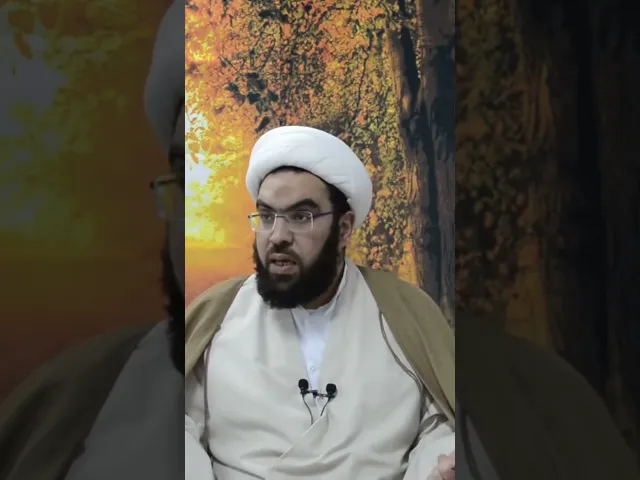
The Theory of Evolution and Islam | Sheikh Aous Asfar
0
0
6 Bekeken·
24/04/02
The Theory of Evolution and Islam Sheikh Aous Asfar | Ramadan Night 22 at the Ahlul Bayt Center of Toledo | 2024
Laat meer zien
Transcript
[0:16]states in the Holy Quran in the chapter muhamad Muhammad he States
[0:33]surely we will show them our signs in the horizons and within
[0:40]themselves until it is made clear to them that he is the
[0:44]truth is it not sufficient for you that your lord Bears witness
[0:50]over all things before we continue this discourse today our goal is
[0:59]to talk about Evolution but before we talk about Evolution it's important
[1:02]for us to remember that today is the day of the martydom
[1:07]of and that the holy household of the family of and the
[1:13]holy prophet are were going through a tough time it was very
[1:16]sad for them very sorrowful the women were still crying right um
[1:26]the imam's body was buried and now everybody was in mourning so
[1:29]it's it's important for us to stay sad and sorrowful to try
[1:35]to reduce the amount of joking you know um amongst ourselves to
[1:37]think about it as though we have someone in our family who
[1:40]has passed away right so keep that in mind and and live
[1:45]today and the next the next days up until with that sensibility
[1:51]right um so that you you really connect with okay and the
[1:57]orphans really can connecting with the orphans becomes tantamount becomes so important
[2:03]because now not only is this the last you know the last
[2:08]few days of the month of Ramadan that the holy household is
[2:11]spending without their father and the leader of their family now but
[2:14]soon it will beid and the kids will be without a father
[2:19]so keep that in mind and make sure that you carry that
[2:21]with you in your heart in these next upcoming days we mentioned
[2:27]of course that IM Ali as we as in the lecture yesterday
[2:32]that the Imam dedicated his life to teaching humanity abouted and that
[2:37]that is the role of the representatives of Allah we were able
[2:41]to understand then that the reason why in actual fact the Imam
[2:44]was was assassinated was because of that very fact because propagating the
[2:52]truth that Allah subhana wa ta'ala is the unlimited Creator brings people
[2:56]to the path right and prevents people from living aimless pointless lives
[3:02]where they can be controlled by the powers that be and so
[3:05]we understand then that the very reason why the Imam was targeted
[3:09]and why the Believers were targeted and why the were targeted was
[3:15]because they represented Allah subhah waala and they were assassinated because they
[3:21]were teaching that's the reality don't think that it there's any other
[3:24]reason right we say yes power and money but the reality is
[3:29]power and money you know was the motiv ation for for these
[3:31]evil individuals to kill the IM and the rest of our imams
[3:36]and the holy prophet why because they were teaching people the path
[3:40]to the truth the path to and so that's why it becomes
[3:44]important for us to learn theology right and that's why we're doing
[3:50]this discourse this coursework from the knowledge Seekers program this is the
[3:52]very first series um that we give in the knowledge Seekers um
[3:57]if you're interested you know go to knowledge Seekers 14 on Instagram
[4:01]sign up and inshallah we will send you information about it okay
[4:05]mamam about upcoming courses and so on so today we want to
[4:13]talk about Evolution and in order to address the issue of evolution
[4:17]it's important for us to First Define it linguistically see how it's
[4:21]used in everyday life in terms of usage as a term and
[4:25]then we want to look at it as a term of science
[4:30]how is it used in science Evolution right so as a term
[4:32]if you look up the word evolution in the dictionary you'll find
[4:37]that Evolution means the gradual development or change of something from um
[4:43]uh one state to another now in terms of usage right we
[4:47]would say something like oh over the years my uh you know
[4:54]I've evolved as a person right or I've seen this young man
[4:57]evolve over the years from being you know um uh a young
[5:00]reciter that recited on the podium to now becoming a great reciter
[5:06]that who recites on the international stage right so the so that
[5:09]Evolution then re um involves what the the gradual development of something
[5:15]so now that's in terms of linguistic usage in linguistics and in
[5:22]terms of usage next we want to move on to how is
[5:24]it used as a term in science well evolution in itself in
[5:30]its meaning at its core has the same as the linguistic meaning
[5:33]but it is of two types Evolution that is micro Evolution and
[5:39]macro Evolution now what are the differences between the two microevolution is
[5:45]considered to be the gradual changes within a species within a species
[5:50]as a result of natural selection this is what's called the survival
[5:53]of the fittest okay and this is what Darwin refers to in
[5:57]his book the origin of the species Ma mro evolution is considered
[6:02]to be the gradual change that causes one species to turn into
[6:08]a completely different species this is where we have a point of
[6:13]contention this is what we really need to discuss is there such
[6:19]a thing or not is there enough evidence of this or not
[6:21]okay Dr Khan yes muham so of course when we look at
[6:34]microevolution it's clear to us that it exists because we watch it
[6:40]on all the time on natural G National Geographic and on the
[6:45]Discovery Channel right we see the YouTube videos of the gazelle being
[6:49]chased by the Cheetahs right the weak gazelle is is killed and
[6:55]and uh and consumed by the cheetas and those that don't capture
[6:59]like that lonely lion that's withering away he doesn't have an ability
[7:02]to capture his own prey and so he ends up dying and
[7:08]his genes don't continue forward right instead the strong lion survives the
[7:14]strong gazelle survives right so this is agreed upon no two people
[7:18]will differ on as for macro Evolution to understand it we need
[7:23]to understand first Charles Darwin and his work the origin of the
[7:27]species Charles Darwin himself was was a scientist but he was a
[7:32]self-taught scientist he was actually a botanist his father was a physician
[7:39]he wanted him to be a doctor but he was too interested
[7:40]in Plants he would spend hours and days just going around in
[7:47]the fields and taking samples of flowers and plants and cataloging them
[7:51]he made such an extensive catalog that he would present it to
[7:58]the National to the Royal botney Society in the UK and they
[8:01]would um commend him for his work and they would encourage him
[8:07]to catalog all the plants of the world they suggested to him
[8:09]to actually do that so he approaches his father convinces his father
[8:14]to bankroll a trip around the world where he would document the
[8:21]plants of the world and he goes on this trip and with
[8:23]him is a MC map maker who would actually draw out the
[8:27]map of the world in his trip while he's on on a
[8:29]strip he gets to an area called the gpus islands and what
[8:33]does he notice he notices between the islands that there are Finches
[8:37]these finches they all look the same but their beaks differ he
[8:41]noticed that the reason why there were differences in their beaks from
[8:46]one Island to the other is because of a difference in their
[8:49]diet he found that some of the finches ate worms so they
[8:51]had long beaks While others ate seeds so they had shorter stubby
[8:57]beaks and so on he realized that that through natural selection which
[9:01]is a term that he actually used he used the term natural
[9:05]selection right in his book the origin of the species he said
[9:09]that this is a natural adaptation as a result of natural selection
[9:13]that has helped these birds adapt to the environment they're in so
[9:17]that they can have so that they can actually uh eat the
[9:23]diet that's available on the island where they exist nowhere in his
[9:28]book does he mention that humans came from age nowhere in his
[9:32]book the origin of the species does he mention that humans were
[9:34]at one point aquatic then they became amphibious then they became um
[9:41]Homo erectus and then Homo sapiens or before that even Apes nowhere
[9:44]in the origin of the species does he say that humans were
[9:46]originally Apes in chapter six of his book this is the only
[9:51]thing that he mentions about the change of one species to another
[9:55]he says that he observed a bear and the bear was in
[10:02]the water catching fish he said he noticed that that Bear's mouth
[10:05]was open as he was trying to Usher the fish into his
[10:10]mouth he noticed the similarity between this fishing style or method and
[10:15]that of a whale the whale would also open up its mouth
[10:22]right allowing the fish to enter to enter so he said I
[10:26]can perhaps see how in the future a bear can turn turn
[10:32]into a whale all right so that's the only thing that he
[10:34]mentioned in his book so if you read the entire book that's
[10:38]the only thing he doesn't actually give proof that this can happen
[10:43]none none at all but rather his statement is very speculative and
[10:49]it's completely unscientific why because I might enter the ocean open up
[10:53]my mouth and Usher some fish into my mouth right does that
[10:55]mean that now you know I'm going to turn into a whale
[10:59]that makes absolutely no scientific or logical sense in order to make
[11:03]such a statement a scientist must show evidence empirical evidence that such
[11:08]a thing would actually occur and he had none and in actual
[11:14]fact the statement itself clearly clearly contradicts what we've learned in school
[11:21]today as a point of fact that humans originally were um you
[11:25]know animals fish and then they moved on to the Earth the
[11:30]land and they became amphibious and then after that they turned into
[11:34]whatever apes and then humans and that sort of thing or they
[11:36]were single cell organisms and that's where they started and then this
[11:39]Evolution happened not only is this not mentioned in Charles Darwin's book
[11:47]right but this unfortunately has been taught to us as though it's
[11:54]fact when really it's completely unfactual so now we we need to
[12:02]address the issue of this idea then that we're taught that humans
[12:05]came from apes because really that's what evolution is in terms of
[12:08]how we're taught it in school agreed if you agree say I
[12:14]agree so let's address that in order to be able to prove
[12:20]that a human came from an ape the anthropologists and the paleontologists
[12:24]and the you know the the uh uh the scientists quote unquote
[12:31]and you'll see why I said quote unquote in a minute okay
[12:37]these scientists specifically they wanted wholeheartedly to be able to connect between
[12:42]the ape and the human why because they saw similarities right in
[12:45]the hands in the uh the fact that they walk erectly the
[12:49]fact their eyes you know um how they might reason right so
[12:55]they wanted to find a link that link they called The Missing
[13:00]Link and there are many many forms of this Missing Link and
[13:04]I want to mention a few of them I want to mention
[13:08]a few of them for to you first they suggested it was
[13:10]Neanderthal man then they suggested it was javaman then they suggested it
[13:17]was piltdown man then they suggested it was Tong child then they
[13:20]suggested it was heidleberg man then they suggested it was Homo habilis
[13:24]then they suggested it was Lucy and then they suggested it was
[13:27]Alex right a alicus CA those are all it's a you know
[13:33]mouthful so I had to read it to you right these are
[13:38]at least eight suggested missing links none of them were proven to
[13:41]be the missing link none the last ones turned out to be
[13:47]small Apes that's it now even though when they discovered them they
[13:51]made it seem as though this is fact then later on when
[13:58]their claims were discredited thankfully they came out and said oh no
[14:02]we were mistaken sorry oops but in modern curricula today it's still
[14:09]being taught as point of fact am I right if I'm right
[14:14]say you're right am I right if I'm right say I'm right
[14:17]S I always tell my wife to tell me I'm right I
[14:22]love to hear that I'm right anyway so so what happens then
[14:27]is okay so there's they abandon this idea of the Missing Link
[14:31]so the scientific Community actually abandoned the idea of the missing link
[14:36]why because they weren't able to um show any evidence of it
[14:40]now why why is it that such a claim would be made
[14:45]and and I want to give you a simple example I was
[14:49]watching the Discovery Channel one day and um this paleontologist has discovered
[14:54]the head of what looked to be uh canine's skull canine head
[15:00]so he took it into his lab and he 3D scanned it
[15:03]then he brought a CD a CGI artist a 3D artist and
[15:08]after he scanned the 3D skull he told him I want you
[15:13]to make the spine so he made a spine for him he
[15:15]said well what do you want the spine to look like he
[15:16]said well because he has a big head I picture him like
[15:19]a pitbull so give him a a kind of a a wide
[15:23]short spine he said okay he said what about the legs he
[15:27]said back legs need to be short and stubby front legs very
[15:29]similar to a pitbull he said okay said what about the tail
[15:34]long short he said no no no short exactly like a like
[15:36]a pitbull where's the evidence no evidence this is all speculative because
[15:40]all he has is what a skull right then he says to
[15:46]him okay what about the muscles he puts the muscles on thick
[15:49]muscles in the back you know stubby uh is this a is
[15:54]this uh a short dog yes it's shorter and in his mind
[15:58]he thought Pitbull you know Pitbull and bulldog then he says to
[16:02]him what about the fur is it long or is it short
[16:06]he says short did he get all this information from extracting the
[16:09]DNA from the skull no he was making it up as he
[16:14]went along then he said okay what about the color of the
[16:15]coat the fur he said gray he said oh and put some
[16:21]stripes on his back long Stripes short he said no no no
[16:24]short Stripes short Stripes it looks better that way where's the science
[16:29]that's completely unscientific to do right how could you do something like
[16:32]that and then sell it as though it's point of fact let's
[16:34]look at for example Gregor mendal everybody's heard of Gregor mendal melian
[16:38]genetics right we learn it as point of fact in high school
[16:44]and in college turns out mle's quadrants were completely false he actually
[16:51]fudged his results yes complete Shem complete lie okay why did he
[16:56]do this why do certain scientists do this there are three reasons
[17:03]that this could happen one is notoriety and fame they want to
[17:07]be known for discovering something two any good researcher will tell you
[17:13]and I know we have some phds here right any good researcher
[17:17]will tell you grant dollars and funding if I want to continue
[17:20]research I need the grant dollars so I have to show that
[17:24]I've discovered something that no one else has discovered or I'm on
[17:27]the brink of discovering something right last last ly you know who
[17:32]is funding these projects that's the next thing I need to look
[17:37]at the third reason is who's funding who's who are the patrons
[17:40]right who's who wants to control the narrative right Whoever has power
[17:45]and money wants to control that narrative whoever is giving money to
[17:48]the universities and we've seen that recently huh right when the head
[17:53]of Harvard and MIT and the Wharton School of Business University of
[17:57]Pennsylvania were placed in front of Congress and they were GR drilled
[18:00]you know do you believe in this state or not you know
[18:05]do you believe this is and we saw it who's funding who
[18:08]determines what's right and what's wrong whoever is funding you see they
[18:13]have that level of control they want to control the narrative so
[18:17]the next thing then that they suggested to us after the missing
[18:21]link is well now what about the human gen Genome Project right
[18:26]now this is a project that sought to basically map the human
[18:30]genome and part of that work was to even was to look
[18:35]at animal uh uh genetics as well and compare it to human
[18:41]genetics so the scientists now they C they come to us and
[18:44]what do they say they say hang on but 99% of an
[18:50]Apes genes genetics are the same as a human being so we
[18:56]must be ancestors yeah Subhan Allah really how do we respond we
[19:01]say look 37% of the geneses of a of a fruit fly
[19:04]are shared with us does that mean our ancestors are fruit flies
[19:16]that is so unscientific and illogical right instead what we should be
[19:22]looking at is what obviously the answer is no right it's a
[19:27]rhetorical question right but why is it that we have similarities you
[19:29]know why is it that certain Creations these creations have similarities in
[19:35]their genes well the reason why is because we have the same
[19:37]base code that's why right so if we're the type of animal
[19:43]that has eyes then on our genetic code in our DNA we'll
[19:48]have an area for eyes right so we'll be similar because we
[19:51]all have eyes um let's say we have limbs an insect has
[19:54]limbs we have limbs so we share limbs right in the genetic
[20:00]code uh we have a head guess what insects have a head
[20:05]an abdomen right a thorax you see so all of these shared
[20:10]variables become part of the DNA which means then that the base
[20:16]code is the same now any good programmer and I was talking
[20:19]to some programmers in Silicon Valley and we were talking about this
[20:22]and they they said to me one of them said to the
[20:26]other he said when you have a good base code right do
[20:31]you ever rewrite it and make a new base code or do
[20:32]you build on that same base code any good programmer will tell
[20:36]you what mammad Ali that's how you know you use the same
[20:39]base code right yeah okay and not just that that the base
[20:45]code is like an essay that a writer would write okay it's
[20:47]it the base code is exactly like the style of an essayist
[20:52]an essay that is written by someone reflects the style and the
[20:56]character and the characteristics of the author AG agreed and the same
[21:01]goes with a program that is written by a programmer the base
[21:05]code is reflective of what of the author of that code am
[21:09]I right yes so that means then we all have the same
[21:14]programmer that's what it means that's simply what it means right and
[21:21]any logical person will agree with this we ask that Allah subhana
[21:28]wa ta'ala allows us and inall to continue this discourse so that
[21:31]we can come closer and closer to Allah it's important for us
[21:34]to look at these points of confusion and these suggestions and be
[21:37]able to have the answers and know how to respond inshallah I
[21:41]look forward inshallah tomorrow to continuing with a new until then we
[21:55]say
0 Comments
sort Sorteer op
- Top Reacties
- Laatste Reacties
Volgende
6 Bekeken · 18/10/27