



التالي
6 المشاهدات · 23/07/20
6 المشاهدات · 23/07/21
8 المشاهدات · 23/07/22
7 المشاهدات · 23/07/22
7 المشاهدات · 23/07/23
5 المشاهدات · 23/07/24
5 المشاهدات · 23/07/25
4 المشاهدات · 26/03/04
8 المشاهدات · 25/06/22
9 المشاهدات · 13/01/07
10 المشاهدات · 25/03/18
11 المشاهدات · 25/08/03
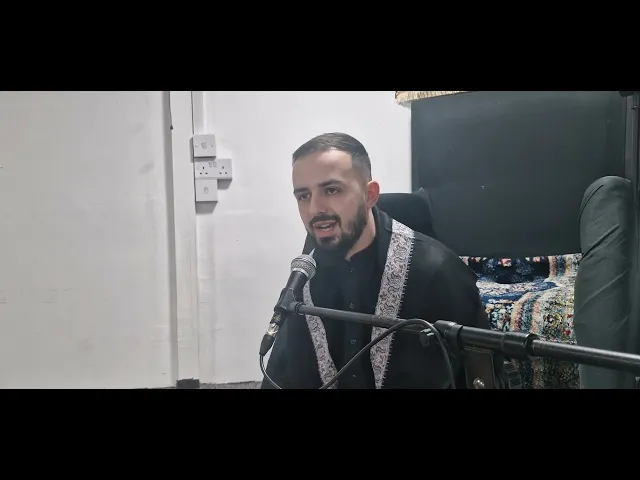
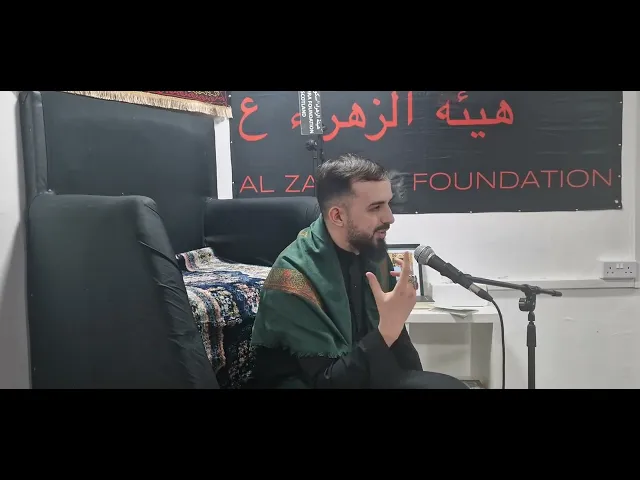
Shahadat day of 9th Imam Muhammad al-Taqi (as) 1446AH
0
0
10 المشاهدات·
25/05/28
في
محاضرات
Wessex Jamaat Programme Donate now & support the majalis at: https://www.paypal.com/donate/?hosted_button_id=HZ3838ULG9KBJ Venue: Al Mahdi Centre, Wessex Jamaat Disclaimer: The views and opinions expressed in this program are those of the speakers and do not necessarily represent or reflect the views or position of Wessex Jamaat & Al Mahdi Centre, its affiliates, members, office bearers or Trustees.
أظهر المزيد
Transcript
[4:51][Music] Allah.
[5:00][Music] [Music] Allah see Allah image.
[5:33][Music] is [Music] Fore!
[6:35]Foreign!
[6:36]Foreign!
[6:38][Music] [Music] is [Music] Fore above.
[7:50][Music] [Music] Ali [Music] [Music] for Hussein Ali.
[8:44]forall.
[8:51][Music] is Hussein.
[9:32][Music] forina.
[9:43][Music] [Music] is [Music] for Allah.
[11:16][Music] [Music] All Foreign [Music] [Music] for [Music] illi.
[12:43][Music] [Music] [Music] What's become?
[13:28][Music] [Music] [Music] Yah.
[13:55]Ali.
[14:11][Music] for illallah.
[14:24][Music] forch.
[14:36][Music] [Music] [Music] [Music] ill.chech.
[15:27][Music] [Music] is gentle.
[15:52]foreign.
[15:58][Music] [Music] [Music] Yeah.
[16:45]Allah forall.
[16:49][Music] [Music] Allah Allah speech.
[18:08]illall to be illall to be [Music] illallah.
[18:23][Music] Fore!
[18:32]Foreign!
[18:33]Foreign!
[18:36][Music] [Music] All mean amen.
[19:44]Muhammad Ali Muhammad Salaw [Music] Shiny red [Music] [Music] [Music] Chini rhythan.
[20:40][Music] [Music] God is zamaraz.
[21:17][Music] A [Music] [Applause] remi Niki.
[21:54]to do bazaar.
[22:20][Music] Basium.
[22:26][Music] [Music] Say the meal.
[23:18][Music] Neither.
[23:28][Music] He [Music] [Music] say there [Music] Ali Muhammad Salawad.
[24:38]Our condolences to the Imam of our time and all Mo on
[24:44]the occasion of the shahadat of our ninth holy Immuham Taki Alisam.
[24:53]Um a few announcements before uh we begin the program begin the
[24:58]majist.
[24:59]Uh we'd like to remind the sisters on behalf of the Alkisar
[25:02]sisters that the next sun that the next study circle will be
[25:05]held on Monday 2nd June at 8:30 p.m.
[25:08]Please also note that the next ayam bid program four ladies will
[25:14]take place on Tuesday 10th June at 8:15 p.m.
[25:18]Further details and joining links for both events will be circulated by
[25:21]email.
[25:22]Can I kindly ask you all to recite a surah fata for
[25:27]the of the sponsors of tonight's ala furthermore we have received sad
[25:46]news today of the passing of Muhammad Ismael who passed away in
[25:52]Birmingham Mar was the father of Abbas Ismael whom many of you
[25:58]will remember from when he lived and studied at Wessex.
[26:03]For him and all Marin please recite another surah fata.
[26:19]Can you please all join me in welcoming for today's Misawa resident
[26:23]Alim Sheek Fazbasu with the recitation of three loud salawat?
[26:46]All right.
[27:15]Alhamdulillah.
[27:21]Alhamdulillah.
[27:23]Alhamdulillah.
[27:57][Music] Motherham.
[28:09][Music] [Music] for Allah.
[28:42]dear m tonight inshallah we'll be observing the final day of the
[28:49]month of that is the 30th night of and we will be
[28:54]entering into the second of the ashurulum as we know that on
[29:00]the Islamic calendar we are four months which are known as the
[29:04]prohibited or the sacred months, the month of and the month of
[29:10]Rajab.
[29:11]And these months, the ashum have great significance such that in their
[29:18]fill we are told that these are opportunities which are given to
[29:23]us to be able to perform our and present our desires to
[29:27]Allah subhanahu wa ta'ala.
[29:31]where the hadith tells us that the for these are the months
[29:35]are the months which provide us the opportunity for the hijab for
[29:42]the response for our dua for our supplications and when we see
[29:47]that our beloved prophet Muhammad Mustafa with regards to this month which
[29:56]you'll be entering inshallah is from Thursday the month of the prophet
[30:02]tells us there are no days which are in which we can
[30:13]perform more deeds which are more beloved to Allah subhanahu wa ta'ala
[30:20]than these 10 days of this month which are these ones this
[30:26]is the first 10 days of the month of and the sanctity
[30:31]the the of the month of is such that Allah subhanahu wa
[30:35]ta'ala in the surah al faj surah number 89 in the first
[30:41]and the second verses takes an oath by the sanctity of these
[30:44]days or the sanctity of these nights where he says that I
[30:51]take oath by the dawn and I take oath by these 10
[30:57]nights and the muer Draw attention to us from the a hadith
[31:00]of the B that this period of the 10 nights of the
[31:05]peace period of the 10 days is what is on the first
[31:09]10 days of the month of so meaning we do shuk to
[31:14]Allah subhanahu wa ta'ala for giving us this gift of life and
[31:17]the ti to be able now to have finished the first of
[31:22]the month of the ashum the month of and now we are
[31:24]in the doorstep of being entering into the month of and as
[31:30]we mentioned about the significance the the excellence for of this month
[31:34]of in an email which has been distributed today we have mentioned
[31:42]with regards to four iada which in addition to the aspects of
[31:47]the deeds of iada of that kindness of the social interaction the
[31:53]saddaka there are four distinguished iada or four distinguished practices recommended to
[32:03]us by theam to be performed during especially the months of hijah
[32:08]and especially with regards to the first 10 days of this month.
[32:11]May Allah subhanahu wa ta'ala bless this month inshallah and especially with
[32:18]our observance for the first 10 days of the month of hijah
[32:23]to be a month that is inshallah going to be showered upon
[32:26]us with good healthy and to be a month which is going
[32:28]to be showered with us with more towards the servitude to Allah
[32:34]subhanahu wa ta'ala and to be a month of blessings baraka and
[32:38]forgiveness by the was of our beloved prophet and his aul by
[32:52]some three weeks before recently on the 11th of Kada.
[32:57]We observed the of our 8th IM Ali Musam.
[33:12]In the life of this Imam, we see that unlike the lives
[33:17]of the other previous imams, this is one imam who for a
[33:22]long period of his married life did not have issue of a
[33:24]child coming from him.
[33:27]And this raised a lot of concerns and a lot of queries
[33:29]within the community as to who is now going to continue or
[33:35]how is that hadith of the aim and the holy prophet going
[33:38]to be fulfilled with regards to the continuation of the sil of
[33:41]the Imam to the final number coming to 12.
[33:45]And the companions around the imam also would constantly ask the imam
[33:51]we got this thing and the imam would assure them that the
[33:53]will of Allah or the decree of Allah is inshallah going to
[33:56]take place.
[33:58]It was at a later age at around 45 years of the
[34:03]age of the Imam, our eighth Imam that his wife by the
[34:06]name of Sabika or Rahana who was a lady originally from Nubian
[34:15]traditions which is in present Sudan.
[34:17]She bore a son for the imam and this son the eighth
[34:25]Imam named him as Muhamad and this is the one who will
[34:28]be the ninth Imam.
[34:28]Muhammad Ali Muhammad at the time of the birth of the Imam.
[34:40]This Imam was in the time of the ruler Mahammun al- Rashid.
[34:46]And you recall that Mahamm Rashid had put a lot of emphasis
[34:52]to be able to consolidate his stronghold over the empire and to
[34:57]try to position himself as to one who would have control over
[35:00]the spiritual authority and especially control over the Imam.
[35:06]And you recall the history of how he caused the eighth imam
[35:09]to travel from Medadina all the way to go to Murf and
[35:15]forcing upon him to take the position of the air apparent.
[35:17]At that time our ninth imam who was born in the year
[35:24]195 after hijra was close to around 5 years old.
[35:27]And according to common historians, the ninth Imam accompanied his father, the
[35:30]eighth IM to Marv.
[35:33]And he stayed with the Imam for a period of one one
[35:38]year.
[35:39]And thereafter the ninth imam was sent back to Medadina and the
[35:41]eighth Imam would remain in communication with him through correspondence guiding him
[35:46]and advising him.
[35:48]A time came when 3 years in the reign of Mahm Rashid
[35:54]in the year 200 after Hijra is when our eighth Imam met
[36:02]his shahada.
[36:00]So that is the time when our ninth imam who is now
[36:06]close to seven or eight years old takes over the office of
[36:12]the imam and he holds this office of imam for around 17
[36:15]to 18 years old.
[36:18]So here from history we can see that he is from amongst
[36:21]those imams who took down the Imamoth at a very young age.
[36:26]He is one of those imams who took on the position or
[36:29]the office of Imamat at a young age of around 7 to
[36:33]8 years old and in addition to that he discharged his responsibility
[36:37]of Imam for a very short period which is close to 18
[36:44]years old.
[36:43]And this evening we have gathered to observe the sad occasion, the
[36:52]passing away, the waf of our ninth immediately of on a date
[37:04]like today in the year 220 after hijra.
[37:07]The Imam as we commonly know is mentioned by two titles.
[37:13]the title of and the title of jawad.
[37:17]And al jawad is the meaning of one who is generous.
[37:22]And the imam in his lifetime from that very young age was
[37:28]one who was in the practice of being able to be very
[37:34]generous in meeting the needs of the needy.
[37:38]Even later on when the khalif at that time that is mamm
[37:42]rashid had appointed him or had betroed his daughter um fad to
[37:49]get married to the ninth imam and he had reserved a great
[37:52]amount of allowances to be given to the ninth imam.
[37:56]That amount of funds which the imam would receive he would always
[37:59]be generously distributing to the needy to the poor people in need
[38:03]at that time.
[38:05]And that is one of the reasons why he is called al
[38:10]jawad.
[38:11]And the imam when he met his shahada on the 29th of
[38:14]the he was buried in what was known at that time as
[38:20]the makbar of Quresh or the graveyard of the people of Qur
[38:25]next to his grandfather the seventh Imam whom we also call as
[38:29]alabul the door for which one's hajat or desires are responded.
[38:36]What a status of excellence.
[38:41]What a status of brilliance upon brilliance that we have these two
[38:47]noble imam.
[38:48]One who is known as Babul.
[38:49]Our seventh Imam Mus Kadim and his grandson the 10th Imam Im
[38:55]Muhammad the ninth Imam Muhammad Alisam who is known as Jawad.
[39:03]The one who is generous to be buried side by side in
[39:06]the kama or the effect the impact of their generosity is one
[39:12]which is not limited only during their lifetimes but one which even
[39:18]extends after their burial where the hajat and the wasil to Allah
[39:22]subhanahu wa ta'ala by the name of Babul the seventh IM and
[39:27]the was to Allah subhanahu wa ta'ala by the name of the
[39:30]ninth imam al jawad is definitely one certaintity of response to Allah
[39:38]subhanahu wa ta'ala.
[39:44][Music] Like the previous imams, our ninth imam also faced severe challenges
[39:54]from the Abbasid rulers at that time.
[39:56]And one of the challenges which he faced was that the Abbasid
[39:59]ruler especially Imam Rashid was trying to take advantage of the young
[40:04]age of the Imam.
[40:05]And as a result of the imam being of a young age.
[40:11]He summoned the imam to come towards him in Baghdad and he
[40:17]tried to arrange for the imam to get married to his daughter
[40:20]Omul father.
[40:22]Not only that, he would try to arrange for the imam to
[40:25]be diverted or to be distracted by sending women organizing music parties,
[40:33]wine parties and so on and other immoral programs forcing the imam
[40:37]to be able to be part of that thinking under that impression
[40:40]that this person whom he considers to be a child according to
[40:47]our normal human mentality would easily be get attracted and misguided so
[40:52]that the imam could be compromised or the child of that time
[40:57]could be compromised.
[40:59]But not at all.
[41:01]Our the imams are and because of the imam being one holding
[41:05]his ground and being able to protect himself from all these diversionary
[41:09]tactics is one of the reasons why he's given the the title
[41:16]of Imami.
[41:15]the one who is the most God conscious, the one who is
[41:20]the most most pious, most pious and awareness to be able to
[41:23]protect him from these challenges of deviation and that is the reason
[41:26]for him being called.
[41:29]So that was one of the challenges which the imam faced from
[41:32]the Abbasi rulers.
[41:35]The second challenge which he faced was being constantly summoned to Baghdad
[41:41]and being asked to preside over debates or respond to lengthy questions
[41:46]and arguments and debates with scholars not only of the Muslim faith
[41:51]but also of other faiths.
[41:52]All with a reason for the rulers of the Banu Abbas reason
[41:57]of of the Mahm Rashid to be able to get an opportunity
[42:04]where there would be an inability to respond to the questions and
[42:07]the imam would be humiliated.
[42:08]So that would have a greater impact on the wider Muslim community
[42:14]and especially the Shia community inah losing faith in the Imam.
[42:19]This was a second challenge for the imam.
[42:22]And the third challenge which the Imam faced was he was being
[42:26]tried to be entangled politically.
[42:28]So the the Banu Abbas rulers would really oppress the Alawis the
[42:34]Sadat family to such an extent that a large number of them
[42:40]were wounded and killed and they were even being socially boycotted and
[42:44]being deprived of any welfare or allocations from the Bul Mal.
[42:49]And this was one who tried to entangle the Imam into this
[42:54]political movements of the Banu Abbasi rulers at that time.
[42:56]In today's mus inshallah having given you this very brief background of
[43:03]the Imam and the times in which he was going through I
[43:05]would just like to share with you some snippets of the life
[43:10]of the Imam and through that snippet to be able to get
[43:12]three lessons which inshallah we will be able to take as takeaway
[43:18]for a home as tabar a gift from observing the passing away
[43:25]of our ninth im Muhammad.
[43:30][Music] So I'll mention to you a story the event which took
[43:37]place in the life of the Imam when he was of very
[43:43]young age.
[43:41]As we mentioned initially that the Imam the ninth Imam accompanied his
[43:46]father towards the city of MV.
[43:50]And the first time when the ninth imam had an interaction with
[43:58]the Banu Abbasi Mahm Rashid ruler at the time was when Mahamuna
[44:01]Rashid had planned to go for a hunting expedition.
[44:04]As his entourage was going for the hunting expedition, there were a
[44:11]group of children who were on sitted by the wayside or the
[44:14]road at that time.
[44:16]And when this group of children saw that entourage coming with all
[44:20]its bomb and glory and the ammunitions and the guards and so
[44:24]on, all the children dashed away from the roadside except for one
[44:32]child and that is our ninth imuatam.
[44:39]Seeing this, when Mamar Rashid came closer, he stopped and he inquired
[44:48]from the child about his name and he was told that his
[44:51]name is Muhammad.
[44:51]Thereafter he addressed the child and told him and who is your
[44:55]father?
[44:56]He said my father is Ra.
[45:00]In fact, the incident goes in such a way that even before
[45:05]Mahmoon asked him about his name, Mahammoon first questioned him, "Oh child,
[45:11]what is it that you did not run away from this place?
[45:17]You did not get frightened the way these other children got frightened
[45:20]and ran away from this place and make space for me." So
[45:24]the imam in all confidence mentioned to Mahm Rashid and told him
[45:31]sayi oh sir oh oh master the road is narrow that there
[45:39]was no need for me to make any space for you and
[45:41]moreover there is nothing which I have done any wrong.
[45:44]I have no guilt that I should fear of you that is
[45:47]why I remain on the side of this road.
[45:50]And that was quite a very smart and bold response given by
[45:53]what you would say as a young child opposite in a person
[45:58]with all the protocol and with all the ammunitions and guards and
[46:02]soldiers present over there.
[46:03]Getting impressed is when Mahammun Rashid asked him that question I'm impressed
[46:07]and what is your name?
[46:08]And when he was just told Muhammad he was not satisfied.
[46:11]He wanted to know who is your father from which family you
[46:13]come.
[46:14]And the imam told him I am the son of Ridda.
[46:24]And Mamun Rashid exclaimed saying indeed you are indeed you are the
[46:29]son of Araba the eighth Imam.
[46:31]And history tells us that both the ninth imam and the 10th
[46:36]Imam in the duration of their lives they were fondly called by
[46:41]the people also as Salwallah Muhammad Ali Muhammad.
[46:49]So the first lesson m which I would like to share with
[46:54]you from this incident over here is that the manner in which
[46:59]the imam at that young age introduced himself that identification and the
[47:07]presentation of the confidence which the imam had given to one who
[47:14]is powerful one who is displaying all that pomp and glory and
[47:17]show of strength and power.
[47:18]Yet the Imam stands in front of him in responding calmly and
[47:25]with confidence.
[47:25]You and I, Min, we all try our best to be able
[47:34]to give in all the needs of our child to be able
[47:35]to provide them all the love and all the nurturing and the
[47:41]care for our children and definitely we should do that.
[47:45]Why?
[47:46]because they are our children because they carry our name.
[47:52]So what meaning when the imam mentions that and that name is
[48:00]one which gave him confidence and impressed upon the ruler mahuna rashid
[48:05]at that time likewise don't you think that you and I and
[48:11]our children if we were to consciously understand that our parents have
[48:17]given us that love have given us that training have given provided
[48:20]us all our means to live in our life and have given
[48:26]us that gift of iman and on top of that we carry
[48:27]their names then shouldn't we be very conscious in all our actions
[48:36]and especially when we talk about the upbringing of our children shouldn't
[48:41]we bring our children in such a way that they are constantly
[48:45]aware that I carry the name of my parents I carry the
[48:52]name of my father and my mother And any deed which if
[48:53]I were to do, if that deed is one which is a
[48:57]deed of happiness, is a deed of felicity is one which is
[49:03]going to even give commendation to my parents and give happiness to
[49:06]my parents.
[49:07]But if that is a deed which is going to take me
[49:11]towards loss and towards displeasure of Allah subhanahu wa ta'ala, not only
[49:15]it is going to give me that displeasure of Allah subhanahu wa
[49:18]ta'ala, but it is one which is going to cause pain and
[49:22]hurt to my parents.
[49:24]What meaning?
[49:26]If this were something which you were able to consciously be aware
[49:31]and develop that attitude and mindset in our children that you are
[49:37]responsible in carrying our family name and responsible in presenting our image
[49:42]that itself is going to bring about a different mindset in the
[49:46]way our children lead their lives.
[49:48]So this is the first lesson which we find from the way
[49:53]the imam is presenting his identification and from the way the imam
[49:57]mentions the use of his name of his father.
[50:01]Now when we talk about the name of the parents over here
[50:03]let us also understand that it is not to be restricted to
[50:09]the names of our biological parents for you and I belong to
[50:14]a very very noble family.
[50:19]Why do I say that?
[50:20]You and I as Shia, we belong to a very noble family.
[50:25]And that is because of a hadith which our beloved prophet Muhammad
[50:34]must says know oh people that I and Ali are the parents
[50:46]of this ummah.
[50:46]So here remember that much more than the names of our biolog
[50:56]biological parents.
[50:55]You and I as members of the Muslim Ummah and especially as
[51:01]the Shia of the Aulim have our spiritual fathers, our spiritual parents
[51:07]and that is our beloved prophet and whose names we carry as
[51:16]our spiritual father.
[51:15]If we were to be just conscious ourselves and for the upbringing
[51:20]of our children that the way we would be conscious in carrying
[51:25]high the names of our biological parents.
[51:28]Likewise being conscious of carrying high the names of our spiritual parents
[51:34]the name of ma as a of the name of rasool Allah
[51:40]as a member of this ummah then don't you think that for
[51:45]our children inshallah and for ourselves inshallah we will be able to
[51:49]give ourselves and our children that upbringing which will take us towards
[51:53]the pleasure of Allah subhanahu wa ta'ala [Music] The second lesson which
[52:05]I would like to unpick from this incident is the personality of
[52:10]confidence.
[52:12]the esteem, the thorough grounding and bravery with which the ninth imam
[52:18]though what we would say in history is a child standing against
[52:21]that huge power and influence and pomp and glory.
[52:28]Likewise, here is where you and I have a lesson to learn
[52:30]not only for ourselves but for the upbringing of our children.
[52:36]When we live in a world where we have a sea of
[52:41]people of other faiths or people also of no faiths as such
[52:45]if we were to develop the self-esteem and confidence in the upbringing
[52:50]of our children and for ourselves also removing ourself from that inferiority
[52:56]complex that how are we going to be perceived how are we
[53:01]going to be taken if we practice ourselves as Muslims if we
[53:03]openly show the traditions and practices of the Muslims.
[53:07]If we confidently remain with the values of Islam as such, then
[53:11]that is what we will be following in the lesson of the
[53:17]footstep which the Imam is showing in that simple encounter against one
[53:20]of authority, one of power, influence and glory over there.
[53:24]That is the imam is pointing out to us that in our
[53:29]times today also it is required for us to be able to
[53:34]develop that strength of confidence and esteem and move away from that
[53:39]inferiority complex but stand proudly in our identification in all our dealings
[53:44]in all our interactions and in all our practices and displays that
[53:49]this is what I am as the message and ambassador of Islam.
[53:52]So this is the second lesson which we are unpicking from the
[53:57]life of our ninth imu Ali Muhammad.
[54:12]In our contemporary times, in our living, not only that, but in
[54:19]the education system prevailing in the environment for our children, very very
[54:27]subtly without us realizing or without many of us realizing, some of
[54:35]us have developed a habit of what we would say living a
[54:40]life of neutrality.
[54:41]Living a life of having no opinion because it does not matter
[54:48]me.
[54:49]Living a life of what you would say as individualism and minding
[54:54]our own businesses as such.
[54:55]And this is being subtly brought about in the education system in
[54:59]the interaction with the wider society.
[55:01]And without us realizing this is where we find many a times
[55:07]to such an extent that the further obligations theat of the which
[55:13]is and are being hesitated to be practiced upon because we tend
[55:22]to remain neutral.
[55:22]We tend to say we do not have an opinion.
[55:25]We need to be minding our own businesses and slowly slowly we
[55:31]tend to turn up into individual personalities as such.
[55:33]So to give you examples to try and drive this point home,
[55:40]I'll share with you typical examples which a large number of us
[55:44]have faced in our lifetime in our different interactions.
[55:48]So a parent shared with me an incident when the parent is
[55:53]encouraging the young child especially the daughter to start fasting at that
[55:57]young age of becoming Balik.
[55:59]We know the masal for becoming Bali attendment of the nine years
[56:05]of lunar calendar for becoming Balik and prior to that at times
[56:08]some parents encourage them to start fasting.
[56:10]What happens?
[56:12]The parent narrates with shares with me the experience that some of
[56:17]the parents within that family circle would start beating that child would
[56:21]start telling the parent why do you have to do this?
[56:27]The child is so young.
[56:27]Let the child yet to a girl enjoy her time when she
[56:32]grows up and then matures and realizes is when then she can
[56:35]start fulfilling this thing.
[56:35]So you can realize what is happening that away from that neutrality
[56:40]we are moving away from the aspect of maharu in encouraging towards
[56:45]the good is being practiced we start participating in giving our opinions
[56:50]on a different way as such likewise when it comes to the
[56:53]issues of for example aspect of hijab aspect of observance of the
[56:59]wajat of the beard individualism prevails over there and you find the
[57:05]aspect people hesitating in performing and to such an extent that when
[57:10]it goes to the social media and the worldwide web, the internet
[57:14]where we find that today it is full of different types of
[57:17]posts, different type of lectures, some of them haram outright influences some
[57:23]of the influencers on the social media haram messages outright in the
[57:28]presentation.
[57:28]All right.
[57:30]In their messages and so on or some of the lectures giving
[57:33]an what we would say as alternative viewpoint.
[57:37]All right.
[57:40]If these type of issues on the social media and the internet
[57:44]at times we tend to be saying that it's okay that's their
[57:48]opinion.
[57:49]This is what is coming about of saying developing neutrality.
[57:54]Some at times would take these and share the influences posts or
[57:58]share the lectures giving those alternate opinions widely as such.
[58:07]What happens again instead of promoting that we are not siding giving
[58:12]that opinion and just taking in further with that messages broughting about
[58:17]this type of alternative thinking over there.
[58:19]Look at our marriages at times.
[58:22]When I say our marriages, I'm not trying to say everybody's marriage,
[58:24]but some marriages the events which take place in some marriages.
[58:28]All right?
[58:29]It's a challenge where we would find some cultural practices which are
[58:34]brought in from western societies which have got no message and no
[58:38]smell of the teachings of Islam are practiced over there.
[58:42]And what happens to justify some of the organizer would say but
[58:51]this is a private function.
[58:54]So they can justify those practices which are not within the teachings
[59:00]of Islam saying that this is a private function.
[59:02]But little do we understand that in all practicality in all essence
[59:07]as Muslim there is nothing private because on the 24hour sucker of
[59:14]our lifetime we are under the visual realization and care of Allah
[59:18]subhanahu wa ta'ala which is not private whether it is a function
[59:23]which a person does whether it is the salah whether it is
[59:26]the s or the interaction what we say publicly within the society
[59:29]everything is considered to be an iada mother and when these type
[59:35]of things takes place some of the people for example they would
[59:38]say we cannot say anything we'll just participate we do not want
[59:41]to be seen as people who are not supporting that family as
[59:46]such this is where we need to understand the hadith of our
[59:49]nth imuhammed where he says that whosoever whoever ever from amongst you
[60:04]approves and gives good backing and support for a wrong deed.
[60:09]What is the status of that person?
[60:13]That person is like he's involved into it.
[60:17]What does that mean?
[60:17]that for not only for those people who participate in the wrongdoing
[60:23]will they get the consequences of the adab and displeasure of Allah
[60:27]subhanahu wa ta'ala but for those persons who would keep quiet they
[60:31]themselves are in other words supporting that type of thing because silent
[60:36]becomes a complicity so just like in today's world when we talk
[60:41]about massacre operation taking place and genocide taking place the silence over
[60:46]there is considered to be a complicity in those sins of what
[60:50]is taking place against the oppressors today in different parts of the
[60:53]world today.
[60:52]The silence over there is considered to be a complicity.
[60:57]Likewise, that is what the imam is pointing out to us that
[61:00]that evil deed which is done and for a person who gives
[61:05]approval for that and that approval is not necessary in action indeed
[61:09]but even keeping silent over there and showing that there is nothing
[61:12]feeling of wrongdoing for that thing that person is becoming a part
[61:19]in receiving that consequences for that.
[61:22]So the third lesson for us over here is that for us
[61:25]to be able to see that at all times we are of
[61:29]those who will be standing up for that truth.
[61:32]who will be there to be able to stand for that which
[61:34]is the deeds of tawa.
[61:37]And the deeds of tawa is not one which is restricted only
[61:39]to what we say the ritual rights of individualism persons but it
[61:45]is one which is concerning the society also and one which is
[61:49]concerning what would say people are saying as the private or the
[61:51]public but it is one for us to understand that is the
[61:55]ummah in all practicality each and every part of our life is
[61:58]under the view and under the supervision of Allah subhanahu wa ta'ala
[62:02]where every deed is required to be one of tawa A taking
[62:07]us towards closeress to Allah subhanahu wa ta'ala.
[62:10]We pray to Allah subhanahu wa ta'ala from these three lessons.
[62:13]The first two with regards the first one with regards to the
[62:16]upbringing of our children.
[62:18]The second one with regards to our confidence and being able to
[62:21]develop our personality and the third one with regards to developing the
[62:26]importance of that and not always taking the issue of being one
[62:31]who is silent and becoming a complete assert that may Allah subhanahu
[62:35]wa ta'ala grant each and every one of us that inshallah to
[62:40]be able to get these lessons and guidance in following the lessons
[62:44]from our nth Imam Muhammad.
[62:51][Music] within the few times more on this occasion of the miba
[62:58]of the waf of our ninth immun's death he was succeeded by
[63:04]mutasim billah and mutasim bilah from amongst the abbasid rulers and the
[63:10]khalif was also known for his ruthlessness to such an extent that
[63:17]he would haunt out search out for the sadat the alawed he
[63:20]would harass them torture them and even finally lead to the killings
[63:24]as such at that time due to the way the ninth imam
[63:30]was conducting the debates and the dialogues his esteem and personality was
[63:34]gaining a lot of popularity amongst the Muslim commonwealth as such and
[63:40]this was something which mutasim billah could not tolerate secondly the wife
[63:45]of the ninth Imam known as Omul Fal you recall which we
[63:48]started was a lady who was constantly nagging to her uncle with
[63:53]regards to the way the Imam was living his life with tawa
[63:55]as such and came a time when Masimah could not tolerate any
[64:02]longer with the instigation of the scholars at that time who are
[64:06]always getting overpowered in the debates by the ninth IMah arranged for
[64:11]poison to be served through his niece Omul F the wife of
[64:17]the ninth imam.
[64:16]The Imam was observing the fast according to some riat and at
[64:22]the time of breaking his fast the poison was mixed into the
[64:24]water and served to the Imam as part of his for breaking
[64:31]his fast.
[64:28]Mo on that day of ma which took place on the 9th
[64:35]of Dulada in the year 220 after hijra the imam was only
[64:41]25 years old.
[64:40]The final rights of hisul and kafan were carried out by his
[64:46]son the 10th Imam Ali and the Imam was buried next to
[64:53]his grandfather.
[64:52]In these days or in these final moments of the ma let
[64:59]us recall the day of Ashur.
[65:00]On the day of Ashur, especially on the 11th day, the enemy
[65:04]forces of Yazid the under the rulers under the leadership of Omar
[65:11]Isad now gathered all their dead ones and buried them and they
[65:15]left abandoned the pure bodies of the martyrs of Karbala together with
[65:20]the body of Aba Abdul Hussein Alisam and his noble companions.
[65:24]All these bodies were left unattended on the plants of Karbala, exposed
[65:32]to the burning sand and the wind blowing sand.
[65:33]Exposed to the burning sun and the wind blowing sand over the
[65:40]noble bodies of these martyrs.
[65:40]On that day, on the 11th day, Omar Assad arranged for the
[65:46]surviving members of Aba Abdullahin Alisam to be bound in chains and
[65:54]in ropes and taken as prisoners from Kerbala to go towards Kufa
[65:58]and the route that took them towards the valley in Kurbala where
[66:02]they passed by the bodies of the family members.
[66:06]And they came upon a body where they saw that this body
[66:10]is one which was soaked in blood, one which was injured and
[66:16]one which was wounded and one which had been looted to such
[66:19]an extent that even the head had been severed from the body
[66:24]and the body had been trampled into pieces as a result of
[66:27]the hooves of the horses which had been lined to go over
[66:34]the body.
[66:31]What ma on that day I imu as you are giving the
[66:40]final rights oful and kafan to your father the ninth Imam we
[66:43]recall the musha of the son the fourth Imam Ali Abn Hussein
[66:50]when he passed by the body of his father in that valley
[66:53]on the inarbala and how he witnessed the soros severe state of
[67:01]his father and How Zanab saw the state of her brother and
[67:04]gave out a sigh.
[67:20]Ya Allah we pray to you for those who are not in
[67:24]good health by the was of our beloved prophet Muhammad and his
[67:28]B especially on this occasion of the fat.
[67:29]Grant all the and for all the especially the ya Allah we
[67:38]pray to you grant them ya Allah we pray for give them
[67:44]long life with good health and protect them from all calamities for
[67:48]the ya Allah the people who are oppressed in different parts of
[67:52]the world we pray to you grant them their far grant them
[67:55]their user and grant them comfort the ya Allah we pray to
[67:59]you and the oppressors make their plans to become null and void
[68:04]and defeated and shower upon them the deprival of your mercy.
[68:09]And ya Allah we pray for the and enable us to be
[68:17]from his [Music] You know, I wasn't Subhan Allah.
[75:16]Alhamdulillah.
[75:24][Music] Allahbarb.
[75:30]Allahbarb.
[75:34][Music] [Music] [Music] [Music] Awan Awesome.
[76:29][Music] [Music] [Music] [Music] fellow.
[77:18]Allahbar.
[77:20][Music] Muhammadb don't motherham.
[78:25][Music] [Music] Allham F.
[78:49][Music] Allahbar.
[78:59]Allahbar.
[79:23]Alhamdulillah.
[79:24][Music] for him.
[79:56][Music] [Music] [Music] Allahbar subhuhammed Subhan Allah.
[80:49][Music] [Music] Alhamdulillah.
[81:16]form.
[81:19][Music] Allah.
[81:49][Music] [Music] Allah Subhu Allah forbu Allahbar.
[83:15][Music] Allah Subhan Allah.
[83:57]Subhan Allah.
[83:59]Subhan Allah.
[84:05]Subhan Allah.
[84:14][Music] [Music] that all subhan Allah.
[84:33]Subhan Allah.
[84:47]for Allahbar.
[84:51][Music] [Music] [Music] Allahbar.
[85:26]Allahbar.
[85:32]Allahbar.
[85:29][Music] Allham.
[85:42][Music] It's been that way.
[87:29]Sweet.
[87:31]Spin that.
[87:48]Man, I [Music] Hello.
[89:24]It's been Allham.
[91:18]Allham Allahbar.
[91:22]Allahbar Allah.
[91:30]Allah abarman.
[91:45][Music] Alhamdulillah.
[92:07][Music] formah.
[92:39]for [Music] Allahbar.
[92:45]Subhan Allah.
[92:52][Music] Allahbar.
[93:14]Allahbar.
[93:30][Music] Alhamdulillah alman.
[93:46][Music] [Music] Bismillah.
[94:18][Music] Allah.
[94:31]Allah.
[94:50][Music] [Music] Allahbar Allah Subhan Allah.
[95:33]Allahbar.
[95:36][Music] [Music] Allahbar.
[95:52][Music] [Music] Whatever.
[96:35]Allahbar.
[96:37]Subhan Allah.
[96:49][Music] Allahbar.
[96:53]Subhan Allah.
[97:01]Allahbar.
[97:05][Music] Allah subh.
[97:11][Music] for what [Music] he do.
[97:50]Subhan Allah.
[97:53]Subhan Allah.
[97:56]Subhan Allah.
[98:05]Subhan Allah.
[98:30]Allahbarb.
[98:32]Subhan Allah.
[98:34]Subhan Allah.
[98:34]Subhan Allah.
[98:37][Music] Subhan Allah.
[98:42][Music] [Music] [Music] [Music] [Music] [Music] Allahbar.
[99:40]Allahbar.
[99:42]Allahbar.
[99:45]No [Music] more.
[100:00]Allahhammed.
[100:55]Allahham.
[100:57]forensic.
[101:17][Music] [Music] for what Father, Father Lyn all of the [Music] [Music]
[102:45]to [Music] Hussein [Music] Hussein Hussein Hussein.
[103:15]Ali Hussein Aliham.
[103:21][Music] Aliham.
[103:26][Music] [Music] Allah.
[103:55][Music] Allah.
[104:10][Music] Fore!
[104:27]Foreign!
[104:29]Foreign!
[104:30]We Yeah.
0 تعليقات
sort ترتيب حسب
- أعلى تعليقات
- أحدث تعليقات
التالي
6 المشاهدات · 23/07/20
6 المشاهدات · 23/07/21
8 المشاهدات · 23/07/22
7 المشاهدات · 23/07/22
7 المشاهدات · 23/07/23
5 المشاهدات · 23/07/24
5 المشاهدات · 23/07/25
4 المشاهدات · 26/03/04
8 المشاهدات · 25/06/22
9 المشاهدات · 13/01/07
10 المشاهدات · 25/03/18
11 المشاهدات · 25/08/03