Volgende
6 Bekeken · 22/04/09
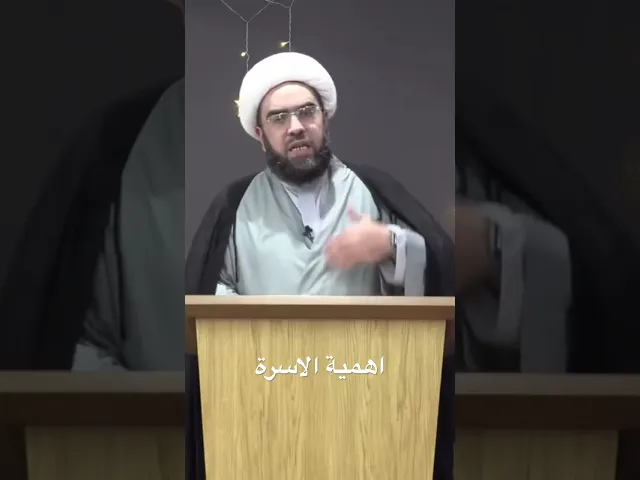
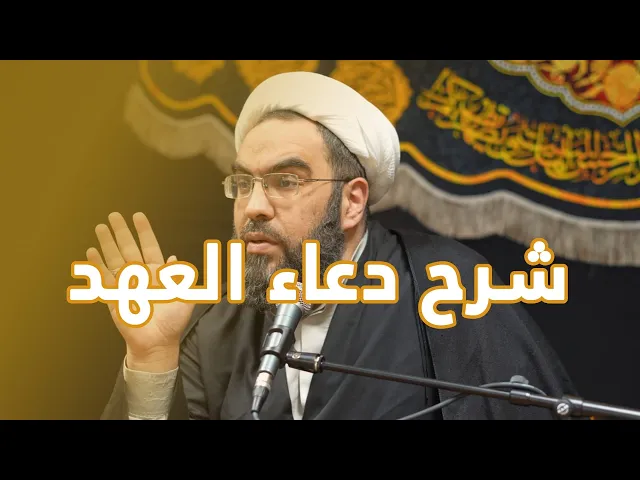
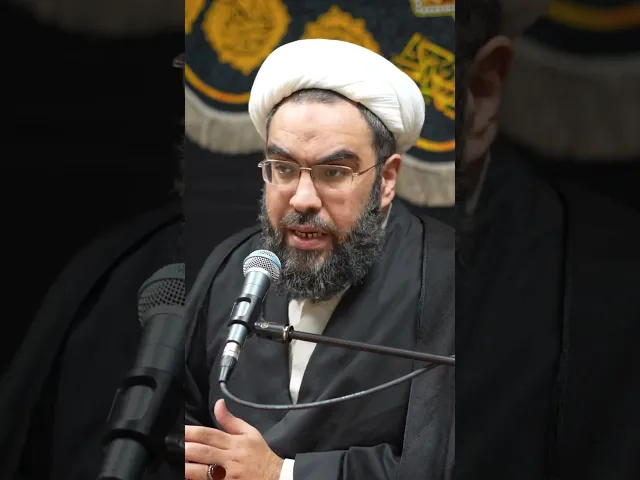
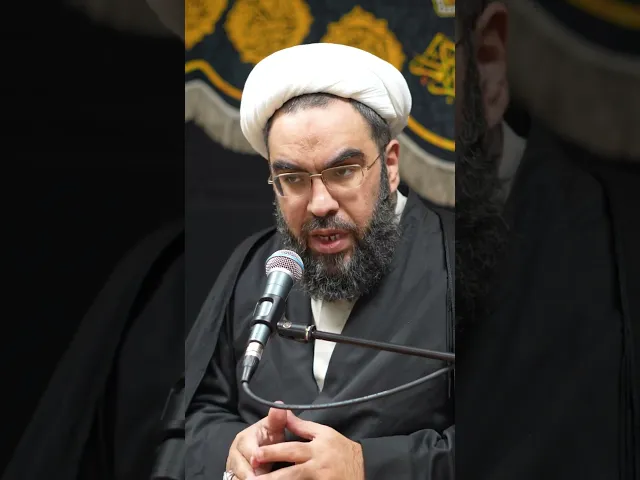
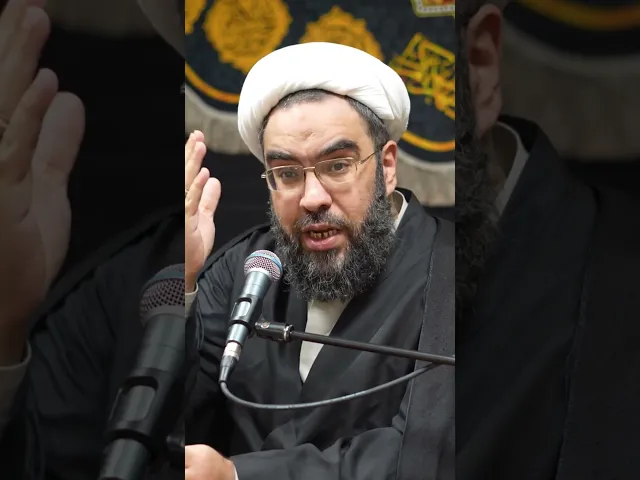
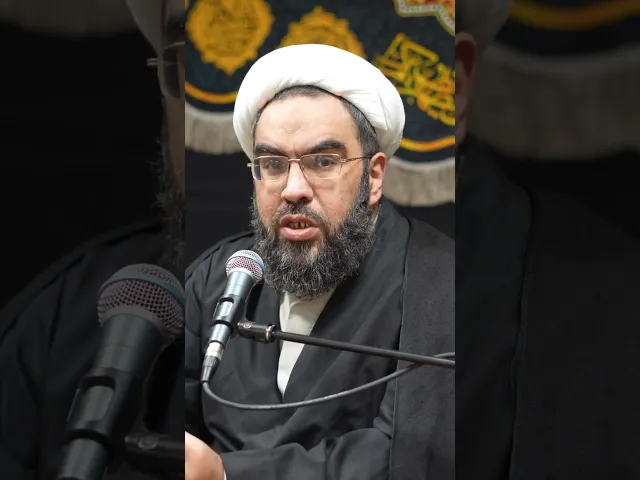
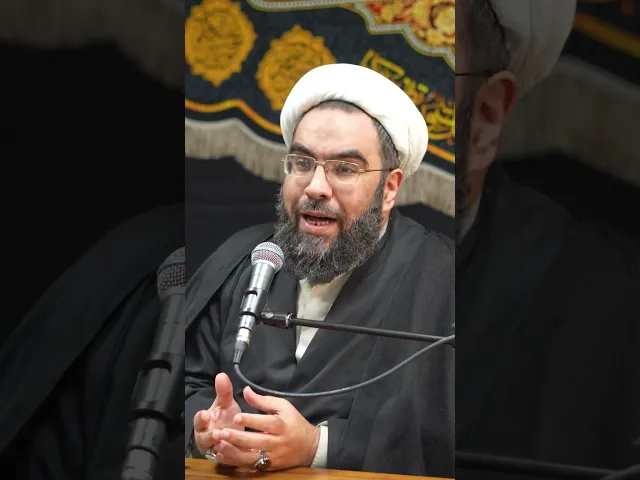
Ramadan The Month of Quran - Arabic, English and Farsi - Day 2
0
0
10 Bekeken·
24/07/12
Laat meer zien
Transcript
[0:00]that we have in our time today why wasn't the prophet just
[0:04]like one of these motivational speakers and be like love allah subhanahu
[0:10]wa praise allah read this dua what was the reason why the
[0:15]prophet saw allah on staying away or refraining from sins in particular
[0:21]and not talking about the love of allah subhanallah not talking about
[0:26]the greatness of allah not talking about anything else this was the
[0:31]only sentence he told amir muhammadin and this is not a rhetorical
[0:42]question if there's anybody who knows the answer i would like to
[0:45]hear them out do you know why the prophet salallahu he answered
[0:50]me he said stay away from sins that's the best thing you
[0:53]can do in the holy mother of allah motivational speakers they will
[0:59]tell us love allah right famous one the social media speakers they
[1:03]will tell you have love in allah right forget it sins don't
[1:09]worry about him why was it that he specifically focused on staying
[1:14]away from sins you know why amir mohammadin alayhi salaam he tells
[1:17]us in a hadith himself he says to stay away from bad
[1:28]deeds it's more important and how have a higher priority than doing
[1:32]good deeds you know why brothers and sisters because you as a
[1:36]human being you have every potential to develop the only thing you
[1:39]need to do is remove the different barriers that exist from you
[1:44]to flourish everything that all the potential that you can think of
[1:48]to seek closeness to allah you possess that every human soul have
[1:56]that potential by itself the only thing you need is just to
[2:00]stay away from sins in order for that potential to flourish that's
[2:07]why allah subhanahu wa when he talks to his prophet in the
[2:11]holy quran he doesn't tell the prophet that you're going to add
[2:14]something to the existence of these human beings no he says you
[2:19]are only a reminder what does it mean that you're only a
[2:22]reminder you're not there to act add something to their existence no
[2:27]they have everything by themselves you're only there to remind them what
[2:32]they possess what potential these individuals they have that lies in in
[2:39]human souls just like a flower for example a flower if you
[2:45]have earth if you have oxygen if you have sunlight if you
[2:50]have water you don't need more than that it's going to flourish
[2:55]itself the only thing you stay away from just don't put a
[2:59]bucket on top of it let it die human soul are the
[3:04]same the same applies to the human soul staying away from sins
[3:08]would develop their potential by itself that's why i meet up in
[3:13]he says that staying away from sins is better than doing good
[3:16]deeds so our discussion our topic tonight dear brothers and sisters is
[3:21]about hidden flaws and imperfection hidden flaws and imperfection why because the
[3:27]best deed you can do in the holy month of ramadan is
[3:31]to look inwards have some insight when it comes to yourself and
[3:34]find out what kind of imperfections and flaws hidden flaws does reside
[3:37]in my heart and how do i get rid of them because
[3:42]some flaws are hidden and they're not obvious for anyone it's not
[3:46]like the physical body where if you have an imperfection for example
[3:50]when it comes to the physical body it's quite obvious for yourself
[3:53]and other people but when it comes to the soul it's not
[3:55]like that that's why i meet a moment in the narration he
[3:58]states laser kullu or atento not every imperfection shows itself and that's
[4:04]because the human soul have that kept capacity to hide some of
[4:11]the imperfection that we carry around in our hearts that just shows
[4:16]how complex and how deep the human soul actually are compared to
[4:19]the physical realm the physical body as soon as there's an imperfection
[4:25]is quite obvious for anyone right it's obvious it's apparent you can
[4:29]see it but when it comes to imperfection when it comes to
[4:32]the soul spiritual imperfections spiritual vices for example it's not the same
[4:36]sometimes they're hidden and we we are so clever and sneaky that
[4:40]sometimes in order to follow up on our own desire we show
[4:46]we show it through things that we normally describe as positive how
[4:52]a person he's arrogant but the way he deals with his or
[4:56]arrogance is that he acts humble towards other individuals he's like he
[5:01]comes to him like but basically he's telling himself i'm acting like
[5:05]this because i'm better than that person even his arrogance shows itself
[5:10]through humility that's how sneaky human beings can be and that's the
[5:16]nafs of human beings that's why he states it's important for us
[5:21]to know these hidden flaws why because they they work differently and
[5:28]we have that capacity to to justify him and then afterwards deny
[5:33]them therefore if we want to protect our hearts and intellect it's
[5:38]imp important for us to first and foremost just accept the possibility
[5:42]that we're not all always sincere or there's a possibility that we
[5:49]actually carry around certain flaws and imperfection deep down our hearts without
[5:53]knowing ourselves and there's two types of flaws there brothers and sisters
[5:58]the first type of flaws is the one that we call ourselves
[6:00]to be hidden then there's a second type which by nature they're
[6:08]hidden certain flaws are hidden by nature the first type which we
[6:12]causes to be hidden sometimes stems from our own behavior it's a
[6:16]consequence of our own behavior like what like for example a superficial
[6:20]behavior when we act superficial for example only focus on their parent
[6:27]what's the obvious the physical then certain flaws that we carry around
[6:31]in our hearts never shows itself it's not apparent for us anymore
[6:37]it's hidden even from ourselves and we don't understand where it comes
[6:39]from so we keep committing mistakes but we don't understand the causes
[6:45]of those mistakes sometimes it's a lack of self-accountability we don't know
[6:52]what we're doing throughout the day how many good deeds do we
[6:55]do how many bad deeds do we do we don't keep a
[6:59]count on them because we have no account we don't keep there's
[7:03]no muhammad then you see that we don't have that insight when
[7:07]it comes to our hidden flaws as the consequences of that sometimes
[7:10]it's self-worship in other words allah ta'ala tells you something but enough
[7:17]tells you otherwise you follow your nerves instead of allah you're being
[7:21]obedient to your nafs that makes the flow stay hidden inside you
[7:27]as well in other words it does it doesn't become apparent for
[7:30]you you don't understand them and the bad thing about that you
[7:34]know what it is that the strength of them being destructive like
[7:39]the strength in destructive how destructive they actually are increases every time
[7:44]you are you keep doing these things you're having a superficial behavior
[7:49]for example or this kind of self-worship then what happens afterwards that
[7:55]you keep falling down but you don't understand what causes it that's
[7:59]like a person walking on the street who gets punched he don't
[8:04]know who's punched who punched him what's the consequences of that he
[8:08]can't defend himself anymore then and it gets even severe because he
[8:11]doesn't understand what the root cause of his behavior is he keep
[8:15]making the same mistake without understanding where it comes from what it
[8:19]stems from that's bad let me just mention some hadith narrations we
[8:25]have from the infallibles about how important it is to understand the
[8:31]hidden flaws that every human soul carries around in a hadith he
[8:37]says the most important knowledge that you can attain as a mukmin
[8:44]as a believer in allah it's the knowledge about the own hidden
[8:49]flaws that you can carry around your own imperfection in other words
[8:54]that's the best kind of knowledge in another narration the criteria for
[8:58]being intellectual is being redefined by emira how he states it's sufficient
[9:12]for a person for his intellect that he knows his own what
[9:16]his own flaws his imperfection in other words is redefining perfection here
[9:23]he's redefining what it means to be intellectual it's not to have
[9:27]a phd anymore it's to know or recognize or admit that you
[9:32]have some hidden flaws if you don't you can have a phd
[9:36]it doesn't matter if you have some obvious flaws hidden flaws that
[9:39]you don't accept you don't admit you know not you're not unaware
[9:43]of them then you're not an intellectual person anymore then and it
[9:49]continues and it's sufficient for a person his ignorance that he's ignorant
[9:57]about his own flaws and imperfection in other words ignorance means what
[10:02]what does it mean to be ignorant not knowing your own flaws
[10:09]and imperfection he's redefining different words here what does it mean to
[10:15]be intellectual according to this hadith now it is that you know
[10:18]your own flaws not the amount of books that you studied not
[10:22]what kind of degree that you have what education that you have
[10:27]none of these things it's about yourself and the same with being
[10:33]ignorant you can have a phd but if you're ignorant about your
[10:36]hidden flaws and the imperfection that you have in your hearts then
[10:39]it's done you're ignorant that's why you see even cena epnesina the
[10:45]great philosopher in islam when he was 18 years old 20 years
[10:51]old he came to a scholar by the name of ibnemeskewe who
[10:54]was a great scholar of ethics what happened in assina he brought
[10:59]him a walnut and he put it in his hand and he
[11:03]said and he told him i want you to measure the surface
[11:06]of this walnut for me in the most arrogant manner in the
[11:11]middle of his class in the musical way he was giving a
[11:15]lecture he was definitely delivering a lecture so he gives him this
[11:19]walnut in his hand and he tells him i want to measure
[11:22]i want you to measure this surface for me you claim to
[11:24]be a scholar do it in the musical way he takes out
[11:29]a book on ethics and he gives it to abnessina and he
[11:31]said you are more in need of this then i'm in in
[11:35]need of knowing the surface or the measurements of this surface of
[11:37]the wall nut you know what kind of knowledge does that mean
[11:40]this is a scholar who knows what intellectual actually means and what
[11:46]it means to be ignorant and it's said that in messina after
[11:50]that he became humble in his pursuit pursuit for knowledge in his
[11:56]journey to seek knowledge after that after that incident that happened in
[12:01]another narration in prophet sallallahu alaihi in his will to abu dhabi
[12:15]want some goodness for his servant it's important right if you allah
[12:20]subhanallah wants some goodness for his servant he wants to do good
[12:25]to his servant what does he do he said he gives him
[12:29]a deep understanding of his religion first and foremost that's the first
[12:34]thing second was dunya he makes sure that he doesn't have an
[12:38]attachment to his worthy affairs are they are these two things are
[12:42]important yeah how important are these two things your development as a
[12:49]human being is conditioned by these two things you can't see closeness
[12:52]to allah without having what a deep understanding of your religion first
[12:57]and foremost second not being attached to your worthy affairs why because
[13:02]they can't coexist within within the same heart the attachment for this
[13:07]life and the attachment for allah look what he says or he
[13:11]mentions as as the third thing he says that's the third thing
[13:17]that allah gives to his servant when he wants something good for
[13:21]him he gives him insight enough to understand his own flaws and
[13:23]imperfection how important is that so if you understand the first and
[13:31]the second how important they are you understand the thought as well
[13:34]that knowing your ayub how important it actually is let's take the
[13:40]other side then in a narration from rasulallah the night of mirage
[13:46]where allah subhanahu wa the prophet he told he told him about
[13:49]all sorts of acts of worship that he could do to see
[13:53]closely to allah and then afterwards he says the wisdom behind all
[13:57]the act these acts of worship the wisdom behind them what it
[14:01]would lead to it would lead to some sort of a wisdom
[14:04]and then he explains what that that kind of wisdom is he
[14:07]says he would know what he didn't know before in other words
[14:11]he would be given some sort of a knowledge where you west
[14:18]and he would be given some sort of an insight which he
[14:23]didn't have before which he couldn't see before and then what kind
[14:31]of wisdom or what kind of thing that he couldn't see before
[14:36]that allah is going to provide him allah is going to give
[14:46]him insight when his with his own imperfection and hidden flaws to
[14:49]an extent that he's not going to be busy with other people's
[14:54]flaws anymore he's only going to be kept busy with his own
[14:56]flaws that's the insight that allah is going to give that person
[15:01]imam said he mentions the exact same thing when it comes to
[15:06]wanting good or wish when allah subhanahu which good for his servant
[15:09]what he says is for his servant he's going to open his
[15:21]two eyes the ones that are placed in his heart and then
[15:26]afterwards he says he's gonna show him his flaws and imperfection his
[15:37]servant if he wants any good for him but if he doesn't
[15:42]want that in other words if he doesn't wish good for his
[15:44]servant why because his servant turns his back himself what happens then
[15:50]murphy he's going to leave the heart where it is in that
[15:54]condition that it's it that it's a in other words he's not
[15:58]gonna what show him his own imperfection it's a blessing to understand
[16:02]your own imperfection as a human being why because it's the condition
[16:07]for you to develop you can move the barriers we mentioned it
[16:09]in the beginning all we already already mentioned it in the beginning
[16:13]you have all the potential to develop as a human being and
[16:18]to see closer to allah you just have to remove the barriers
[16:20]right but that's conditioned by you understanding and seeing these barriers or
[16:26]else you can't how are you going to remove something you don't
[16:29]you don't know of it's impossible that's why allah in a you
[16:45]can't even seek repentance without understanding your own imperfection your own flaws
[16:51]why because a person would never be freed from his own sins
[16:54]except if he acknowledged his sins and admits him if you don't
[16:59]know of them how are you going to admit it so even
[17:03]repentance and seeking forgiveness from allah is dependent on what you knowing
[17:08]your sins you knowing your flaws and your imperfection as a human
[17:12]being look how essential this discussion actually is it's essential that's why
[17:19]the rasool allah in the beginning of the month of ramadan when
[17:22]amir mohammadin was sitting with some companions and he asked him what
[17:26]is the actual action we could do what is the best action
[17:35]because you have the potential to do anything so i'm just going
[17:39]to skip some of the narrations that because when our time is
[17:42]over so i'm just going to mention four things that we can
[17:46]do as human beings in order to what does it call identify
[17:53]the hidden flaws and the imperfection that we carry around in our
[17:56]hearts four different things practical things that we can do and we
[17:58]can practice it tomorrow dear brothers and sisters and what better month
[18:02]do we have than ramadan to start with that it's the best
[18:06]one to start with that right so the first thing is what
[18:10]the first thing we could do is a concept which is called
[18:13]tafakkur the best believer or the most beloved believer in allah is
[18:29]the person who strives to be obedient towards allah subhanahu talaha um
[18:35]and he wishes the best for the ummah and the nation of
[18:39]the prophet sallallahu alaihi essence and he contemplates around about his own
[18:46]imperfections and flaws obedience wishing the best for the ummah of the
[18:53]prophet and thinking about his own flaws it's essential to with dear
[18:59]brothers and sisters how it's easy just put a question mark why
[19:03]is what is the purpose of me doing this why is it
[19:05]what is the purpose me refraining from certain things just put a
[19:10]question mark to it that's it how easy it is i want
[19:12]a house check i want a house ask the question why is
[19:16]it that you want a house tranquility yes i want it because
[19:18]tranquility calmness i want a shelter for example because of tranquility i
[19:22]want calmness in my life if you're able to attain that through
[19:26]other methods or alternative methods other than a house would you be
[19:32]satisfied with that yes why not if there's alternative ways to attain
[19:38]tranquility or calmness in my life of course why not just the
[19:44]fact you asked you're asking these questions to yourself you will end
[19:47]up with with a positive result instead of just accepting the first
[19:53]thing that comes to your mind i want the house why do
[19:57]you want a house i want to call why ask yourself these
[19:59]questions because it would lead you some to a greater goal and
[20:05]in the end you would it would lead you to allah subhanahu
[20:09]wa all types of contemplation in the end it would lead to
[20:14]allah that's the first thing second have a lifestyle where you accept
[20:20]criticism and you have mistrust in your own sincerity psychologists and mothers
[20:25]of motivational speakers today that will tell you the exact opposite have
[20:28]self-confidence be confident right no in islam we said no doubt your
[20:35]own sincerity sometimes we do things and we act like we're so
[20:41]secure and confident in the action as if our sincerity our sincerity
[20:45]the top like we're infallible we don't question or doubt anything of
[20:49]what we're doing our intentions nothing at least accept the possibility that
[20:58]you're not that sincere and um they're not satisfied by doing few
[21:09]actions and then he continues and they don't count when they do
[21:14]several deeds or good deeds a lot of good deeds they questioned
[21:24]themselves one of the prophets of any israel he worshipped allah subhanahu
[21:31]talah for 40 years for 40 years something happened he questioned and
[21:36]doubted himself his own sincerity allah subhanahu wa he revealed for his
[21:41]prophet he said that moment that single moment where you doubted your
[21:45]own sincerity is more valuable for me for allah than those 40
[21:51]years of worship where you worship allah just one moment where you
[21:55]doubt yourself in your own sincerity so that's the second thing that
[22:02]we can do mistrust in our own sincerity the third one is
[22:06]stop hunting for flaws in other individuals don't keep yourself busy by
[22:13]looking at other people sinning other people having flaws in perfection no
[22:18]understand that you have some imperfections as well states the word in
[22:26]the in our narrations has a specific definition there's no time for
[22:31]me to define it here inshallah do it in another occasion but
[22:37]it's very beautiful you should look it up the word in the
[22:40]narrations because they explained this concept of but it's translated if we
[22:48]want to translate it simply it's translated to this like successful or
[22:53]blessed is the one who's so busy with his own flaws and
[22:57]uh so he's so busy that he's not focusing on other people's
[23:02]flaws and imperfection anymore so that's the third thing that you can
[23:05]do stop hunting for other people's flaws be focused on yourself and
[23:11]by that we're not saying that you should not do um that's
[23:15]different if you don't do that that's an imperfection by itself right
[23:21]but looking for flaws in other individuals imperfections and think that you're
[23:25]better than them no that's a disease that's a disease the fourth
[23:31]one and the last one self-accountability self-accountability in a narration from imam
[23:37]kantham if i'm not mistaken he says he's not a follower of
[23:46]muslim the person who's not keeping account on his own actions every
[23:51]single day not once a week not once a month no once
[23:54]a year every single night he if he doesn't count his different
[23:59]these priesthood the last one if so if he doesn't keep a
[24:13]count on his actions one of the things that we can do
[24:18]to be to identify the hidden flaws and imperfection that we carry
[24:21]around in our hearts is having account over our actions because then
[24:25]we will understand look there's certain deeds i shouldn't be doing throughout
[24:28]the day and you start thinking about the cause of these actions
[24:33]right in other words it leads you to some flaws and imperfection
[24:36]that you carry around in your heart so the first one was
[24:41]tafakkor the second one was accept criticism and have mistrust in your
[24:46]own attention and sincerity now and then the third one was that
[24:49]you should stop hunting for flaws in other individuals and the fourth
[24:53]and last one was that self-accountability in other words keep account on
[24:59]your actions muhammad oh [Music] foreign i think i need to mention
[28:13]this in just this sentence in english before i start my speech
[28:16]in farsi this program is sponsored by the deputy of cultural affairs
[28:27]for tonight so i request all of you to recite a salawat
[28:33]and fatah for his deceased parents please recite to salawat and fatah
[28:46]let me mention the second one also in english one of the
[28:50]sisters was asking about kaffara and how to pay the kaffwara or
[28:58]fedya it is possible for each day i have mentioned the ruling
[29:01]before for each day that you have missed the fastings of the
[29:06]last month of ramadan and you haven't been able to do khada
[29:09]of those days until this month of ramadan you have to pay
[29:13]fidya you have to feed one poor person for each day and
[29:19]the equal for that is two pounds for each day equal amount
[29:25]for it is two pounds so if you want to pay this
[29:29]fidya or if for any reason you haven't been able to fast
[29:33]and you have broken your fast purposely by halal and you want
[29:42]to pay kaffar for each day you have to pay 72 pounds
[29:47]for each day 72 pounds and if you want to use the
[29:52]islamic center of england for paying your kaffarat and your fidya you
[29:56]can put uh your kaffara in an envelope and mention that this
[30:02]is kaffara or this is fidya and put it in the sadhot
[30:08]box on um installed on that wall so this is also possible
[30:12]let me mention it in force as well [Music] [Music] [Music] [Music]
[36:38]um [Music] [Music] um foreign [Music] [Music] foreign oh is foreign oh
[45:54][Music] allah [Music] [Music] [Music] [Music] [Music] rasulullah [Music] [Music] oh [Music]
[47:13]foreign [Music] [Music] foreign [Music] [Music] [Music] oh [Music] [Music] [Music] [Music]
[48:48]muhammad [Music] oh [Music] foreign foreign foreign um [Music] is [Music] [Music]
[51:33]allah [Music] allah [Music] [Music] is [Music] me [Music] [Music] foreign allah
[53:47]foreign [Music] [Music] foreign allah allah allah [Music] foreign [Music] [Music] [Music]
[55:58]oh [Music] muhammad [Music] foreign [Music] is
0 Comments
sort Sorteer op
- Top Reacties
- Laatste Reacties
Volgende
6 Bekeken · 22/04/09