


التالي
2 المشاهدات · 25/03/23
7 المشاهدات · 25/12/01
10 المشاهدات · 14/09/23
7 المشاهدات · 21/12/07
7 المشاهدات · 22/11/28
9 المشاهدات · 24/11/14
8 المشاهدات · 25/06/22
6 المشاهدات · 25/11/02
8 المشاهدات · 13/01/07
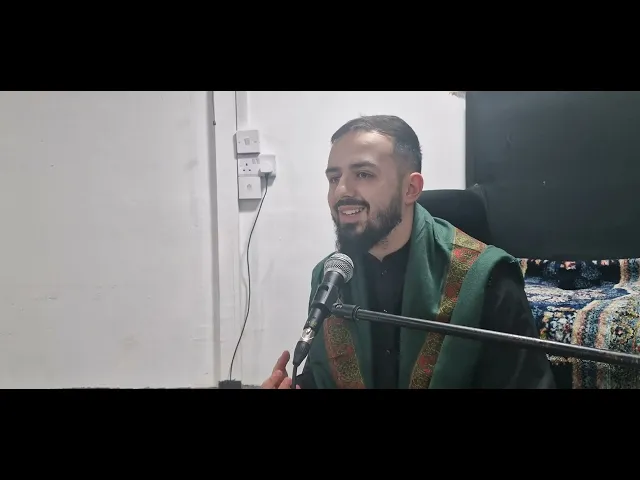
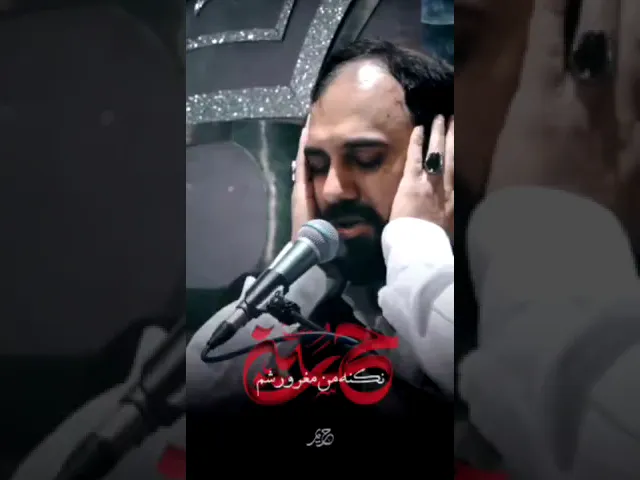
Muharram [Night 4] - An Islamic Perspective on Emotional Intelligence | Sayed Mahdi Qazwini
0
0
37 المشاهدات·
24/03/23
في
محاضرات
Muharram [Night 4] 2021 - An Islamic Perspective on Emotional intelligence | Sayed Mahdi Qazwini
at the Ahlul Bayt Center of Toledo
أظهر المزيد
Transcript
[0:26]muhammad [Music] it is no doubt that one of the objectives of
[1:44]the movement of say this was to awaken the people to awaken
[1:56]the nation from the slumber that they had fallen into and this
[2:03]was echoed through many of his statements that he made towards the
[2:09]end of his journey in one statement he pointed out the irony
[2:16]of how people had forgotten the practice forgotten hunger encouraged and that
[2:25]vice and evil and disobedience is no longer condemned in another statement
[2:38]he said annas that people generally are slaves of this world and
[2:50]that their religion meaning what they what they claim to be true
[2:56]is like the saliva that's in their mouth and then he follows
[3:00]with that statement he says that the reality emerges when people are
[3:10]put under pressure when people are put under strife it's like if
[3:16]you were to squeeze an orange what would come out you might
[3:19]say orange juice but the reality is whatever is inside of that
[3:22]orange is going to come out if it's rotten then you are
[3:28]going to have rotten juice come out so these were the ironies
[3:33]these were the pressures this is this is what imam hussain salaam
[3:37]wanted to point out to the nation and the reality is that
[3:44]a wave or a cloud of ignorance had consumed the nation at
[3:53]that time the imam realized that the real challenge and the problem
[3:57]was the way that people were thinking during that time and if
[4:03]you look at most of humanity's problems today it has a lot
[4:08]to do with the way that we think the way that we
[4:16]understand i should say our lack of understanding how we misunderstand ourselves
[4:22]those around us the world around us the stories that we tell
[4:28]ourselves that we make up this is the source of many of
[4:34]the challenges that we see today why is it that we have
[4:38]a nation divided over how to deal with a pandemic last year
[4:45]it was the story of racism and you saw what was going
[4:53]on in the news and and the divide that took place and
[4:56]every time we have an election to gold an opportunity for people
[5:00]to spread false information misinformation and truly show their lack of understanding
[5:09]of themselves and of one another so the imam realized that there
[5:16]was a problem in people's paradigm and your paradigm is your way
[5:20]that you look at the world around you when we have an
[5:27]incorrect paradigm that leads to incorrect feelings which leads to incorrect and
[5:33]unappropriate behaviors there was an author who one time wrote just to
[5:37]give you an example of what it means to have a an
[5:41]incorrect paradigm that he wrote that one day he was on the
[5:45]subway in new york and he noticed that one of the stops
[5:52]a gentleman came in and he had his children with him two
[5:57]or three children and the man who came in looked dazed and
[6:01]confused he was tired and his children were very loud and obnoxious
[6:08]they were chaotic they were [Music] screaming jumping around hitting each other
[6:16]and even pulling things from from other passengers taking things and just
[6:23]being rowdy so the author who writes about this incident he says
[6:26]that you know i was just sitting there observing and on the
[6:28]inside i was you know my my anger was boiling i was
[6:32]boiling why i mean why is this man being so inconsiderate why
[6:37]can he not control his children until finally he reached a breaking
[6:41]point and he turned to the man he said sir do you
[6:46]mind controlling your children this is a public space we all have
[6:51]the right to peace so he said the man looked up at
[6:55]him dazed and confused and he said you know you're probably right
[6:58]i should but me and the children just came back from the
[7:03]hospital where my wife their mother passed away and i have no
[7:07]idea we have no idea what to do i have no idea
[7:09]how to convey that to them the author said all of a
[7:14]sudden my feelings changed towards this man i began to feel sorry
[7:20]for him i began to feel compassionate towards him i started to
[7:25]ask him i i gave him condolences i apologized i said sir
[7:29]is there anything i can do to remedy this situation and so
[7:32]he gives that story as an example of before he was wearing
[7:38]one set of lenses after the tree after the truth was revealed
[7:41]to him he had another pair of lenses and so because his
[7:49]thinking was off his emotions were also off so there is a
[7:56]relationship between the way that we think and how we feel and
[8:00]in turn how we behave and this is the topic of emotional
[8:07]intelligence is how do we master our emotions using reason using intellect
[8:17]we know from an islamic perspective that one of the greatest creations
[8:25]of allah subhana wa ta'ala is our intellect in a number of
[8:30]hadith we find in us in the first book of sol kafi
[8:34]it is known as kitab the book of akl the book on
[8:40]intellect and among those narrations it is stated in a number of
[8:45]authentic narrations that the first thing that god created in this universe
[8:48]out of all of the creations out of all of the was
[8:53]the apple the intellect and when he created it he perfected it
[8:57]when god creates a thing he perfects that thing and then he
[9:02]turned to it and said go forth and it went forth then
[9:06]he said to it move back and it moved back meaning it
[9:11]was it was under his command and his control and then allah
[9:15]subhanahu wa'ta'ala said by my might and by my glory there is
[9:18]nothing that i have created in this universe which is as perfect
[9:24]as you that i have perfected the way i have perfected the
[9:28]intellect and i perfect you especially in those people that i love
[9:32]that are close to me so the closer we are to allah
[9:37]subhanahu wa'ta'ala the more primed our our intellect is to understand the
[9:45]truths around us and when we think properly we feel properly and
[9:52]we behave properly this in essence is the subject of emotional intelligence
[9:56]which is taught today how to use our mind how to use
[10:00]our intellect our rationale our reason to master our emotions so we
[10:08]are created not knowing anything not understanding anything that you emerged from
[10:19]your mother's wombs not knowing anything i mean did any of us
[10:25]come out of our mother's wombs with a 120 iq nobody that
[10:31]we've heard of there's nothing that you know and then he says
[10:42]in order to begin to gain understanding and knowledge he equipped you
[10:48]with number one the ability to listen to hear and most of
[10:57]us we don't make full use of our hearing capability most of
[11:04]us we haven't trained ourselves on how to actually listen i read
[11:10]a statistic once i think it said that the if i'm not
[11:15]mistaken the the average person listens for i think seven seconds before
[11:21]they interrupt that's the extent whereas if you've ever been around people
[11:29]of influence leaders what are they really really good at they're good
[11:33]at listening we don't learn when we speak we learn when we
[11:40]listen number two is vision being able to see basar and number
[11:49]three our hearts and the heart is not only the seat of
[11:53]our emotions it is also the seat of our intellect the akal
[11:59]resides in the heart this is why the quran describes people who
[12:04]do not understand as having a lock on their hearts because the
[12:08]hearts the kal is the source of the aqua the source of
[12:15]understanding and in a number of verses our senses the ability to
[12:23]listen the ability to see are coupled with our ability to understand
[12:29]and our emotions so for instance we read in chapter 23 verse
[12:36]78 wahua levi and again in chapter number 32 verse 9 when
[12:50]god created adam he perfected him he bestowed upon him his spirits
[12:59]that god has given you these gifts your senses and your emotions
[13:05]and very little do we give thanks very little are we grateful
[13:11]for our ability to understand the world around us because to understand
[13:18]at the level that we as human beings are able to understand
[13:22]more than any other species more than a rock more than an
[13:29]animal even sometimes more than the angels if we choose to exercise
[13:33]our intellectual ability very little do we give thanks so one of
[13:43]the biggest challenges today is that we have these gifts however we
[13:47]have not learned to unlock the true potential of these gifts for
[13:51]the most part we go throughout our lives with unguided emotions and
[13:58]unguided thinking ability this is what is known today as drifting when
[14:04]you drift from one thought to another from one idea to another
[14:08]and social media following social media in the news is not very
[14:13]helpful in this regard because there's all sorts of opinions out there
[14:18]unguided opinions and people are so very influenced by the unguided opinions
[14:23]in the world it's truly an art to know where to select
[14:31]your source of information from the quran tells us to listen to
[14:41]that which is best yes they listen to what is being said
[14:48]they're not completely cut off however the they follow the best of
[14:54]it they follow the meaning that they understand how to navigate between
[14:57]what is true and what is false to a certain extent of
[15:00]course ultimate wisdom and ultimate guidance and intellect belongs and truth belongs
[15:05]to allah subhanahu wa ta'ala however what this means is that the
[15:11]mu'min the believer is careful of what he or she allows to
[15:14]influence them to influence their guidance to influence their decision-making process so
[15:21]there's a relationship between our senses between what we what we sense
[15:30]and how we think and feel between our reason and our desire
[15:38]so we we then understand that if we have feelings which are
[15:50]inappropriate these feelings are most likely linked to unguided thinking if we
[15:53]can fix our thinking the way that we think then we can
[15:56]fix the way that we feel i'll give you an analogy and
[16:03]this is this is a concept which comes from both islamic and
[16:08]greek philosophy it says that the soul there's a there's a tripartite
[16:15]division of the soul what does that mean that the soul is
[16:19]comprised of three things one is reason the second is desire and
[16:29]the third is anger reason desire and anger and one of the
[16:36]analogies that muslim philosophers adopted from greek philosophers such as aristotle and
[16:41]galen is the rider horse dog analogy what does that refer to
[16:47]it says that in this tripartite division where you have reason desire
[16:52]and anger if you can imagine the classical image of a horse
[17:00]rider going out hunting you have the rider who is sitting on
[17:04]the back of the horse and there is a dog that it
[17:07]follows the rider is a metaphor for reason the horse is a
[17:16]metaphor for desire and the dog is a metaphor for anger meaning
[17:21]that in order to achieve balance it's not that your anger cannot
[17:29]exist or your desire cannot exist but both both desire and anger
[17:35]must be in control of the rider which is what reason and
[17:38]rationale it can't be the other way around so our emotions our
[17:45]desire our anger and we'll speak a little bit more about what
[17:47]we mean by anger anger is an umbrella term there are many
[17:52]emotions that fall under anger there's positive anger and negative anger but
[17:56]our anger and our emotions must be under the control of the
[18:00]rider which is reason but beyond that from an islamic perspective there
[18:08]is another layer that we we we turn to so what i
[18:16]mean by that is that when it comes to taming our desire
[18:18]when it comes to taming our emotions and our anger we don't
[18:22]only rely on reason and intellect we need intervention from allah subhanahu
[18:29]wa ta'ala why the quran reminds us sometimes we have unwanted feelings
[18:42]i've come across people and they say you know i just there's
[18:45]a certain person in my life i can't really identify why but
[18:50]i don't like this person unwanted feelings sometimes we deal with unwanted
[19:00]desires and if we let these unwanted feelings and unwanted unwanted desires
[19:04]run amok without taming them it can be tormenting psychologically and spiritually
[19:12]tormenting this is why we have the option of not only using
[19:15]our reason and our intellect because sometimes that is not enough we
[19:18]need to turn to allah subhanahu wa ta'ala know that god comes
[19:27]between mankind men and women and their hearts the way that they
[19:31]feel the way that they process so if we have unwarranted feelings
[19:38]or unwanted feelings we can he observed that people were being driven
[19:47]by their desires and by their anger and by their emotions however
[19:53]an appeal to reason was not enough this is why his movement
[20:01]was so drastic it had to be drastic this is why imam
[20:07]hussain alayhi salaam said that it is the will of allah subhanahu
[20:11]wa'ta'ala that that i am seen slain and that our women are
[20:18]seen as captive because he understood that in order to tackle a
[20:21]situation which was as extreme as it was at that time he
[20:26]needed to take extreme measures it wasn't just an appeal to people's
[20:32]logic or the reason or the rationale something emotional needed to take
[20:40]place and we know that with his martyrdom the world was shaken
[20:47]and stirred emotionally and that emotion continues to this day this is
[20:51]why we mentioned the other night the hadith where the prophet said
[20:56]that innalique mini the burning is in the heart it's not about
[21:04]what makes sense and what doesn't make sense it's about what you
[21:08]feel in your heart the emotion so being in control of our
[21:16]emotions so with the time that we have left i want to
[21:21]discuss three main emotions that we deal with on a day-to-day basis
[21:26]and how we can begin to properly understand our emotions from a
[21:34]logical perspective but also what our faith tradition teaches us about mastery
[21:40]of emotions so emotion number one is anger and we mentioned in
[21:48]that tripartite division of the soul that part of the soul is
[21:56]anger not all anger is created equal we have irrational anger and
[22:05]we have rational anger what does that mean what is an example
[22:09]of irrational anger well the story that i told you earlier of
[22:12]the man who was sitting in the subway he was angry at
[22:16]the other one but then he realized that the other one was
[22:19]bereaved and so his anger subsided imagine if you were building something
[22:26]in your front lawn or or somewhere all of a sudden someone
[22:33]crashes into it and destroys it what's the first thing what's the
[22:37]one of the first emotions that are aroused within you is anger
[22:40]however however what if you realized that the person who walked into
[22:46]the structure that you were building was blind all of a sudden
[22:50]you realize that your anger was irrational it was not rational meaning
[22:55]what we mean by irrational is that it was not based on
[22:59]the proper perspective it was not based on the proper frame of
[23:03]mind so it's an irrational anger now if someone was to remain
[23:06]angry that would be that would continue to be an irrational anger
[23:11]after the fact so there is irrational anger however there is rational
[23:16]anger as well when when we have anger when we find anger
[23:25]within ourselves to defend the things which are sacred in our life
[23:29]if someone for instance was to attack something sacred in our life
[23:35]the masjid for instance or the place of ziara or a family
[23:40]member this would arouse the feeling of anger within us however this
[23:43]would be rational anger not irrational anger one of our early classical
[23:53]scholars fahani he spoke about the different types of anger that may
[23:58]arise within the human being he says that the type of anger
[24:06]from one who is inferior to one who is superior so imagine
[24:12]for instance someone who is inferior when i mean inferior and superior
[24:16]not not in value but in position and status when anger is
[24:22]directed from someone who is inferior to one who is superior and
[24:25]that person cannot retaliate so say for instance an employee is angry
[24:30]at the manager or the boss and they can't take their anger
[24:34]out this anger becomes internalized and it turns into which is sorrow
[24:42]what happens when a person is angry the one who is superior
[24:49]becomes angry at the one who is inferior of a left of
[24:53]a lesser position of a lesser status he says this is what
[24:58]is known as this is true anger then there is the anger
[25:05]of one who is equal to the one who is equal and
[25:07]he is not sure if he can retaliate or not retaliate so
[25:13]he alternates between sorrow and anger so there's different types of anger
[25:17]which exist within the psyche true anger is when you are able
[25:28]to retaliate against someone however you choose to hold back this is
[25:35]what is known as kawmulrev so the literal meaning of this word
[25:44]the cove is basically the ring which acts as a cap which
[25:52]goes around the top of a water canteen if you've ever seen
[25:54]the in the old days how they used to fill up water
[25:58]skins or water canteens well to prevent the water from spilling out
[26:01]you needed to tie a rope or a ring around the top
[26:05]this is known as kaum so when a person is able to
[26:11]tie a ring so to speak around their emotions around their anger
[26:15]when they're able to suppress themselves this this person is referred to
[26:23]as kava milk so true true forgiveness and true forbearance comes from
[26:40]the person who is actually able to retaliate but chooses not to
[26:42]do so not the one that can't do anything about it in
[26:45]the first place and this is where we find true courage so
[26:50]the key here is not to obliterate anger but to exercise it
[26:58]within reason because again anger is part of the soul it's a
[27:03]natural part of the soul it's not something that you can get
[27:04]rid of and there are positive types of anger for instance what
[27:10]we know in the arabic language as rira this is a positive
[27:16]type of anger rira is a protective anger that one has when
[27:19]one wants to protect that which is sacred such as his family
[27:24]such as his property this is known as some people they loosely
[27:30]translate rira as jealousy is not jealousy if it is jealousy it
[27:36]is a protective jealousy over protecting the things in a person's life
[27:40]which are sacred and that which is justified the type of anger
[27:44]which is rational and justified the quran gives us examples of justified
[27:52]anger or justified harshness in chapter 48 verse 29 bismillah the quran
[28:09]says surely he is the messenger of god that you find those
[28:18]that are with the prophet the companions of the prophet the righteous
[28:22]companions and the bait they are harsh on the unbelievers however they
[28:29]are merciful between themselves so anger sometimes is necessary and we mentioned
[28:37]the verse chapter 3 verse 134 so the prime emotion here becomes
[28:46]forbearance helm and helm is at the height of emotional intelligence when
[28:52]you hear this term this phrase used today which is which has
[28:55]become very popular um in the last few years in the last
[29:01]few decades emotional intelligence the height of emotional intelligence for us as
[29:06]muslims is helm forbearance and this is a very deep deep concept
[29:10]it's forbearance is not something that you can translate just into into
[29:15]one word or one phrase and again i mentioned emotional intelligence just
[29:21]to give you a little bit of of a background into it
[29:25]is the concept of being able to master your emotions being able
[29:30]to take control over your emotions and one of the first scientists
[29:34]to research the subject of emotional intelligence his name was howard gardner
[29:39]he was a harvard researcher in 1984 he wrote a book called
[29:43]frames of mind and in that book he suggested that there are
[29:47]frames of mind refers to the theory of multiple intelligences that there's
[29:54]not just one type of intelligence it's not just iq there is
[29:59]iq there is eq which is emotional intelligence there is mathematical intelligence
[30:05]if you've seen some people are very gifted with mathematics from a
[30:11]young age not myself but kudos to you if you are there
[30:14]is linguistic intelligence some people have the intelligence of learning multiple languages
[30:21]very quickly there is spatial intelligence if you've seen people who have
[30:26]a knack for designing spaces designers architects they know how to design
[30:32]this is spatial intelligence they know what goes where so there are
[30:36]multiple intelligences then came daniel goleman who wrote the book emotional intelligence
[30:40]in the 90s where he delved further into the specific topic of
[30:44]emotional intelligence and part of that book he talks about mastery over
[30:48]one's emotions this is what the quran is telling us about mastery
[30:53]over one's emotions when it talks about helm so helm is at
[30:58]the height at the zenith of emotional intelligence helm is also divided
[31:04]into two parts so we mentioned that there is anger some of
[31:07]it is unwanted one hadith which talks about unwanted anger says that
[31:21]anger irrational anger is like a burning piece of charcoal that the
[31:26]shaytan casts into the heart of man this is irrational anger so
[31:32]now we come to well how do we work with our anger
[31:36]we said helm but helm is divided forbearance helm is divided into
[31:42]two parts one is which is pardon and the other is saf
[31:45]which is to forgive the quran says which means to pardon so
[31:59]to withhold punishment this is one the second is safe which is
[32:04]forgiveness to overlook one's wrongdoing these are two separate concepts one is
[32:10]to withhold punishment the second is to overlook the wrongdoing in the
[32:14]first place because with withholding punishment you are acknowledging the transgression however
[32:20]you're withholding punishment but with the second with suff with with forgiveness
[32:25]you are overlooking the wrongdoing in the first place and we read
[32:31]into akumail o not only did you pardon me and withhold punishment
[32:42]you you overlooked my transgressions you veiled my transgressions you covered them
[32:50]you protected them you hid them even from the angels there are
[32:57]some disobediences sins that we commit that are so shameful that allah
[33:09]even hides them from the angels what would happen if our sins
[33:21]were exposed to those around us we would not be able to
[33:27]show our face tomorrow to anybody so this is emotion number one
[33:32]anger the second is sorrow husn or rem there are two words
[33:39]for it and this has many causes sometimes we lose something which
[33:44]is valuable sometimes it's due to a shame or a defect in
[33:47]our own ability or morality we feel sorrow we feel sad and
[33:54]this is also an umbrella term because there are other emotions related
[33:57]to sorrow one of them is hem we mentioned hem yesterday anxiety
[34:06]over future events we get anxious over the economy what's gonna what's
[34:10]gonna happen with the economy when is there going to be the
[34:14]next correction which they've been talking about for a while now what's
[34:17]going to happen with this delta variant of the virus what's going
[34:23]to happen tomorrow next year in 10 years this is hem when
[34:27]we when we overthink about these things and it creates sorrow within
[34:31]us the second is and this refers to sorrow which has to
[34:39]do with past events and if this type of sorrow increases it
[34:43]leads to depression i want to share with you the words of
[34:47]one of our uh scholars a muslim scholar a 9th century persian
[34:52]scholar in polymath by the name of abu zayd al balkhi he
[34:57]said the following when it came to sorrow he said there are
[35:00]two types of sorrow there are two types of husum one where
[35:05]its cause is known loss of life loss of a loved one
[35:09]bankruptcy any sort of calamity which causes sorrow within the individual its
[35:14]causes are known the second type the cause is unknown and it
[35:21]is persistent it is as if he was describing depression he says
[35:24]this is the type of um sadness which is persistent it is
[35:32]sudden and it does not allow the person who is experiencing it
[35:35]to enjoy anything in this life whether it's food or company or
[35:42]anything else so two types of husum here is where we need
[35:49]to find value in spiritual detachment again it's not only reason that
[35:54]we use to overcome these emotions we need intervention from the divine
[35:58]we need intervention from allah subhanahu wa ta'ala this is where the
[36:02]quran reminds us find yourself in a state where you are not
[36:12]saddened and sorrowful over the opportunities which you have missed nor over
[36:19]excited and elated about what you have been given sometimes people they
[36:26]they complain you know i wish i had bought bitcoin back in
[36:28]i don't know 2000 or whatever when it was 30 cents i
[36:34]wish i had bought tesla stock or this and that it's all
[36:40]i wish and i hope we alternate between i wish and i
[36:45]hope and we forget to realize the bounties that we have in
[36:47]the present day and that the only thing which is guaranteed for
[36:51]us is the present moment now more than ever as we see
[36:57]life slip between our fingers we see people we experience loss of
[37:03]life we start to realize that what is important is not the
[37:07]future or the past but what is now there are a few
[37:12]words of poetry which are attributed to imam ali salam where he
[37:17]says that i am content with what my lord has provisioned for
[37:32]me because in the same way that god has always taken care
[37:34]of me in the past i know he will take care of
[37:37]me in the future think about your life we become anxious and
[37:43]sorrowful over things which have not happened yet think about how god
[37:48]has taken care of you how he has averted crisis in your
[37:51]life up until now and even when you have experienced tragedy you
[37:56]have lived another day to breathe we should be thankful there's this
[38:00]and when we understand this we are overwhelmed with a sense of
[38:08]calmness this is why imam hussain alaihi salam when he was faced
[38:14]with this challenge his words were words of riva contentment this is
[38:20]why i say this how do you find god god's judgment of
[38:31]your brother hussain how god dealt with your brother hussain this was
[38:34]the language that he used she said mara to illah jamilah i
[38:39]saw nothing but beauty muhammad so this is emotion number two emotion
[38:49]number three is fear health which again is a natural emotion and
[38:55]here there is rational fear and irrational fear irrational fears in today's
[39:02]language are known as phobias when people have phobias fear of constricted
[39:08]spaces or fear of heights or fear of spiders or fear of
[39:14]clowns there's a phobia it has a name i promise you it
[39:22]has a name but it's the fear of having peanut butter stuck
[39:25]to the roof of your mouth it's a very terrifying experience because
[39:29]you feel like you're choking there's an actual phobia of this these
[39:32]are irrational fears and then there are rational fears these are the
[39:40]fears that even our prophets and the imams experienced again we have
[39:48]reason the rider we have desire the horse and then we have
[39:53]anger the dog so reason here intervenes and when we fear we
[40:01]fear that which is irrational not that which is irrational i'll give
[40:06]you just one example from the quran the prophet ibrahim is described
[40:10]in chapter 51 verse 28 when he received his guests who gave
[40:16]him the glad tidings the quran says that there was fear within
[40:23]him not fear of who they were ibrahim did not fear the
[40:28]guests commentators say that when the guests came the angels he offered
[40:32]them a meal but they did not eat so the fear came
[40:36]from the rejection of hospitality which is a sign of hostility you
[40:42]know in our cultures back home if somebody serves you if somebody
[40:47]is hospitable towards you and you reject their hospitality that's a sign
[40:50]that's not a good sign it's a bad sign it's a sign
[40:55]of it's a sign of hostility so this is what ibrahim was
[41:00]afraid of not from the visitors and sometimes we feel fear as
[41:06]well we feel fear of death because we fear what will happen
[41:09]after that we fear our past our sinful past i'll give you
[41:14]one verse from the quran which speaks of this fear this is
[41:16]chapter 39 verse 23 bismillah that god has sent down the best
[41:38]of speech which is the quran and that the believers those who
[41:42]have fear in their hearts when they read the words of the
[41:48]quran they tremble they shake in fear and then so this is
[41:53]stage 1 stage 2 you become afraid of your past your sins
[42:00]and then you remember the mercy of allah subhanahu wa ta'ala how
[42:04]it is so much bigger than any challenge any sin any form
[42:09]of disobedience and this causes it says then they are overwhelmed with
[42:20]a sense of contentment with calmness that i am dealing with the
[42:26]most merciful god so when it comes to mastering our emotions brothers
[42:31]and sisters we have a rich tradition within the quran and the
[42:35]hadith i want to turn our attention to imam hussain and tonight
[42:40]we remember the sacrifice of al-horbani azid when we talk about fear
[42:46]one of the biggest fears that we have what we call today
[42:50]fomo the fear of missing out and this is what drives us
[42:54]to check social media all the time what is this person doing
[42:56]what is that person doing this person bought a house this person
[42:58]made this investment i want to know what's going on because i
[43:02]have a fear of missing out what if i miss out what
[43:06]if i don't get that same opportunity this is a very legitimate
[43:09]fear that we have al-haram was a man who exercised his intellect
[43:16]he was a noble man and he realized that whatever was offered
[43:21]to him in terms of this dunya was worthless in contrast to
[43:27]what was waiting for him as he stood by his master hussein
[43:30]yesterday we mentioned that imam hussain was traveling from mecca to kufa
[43:37]on the way he was intercepted by the army the battalion of
[43:41]el horba who led one thousand men and they stopped and they
[43:46]had a discussion between themselves and in the end of the discussion
[43:49]imam hussain alaihissalam refused to enter kufa with hur because this was
[43:57]his intention to arrest the imam and bring him back to kufa
[43:59]however because he was a noble man because he was from a
[44:04]noble family he could not get himself to arrest the imam and
[44:09]bring him back so he said abdullah you turn go in another
[44:12]direction because if i go back i have to go back i
[44:18]it cannot be known that i let you go so imam hussain
[44:24]alayhi salaam at that moment he turns and he heads towards karbala
[44:32]on the day of karbala on the day of ashura al-hur ibn
[44:34]yazid finds himself in a very difficult space he is hearing the
[44:40]cries of the children they had been cut off from water for
[44:45]a week and he is trembling and almost turns to him he
[44:51]says he says what is wrong with you you're trembling he says
[44:55]you are the most courageous and brave man that we know if
[44:59]i was to be asked who is the bravest man of kufa
[45:03]i would not doubt that it would be you this is when
[45:07]he made his statement in the nfc i see myself choosing between
[45:14]heaven and hell fire and there is no way that i will
[45:18]pick anything over siding with imam hussain and it is at that
[45:21]moment that he moved towards the camp of imam hussain asking for
[45:24]forgiveness oh allah forgive me forgive me o allah for i have
[45:31]struck terror into the hearts of your beloved people imagine how this
[45:34]was weighing on him emotionally and imam hussain alaihi salam receives him
[45:39]with open arms and he is one of the companions on that
[45:43]day that goes out into the battlefield fighting ferociously killing the enemy
[45:50]soldiers left and right until finally he met his demise he met
[45:54]his doom he fell down he was struck down he fell imam
[46:00]hussain when he meets him during those final moments he says to
[46:03]him bravo for for making the right choice that truly you are
[46:11]a truly you are a free man as your mother has named
[46:16]you a free man in this world and the next world inn
[46:25]brothers and sisters please remember those who are sick today in our
[46:31]duas those who are in need of our duas please remember them
[46:35]there are many people from within our immediate and extended community and
[46:39]remember those worldwide especially our brothers and sisters in afghanistan who are
[46:47]facing an unspeakable challenge in these days foreign you
0 تعليقات
sort ترتيب حسب
- أعلى تعليقات
- أحدث تعليقات
التالي
2 المشاهدات · 25/03/23
7 المشاهدات · 25/12/01
10 المشاهدات · 14/09/23
7 المشاهدات · 21/12/07
7 المشاهدات · 22/11/28
9 المشاهدات · 24/11/14
8 المشاهدات · 25/06/22
6 المشاهدات · 25/11/02
8 المشاهدات · 13/01/07