التالي
2 المشاهدات · 25/03/23
8 المشاهدات · 25/12/01
10 المشاهدات · 13/12/26
10 المشاهدات · 14/09/23
7 المشاهدات · 21/12/07
7 المشاهدات · 22/11/28
10 المشاهدات · 24/11/14
8 المشاهدات · 25/06/22
8 المشاهدات · 25/11/02
8 المشاهدات · 13/01/07
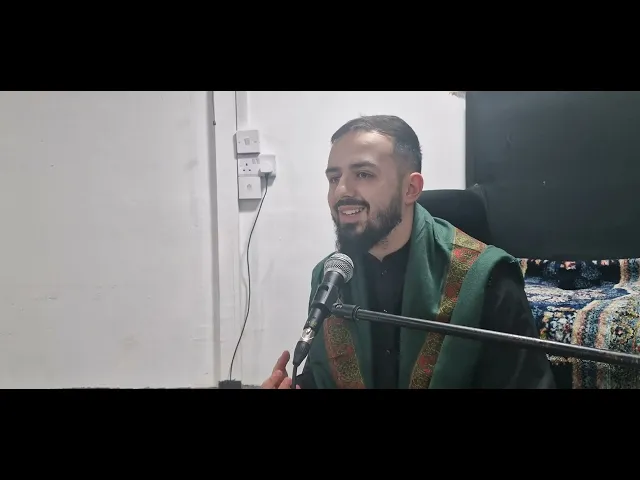
Muharram [Night 3] - Coping with Stress and Depression | Sayed Mahdi Qazwini
0
0
26 المشاهدات·
24/03/23

في
محاضرات
Muharram [Night 3] 2021 - Coping with Stress and Depression | Sayed Mahdi Qazwini
at the Ahlul Bayt Center of Toledo
أظهر المزيد
Transcript
[0:25]muhammad [Music] a one of the most prominent challenges rising in the
[1:45]muslim community today whether we're talking about the local muslim community or
[1:54]the broader community and humanity at large is the rise in depression
[2:02]according to a recent study by the published in the journal of
[2:08]the american medical association and some of you may be familiar with
[2:14]this study that american muslims those who were polled interviewed in the
[2:22]study are twice as likely to attempt suicide than any other group
[2:32]whether it be faith group or a non-faith group to some these
[2:39]statistics are alarming to others not so much if you're involved in
[2:46]community leadership you've perhaps come across a few of these cases a
[2:54]positive note that has come from this is that over the past
[3:00]decade or two conversations around the topic of depression suicide and the
[3:07]effects of stress and anxiety in our daily lives have become more
[3:12]mainstream more acceptable and less taboo even though there's a lot of
[3:19]work to be done in 2014 the surgeon general of the united
[3:28]states at the time had written that one of the biggest epidemics
[3:35]in the united states was the epidemic or is the epidemic of
[3:40]loneliness now today we are more familiar with these terms the term
[3:47]epidemic and pandemic but as i read this i was wondering well
[3:55]what would he say in the year 2020 or 2021 as people
[4:02]have become more distant from one another what is this causing within
[4:09]our communities what is our responsibility as community leadership how do we
[4:14]address these topics before it becomes too late for some unfortunately it
[4:18]does become indeed too late for others there is hope and it
[4:25]is our responsibility as a community to cater to those who are
[4:29]struggling with these challenges the question is does our faith tradition does
[4:39]it equip us with the tools to overcome depression stress and anxiety
[4:46]is it enough for someone to be religious or spiritual or practicing
[4:55]or do we need to resort to other treatments what does our
[5:06]faith say about depression what does science and medicine tell us about
[5:17]it and how do we merge between the two i want to
[5:20]share with you what the quran says about depression and yes the
[5:24]quran does speak about depression it does speak about that psychological state
[5:31]you might be asking where well if you read the verses of
[5:38]the quran that have to do with the hellfire now we know
[5:43]that the hellfire and heaven paradise are very real concepts meaning that
[5:54]when we read the verses that describe both heaven and hell we
[5:57]take them literally there is there is no reason not to take
[6:01]them literally meaning that there is no reason to believe that they
[6:08]are not a physical phenomena a physical experience some philosophy i say
[6:13]this because some philosophers have suggested throughout the ages that heaven and
[6:20]hell are not really a physical phenomena it's not something that you
[6:24]will experience physically but it's more of a spiritual and psychological either
[6:29]torment for the hellfire or bliss and satisfaction for heaven and while
[6:38]we may accept these definitions this does not rule out the fact
[6:42]that they are a very real physical phenomena but the quran also
[6:49]describes the psychological condition of those who are in both heaven and
[6:54]in hell and if you focus on the description the psychological description
[7:02]of those who are in the hell fire we come across a
[7:06]number of verses number one we read in chapter 89 verse 13.
[7:14]bismillah that a person who finds themself in hell fire they shall
[7:24]they shall not die in it nor shall they live in it
[7:28]they are in a state of limbo between life and death in
[7:35]another chapter in the quran chapter 35 verse 36 that those who
[7:51]find themselves in the hell fire that it does not it does
[7:59]not kill them nor does it release them from its punishment so
[8:06]again it's as if they are in the state of limbo between
[8:10]life and death chapter 20 verse 74 similar to the previous verses
[8:21]and the final one is chapter 14 17.
[8:32]that death shall come to him shall approach him from every angle
[8:39]from every side but he will not die this is not only
[8:45]a physical state but it's a psychological state and if you ask
[8:51]people who are suffering from some of the worst kinds of depression
[8:55]they will tell you just that that it feels like you are
[9:00]in a state of limbo between life and death i've spoken to
[9:04]people and counseled them to a certain extent and of course i'd
[9:09]like to point out here that when we counsel someone who is
[9:18]experiencing depression or anxiety we must understand that there is a limit
[9:23]to the advice that we give there is a limit to the
[9:29]amount of effective counseling that we can do unless we are trained
[9:36]in mental health in therapy in psychoanalysis we need to be very
[9:43]careful of the conversations that we have with people who are experiencing
[9:48]these types of challenges because sometimes we mean to do good however
[9:52]our words can cause an adverse effect if for instance we tell
[10:00]someone that this is only a phase and you are going to
[10:01]get over it or maybe you need to become more religious or
[10:07]spiritual or you need to snap out of it sometimes people who
[10:11]are suffering from depression they hear these from those who are closest
[10:14]to them not out of ill meaning not to hurt them but
[10:20]because sometimes we are not trained to offer the proper perspective and
[10:23]the proper advice and i know for myself when i am counseling
[10:29]someone i take this into consideration i as a leader in the
[10:36]community do my best to reroute them to someone who can actually
[10:39]help them because i understand that my capacity is limited i'm speaking
[10:44]from my own experience of the limited conversations that i've had with
[10:48]people who have come to me that they say that it is
[10:52]it is as if you are stuck in limbo between life and
[10:56]death psychologically this is what the quran tells us so the quran
[11:07]affirms that there is a psychological state that one can exist in
[11:10]which is very depressive and mentally is very debilitating we also find
[11:19]from the tradition of the bait for instance the prophet peace be
[11:24]upon him we know that when his beloved uncle abu talib and
[11:29]his beloved wife lady khadija alaihum assalam passed away in that year
[11:33]he named that year amel hazen the year of sorrow the year
[11:39]of sadness because the prophet was a human being who felt sadness
[11:43]and sorrow just like all of us let's come to the words
[11:48]of sayyid hussain there is a famous famous supplication which he spoke
[11:58]on the day of many of us are familiar with the one
[12:00]that begins with allah o allah you are my trust in every
[12:13]sorrow enter this means that the imam actually felt sorrow he felt
[12:24]grief he felt sadness and then he says hem refers to anxiety
[12:37]an anxious situation he says how many anxious situations did i find
[12:42]myself in that the heart is stressed from the heart is weakened
[12:50]from so the prophets and the imams of albeit they felt similar
[12:58]emotions to the emotions that we feel they felt stress they felt
[13:05]sorrow they felt to a certain extent anxiety now some people ask
[13:11]the question is that did they also feel depression so there's an
[13:15]answer to that but let's move along so what does we know
[13:20]that there is an acknowledgement in the quran when it comes to
[13:26]stress and depression we know that it exists within you know the
[13:32]tradition observing the lives of the prophet and the imams of beit
[13:35]what does science modern science tell us about stress and how do
[13:41]we correlate that with islamic practices for the longest time and if
[13:51]you obviously i'm preaching to the choir speaking to a medical community
[13:55]here but for the longest time it was believed and it is
[13:58]still believed that stress is harmful correct if you look at the
[14:05]main the leading causes of death in the united states the number
[14:08]one leading cause if i'm not mistaken is heart disease followed by
[14:14]cancer followed by other causes and how does heart disease happen well
[14:18]variety of reasons it could be due to over stressing it could
[14:24]be due to a diet it could be smoking it could be
[14:28]a combination of many things what's very interesting though is that recently
[14:34]they have discovered within the within the medical community within the scientific
[14:41]community i should say that not all stress is harmful what does
[14:48]this mean there was a study conducted by the university of wisconsin
[14:54]and in this study they studied about 30 000 people and they
[14:59]followed their lives for eight years and with these test subjects they
[15:06]asked them two questions the first question was have you experienced any
[15:14]stress in the last year now if i was to ask the
[15:18]question to this crowd everybody would raise their hands i mean if
[15:21]you're above the age of 10 you've probably experienced some sort of
[15:25]stress this is one question they ask them the second question they
[15:33]ask them is that is stress harmful do you believe that stress
[15:37]is harmful and then they followed their lives over eight years and
[15:41]at the end of the study they looked at public death records
[15:45]to see who was affected and the results were very surprising they
[15:51]found that those who had said yes to both meaning that they
[15:57]had admitted that they had experienced stress within the last year and
[16:02]also believed that stress was harmful had a 43 higher chance of
[16:08]dying from a stress-related death than those who had said yes to
[16:15]question one meaning that they had experienced stress in the last year
[16:18]but did not believe that stress was harmful this goes to show
[16:24]something very interesting that those who experienced stress but did not believe
[16:30]stress was harmful had a lesser chance of dying from a stress-related
[16:34]death which shows that our belief and our thoughts what we believe
[16:43]our paradigm when it comes to stress has a very real effect
[16:47]on our physiology the way that our bodies work another study based
[16:55]on this was conducted at harvard university this one was interesting this
[17:00]one had the test subject enter into a stressful situation and there
[17:11]are stress tests that can be conducted for instance if i was
[17:15]if you're bilingual and if i was to ask you to count
[17:21]in both languages say let's say for instance just for example arabic
[17:25]and english if i was to tell you to count backwards from
[17:30]100 but every digit you have to alternate between arabic and english
[17:33]and then in the middle of that i began to interrupt you
[17:36]or tell you to slow down or speed up or get up
[17:40]and start hopping up and down and counting this is a stressful
[17:44]situation so they would intentionally enter them into a stressful situation however
[17:48]they would tell them those conducting the experiment they would tell them
[17:54]that what you are going to experience in terms of an increased
[18:01]heart rate uh increased breathing all of this is your body preparing
[18:06]you for that stressful situation it's a good sign it's not a
[18:09]bad sign this is your body working towards your advantage meaning that
[18:13]what you experience the physiological uh things that you experience is your
[18:19]body being prepared for that stressful situation nothing more and it's not
[18:24]harmful for you so they would go in with that with that
[18:26]mindset and the results were astonishing again they found that the people
[18:33]who had been told that those that the increased heart rate and
[18:39]the increased breathing was indeed beneficial to them rather than harmful to
[18:44]them not only did they perform better they were more confident they
[18:49]also because they examined their heart rates they realized something spectacular that
[18:55]the heart rate would go up however the blood vessels would not
[19:02]constrict normally when a person and correct me if i'm wrong when
[19:05]when someone is stressed real stress the heart rate goes up and
[19:11]the blood vessels constrict this is why it's not healthy for someone
[19:14]to remain stressed all of the time because if the blood vessels
[19:17]are always constricted this leads to many problems cardiovascular problems however the
[19:23]ones that were told that even though you are going to experience
[19:27]a high beating of the chest beating of the heart a higher
[19:32]heart rate and higher breathing that this is going to be beneficial
[19:39]to you this is protecting your body they would indeed experience a
[19:42]heightened heart rate however their blood vessels would not constrict they would
[19:50]remain open and this is what happens to the body when we
[19:53]experience both joy and courage when you experience joy your heart rate
[19:57]goes up but your blood vessels do not constrict when you are
[20:01]feeling courageous same thing your heart rate goes up but the blood
[20:08]vessels do not constrict this further goes to show that our belief
[20:13]that we carry has an effect on our physiology so everybody experiences
[20:24]stress everybody experiences anxiety but how you think about your stress how
[20:32]you think about your anxiety has physiological effects on us it has
[20:39]a true effect on our life one more study takes it even
[20:43]further and this was conducted at the university of buffalo in new
[20:47]york they studied one thousand adults between the ages of 34 and
[20:53]93 and they asked them again two questions the first question is
[20:57]how much stress have you experienced in the last year the second
[21:02]question is how much time have you spent caring for other people
[21:07]and the results again were astonishing they found that the people who
[21:14]experienced stress which was almost everybody in the study however the ones
[21:20]that had spent time helping others and caring for others and they
[21:24]and they conducted this study over over five years they found that
[21:30]for every stressful situation whether it was a financial situation whether it
[21:36]was a family situation it increased the risk of dying by 30
[21:40]percent except for the people who had spent time caring for others
[21:45]and being compassionate towards others those people who had spent time caring
[21:49]for others had almost a zero percent chance dying from a stress-related
[21:56]death it's care so they have discovered that when we care for
[22:05]people that when we are compassionate towards people that when we spend
[22:10]our time in the service of others this does not eliminate stress
[22:16]from our lives it eliminates the negative repercussions that stress has on
[22:21]our bodies it's very interesting because as i was reading this i
[22:26]remembered a report from our hadith it is a description of the
[22:30]life of rasulullah hindi who according to reports was the nephew of
[22:41]lady khadija alaihissalam who when the prophet peace be upon him married
[22:45]lady khadija he came into the home of the prophet so he
[22:50]was almost like a stepson to the prophet observing the prophet in
[22:53]one report narrated by the imams of albeit he gives a description
[22:57]of the prophet a physical description of the prophet what kind of
[23:01]demeanor the prophet had what kind of attitude how he interacted with
[23:04]the people around him and one of those descriptions is very interesting
[23:07]because he describes him in the following way he says meaning that
[23:19]that he was in a continuous state of sorrow he would he
[23:24]would go from one sorrow to the next and you think about
[23:29]this it's you'd say it's it's not healthy for a person to
[23:31]always be in a state of sorrow obviously the prophet also experienced
[23:37]times of elation and joy and happiness but for the most part
[23:42]the prophet was concerned for the community around him he cared for
[23:46]the community around him he was compassionate towards the people around him
[23:51]even if those people showed enmity towards him so even though the
[23:57]prophet dealt with very stressful situations he was also a compassionate person
[24:01]even though the imams of albeit they dealt with stressful situations they
[24:07]showed compassion and care to those around them and science now tells
[24:13]us that if we show compassion and we show care and we
[24:15]show love to those who are around us we are less likely
[24:20]to be affected by the negative repercussions physically that stress has on
[24:25]our bodies so when we spend our lives in the service of
[24:34]humanity which is the message of islam which is the message of
[24:40]the bait which is the message of imam hussain alaihissalam we begin
[24:47]to reap these effects so how we think how we act how
[24:55]we behave all of this has an effect on our physiology on
[25:00]our biology stress indeed gives us access to our hearts when it
[25:10]comes to depression and depression is the larger issue here do we
[25:19]rely on our faith do we rely on what modern science and
[25:25]medicine tells us or do we establish a hybrid approach now this
[25:33]subject of course we can't speak about only in in one lecture
[25:36]so we'll leave it for another time but i'd like to share
[25:39]with you what modern wisdom tells us about eliminating depression and how
[25:47]that correlates with islamic teachings and islamic practices there was a book
[25:54]written a while back by the name of the depression cure it's
[25:59]a great book i would recommend you pick up and what the
[26:02]author suggests is that the depression that we we see today the
[26:11]rates of depression that we see today much of what we see
[26:16]today has to do with our lifestyle and behavior choices and what
[26:24]he suggests is that hundreds of years ago or thousands of years
[26:29]ago the challenges that we deal with today in terms of um
[26:33]our nutrition our lifestyle when it comes to staying indoors all of
[26:41]these have an effect on us and so the rates of depression
[26:48]that exist today there is a direct cause between them and our
[26:52]lifestyle choices and so in this book there are six recommendations that
[26:59]are made that if you adjust your lifestyle choices in these six
[27:04]areas that it can help defeat depression number one it talks about
[27:12]food and there are many studies out there today that link the
[27:18]food choices that we make to how we feel and how we
[27:26]behave in fact you've probably noticed that if you've made the wrong
[27:31]food choice sometimes we're hungry we're driving back at night and what
[27:35]happens when we're hungry we become automatically we become very impulsive right
[27:40]or hangry as they call it which is a mixture of hunger
[27:45]and anger hangry and when you're in that state when you're in
[27:48]that impulsive state you're more likely to make the wrong food choices
[27:51]this is why they say you know don't stock up your pantry
[27:55]cook in advance prepare your meals in advance people take meals with
[28:01]them wherever they go so that they're less likely to make the
[28:05]wrong food choices but the food that provides for us instant gratification
[28:14]sugar fat salt it feels good in the moment but what happens
[28:20]as soon as you're done consuming it you feel terrible not only
[28:25]physically in your gut in your stomach do you feel terrible but
[28:28]sometimes you feel irritable your mood you know it's a blessing and
[28:36]i've told my non-muslim friends this sometimes that that it's a blessing
[28:40]that as muslims we adhere to halal because when you're out and
[28:45]about that naturally restricts your choice of the many shall i say
[28:50]poisonous choices that exist out there that you don't have to resort
[28:55]to eating most of what's out there this is actually a blessing
[28:58]from allah subhanahu wa ta'ala you begin to fear feel irritable and
[29:02]there are some people who live their entire lives off of fast
[29:08]food i've seen this myself i've spoken to people who live their
[29:12]entire life breakfast lunch and dinner off and all the snacks in
[29:17]between off of fast food and there are many studies linked to
[29:22]not only heart disease not only cancer but our mood how we
[29:29]feel when we choose healthy choices versus unhealthy choices and what does
[29:36]the quran tell us in this regard let man look at his
[29:42]food consider the source of his food consider the source of his
[29:45]nutrition don't let it just be a shot in the dark whatever
[29:51]you find so number one is food and nutrition and the prophet
[29:56]and the imams of albeit they give us the best example not
[30:00]only what it when it comes to what to eat but the
[30:03]etiquette of eating and drinking how much to consume or how little
[30:09]to consume this is number one number two is when it comes
[30:15]to rumination and what rumination is is deep thoughts about events in
[30:22]the past many people who find themselves stuck in a depressive state
[30:27]they often ruminate they often constantly think about what has happened in
[30:33]the past the tragedies that have taken place our thoughts are very
[30:39]powerful what we think about is what guides our direction in life
[30:47]it's what creates our reality what does the quran tell us about
[30:54]the power of the aquila do they not ponder do they not
[31:02]think do they not give thought to what is happening around them
[31:06]muhammad number three is sunlight believe it or not sunlight the amount
[31:32]of sunlight that we get has an effect on our mood and
[31:34]if you don't believe it sometimes you know we we live in
[31:38]areas where we get an abundant amount of sunlight but if you
[31:40]don't believe it try locking yourself in a room for 10 days
[31:44]straight without any sunlight what happens to you automatically you begin to
[31:47]feel down you begin to feel depressed our ancestors worked outdoors and
[31:53]they would receive adequate sunlight so sunlight is one of them the
[31:59]fourth is exercise and moving around again if you study the lives
[32:02]of our ancestors they worked manually the prophet peace be upon him
[32:06]was not afraid of manual work the prophet was not afraid to
[32:11]use to roll up his sleeves and use his hands and work
[32:15]when our bodies move it's healthy for us our mind begins to
[32:19]move as well the fifth is social connections having adequate social connections
[32:26]here's an interesting thing that i learned from from these studies as
[32:31]well many of us we know about the hormone oxytocin oxytocin is
[32:41]known as a bonding hormone or a connection hormone they call it
[32:46]in layman's terms they call it the cuddle hormone because oxytocin is
[32:50]released when you embrace someone physically if you've ever given someone a
[32:56]hug a sibling or a parent or a loved one your body
[32:59]releases oxytocin and oxytocin is that chemical that makes you feel good
[33:04]when you when you when you embrace someone it's the chemical that's
[33:12]responsible for bonding and pairing oxytocin believe it or not according to
[33:18]to this research oxytocin is actually a stress hormone when your body
[33:24]is under stress it actually begins to release oxytocin to signal to
[33:29]you to go and look for connections go and speak to somebody
[33:34]go and talk to someone do not keep it within yourself studies
[33:39]across the world have shown that in some societies where people live
[33:43]the longest are those societies where people have a sense of connection
[33:50]to one another and connection does not connection doesn't just mean physically
[33:55]sitting next to someone that's part of it but connection refers to
[34:00]the meaningful relationships that we have with those around us so number
[34:05]five is social connections and number six is sleep which is very
[34:09]very underestimated and very underrated you know some people they wear a
[34:16]badge of honor they say that all i need is three hours
[34:17]of sleep a night or four hours of sleep a night this
[34:21]is not healthy this is not how allah subhanahu wa'ta'ala has created
[34:26]us he says this word subata comes from the word when we
[34:33]when we say the word sept or saturday it comes from this
[34:39]word subata subata means rest it's a day of rest this is
[34:44]the purpose of sleep so that your body gets adequate rest created
[34:57]the night that it is a cover for you that it is
[35:02]a veil he has created sleep as a form of rest and
[35:05]he has created the day or daylight as a time for getting
[35:11]up resurrection to be out and about to go about your business
[35:16]so when we merge the islamic sciences with the natural sciences the
[35:23]modern sciences we realize that the cure is there the treatment is
[35:32]there this is why we must be very careful when giving advice
[35:35]to those who are depressed not to say things like just become
[35:40]more religious and more spiritual and this will help you often times
[35:43]it does not we need a holistic understanding of how to treat
[35:48]challenges such as stress and anxiety and depression and one hadith narrated
[35:54]in bihar anwar this is from jabbar abdullah from from the prophet
[35:59]peace be upon him he says surely for every illness there is
[36:07]a cure at the end of the day brothers and sisters the
[36:13]cure lies with allah subhanahu wa'ta'ala we can pursue modern treatment we
[36:20]can pursue modern medicine to its fullest extent but the golden part
[36:25]of that equation is our connection with our creator our connection with
[36:32]the divine and this is what was taught to us by imam
[36:35]abi abdullah hussain the quran says and if i become ill ibrahim
[36:44]says to the idol worshipers the polytheists that if i become ill
[36:51]he is the one who provides every stressful situation every moment of
[37:18]anxiety every moment of worry of fear as i am overcome with
[37:28]these emotions you are my refuge you are my trust you are
[37:31]the one that i turn to you are my doctor you are
[37:37]my physician first and foremost before anything else so my friends we
[37:42]need to rekindle that relationship that trust that we have with allah
[37:54]he says every time that i have gone through an ordeal i
[37:57]have entrusted it to you and you have relieved me from it
[38:02]you have taken care of me now i want to turn your
[38:09]hearts to imam hussain salaam in these final few minutes that we
[38:12]have and today is the second of muharram and on a day
[38:18]like this is the day that imam hussain alayhi salaam arrived to
[38:21]the land of karbala after that arduous journey leaving madina to makkah
[38:29]we know that the imam could not complete his hajj because even
[38:38]in mecca where allah subhanahu wa'ta'ala says that he or she who
[38:45]enters it shall find safety the grandson of rasulallah found no safety
[38:52]and so during that hajj season the imam was in the state
[38:59]of islam to make a long story short he realized that his
[39:01]life was in danger that there was no safety for him so
[39:05]the imam took the high ground because he did not want mecca
[39:10]to be a place of bloodshed he wanted to protect the sanctity
[39:16]of mecca even though he was the victim however morally it was
[39:23]his responsibility to take the the high ground so he made the
[39:27]decision to take his family members and his companions and move towards
[39:31]kufa but before that he stood amongst the people and he delivered
[39:35]that powerful sermon for the last time where he said allah that
[39:47]death is prescribed for every human being there is no escape from
[39:51]it it sits for man the way the necklace sits around the
[39:58]neck how beautiful is it in that position and that i am
[40:02]longing to see my predecessors my family who have passed in the
[40:06]same way that the prophet yahoo was longing to see his son
[40:12]yusuf not afraid of it i am longing for it i am
[40:14]looking forward to it and it's with that that the imam moved
[40:19]towards kufa eventually landing in karbala tomorrow we will mention the story
[40:26]of el horobin but this was a long journey it took more
[40:29]than it took about three weeks a little a little more than
[40:34]three weeks for the imam to finally arrive at karbala and when
[40:39]the imam arrived there it said that the horses the camels that
[40:43]were moving the caravan forward refused to move they refused to move
[40:51]and the imam took that as a sign that this may be
[40:57]the halting point but he had to make sure so he began
[40:59]to ask the people around that what is the name of this
[41:05]land obviously the imam was foretold the prophet peace be upon him
[41:10]had foretold the islamic community that my grandson hussein will be killed
[41:14]in a certain land and he gave the exact description of it
[41:18]so imam hussain begins to ask what is the name of this
[41:22]land one of them replies they say it is known as one
[41:26]of the names of karbala was he says is it known by
[41:32]any other name they say yes it's known as atlaf this is
[41:34]one of its names as well he says is it known by
[41:38]any other name until finally they said this is known as karbala
[41:43]and when they mentioned that name imam hussain alayhi salam immediately recognized
[41:48]it he said karbala this is a word comprised of two words
[41:55]sorrow and affliction this is the land of sorrow and affliction he
[42:00]turned to his companions he said my dear companions this is our
[42:06]halting point this is where we will stand this is the place
[42:10]where our men will fight and be killed this is where our
[42:13]woman will be taken captive this is where our our children will
[42:20]be enslaved and taken captive foreign
0 تعليقات
sort ترتيب حسب
- أعلى تعليقات
- أحدث تعليقات
التالي
2 المشاهدات · 25/03/23
8 المشاهدات · 25/12/01
10 المشاهدات · 13/12/26
10 المشاهدات · 14/09/23
7 المشاهدات · 21/12/07
7 المشاهدات · 22/11/28
10 المشاهدات · 24/11/14
8 المشاهدات · 25/06/22
8 المشاهدات · 25/11/02
8 المشاهدات · 13/01/07