Volgende
10 Bekeken · 24/10/06
8 Bekeken · 12/05/27
10 Bekeken · 22/05/25
Lessons on the holy Koran- Exegesis of Suratul Ikhlas- Part 11- Hamam Nassereddine
0
0
19 Bekeken·
24/07/29
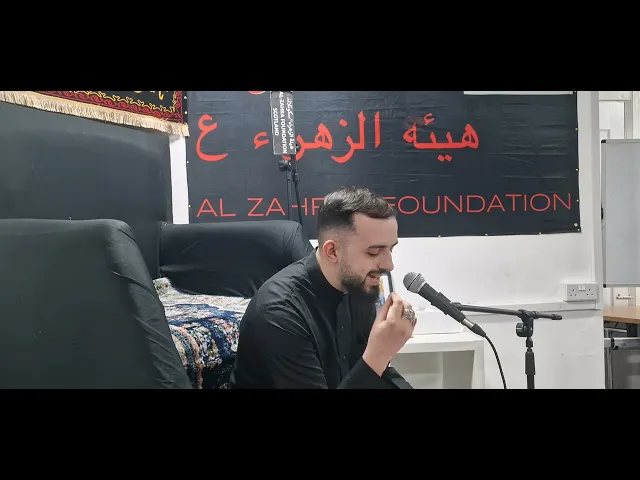
This is part of a series of lectures given by Hamam Nassereddine that shed light on the holy Koran and explain its verses. These lectures were given at Mahad Imam Ridha in Imam Hussain Foundation.
Laat meer zien
Transcript
[0:28]ald we congratulate the great maraja and all of you who are
[0:58]present and all m m all believers as we lived the last
[1:04]birth anniversary of the savior of humanity the hope of those who
[1:08]are deemed weak we ask Allah to make us from his sincerest
[1:14]followers during the occultation and after his reappearance and in this world
[1:21]and the next now our last we were speaking about the first
[1:36]verse ofah we're still looking into the meaning of that Holy Verse
[1:41]and we were reading the tradition of IM Al found in the
[1:51]book I told you that uh the book is a very important
[1:58]book very important narrational book that obvious revolves around Allah subhanahu wa
[2:04]ta'ala his Oneness his Justice and his attributes uh it contains the
[2:09]words of so it is definitely a masterpiece that one should look
[2:16]into if one is not able to read the book from cover
[2:20]to cover then at least the least he can do is read
[2:24]parts of for so in that book we have a chapter about
[2:30]where the IMs explain the verses of and we were reading the
[2:40]first tradition in that chapter last year alhamdulillah we read part of
[2:44]it and we uh read what im said as he explained the
[2:52]words and Allah Allah says say he is Allah and he is
[3:03]what he is he is one or say he is simple so
[3:10]imak explains each of these words and they're deeper than what you
[3:16]imagine you might say even yes even even the word is deeper
[3:20]than what one may imagine uh we said last week if you
[3:26]remember Allah says he is Allah using the third person pronoun why
[3:39]not say say I am Allah there's a reason why he said
[3:43]ha and we've mentioned that reason based on the words of imak
[3:49]of course in our previous classes so we were reading what the
[3:56]Imam said as he explained the name Allah right we said Allah
[4:00]has many names correct has many names which we will read inshallah
[4:10]on the nights of Destiny contains how many names of God a
[4:15]thousand every passage has 10 names of God and we have 100
[4:21]passages of uh 100 passages in Du so he has many names
[4:28]but there's something unique about the name Allah we know this because
[4:33]Allah T stresses a lot on it he uses it a lot
[4:39]in reference of himself sometimes he uses other names like right uh
[4:46]but in general he emphasizes he stresses Allah on the word Allah
[4:51]it's enough to realize that when a person becomes Muslim and he
[4:58]utters the two testimonies what does he say does he say yes
[5:08]no no although is Allah he is the all knowledgeable and is
[5:20]Allah he's the all merciful right but Allah tal chooses to place
[5:25]that name the name Allah in what in the testimon which brings
[5:31]a person into Islam and that testimony is the key to all
[5:38]forms of success thus the prophet sallallah alai said I'm paraphrasing his
[5:43]word of course but he said that say say there is no
[5:49]God other than Allah and you will be successful it's the key
[5:51]to success so the Imam was explaining the name Allah Allah and
[6:00]and we stopped at the part where he speaks about K all
[6:07]right I'm going to uh reread his statement quickly without explaining it
[6:10]and then we're going to continue where we left off so he
[6:19]we we explained all of that last week and he said so
[6:25]here when speaking about if you remember we said Allah has no
[6:31]meaning the word how the question how does not apply to Allah's
[6:39]Essence nor to Allah's attribute subhah wa ta'ala in what sense if
[6:44]you remember we said when we use the word how we use
[6:50]it for one of two reasons or we use it um in
[6:57]one of two meanings do you remember the two reasons or meanings
[7:00]that we mentioned regarding how yes ah so when I use the
[7:21]word how sometimes I ask someone or some individual about his or
[7:27]her state for example the common question is what how are are
[7:30]you how are you means what it means I'm asking about your
[7:37]state are you healthy or sick are you mad or sad are
[7:39]you happy are you pleased so on so forth we said this
[7:45]does not apply to Allah why are you testing us today no
[7:51]it's just a like a small test a small question um why
[7:54]doesn't it apply to Allah subhana wa tala yes because Allah has
[8:05]no feelings he has no feelings he doesn't go through states where
[8:09]he's mad or sad or happy or pleased there is something called
[8:12]the pleasure of Allah that is his reward as we mentioned last
[8:17]week there is something called The Anger of Allah his wrath and
[8:21]that's his punishment but he himself does not change from one state
[8:25]to another and does not go through feelings does he know what
[8:28]feelings are yes he knows them inside out he created them subhana
[8:33]wa tala but they don't apply to him so this is one
[8:37]reason why the word how does not apply to Allah but then
[8:42]you have another reason in better terms uh when we use the
[8:48]word how sometimes we use it in another meaning or in another
[8:53]or for another reason and that is what so we use the
[9:07]word how to ask about the process that someone went through to
[9:12]get to a certain point or level how did you for example
[9:18]become so brave how did you become so knowledgeable how did you
[9:22]acquire that Talent I'm asking about the process but that does not
[9:26]apply to Allah I can't say how did Allah become Allah Allah
[9:31]was always Allah it's not that he became Allah subhana wa tala
[9:34]all right how did he become so knowledgeable so powerful no no
[9:38]there's no process he didn't go through a process he was always
[9:40]knowledgeable always all knowledgeable always all powerful always all living so on
[9:45]so forth so there's no process that he went through to get
[9:52]to um um a certain point or to become God he he
[9:59]was always God is God and will always be God he doesn't
[10:00]change does not go through processes so that's where we stopped last
[10:07]week okay this was a good uh quick review and now we
[10:14]continue with the narration of let me send it to the students
[10:30]online now Imam takes us where he takes us to the Arabic
[10:37]language to explain to us the meanings of two words and this
[10:45]is beautiful we realize that the Imam doesn't only teach religious knowledge
[10:50]he even teaches other kinds of knowledge and it's very important to
[10:54]to to know Arabic to learn Arabic to know your Arabic Sciences
[10:59]to know your Arabic vocabulary because the better you are in those
[11:05]Sciences uh the better you'll understand the Quran and the better you'll
[11:09]understand the words of at the end of Quran is what qur
[11:19]it's Arabic the Quran is in Arabic so the the the more
[11:24]you amarate your Arabic the more you know knowledge you have regarding
[11:28]Arabic Sciences Arabic vocabulary and whatnot the better you'll be able to
[11:32]understand and the words of so he says took us where to
[11:41]Arabic to Arabic vocabulary so the Imam says that the Arabs use
[11:53]the word Al in reference of what in reference to confusion when
[12:02]a person goes through a state of confusion such that he is
[12:06]unable to fully comprehend a particular matter they say the man Al
[12:12]Al is a verb so the word Al refers to what refers
[12:18]to confusion when we say Al it means the man went through
[12:24]confusion or the woman went through confusion and that person was unable
[12:28]to fully comprehend a particular thing or a particular being now this
[12:34]is clear we understand more why Allah tal is called why is
[12:41]he why do the Arabs call God because when you try to
[12:48]understand Allah subhah wa ta'ala as in you try to know his
[12:53]reality when you try to fully comprehend God number one you fail
[12:57]in doing so thus you shouldn't even try number number two you
[13:04]become infused you become puzzled which is normal you're a creation at
[13:07]the end of the day you're not going to fully understand your
[13:11]creator you're limited Allah T has no limits so how will you
[13:16]be how in the world will you be able to fully understand
[13:19]God thus told us what they said don't think about meaning don't
[13:31]think about his Essence don't try to find out what is Allah
[13:35]you'll fail and you will disbelieve in the end you'll become disbelievers
[13:41]as in if you don't stop before it's too late it will
[13:44]lead you to disbelief because you'll only confuse yourself more and more
[13:47]until it gets you to the point of disbelief so we humans
[13:58]as IM mentions to Al when he gives him lessons about Allah
[14:03]subhah wa ta'ala in the book called today the tradition of in
[14:11]Arabic it's called he tells him that we are able to confirm
[14:15]Allah's existence with our intellects we're able to confirm that Allah exists
[14:20]but we're not able to comprehend God meaning to fully comprehend them
[14:24]thus we said if you remember a few lessons back that whatever
[14:28]we understand of Allah is inferior to Allah's reality clear and yes
[14:42]right then he says now he explains another word he says is
[14:52]another verb Al is one verb and we explained it is a
[14:58]different verb what what does that mean says means that a person
[15:06]sought refuge in something else when he went through a state of
[15:10]fear for example I say meaning the child uh went to his
[15:21]mother sought refuge in her because he feared something else then he
[15:38]says he continues explaining he continues explaining um who is Allah subhana
[15:48]wa ta'ala who is God so he says God is the being
[15:52]that is concealed from the senses of the Creations he's concealed from
[16:01]the senses of the of the Creations for example we humans have
[16:06]how many senses five s what are they seeing hearing okay touching
[16:20]tasting smelling can you touch Allah can you smell him taste him
[16:29]can you uh see him can you hear him huh not all
[16:38]of us can someone hear Allah m s Allah T cannot be
[16:48]heard as in you can't hear his essence you can't hear Allah
[16:52]himself if Allah creates a voice you can hear that voice and
[16:58]that's what m heard M did not hear Allah although we might
[17:01]say not he heard Allah what is meant here is that he
[17:07]heard the voice created by God can you hear Allah's Essence no
[17:10]you can't hear it because his Essence is is not physical subhana
[17:17]wa taala it's not physical it's not bound to time and space
[17:20]it's not limited but you can hear the voice created by God
[17:25]so you have to remember that The Voice or the created by
[17:30]Allah is not Allah it's different than Allah make sense like as
[17:55]a full um concept or else we'll get confused and no we
[18:01]believe in his Essence obviously he has an Essence his Essence is
[18:07]him right when we say Essence we mean that that so the
[18:10]word essence if it kind of confuses you we can exchange it
[18:16]for another word like his character for example even the word character
[18:22]might seem a bit bit uh problematic so when we say that
[18:25]we're talking about Allah himself make sense they call that in English
[18:32]Essence sure so we're talking about who about God himself make sense
[18:36]you have to believe in his Essence because you're believing in him
[18:40]but what we're saying is although we believe in him we have
[18:47]certainty in his in his existence and we know certain attributes of
[18:50]God to our own level of understanding but whatever we've understood of
[18:55]him is inferior to his reality that's what we're saying okay so
[19:03]now when he is the being that's concealed from the senses of
[19:14]the Creations um there are two meanings that might come to mind
[19:20]one is wrong and one is right J so keep that in
[19:22]mind let's write these two meanings down and then we'll continue with
[19:29]the narration of the IM bring this okay where is the marker
[20:01]someone took my marker uh I need another one that one is
[20:06]almost done my fish no oh I got it I got never
[20:28]lose Hope anyway so we have two meanings for m one that
[20:36]applies to Allah and one that doesn't so m means concealed Allah
[20:51]subhah wa ta'ala God Is concealed the Imam is saying from the
[21:03]senses of the Creations realize he said Creations he's not talking only
[21:16]about humans okay animals have also senses right they also have senses
[21:22]other creations might have senses any sense out there any you know
[21:28]physical sense cannot reach Allah subhanahu waala and to be clear in
[21:40]what I'm saying any Creation in existence cannot fully comprehend Godel so
[21:53]now when we say concealed the IM is using that word he's
[22:00]saying m he's concealed two meanings come to mind okay so the
[22:10]first one is Allah subhana wa ta'ala is uh physical being and
[22:22]this is obvious obviously the wrong meaning is a physical being that
[22:27]is hiding in a specific area that we cannot reach again this
[22:53]is the wrong meaning we don't accept it but when you read
[22:59]that Allah is M you might think you might imagine that Allah
[23:02]subhana is M he's concealed in the sense that he's hiding somewhere
[23:08]so he's over let's say his throne and because I'm unable to
[23:12]get to the throne I can't see him or taste him or
[23:17]hear him Etc J but this is not what imak is saying
[23:41]the second meaning which is the right one so this one is
[23:46]wrong this one is not accepted by but I did mention it
[23:53]because unfortunately there are people Muslims or non-muslims who believe that Allah
[23:57]subhana wa tala is is physical and uh you know he is
[24:03]in some space some area and that's why you don't see him
[24:08]right now he's he's hiding there some people went to the point
[24:17]of saying that you know Allah tal comes down from the sky
[24:19]on every Eve of J he comes down physically well that's not
[24:27]Allah subhana wa ta'ala that's not God perhaps it's the god of
[24:32]shim but not the real God in existence not the god of
[24:38]number two the second meaning is Allah is not limited and isn't
[25:04]physical thus he cannot be reached by our senses or the senses
[25:21]of other creations so when he says he's M this is what
[25:27]the IM means m in the sense that he's unreachable you can't
[25:32]reach him because of who he is not because he's hiding because
[25:35]he himself is not physical he himself is not made up of
[25:38]matter not confined to time and space not limited I'm trying to
[25:46]use many words as many words as possible to convey the meaning
[26:00]so yes I can see Allah's aah Allah's sign I can touch
[26:06]his sign I can I can taste it I can hear it
[26:12]I can smell it but I can't see his Essence I can't
[26:14]see him or feel him with one of my senses so there's
[26:23]a difference between Allah's ay Allah's uh and between Allah there's a
[26:31]big difference and I believe you know we're all signs of God
[26:34]J we're all signs of God everything in existence is a sign
[26:39]of God it points to his existence and to his attributes but
[26:41]there are minor signs of God then you have let's say you
[26:49]know intermediate signs then you have the major signs the Supreme signs
[26:54]of God which are Muhammad Muhammad the greatest signs of God so
[27:08]for example the food I'm eating I'm tasting it the drinks that
[27:14]I drink I taste those drinks those are signs of God hence
[27:17]I told you that you can taste his sign you can smell
[27:22]his sign the fragrances that we smell that's a sign of God
[27:25]subhana tal a sign pointing to his existence but it's not God
[27:30]so if this is understood we understand that uh Allah subhana wa
[27:37]tala cannot be seen by the physical eye because of who he
[27:45]is not because he's hiding that means in will we be able
[27:50]to see God or no no you won't be able to see
[27:57]him with your eyes with your heart yes that's not a physical
[27:59]sight but you won't be able to see him with your physical
[28:04]eye because he's not physical yes that won't meaning the the Believers
[28:08]J they'll see him with their hearts meaning the sight will be
[28:15]a spiritual site not a physical one yes huh what about them
[28:24]you don't sense him uh uh obviously they'll have certainty in his
[28:31]existence everyone will have certainty in in God's existence on the day
[28:35]of judgment J uh when a person goes into he goes into
[28:42]the world of the Hereafter his certainty increases so if someone is
[28:46]a Believer and he's already certain his certainty goes to a higher
[28:50]level if someone is in doubt it becomes certain so the the
[28:54]the people on the day of judgment all of them will know
[29:00]that that Allah exists even the disbelievers yes but the disbelievers will
[29:04]be distant from God not on a physical level because he's not
[29:08]physical but on a spiritual one they'll feel that they're distant feeling
[29:14]that displeasure the displeasure of Allah knowing that they're in Janam they'll
[29:20]feel distant from Allah subhana wa taala and that was one of
[29:28]the punishments that greatly feared possibly it's the the greatest punishment for
[29:42]IM Ali and we know this from du when he says telling
[29:55]Allah subhana tala uh my God my master suppose that I remain
[30:01]patient over your punishment meaning you placed me in Hellfire and I
[30:07]somehow maintained patience over fire smoke pythons scorpions Etc how can I
[30:20]be patient over being separated from you here obviously he's not talking
[30:24]about physical separation he's talking about spiritual separation that was one of
[30:32]the punishments that greatly feared and possibly it's the worst punishment in
[30:38]the dictionary of ask Allah to make us succeed and to make
[30:58]us from the people of Heaven Muhammad mammad break so we have
[31:27]a question here by one of the sisters let me see how
[31:33]much time we have left yeah we still have time so she
[31:37]says can you explain what does the leg mean in this a
[31:45]so here in in this verse I'll quickly explain it before we
[31:51]continue the the lesson because this has to do with Allah T
[31:54]not being physical Allah says that on a day of judgment what's
[32:00]going to happen it will be a day in which a sock
[32:04]the sock is the uh lower part of the leg a sock
[32:10]will be uncovered okay and certain people uh will be called to
[32:17]suud to to prostrate but they will not be able to um
[32:22]so here uh some people unfortunately misunderstood the verse and thought that
[32:29]when Allah says he's talking about himself and that he will uncover
[32:33]his leg or part of his leg on the day of judgment
[32:38]when Allah has no legs subhana wa tala he's the creator of
[32:41]legs so what is the meaning of this is an Arabic expression
[32:45]indicating turbulence meaning indicating that there's uh a serious matter and people
[32:54]are in in trouble makes sense so it's an expression indicating that
[32:58]people are in trouble or they're going through hardship uh so on
[33:04]so forth the well I have to check the for that specific
[33:24]verse but one of the meanings of Y uh is power sometimes
[33:31]you know uh well Allah will use the word Yamin or the
[33:38]the Arabic speaker will say Yamin and he doesn't phys he doesn't
[33:41]mean that he's talking about his physical right hand right Allah does
[33:46]not have a physical hand uh rather he's referring to power you're
[33:57]welcome sister and brother you're asking is the source of or the
[34:05]you can say both both now uh du basically is for that's
[34:14]what im is for but he teaches it to so he informs
[34:25]um about the Dua of uh and as as far as I
[34:32]remember there were other people present as well when he informed him
[34:38]about it nonetheless um he informs K so K comes back to
[34:45]the Imam asking about that Dua about the Dua of so the
[34:50]IM tells him to write the Dua down and he recites it
[34:55]for him so K writes it down now uh the question is
[34:59]where did get it from okay where did he get it from
[35:07]say I remember reading um uh a writing that he wrote about
[35:16]du and he said it's possible that one of the infallibles meaning
[35:19]one of the members of taught that supplication because we have to
[35:33]remember is knowledgeable but are his Masters and they're more knowledgeable than
[35:43]him all right going back to the narration of our beloved IM
[35:51]alak IM now explains the meaning of so you can see that
[36:00]the Imam is moving you know from one word to another after
[36:02]he explains one word he moves to the other and sometimes gives
[36:08]a lengthy explanation regarding that word so we're done with Allah now
[36:12]we go to what is the meaning of so it says means
[36:26]it means what it means the one the only the one that's
[36:32]absolutely unique such that he has no matches no runs then he
[36:44][Music] says means or one of its meanings is the one who
[36:54]shows others that he is absolutely unique that he has no matches
[37:01]and he has no likes okay so this is one difference between
[37:08]between and between we have another question here inall I'm going to
[37:23]answer it just after I finish with my explanation and we'll answer
[37:26]the new question uh by say Z insh let me just turn
[37:34]the camera okay so we're talking about Al and Al mut I
[38:28]believe you realize that these two words are quite similar the root
[38:34]letters for these two words are the same they share the same
[38:37]root letters which are what who can tell me what are the
[38:45]root letters in these two words and what is it so it's
[38:54]the F and then these are the root letters for these two
[38:58]words so obviously they share a particular meaning but there should be
[39:08]a difference as well because M has a t has a meme
[39:11]okay so it has additional letters and usually when there's additional letters
[39:18]in a word it means there is an additional meaning or there's
[39:25]a different meaning that this word contains so keep that in mind
[39:28]if you see extra letters in a word that shares the same
[39:34]root letters with another word most likely it holds an additional meaning
[39:38]or or a a a different meaning Mak sense how will we
[39:46]know what is the meaning that the word with additional letters holds
[39:53]this is where you have to go to the science of SF
[39:58]let me write that down for you as well because it is
[40:03]quite important we have something called the science of sarf and this
[40:21]one is a is a science pertaining to the Arabic language it
[40:24]analyzes the structures the structures of the words of the Arabic words
[40:31]and it tells you that this specific structure points to this meaning
[40:34]or points to these meanings sometimes one structure holds multiple meanings and
[40:42]you'll pinpoint the meaning based on the context of the the the
[40:46]writing that you are reading make sense just one second sorry okay
[41:46]also bear in mind that there are different kinds of Sciences pertaining
[41:51]to the Arabic language and all of them are important Another Science
[41:57]is science of nah which is basically Arabic grammar the science of
[42:19]nah focuses on what on the last letter in a word the
[42:22]last letter I'm pretty sure you've realized that in Arab I the
[42:30]last letter sometimes um holds the same the same sometimes it doesn't
[42:38]the changes sometimes you say Allah sometimes you say Allah sometimes you
[42:46]say Allah someone will tell me H okay sure it's the same
[42:51]thing it means the same no it doesn't if the last har
[42:55]is changing the meaning is different for example the Quran Allah says
[43:04]saying what saying that the only slaves of God uh who fear
[43:11]Him are the scholars but he said right you know if we
[43:18]read the verse in the following way we would be saying that
[43:29]Allah is only scared from the scholars and there's a big difference
[43:34]between the two meanings when Allah says this he's telling you that
[43:41]the only slaves of God who fear Him are the scholars here
[43:45]he's he's praising the scholars highly but if you say you'd be
[43:59]saying that that Allah is only scared of who of the scholars
[44:03]does Allah fear anyone he doesn't fear anyone subhah waala so the
[44:10]last makes a big difference the the the on the last word
[44:17]makes a difference what science tells us about this the science of
[44:23]okay then you have also the science of which is the science
[44:33]where we study Arabic expressions and how the Arabs Express a particular
[44:40]meaning okay you can call it the science of eloquence sure but
[44:46]that's the main topic Expressions Arabic Expressions how to convey meaning and
[44:51]how to make our words clear Clarity in speech is called f
[45:00]in Arabic Clarity in speech is called fah okay so this is
[45:06]also an important science to keep in mind because when you learn
[45:10]obviously you'll be able to understand the Quran matter just a few
[45:15]minutes back when we were speaking about we said that's an Arabic
[45:19]expression pointing to turbulence or hardship if you don't know you might
[45:27]not know that okay so going back to topic IM said what
[45:36]he said Allah is f and we said f means what f
[45:52]is what anyone what's yes unique right the one who's absolutely unique
[46:05]so he has no matches no likes so is the being that
[46:22]is one but one in what sense the sense that is unique
[46:33]absolutely unique absolutely unique he has no matches no likes that is
[46:45]Al I think one of the students has a question here okay
[46:56]ask for means or at least one of its meanings is the
[47:03]one who reveals that he is f the one who reveals that
[47:11]he is absolutely unique the one who reveals that he is f
[47:33]and we've explained what f means so there's a difference between and
[47:36]mut okay if you want more clarity on the word mut think
[47:43]of when we say someone is what are we saying saying this
[47:52]person this individual this being is revealing his k all right he's
[47:57]revealing that he is better than others that he is greater than
[48:08]others when for example said about Adam I am better than him
[48:15]became what right he revealed that he was better than Adam and
[48:25]when in reality he was not better than Adam so is the
[48:34]one who reveals that he is f that he's absolutely unique bear
[48:47]in mind that is a bad trait for the human for the
[48:52]creation but it's a good trait for God hence one of his
[48:59]names is Al wow so Allah subhana wa tala is is proud
[49:01]of himself not not in that sense Allah is mut in the
[49:06]sense that he Reveals His superiority he reveals that he's greater than
[49:10]everyone and he has the right to do so because he is
[49:13]truly greater than everyone but for us Creations is bad Allah wants
[49:22]us to be to be humble you might have have traits of
[49:26]Excellence sometimes you might have many traits of Excellence but you still
[49:30]have to be humble and the tradition says whoever reveals Pride whoever
[49:42]is proud meaning he's arrogant Allah subh puts him down and whoever
[49:48]puts himself down meaning whoever is humble Allah exalts him Allah raises
[49:53]that person's status so humility humbleness raises you it lifts you okay
[50:00]I'm talking about Good humility not the bad humility thus you find
[50:11]that who possessed what all traits of perfection that a creation can
[50:15]possess and they were at the peak of perfection the Perfection that
[50:23]the creation can possess they were extremely humble very humble even though
[50:31]they would reveal their traits sometimes right there are uh sermons where
[50:37]the IMs would would reveal their traits and their superiority to other
[50:42]people because they were actually Superior has sermons on that regard for
[50:51]example he says meaning no one amongst this nation can be compared
[50:59]to the progeny of Muhammad IM in his sermon in sham also
[51:05]revealed the superiority of but they wouldn't do it in a way
[51:11]where they would um humiliate other Muslim they would be simply revealing
[51:20]the truth and revealing what is part of religion because knowing knowing
[51:29]the superiority of is actually part of Faith it's part of religion
[51:35]make sense so they would remain humble going back to we said
[51:42]is the one who reveals that he is that he is absolutely
[51:47]unique our time is up I'll continue inshallah we'll continue with this
[51:51]topic next week if we are still alive but before we conclude
[51:54]the session and we take a 10-minute break let me just answer
[51:59]one of the questions here yeah the question says when we die
[52:12]we move to we can't see our God and we will only
[52:18]feel it like we feel it in uh yes when we pass
[52:23]away and we go to we won't be able to physically see
[52:28]Allah because he's not physical subhanahu waala yes the Believers uh the
[52:34]Believers will will will see Allah with their hearts but that's a
[52:38]spiritual sight not a physical one so we'll be able to see
[52:42]the proofs of God but we will not be able to see
[52:48]Allah again because Allah T is not physical but on top of
[52:52]that we won't be able to feel him because he's not physical
[52:55]so just as we don't feel him in we won't feel Allah
[53:01]physically feel Allah in but we will know that he exists in
[53:04]fact we know from now that he exists obviously our certainty will
[53:08]become greater it will move to a higher level right although we're
[53:13]certain in God's existence right now so our certainty will increase um
[53:18]but we will not physically feel him because he's not physical m
0 Comments
sort Sorteer op
- Top Reacties
- Laatste Reacties
Volgende
10 Bekeken · 24/10/06
8 Bekeken · 12/05/27
10 Bekeken · 22/05/25