
التالي
11 المشاهدات · 25/03/22
7 المشاهدات · 25/06/19
10 المشاهدات · 25/12/01
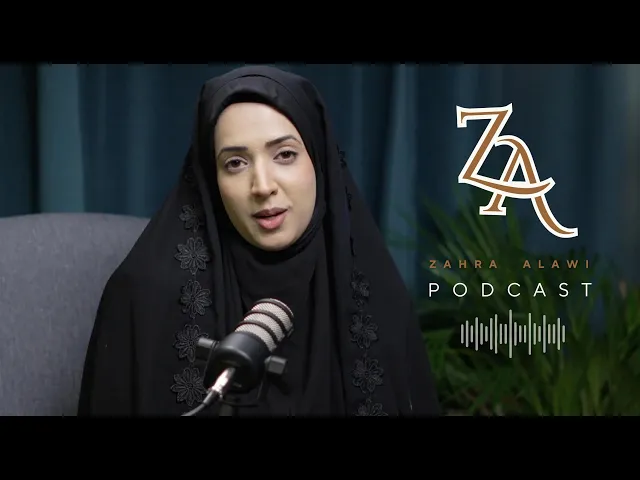
How to Benefit from Ramadhan - The Cave Podcast - Episode 01
0
0
11 المشاهدات·
26/02/21
في
محاضرات
This Ramadan, we’re embarking on a journey of questions — the kind that shape belief, challenge assumptions, and deepen our understanding of faith. Across this series, we’ll explore everything from the rational foundations of belief in God, destiny, and the unseen world, to the enduring relevance of Imam Mahdi, the legacy of the Prophet and Ahlulbayt, and the lessons history still whispers into our present. We’ll reflect on Imam Ali’s towering charachter, uncover the often-overlooked roles of Lady Khadija and Abu Talib, and ask what all of this means for Muslims navigating modern life today.
أظهر المزيد
Transcript
[0:04]Alhamdulillah.
[0:37]In this holy month of Ramadan, we're embarking on a journey of
[0:44]questions, the kind that shape belief, challenge assumptions, and deepen our understanding
[0:50]of the faith.
[0:53]Across this series, uh we'll explore everything from the rational foundations of
[0:59]belief in God, destiny, the unseen world to the enduring relevance of
[1:08]Imam al- Mahi, the legacy of the prophet and B as well
[1:12]as the lessons in history that still whisper into our present day.
[1:20]will reflect on Imm Ali's towering character, uncover the often overlooked roles
[1:26]of Lady Khadijah and Abu Balib, and ask what all of this
[1:31]means for Muslims navigating modern-day life.
[1:34]But this isn't just theology.
[1:36]It's lived religion.
[1:40]We'll discuss family tensions, mental and spiritual well-being, food and fasting etiquets,
[1:45]juristprudence in a rapidly changing world, identity struggles, and controversial questions that
[1:55]many hesitate to ask.
[1:57]How faith can remain vibrant beyond the holy month, among other topics.
[2:03]Think of this series as a thoughtful conversation, honest, sometimes challenging, but
[2:10]always rooted in the rich tradition of the Holy Household.
[2:14]Essentially, they're designed to leave us more reflective, more connected to God
[2:19]and more conscious of our role in this everchanging and increasingly dark
[2:25]world.
[2:27]For today's episode, uh I have the pleasure of hosting uh none
[2:36]other than his eminence say Mustafa Mudi who also happens to be
[2:42]my younger brother.
[2:45]And uh first off, welcome to the podcast.
[2:49]Uh so I hope uh that even though it's late in the
[2:52]evening that you still have some energy left uh to engage in
[2:59]a conversation uh with your older better looking and smarter brother in
[3:04]>> not after drinking this u tranquilizer uh herbal tea.
[3:10]Um thank you so much.
[3:14]The pleasure is all mine.
[3:15]I did offer uh some strong coffee, but you refused to to
[3:18]drink it.
[3:20]So, um >> at 3:30 a.m., yes, I did refuse to drink.
[3:23]>> Right.
[3:24]>> Energizing.
[3:24]>> That makes perfect sense.
[3:28]Uh but I would like you to muster up any uh trace
[3:32]of energy that you have because uh tonight's topic is actually one
[3:38]that uh I think we all need to discuss because it pertains
[3:41]to not just the importance of the holy month of Ramadan uh
[3:47]but also how to maximize our benefit from the holy month.
[3:50]And I think a lot of people enter the holy month uh
[3:55]in a kind of haphazard way where you know it's another month
[3:59]in the year and so uh there's hardly any planning there's hardly
[4:03]any um sort of strategic thinking about how to benefit from the
[4:09]holy month.
[4:08]So we're going to need your energy inshallah.
[4:11]>> Inshallah.
[4:14]Say that there is a a prayer dua supplication that we make
[4:20]uh on the first night of the of the eve of the
[4:23]first day of teach.
[4:33]So our eyes is set two months before the beginning of the
[4:38]month of Ramadan on the month of Ramadan to prepare for it.
[4:41]Uh but um >> so you're saying it's too late if we
[4:43]haven't been preparing for the holy month.
[4:45]>> Absolutely.
[4:46]>> Then we've kind of missed out.
[4:49]Uh well, hopefully people are going to come out of this uh
[4:53]program um believing that it's not too late, that uh we're still
[4:56]in the early stages of the holy month and uh there's still
[5:01]a chance and you can sort of even if you haven't been
[5:04]preparing uh for the last couple of months that there is uh
[5:11]there's a lot of potential uh in what is to come.
[5:17]Uh now I wanted to sort of begin with uh with an
[5:19]example to illustrate uh just how important it is for us to
[5:25]plan strategically.
[5:26]Um and it has to do with what you get when you
[5:30]enter into a prestigious university.
[5:31]um whatever university that is of high reput reputation uh you enroll
[5:38]in and you're accepted in uh one of the first things that
[5:43]you receive is what they call a student handbook.
[5:46]Um which is an orientation guide designed to help you navigate that
[5:51]new academic world.
[5:50]Um you know you've just uh graduated from high school, you go
[5:58]to university and it's a whole other world.
[5:59]Um what this book does is that it lays out everything from
[6:04]the grading systems to the academic integrity that's required uh plagiarism policies
[6:11]course selection campus conduct and the standards expected of you as a
[6:18]student at that university.
[6:18]Um, and I happen to um look up the um Harvard University
[6:28]uh student handbook as well as Oxford.
[6:30]And uh what I found was rather interesting in that uh Harvard's
[6:34]version runs over a 100 pages outlining not just academic requirements but
[6:39]also community values, ethical codes, and the principles meant to ensure students
[6:43]get the most out of their time at Harvard.
[6:47]So over a 100 pages just as a form of orientation.
[6:51]Um now some people might ask why.
[6:56]Well the answer is because without guidance even the best opportunities can
[7:02]be wasted.
[7:00]Um the handbook uh therefore exists to make your experience smoother uh
[7:06]more productive and ultimately more beneficial.
[7:09]In other words, it helps you maximize what you came for.
[7:15]Right?
[7:13]That's the whole idea.
[7:17]Now, this raises an important question, which is as we enter the
[7:21]holy month of Ramadan, arguably the most spiritually transformative season of the
[7:28]year, shouldn't we also learn about how to navigate our way through
[7:32]the holy month?
[7:31]Is there a handbook uh that we that we get as part
[7:37]of our uh enrollment in this uh season?
[7:41]And uh the answer is absolutely there is um and again the
[7:47]idea is to under understand its rules, its deeper purposes and the
[7:52]best ways to maximize its immense spiritual potential which is why in
[7:58]this episode uh we've decided to explore uh two texts.
[8:03]Uh uh one is and the idea is to reflect on these
[8:07]two texts.
[8:07]Obviously we're not going to read through the whole thing.
[8:11]We encourage our viewers to or our listeners to to look up
[8:14]those two texts.
[8:16]We're going to provide you with um references.
[8:21]But the first one is a dua attributed to Imam uh in
[8:26]actually both of those duas are in and they're listed in consecutive
[8:35]order.
[8:31]their dua number 44 and 45 of the first one is the
[8:39]dua that the Imam recited when upon entering into the holy month
[8:43]of Ramadan at the very beginning and the second one is the
[8:49]farewell supplication uh to the holy month and that's dua number 45
[8:52]as we said now these two texts uh even though they sit
[8:57]at opposite ends of the month of Ramadan journey um anticipation as
[9:01]well as departure uh preparation and reflection.
[9:05]Uh but together I think they offer something like a spiritual instructions
[9:09]manual.
[9:10]Uh not in a legalistic sense.
[9:12]Obviously the rules pertaining to um fasting and what you're allowed to
[9:18]do, what you're not allowed to do, all that sort of stuff
[9:21]you need to understand.
[9:23]Um but these two texts they help us understand how to enter
[9:27]the holy month consciously live it meaningfully and leave it transformed.
[9:31]Right?
[9:32]So that's the whole idea.
[9:33]Um so what I would like to do is to discuss uh
[9:39]segments from these two texts.
[9:41]Um, as I said, inspired by duas number 44 and 45 of
[9:47]the and the first uh statement that caught my eye was when
[9:53]the imam says, which I think goes without saying that if you
[9:59]want any prayer to be accept accepted as one hadith says, you
[10:04]should always start with the one prayer that is guaranteed to be
[10:08]accepted, which is salawat.
[10:08]And so uh like pretty much every other dua it begins with
[10:15]then the IM says first of all you mentioned the salawat statement.
[10:21]We must remember that the imam uh in most of his duas
[10:27]uh the salawat is embedded in his supplications and prayers.
[10:33]This came at a time when the progeny of the prophet were
[10:38]massacred.
[10:39]This is post era.
[10:41]But the imam always emphasizes on the fact that without theawat you
[10:51]can't uh it's like the key to an answerable prayer.
[10:53]>> This is why it's always added in all his duas.
[10:56]And some there are uh some supplications that uh we are encouraged
[11:02]to uh uh to to make during the month of Ramadan.
[11:06]Some cast doubt on these prayers because they're uh the salawat is
[11:12]not included in these in these prayers.
[11:14]So it's a it's it's like a sign that this this dua
[11:19]is narrated from the >> like the uh the different uh >>
[11:24]the daily prayers daily Ramadan prayers but but maybe maybe because some
[11:30]of our >> could it be because of >> they remove the
[11:32]>> like the for instance I think even though this is kind
[11:37]of off topic but one of the arguments uh that some scholars
[11:39]have made uh to to the effect that are not accurately attributed
[11:48]to Imam is because they lack salawat, >> right?
[11:51]>> Yeah.
[11:52]>> But again, you know, you could make the argument that this
[11:55]was because of the imam wanted the the prayers the to become
[11:59]mainstream and so that's why he didn't include it perhaps.
[12:02]>> Yeah.
[12:04]Maybe because the automatically when they want to make a prayer like
[12:08]they start with even though it's not included, >> right?
[12:13]Yeah.
[12:12]>> And there is this hadith where the imam says that every
[12:16]dua you want to make, you should start with salawat and then
[12:19]end with salawat as well because God is too generous to accept
[12:24]the beginning of a prayer and the end of a prayer but
[12:27]not accept or fulfill the one in the middle.
[12:28]>> Right.
[12:30]Um yeah.
[12:32]Yeah.
[12:33]Go on.
[12:31]>> So regarding the uh the the segment that you uh that
[12:38]you talked about about It it it shows that fasting is not
[12:48]just abstinence from food.
[12:48]Help us to be able to uphold fasting.
[12:51]Help us to be able to fast as in fast properly because
[12:57]the hadith says >> anyone can go on a diet and not
[13:03]eat, right?
[13:02]says you might be abstaining from food, >> but the only thing
[13:09]that you're getting from your is is not is hunger >> is
[13:13]hunger and thirst.
[13:13]>> The the diet aspect, which actually doesn't always work.
[13:17]I think most people gain weight by the end of the month
[13:22]of Ramadan.
[13:21]So, yeah.
[13:23]No.
[13:22]>> And they're not benefiting from the from the goal of fasting.
[13:27]If they're not abstaining from all the other uh prohibited actions, then
[13:32]they're not benefiting from >> which is what in one word.
[13:36]What is the goal of fasting?
[13:37]>> As mentioned in the Quran, >> right?
[13:43]fasting has has has always been part of the uh religious u
[13:49]uh religious uh rituals rituals.
[13:52]>> But uh but the month of Ramadan according to a hadith
[13:58]was uh was exclusive to the prophets of God until uh the
[14:02]>> other words only the prophets would fast during the month of
[14:06]Ramadan.
[14:07]No one knew about it uh until the emergence of Islam and
[14:10]the rise of when the secrets of the month of Ramadan was
[14:14]unlocked and it was prescribed upon the adherence of of Islam which
[14:20]uh which I find interesting because what that tells us is that
[14:23]the month of Ramadan and this will tie into the conversation later
[14:26]on uh it is a blessing from God uh so much so
[14:33]that it is endowed upon and given and granted to the prophets
[14:40]of God exclusively up until the advent of the final messenger.
[14:44]Uh at which point God uh chose to in other words open
[14:53]this this VIP club to every Muslim.
[14:54]>> Absolut absolutely.
[14:56]The prophet himself says that I taught you everything that would bring
[15:01]you closer to paradise and I warned you from everything that could
[15:07]uh you know bring you closer to hell.
[15:10]So anything that I know that would help you in life I
[15:13]taught you.
[15:15]I gave you another says that even though God endowed us with
[15:20]knowledge but we never uh withheld this knowledge from me.
[15:26]Even though in uh you know people people with people with power
[15:29]they have knowledge that they don't share with the public because they
[15:32]knowledge is power and they keep it to themselves >> especially when
[15:36]it's such an incredible shortcut >> that would um bring us you
[15:42]know closer to paradise as you said and push us away from
[15:44]the fires of hell.
[15:47]Um so this this notion that uh that some people have that
[15:51]the month of Ramadan and the fast and especially you know maybe
[15:56]when it comes to fasting it's become such so culturally prevalent that
[16:02]even people who aren't religious would fast but when it comes to
[16:07]upholding um you know ibada and worship and you know the other
[16:11]rituals in the holy month of Ramadan of which there are plenty
[16:16]many people find that to be a burden, right?
[16:20]They they I I think because they don't appreciate just what an
[16:24]incredible blessing this is.
[16:24]It's a burden.
[16:26]That's why, you know, some people might even joke about this even
[16:30]though they're not serious, but um on the nights of uh they
[16:37]they would prefer that they you know finish off all the main
[16:40]acts of worship.
[16:42]So, you know, because they they find it a burden.
[16:46]And what they don't understand is this is a blessing.
[16:47]It's been granted to the holy prophet and because of the grandeur
[16:54]of God decided to open this up and uh democratize it if
[16:58]you like and give it to everyone.
[16:59]The hadith says uh if only if people knew uh about the
[17:06]significance of the month of Ramadan and all the benefits and all
[17:11]the bounties that uh Allahh gives us through this holy month.
[17:13]Uh they would wait the whole year until the arrival of the
[17:19]month of Allah.
[17:18]For one whole year they anticipate the arrival of of this.
[17:25]In other words, it's a divine opportunity uh and not a routine
[17:29]ritual.
[17:29]uh and and and the idea that the Imam would ask God
[17:31]for help and backing is I think for those people who find
[17:38]the the ritualistic aspect of the month of Ramadan to be burdensome
[17:43]again simply ask Allah subhana wa ta'ala ask him uh to grant
[17:47]you the opportunity to recite not just you know one full Quran
[17:52]but do so in multiplicity perhaps when it comes to keep asking
[17:55]God from the get-go from the very beginning to give you that
[17:59]support, that strength, that backing inshallah.
[18:02]Um, so that you could you could fulfill it as best as
[18:08]you can.
[18:09]Um, and also uh the hadith says if it wasn't for that
[18:15]divine nudge, if it wasn't for his help, uh, when you wouldn't
[18:18]happen.
[18:18]Yeah.
[18:19]If you see two people, two brothers that were raised in the
[18:22]same household, one has the energy for the other is too lazy.
[18:27]He's spending his time on Tik Tok, on Instagram, on Facebook, on
[18:33]and he's not into these things.
[18:34]It's because of that divine nudge.
[18:36]It's not something that we've we've acquired.
[18:40]It's not because we wanted it.
[18:41]It's the the the motivation that Allahh planted within us that is
[18:48]creating creating this vibe and this atmosphere that would encourage us to
[18:51]do these things.
[18:51]>> That that is so true and uh we find that in
[18:56]many families where the whole notion of nurture versus nature is upended
[19:02]because it's neither this nor that.
[19:06]It's divine intervention.
[19:07]It's Allah subhana wa ta'ala providing one member of the family, one
[19:11]sibling, this nudge as you called it, but not the others.
[19:15]And I hope you're not referencing your own family when you mention
[19:18]this example.
[19:19]Not >> inshallah.
[19:22]Um, >> but this doesn't justify uh for the people that uh
[19:26]aren't really into some of these rituals and say God doesn't want
[19:30]me to do it.
[19:32]Allah presents you with the opportunity but if you fail to seize
[19:35]the opportunity then he might abandon you and you might feel demotivated
[19:41]to do any sort of >> uh so you're given the opportunity
[19:47]whether you take it or not is is up to you >>
[19:52]right >> a question that comes to mind is about being demotivated
[19:56]uh I think this is something that a lot of people suffer
[20:00]from uh uh throughout the year uh where they're not into it,
[20:04]they're not really that excited.
[20:06]What's different about the month of Ramadan?
[20:10]Do people uh is it easier to be motivated?
[20:16]Um what is it that makes people what makes the month special
[20:20]when it comes to not having sufficient motivation for for acts of
[20:25]worship?
[20:26]I think it's uh ultimately it's it's the atmosphere that Allahh is
[20:33]creating that's creating this vibe and the prophet lists three things >>
[20:40]in the famous uh sermon of the last um Friday of the
[20:45]month of Shabban.
[20:44]>> Yeah.
[20:45]So all of these things uh hadith says that uh one day
[20:50]the prophet was on the m was either in the middle of
[20:56]his speech or before he began his his sermon.
[21:00]Uh the prophet suddenly remained silent uh for a few seconds which
[21:04]was a bit odd and then uh and then the prophet suddenly
[21:07]said uh a mean and then he remained silent again for a
[21:12]few seconds and then he said amen.
[21:14]and then remained silent again for few seconds and then then he
[21:16]said I mean when he came down from the m he said
[21:20]this was a bit a bit peculiar a bit strange uh what
[21:25]happened to you he said came down and he made three prayers
[21:27]and I made and I said mean when he made these prayers
[21:31]one of them was Ramadan anyone who witnesses the month of Ramadan
[21:37]but is not uh does not benefit from the month of Ramadan
[21:42]This was the prayer that made God push away a person who
[21:51]is given this great opportunity but doesn't take it.
[21:53]Allahh has engineered carefully designed the month of Ramadan to make even
[22:02]those people who are not motivated uh motivated to seek nearness to
[22:07]God and connect with Allah subhana wa tala >> which actually means
[22:12]that it's a it's a twopronged approach, right?
[22:17]Either you get closer to God or you're driven out of God's
[22:21]mercy depending on how you conduct yourself and how you behave in
[22:27]the holy month of Ramadan.
[22:28]So there's a there's a carrot and a stick essentially which is
[22:31]a scary thought on the one hand but on the other hand
[22:37]again it's it's an open invitation to uh to sit at this
[22:45]this endless splendid spiritual table of God.
[22:46]But if we don't do that, if for whatever reason, and we'll
[22:50]get to that later, inshallah, um if we fail to to show
[22:53]gratitude and to, you know, benefit from all of these blessings, then
[22:59]uh uh that person won't come out of the month of Ramadan
[23:02]at the other end not having benefited.
[23:04]But it's much worse than that, right?
[23:07]They're they're deprived and they're pushed away.
[23:10]The hadith clearly state that millions upon millions of people are forgiven
[23:15]every night of the month of Ramadan.
[23:20]Um sometimes all it takes is just one moment, one uh drop
[23:23]of tear.
[23:24]Uh but then the hadith says that if you're not forgiven during
[23:28]the month of Ramadan, that person will not be forgiven unless and
[23:32]until they go to Hajj and witness the day of >> where
[23:37]everybody gets a blanket sort of >> everyone even those sellers and
[23:42]and uh and and people that go there to to do business
[23:44]and not you know doing >> just for being there >> performing
[23:49]just for being there, >> right?
[23:50]So imagine how messed up a person would have to be for
[23:56]them not to be forgiven.
[23:56]How neglectful, how forgetful.
[23:59]Um which uh again as I said is a scary thought but
[24:03]hopefully will motivate us further.
[24:04]There's another statement um in these two texts that we refer to
[24:11]uh which kind of caught my eye.
[24:13]The first one is And what came to mind was basically the
[24:29]Imam is asking God uh to erase our sins uh with the
[24:38]uh erasure of the days of the month of Ramadan or to
[24:45]to to obliterate or to cover our sins the way the crescent
[24:48]of the month of Ramadan uh is uh is covered up, right?
[24:52]>> Or let our sins disappear >> or disappear.
[24:55]>> The disappearance of the >> right.
[24:59]And uh that got me thinking uh that maybe some people expect
[25:06]an instant transformation.
[25:08]Uh but what this what this portion of the dua tells us
[25:13]is that it doesn't necessarily have to be an sort of an
[25:16]instantaneous kind of thing, right?
[25:21]It can happen gradually.
[25:22]The way the cresant shrinks, our sins could also shrink.
[25:26]Um and that the the wrongdoings would diminish gradually but consistently and
[25:33]visibly.
[25:34]In other words, you might not notice it, but by the end
[25:37]of the month of Ramadan, this person is different from when they
[25:42]first entered into it.
[25:42]>> Uh, which uh I think gives a little bit um more
[25:48]hope to people who who don't feel that instantaneous change as the
[25:54]month of Ramadan begins.
[25:56]In other words, we should strive to make these incremental changes uh
[26:02]as we progress through the holy month.
[26:05]Or maybe uh he's he's trying to say that don't uh don't
[26:09]leave us behind or don't make us among those that are not
[26:15]forgiven when the uh the crescent of uh of of the month
[26:21]of Ramadan disappears.
[26:21]We have a similar narration regarding the hadith says that when when
[26:32]the sun sets in on the day of this is when all
[26:33]the sins are forgiven the sins of the people that are there.
[26:38]And interestingly, we have another hadith that says even though he forgives
[26:41]millions of people every night, but then on the eve of the
[26:47]Eid of of Shaw, he will forgive as many people as he
[26:50]forgave during the the month of Ramadan.
[26:53]>> So, anyone who is left behind will be forgiven during the
[26:58]Eid.
[26:58]So, make sure that when this comes, when the Eid comes, you're
[27:02]not left behind.
[27:11]If we incline away in this holy month, the Imam asks God,
[27:17]if we incline away from you, then straighten us.
[27:22]And if we go astray, set us upright.
[27:25]Um and I think the difference between z and male is uh
[27:30]male is kind of you know slowly turning away whereas z is
[27:39]a little deeper and u means to sort of you know completely
[27:42]stray from the path of Allah subhana wa ta'ala.
[27:46]Um does that mean that deviation even in the holy month of
[27:50]Ramadan is possible?
[27:53]Uh because again the imam is saying in this holy month if
[27:59]you if you find us going left and right then please come
[28:03]to our rescue >> help us out bring us back to the
[28:07]to the path.
[28:08]Um that's question number one.
[28:13]Question number two, uh, and this refers back to what we were
[28:15]saying earlier, which is that even in the holy month month of
[28:17]Ramadan, um, perfection is not guaranteed that there are people who might
[28:24]lose their way in the midst of the holy month.
[28:27]Uh, but what the imam is saying is if that happens, please
[28:32]bring us back.
[28:33]um which I thought was kind of uh profound that uh that
[28:40]we should always allow for the possibility that things won't go as
[28:45]planned that um that somehow our our uh desires and temptations will
[28:50]test us um because again it's it's the greatest opportunity and so
[28:57]um even though shaitan is shackled according to some of our traditions
[29:00]but we will be tested the nef is there the the the
[29:03]temptations that we have will will try to to force us to
[29:09]go astray.
[29:10]But of course, the idea is we ask Allah subhana wa ta'ala
[29:13]to to help us out.
[29:14]And this brings me to another question, which is what are the
[29:20]the the potential drifts uh that we should be aware of in
[29:27]the holy month of Ramadan.
[29:28]One thing that came to my mind, I think it's the most
[29:29]obvious one, is that because the month of Ramadan is uh uh
[29:37]is treated around the Muslim world in a very cultural way, uh
[29:41]people have developed their own routine specifically for the holy month of
[29:46]Ramadan, which is not in line with what God wants us in
[29:51]order to reach perfection.
[29:51]One of which is screens, television, right?
[29:54]It's like we haven't been watching television throughout the year.
[29:58]Now, let's dedicate God knows how many hours a day or night
[30:03]to watch TV.
[30:03]And I think that's one of the that's one of the traps
[30:06]that a lot of people fall into.
[30:09]>> Slopes.
[30:11]Yeah.
[30:12]C >> can you think of any other uh sort of uh
[30:13]uh drifts or potential pitfalls?
[30:15]>> So, I think it was Zakaria, the great prophet of God
[30:20]who once met with the devil himself.
[30:21]Uh so he said to him, can you give me a word
[30:26]of advice?
[30:28]Uh you have you know great uh experience dealing with humans and
[30:33]their weaknesses.
[30:32]He said yes whenever actually I think the hadith if I'm not
[30:36]mistaken is shan came to him and he said I'd like to
[30:41]give you a word of advice.
[30:42]He said to him I want nothing to do with you just
[30:45]go to hell.
[30:46]And so it was Jira who came to Yah and he said
[30:50]to him no >> do listen to him take his advice for
[30:51]once he wants to be honest.
[30:54]>> So he said to him that I um uh usually if
[30:59]a if a a human being becomes full uh that's >> you
[31:04]mean satiated like full of having eaten a lot of food right
[31:08]>> that's that's a gateway for me to be able to you
[31:12]know enter in his bloodstream and influence him.
[31:17]Uh so that's when Yah said I will never become full after
[31:20]this what I've heard from you.
[31:22]And that's when the devil said that and I will never give
[31:26]an honest advice to a human being.
[31:27]>> He regretted ever opening his mouth.
[31:29]>> So even though during uh when we're fasting we have clarity
[31:34]uh the spiritual aspect comes to the four the physical uh uh
[31:42]you know desires and temptations.
[31:44]Take a backseat.
[31:45]uh but when when we eat too much we become full that's
[31:51]when uh this the calculus changes and we uh all the spirituality
[31:57]fades away and especially with uh with these tailor made television programs
[32:06]uh designed to uh uh to to take away the uh or
[32:14]to uh to to >> to undo what God is trying to
[32:17]do essentially.
[32:17]>> Yeah.
[32:18]>> The exact opposite, the polar opposite of what God wants us
[32:23]to do happens uh you know on television and on screens during
[32:26]the holy month of Ramadan.
[32:27]>> So many people will drift away during the month of Ramadan.
[32:30]>> During the month of Ramadan, it's a it's a it's a
[32:34]it's a big challenge.
[32:36]I I think what one of the things they do uh and
[32:39]I I find this especially true in the Muslim world is that
[32:45]they uh produce multi-million dollar programs and uh uh screen these, you
[32:51]know, incredibly big productions, but they add a little religious flavor to
[32:57]them.
[32:58]Um it's not always like pure, you know, drama, uh love stories
[33:03]and whatnot.
[33:05]Yeah.
[33:06]So, so a little seasoning here and there to to make people
[33:09]feel that, oh, you know, I'm learning about Islamic history, for example,
[33:13]when in fact, all they're doing is drifting farther and farther away.
[33:16]So, screens definitely shopping, I think, is another uh huge pitfall.
[33:24]For some reason, the month of Ramadan has been turned I mean,
[33:26]the way I like to think about it is that the month
[33:29]of Ramadan has been turned into the Muslim version of Christmas, right?
[33:35]Literally uh people spend endless hours uh window shopping and buying stuff
[33:39]and um this is in addition to to the screen time.
[33:44]Um but another thing that came to mind was uh sinful gatherings
[33:47]because the holy month of Ramadan is a time for people to
[33:50]connect with uh you know um their relatives and friends and whatnot.
[33:57]It's it's a very social kind of thing.
[34:01]But when we overdo it and attend gatherings that are sinful, where
[34:04]hijab is not observed, where music is played, where all these, you
[34:08]know, little sins uh happen in those gatherings, again, it's completely contradictory
[34:14]to the spirit of the month of Ramadan.
[34:17]Um, which uh which is something that we be need to be
[34:19]mindful of.
[34:20]This is one of the reasons why uh we're encouraged to follow
[34:26]the footsteps of the prophet and the in in trying to uh
[34:32]to perform uh special prayers during the night of the month of
[34:36]Ramadan.
[34:37]uh usually it's 10 12 every single night >> similar to that
[34:44]right basically it's like and also with respect to fasting itself um
[34:49]I I came across this hadith uh where Jesus brings back his
[34:56]mother after death and he tells her he asks her about her
[34:59]experience with death and what came after death she said that the
[35:04]uh it's a dreadful journey but then she said he said to
[35:07]her that would you want to come back to life.
[35:09]She said if even if I want to come back to life,
[35:13]uh I would want to spend my time fasting in a long
[35:19]summer day because this will take all your energy and all your
[35:24]focus should be on uh what uh you know connects you to
[35:27]Allah subhana wa ta'ala.
[35:30]Make sure you don't fall in these falls that you spoke about.
[35:34]For example, in my opinion, one of the reasons why it's it's
[35:39]super to spend the night uh to pray the 100 on on
[35:46]the three nights.
[35:47]The Imam says that even if you couldn't stand up, sit down
[35:49]and do it.
[35:51]If you couldn't sit down and do it, lie down and do
[35:54]it.
[35:55]So that you spend the time in because if you don't spend
[35:56]it in you either go to sleep and do nothing >> or
[36:00]be idol >> or engage in >> or engage in sinful >>
[36:04]you know acts and you know being in in circles that you
[36:09]know people don't really uh observe these the the rulings basically harams
[36:15]and so this brings us to another portion um of of these
[36:24]two duas in which um The Imm uh in a in a
[36:26]very beautiful twist begins to address the holy month of Ramadan itself
[36:34]as though it's a living being.
[36:36]And he says, and I'll read some of these segments together and
[36:42]then we can kind of try and and and see what to
[36:44]make of them.
[36:46]But the imam says, "Peace be upon you, oh most generous or
[36:55]noble uh companion of times.
[37:05]Uh peace be upon you, a companion whose value is immense while
[37:17]present." Um in another portion the imam says um peace be upon
[37:22]you oh greatest month of Allah as we said peace be upon
[37:34]you a companion whose presence was precious and whose absence brings grief.
[37:38]Is this the 44th dua or the 45th dua of the >>
[37:43]um I believe it's uh the the farewell supplication if I'm not
[37:51]mistaken.
[37:49]>> Um I yeah farewell to the month of Ramadan.
[37:53]Um because again the imam is kind of lamenting the end of
[38:00]the holy month and and and and the reason we we chose
[38:02]to include this in our discussion is because we don't want to
[38:07]end up uh grieving the the departure of the holy month of
[38:11]Ramadan towards the end and not being able to do anything about
[38:17]it.
[38:18]And so that's why the idea is for us to try and
[38:20]put ourselves in that position uh looking at someone who sees the
[38:28]month of Ramadan behind them already but are actually able to do
[38:33]something about it.
[38:31]Right.
[38:32]So I found it really interesting uh from >> it's like seeing
[38:38]a loved one who's who you know is departing this world.
[38:41]>> Exactly.
[38:42]>> Creates this attachment.
[38:44]I >> I think it's interesting from different perspectives.
[38:45]Number one, the fact that the Imam speaks to the holy month
[38:51]of Ramadan, that this is a living uh creation of Allah subhanahu
[38:56]wa ta'ala and you know personifying the holy month I think has
[39:01]the added benefit um of uh of thinking of the holy month
[39:07]as somebody who's with us but he's not going to be here
[39:10]for long.
[39:11]Um so the idea that we should take advantage of its presence.
[39:15]It's here but it's not going to last.
[39:18]Um you know because imagine a child for instance they assume that
[39:22]their parents are always going to be there right?
[39:25]Um only when they grow old and they look at their parents
[39:30]and they you know given all the frictions of of everyday life
[39:33]and seeing so many people die around them.
[39:37]do they begin to to entertain the idea or or realize that
[39:40]their parents are not here to to stay forever.
[39:42]May Allah give a long life to our parents as well as
[39:49]all those watching.
[39:47]Um but when you have a let's say for example a loved
[39:56]one who's in hospital and they're terminal, you begin to appreciate every
[40:04]single moment that you have with them.
[40:05]And uh you know, you would never fight with a sibling who's
[40:08]you know, terminal and and the doctors are saying that he's only
[40:11]got a couple of months to live, for instance.
[40:13]You you treasure every single moment and uh you try to make
[40:19]it as as as nice and memorable and beautiful as you possibly
[40:22]can.
[40:23]That's how we're supposed to look at the holy month of Ramadan.
[40:25]Again, when it begins, most people are like, "Oh my god, it's
[40:30]the month of Ramadan.
[40:31]We've got, you know, 29 or 30 days left." The Imam is
[40:37]saying, "No, no, this is a very special guest whose presence you
[40:41]should treasure and whose departure you should mourn even before it happens
[40:46]so that you can maximize the time that you have with them
[40:49]and the benefits that you can uh you can derive from from
[40:54]its presence.
[40:53]Um so I I found that to be beautiful.
[40:56]And the other thing that I think these two uh segments or
[41:02]three segments that I read um make me uh make me think
[41:08]of is like I imagine if a a senior scholar, someone that
[41:11]we truly honor and respect and love comes to my house, um
[41:18]the way I would treat this person is number one, his very
[41:24]presence is a is a blessing for me me and my family.
[41:29]And so again, I I cherish every single moment.
[41:30]Um but also I have to think about the fact that this
[41:37]person is at such a high level of knowledge and spirituality that
[41:43]I am at my best behavior because he's observing me.
[41:47]He's watching me.
[41:50]And so my conduct is completely transformed in that scholar's presence.
[41:55]Again, if we think of the holy month of Ramadan as right
[42:00]or as the Imam says, a companion whose whose presence I has
[42:09]has has an immense value um then my conduct really has to
[42:12]change.
[42:13]Whereas if I think of it as just another month in the
[42:17]year, obviously I'm not going to I'm not going to treat it
[42:19]that way.
[42:20]Right?
[42:20]And I think there's a there's a third element that the month
[42:22]of Ramadan has has which is that not only is it observing
[42:29]me but it will then go back and report Exactly.
[42:33]Um and I think there are uh references to that in these
[42:37]duas.
[42:37]I don't know if I wrote it down.
[42:39]Um but uh uh but but the idea that this month will
[42:46]will report back to God.
[42:47]a month that turns our uh sleep into our breath into is
[42:55]obviously special.
[42:56]But I I think that maybe the reason why the imam talks
[43:03]to the month of Ramadan is because um the month of Ramadan
[43:07]is a reference to a whole host of uh holy elements.
[43:11]The holy month of Ramadan is a reference to the Quran.
[43:13]The holy month of Ramadan is a reference to the vice gerant
[43:18]of Allah.
[43:18]The holy month of Ramadan is a reference to the to the
[43:23]angels coming down and the the felt presence of the of the
[43:29]angels.
[43:28]It's like when the prophet said he talked to Mecca he said
[43:33]is he talking to the city?
[43:37]It's not just a city.
[43:37]It's thea it's the angels.
[43:40]It's it's all these things.
[43:41]or for example when the they talk to thea this means that
[43:45]the spirit of all these holy elements they're embedded in this holy
[43:50]month perhaps so the the the month of Ramadan symbolizes uh a
[43:57]plethora of avenues that bring us closer to Allah subhanahu wa ta'ala
[44:05]and it kind of brings it all together in one beautiful package
[44:07]uh that we that we have uh we really have to appreciate
[44:15]it.
[44:12]I don't think that I for one uh have appreciated the uh
[44:20]immense opportunity of transformation that the holy month of Ramadan begins.
[44:24]Um and I think if we reflect on these duas and on
[44:30]these passages, uh it really does change your perspective.
[44:32]It makes you um look at it from a completely different perspective.
[44:36]And more important uh than just looking at it that way, >>
[44:41]it g it gives you the motivation to do more uh to
[44:44]to not spend the the month of Ramadan in an idle way.
[44:49]Uh I mean just the fasting aspect of it, the fact that
[44:52]you have to watch what you say, you have to watch what
[44:55]you do, you have to watch what you watch.
[45:00]Um uh that in itself, you know, makes it makes it incredibly
[45:05]powerful.
[45:07]and uh sort of uh helps us fulfill that ultimate objective which
[45:12]is uh which is to attain tawa.
[45:14]Um uh don't we have a hadith that says if somebody is
[45:20]not married and they find themselves to be under uh the pressure
[45:24]of their desires and whatnot that the best thing they can do
[45:27]is fast.
[45:28]I think one hadith says right which is >> the verse in
[45:34]the Quran.
[45:34]So >> something that can help you to maintain your faith and
[45:40]religion is to fast.
[45:40]>> Exactly.
[45:41]So in this verse in Bakar uh which which means patience but
[45:47]the hadith tell us that this is a reference to fasting.
[45:50]So in other words, this isn't just about people who are under
[45:54]the pressure of their desires and their sort of uh uh uh
[46:00]you know as youth uh you usually experience this but generally speaking
[46:04]if you want uh to uh to strengthen your faith uh fasting
[46:11]is a great way to do that.
[46:13]Uh and so again this fast to be condensed in the holy
[46:16]month of Ramadan uh with the added bonus and and benefits that
[46:22]the month itself brings with being in this month with the birth
[46:29]of Imam Hassan Ali uh in this month with the martyrdom of
[46:32]uh with all of these different historical events uh that uh that
[46:41]sort of connect back to great figures in our in our religion.
[46:45]There really is no greater month.
[46:46]And I think we probably um don't uh appreciate what that means,
[46:52]but we do need to reflect on this and hopefully maximize our
[46:56]benefit.
[46:57]I think in support of >> this argument.
[47:01]We as are very privileged and very lucky that uh we have
[47:05]subscribed to the school of thought of the I when I compare
[47:13]to um people who are not uh familiar with our heritage uh
[47:18]to them the month of Ramadan is is just fasting and uh
[47:24]it's the uh the recitation of the Quran during uh theat of
[47:30]Um now if we delve deep in the in the uh you
[47:36]know inner meanings of the Quran this would be uh this would
[47:42]would be perhaps one of the greatest things that we can do
[47:45]and there's so much emphasis on reciting the Quran but there but
[47:48]there are other things that we resort to to make sure that
[47:55]we benefit more from Ramadan through the supplications of For example, if
[48:03]you're not familiar with dua, if you're a non, you're missing out
[48:10]on uh on the core of the month of Ramadan.
[48:11]Uh it's so spiritually uplifting >> and and the core of belief
[48:16]in God actually.
[48:17]>> Yes.
[48:18]The Imm of course cites multiple verses of the Quran, but the
[48:24]way you connect with all the different aspects of the month of
[48:27]Ramadan is through.
[48:29]So, alhamdulillah, we're lucky that we have these things and uh the
[48:35]people that engage in dua and do all these things, they they
[48:37]benefit the most compared to other people.
[48:41]Um, as far as tips and and uh uh you know tips
[48:46]and tricks uh on how to maximize our benefit from the holy
[48:52]month of Ramadan, I think we've kind of alluded to a couple
[48:56]um for instance to try and limit or uh if possible eliminate
[49:01]screen time.
[49:03]uh endless scrolling, watching, you know, TV series and movies and whatnot
[49:07]in the holy month of Ramadan is not just a complete waste
[49:09]of time in general, but a but a waste of an immeasurably
[49:17]important uh opportunity uh completely wasted by these things.
[49:22]Um what else can you think of?
[49:23]There is a beautiful hadith in which the prophet says he he
[49:29]said that the on Fridays hadith says that Ramadan there's something special
[49:38]about Fridays during the month of Ramadan he said that the dead
[49:41]people are given the chance to speak to their relatives and loved
[49:48]ones they would tell them that don't be like us uh we
[49:53]had this opportunity when we were alive uh by reciting one verse
[49:57]uh I heard my grandfather late say hash Kazwini said that I've
[50:05]come across a hadith that says uh reciting just one letter of
[50:07]the Quran is equivalent to reciting the entire Quran it's not just
[50:13]the tawab it's the efficacy or the benefit of reciting the Quran
[50:16]because it's the spring of of the Quran um so Then the
[50:24]prophet the prophet said that they would come and and cry and
[50:29]beg beg their relatives to send them some good deeds like do
[50:33]on their behalf and then the prophet suddenly he uh he he
[50:36]begins to cry.
[50:38]Imagine the prophet the head of the state the master of God's
[50:41]creation he suddenly begins to cry.
[50:46]Then he said, "These are your brethrens.
[50:47]These are your relatives.
[50:51]They're in a dire state begging you to help them uh by
[50:55]saying that we squandered this opportunity when we were alive.
[50:59]Don't be like us." >> Uh so yeah, we the prophet even
[51:06]is relay relaying or conveying their message to us so that we
[51:10]we wouldn't do what they did in not seizing this opportunity.
[51:13]Subhan Allah.
[51:15]The um another portion of the dua says uh oh Allah help
[51:24]us to take advantage of the holy month so that it doesn't
[51:30]testify against us as we said earlier uh about being neglectful and
[51:35]um you know not appreciative uh towards the holy month.
[51:41]Um and then towards the end uh the Imam says uh peace
[51:48]be upon you or I bid you for well farewell not out
[51:54]of weariness.
[51:56]Uh and I think for people who don't uh you know who
[51:58]don't take advantage of the opportunities that have been made available in
[52:03]the holy month of Ramadan to them is something that brings relief
[52:08]as opposed to a celebration of what they've been able to achieve
[52:15]the blessings that they've received from Allah subhana wa ta'ala.
[52:20]And that's a whole other topic of how Eid has been uh
[52:23]completely misunderstood.
[52:26]uh the purpose of Eid, why we celebrate uh is often about
[52:31]oh we don't have to fast anymore where in fact it should
[52:37]be about uh you know celebrating God's endless endless gifts to us
[52:41]uh and the fact that we've been able to actually take advantage
[52:47]of them and use them to our benefit.
[52:50]And uh one one example of how some people uh try to
[52:53]make the most of the month of Ramadan is uh uh my
[53:02]grandmother uh she had 13 kids or 14 kids.
[53:04]uh you know despite uh her responsibilities uh at home she uh
[53:11]my uncle once said that I went to her u towards the
[53:16]end of the month of Ramadan uh and I said to her
[53:20]so how many times did you recite the Quran she refused to
[53:23]tell him in the beginning but then he insisted >> she used
[53:28]to recite the the Holy Quran >> on on normal like in
[53:33]in in normal days she would she would finish I don't know
[53:35]how many Qurans like one every three days or something like this
[53:42]she said to him that I he insisted because they they could
[53:45]see her reciting the the Quran all the time she knew the
[53:49]Quran by heart uh she said alhamdulillah I was able to recite
[53:53]uh one Quran per day >> imagine 30 Qurans uh and she
[54:00]has all these responsibilities Uh so these things >> I mean I
[54:05]guess I guess if if you've uh if you've led a life
[54:09]where you finish one Quran every 3 days then surely you're going
[54:13]to break that record in the holy month of Ramadan and and
[54:17]that uh you know we don't want people to feel a sense
[54:19]of despair that I'm not like this throughout the year.
[54:23]How am I going to do this?
[54:24]Um but th this is this is our chance right?
[54:28]This is the time when we can actually um turn to God,
[54:33]ask him for help and assistance and backing, do things differently uh
[54:38]and hopefully as a result of that be able to uh influence
[54:42]our routine beyond the holy month of Ramadan and uh and not
[54:48]just you know say goodbye to the holy Quran and the other
[54:50]um behavioral changes that have come with this holy month.
[54:56]uh as soon as Eid comes and people drop everything and like
[54:59]a friend of mine uh it was I think the third night
[55:04]of uh when uh we were reciting the dua where you place
[55:09]a copy of the Quran over your head and then once the
[55:12]dua finishes you put the Quran back on the table and so
[55:16]he to he took that copy of the Quran put it on
[55:20]the table he said goodbye from now until the next holy month
[55:22]of Ramadan obviously he was he was joking Um, but this is
[55:28]this is the reality for many people and it's it's so incredibly
[55:33]uh sad and and depressing to think that this is how we
[55:39]kind of treat the holy month of Ramadan.
[55:40]So go in with intention.
[55:44]Uh make sure you treat this as a special guest who's not
[55:49]going to last, who's not going to stay here forever.
[55:53]uh use all of the blessings that have been made available to
[55:57]you.
[55:58]Ask Allah subhana wa ta'ala to truly transform your life.
[56:03]And hopefully this month of Ramadan, I don't know what happened in
[56:07]the previous ones, but this one will be the time when I
[56:11]can uh seek nearness to Allahhanaa and hopefully um get closer to
[56:15]the imam of my time and uh just be a better person
[56:17]and and make this a turning point.
[56:19]especially this that this could be the last month of Ramadan that
[56:25]that we observe.
[56:24]Many people were with us last last year.
[56:27]Uh but little did they know that they will not witness this
[56:33]month of Ramadan with us.
[56:34]And on that very depressing note um well it's depressing on the
[56:40]one hand but also you know gives us more motivation hopefully.
[56:43]Thank you so much.
[56:47]Again, the um um uh the suggestion that we have is that
[56:50]you look up these two particular supplications in uh number 44 and
[56:58]45 in the Sahifa.
[57:02]Um read through them uh tonight if you can after watching this
[57:05]and uh reflect on what the imam is uh trying to convey
[57:12]to us.
[57:13]uh and of course supplicate, pray, plead with Allah subhanahu wa ta'ala
[57:17]to make this month of Ramadan a truly transformational and beneficial one
[57:21]inshallah.
[57:22]As stated earlier, uh we have a whole host of topics uh
[57:28]that perhaps aren't directly related to the holy month of Ramadan uh
[57:33]prepared for you in this uh program.
[57:35]So join us inshallah um as we uh take those discussions headon
[57:40]and hopefully uh bring some benefit to everyone.
[57:50]Muhammad.
0 تعليقات
sort ترتيب حسب
- أعلى تعليقات
- أحدث تعليقات
التالي
11 المشاهدات · 25/03/22

7 المشاهدات · 25/06/19
10 المشاهدات · 25/12/01