Volgende
1 Bekeken · 22/10/22
1 Bekeken · 23/01/14
0 Bekeken · 23/07/01
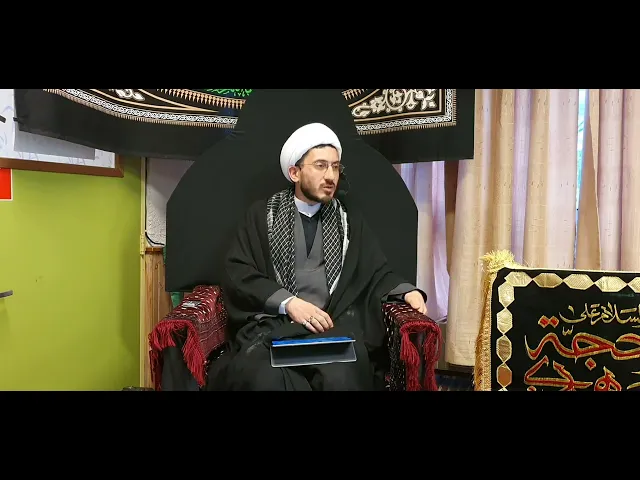
Friday Prayer - Sheikh Abdulrahman Cherri
0
0
0 Bekeken·
24/12/28
Laat meer zien
Transcript
[0:00]ahbar [Music] [Music] as [Music] [Music] f ill I seek refuge in
[2:27]God the all hearing the all knowing from the eist in the
[2:31]name of God the most merciful the most compassionate all praise is
[2:39]due to God the first before creation and life and last after
[2:43]the annihilation of all things he is the all KN who does
[2:49]not forget those who remember him does not diminish the reward of
[2:53]those who thank him does not disappoint those who call upon him
[2:57]and does not sever the hope of those who place their trust
[3:02]in him I bear witness that there is no deity but God
[3:05]alone without a partner and I bear witness that Muhammad S is
[3:12]his servant and messenger he sent him with guidance and the religion
[3:17]of Truth to make it Prevail over all religions even though the
[3:22]polytheist May dislike it oh God send your blessings upon Muhammad and
[3:29]the family of Muhammad and bless Muhammad and the family of Muhammad
[3:33]and have mercy upon Muhammad and the family of Muhammad in the
[3:40]best way that you have sent blessings bestowed blessings and shown mercy
[3:45]upon ibraim and the family of ibraim indeed you are the praiseworthy
[3:50]the Glorious and you do what you will Servants of God I
[3:56]advise you and myself to be mindful of God the almighty to
[3:59]follow his commands and to avoid his prohibitions on this Friday I'd
[4:07]like to mention a few things that are related to the sacredness
[4:12]of this day as I have last week in a general sense
[4:14]but I want to go into more specifics during this week if
[4:19]we look at the behavior of the IMs the prophet sallallahu alaihi
[4:25]wasallam and his teachings we see that they try to maintain the
[4:32]Perfection of the human being on multiple levels it wasn't only one
[4:39]facet of the human that was addressed by them because in reality
[4:42]what we are as humans is we are individuals right each individual
[4:46]has their own Journey towards Allah subhana tala you have your own
[4:49]life you have your own soul you have your own being but
[4:53]at the same time you're part of a collectivity as well and
[4:58]a religion such as Islam that claim to come to all of
[5:01]mankind and it came as the final message of Allah subhana wa
[5:07]ta'ala we have to assume that it came as a collective message
[5:12]a comprehensive message it didn't come only to deal with a specific
[5:16]type of problem related to a specific time in history of humanity
[5:22]this is a difference between a revolation that is possibly not claiming
[5:27]that it's the final Revelation so let's say it was a that
[5:31]came before Islam it didn't have this claim that this is the
[5:32]final message of God it's okay to assume that this religion didn't
[5:39]come as a comprehensive religion because it was perhaps dealing with a
[5:44]specific issue that was prevalent at that period of time keeping in
[5:48]mind that there's going to be another Revelation that's going to come
[5:51]and perfect it or amend or fulfill whatever is missing so if
[5:57]a message doesn't claim that it's the final message then we don't
[6:01]assume that it's trying to deal with every single human problem it
[6:04]might be a temporary issue and that's taken whatever is taken into
[6:08]consideration when it comes to that message is that there's going to
[6:12]be another one that's going to come and amend that or P
[6:16]whatever is empty when it comes to Islam the claim is there
[6:19]it's the final message that the prophet Muhammad s alai is the
[6:27]final message so when we have this in our mind and we
[6:29]see that the religion is s claims this we have to understand
[6:33]that it has to be a religion that is more Collective or
[6:35]more comprehensive in its nature it doesn't only deal with one facet
[6:42]of the human being so if we look at Islam we come
[6:44]to examine it does it fulfill this criteria or no and looking
[6:50]at the laws that were revealed and the teachings that were given
[6:54]by the prophet we see that every single aspect of the human
[6:59]society and the human being addressed so we have aspects that deal
[7:02]with the individual on an individual level we have laws that concern
[7:09]the human being in their own life so your prayers your fasting
[7:13]you're getting close to Allah your relationship with God these things concer
[7:19]your personal relationship with God they're governed they're managed on the spiritual
[7:25]level and on the worldly level laws that concern the D and
[7:31]laws that concern the a next we kind of expand the circle
[7:36]the relationship between the individual and the other we have the immediate
[7:42]other which is your family your immediate family and then we expand
[7:47]the circle as we go along we see that there are laws
[7:50]that were reveal that govern the relationship between the human being the
[7:55]individual and his or her immediate family Islamic laws related to The
[8:02]Dun aspect the worldly aspect and those related to the spiritual aspect
[8:07]as well we expand the circle a bit more now we have
[8:09]this community that you live in Islam has also addressed this issue
[8:15]how do I deal with people who are within my own collectivity
[8:18]there are laws concerning that there are ethics that we have to
[8:22]follow certain criteria that the prophet and the imams has placed for
[8:27]us in order to manage and govern these relationships and we expand
[8:30]even more than we have the society until we reach all of
[8:35]humanity and then we have teachings and laws that are related to
[8:38]dealing with all of existence so you have animals you have nature
[8:42]you have trees you have land things that are not even animate
[8:48]objects so Islam has come to fulfill all of these roles and
[8:54]it came to teach us that your relationship isn't only with yourself
[9:02]there's so an egocentric approach to life is not what it's them
[9:09]teaching teaches one that there is caring for the self but there
[9:11]also has to be care for the other as well and it
[9:15]also teaches us that this other is not only a human being
[9:20]but everything in this creation is from God I am responsible towards
[9:25]everything a lot of times when we you know live as individuals
[9:28]in our communities we feel that the only thing that we should
[9:33]be concerned with is our relationship with our family members or our
[9:36]community and we hardly deal with people around outside of it they
[9:40]kind of create a bubble for ourselves and we say okay we
[9:43]are Muslims and this is the only Circle we're going to be
[9:48]in and we kind of Disconnect from the people outside of that
[9:51]circle now this is kind of natural that human beings tend to
[9:56]gather amongst each other if they have some familiar concept or idea
[10:00]that they share between each other right and we tend to distance
[10:03]ourselves from the people that we don't have a lot of familiar
[10:08]things with and what you know the social media apps have done
[10:11]is they they've taken this into consideration too like their algorithms if
[10:13]you search a certain thing then everything is going to show up
[10:18]is going to be related to that it kind of begins to
[10:20]develop algorithms based on what you search how you think and then
[10:24]it puts you in a bubble as well because it makes you
[10:26]feel comfortable makes you feel safe it makes you feel like powerful
[10:32]so each and every one of us now have our real bubble
[10:34]that we live in in the outside world and now we also
[10:39]have that bubble that we live in in the virtual world so
[10:41]we're never exposed to these other opinions and if you're not expose
[10:47]to that opinion you become more radical in your own opinions you
[10:51]become more um firm in what you believe in and you reject
[10:54]the other very severely and very harshly what Islam wanted to do
[11:01]it wanted to maintain closed ties between the Muslims but it also
[11:06]wanted the Muslims to be connected to people who are outside of
[11:09]the F of Islam at the end of the day these individuals
[11:13]are creatures that Allah subhana T has created they are human beings
[11:17]they came from Allah they didn't come from another God or from
[11:20]some other being they came from God as well not everybody has
[11:25]to be a Muslim for you to respect them and within the
[11:27]fold of Islam not everybody has to be on your own your
[11:30]own sect for you to respect them as well if we look
[11:34]at the of the IM because they were asked about this on
[11:41]many occasions during their times they began the the Shia the followers
[11:45]of the imams and in the Sunni School of the followers of
[11:48]the other the SE of they began developing these closed circles theology
[11:54]was beginning to develop at that time argumentation beliefs were beginning to
[12:00]set the ashis are an individual of a group of people who
[12:03]have a set of beliefs in theology they became the ashis opposed
[12:08]to them are the and then you had everybody either belonging to
[12:14]this or belonging to that and sex were beginning to develop now
[12:17]the imams were approached and they had followers who were very very
[12:23]radical in their approach to life so there was one individual named
[12:26]z he would refuse to marry a woman he wanted didn't want
[12:33]to get a wife because there was a possibility that this wife
[12:37]might change her mind about her beliefs during the marriage this is
[12:41]how strict he was in his in his thought he was very
[12:45]radical in that sense he didn't want to risk being with someone
[12:48]that might change in their life and he's already categorizing the other
[12:52]in in such a way where if she doesn't share his belief
[12:57]system then he cannot even live with her in one house so
[13:01]the IM tried to amend that he had a lot of discussion
[13:05]with Zur and Zur was adamant about this idea he didn't want
[13:08]to change his opinion and he kept bringing verses from the Quran
[13:13]trying to prove to the IM that if the other individual doesn't
[13:16]believe in what I believe in then they're going to help because
[13:20]this was a predominant view at that time either mman you're a
[13:26]Believer or you're a c this is the these are the categories
[13:27]that the Quran had mentioned according to Z and this was the
[13:30]argumentation of that that group of people and a lot of Muslims
[13:36]believe this that there's no middle ground between IM belief and kufur
[13:42]which is disbelief so the IM argues against this to Zur he
[13:46]tells him no we actually have other categories that make a person
[13:52]not a Believer and not a disbeliever so Zur insists that no
[13:58]there isn't any it's not possible he argues with the IM he
[14:01]tells him well isn't there Only Hell or Heaven he's trying to
[14:03]argue from a different perspective if there's only hell and heaven where's
[14:08]this third place where these other non-believers or believer where are they
[14:12]going to fit if you're a Believer you go to heaven if
[14:15]you're a non-believer you go to hell this other category that you're
[14:18]telling me about looks like they have no place in the Hereafter
[14:22]they don't belong anywhere right so the IM brings quranic evidence to
[14:27]show that in addition to these two categories Allah subhana talks about
[14:32]other individuals such such as for example and they were people who
[14:42]and another group was people who have mixed good deeds and bad
[14:46]Deeds these are neither Believers nor disbelievers in that sense of reward
[14:50]and Punishment Allah in the Quran says that he will deal with
[14:55]them after death another category which was the main category that the
[14:59]IM was trying to argue for is the those who are um
[15:05]let's say weaken or they're weak weak in their intellect meaning that
[15:10]they have not received the truth or they have not received it
[15:16]in the right way for them to follow it so let's say
[15:19]that the prophet sallallah alaihi wasallam was in Mecca right and we
[15:23]had people during his lifetime that were living in South America they
[15:29]didn't receive Islam that message was not sent so the prophet was
[15:33]alive The Message of Islam was there what do we do with
[15:37]these individuals do we treat them as Believers or non-believers considering that
[15:40]the prophet was alive at that time but they did not receive
[15:44]the message so this this would be a must they didn't get
[15:47]the message of Islam all right is it enough for us to
[15:51]say that after the prophet came and the message was revealed and
[15:55]it became accessible that everyone is now accountable on the same level
[16:01]in same degree and much you know it's not some people the
[16:05]deficiency doesn't come from the message not being there some people are
[16:09]incapable of understanding the message properly if being told about the message
[16:14]from a non- infallible individual so when the prophet speaks to someone
[16:19]the prophet is very well aware of how to use language and
[16:27]arguments with that individual because they're the masters of humanity you know
[16:31]what this person needs a person who's a philosopher you don't talk
[16:34]to him about Islam the same way you would talk to a
[16:38]Shepherd you have to use a different argument you have to use
[16:40]a different language different mentality you don't talk to everybody in the
[16:43]same way so I for example might consider myself a messenger of
[16:47]Islam now after the prophet had passed right we car the message
[16:50]we're Muslims we go out and people want to call people to
[16:54]Islam or they want to argue that Islam is the True Religion
[16:56]but the arguments that I use are terrible arguments arguments that don't
[17:03]um uh convince people if Ed right there's a lot of people
[17:09]that do that they go out there and say okay this is
[17:10]Islam I'm going to claim this and if they don't listen they're
[17:14]K it's because their hearts are blind but it's very possible that
[17:17]the arguments that I'm using are incorrect they don't fit with the
[17:20]mentality of that individual they're not at the level of comprehension of
[17:23]that individual or my arguments are lower than what that person is
[17:27]able to think he might be a more intelligent individual than I
[17:30]am so just because I argue for Islam and that person rejects
[17:33]it doesn't make that individual a disbeliever in that sense they could
[17:39]be of the why because they didn't receive the message in the
[17:44]correct way with the correct Arguments for them to accept it so
[17:47]and this is the majority of humankind not everybody has the correct
[17:54]access to Islam and Islamic teaching not only that but because the
[17:57]prophet had departed from this world and the imams had also departed
[18:04]and as we the Shia believe IM went into a cation because
[18:07]of what the humans had done at that time they prevented this
[18:10]guidance from reaching us then we don't have access to the perfect
[18:17]version of Islam we have a access to a very good version
[18:19]of it we have a lot of teachings that have been passed
[18:22]down the general understanding of Islam is there the general rulings are
[18:26]there but we don't have access to the exact teaching so there
[18:30]is a possibility that there's a deficiency in that area so we
[18:35]shouldn't expect individuals that are outside of our fold to completely be
[18:40]convinced of this idea yes people who are good their hearts are
[18:43]pure and they have this attaction to God and want to learn
[18:48]about him there's a higher chance that they will Beed to Islam
[18:50]than other people who are not interested in this so keeping this
[18:54]in mind we have to understand that our relationship with the other
[18:58]has to be on this basis it has to be less judgmental
[19:03]during these days this is about the non-muslim imagine how it is
[19:06]when you're dealing with the Muslims as well you have to be
[19:10]even more forgiving in this sense even more careful about judging other
[19:15]people within the same M the same sect if you're a sh
[19:18]the IM tells Z that the Shia there are some people who
[19:24]are on a higher level of spirituality they have a higher level
[19:27]of comprehension they understand and they're closer to Allah subhana more this
[19:31]is a certain group of people don't hold everybody accountable to the
[19:36]same level as you hold these individuals don't expect everyone outside of
[19:40]your fold to understand what you're talking about a lot of people
[19:44]on line now talk about like the merits of the imams and
[19:47]the high spiritual Stations of the imams and whoever doesn't accept this
[19:51]idea they consider to be non followers of the IMs they're they
[19:55]give them names right the thing is not everybody's on the same
[20:00]level as you are maybe You' delved into the Hadith maybe you've
[20:03]developed yourself spiritually you're able to comprehend spiritual realities and TRS not
[20:06]everybody can do this so don't judge everybody based on the criteria
[20:13]that you have you expand the circle now there are people who
[20:16]just follow the IM believe them that they believe that they are
[20:21]their leaders but they're not spiritually connected to them they don't comprehend
[20:25]the levels and ranks of spirituality but they have love for and
[20:29]they follow their laws this is a bigger you have to maintain
[20:34]a good relationship with these individuals then you have a bigger Circle
[20:37]you have Muslims who love but don't follow the rulings that come
[20:41]from them from the example they're L of Love IM the the
[20:48]prophet because they obey the prophet's command about loving them you have
[20:52]to have maintain a certain type of respect with them as well
[20:56]a certain type of connection with and then you have in big
[20:59]ccle of some Muslims who were never a lot of Muslims that
[21:06]learned to love that were in certain countries they would come out
[21:10]and say that a lot of our on the me they never
[21:14]told us about this stuff there are individuals who intentionally try to
[21:19]keep usate away from the people when they come to know about
[21:22]them and they know how much the prophet commanded us to love
[21:25]them and follow them they develop an affection towards them so these
[21:30]individuals you also have responsibilities towards them if you expand the circle
[21:34]then you have the general Muslim and general Muslim so don't even
[21:43]share any of this with us the IM tells them that well
[21:45]they share Islam with you they don't share IM which is a
[21:50]deeper level of Islam but they share Islam with you so your
[21:52]responsibility is to visit them to ask about them to maintain good
[21:56]ethics with them you visit their dead you visit they're sick you
[22:02]funerals up there there's responsibilities towards so this is the have with
[22:08]the other people because what's happening now especially with in this day
[22:13]and age is these bubbles that are being created we're becoming more
[22:16]radicalized in our own opinions we reject the other person just because
[22:21]of difference of opinion we work together on a certain cause as
[22:28]soon as there's a difference of opinion we part we don't know
[22:31]how to live with one another and this radicalization of thought is
[22:36]a big problem we shouldn't have it we have to understand and
[22:41]learn how to live with one another even though there are differences
[22:43]in our cause and opinion we have to learn how to compromise
[22:46]how to reach Middle Ground how to understand how to deal with
[22:53]other people and remove this radicalization where we reject anybody who doesn't
[22:57]hear our opion we have to be more compassionate or loving or
[23:01]forgiving if Allah subhana T was to deal with us how we
[23:04]deal with people all of us are going to go to hell
[23:07]nobody wants God to deal with them the way they deal with
[23:12]other people we want God to forgive us for every mistake we
[23:14]do but when we when it comes to people's mistakes we're very
[23:18]hard when it comes to forgiving like no we I can't forgive
[23:23]this individual that mistake is too big or if I forgive them
[23:24]they're going to continue doing this wrong thing we become this judge
[23:30]this moral judge and we think that we're more wise than Allah
[23:33]subhana tala if God is the most wise judge and he adopted
[23:39]this method of forgiving forgiving excessively then we have to adopt that
[23:42]model and not try to come to our own model which is
[23:48]this radical understanding or behavior when it comes to dealing with the
[23:52]other praise belongs to God the first without a first before him
[24:33]the last without a last behind him behold there's his eyes full
[24:36]short of seeing him describers as imaginations are not able to depict
[24:41]him he originated the creatures through his power with an origination he
[24:50]devised them in accordance with his will with a devising then he
[24:53]made them walk on the path of his desire he sent them
[24:57]out on the way of his love they cannot keep back from
[25:02]that to which he has sent them forward nor can they go
[25:04]forward to that from which he has kep them back I bear
[25:10]witness that there is no God but God Alone with no partner
[25:16]and I bear witness that Muhammad s.
[25:20]is his servant and messenger oh God send your blessings upon Muhammad
[25:26]the Seal of the prophets and the master of the Messengers and
[25:29]send your blessings oh Lord upon Ali the commander of the faithful
[25:35]and upon fatimat zah the lady of the women of the worlds
[25:38]and upon Hassan and Al Hussein the masters of the Youth of
[25:44]paradise oh God send your blessings upon the imams of the Muslims
[25:49]Ali Hussein and Muhammed Ali Muhammad and M ja Al Muhammad Al
[25:56]Ali and the awaited M may Allah hasten his reappearance ease his
[26:02]emergence and make us among his supporters and followers I took a
[26:16]bit extra more time than I wanted to in the first sermon
[26:19]so I'm going to have to summarize this one inshallah in order
[26:21]to uh be respectful of your time what I want to talk
[26:27]about is Dua of Friday now my intention was to present a
[26:33]uh long commentary on but because the time is short I'm going
[26:36]to summarize and so when we look at the duas of the
[26:40]imams the supplication that they taught us the supplications were not only
[26:45]things that they taught us to recite in the Masjid or in
[26:49]our homes in order to ask for something from God or to
[26:55]um complain about something the supplication that the imams gave us can
[27:01]be categorized into different categories there are supplications that are long like
[27:08]right on Thursday night you come spend about supplication there are other
[27:12]supplications that are short like the supplications of the days of the
[27:17]week and there are even shorter supplications if we look at the
[27:23]Quran pray to God in one sentence they didn't even have introductions
[27:33]to it they didn't have like a long explanation like oh Allah
[27:39]do not leave me alone without children and you're the best of
[27:43]inheritance a prophet praying to Allah subhana to Grant him a child
[27:49]very short supplication there's no there's no Salat there's no praising of
[27:54]God it's a very short sentence so we understand from this that
[28:01]applications play a different role according to what we're trying to achieve
[28:05]from them someone who's drowning in the water is not going to
[28:09]try to remember the DU from or or something and start reciting
[28:13]that for God to sa right if you're drowning you're going to
[28:17]say Allah get me out of here right it's going to be
[28:19]like very improvised Dua on the spot coming from the bottom of
[28:26]your heart that serves a certain function and in reality that kind
[28:29]of Dua is usually the most sincere prayer it's like when you're
[28:32]in a very bad situation it comes from your heart you're suffering
[28:37]in your life you're having a difficult time a lot of us
[28:40]were students you know we became very religious before the final week
[28:44]right when it came to finals start sending questions to the she
[28:50]and you sent me a Dua to pass this exam and when
[28:51]you're doing the exam you're doing all the bests right anything you
[28:58]memorize in suay school all comes out from the bottom of your
[29:01]heart because you want to pass that exam right so most of
[29:06]the time when we're in that kind of like dire situation we
[29:09]are able to pray from our hearts but usually those kinds of
[29:12]prayers are related to our desires is something that we want and
[29:18]God had allowed this and out of his mercy and forgiveness he
[29:21]grants us those prayers even though it comes from a selfish point
[29:25]of view right but Allah is a very forgiv God a very
[29:30]merciful a very compassionate God even things that sometimes are very selfish
[29:35]inside of us he grants it to us as long as it
[29:38]doesn't give us a lot of harm it doesn't cause us a
[29:41]lot of harm another or a higher level of job are those
[29:45]prayers that the IMs have taught us so we have the Imam
[29:49]being an individual who's elevated spiritually right the Imam doesn't have the
[29:55]ego when he's talking to Allah subhana tala he's Beyond himself he's
[30:00]transcended himself so he becomes the master of spirituality and in order
[30:05]for him to be or because he is a master he has
[30:10]an obligation or duty to teach the students how to become better
[30:13]you go to university or you go to school that's what your
[30:15]teacher's responsibility is in class right they're supposed to elevate you on
[30:19]the intellectual level make you smarter individuals and if they're true teachers
[30:24]they care about your ethics and your morals and your behavior as
[30:28]well so because they've reached that higher level and children begin without
[30:34]these teachings the teachers's responsibility in society is to elevate those individuals
[30:38]and teach them and prepare them to become better human beings because
[30:42]of the experience that the teacher has in their life right they're
[30:45]on a higher level the imams being Superior to us spiritually they
[30:51]are like those teachers we are like those children we're still not
[30:55]very aware spiritually of what's best for us we're not aware of
[31:01]what decisions are best for us what paths to take in life
[31:04]we usually behave based on our egos and The Limited information that
[31:08]we have so the imam's duty as a guide is to elevate
[31:12]us is to teach us how to speak to God how to
[31:18]contemplate about God what path to take in life their role is
[31:20]that teaching role one of the methods that they use are the
[31:23]supplications that we have like last night we had the supplication of
[31:30]God of which is a very very beautiful supplication the imams Begin
[31:35]by teaching us who God Is So if you're asking God for
[31:38]something why do you have to begin with praising God in different
[31:42]types of Praises like what I recited at the beginning of the
[31:45]sermon and the other sermon these are taken from the supplications and
[31:48]the sermons of the IMs this type of description and you can
[31:51]see that each one's different than the other so why do the
[31:56]IMs do this well it's to create a higher Consciousness within ourselves
[31:59]if you're talking to a child and you're going to visit someone
[32:03]very important you have to prepare them for it right especially if
[32:06]you have a child that you can't control very well you have
[32:09]to tell them look we're going to a very important person it's
[32:12]a very respectful place we have to stay quiet we have to
[32:15]do this we have to do that and by instilling these ideas
[32:18]in the child's mind their imagination begins to play they start imagining
[32:22]what you're telling them that this is a place like this a
[32:25]place like that they alter the their behavior based on that type
[32:30]of language that you use with so before entering that sacred conversation
[32:35]with god the IM teaches us that you have to first of
[32:37]all fix your imagination you came from work you're busy with your
[32:40]kids you've been watching like Clips on on on your phone or
[32:44]your TV or you listening to the radio if you still do
[32:45]that some people still do that if you listen to the radio
[32:49]and you want to enter that conversation with god but you have
[32:57]all of this stuff playing in your head so the IM creates
[33:00]that barrier it throw with his language he throws those things to
[33:03]the side and he begins to replace those ideas that you have
[33:08]with a higher level of Consciousness God is the first who had
[33:11]no first before him he puts you on that level now I'm
[33:17]talking to the Eternal I'm supposed to elevate myself from this world
[33:21]over here that's filled with limitations and space and time and everything
[33:25]here is restricted now I'm getting into a conversation with the Eternal
[33:30]I'm going outside of time and outside of space so by and
[33:33]you know this is just one example this is approach this is
[33:39]why did they praise them this way and why what are the
[33:43]words that they use are not just trying to fill the page
[33:47]with poetry and language right everything they write and everything they say
[33:51]has a meaning and a purpose our job our responsibility just like
[33:54]in school the teacher teaches you the knowledge but there's a responsibility
[33:58]upon the student as well the student has to receive that knowledge
[34:02]has to review that knowledge has to study that knowledge it's not
[34:05]enough just to listen to it right if you want to become
[34:11]a scholar a student if you want to pass so the imams
[34:13]give us the Dua it's our responsibilities as the students to look
[34:17]at those duas and to study them to contemplate over them to
[34:22]try to understand them and once we do that elevates us first
[34:26]of all on the Consciousness level on the int intellectual level and
[34:31]thirdly when we understand these two we begin to elevate on the
[34:37]spiritual level as well because our conversation with God begins to change
[34:41]now I'm more aware of who God is I'm more conscious of
[34:46]who God is if I don't become conscious of who God is
[34:48]then when I'm speaking to him I'm not really speaking to him
[34:53]I'm not even aware that God exists a lot of us read
[34:54]the Dua and we have no feeling that we're speaking to God
[34:59]God we're just repeating uh words and they're just sounds coming out
[35:03]of our mouth right so in order to develop that feeling and
[35:07]I'm not saying that we're responsible to do that for the whole
[35:10]duration of du if one of us is able to achieve this
[35:15]feeling or this state for one minute in the Dua this is
[35:18]a great blessing and you want to increase that every single time
[35:22]a lot of our Scholars tell us that you're not expected to
[35:27]read like all of which is pages long and connect with God
[35:31]on that you know with or or J your favorite da in
[35:35]in the month of Ramadan right it's very it takes an hour
[35:40]or so to read right you're not expected to connect to God
[35:43]for that whole hour and you're not expected to read all of
[35:48]duas in their long duration you tell us that sometimes a segment
[35:51]of Dua is what you're connected with because that's the kind of
[35:54]spiritual state that you're in if you're someone under a lot of
[35:56]distress certain segment of du you connect with more than the others
[36:03]that's where you have to focus more if you're in a feeling
[36:05]of love and Ecstasy with Allah subhana wa tala then there are
[36:08]segments in Dua command that fit for you they're more focused on
[36:13]the idea of love with Allah so in that segment connect with
[36:16]God and don't feel bad if you don't connect with the others
[36:21]so start with this small connection and try to understand the duas
[36:25]and eventually you realize that your relationship with God improve and grows
[36:29]over time we ask Allah subhana to grant us this closeness and
[36:33]proximity to him and to allow us to enter this sacred communication
[36:39]with him with more Consciousness and understanding
0 Comments
sort Sorteer op
- Top Reacties
- Laatste Reacties
Volgende
1 Bekeken · 22/10/22
1 Bekeken · 23/01/14
0 Bekeken · 23/07/01