Volgende
5 Bekeken · 14/01/22
7 Bekeken · 22/05/17
10 Bekeken · 22/05/19
8 Bekeken · 22/11/17
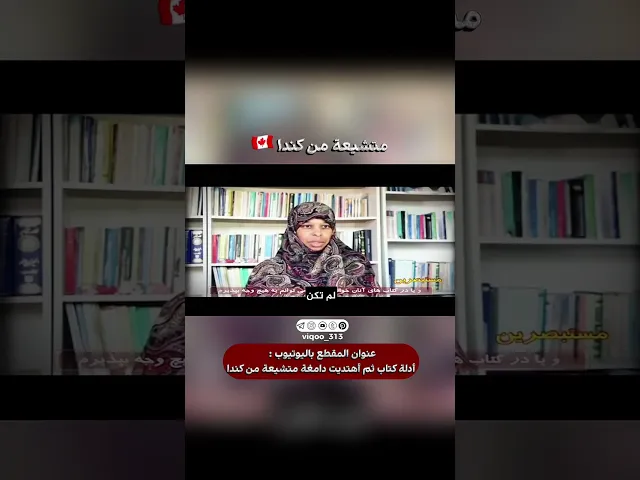
Femininity In Islam - Weekly Series - Sister Sahar Jaber
0
0
26 Bekeken·
24/07/12

Join the Lebanese Youth Foundation - LYF weekly during the Month of Shaaban to engage in a series of interactive lectures geared mainly for the sisters but all are welcome!
🎙️*Speaker:* Sister Sahar Jaber (Canada)
📆*Date:* Every Monday starting 22nd March 2021
⏱️*Time:* London 19:00 | Detroit 14:00 | Beirut 21:00 | Sydney 04:00 +1 day
📡*Location:* Live on Facebook and Youtube channel
📜*Topic:* Womahood; An in-depth analysis of femininity in Islam
Session 1 (22nd March) – Status of females in Islam
Session 2 (29th March) – Marital gender roles
Session 3 (5th April) – The obligation of females in Islam
Please make sure you are following our page and channel: @lebaneseyouthfoundation and share.
Laat meer zien
Transcript
[1:49][Music] [Music] assalamualaikum everyone thank you for joining our live event titled
[2:24]womanhead and in-depth analysis of femininity in islam this is going to
[2:28]be a weekly event every monday throughout the month of shaban we
[2:33]also have a weekly event every thursday throughout shaban with sheikh zafar
[2:38]hamud and that's titled reconnecting with allah so be amazing and lovely
[2:43]for you to join our events throughout this month so hopefully we
[2:46]can learn more together and grow and develop as a community i'm
[2:51]super excited for today's event with sister sahel i mean this is
[2:57]a topic that's very close to my heart and that i'm very
[2:59]passionate about and i know a lot of people in our community
[3:03]are very interested in this topic especially now with um the interests
[3:08]given in feminism on different media platforms so i'm going to give
[3:13]a brief introduction with two sister sahaja yog before we get into
[3:18]it so sister sahar was born and raised in ontario canada she
[3:23]completed her double honours in sociology and communication she resides in lebanon
[3:31]where she studied a few years of islamic studies with the pursuit
[3:35]of to create an impact in muslim children's literature she started her
[3:38]own publications company known as figs and olives publications she has recently
[3:43]published her first book titled but why is hijab so special this
[3:48]book aims to educate and inspire young females and males about the
[3:53]hijab the main goal of the publishing company is to provide reliable
[3:55]and educational resources for parents and children to bring to build a
[4:02]strong islamic foundation her dreams and aspirations in life are to empower
[4:07]the muslim generation through literature and knowledge so now i'd like to
[4:12]invite sisters ahead to join the live event [Music] thank you so
[4:19]much for having me thank you for joining us i'm making time
[4:23]for our event it's my pleasure it's an important topic so it's
[4:30]definitely something i'm excited about yeah i'm looking forward to it a
[4:37]good like assalamu alaikum everyone um so throughout this couple of weeks
[4:46]we're going to be discussing islam and feminism and women rights and
[4:49]it's important to know that all topics discussed are not my personal
[4:55]opinion rather from an islamic standpoint and so it's important to to
[5:03]understand that if something does not sit right with you maybe it's
[5:06]because of certain ideologies or beliefs that you have put in place
[5:12]that may not actually sit right with islam itself so what we're
[5:17]going to be doing is i'm going to be sharing my screen
[5:20]and sharing a presentation with everyone and we'll be working on that
[5:27]basis inshallah so the topic of femalehood and femininity in islam is
[5:49]an extremely important topic that is not enough is not discussed enough
[5:55]in our community unfortunately and so throughout these few weeks what we're
[5:58]going to be doing is discussing it from the understanding of a
[6:03]status of females in islam marital roles and the obligation of females
[6:10]and so if we were to give a brief historical analysis of
[6:14]islam and of how of how women were actually treated in islam
[6:18]we'd understand that ever since the beginning of time really since catholicism
[6:24]uh brought this idea that females are the reason for all the
[6:29]sin on earth women were blamed uh and were scarred as evil
[6:34]they were understood as something that uh came with satan really and
[6:41]is the reason for all sin on earth and this point actually
[6:51]destructively impacted females pre-islamic era because the understanding was that adam and
[6:57]eve would not have reached to earth to their sin if eve
[7:01]was not tempted by the devil and so this brought all sin
[7:05]and all the burden of sin on woman's back and it stayed
[7:09]like that for a very long time even until the time of
[7:14]islam we say that islam actually did not categorize a woman as
[7:19]a human being but rather identified them as animals and so they
[7:23]were merely human they were merely a form of animals for for
[7:31]procreation and for the male gaze but apart from that they had
[7:35]no equality or role with males and so if we were to
[7:41]look at women's oppression pre-islamic era we see that female intificide was
[7:46]so common uh the killing of females of young infants we also
[7:52]see that once husbands were were dead the children were actually stripped
[7:56]away from the mother and were given to a male protective or
[7:59]to someone else within the family but they were never within the
[8:03]custody of the female the woman had no rights of inheritance um
[8:07]men would commonly leave women without actually advising them that they were
[8:11]divorcing them they would just leave them for years and months and
[8:13]the woman of course cannot remarry under islamic principle until she knows
[8:18]that she is divorced and so men commonly divorce the female by
[8:23]just saying that she's like the back of my mother and women
[8:26]were regarded to have no ability to participate in politics or academics
[8:31]or or trading or anything really um so and the worst one
[8:37]of course is that females were commonly married off to men without
[8:42]even asking them for their permission first the dowry was actually taken
[8:47]by the father and was not given to the daughter at all
[8:52]and even having a female within your dog within your family was
[8:56]actually seen as a shame um giving birth to a fear to
[8:59]a daughter of course we know was shameful with something that was
[9:03]not pleasant and so in the islamic era once prophet muhammed came
[9:07]it's important to understand all this oppression and to actually place yourself
[9:12]in his position you know a prophet coming to actually break down
[9:17]all of this understanding that females are less than males and that
[9:22]females shouldn't be killed and that there is no respect that should
[9:25]be given to females um and then this man coming and saying
[9:27]that you know this your guys are doing this all wrong you're
[9:30]not supposed to kill them you're actually supposed to give them a
[9:32]doubt you're actually supposed to ask them for permission to be married
[9:34]um they are actually equal to you in the eyes of allah
[9:38]so imagine how confused and complicated it must have been for them
[9:45]to understand these concepts and that's why it's actually revolutionary when we
[9:50]look at these concepts in the quran because to us these might
[9:53]just seem like everyday quotes or everyday narrations that you know females
[9:58]and males are equal but at their time that was not something
[10:01]that was understood and unfortunately very microaggressive forms of traditions and of
[10:09]ways of looking at females from their time still exists until today
[10:13]because of their traditions and because of their cultures because they have
[10:17]not genuinely taken this quranic verse to mean what it does mean
[10:22]and so this chronic verse um it actually discusses three very fundamental
[10:29]points it says oh people so first it's actually addressing males and
[10:32]females it's not discussing one uh one form of gender it's discussing
[10:36]males and females through the collective uh noun people and so it
[10:44]says that we have created you from male and female so here
[10:47]it's categorizing and then it says that you were created into nations
[10:53]and tribes so there's equality between every form of nation there's no
[10:57]uh certain nation or status quo that's higher than the other status
[11:04]quo and it then says that in order for you to actually
[11:08]differentiate who is the highest who is the most noble it's important
[11:10]that you actually look at it through the eyes of your taqwa
[11:14]of your god-fearing and whether or not that is what you have
[11:20]placed and so when we look at how god has actually categorized
[11:26]or how how god actually um created the soul and whether or
[11:33]not god has actually made males or females equal we see that
[11:35]in the quran god has said that he has created us from
[11:39]a single soul from one soul and so this one's soul was
[11:43]actually the soul that he created and that he blew into prophet
[11:48]adam this soul was then created into a male and female souls
[11:52]in islam are are actually seen as genderless there isn't a gender
[11:58]your soul does not have the female gender attached to it it
[12:04]is merely a soul and so that's why when god actually comes
[12:10]to to see um your deeds he does not place it that
[12:12]you know he favors men and so because his soul is a
[12:16]male gender i'm going to favor them and provide them with heaven
[12:20]it's actually because of their taco because of their god fearing because
[12:25]of their actions and so gender is actually secondary in islam it's
[12:29]not fundamental it's not a primitive role it's only through your gender
[12:34]that you're actually able to perform the obligations in islam and perform
[12:40]your worldly duties and actually ultimately reach to your perfection and so
[12:45]these it's these worldly um obligations that god has constructed these need
[12:50]to be formed through a gender through a form and that is
[12:55]why god created males and females so that he can actually provide
[12:58]us with the platform to move through this world successfully it's it's
[13:05]really as if a teacher were to have given you uh you
[13:09]know two types of tests you get a test and your friend
[13:12]gets a test um type test a test b so that you
[13:16]guys don't cheat and so this these different forms of tests ultimately
[13:19]you know you're going to either pay a pass or fail math
[13:23]but it's the same concept because males have their own version of
[13:28]a test and females have their own version of test when really
[13:31]the essence of it is that it's a math test similarly our
[13:35]soul the essence of it is that we are a human soul
[13:39]we are we are given this this beautiful honor and privilege by
[13:44]god and so it really comes down again to your token to
[13:48]your deeds not your gender and this idea that males and females
[13:53]are equal in the eyes of god is fundamental because when you
[13:57]understand this concept then you're able to actually understand that other concepts
[14:02]within islam are actually equal in their own form and their own
[14:05]rights which we will be discussing shortly so if we were to
[14:10]just categorize and differentiate between islam and western civilization we'd see that
[14:16]islam was actually ahead of its time it was actually able to
[14:19]perform things before other nations and especially the western civilization which we
[14:24]put at this very high hierarchy um so at the time of
[14:28]islam when prophet muhammad was was of course preaching it he said
[14:33]that females are actually considered as a full personhood they're considered as
[14:35]a as a human being there's no difference between that this concept
[14:40]um as well of all as well as all the others such
[14:45]as you know females are not a source of sin when we
[14:48]discuss the verse of uh of the sin um of prophet adam
[14:54]and eve um it's discussed that the terminology in it is discussed
[14:59]that both of them committed something not that eve committed something so
[15:04]in islam is it's not actually understood in the same way as
[15:05]as catholicism or christianity and so we then say that say the
[15:15]khadijah had her own property she sold and owned property she had
[15:18]her own trading and so again females actually were able to own
[15:22]and sell and then we also see that there is no difference
[15:25]in gender status in the front of in the eyes of allah
[15:28]other than their attained deeds and this is seen through the understanding
[15:33]that if i were to ask you who is the equal to
[15:37]prophet muhammad who is the equal to imam ali instantly you would
[15:41]reply say the fatimid and so there is an equal to them
[15:45]and if there is an equal to a male that means that
[15:48]the female and male have no difference between them that means they
[15:50]are equal in a sense and so there is no difference in
[15:55]the eyes of allah as to who is better while in western
[15:57]civilization if we were to understand it we said that it wasn't
[15:59]until the 1870s and then it was actually re-fixed until 1882 where
[16:06]women's property act was given one women can actually own land it
[16:09]took them until 1882.
[16:11]and then in 1918 we see that you know women can actually
[16:15]vote who were above 30.
[16:16]when in islam prophet muhammad actually gave them the ability to you
[16:19]know who do you choose as your imam or caliph etc it
[16:23]was given to them right then and there in 1923 we see
[16:27]the proposed equal rights amendments the trader of rome principle of equal
[16:31]pay for a woman so all of these uh in western civilization
[16:35]took up a longer time and of course this goes back to
[16:40]their catholicist beliefs of yves sin and how they actually um understood
[16:44]the role of a female compared to islam so woman's right islam
[16:52]is known uh for um islam is known for improving women's rights
[16:58]and inheritance however western civilization has actually tainted it it has made
[17:05]it seem as though islam does not care for their females uh
[17:09]projections or are what actually best suits them and so if we
[17:14]were to look at this um article written by margaret petran if
[17:17]anyone did want to look into it um the conversat the conversion
[17:24]to islam brought improvements for women including new inheritance rights the reduction
[17:29]of polygamy the outlying a female intificide and the rights for women
[17:35]to participate in baal however following the death of prophet muhammad patriarchal
[17:41]interests reasserted themselves threatening the rights islam granted woman i definitely agree
[17:46]with this because it when prophet muhammad provided us with islam it
[17:52]was provided in the in the means that i had told you
[17:57]however after that a lot of the tribal men went back to
[18:00]their tribal beliefs they started acting the same manner and that's why
[18:03]even until today we can see a lot of the uh traditions
[18:10]and forms of of treating women has not changed because they're still
[18:15]living at that time of culture and traditions and so there is
[18:25]this beautiful analysis by uh which says that the domestic system is
[18:30]collapsing the basic matrimony is weakening young men are evading marriages young
[18:34]women are hating motherhood modern women are becoming vulgar love is becoming
[18:39]replaced with cheat sensuality cases of divorce are increasing number of children
[18:43]without marital statuses are rising and respect between spouses is becoming rare
[18:49]and it's it's this concept that we're going to be talking a
[18:52]lot about which is the respect between spouses becoming rare because even
[18:55]until today we this is the biggest problem that we have within
[18:58]our communities is that spouses are not respecting each other's role and
[19:02]because they are not respecting each other's role they are then forced
[19:06]to perform the other person's role and this is becoming a clash
[19:11]blurred lines it is not being understood whose role is what it's
[19:15]because they are not respecting each other's roles and so the question
[19:20]then becomes does islam regard woman equal to men when we discuss
[19:26]this question we have to understand that even though equality for women
[19:32]may sound nice may sound beautiful may sound like no that's what
[19:37]i want i want quality for a woman in reality that's not
[19:40]actually what we should be aiming for islam does not necessarily work
[19:45]in the basis of equality per se it gives us equality however
[19:48]it gives us equality through equity equity is what islam focuses on
[19:52]when we discuss equity it means that every single person is given
[19:56]their due rights every person does whatever that person deserves is whatever
[20:00]that person will get so for instance if i were to give
[20:04]you an example if you had a teenager an 18 a 14
[20:06]year old and then you had a young child that was six
[20:09]years old would you give that six-year-old the same share of a
[20:14]meal as the 18 as the 14 year old of course not
[20:18]it would be unfair to that young child and it would be
[20:20]fair to the older child likewise you wouldn't give the six-year-old's meal
[20:27]to the 14 year old you cannot if you were to perform
[20:28]that then you are actually not providing them with what they would
[20:30]need with what they would regard it as essential for them and
[20:35]so you're not giving them their due right you're not providing them
[20:39]with essential means of of of actually living and moving forward in
[20:45]their life and so it's important on that basis to understand that
[20:48]you need to give as per what they actually require and that's
[20:54]how god works god works on the basis that he will provide
[21:00]you with what you will need in order to reach to your
[21:03]perfection in order to reach to where you need to be and
[21:06]if we were to discuss it on the basis of equality then
[21:10]a lot of things will not make sense because then you would
[21:14]be trying to say well i need an equal form of of
[21:16]what the male skates i if what the men get but it's
[21:23]actually not a discussion men and women are biologically and socially different
[21:27]and so if i were to tell you that you know we
[21:30]want exactly what the men get and we can actually perform what
[21:34]the men want you know we can perform as much work as
[21:36]the men can perform okay so we're working now 35 hours a
[21:40]week and we can also perform all the other actions of you
[21:44]know being the financial uh person that's responsible for the family etc
[21:49]if i were to put myself in that position and demand for
[21:55]equality technically to the man can you then tell me that the
[21:58]man can actually perform an equal stance to you because when you're
[22:01]talking about equality that means that both parties can perform their action
[22:05]in an equal form so say i can perform some of the
[22:08]actions of the male even though of course i cannot can they
[22:11]perform all the actions of me can they perform that motherhood role
[22:15]can they become pregnant with a child and feel that the the
[22:20]the troubles of being pregnant the troubles of menstruation every single month
[22:25]can they actually put themselves in a position where they're fully being
[22:28]aware of what the female is going through of course no likewise
[22:34]the female cannot actually put themselves in a position where they're feeling
[22:36]everything that the male is going through and so there it's not
[22:40]a discussion really when you're discussing equality for males it's this imaginary
[22:43]term that you are trying to aim to but it has no
[22:48]practical or rational form of performing it you're just going to be
[22:52]chasing something that you'll never catch you'll never get and that's exactly
[22:55]what we're seeing with feminism nowadays is that they're constantly chasing well
[22:59]you know what now we don't want men now we want emancipation
[23:01]from men now we don't want the motherhood now we don't want
[23:05]the family structure they're constantly chasing something for equality for men but
[23:08]why are they chasing that when they have specific roles given to
[23:11]them in specific forms and specific in nature that is ideal for
[23:15]who they are and so on the basis of human dignity the
[23:20]question then becomes should the genders have the same rights without any
[23:26]discrimination or should they have equal rights according to their roles it
[23:29]is a is it a topic is it is it a discussion
[23:33]that each one should have rights without discrimination or is it a
[23:39]discussion that equal rights according to their rules the female roles the
[23:44]male roles which are very tainted nowadays very strained and so when
[23:49]we look at how islam actually categorized it it put it into
[23:53]perspective it discussed it as a natural inherent rights and so your
[23:59]natural capability what are you natural capable of and so if we
[24:03]were to give an example of the natural capability you'd see that
[24:05]you know a child is actually capable of learning and growing wiser
[24:10]therefore um you know of his rights is that the parent provide
[24:16]them with knowledge and with an environment to learn and grow such
[24:20]as school while she does not have that capability to learn and
[24:25]grow such as such as the human being and this example was
[24:27]given by shahid mutahari and so the sheep cannot then have that
[24:31]same right that they need to go to school their rights here
[24:36]are different does that mean that if i'm not providing the sheep
[24:39]with a school with an educational platform that i'm not providing them
[24:44]with with what they deserve of course not they do not have
[24:46]the capability and so they do not deserve it that is the
[24:50]understanding that we should be if i were to go based on
[24:53]equality and similarity then i would say you know the child goes
[24:54]to school the sheep has to go to school even though the
[24:58]sheep cannot go to school and when we discuss inherent rights inherent
[25:03]rights is actually your your futra what has what is a god-given
[25:08]right to you and if you were to look at your inherent
[25:12]rights and if you were to be inspired by them and of
[25:17]course you know the birth of uh imams has passed you can
[25:19]understand a lot of the rights through the 40 amendments that he
[25:25]has through the 40 eminent rights that he has a lot of
[25:29]it comes into perspective and so when we discuss equality it's important
[25:35]to understand that islam does not believe that in all cases both
[25:39]genders have the same uh rights and obligations it provides males with
[25:45]certain obligations and provides females with different obligations however if we look
[25:50]at the fundamental obligations we look at fasting we look at uh
[25:55]prayer we look at charity we look at homos all of these
[26:00]are equal for males and females there's no difference in the fundamental
[26:04]forms of worship however in certain positions females have to perform worship
[26:09]a different manner males have to perform in different manners such as
[26:12]salah and in in congressional prayers you know females must perform their
[26:18]prayers behind the men and so just because there's a difference in
[26:24]how the jurisprudence or the rulings or the verdicts takes place does
[26:28]not mean that there's an inferiority to it you know if feminism
[26:33]or western culture has tainted this idea that because they're at the
[26:38]back and the back is seen as something that's negatively you know
[26:41]it's connoted as something that's negative therefore this person is inferior subordinated
[26:46]or oppressed um the females have no rights have no say because
[26:49]they're sitting at the back that actually makes no sense you know
[26:52]we're actually respecting the females uh body and figure and and who
[26:58]she is her nature her character by allowing her to pray in
[27:02]the back it's a form of respect and so it's a difference
[27:03]of opinion it's a difference of perspective um and so when we
[27:09]look at islamic verdicts these differences are derived through a valid reason
[27:14]there's a reason as to why females have certain verdicts and males
[27:17]have certain verdicts it's logical islam is extremely logical and so says
[27:26]if if instead of blindly following the western ideas we allow ourselves
[27:31]some independent thinking the first question which comes to mind is whether
[27:36]equality of rights does really mean the similarity also so does it
[27:41]mean when we discuss equality does that mean that mine my equality
[27:45]has to be the same as the male's equality you know if
[27:49]i wear a hijab on my head if i cover my hair
[27:51]the male has to cover his hair does that mean that it's
[27:58]the same and so we see this beautiful quote um by the
[28:10]revolutionary leader who says that islam put women on par with men
[28:14]and made them equal with men of course there are certain islamic
[28:17]precepts which apply only to men and others that apply only to
[28:22]women but this does not mean that islam discriminates between men and
[28:27]women they've understood this incorrectly a lot of muslims unfortunately have understood
[28:30]this incorrectly that since our roles are different than the males and
[28:34]since the male's roles are societally understood as more important therefore their
[28:40]role is more important therefore islam is inferior to women therefore islam
[28:43]is patriarchal etc just to bring enlightenment as to how important islam
[28:54]actually viewed muslim woman roles we see that say the father zara
[29:01]again she was a fruit her her essence was a fruit from
[29:07]heaven and so her equality to prophet muhammad there was no difference
[29:13]actually it's it's the opposite if if it wasn't for imam ali
[29:17]then there would not have been an equal to say the fatim
[29:23]to sarah again then we look at say the maryam if you
[29:25]were to analyze um the the family lineage of say the fatimidazara
[29:34]and of said mary just by analyzing it you see that say
[29:37]the photo is actually the lineage of prophet muhammad she is al
[29:44]muhammad therefore when you say allah allah muhammad ali muhammad you're actually
[29:53]this muhammad is again when you're looking at al ibrahim this lineage
[29:59]of ibrahim is actually the maryam because she is the one of
[30:04]course that we know that god provided her with prophet isa he
[30:08]made her at a very high ranking to provide her with the
[30:12]prophet visa and so her ranking here if you were to just
[30:17]understand as to what was she understood in what role did she
[30:21]perform in order to reach to her high ranking you would see
[30:25]that she was a mother you see that she was a caring
[30:31]neighbor you see that she was really a sister to all to
[30:32]everyone in her community she was a worshiper to god she used
[30:37]to be of service um to the temple such as providing them
[30:43]with you know with whatever with whatever the temple needed a care
[30:46]giving the temple really and so at the same time she was
[30:50]studying with her uncle the prophet and at the same time she
[30:56]was actually being active within the community and she was constantly in
[31:00]worship and constantly in conversation with the angels and so every single
[31:07]person here in this image had a role as a mother her
[31:10]primitive role was a mother and as a wife and these roles
[31:17]are actually what accentuated them what made them into who they are
[31:21]and it is actually without them that the male's roles cannot be
[31:27]performed and so they are equal to the male's roles however they're
[31:30]equal in a different stance and they're equal in a different form
[31:38]and so when we discuss feminism well first it's important to actually
[31:43]define what feminism is so feminism is a woman's movement that aims
[31:47]to eliminate the traditional gender roles very simple correct and again it
[31:54]sounds nice we want to eliminate traditional gender roles my question here
[32:00]becomes who said it's actually a good thing to eliminate the traditional
[32:03]generals why is that something that we are actually trying to do
[32:07]why do we want to eliminate them is it beneficial for the
[32:10]community and for society to eliminate them and if we were to
[32:14]eliminate them who is actually going to perform them so these questions
[32:17]should arise when you hear a definition and then it's it's understood
[32:21]that you know that we have to distinguish uh feminism from women's
[32:25]movement because islam is a woman's movement islam is its own form
[32:29]of woman's movement god provide us verdicts and legislations under an islamic
[32:35]under us a female for females god provides us islamic verdicts and
[32:40]rules we have our own understanding you know we the hus the
[32:45]parents must take our approval in order to be married the dowry
[32:50]is ours we have a right to own land the child certain
[32:55]amounts of years is our custody there are so many rights for
[33:03]the female and so therefore islam is categorized as a woman's movement
[33:07]yet when we discuss women's movements a lot of our ideas go
[33:13]directly into feminism that feminism is the only form of women's movement
[33:17]out there while that is actually incorrect feminism is not the only
[33:20]form of women's movement there are a lot of other forms of
[33:23]women's movement um out there and so i can be someone that
[33:28]believes in woman's movement not agree with feministic beliefs because if i
[33:38]were to just look at the base level of what feminism is
[33:43]just the base level the understanding that we have to be equal
[33:46]to men i do not agree with that because there's a different
[33:50]form of equality that we are god given and so this space
[33:55]level on its own is insufficient for us and therefore we can't
[34:00]even even go into the first second and third wave feminism because
[34:03]at this point it's actually useless because we're not even agreeing with
[34:07]with their fundamentals with their foundation therefore i it's better to actually
[34:12]understand it as a woman's movement as islamic women's movement uh honestly
[34:16]just saying yourself as a muslim is sufficient to to be understood
[34:23]that you agree and believe in women's rights so feminism is often
[34:28]defined as a movement seeking full equality to rights with men but
[34:32]it's important to emphasize that the quality of rights um that feminism
[34:37]actually strive for is way above the law it's not only about
[34:42]the law it's about gender roles it's about the understanding of gender
[34:46]definition of gender genderism really and so feminism aims to eradicate the
[34:54]differences in social roles that's their goal they don't want something to
[35:00]be a female role in a male role they want to eradicate
[35:06]it and that's what distinguishes it from other women's movement however when
[35:10]we come to discuss islam islam actually wants to define roles it
[35:16]wants to place female roles in male roles of course it's not
[35:20]black and white there are blurred lines but it wants to place
[35:24]importance as to what the male role can be and what the
[35:26]female role can be and so in this article that i discussed
[35:31]in the beginning of uh of this topic she margaret um actually
[35:36]um erica what she did was she went to uh iran and
[35:41]she did some ethnography she lived there within the community and she
[35:46]studied how women were and how men were and feminists writes however
[35:50]when she was actually writing this article she made a lot of
[35:55]mistakes um and the reason why i critique her work is because
[35:57]she did not analyze it through an islamic perspective she analyzed it
[36:00]through a western context and because she analyzed it through western context
[36:05]she actually misread a lot of the information and so her view
[36:11]here was that both men and women uh you know they couldn't
[36:14]live up to the moral code um that the woman can live
[36:19]up to the moral code um and that there was really this
[36:23]understanding of submission to male authority um she first did not distinguish
[36:33]between islamic beliefs and cultural beliefs secondly she did not understand what
[36:38]is the definition of subordination and what is the definition of submission
[36:40]to male's authority is submission to male's authority me believing that my
[36:45]husband has the final say in the family that his word is
[36:49]above mine which means that you know just as any political leader
[36:52]just as any organization any any society really there's always someone that
[36:57]has that power to um make the final decision any president in
[37:00]the world he has the fi the power to make the final
[37:04]decision this is something that's agreed upon it's not something confused as
[37:07]to you know if one person has a final sale it's actually
[37:11]important in a leadership it's important and a family structure is important
[37:15]in a political structure and so what is this categorization of subordination
[37:19]and male authority that she's defining to something else that she discussed
[37:26]was the veiling uh and the oppression of woman um and inshallah
[37:29]we'll be discussing this in future weeks um but she said that
[37:34]the forced veiling which shattered hopes uh for gains held out by
[37:37]the islamic revolution signaled to some woman their subordination on the basis
[37:42]of sex and socio socioeconomic and political life this is very unfortunate
[37:47]that she understood it like this because the way she's interpreting it
[37:52]is that since uh imam khamenei made it mandatory for the females
[37:56]to wear the hijab therefore he's taking a political stance therefore the
[38:00]hijab is a form of political obligation rather islam actually if you
[38:04]were to go under an islamic law it's fundamental for that islamic
[38:09]law to actually observe that the females are wearing the hijab and
[38:13]so by an islamic state just like any other state you know
[38:18]just like the british respect that no one can touch their queen
[38:21]because that's their beliefs to them is seen as a form of
[38:25]respect and to us it's seen well you know what uh through
[38:29]the hijab it's our form of respect to the female to the
[38:34]female role and so it's not a subordination again it's not this
[38:38]effort for political control it's not a form of subordination it's a
[38:43]form of obligatory islamic practices so again this was seen in the
[38:51]form of the hijab as a dehumanized practice by uh by muslim
[38:55]female followers when when in reality we know it's not hijab is
[38:59]not oppressive similarly to how the nuns wear the hijab it's not
[39:03]oppressive another interesting concept that she integrated into her article is that
[39:12]she said that the ideological construct of the woman of the new
[39:17]islamic republic is accompanied by a push to push women out of
[39:21]the workforce and back into the home and she's critiquing this she's
[39:25]saying that this is a bad thing that imam khomeini did in
[39:27]which she encouraged females to leave the workforce to focus on their
[39:34]family that is actually incorrect um because she says here that we
[39:39]used uh incentives and tactics so she's using these very negative connotative
[39:44]meanings that you know we actually provide them retirement from these government
[39:51]jobs early and that we actually asked a woman to not participate
[39:55]as judges again these are islamic principles these are islamic ideologies these
[39:59]are not subordination of females this is a way to actually make
[40:02]the female understand that there needs to be someone that's taking care
[40:07]of the family the male has his role the female has her
[40:09]role within the society and so it needs to be that the
[40:15]female actually focuses on her family first is everything met with the
[40:17]family but that does not mean that everything has to be perfect
[40:19]and it does not mean that every single family structure has the
[40:22]same family structure some family structures have it differently and again we'll
[40:27]be discussing this in next week's topic um however in islam's understanding
[40:32]it is that the female has the role as the mother as
[40:36]a caretaker and the male has the role as actually providing economic
[40:42]financial um sustenance for the family so the impact of feminism why
[40:48]feminism is so uh unapplicable to islam it's so dangerous for islam
[40:53]it's because of these four things really just to summarize it it's
[40:58]because it number one asks for complete quality to men this this
[41:02]is placing unrealistic expectations you're going to be chasing something that does
[41:06]not exist again um it fails to recognize islam as a woman's
[41:11]movement it stains islam as something that's subordinated and impressive our practices
[41:16]our cultures the way we do things within our islamic beliefs they're
[41:21]tainting all of this as secondary because they're seeing who comes first
[41:25]who stands in the front whose voice is the loudest is it
[41:29]a male or a female's voice are females allowed to preach in
[41:32]front of males if they're not allowed to preach therefore you know
[41:34]what um it's the females fault they're subordinated the emancipation of men
[41:42]they're calling for females to not actually see the male within his
[41:46]his rightful role we have a role as females to respect male's
[41:51]role what is the male's role we have to respect that role
[41:54]it's not that they have to be emancipated from their role to
[41:58]be removed from that role this is integrating a lot of hatred
[42:02]towards the male understanding so again it goes back to the understanding
[42:06]of of what shahid said in the beginning of this discussion that
[42:10]females are becoming vulgar they're becoming disrespectful they're starting to hate marriages
[42:16]and to hate motherhood and so it deems islam as period as
[42:20]patriarchal this is fundamentally incorrect because if you were to look at
[42:26]the definition of patriarchy it's actually a group that excludes females from
[42:30]it islam is not patriarchal because islam never once excluded females from
[42:37]it it rather it just changes the means in which females participate
[42:41]in society did not exclude it it provided it with its full
[42:45]rights if anything it respected it respected females before any other religion
[42:50]or any other culture actually respected females and so if we were
[42:54]to look at this beautiful uh analysis by mohammed lagenhausen and he
[43:00]has an incredible book on islam.org if anyone were to look at
[43:04]it um he says that the primary role accorded to women in
[43:09]islam are those of a wife and a mother yet it is
[43:12]precisely these roles uh in which feminists are most uncomfortable with so
[43:18]feminists are concerned with liberating women from expectations that they should marry
[43:23]and have children and so their progress feminist progress is that you
[43:29]know employment income non-traditional uh sexual relations and political power that's where
[43:35]they see power that's where they see the emphasis is it while
[43:39]in islam it actually does not say that that's where the power
[43:44]it is it says that there's actually more focus and emphasis on
[43:48]marriage and family your role within the family and within the marriage
[43:52]that's actually where you're supposed to be that's where islam wanted you
[43:58]to be while feminism wants to take you out of it it
[44:01]does not believe in those roles as fundamentally important and equal to
[44:04]the male's roles and so ultimately the most important role for women
[44:11]in islam is being a servant of god and so this is
[44:14]no different than the role assigned to men so it's as a
[44:18]servant of god that you're able to take on the role as
[44:23]a mother as a wife as a sister these roles you're able
[44:25]to take them on when you become a servant of god um
[44:29]that understands the importance of these roles and so if i were
[44:34]to just leave you off with a quote it would be that
[44:40]um professor william uh montgomery what um he has he's done a
[44:44]lot of important uh western work but he says that when seen
[44:49]in historical context uh muhammad prophet muhammad can be seen as a
[44:55]figure who testified on behalf of woman's rights and so this is
[45:00]very fundamental to know that prophet muhammad actually stood as one of
[45:04]the first men in societies to say that females are no less
[45:09]no different than men and so if anyone did want to reach
[45:13]me um [Music] i'll leave this on for a couple of a
[45:17]bit more feel free to contact me in sha allah with any
[45:21]concerns thank you for this amazing talk honestly i was blown away
[45:36]and i'm sure and and the uh audience thought it was thought
[45:40]provoking thank you i really liked your emphasis on culture versus islam
[45:48]and shedding a light on the importance of gender equity rather than
[45:54]gender equality and how actually equity um can sometimes lead to equality
[45:58]definitely yeah i thought um yeah even in my professional works i
[46:05]work in healthcare and when we look at how to um make
[46:09]the workplace more suitable for women's to work we actually focus a
[46:15]lot more on gender equity rather than equality and actually what do
[46:18]women actually need in the workplace yeah because it's very important yeah
[46:22]because you're gonna have um certain colors that are gonna attract the
[46:27]females more than males um but again then then feminism would say
[46:31]you know they've been genderizing you're making a gender-neutral form and that's
[46:35]incorrect and then you go into those discussions again definitely i think
[46:40]it's a topic that we can talk for hours and hours maybe
[46:44]even days i just like to say to anyone who's watching the
[46:48]live and maybe they thought they agreed with anything or even disagreed
[46:51]i'd like to say um reflect and actually try to challenge yourself
[46:54]and say why do i believe this definitely yeah so thank you
[47:00]everyone for watching and thank you sister sahel for joining us and
[47:02]i just like to remind you that this is a weekly event
[47:06]so please join us uh next monday and it'll be every monday
[47:09]throughout shaaban and if you'd like to stay updated with any events
[47:14]uh follow the lebanese youth foundation on facebook and instagram and sister
[47:20]sahara put her in media pages just before so uh feel free
[47:27]to uh share that and [Music] stay safe thank you
0 Comments
sort Sorteer op
- Top Reacties
- Laatste Reacties
Volgende
5 Bekeken · 14/01/22
7 Bekeken · 22/05/17
10 Bekeken · 22/05/19
8 Bekeken · 22/11/17