
Volgende
6 Bekeken · 23/07/21
5 Bekeken · 23/07/22
3 Bekeken · 23/07/24
5 Bekeken · 23/07/25
7 Bekeken · 25/12/01
2 Bekeken · 26/03/04
9 Bekeken · 14/09/23
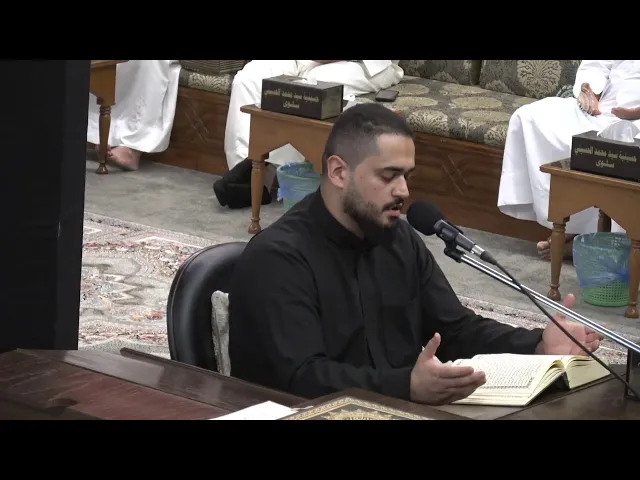
Economics of Imam Ali - (Part 1/3) - Sayed Ali Al-Qazwini || Muharram 2022
0
0
10 Bekeken·
22/08/03
Al-Rasoul Islamic Society || Halifax - Canada
Laat meer zien
Transcript
[0:00]foreign [Music] [Music] [Music] [Music] me [Music] [Music] [Music] respected brothers and
[1:07]sisters please illuminate your hearts and minds throughout history human beings have
[1:27]tried a variety of economic systems and economic orders to arrange the
[1:35]economic life of the human being you find from hundreds of years
[1:43]ago a concept known as feudalism existed right where all kinds of
[1:47]peasants and servants would serve on the lord they would have to
[1:51]pay their taxes and it was a society in which a very
[1:58]tiny minority held an incredible amount of wealth you find people have
[2:06]experimented with other kinds of economic theories you find for example especially
[2:12]on the east communism 60 to 70 years ago was all the
[2:18]rage now theoretically communism sounds beautiful right everyone has equal access to
[2:23]the resources in any given land and you all share in the
[2:28]fruits of your labor however practically as we've seen that's not what
[2:34]happens you end up with a huge swat population starving poor destitute
[2:39]and a small minority in control of most of the wealth now
[2:46]you find in our modern contemporary nations we have a mix of
[2:51]either socialism or capitalism and some countries they steer more on the
[2:56]side of unbridled capitalism but the problem is unbridled capitalism when you
[3:02]have no checks no balances no restrictions what does that lead to
[3:05]like all the other economic theories we had mentioned before it leads
[3:09]to the incredible concentration of wealth and the hands of a few
[3:15]minority the hands of a few elites and that's obviously not what
[3:20]an ideal free and democratic society should look like the global bank
[3:27]credit suisse global wealth report this is i believe in 2020 reported
[3:33]that the top 1 of human beings around the globe the top
[3:37]1 percenters owned 45.8 percent of the world's wealth can you imagine
[3:48]one percent owns almost half of the world's wealth now clearly something's
[3:53]wrong right now normal wealth inequality is fine some people are lazy
[3:59]some people are hard workers some people are lucky some people are
[4:03]smart but however when you inequality on such a large scale where
[4:08]one percent of the global population controls almost half of the world's
[4:12]resources then clearly something is wrong the sentence the census bureau of
[4:20]the united states says that in the united states in the year
[4:24]2020 over 37.2 million people lived under the line of poverty now
[4:31]37.2 million that's almost three and a half times more than the
[4:37]population of sweden that's an incredible amount despite all the advances in
[4:42]philosophy and thinking and in economics we still have a huge proportion
[4:51]of the population living under the poverty line and according to the
[4:57]world bank two-thirds two-thirds of the world population lives on under ten
[5:04]dollars a day can you imagine you just go to a restaurant
[5:10]you place an order for two that's what twenty bucks two-thirds of
[5:14]the world's population lives under ten dollars a day and seven hundred
[5:21]million people are categorized by the world bank as extreme poverty that's
[5:28]people who make under 2.5 dollars a day can you imagine two
[5:34]that's the price of what coffee here coffee from tim horan's seven
[5:37]hundred million people around the world are making less than two point
[5:43]one five dollars a day two dollars and fifteen cents so you
[5:48]can see that clearly the world economic order has not been doing
[5:52]everyone justice from the incredible amount of wealthy that we see and
[6:01]also the incredible amounts of poverty around the globe so yes while
[6:07]things are a bit better in the west as compared to say
[6:12]the third world countries while the gdp is higher that shouldn't necessarily
[6:16]impress you why because this high gdp all economic activity and growth
[6:22]comes at a cost what's the cost highly unethical practices so you
[6:30]find historically not all but much actions comes from where from user
[6:37]interest and colonialism right with interest once you have a certain amount
[6:43]in the beginning now with colonialism you find that historically the west
[6:51]has exploited the resources of the east of africa of southern america
[6:59]incredible you find all the gold in the british reserves the central
[7:05]bank where did that come from it's not known that you know
[7:10]the lands of the uk were filled with gold they brought most
[7:15]if not all of that over from india in fact according to
[7:18]some estimates throughout the 200 the british stole over 40 trillion dollars
[7:28]in what from so yes while now their economy might be impressive
[7:33]but where did where did that originate from usury and a practice
[7:40]which is prohibited by a religion and the colonialism which is the
[7:45]exploitation of all these other nations and you find that even today
[7:49]a modern form of colonialism a contemporary form of exploitation still exists
[7:54]just look at africa there's a wonderful netflix series called rotten go
[8:00]watch the episodes on you know when you enjoy that nice chocolate
[8:04]with your tea or your coffee hershey's or nestle where does that
[8:07]chocolate come from just go go then you will be how these
[8:14]companies these western european companies how they derive and they source their
[8:20]products you would be surprised at how much exploitation how much child
[8:26]labor how much forced labor assassinations all go into funneling this business
[8:34]to this day the exploitation of gold jewelry diamonds and even water
[8:40]exists in africa some companies and i'd like to put nestle on
[8:42]the spot what they do they go they buy bodies of water
[8:47]in africa and then they charge tribes who live next to that
[8:51]lake next to that river where they've historically for hundreds if not
[8:54]thousands of years had access to that water they began charging them
[8:57]money to access that water now is this ethical is this appropriate
[9:02]yes it's a huge company contributes to the gdp of the nation
[9:08]but at what cost at the cost of human lies at the
[9:13]cost of exploitation you find throughout western companies many companies are plagued
[9:20]with forest or child labor a couple years ago when nike the
[9:25]famous shoe brand was asked if they can make a commitment to
[9:27]stop labor in their factories you know what they said now normally
[9:31]if you understand pr what you're supposed to say is yes we're
[9:33]doing our best to stop chamber we've you know taken this this
[9:38]so initiative in order to stop this you know what their response
[9:44]was they said we cannot guarantee that child labor is not used
[9:48]in our manufacturing process mean they're just strange that forced or child
[9:55]labor goes into the construction and manufacturing of our products is that
[10:02]something to be proud of definitely not muhammad you find many other
[10:18]companies for example h m gap now i know many of the
[10:23]sisters like shopping on shine right it's an online website a lot
[10:28]of these websites human rights organizations and in fact many of them
[10:35]the government of the united states and other countries have authenticated these
[10:39]reports that they are complicit in child and forced labor in fact
[10:44]the department of labor in the united states classifies 156 goods from
[10:50]77 countries in which through the manufacturing child labor and forced labor
[10:56]is involved in fact if you're no and ever since covid we've
[11:04]all promoting wearing safe if you are now more than likely forced
[11:12]labor went into the manufacturing of your mask and guess what what
[11:17]kind of forced labor from who if you were a mask most
[11:22]likely it came from forced labor from the hands of uighur muslims
[11:26]in china what did the government of china do they saw this
[11:30]huge surge in demand for mass everyone wants mass right so they
[11:35]forcibly relocated thousands and thousands and thousands of uyghur muslims from western
[11:43]china to factories on the east to manufacture sopano look freedom so
[11:53]yes maybe the west has high gdp they have huge economic growth
[11:57]the numbers seem impressive but at what costs look at all the
[12:01]unethical activities that go into constructing all this so while definitely capitalism
[12:08]no doubt is that is better than the other economic practices that
[12:11]exist and economic theories it definitely has its flaws and they were
[12:16]especially exposed during the season of covet that we had right through
[12:20]the mass through various other stuff during covid the organization known as
[12:29]oxfam estimated that the largest transfer of wealth in and not in
[12:36]a good way from march 2022 to the end of 2022 billionaires
[12:41]around the world added 3.9 trillion dollars to their pockets whereas workers
[12:48]you know the average citizen lost 3.7 trillion dollars throughout the globe
[12:56]the large wealth ever recorded in history on top of that you'll
[13:03]find even in western nations inflation is high robbing people from their
[13:07]purchasing power rent is very high the cost of simple groceries even
[13:13]like milk is very high purchasing airline tickets i mean airline tickets
[13:17]have just scott they even say within the upcoming weeks because of
[13:21]the war in ukraine wheat right used to construct bread might become
[13:27]a scarce resource wheat an essential part of a living right you
[13:32]use it to make bread might become scarce there's a huge shortage
[13:38]of labor from nurses to teachers to all kinds of employees and
[13:40]all this affects who the most the average working class right the
[13:44]average citizen thus i make the argument that we ought to have
[13:51]a we need to look at an alternative economic theory we need
[13:58]to turn our eyes toward allah and seek divine guidance through the
[14:04]economic practices and policies of imam ali peace be upon him and
[14:10]thus as we mentioned we ought to turn to divine guidance and
[14:14]seek counsel and advice through the economic policies of the governance of
[14:18]imam ali ibn abi peace be upon him and inshaallah tonight and
[14:23]then the following two nights we will be discussing the economic policies
[14:27]and the strategies employed by amir al-mu'min to improve the economy and
[14:31]combat poverty now but before that muhammad in the united states the
[14:46]way poverty is calculated by the united states government is by an
[14:52]article written by an employee for the social security administration in the
[14:56]60s and it still stands to today she was a scholar known
[15:00]as an economist molly orshansky she wrote in her article about 60
[15:07]years ago that poverty basically anyone who is under the poverty line
[15:12]is someone who can't afford a balanced nutritional diet so if someone
[15:18]is poor the way you support them is the bare minimum the
[15:20]basic amount of food that would help them have a nutritionally balanced
[15:26]and fair diet now if you look at the islamic perspective on
[15:32]poverty in islam poverty has many dimensions it's not just about food
[15:36]wide scope of dimensions and min in his economic strategies attempts to
[15:43]eradicate poverty from all the dimensions in which it exists so now
[15:50]we will be discussing a few dimensions of poverty the first is
[15:56]the deprivation of love and emotions of love and affection now maybe
[16:01]as an economist you might not think of that right you think
[16:04]of just material terms money right or rent or food but in
[16:09]islam poverty like as we said has many dimensions one of them
[16:14]being a deprivation of love and emotions there's a beautiful hadith from
[16:18]our dear mom in which he states belief what is belief if
[16:27]not for love religion simplified is simply love so a deprivation of
[16:36]love and emotions is a kind of poverty and imam ali peace
[16:40]be upon him in his strategies to combat poverty addresses even the
[16:45]deprivation of love and emotions what's a second kind of poverty a
[16:50]deprivation and lack of education that is another kind of poverty according
[16:57]to unesco 258 million students right now are out of school either
[17:03]because of poverty because of famine because of war for a myriad
[17:08]of reasons 258 million students are out of school and they estimate
[17:14]that about 750 million adults around the world are illiterate they don't
[17:20]have a basic level of proficiency when it comes to reading and
[17:25]writing so my dear brothers and sisters if you were able to
[17:28]go to school here especially if you graduated from college or pursued
[17:33]a higher degree know that you are in a tiny minority you
[17:36]are so privileged that allah blessed you with access to education for
[17:42]many people around the world they don't have access to education and
[17:45]the second dimension of poverty is what is lack of access to
[17:51]education the third dimension of poverty dear brothers and sisters is a
[17:56]lack of proper health care right they say health is wealth you
[18:01]go to any doctor's office health is wealth you might have all
[18:04]the money all the education you have but if you don't have
[18:09]health what's the point you're not able to enjoy life according to
[18:12]the world health organization around half of the globe half of the
[18:20]global population lacks access to essential medical services not even full and
[18:27]proper health care the bare minimum essential medical services dear brothers and
[18:34]sisters there are thousands of people every single year who die because
[18:39]of the fever why not because it got too high but because
[18:42]they couldn't afford to purchase the medicine they cost what two three
[18:46]dollars in some countries they're not even able to afford that and
[18:51]to this day thousands of people and i'm speaking outside of the
[18:55]west die because of the simple fever because of lack of access
[18:59]to health care according to the world economic forum 5.7 million people
[19:07]die every single year because of poor quality of their health care
[19:13]and 2.9 million people million 2.9 million people die every single year
[19:20]because of a lack thereof of health care no health care in
[19:27]their either county or their city or their government so to have
[19:31]access to health care is one of the greatest privileges and we
[19:35]should thank allah subhanahu allah for granting us health inshallah always number
[19:43]four another element of poverty is a deprivation of physical exercise according
[19:52]to the cdc obesity in the united states has reached 41 percent
[19:57]that's almost half of the population suffering from obesity and we know
[20:03]that's obesity has many comorbidities you know if you if you're if
[20:08]you are obese or nearing obese there's a higher risk of what's
[20:13]diabetes cardiac cardiovascular diseases heart disease cholesterol issues a myriad of issues
[20:19]that come with this and that's why you find within islam islam
[20:23]actually promotes engaging in sports islam is not just a religion pray
[20:27]to god no in fact rasulullah peace be upon him even mention
[20:33]specific sports that are mustahab it's recommended religiously to engage in for
[20:37]example swimming archery horseback riding these are in fact musta have to
[20:43]engage in and any other kind of physical activity or sport is
[20:48]of course recommended to stay fit and healthy number five a deprivation
[20:53]of clothing many people around the globe don't have access to clean
[20:58]proper sanitary clothing what does allah state in the holy quran when
[21:08]you come to the masjid it's all right adore yourself with nice
[21:12]clothes there's nothing wrong with that and another verse allah states o
[21:24]son of adam o mankind o woman kind we've given you clothes
[21:28]so that you protect yourself from shame and you adorn yourself number
[21:36]six a deprivation of housing how many people across the globe in
[21:42]our countries are unhoused or don't have access to proper housing according
[21:48]to cnbc over half a million people within the united states alone
[21:52]are considered to be unhoused they don't have any access to housing
[21:56]and worldwide the estimate for the unhoused is 154 million 154 million
[22:06]don't have access to proper housing so this is another element of
[22:14]poverty the hadith from imam peace be upon him states he narrates
[22:19]from rasulullah his grandfather one of the elements of happiness in a
[22:28]muslim's life is having a spacious residence right living in a nice
[22:31]spacious house however many of us either we don't have proper housing
[22:39]or as we mentioned the estimate 154 million are unhoused throughout the
[22:45]globe number seven another element of poverty and this is a typical
[22:49]one this is usually what we associate a deprivation of food what
[22:54]does the quran say has created us in order to provide for
[23:02]us however because of the injustices in our economic systems because of
[23:08]the exploitation that we discussed earlier many people are at risk of
[23:13]hunger according to the world food program 829 million people across the
[23:30]globe face food insecurity when they wake up in the morning there's
[23:35]no guarantee to them that by noon time by maggot time by
[23:39]evening time there's going to be food on the table sometimes we're
[23:43]so oblivious to your brothers and sisters right we end up spending
[23:47]and wasting so much when we don't understand how allah has privileged
[23:52]us there are people according to this estimate 829 million who have
[23:58]food insecurity so that's one element of poverty another element is a
[24:04]deprivation of transportation if you don't have a proper means of transportation
[24:08]to get around either to visit friends and family to get to
[24:11]work nine a deprivation of adornment and luxuries now you don't necessarily
[24:19]have to be rich to enjoy simple luxuries right what does allah
[24:22]state in the holy quran who has forbidden the adornment that allah
[24:30]has permitted for us so simple luxury simple adornments is something that
[24:36]we should all expect shouldn't be just a privilege of the rich
[24:38]however many of us across the globe find insecurity even in this
[24:46]issue and then the imam states there are other kinds of deprivations
[24:49]and some of these may in fact be more serious than the
[24:53]ones we mentioned one is a deprivation of political and economic security
[24:58]you find in many countries for example lebanon there's severe economic insecurity
[25:04]what i've been told especially in the south there are days in
[25:08]which the gas station does not refuel a whole week goes by
[25:14]no gas weeks go by without food if not for many people
[25:17]in the south having farms and agriculture many of them would starve
[25:21]to death so this is an important element of poverty number two
[25:26]primary and secondary rights if you're deprived of your rights this is
[25:29]a form of poverty according to islam now what are some examples
[25:33]the right to travel freedom of expression freedom of religion the freedom
[25:41]to own property the freedom to invest all kinds of freedoms a
[25:45]deprivation of these freedoms according to islam is a deprivation that amounts
[25:51]to poverty another form and this is a very serious one my
[25:55]dear brothers and sisters a deprivation of intellectual engagement and correct and
[26:00]proper belief we believe that without proper aqedah proper creed that person
[26:08]is a person in poverty you could be the biggest billionaire but
[26:12]if you don't know your stature where you came from where you
[26:17]are and where you are going according to the hadith of and
[26:19]your relationship with your lord your poverty all these billions in the
[26:24]achara what are they going to provide for you how are they
[26:26]going to benefit you not at all and lastly economic and political
[26:31]independence right self-sovereignty is something every nation every people strive towards now
[26:38]inshallah we will begin discussing the actual and economic policies that the
[26:45]imam would exhibit during his governance his four years and inshallah we
[26:50]will be discussing tonight and tomorrow 10 of them we will discuss
[26:53]a few tonight and we will carry on tomorrow before that muhammad
[27:07]number one dear brothers and sisters a key trait of the governance
[27:13]of amir al-mu'min his economic policies and also a key feature of
[27:18]islam is that all land all public land and all public resources
[27:23]and minerals are not to be owned by the government this is
[27:27]something i think no government on this earth today does what do
[27:32]governments do they own all the land they own all the resources
[27:34]if you want to share you have to purchase it from the
[27:39]government this leads to incredible poverty my dear brothers and sisters in
[27:43]the reign of amir al-mu'min you don't have to ask for permission
[27:49]or purchase plots of land or resources from the government the land
[27:52]as the hadith states is for allah land is for allah and
[28:00]whoever develops it if you see a plot of land not taken
[28:05]up by anyone else you can go claim it and build a
[28:07]house start a farm build a factory start your business whatever you'd
[28:10]like you can develop it and you'll become the owner unfortunately governments
[28:16]these days they've allocated all these resources to themselves and they've deprived
[28:21]their own populations from access to these resources imagine if you have
[28:27]a small house you're stuck in a small apartment during the reign
[28:30]of amir momen all you had to do is go a little
[28:33]bit on the outskirts of the city find any plot of land
[28:35]that was not already occupied by someone else and you could claim
[28:39]it you could start building you could expand your house you could
[28:42]start a farm agriculture you could do whatever you'd like if there's
[28:47]trees there's wood there's precious stone there's gold there's jewelry water any
[28:52]kind of resource was open to the public it's not a commodity
[28:57]to be owned and controlled by the government within the premises of
[29:02]islam this is a key feature that i believe not a single
[29:06]country on earth today applies and this is a key feature of
[29:10]islam in fact slight attempts at doing this within the united states
[29:25]have been attempted how so you find abraham lincoln signed the homestead
[29:32]act of 1862.
[29:34]now what is this act this act was even drafted because they
[29:40]saw many people would come to the united states they would immigrate
[29:42]from other lands or the children of immigrants they didn't have enough
[29:46]land to start their own lives start their own families so what
[29:50]was this act any citizen could come to the government you would
[29:54]have to apply for a permit i mean there's a small fee
[29:59]involved you would be given four free 160 acres of land to
[30:02]do whatever you like you can start your own plantation your own
[30:06]farm you could build a house as large as you'd like you
[30:09]could have a backyard as large as you'd like 160 acres of
[30:16]land and across 150 years 4 million people have applied into this
[30:18]program and what they've gotten land they became homeowners they didn't have
[30:24]to rely on the government on relatives on other people on charity
[30:28]so this was one ingenious way to uplift the population and reduce
[30:35]poverty but guess what this was implemented in 1862 islam and the
[30:39]governance of amir al-mu'min had this implemented over a thousand years ago
[30:45]you find another feature of the governance of amir nominee was that
[30:50]everyone all citizens had equal and free access to public spaces anyone
[30:55]could go in any public space and open any kind of business
[31:00]sell anything you'd like the market was open for everyone yes maybe
[31:06]the government in order to you know stop chaos and promote order
[31:10]they could say that you have to get a permit there are
[31:14]some regulations that's fine but the problem is that in many countries
[31:17]these permits regulations have gone so complex you have to go so
[31:23]so many bureaucratic layers that it's almost impossible to start a business
[31:26]it's almost impossible to do your work some countries it takes months
[31:32]and months to register your business with the government and it's very
[31:35]expensive you have to pay all these fees you have to hire
[31:38]a lawyer during the reign of nominee you just get a cart
[31:40]you sit in the market someone you just sit somewhere where no
[31:44]one else has sat and you can sell free and open access
[31:48]to all public spaces on the market and in fact one of
[31:52]the reasons why the arrow springs started was why a young tunisian
[31:56]man by the name of muhammad abu aziz this poor man he
[32:02]was a very poor man he would have a vegetable cart and
[32:05]sell vegetables on the street he tried applying for a permit the
[32:09]police over there unfortunately they want what bribes and he's a poor
[32:14]man he can't afford the bribes so he would just go nonetheless
[32:16]and sell his merchandise the police would come and harass him day
[32:21]after day after day he finally had enough and what did he
[32:24]do he committed an act of self-immolation on the street in front
[32:29]of people he burned himself alive why out of frustration they wouldn't
[32:33]let him work he's not begging for anyone he doesn't want charity
[32:37]he doesn't want anything all he wants to do is just work
[32:39]yet the government made it so complex he was so frustrated he
[32:43]had no other resort than to burn himself alive self-immolation now you
[32:47]find this would never happen within the government of imam ali why
[32:51]because of the policy we mentioned free and open access to all
[32:57]public spaces now once you combine this with free access to all
[33:02]resources and land you find people would have numerous economic opportunities if
[33:06]you can find any land that's unsettled by anyone else and claim
[33:10]that for yourself and develop it and then you can go to
[33:13]the market and find any public space not claimed by anyone and
[33:16]sell whatever you'd like millions of people would find numerous economic opportunities
[33:29]number two a central tenet of the governance and economic policies of
[33:36]amir al-mu'min was an emphasis on development and not on taxes right
[33:41]they say there's only two things certain in life death and taxes
[33:46]right they say al capone if you've heard of al capone the
[33:50]gangster in chicago right i mean this guy was involved in assassinations
[33:54]right during prohibition he would illegally sell liquor i mean all every
[34:00]single you know threatening people black male every single bad deed in
[34:05]the book he was guilty yeah why did he end up going
[34:07]to prison tax evasion right so even a gangster like that you
[34:13]you know you can mess with anyone you want just don't mex
[34:16]with the tax guy the irs in the united states has over
[34:25]75 000 employees now each one of these 75 000 what's their
[34:29]job to get your money right 75 000 employees in the reign
[34:33]of imam ali the imam tells his governors don't focus so much
[34:38]on taxes focus on developing the land promoting and stimulating economic growth
[34:42]why because when you burden people with taxes what happens taxes affect
[34:48]who the most the wealthy well i mean even if they pay
[34:52]a share of taxes they still have a lot left right it's
[34:55]small farmers small businessmen the average worker that are most affected by
[34:59]taxes correct when you burden them with taxes what happens their purchasing
[35:06]power goes down they're able to invest less in their lives and
[35:10]as a result you have less overall economic activity in fact a
[35:18]technique to reduce the effects and severity of a recession in contemporary
[35:22]times is to what lower taxes so imam ali in his letter
[35:28]to his various governors he says in times of drought when crops
[35:31]are not growing in times of disease and times of famine don't
[35:35]collect taxes from people let them rebuild themselves let them grow and
[35:39]then in later years when they're financially capable they will they will
[35:43]gladly pay their taxes to you right that's how you win the
[35:48]hearts and minds of people you find lowering taxes at least in
[35:53]the united states is always a what a campaign promise as soon
[35:55]as i come as soon as i'm elected i'll lower your taxes
[35:59]but the reality that's not the case there's so much emphasis on
[36:05]taxes in islam there are taxes but there's a major difference between
[36:09]the system of taxes in islam and the system of taxes in
[36:14]the west this is the difference in islam taxes are charged upon
[36:20]profits whereas in the west taxes are charged upon consumption and this
[36:25]makes all the difference so in islam you have zakat you have
[36:30]homs there is a land tax but however it's primarily based on
[36:32]whatever profits you have you don't find a phenomenon that you see
[36:36]in the west where people have to go into credit card debt
[36:38]to pay their taxes and islam if you're poor you don't have
[36:43]any surplus income you don't pay any taxes whereas here taxes are
[36:47]charged on consumption you have a sales tax and i hear and
[36:49]what i've heard here in nova scotia it's very high right it's
[36:53]like 15 percent so even if you're poor you're among the you
[36:56]know poorest levels of society you want to just go buy simple
[37:01]items at the grocery store right you have to pay a 15
[37:02]percent sales tax there's income tax there's even something known as the
[37:07]inheritance tax in islam there's no such thing just to pass your
[37:13]money down to your children you don't have to pay any taxes
[37:32]so you find for example in the united states there's a big
[37:36]heavy emphasis on collecting taxes from people right even al capone couldn't
[37:40]right evade the tax man but you find development and infrastructure is
[37:45]very bad according to the american society of civil engineers over 46
[37:52]of us roads are in terrible shape in bad or terrible shape
[37:57]over 46 000 bridges and by the way this is all the
[38:02]united states alone 46 000 bridges are in need of repair forty
[38:06]six thousand the water systems in the united states because of poor
[38:12]quality lose the equivalence of ninety thousand swimming pools a day fresh
[38:18]clean water 90 000 swimming pools allah how many gallons or liters
[38:24]that is every single day because of the poor quality of the
[38:27]sewer system right of the water pipes if you focus on development
[38:34]first and then taxes not only will you in the end get
[38:39]what you want through increased economic activity you will get your taxes
[38:43]you will win the hearts and minds of your people of your
[38:47]nation and number three a key tenant of the feature of the
[38:54]economic features of the policies of imam ali is lowering and lessening
[38:59]government spending because every single cent and every single dollar adds up
[39:04]look at the extent to which wants to lower the burden on
[39:09]his people there's a story in which he was in his office
[39:11]he was in his study area he was doing some government-related issues
[39:15]it was at night so he had a candlelit two companions came
[39:19]to discuss some issues with him they wanted to complain that you're
[39:23]not giving us enough money so as soon as they walked in
[39:25]he asked them are you here on official business government related business
[39:29]or do you have a personal matter with me they said oh
[39:33]ali no it's a personal matter so then he said okay wait
[39:36]a second he went he turned off the candle he brought another
[39:39]candor a lamp and he lit that one instead so these guys
[39:41]they're like what did you just do you just turned off a
[39:44]candle and then lit another one he said well the reason is
[39:49]that first calendar that first candle belonged to the muslim treasury it's
[39:54]not mine and why was i using that one because i was
[39:57]doing some official business related to the government but you guys when
[40:00]you told me you have personal business with me that means what
[40:04]i am not allowed even to use a candle i mean how
[40:07]much the wax i would have burnt in those couple minutes how
[40:09]much would that i mean how many cents would that have been
[40:12]nothing but emil minion is attentive to the money of the people
[40:15]even to such an extent that he would go turn off the
[40:19]candle and light his own personal candle because it's not a government
[40:23]issue it's a issue of personal affairs you find a hadith in
[40:29]which he tells his governors and the civil servants in his government
[40:33]when you write letters between governors to your people leave no gap
[40:41]between the lines why so that you waste less paper allah like
[40:45]but even to that extent and he says don't write on and
[40:48]on and on get to the point so you don't waste much
[40:51]ink and much paper even to this small extent amir minin was
[40:55]concerned that his government should not waste the money of the people
[41:00]and look at how much our governments right they spend and we
[41:06]don't even sometimes there's a given budget but then so much is
[41:10]just lost because of what mismanagement you find rasulullah peace be upon
[41:19]him after fatih after the conquest of mecca he was now the
[41:22]de facto ruler of mecca so he assigned a governor by the
[41:27]name of atab as the ruler of mecca i mean this is
[41:29]the land where these people tried to murder rasulallah right for years
[41:33]they would bother him we spoke on the first night of the
[41:36]economic sanctions on rasulullah they tried to assassinate him numerous times when
[41:39]he moved to medina how many wars were waged you'd think he'd
[41:42]want to tighten his grip and control over this land right he
[41:47]assigned one governor by the name of attab and he assigned them
[41:48]two assistants so that's enough in order for you to rule over
[41:56]mecca it's just you and these two assistants when he was the
[41:59]ruler in kufwa and he ruled a kingdom spanning 54 countries if
[42:03]you look at the map today 54 countries so this is a
[42:12]man of severe importance he offer he neglected he rejected any offer
[42:16]for bodyguards he said no this is not an expense that i
[42:20]think is necessary for the people to take on for the muslim
[42:22]treasury and you find in our countries especially right back home you
[42:28]know the the smallest civil servant goes out and there's 20 mercedes
[42:32]following him right is this a proper allocation of the resources of
[42:37]the people definitely not and the khalifa at the time one of
[42:43]the greatest rulers he said i don't even need a single bodyguard
[42:45]well firstly it's because who is he this is right the line
[42:52]of allah but secondly it's because even in such a matter the
[42:57]imam wanted to make sure he doesn't waste the money of the
[43:02]people another way to lessen the burden on the people and on
[43:07]the treasury this is a unique feature that i have not seen
[43:09]and i could be wrong of the governance of imam ali what
[43:14]is it that's all governors should work they should not subsist off
[43:19]the muslim treasury or off the government reserves all governors should work
[43:25]it said that salman who was appointed by the second caliph he
[43:30]would weave palm trees he would not take a single dirham a
[43:33]single cent from the muslim treasury so how would he live he
[43:36]would weave palm trees and he would sell that in the market
[43:38]a very simple and humble living so once when news of this
[43:43]reached the second caliph he rebuked him he said what is this
[43:49]that's not fitting you're my governor you should you know have a
[43:52]nice mansion you should have guards around you you should wear nice
[43:54]clothes you shouldn't be doing this so salman sent a very beautiful
[44:01]letter to the second caliph but before that allah this letter is
[44:18]actually narrated in nigel balaga and i'll read a short excerpt from
[44:23]it so he says as for what you have mentioned the fact
[44:26]that it's embarrassing that i a governor that you have appointed live
[44:30]off my own hands that i weave palm tree leaves and eat
[44:35]barley he doesn't eat meat he doesn't eat chicken the fanciest and
[44:40]most exotic of foods and drinks he eats barley right the simplest
[44:43]and cheapest staple then you know that these two are not grounds
[44:47]for shaming a believer and rebuking him you shouldn't shame a believer
[44:50]for doing this why i swear by allah that weaving palm trees
[44:57]and eating barley instead of eating expensive food and drinking expensive drinks
[45:01]and instead of stealing the rights of a believer right from when
[45:04]you spend from the muslim treasure you're stealing the rights of another
[45:10]believer and making claims to one that one has no right to
[45:12]is better and more beloved to the almighty allah when he and
[45:18]is closer to piety closer to taqwa indeed i saw that the
[45:23]messenger of allah rasulullah peace be upon him when he had some
[45:26]barley he would eat from it and be satisfied and he would
[45:29]not be irritated and thus i learned from rasulullah to eat barley
[45:32]and have a very simple substance i don't take money from the
[45:39]treasury we have a hadith in which prophet david was conversing with
[45:43]allah prophet david had a huge kingdom right all kinds of servants
[45:46]and wealth under his hands allah told prophet david ya dawud you're
[45:51]a very good servant i love you you enact my orders to
[45:57]the t but you have one problem that problem is that you
[46:02]live off of the treasury off of the money of the people
[46:03]that's how you gain your income and so dawud after hearing that
[46:09]it said for 40 days and nights he would cry and he
[46:11]would weep until after 40 days allah subhanahu ta'ala taught through an
[46:16]angel he taught dawah the art of making armor with silver he
[46:20]started making armor with silver and iron and that's how he made
[46:25]his living and ever since that day prophet dawud would not touch
[46:28]the reserves of his nation the goal of a governor of a
[46:33]ruler of anyone in government should not be to be rich that's
[46:36]not the goal the goal is to serve people and in the
[46:38]governance of amir al-mu'min that even meant not even taking an income
[46:44]from the government reserves you should have your own income and also
[46:49]another difference between when imam ali and his government he would cut
[46:52]back on spending and the way contemporary nations cut back on spending
[46:56]is that you find modern nations when they cut back on spending
[46:59]what do they really mean they really mean we're going to cut
[47:03]back on essential services services that benefit people like what health care
[47:07]infrastructure education whereas imam ali when he cuts spending of the government
[47:14]it's for the benefit of the people that's a big difference between
[47:17]the governance of imam ali and the government of modern government and
[47:23]the government of modern nations so you find modern nations when they
[47:29]cut back on spending what do they use that money for instead
[47:32]the united states every single year sends 3.8 billion dollars in foreign
[47:38]eight to israel an apartheid state which oppresses the palestinians 3.8 billion
[47:46]dollars that's where the money of the people goes supporting an apartheid
[47:52]state another unfortunate feature of many modern nations is the arms race
[47:58]right they're all competing to have a better military and what are
[48:01]the amounts that they spend on these arms races incredible amounts according
[48:05]to one estimate in 2021 last year total worldwide military expenditure exceeded
[48:15]2.1 trillion dollars now what's the point of weapons killing people right
[48:24]waging war the united states alone spends more than the next 10
[48:29]countries combined the united states and the year 2020 spent 778 billion
[48:34]dollars on the military the united states has 750 foreign bases in
[48:40]77 different countries and let me ask i think we should all
[48:43]ask this question why to keep peace do you really need to
[48:46]spend that much more than the next 10 countries combined or are
[48:50]you trying to bully the world and enforce your order and your
[48:54]desires and your commands on the rest of the world 778 billion
[48:57]dollars that's an insane amount for reference according to the international institute
[49:03]for sustainable development they had research done between them the international food
[49:09]policy research and the university of cornell they found that by the
[49:16]year 2030 all it takes is 330 billion dollars to solve world
[49:22]hunger can you imagine throughout now till 2030 all it takes is
[49:26]300 that's less than half the amount the united spends the united
[49:31]states spends every single year on the military instead of spending the
[49:35]money where it needs to go to help the people uplift people
[49:36]out of poverty hunger it goes on spending weapons and increasing the
[49:43]military industrial complex and the situation is not so different in our
[49:48]countries back home saudi arabia is the country that spends the largest
[49:54]amounts on military per gdp as a ratio of their entire economy
[50:03]they're the country that spends the most in the world about 8.6
[50:07]of their gdp is spent on acquiring military weapons that's about a
[50:13]tenth of their whole economy now what do they want to do
[50:16]with those weapons they try to curb dissent anyone that speaks out
[50:20]allah every allah but every couple weeks we hear there's been a
[50:25]mass execution they've killed people they try to curb descent they try
[50:29]to quell rebellions like they did in bahrain and they use those
[50:34]weapons to kill innocent civilians men women and children in countries like
[50:39]yemen there was once a story that really breaks your hearts a
[50:45]bomb fell on a school bus that killed 102 yemeni children going
[50:49]on their way to school who was the pilot a saudi man
[50:54]and the bomb was produced by who manufactured by who the united
[51:00]states in fact the united states and france are the two largest
[51:04]suppliers of arms to saudi arabia and when you supply a country
[51:08]like saudi arabia you think they can use it to promote democracy
[51:11]freedom security they're going to use it for these unethical purposes inshallah
[51:16]tomorrow we will be discussing seven more features of the economic policies
[51:22]of imam ali's governance including social security and various other aspects muhammad
[51:37]dear brothers and sisters tonight we remember a figure dear on all
[51:42]of our hearts and that figure is muslim is was the one
[51:57]that raised him was the one that taught him everything he knew
[52:01]he was in his early 30s when imam al-hussein peace be upon
[52:08]him appointed him as his representative and he asked him to go
[52:13]to kufa and represent him there now by the way muslim had
[52:16]four children and all of them were martyred for the sake of
[52:22]abba abdullah two on the day of ashura and two mere days
[52:27]later so not only did he give his life he gave all
[52:29]that he had his four children for the sake of abba abdullah
[52:32]his cousin and his imam so muslim heads before the caravan he
[52:41]proceeds before the caravan of abba abdullah and he goes to kufa
[52:46]why to make sure to garner the support of the kuffins and
[52:49]prepare the city for the arrival of his imam the report state
[52:55]that when he arrived to the city of kufa over 18 000
[53:01]people welcomed him so he goes to the masjid he begins praying
[53:04]thousands of people behind him but as he starts praying ibn ziyad
[53:12]the ruler of the city of kufa spreads fear he starts threatening
[53:15]everybody who tries to assist muslim and he promises those that stick
[53:23]with him immense rewards so what happens look at how this dunya
[53:27]sways people he starts the prayer with thousands of people behind him
[53:30]but when he concludes his prayer and looks back the report state
[53:33]not a single person was behind him so muslim he's in a
[53:41]strange land unfamiliar land he doesn't know where to go he starts
[53:43]walk wandering through the alleyways of kufa until he finally settles on
[53:50]a door he knocks on the door an old lady by the
[53:52]name of tawa opens she says oh man why did you knock
[53:56]on my door he says do you mind if i get a
[53:59]cup of water he's thirsty he doesn't know where to go the
[54:03]people who have invited him and invited abba abdullah abandoned him on
[54:06]the first day so she goes gets him a cup of water
[54:13]he begins to drink a few minutes later she comes by the
[54:18]door she sees the same man as again here she said oh
[54:21]man did i give you a cup of water why don't you
[54:24]leave he says i'm a strange man i don't have any family
[54:33]any tribe here she says who are you where did you come
[54:35]from he says my name is muslim and i am the representative
[54:41]of abba abdullah she says you're muslim we've been waiting for you
[54:45]why is everyone not celebrating he says the people have abandoned me
[54:49]so she's shocked and this lady she was a believer so she
[54:54]says come into my house i invite you to come so the
[54:58]hours pass nightfall arrives though i notice is that he hasn't been
[55:01]sleeping so fajr time approaches she brings them some water she says
[55:08]oh muslim i just have a question why didn't you sleep muslim
[55:12]says earlier in the night i took a nap and i realized
[55:15]that this would be my final night she says how he says
[55:19]in my short nap i saw my uncle i saw my uncle
[55:26]and he says hurry to us my nephew hurry to us and
[55:31]so he said i realize tonight is my final night though i
[55:36]had a son a young son this man unfortunately was swayed by
[55:40]the desires of this life he had heard that ibn ziyad placed
[55:45]a reward on whoever would offer information on the whereabouts of muslim
[55:49]so he goes at night and he informs the palace morning comes
[55:53]and 300 armed guards stand outside the house of tawa now tawa
[55:58]sees that and she insists that muslims stay in my house he
[56:02]says no i can't do that because if i stay in your
[56:03]house they're going to burn your house down so he wears his
[56:10]armor he draws his sword and he goes outside and he starts
[56:12]fighting like a lion they start fighting him but the problem is
[56:16]these cowards these enemies they can't fight the nephew of alibnabi so
[56:20]what do they do they start throwing arrows at him they start
[56:25]throwing spears at him they even start picking up rocks to throw
[56:30]at him after much fighting he gets tired an enemy approaches he
[56:33]gets close and he cuts his upper lip the blessed lip of
[56:38]muslim now muslim begins crying the enemies they look at that and
[56:42]they start mocking him you're the nephew of alib the line of
[56:45]allah and you're crying he says i'm not crying because of the
[56:47]pain of my lip the reason i'm crying is that i'm seeing
[56:50]the way you treated and abandoned me how are you going to
[56:56]treat my cousin and my imam if this is how you are
[57:01]treating me how are you going to treat him now they start
[57:03]fighting him until he gets wary they overcome him they overpower him
[57:08]and they take him to the palace of abin ziyad they take
[57:12]him to the roof ibn ziyad asks him he says do you
[57:16]have any final wishes he says yes i'd like to offer a
[57:20]tour prayer look he knows this is his final moments and all
[57:22]he can think of is his relationship with allah he offers a
[57:27]torah a prayer after the prayer they say do you need anything
[57:31]else he says yes i'm very thirsty the heat and the armor
[57:36]has exhausted me they bring him a bowl of water he's about
[57:39]to drink but his lip was bleeding and the blood falls in
[57:43]the bowl he says can i have another cup of water they
[57:47]bring him another he's about to drink he's about to drink but
[57:53]another drop of blood falls and soils the water he asks them
[57:55]a third time can you bring me another cup they bring him
[57:59]a third cup and just like the first two he's about to
[58:03]drink and his blood his holy blood spills into the water it's
[58:06]as if allah was giving him a sign you should not drink
[58:09]that you should die thirsty just like your cousin so before they
[58:16]execute him he looks towards hijaz he looks toward the land from
[58:20]which abba abdullah is approaching he yells [Music] his only regret is
[58:36]what this is what he says holy i can warn you not
[58:40]to come to kufa these men have abandoned a man oh the
[58:45]only thing that is waiting is the sword and the spirit and
[58:47]then my dear brothers and sisters [Music] and they threw streets [Music]
[60:06][Laughter] as of today call me your father and my daughters are
[60:21]your sisters foreign [Music] [Music]
0 Comments
sort Sorteer op
- Top Reacties
- Laatste Reacties
Volgende
6 Bekeken · 23/07/21
5 Bekeken · 23/07/22
3 Bekeken · 23/07/24
5 Bekeken · 23/07/25
7 Bekeken · 25/12/01
2 Bekeken · 26/03/04
9 Bekeken · 14/09/23