التالي
0 المشاهدات · 26/02/21
0 المشاهدات · 26/02/25
2 المشاهدات · 24/07/17
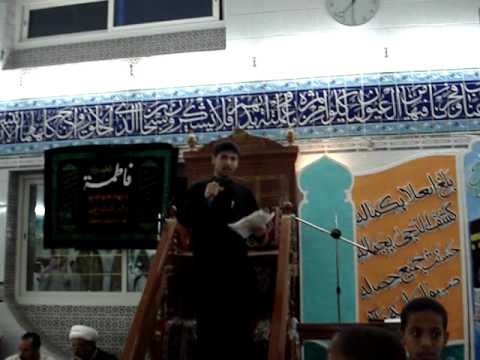
Choosing the Right Friends - Sayed Ahmed Qazwini | Night 7 - 2026 MYC Ramadan Program
0
0
4 المشاهدات·
26/02/25
في
محاضرات
Topic: Choosing The Right Friends Speaker: Sayed Ahmed Qazwini Program: Night 7 of the 2026 MYC Ramadan Program Location: Islamic Institute of America - Dearborn Heights, MI, USA #islam #shia #muslim #sunni #ramadan #ramadankareem #ramadanmubarak #hijab #lecture #shahrramadan #eid #qazwini #prophetmuhammad #devil #sins #deeds #quarantine #myc #mycmedia #levels #shiavssunni #islamicfigure #hijab #porphetmuhammad #muhammad #fast #fasting #ethics #venting #complaining #mentalhealth #abuhamza #dua #duaabuhamza #friends
أظهر المزيد
Transcript
[0:10]Blessman.
[0:22][sighs] Alhamdulillah.
[0:50]Respected brothers and sisters, We often think that it is we, it
[1:32]is me who shapes my future through my decisions that I take,
[1:39]through my sacrifices, my efforts, my education and my planning.
[1:48]It is through these efforts and decisions that I shape my future.
[1:56]But the reality is But the reality is my friends that there
[2:03]are people in our lives who are constantly shaping our future and
[2:10]we don't even know it and we don't even realize it.
[2:15]They shape how you think.
[2:19]They shape your standards, your understanding of what's right and wrong, what
[2:27]means, what it means to you to be normal, what is normal,
[2:33]what is harmless, what is serious, what do all these notions mean?
[2:40]There are individuals that are actually shaping my thoughts and my understanding
[2:48]of my standards and values.
[2:50]And I'm not talking about Hollywood.
[2:54]I'm not talking about the Illuminati, Hollywood, or all these invisible forces
[2:59]that are there, but we can't see them, but they do have
[3:03]influence.
[3:04]No, I'm speaking about the most visible people in our lives.
[3:12]people that we meet every single day, people that we love spend
[3:15]to spend time with and that is our friends.
[3:20]Our friends, my dear brothers and sisters, they are one of the
[3:29]biggest factors that shape our standards and what we accept and refuse,
[3:34]what we consider as moral and immoral.
[3:37]are friends.
[3:40]You see your friends, the circle of friends that you hang out
[3:47]with, they can influence you in two ways.
[3:49]The first way that they can influence you, and this is for
[3:53]all ages, by the way.
[3:53]When we talk about friends, many times we think this is a
[3:59]lecture for the kids.
[3:58]No, this is for everyone.
[4:02]By friends, we mean the people that you spend time with, your
[4:06]environment.
[4:07]So this applies to all human beings.
[4:10]Even if I'm an old man because this is human nature.
[4:13]Our friends influence us in two ways.
[4:16]The first way is through peer pressure.
[4:20]And I'm sure every single one of you knows what that is
[4:25]and maybe you have experienced it on either end.
[4:29]When our friends influence us through peer pressure, they don't change our
[4:36]thought, our belief.
[4:38]When they pressure me into smoking, for example, into drinking, I usually
[4:45]I still believe that this is wrong.
[4:49]Something inside me knows this is bad.
[4:52]But yet I reluctantly accept.
[4:57]Why?
[4:56]Because I want approval.
[4:58]because I want to fit in.
[5:00]So I end up doing what they do.
[5:06]I'm influenced but only my actions are influenced, not my mind.
[5:10]I still leave that gathering knowing what I did was wrong.
[5:14]It was only my acts.
[5:17]And this has many types and forms.
[5:23]Like I said at school for teenagers there will be this type
[5:28]of peer pressure to smoke to drink to party to have a
[5:32]boyfriend or a girl girlfriend when there is a prom right I
[5:39]may know that this is not right but how does that make
[5:41]me look if I don't have someone to take to Valentine's if
[5:47]they ask me who are you taking to the prom and I
[5:51]tell them I'm not doing.
[5:51]I know I'm not supposed to go and this is haram and
[5:56]I'm supposed to stay away from it, but to fit in and
[5:57]to be validated and accepted, I just go with the flow.
[6:04]But my heart still knows, my mind still realizes that that this
[6:09]is wrong.
[6:09]Once you grow older, there's other examples that you will notice peer
[6:14]pressure.
[6:16]Pure pressure [clears throat] when it comes to our jobs and work.
[6:20]I see some youth, some younger people in their 20s, they are
[6:29]workaholics.
[6:29]And when you try to see why they work so long, what's
[6:32]wrong with you?
[6:34]You're only 20 years old.
[6:35]Why are you working 12 hours a day?
[6:37]What's the big deal?
[6:39]You don't You're not married.
[6:40]You don't have anybody to sustain.
[6:42]And usually they end up wasting their money on things that aren't
[6:45]even important.
[6:46]They go and buy designer clothes, spend it all in one trip
[6:50]to the mall.
[6:53]Why?
[6:54]Sometimes there is that peer pressure.
[6:57]Meaning everybody else in his circle of friends is a workaholic.
[7:00]And if I don't become a workaholic like them, that makes me
[7:08]feel what?
[7:06]Like an outcast, like a loser, someone who's lazy.
[7:11]So that's one type of peer pressure.
[7:14]Subhan Allah.
[7:16]Even with religious people, you know, there is peer pressure.
[7:19]And I'm talking about negative peer pressure.
[7:22]Even with religious people, for example, I've noticed this is everywhere.
[7:27]I'm not talking about this specific community.
[7:31]Everywhere.
[7:30]This is human nature.
[7:34]Sometimes you will find yourself attending a masjid.
[7:37]Not because this is where you benefit.
[7:42]Not because this is where you feel spiritual.
[7:46]Not because you're convinced this is what a masjid should offer.
[7:52]You do it because of peer pressure.
[7:54]Because all my other friends, the people I hang out with, go
[8:00]to this masjid.
[7:59]And if I don't go to this masjid, I will be alienated.
[8:05]They'll start bullying me.
[8:06]Oh, you're going to that other masjid now.
[8:09]You're from that person's cult or whatever.
[8:15]And I find myself leaving where the place where I know serves
[8:21]me and my soul because there are bullies in the community, religious
[8:26]bullies that will bully me from attending that place.
[8:29]There are individuals who will bully you.
[8:33]peer pressure even when it comes to choosing your Anna.
[8:38]Personally, I'm convinced I should mar I should follow X.
[8:43]But my friends, if they know I follow X, they'll bully me.
[8:49]They'll start making fun of me or they'll start discouraging me even
[8:53]though they don't have any they don't have any substance.
[8:57]They don't have any arguments.
[8:58]It's just because this is how we were raised.
[9:02]this is the cool merger whatever it may be.
[9:04]So I am pressured into following one that I'm not convinced is
[9:08]the that I should be following simply because of the environment.
[9:16]The environment my friends pressure me.
[9:19]This is all examples of peer pressure, negative peer pressure.
[9:22]And this type of peer pressure you will always face it throughout
[9:25]your life.
[9:26]It'll change.
[9:28]Like I said in school it's in one type when you start
[9:30]working it turns into another type but even when you become an
[9:36]older person in the community you will realize that peer pressure will
[9:41]always exist.
[9:41]There are parents I know brothers and sisters who decline their daughters
[9:46]marrying another person who's Muslim who's Arab just like them but they're
[9:55]Arab from a different country.
[9:56]Not because they themselves are racist.
[10:00]I know them very well.
[10:04]They're not racist.
[10:03]They know that this is a good person.
[10:06]It doesn't matter you're from this country or that country.
[10:11]It's because they are afraid of peer pressure because they think what
[10:15]will my friends think when I bring my Yemeni, excuse me, this
[10:17]is just an example, my Yemeni or my Algerian son-in-law when I
[10:22]go to a Sahara.
[10:24]What will they think?
[10:28]They're bullies.
[10:27]I have seen certain girls that want to marry a convert.
[10:32]You look, you see the convert, mashallah, true convert, understands everything about
[10:39]Islam, practices Islam very well.
[10:40]But he's a convert.
[10:41]He's not Arab or sometimes he could be black.
[10:45]And I see that the father and the mother both resist.
[10:49]And they call me and they tell me, "Say, please call our
[10:52]daughter.
[10:53]she's going to come to you and discourage her from marrying that
[10:58]guy.
[10:58]Not only do they ask, sometimes they dictate.
[11:01]I have to do what parents think is right, not what I
[11:07]think is right.
[11:08]And if I try to tell them, well, brother, sister, I can't
[11:10]do this.
[11:11]This is unislamic.
[11:11]Thank you.
[11:12]They'll go to the other mosque.
[11:14]What can I do then?
[11:17]And some of these individuals may be racist.
[11:20]Some of them, no.
[11:20]Because the society may what?
[11:25]The society may stigmatize them if they have a convert son-in-law, a
[11:30]convert daughter-in-law.
[11:30]So peer pressure, brothers and sisters, exists on every level.
[11:34]You'll see so many forms of it.
[11:36]Especially when you live in a community with so many friends, so
[11:42]many people to spend time with.
[11:44]Not everything that you will end up doing is things that you
[11:47]will will believe in.
[11:50]things that you believe are right, I do it because I have
[11:55]to fit in or else I will not be accepted.
[11:59]So this is one type of influence that our friends, the environment
[12:06]will exert on us.
[12:07]Pure pressure.
[12:08]But remember your heart, your mind still realizes this is not right.
[12:13]And then there's a second type of influence that our friends engage
[12:20]in.
[12:18]And this type of influence goes much deeper and it's much more
[12:25]dangerous than the first type.
[12:27]The second type of influence is the soft influence.
[12:31]When your friends don't exert any pressure on you, however, they successfully
[12:39]are able to alter your understanding of what's right.
[12:47]They shift what you think is right, what you think is wrong.
[12:50]And then when you end up imitating what they do, you do
[12:57]it willingly.
[12:55]They don't force you anymore.
[12:58]This is much more dangerous because you don't even realize that you've
[13:06]been brainwashed.
[13:04]So you end up imitating, but you actually believe that what I'm
[13:10]doing is right.
[13:13]You actually are convinced this time because your friends normalize the process
[13:20]for you.
[13:21]When something brothers and sisters becomes too common, when you see all
[13:25]your other friends doing it, what are you going to say?
[13:29]You're not going to say Allah, I'm going to do it.
[13:30]No, you're going to say, well, if everybody else is doing it,
[13:36]then probably that's what's right to do.
[13:39]my perception of what's right and wrong starts shifting.
[13:42]Why?
[13:43]My friends didn't pressure me to do anything.
[13:46]But it's because I hang around them.
[13:52]It's because I see.
[13:53]It's because I am influenced just by being around them.
[13:58]And their habits and what they do starts influencing me indirectly.
[14:03]And that's why brothers and sisters, we human beings, we don't just
[14:09]imitate, we like to imitate others, right?
[14:13]But we don't just imitate, we absorb norms.
[14:15]Meaning the reason behind the imitation, I start being convinced of it.
[14:22]Even if it's not right, simply because I am bombarded by it.
[14:25]Simply because I am surrounded by so many friends that do this.
[14:28]I also start doing that.
[14:31]Even in the most basic things, let me give you an example.
[14:34]You see this new generation, forgive me for being a little harsh
[14:40]because it's very hard for me to understand sometimes.
[14:42]You know, teenagers of today, it's normal.
[14:45]You'll be the same thing when you grow up.
[14:51]Inshallah, sometimes I see the weirdest, strangest haircuts.
[14:55]these 15, 16, 17 year old boys, right?
[15:01]It's like they have like a a you know, a a pasta
[15:06]bowl or spaghetti bowl and they pour it on their head and
[15:10]they come to the masjid, they'll go to school, they'll go everywhere
[15:15]with that weird looking haircut.
[15:17]Now, sometimes when you talk to these youth, you realize they don't
[15:24]really like this haircut.
[15:24]They know it looks awful.
[15:26]They know that they look like a clown.
[15:29]But why do they do it?
[15:33]Because all their other friends do it.
[15:35]Pure pressure.
[15:36]They want to fit in.
[15:37]But they know this doesn't look good.
[15:39]But if this is what my friends want, then so be it.
[15:44]They submit.
[15:44]I remember they sent me a video once of a of a
[15:49]goat that had its head in like these bushes and shrubs and
[15:55]after it took it it its head out of the shrubs it
[15:57]had all these shrubs on its head and then subhan Allah I
[16:02]said this is how our youth look today and I said subhan
[16:09]allah so true so true so sometimes you will see some young
[16:12]people they will do this, but they're not convinced.
[16:16]But they do it just to fit in because everybody else, because
[16:18]all my other friends in school did it, but I don't want
[16:21]to have a nice haircut.
[16:23]I have to have that spaghetti on my head as well to
[16:27]fit in.
[16:26]But then I see some youth, and this is the dangerous part,
[16:31]who come to you with that bush on their head and they
[16:35]genuinely think that they look good.
[16:39]That's where I start worrying about our youth.
[16:43]They think they this is a nice haircut.
[16:46]And some of them they tell me say they I paid $50
[16:51]$60 for this haircut.
[16:53]I asked them, "Did you keep the receipt?
[16:56]Is there any way you can get a refund because if you
[17:00]told me up my hair, I don't know how I could do
[17:04]any worse." But they genuinely believe they look good.
[17:06]They're just looking at themselves, right, in front of the mirror and
[17:13]they think that they are the ysef of their of their time,
[17:15]right?
[17:15]They don't use brushes anymore cuz cuz it's all all over the
[17:19]place.
[17:20]How does that happen, brothers and sisters?
[17:23]That happens when your friends influence you the softer way.
[17:30]They influence your brain, your mind, how you think.
[17:35]Now, not only do you imitate what they do, now you start
[17:45]believing that what they do is good simply because everybody else is
[17:50]doing it.
[17:50]And year by year, brothers and sisters, more norms, more customs and
[17:57]more acts are becoming normalized for our youth simply because there's a
[18:02]trend and they don't want to miss out on the trend.
[18:06]You've seen some of these trends even with clothing.
[18:11]Do they all look good?
[18:11]No.
[18:12]It's just an obsession that I have to be always on top
[18:15]of these trends.
[18:17]Sometimes I will realize it doesn't look good but because it's the
[18:20]trend and other times we start believing that no this actually looks
[18:23]good.
[18:24]This is when my relationship with my friends, my circle of friends
[18:31]becomes dangerous because now they're brainwashing me.
[18:34]Now they're not just impacting my acts, they're impacting my heart and
[18:42]my beliefs and my thoughts.
[18:43]And the problem is I am in denial.
[18:46]When you tell that young guy, "Habibi, wah, your head doesn't look
[18:49]good, your haircut," he gets offended.
[18:51]He thinks you hate him.
[18:53]He thinks you're an old geyzer that doesn't know what you're talking
[18:58]about.
[18:57]No, until you're out of touch.
[19:00]So with these people, you can't even you can't even argue because
[19:04]if if it's the first type, if it's peer pressure, you can
[19:07]tell them, you know what, your friends aren't that important.
[19:10]It's not worth making yourself look bad just because you want to
[19:14]please your friends.
[19:16]But when he genuinely believes he looks good, what do you tell
[19:19]them?
[19:20]What do you tell them?
[19:21]There's nothing.
[19:23]There's no argument to have anymore.
[19:26]This is how we brothers and sisters are in the circle of
[19:34]our friends.
[19:34]There was a study that I read, very interesting study.
[19:38]Listen to this.
[19:40]It it was a study that a bunch of researchers from Harvard
[19:44]did.
[19:44]They did a study in a specific city called Framming Framington somewhere,
[19:53]not Farmington, Frammington, somewhere in the US or something like Frammington.
[19:57]It's one of the cities in the US somewhere in the Midwest.
[20:01]They wanted to study people's health.
[20:06]So there were thousands of people that participated and they tracked these
[20:11]people for over 30 years.
[20:13]to see what were the factors that affected people's health, their heart,
[20:18]their heart condition, cholesterol, blood pressure, so on and so forth.
[20:24]So in the beginning it was purely for medical purposes.
[20:26]30 years they tracked everything about their lives so that they can
[20:33]find patterns.
[20:33]But eventually they started to expand on their observations.
[20:38]What they did is when they would observe an individual, they wanted
[20:45]to see why this person for example is developing these bad habits
[20:50]such that he's having high blood pressure, he's having cholesterol, he is
[20:55]for example having heart conditions.
[20:59]Is it because of the environment?
[21:00]Is it because they did something?
[21:02]Is it because of genetics?
[21:03]So you have to look at all the factors.
[21:06]So what they did is they started to map out their circle
[21:12]of friends, every person and who he or she is friends with.
[21:15]So they could see the patterns between them and their friends.
[21:23]So each individual they knew who their network or friends was and
[21:28]they tracked that network and they observed how this network would change
[21:34]over time.
[21:36]And what they realized and discovered was amazing.
[21:40]Brothers and sisters, you know what they found?
[21:44]They found that in your circle of friends, when one person starts
[21:50]becoming unhealthy, when they start building unhealthy habits, when someone starts getting
[21:57]obese, everybody else in the circle, their likeliness of becoming obese increases.
[22:07]When just one person, two people, the more people get obese, the
[22:15]higher the chances of the people in their circle also getting obese.
[22:19]So they were like, what's going on?
[22:22]Why is obesity contagious?
[22:24]It's not.
[22:26]It's not like the corona virus, right?
[22:28]If you sit a 100red years next to someone that's obese, as
[22:32]long as you take care of your health, it's not going to
[22:35]affect you.
[22:36]So why is it that it's spreading like a contagious not disease
[22:42]but a contagious phenomenon?
[22:44]And what they found out was this that when your circle of
[22:54]friends most of them led healthy lives, you were also more likely
[22:59]to live a healthy life.
[23:01]When everybody in your circle of friends goes to the gym, eats
[23:05]healthy food, they stay away from smoking anything that's bad for your
[23:10]health, the likeliness of you also ending up that way increases.
[23:17]So both ways, good and bad.
[23:18]And when they researched more, they realized the reason.
[23:21]It wasn't because of peer pressure.
[23:24]Because in the beginning, they said maybe it's because of peer pressure,
[23:27]right?
[23:27]Because if you're in a room, everybody works out.
[23:31]You're going to feel left out if I don't work out, right?
[23:33]You're going to go to the gym just for just so people
[23:37]say, "Yeah, we saw him at the gym." You're not going to
[23:41]eat foods that are harmful, foods that are not good because of
[23:44]peer pressure.
[23:45]But they realize it's not because of peer pressure.
[23:49]And one of the proofs behind that was even when these friends
[23:52]they moved to other parts of the states but they stayed connected
[23:59]those habits they continued.
[24:01]So why was it that these individuals were so influenced by their
[24:10]circle of friends even when they were far?
[24:12]They realized the reason was because when something becomes common to you,
[24:21]it feels accepted and normal.
[24:24]When you hang out with a bunch of people and most of
[24:28]them don't care about their health, it's not that you're just going
[24:34]to automatically imitate them.
[24:36]It's worse.
[24:35]Your brain will be affected.
[24:39]your mind, you will start assuming that you know what.
[24:42]There's nothing wrong with these people.
[24:43]This is just how the dunya is.
[24:48]People get fat.
[24:48]People are lazy.
[24:52]You start justifying.
[24:52]Why did you justify?
[24:55]No one told you anything.
[24:55]No one told you don't go to the gym, eat unhealthy food.
[25:00]No one is trying to get you to become unhealthy.
[25:02]You simply deduce that because you see that your circle of friends
[25:10]are not doing this.
[25:13]And because they don't do this, then this is normal.
[25:16]This is acceptable.
[25:16]This is what how we human beings think.
[25:20]When something becomes normal within your environment, then you start accepting it.
[25:28]You start accepting it.
[25:32]This is not wrong.
[25:31]This is how human beings are.
[25:36]And subhan Allah, they went further than just health.
[25:38]They even noticed similar patterns with divorce.
[25:43]Circle of friends.
[25:43]One person gets divorced, the likelihood of the other ones, of your
[25:47]friends that are married, of them getting a divorce also shoots up.
[25:56]Now, once again, is divorce contagious?
[25:59]It's not.
[25:57]Why is it that when you as a married man or as
[26:03]a married woman hang out with divorced people, the chances of you
[26:06]getting a divorce increases?
[26:10]The reason is because when something becomes imaginable, it becomes possible.
[26:14]And when something feels possible, it's normal.
[26:21]Why should I fight to preserve my marriage?
[26:24]Imagine all your friends, no one is divorced.
[26:27]You have a problem with your wife, you have a problem with
[26:30]your husband, what are you going to say?
[26:32]Well, everybody else is married.
[26:33]They're all figuring it out.
[26:34]Let me sit down with my spouse and try to figure it
[26:37]out.
[26:37]Let me try to fix the problems between me and my wife
[26:41]and husband because that's the normal thing to do because everybody else
[26:45]is married.
[26:44]But imagine today you see your friend, your neighbor, they get a
[26:48]divorce.
[26:49]A week later, your other friend, a week later, your third friend.
[26:52]They didn't even talk to you.
[26:54]It was just between them and their spouses.
[26:57]What does your brain start telling you?
[27:00]Maybe divorce isn't so bad.
[27:01]Why should I kill myself to come and attend these boring marriage
[27:05]counseling sessions with my husband or wife?
[27:12]There's an easy way out.
[27:13]It's called divorce.
[27:16]Divorce no longer sounds or feels creepy.
[27:17]It feels normal.
[27:21]So based on the study, what they conclude is what your friends,
[27:29]the people that you surround your friend, your yourself with, what your
[27:34]friends do, even if it's not what they do with you, what
[27:36]they do in their lives has an effect on your life and
[27:41]on your values and on your standards.
[27:43]And that's why your friends, my dear brothers and sisters, are not
[27:50]just a social connection.
[27:50]Oh, it's just a social thing who I hang out with.
[27:56]No, when you choose your friends, you're essentially creating the environment.
[28:02]Good friends will create good a good environment.
[28:05]Not so good friends, not so good environment.
[28:09]So be very careful who you hang out with because you will
[28:16]most likely end up becoming like them even if you disagree what
[28:19]they with what they do but like it or not eventually they
[28:25]will shape your ideas as well.
[28:27]Now this this whole idea and concept that I said that was
[28:31]discovered recently mentioned this 1,400 years ago in a hadith Allah has
[28:42]narrated saying he says that every single one of us is upon
[28:50]the dean follows the dean of his friends.
[28:59]Then the prophet says, "Be careful who you befriend." Now what does
[29:06]this phrase mean?
[29:05]That everyone is on the dean of their friend.
[29:10]Now dean could mean religion like Muslim, Christian, Jewish, right?
[29:14]Usually you will follow the same religion of your friends.
[29:22]But by the word dean, he means much more than your religion
[29:27]that you worship.
[29:27]The god that you worship, the religion that you practice by deanoolah
[29:34]means your ideology.
[29:35]He means your thoughts.
[29:38]He means your ideals.
[29:38]that your thoughts and your ideals, your ideology will eventually become similar
[29:46]to the friends that you surround yourself with.
[29:50]So be very careful and picky and selective when it comes to
[29:57]who you hang out with.
[29:58]It's an environment, brothers and sisters.
[30:00]the friends that I hang out with that is the environment that
[30:05]will either sustain my dean my spirit or it will break my
[30:11]spirit.
[30:12]So no matter how much you spend time to discipline yourself at
[30:16]the end of the day one of the greatest factors that will
[30:20]shape you that will shape your soul is your environment and that's
[30:26]your friends.
[30:25]And even if they don't pressure you, even if they don't even
[30:31]talk to you, even if they don't try to convince you, whether
[30:34]you like it or not, you will silently become influenced by the
[30:39]acts and the habits of your friends.
[30:45]Allah used to say, "Be very careful you who you hang out
[30:49]with.
[30:50]Don't think it's just the S." No, your subconscious will pick up
[30:54]so many things from the salah and it will start shaping not
[31:00]just your acts.
[30:59]It'll start shaping your ideas.
[31:02]What you consider as good and bad, acceptable, nonacceptable, serious, harmful, harmless,
[31:09]all of that you pick up indirectly just from spending time with
[31:15]your friends.
[31:16]And because of this, brothers and sisters, because our friends shape our
[31:21]soul, your is all determined based on how pure your soul is.
[31:28]The Holy Quran says on the day of judgment, what's the criteria
[31:41]that will help you?
[31:44]How does Allah judge you?
[31:45]He judges you by your heart and by your heart.
[31:50]Allah subhanahu wa ta'ala doesn't mean this this organ the heart.
[31:53]Allah subhanahu wa ta'ala means your soul.
[31:56]Allah subhanahu wa ta'ala means your ne.
[31:59]So Allah subhanahu wa ta'ala will judge you based on how your
[32:03]soul was disciplined.
[32:05]If our friends shape that soul that will determine our we have
[32:10]to be very careful how we choose them.
[32:13]Brothers and sisters, now what does Islam tell us here?
[32:15]How do you choose your friends?
[32:17]What's the basis?
[32:20]What's the ideology?
[32:20]Islam shows us and tells us that when you hang out with
[32:25]friends, when you choose friends, don't base your friendship on how you
[32:30]feel when you're sitting with them.
[32:33]Allah, this sah makes me laugh.
[32:38]In this sah, I feel important.
[32:39]In that sah, I feel comfortable.
[32:42]And this sah for example they make me feel like I look
[32:46]very good or I can speak very good.
[32:52]Do not base it on feelings because many of these feelings could
[32:57]be misleading.
[32:58]Your friendship should be based on who can protect my soul.
[33:05]Which sah which circle of friends is better when it comes to
[33:12]protecting my soul such that on the day of judgment I can
[33:15]meet Allah subhanahu wa ta'ala with a pure soul.
[33:19]If that circle of friends helps you in shaping a good soul
[33:25]Islam says this is a good circle of friends and Allah gives
[33:28]us a very easy criteria.
[33:29]I don't need to tell you all the different details and qualities
[33:34]of a friend.
[33:34]I think this one quality, this one description of Allah explains it
[33:39]very beautifully.
[33:41]Allah in one hadith, this is how he describes a believer.
[33:46]He says, it's a very beautiful hadith.
[33:53]He says a believer, a true friend is like a mirror.
[33:58]What does that mean?
[34:00]When you go and stand in front of the mirror, what does
[34:05]the mirror do?
[34:08]Does the mirror try to flatter you?
[34:09]If there are blemishes, if your hair doesn't look so good, if
[34:16]there's something on your face, does it hide it to make you
[34:21]feel good?
[34:19]No.
[34:20]It shows you your exact you, your real version of yourself.
[34:27]Why?
[34:28]Well, isn't it harsh?
[34:28]There could be ketchup on my forehead.
[34:31]How dare you show me this harsh reality because that's who you
[34:35]are.
[34:35]It shows you your real you so that you can fix it.
[34:41]You'll never see a mirror.
[34:41]In fact, if you see a mirror that's skewing you, you're not
[34:46]going to like this mirror.
[34:47]No, it's making me look different, too fat, too thin, whatever it
[34:51]is.
[34:52]It doesn't apply any filters.
[34:52]It shows you your real self so that you can fix yourself.
[34:59]That's why we look at the mirror.
[35:00]A mirror shows me my flaws.
[35:01]So I can fix my flaws before I leave my house.
[35:08]Correct.
[35:07]What a beautiful analogy.
[35:10]He says a believer, the one that you want to befriend is
[35:16]like a mirror.
[35:17]He doesn't flatter you.
[35:21]She doesn't just want to make you feel good.
[35:25]If there are flaws in you, they will point out your flaws
[35:28]so you can fix them.
[35:30]How beautiful is this description from Rasool Allah?
[35:34]It may not feel good when my friend comes and tells me
[35:40]that you know what maybe that joke wasn't very nice.
[35:44]Maybe the sentence, this comment that you made may have been you
[35:50]shouldn't have said it.
[35:51]Does that make me feel good?
[35:52]No.
[35:52]I want people to laugh when I say jokes.
[35:55]But your friend isn't there just to laugh like a clown and
[36:00]make you feel good.
[35:59]That's not a true friend.
[36:02]A true friend is the one when they see a flaw, they'll
[36:04]point it out so that they can guide you to fixing that
[36:12]flaw.
[36:12]This is what I im Ali in what is a friend called?
[36:18]What does it sound like?
[36:24]Comes from what?
[36:26]Truth.
[36:27][snorts] Honesty.
[36:29]So stems from truth and honesty.
[36:32]Im Ali in one hadith says why is a friend called basically
[36:46]someone who's truthful?
[36:49]Why?
[36:47]Because your true friend is someone who's truthful and honest with you.
[36:52]They'll not flatter you.
[36:55]They won't hide reality from you just to keep you happy.
[36:57]No, they will show you your flaws so you can fix them.
[37:02]And that's why if I do have a friend that is trying
[37:07]to show me my flaws in a respectful way, private way, I
[37:11]shouldn't feel insulted.
[37:12]Sometimes I hear that two friends don't work with each other.
[37:17]They don't want to spend time with each other because one of
[37:21]them because one of them gave the other a reality check.
[37:25]They were honest with them.
[37:26]Now sometimes yes it could be because the style the way in
[37:32]which they told the friend was inappropriate.
[37:35]They embarrassed them.
[37:36]No don't embarrass your but privately even if privately I tell them
[37:40]what you did was wrong.
[37:42]I believe that this is something that you need to change.
[37:44]this is a bad habit that you have.
[37:46]They'll want to com, you know, completely excommunicate me, cut my their
[37:51]ties with me.
[37:54]Why?
[37:53]Because they don't like hearing that they have flaws.
[37:58]They want their friends to what?
[37:59]To just act and pretend.
[38:02]Is this a true friend?
[38:04]This is someone who's just flattering you.
[38:07]Alam is narrated saying, He says, "The best of my friends, the
[38:17]best ones of my brothers, of my friends that I love are
[38:22]the ones that gift me my flaws." He says, "Gift me." When
[38:28]a brother, a sister comes to me and tells me that, you
[38:31]know, this is something that you did wrong.
[38:34]Maybe you're too harsh with people.
[38:36]Maybe you're impolite.
[38:36]Maybe you need to smile more.
[38:38]Maybe you're intimidating.
[38:42]Maybe for example you're too um you know strict whatever it is
[38:46]right imam calls this a gift [clears throat] while some of us
[38:53]we feel that we are offended how dare him say this about
[38:56]me remember not publicly privately why does he con consider this as
[39:03]a gift because now he has an opportunity I have an opportunity
[39:05]to fix myself if it wasn't for my friend how would I
[39:11]know that I am becoming arrogant.
[39:11]Sometimes, brothers and sisters, we develop bad habits, vices, and we don't
[39:16]even know it.
[39:18]We have blind spots.
[39:21]If my friends don't tell me about my blind spots, how am
[39:23]I going to know?
[39:25]There are some people that live their entire lives and they have
[39:29]no idea that they're arrogant.
[39:30]They have no idea that they're cheap and stingy.
[39:33]They have no idea that they're greedy.
[39:35]They have no idea that they're annoying.
[39:38]They have no idea that they're rude.
[39:40]Literally.
[39:41]That's why when someone breaks it to them and they're older, they're
[39:44]shocked.
[39:45]Me, I have so many friends.
[39:47]No one has ever told me this.
[39:48]You know how many times I've heard this, Hhabibi?
[39:51]It's they didn't tell you.
[39:53]Not because it's not because that's how they see you.
[39:56]It's because all your friends flatter you.
[39:58]Your friends are all afraid of you.
[40:01]They don't tell you the truth.
[40:02]When finally someone tells you the truth, you feel like this person
[40:09]hates me.
[40:07]this person envys me.
[40:09]But all these individuals saw that flaw within you.
[40:13]They saw that you were a narcissist, but they just never came
[40:18]to tell you.
[40:18]They flattered you.
[40:19]That's not a true friend.
[40:21]Because this person will never change.
[40:22]He'll remain a narcissist for the rest of his life.
[40:26]And on the day of judgment, he will ask Allah to hold
[40:32]me accountable.
[40:31]When Allah tells him, why were you so angry?
[40:35]Why were you so arrogant?
[40:35]He will tell Allah ya Allah wall I didn't know I was
[40:40]arrogant no one told me this my friends used to love me
[40:42]we used to we used to travel with each no one told
[40:47]me that Allah says they were all hiding that from you know
[40:51]what we'll ya Allah please hold them accountable for this you will
[40:55]consider this as a form of betrayal because now on the day
[40:58]of judgment now I'm the one that's being held accountable for my
[41:04]acts you could have helped me but you misled by being silent.
[41:08]So im says the most people that I love, these are my
[41:12]friends, are the ones that gift my flaws to me because now
[41:18]I have a chance to change myself.
[41:21]Now I have an opportunity to fix these flaws.
[41:25]And that's why brothers and sisters, I'd like to mention before I
[41:32]end my lecture.
[41:33]Not who we should befriend, but I'd like to quickly mention some
[41:40]examples of people that we shouldn't befriend.
[41:44]These are some red flags.
[41:45]If you find in your circle of friends, one of these, Islamically,
[41:49]it's best to find other friends.
[41:53]Number one, the first person to avoid befriending is the person who
[42:02]tells you, "Please don't be a when you try to encourage some
[42:12]good." I'm sure many of you have experienced those people.
[42:15]When you try to do to be good yourself, when you try
[42:19]to encourage good, you're sitting in a sah.
[42:22]You know what?
[42:23]What do you guys think?
[42:23]We go to J.
[42:26]What do you think?
[42:29]We get up and pray.
[42:28]They turn on the music and you're like, you know what?
[42:32]This music is inappropriate.
[42:34]Let's put something else.
[42:34]Sometimes one of your friends will tell you, "Stop being a sheh.
[42:40]You're way too extreme." You know, the other day a brother told
[42:44]me his wife when he tells his wife and let's pray, she
[42:49]keeps on telling me, "You're way too extreme.
[42:53]You're too religious.
[42:52]Why are you being a sheh?" These individuals, brothers and sisters, are
[42:58]very dangerous.
[42:59]You know why?
[42:59]They're not just discouraging you from doing good.
[43:02]They're not just discouraging you from forbidding the good the the the
[43:07]evil and enjoying the good.
[43:08]They actually make you think that maybe I'm too extreme.
[43:14]They brainwash you.
[43:15]You're going to stop promoting good because you're like, you know what?
[43:19]Maybe I am too extreme.
[43:23]So, you'll start to dim your light and you'll start to be
[43:28]discouraged from telling people about good because you genuinely doubt that maybe
[43:35]you are too religious.
[43:35]So my advice is if you feel unwelcomed in your circle of
[43:43]friends because you're too religious then that circle of friends is too
[43:47]small for you for your soul.
[43:49]Find another circle of friend.
[43:50]You should never especially in these days and times be you should
[43:57]never have to be discouraged from good because you're too religious or
[44:01]you're trying to be a sheh.
[44:03]So this is number one.
[44:04]Be careful of these people.
[44:06]Number two, the second group of people that you have to be
[44:13]careful of are those that use this line to discourage you from
[44:18]forbidding the evil.
[44:17]Who are you to judge me?
[44:21]Who are you to judge?
[44:24]Once again, as a Muslim, brothers and sisters, we're Muslims, right?
[44:28]Alhamdulillah.
[44:29]As a Muslim, Allah in the Quran shows us that one of
[44:33]our duties is when you see evil, forbid it.
[44:37]When you see an opportunity for good, encourage it.
[44:44]This is it's not an option.
[44:46]When I see a friend doing something haram, listening to music, engaging
[44:52]in right, and I tell them that hhabibi this is haram, stop
[44:58]doing this.
[45:00]and they tell you who you who are you to judge.
[45:04]This is not a friend I can hang out with.
[45:06]You know why?
[45:06]Because this friend is not allowing me to do my waj look
[45:13]you don't care about your fine but if you don't allow me
[45:16]to forbid the evil around me then Allah will hold me accountable.
[45:20]Don't tell me it's none of your business.
[45:22]I get some friends sometimes some people they tell me if I
[45:28]tell my friend that this is haram don't do it that your
[45:30]clothing is not modest your behavior is not modest right away they
[45:33]get defensive who are you to judge me I'm not judging you
[45:38]this is just a this is something Allah subhanahu wa ta'ala has
[45:42]ordered me to apply the Quran speaks about this in numerous verses
[45:50]is Allah praises the Muslim if they do two things.
[46:00]You always encourage and enjoin good and when you see the evil
[46:08]when you see something haram being done you do not stay silent.
[46:11]You're not indifferent.
[46:14]So the person that is doing haram in front of me in
[46:17]my circle of friends has no right to tell me who are
[46:21]you to judge me when Allah has given me the right tell
[46:23]that individual Allah has given me the right not to judge but
[46:29]to forbid the evil.
[46:32]So if you find yourself in a group of friends where there
[46:36]is constantly haram there could be haram.
[46:39]We all commit haram.
[46:39]But if you find yourself haram is being committed and they don't
[46:44]allow you to forbid that haram.
[46:46]This is when you have to what?
[46:49]Withdraw yourself.
[46:49]Haram will be committed everywhere because we're human beings.
[46:53]But if you tell me in this gathering, in this circle of
[46:56]friends, I cannot enjoin the good and forbid the evil, maybe I
[47:01]have to look for other friends.
[47:02]This is a second type, a friend that you avoid.
[47:06]Number three.
[47:07]Number three is the opposite of the first.
[47:10]The first we said are those that tell you don't be a
[47:14]sheh, right?
[47:13]Everything is extreme for them.
[47:15]The second type of person that you should be careful and not
[47:22]befriend is the person who acts too much like a sheh.
[47:25]Meaning they want to give rulings left and right as if they're
[47:31]a scholar, as if they're a merger.
[47:33]They have noa background.
[47:33]They have not studied.
[47:35]They're not qualified.
[47:37]But they have an Islamic opinion and everything.
[47:41]I believe this is haram and I believe that is haram.
[47:43]I've seen so many of these people.
[47:46]These individuals are dangerous brothers and sisters because they mislead so many
[47:50]people.
[47:51]They're ignorant themselves.
[47:52]They saw 10 YouTube lectures.
[47:55]They read three books and now they think that they understand more
[47:58]than the and the issuing rulings.
[48:00]Say it.
[48:02]I heard this brother say this.
[48:04]I heard this sister say this.
[48:05]Are they have they went to the house?
[48:07]Do they have any credentials?
[48:09]No.
[48:08]Why are you hanging out with these people?
[48:11]These people will eventually misguide you into they will mess up your
[48:18]whole belief system.
[48:18]And the Quran is very clear about this.
[48:21]The Quran says if you don't have knowledge, stay silent.
[48:27]The true friend is the one who says I don't know.
[48:32]Let's ask the Let's ask the merger.
[48:35]Sometimes we oversimplify some of these halal and haram topics.
[48:41]I get individuals that come and tell me say, "Why are you
[48:43]eating this?
[48:44]Why are you drinking that?" I tell them, "What's the problem?
[48:46]Say this is haram.
[48:47]You have to boycott it.
[48:48]Why do I have to boycott it?" Well, this is sold in
[48:52]Israel.
[48:53]That means you have to boycott it.
[48:54]All of a sudden, you are a jurist now.
[48:57]Issuing which says that if something is sold in Israel, it becomes
[49:02]haram.
[49:01]They oversimplify it because it's sold in every everything is sold in
[49:06]Israelib you don't think your iPhone your Samsung phone that's not a
[49:10]criteria to make something haram.
[49:11]These people if you follow them wah everything becomes haram every day
[49:17]they add 50 30 60 70 products that you have to stay
[49:22]away from and they don't tell you it's better no it's haram
[49:24]if I see you drinking or eating this or wearing that.
[49:28]Where are you getting these laws from?
[49:32]The Quran says you're issuing rulings.
[49:35]Or another part where I see people there's too much unfortunate leniency
[49:40]is when it comes with dealing with politics and engaging in politics
[49:48]and public office.
[49:48]There are some that come out and they ban everything.
[49:54]This is government and any type of activity in this government whether
[49:59]it's mayor whether it's the state level city level state level or
[50:03]the federal level all haram haram haram I see them and they
[50:06]will shame you if they see you going and voting for something
[50:11]whatever it is are you a scholar where are you getting this
[50:13]from haram in the same way that when something is halal it
[50:21]is haram for when something is haram it is it's not okay
[50:25]for you to make it halal right I come out and say
[50:29]alcohol is halal in the same way when something is halal it
[50:31]is for me to come and prohibit people from doing the halal
[50:36]so these individuals you have to be very wary of them when
[50:39]they sit down in the these sahas in these circles and they
[50:42]are issuing their own rulings and these rulings are not in line
[50:49]with the rulings of our this is another type of friend.
[50:51]I'll just mention one one more because I'm out of time.
[50:57]This is for the younger audience.
[51:02]The last type of friend that you should be careful of is
[51:07]any friend that comes between you and your parents.
[51:10]If you notice that your relationship with a friend is coming at
[51:18]the cost of your relationship with your parents, I don't care whose
[51:22]fault it is.
[51:24]I don't care if my parents are being too strict, if they're
[51:27]not understanding, if they don't know that he or she has such
[51:31]a good heart.
[51:31]Whatever it could be, my mother and father are the ones that
[51:34]raised me.
[51:35]They're the ones that gave me everything that is good in my
[51:41]life.
[51:41]I don't care who that individual is.
[51:43]If he or she is coming between me and my father and
[51:47]affecting my relationship with my mother and father in any negative way,
[51:52]lose that friend because you can have millions of friends in this
[51:55]dunya but you will only have one mother and you'll only have
[52:00]one father.
[52:01]You can easily change your friend but you can never change your
[52:04]mother.
[52:05]You can never change your father.
[52:06]And I get a lot of complaints from parents and children.
[52:11]My mother, my father doesn't understand me.
[52:12]They're too strict.
[52:13]I want to hang out with this friend.
[52:15]They don't allow me.
[52:16]I don't know what they have against this friend.
[52:17]I tell them, I don't care what they have against this friend,
[52:22]even if it doesn't make sense.
[52:23]At the end of the day, is it worth losing your parents,
[52:26]upsetting them for a friend?
[52:30]This friend is more important to you than your parents?
[52:32]It's not.
[52:33]You have to learn how to prioritize in life.
[52:38]Don't allow anything to come between you and your parents.
[52:43]And if you do see a friend that comes between you and
[52:47]your parents, this is when you have to draw boundaries, brothers and
[52:51]sisters, red lines.
[52:54]Allah subhanahu wa ta'ala says in the holy Quran because on the
[53:00]day of judgment Allah says that many of us will be filled
[53:06]with regret.
[53:05]Why?
[53:16]They will regret why I befriended this person and that person and
[53:23]this person.
[53:21]It's because of them that my mind started to change, my standards.
[53:29]I drifted away from my parents, from Allah.
[53:30]I started to not attend Jum.
[53:34]I started to not attend the lectures.
[53:36]I started to miss salah simply because of this circle of friends
[53:39]because they didn't care about salah.
[53:41]And when I was a friend with them, I also became careless.
[53:44]Remember, you absorb norms and habits.
[53:47]This will be one of the greatest reasons for our regret on
[53:52]the day of judgment.
[53:53]So we ask Allah subhanahu wa ta'ala to give us the ti
[53:58]that we are able to consciously choose those friends that will protect
[54:03]us and protect our souls for the day of judgment.
[54:10]Muhammad.
0 تعليقات
sort ترتيب حسب
- أعلى تعليقات
- أحدث تعليقات
التالي
0 المشاهدات · 26/02/21
0 المشاهدات · 26/02/25
2 المشاهدات · 24/07/17