التالي
5 المشاهدات · 24/10/06
8 المشاهدات · 07/01/29
4 المشاهدات · 16/04/29
8 المشاهدات · 16/01/01
7 المشاهدات · 17/11/27
4 المشاهدات · 22/12/19
6 المشاهدات · 23/02/02
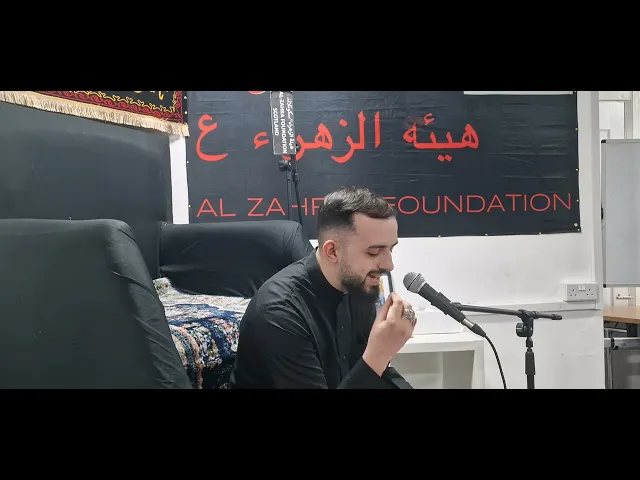
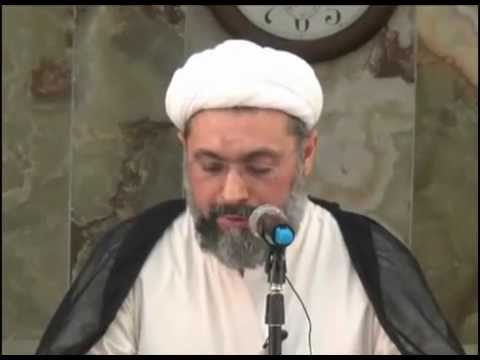
Are the Wives of the Prophet Included in the Ahlulbayt in Quran 33:33? | Sh. Mohammed Al-Hilli
0
0
18 المشاهدات·
24/07/09
Verse 33 of Surah Ahzab is commonly known as Ayat Al-Tat'heer. It establishes the purity of the Ahlulbayt, Many Muslims believe that the wives of the Prophet Mohammad (s) are included in the Quranic definition of the Ahlulbayt. Is this case?
Sheikh Mohammed Al-Hilli presents 7 extensive proofs in this regard.
#Ahlulbayt
#Quran
#Tatheer
أظهر المزيد
Transcript
[0:00]who are the aha bait a number of our brothers from the
[0:05]sunnah mufassirin we're talking about yes because we talk about scholars yes
[0:08]it's not about the lay men and women or somebody who's seen
[0:10]a lecture and wants to go and debate people on uh youtube
[0:15]and things like that these are not scholars yes they are pseudo
[0:19]you know youtube self-made uh people who just want glorification and show-offs
[0:25]rather we're talking about established scholars when they talk about this particular
[0:30]verse quite a few of them like they believe that it's of
[0:35]course related to the wives of the holy prophet and you can
[0:38]see at the outset without going into any details or investigation why
[0:43]they would do that because of course the verse itself starts off
[0:47]by addressing the wives of the prophet the verse the verse before
[1:10]a number of verses before this area and the next verse if
[1:14]you look the next verse goes also to discuss the wives of
[1:19]the prophet so the conclusion that they would come to is naturally
[1:24]as the ayah is addressing the wise of the prophet this is
[1:29]in reference to the wives and the wives alone that's the conclusion
[1:32]that a number of mufasiri have presented now we have seven points
[1:40]that we would like to mention uh fairly quickly but inshaallah we
[1:46]can understand them too in response to this and how we have
[1:49]as the school of aral bait come to a very clear understanding
[1:52]of this particular part of chapter 33 verse 33 the first one
[1:58]as perhaps you've heard so many times and you've come across is
[2:01]the idea that the this part of the verse uses what is
[2:05]known as the plural masculine pronoun instead of the plural feminine pronoun
[2:10]so the earlier verses talks about men yes and then it says
[2:19]yes is only used in arabic to address females they cannot any
[2:30]shape or form include males when this part of the verse is
[2:38]discussed allah subhanahu wa ta'ala says clearly the first thing that emerges
[2:46]is that there are males included in this particular discussion in this
[2:50]group that allah says i want to thury purify and protect from
[2:56]all impurities and so on the addresses have clearly changed so that's
[3:01]the first point to discuss the second is the cause of revelation
[3:07]how do we understand this who is a non-shia scholar he has
[3:13]a book by the name of by the name of tanzil and
[3:17]here he discusses 130 sunni sources how many 130.
[3:30]has found himself seventy sunni sources and over a thousand shia narrations
[3:36]the talk about and by the way the reference of this book
[3:40]shawahadu tanzid volume 2 page 31 and onwards there are so many
[3:45]references as well he's discussed it over several pages he says that
[3:48]the prophet of islam peace and blessings be upon him and his
[3:52]holy progeny was with amir and mohammedin was with sayida fatima was
[3:55]with hassan and hussain and several narrations say they were in the
[3:58]house of um and they were eating and the prophet of islam
[4:01]had his cloak he wrapped his cloak around them all and then
[4:06]supplicated to allah and said and indeed allah then revealed this part
[4:13]of the ayah in response to the dua of the holy prophet
[4:19]now what happened is that also these narrations point to the fact
[4:24]that the prophet of islam is last six months of his life
[4:26]some say eight months something nine months so the narrations are quite
[4:29]a few sunni and shia the last few months of the life
[4:33]of the holy prophet he would stand outside the house of amir
[4:39]muhammad fatima and would say assalaat al-salat yah al-bate so he would
[4:46]recite this when he calls out his bait when he would for
[4:50]example go for fajr salah and there's no doubt of course that
[4:53]this repetition by the holy prophet on a continuous basis highlights that
[4:57]the prophet of islam at least definitely towards the end of his
[5:00]life wanted no ambiguity whatsoever that the individuals whom allah is talking
[5:06]about are those individuals yes now interestingly the narrations do tell us
[5:12]that um when the prophet of islam had his cloak around the
[5:17]well around them all all together the five he uh um am
[5:23]i can i be with you can i be included with you
[5:27]and the prophet of islam says no no but you're okay you're
[5:34]righteous but you can't be included in this particular definition this quranic
[5:39]definition of uh the family of the holy prophet and that's of
[5:48]course the third point that we have uh presented to highlight that
[5:51]the wives are not included the fourth is very interesting not a
[5:56]single individual today can bring one evidence that any of the wives
[6:02]of the prophet said we are included and you know i tell
[6:05]you if you're one of the bait and the quran says i
[6:09]thoroughly purified you and clenched you you would have said and people
[6:13]would have fabricated so many narrations have been fabricated in fact the
[6:16]wife of the prophet i shall never claim this or used it
[6:20]to his to her advantage whereas the bait many times claimed it
[6:27]and said and spoke about it and said we are the ones
[6:32]whom allah speaks in this particular regard it's about us yes whereas
[6:36]the wives never said and this shows that this notion of the
[6:39]wives of the prophet somehow uh being included in this definition came
[6:44]much later in fact we know there's a man by the name
[6:49]of akrama he was uh somebody who was a nasabi he hated
[6:50]amir and mohammadin and he used to walk in madina and say
[6:53]their wives are included in the definition of bait and it wasn't
[6:59]before no one before him actually bought this particular idea or presented
[7:05]and therefore you'll find that it has no basis historically this claim
[7:08]that the wives or the prophet are included now you might say
[7:13]why why didn't aisha herself say i am included i'll tell you
[7:16]why and that is the fifth point which is very very important
[7:22]because the actions of the wives of the prophet in the quran
[7:27]and in authentic narrations agreed by all muslims contradict this ayah and
[7:31]that's perhaps one of the strongest evidence in addition to the arabic
[7:35]that we have that is presentable presented at the beginning or the
[7:40]plural masculine pronoun what do we mean you look at for example
[7:45]chapter 66 of the holy quran talks about this story uh very
[7:59]briefly the story is known as the story of marathir that the
[8:04]prophet of islam peace and blessings be upon him is holy progeny
[8:06]and this is narrated in sahih muslim and sahih bukhari so it
[8:11]is established and they themselves mention the wives who are involved by
[8:14]name so it is not that we are just coming up with
[8:17]it the idea is that the prophet of islam used to receive
[8:21]or eat honey in the house of one of his wives it
[8:23]could be mariel criptia in the narrations of our brothers sometimes it
[8:27]says zainab bint jash which we will discuss shortly her story in
[8:32]respective they were jealous they did not like the fact that he
[8:38]was consuming this honey so they conspired they both together decided that
[8:41]when the prophet comes to them after eating the honey they would
[8:45]say to him in different times that you have a bow bad
[8:49]smell coming from your mouth and this must be from the honey
[8:53]and when the prophet of islam saw two of them saying it
[8:56]he decided not to have that honey again but allah subhana tala
[9:03]exposed them and told the prophet their plans and when they the
[9:07]prophet came very interestingly uh he came and said to them that
[9:12]i know the prophet said to confide it to uh well says
[9:20]here one of his wives perhaps both uh this issue uh they
[9:28]both then said or at least one of them said amazing every
[9:35]time i think about this i cannot i i don't know i
[9:38]don't know what to say about this honestly because it says here
[9:41]when he told her about this she said who told you rasulullah
[9:45]who told you of course allah would tell the messenger you know
[9:52]so the quran actually mentions the fact that one of his wives
[9:56]doubted the prophet to say who told you and quran doesn't mention
[9:59]anything except that absolutely necessary remember it's to the end of day
[10:02]that's the book of miracle and guidance for mankind so therefore not
[10:08]a single word or a letter is mentioned for you know without
[10:11]a strong valid reason so when allah says that you know they
[10:17]doubted uh the prophet and then the verse goes on to say
[10:19]and in tituba is what their references to their verse of the
[10:26]part of it allah says if you if the two of you
[10:29]repent to allah for your hearts have certainly swerved meaning you have
[10:36]to repent meaning you have sinned meaning you can't be part of
[10:41]ayat here because we said ar-ritz is what is with all impurities
[10:44]and therefore it's very clear and you can see here that even
[10:51]the translator has put the names of the two wives of the
[10:53]prophet hafsa and aisha who were the ones involved in this particular
[10:57]story and the quran says you must must ask for repentance okay
[11:02]that's number one second clear example that nobody disputes no single muslim
[11:08]can dispute this battle of jamal the battle of the camel yes
[11:13]that 20 over 20 000 muslims were unfortunately lost their lives it
[11:19]was predominantly through the actions of one of the wives of the
[11:23]prophet aisha and irrespective as some of our brothers say she repented
[11:26]later that's a side issue she committed the act and a committing
[11:30]of the act immediately shows that she cannot be part of the
[11:35]definition of the akhal al-bait allah says i am thoroughly purifying you
[11:39]i am cleansing you i am protecting you from all impurities how
[11:45]can anyone say that they are that the wives of the prophet
[11:51]are actually included in this particular uh definition now the the sixth
[11:57]point here of importance is with regards to the fact that narrations
[12:01]say the time of the revelation of this part of the verse
[12:08]was different to the others so it wasn't revealed at the same
[12:13]time okay now you might ask why surely allah could have left
[12:16]it by itself and we wouldn't have all these problems why should
[12:19]it be in the middle of the discussion about wives of the
[12:22]prophet you'll get that question you'll get somebody asking but you know
[12:27]if allah wanted it about al-bait and not including the wives you
[12:30]should have that's left it as a verse you know next verse
[12:34]when a discussion of the wise of the prophet would end we
[12:36]would place it there of course allah allah knows best but perhaps
[12:39]the understanding that is the following there are a number of verses
[12:44]in the quran which are put in the middle of a discussion
[12:47]which are unrelated yes what's happening there what's happening see you both
[12:57]you all looked there it's completely nothing to do with what i'm
[13:00]saying yes a completely nothing to do it drew your attention you
[13:05]may have been dozing off you may have been drew your attention
[13:08]if you were yes you maybe had lost the concentration allah subhana
[13:12]tala uses this particular method in the quran let me show you
[13:17]one in particular if you look at chapter 9 verse 119 and
[13:28]this is the one okay now you look at the verse before
[13:35]it what does it talk about it talks about the story of
[13:40]the three who refused to join the prophet in the battle of
[13:43]tabuk yes and they stayed and then they felt very guilty and
[13:47]they wanted repentance from the almighty subhanahu ta'ala okay the verse after
[13:52]talks about what the incident as well it continues to talk about
[14:01]the battle of taboo and these three and what happened yes so
[14:04]the verse in between is what not necessarily related completely it's something
[14:11]out of a blue so to speak it's not out of the
[14:14]blue of course allah wants to draw attention now of course we
[14:16]believe this one is another verse which highlights the importance of following
[14:23]the halal bait because the verse says be with the truthful and
[14:26]the truthful cannot can only be those who are assumed all their
[14:29]lives they're truthful it cannot be anybody who's ever sinned or lied
[14:33]or god forbid committed any form of disobedience of god yes so
[14:39]it is there to draw attention it is there to make it
[14:41]distinct make it stand out so to speak you have a similar
[14:46]thing uh with regards to um the famous verse it starts with
[14:53]alliance and then talks about so as well in suratul you'll find
[15:05]um we can spend a lot of time on this that starts
[15:08]discussing about certain foods that are prohibited then talks about rasool bella
[15:15]for example yes and so on and so forth so it is
[15:20]understood as a means of establishing a very critical very delicate very
[15:27]important matter which stands out from the discussion that has been presented
[15:32]number one number two whole quran invites us to reflect the whole
[15:36]quran is about pondering it's a test for human beings it's a
[15:41]test for believers in fact the whole subject of people say oh
[15:44]why is in there very clear will i oh you who believe
[15:47]follow ali and nobody else and you'll be in jannah well at
[15:49]the end of the day allah wants you and i to reflect
[15:53]and there are many verses in the quran who upon reflection and
[15:55]using the verse the hadith of the prophet himself will will be
[16:01]very apparent and clear about what should be the direction but it
[16:06]is inviting human beings to use the intellect and the power of
[16:12]reason and the seventh example or area that we need to look
[16:19]at is the fact that the previous verses the style of the
[16:21]previous verses we're all rebuking they're wives of the prophet okay so
[16:26]have a look at them um this particular verse for example yes
[16:43]don't speak in a way that is melodious or soft you attract
[16:48]people yes here we don't go out exposing yourself all of a
[16:53]sudden there is a complete change it's not the same we're not
[17:02]the same group of people because the entire previous verses and the
[17:06]next verse is telling them what to do or telling them to
[17:09]obey commands and telling them not to do certain things whereas this
[17:15]part is ex completely exclusive in that it uh denotes a special
[17:20]bounty and a favor from the almighty subhanahu [Music]
0 تعليقات
sort ترتيب حسب
- أعلى تعليقات
- أحدث تعليقات
التالي
5 المشاهدات · 24/10/06
8 المشاهدات · 07/01/29
4 المشاهدات · 16/04/29
8 المشاهدات · 16/01/01
7 المشاهدات · 17/11/27
4 المشاهدات · 22/12/19
6 المشاهدات · 23/02/02