Volgende
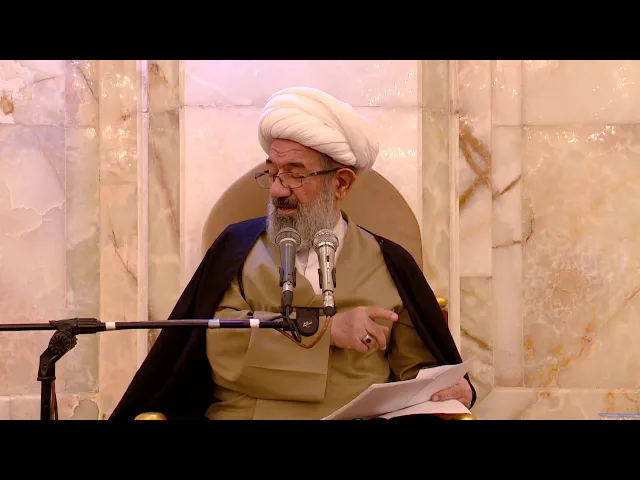
Are the 12 Imams Error-Free (Masoom)? | Sheikh Mohammed Al-Hilli | Muharram 2025
0
0
8 Bekeken·
25/07/02
🔔 Subscribe to this channel for more regular content Visit our website for updates and subscribe for notifications! 🔗 Website: https://alhilli.org/ 📱 Follow us on Instagram, Twitter, and Facebook for daily inspiration and updates! Instagram: https://www.instagram.com/m.alhilli/ Twitter: https://twitter.com/malhilli Facebook: https://www.facebook.com/sheikhhilli
Laat meer zien
Transcript
[0:14]Alhamdulillah.
[0:18]Alhamdulillah.
[0:41]Saychech.
[0:45][Music] Abdillah.
[1:12][Music] [Music] Hussein Ali Hussein Hussein.
[1:52][Music] [Music] [Music] For the purification of the souls, the enlightenment of
[2:31]the hearts, the acceptance of the deeds, and for the hastening of
[2:34]The reappearance of the awaited savior Sharif.
[2:38]Enlighten your souls and the atmosphere with the recitation of salawat upon.
[2:49]Respected elders, sisters and brothers, this is one of the most important
[3:00]discussions in Islamic theology.
[3:03]It's a question that has been posed for centuries but recently also
[3:10]focused upon by some Shia who themselves have begun to question it
[3:17]and it's related to the 10th of Muharam and the eternal stance
[3:21]of Shuada the master of martrsma of the imams of the B
[3:31]is an important subject within the discussion of and the teachings within
[3:37]the religion of Islam.
[3:37]It's related to the belief in the erifree sinlessness of the holy
[3:45]prophet Muhammad and his immaculate progeny.
[3:54]This is part of the of the Shia.
[4:00]From a young age, we are taught about the status and the
[4:03]significance of the imams of theam.
[4:06]We rever them, look up to them, consider them as role models,
[4:13]examplers.
[4:14]We visit their shrines.
[4:15]We read the hadiths.
[4:19]We are individuals who obey them.
[4:22]One of the subjects related to them is indeed this.
[4:25]Did they make any mistakes?
[4:31]Were they massum or not?
[4:32]This is part of the discussion within within you and I recognize
[4:38]that plays a pivotal role in our lives.
[4:43]Our doctrines, our beliefs should never be taken lightly.
[4:48]Truly is something that we have been taught that we must be
[4:52]able to defend.
[4:54]We must be able to know wholeheartedly and not imitate not follow
[4:59]others.
[5:00]Similarly, what are we told?
[5:01]We are told that when it comes to when it comes to
[5:08]the 10th of Muaram, it was truly a university of you see
[5:12]that inbalah what do we find?
[5:16]We find that was found in the sacrifice of these holy individuals.
[5:22]Was demonstrated in their stance was seen in the leadership.
[5:32]Im was demonstrated in the guidance and was in the breath of
[5:37]every shahed on the 10th of Muharam.
[5:40]These principles were something that you and I can take away from
[5:45]the day of Ashur.
[5:48]There is no doubt.
[5:48]Every drop of blood of the shuada on the day of said
[5:54]the following.
[6:01][Music] This is clear in their actions, in their speech, in their
[6:10]dedication.
[6:11]I'm surprised sometimes when I see discussions, lectures taking place during the
[6:16]month of Muharam and specifically the first 12 nights that do not
[6:22]include that do not include beliefs and core principles.
[6:25]This is part and parcel of what?
[6:29]Of what?
[6:30]Say gave his life for.
[6:32]You and I today are sitting here in the majalis are coming
[6:37]to pray are taking part in our faithful activities are all because
[6:42]of that stance on the 10th of Maharam and that was truly
[6:46]because of the saving of the religion of Islam isn't it and
[6:50]no discussion can ever be separated from the discussion regarding what regarding
[6:57]the and indeed our beliefs today we have a problem we have
[7:00]a challenge the widespread existence of doubts and uncertainty in the minds
[7:09]of people.
[7:10]Many today are facing these questions that sometimes are unanswered.
[7:15]This sheek that exists must never be ignored and this trend that
[7:20]is witnessed especially amongst the youngsters and the youth must never be
[7:23]taken lightly.
[7:24]What do we mean?
[7:24]The existence of doubts in the hearts of people is not something
[7:30]that's only for the 21st century.
[7:32]It existed from the time where people were around the prophet and
[7:35]the B.
[7:36]The Quran tells us for example one of the most pivotal one
[7:39]of the most spectacularly important events in the history of Islam is
[7:44]the battle of kand do you agree the battle of the trenchab
[7:47]the only battle that an entire chapter has been named after we
[7:50]don't have surah surah but we have surah chapter 33 Allah describes
[8:00]vividly in detail the state of the hearts of the Muslims At
[8:05]that time Allah says when this jumped to the trench the that
[8:15]they had dug what happened to the Muslims Allah says the eyes
[8:22]became frightened and opened.
[8:24]Yes.
[8:26]And the hearts reached the throats.
[8:30]You know sometimes when you're really scared you feel your heart you
[8:34]feel throbbing in your throat.
[8:36]Allah says this was the state of the people Muslims and you
[8:42]had doubts about God.
[8:48]Quran says that was the real test for believers.
[8:50]They were shaken.
[8:53]It's as if underneath they felt the earth shake.
[8:56]Muslims had doubts.
[8:59]That's why the stance of [Music] can never be undermined or taken
[9:10]lightly.
[9:11]When he indeed emerged to fight this Abdul the prophet of Islam
[9:19]for three occasions would tell him sit down.
[9:19]Right?
[9:20]Most of us have heard.
[9:22]On the third occasion the prophet would look at him and say
[9:26]but this is Abd.
[9:29]known for his bravery, known for the fact that he was a
[9:32]stern fighter.
[9:33]Look at the response of the son of Abu Talib.
[9:37]He says, "Yes, I am Ali." Yes.
[9:40]He goes and fights.
[9:41]Therefore, the prophet of Islam says it's greater than the worship of
[9:52]both human beings and gins together.
[9:54]What was the strike of Ali on the day of Kandak?
[9:56]Where does this doubt come from?
[10:00]Today some of our youth are facing these doubts.
[10:01]Where is it emerging from?
[10:05]One of the reasons why this doubt is coming out is what
[10:08]is the associations that people have, friendship circles, environments that they're in.
[10:15]Meaning what?
[10:14]Meaning that sometimes some of their parents have left their youth to
[10:17]be friend whoever they wish.
[10:21]And as a result, these individuals who are the friends of some
[10:24]of our youth, some of our youngsters or even ourselves, adults as
[10:28]parents, sometimes people that we associate with place these ideas and doubts
[10:33]in our minds, place these questions.
[10:36]Now, at the outset, there's no problem because using the doubt to
[10:40]strengthen our iman is a positive thing.
[10:42]But unfortunately, what happens is people sometimes they don't act upon the
[10:48]doubt.
[10:48]meaning they don't investigate, they don't ask the right questions and they
[10:52]let the doubt grow bigger and bigger in their heart.
[10:58]Another reason why sometimes people go through sheek is what is that
[11:04]they wrongly understand certain concepts meaning what they watch a clip and
[11:10]all of a sudden they come with a conclusion.
[11:13]Once one of the contacted me and said how could you?
[11:15]I said what happened?
[11:17]What have I done?
[11:17]I normally expect these kind of phone calls or messages.
[11:21]I said what is it that I have done?
[11:24]He said how can you come out in front of the people
[11:30]on social media and say lottery is halal.
[11:31]I said when did I say he said I'll send you the
[11:34]clip.
[11:35]He sent me the clip.
[11:38]It's only one minute and he's totally misunderstood it.
[11:39]He's listened to the one minute and he's come out with his
[11:42]own conclusions.
[11:43]I looked at him and I said, "Listen, the clip says the
[11:50]opinion of is if you purchase these lottery tickets to win, it's
[11:54]haram.
[11:55]But if you purchase them solely with the entire to help a
[11:59]charitable cause, then it's allowed." How did you understand it that I
[12:06]meant that every lottery game is halal?
[12:08]He said, "Yes, yes, sorry.
[12:09]I was driving and my wife was arguing with me and I
[12:10]listened to it." At the end of the day, be careful to
[12:15]come to conclusions and judgments about what people have said.
[12:19]Even these short clips that are taken out of lectures and malis,
[12:22]they could be inspirational sometimes.
[12:24]But if it's designed to stir fitna and to bring about dissension
[12:31]in the community, go and investigate, ask questions, speak to the or
[12:36]the individual concerned.
[12:37]Likewise, what happens?
[12:38]One of the reasons why these kind of doubts take place is
[12:43]the lack of knowledge, the lack of the lack of interest in
[12:47]people investigating.
[12:50]A Yen Institute survey in 2020 asked youth why they have doubts.
[12:54]Some of the youth said it's because what happens there is trauma
[13:00]in our lives.
[13:00]There's suffering.
[13:01]So it makes us doubt God, doubt Islam.
[13:04]Others said, "No, there are questions that non-Muslims and Muslims pose, such
[13:09]as, for example, related to LGBTQ or slavery or hijab." And so,
[13:18]Islamic law doesn't seem to make sense for us.
[13:19]Others said, "No, it's deeper subjects, philosophical ones.
[13:23]Why does evil exist?
[13:24]Why is there suffering?
[13:27]What is the religion of Islam's position on evolution?" Therefore, at the
[13:32]outset, it's very important to recognize that these discussions should not be
[13:37]ignored.
[13:36]Yes, they're a bit technical.
[13:39]Yes, it requires patience.
[13:39]But none of us should ever come to a melus of Hussein
[13:45]and say, "I've heard it all before." Sometimes when we have discussions
[13:49]with people, we say to them, "How is the majus was the
[13:52]same old thing?
[13:53]I've heard it so many times." And in certain communities, alhamdulillah, not
[13:57]this blessed community, but in other communities, you'll find some people standing
[14:05]outside having the cigar cigarette or the ecigarette.
[14:07]And what happens?
[14:09]As soon as mam starts, they'll come in.
[14:13]You ask them, "Why are you standing outside?" They say, "Man, I've
[14:16]heard it all before." It's the same thing being repeated every year.
[14:20]Muharam, and what's the point?
[14:22]I'm here for the mamm.
[14:25]I'm here to beat my chests.
[14:26]How wrong they are.
[14:26]Number one, let's assume that what is being discussed has been discussed
[14:30]before.
[14:31]There is baraka in you sitting in Hussein.
[14:35]There is for you sitting in Hussein.
[14:38]Your heart is being softened.
[14:40]Your soul is being washed.
[14:43]Just sit and see the difference.
[14:45]Number one.
[14:46]Number two, I ask you, what's wrong if there is an idea
[14:48]or a concept that's emphasized again?
[14:50]Isn't it that we do the that's the same over and over
[14:54]again?
[14:55]Should I come to Allah and say, "Excuse me, ya Allah, please
[14:57]change the salah and bought the same salah every day." What's wrong
[15:02]with listening to a maj that I may have heard many parts
[15:07]of it?
[15:05]Mark my words, there could be a hadith or a story that
[15:10]will change your life.
[15:12]I ask you if some people say, "I've listened to malis 50
[15:15]years." Alhamdulillah, I have the necessary knowledge.
[15:17]Look at our and his eminence other I have seen personally they
[15:28]hold in they sit like everyone else there are what speakers they
[15:31]come they recite the majus in the presence of a merger does
[15:35]a say excuse me I have more knowledge than you you can't
[15:37]give a majus in my presence not at all the most humble
[15:40]presence they say you are benefiting us I am here hussein what
[15:48]an honor The recognition is we need to come to Malis with
[15:51]humility.
[15:52]That moment that I consider myself to be above what is being
[15:56]discussed is a sign of arrogance.
[15:58]Yes.
[15:58]It's a sign whereby I think I'm above this discussion.
[16:03]Yes.
[16:03]Or I start to think what's being discussed doesn't affect me.
[16:07]It's not for me.
[16:10]It's not for me to necessarily take and apply into my life.
[16:13]Everything that is discussed is without a shadow of a doubt of
[16:19]great importance.
[16:18]Here the discussion regarding whether the 12 imams made mistakes on whether
[16:24]they are masum or not is relevant.
[16:27]Why?
[16:27]Some people say isn't this an old discussion between Shia and Salafi.
[16:32]It's always been the case for the last several hundred years.
[16:35]Why are we bringing it up again?
[16:38]Why are we discussing it?
[16:39]Number one, there's no harm in cementing our iman.
[16:43]But importantly, number two, there's been voices within Shia who have questioned
[16:46]this recently.
[16:48]Please understand this.
[16:49]There are a few academics, one in the United States, one in
[16:56]India and a few others who have recently written books and have
[17:03]produced clips online.
[17:04]What is it that they say?
[17:08]They say the 12 imams are not imams chosen by Allah.
[17:10]They are good noble scholars virtuous scholars.
[17:16]They come up with this theory known as theory.
[17:20]What is it?
[17:23]They say that these 12 individuals are godly scholars in the sense
[17:27]that they have knowledge more than others.
[17:30]But they these individuals refuse to accept that they are or they've
[17:37]been given for example knowledge of the unseen.
[17:41]They they just say they're special scholars you know that they're leaders
[17:45]for mankind but they're not being given in accordance with their understanding
[17:51]these particular attributes.
[17:53]And the recognition that emerges is without going into the abra theory
[17:59]because it is a very interesting discussion that needs to be looked
[18:03]at at another occasion.
[18:04]Suffice for us to say is it's been taken and borrowed from
[18:10]zi thought.
[18:12]The zades they believe that in order for an individual to be
[18:15]the leader for them they have to fulfill a number of qualities.
[18:19]Number one they need to be an alim.
[18:21]Number two from the descendants of and number three asetic.
[18:29]Number four is what that they need to have struggled against oppression
[18:36]jihad.
[18:35]So these are important for them to consider an individual to be
[18:42]the leader.
[18:41]Sometimes what happens is people come forward and they sugarcoat certain terms
[18:48]like Islah in order to tell people this is a movement of
[18:51]reform.
[18:52]We're taking you back but they borrow their ideas from other denominations
[18:57]like Salafies.
[19:00]Many of times it's salafi ideology sugarcoated as people who are saying
[19:06]you know what this is how thought should indeed be.
[19:12]Therefore you and I are invited to analyze and examine this particular
[19:15]subject.
[19:16]And do you know what I call for?
[19:18]We have in this country and those watching maybe in the US,
[19:24]Australia wondering what it is, but in this country we have for
[19:28]cars, isn't it?
[19:31]And you have to have every single year anote for your car
[19:33]for it to be fit to be driven.
[19:35]Do you agree?
[19:37]It's against the law for it not to be what?
[19:43]Tested, right?
[19:41]We need emote.
[19:44]What do you mean?
[19:46]I need to on a regular basis come back and ask myself
[19:51]this question.
[19:49]Is my pristine?
[19:52]Is it good?
[19:54]Is it solid?
[19:53]Is it something that I can truly pass on to others?
[19:58]But also for me personally, can I defend my mab?
[20:02]Are there any gaps?
[20:03]Are there any vacuums that I can fill with knowledge from the
[20:06]Alam?
[20:07]It's of the utmost importance that we indeed uh self-reflect and scrutinize
[20:13]where we are as far as our understanding of our beliefs.
[20:18]And part of it is this 12 ims of the are they
[20:23]masum or not?
[20:24]Yes, I believe they're mas but where is the evidence for it?
[20:27]How can we prove it?
[20:31]This is not where I have three chances.
[20:34]50/50.
[20:35]Ask the audience or call a friend.
[20:36]This is where I need to know.
[20:41]You're sitting here at this moment.
[20:43]Someone asks you 12 imams, you say they are mas, what's your
[20:46]proof?
[20:46]I need to answer.
[20:47]Yes.
[20:48]And therefore, the attention is required in this regard.
[20:53]Therefore, it's important for us to make notes or at least be
[20:56]able to reference some of these verses and these reliable hadith that
[21:00]inshallah tala we'll discuss.
[21:04]But before that, please mark these words.
[21:07]When it comes to discussion with others, when it comes to presenting
[21:13]our with people of other beliefs, we as followers of B need
[21:17]to reclaim the narrative.
[21:20]Do you know what that means?
[21:22]Means we should not allow them to dictate where the conversation takes
[21:26]place.
[21:27]Let me tell you an example.
[21:28]When I was asked by one of the individuals from our brothers
[21:31]about this question, he said to me, I can't I can't ever
[21:37]understand why you Shia believe 12 people after the prophet can't make
[21:41]any mistakes and are sinless and are so pure.
[21:45]That doesn't make any sense to me.
[21:46]Yes.
[21:47]Ahar, the one who is in charge of the Alazar in Egypt.
[21:53]He said, "This cannot be said about anyone other than the prophets.
[21:56]I'm surprised that the Shia say this.
[21:58]Only the prophets have this status." So this brother said to me,
[22:01]I am shocked that you guys have this.
[22:03]Instead of going on the defensive and presenting all the evidence which
[22:06]has to be done and I will present it in a in
[22:09]a moment, what did I look at him and say?
[22:12]I said, "Excuse me, what is your school's opinion about the prophet's?"
[22:15]He said to me, "Oh, we believe he is sinless.
[22:18]He is he is afree, impeccable, wonderful person." I said, "No." He
[22:23]said, "What do you mean?" I said, "Reference Bkari?
[22:26]Bkari comes and says the prophet wanted to commit suicide three times
[22:32]and stopped him." He's like, "Oh yeah, it does actually." I said
[22:37]go back to Im Muslim Bkari and there you'll find the prophet
[22:43]comes to the mosque he's about to lead then he says to
[22:47]the Muslim sorry I forgot to doul I need to go back
[22:51]and do reference imari you consider him yes reference he comes towards
[22:58]performing he does two when he finishes the Muslims tell him it's
[23:01]four why have you done two he says no no I've done
[23:05]four there's a dispute amongst the Muslim Muslims a man known as
[23:08]dullain because he had really long arms comes and says yahool Allah
[23:15]I testify you what you prayed two not indeed four so what
[23:19]happens there I present this he looks at me and says this
[23:22]is troubling I said it's because you haven't studied your own you
[23:29]are questioning my belief about the 12 imams whereas your belief on
[23:32]the prophet you haven't got a clue he says what do you
[23:34]mean I said I imbar says the prophet is walking in Medina,
[23:39]he has someone recite the Quran, says may Allah bless you, I've
[23:44]forgotten this ayah of the Quran.
[23:45]The prophet forgets the Quran and is taught by someone else.
[23:49]The recognition therefore is many a times we feel weak at the
[23:55]position of what?
[23:55]Defending our faith which we should do.
[23:58]But the more we have a knowledge of the faith of others,
[24:04]the better we are to be able to stand up and show
[24:06]that there is no school in Islam that honors, respects, reveres and
[24:12]places emphasis on the purity of the holy prophet than the school
[24:20]of B.
[24:19]Be proud of it.
[24:21]Yes.
[24:22]Ask all the Muslims out there.
[24:23]You think our differences of opinion is regarding and whether he was
[24:29]number four or the first khalif after the prophet.
[24:33]There are many things that we differ.
[24:35]There is no way that you from the other schools will have
[24:38]the same teachings as us when it comes to the magnificent personality
[24:43]of the prophet of Islamab.
[24:55]Therefore, let's examine the subject of the of the 12 imams by
[25:01]presenting a number of important questions.
[25:04]Number one, what is the definition of according to the school of
[25:09]B?
[25:09]Number two, what are the evidence that exists in Quran regarding the
[25:16]of theam?
[25:19]Number three, what reliable authentic hadith exists that teaches you and I
[25:25]regarding the free sinlessness of these holy individuals?
[25:28]Number four, what about when they the in dua literature said ya
[25:34]Allah forgive my sins such as in dua.
[25:42]Number five, one particular say in India when he was asked and
[25:49]he came forward with a clip he said when he was asked
[25:51]are the 12 imams he said no because there is aith that
[25:58]one of the companions of Imisam question the im how do we
[26:05]respond to that and number seven of great importance how does the
[26:10]belief of the erafree sinlessness of the 12 imams demonstrate the validity,
[26:17]the excellence of and the eternal stance of Hussein.
[26:29]We believe that the 12 imams of the B and the holy
[26:35]prophet and say peace be upon them are protected by the special
[26:43]grace from Allah subhanahu wa ta'ala from all sins, mistakes, forgetfulness and
[26:52]anything which constitutes such actions from birth till death.
[27:01]These are the words of one of our who's written a book
[27:05]the belief of who died about 70 years ago and it's a
[27:12]book that's taught where that's taught in the seminaries.
[27:18]The belief is that isma is what?
[27:21]Isma is a special grace, a blessing, a special mercy of Allah
[27:26]subhanahu wa ta'ala that is given to individuals with a particular responsibility
[27:33]with a particular task from Allah.
[27:36]However, is not something that is forced upon them.
[27:41]Meaning what I hear many a times and we have alhamdulillah been
[27:48]speaking for about 25 minutes.
[27:49]You have not heard me say infallibility once.
[27:52]Do you agree?
[27:53]25 minutes about the subject and I haven't used the word infallibility
[27:56]because it's a mistake to refer to asma as infallibility.
[28:02]You say to me but all my life I've heard it.
[28:05]What's the mistake in Christian theology?
[28:08]Please understand this.
[28:11]In the teachings of Christianity, they have or at least Roman Catholics,
[28:17]they have what's known as impeccability and infallibility.
[28:21]What is it that they mean?
[28:25]They say God and Christ are impeccable, but the Pope is infallible.
[28:30]What does that mean?
[28:34]They say that God the Almighty and Jesus can never make any
[28:40]mistakes when it comes to anything.
[28:43]Whereas the Pope cannot make mistakes when it comes to teachings of
[28:52]the scripture.
[28:50]But in private life they make mistakes.
[28:55]The key word here is cannot.
[28:59]In our teachings, an imam or a prophet who is mas is
[29:06]able to make mistakes but doesn't.
[29:10]There is a difference between saying cannot and is able.
[29:14]What do we mean?
[29:15]Allah subhana wa ta'ala when it came to the day of what
[29:19]is it that we recite?
[29:26]We all know that we celebrate it 18th of deliver what Allah
[29:32]has revealed to you.
[29:36]But if you don't, it's as if you have not delivered the
[29:42]message.
[29:43]Question.
[29:42]Allah does not say anything in vain.
[29:46]He would never say to the prophet do this.
[29:47]But if you don't, except that the prophet had a choice.
[29:52]Otherwise, if the prophet and the imams are somehow robotically tuned, they
[30:01]have no choice.
[30:00]It's enforced upon them.
[30:03]Then what?
[30:03]Then the ayah would never say this.
[30:05]What does this refer to?
[30:08]It refers to the idea that the peace be upon them have
[30:10]been given special knowledge, grace from Allahh to see the reality of
[30:14]actions.
[30:15]Yet they are able to sin, but they never even think about
[30:22]it.
[30:20]They are able to disobey but they never disobey Allah subhana wa
[30:26]ta'ala.
[30:26]Yes.
[30:25]And this makes a difference to to the discussion when somebody says
[30:31]that they are unable or they can't sin which is what infallibility
[30:36]is in Christian theology.
[30:38]There were here the pre the proof is in the Quran and
[30:45]in the teachings of the Ballam.
[30:46]The first verse that you and I have memorized and we must
[30:49]reference in this discussion is without a shadow of a doubt chapter
[30:54]33.
[30:55]Verse 33 of the Holy Quran.
[31:09]A few pointers regarding this ayah without going into detail.
[31:17]Number one, Allah subhanahu wa ta'ala says it is the will of
[31:22]Allah that is definitive.
[31:23]There is no question about it.
[31:25]It is the will of Allah that's established.
[31:28]Number one.
[31:31]Number two is not the same as please pay attention to this.
[31:37]It's technical.
[31:37]Tonight's discussion is heavy.
[31:38]It requires your focus.
[31:42]Why?
[31:40]Because it's part of our doctrines and beliefs and we must know
[31:45]it.
[31:46]There is a difference in Arabic between the word and the ayah
[31:52]says doesn't say why means you are protected.
[31:59]Nothing will come close to you.
[32:04]Minum means something is within you.
[32:05]Quran does not say Allah wills to remove from you as some
[32:11]translations in English sadly have placed.
[32:14]The Quran comes forward and says Allah wills to protect you oh
[32:18]family of the prophet from any impurities and vice.
[32:23]Protect means what?
[32:24]Nothing comes close to them.
[32:28]It's not that they had it and Allah subhana wa ta takes
[32:30]it away.
[32:31]Yes.
[32:32]The verses are very clear.
[32:33]The words are quite explicit in this particular regard.
[32:39]Yes.
[32:41]Therefore, this ayah clearly comes forward and says rits is any impurity.
[32:46]Yes.
[32:47]And there are many narrations in Shia literature to the point of
[32:52]what?
[32:53]meaning complete authenticity that despite the differences as to who is included
[33:00]in the what is agreed upon by all Muslims is that the
[33:06]five holy the prophet Hassan and Hussein they are included in ayat
[33:21]other Muslims say the wives of the prophet We say no the
[33:23]actions of the wife of the prophet in for example Jal chapter
[33:28]66 for instance when it comes to two wives of the prophet
[33:31]disobeying Allah many other examples are given to show the wives of
[33:35]the prophet made mistakes so they can't be part of ayat but
[33:40]the discussion here needs to go another level and that is how
[33:43]do we then apply ayat to the rest of the the other
[33:49]nine that's the important question I know it applies to the five
[33:53]to but how do I then draw it and extend it to
[33:58]the nine has to be through reliable authentic narrations.
[34:04]Narrations that are accepted and are considered to be what to be
[34:12]reliable by the criteria of there are a few.
[34:18]One of them is from Nub from Abdah Abbas which is found
[34:22]and narrated by in his book Kamaludin.
[34:25]And this is from the holy prophet Muhammad sallallahu alaihi wasallam.
[34:35]This narration is what?
[34:41]So Abdahb says, "I heard the prophet of Islam say Hussein that
[34:54]I and Ali and Hassan and Hussein and the nine from the
[35:03]progeny of Hussein are all purified are all mum.
[35:06]Therefore the recognition that emerges is what is that the prophet of
[35:15]Islam himself if we consider him to be mas he will only
[35:17]speak the truth.
[35:19]Do you agree?
[35:18]When I come and say ayat applies to the prophet and I
[35:22]believe that the prophet is erree sinless therefore whatever the prophet says
[35:26]I will take.
[35:29]The prophet says that these holy individuals are protected by Allah subhana
[35:33]wa tala.
[35:33]That's the first ayah.
[35:36]The second ayah is in chapter 4 verse 59.
[35:45]Oh you who believe.
[35:47]Obey Allah.
[35:49]Obey the messenger and those who have authority over you.
[35:51]Question.
[35:52]I know I have to obey Allah.
[35:54]Yes, I know I have to obey the messenger.
[35:57]But I have to obey those who have authority over me.
[36:01]What kind of obedience is this?
[36:02]The Quran tells us you have to obey your parents.
[36:06]But if your parents say to you something which is against the
[36:09]teachings of Allah, no obedience.
[36:10]There are two kinds of obedience.
[36:12]There's one that's conditional and there's one that's categorical unconditional in the
[36:18]Quran.
[36:17]There's one with terms and conditions and one that is what?
[36:23]Absolute.
[36:24]This ayah says it's absolute.
[36:26]There's no asterisk.
[36:26]Doesn't say sometimes.
[36:29]When they say certain things in all things, those who have authority
[36:33]over you, you must obey them.
[36:36]What does categorical obey obedience means?
[36:38]It means that whatever they say is the truth.
[36:41]Otherwise, if they make mistakes, how can Allah say to you and
[36:47]I obey them?
[36:48]If they're making errors, if sometimes they get it right, sometimes they
[36:51]get it wrong.
[36:51]How is it possible for Allah to say, "I want you to
[36:55]obey these individuals all the time, even when they're wrong." Not at
[37:00]all.
[37:00]Allah would never say this.
[37:02]He will only say deserve complete obedience if they are erhree and
[37:08]sinless.
[37:09]Is that enough?
[37:11]The Quran sets the guidelines.
[37:14]Authentic reliable hadith come forward and tell us who these are.
[37:18]Our six im peace be upon him comes forward in the book
[37:24]another what does he say?
[37:27]He says those who have authority over you this and many other
[37:45]reliable narrations say those who have authority given to them by Allah
[37:51]are whom?
[37:53]the holyam the 12 imams and before them the holy prophet and
[37:58]say now another ayah in the Quran that must be known that
[38:05]I can cement my knowledge and my conviction and my defense of
[38:09]the is what is ayah number 60 124 of bakar which talks
[38:17]about prophet Ibraim Allah says Ibraim has what?
[38:28]Has passed all the examinations and trials.
[38:31]Today you will become an im.
[38:36]Ibraim asks for his progeny.
[38:40]No your progeny.
[38:43]Some of them will be imams but not all.
[38:47]Only those who are not oppressors.
[38:49]What does VI mean here?
[38:50]Means that in any instance in their life they may have oppressed.
[38:56]What is the first level of oppression?
[38:58]When we commit sins, it's when we oppress ourselves.
[39:03]When the Quran says the im will not be given to anyone
[39:08]who's ever oppressed themselves in any shape or form because then they
[39:12]will be called even though they may have asked for repentance.
[39:15]It means that there are individuals who have never sinned who have
[39:22]never transgressed.
[39:24]They can never be called.
[39:26]Therefore, im will be given to them.
[39:28]Im will be appointed to them by Allah subhana wa tala and
[39:35]we have authentic reliable narrations that come forward and say that the
[39:40]imams alam are the ones addressed in this particular verse.
[39:43]When it comes to the world of hadith we have so many
[39:50]authentic reliable hadith that cannot be disputed that clearly mention that thealamat
[39:55]are and sinless.
[39:58]Number one of each and every one of us must have memorized
[40:04]of how many times we hear it from the me that is
[40:07]narrated by and I leave for you two weighty things the book
[40:18]of Allah and my progeny this second part is of the utmost
[40:24]importance.
[40:25]What do we mean?
[40:27]The prophet of Islam says that the Quran is inseparable from aal
[40:33]cannot be what?
[40:33]Cannot be put aside from the holy Quran.
[40:36]The Quran all Muslims believe is what?
[40:40]Is infallible.
[40:42]Yes, this time it's the correct usage.
[40:45]The are infallible because they cannot sin.
[40:51]The Quran cannot make mistakes.
[40:54]However, when it comes to the aal they are on par with
[41:00]the Quran, when the prophet says they are inseparable, it means what?
[41:04]It means that they are what?
[41:06]They are truly mum.
[41:08]Hence the of the holy prophet Muhammad sallallahu alaihi wasallam.
[41:17]This is a in a book.
[41:21]The reason why I am explaining whether hadith is or not because
[41:26]I know there will be people who will take this lecture and
[41:28]will then say this hadith is weak.
[41:30]This hadith is weak.
[41:33]So I am paying special attention to bring hadiths.
[41:35]Yes.
[41:36]Because they are very selective in the choosing of their hadiths and
[41:41]therefore I am presenting reliable narrations.
[41:44]This narration is from the prophet of Islam who said that when
[41:49]I said He then goes on to say, "Who are they?" That
[42:07]these this is the Quran and my family.
[42:11]They are me and Hussein and indeed what the nine imams.
[42:16]Then we have another reliable narration.
[42:21]Yes.
[42:23]Which is found in volume one page 191 from peace be upon
[42:30]him who said Allah purified us.
[42:39]Allah protected us and gave us.
[42:43]We are the proofs of his on this earth.
[42:50]and he made us with the Quran and the Quran is with
[42:56]us.
[42:58]It will never be separated from us.
[43:02]Is this enough?
[43:01]I can spend the next few hours giving you reliable authentic narration.
[43:06]Just one more from the holy eighth Imam peace be upon him.
[43:13]In another narration he says imo who is an imam.
[43:16]They have signs.
[43:17]They are the most knowledgeable of people and the most just of
[43:24]people.
[43:25]The most God-conscious of people and the most forbearant of people and
[43:30]the most courageous of people.
[43:32]The most generous of the people, the most devout worshippers of the
[43:38]people.
[43:41]They are born circumcised.
[43:46]And they are pure and sinless.
[43:49]These are the words of theam.
[43:52]But here the question is did they themselves also mention their isma
[44:00]in their description?
[44:00]Okay.
[44:01]They are saying that what these are the qualities these individuals of
[44:06]the but they themselves speak about it.
[44:09]Yes.
[44:10]For example, our holy fourth imbat when he was passing the ruins
[44:21]of sham and most of us have heard this story when someone
[44:24]came to him and said to him that what that I am
[44:30]celebrating because Allah has defeated his enemies.
[44:33]Imam Alisam would look at him and say have you read the
[44:36]Quran?
[44:36]The elderly man says yes.
[44:37]The Imam would say, "Have you read the verse?" The man said,
[44:44]"Yes." Imam then says, "It's us.
[44:52]This ayah refers to us.
[44:56]Allah has chosen us with the verse of the fourth im has
[45:00]a dua in dua number 47 for the day of." What does
[45:04]he say in this dua?
[45:07]He says, Ya Allah send the salutations upon the family of the
[45:13]prophet.
[45:14]Then he says at the end in the dua says ya Allah
[45:22]I testify that you have purified them thoroughly and cleansed them a
[45:27]thorough cleansing from any impurities and vices.
[45:30]In the book, the holy seventh Imam peace be upon him when
[45:34]he was in the dungeon in what does he recite?
[45:38]What is his dua?
[45:48]Imam says we are the fountains of free sinlessness.
[45:52]We are the people who are indeed there is a beautiful zara
[46:00]known as if you want to know of recite the it's from
[46:05]the holy 10th I im peace be upon him in this z
[46:08]what does he say he says I bear witness you are the
[46:19]imams chosen by Allah guided you are purified you are the leaders
[46:23]of people and you are indeed mas here.
[46:26]It is interesting to note one thing which is what I ask
[46:33]you.
[46:34]These imams of other schools of thought leaders when we look at
[46:40]their biographies often we are told that this person studied under this
[46:46]person had this teacher spent this time with this individuals.
[46:50]I want to present a challenge for those who question the and
[46:54]the status of the imams.
[46:57]Tell me who was the teacher of tell me who is the
[47:05]teacher of mam.
[47:07]Tell me who is the teacher of you will not be able
[47:11]to find.
[47:12]Yes.
[47:12]other than their forefathers who passed on the elm to them.
[47:16]Anyone claim that these holy individuals were taught by anyone other than
[47:22]the clear proof.
[47:25]Bring me show me teachers.
[47:27]Yes.
[47:28]Number one.
[47:30]Second challenge.
[47:33]Bring me evidence that they made mistakes.
[47:34]Bring me examples where alak said, "Oh, sorry.
[47:38]This was error.
[47:40]Bring me examples where al jawad said no no no no no
[47:44]I shouldn't have done that that is a mistake give me if
[47:47]you are saying they made errors and mistakes the onus is on
[47:50]you the proof we have from Quran and hadith that clearly shows
[47:56]what that clearly shows that they are protected and honored by Allah
[48:02]subhanahu wa ta'ala and that is our it's unshakable no matter how
[48:06]much you bark and no matter how people who claim within Shia
[48:10]come forward and place doubts in the hearts of our youth.
[48:15]One individual behind the screen or another writing a paper in America
[48:21]does not shake the of 1,400 years inspired by Ali and this
[48:28]is not going to be shaken.
[48:31]Yes, but we take on we are the people of Yes.
[48:34]We take on and we dialogue and we discuss and we do
[48:36]not dismiss.
[48:37]By the way, it's not that you know what someone has made
[48:39]a doubt and we say ignore it.
[48:42]No, we answer it and hence the discussion tonight.
[48:44]The question here is when it came to some people, they say
[48:49]there is a nariable narration that needs to be looked at.
[48:52]Please pay attention to this because this is used by them.
[48:55]One of the main things that they used to say, listen, the
[48:58]imams are people who made mistakes.
[49:00]Where is this narration found?
[49:02]This narration is found in Kashi.
[49:07]Yes.
[49:06]And in it is said that an individual by the name of
[49:11]Isa Mansur it is an reliable narration narration.
[49:15]Okay.
[49:16]In accordance with for example in his and a few other scholars
[49:24]of they say this is please be patient with me.
[49:25]This is a higher discussion but it's needed for everyone because you
[49:31]will come across this clip and say oh all my life I've
[49:33]been taught these are but this hadith says otherwise.
[49:36]What does it say?
[49:36]A man by the name of he narrates from a man by
[49:43]the name of Shah and another person by the name of were
[49:46]there together.
[49:48]They say we went we were present with the six im When
[49:58]we were there, a man who is honorable, a man that we
[50:05]rever, respect, he's a z one of the imam, they said entered
[50:11]and spoke to im this is what he said to him.
[50:16]He said, "A man by the name of said something about your
[50:25]father." Who?
[50:22]Imm Bakar.
[50:24]What did he say?
[50:30]Make sure that is prayed before during.
[50:35]Yes.
[50:37]At that moment the narration says im said I am thinking no
[50:47]my father never said something like this this man has lied.
[50:56]Then the narration says, pay attention to this.
[51:00]Someone said, "This noble man leaves this session." No, Hakim did not
[51:13]lie against im.
[51:13]So what is the conclusion?
[51:17]They says, "Listen, Zur, great companion of Imam Saddak, he comes out
[51:22]and says, "No, I im says this man Hakam is a liar,
[51:26]but I don't think he's a liar." So, what is he saying?
[51:27]He's saying is not saying the truth.
[51:30]Yes.
[51:31]So, they say, see, even the companions of the imams did not
[51:38]believe that the imams were.
[51:39]And then the clip is out there for the youth to look
[51:43]at and say see.
[51:46]And this is used to propagate the ambra theory that they're scholars
[51:49]but they were higher ranking scholars not imams chosen by Allah.
[51:54]Now here there is unfortunately academic dishonesty by the say this brother
[52:01]who comes and uses this.
[52:01]What does he do?
[52:04]He says even says there are laughable reasons given by some regarding
[52:09]this hadith but he selects this he doesn't quote what says in
[52:14]defense of the isma when it comes to this hadith he just
[52:19]takes this part at the end about some responses of other people
[52:22]so he's very selective this is academic dishonesty when you pick and
[52:27]choose to deliver a message that suits your own agenda How do
[52:33]we respond to this?
[52:33]It's very important that each and every one of us is aware
[52:40]about this.
[52:38]Number one, he says what?
[52:41]He said this is it's one narration singular that's unique and it
[52:48]goes against the tens of authentic reliable narrations that we have and
[52:53]before that the Quranic evidence that exists of the of therefore we
[52:57]cannot just take one narration and ignore all the other evidence.
[53:03]Number one.
[53:02]Number two, he says there is a problem in the narration.
[53:07]Yes, it's overall but inside there is a problem.
[53:08]What is it?
[53:10]He says when these three individuals they said we were present with
[53:13]Imam Saddak and then I im says Hakam is a liar.
[53:19]Then the narration says someone said someone said that said no I
[53:23]don't think he's a liar.
[53:27]Who said he said we don't know who said because we don't
[53:30]know who said this then becomes what questionable and becomes or this
[53:35]part becomes more salah means that we do not know exactly who
[53:39]said it so there is a question mark number three very importantly
[53:44]is a great man is a p man that we respect without
[53:48]a shadow of a doubt but his life has been subject to
[53:52]much distortion and misconceptions for example there are people who said Zor
[53:55]did not know who the Imam after I im.
[53:58]So it is possible that this is amongst some of the accusations
[54:04]that are being labeled against Zur to tarnish his reputation.
[54:08]Likewise Zor used to be Sunni.
[54:14]The fourth reason Zur great man but before he became Shia he
[54:17]was a Sunni.
[54:18]So some of our have said if we let's say for argument
[54:22]sake we take this narration and we accept it that z is
[54:26]questioning the of imam one possibility is that zur because he had
[54:31]so many opinions of the before he still hasn't clocked this concept
[54:38]so it's still impacting subconsciously some of the things that he says
[54:44]yes we have talks about this he says that once wanted to
[54:48]burn a lot from the imams in his early years after he
[54:51]became Shia because he wasn't accepting it due to his past and
[54:56]then he realized no no no I shouldn't do it.
[54:59]So says his brain is wasn't accepting some of these things because
[55:02]of his past.
[55:04]The fifth possibility is he may have been influenced by the environment
[55:08]at that time.
[55:08]There are people who used to say that the imams were not
[55:14]and sometimes subconsciously it may impact some people what they believe.
[55:17]Today when we scroll on Instagram, on social media, be very careful
[55:20]what you watch and what you hear and what kind of things
[55:25]you feed to your brain because sometimes this makes an impact the
[55:29]way we judge matters or or beliefs.
[55:32]If somebody today comes and 5,000 times tells us at the same
[55:39]moment that Islam oppresses women, that Islam dishonors women, eventually eventually it's
[55:45]been given to us so much that we start to believe this
[55:48]to be the case.
[55:49]And this is where we have to be very very careful.
[55:52]Yes.
[55:53]Because there is a famous statement that was said during the World
[55:57]War II by a German politician.
[55:58]lie and lie and lie until people believe you.
[56:03]And this actually takes place.
[56:08]Yes.
[56:06]The other final reason is that sometimes some of these beliefs were
[56:14]not always existing to some Sahabah.
[56:16]Yes, they are great.
[56:17]But maybe they had not yet understood the concept of Isma.
[56:22]Maybe it had not yet been given to them.
[56:25]Yes, maybe they're still learning.
[56:27]doesn't necessarily take anything away from them but rather they hadn't necessarily
[56:32]been exposed to the belief of the sinlessness.
[56:35]Finally, what about the sections and segments of duas of the for
[56:41]example when the imam in dua says the third holy im I
[56:51]am the sinful one isn't it or the fourth im says in
[56:56]the he says, "Ya Allah, I complain about the soul that tends
[57:02]towards evil and commits wrong." Some people say, "How can I explain
[57:06]this when I believe that the imams are free as sinless?" There
[57:09]are four explanations.
[57:11]Please, I will mention them quickly.
[57:13]Number one, many people believe it's imams teaching you and I how
[57:17]to speak to Allah.
[57:18]So, they are educators, they are role models, they are exemplars.
[57:21]So they're telling you and I how to communicate and speak to
[57:24]Allahh.
[57:24]Yet unfortunately this is not a strong argument.
[57:27]Why?
[57:28]Because sometimes they were by themselves.
[57:30]So they're not necessarily teaching people.
[57:30]Number one.
[57:32]Number two, some say that despite them being the highest spiritual rank,
[57:35]they always feel that they need to do more.
[57:37]So it's not that they are saying we are sinful.
[57:41]It's saying that we can do more and we can do better.
[57:43]Yes.
[57:43]And so they will in the position of humility and humbleness say
[57:50]these things before Allah subhana tala but it's unlikely to be to
[57:54]that extent yes because theam are the highest ranking of Allah subhana
[57:59]wa ta's creation the third understanding is that when it came to
[58:04]they have it but says that it doesn't mean that they will
[58:10]have it for the rest of their lives.
[58:13]So they're saying this in order to make sure that Allah keeps
[58:16]protecting them.
[58:16]That doesn't take it away from them.
[58:19]But the fourth explanation is the best in my humble opinion.
[58:22]What is that?
[58:25]Allah says in the Quran.
[58:28]This is from amongst yourself.
[58:32]Whatever happens to you impacts him.
[58:35]Whenever you you are anguished, he is anguished.
[58:39]Whenever you're happy, he is happy.
[58:40]The imams of the B and the prophets were representatives of Allah
[58:45]for the people but they were amongst the people.
[58:47]So when they speak to Allah they speak on behalf of the
[58:54]masses.
[58:53]They speak on behalf of you and I.
[59:00]The 12th holy ima what does he say?
[59:02]What is he saying?
[59:05]Ya Allah I'm complaining to you because your is not on this
[59:07]earth or not visible.
[59:10]So he's saying about him.
[59:10]No, he's saying all of us are suffering because the Imam Alisam
[59:13]is not here with us as as long as as far as
[59:16]us being able to see him.
[59:19]He's here on this earth.
[59:20]So these imams when they use these terms in duas, it doesn't
[59:25]mean that they're sinful.
[59:25]God forbid.
[59:27]They are speaking on behalf of the masses whom they feel so
[59:31]connected to because they are their leaders.
[59:33]They are their representatives.
[59:38]And that's why when it comes to im third holy im what
[59:44]do we find?
[59:45]We find the belief in his is central to the discussion of
[59:48]in which way when I come forward and I believe that is
[59:54]I reject the theories and the ideas that says he made a
[60:00]mistake in rising against Yazid and and Bani.
[60:03]There are those who believe so.
[60:05]There are those today who say that he shouldn't have done what
[60:07]he did and they are existing today amongst the scholars of other
[60:10]schools in Islam whereas they have not understood Imam they have not
[60:17]grasped they have not fathomemed Allah subhanahu wa ta'ala's divine leadership on
[60:24]this earth when I believe Im Hussein is I believe every action
[60:27]of his was truly in line with the commands of Allahhana tala
[60:31]every statement every decision was correct was on par with the will
[60:39]and the command of therefore it changes the way I look at
[60:43]and likewise what does it also do it also emphasizes for me
[60:51]the need to examine some narrations about the 10th which may put
[60:56]a question mark over the of the im what does that mean
[61:01]for example some literature sadly they say that when I Alisam finally
[61:06]got to the river bank and he was about to drink.
[61:08]Someone said to him, "Yeah, Hussein, how can you drink and your
[61:13]family are being attacked?" So he throws the water and goes back
[61:20]to the family.
[61:19]This is not a narration that can be accepted.
[61:23]Why?
[61:24]Because it is jeopardizing the of the imam.
[61:28]How can the imam be concerned with drinking water and neglecting his
[61:32]own family?
[61:33]And one of the army of Yazid has to remind him and
[61:35]says you drinking water and your family's being attacked.
[61:39]Yes.
[61:40]And then he throws the water and goes back.
[61:41]Therefore, not everything found in books of Maktal should be taken as
[61:48]factual or indeed that which happened.
[61:50]No, no, no, no.
[61:50]We need to put the principle of first and then apply it
[61:58]to the narrations so that we do justice to say and I
[62:03]im to look at him with honor just like how those around
[62:06]him respected and revered him.
[62:08]Not only the adults, not only the men and the women who
[62:13]were what who were in their adulthood but including the children.
[62:16]Those youngsters who were inspired, those youngsters who believed in the cause,
[62:23]those who saw in Hussein salvation.
[62:24]Yes.
[62:25]That young man who came to Imam Ali and he was only
[62:31]12 or 13.
[62:30]Imam looks at him and he was wearing the garments of his
[62:34]father who has just been martyed on the 10th of Muaram.
[62:39]He says to imulah, "Let me go and fight." Imam says, "But
[62:41]your father has just been martyed." He said, "It will be an
[62:46]honor to sacrifice my life for you." He goes and marches towards
[62:52]the battlefield.
[62:51]He says, "My imam, my leader is Hussein.
[63:01]What a beautiful leader.
[63:02]He is the one who places happiness in my heart.
[63:07]He is the son of Fatima.
[63:08]Move aside.
[63:09]I will now fight you." A few minutes later, they throw his
[63:13]head towards the direction of his mother.
[63:15]The mother picks up the head.
[63:16]You know, may Allah bless the mothers, the mothers that are listening,
[63:20]that are watching.
[63:22]How painful is it to look at the head of your own
[63:27]son in this state?
[63:26]Not Ansar Hussein.
[63:28]Though it was a source of pride and honor for the lovers
[63:31]of Aba Abdah.
[63:33]When she looked at the head of her young boy, she would
[63:35]indeed rub his cheeks, remove the soil and the dust and would
[63:41]pray for him.
[63:40]Would say, "You have made me proud.
[63:47]Oh my dear son.
[63:45]She cried for her son.
[63:49]Yet there were others who never had a chance to cry for
[63:52]their sons on the 10th of Muaram.
[63:56]Isn't it?
[63:58]Say had to see so many calamities.
[64:01]She endured so much pain and grief.
[64:04]No doubt amongst the most difficult was to lose her sons and
[64:09]Muhammad.
[64:10]Imagine that a mother, the pride of her eyes are her sons.
[64:17]Every mother wants to see her sons grow up, become those responsible
[64:21]adults, live a life of honor and dignity, have children.
[64:25]Isn't that what every mother wants and Muhammad on the 10th of
[64:34]Muaram?
[64:35]They were true lions of Allah.
[64:37]They went to their uncle Abah Abdullah asking for permission to go
[64:42]to the battlefield.
[64:42]Imam Alisam was hesitant.
[64:46]Imam didn't want them to go but they insisted.
[64:50]They marched towards the battlefield together defending each other like these brave,
[64:54]courageous, valorous, brave fighters.
[64:58]They went and fought with so much conviction.
[65:02]Those historians say when and Muhammad were on the battlefield, it's as
[65:09]if we could see Ali fighting.
[65:10]Yes, sir.
[65:12]They fought so courageously.
[65:14]They killed so many of the enemy.
[65:21]Yet when they fell, they called their uncle Abdah.
[65:24]Im Hussein went to see them.
[65:30]He sat next to them.
[65:30]He looked at them.
[65:32]It was also painful for their uncle to look at their state.
[65:35]There is a narration that says that they looked at their uncle
[65:39]Hussein and said, "Oh uncle, uh I ask we ask you that
[65:44]you deliver a message to our mother.
[65:46]What is the message?
[65:46]Please send my salam to my mother and tell her we never
[65:54]drank any water." Yes.
[65:54]We are dying thirsty.
[65:56]Zab had to see the bodies of and Muhammad being bought and
[66:04]placed next to the bodies of whom?
[66:05]Of Akbar, of yet she looked at those bodies, her heart burning
[66:10]with pain.
[66:11]What kind of things did she had to look at?
[66:16]Those bodies that were torn into pieces.
[66:18]She held her grief.
[66:18]She held her tears.
[66:22]But it was that moment in Medina when she saw the empty
[66:26]beds of Muhammad Allahbar.
[66:28]She entered the room in their house.
[66:33]She saw there was no and Muhammad.
[66:36]She cried that she called them.
[66:41]Oh and oh Muhammad I ask you to respond to me.
[66:43]When you were here every time I call you, you come running
[66:48]towards me.
[66:49]The poet says that they would come and hug their mother Zab.
[66:53]Oh Muhammad, I miss your hugs and I miss your warmth.
[66:56]Respond to me.
[66:59]Answer me.
[67:00]Oh my lovely children.
[67:01]Then she goes towards the grave of her mother Fatima.
[67:06]The poet depicts this beautifully.
[67:08]Huh?
[67:09]Imagine the daughter speaking to her mother.
[67:13]She says, "Mother, mother of I held my tears for my and
[67:20]Muhammad, let me tell you why I did not cry for my
[67:22]children." It's Fatima says to her, "My dear Zab, you're a mother.
[67:29]Why did you cry for them in Kufa?
[67:34]What made you not cry?" Zab says, The moment I saw the
[67:44]arrow in the throat of I couldn't cry.
[67:48]I couldn't cry for Muhammad.
[67:49]Oh, mother Fatima, how can I cry for my children when they
[67:58]told me there's an arrow in the eyes of Abbas?
[67:59]Mother, mother Fatima, when I heard the ribs of Hussein crushing, how
[68:08]can I cry for Muhammad?
[68:11]Mother Fatima, when I saw that wretched man placed the stick on
[68:17]the eyes of your How can I cry?
[68:24]How can I shed my tears?
[68:37]We ask Allah subhana wa ta'ala to allow us to defend our
[68:44]and to be able to study it thoroughly with conviction.
[68:51]Ya, we ask Allah subhanahu wa ta'ala on a night like this
[68:55]that we have remembered say Allah memory cannot tell us of any
[69:03]date or time in recent days and months and years in which
[69:06]the shrine of seed zanab has been this empty.
[69:11]She is truly tonight these nights of majalis many of the lovers
[69:19]of Zanab can't go to the shrine of Zanab we see images
[69:21]that her courtyard is empty next to her grave is empty it
[69:28]pains us it breaks the heart that sayy is once again a
[69:32]prisoner that sayy once again has been taken captive we ask Allah
[69:38]subhanahu wa ta'ala to allow us to see the day that we
[69:43]are able to pay our respects and visit say once again we
[69:45]pray to Allah subhana wa ta'ala to raise us with the and
[69:50]to grant the of Mat Hussein Hussein
0 Comments
sort Sorteer op
- Top Reacties
- Laatste Reacties