
التالي
6 المشاهدات · 25/03/22
2 المشاهدات · 25/03/23
6 المشاهدات · 25/03/26
8. Abu Talib Is In Hell | Sayed Ammar Nakshawani | Ramadan 2026
0
0
7 المشاهدات·
26/02/25
في
محاضرات
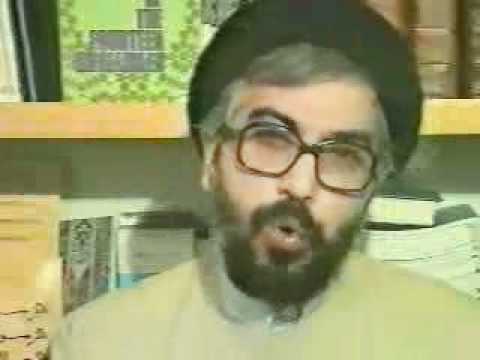
Truth. Dialogue. Courage. After two compelling and impactful seasons, The Divide & Dialogue returns for Season 3—at a moment when silence is no longer an option, but a risk. As sectarian narratives intensify and misinformation deepens divides, this series fearlessly challenges accusations, unpacks misunderstandings, and confronts the uncomfortable truths shaping today’s Muslim world. This Holy Month of Ramadan, join Dr. Sayed Ammar Nakshawani on Imam Hussein TV 3 for bold conversations, sharp historical insight, and a dialogue that refuses to be silenced. ——————————— Subscribe to Sayed Ammar’s official online platform, consisting of bespoke courses, exclusive content, brand new podcasts & more! https://www.sayedammar.com
أظهر المزيد
Transcript
[0:00]We all subscribe to many things without thinking.
[0:04]Movies, streaming, entertainment.
[0:05]But what about a subscription that carries meaning?
[0:10]Imm Hussein TV broadcasts the message of Kbala across five global TV
[0:14]channels in five languages every single day.
[0:18]When 14,000 people give just 10 USD or 7 British pounds a
[0:22]month, these channels stay on air sharing the teachings of the Bates
[0:25]with the world.
[0:26]This isn't just a donation.
[0:28]It's a subscription with purpose.
[0:30]Join us today.
[0:33]Visit www.am husseinfree.tv/donate.
[0:36]Become a partner today.
[0:40]Imam Hussein TV, your gateway to Kbala.
[0:54]Hey, away.
[1:20]In the name of God, the most beneficent, the most merciful.
[1:24]All the praise is due to the Lord, master of all the
[1:29]worlds.
[1:28]And peace and blessings be on all his prophets and especially the
[1:35]final prophet, the prophet Muhammad.
[1:38]My respected brothers and sisters, Abu Alib is in hell is the
[1:49]opinion of a great majority of Muslims in the world today.
[1:52]the uncle of the prophet peace be upon him and his family
[1:58]and his backbone especially in the early period of the revelation and
[2:02]the spread of the message of the religion of Islam ends up
[2:08]being called a disbeliever by the majority of the Muslim world.
[2:12]You could go to Morocco or you could go to Saudi Arabia
[2:15]or you could go to Indonesia or indeed you could go to
[2:21]Jordan.
[2:22]And if you were to ask anyone about Abu Talib, you'll see
[2:24]that the majority, and I underlined the majority, say that Abu Talib
[2:29]was a supporter of the prophet peace be upon him and his
[2:34]family.
[2:35]But ultimately, he did not recite the shahada and therefore he burns
[2:38]in hell with his brother Abuhab.
[2:41]Indeed, when you hear this, you find that this seems in one
[2:48]way illogical.
[2:46]How could a man sacrifice so much yet end up being in
[2:52]hell because he didn't utter the phrase in front of everybody of
[2:57]what makes it even more interesting is that some of the enemies
[3:04]of the holy prophet who outlived Abu Talib now have next to
[3:08]their names.
[3:09]Indeed, you find the likes of Abu Sufyan amongst others and his
[3:14]wife Hind died with the words next to their name in Sunni
[3:21]thought.
[3:22]Of course, for us the Shia, we say Abu Talib and again
[3:26]this is a clear point that must be mentioned that when people
[3:32]say Sunnia and Shia are exactly the same.
[3:36]We have huge differences morally.
[3:37]We have huge differences theologically.
[3:41]We have huge differences historically.
[3:43]Yes, the structure of the building to the apparent and indeed to
[3:48]the public seems like we believe in virtually everything together.
[3:51]But the reality is that when one looks at a topic such
[3:57]as this, Abu Talib is he in hell or is he in
[4:00]heaven?
[3:58]Why is it that 300 million Muslims today, tonight, and in the
[4:05]next couple of nights commemorate the death of Abu Talib, the uncle
[4:08]of the prophet peace be upon his family.
[4:10]And why is it that you have the majority of Muslims who
[4:15]will say that this man is a disbeliever?
[4:17]Now, let me make something clear here methodologically, please, before we enter
[4:20]the references.
[4:21]I have no problem with another Muslim who says that Abu Talib
[4:26]is a kafir and Abu Talib burns in hell.
[4:29]That is their reading of Islamic history.
[4:32]They have got their sources and primarily Bkari and Muslim after the
[4:37]Quran shape the future of the theology of the religion of Sunni
[4:45]Islam.
[4:45]The theology of the religion is shaped by Bkari and Muslim.
[4:48]And ultimately like we saw with the seven a we saw with
[4:52]the ayah of Rajim.
[4:54]It is very difficult to throw Bkari and Muslim under the bus.
[4:57]It must be saved or they must be saved for Sunni Islam
[5:02]then has to find another reason somewhere else as to why they
[5:06]believe in what they believe.
[5:06]But if the Sunni Muslim wants to believe that Abu Talib is
[5:13]a disbeliever who burns in hell, I have no issue with that.
[5:17]I may reject that opinion, but I do not reject the idea
[5:20]that there is another sect in Islam that has its reading of
[5:27]the past 1,400 years of Islamic history.
[5:29]But that sect cannot monopolize because there's another sect that has a
[5:34]reading of400 years of history and that is Shia Islam.
[5:39]If Sunni Islam wants to call Abu Talbaf, by all means call
[5:42]him whatever you want to call him.
[5:43]But for the Shia, we also have our reading.
[5:47]And that's why when people always try and tell me that Sunni
[5:52]and Shia, the less they talk about their differences, the closer they
[5:57]get together, I disagree completely.
[5:58]I believe that when you open up the differences and appreciate that
[6:03]each one has their literature, each one has their sources and therefore
[6:06]each one has their reading, then you'll come to the conclusion that
[6:09]there are two readings in Islamic history.
[6:11]And it's up to you to pick which reading you believe gets
[6:14]you closer to the sunnah of which reading brings you closer to
[6:22]the understanding of the pure message of the religion of Islam.
[6:24]So if a person wants to say Abu Talib is a that's
[6:29]your reading but that's not the only reading because there is no
[6:31]way in hell that there is one reading of Islamic history in
[6:34]1400 years that's absolutely impossible even within the Sunni reading there are
[6:39]so many readings today that the Sufi can't stand the Salafi and
[6:44]the Salafi can't stand the Sufi let alone the differences in opinions
[6:48]therefore on the first level I want to bring this methodological issue
[6:52]that we appreciate there are people who have readings that conclude that
[6:56]Abu Talib is a kafir.
[6:59]If you have that reading that Abu Talib is a kafir, likewise,
[7:03]whoever I want to call oraf, you must let me have that
[7:06]reading.
[7:08]You cannot monopolize.
[7:10]You are part of Islamic history and my literature is part of
[7:16]Islamic history.
[7:15]That's number one.
[7:17]Number two, we must also realize that in the Sunni world today,
[7:20]the Sunni scholar graduate of Alzar may have a completely different way
[7:28]of looking at an issue even like this than the Sunni scholar
[7:33]who's graduated say from Medina or the Sunni scholar who has graduated
[7:37]from the Hali school may have a completely different way of looking
[7:42]at things from a Sunni scholar who has graduated from the Sha
[7:46]school.
[7:45]We need to understand that even on the issue of Abu Talib
[7:51]is in hell.
[7:54]There are who differed with the orthodox opinion on this.
[7:57]Someone says but the orthodox opinion you said earlier is shaped by
[8:00]bkari or shaped by Muslim and the hadith which they see as
[8:06]there are who've looked at that and said I'm sorry I have
[8:09]a different reading and I'm not going to be subject to the
[8:14]of IM Bkari and im Muslim why should I be subject to
[8:21]these fallible human beings one from Bkar and one from modern day
[8:24]why am I subject to their reading.
[8:29]They had their reading.
[8:30]They picked certain traditions including the traditions that made them conclude that
[8:35]Abu Talib is a kafir.
[8:36]Do I know whether the conclusions they've reached are because of politics?
[8:41]Are the conclusions that they've reached because of an Abbasid empire and
[8:48]their opposition to the Abu Talib line against the line of Abbas,
[8:52]the uncles of the prophet.
[8:53]Ultimately we cannot generalize and say that all of Sunni Islam believes
[8:59]that Abu Talib is a kafir.
[9:04]There are people who are scholars in the Sunni school who said
[9:07]that when we look at all the attributes of Abu Talib and
[9:13]look at all the accusations against Abu Talib, we cannot conclude that
[9:16]Abu Talib is a kafir.
[9:17]And this is a point that must be made clear.
[9:19]A third point which I will come to later on and that
[9:24]is sometimes the Shia will always rely on Sunni literature if they
[9:29]want to justify a point but there has to come a point
[9:34]where you also use your own literature.
[9:36]The aim when we discuss this month all these topics is not
[9:40]just for us to see what's in Sunni literature and that we'll
[9:43]delve into today to understand why the Sunni world in its majority
[9:50]called Abu Ali and sent him to hell.
[9:52]But also a person has to use Shia literature but the problem
[9:55]is the Shia don't know their own literature.
[9:57]So when the Shia hears they always imagine you're going to only
[10:02]discuss Bkari and Muslim.
[10:04]Yes, they are the building blocks and the foundations of the world
[10:08]of hadith.
[10:10]But likewise, you as a sh ask yourself a question.
[10:12]How many times have you picked up a book like Alfi to
[10:14]see the chapter on the im of Abu Talib I I tell
[10:20]you my dear brothers and sisters there are some who are Shia
[10:23]scholars not just the there are some who are Shia scholars who
[10:29]cannot point to you.
[10:28]Where is the chapter on the im of Abu Talib or the
[10:33]hadiths on the iman of Abu Talib and Alfi?
[10:36]Why?
[10:37]Because even they got so engrossed only in proving things from Sunni
[10:41]literature that they didn't even comprehend or study or open their own
[10:45]literature.
[10:46]Ask your resident Alim wherever you may be.
[10:49]Say to him, Molana, show me the section in Alfi that shows
[10:52]the im of Abu Talib and the discussions concerning the im of
[11:00]Abu Talib.
[10:59]Majority of the Shia residents will also have an issue finding this.
[11:04]Why?
[11:05]Because we've neglected our own literature.
[11:07]Everything that we do has to be justified by Sunni literature.
[11:12]And therefore you could be part of a mosque which for centuries
[11:15]will not open any of the books of hadith or the books
[11:20]of or the books of and only hear lectures in a monologue
[11:22]form without anyone opening the literature for you to understand.
[11:26]Therefore, when we come to the topic of Abu Talib in hell
[11:31]and the majority Sunni opinion that Abu Talib is in hell, you'll
[11:35]see that a number of scholars whether they're in India or in
[11:40]Saudi Arabia straight away anyone who asks them about the prophet's family,
[11:45]they're ready to say that Abu Talib is in hell.
[11:45]Let's play clip number one so that we'll see very clearly how
[11:51]Dr.
[11:51]Zakir Nak, one of the most famous in propagation in the world,
[11:54]straight away gets to the point.
[11:55]Abu Talib is in hell.
[11:59]Please play clip number one.
[12:19]Inshallah protect.
[12:51]Yeah, Dr.
[12:52]Zach, why didn't Chacha of Rasool make it to Jenna?
[12:56]You said he protected him.
[12:58]He looked after him.
[13:00]Why didn't Chacha make it?
[13:00]The reason is Sah Bkari.
[13:01]Come with me over here, please, my dear brothers and sisters.
[13:05]Sah albkari the translation of the meanings of Sahbkari Arabic English volume
[13:12]2 a hadith 876 to 1772 translated by doctor Muhamad Muin Khan
[13:17]all of you can see printed in July 1997 printing supervised by
[13:25]who by Abd Malik Mujah come with me over here to page
[13:32]254 let's see the hadith as to why Sunni Islam in its
[13:36]majority has thrown Abu Talib in hell.
[13:40]Come with me over here.
[13:41]Chapter 80.
[13:44]If al- Mushri saysahill at the time of his death hadith number
[13:49]136, as you know this is narrated from who?
[13:54]from when the time of the death of Abu Talib approached Allah's
[14:01]messenger went to him and found Abu Jahal bin Hij and of
[14:06]course who was always with Abu Jahal Abdahi the son of Abi
[14:11]Muira by his side Allah's messenger said to Abu Talib oh uncle
[14:21]sayahill sayahill uncle a sentence with which I shall be a witness
[14:27]for you before Allah.
[14:27]Abu Jahal and Abdullah the son of Abi Omaya said, "Oh Abu
[14:34]Talib, are you going to denounce the religion of Abd Muttalib?" Allah's
[14:40]messenger kept on inviting Abu Talib to sayahillahillah while they Abu Jahal
[14:48]and Abdah kept on repeating their statement till Abu Talib said as
[14:53]his last statement that he was on the religion of Abdalib on
[14:59]the religion of Abd Mutalib I'll come back to that very shortly
[15:02]come back on the religion of Abd Mutalib and refused to sayahillahill
[15:06]then Allah's messenger said I will keep on asking Allah's forgiveness for
[15:14]you.
[15:11]Unless I am forbidden by Allah to do so.
[15:16]So Allah subhanahu wa ta'ala revealed the verse concerning him.
[15:21]It is not fitting for the prophet and those who believe to
[15:25]ask Allah's forgiveness for the mush.
[15:29]Even though they be of what?
[15:34]Of kin.
[15:33]after it has become clear to them that they are the dwellers
[15:40]of the fire.
[15:40]Chapter 9 verse 113.
[15:45]Now this hadith in Bkari is normally the hadith that is seen
[15:51]as the basis of the belief that Abu Talib is in hell.
[15:57]Okay.
[15:56]So this hadith when we look at it it's very interesting in
[16:00]the sense that they're telling him are you going to leave the
[16:04]path of Abdalib know one thing that we the are the only
[16:11]Muslims in the majority who say that the father of Allah sallallahu
[16:16]alaihi is in heaven and the grandfather is in heaven and the
[16:22]mother is in heaven and the uncle is in heaven and the
[16:25]grandfather's Fathers, fathers, fathers, fathers, fathers, fathers, fathers, fathers, fathers, fathers.
[16:32]They are all people of one God.
[16:34]As we say in our we believe that there is a line
[16:54]of purity, a line of the light of Ibraimis.
[16:55]Sunni Muslims you'll see that on the whole not all majority believe
[17:05]Abu Talib hell I'm in a hell abdah hell prophet's parents hell
[17:09]prophet's uncle hell here they are saying to him denounce the religion
[17:12]of abdu for me as a sh that's perfectly fine that he
[17:15]doesn't denounce abd mutalib's religion because abd mutalib the man whose gave
[17:20]meaning to the man who said to him listen just give me
[17:25]my flock back the lord of that house will look after it
[17:31]from your elephant that Abdalib to me is the very meaning ofahallah
[17:34]walking therefore if Abu Talib doesn't denounce the religion of Abdalib to
[17:40]me as a that is the biggest proof that Abu Talib was
[17:44]a on the path if I'm going to give him the lowest
[17:49]attribute because I believe he's much higher but that's a proof for
[17:52]me in the belief that Abu Talib is on the path of
[17:57]Abd Muttalib who are all the custodians of the message of Ibraimisam
[18:01]let alone the custodians of the Kaa in their position of Hashim.
[18:09]So for us when a person normally says that Abu Talib is
[18:12]in hell in the Sunni world like Zak has said normally they
[18:18]use this hadith.
[18:18]Interesting at the end of this hadith that the prophet kept on
[18:24]trying and says that I'm going to keep asking Allah subhana wa
[18:27]ta'ala to forgive you to forgive you to forgive you and then
[18:30]God suddenly reveals Surah 9 verse 113.
[18:35]What does surah 9 verse 113 say?
[18:39]My dear brothers and sisters, let's go over here.
[18:43]Join me as we go to surah 9 verse 113.
[18:47]All of you can see very clearly over here in the verse
[18:53]at the bottom here.
[18:54]If we can zoom in, it is not for the messenger of
[19:11]Allah, the prophet of Allah and those who believe to seek forgiveness
[19:15]for the idolattors even though they may be near of kin to
[19:18]them after it has been declared clearly unto them that they are
[19:20]the inmates of the flaming hellfire.
[19:22]Which surah?
[19:24]Look at the top here.
[19:28]This is known as surah dissociation.
[19:31]Now this surah surah 9 is they say that this ayah 113
[19:38]over here is about Abu Talib.
[19:40]It's not fitting that the prophet peace be upon him and his
[19:45]family prays for his uncle Abu Talib.
[19:48]It doesn't matter if Abu Talib is the nearest kin.
[19:53]It doesn't matter at all.
[19:53]And the reason being that at the end of the day he's
[19:58]a disbeliever.
[19:57]He's a polytheist.
[20:00]It's of no use whatsoever.
[20:02]If it's surah or some called it later on surah to surah
[20:06]9.
[20:06]It is the only surah that does not begin withman.
[20:11]Every Muslim knows the word is mentioned or the verse is mentioned
[20:16]114 times in the Quran.
[20:19]113 at the beginning of every surah and once in the story
[20:22]of Nebulan and the queen of Sheba.
[20:24]Now when we see over here surah surah 9 surah Toba we
[20:30]all know that surah Toba was one of the last chapters of
[20:35]the Quran to be revealed.
[20:35]If anyone tells you what are the last chapters of the Quran
[20:39]then always the last chapters of the Quran we all know are
[20:45]some verses of Bakar Mah and Toba Abu Talib died three years
[20:52]before the hijra of the prophet peace be upon him and his
[20:57]family why would a verse come down about Abu Talib 13 years
[21:01]after he dies today I'm asking forgiveness for my uncle and then
[21:06]13 years later I'm told by the way you were asking for
[21:10]forgiveness we just want to tell you 13 years later you can't
[21:13]the person will look and say well you know what uh my
[21:15]uncle died like 13 years ago Toba was revealed at the end
[21:19]of the message of the prophet when he sent Abu Bakr to
[21:21]go and reveal it to the people of Mecca in the middle
[21:26]of his journey Allah told him either you go or someone like
[21:28]you sent Im Ali Imam Ali went to the people of Mecca
[21:32]and revealed the surah we all know So therefore when you even
[21:37]say surah 9 vers13 is about him.
[21:41]Well surah 9 verse whatever is all late surah of the Quran.
[21:48]Abu Talib died before hijra not during the medina period.
[21:51]So therefore when someone tells me this and says that look it
[21:58]says surah 9 vers113 I put this aside.
[22:00]Come again with me in Sah Muslim Bkari and Muslim both want
[22:02]to put Abu Talib in hell.
[22:05]Join me over here.
[22:06]Sah Muslim please.
[22:06]Compiled by im Abu Hussein Muslim volume number one.
[22:10]Hadith number one to 1160.
[22:15]A hadith and edited.
[22:16]Referenced by Abar Ali translated by Kat.
[22:20]Final review by who?
[22:21]By Abu Khalil.
[22:24]First edition June 2007.
[22:25]supervised by Abdul Malik Mujah.
[22:28]Come with me over here.
[22:32]My dear brothers and sisters, Sah Muslim page 119.
[22:35]You will see very clearly my dear brothers and sisters over here.
[22:42]Again, this hadith chapter n evidence that the Islam of one who
[22:46]becomes Muslim on his deathbed is valid so long as the death
[22:49]throws have not begun.
[22:52]abrogation of permission to supplicate for forgiveness for the idolattors.
[22:56]Evidence that one who dies an idoltor is one of the people
[22:58]of hell and no intervention can save him from that.
[23:02]Of course, it's Ali's dad.
[23:03]So, we have to find a way to come after him.
[23:06]We all know this story and this narrative.
[23:09]Don't you worry.
[23:11]Come back.
[23:10]Hadith 1323924 narrated that his father said when Abuib was dying the
[23:18]messenger of Allah came to him and found Abu Jah and Abdahb
[23:22]with him.
[23:23]The messenger of Allah said oh uncle sayahill theahill for those who
[23:31]say their blood is what their blood is and their wealth are
[23:36]protected from me.
[23:39]Now understand this that when he was saying this sayahillah at this
[23:43]moment what do we see here a word for which I will
[23:48]testify for you before Allah Abu Jahal and Abdah said oh Abu
[23:50]Talib will you turn away from the religion of Abdalib the messenger
[23:54]of Allah kept calling him to Islam and he repeated this statement
[23:56]to him until the last words that Abu Talib spoke indicated what
[24:02]indicated that very important statement here he followed the religion of Abd
[24:08]Muttalib and he refused to sayallah if I follow the religion of
[24:10]abductib why do I need to say only a convert needs to
[24:14]say his shahada if you're born as a Muslim on the path
[24:16]of Islam you don't need to say the shahada the convert needs
[24:19]to say when they're converting come back the messenger of Allah said
[24:22]by Allah I shall pray for forgiveness for you so long as
[24:24]I'm not forbidden then Allah revealed this particular ayah as we saw
[24:30]earlier my dear brothers and sisters so when you see this you
[24:33]see very clearly that the idea was given that the Quran also
[24:39]came down against Abu Talib.
[24:40]Surah 9 verse 113.
[24:40]Many said that it was the verse that condemned Abu Talib.
[24:45]We said that this verse is at the end of surah Toba.
[24:47]Surah Toba is a surah which is Medina and the last of
[24:52]the Medina suras.
[24:53]So when we look at this argument that is number one.
[24:55]Then you see over here in the sun of Ib Maj again
[25:00]another attack to try and show that Abu Talib is definitely a
[25:02]kafir.
[25:03]In the surah of Ib Maja, come over here.
[25:06]The sixth correct tradition of the prophetic sunnah translated by Muhammad Medi
[25:11]Sharif English Arabic text volume 3.
[25:14]All of you come over here you'll see year 2008 printed in
[25:18]Lebanon edition being the first edition.
[25:20]If we go over here to around page 64 of the Sunn
[25:25]of Ib Maja, you'll see over here my dear brothers and sisters
[25:28]hadith 2730.
[25:30]Now the chapter is the heritage of Muslims from the pagans.
[25:34]Allah Allah Allah the heritage of the Muslims from the pagans.
[25:41]What happens in inheritance if you're a Muslim from a pagan who
[25:45]is the first pagan we want to attack?
[25:48]Not Abu Sufyan.
[25:47]Baba Abu Sufyan became the best Muslim.
[25:50]Doesn't matter how much bloodshed.
[25:52]Doesn't matter that his wife enjoyed eating body parts.
[25:56]Doesn't matter.
[25:57]Leave that all aside at the end.
[25:58]Yes.
[25:59]Now come back here.
[26:01]The heritage of Muslims from the pagans had 2730.
[26:05]It's narrated on the authority of us that he asked the messenger
[26:08]of Allah.
[26:09]Allah's blessings and peace be upon him.
[26:11]Oh messenger of Allah, are you going to descend at your dwelling
[26:15]place in Mecca?
[26:15]The messenger of Allah peace be upon him said has left any
[26:20]houses or homes for us to descend in them.
[26:23]Both and Talib inherited the property of Abu Talib on the o
[26:27]on the exclusion of Jaffar and Ali for both were Muslims while
[26:33]and Talib were pagans.
[26:33]For this reason Omar say no believer should inherit the property of
[26:36]an infidol told that the messenger of Allah sallallahu alaihi wasall said
[26:42]no Muslim should inherit the property of an infidel nor should an
[26:47]infidol inherit the property of a Muslim.
[26:49]So Abu Talib is the pagan infidol.
[26:51]He is the one who the Quran came down and the Quran
[26:56]wanted to come down and attack.
[26:58]Normally when they say the Quran attacked Abu Talib normally either it's
[27:02]surah 9 verse 113 or it's surah 28 verse56.
[27:06]Surah 28:56 is the verse which normally you will always hear is
[27:12]associated with the attack on Abu Talib.
[27:14]If you look at surah 28, all of you know very well
[27:16]surah kas.
[27:18]Surah 28 verse number 56 very famous ayah over here.
[27:23]If we play clip number two, you'll see that this ayah is
[27:26]always used as the one to say that Abu Talib there's no
[27:31]chance that he's going to be anywhere but hell.
[27:35]Please play clip number two.
[27:38]Of his people, he wanted goodness for all of humanity.
[27:45]Yet sallallah.aihi wasallam he would still have this human emotion of sorrow
[27:58]and grief.
[27:56]Imagine his beloved uncle Abu Talib who took care of him for
[28:07]over 40 years shielded him, protected him, gave him a safe haven
[28:12]and prevented the idol worshippers from attacking him.
[28:17]The prophet relentlessly wasam tried his level best that he accepts Islam
[28:25]but it was Allah's will when he died he was grieved by
[28:34]it.
[28:35]Allah the Almighty comforted him by saying indeed oh Muhammad you do
[28:41]not guide whom you like but Allah guides whom he wills.
[28:49]Full stop.
[28:47]End of sorrow and grief.
[28:51]Yes I love my uncle but if this is the will of
[28:52]Allah there's nothing I could do.
[28:57]I love my uncle but if this is the will of Allah
[29:00]what can I do?
[29:02]You cannot guide those who you love rather Allah subhanahu wa ta'ala
[29:06]guides who he wants only on Abu Talib nobody else did not
[29:11]want to guide every person no only Abu Talib is the one
[29:16]he wants to guide and Allah said no let's see what hadith
[29:20]sayith over here what does it say if you come my dear
[29:22]brothers and sisters the eye of the Quran very clearly over here
[29:29]join me over here in you'll seeman all of you can see
[29:41]over here my dear brothers and sisters that verily you cannot guide
[29:45]who you like.
[29:48]God guides who he likes.
[29:48]Now if I look in the according to look over here journey
[29:55]through the Quran all of you can see the content and the
[29:57]context of the suras of the Quran.
[30:02]Okay.
[30:04]Okay.
[30:05]The renowned scholar.
[30:08]You come over here.
[30:09]Where is it?
[30:10]A bridged by Abduli.
[30:12]Come with me to surah 28 verse number 56.
[30:15]Let's see what he says over here.
[30:17]Now look over here.
[30:20]My dear brothers and sisters.
[30:21]The messenger was distressed by this.
[30:23]Okay.
[30:24]West Asia and North Africa were full of people of the book
[30:29]during the time of Roman rule.
[30:30]The vast majority of them entered Islam after learning of it and
[30:33]were convinced of its truth.
[30:34]But the prophet's own people rejected it first and declared war on
[30:38]the new dean.
[30:41]The messenger was distressed by this.
[30:43]But Allah told him, "You cannot guide those you love.
[30:47]Rather, Allah guides those who he wills." It is said that this
[30:52]ayah was revealed about Abu Talib whom the prophet strongly wanted to
[30:57]become Muslim.
[30:56]Abu Talib knew that his nephew was truthful, but his fear of
[31:03]tribal disapproval stopped him from becoming Muslim.
[31:05]Let's see what he said.
[31:09]My dear brothers and sisters, come with me.
[31:12]I know that the religion of Muhammad is the best religion for
[31:16]mankind.
[31:17]Were it not for sensual fear of abuse, you would have seen
[31:21]me openly embrace it.
[31:25]Now when someone says that I know that the religion of Muhammad
[31:32]sallallahu alaihi wasall the best religion for mankind that person is definitely
[31:38]a believer but sometimes even a believer has to conceal their faith
[31:42]because of danger to themselves or those close to them.
[31:47]Don't you all remember in the first session that we had on
[31:50]the first session that we had on I mentioned a believer known
[31:56]as Mumin Alon he was the believer from the people of Pharaoh
[31:59]in surah 40 of the Quran come with me over here surah
[32:04]40 of the Quran verse number 28 that believer from the people
[32:07]of Pharaoh he was a mmin he knew Moses was on the
[32:12]right path come with me over said, "A man who was a
[32:21]believer from amongst the people of Pharaoh who used to conceal his
[32:26]faith." What's interesting is that when you continue the ayah, listen to
[32:31]what he says to the people.
[32:32]Even though he's concealing his faith, remember he's concealing his faith.
[32:35]But he used to say something to the people.
[32:39]What would he say?
[32:55]This is very interesting.
[32:58]The Quran says that the of concealed his faith.
[33:01]If he concealed his faith, why is he presenting an argument that
[33:04]if the man's truthful, he's truthful?
[33:05]And if he's a liar, he's a liar.
[33:08]What's wrong with you guys?
[33:08]Why does he talk like that?
[33:13]He's not publicly saying, "I follow Moses." But he's coming with a
[33:17]rationale of someone who follows Moses and is trying to protect Moses.
[33:20]If Moses is saying the truth, it's okay.
[33:23]And if he's a liar, he's a liar.
[33:24]He's going to have to be punished for being a liar.
[33:27]But what's wrong with you guys?
[33:29]Why do you want to kill Moses?
[33:29]Abu Talib is the m of al in the time of wall.
[33:35]He take it from me.
[33:38]You want to see the m of al or the m of
[33:42]alien whether it's orb you will find that the mmin of the
[33:46]time of the prophet is Abu Talib who concealed his faith.
[33:49]Why Abu Talib knew he's the middleman between the Quraysh and between
[33:54]who and between the prophet peace be upon his family.
[33:58]Abu Talib knew that everyone respected him and trusted him to the
[34:02]extent that when came out to fight Im Ali Alisam Im Ali
[34:06]he asked Im Ali what's your name he said Ali son of
[34:08]Abu Talib and he said to him I will not kill you
[34:12]because your father's a friend of mine Abu Talib had such a
[34:17]strong position in Arabian society that when someone asked him what was
[34:20]he doing what was the M al Far doing why is it
[34:23]why is it Mr.
[34:23]Abkari and Muslim.
[34:25]I ask you BOTH QUESTIONS THAT WHY is it when it comes
[34:27]to the M of you have no issue.
[34:31]But why Abu Talib has to suddenly start holding a party for
[34:34]celebration for his im.
[34:37]What's the difference between the two?
[34:38]Abu Talib looked after the religion and looked after the prophet of
[34:44]the religion.
[34:43]This ayah that they always quoted this ayah you cannot guide who
[34:55]you want to guide rather Allahh guides who he wants to guide
[35:00]this men is men it's universal it's not just applying to Abu
[35:05]Albam this is a universal men you cannot universally guide whoever you
[35:11]want rather Allah guides who he wants So therefore when a person
[35:17]comes and says this is all about Abu Talib it's not about
[35:19]Abu Talib and that's why when you look at the next clip
[35:22]clip number three you'll see my dear brothers and sisters that Hamza
[35:25]Ysef comes forth and says that we're not going to reach a
[35:27]conclusion that Abu Taliban no my scholars even were saying that we
[35:33]need to pause at a certain juncture because of the weight of
[35:36]the evidence not just about Abu Talib but the fact that in
[35:39]previous nations there were similar Abu Talibs and we did not condemn
[35:46]them to hell.
[35:44]Please play clip number three.
[35:49]not uh and I asked you know Abdah about Abdalib because when
[35:55]you read Abdul Muttalib's sorry uh Abu Talib who's the uncle of
[35:59]the prophet sallallahu alaihi wasallam the brother of Abd when you read
[36:03]about Abu Talib it's just it's amazing what he did for the
[36:10]prophet sallall alaihi wasallam and he his love for the prophet he
[36:15]stood by the prophet he you know and some of the say
[36:18]that he was Muslim uh one of the great Mortanian scholars wrote
[36:23]a book arguing that he was there is a tradition that says
[36:28]Al Abbas heard him say the shahada on the deathbed but the
[36:31]prophet didn't hear it so the prophet said I didn't hear him
[36:36]so he he couldn't testify for two witnesses that he was Muslim
[36:41]um the hadith in Muslim it's in the that heap that he's
[36:47]the least of people punished Um that'sith and the our belief is
[36:57]not something that you can establish with solitary nar narrations which is
[37:02]very important to understand this and the uh you know in the
[37:10]Salafi tradition they do establish with and that's why they they have
[37:14]a lot of points of dissension with the and these are issues
[37:17]Jews.
[37:17]Now, part of the problem is is that when you have people
[37:20]that don't accept, then it's you there's no dialogue.
[37:26]There's no debate about it.
[37:30]But we our our tradition demands that we accept.
[37:34]If there's a about an issue, then you can't say this or
[37:39]that.
[37:40]It's not.
[37:38]So, I asked Abdah.
[37:42]He just said he's for him.
[37:43]I don't want to say either or but his position is do
[37:49]not establish and to say somebody's in hell is you know with
[37:52]any certainty is very dangerous.
[37:56]So to say was in hell is just something Muslims should not
[38:00]even if the hadith is it's it's a aith and it's a
[38:07]matter of and so you know be very careful about these things
[38:11]because um Allah says that the prophet loved Abu Talib.
[38:18]The prophet sallall alaihi wasallam loved Abu Talib.
[38:21]That that ayah came down about Abu Talib that you do not
[38:24]guide who you love.
[38:27]Allah guides whomever he pleases.
[38:32]So you know the best position is Allah but and people that
[38:36]say the prophet's parents are in the fire.
[38:38]I mean Bakr said people should be whipped that do that.
[38:41]That was his opinion.
[38:45]And you can have there's aith which is your father and my
[38:51]father are in the fire.
[38:52]That's a sound hadith.
[38:55]Again, it's a hadith first and foremost.
[38:57]And second, what did the prophet mean by his father?
[38:58]He could have meant his uncle.
[39:03]Abu Abu Jah Abuahab because the Arabs say father for uncle.
[39:08]uh Abu Talib when when Bahira asked the the the uh Abu
[39:14]T the who uh who's his father he said Anna he said
[39:20]Abu he said Anna I I'm his father and he said it
[39:24]it doesn't seem that his father should be alive he said I'm
[39:26]his uncle but he wasn't lying when he said his that he
[39:30]was his father because the Arabs called the uncle the father so
[39:33]th those type things are you know they're just better left alone.
[39:39]But our belief is that the prophet's parents are saved.
[39:42]That's the dominant opinion that they're saved.
[39:46]Um they're people of fat, the between messengers and and they didn't.
[39:50]And then there's a weak hadith uh that mentions that Allah actually
[39:57]when the prophet visited he was allowed to visit his mother and
[40:00]that Allah actually uh raised them from the dead and they believed
[40:03]him.
[40:03]It's a weak hadith but he he says you know that he
[40:08]doesn't have a problem believing it.
[40:09]So again it's and so you can't establish anything with it.
[40:16]That's the dominant poor Hamza tried his hardest to say that Abu
[40:21]Talib is a believer and then has to go back forth gymnastics
[40:25]and so on.
[40:26]And I really do hope the prophet's parents are in heaven.
[40:28]You know it's absurd to think that the prophet's parents are in
[40:31]hell.
[40:32]Absolutely absurd.
[40:33]But as I said, if someone wants to think that, that is
[40:35]their reading.
[40:36]And we have to accept that there are other readings in Islamic
[40:39]history.
[40:39]But as a Shia, I'm super proud to say that my prophet's
[40:43]parents are definitely in heaven.
[40:44]Come with me over here.
[40:46]He mentioned something interesting.
[40:47]So because Abu Talib wasn't as bad as Abu Jah, so he
[40:53]doesn't burn as much in hell.
[40:54]Okay?
[40:54]So the toaster of hell, there's a different crispiness level for each
[41:00]uh piece that emerges from there.
[41:02]If you come over here, Sah Muslim, my dear brothers and sisters,
[41:06]volume one of Sah Muslim, come with me to page 340, the
[41:11]book of faith, chapter 90, the intercession of the prophet for Abu
[41:15]Talib and the reduction of his punishment as a result.
[41:22]510357209.
[41:21]It was narrated from Abbas Abdalib that he said, "Oh messenger of
[41:27]Allah, have you benefit Abu Talib in some way for he used
[41:29]to defend you and get angry for your sake?" He the messenger
[41:35]of Allah said, "Yes, he is in the shallowest part of the
[41:38]fire.
[41:39]Were it not for me, he would be in the deepest part
[41:44]of the fire." So Abu Talib is in the shallow end of
[41:48]the uh hot swimming pool.
[41:53]Okay, there's a deep end and that is Abu Leah.
[41:56]Abu Suban's in Jenna by the way.
[41:57]Okay, let's clock that one.
[41:58]Muawa made it to Jenna as well.
[42:00]It doesn't matter who he's killed.
[42:01]HE'S IN JENNA.
[42:02]BUT Abu Talib who was happy for the sake of the prophet
[42:04]and angry for the sake of prophet is in the shallow end
[42:08]of the swimming pool of Jenna.
[42:09]Allah so nice, very kind of you to put him in the
[42:14]shallow end of uh hellfire of Jahannam.
[42:16]Now there's something very interesting here.
[42:19]The prophet says, "I'll intercede for my um" The prophet says, "We'll
[42:23]intercede for my um I'll be there for my um um how
[42:25]about your uncle who gave you that valley when you are in
[42:29]trouble when sanctions were all over you.
[42:31]Thank God the Shia are around to protect Abu Talib.
[42:34]Thank God.
[42:35]Thank God we're around to protect the of Allah not love those
[42:40]who butchered them." And that's why when you look in the books
[42:42]even Bkari himself inadvertently whether he realizes or doesn't shows you in
[42:48]one incident the righteousness of Abu Talib himself.
[42:52]Come with me over here you'll see where Bkari discusses the righteousness
[42:55]of Abu Talib in one instance how people used to see him
[42:57]as a just man.
[42:59]What is at the end salvation is for who?
[43:01]For the just for the pious for those who loved for the
[43:02]sake of Allah and hated for the sake of su who protected.
[43:08]If today you protect the sunnah and people say mih he is
[43:14]the one who protects the sunnah then how about the one who
[43:18]protected the master of the sunnah hell shallow part of the swimming
[43:21]pool of hell now come with me over here bkari everyone come
[43:23]here the translations of the meaning of sah alb bkari Arabic English
[43:28]volume 4 hadith 2338 until 3848 there's this really lovely incident about
[43:34]the justice of Abu Talib alisam over here.
[43:39]Actually, I think it's a it's a volume five hadith and I
[43:44]don't know.
[43:43]Have I put Yeah, it's a volume 5 hadith.
[43:45]Let's go to volume five.
[43:48]Say Bkari.
[43:47]Hadith 3845.
[43:49]Yes.
[43:50]Hadith 3845.
[43:52]My dear brothers and sisters, look over here at this hadith.
[43:55]In this hadith, someone seeking justice for being oppressed.
[43:59]There's no one else you'll go to Abu Talib when you're seeking
[44:02]justice.
[44:02]Look over here.
[44:05]The merits of the come over here chapter which you could see
[44:09]is the chapter of the period of Ib Abbas narrates the first
[44:14]event of the pre-Islamic period of ignorance okay um was of course
[44:19]as you know kasama means the oath taken by some people concerning
[44:23]the accusation of killing somebody okay come with me over here the
[44:26]first event of kasama in the pre-Islamic period of ignorance was practiced
[44:30]by us Abu by us Benash Hashim.
[44:34]A man from Benu Hashim was employed by a Qureshi man from
[44:38]another branch of the family.
[44:38]The Hashimi laborer set out with the Qureshi driving his camels.
[44:44]There passed by him another man from Benu Hashim.
[44:45]The leather rope of the latter's bag had broken.
[44:49]So he said to the laborer, "Will you help me by giving
[44:52]me a rope in order to tie the handle of my bag,
[44:53]lest the camel should run away from me?" The laborer gave him
[44:58]a rope, and the latter tied his bag with it.
[45:01]When the caravan halted, all the camels legs were tied with their
[45:04]fetas except one camel.
[45:04]The employer asked the labor, "Why from amongst all the camels has
[45:08]this camel not been feted?" He replied, "There's no feta for it."
[45:14]The asked, "Where is its feta?" and hit the labor with a
[45:16]stick that caused his death.
[45:17]Later on, just before his death, a man from Yemen passed him,
[45:21]passed by him.
[45:22]The labor asked him, "Will you go for the pilgrimage?" He replied,
[45:25]"I do not think I will attend it, but perhaps I will
[45:28]attend it." The Hashimi Laborra said, "Will you please convey a message
[45:34]for me once in your life?" The other man said, "Yes." The
[45:38]labor wrote, "When you intend the pilgrimage, call the family of Quraysh,
[45:41]and if they respond to you, call the family of Bani Hashim.
[45:43]And if they respond to you, ask about Abu Talib and tell
[45:47]him that so- and so has killed me for a feta." Then
[45:49]the laborer expired.
[45:52]When the employer reached Abu Talib Mecca, Abu Talib visited him and
[45:56]asked him, "What has happened to our companion?" He said he became
[45:58]ill and I looked after him nicely but he died and I
[46:02]buried him.
[46:03]Then said the deceased deserved this from you.
[46:04]After some time the messenger whom the labor had asked to convey
[46:08]the message reached Mecca during the pilgrimage season he called oh the
[46:12]family of Quraysh.
[46:12]The people replied this is Quraysh.
[46:13]Then he called oh the family of Ben Hashim.
[46:16]Again the people replied this is Beni Hashim.
[46:18]He asked who is Abu Talib?
[46:19]The people replied this is Abu Talib.
[46:21]He said so and so has asked me to convey a message
[46:24]to you that so and so has killed him for a fetto
[46:26]of a camel.
[46:26]Then Abu Talib went to the Quraysh killer and said to him,
[46:30]"Choose one of three alternatives.
[46:30]If you wish, give us 100 camels because you have murdered our
[46:34]companion.
[46:34]Or if you wish 50 of your men should take an oath
[46:38]that you have not murdered our companion and if you do not
[46:39]accept this, we will kill you." And the killer went to his
[46:43]people and they said, "We will take an oath." Then a woman
[46:44]from the benu hashim who was married to one of the qures
[46:47]and had given birth to a child from him came to Abu
[46:51]Talib and said oh Abu Talib I wish that my son from
[46:52]amongst the 50 men should be excused from this oath and that
[46:55]he should not take the oath when the oath taking is carried
[46:58]on.
[46:59]Abu Talib excused him.
[47:00]Then another man from them came to Abu and said oh Talib
[47:03]you want 50 persons to take an oath instead of giving 100
[47:06]camels and that means each man has to give two camels.
[47:09]So there are two camels I would like you to accept from
[47:11]me and excuse me from taking an oath when the oaths are
[47:15]taken.
[47:15]Abu Talib accepted this from him.
[47:16]Then 48 men came and took an oath.
[47:18]By him in whose hands my soul is before the end of
[47:22]that year, none of those 48 persons remained alive.
[47:23]Look where they went when it came to justice, they'd go to
[47:27]Abu Talib.
[47:28]And that's why it's not surprising that Imam Ali was the voice
[47:31]of human justice.
[47:33]Then you see how in one of the most famous works of
[47:35]Islamic history, Abu Talib upon finding out that Imam Ali had become
[47:38]Muslim makes something clear to Imam Ali.
[47:41]am upon finding out of course in Sunni literature that he's become
[47:46]a Muslim of course we believe Ali was born on Islam but
[47:50]come over here to ali of course all of you know the
[47:57]famous Ib this one over here I want all of us to
[48:00]look at this my dear brothers and sisters very important narration over
[48:04]here this is the first edition as I mentioned earlier I want
[48:10]us to go to this particular narration over Here this particular section
[48:14]is talking about who the first was that came towards Islam and
[48:18]then it talked about the companions and their coming to Islam.
[48:24]Over here it says my dear brothers and sisters im Ali became
[48:30]Muslim before Ali used to conceal his faith out of fear from
[48:41]his father.
[48:42]until he found his father and his father asked him, "Have you
[48:48]become Muslim?" What does he reply to him when he tells him,
[48:51]"Have you become Muslim?" He says to him, "Yes." What's the reply?
[48:56]Is he going to hit him?
[48:57]Is he going to smack him?
[48:57]Is he unhappy?
[48:59]Listen to what he says.
[49:02]One surah he said to him that help your cousin and support
[49:14]him.
[49:11]Help your cousin and support him.
[49:19]Help your cousin and support him.
[49:22]Wiser be the support to your cousin.
[49:23]Be the helper to your cousin.
[49:27]Be the backbone to your cousin.
[49:28]I'm a father.
[49:28]My son has joined a new movement I don't agree with.
[49:31]Why would I tell him go and be a backbone and help
[49:35]him?
[49:39]For what reason would Abu Talib say?
[49:44]Imagine over here very clear when Abu Talib is saying these lines.
[49:52]For what reason would Abu Talib be saying these lines?
[49:55]My dear brothers and sisters, except that Abu Talib was making it
[49:59]very clear in front of everybody when he wanted to say why
[50:06]is he was making clear with this line when he says very
[50:10]clearly is very important that he's making clear that this cousin of
[50:18]yours you must be his backbone and he was always his backbone
[50:24]and that's why in Alfi Very clear are the hadiths on the
[50:28]im of Abu Talib doesn't have to always rely on what the
[50:34]Sunni literature is saying himself can look in al kafia over here
[50:41]volume one of al kafia as you can all see Arabic English
[50:45]bilingual translation ali volume one all of you can come here my
[50:51]dear brothers and sisters Name al kafi as you can see year
[50:59]2024 jaffuri propagation center Mumbai all of you come with me to
[51:03]this area on page 770 of volume one of al kafi and
[51:09]you will see very clearly my dear brothers and sisters the number
[51:13]of hadiths we have hadith number 28 here on the section at
[51:16]the top here the book about the people who possess divine authority
[51:22]come with me over here hadith number 28 as we have this
[51:26]hadith from Imam.
[51:27]What does Im say the case of is like the case of
[51:48]the people of the cave who hid their belief and expressed polytheism.
[51:51]Allah gave them twice the reward.
[51:54]Then again, hadith number 29, look at this hadith over here.
[51:59]What does it say to who?
[52:02]This was said to of course I im hadith over here my
[52:13]dear brothers and sisters when they come forward and they say what
[52:17]they say forward very clearly.
[52:19]Imagine they think that Abu Talib was an unbeliever.
[52:45]They speak lies.
[52:47]How could he be an unbeliever when he said such words as
[52:49]follows?
[52:50]Do they not know that we found Muhammad as a prophet like
[52:52]Moses whose name is written in the ancient books?
[52:57]How clear is that?
[52:59]Imagine how clear.
[53:01]And there are many other hadiths about the im of Abu Talib.
[53:05]And I think my dear brothers and sisters that because the Shia
[53:10]kept on defending the iman of Abu Talim and because of the
[53:12]number of narrations that clearly indicated and expressed that the man was
[53:16]the biggest support of the holy prophet eventually you found Sunni scholars
[53:21]in the last 10-15 years blatantly coming out and saying that I
[53:24]don't care what anyone says anymore.
[53:25]A thousand years ago we may have said that this man's a
[53:27]kafir or a mushri.
[53:30]I say he's a mmin.
[53:29]Please play clip number four.
[53:58]Muslim kid.
[54:02]Yeah.
[54:13]Islam, guys.
[54:29]Muslim.
[54:58]for an office.
[55:45]Muslim.
[56:23]There's some progress there in saying that he's got iman internally and
[56:29]that eventually he'll make it to heaven.
[56:29]That's their opinion.
[56:31]At least it's changed from him being in the shallow end.
[56:33]At the end for us, Abu Talib is the backbone of Islam
[56:37]and we'll continue to defend him forever until our last breath.
[56:40]May Allah bless all of you and may Allah give us the
[56:47]intercession of Abu Talib on the day of judgment.
[56:51]Hey, hey, hey.
[57:25]Oh, hold on.
[57:37]I wouldn't want it.
[57:59]We're here at the Imm Hussein Charity Orphanage.
[58:03]We're here to meet very special children today.
[58:06]Let's learn from them.
[58:10]Oh, >> you want it?
[58:21]It's yours.
[58:21]Take anything you like.
[58:24]Who wants this one?
[58:27]>> She wants it.
[58:29]Oh, okay.
[58:31]Mashallah.
[58:31]You want this?
[58:32]Okay.
[58:33]Today with Imam Hussein charity, we brought a few gifts.
[58:39]There's so much to learn from these children.
[58:42]I wish some of you would take another step and help these
[58:45]kids.
[58:46]They just need support.
[58:46]They need love and compassion.
[58:49]Remember the words of Imam Aliatam that after me take care of
[58:56]the orphans.
0 تعليقات
sort ترتيب حسب
- أعلى تعليقات
- أحدث تعليقات
التالي
6 المشاهدات · 25/03/22
2 المشاهدات · 25/03/23
6 المشاهدات · 25/03/26