التالي
7 المشاهدات · 25/12/01
6 المشاهدات · 14/09/23
6 المشاهدات · 21/12/07
7 المشاهدات · 22/11/28
8 المشاهدات · 24/11/14
7 المشاهدات · 25/06/22
6 المشاهدات · 25/11/02
8 المشاهدات · 24/10/06
9 المشاهدات · 07/01/29
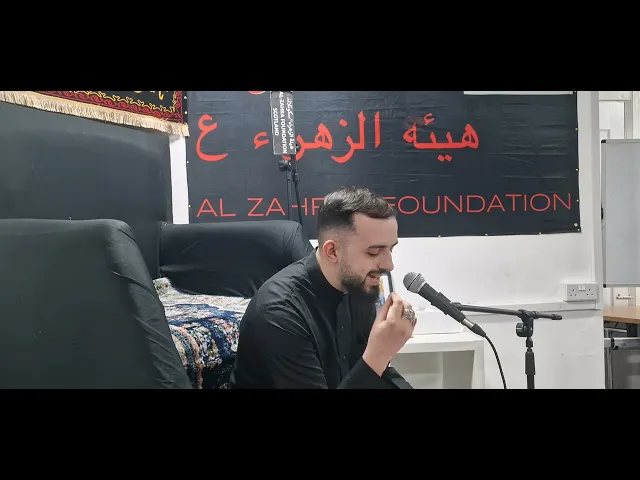
68- (2) Biography of the Prophet - Worship of the Prophet (s) - Sayed Mohammad Baqer Qazwini
0
0
28 المشاهدات·
24/07/19

في
محاضرات
Biography of Prophet Mohammad 04, offered in 2020-2021, is now available to take online at Al-Hujjah Islamic Seminary. The first five classes are available to view as a demo to get an idea of how the course is instructed. To register for this class, see all class videos, and take the exams, visit hujjahseminary.com. For any questions, email us at [email protected]
أظهر المزيد
Transcript
[0:28]respected brothers and sisters i would like to offer you my condolences
[0:38]on the martyrdom of the imam al-hassan we ask allah subhanahu wa
[0:47]ta'ala to grant us his shafa'a and his ziara we continue our
[0:52]journey into examining the life of the prophet sallallahu alaihi and in
[0:58]the last several classes we've been examining his personal his personal character
[1:07]his personal mannerism one of the qualities of the prophet sallallahu alaihi
[1:16]that our hadith mention is the following what's madhura in arabic apology
[1:25]when someone apologizes to him let's say the person wronged the prophet
[1:31]in some way when he would apologize to the prophet the prophet
[1:35]would accept this was one of the sunnah of the prophet whoever
[1:39]apologizes to him he would not tell him no you're lying i
[1:44]don't accept your apology even if that person is not sincere he
[1:48]had such impeccable character when someone comes to him and shows that
[1:54]humbleness and apologizes he accepts and al-imam al-hussein has an amazing hadith
[2:02]he says the one who does not accept the apology of the
[2:08]one apologizing may be prevented from receiving our shafa'a because i heard
[2:19]my grandfather rasulullah that he's not one of us the one who
[2:26]does not accept the apology of the one who's apologizing even if
[2:29]that person is the one who's on the wrong path even if
[2:33]that person wronged you but as long as they're apologizing accept them
[2:39]so the prophet sallallahu alaihi would always accept the apology someone comes
[2:44]up comes up to him says i'm sorry i did the following
[2:48]forgive me he signals to him that it's okay i'm putting an
[2:52]end to the case and that's a beautiful quality that we can
[2:54]adopt from rasulullah then the following passage states the prophet was the
[3:05]most person who would smile because as they say the smile is
[3:08]contagious right it just improves the overall mood and the atmosphere allah
[3:19]only when the quran would be revealed to him in the state
[3:25]of revelation the prophet would not be seen smiling why any ideas
[3:30]yes that excessive state of remember these are the direct words of
[3:36]allah to you imagine imagine someone whom you have a lot of
[3:42]respect for if that person is directly speaking to you what happens
[3:46]to you that completely changes your state you enter that syria that
[3:55]state of humbleness and seriousness now imagine if just sent you a
[4:01]message right now that's big so the prophet sallallahu alaihi would always
[4:06]be in the state of smiling except when quran would be revealed
[4:11]revealed to him no you could see seriousness on his face humbleness
[4:14]and seriousness or sometimes there is a mawedha you're admonishing people you're
[4:24]reminding them of the achara of death of the grave obviously in
[4:29]those moments you're not going to excessively smile because you invite the
[4:33]people to be serious when it comes to words of admonishment the
[4:48]prophet never used inappropriate derogatory terms against anyone using profane language indecent
[4:58]language never did the prophet ever do that in fact we have
[5:03]narrations that the true believers never say anything indecent anything profane one
[5:09]of the causes that make our dua not accepted as profanity when
[5:15]we use profanity allah does not accept this mouth the dua that
[5:22]it makes if it says profanity now interestingly you'll find that the
[5:26]narration states and he never cursed a woman why specifically is the
[5:33]woman mentioned here when the prophet did not curse anyone why is
[5:38]that the case regarding his wife slater yes and that's exactly you
[5:48]have to understand this in terms of the social context of the
[5:52]prophet in that arabian society men dismissed women they consider them as
[5:56]second-class citizens so you can yell at them you can harass them
[5:59]you can cuss at them it was normal for them it's acceptable
[6:03]it's okay who cares no big deal so that's why the historians
[6:08]when they documented this they made it a point to say no
[6:12]not even a single woman that the prophet ever cursed which was
[6:15]normal in that society which was accepted you can get away with
[6:20]it but the prophet never did that what shows you is hi
[6:23]and then this one's nice whenever they would blame someone for something
[6:32]that he's done the prophet says it's okay leave him you know
[6:36]the person who's done wrong and he knows it and others don't
[6:40]know it it's enough as a punishment for the person to be
[6:43]in that state now for you to go to that person and
[6:49]keep blaming him and telling him i told you see what happened
[6:53]that's not the movement not only that the prophet avoided doing that
[6:58]but when he would see that happening in front of him he
[7:01]would say oh leave him alone he made a mistake he learned
[7:06]his lesson he's now in a difficult state you don't have to
[7:10]go and now harass him about it have you seen some people
[7:15]they're experts when it comes to blaming others don't blame others that's
[7:19]it leave it drop the case the person has faced the consequences
[7:24]of his actions no need to come and blame that person because
[7:29]sometimes when people are blamed what happens two things could usually happen
[7:36]why does islam encourage you not to engage in blaming these are
[7:46]two serious consequences that happen number one the person could slip into
[7:50]severe depression and just run away from religion morality or that which
[7:57]is right they have a very strong reaction number two the person
[8:02]could become arrogant and stubborn sometimes when you did something that's it
[8:06]leave it there if you be too hard on that person you
[8:09]push them too far then they start justifying and they'll do it
[8:15]more to avoid this whole blaming situation it's never helpful yes sometimes
[8:20]it's your best friend you're giving them advice you know it's try
[8:23]not to put yourself in this situation see what happened you're saying
[8:27]it in a loving way that's fine that's advice but to engage
[8:31]in blaming no the prophet would not accept that and when he
[8:35]would see that in his blessing presence he would say leave the
[8:39]person alone this was from the akhlaq of the prophet [Music] salallahu
[8:54]whenever the prophet would be praying the muslim prayer is here because
[8:58]remember the prophet would pray the nawafi sometimes someone had an issue
[9:06]to discuss with the prophet or he needed something from the prophet
[9:08]so he would come to the masjid he would see the prophet
[9:13]praying or he would come to the house of the prophet he
[9:16]would be told that rasulallah is praying now praying is an act
[9:22]of when the prophet feels or knows someone is waiting for him
[9:24]what does he do like some people not like some people some
[9:30]people prolong their salah or if they're doing some work they slow
[9:33]it down just to avoid that person no not the prophet the
[9:41]hadith says he makes his prayer light meaning fast he quickly wraps
[9:44]it up then he goes and he tells him do you have
[9:48]a need can i help you see the compassion of rasulallah how
[9:52]much he cares about the people the prophet would do his best
[10:01]whenever he's sitting down he would face the qibla facing do you
[10:04]know that if you're just facing the and you're conscious of that
[10:09]that's ibadah allah will write a good deed for you so if
[10:11]you're sitting in the living room you're having a discussion with your
[10:14]family you're reading something you're doing something sit towards a barakah and
[10:22]consciously when you know you're sitting towards the table you feel allah's
[10:26]presence more and so you're less likely to do that which disobeys
[10:30]allah subhanahu wa ta'ala so the prophet one beautiful habit that he
[10:34]had was to always face the qibla not only in prayer obviously
[10:37]but also in his normal gatherings develop that habit believe me it
[10:44]will change your life these small steps go a long way in
[10:47]strengthening your iman many people ask say it what do i do
[10:51]how can i become very very righteous there's many things you could
[10:55]do but these small steps go a long way in making you
[10:58]that firm believer in god who's always conscious of allah subhanahu wa
[11:04]ta'ala that's what it does it creates awareness that you feel allah's
[11:07]presence so you always have that spiritual state you're sitting in your
[11:11]living room but you know i'm towards the qibla it makes you
[11:15]more spiritual it makes your heart closer to allah subhanahu wa to
[11:18]allah so this is one beautiful sunnah that we learn from the
[11:23]prophet sallallahu alaihi now if you remember last week we spoke about
[11:27]the prophet's generosity in one beautiful hadith the prophet declares that he
[11:33]is the most generous human being in history and the prophet does
[11:37]not exaggerate according to this hadith the prophet says it comes from
[11:49]the word jawad right it means generous the one who's most generous
[11:53]so jawad means generous now if you put that in form which
[12:00]is the most in english we usually say you know more than
[12:07]most that becomes who is the most generous they told him yes
[12:14]tell us he says see the humbleness of the prophet always bringing
[12:21]attention to god of course allah is the most generous from the
[12:27]children of adam i am the most generous the generous of all
[12:31]and he set it out of humbleness not to boast about that
[12:36]the prophet was so generous such that when he would take a
[12:44]loan let's say a few durham's what what is that silver coin
[12:49]it's a silver coin that has a particular amount of weight and
[12:54]what's a dinar golden coin so the coins that were made from
[13:02]gold are called what dinar during that time and the coins that
[13:04]were made from silver they will they were called durham on average
[13:09]the dinar was about 10 times the value of so one dinar
[13:13]is equivalent to about 10 durham's 10 dinars about 100 dirhams just
[13:17]so you get an idea of the currency at the time of
[13:21]the prophet sallallahu alaihi the hadith states the prophet sometimes would borrow
[13:27]the current the coins the durham and the dinar but sometimes there
[13:32]would be a defect in it maybe it weighs less maybe it's
[13:36]too old and it's breaking up right now in the market value
[13:39]has lesser of a value than a brand new minted coin when
[13:44]the profit would take a loan and the condition of the coins
[13:51]is not that great when he would give it back he would
[13:53]not give back the same quality he would give excellent quality that
[13:57]says to honor the person who lent him that money that's the
[14:03]first thing he would do another thing that he would do a
[14:06]hadith in the book of al-qafi by saddam salaam states what does
[14:18]this mean the prophet sallallahu alaihi when he would be given a
[14:25]pair of coins meaning two durham's two dinars the prophet would double
[14:28]that when giving it back so if someone gave him two durham's
[14:33]how much does the prophet give him back for when the time
[14:36]of the loan is due that he has to give it back
[14:39]look at the generosity of the prophet salallahu these days you're lucky
[14:44]if that person gives you back your money as we've said before
[14:49]right you're lucky if that person gives it back the prophet no
[14:52]he would double it he would add to it and one beautiful
[14:58]hadith describes the generosity of the prophet when a huge amount of
[15:06]money 80 000 coins were brought to the prophet from bahrain the
[15:11]island of bahrain bahrain historically at the time of the prophet had
[15:15]a good economy primarily because of what does anyone know historically how
[15:19]the people in bahrain during the time of the imams made a
[15:23]lot of money diving through diving they would extract apparels from the
[15:32]ocean and valuables they were good at that so 80 000 coins
[15:37]were brought to the prophet sallallahu when was the money given to
[15:49]the prophet when he had just done for which salah the prayer
[15:54]so he's about to pray right because he just did fama the
[16:00]prophet did not pray for her that day until he had basically
[16:08]distributed all those 80 000 coins i mean imagine how much time
[16:11]does it take you to distribute 80 000 coins right 100 to
[16:15]this person 50 to this person 500 to this person and we
[16:19]know the profit was very peculiar and very sensitive about the time
[16:25]of salah but look at his generosity people are in need give
[16:29]them don't store the money don't keep it for next hour someone
[16:32]could have told him ya rasulallah you could have waited till after
[16:35]salah no no look at the lessons and generosity of the prophet
[16:39]is teaching you have that money give it to the people don't
[16:44]hoard it don't keep it even a single minute because if you
[16:46]delay at an hour sometimes you know we delays too much right
[16:52]there are people who need it now if you've delayed it an
[16:55]hour maybe you prolonged the hunger of someone for an hour do
[17:00]you know that keep that in mind or someone who wants to
[17:02]get married maybe had you given them that assistance earlier they would
[17:06]have gone married earlier or the person has an illness they're dealing
[17:10]with or whatever financial crisis never delay giving the sadaqa never delay
[17:16]giving to people because they might need it now the prophet was
[17:21]so generous such that he never said no to anyone one of
[17:29]the great companions of the prophet he says whenever the prophet would
[17:40]be asked about anything he would never say no he literally would
[17:44]never say no that was his now there's an interesting hadith i'd
[17:50]like to analyze this hadith with you my dear brothers and sisters
[17:53]that's found in sahih muslim babe they have a whole chapter in
[18:02]sahih muslim what's it called abu sufyan right the one who was
[18:13]the leader of the pagans before the conquest of mecca muslim has
[18:16]a whole chapter praising abu sufyan so in that chapter look at
[18:24]this interesting hadith ibn abbas supposedly says in this hadith after the
[18:33]conquest of mecca muslims would not look at abu sufyan they would
[18:36]not sit with him why he was a staunch enemy and because
[18:43]the prophet became strong and he entered mecca triumphantly he submitted otherwise
[18:47]abu sufyan was known to mobilize people and the pagans and the
[18:53]muslim against the prophet sallallahu alaihi as a result his social status
[18:57]went down people didn't care about him ah this you know yeah
[19:02]right now you declared your islam in public but we know your
[19:07]history so now abu sufyan got upset abu sufyan loved having a
[19:14]social status he was obsessed with that so he came to the
[19:23]prophet sallallahu alaihi and he says yanabi allah i have three requests
[19:28]from you yanabi allah please give me three grant me three requests
[19:32]he says yes abu sufyan he says number one i have my
[19:41]daughter om habiba she's my daughter and she's very beautiful i want
[19:45]you to marry her number one number two i want you to
[19:50]make my son make my son a scribe a writer between you
[20:00]for you and number three command me to kill now the pagans
[20:06]just like i used to fight the muslims before but now i'd
[20:12]like to fight the pagans so give me that honor give me
[20:15]the command so i can go and say rasulullah command me to
[20:18]fight he just wants the fame and the reputation the one who
[20:25]witnessed this incident he says that the prophet says okay i grant
[20:28]you these three and the prophet didn't really want to but because
[20:33]he had the in he would never say no to anyone he
[20:35]said okay i'll give you these three even though abu sufyan acquired
[20:40]status from this request let's analyze this hadith and sahih muslim we
[20:48]have several reservations about this hadith yes the prophet would never say
[20:51]no but you see how they make this for abu sufyan right
[20:57]number one the hadith states that abu sufyan told the prophet i
[21:03]want to acquire status right so mary my daughter um so you
[21:09]become my son allah i become your father-in-law and the father-in-law of
[21:14]the prophet has a lot of status what's problematic about this hadith
[21:18]historically historical accuracy what's what's what's the problem with this hadith what
[21:26]do you know about um from last year no not that she
[21:32]died but when did the prophet marry her remember the prophet married
[21:40]um according to historical sources when abu sufyan was still the leader
[21:43]of the kuffar remember she was in havasha her husband defected and
[21:51]he left the religion of islam so the prophet salallahu alaihi to
[21:58]honor that sacrifice of migrating to habasha and she lost her husband
[22:01]and she basically lost everything and she was in the end a
[22:04]muslim she had declared islam and now her father is the leader
[22:09]of the pagan so how she going to go back to mecca
[22:10]to honor her the prophet married her and remember the hadith that
[22:15]we talked about that the prophet said to najashi the leader the
[22:19]king of habasha i want to propose through you to habib because
[22:25]now you're the just king so i i'd like to do that
[22:29]with you and so the prophet married her the prophet married her
[22:34]when abu sufyan was still a kafir whereas this hadith is suggesting
[22:38]that he married her after the conquest of makkah when abu sufyan
[22:42]became a muslim that's historically wrong so this part of the hadith
[22:46]it's questionable you know it's dubious we're not sure if that's authentic
[22:52]or not by the way if you remember from last year we
[22:55]mentioned the reasons why the prophet would do that but one argument
[23:01]that muslims from other schools of thought usually use is that you
[23:06]know if the prophet marries someone then basically he is glorifying her
[23:11]father and giving him status right and they implement that on hafsah
[23:16]to make abu bakr and umar you know fear seem very very
[23:21]important and of high status because he's the father-in-law of the prophet
[23:24]sallallahu alaihi well in his own lifetime the prophet had a kafir
[23:30]father-in-law so that says nothing about the status of being a father-in-law
[23:33]you could have a father-in-law who is the leader of mushrikeen mobilizing
[23:38]people against the prophet so just because he they were his his
[23:45]father's allah that doesn't that's not any virtue that doesn't mean they're
[23:49]good people they're righteous people and the proof is abu sufyan when
[23:53]he became the father-in-law of the prophet he was a kafir he
[23:56]was not even a muslim so that's the first part of the
[23:59]hadith that we have reservations about the second part abu sufyan asked
[24:04]the prophet to assign his son muawiyah is the son of abu
[24:10]sufyan right he asked the prophet to assign muawiyah as a katib
[24:14]as a scribe who records and writes on behalf of the prophet
[24:18]because remember the prophet never practiced reading or writing so i had
[24:22]someone do that for him now sunnis throughout history have considered this
[24:29]a big virtue for me to the point where they call him
[24:36]what does qatar mean the transcriber of revelation and they give him
[24:46]the status that it's through the efforts of the quran survived because
[24:51]he was the transcriber of revelation they hint that they indirectly tried
[24:56]to insinuate that it was through the writings of the revelation and
[25:01]quran that allah protected the quran giving him a huge virtue until
[25:05]today you see the salafis those extremists praising muawiyah saying he is
[25:14]qatable what's our response to that yes we'll get to that that
[25:19]he wrote some letters but let's look at the argument itself number
[25:24]one they make it seem like he preserved the quran that's false
[25:28]we a converted one the year of the conquest of mecca how
[25:35]many years after revelation was that that's like almost 20 years 19
[25:44]years remember this is year seven of the hijla that's three years
[25:47]before the prophet passed away the prophet had been preaching revelation for
[25:51]20 years now suddenly this ma'awiyah pops at the end of the
[25:55]prophet's life and somehow he preserved the quran what kind of inaccurate
[26:00]statement is that it's the same world where allah can remember everything
[26:04]before he becomes exactly the same same way that last two years
[26:10]he joins the prophet and he has the most hadiths in bukhari
[26:13]and others so muawiyah converted after the conquest of mecca most of
[26:18]the quran had been revealed and most of the quran had been
[26:22]transcribed by who by for instance zaid ibn thabit imam ali alayhi
[26:27]islam they had written the quran it was there in the masjid
[26:30]of the prophet you could see the pages so for them to
[26:33]come and give the idea the impression that muawiyah preserved quran that's
[26:39]false number two what brother ali said we have narrations that make
[26:45]it very clear even sunni narrations the habi sunni scholar and historian
[26:52]ibn hajjar they state that zaid ibn thabit would write the quran
[26:57]revelation whereas would write letters for the prophet when the prophet wanted
[27:03]to communicate with arab tribes knew how to read read and write
[27:09]so let's say the prophet wanted to send a letter to ex-person
[27:11]ex-tribe sometimes who would write the letter for him it's not like
[27:17]he preserved the quran he just wrote some letters is that a
[27:20]big virtue no what kind of a virtue is that number three
[27:24]let's assume muawiyah transcribed the quran let's assume that's not a virtue
[27:32]in the sense that it means he's automatically a good or righteous
[27:35]person why i'll give you the example of abdullah eben abdullah ibn
[27:46]abi he was the brother of uthman ibn afan he was amongst
[27:53]the first ones to write the quran in mecca when he was
[27:57]with quraish so this man the brother of uthman in rava he
[28:02]was amongst the first to write the quran in mecca then you
[28:06]know what happened to him he became an apostate he became an
[28:12]apostate this hadith is in these are what type of sources shia
[28:20]or sunni sources sunni sources hadith 4069 abu dhabi hadith 4358 and
[28:30]albany says this hadith is good it's a good solid hadith ibn
[28:38]abbas says in this hadith allah this man would write for the
[28:49]prophet shaitaan played with him he slipped he went and he joined
[28:57]the kuffar after became after he had become muslim and then he
[29:02]started to slander the prophet and defame the prophet now what does
[29:08]the sunni hadith state rasulullah the prophet when he entered mecca he
[29:17]forgave everyone during the conquest of makkah according to the sunni hadith
[29:20]he says there is three even if you find them holding the
[29:26]kaaba kill them one of them is who abdullah ibn saad this
[29:31]person here abdullah ibn saddam so the prophet salallahu alaihi ordered for
[29:36]this man to be killed even though he had written the quran
[29:41]in mecca so does the act of just writing or is trans
[29:42]transcribing the quran mean you're a good person no let's say let's
[29:47]say for the sake of arguments did for a couple of years
[29:50]right the quran how does that make him a good person you
[29:53]have an example of someone who did what muawiyah did by writing
[29:57]the quran supposedly yet he apostated he became an apostate now interestingly
[30:05]if you want to know what happened in mecca when supposedly the
[30:11]prophet said kill him because he was the brother of who of
[30:16]uthman when he heard that the prophets you know ordered for his
[30:22]blood to be spilled he went hiding in whose house uthman he
[30:27]went into uthman's house uthman found him hiding in his house so
[30:34]he tells him look my brother i came to you to your
[30:42]house please go to muhammad and tell him to forgive me i'll
[30:49]submit right now i don't want to be killed so uthman comes
[30:52]to the prophet salallahu alaihi doesn't come with me it's okay i'll
[30:55]go to the prophet i'll intercede for you and i'll i'll ask
[30:58]the prophet to forgive you so they take him to the prophet
[31:02]sallallahu alaihi uthman says to the prophet ya rasulullah his mother used
[31:08]to carry me she used to breastfeed me because remember their brothers
[31:14]and suckling and she has has many favors on me and then
[31:22]uthman started to kiss the prophet begging him to forgive this evil
[31:28]man who had apostated but now he came apologizing so after a
[31:32]long while the prophet salallahu says okay i forgive him.
[31:37]so he pledged allegiance to the prophet that's what happened now later
[31:42]he when he became muslim he came later we find the sahaba
[31:47]of the prophet giving him a big role for instance um he
[31:53]gave him the governorship of saeed when they say saeed where is
[32:01]that we have two saeeds we have saeed miss and we also
[32:06]have saeed yemen there are two areas with this name and then
[32:11]uthman ibn afan when he came he gave him the wilayah of
[32:16]misr the governorship of egypt in the year 27 after the hijrah
[32:21]subhanallah it's very fascinating how these companions who supposedly love the prophet
[32:27]so much someone who apostated and the prophet according to their sources
[32:33]wanted to have him killed yes later he came and he said
[32:38]i am muslim and he became one of the muslims but you
[32:40]come and give him such an important role of a governorship and
[32:43]many other good companions of the prophet you exiled uthman exiles but
[32:49]he gives this man who apostated during the time of the prophet
[32:53]he gives him the governorship of egypt look at the double standards
[32:57]here that's very sad so this whole idea of uthma of muawiyah
[33:06]being katsuba has no basis first of all as we said he
[33:08]would write some letters number two it's not a virtue there are
[33:12]other companions who did the same and they apostated so what kind
[33:16]of a virtue is that for mawawi and he did not preserve
[33:19]the quran today the salafis will give you the impression that two
[33:23]people in history preserved quran and their role was even greater than
[33:28]the prophet the way they sounded one is and the second is
[33:34]uthman they believe al quran he collected the quran and these two
[33:38]preserve the quran and both is false had nothing to do with
[33:43]the preservation of the quran and neither did uthman in the sense
[33:46]that he gathered the quran no the quran was gathered what happened
[33:50]during his caliphate is that the virgins were unified there were many
[33:55]versions in the muslim ummah kufa had one version because remember at
[33:58]the time arabic was not standardized so people had different ways of
[34:03]writing the words so sometimes that would cause a slight difference in
[34:08]the pronunciation right so at the time of uthman what happened is
[34:11]he burned all those other versions and copies and he kept one
[34:15]copy to be reproduced in those cities that's all that happened the
[34:19]quran was there and it was well preserved and it was collected
[34:23]and gathered it's not that he gathered the holy quran he unified
[34:28]the virgins of course we have hadith that imam ali gave him
[34:33]that suggestion in order to close the door on people playing around
[34:36]with the quran and to unify it have one standard text imam
[34:42]ali al-isram says i approve the idea or he suggested to him
[34:46]the idea let's have one virgin any questions on that yes yes
[34:58]muhammad never wrote he would orally verbally speak it his companions would
[35:04]write it now there were scattered papers each companion had you know
[35:08]several surahs maybe we believe according to correct sources most of the
[35:13]quran was gathered at the time of the prophet now there were
[35:18]maybe some pages that needed to be finalized after the death of
[35:23]the prophet salallahu did not leave his house until he finished gathering
[35:27]the quran in sequence and then he came out and he gave
[35:33]the quran to the muslims yeah so the prophet never wrote the
[35:35]quran no he would speak it only and the companions would write
[35:39]it yes brother there have been some uh you know manuscripts of
[35:47]the quran and the reply given to those you know academics who
[35:56]try to attack this and say oh you're put on is changed
[36:01]or this or that is that no these are the versions that
[36:04]weren't burned they were just you know the previous version and then
[36:09]the correct version was written on top or something like that so
[36:11]is it possible that you know not every single copy was burnt
[36:16]at the time it is possible that every single copy was not
[36:23]burnt because remember there were people who may have had personal copies
[36:27]stored in their homes and there was no way to track that
[36:30]yeah but but the thing is we know that the main copies
[36:34]of the quran you had access to in those cities because first
[36:38]of all most people at the time of uthman were talking about
[36:40]right at the time of utman most people were still illiterate so
[36:45]those who could read and write there were just a few number
[36:49]two to have that much paper you know today in the fine
[36:54]paper of the quran we've got like 600 pages now imagine if
[36:57]the paper is thicker and that time sometimes they had to use
[37:00]paper made from deer skin right yeah that's the type of paper
[37:04]they didn't have the processing machines that we have today you take
[37:08]leaves or bark and convenience stairs especially in the deserts of arabia
[37:12]right so not anybody could write the whole quran in a complete
[37:19]book format so it's very unlikely that you had full you know
[37:23]pages and scripts of the quran that were not burned by uthman
[37:27]yes one possibility is some people may have had like a surah
[37:32]in their house they've written it three pages five pages ten pages
[37:37]did all those get burnt probably not some of those may have
[37:40]survived yes but remember here's our argument even those pages they were
[37:45]not different from the mainstream quran it's just that maybe there was
[37:50]some spelling mistakes or you know today the quran is not that
[37:53]consistent with some of the spelling and its calligraphy right sometimes you
[37:59]know with ibrahim there is sometimes there is no yah sometimes the
[38:05]ta the tea is a long tea sometimes it's a shorter tea
[38:10]the same exact word like it's usually with the small top marbuuta
[38:17]sometimes they would write it with a long talk because arabic was
[38:21]not standardized but the end you would read it right this would
[38:26]happen sometimes in the holy quran but that does not mean that
[38:32]this was a change in the holy quran it's just a different
[38:33]way of writing it so yes we do acknowledge that some papers
[38:37]probably did survive i also wanted to ask do we know where
[38:44]in the timeline of uh so that's a very good question when
[38:54]it comes to nahu the laws of arabic grammar we've got a
[38:57]lot of evidence that imam al-ali salam taught the science to abu
[39:01]aswad ali and after that arabic grammar was standardized and formally taught
[39:08]before that arabs just knew it growing up in arabia but it
[39:12]was not standardized imam ali alayhi salaam standardized it by teaching one
[39:18]of his companions it's also reported that imam ali alayhi salaam introduced
[39:26]the dot system as well he told abu esswad to distinguish the
[39:31]letters we also have the dot system now at the time of
[39:34]imam ali it still was not widespread it's this art was still
[39:39]not mastered by the people that's why today if you look at
[39:43]the old kufi script there's still no dots on it this became
[39:46]widespread at the time of al-imam assad at the time of we
[39:54]find that all the copies of the quran basically began using the
[39:59]dot system because in arabic the ta and the ba and the
[40:02]tha if you remove the dots they look the same the jim
[40:05]and the ha and the they look the same the cough and
[40:07]the fat they look the same so they basically put those markers
[40:12]with the dots to distinguish them now why is it that some
[40:17]of our scholars believe imam ali introduced it when he gave that
[40:20]knowledge to abu as what two pieces of evidence number one imam
[40:26]al-ali salaam has a sermon free of dots have you seen that
[40:35]means imam ali impromptu gave a sermon using 14 letters of the
[40:40]alphabet because half of the 28 letters in arabic have dots could
[40:52]not use imagine like the l does not have a dot so
[40:56]you could use it the meme you could use it but the
[41:00]noon the end you cannot can you give a speech like that
[41:02]i mean impromptu somebody tells you give a speech right now don't
[41:07]use half of the abcd letters can you do that like which
[41:09]computer can do that but imam ali salaam gave that sermon and
[41:13]once he gave a sermon without the letter alif he was challenged
[41:18]by the way these sermons are available today you can read them
[41:21]in arabic somebody challenged imam ali al-islam in a long story he
[41:25]told them okay if you really are an imam and you have
[41:27]that knowledge give a speech right now without the letter alif because
[41:31]it's the most common frequent letter in arabic a can you say
[41:36]a sentence without the letter a like impromptu just right off the
[41:41]bat it's impossible how can you pull that off the imam gave
[41:44]an entire sermon without the letter alif sermon false sermon not a
[41:52]word not a paragraph a full sermon so scholars have say who
[41:58]believe this sermon is accurate because of the power of its content
[42:01]they say if imam allah is giving a sermon without doubts then
[42:05]there must have been some conception of the dot system he probably
[42:08]introduced it now another counter argument is that imam ali through the
[42:14]sermon he actually performed a miracle the dot system was not yet
[42:20]introduced but the imam said a sermon in the future we discover
[42:22]what's special about the sermon that there's no dots in it so
[42:25]that one wasn't a challenge the one without the doctor yes the
[42:29]one that that's without a doubt without doubts assuming that we take
[42:33]the second opinion then it was must not have been a challenge
[42:35]it's just a sermon the imam gave later people like wait a
[42:38]minute this has no doubts when they found the dot system so
[42:42]this is one proof the second proof the imam in describing the
[42:46]tafseer of the basmala the bismillah the imam says i am the
[42:51]da and the ba of the basmala now what that means that's
[42:55]a whole discussion we need a full hour to discuss what the
[42:58]imam means by that so scholars are saying that if there was
[43:02]no that system then that doesn't make sense how can the imam
[43:06]says i am the dot in the basmala of the basmala so
[43:10]some of our scholars believe imam i didn't introduce the dot system
[43:13]but do we have like solid concrete evidence honestly no like historical
[43:18]evidence the historical evidence seems to point uh to the fact that
[43:23]during the time of yes it became widespread and arabic was becoming
[43:29]standardized not that i've seen maybe the imam had a role in
[43:38]that and probably advocating for this but for the but that imam
[43:41]assad established this or he introduced it i've not seen anything in
[43:46]history that would confirm that now let's examine the worship one of
[43:56]the important aspects of the prophet's character and personality is that he
[44:03]was a slave to allah in one hadith describes the worship of
[44:18]the prophet he says ten years the prophet would stand not on
[44:30]his feet but on the edges of his toes can you try
[44:36]standing on your toes that's tiring but it's a sign of humbleness
[44:42]that the slave would show his master imam ali says the prophet
[44:46]while worshiping allah for 10 years stood like that until his feet
[44:50]started to swell was his face would become yellow he would stand
[44:59]the entire night worshiping allah the prophet physically because of these long
[45:05]hours of ibadah's standing he physically suffered so allah subhanahu wa ta'ala
[45:11]revealed the quran asking him not to go that far allah revealed
[45:15]which verse we did not bring down the quran for you so
[45:29]you become physically miserable because he would stand for like 10 hours
[45:33]at the night just reading quran on his feet which is muslim
[45:37]to read the quran while you're standing and to think like it's
[45:41]the day of judgment and you're standing before allah allah told him
[45:44]i did not reveal the quran so he become miserable so allah
[45:47]commanded him reduce from that get some sleep and yes we'll talk
[45:55]about muslim so see see the evada of the prophet who can
[45:59]manage that how long can you stand on your toes but when
[46:03]you feel passionate and you're in love with allah you can do
[46:06]that and one hadith describes to us how much the prophet loved
[46:17]salah in this hadith the prophet tells him allah the exalted the
[46:29]high he has made basically the light of my eyes the salah
[46:35]i find comfort in salah and allah made me love salah just
[46:44]like one of you when you're hungry in those moments of anger
[46:50]hunger have you seen how you crave food how you desire food
[46:54]and you love food the prophet says just like a hungry person
[46:58]desires food and a thirsty person desires water i desire salah and
[47:04]i love my salah then the prophet says but there's a difference
[47:08]between me and the hungry thirsty person the hungry person when he
[47:13]eats he gets full the thirsty person when you drink that big
[47:17]cup of water you become full but i never never get enough
[47:23]of my salah nothing fulfills my desire for salah i still want
[47:26]more i still want to worship allah more as for the prophet
[47:35]praising allah subhanahu ta'ala states in one hadith the prophet sallallahu alaihi
[47:39]used to say alhamdulillah officially every day 360 times it's as if
[47:48]the prophet is saying a praise for every day during the year
[47:50]we have 336 about 360 days during the year the prophet would
[47:57]say alhamdulillah 360 times as for the fasting of the prophet the
[48:04]salah he says for many years the prophet fasted the whole year
[48:16]nonstop consecutively every day of the year he says then after that
[48:30]it seems allah told him that's too much you know you don't
[48:32]have to fast that much so he started to observe the fast
[48:37]of dawud alaihi islam what was the fast of dawood you fast
[48:39]one day you break your fast the other day so he would
[48:43]fast every other day so then allah commanded him to stop that
[48:48]type of fasting then he would fast mondays and thursdays from then
[48:58]the prophet salallahu alaihi abandoned that and the last sunnah that he
[49:03]had which should be our sunnah he would fast what are ayam
[49:08]the white days 13 14 and 15 of the lunar month and
[49:14]why are they called milbil exactly because you have a full moon
[49:20]so at night it's bright they call those days ayaa milbiel and
[49:22]those nights build so the prophet would fast three days a month
[49:28]each month three days and we have a hadith that says if
[49:32]you fast three days each month it's as if you fasted the
[49:34]whole month allah gives you the reward of the entire month any
[49:41]three days but specifically these three days have an added edger to
[49:45]them because it's the sunnah of the prophet sallallahu alaihi so can
[49:50]we pass like the first thing yes you can but better than
[49:56]that is to 13 14 and 15.
[49:57]that has a higher reward because it's the sunnah of the prophet
[50:03]yeah every lunar month 13 14 15 is called so now tomorrow
[50:09]is the seven of safar so not tomorrow next week when you
[50:14]get to 13th so far 14th so far 15 it's supposed to
[50:16]have to fast them now the one who fasts these three days
[50:19]during the the the the month allah will give you the reward
[50:26]of fasting your whole lifetime because the one who fast those three
[50:28]days allah will give him the edge of fasting that whole month
[50:31]so you're fasting like 12 months that means like you're fasting your
[50:34]whole life imagine the reward that allah gives you yes yes of
[50:41]course outside of shah ramallah no doubt about that yes we have
[50:50]too fast now let's talk about surat musem which gives us an
[50:56]idea of the worship of the prophet states linguistically no hey with
[51:10]yes that's right means the one who's wearing a cloak to sleep
[51:17]back then if you wear a cloak or you know something that
[51:21]looks like a blanket or a garment and you wrap it around
[51:27]you to sleep this would be called a person who is meaning
[51:31]he's wearing it the same thing yes from dithar now this is
[51:39]one tafsir that he was wearing a cloak at the time of
[51:44]sleeping another tafsir says saying to the prophet o the one who's
[51:50]wearing the cloak of nubula a prophethood so now it's symbolic it's
[51:57]a metaphor for for prophethood basically build yourself at night if you
[52:06]want to be a strong prophet in the path of allah you
[52:10]have to spend most of the night and except for some of
[52:16]the night you can rest in it learn the holy quran and
[52:20]read the holy quran and this was the power of strength for
[52:24]rasulullah even the muslim they would come to his house in mecca
[52:27]and they would hear him recite the quran all night long subhanallah
[52:32]they would actually eavesdrop on him just hearing his mesmerizing voice now
[52:41]sometimes they would ask the prophet why do you worship that much
[52:45]when you know you're going to heaven and allah has forgiven you
[52:48]even if you wanted to do something allah has already for forgiven
[52:53]you so what's that what's the problem according to one hadith that
[52:56]ashaykh tusi in his book narrates he sees the prophet ill sick
[53:06]so he tells the prophet ya rasulallah ma'a ya rasa you look
[53:14]very ill what's what's the problem you're not getting some rest the
[53:21]prophet says well what happened is that night that you know the
[53:25]previous night i read 30 chapters that have a sabbath that have
[53:31]the seven very long chapters like baccarat imran and these long chapters
[53:38]so basically that's why i'm so tired that you think i'm sick
[53:42]i read 30 long chapters of the quran imagine how long that
[53:47]takes you to read them and remember the prophet would do so
[53:50]while standing not like lying down or sitting down comfortably so um
[53:55]told him allah has forgiven you you're sinless you put yourself through
[54:06]so much trouble he said one word he said should i not
[54:12]be thankful to allah in other words the prophet is teaching us
[54:15]when i spend hours worshiping allah it's not because i want him
[54:20]to forgive me or i want to avoid hell or i want
[54:22]to go to heaven i just want to say to allah thank
[54:29]you look at the iman look at the worship and of rasulullah
[54:31]you stand before allah just telling him thank you ya allah allah
[54:36]imagine if next time you pray go with this knee not that
[54:40]i have to pray and i'm burdened stand and just say to
[54:45]yourself ya allah i'm standing here just to say thank you that
[54:50]means a lot in the eyes of allah yes see sometimes you
[54:58]say this sometimes you mean it from your heart in your heart
[55:02]you say ya allah the only reason why i'm praying right now
[55:07]is just to thank you just to say thanks that's all i
[55:10]know you're generous you will give me but that's not my intent
[55:15]right now all i want is to thank you that means a
[55:18]lot of course he worked hard for it it's not like he
[55:26]got it from exactly what they need to know that he earned
[55:29]he earned the status it's not that allah just randomly chose him
[55:33]no he earned the status so any questions on that through the
[55:42]allah when he gave him the opportunity see how hard he worked
[55:45]who's willing to do that at the beginning yeah allah chose him
[55:51]from the beginning because he knew that when he would give him
[55:54]the opportunity he would do the best of the best allah through
[55:57]his infinite knowledge so he so allah chose him but look at
[56:03]how hard he's working for it so this is uh another hadith
[56:06]of the prophet about the worship of the prophet inshallah we'll mention
[56:10]some other hadiths next week about the worship of rasulallah any questions
0 تعليقات
sort ترتيب حسب
- أعلى تعليقات
- أحدث تعليقات
التالي
7 المشاهدات · 25/12/01
6 المشاهدات · 14/09/23
6 المشاهدات · 21/12/07
7 المشاهدات · 22/11/28
8 المشاهدات · 24/11/14
7 المشاهدات · 25/06/22
6 المشاهدات · 25/11/02
8 المشاهدات · 24/10/06
9 المشاهدات · 07/01/29