Volgende
1 Bekeken · 25/11/04
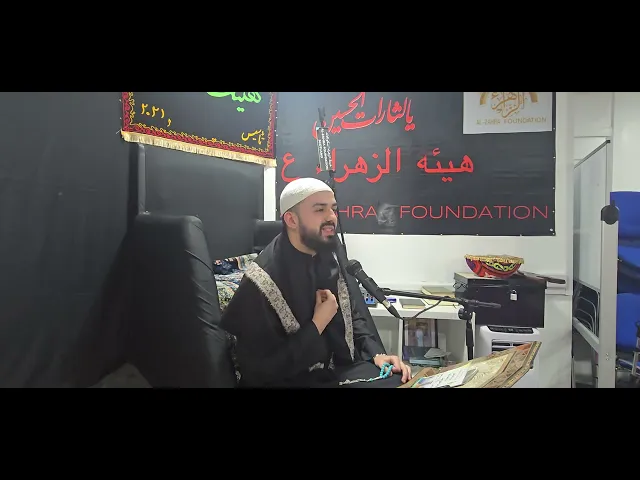
6- Furu Al-Din Course - Enjoining the Good and Forbidding the Evil- Sayed Saleh Qazwini
0
0
0 Bekeken·
24/10/22
Laat meer zien
Transcript
[0:00]of the course and so far we have explained the the obligations
[0:13]we've explained the Salah we've explained s fasting we've explained we we've
[0:20]explained and zakat so we've done five of them we have five
[0:27]more left what we're going to do is four of them we're
[0:35]dividing them into um basically one session for two and another session
[0:39]for two and then one more so three more sessions we have
[0:42]left in this in this course what we're com what we're covering
[0:47]right now is the Sixth and the seventh and then there's also
[0:54]and which we'll explain inshallah um on Monday and then we also
[0:59]have Jihad the last one Jihad and we will explain the rules
[1:06]of jihad these are the obligations so now we are at which
[1:12]means in joining the good this is one obligation meaning forbidding and
[1:19]stopping the evil so it is the duty of every Muslim it
[1:25]is the duty of every Muslim to enjoin the good and forbid
[1:32]the evil what does that mean that means it is my duty
[1:35]to invite people to do that which is good it is my
[1:41]duty to invite people to Islam it's my duty to encourage people
[1:44]to do good deeds encourage people to help out others because when
[1:49]you're a Muslim can you go to the next slide please when
[1:52]you're a Muslim when you're a Believer you're a positive force in
[1:56]the community and Society Allah subhanahu wa ta'ala does not want a
[2:01]person to just be a believer where they pray and they fast
[2:06]and they do their own worship but they're not concerned with anything
[2:09]going on around them that's wrong what's the point of belief what's
[2:13]the point of religion when for example I don't help out those
[2:19]who are in need I don't support and reform my society and
[2:22]my community so this is why we have this concept of and
[2:30]this very important concept because someone might come and say it's not
[2:35]my business let people live their lives people are doing something wrong
[2:39]who cares it's not my problem or people are not doing something
[2:44]correctly it's not my problem I don't need to come and tell
[2:46]them but Islam says yes it is your problem because at the
[2:51]end of the day we're all on one ship if you're on
[2:57]a ship and you see someone who is digging uh and and
[2:59]and breaking the ship making a hole in the ship what are
[3:04]you going to do you're going to tell them right why what
[3:06]happens if you don't tell them the ship sinks if you don't
[3:13]tell them the ship sinks so now we are all in one
[3:18]ship that means we have the obligation and we have the duty
[3:24]to do enjoining the good and forbidding the evil this is an
[3:30]obligation that we all have and there are several verses in the
[3:33]Quran there are several Hadith from the from that talk about this
[3:44]very important obligation the obligation of so what is this oblig Allah
[3:58]Allah says in the Quran in verse 104 and let there be
[4:11]and there should be a group amongst you who invite towards the
[4:14]good in order for acknowledged virtues and forbid from sin and these
[4:24]it is that are the successful ones so according to the Quran
[4:29]the successful group of people in societ are those who are the
[4:32]reformers those who enjoy the good and forbid the evil so this
[4:39]is an obligation Allah subhana tala is telling me that in every
[4:43]community in every society we have to be from those who enjoying
[4:47]the good and forbid the evil in another verse Allah says in
[4:51]the Quran you were the best Nation as long as you do
[4:58]what as long as you do you enjoy the good and forbid
[5:10]the evil you will be from the best Nations the moment you
[5:13]stop then you will not be the best of Nations and aith
[5:17]from he says how will it be for you when your woman
[5:22]will commit sins and your youth will transgress and you will not
[5:25]order for acknowledged virtues nor nor forbid from sin so tells the
[5:33]Muslims how are you going to feel how is it going to
[5:39]be when people start doing wrong and you don't enjoy the good
[5:46]and you don't forbid the evil so they the Muslims they tell
[5:49]this is actually going to happen they thought that this was something
[5:52]a very strange concept and they tell him will that happen oh
[5:56]messenger of Allah he said yes and then and then he said
[6:03]how will it be for you when you order for sins and
[6:07]forbid from acknowledged virtues meaning meaning instead of doing you do you
[6:14]command people to do the wrong and if you see someone doing
[6:17]something good you start saying oh this is not right why is
[6:21]this person doing that do we see that going on in our
[6:23]communities and societies where people they instead of if if they see
[6:30]some one doing wrong they tell them don't do the wrong now
[6:33]you see it it's become the way the opposite now you see
[6:35]if someone's doing something good people will come and tell us why
[6:37]are you doing this people see someone praying people see someone fasting
[6:42]people see someone going to Hajj people see someone doing good deed
[6:46]and they come and they tell them why do you do this
[6:47]you don't need to do this there's no need for you to
[6:51]do this instead go to Las Vegas go to spend your money
[6:56]have fun gamble do whatever all these things it's the other way
[6:58]around so then they tell Allah that's going to happen he tells
[7:02]them yes that will happen then he said yes and worse than
[7:07]that what is worse than that how will it be for you
[7:13]when you perceive the as you see the good as wrong and
[7:15]you see the wrong is good so people now their perspective and
[7:21]their perception of right and wrong has changed and this is what's
[7:25]going on in this Society for example and many other societies for
[7:28]example right now what do you see being promoted in the schools
[7:35]in the media in Hollywood you see violence you see people politicians
[7:39]they come and they say yeah it's okay you have to kill
[7:41]kill 60,000 70,000 people kill them it's okay there's nothing they come
[7:48]in instead of advocating for peace they advocate for war instead of
[7:52]advocating for families to stay together they come and they advocate for
[7:56]go and get divorced they tell the girl the lady the wife
[7:58]divorce your husband tell the husband who cares about your wife Everyone
[8:02]Do Your Own Thing have fun they come and they encourage homosexuality
[8:06]instead of encouraging families to stay together they come and they encourage
[8:11]deviant Behavior so you see that this is something that is very
[8:17]common so this is why are obligations that are very important for
[8:26]us as Muslims a lot of people a lot of Muslims they
[8:37]think that these obligations oh let the let the let the scholars
[8:40]this is their job to do is it just the job of
[8:46]the scholars whose job is it everyone it's everyone's job it's not
[8:51]just the scholars job meaning every single one of us just as
[8:58]Salah is W just as zakat is W just as ha is
[9:02]W just as is W just as zakat is W you have
[9:04]obligations upon you to enjin the good that means if I see
[9:12]someone not praying correctly for example I come and I teach this
[9:14]person how to pray if I see someone not doing something properly
[9:19]I come and I tell this person I teach this person and
[9:22]if I see someone doing something wrong I have to come and
[9:28]correct this person can we go to the next slide okay so
[9:33]it's kind of getting myself involved in other people's business and some
[9:38]people don't like that that some people they're like who are you
[9:43]to come and tell me I want to do something wrong or
[9:45]I who are you to come and tell me what to do
[9:48]so here there's a very important distinction a very important point that
[9:53]we need to understand and that is commanding good and forbidding evil
[10:04]it doesn't mean that I'm enforcing my belief on someone I'm not
[10:11]we're not talking about beliefs when it comes to beliefs we cannot
[10:14]force beliefs upon someone even if someone is praying or someone is
[10:19]fasting or someone's doing something wrong I can't enforce that upon someone
[10:23]but sometimes there are levels if someone is a not not a
[10:30]Muslim this person doesn't even believe in what I believe in is
[10:32]it my duty to come and tell this person for example how
[10:36]to pray no because this person doesn't even acknowledge Islam to begin
[10:40]with this person doesn't even acknowledge the the whole ba faith and
[10:45]when it comes to beliefs we cannot force our beliefs on people
[10:49]yes we could invite people we could encourage people we could show
[10:54]people the beauty of Islam the akl of Islam but I can't
[10:58]come and force someone to believe in Allah is very clear in
[11:04]Allah subhana says in the Quran this means that we cannot come
[11:25]and impose a belief on someone and this is something that is
[11:29]very clear however there are some conditions and there are some rulings
[11:35]and ways that it applies to people but before that let's go
[11:41]and read some can we go to the next slide please so
[11:45]there's from the one of the imams says surely it is through
[11:51]ordering for acknowledged virtues that responsibilities stand ground ideologies are safeguarded earnings
[12:01]become permissible oppression resisted an earth inhabited oppressed men with Justice against
[12:08]oppressor and the people do not receive any good when they do
[12:14]not order for the acknowledged virtues nor forbid from sin nor cooperate
[12:18]in doing good so basically the Hadith is saying that without people's
[12:25]no one's going to assume responsibility no one's going to stand for
[12:30]their ideologies the earning people are going to steal cheat hurt abuse
[12:34]do all this and no one is going to be telling people
[12:38]this is wrong don't do this you need to reform your society
[12:43]and reform your community so then the Imam says if a person
[12:47]does that hence when they do not do that blessings withdraw then
[12:50]the blessings from your life will be gone some of them overpower
[12:55]others and there is no aid for them in the Earth or
[12:57]in the sky meaning people won't be able to help each other
[13:00]on earth and the blessings from Allah is are not going to
[13:03]come what does this mean this means that if I see someone
[13:10]doing something wrong and I don't stop this person then that means
[13:13]I'm encouraging and I'm silent to that wrong Behavior slowly one person
[13:18]doing wrong is going to become two the two is going to
[13:22]become 10 the 10 are going to become 20 the 20 are
[13:27]going to become a thousand the Thousand then the wrong the wrong
[13:31]way of life the bad things are going to overpower anyone why
[13:36]because I chose not to come and tell this person don't do
[13:38]this this is wrong I chose not to do my job in
[13:43]enjoining the good and forbidding the evil yes sister okay so there
[14:02]there are ways there are ways that it's done in the next
[14:07]slide I'm going to explain there's conditions not it's not always my
[14:12]responsibility sometimes if I know for example if my life is in
[14:14]danger someone's not going to listen to me then I don't have
[14:18]to and then there are ways so for example if I see
[14:20]someone doing something wrong I'm not supposed to encourage that person I'm
[14:24]not supposed to laugh and hang out with this person that's one
[14:28]way of showing this person that I'm displeased with this action and
[14:32]then there's another level where I come and I tell this person
[14:35]um there there are ways in the next slide I'm going to
[14:40]explain but before that ordering for waj actions and forbidding from Haram
[14:44]is at times W and at times who knows the difference between
[14:54]and what's okay so means it is something that is waj upon
[15:09]every person like for example Salah prayer is waj upon every person
[15:15]can someone come and say Salah is not W on me no
[15:17]it's w upon every person is an obligation that is obligatory upon
[15:27]everyone but if one person does it then there's no need for
[15:31]others to do it for example when a person dies what what
[15:35]do we have to do when a person dies we have to
[15:40]wash the body we have to pray on the body and we
[15:43]have to bury the body right the moment a person dies it
[15:48]becomes wag upon the whole Community to make sure that this happens
[15:54]to make sure that this body is washed shrouded and buried and
[16:00]and the Salah is done but the moment one person volunteers for
[16:04]this it's not W upon anyone else but if everyone sitting and
[16:07]not doing anything someone has to stand up and go and volunteer
[16:13]and do that and this is waj this is an obligation so
[16:16]here Scholars say that sometimes meaning it's w upon every person and
[16:27]sometimes it's meaning one person does it then there's no need to
[16:31]do it any for for everyone else so by means of expressive
[16:40]actions not manhandling or words so for example um it's meaning that
[16:52]every person needs to show disapproval every person needs to show that
[16:56]they're not happy with what's going on this is W upon every
[17:01]person but it's not W upon every person to go and give
[17:05]a speech about this not waj upon every person to go and
[17:09]actually do something but I have to show my expression of disapproval
[17:12]in what's going on for example I see someone coming and he
[17:18]for example hits someone he abuses someone he does something wrong do
[17:23]I laugh with this person no I come and I show my
[17:25]disapproval it's wrong and I if I have to frown if I
[17:32]have to in one way Express that I'm not happy with what
[17:35]this person is doing that is one uh that is O obligatory
[17:40]upon every person because I can't come and be happy with something
[17:43]wrong that's going on if someone stole money and they're coming and
[17:47]they're saying I stole money and I laugh with this person that
[17:51]means I'm encouraging that behavior no it's waj upon everyone to say
[17:54]say no this is not right now even if I don't say
[17:59]anything but at least I show in my expression that I'm not
[18:02]happy with what's going on through these ones through through these ones
[18:07]discomfort towards the action is expressed meaning I show that I'm not
[18:11]happy with what's going on this is one type of imagine you
[18:16]you do someone does something wrong and everyone's frowning in their face
[18:20]are they going to do it wrong again no especially when it
[18:25]comes to for example in schools you see someone is bullying or
[18:28]someone says a stupid joke and they think that it's it's right
[18:33]I'm going to make people laugh it's Haram it's wrong if everyone
[18:36]no one's laughing no one's encouraging that behavior this person is not
[18:41]going to do it anymore so this is one in such cases
[18:45]if one person performs then others are not absolved from it meaning
[18:53]that meaning that if if someone frowned in someone's face means every
[18:58]we all have to do that we have to all show disapproval
[19:04]in the ofi he narrates he says told us to meet the
[19:08]Sinners with meet the sinful with Sullen faces meaning we need to
[19:15]show them that no this is not right behavior for example someone
[19:17]comes and says I went to a party and I drank and
[19:20]I smoked and I did all the things tell it's not right
[19:27]show this person meaning you have to to show them that this
[19:30]is not right this is one but if the situation is such
[19:34]that is possible only through physical compelling or detaining then it is
[19:42]only so sometimes I am I have to speak out just frowning
[19:50]in a person's face or I might have to come and kind
[19:56]of do something physically to kind of enforce that rule enforce that
[20:01]law then it becomes something that I must do of course here
[20:05]with this they say it needs the it needs the permission of
[20:11]the Imam or the representative of the Imam especially if you're using
[20:15]force of course are you allowed to harm someone no you're not
[20:18]allowed to harm someone but someone might come and say for example
[20:22]like I'm a father okay I'm a father and my son or
[20:26]my daughter they're the age of at the age of Salah they're
[20:33]B and they're not praying here what am I supposed to do
[20:40]as a father one I have to if I just frown in
[20:41]their face that's not going to do anything I have to come
[20:46]and use my words um you have to pray Salah is do
[20:51]this do that and then if I'm not I'm not being listened
[20:54]to when I'm saying that I have to take it another level
[21:01]maybe I use some type of some type of force now someone
[21:05]comes and tells me what what are you saying are you saying
[21:09]I have to go and hit them to pray no it doesn't
[21:11]necessarily mean hit them right now for example as a parents how
[21:16]do parents convince their kids to go to school in the morning
[21:20]do they hit them to go tell them to go to school
[21:24]no what do they do give you candy see this is one
[21:32]type of incentive so you use different methods you do you use
[21:38]different means to enforce what you want and this is what it
[21:41]means it means you have to be creative you have to use
[21:47]these different methods and means to kind of enforce but in some
[21:50]cases in some cases this is not advocated of course a lot
[21:56]and it shouldn't be in some cases physical force is sometimes used
[22:01]with the permission of the with the permission of the IM for
[22:05]example there's a person during the time of IM Ali he was
[22:09]going around and stealing from people or something and they keep telling
[22:12]him don't this is wrong then they have to come and imprison
[22:14]him they have to come and hold him they have to come
[22:17]and do something detain this person to stop this person from doing
[22:20]the wrong so if the acknowledged virtue is recommended then ordering for
[22:25]it is also recommended so for example and are so that means
[22:31]it's w on me to come and tell someone someone who's a
[22:34]Muslim someone who's a Believer someone who acknowledges the Salah I tell
[22:41]them go and pray this is something that is W however the
[22:44]midnight prayer is that W or must it's must so that means
[22:51]here it's also must upon me to tell the person if you
[22:54]want to pray pray it's recommended if something is Mak for example
[23:01]divorce is Mak so now here it becomes recommended upon me to
[23:05]come and tell this person to stay away from the it's not
[23:07]W if the person wanted to go and get divorced they're not
[23:11]doing anything Haram so here um the but but with the person
[23:21]addressed should not be put in any trouble or disrespect so sometimes
[23:25]if it's if someone is doing something Haram say someone is out
[23:28]outside drinking alcohol if I see this person outside I could come
[23:33]and yell at this person I could come and tell this person
[23:36]this is wrong this is Haram don't do this he's doing it
[23:38]in public but for example someone didn't do can I come and
[23:46]Y disrespect this person no because that's a must I can't come
[23:48]and disrespect this person yeah I could take this person aside and
[23:53]it's must for me to come and tell this person I recommend
[23:55]you do this this is very recommended but it's not wag on
[24:00]me and I should not make this person be uncom uncomfortable or
[24:04]show any type of disrespect but if someone is doing something Haram
[24:08]then yes at times if they're doing it in public then I
[24:14]could kind of scold this person yes sister is she Muslim she's
[24:37]not Muslim then she's not going to listen to you because she
[24:40]doesn't even believe in that as her ruling if you're encouraging that
[24:49]behavior if you're if that is seen as encourging that type of
[24:54]behavior because even if they're non-muslims if I'm liking a post that
[24:58]means I'm encouraging them so if that is seen as encouraging deviant
[25:01]Behavior then yes it's it might be Haram on me to do
[25:05]that as well yes so it depends if someone is doing someone
[25:18]is a Muslim say someone from our community Muslim follower of the
[25:23]they know all the rules they follow the everything and they're coming
[25:27]in publicly they're doing something wrong since they since they're doing it
[25:32]in public now I could come and tell this person in public
[25:33]as well but if I tell this person in public maybe this
[25:38]person is going to say you know what forget you forget your
[25:39]religion and they're going to they're going to leave and they're they're
[25:43]going to have a bad reaction to what I said here my
[25:48]the responsible thing to do is take this person to aside and
[25:50]tell this person in a gentle way where I'm not putting this
[25:54]person on the spot because maybe for example someone is not you
[25:58]know not not doing something that they're supposed to be doing but
[26:02]they don't they they need the encouragement they need the the the
[26:07]typ the way the good way to invite this person to do
[26:10]it yes yes and these I'm going to mention the five conditions
[26:17]right now uh can you go to the next slide please do
[26:20]do you have a question about what was just said or the
[26:23]condition okay no not necessarily impact others maybe for example someone's not
[26:42]praying and that's not impacting others that's just hurting themselves here if
[26:47]I have now sometimes I don't I I don't have authority over
[26:52]someone but maybe for example my son my daughter I could kind
[26:55]of the same way I I pressure them to go to school
[26:59]I could kind of put them in a situation where I tell
[27:03]them Y come and pray right now next to me no because
[27:10]is talking about beliefs but someone who already believes in Islam someone
[27:16]who already acknowledges the laws of Islam the rules of Islam now
[27:19]that they have acknowledged this now we're on the same boat so
[27:24]now I have to come and enforce enforce the Salah but but
[27:27]someone who does not Islam then that means I'm I'm forcing belief
[27:31]on this person I can't force a belief on this person I
[27:34]invite this person once they accept the belief then we're on the
[27:38]same boat then we both believe in the same thing now because
[27:41]he is my brother because we are now it becomes my out
[27:47]of compassion because of my love towards him Allah tells me you
[27:50]have to invite this person to do the good say for example
[27:52]you have someone in your class with you and you're you're applying
[27:58]to go to the school and you see this person not knowingly
[28:02]they're they're on the same grade as you they're in the same
[28:07]class as you but they're not applying correctly they're going to the
[28:10]wrong website or they're not doing what they're like they you need
[28:13]to start applying now they're they're they're playing PlayStation you come and
[28:17]you tell this person you come and you tell this person listen
[28:19]I care for you this is why I'm telling you apply right
[28:23]now but say this person did not even was not even in
[28:25]your class like a different religion say for example then you don't
[28:28]you're not required to tell them but since they're in the same
[28:32]level as you since they're the same Faith as you it's not
[28:34]anymore you had a question yes yeah Imam Hassan and Imam Hussein
[28:43]they saw someone who was not doing W correctly you you know
[28:50]that story what did they do respectfully they started debating with one
[28:59]another they started saying No this is wrong this is this is
[29:03]how you're doing it in front of the guy the guy came
[29:04]to the realization that they're both doing it correctly and he's doing
[29:08]it wrong so he he he understood and they did it in
[29:14]a very compassion so now we'll go over the five conditions and
[29:19]then um things will become clearer in so what are the five
[29:25]conditions of enjoining the good and forbidding the evil the first first
[29:30]is that the person should have knowledge of what is w andam
[29:32]related to the ACT although in a broad spectrum so if I
[29:39]don't know the rules of Salah should I come and tell this
[29:43]person hey what you're doing is wrong and you should pray like
[29:45]this and pray like that no because I don't have knowledge I
[29:48]don't have the knowledge of the rules of is it my job
[29:53]to come and tell someone if I don't have the knowledge about
[29:56]it no because I might be able I might tell tell something
[29:59]someone something wrong and a lot of times you see this happening
[30:02]you see some people they have this desire to get into other
[30:07]people's business but they don't even know they're telling people the wrong
[30:13]thing and this is one thing that disqualifies you from doing and
[30:19]second the chances of of having an effect on a person if
[30:29]it does not have effect all you do is show displeasure so
[30:31]right now say I have a non-muslim neighbor and I know that
[30:37]this non-muslim neighbor is not going to listen to me if I
[30:39]tell them come and pray five times a day they don't even
[30:41]believe in what I believe in there's no chance that this person
[30:46]is going to come and pray with me because they don't even
[30:49]believe in Islam should I come and tell this person no or
[30:54]for example I know someone is not going to listen to me
[30:58]that's it I just know that this person that's not their lifestyle
[31:02]that they've chosen they're not going to listen to me they're Muslim
[31:05]they're Shia they're follower of the but they chose a different lifestyle
[31:08]not on me tell because they've already not listened to me yes
[31:17]sister you know they're not going to listen to you then you
[31:21]don't need to yes you you could you could tell them once
[31:27]if they listen to you they listen to you if they didn't
[31:31]listen to you then that's it but if you think that there's
[31:33]a possibility there's a chance that you could kind of get this
[31:38]person's heart to soften and listen to you then you continue trying
[31:41]but if you know or or if you have authority over that
[31:46]person yeah it's your child it's your brother it's your sister it's
[31:49]someone that you kind of have authority over you could come and
[31:51]tell them but say someone who's will not listen to me I
[31:56]don't have authority over this person they don't even see me as
[31:58]a reliable source of you know someone to come and tell them
[32:04]then it is not my duty um third the decision to repeat
[32:12]or do it the first time meaning meaning the circumstances are where
[32:16]this person is either continuing to do something and there's a chance
[32:20]he's going to listen to me I tell him don't do this
[32:24]or they're going to do it the first time meaning someone for
[32:25]example they take a cigarette they want to do it the first
[32:27]time could come and tell this person no don't do it but
[32:31]say for example someone did it five years ago they did something
[32:37]and they're not doing it again or this person is just not
[32:41]going to listen at all then there's no need to tell this
[32:43]person will become W if it is known that the other person
[32:49]has decided to commit the act as a repetition or as a
[32:55]first time act in a way that rational people feel it is
[33:00]relevant in the particular case so say for example someone's addicted to
[33:05]smoking this person is addicted they've been smoking for 50 years if
[33:11]I come and I tell this person please don't smoke they're going
[33:14]to tell me get out of my way you know they they're
[33:17]gonna they're not going to listen to me but if it's their
[33:19]first time the chances of them listening to me are going to
[33:26]be much higher so this is a third the fourth is that
[33:29]there should be no religious excuse the andam should be applicable to
[33:36]the person performing it if he has a valid religious excuse then
[33:39]the does not come into Force so say for example someone in
[33:45]the month of Ramadan a lady is not fasting because she's on
[33:48]her menstrual cycle do I come and I tell her hey aren't
[33:53]you fasting no it's it's because she has a religious valid excuse
[33:57]or someone's traveling in the month of Ramadan someone someone is traveling
[34:04]do I come and I tell this person why are you no
[34:06]because they have a valid excuse uh or they did not know
[34:11]something that was Haram for example someone is drinking something it has
[34:16]something n in it and they didn't know about it they didn't
[34:18]know that it was Haram and they keep drinking here they didn't
[34:23]know that this was Haram so they're not even doing they're not
[34:26]acknowledging yeah it's my job to come and tell this person what's
[34:29]in this is wrong you should stop but I don't come and
[34:33]scold this person because of what's going on so this is one
[34:39]or maybe someone follows a mer follows a scholar and that mer
[34:44]says that you're allowed to do this there are there's for example
[34:47]there are some that say playing chess is Hal there are other
[34:54]Mar that say playing chess is Haram so if someone is playing
[34:58]chess because their told them it's okay is it my job is
[35:04]it my duty to come and tell this person no this is
[35:06]Haram unless for me I'm doing my duty I believe it's Haram
[35:12]and they're they're not they don't have to listen to me and
[35:14]I could I could say that this is wrong but the moment
[35:17]this person tells me my said it's okay then that's it it's
[35:21]not my responsibility anymore they're they're following the the the approach and
[35:24]the methodology so this is one uh the fifth is that no
[35:31]harm there should be no so if the life property and honor
[35:34]uh up to a noteworthy magnitude of the person doing is endangered
[35:41]or if the performance of the causes unbearable distress to him or
[35:47]her then it is not W anymore so say for example I
[35:53]go and I tell someone I do and they fire me from
[36:00]my job I get fired from my job am I required to
[36:02]put myself in that situation no I'm not required unless I see
[36:08]someone being killed some something there everyone Allah has given you the
[36:14]you know where where you kind of step in and intervene and
[36:17]you know where you do not intervene and do not step in
[36:22]so or it causes unbearable distress for you say for example I
[36:25]have to get on a plane and I have to spend fly
[36:28]somewhere to come and tell this person hey don't do this this
[36:35]is unbearable distress Allah does not want so these were the conditions
[36:43]any questions about the conditions okay go to the next slide please
[36:48]the method of so Allah subhana ta'ala wants us to invite people
[36:59]to do the good and invite people to Islam in a good
[37:06]way not a terrorizing way not the way Isis or Taliban or
[37:12]or all of these Terror organizations the way they were they were
[37:17]trying to impose the religion of Islam and their copy their their
[37:21]weird Twisted beliefs they come and they want to impose it upon
[37:24]people by going and destroying homes and killing and beheading and doing
[37:30]all these no this is not what Islam comes with Allah subhana
[37:33]wa tala very clearly says in chapter 16 verse 25 invite all
[37:47]to the way of your Lord with wisdom and kind advice and
[37:54]only debate with them in the best way possible in the best
[37:58]manner even if you're debating with someone debate in the best way
[38:03]possible so what does that mean the method one first I show
[38:12]expressive actions so through acting behaving style of talking in a way
[38:19]that shows disapproval this is done without explicit mention of the sin
[38:23]to the specific person so say for example we're all sitting here
[38:29]and someone start it's backbiting someone does if I laugh or if
[38:34]I listen and I show approval I'm also falling in the Haram
[38:37]so here right away I come and I say no I just
[38:42]turn around and I I show in my face that I am
[38:48]displeased with this type of behavior this is the first level sometimes
[38:51]this might work with someone say for example someone right in front
[38:54]of me came and did something wrong and I come and I
[38:57]tell this person no don't do this I don't even need to
[39:01]say don't do this I just give this person the you know
[39:05]the expression where I show this person that I'm not happy with
[39:08]what this person is doing that might be enough they'll get it
[39:11]especially you see for example a child sometimes a young child they
[39:16]do something wrong the parents they just come in they give them
[39:19]that they raise their eyebrows the child is not going to do
[39:22]it anymore that's it the child is going to learn they get
[39:26]the message this is one second sometimes you have to escalate it
[39:31]through words so you mention it about it directly through words and
[39:37]encouraging or discouraging through words including advising and admonishing so I come
[39:42]and I take this person aside I tell this person no this
[39:45]is not right this is wrong is bad it's har this is
[39:49]wrong this is right and you come and you tell this person
[39:50]so you bring it a level further so these are all levels
[39:54]maybe the first level might work with you but the most important
[39:57]thing is that we have to keep in mind that it's waj
[40:00]upon us especially the first one where I kind of show disapproval
[40:03]this is waj upon every single one of us a lot of
[40:07]people they see their family their friends their relatives doing something wrong
[40:11]and they stay quiet and sometimes they even encourage it and sometimes
[40:14]they see oh there's nothing wrong with it what they're doing is
[40:17]not wrong no so first Express expressive actions and then words and
[40:21]third if it comes to that case if it it's going to
[40:24]work if you if you believe it's not going to work or
[40:28]it's going to come cause you harm or any of the other
[40:30]um this person has a religious excuse this person is not going
[40:37]to listen to me there's no effect um then you don't need
[40:39]to but if you see that there's a chance then you escalate
[40:44]it to physical compelling meaning either forcing this person confining but not
[40:50]up to the extent of injury or harm and must be done
[40:52]with the permission of the jurist and of course for example here
[40:57]in America someone you come in you try to force this person
[40:59]to do something they'll come and they'll call the cops on you
[41:03]so that means it causes harm for you so you don't have
[41:08]to do but we're talking about a society a time where you
[41:10]are able to say for or for example say a mother or
[41:14]father they're able to enforce something upon their children but you can't
[41:17]enforce it upon strangers and other people yes so there are some
[41:37]narrations that say for example that your your child or someone who
[41:44]is for example fasting uh in the month of Ramadan they're coming
[41:48]out and they're eating in front of people they're eating in front
[41:53]of people if you're living in a Islamic Society not we're not
[41:57]talking about here and we're not this does not apply to where
[41:59]we are living right now but say you're living in a Islamic
[42:04]Society the rules of Islam everyone's fasting but someone's coming out and
[42:08]eating in front of everyone this person people could come and force
[42:12]this person away where he's not coming and and and eating in
[42:18]front of in front of people or take the take away the
[42:20]food from this person something like that it dep it all depends
[42:30]on how much Authority or power you have here we don't have
[42:33]any power so this does not apply to to us and but
[42:38]if you're living in for example the time of the imams the
[42:41]prophet where the rule of law is being implemented this is the
[42:46]law then they would be able to use Authority just like right
[42:48]now if someone doesn't pay taxes for example the police are going
[42:53]to come they're going to come and get involved if you did
[42:55]something wrong the police are going to get involved that time we're
[42:58]talking about a a Muslim Society where the the the rules are
[43:04]all the laws of Islam are being implemented yes yes you could
[43:19]leave right away or you could tell them to stop you leave
[43:23]right away you're not involved in the backbiting you didn't support it
[43:27]you didn't do anything wrong you tell them to stop you're going
[43:30]a level further and that's and that could be if if you
[43:33]believe that that's going to have an impact on them then you
[43:38]should do that yes or you could do that and then leave
[43:41]okay so another very important point is that no Haram can be
[43:48]done through enjoining the good or forbidding the evil this is what
[43:52]Isis was doing they used to go and Destroy kill do so
[43:55]much they're doing all the Haram and then they're coming and they're
[43:59]saying we want to build the we want to build the caliph
[44:01]no they're doing all the Haram they're doing wrong so no Haram
[44:04]can be done in the process of yes yeah so they need
[44:22]to for example if I don't pray and I come and I
[44:26]tell you oh you should pray then that doesn't work I need
[44:29]to be praying to tell you I need to be practicing fasting
[44:34]to tell you to do it I need to be giving to
[44:37]come and tell people to give if I'm not doing it then
[44:39]that's not that's going to defeat the purpose okay anyone else anyone
[44:56]okay so the slide are over we um we basically finished yes
[45:19]sister no you this time it becomes if you know harm is
[45:24]going to come out of this then you have to say something
[45:28]yes yes it's you're not doing the is an obligation just like
[45:37]Sal if you don't do it it's Haram yeah because you're not
[45:50]you have to do it in a kind way or in a
[45:53]way where you measure the circumstances maybe some one person I have
[45:55]to kind of be tough on this person another person I have
[46:00]to kind of be kind and soft to attract this person each
[46:01]one has their own ways to tell them what you're doing is
[46:15]bad yeah yeah educate them Ali no it's not backbiting if someone
[46:34]is publicly doing something wrong if they publicly do something that is
[46:39]um that is wrong then that means they don't care they don't
[46:42]care about um what people are going to say so I could
[46:46]come and say this I saw this person outside and this is
[46:48]what they were doing publicly yes whatever it works if that if
[47:28]that's going to work then then do it in a way that
[47:30]it works yes any other questions so I heard a scholar once
[47:40]he was he was talking about and he was telling asking the
[47:44]people in front of him he told him what is the sin
[47:48]that most people commit on the day of judgment most people are
[47:52]going to see that they have committed that sin what do you
[47:56]guys think is the sin that most people commit backbiting what else
[48:04]backbiting does anyone have another say something else yeah not praying okay
[48:11]what else yep not doing that's a sin if when we don't
[48:23]do we are doing a sin and most of us do that
[48:28]maybe I don't backbite I I pray I I fast I go
[48:33]to Hajj I do everything but I see someone doing wrong I
[48:35]see someone doing something Haram I say it's not my business I
[48:40]don't need to tell them and I know that I have a
[48:41]impact on this person maybe I'll be able to a lot of
[48:44]times this happens within families like for example a father or mother
[48:48]they don't enforce Islam upon their children because oh they're my children
[48:52]they're doing something it's okay I'm going to let them go this
[48:56]is Haram so not doing is probably the sin that is mostly
[49:03]committed by people and this is what I heard the scholar saying
[49:08]so it's a serious issue and the moment we actually look at
[49:12]it as one of the then it will kind of kick in
[49:17]and make make sense for us a lot of people we we
[49:18]think it's like extra credit if I do it you know let
[49:22]me just do it and if I don't do it then it's
[49:25]okay but no it is an obligation that needs to be done
[49:28]okay any other questions basically we me we mentioned the conditions we
[49:43]mentioned the conditions um if those conditions are met then it's a
[49:48]sin if I don't do it if those conditions are not met
[49:53]most of the many times these conditions are met are not met
[49:56]for example I might not have knowledge of the situation or this
[50:01]person has an excuse or um there's no effect but if there's
[50:06]a chance that it has an effect on this person then I
[50:09]should tell them yes just tell them to stop because if you're
[50:39]telling them the truth then that means you're getting involved in that
[50:43]conversation it's better to just stop end it and we're and and
[50:49]take yourself out of it because the moment you get in then
[50:51]you might be saying something that might be seen as backbiting and
[50:55]you don't want to get involved in any of that okay any
[51:01]other questions no questions okay inshallah our next session will be on
[51:21]Monday and then we have Wednesday so Monday we're going to talk
[51:28]about and Wednesday Jihad and we'll be done inshallah
0 Comments
sort Sorteer op
- Top Reacties
- Laatste Reacties
Volgende
1 Bekeken · 25/11/04