التالي
19. Imam Ali & The Ethics Of War | Sayed Ammar Nakshawani | Ramadan 2026
0
0
8 المشاهدات·
26/03/09
في
محاضرات
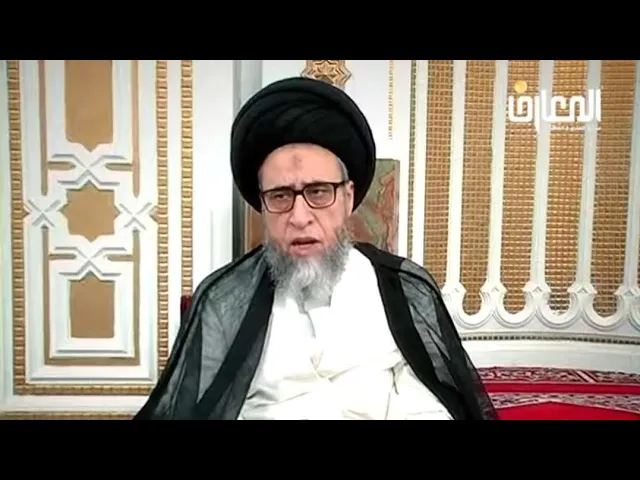
Truth. Dialogue. Courage. After two compelling and impactful seasons, The Divide & Dialogue returns for Season 3—at a moment when silence is no longer an option, but a risk. As sectarian narratives intensify and misinformation deepens divides, this series fearlessly challenges accusations, unpacks misunderstandings, and confronts the uncomfortable truths shaping today’s Muslim world. This Holy Month of Ramadan, join Dr. Sayed Ammar Nakshawani on Imam Hussein TV 3 for bold conversations, sharp historical insight, and a dialogue that refuses to be silenced. ——————————— Subscribe to Sayed Ammar’s official online platform, consisting of bespoke courses, exclusive content, brand new podcasts & more! https://www.sayedammar.com
أظهر المزيد
Transcript
[0:02]Make the upcoming le special for you and your family and bind
[0:09]your fate to the blessed shrine of Im Hussein.
[0:12]On your behalf, a zarat can be performed in the holy city
[0:15]of Kbala.
[0:16]If you cannot make it to the holy land of Kbalah this
[0:18]Ramadan, our staff can perform a complete z of Im Hussein with
[0:26]all the and rituals in the holy shrine on your behalf in
[0:29]appreciation for a $50 US.
[0:34]You will also have your names and the names of your dear
[0:36]ones and put inside the holy zari alongside your wishes for this
[0:40]special night.
[0:41]This way you have paid a sodak for the well-being of your
[0:48]family and aar on behalf of your in the holy city of
[0:51]Kbala.
[0:51]By paying this you will also show the imam of our time
[0:58]your support to the blessed cause of Abdah Hussein.
[1:00]To reserve your z and receive follow-up videos and pictures of your
[1:07]names from the holy city and the holy shrine.
[1:08]WhatsApp us on the numbers displayed now on your screen.
[1:13]>> Just a short while ago, we came to you with a
[1:16]dream.
[1:17]Imam Hussein TV finally has a new home thanks to your generosity.
[1:20]This chapter is something special.
[1:22]We're finally bringing everything to life.
[1:29]Phase one of the Zenobia Complex starts here on the ground floor.
[1:35]The studios are being developed.
[1:36]Shortly you'll hear the voices you love to hear and the stories
[1:39]about the B.
[1:41]Also on this floor is something special Hussein dedicated to Imam Sad
[1:49]Alam.
[1:48]Phase 2 brings this floor to life.
[1:52]All the background work be editing development for all of your favorite
[1:54]shows happens on this floor.
[1:57]The stuff you don't get to see the magic behind the camera
[2:00]is all here.
[2:01]Phase three is all about sustainability with offices being created to allow
[2:08]the channel to generate rental income.
[2:11]This phase is all about the long-term vision of the channel.
[2:14]Have the opportunity to rent an office in our new home.
[2:19]You helped us secure a foundation.
[2:24]This Ramadan helped us build it.
[2:25]Every single donation leaves a legacy.
[2:27]This is a place for community, family, and most importantly, every single
[2:34]one of you.
[2:33]Donate this month.
[2:36]Build with us.
[2:52]Heat.
[3:08]Heat.
[3:42]for Muhammad.
[4:12]mad.
[4:23]Alhamdulillah.
[4:44]Allah.
[5:00]Alhamdulillah.
[5:24]Alhamdulillah.
[5:39]Do not fight them unless they initiate the fighting.
[5:46]For by the grace of Allah, you are on the right.
[5:52]So if you leave them to start the fighting, then this will
[5:58]be a point for your side against theirs.
[6:02]If by the will of Allah you defeat the enemy, then do
[6:10]not kill the runner away and do not strike the helpless and
[6:14]do not finish the wounded.
[6:17]Do not inflict pain on women, even if they have been foul-mouthed
[6:25]towards your honor, or if they have been abusive towards your officials.
[6:30]For you must remember that they are weak and lacking in intelligence
[6:36]and within their desires.
[6:39]We have been ordered to desist from attacking women even if they
[6:45]are unbelievers.
[6:46]During the days of Jahyah, if a man struck a woman with
[6:54]a stick or with a stone, then that man would be rebuked
[6:57]and his offspring as well after him.
[7:02]The first of our loud salawat in honor of Muhammad sallallahu alaihi
[7:08]wasallam.
[7:12]A second even louder salawat in honor of Imm.
[7:22]The third with your loudest voices in honor of the Imam of
[7:26]our time, Im.
[7:33]Respected scholars, brothers and sisters, letter 14 in discusses the ethics of
[7:50]war in the eyes of imbal.
[7:57]As we know, Im Albam participated in over 80 wars in his
[8:02]life.
[8:03]He was always the model of restraint, the model of ethics, the
[8:10]model of morality in every single war which he took part in.
[8:14]Indeed, there is not even a single moment in Islamic history where
[8:17]a person can point to Alibab being unethical or having any war
[8:25]crime associated with him.
[8:25]We know very well that the world that we live in today
[8:30]is a world where there are wars absolutely everywhere.
[8:31]I don't think there's been a period in my life in the
[8:36]four decades that I've lived on this earth where there hasn't been
[8:40]a war that I've seen either in my own eyes or no
[8:45]people who've been involved in.
[8:46]If you look, for example, at the majority of us here, four
[8:49]decades, five decades, six decades that we've lived, seven decades, we've always
[8:55]come across wars on the news, atrocities that we've seen, murders that
[9:00]we've seen, assassinations that we've seen, mutilations that we've seen.
[9:08]In the 1980s, we saw the Iraq Iran war.
[9:12]In the 1990s, we saw the Gulf War.
[9:15]In the 2000s, we saw war in Syria.
[9:18]Today, we see war absolutely everywhere.
[9:20]As in when one looks at the news, one finds that on
[9:23]the news Iran, America, Israel, the war is right in front of
[9:29]us taking place.
[9:28]You find that there are certain people when they look at this
[9:34]war or the war between Pakistan and Afghanistan or the war between
[9:39]Russia and Ukraine or other wars that no one mentions because there's
[9:43]nothing to gain from mentioning those wars.
[9:45]There are wars for example in places like Sudan no one will
[9:51]mention places like Congo no one will mention the reality is that
[9:54]around us each and every one of us there are wars taking
[9:57]place on a daily basis alongside those wars there's a question are
[10:04]there really ethics in these wars or have we reached the stage
[10:07]where the ethics has gone even on the battlefield because there are
[10:12]two concepts that always emerge in relation to war one is war
[10:16]games.
[10:17]Another is war crimes.
[10:19]War games is when a person decides, for example, that they're going
[10:24]to begin a war for different reasons, just to have a game.
[10:28]For example, some people may begin a war for what reason?
[10:33]They may begin a war because they have certain accusations against their
[10:38]character.
[10:37]They want to divert the attention of everyone in the world on
[10:42]somewhere else.
[10:42]So what they decide to do is they decide to start a
[10:46]war as they please because otherwise the people's attention will all be
[10:51]on them on their controversies on what people suspect them of doing.
[10:56]So automatically you'll have someone who takes war as a game.
[10:59]Let's look for a country who we can try and destroy.
[11:03]Which country do you want to choose today?
[11:06]Once upon a time it was Vietnam.
[11:07]Another time it was Iraq.
[11:10]Another time it was Kuwait.
[11:14]Another time it was Afghanistan.
[11:15]Another time it was Russia.
[11:19]Many of these wars you will see what was involved in some
[11:23]cases were games that a person on the one hand either wanted
[11:28]to divert the attention of the people towards a different direction or
[11:31]sometimes you had the other way.
[11:35]What was it?
[11:34]Sometimes it was a game of how much money can we make
[11:40]if we start a war.
[11:39]Look at the intention behind a war.
[11:42]That person may begin a war for what reason?
[11:45]That I want to make some money.
[11:47]If I start a war here, I'll make some money on the
[11:51]gas, some money on the petrol, some money, the planes will get
[11:54]money, the multinationals will get money.
[11:57]These people have no ethics when it comes to war.
[12:03]They'll tell you that I'm trying to save the world and I
[12:07]want to make sure that humanity is all saved.
[12:08]The reality is all he wants to save sometimes is his bank
[12:13]account, nothing more.
[12:12]You'll see therefore that when it comes to war games, there are
[12:18]two groups.
[12:17]There are either those who, for example, are making wars to protect
[12:22]their reputation, or there are those who are making wars, starting wars
[12:28]so that they're able to do what?
[12:30]So that they're able to make money.
[12:32]On the other hand, you have what are known as war crimes.
[12:34]All of this come under the ethics of war.
[12:37]war crimes.
[12:38]You'll have some people who will tell you, "We went into that
[12:41]country to save that country.
[12:45]They've raped in that country.
[12:47]They've pillaged in that country.
[12:49]They've tortured in that country.
[12:50]They've killed children in that country.
[12:54]They've mutilated bodies in that country." That person will tell you, "But
[12:59]we went in there as peacemakers." The reality is that the record
[13:03]that they have of unethical acts in that war leaves a lot
[13:09]to be desired.
[13:09]Until today, there are certain wars.
[13:11]Many of us do not even know about some of the atrocities
[13:16]that have taken place.
[13:16]Only now you are hearing this one went through water boarding.
[13:21]This one was hung.
[13:22]This one was whipped.
[13:24]This one was flogged.
[13:24]It didn't matter if it was a woman.
[13:27]It didn't matter if it was children.
[13:29]It didn't matter if it was the elderly and they didn't even
[13:34]care what they were destroying.
[13:36]Sometimes they destroy a place of worship.
[13:39]Sometimes they destroy holy personalities and their lives.
[13:42]Therefore, when it comes to the concept of war, Islam doesn't deny
[13:46]that war takes place.
[13:49]But Islam wanted there to be ethics on the battlefield.
[13:52]With Imm.
[13:54]When you dissect his life, you'll see that the Imam never once
[14:01]in the 80 odd wars that he took part in has any
[14:06]war crime associated with his name.
[14:09]This is miraculous.
[14:08]Why?
[14:09]Me and you, if you put us outside on the street, someone
[14:15]says a bad word to us, we could still lose our temper.
[14:17]Our ego can still take over.
[14:21]We can still be malicious.
[14:22]We can still have road rage.
[14:24]We can destroy someone's life.
[14:25]And that's just us on the street.
[14:27]Not on a hot day in Saf, not on a very nasty
[14:31]day in J.
[14:35]Not against animals in not at notice that when you dissect imm
[14:50]battlefield instead of using the word chivalry of Imam Ali on the
[14:57]battlefield.
[14:56]bravery.
[14:56]There are many soldiers in the time of the prophet and after
[15:02]him who were brave, but they were reckless on the battlefield.
[15:05]There were many who were brave, but if you hurt their ego,
[15:08]they'd kill you.
[15:11]Sometimes they might even kill you for angering them, not for Allah
[15:14]subhana wa ta'ala.
[15:16]They'll say to you that this guy, this guy angered me, so
[15:19]I ripped his head off.
[15:22]Whereas with Amir Alman, you look at his conduct of ethics of
[15:26]war, you'll see the at play on the battlefield with not a
[15:32]single blunder in his life.
[15:36]Whether the day was hot or it was cold, whether his companions
[15:39]backstabbed him or not, whether his best friends were in the opposition
[15:43]or not, never did Amir Muin ever waver from the ethics of
[15:51]the battlefield.
[15:50]And that's why this letter in which I'm seeking to dissect tonight,
[15:56]this letter in shouldn't just be used in our rather this should
[16:03]be studied at universities.
[16:04]When it comes to war studies, if you go to King's College
[16:08]today or you go to Harvard or you go to many of
[16:11]the most prestigious universities in the world, they have a war studies
[16:15]department.
[16:16]The war studies department discusses wars, conduct in wars, ethics in wars,
[16:24]principles in wars.
[16:24]Note one thing about that throughout the 80 odd battles that he
[16:30]fought, not only he was victorious, but he was never unethical.
[16:36]Every single time with an enemy of his, with a friend of
[16:42]his, with the opposition, you'll always find the Imm displayed the greatest
[16:47]ethics.
[16:48]Let us tonight in the midst of all that's going on in
[16:51]the world concerning the wars that we see.
[16:54]Let's look at the philosophy of the ethics of war in the
[16:59]eyes of Imir.
[16:59]And I'd like to dissect this in the following stages.
[17:03]Number one, when the Imam said, "Do not fight them unless they
[17:08]initiate the fight." How important was conflict resolution before a war in
[17:14]the eyes of Imisam?
[17:17]Number two, why did the Imam say if someone is running away,
[17:24]don't kill them?
[17:23]Number three, why did the imam stress never kill our daughters or
[17:28]nieces or ladies on a battlefield?
[17:34]And how important was it that the Muslim maintained his calm when
[17:38]he saw females in front of him in any battle or in
[17:44]any arena?
[17:41]Number four, how did Im Ali even when he saw the opposition
[17:49]was desperate, how did he still show ethics to the opposition in
[17:53]their most difficult moments?
[17:54]Number five, how did the Imam stress that religious sites or religious
[18:00]leaders should not be killed when it comes to the wars and
[18:06]that a person must be dignified when it comes to all of
[18:09]these?
[18:10]Number six, how did all of these get embodied in one day
[18:16]in the battle of Kandak?
[18:17]And how did the imam show the complete ethics that led the
[18:21]holy prophet to saying that his strike at kak is greater than
[18:27]the worship of every human and every jin and how did he
[18:29]display his ethics on that day and number seven what's the connection
[18:34]between the strike at kandak and the strike of ib muljam let's
[18:41]discuss this and dissect the topic in complete depth when you come
[18:45]to this letter letter 14 of this letter was a letter from
[18:53]Im Ali to his companions at the battle of Imam Amirin's most
[18:58]vicious enemy was at the battle of Safen.
[19:02]Muawia as we all know had a hatred for Ali.
[19:07]Even this myth that we have today that on the 19th of
[19:09]Ramadan they tried to kill Muawa and kill and kill im Ali.
[19:15]This is all nonsense.
[19:15]Muawi was the fun behind the people who killed Imir.
[19:21]Muawi and his army had gathered in the battle of Saf.
[19:26]If my biggest enemy, the guy who I hate the most has
[19:33]bought an army accusing me of something I've not done, then what
[19:36]am I going to do?
[19:37]Sometimes I'll probably lose myself and destroy that person.
[19:43]Imm on the contrary wanted to highlight to his shia don't use
[19:47]war as an excuse to take out your venom on people.
[19:53]There first has to be at the beginning self-restraint and thinking whether
[19:57]this can be avoided because you might see some of the sh
[20:00]today fall into this idea I want war I want death I
[20:05]want killing I want to see blood no no no no wait
[20:09]I immoldi were biting their teeth ready to destroy the opposition at
[20:16]he saw for example abusing he said to him we don't need
[20:20]to abuse You want to talk about these people, talk about their
[20:24]bad traits.
[20:26]You could talk about the people of Sham, but don't generalize.
[20:28]Some of his companions were thinking, "But mah, we've come to this
[20:31]battle.
[20:32]These guys want to kill us.
[20:33]You're telling us to calm down." Imm in the leadup to the
[20:39]battle of Saf was writing letters to his companions making it clear.
[20:44]We do not enjoy seeing bloodshed.
[20:46]This is a vital point because sometimes people imagine that because everyone's
[20:52]saying we are we are it means that we love seeing blood
[20:59]and jihad and war.
[21:00]On the contrary were never people like this were people if they
[21:07]had the chance they would not shed blood everywhere and look to
[21:11]kill everyone who comes in their way.
[21:13]If that was the case then I im would have done it
[21:20]straight away would realize and calculate a situation but the most important
[21:26]thing for them was the moral upper hand.
[21:28]We are not animals like this man and his mother who used
[21:31]to chew the liver.
[21:33]This man and his mother they grew from the blood of killing.
[21:37]We are people who grew from the house of we're not people
[21:44]who grew in a house of cannibals who enjoy fighting and beheading
[21:48]and killing because wallah sometimes while I see the zeal and the
[21:52]passion of our youth at the same time I want our youth
[21:56]to remember something that don't just go down this route where I
[21:59]just want to kill whoever's my opposition and punch them and hit
[22:06]them relax there has to be restraint I imm saw his Shia
[22:08]and the Shia were brave and the Shia were full of valor.
[22:13]But Imm still turned around to them and he said come here
[22:16]and he wrote a letter to them.
[22:17]The details of this letter open up the ethics of war.
[22:22]Let's see what he says.
[22:22]He begins by saying do not fight them unless they have initiated
[22:32]the fighting because by the grace of Allah you are on the
[22:35]truth.
[22:36]So if they begin the fight, you have a point on your
[22:43]side against them.
[22:42]What's the imam meaning here?
[22:45]Imam means here right from the beginning, the first ethics of war
[22:49]in the eyes of Imam Ali Alisam is always try and find
[22:54]a way for conflict resolution.
[22:56]Don't straight away jump in to fighting.
[22:59]Try and find a way in that you don't start the fight.
[23:04]If the opposition starts the fight, that's a different story.
[23:08]And remember one thing, Imam can call offensive jihad if he wants
[23:14]to.
[23:12]Islam is not just defensive jihad.
[23:16]Cuz you know some Shia when the non-Muslim asks us, they say
[23:20]to us, for example that your prophet was involved in battles, we
[23:24]jump straight away defensively and we say our prophet was only in
[23:28]defensive war.
[23:30]A matsum can call offensive and defensive war.
[23:33]if he wants to can call jihad as well as jihad.
[23:40]If a feels that we should go on the offensive because he
[23:46]can see the Muslims are in a difficult situation, the can call
[23:50]offensive jihad.
[23:51]Someone says, "No, no, but said Omar, I told people that in
[23:54]Shia we only believe in defensive jihad." No, no.
[23:58]In Shiaam we believe in offensive and defensive jihad but only can
[24:04]call.
[24:05]Although ayat may Allah bless his soul quite interestingly in a difference
[24:15]with others said that even the who is qualified may may call
[24:23]offensive jihad.
[24:23]Others of the said that only a can for example call offensive
[24:32]jihad said that a in his may call offensive jihad but whether
[24:37]there is one at that level and the state is at that
[24:42]stage is up for discussion.
[24:42]Im could have easily said let's just begin the battle.
[24:48]No, do not fight them unless they initiate the fighting.
[24:54]For by the grace of Allah, you are on h you are
[25:01]on the truth.
[24:59]And if they begin fighting, then you can use that point against
[25:03]them.
[25:04]We know very well in any war that takes place, the people
[25:10]who attack first are the one who the majority of society hates.
[25:13]Why?
[25:14]Because we as human beings, we want peace.
[25:18]We want mediation.
[25:20]We want there to be mediators.
[25:21]We want there for people to have conflict resolution.
[25:24]Notice that Imam even before the battle OF SAFEN DIDN'T JUST JUMP
[25:31]in cuz normally we imagine they get to the battle of Jal
[25:36]at Basra and they just pick up their swords and they want
[25:38]to fight each other.
[25:40]No, no, no, no, no.
[25:40]Ali says no, you do not fight unless they initiate the fighting.
[25:45]Firstly try and negotiate with each other.
[25:49]Talk to each other.
[25:52]You are both humans and this whole sky belongs to the both
[25:55]of you.
[25:56]At the end of THE DAY, NO ONE has a right above
[26:00]the other.
[26:01]Talk to each other.
[26:04]Immedi in the battle of Jes all of them in the opposition.
[26:12]Imm would send mediators before the battle.
[26:13]Why would he send mediators?
[26:17]Because Imam didn't want to build his shia on the idea that
[26:20]we just haphazardly go into fighting.
[26:22]Send a mediator from their side and a mediator from your side.
[26:27]Imam would use for example binaser.
[26:29]Imam would talk to binas.
[26:34]Amar go and have a word with them.
[26:36]Go and talk to them.
[26:36]Say to them that why are we fighting each other?
[26:41]Is there no possible solution between us?
[26:44]Can we not mediate with each other?
[26:47]Imam would ask on another occasion.
[26:49]Imm asked bin.
[26:52]He said to him, you talk to the people of Basra.
[26:53]Aisha and her army have come all the way towards Basra.
[26:59]Talk to them.
[26:59]Tell them Baba the unity of the Muslims.
[27:02]Keep the Muslims together.
[27:05]Many make Im Ali Alisam seem like he just wanted to start
[27:08]fighting.
[27:09]Imam was the one who mediated, not the opposition.
[27:15]Immedi was the one before Basra.
[27:17]He's the one who said, "I am willing to ask all of
[27:20]you a question.
[27:21]What is it that I've done wrong?
[27:23]You tell me.
[27:26]Where's the killers of Osman?" He said, "Wait, if Osman has been
[27:29]killed, let's have a court case and we will get the WITNESSES
[27:32]AND WE'LL DISCUSS." NO, you know who they are and if you
[27:37]don't give them to us and punish them, we'll kill you.
[27:39]Wait, Baba.
[27:41]Wait.
[27:42]Wait.
[27:43]You are accusing me of these crimes.
[27:45]Weren't you the ones who called Osman?
[27:48]Didn't you call man a hyena?
[27:51]Didn't you the wife of the prophet?
[27:54]Weren't you the one who was insulting him?
[27:57]Abdullah bin Mas Abui Yaser.
[28:02]All of them.
[28:04]Weren't they the one standing against Osman?
[28:06]Am I not the one who tried to help when Osman was
[28:09]surrounded by his house?
[28:11]Im did not want to initiate the fight.
[28:15]Im lowered himself to a level no human would kill their ego
[28:25]like Imam.
[28:25]Today if I try and reconcile two people in the community wall
[28:30]their ego is from here until you look at him you're like
[28:36]I am sitting here for two hours staring at your face.
[28:40]WHY I'M SITTING STARING at your face, I don't know.
[28:44]But on top of that, your ego in this reconciliation is destructive.
[28:49]I want to mediate between the two of you.
[28:52]You're not allowing me to mediate.
[28:54]When you mediate, you hope that the two sides, their egos will
[29:00]drop.
[29:00]You hope that one of them will say, "Okay, Baba, if you
[29:03]say that we've done a mistake, give me terms.
[29:06]terms by which we agree with one another.
[29:09]We'll work on.
[29:11]Before the battle of Jamal, Imam had a three-pronged approach.
[29:13]Either you send a mediator.
[29:15]That's number one.
[29:17]Or number two, you remind the Muslims of their unity.
[29:20]Or number three, he called them directly.
[29:23]Zuber, come here.
[29:27]Zuber, you're not my cousin.
[29:28]Said, yes.
[29:29]You're my cousin.
[29:29]You remember when we were younger?
[29:32]Do you remember about 30 years ago when the prophet said to
[29:37]you how much do you love Ali and you said I love
[29:42]him so much and he asked you will you ever leave him
[29:46]and you said never and he warned you there'll be a day
[29:49]that you'll leave me he looked at him in the eye mola
[29:53]why don't you just pick up a sword this guy cannot defeat
[29:55]you finish him no do not fight them unless they initiate the
[29:59]fighting try and talk to to them.
[30:05]Every human, even wallah is some of the worst, you can still
[30:08]find a way to convince them, to talk to them, to put
[30:12]a mediator in the middle.
[30:13]What do you think kills us about what happened with Iran?
[30:18]The Omani mediator was placed in the middle.
[30:19]What was the role of that Omani mediator?
[30:21]Why didn't Iran just strike or why weren't they struck straight away?
[30:26]The idea was we're going to have a mediator in the middle.
[30:31]That mediator should follow the ethics of Imam Ali Alisam.
[30:34]And I'm sure you'll all agree with me.
[30:36]The most peaceful humans on this earth are Omanis.
[30:41]Do you agree?
[30:40]Omanis are peaceful.
[30:43]Yes, Omanis very peaceful.
[30:45]They're not going to hurt you.
[30:46]They're going to cause you issue.
[30:48]They're super laidback.
[30:50]The Omani, why was he placed in the middle of mediation?
[30:54]Otherwise, the Shia could have gone all out and people could have
[30:58]fought.
[30:58]The Omani was placed in the middle in the hope that there
[31:04]would be mediation between the two sides.
[31:06]What do we hate the most when you put a mediator in
[31:08]the middle and there is no respect for that mediator?
[31:12]True.
[31:13]As in today when people are saying that this side is right,
[31:16]this side is wrong.
[31:18]I asked them one question.
[31:19]Which side tried to work with a mediator and which did not?
[31:24]Whether it's J or Safh or Naharan or 2026 when countries appoint
[31:33]a mediator it is like how Imam appointed a JL Imam did
[31:37]not say I've got who wants it come bring it on IM
[31:43]turned around and he placed the mediator AND HE DID EXACTLY THE
[31:48]SAME when at JL what happened im someone came to him said
[31:51]imam shall we shoot he said Imm but they're not listening to
[31:56]you.
[31:57]Never do not fight them unless they initiate the fighting.
[31:59]The moment Tala and his comrades got that arrow and of course
[32:04]fitna makers are always in the middle of war.
[32:07]Isn't that true?
[32:09]Any war you will see there is always the fitna maker in
[32:11]the middle.
[32:13]Who was the fitna maker?
[32:16]J Marwan Hakim Marwan Hakim.
[32:17]You know what he used to do at Jamal?
[32:21]He shoots Aisha's side and he shoots Imm Ali's side.
[32:23]He's shooting both sides.
[32:25]YOU ASK BABA, WHICH SIDE are you on?
[32:28]There's always a fitna maker in every generation.
[32:30]Whether it's today, whether it's a thousand years ago, there's always one
[32:34]person or one city or ONE COMMUNITY OR ONE country that shoots
[32:40]both sides.
[32:42]It says WE ARE WITH THIS SIDE and then it's this side
[32:44]and then back this side and then this side.
[32:47]When their business is affected, they're with this side.
[32:50]When salah is affected, they're with this side.
[32:52]As that famous companion once said, Salah is good with Ali and
[32:57]food is good with Muawia.
[32:57]And if the two of them fight each other, it's better that
[33:03]I'm in the middle.
[33:03]Yes.
[33:04]Therefore, when he said, "Do not fight them until they have initiated
[33:12]the fighting." Why?
[33:12]Because Mhola didn't want them to have an excuse that Ali started
[33:17]the fighting.
[33:19]No.
[33:21]Never could you ever say that I imm started a war.
[33:24]Never.
[33:26]Never.
[33:27]Even they came to his house to threaten him.
[33:29]It wasn't him who came out to fight them.
[33:32]It remains with them forever.
[33:37]At JM they started the war.
[33:41]The moment the arrow was shot.
[33:42]What did Mah say?
[33:44]He said that's it.
[33:45]Now that they've shot us, now we fight them.
[33:49]Now it's over.
[33:48]And when says it's over, you know it's over.
[33:52]So therefore, at Jamal, Imam had that principle at Safen.
[33:59]Safi, you know, the battle of Safen weeks on end there was
[34:02]no fighting.
[34:03]Do you know what it was?
[34:06]Negotiation.
[34:06]Many people today if you tell them what happened at the battle
[34:11]of Saf they'll normally tell you Im Ali Malik Ashtar and so
[34:14]on and so forth.
[34:16]Ask them how many weeks was the battle.
[34:19]So all said Omar the battle was three months.
[34:22]Ask them how much of those three months was war are bloodthirsty.
[34:30]Is that what we made?
[34:33]Imm kept on writing letters to Muawi's side.
[34:39]Imm kept on sitting in negotiations with Muawi's side.
[34:44]Moola, how do you sit and negotiate with Shan?
[34:50]Well, today if someone sat and negotiated, they'll say, "You're a coconut
[34:53]white boy sellout." True or no?
[34:56]The moment any of our people enter politics, that guy's a sellout.
[35:02]That guy is a sellout.
[35:02]That guy is CIA.
[35:05]MI6, MI5.
[35:04]Are you willing to say that Mhola negotiating with Muawi?
[35:09]Was Mh a sellout?
[35:12]Mh.
[35:12]What are you doing?
[35:16]Wait.
[35:16]Do not fight them unless they initiate the fighting.
[35:20]Come and sit down.
[35:23]Negotiate.
[35:24]Let's talk.
[35:23]What's your issue with me?
[35:26]He said, when he was asking for your help, you were the
[35:30]first to run away.
[35:33]Muawya was the first.
[35:33]His cousin is asking for help.
[35:35]Muawya did not help him at all.
[35:39]By the way, Muawa is so sneaky that even when he died,
[35:42]Muawa straight away tried to propose for his wife.
[35:46]Oman's wife's wife tried to sneak a proposal after man's died publicly.
[35:57]What's doing privately?
[36:01]This is the sneakiness.
[36:05]Imm said to him, you are saying that you want the blood
[36:08]of of avenged, but you didn't even help Osman.
[36:11]Still, I want to fight you.
[36:12]Imm said to him, but the Muslim bloods will be shed.
[36:18]Still, I want to fight.
[36:19]Imam tried his hardest in the battle of Safi to negotiate before
[36:23]the battle began.
[36:25]The theory that we've been given in many of our malis, Imam
[36:29]gets to jam fights.
[36:33]Imam gets to fights.
[36:33]Imm would always try his hardest to have peace before war because
[36:41]a will always try to find peace before war.
[36:45]And that's why the apple doesn't fall far from the tree.
[36:46]Look at IM Hassan.
[36:49]Didn't he try to find the with the shaitan of his time?
[36:53]Im Hassan found a situation where the Shia blood will be high.
[36:58]And that's why it surprises me sometimes I hear people on their
[37:01]Twitter or on their Instagram, you'll see them write, "LIVE LIKE ALI
[37:05]and die like Hussein." Hey, what happened to the one in the
[37:11]middle?
[37:12]How about the one in the middle?
[37:16]Where's he gone?
[37:16]Live like Ali and die like Hussein.
[37:19]Yeah, but how about the one in the middle?
[37:22]Or is it that the one in the middle politically is not
[37:26]useful these days?
[37:31]Cuz you know the moment you open Imam Hassan's chapter straight away
[37:35]someone jumps at you.
[37:35]YEAH.
[37:35]YEAH.
[37:36]YEAH.
[37:36]BUT BUT BUT WE ARE HUSSEIN.
[37:38]NO, NO, hold on, hold on.
[37:39]So why aren't we Hassani?
[37:40]Is it haram to be Hassani or politically doesn't suit us to
[37:46]be Hassan because it doesn't sound powerful anymore?
[37:52]So the less I say it's better I don't talk much because
[37:58]if you talk much you're talking to a world which 90% of
[38:03]them doesn't even know contemporary Shia political theories and politics and if
[38:08]you start opening that door sometimes you stick to talking only Quran
[38:12]and B it is better for your health if you talk outside
[38:18]Quran and B you will be ostracized.
[38:22]There are people who say to you, why are YOU ONLY DISCUSSING
[38:26]QURAN AND BM Hass like his father if I can negotiate with
[38:34]him?
[38:35]People were saying you've let down the believers.
[38:37]Imm said you can call me whatever you want.
[38:40]I'm not going to see the blood of the Shia shed.
[38:43]We'll try and find a way to mediate.
[38:46]And that's why the same with Imam Hussein like his father at
[38:49]Kbalah didn't Im Hussein say we will not be the first to
[38:51]shoot the arrow IM Hussein at Kbalah said we will not shoot
[38:57]the first arrow when Omar bin said let everyone be a witness
[39:03]that I am the one who shot that's it now you mess
[39:08]with Al Muhammad we will come after you but we will not
[39:11]begin therefore what did Im Ali say at the beginning the First
[39:16]ethic of war is that try and find conflict resolution and diplomacy.
[39:20]Do not haphazardly enter something seeing bloodshed absolutely everywhere.
[39:26]That's the first thing.
[39:27]So what does he begin?
[39:27]Do not fight them unless they initiate the fighting.
[39:31]For by the grace of Allah, you are on the truth.
[39:36]And if they initiate the fighting, then that will be a point
[39:40]for you against them.
[39:42]Then after that, what does he say?
[39:44]If by the will of Allah we defeat the enemies.
[39:47]Notice how humble he is.
[39:48]He doesn't say when we defeat the enemies.
[39:51]Says if by the will of Allah we defeat the enemies then
[39:59]do not kill the one who's running away and do not strike
[40:05]the helpless and do not finish off the wounded.
[40:09]Look at the man.
[40:09]If someone's running away from me in battle, I'm going to finish
[40:11]them.
[40:12]The guy's been fighting me the whole day.
[40:15]IM says, "No, no, no, no.
[40:18]You see someone running, let them run.
[40:21]Let them keep going.
[40:22]Don't chase that person.
[40:22]And if you see someone who's helpless, do not strike the person
[40:29]who's helpless." How many of you remember that scene in battle when
[40:32]the person saw Im Ali Alisam?
[40:34]He said, "They say that you are," he was fighting Imam Ali.
[40:39]sword hits the sword of Mh.
[40:40]Mh has both swords.
[40:42]He looks at him.
[40:45]The person's helpless.
[40:45]He has no sword.
[40:48]Imam has his sword and his sword.
[40:50]So the person looks at him and says, "They say you're the
[40:54]most just person and that anyone who asks you for anything you
[40:57]give." He said, "It's true." He said, "I want my sword back."
[41:01]He said, "Here, take it." That person said, "Now I joined the
[41:08]path of Ali." He said, "No, say I've joined the path of
[41:12]justice." >> Let's have a second inshallah.
[41:25]>> And a third nar.
[41:34]Imam that person was helpless.
[41:41]Muawia's army was thirsty thirsty.
[41:43]When they had control of the water, mah said to them, give
[41:48]me the water.
[41:50]They said no.
[41:50]Said why?
[41:52]They said you won't even touch this water.
[41:54]The water of the you won't even touch it.
[41:58]No problem.
[41:59]When Imam got control of the water, We as army was thirsty.
[42:04]Imam looked at them, they were helpless.
[42:06]He asked his companions, "What do you think?
[42:08]What should we do?" Some of them said, "Don't give them anything."
[42:10]Imam said, "No, no, no, no, no.
[42:12]The one who's helpless, don't strike them.
[42:15]Give them from that water.
[42:16]Let them drink from that water." Abdullah's nephew, the biggest troublemaker at
[42:23]Jamal, was lying on the ground at Jamal.
[42:26]All I had to do was take his sword and kill him.
[42:30]But Imam had ethics of war.
[42:32]What was the ethics?
[42:35]Do not kill the one running away.
[42:37]And do not strike the one who's helpless.
[42:40]AND DO NOT FINISH OFF the wounded.
[42:44]That person was finished.
[42:45]Imam was about to strike him.
[42:49]Imam left him.
[42:48]They said to ma, I said, ma, why you leave him?
[42:53]This person is helpless.
[42:53]Aisha said that Ali is the killer of the beloved.
[42:57]He said, "If I was the killer of the beloved, I would
[43:00]have killed your nephew when he was right in front of me."
[43:02]Yes.
[43:03]Your nephew Abdullahbn Zuber was right in front of me.
[43:07]I could have killed him, but I didn't.
[43:09]Because Mola realized that this person when he's helpless, there's no need
[43:13]for us to stab it harder.
[43:15]Let the person go.
[43:17]Let them run away.
[43:17]I don't care if they run back.
[43:19]I am on a much higher moral pedestal than these people.
[43:24]And that's why after that he has a famous line.
[43:30]He says, "Do not kill what?
[43:30]Do not inflict pain on the woman." Even if those woman have
[43:40]been using bad words about your honor or if those woman have
[43:43]been abusing you because they are weak in their intelligence and they're
[43:49]weak in their desires.
[43:51]In terms of weakened their intelligence and desires, we know that those
[43:56]ladies who came with their intelligence was real stupidity and their desires
[44:02]had overtaken them.
[44:02]But at the same time, he said, "Do not kill the woman.
[44:06]Do not kill children because those children have done nothing wrong to
[44:14]you." 175 girls die in Iran.
[44:19]Why?
[44:16]Why?
[44:17]Why 175 girls died?
[44:21]If we're talking about the ethics of war, what have those girls
[44:25]done to you for you to kill them?
[44:28]What have those girls done?
[44:30]Used to say, you see a child, female, you see a woman,
[44:35]don't touch them.
[44:37]A woman, the elderly, none of these are meant to be touched.
[44:42]Leave them.
[44:43]Because only a coward would take out his oppression on a female.
[44:47]that six-year-old at school or that 80-year-old girl or that 75 year
[44:53]old lady.
[44:52]What has she done wrong for you to go and kill her
[44:57]in a battlefield?
[44:57]That whole school now I cannot imagine.
[44:59]What are those mothers going through?
[45:01]Honestly, what are those moms going through?
[45:04]Those moms see fatas and zanabs and bats and kulths and khadas
[45:13]and assas and mariams.
[45:17]All of these girls from the lovers of you're telling me the
[45:21]ethics of war.
[45:23]I ask you in war you want to hit somewhere military hit
[45:28]the military.
[45:29]used to say, "You hit the opposition." Yes.
[45:32]But you don't hit the elderly, the children, the places of worship.
[45:39]How many of us sh to see ISIS bomb our places of
[45:44]worship?
[45:45]How many of us?
[45:48]Every single generation and decade, we see our places of worship destroyed.
[45:54]At one stage carbalah, another samur another zam another wherever we go
[46:00]our places of worship are destroyed.
[46:03]I ask you in his life did he ever destroy a church?
[46:07]Did I im destroy a synagogue?
[46:12]Imam ever destroy a zarastrian temple?
[46:15]How many times we hear that when Mhola walked past the place
[46:21]of worship, someone came to him and said to him, I wonder
[46:24]how much shik is being done in there.
[46:26]And he replied, I wonder how much Allah is being worshiped in
[46:33]there.
[46:31]I can look at the people in the church even if I
[46:35]don't agree with the church or the synagogue in terms of theology,
[46:40]the ethics of wars that you don't destroy places of worship.
[46:44]You don't destroy schools of children.
[46:47]You don't destroy homes for the elderly.
[46:51]Imm said to his companions at do not inflict pain on woman
[46:55]even if those woman abuse you Allah abar.
[47:00]If I went to a school and that school had a teacher
[47:07]and on the wall she's abusing Im Ali.
[47:10]What should I do?
[47:13]Imm says that person do not inflict pain on them.
[47:18]Mah but the woman is abusing you.
[47:19]Says no no no sometimes she's weak in her intelligence.
[47:22]Sometimes she's weak in her nefs.
[47:26]Only inah only the ignorant would attack the woman.
[47:31]And that's why he concludes this.
[47:33]What does he say in his conclusion?
[47:39]Imam says very clearly.
[47:39]He says that during the period of if a man struck a
[47:47]woman with a stick or with a stone, he would be rebuked
[47:53]and the whole of his offspring would be rebuked.
[47:55]Why?
[47:56]Because only a coward hits a woman.
[47:59]And only a coward would go on the battlefield.
[48:03]If they saw woman on that battlefield, they would hurt those women.
[48:07]And that's why even when we looked at Kbella, what was the
[48:13]biggest insult in Kbala?
[48:13]When the daughters of Al Muhammad were running from tent to tent,
[48:16]true.
[48:17]What's the biggest insult in Kbala?
[48:20]If you want to see the lack of ethics on a war,
[48:26]look at Benny and their ethics.
[48:29]and look at Beni Hashim and their angelic ethics.
[48:33]Subhan Allah.
[48:36]Subhan Allah.
[48:38]Beni Hashim until today we will not go to a school and
[48:41]bomb the whole school.
[48:44]We won't go to the elderly.
[48:45]Until today in the news, what do you always hear?
[48:50]Military base attacked.
[48:50]Military base attacked.
[48:51]Military attacked.
[48:53]But you will never hear that the civilian.
[48:56]Today I see some countries in the Gulf, they put on their
[49:02]Instagram, "Alhamdulillah, look, I'm okay.
[49:04]I'm going to the beach.
[49:05]I'm going to the cafes.
[49:06]I'm going to the restaurants." You know why?
[49:09]Because that civilian in a way is admitting that I know my
[49:13]home will not be attacked because of the principles of Ali.
[49:19]Don't dismiss this.
[49:22]Otherwise, you think we couldn't have been reckless.
[49:25]But we are the sons of the man who was struck on
[49:27]a night like this.
[49:31]We're his sons.
[49:30]And if you're his sons, then of course you try and follow
[49:37]his code of conduct.
[49:37]And that's why the man any battle you look at his he
[49:43]always practice what he preached.
[49:43]It's one thing to say to someone that don't finish off the
[49:48]wounded.
[49:49]Don't strike the helpless.
[49:52]Don't do things because of your ego.
[49:56]Try and do things for conflict resolution.
[49:57]DON'T KILL SOMEONE out of anger.
[50:01]But it's another implementing it.
[50:04]And he implemented it all on the day of on the battle
[50:08]of Kandak.
[50:10]Why do you think the prophet said the whole of Ian has
[50:12]come out to fight the whole of Kufur?
[50:16]Why did the prophet say that?
[50:20]Because the embodiment of IM as a human was Ali Ab and
[50:23]that's why he is the very prince of I is Imamasool Allah
[50:34]said the whole of I has come out to fight the whole
[50:40]of I defy anyone to show me a description in any book
[50:45]of any companion of the prophet where the prophet says the The
[50:48]whole of Iman has come out to fight the whole of Kufur.
[50:50]Never.
[50:51]Never.
[50:52]People are praised.
[50:54]But no one says the whole of Ian has come out to
[50:56]fight the whole of Kufur.
[51:01]When he came out on the day of immnesty all of them
[51:16]one by one.
[51:18]I'll finish them all today.
[51:19]None of them would come out.
[51:23]Why?
[51:22]Because they knew this guy will finish them.
[51:24]He's too brave.
[51:27]The man is an expert in every area of the battle.
[51:32]So, Imam Aliv turned around to his prophet, "Let me go.
[51:35]Sit down.
[51:37]Let me go.
[51:39]Sit down.
[51:37]Let me go." He said to him, "Now you go." How old
[51:43]was he on that day?
[51:48]He was around 28 years of age.
[51:50]But Talib at 28, at 38, at 48, at 58 is exactly
[51:56]the same in terms of his perfection.
[51:57]Came out and he looked at him.
[52:01]He said, "Name yourself." He said, "I am Ali, son of Abu
[52:08]Talib." He said to him, "I will not kill you." He said,
[52:11]"Why?" He said, "Because your father was a friend of mine." Imm
[52:15]looked at him and said, "But I will kill you because you're
[52:18]an enemy of Allah.
[52:20]However many times my prophet tried to negotiate with you, you never
[52:26]left him.
[52:26]You never left him.
[52:28]You've come back again.
[52:28]We've tried our hardest to negotiate with you.
[52:32]We're in Medina.
[52:32]You're in Mecca.
[52:34]You still are not leaving us alone.
[52:36]Enough is enough." He said to him, "But I'll kill you." When
[52:39]they started their fight, everybody could see but then suddenly couldn't see
[52:44]because there's dust and sand everywhere.
[52:46]Suddenly when the sand was gone, they saw him.
[52:52]And when they saw him, they saw him walk away.
[52:55]Then they saw him come back and then they saw him walk
[53:00]away and then he shouted Allah Akbar.
[53:03]When he came back they asked him they said to him what
[53:09]happened we saw you you went towards killing him then you walked
[53:12]away then you went again and then you walked away he replied
[53:17]by saying look at the ethic of Ali he said when I
[53:23]was fighting him he struck me hard on the top of my
[53:27]head here it was bleeding everywhere here when he came back to
[53:33]the army the wound here blood was all over his face because
[53:36]Amrnit had hit him so hard that we are told in some
[53:44]narrations any other person would have died.
[53:46]He got hit so badly here there was blood everywhere.
[53:51]He said he hit me but then I struck him and he
[53:59]fell.
[53:58]As I was coming near him, about to finish him, he spat
[54:06]at me.
[54:08]I had a decision to make.
[54:11]I wanted to kill him as soon as he spat at me.
[54:15]But then my intention would have been because of my anger, not
[54:21]Allah subhanahu wa ta'ala.
[54:23]I had to make sure that the strike is 100% clean intention
[54:32]for Allah.
[54:32]Not for buildings, not for gas, not for oil, not for planes,
[54:39]not for multinationals, but for Allah only.
[54:41]Said then I went back and I finished him.
[54:46]And that is what happened.
[54:50]The prophet turned around to all of them and said, The the
[54:56]strike of on the day of is greater than the of every
[55:02]human and every gin till the day of judgment.
[55:04]Imagine how many humans how many gins there are the strike of
[55:11]there are many other strikes.
[55:12]Why that one?
[55:15]Because its intention was so clean for Allah subhana wa ta'ala.
[55:19]There wasn't even any ego in finishing him off.
[55:24]But look what then happens at the magnanimity of the man.
[55:27]When the sister, she's in the tent, the narrations mention that they're
[55:33]sitting there.
[55:32]These guys are barbecuing.
[55:33]They're having a good time.
[55:36]They're certain they're going to win.
[55:37]And then all of a sudden, someone enters.
[55:39]When they enter, they said to her, "We have bad news." Said,
[55:45]"What?" Said, "Condolences." Said, "What do you mean?" said someone killed your
[55:50]brother said my brother said yes your brother said yes so that's
[55:56]impossible which lion killed my brother because he was known to wrestle
[56:04]with the lions so now which lion has killed my brother there's
[56:08]no human who can kill my brother which lion has killed my
[56:15]brother they said to Ali son of Abu Talib She said, "Can
[56:18]you take me to his body?" Said, "Yeah, come." She was walking
[56:23]towards his body.
[56:25]She's crying.
[56:27]She gets closer to the body crying.
[56:29]She sits by the body crying.
[56:31]And then she gets up from the body and says, "I'm honored.
[56:36]The son of Abu Talib killed my brother." Everyone's mystified.
[56:43]said, "I'm honored that the son of Abu Talib killed my brother."
[56:49]They said to her, "What do you mean?" She said, "My brother,
[56:53]before he fights oneon-one, always whispers to the one fighting that I'm
[57:00]going to kill you, but if you end up killing me somehow,
[57:05]leave the armor and the jewelry on my body so that my
[57:12]family can inherit it." She said, "I'm honored that the son of
[57:19]Abu Talib killed my brother because any other soldier would have been
[57:24]unethical and taken everything for booty.
[57:27]Any other soldier would have taken everything as booty.
[57:32]But the son of Abu Talib has so much ethics that my
[57:37]brother's wish before he died, he fulfilled that wish.
[57:42]Wah someone like this cannot live in this world was not made
[57:47]for this world.
[57:48]He's made for Jenna is not made for he is made for
[57:56]Jenna because he's an angel walking on the earth.
[57:58]Every single aspect of him was angelic.
[58:03]And that's why you find my dear brothers and sisters that that
[58:09]strike of on the day of that strike would come back one
[58:19]day.
[58:17]Which day?
[58:19]on a night like this because it's on a night like this
[58:24]that I immag Imagine the face of Zam on a night like
[58:38]this and the face of Kulum and Hassan and Hussein.
[58:44]Take your heart on a night like this to the land of
[58:48]Najaf.
[58:49]I don't know where do you want to take your heart tonight.
[58:51]Some of you may take your heart to Sham tonight to give
[58:56]condolences to Aariba in Sham tonight.
[59:00]Look at how many of us are here in London honoring the
[59:06]Amir.
[59:07]How many are with his daughter tonight?
[59:09]Does his daughter have anyone to read mass next to her grave?
[59:14]I ask you all a question.
[59:15]On a night like this, Zanab was with him.
[59:20]Kulum was with him.
[59:24]Imam Hassan was with him.
[59:25]Im Hussein was with him.
[59:27]Imagine the scene my dear brothers and sisters for the family of
[59:30]al- and that's why the narrations mention to all of us how
[59:38]difficult it was for his children and his family on this night
[59:41]because they noticed something different about their father and the complexion on
[59:45]the face of their father.
[59:48]He knew that this was the night that Rasool Allah had always
[59:50]told him about.
[59:52]This was the night that the holy prophet peace be upon him
[59:55]and his family had always told him there'd be a night in
[60:00]the mosque of Kufa.
[59:59]But imagine for those children, why is it difficult for each one
[60:06]of those children, you ask?
[60:06]Because their mother died when they were still children.
[60:09]Correct?
[60:10]If you imagine for Imam Hassan, he was 8 years of age
[60:17]when his mother Fatama died.
[60:17]Im Hussein was seven when his mother Fatama died.
[60:22]Zab was five when her mother died.
[60:26]Kulum Alam was one and a half when her mother died.
[60:32]Imagine for these children how difficult it was.
[60:37]I also want to mention someone else.
[60:40]Imagine Abel Fbas on this night Abbas was also close to his
[60:48]father and the brothers of they were all still young and they
[60:52]were close to their father.
[60:53]Imagine the heart of this night seeing as he's about to leave
[61:03]for the mosque.
[61:02]The Imam began to leave for the mosque on a night like
[61:08]this.
[61:09]He came towards the mosque of Kufa.
[61:12]Take your hearts on this night to the mosque of Kufa walking
[61:16]inside the mosque.
[61:19]Imagine the scene as he walks past a man who's sleeping on
[61:23]his stomach.
[61:25]The im tells him do not sleep this sleep for this is
[61:27]the sleep of shan.
[61:31]The Imam then walks towards the salah.
[61:34]It's the time of fer.
[61:38]The man who looked after salah, will his salah look after him
[61:42]tonight?
[61:43]Imagine as the Imam begins the Allahbar.
[61:50]Take your hearts tonight with the im.
[61:53]The Imam begins with the recital.
[61:56]All of a sudden, the imam goes into the There are Muslims
[62:03]praying behind the imam.
[62:04]those Muslims who are praying behind him amongst them there's a man
[62:09]who's beginning to move he's beginning to move between the rows condolences
[62:17]to Im Z on what I'm about to narrate as the man
[62:26]was walking between the rows I am went down in his as
[62:31]he went down in his there was suddenly a call.
[62:39]Hum belongs to Allah.
[62:39]Authority belongs to Allah and not to you, oh Ali.
[62:45]All of a sudden, the man shr Yes.
[62:59]I have been victorious by the Lord of the I've been killed
[63:09]by the Jewish woman.
[63:10]All of a sudden, there was a call in the sky from
[63:22]all of you know that call.
[63:29]Allah.
[63:48]Imagine the sides as I im saw blood all over the face
[63:54]of his father.
[63:57]Im Hassan saw blood all over the face of his father.
[64:03]Then Im Hussein carried the head of his father.
[64:08]He placed the head of his father in his lap.
[64:13]His father removed his head.
[64:14]Then he placed the head again.
[64:17]Then his father said, "Husseain, is that you?" He said to him,
[64:25]"Father, it's me." He said to him, "Today you carry my head."
[64:30]Allah abar.
[64:32]He said to him, "Today you carry my head." Who will carry
[64:39]your head?
[64:40]One day in Oh, say I Hassan and I Hussein begun to
[64:51]carry their father.
[64:54]He was walking with them until he reached the door.
[64:57]Then as he left the mosque of Kufa, they were holding his
[65:04]arms.
[65:05]Then he continued until he turned around to them and said, "Oh
[65:09]my sons, let me walk.
[65:10]Don't carry me anymore." They said to him, "Father, why?" They said
[65:18]to him, "Father, why?" He said, "I see Zade about the door
[65:23]and I don't want to shock Z.
[65:27]I see Z about the door and I don't want it to
[65:32]shock my daughter." How caring is that?
[65:40]He didn't want it to break the heart of his.
[65:45]He said, "Let me walk there until his daughter saw him." Who
[65:52]has severed my father's head?
[65:54]Who has cut the top of my father's head?
[65:58]Who has struck my father's head?
[66:01]She carried the imam into the house.
[66:05]Imagine that sight.
[66:08]Imm Hassan, Imam Hussein.
[66:08]Zanab at least had them with her on this night on the
[66:13]19th of Ramadan.
[66:13]At least she can hold on to her brothers on a night
[66:17]like this.
[66:19]I ask you my dear brothers and sisters, who did have on
[66:27]who helped Zam and that's why the narrations mention that on the
[66:34]night of the 11th of Muaram Zab was trying to sleep after
[66:40]what she had seen in Kbella.
[66:41]Then all of a sudden within her dream she saw a man
[66:48]wearing black on a horse.
[66:48]The man was coming towards her.
[66:50]She said to him, "Oh man, don't attack us.
[66:54]We have no Hussein and no Abbas with us." He looked at
[66:59]her and he said, "Zab, don't you recognize your father?
[67:04]Don't you recognize your father?
[67:28]Raise your hands my dear brothers and sisters.
[67:34]Ya Allah, give us the jaf of al-man.
[67:38]Ya Allah, allow us to be amongst the zir of the grave
[67:45]of in the land of ya Allah bring peace and prosperity to
[67:49]all the followers of our bless them and give them the highest
[67:55]station.
[67:56]Ya Allah, ya Allah, unite the um the love of Muhammad and
[68:01]al Muhammad, the originators of this majus.
[68:04]allow them to continue in the service of Muhammad and al- Muhammad.
[68:08]There are many who have requested for their hajat and many who
[68:11]are facing calamity and distress and our brothers in Iran.
[68:17]Our brothers in Afghanistan, our brothers in Sham and in Lebanon, our
[68:21]brothers in Iraq and in Yemen and in Pakistan, ya Allah, give
[68:25]them prosperity.
[68:27]Let's all together read the eye of the Quran.
[68:40]Louder ball.
[68:48]A mayo ball.
[69:09]We pray to Allah subhana wa ta'ala but before it the loudest
[69:16]of your salawat.
[69:23]Heat.
[69:25]Heat.
[69:53]Salamore.
[70:22]That's been Keep follow Just a short while ago, we came to
[71:18]you with a dream.
[71:18]Imam Hussein TV finally has a new home thanks to your generosity.
[71:21]This chapter is something special.
[71:23]We're finally bringing everything to life.
[71:30]Phase one of the Zenobia Complex starts here on the ground floor.
[71:36]The studios are being developed.
[71:37]Shortly you'll hear the voices you love to hear and the stories
[71:39]about the B.
[71:42]Also on this floor is something special dedicated to Imam Sadam.
[71:49]Phase 2 brings this floor to life.
[71:53]All the background work be editing, development for all of your favorite
[71:55]shows happens on this floor.
[71:58]The stuff you don't get to see, the magic behind the camera
[72:01]is all here.
[72:02]Phase three is all about sustainability with offices being created to allow
[72:10]the channel to generate rental income.
[72:12]This phase is all about the long-term vision of the channel.
[72:15]Have the opportunity to rent an office in our new home.
[72:20]You helped us secure a foundation.
[72:25]This Ramadan helped us build it.
[72:26]Every single donation leaves a legacy.
[72:28]This is a place for community, family, and most importantly, every single
[72:35]one of you.
[72:34]Donate this month.
[72:37]Build with us.
0 تعليقات
sort ترتيب حسب
- أعلى تعليقات
- أحدث تعليقات