التالي
0 المشاهدات · 25/02/02
0 المشاهدات · 25/02/14
0 المشاهدات · 25/03/05
0 المشاهدات · 24/05/12
0 المشاهدات · 25/06/28
0 المشاهدات · 26/02/19
1 المشاهدات · 26/01/23
4 المشاهدات · 13/01/31
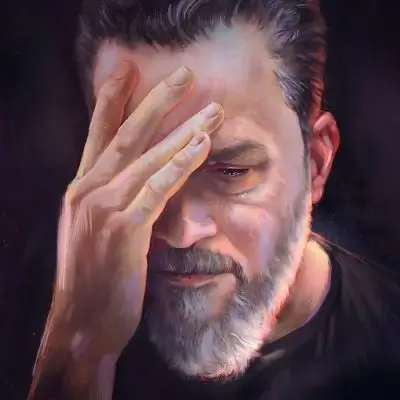
لقاء الحاج باسم الكربلائي
0
0
54 المشاهدات·
22/12/16
في
قصائد
لقاء الحاج باسم الكربلائي الذي تم إعداد اسئلته من خلال مشاركات المتابعين في حساباته بمواقع التواصل الإجتماعي.
إعداد : عبداللطيف خالدي
مونتاج :عباس سعيد
مساهمة فنية : حسين دشتي
الإشراف العام : حسين ملكي
إخراج: عباس يوسفي
للتواصل مع الحسابات الرسمية للحاج باسم الكربلائي :
Facebook: http://facebook.com/BasimKarbalaei
Instagram: http://instagram.com/bk_staff
Twitter: http://twitter.com/BasimKarbalaei
Youtube: http://youtube.com/bkstaff110
أظهر المزيد
Transcript
[0:08]After years of disappearing from the media Haaj Basim Karbalaei appears in
[0:14]an interview prepared by his fans Via his official social network accounts
[0:25]Within a single week, there were eight hundred questions asked about different
[0:29]issues And here is Haaj Basim Karbalaei replying to his followers' questions
[0:51]INTERVIEWER: Tell us about Basim Karbalaei In the name of God, the
[0:55]Most Gracious, the Most Merciful I was born in the holy city
[1:00]of Karbala, in the year 1966 I am married to an Omani
[1:04]woman and I have four children INTERVIEWER: Do you wish to return
[1:08]to Iraq, if so, which city would you like to reside in?
[1:13]I do wish to return to Iraq, speifically to the holy city
[1:15]of Karbala, and that is very soon To serve my master Aba
[1:18]Abdillah al-Hussain (as) I want to live and die in Karbala INTERVIEWER:
[1:22]Why did you name your son Ali?
[1:25]Just like Aba Abdillah al-Hussain (as) as he is recorded to say:
[1:32]If I had a thousand sons, I would name them all Ali
[1:36]INTERVIEWER: Was allowing your son to participate in your albums a successful
[1:40]idea?
[1:41]In reality, I thought the studio duet was successful and took it's
[1:48]resonance And wherever I went, like in Karbala, I took my son
[1:53]Ali with me two weeks ago My fans would notice him and
[2:00]all turn to him to take photos, and talk about his participation
[2:07]INTERVIEWER: Do you plan to bring your son to recite with you
[2:11]live on the pulpit?
[2:12]The intention is there, and I plan to bring him up with
[2:15]me on the pulpits in the holy shrines in Iraq INTERVIEWER: Did
[2:19]you have a son called Mohammed Hussain?
[2:22]If so what is his story?
[2:24]Yes, I was granted a son by the name of Mohammed Hussain
[2:33]in 1996 and he died in the year 2000 INTERVIEWER: Will you
[2:51]return to producing albums outside of the Muharram and Safar seasons?
[2:56]I do hope so, but due to the increase in Majalis, and
[3:01]the fact that I am always travelling from one country to another
[3:06]I am forced to only stick with producing albums for the months
[3:13]of Muharram and Safar INTERVIEWER: How do you go about tuning your
[3:19]eulogies?
[3:20]All my days are Hussain, my day and night is Hussain, so
[3:24]I'm always thinking of the case of Imam Hussain (as) I am
[3:29]required to make a tune for each eulogy before it is written
[3:36]by the poet Thus I think of tuning everyday, throughtout the whole
[3:42]year, there is no day that passes that I am not recording
[3:48]a tune INTERVIEWER: Why have the tunes of this era become more
[3:53]fast in contrary to the more slow classical tunes?
[3:57]The reciters that came before us, May Allah have mercy on their
[4:02]souls, like: Watan, Abdul-Redha, Hamza al-Zighayir, Sheikh Yassin They used to recite
[4:13]only in their own towns and cities The situation now has changed,
[4:21]I am in a different country everyday When I go for example
[4:26]to Bahrain, I see that they're folklore is much faster, and so
[4:31]I can't catch up with them I can't find myself reciting the
[4:37]tune in it's correct speed Hence I am forced to recite in
[4:42]a faster manner Then I come to Iraq, in Iraq it is
[4:46]slightly slower I go to Iran, I see it goes back to
[4:52]the classical style So I have to cater for each situation, each
[4:59]country I visit has it's own style and speed INTERVIEWER: Why are
[5:07]your on-screen appearances very limited?
[5:09]Especially Television interviews?
[5:11]I like to go by the phrase: "Less talk, more action." INTERVIEWER:
[5:16]Is there a disagreement between you and the poet Jaber Kathemi?
[5:21]There is a disagreement, and I'm keeping it with me, until the
[5:33]afterlife INTERVIEWER: Will the duo, Basim Karbalaei and Jaber Kathemi ever make
[5:38]a comeback?
[5:39]I don't think so, after I started working with other poets Like
[5:45]how I got people used to the duo, it's now been seven
[5:51]years since I started reciting for more than thirty poets Every poet
[5:58]has his own style, culture and his own way to serve Imam
[6:07]Hussain (as) Even if I remember a poet with a single poem,
[6:14]maybe this single poem becomes the cause behind opening the path for
[6:18]him, in the service of Imam Hussain (as) You see there are
[6:22]numerous poets that have many poems, but they say we have no
[6:27]name, no one knows us, unless you (Basim) recite for us So
[6:31]I see it as an obligation upon myself to recite for him
[6:35]INTERVIEWER: Working with new poets, has that added something to the Hussaini
[6:41]eulogy?
[6:41]Change happens with diversity, each poet differs from the other Each poet
[6:48]has a different way in looking at history, and so each poet
[6:54]will come up with a new image And so here, it's like
[7:00]colours, when you gather all the colours, you get a beautiful image
[7:05]But if you stick to a single colour or two, you will
[7:07]be limited INTERVIEWER: How do you go about choosing your poems?
[7:12]Because I've read a lot of eulogies, when I read a poem,
[7:19]I always search for new imagery, something I haven't come across before
[7:26]A new spirit in poetry If you're a famous poet or not,
[7:35]that does not affect me Some poets wrote for me, but I
[7:44]did not recite their poems I worked with many poets, some very
[7:51]known, but I still have not recited their poems INTERVIEWER: Does the
[7:58]name or position of a poet affect your revision of the poem?
[8:04]Impossible.
[8:04]I revise all my poems, unless the situation at the time is
[8:13]very tight But even if my time is limited, I still try
[8:19]make sure I learn the poem by heart, I can never recite
[8:23]a poem without knowing what has been written Most of the eulogies
[8:28]I recite, I go through them with the poet, I make some
[8:34]changes sometimes With all the poets, I have changed a lot, at
[8:38]some point some of the choruses have actually been mine And some
[8:41]of them, the idea is mine, this is the approach I have
[8:45]taken INTERVIEWER: What is the reason behind the decrease in the production
[8:49]of video clips, especially in the time where suitable eulogies exist?
[8:52]In reality, the last eulogy that we recorded, which was last year
[8:58]"Innocence of Love" The quality of that production was nice, and I
[9:07]think the video reached more than ten million views I wouldn't like
[9:13]to go below that standard and produce something lower than that production
[9:17]The production has to be elegant in all it's aspects INTERVIEWER: Basim
[9:22]Karbalaei is a servant of Imam Hussain (as) that is very popular,
[9:28]many speak about you negatively, what do you think of this?
[9:33]Firstly, I always advice myself, but I would like to say to
[9:40]every servant of Hussain (as): My reply is to the servants of
[9:45]Hussain (as) Our situation isn't easy when it comes to serving Imam
[9:51]Hussain (as) Tuning has it's own world that is very wondrous, poetry
[9:55]is another, where the poet takes some time to come up with
[9:58]something Searching behind a letter, word or subject, to sort the poem
[10:07]So you come and see the world of tuning, the world of
[10:10]poetry, and then the reciter takes the poem and tune He goes
[10:14]up the pulpit, then when he comes down, you see in the
[10:18]end he is extremely exhausted and sweating Then one of the believers
[10:22]comes along and says Basim is tall or Basim is short or
[10:26]Basim doesn't suite me Hence I say: I am not satisfied if
[10:29]you talk behind my back, so you do not speak INTERVIEWER: Is
[10:33]there a future plan to launch a satellite channel exclusive to you?
[10:38]The idea exists, and we strive towards it INTERVIEWER: Will you fulfil
[10:44]your idea of opening a Hussaini school that helps improve the voice
[10:48]and exhibit talent?
[10:49]I have been holding this idea for more than four or five
[10:56]years I met with many different groups in and outside of Iraq
[11:02]I am striving to reach this goal I hope from Hussain that
[11:11]I can bring up a generation An organised generation, aware of the
[11:18]melodic modes, knowing what to present on the pulpit INTERVIEWER: Many say
[11:25]you use musical instruments in your albums, what is your reply?
[11:30]My productions, sad or joyful, that are recorded in the studio are
[11:39]all music free All of the sounds you here are human voices
[11:44]You might see the sound engineer play the tune that I have
[11:52]made Then a group of youth enter the studio and record the
[11:58]melody with their voices However the instrument never stays in the track,
[12:03]and the sounds are all human voices INTERVIEWER: What do you rate
[12:07]the participation of children with you in your albums?
[12:10]Did it succeed or does it need more time?
[12:13]We need a period of time, so we can bring up a
[12:18]generation that comes out in the correct image in the service of
[12:22]Hussain (as) This generation, whether it is my son Ali, or any
[12:28]other child For the strive towards the service of Imam Hussain (as),
[12:36]this child needs some time to practice for perfect results So I
[12:43]have to go down to him, and bring him with me and
[12:46]create a duo, whether in the studio or on the pulpit I
[12:50]have to give him some space, so he can see the light
[12:55]INTERVIEWER: Is your idea to record eulogies in different languages successful?
[13:01]I see them as successful, and many people encouraged me towards them
[13:04]INTERVIEWER: Is there an idea to record eulogies in languages that you
[13:08]have not worked with yet?
[13:09]I do have the French and Turkish languages in my head INTERVIEWER:
[13:18]Why have your participations in the Gulf countries decreased?
[13:22]And who decides where you recite?
[13:24]I decide where I recite, inside Iraq or outside Why have I
[13:32]not been around a lot in the Gulf?
[13:36]That is Kuwait, Bahrain, Oman or Qatar That is due to Iraq
[13:44]and it's situation post the invasion INTERVIEWER: What was your feeling when
[13:51]you found out that you will be buried near Imam Hussain (as),
[13:55]in his shrine?
[13:56]In honest fact, I was very pleased, but it is the strongest
[14:00]rumour I have ever had INTERVIEWER: Many accuse you to recite for
[14:05]money and prestige, what is your response to this?
[14:09]In terms of the prestige that I am in, and the name
[14:14]I hold, this is an honour for me and I am very
[14:19]proud of it Because it came to me from the blessings of
[14:23]Mohammed (pbuh) and his holy progeny, and my service to the master
[14:26]of martyrs As for the money, in all my life, I do
[14:33]not remember ever requesting anything from any Hussainiya or Centre, be it
[14:40]a dollar or a million dollars INTERVIEWER: What is your opinion on
[14:45]the matter of Tatbir (striking the head with a sword)?
[14:47]I am not a Marja' (Shia authority), but I support Tatbir, and
[14:52]support all the symbols of Imam Hussain (as) INTERVIEWER: Do you have
[14:57]any problems with any scholars?
[14:59]I am not a scholar nor a Marja', I am a servant
[15:03]to Imam Hussain (as), and I do not have any problem with
[15:07]any Marja' or scholar INTERVIEWER: Tell us about the secret of the
[15:11]success of Basim Karbalaei Success is a cycle of connected rings One
[15:16]of the rings, is the obedience of the parents Before my father
[15:22]passed away, he used to weep and pray for me And my
[15:29]mother who is still alive, says to me, by God when you
[15:32]place your hands on dust it shall turn to gold for you
[15:36]INTERVIEWER: If you see Imam Hussain (as) face to face, what would
[15:41]you read to him?
[15:43]I would request from my master Imam Hussain (as) to request me
[15:48]to recite a specific poem for him INTERVIEWER: Who is closest to
[15:54]you from the Infallible personalities?
[15:57]I was very close to my grandmother Her day came and she
[16:13]passed away I spoke to my mistress Lady Fatima Zahra (as) and
[16:20]said to her: From today you are my grandmother, and until this
[16:24]very day And until this second, when I ask from her, she
[16:29]never sends my wish back INTERVIEWER: Do you feel you service to
[16:33]the Ahlulbayt (as) is accepted?
[16:34]And how do you feel this?
[16:36]I was invited in Damascus, Syria The majlis was in the Shirazi
[16:50]Hawza I went up the pulpit, I recited for just over an
[17:01]hour So I came down To keep away from the audience, as
[17:07]they were applying pressure to the stage and pulpit, there was a
[17:10]door near the pulpit I went down through the door to the
[17:15]basement I saw my situation changed, I reached the stage of death,
[17:20]I was feeling death I told one of the brothers, if they
[17:27]could find me a ride to my sister's apartment So he got
[17:34]me a ride and I went to my sister's place.
[17:39]She welcomed me, and I told her I needed to sleep as
[17:44]soon as possible So I slept, but in the process of trying
[17:48]to get to sleep, I started speaking to Imam Hussain (as), I
[17:51]told him what more do you want me to do?
[17:54]Because I was feeling death, I can feel my heart, my breath,
[18:01]everything So I fell asleep I saw Hussain (as) I saw Hussain
[18:28](as) come to me running Running.
[18:31]He wasn't walking, and along side him around a hundred million scholars
[18:42]And I knew from them two scholars, and I can't bring their
[18:47]names One of them was walking with him, and the other running
[18:51]in front of him saying 'O' master you have honoured us' 'O'
[18:56]master please come this way'.
[18:58]The whole street was filled, packed with millions of scholars Then I
[19:04]suddenly woke up, and I felt there was nothing wrong with me
[19:08]and I continued my day normally Then I completed the third night
[19:14]of the Majlis as this took place on the second night So
[19:20]these are the blessings of Imam Hussain (as) INTERVIEWER: When do you
[19:24]start you preperation for your eulogies, and how long does it take?
[19:28]All my days consist of a new tune or three, I'm always
[19:36]tuning And with the presence of modern technology, like the phone and
[19:43]sound recorders I record my tunes, then what remains is my observation
[19:48]of the general situation, whenever I have a program I prepare myself,
[19:52]by listening to the tunes and which tune suits which majlis Does
[19:59]this Majlis require a sad tune, so I work on that When
[20:06]I make a tune, I start by just tuning the chorus The
[20:12]verses come after it easily, the hardest bit is the chorus Just
[20:19]like writing poetry, if you ask poet: when does a poem become
[20:24]complete?
[20:24]He says when I write down the chorus Same goes with the
[20:32]tune, as soon as I tune the chorus, I can easily tune
[20:36]the verses Hence I watch out for the occasion, for example if
[20:41]it's Ramadan, I do not need very sad tunes You have the
[20:46]anniversary of the martyrdom of Imam Ali (as) So we need intense
[20:54]and enthusiastic tunes Not on the sad side so much Thus throughout
[21:03]the year my tunes are ready before I begin with an occasion
[21:11]INTERVIEWER: There are some that take your eulogies in other Majalis, do
[21:17]you mind?
[21:18]Personally, the eulogy that I recite on the pulpit, it is not
[21:24]mine anymore, it becomes Imam Hussain's (as) So I give permission to
[21:29]every servant of Imam Hussain (as) to recite them wherever he likes
[21:33]INTERVIEWER: How does a upcoming reciter learn how to recite from a
[21:39]melodic perspective?
[21:40]My teacher did not teach me the melodic modes, infact he did
[21:46]not even know them I used to ask him about eulogies, and
[21:51]how they were recited, he was older than me, and had heard
[21:56]many reciters Hence I used to seek his help, and most of
[22:01]my poems, I used to write them by hearing them of cassettes
[22:06]I used to practice the eulogy, exactly how I would hear it
[22:09]being recited I would perform it at the same level I would
[22:16]hear it more than ten times, so when I performed, I had
[22:21]owned the eulogy It's been printed in my mind, so when I
[22:27]perform, I was comfortable They used to hear me in my beginning
[22:30]days, they used to say, Hamza (al-Zighayir) did not go, he is
[22:32]present INTERVIEWER: In your opinion, who is your successor after you?
[22:40]In reality, let me be honest in this matter There are beautiful
[22:48]voices, performances, concentration, poetry The blessings of Hussain (as) are present in
[22:54]every servant of Hussain (as) As for the successor, it remains until
[22:59]this day...
[23:00]INTERVIEWER: What makes a Majlis differ to another majlis in your opinion?
[23:05]If I wanted to recite the slow eulogies, and hear the right
[23:12]melody, then it would be with the chest beaters in Iran If
[23:17]I wanted the Karbalaei heat, and some speed, then it would be
[23:23]Bahrain If I was looking for good chest beaters that gather all
[23:30]these characteristics, that have a good understanding in poetry, then it would
[23:36]be Kuwait And finally if I wanted the spirit and memories of
[23:41]Imam Hussain (as) then it would be in Iraq INTERVIEWER: Have you
[23:46]been short with participating with any Arabian countries or any other countries?
[23:51]I went to the United States for two consecutive years I went
[24:00]to the United Kingdom atleast twenty or thirty times Last year in
[24:08]2014 I went to China to revive the birth of Imam Mehdi
[24:23](ajtf) Countries like Iran, countries in the Gulf, I've been to Sweden,
[24:31]Holland, Denmark and Norway I have served the servants of Imam Hussain
[24:37](as) in all of these countries INTERVIEWER: Are we going to hear
[24:43]Haaj Basim Karbalaei recite Quran besides the Hussaini eulogies?
[24:48]I do hope so, and request your prayers INTERVIEWER: A word to
[24:53]your followers I say to you: I thank you all, and my
[24:57]first prayer goes to you Prepared by: Abdullatif Khaledi Interviewer: Mirza Hussain
[25:07]Kathem Editing: Abbas Saeed General Supervision: Hussain Malaki Directed by: Abbas Yousefi
0 تعليقات
sort ترتيب حسب
- أعلى تعليقات
- أحدث تعليقات
التالي
0 المشاهدات · 25/02/02
0 المشاهدات · 25/02/14
0 المشاهدات · 25/03/05
0 المشاهدات · 24/05/12
0 المشاهدات · 25/06/28
0 المشاهدات · 26/02/19
1 المشاهدات · 26/01/23
4 المشاهدات · 13/01/31