


Volgende
6 Bekeken · 18/10/27
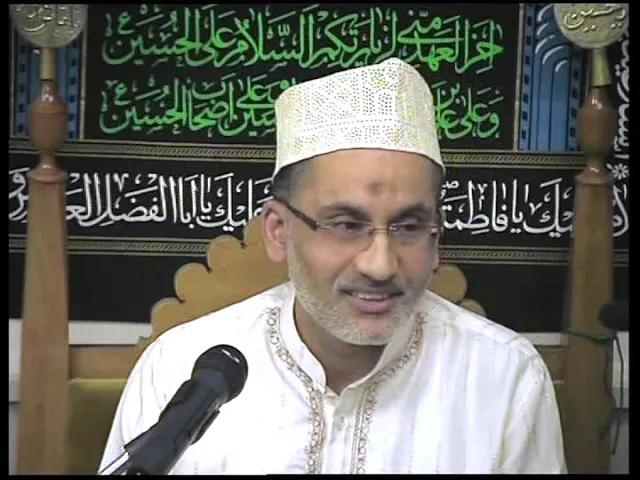
The second lesson |The way to islam 2|in the name of God | Sheikh Mohammad Ali Alsanady.
0
0
10 Bekeken·
23/11/29
Laat meer zien
Transcript
[0:08]in the name of allah the god the merciful the most merciful
[0:16]be to god all praise be to god and prayers be upon
[0:23]his messenger the prophet muhammad and on his pure family of his
[0:30]household this is the second lesson of the lessons of interpretation of
[0:43]al-fatiha chapter and in this lesson we have three main points about
[0:48]the fierce verse and besmeller first of all i'd like to tell
[0:59]you that el besmela is an abbreviation of this veils i mean
[1:08]is abbreviation of bismillah and in our lessons next this lesson and
[1:25]in the next lessons we will use the this abbreviation instead of
[1:33]the whole ayah so we will use el besmela as abbreviation of
[1:42]bismillah okay the first point in the interpretation of this verse i
[1:53]mean albert miller we'll try to answer to answer this question is
[2:03]this virus al bessmeller is it a main part is it mandatory
[2:15]from al-fatiha or it's just an ordinary introduction if we open quran
[2:30]and go to al-fatiha chapter which is the first page of quran
[2:36]we will see we will mention that al-fatiha has a number and
[2:46]it is one means it is the first verse of al-fatiha which
[2:57]contains seven verses but if we look to the other chapters we
[3:08]will not see the best melee with a number it's just at
[3:16]the beginning right and also muslims read the the this verse as
[3:28]an introduction but there is a differ between el bismillah in al-fatiha
[3:36]and al bismillah in other chapters in al-fatiha chapter is a main
[3:49]part we must read it in our prayer if we don't read
[4:00]bismillah our reading is not completed so prayer will be not accepted
[4:11]because it's not complete also in other chapters we have to read
[4:21]el besmela but the difference is that the best mele in al-fatiha
[4:35]is the main part is a verse from the whole chapter but
[4:43]in other chapters it's just an introduction uh will be will be
[4:54]read before reciting the chapter or some some verses from the chapter
[5:00]itself also we have to notice that is that there is one
[5:11]surah one chapter in quran called and this chapter does not have
[5:24]at the beginning if you go to page 187 in the holy
[5:34]quran you will see this surah at tawa and you will rehook
[5:39]now is that there is no best smell at the top of
[5:45]the chapter may you ask a question why why all the chapters
[5:53]of quran have al-bismillah at the beginning except this surah this chapter
[6:04]at tawba right because it's beginning if you read this surah you
[6:12]will see that its beginning the first ayah is a declaration of
[6:21]war and in no sense from the idolaters the idolaters i mean
[6:36]those who was living in makkah before islam and also at the
[6:43]beginning of islam also they stand against the the prophet muhammad in
[7:04]his mention in his mission so the result is after this fierce
[7:16]point we can say the result is divided in into three parts
[7:26]the first result is when surah obligatory is a duty we must
[7:39]be read it must be read and it's about the main part
[7:42]of the chapter and also it says it has a number number
[7:49]one the second result is also there is one surah with no
[8:03]bismillah uh in in chapter october or which is in page 187
[8:12]in the holy quran the third result is that 112 chapters have
[8:25]bismillah at the beginning of of the chapter but there i mean
[8:33]in the in these 112 chapters is just an introduction but not
[8:41]like the best melee in al-fatiha so here is not obligatory and
[8:52]main part the second point in this lesson this verse i mean
[8:59]albesman we are surpassed we are asked to open all our things
[9:13]anything will be done we have to start saying bismillah this principle
[9:29]is it an islamic principle i mean it's just found or be
[9:41]in this religion or in the previous religions also their way they
[9:51]were used it was used also by previous religions and here we
[9:59]have two evidences the first one if we go to if you
[10:08]go if we go to the story of the prophet noah and
[10:16]nebu peace be upon him he said quran mentioned his speech he
[10:24]said to his people start writing with the name of god my
[10:33]lord so he advised his followers to say bismillah or bismillah in
[10:45]the name of god before riding before do do anything this is
[10:57]an approve also we have another evidence in the story of the
[11:08]prophet solomon a nebulae man so long when he sent his book
[11:14]his message a letter to the queen of yemen queen belkes and
[11:23]melika belkris and when she had received the book the letter she
[11:34]said oh public she called her followers main ones and had a
[11:43]big meeting she told them it has delivered to me a generous
[11:55]book a generous letter that it is from prophet solomon and nebulae
[12:03]man and it is in the name of god the merciful most
[12:11]merciful so exactly with the same words the prophet solomon used this
[12:23]verse and he put it at the beginning of his letter to
[12:29]the queen of yemen to invite her to become a muslim so
[12:37]from these two evidences we can say we can judge that this
[12:45]verse bismillah is a effect is a is a value is a
[12:58]principle uh and it was used by uh the previous the followers
[13:06]in the previous religions the third point in today's lesson and i
[13:20]think that it's the main point those two ones who are advanced
[13:26]were important but this third one is very important why do we
[13:37]start with best melee before we do anything before we eat before
[13:43]we do any job before we pray before we read quran before
[13:48]we sleep so are there any reasons yes we have five things
[14:05]must be said or must be make clear to muslim that these
[14:16]five things made the best miller that it's the greatest ayah in
[14:27]quran the first thing is that polyvist bolivist and mushrikun bolivist before
[14:38]islam they used to start their work before they do anything they
[14:49]say something they say in the name of el these are two
[15:05]names of their great idols big idols a lot so those people
[15:16]before they start they say in the allot and and they began
[15:26]their their work they seek for help from them from them so
[15:39]god wanted to make a slogan god wanted to make a slogan
[15:49]to muslims which is that a muslim before he begin his deed
[15:58]he must or it's better to him to say in the name
[16:05]of god those people say in the name of allah and al-uzza
[16:15]and muslims say and muslims say in the name of god the
[16:26]merciful the most merciful this is a reason the second point starting
[16:36]with the name of god starting with el besmela this means that
[16:48]the person is asking god for help and assistance so the the
[16:58]muslim when he says bismillah i am starting my work with the
[17:06]name of god this means he is looking he is looking for
[17:15]his job to be successful so he is asking god for a
[17:23]help the third point if we say bismillah if we say albesman
[17:35]at the beginning before we start this means that we admit that
[17:44]we are weak and don't have the strength to perform any work
[17:52]except accept the help and assistance of god means without the help
[18:02]and without the assistant assistance of god we will not be able
[18:13]to move the paper from a place to another place so starting
[18:22]with el besmela this has really a big meaning a big feeling
[18:32]muslim feels that he is weak the the string the strength is
[18:43]with god only without the help of god nobody can do anything
[18:51]at all i mean and best manner for the muslim such as
[19:01]the fuel that moves the car the plane the ship and so
[19:06]on the fourth point starting with el bismillah in the name of
[19:17]god to prove that we are always connected to god we are
[19:25]always asking god for help we are always believing in the lord
[19:30]that everything is in his hand is has the ability to do
[19:39]everything because he is the lord of the universe and we say
[19:52]bismillahi to to be always linked to god the fifth point we
[20:08]start our actions any action with this great verse el besmela so
[20:17]that god makes it good god makes this work job pleasing and
[20:28]every action does not open and start with el besmela be sure
[20:39]that there is no good no blessing in it at the end
[20:49]we can say the outcome of our lesson the conclusion of our
[20:59]lesson we must make the el besmela as a key and an
[21:03]introduction to any work this work is big or small and also
[21:11]we have to live the in erect the feeling with the great
[21:21]meaning which and bismillah contain so that our love for god increases
[21:32]and his mercy descends upon us by this way that's all for
[21:47]our our lesson today we have to thank god first and i
[21:54]have to thank you m
0 Comments
sort Sorteer op
- Top Reacties
- Laatste Reacties
Volgende
6 Bekeken · 18/10/27