Volgende
1 Bekeken · 18/10/27
0 Bekeken · 18/10/31
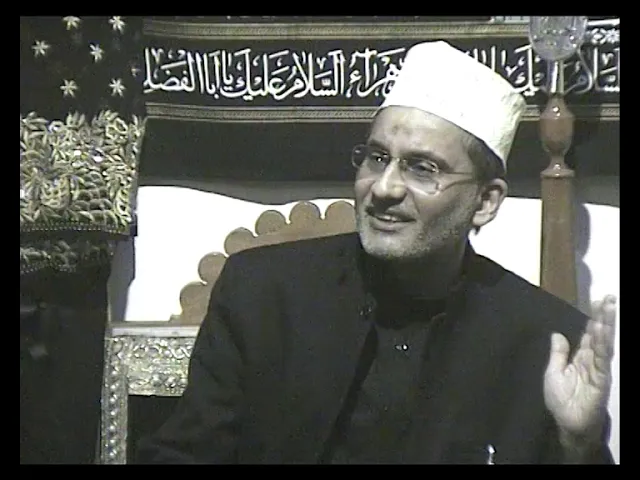
The Identity That Liberates The Soul- Sheikh Azhar Nasser | Night 16 - 2026 MYC Ramadan Program
0
0
4 Bekeken·
26/03/06
Topic: The Identity That Liberates The Soul Speaker: Sheikh Azhar Nasser Program: Night 16 of the 2026 MYC Ramadan Program Location: Islamic Institute of America - Dearborn Heights, MI, USA #islam #shia #muslim #sunni #ramadan #ramadankareem #ramadanmubarak #hijab #lecture #shahrramadan #eid #qazwini #prophetmuhammad #devil #sins #deeds #quarantine #myc #mycmedia #levels #shiavssunni #islamicfigure #hijab #porphetmuhammad #muhammad #fast #fasting #ethics #venting #complaining #mentalhealth #abuhamza #dua #duaabuhamza #friends #children #kids #namingkids #kidsnames #raisingkids #quran #readingquran #quranrecitation #dayofjudgement #Allah #allahswt #judgement #death #soul #identity #liberation
Laat meer zien
Transcript
[0:12]That's it.
[0:17]Muhammad [sighs] Hussein.
[0:51]Alhamdulillah.
[1:01]Sayham.
[1:33]Respected elders, my dear brothers and sisters, I know it's the month
[1:47]of Ramadan, but it feels like the month of Muharam as we
[1:57]observe the bombing of our countries, the death and the devastation People
[2:05]are asking what is our role?
[2:09]We feel absolutely and utterly hopeless as we watch our cities, our
[2:21]homelands being carpet bombed.
[2:24]What are we supposed to do?
[2:28]What is our responsibility?
[2:32]You know, as I reflect on this this question, I cannot help
[2:39]but think about the role of Zanab after the martyrdom of Im
[2:43]Hussein.
[2:47]I think as Muslims here, especially in the west, I think in
[2:54]many ways we have a Zabi role to play in this moment.
[3:00]What do I mean by this?
[3:04]Zanabis after she witnessed the oppression that her family had faced when
[3:14]she saw the brutal killing of the grandson of the prophet who
[3:19]was killed simply because he was the embodiment of Islam.
[3:25]everything that was antithetical to the satanic practices of Yazid and the
[3:34]empire that he had built.
[3:37]Zanabis did not crumble after that tragedy.
[3:45]And it's important that you and I as followers of this prophetic
[3:53]family, it's important that we do not crumble under pressure.
[3:57]It's important that we do not feel weak or helpless.
[4:04]A lot of innocent blood has been shed.
[4:08]Just a few days ago, we saw an air strike against a
[4:17]school in one of the cities in Iran that claimed the lives
[4:24]of 165 school girls.
[4:29]A lot of innocent blood has been shed.
[4:34]We've lost many great personalities.
[4:40]So we in this moment we have to understand that what we
[4:51]are witnessing in the world today is not just a conflict between
[4:58]a few countries.
[5:00]There's a a Chinese professor who described what is happening now as
[5:10]a battle for the soul of humanity.
[5:11]That's how he described it.
[5:16]We have to say in this moment what Zan said on the
[5:25]day of.
[5:24]We have to say Allah, oh Allah, accept, accept this the blood
[5:35]of these innocent people who have stood in defiance of an empire
[5:43]that seeks to subjugate them and rob them of their sovereignty.
[5:47]Now, what do I mean when I say that we have a
[5:52]a Zabi role to play?
[5:55]What that means is just as Zab did not allow the um
[6:02]to control the narrative after the battle of Ash, we cannot allow
[6:11]the media, we cannot allow the Zionist to control the narrative.
[6:20]We have to claim the narrative.
[6:22]And that is what Zanabisam did.
[6:28]The role of Zanab is she did not allow the truth to
[6:33]be buried.
[6:35]Now what does that mean for us?
[6:37]Yes, this is a tragedy, but every tragedy presents opportunities.
[6:47]And and an opportunity that we have today, my dear brothers and
[6:53]sisters, is to show the world that the people that you have
[7:00]been brainwashed into vilifying.
[7:01]If you compare them with your leaders, you will see that those
[7:09]who you vilify, who have been vilified, they're actually quite loved by
[7:15]their people.
[7:16]These are individuals who are willing to die among their people.
[7:24]While many of your leaders, they give they take their entire country
[7:31]to war, but they're not willing to die for the cause.
[7:34]from the safety of their offices, from their government chambers.
[7:42]They send your sons and your daughters to die, not for their
[7:47]country, to die for a foreign country.
[7:51]The same president of the United States who is a draft dodger.
[7:57]We have to remind the American people that you are being led
[8:02]by someone who does not care about you and your families.
[8:05]And the people that this government is telling you to hate, these
[8:10]are people who are at least dying among their people.
[8:16]The same individuals that you are taught to demonize, look at the
[8:22]way that they interact with children.
[8:25]And look at the way that many of your leaders, look at
[8:28]what they've done to children, how they've exploited children.
[8:34]This is a moment where we have to tell people that for
[8:40]decades and decades you have been lied to about Islam, about what
[8:48]Islam represents.
[8:49]The same political class that has covered up the crimes that does
[9:00]not tell you about what is in the Epstein files.
[9:03]You think these people are going to tell you the truth about
[9:07]Islam?
[9:06]The people who cover up the crimes against innocent children who don't
[9:12]tell you the truth about what is happening.
[9:14]You think that these people have told you the truth about Islam?
[9:20]So this is a moment my dear brothers and sisters in which
[9:25]we have to allow the world to see the contrast.
[9:31]Now in this month it's important for us to develop ourselves.
[9:41]You know every year we develop certain habits good habits.
[9:45]We recite the Quran more.
[9:48]We recite more dua.
[9:51]We're more committed to our prayers.
[9:55]We develop all of these good habits.
[10:00]But what usually happens a week, two weeks, a month after the
[10:04]month of Ramadan, what happens?
[10:03]We go back to our old ways.
[10:07]We go back to our old ways.
[10:11]And it happens year after year after year.
[10:14]We always tell ourselves that this is the year I'm going to
[10:20]change, but we quietly regress.
[10:23]Have you ever wondered why?
[10:26]Why does that happen?
[10:27]The reason why we always go back to our old ways is
[10:32]because we're trying to change our behavior without changing our identity.
[10:40]Behavioral change only happens when you truly understand who you are, what
[10:50]your identity is.
[10:51]Now the question is what is my identity?
[10:53]And by the way, if we are going to spread the Islam
[10:59]of and educate people about Islam, if we want our words to
[11:03]have impact, our words are going to only have impact if we
[11:11]practice what we preach.
[11:12]Because to influence the hearts of people, your heart has to be
[11:21]pure.
[11:19]You need that inner purity for your words to hold weight.
[11:25]There was a man who came to Im and the Imisam was
[11:35]speaking to him about the trials and the tribulations that would await
[11:40]believers in.
[11:44]And the Imam speaks about how it will be a time of
[11:52]confusion, a time of trial and tribulation.
[11:53]And the Imam says, "The only ones who will not be swept
[12:00]away in this wave of corruption and deviation are those who hold
[12:10]on to dua.
[12:12]Who hold on to a dua that is known as the supplication
[12:19]of the drowning one." The supplication of the drowning one.
[12:24]What is this supplication?
[12:26]The narrator asked the Imam, "What is dua?" The Imam, he says,
[12:36]"Recite this dua.
[12:37]Recite Allah.
[12:51]Oh Allah, oh the beneficent, oh the merciful, oh the turner of
[12:58]hearts, firmly establish my heart upon your religion.
[13:07]Brothers and sisters, the world is not going to go back to
[13:13]the way that it was.
[13:14]We have to understand this.
[13:17]We have crossed that threshold.
[13:21]The world is never going to be the same.
[13:27]And what does that mean?
[13:29]That means you and I, we have to strengthen our iman.
[13:36]Otherwise, we're going to drown.
[13:38]We're going to drown in the tsunami that is heading towards us.
[13:44]the trials and the difficulties.
[13:49]Keep me upon the right path.
[13:53]Strengthen my heart.
[13:54]Now, as I said before I share with you things that you
[14:02]and I can do that will fortify our hearts.
[14:06]It's important for us to speak about something that is more fundamental
[14:15]and that is what is my core identity.
[14:16]Because if you want to give if you want to make someone
[14:20]the best football player, if their primary identity is that they're an
[14:25]athlete, you're going to give them certain instructions.
[14:28]They have to develop certain habits that are going to make them
[14:32]enhance that identity.
[14:35]So what is my identity?
[14:41]Who am I?
[14:40]When we sit back and we watch in awe these great leaders
[14:47]who are sacrificing in this day and age, it's important for us
[14:51]that we don't just compare and contrast our leaders with their leaders.
[14:55]More importantly is we need to teach people the religion that produces
[15:03]these types of leaders.
[15:05]What is this religion that has produced a group of people who
[15:11]can stand in front of the superpowers of the time and say
[15:22]the entire world is in awe of Islam particularly the Islam of
[15:33]B They are in awe.
[15:35]Now everyone understands the importance of chest beating for years, decades, longer
[15:46]than that.
[15:46]The Shia have always been mocked.
[15:50]Look at these Shia.
[15:51]They beat themselves.
[15:53]No, no, we're not beating ourselves.
[15:55]mourning.
[15:57]By beating our chest, it unleashes a spiritual power.
[16:04]We beat our chest in solidarity with the family of the prophet.
[16:12]And look at the world today.
[16:14]Who is defending the oppressed other than the Shia of B.
[16:20]So in this moment there is an opportunity for us to not
[16:27]just tell people to admire our leaders and our who have given
[16:32]everything for Islam but let us talk about the religion that produces
[16:36]these types of noble personalities.
[16:40]But before we even get there and we speak about the habits
[16:45]of these great personalities, we have to speak about what is the
[16:54]core identity of these personalities.
[16:54]And this is where we come to the discussion on every day
[17:03]in our adan.
[17:05]Every day in our salah we mention the primary identity of our
[17:12]prophet.
[17:13]What is that identity?
[17:20]Our prophet is the of Allah.
[17:36]The core identity is what?
[17:39]We are servants of God.
[17:42]The problem is most of us we are not servants of Allah.
[17:50]We are worshippers of Allah.
[17:52]There's a big difference between anid and an what is the difference?
[17:58]Anid is a worshipper.
[18:03]An abid is a description of an action.
[18:08]And we all know that actions can become corrupted.
[18:12]An action.
[18:14]This is a description of an action pattern.
[18:21]Abid.
[18:19]An abid can be self-centered.
[18:24]Ll was an abbid.
[18:28]El was a worshipper.
[18:32]He worshiped.
[18:29]He did.
[18:31]He did for thousands and thousands of years only to become that
[18:39]individual who says whatl was a worshipper.
[18:48]But a worshipper can be what?
[18:53]A worshipper can be selfc centered.
[18:54]But an abd of Allah this is not a description of an
[19:00]action.
[18:59]An abd of Allah is a description of an identity.
[19:04]An abd of Allah is god- centric.
[19:09]An abid might be god- centric, but he could also be self-centered.
[19:17]An abid worships and has a transactional relationship with Allah.
[19:25]I worship.
[19:27]I do this action and I want compensation.
[19:29]This is exactly whatl did.
[19:33]He worshiped Allah for thousands of years and then when he defected
[19:37]what did he say?
[19:40]I want you to pay me for my and Allah subhana wa
[19:45]ta compensated him because he was an abbid.
[19:48]But an abb is different.
[19:50]An abd is someone who does not transact with God.
[20:00]Who who doesn't worship for the sake of a particular reward.
[20:05]An is what you do.
[20:10]An is who you are.
[20:11]Ll was a worshipper but he was not an it's like parenting.
[20:17]Parenting is not what you do.
[20:20]It's who you are.
[20:20]You don't say, "Well, today from the hours of 10 to 2,
[20:25]I'm going to parent and then after that I'm done." Right?
[20:27]Even though sometimes that might be tempting.
[20:31]Being a parent is what?
[20:35]It's an identity.
[20:34]It's not an action.
[20:37]It's something that you are 24 hours a day.
[20:41]Now, when you look at the the Holy Quran, what you find
[20:46]is that He mentions in a very subtle way what it means
[20:58]to be an of Allah.
[21:00]You see a worshipper might not quite understand who God is.
[21:08]In fact, most of us regrettably we are worshippers because we worship
[21:18]Allah in pursuit of reward.
[21:20]Meaning that Allah is a means through which we want to achieve
[21:24]something else.
[21:26]I worship Allah so he can give me palaces in Jenna.
[21:30]I worship Allah so he can give me gardens in Jenna.
[21:32]I use Allah as a vehicle to get something else.
[21:36]But what does that mean?
[21:39]That thing that you are seeking through Allah, is that thing superior
[21:46]to God?
[21:46]Anything that Allah is going to give you, that thing is created,
[21:55]that thing is inferior to Allah subhana wa ta'ala.
[22:00]Hence, listen to what says he's using the language of he says
[22:11]in, "Oh Allah, you are my master.
[22:23]You are my lord.
[22:28]You are the one upon whom I rely.
[22:32]You are the one that I have hope in.
[22:37]And then what does he say in his dua?
[22:50]What is he saying?
[22:53]He says, "Oh Allah, you are the ultimate thing that I seek."
[23:01]Is the thing that you're seeking.
[23:04]Ali is saying that oh Allah it's not that I'm seeking Jenna
[23:07]or paradise or reward.
[23:11]Ali is not looking for Ali says that the ultimate thing that
[23:16]I am seeking is God himself.
[23:22]You're the the ultimate wish that I have in this life and
[23:31]in the hereafter.
[23:34]Ali wants nothing but God himself because there's nothing greater that you
[23:37]can get than Allah himself.
[23:41]And this is something that can be experienced here.
[23:44]This is why when we look at these individuals who are so
[23:47]fearless their fearlessness comes from the fact that you can lose everything
[23:56]and it doesn't matter because if you have Allah you have everything.
[24:01]If you have Allah you have everything.
[24:04]You can lose everything.
[24:06]You can lose even your life.
[24:08]The real loser is the one who loses Allah subhana wa ta'ala
[24:13]who loses himself in dua in look at what look at what
[24:24]Immad says the whispered prayer of the lovers.
[24:27]You want to know how to speak the language of love with
[24:32]Allah?
[24:33]Look at what I imad says.
[24:34]He says, "Oh Allah, who is the one who has tasted the
[24:51]sweetness of your love and went to go look for an alternative?"
[24:57]Has anyone ever tasted your love, oh Allah, and said that I
[25:03]want to go somewhere else?
[25:16]Who is the one who has experienced the pleasure of being close
[25:24]to you and then wanted to go anywhere else?
[25:28]They teach us that the ultimate thing to seek, what's more important
[25:34]than money, than power, than all of these things is Allah himself.
[25:39]If you have allahel, you have you have everything.
[25:45]And this is what we see in the language of all of
[25:47]these prophets.
[25:49]If you look at Musam for example in surah Allah subhana wa
[25:56]ta'ala tells us about how much MS used to yearn for Allah.
[26:00]Allah says to MS that come to the mountain come to the
[26:06]mah to the meeting place so I can give revelation to you.
[26:09]So he takes with him a number of the senior the elders
[26:16]of beni is 70 of them they're going with ms up the
[26:23]mountain but the Quran tells us that Musa he starts to run
[26:26]ahead of the crowd ahead of the rest ayah 83 and 84
[26:31]if you look at it look at what Allah says Allah sees
[26:37]MS running up the mountain.
[26:39]Allah says, "Oh M, what has made you hasten to me?
[26:46]Why are you rushing?
[26:48]Why have you gone ahead of everyone else?
[26:55]They're they're close behind me.
[27:03]They're close by.
[27:05]But oh Allah, I am rushing to you so that you can
[27:11]be pleased with me.
[27:12]MS doesn't say, "Oh Allah, I am rushing to you because I
[27:16]want reward from you." No, for m Musa, the reward is Allah
[27:22]himself.
[27:21]The reward is the pleasure of Allah subhana wa ta'ala.
[27:25]That is the ultimate reward to be connected to that absolute power.
[27:31]If you look at the Quran, Allah tells us about the servant
[27:38]mindset of Ibraim.
[27:42]Ibraimisam according to the Quran he is the archetype of the perfect
[27:51]Abd of Allah.
[27:51]What does Allah subhana wa ta'ala say?
[27:54]What does Allah say?
[28:01]Anyone who turns away from the way of Ibraim, from the lifestyle
[28:10]of Ibraim is someone who has fooled themselves.
[28:13]You're at loss for not following the Abrahamic way.
[28:19]We have chose him in this world.
[28:26]And then look at what Allah says.
[28:39]Allah said to Ibraim, "Oh Ibraim, submit to me." Without any hesitation,
[28:48]Ibraim says what?
[28:53]I submit to as an who are you submitting to?
[28:59]Are you submitting to a tyrant?
[29:01]Are you submitting to a cold cruel master?
[29:04]Or are you submitting to the one who describes himself as if
[29:12]you look at the Quran?
[29:13]Alhamdulillah.
[29:16]You go to the last surah of the Quran.
[29:21]The entire Quran revolves around the concept of now the question is
[29:32]what does it mean when Allah says I am your when Ibraim
[29:37]says I surrender wholeheartedly without hesitation to What is the meaning of
[29:47]in the Arabic language?
[29:50]Is not just the one who created you is the one who
[29:59]created you.
[30:00]Highlights a very beautiful aspect of our relationship with Allah.
[30:05]Allah is our meaning he is the one who nurtures us.
[30:10]Just like the mother.
[30:16]She is she is the caretaker, the nurturer, the one who feeds
[30:21]you, the one who educates you, the one who gives you everything
[30:25]that you need to develop.
[30:28]Allah subhana wa ta'ala is that one who gives us intimate care,
[30:35]who wants us to flourish.
[30:38]He provides us with everything that we need so we can rise
[30:43]up in dua.
[30:47]Imad he teaches us what it what it means for Allah to
[30:54]be our he says what?
[31:01]Oh my master, I am the insignificant one that you nurtured.
[31:08]We began as this one cell and Allah subhana wa ta'ala, he
[31:15]took us through all of these stages.
[31:17]He gave us everything that we needed, physical nourishment, spiritual nourishment.
[31:24]He is the one who raises us up.
[31:35]And I am the ignorant one that you taught.
[31:44]And I am the lost one that you guided.
[31:53]I am the low one that you raised up.
[31:57]What a generous master this is.
[32:00]What a loving master this is.
[32:04]I'll share with you a story that illustrates what a beautiful we
[32:13]have.
[32:11]There's a story that says Yufisam the great prophet of God.
[32:18]We know the story of Ysef.
[32:22]Ysef had a lot of ups and downs in his life.
[32:24]When Ysef was at the height of his power, when he was
[32:28]at the height of his power, he was sitting as the Aiz
[32:35]of Egypt, Aziz M.
[32:37]He saw a man walking down the street, who looked homeless, who
[32:47]looked disheveled, wearing tattered clothes.
[32:50]Girael descends upon Ysef and says, "Yuf, do you know that man?
[32:59]Do you know who that is?" Ysef says, "Who is that?" Says,
[33:03]"This is the one who gave testimony with your case with Quran
[33:11]says this is the one who absolved you.
[33:17]This is the one who said that if Ysef's shirt is ripped
[33:19]from the back then is the one who betrayed.
[33:23]Ysef said that is him.
[33:26]Bring him.
[33:30]Bring him.
[33:30]He has a right over me.
[33:33]So they bring this man.
[33:36]Ysef sees him.
[33:38]He sees his condition.
[33:39]He's impoverished.
[33:41]He gives him new clothes, new garments.
[33:45]He gives him food.
[33:45]He assigns a stipen for him from the treasury.
[33:50]He showers him with gifts, shows him so much honor and respect.
[33:56]And Girael is watching.
[34:00]Ysef glances and he sees Jibrael smiling.
[34:06]Ysef says, Jirael, why are you smiling?
[34:09]Is it because you feel that I have not honored him sufficiently?
[34:16]Says, "No, I didn't.
[34:24]I'm not smiling because I feel that you haven't done enough for
[34:30]him." He says, "But as I observe the way that you are
[34:33]compensating this man who gave you one testimony, I think about how
[34:40]Allah is going to compensate the M for testifying throughout his life
[34:47]that this is how you're compensating for one testimony.
[34:58]Allah is more generous than you.
[35:03]How will Allah compensate the mu every day who says?
[35:09]This is Allah subhana wa ta'ala.
[35:14]This is the Lord that we have in aith.
[35:17]Look at what he says.
[35:32]If a person, if an of Allah goes down into prostration and
[35:40]calls out three times, ya Allah, oh my, oh Allah, oh my
[35:46]lord, ya, oh my master, what does Allah subhana wa ta'ala?
[35:53]How does Allah respond to his who calls upon him?
[36:09]We know this word when we go for when we go for
[36:13]we put on put on theam.
[36:17]What do we say?
[36:19]What does mean?
[36:23]is a term that is used when a superior calls upon you
[36:32]and you say to them, "Here I am.
[36:36]I'm at your service." You and I, we say to Allah, "Oh
[36:42]Allah, you called upon me.
[36:43]I am here for you.
[36:45]I am at your service." But look at Allah subhana wa ta'ala.
[36:48]Look at this lord.
[36:50]The servant is calling him and Allah says, "Oh my servant, I'm
[36:57]here.
[36:58]I'm at your service.
[37:00]This is the type of that Ibraim submitted to.
[37:04]This is the type of that Allah submitted to.
[37:09]This is why when he introduces himself, he says what?
[37:18]This is the ultimate honor because to be a slave of anyone
[37:25]else, you will be imprisoned.
[37:26]You will be humiliated.
[37:28]You will be abandoned.
[37:30]You will feel constricted because human beings they are designed to worship
[37:38]something.
[37:37]You are you're either going to worship money, power, your ego, whatever
[37:45]you worship other than Allah is going to be limited.
[37:47]It's going to disappoint you.
[37:50]It's going to break your heart.
[37:52]The only object of worship that will make you feel free is
[37:56]Allah subhana wa ta'ala.
[37:59]He is the one who wants to raise you up.
[38:03]He is the one who wants to elevate you.
[38:06]And hence my dear brothers and sisters the question is this r
[38:12]this lord who wants to honor his servants what does he want
[38:18]from us what does he expect from us there's a beautiful hadith
[38:25]that is famously known as it's a famous hadith from Imam and
[38:33]maybe other imams where they share share with us aith where Allah
[38:41]subhana wa ta'ala he speaks he speaks to us he says the
[38:48]last part of the hadith is what Allah subhana wa ta'ala he
[39:01]doesn't need us he doesn't need me he doesn't need you he
[39:04]doesn't need our worship but he wants to liberate us from the
[39:11]limitations of our bodies.
[39:12]Allah wants us to transcend these limitations by doing certain things.
[39:18]And Allah says there is nothing that is more beloved to me
[39:26]from my servant than doing what I have commanded him to do.
[39:30]If you want Allah subhana wa ta'ala to love you to give
[39:34]you that special love because there is a universal mercy that is
[39:38]extended to everything.
[39:40]We don't want that general mercy.
[39:42]We want that special mercy.
[39:45]When he says this is one level of divine mercy, we want
[39:54]more than that general universal mercy.
[39:58]If we want that, we have to do our wajat.
[40:00]We have to fulfill our obligations.
[40:03]But an of Allah doesn't stop there.
[40:08]When you love, you don't do the bare minimum.
[40:11]You go above and beyond.
[40:13]Now, what does it mean to go above and beyond for Allah
[40:18]subhana wa tala?
[40:21]The hadith says, After fulfilling the Allah says, "My servant then begins
[40:35]doing the recommended acts of worship.
[40:39]They go above and beyond.
[40:41]They start to do they do the other until what happens?
[40:47]until I love my now as I said Allah he loves all
[40:56]of his servants.
[40:55]This is a special type of love.
[40:58]Now what happens when Allah when loves you?
[41:04]What happens when I love my I become the hearing through which
[41:21]he hears.
[41:25]I become the sight through which he sees.
[41:31]And then he says and I become his tongue.
[41:38]You know there are some people when they speak they shake your
[41:44]heart.
[41:45]Two people they can say the same word but one person when
[41:51]they speak their words penetrate.
[41:54]Allah says my when he goes above and beyond I start to
[42:03]work through him.
[42:05]He hears through.
[42:08]I become his hearing.
[42:09]I become his sight.
[42:13]I become his tongue through which he speaks.
[42:17]I become his hand.
[42:20]And then what does Allah say?
[42:27]this person, my he reaches a point where when he calls upon
[42:33]me, I respond because everything about him is now aligned with my
[42:40]will.
[42:45]And when he asks me, I give because an of Allah has
[42:53]emptied himself of his ego.
[42:54]There's no ego anymore.
[42:57]He's emptied his heart and purified the heart to such a degree
[43:01]that this heart is now a mirror that only reflects the light
[43:08]of God.
[43:08]This is what we see in the prophet when the prophet when
[43:14]he conquered Mecca.
[43:13]Look at what he said when the when they asked him for
[43:22]forgiveness because they killed his wife, his uncle, they destroyed his family.
[43:27]They drove him out of his home.
[43:28]So they asked him for forgiveness.
[43:30]Do you know what the prophet said?
[43:34]He says, There is no blame upon you today.
[43:46]Allah will forgive you.
[43:47]Notice he doesn't say I will forgive you because there is no
[43:54]I left.
[43:54]There is no ego.
[43:56]He doesn't see himself anymore.
[43:59]Your crime against me wasn't against Muhammadb Abdah.
[44:01]It was against God.
[44:04]And God is merciful.
[44:05]There is no I left in the equation.
[44:06]There is no ego.
[44:09]And hence Allah subhana wa ta'ala when his surreners to him when
[44:14]you fully submit to him you become an instrument of Allah on
[44:18]earth.
[44:19]Look at what Allah says inah and I'll end with this.
[44:26]In the battle of Bedr the Muslims were outnumbered.
[44:29]They were outnumbered three to one.
[44:32]Any military strategist in the world would have looked at bed and
[44:36]said that the Muslims are going to get crushed.
[44:38]They had less weapons.
[44:42]They had less horses.
[44:41]They were at a disadvantage.
[44:44]In that battle, the prophet took a handful of sand and he
[44:52]threw it at the enemies.
[44:56]That's all that he had.
[44:56]Allah says in the Quran about this, you did not throw when
[45:10]you threw that sand.
[45:10]Who threw?
[45:13]Allah threw.
[45:13]Which means what?
[45:15]that even if you have limited resources, if you surrender wholeheartedly to
[45:26]Allah, Allah says, "I will take it from here." That when you
[45:30]do anything, it's not you anymore.
[45:31]Allah begins to work through you and I.
[45:36]Inshallah, my dear brothers and sisters, tomorrow night we'll begin looking at
[45:41]what I call the atomic habits of a Muslim, of a true
[45:47]believer.
[45:47]Little things that we can do that we can adjust, that will
[45:53]completely change our lives, that will enhance our im so we can
[46:01]go from being worshippers of Allah to servants of Allah.
[46:05]Alhamdulillah.
0 Comments
sort Sorteer op
- Top Reacties
- Laatste Reacties
Volgende
1 Bekeken · 18/10/27
0 Bekeken · 18/10/31