

Volgende
1 Bekeken · 26/03/04
5 Bekeken · 25/06/22
4 Bekeken · 13/01/07
6 Bekeken · 26/03/10
5 Bekeken · 26/03/13
5 Bekeken · 24/10/06
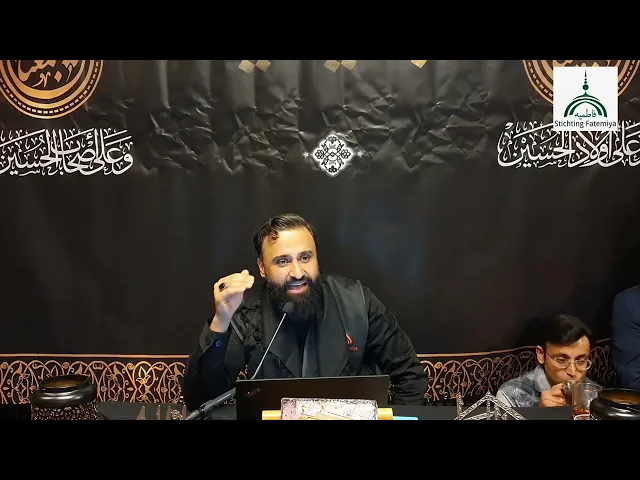
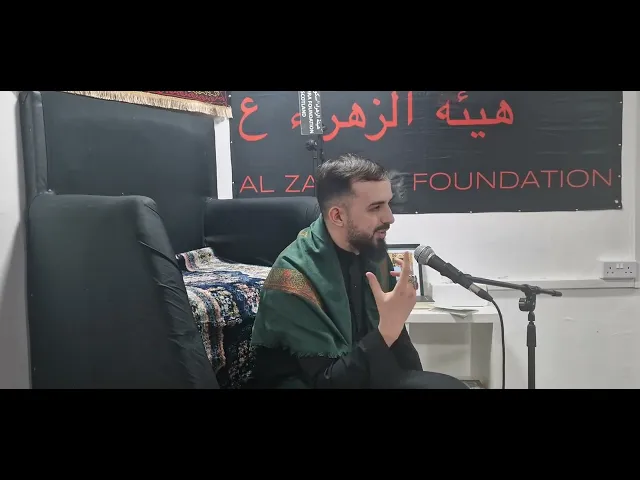
Stages of the hereafter- Imam Ali (pbuh) describes the intoxication of death - Hamam Nassereddine
0
0
24 Bekeken·
24/07/29
These are lessons given by Hamam Nassereddine about the stages of the hereafter. In these lessons, light is shed on the various stages that a person goes through in the afterlife, and the challenges/frights, punishments or rewards that a person faces or might face when living these stages.
Laat meer zien
Transcript
[0:29]so [Music] [Music] in our last lesson we touched upon the intoxication
[0:59]of death the moments the last moments of a person's life and
[1:06]we mentioned that calls those moments the intoxication of death came with
[1:25]truth we mentioned several points regarding the verse in surat kaf and
[1:33]we also mentioned that those moments are called sakuratul mouth the intoxication
[1:39]of death or say sakaratul because they're difficult moments moments that are
[1:51]you know shocking for the human being the shocking moments and due
[1:59]to the difficulties or due to the occurrences in better terms the
[2:05]occurrences that take place during those moments um that specific stage of
[2:10]the hereafter could be very difficult very difficult and very challenging we
[2:15]shall see later on sha allah that for some people it is
[2:21]not very difficult it is actually simple and easy but the fact
[2:28]that several occurrences happen at once and these occurrences are vital occurrences
[2:38]the presence of these occurrences makes those moments of a person's life
[2:44]quite challenging or the least we can say is that they might
[2:49]make it quite challenging we mentioned that when a person is on
[2:55]the brink of death what happens well in many cases he sees
[3:01]himself in a state of what a state of weakness a state
[3:04]of sickness and he realizes that he's not going to get better
[3:08]on the contrary he's about to leave this world secondly he realizes
[3:16]that he's about to leave all of his possessions all of his
[3:20]properties and wealth thirdly he witnesses the state of his family members
[3:26]how they're crying how they're you know reacting etc fourthly he witnesses
[3:34]the world of the unseen he starts to see things that he
[3:40]did not usually see he sees for example the devil or one
[3:46]of his devils one of the devils of iblis trying to mislead
[3:52]him he also sees allah and the angels of death because we
[3:59]shall see that has helpers he has angels that help him in
[4:03]collecting souls he also witnesses which is obviously something beautiful for the
[4:12]believer the believer will rejoice when he sees allah allah but then
[4:19]again some people won't rejoice why because they don't like so when
[4:24]they see that are there and are that will act as it
[4:31]to their what to their misery it will add to their sadness
[4:34]not to forget that as we shall see in sha allah or
[4:42]here uh adult sometimes will be displeased with the man who is
[4:48]on the brink of dying so he'll see them but he'll see
[4:50]that they're not too pleased with him that also will do what
[4:55]it will hurt the the believer as in it will hurt him
[4:58]emotionally seeing his masters in front of him in a state in
[5:03]which they are displeased with him that is not too uh comforting
[5:08]correct so when the person goes through all of these occurrences obviously
[5:15]um he goes through what through a uh shocking state a shocking
[5:24]state thus calls the last moments of a person's life the intoxication
[5:33]of death today inshallah we're going to read a tradition by amir
[5:43]al-mu'min which is part of a sermon that he delivered you can
[5:47]find it in in that sermon describes in detail what happens when
[5:56]a person passes away but we will realize that this tradition isn't
[6:04]talking about every single human being if we connect it with other
[6:11]traditions of we'll come up with the conclusion that the imam is
[6:15]talking about certain people some people go through whatever he's going to
[6:20]mention but others might not go through everything he mentioned or to
[6:28]be more precise in my terms they might not go through certain
[6:31]difficulties that so the least we can understand from the hadith we're
[6:41]going to read and explain today is that mentioning the state of
[6:50]some human beings when they are on the brink of death it's
[6:54]a tradition that we truly need it's a very good reminder you'll
[7:01]realize that it will soften our hearts and you know um increase
[7:07]our spiritual awareness or call it our spiritual awakeness insha allah subhanahu
[7:16]wa as we said the tradition is found in let me send
[7:19]you the first part okay sorry my computer is not allow me
[8:03]to kind of select the text today for some reason okay so
[8:10]i sent you the first part he says before we explain this
[8:19]segment let's understand who is imam ali he said i'm talking about
[8:24]the speaks about people who [Music] who plunge into the oceans of
[8:35]desires and pleasures and they give their backs to the hereafter instead
[8:43]of obeying allah and fulfilling their desires in lawful manners they get
[8:52]preoccupied with what with desires and pleasures they get preoccupied with worldly
[8:59]items or desires or temptations and they forget what they forget the
[9:05]hereafter so they give their backs to the hereafter they don't prepare
[9:08]well for the hereafter the imam speaks about such people and he
[9:16]says that the person who is in that state witnesses people dying
[9:23]in front of him when they're not expecting to die and even
[9:30]then and even then he does not change his conduct he does
[9:33]not change his way of behavior as he's talking about this person
[9:49]who gives his back to the hereafter and doesn't obey allah subhanahu
[9:56]wa or doesn't listen to the prophet sallallahu alaihi he says this
[10:02]person sees how certain people died and when they died they did
[10:11]not expect to die as in when death arrived they were not
[10:15]expecting it to arrive don't we see this in the outer world
[10:20]you see it you see for example disbelievers who are you know
[10:26]preoccupied with their worldly affairs and all of a sudden what happens
[10:29]they pass away they get into a car accident or an explosion
[10:35]or they get sick and they die they did not expect to
[10:41]die at that point but death still arrived even when we look
[10:46]at the world of believers you know believers are at different levels
[10:51]some believers await death they're always spiritually awake so they know that
[10:59]is going to arrive one day they're ready for it some believers
[11:03]on the other hand they get quite preoccupied with this world not
[11:11]to the point where they you know favor it over the hereafter
[11:14]but they get attached to it to a certain extent and they
[11:20]get to a point where they don't expect to die at that
[11:25]moment however they realize that death actually arrives and they do die
[11:32]so the imam is saying there were people there are people who
[11:38]die when they don't expect to die so it's as if he
[11:42]wants to say alaihissalam what guarantees you o human being who has
[11:48]given his back to the hereafter what guarantees you that that will
[11:53]not arrive when you do not expect it to arrive it says
[12:06]when their moment of death arrives they're not given the chance to
[12:13]come back they're not given the chance to do what to come
[12:17]back to this world as in when sakaratil to begin and you
[12:23]know the angel of death starts pulling the soul out even if
[12:28]you tell the angel of death please spare me give me a
[12:34]bit more time give me you know an extra minute an extra
[12:39]hour he won't do it because your time is up similarly when
[12:43]death takes place as in the soul is completely removed from the
[12:49]body usually a person does not return to this world usually a
[12:53]person does not return to this world hence the imam says what
[13:00]there is no cancellation of death when that arrives of course when
[13:07]that arrives and there is no return why did why did i
[13:13]say usually a person doesn't return because we know that in the
[13:22]past rajah did happen there were people who were dead and were
[13:28]revived allah revived them through one of his proofs of god one
[13:34]of himself you know revived those beings or human beings who had
[13:50]passed away so the fact that they came back to this world
[13:56]indicates that it is possible it is possible to come back it's
[14:03]not impossible but if someone comes back he comes back with whose
[14:07]permission with allah's permission subhanallah just as people came back to this
[14:13]world previously in the future one ahem will take place certain people
[14:26]certain people not everyone certain people will be revived and they will
[14:31]come back to this world this is why i said usually people
[14:36]don't return you go to the graveyard for example you visit your
[14:40]family members if you tell them get up they don't get up
[14:43]if you tell them rise they don't rise because usually people don't
[14:48]return but there will be people who will return in the future
[14:55]just as there were people who there there was people sorry there
[15:01]was there were people who returned in the past so what we
[15:06]can say is that in general when a person passes away he
[15:10]doesn't come back in general however we know that every general principle
[15:17]has an exception or has multiple exceptions the people who returned in
[15:28]the past and the people who will return in the future those
[15:32]are exceptions for this general rule this person who has given his
[15:53]back to the hereafter he sees how the people who pass away
[16:03]in front of him when they don't expect to pass away how
[16:06]death settles upon them and they witness issues that they did not
[16:17]know they did not know the reality of death and death arrived
[16:19]they did not know the reality of the sages of the hereafter
[16:24]and those sages arrived they were forced to do what to exit
[16:30]the world just as they came into it was they departed from
[16:40]this world imam says when they did not think they were going
[16:43]to the part they departed when they thought they were staying see
[16:50]humans in general every human being knows deep down inside that he
[16:59]will die this is one thing that we all agree on believers
[17:03]and non-believers alike that is a reality that no one can deny
[17:09]but on a practical level there are people who behave in a
[17:16]way as if they're not going to die they behave in a
[17:20]way as if they don't believe that that will actually afflict them
[17:25]i recall a word that was once said by one of my
[17:31]english teachers in high school she said although she was not muslim
[17:35]but subhanallah sometimes people you know other words of wisdom she said
[17:44]uh we believe that the people who surround us will die for
[17:54]example we believe that our uncle will die our neighbor will die
[17:58]our friend will die but we never expect to die we never
[18:04]you know say that we are going to die on a practical
[18:09]level some people behave like that they might talk about but they
[18:15]do not act in a way that corresponds with their belief in
[18:26]death they do not act in a way that course corresponds with
[18:30]their belief that one day they will actually pass away so he
[18:37]says they departed from this world although they assumed that they were
[18:48]saying [Music] when they left they went where they went to the
[18:58]hereafter they went to the stages of the hereafter those stages that
[19:03]they were promised the prophets the imams the holy quran promised them
[19:11]that you will leave and you will go through x y and
[19:16]z and that promise was fulfilled this word is truly puzzling the
[19:26]imam says one cannot describe one cannot describe what be felt up
[19:34]meaning you cannot describe what befell those people at the brink of
[19:40]death when they were in sakaratillah now the imam is going to
[19:48]mention details about this issue but his word man is indicates that
[19:53]as much as we talk about these issues their reality is greater
[19:59]than what we imagine is when they were on the brink of
[20:15]dying [Music] they experienced two things or two issues number one the
[20:22]intoxication of death which we spoke about last week and number two
[20:28]the regret of loss wahas they regret the fact that they lost
[20:40]opportunities they see themselves on the brink of dying so they realize
[20:45]they don't have the chance to pay sadaqah anymore their time is
[20:52]up it's only a matter of moments before they leave there's no
[20:55]more chance to pay sadaqah there's no more chance to make up
[21:00]their prayers there's no more chance to perform hajj now it's time
[21:05]to to do what to depart they resemble you know people who
[21:10]are on the brink of entering the airplane so they may depart
[21:14]to another city or country but their state is much worse much
[21:21]more devastating much more dangerous so the person regrets the loss of
[21:32]opportunities when he gets to that point he starts regretting if only
[21:36]i woke up before it was too late if i if only
[21:43]i used my time wisely before it was too late he says
[21:54]because of the sakura the intoxication of death or because of the
[22:00]intoxication and the hasera the regret what happens their body parts or
[22:07]certain body parts calm down this is what you witness when someone
[22:13]passes away before his death what happens he's usually calm right he's
[22:20]not uh agitated and he he's not he he doesn't move much
[22:30]and because of that sakura or the sakura end of the their
[22:35]colors change which is an expression indicating that they go through a
[22:45]good amount of distress or a good amount of fear then death
[23:03]penetrated even more into their bodies which means that their souls what
[23:10]are exiting their bodies [Music] because that penetrated even more through their
[23:22]bodies they got to a point where they weren't able to speak
[23:26]anymore so now they're not able to use their tongue anymore they
[23:31]cannot speak he says that person who's on the brink of death
[23:43]is at a state in which he can't talk anymore but he
[23:49]can still witness his family members he's amongst them and he sees
[23:54]them with his physical eye with the physical sight he sees it
[23:58]he sees them and he hears them with his ears so his
[24:01]ears and eyes are still working but now his tongue isn't working
[24:07]anymore he can't talk at that point he is still saying he
[24:17]comprehends what's happening around him here the human being begins to think
[24:28]about what about the past what did he do when he was
[24:39]alive how did he spend his days and months and years on
[24:41]earth what did he do was did he do what pleased allah
[24:50]did he do what displeased allah did he prepare himself for the
[24:57]hereafter or was he too preoccupied with his desires remember he remembers
[25:12]what he remembers his wealth and how he collected money and collected
[25:21]wealth from one source or from multiple sources but what happened when
[25:27]he was collecting money or collecting way while when he was gaining
[25:31]money or gaining wealth he kind of closed his eyes and didn't
[25:38]give enough attention to as in he allowed himself to collect money
[25:47]from sources that might have been unlawful sources or let's say problematic
[25:58]sources so he wasn't always giving proper attention to the source from
[26:03]which he's collecting his money he was allowing himself to collect money
[26:10]even if it came from an unlawful source he remembers how sometimes
[26:24]he collected money from could have two meanings one meaning is halal
[26:37]sources and the other meaning is haram sources unlawful sources so basically
[26:42]sources that are clearly lawful or sources that are clearly unlawful see
[26:50]sometimes you have a job that's clearly lawful there is no ishkal
[26:55]no problem with that job by problem i mean no jurisprudential problem
[27:02]for example you work as a carpenter you make sure that you
[27:08]do not make objects or items that are used for unlawful deeds
[27:17]you don't for example make let's say instrument uh instruments musical instruments
[27:25]or you don't make certain symbols of disbelief or symbols of polytheism
[27:35]here your job is without doubt it's lawful then again there are
[27:40]jobs that are clearly unlawful clearly unlawful like a bartender or a
[27:47]dancer the job of a bartender or a dancer is clearly unlawful
[27:55]he's he's dwelling in hara he's surrounded by unlawfulness then again you
[28:01]have certain jobs that lie in the gray area you can't really
[28:06]say it's a hundred percent unlawful but at the same time you
[28:10]can't say it's 100 percent lawful this is a it's an unclear
[28:16]matter thus the imam mentions it as well he says he took
[28:21]money he remembers how he collected money from clearly lawful or clearly
[28:27]unlawful sources and he also collected money from unclear sources why is
[28:40]he thinking about this because he knows that he's going to be
[28:46]asked about this by allah subhanahu wa let me send you the
[28:53]second part of the tradition a human being is in a state
[29:28]in which he is followed by what by the effects of that
[29:43]money he collected the money right because he collected the money from
[29:49]unlawful sources or he collected it from lawful sources but did not
[29:59]pay the dues of that money he did not pay his homes
[30:01]or his zakat or other mandatory payments he's in a state in
[30:09]which he's followed by the effects of what of gaining that money
[30:15]which means that he cannot escape the punishments or the challenges or
[30:23]the questions pertaining to what to uh collecting that money he will
[30:30]be asked about it or he will be punished or he'll face
[30:37]challenges because number one he received money from unlawful sources or because
[30:42]he did not pay his dues he reaches a point where he's
[31:02]on the brink of separating from his wealth separating from his properties
[31:07]his lands his house his car his iphone etc those properties those
[31:17]assets those items remain for who the imam says they remain for
[31:24]those who continue to live after him after the person who passes
[31:27]away they will use it for their own benefit they will use
[31:37]it to their own advantage they'll use that money they'll enjoy their
[31:40]lives using that money or using those assets and items this is
[31:46]what usually happens right when assets are passed down from the deceased
[31:51]to his to his inheritors what do they do with it they
[31:54]use it to their own advantage right yes the believer who fears
[32:04]allah will remember his loved ones and depending on his circumstances of
[32:10]course won't forget to pay sadaqah on behalf of his deceased family
[32:17]members because sadaqah is one of the best gifts you can send
[32:22]to who to those who have passed away even if the sadaqah
[32:28]is as small as a morsel of bread even if it's a
[32:33]a dollar no even if it's 20 cents it will benefit they
[32:48]will use it to their own advantage and as a result they
[32:52]will you know they will enjoy their lives they will be in
[33:00]a comfortable state because of that money that they received or those
[33:04]items they received whereas the person who passed away will feel the
[33:10]heaviness of that money because he's the one who collected it he
[33:13]got it so he'll be asked about two things from where did
[33:19]you get it as in did you get it from a lawful
[33:24]or unlawful source and number two what did you do with it
[33:27]did you use it to obey allah or to disobey him this
[33:39]segment means what it means that the human being reaches a point
[33:44]where he realizes he can't escape he wants to escape he wants
[33:48]to run away from punishment he wants to run away from challenges
[33:53]but he can't he's locked he's locked in in that world yet
[34:04]almost when he witnesses where he's going or where he went at
[34:15]the time of that when he witnesses the realities of the hereafter
[34:19]he does what he bites his fingers out of regret this is
[34:25]a a figurative expression indicating the amount of regret he feels at
[34:32]that point if only i use my time wisely if only i
[34:34]prepared myself better for the hereafter here he becomes a zahid what
[34:50]says is a person who [Music] believes that the world is worthless
[34:59]the world worldly pleasures worldly desires etc or what they're worthless that's
[35:07]a zahid of course remember that when we talk about zohod and
[35:13]zahidina and how we should be zahidine what we mean here is
[35:18]that one should believe that the unlawful items unlawful pleasures unlawful desires
[35:26]of this world are worthless that's what is meant that is what
[35:30]is meant also a higher level of zahud would be to get
[35:39]to a point where you [Music] don't want excessive worldly items you
[35:49]don't want you don't have desire in attaining or collecting were the
[35:57]items that you don't need so you basically want to attain the
[36:03]worthy items that you need in order to live and to prepare
[36:08]for the hereafter ask for were the items that are not needed
[36:12]even if they're halal you don't want them you don't want them
[36:17]because they'll distract you from what from your from attaining your main
[36:23]goal this is a higher level of zone a higher level of
[36:29]zohot which is asceticism in english so this person becomes an ascetic
[36:36]at what point when it's too late when he dies he becomes
[36:43]ahead he says previously when he was on earth when he was
[36:52]alive again when i say alive i mean allah alive on earth
[36:56]or else in the hereafter he is alive as well when he
[37:00]was alive on earth he had inclinations towards worldly desires or temptations
[37:12]or items etc but now since he has moved to the hereafter
[37:20]he's a zahidi he doesn't really care about those issues anymore they
[37:25]don't have much value in his eye in his eyes anymore imam
[37:39]says at that point he wishes that the people who used to
[37:44]envy him for what he had actually attained those items or pleasures
[37:50]instead of him what's interesting here the imam says he refers to
[38:05]and to hasan which are two different forms of envy there's positive
[38:17]envy and there's negative envy the positive envy is for example you
[38:24]see your brother in faith with a child and you don't have
[38:27]a child so you say allah just as you gave him a
[38:31]child give me a child that's rupta it's good you don't want
[38:36]him to lose his child you don't want him to go through
[38:40]grief but you also want a child so you say allah give
[38:42]me a child like you gave him a child that's fine then
[38:47]you have hasset assad is a negative type of envy for example
[38:51]you don't have a child but he has a child so you
[38:55]say i wish his child died why does he have a child
[38:59]and i don't right that's envy or for example your colleague is
[39:06]successful you're not as successful in school or at work so you
[39:10]say i wish he wasn't that successful that's what hassan that's the
[39:16]negative type of envy so the imam alayhi salaam interestingly here he
[39:22]mentions he says which means either the imam is saying the person
[39:38]will wish that those who had those who envied him those who
[39:45]had the negative type of envy in their hearts towards that person
[39:50]he will wish that they collected his worthy items instead of him
[39:58]that's one possibility the second possibility is the imam is saying he
[40:02]will wish that those who had positive envy in their hearts towards
[40:07]him and those who had negative envy in their hearts towards him
[40:12]both of them would have than what would have collected those items
[40:18]or those desires instead of him so this word indicates that the
[40:28]person reaches a point where he's no longer interested in worldly desires
[40:35]and worthy items why because he's preoccupied with the affairs of the
[40:46]hereafter and because he realizes those worldly desires such as unlawful desires
[40:52]worthy temptations such as unlawful temptations they let him wear it led
[41:01]him to major problems in the hereafter for example people envy those
[41:13]who have a lot of money right suppose you have a billionaire
[41:17]or a trillionaire people envy him they say i wish you know
[41:24]we had that amount of money in our bank accounts i wish
[41:27]we had such mansions i wish we had this i wish we
[41:29]had that when that trillionaire passes away supposing that he's you know
[41:39]he's an evil human being a disobedient slave of god subhanallah he
[41:42]will wish that those who envied him actually got the trillion dollars
[41:46]instead of him the imam now goes back to what to what's
[41:56]happening with the person what's happening as he's passing away falafel excuse
[42:13]me on penetrating through that person's body until he becomes unable to
[42:26]hear just as he became unable to speak so first he loses
[42:34]what he loses the power to speak next he loses the power
[42:41]to hear he doesn't he can't hear anymore he has reached a
[42:52]point in which he is amongst his family members he cannot speak
[42:58]with his tongue and cannot hear with his ears he is looking
[43:07]at them with his eyes and he can he's looking at their
[43:13]faces he sees how they're moving their tongues but he cannot hear
[43:26]their words he sees that they're talking but he can't hear them
[43:35]which means he says that penetrated even more into that person and
[43:42]glued itself on him meaning that he became overwhelmed with death now
[43:53]he reached a point where he can't see anymore so first he
[44:01]can't talk then he can't hear finally he can't see and the
[44:08]soul has been extracted from his body he has become what a
[44:23]corpse that person person that you used to love person that would
[44:30]move and talk and make jokes that would make you laugh all
[44:34]of a sudden is what still it's a corpse it's a dead
[44:40]body soul is gone meaning it's it's disconnected it's still around but
[44:46]it's disconnected from the body family members have reached the state in
[44:50]which they feel loneliness they feel loneliness when they're beside him previously
[44:58]they would feel what they would feel soothed through his presence now
[45:03]they feel a sense of loneliness when they're beside him and they've
[45:12]distanced themselves from him they try to what keep a distance between
[45:23]him between them and that person they've distanced themselves from that person
[45:38]the person who has passed away is in a state in which
[45:43]he does not answer those who call them call him as much
[45:47]as you want he won't answer as in the body will answer
[45:51]the body won't answer what are you saying and if there's someone
[45:59]crying beside him he doesn't comfort that person because he's dead now
[46:05]this hadith doesn't contradict other hadith which we will read inshaallah indicating
[46:14]that the soul remains aware of what's happening and the person the
[46:22]person's soul witnesses what's happening to the body and will and actually
[46:25]speaks to those who are carrying him to the grave inshallah we're
[46:30]going to look at those hadith i just want to make this
[46:37]point that there's no contradiction between this hadith here which says at
[46:41]a certain point he loses his uh he loses the ability to
[46:46]speak then he loses uh his hearing then he loses his sight
[46:51]there's no contradiction between this and between the other hadith which say
[46:55]that after the soul is extracted from the body the soul witnesses
[47:01]what is happening and knows what's happening with the body and where
[47:06]it is going as well remember that this hadith here is talking
[47:15]about what the last moments of your life to play somewhere in
[47:34]a grave in a grave which is technically if you think about
[47:39]it a hole right a humongous hole in the earth that is
[47:50]covered with sand or dust or dirt etc they've placed them in
[47:58]that grave and they've surrendered that person to who to his deeds
[48:05]as in they've left him alone with his actions when you go
[48:11]into your grave you don't take your family with you right they
[48:16]put you in the grave they bury you they might read quran
[48:21]for you they might send you rewards but they don't go into
[48:24]the grave with you you are buried on your own what stays
[48:34]with you we said you depart from this world you separate from
[48:39]your properties you don't even take your clothes with you these clothes
[48:43]are not taken with you to the grave they're given to your
[48:51]inheritors or to a specific inheritor you take your actions if the
[48:57]actions are good you'll be happy the actions are bad you'll be
[49:04]in a miserable state one katawa they've placed him in the grave
[49:12]they've surrendered him to who to his deeds and they've stopped visiting
[49:20]him they have stopped visiting their deceased family members a family member
[49:30]again as we said at the start of the class this hadith
[49:37]doesn't pertain to every single human being as in not every human
[49:44]will go through the exact challenges that the imam al-salam mentioned here
[49:48]but some people will some people will we ask allah not to
[49:53]be from them we ask allah azzawajal to facilitate all of the
[49:58]stages of the hereafter starting with sakaratil mouth and ending with the
[50:04]last stage of the hereafter on the day of judgment muhammad secondly
[50:17]i'd like to notify that if we look at the last part
[50:22]of the hadith which speaks about how the people behave with the
[50:28]person who passed away you realize that the imam alaihi salam might
[50:36]be talking about certain people as well not about every single person
[50:39]because because there are people who uh well number one they when
[50:50]they lose their family member they don't forget him and they keep
[50:57]on visiting his grave they frequently visit the grave of their beloved
[51:01]right when he passes away they might not feel a sense of
[51:09]you know loneliness as in as in they might feel lonely because
[51:15]they lost him yes but his body doesn't scare them you know
[51:22]how when someone passes away and when someone passes away you might
[51:29]not have the the courage to actually look at them when it's
[51:32]your own phone number who has passed away you might feel that
[51:37]you want to be beside the body you want to stay beside
[51:38]it until it's buried so i just wanted to make this comment
[51:43]that even for the last part of the hadith possibly the imam
[51:47]isn't talking about every one or how everyone behaves when they lose
[51:58]a phone number rather he's talking about you know some people or
[52:04]people in general people in general this is the hadith that we
[52:27]wanted to share with you today subhanallah affect a person and soften
[52:40]his heart even though he passed away 14 centuries ago so the
[52:47]question is how effective were his words when he was alive how
[52:59]effective were they when he was delivering sermons on the mimbar of
[53:06]kufa or in the medany mosque the mosque of rasulallah if we
[53:13]feel we feel spiritual humility and we feel that our hearts have
[53:18]softened when we read his hadith 14 centuries after his martyrdom then
[53:27]what would we have felt if we were present during his era
[53:33]listening to his beautiful and holy voice as he mentions these admonishments
[53:43]we ask allah to allah for the sake of salat to bless
[53:51]our souls and to bless the souls of all menin and those
[53:55]who live and those who have passed away and to make their
[53:58]graves the graves of those who have passed away and our graves
[54:02]guardians from the gardens of heaven allah
0 Comments
sort Sorteer op
- Top Reacties
- Laatste Reacties
Volgende
1 Bekeken · 26/03/04
5 Bekeken · 25/06/22
4 Bekeken · 13/01/07
6 Bekeken · 26/03/10
5 Bekeken · 26/03/13
5 Bekeken · 24/10/06